So Long and Thanks for All the Thieboudienne

This is not a “fun” story of joyous tourism exploits and happy expat life. I had a lot of fun in Zanzibar, and I even had quite a few memorable good times in Senegal, even if most of them never made it into the blog. However, living and traveling in both places, I confronted some things that were hard to see, hear, think about, and know. I am personally both deeply pained and extremely grateful to have been smacked so far out of my comfort zone that it took me most of the year to process through denial, anger, sadness, and bargaining to reach a place of fragile acceptance. I travel to experience and learn, not just to have a good time. Though it is difficult, these aspects of a globetrotting life are just as treasured as my fun memories because they help me to understand the complex world we are all a part of in and to be a more compassionate human being to those around me.

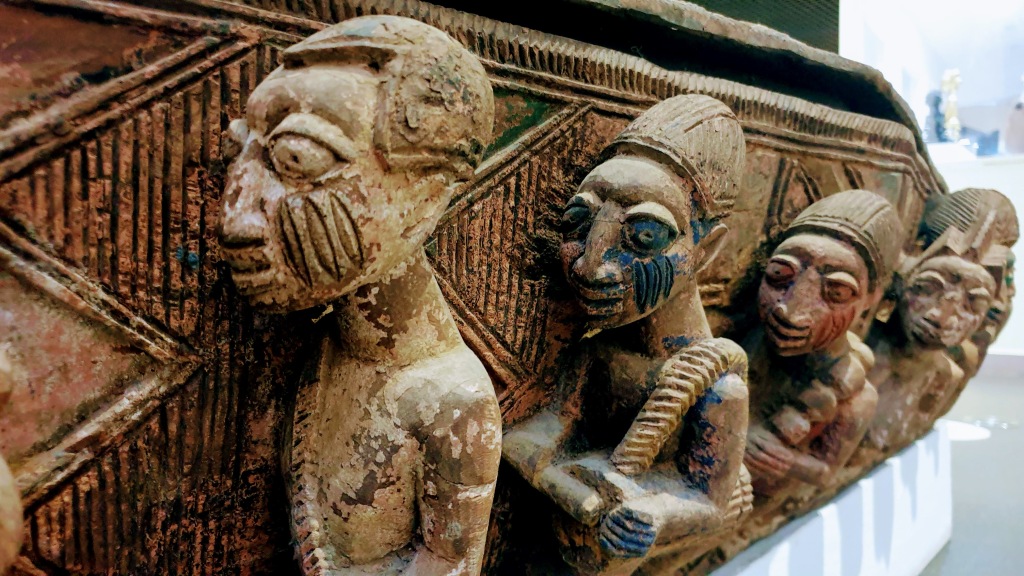
The Stone Town Slave Museum 

Just as every historical tour in Europe has a section about WW2, every historical tour in Africa has a section about the slave trade. Zanzibar was the center of the East African slave trade, where slavers from the interior brought their captives by forced marches overland and a short boat trip to the slave market in Stone Town. The city where I live (Dakar, Senegal) has a similar historical site on Gorée Island, which is the center of the West African slave trade, and has a similar legacy of gathering slaves from the interior in one place to board on ships. Slaves went not only to the new world to work sugar, tobacco, and cotton plantations, but also to the Arabic world. These sites which commemorate the worst of humanity are not fun tourist attractions, but they are worth visiting because they instill a sense of reality that no amount of textbooks and documentary films can convey. You are standing where the people stood, both the boot and the neck. The blood is soaked into the earth and stones.

In the case of the Zanzibari slave trade, there existed a type of slavery before the growth of new world plantations exploded demand for free labor. Intertribal slavery between African (and indeed First Nations people in many parts of the world) was not uncommon, but it was a much smaller part of the economy. Prisoners of war were taken as slaves and although some were treated badly, some were integrated into the new tribe over a period of years. No version of slavery is “nice”, but I think it’s relevant to acknowledge how different slavery was in Africa before the foreigners got involved. Not only my guide, but a few other locals I spoke to there tried to excuse the West saying we wouldn’t have bought slaves if Africans weren’t selling them, and this is a level of internalized shame that I’m not ok with.

The increased demand for millions more slaves to serve in the Arabic peninsula and the new world colonies changed the entire dynamic of slavery and the economy of many places in Africa. The slaves that had previously been taken as prisoners of tribal skirmishes weren’t enough to meet the export demand and so a new industry emerged: to wage wars for the sole purpose of taking slaves. Government leaders also captured and sold their own people when they couldn’t get enough from “enemy” tribes. Slaves were forced on long marches with little to no food or water, and those who fell sick were left to die.

By contrast, the free people in Zanzibar prospered by collecting fees from the inland slavers as well as the foreign traders for every slave sold in their markets. When the West abolished slavery, the leaders in Zanzibar didn’t want to stop because it was too lucrative, even without the Euro-American market! The modern attitudes of hakuna matata and pole pole (no worries, and take it slow) on the island are likely a direct result of the fact that for centuries the islanders had to do very little work for the passive income of slave taxes to make them comfortable. Although they no longer sell anyone directly into slavery, the local governments in many places in Africa continue to exploit their own people in extreme ways in order to preserve the legacy of easy money their ancestors had in the slave trade days.

The slave museum in Stone Town tells not only of the horrors of slavery, but also of Livingstone’s mission of abolition. While some in the West may see Livingstone as an embodiment of the “white man’s burden”, many in Africa still praise his abolitionist efforts. Although it was the British government and navy that did most of the work of stamping out the slave trade, Livingstone’s published accounts of the atrocities of the slave trade in Africa helped spread discontent with the continuation of the practice. In American education, the end of slavery is often taught as something that just happened one day upon the signing of the Emancipation Declaration. Few white Americans know the history of the holiday Juneteenth (June 19th) celebrating the day the last group of confederate forces in Texas were finally uprooted, freeing the remaining slaves almost 2 1/2 years later. Even fewer know that the last slaves weren’t actually freed until 6 months after that with the 13th amendment. Almost no one I talk to knows that the 13th amendment didn’t end slavery for all – it’s still legal as a form of punishment for criminals in the United States.

The museum in Stone Town makes no bones about the lengthy process of eliminating slavery and the challenges newly freed slaves faced with no homes, no money, no family ties, and nowhere to go. Even after the Sultan finally caved to the pressure to stop the practice of selling slaves, he didn’t banish the owning of slaves for some time after. The women were the last to be freed because owners tried to claim them as wives rather than slaves, and the difference wasn’t easy to spot. Freed slaves were taken to “apprentice” at plantations where their lives were little different from they had been before; the only difference being their backbreaking labor was rewarded with meager wages and their food and housing came at a price. Freed children were sent to Christian missionary schools which molded them into “good” colonial citizens and converts. Slowly, the freed slaves were able to use their meager wages to move away from the plantations and missions, some to uncultivated land and others to the city for urban work. The legacy of the slave trade is long lasting for Africans everywhere, and museums like this help us understand not only our history, but our present — and hopefully help us to shape a better future.

The abolishment of slavery in the 19th century only made slavery illegal, yet it still continues to this day. Slavery exists in every country of the world and has dramatically increased in the 21st century. There are more slaves today than were seized during the entire African slave trade. While some countries have larger numbers than others, it is an issue that affects all of us.

Modern day slavery is defined as a relationship in which one person is controlled and exploited by another, usually by the use or threat of violence, for the purpose of profit, sex, servitude or the thrill of domination-deprived of free will, restricted in movement and paid nothing beyond subsistence. A slave may be kidnapped, captured, tricked or born into slavery.

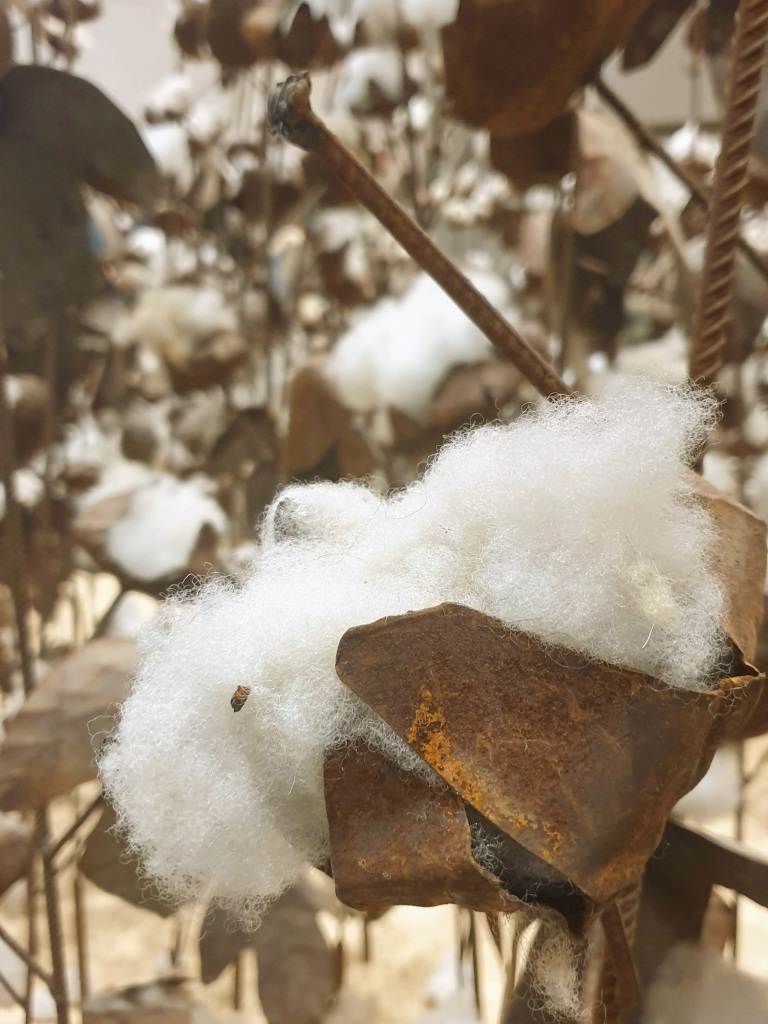
Modern slavery is a hidden crime The International Labor Organization (ILO) estimates the illicit profits of forced labor to be $US150 billion a year. From the Thai fisherman trawling fishmeal, to the Congolese boy mining diamonds, from the Uzbeki child picking cotton, to the Indian girl stitching footballs, from the women who sew dresses, to the cocoa pod pickers, their forced labor is what we consume. Modern slavery is big business.

TYPES OF MODERN DAY SLAVERY

BONDED LABOUR
Workers who have received or are tricked into taking a loan and are unable to leave until their debt is repaid. Often times, children of bonded laborers must continue to work off the debts, leading to generations of enslaved families. It is the most common type of slavery today.

FORCED LABOUR
Any work or services which people are forced to do against their will under the threat of some form of punishment. Almost all slavery practices, including trafficking in people and bonded labor, contain some element of forced labor.

CHILD SLAVERY
Children who are used by others for profit. For example in forced marriage, prostitution pornography begging petty theft, drug tracing, labour, armed fighting or wives’ for soldiers. Usually, child slavery is accompanied with violence, abuse and threats.

EARLY AND FORCED MARRIAGE
Women and girls entering marriage without choice, forced to live a life of servitude often accompanied by physical violence and with no realistic choice of leaving the marriage.

DESCENT-BASED SLAVERY
The legal ownership of a person by another person or state, including the legal right to buy and sell them as any common object.

Products made by modern day slaves flow into the global supply chain and eventually into our homes leaving most of us unaware of our contribution in supporting it.

From the Slave Museum, Stone Town Zanzibar

A Talk With A Zanzibari Guide

My guide around Stone Town was a young man of mixed Arab and Swahili heritage (his mother is Arabic and his father Swahili) and I think had a unique perspective on Zanzibari culture as a result of living with one foot in two worlds while belonging to neither. When we reached the church at the slave museum, we sat down for a break from all the walking in 33C/UV11 weather and he opened up to me about his life. As with any personal account, I know that it’s his perspective and opinion, and not an objective truth, but I found it to be a fascinating conversation, and I’d like to share some of what he told me.

What he described to me was a life of codependency. I know Americans are extremely independent, and I’ve seen how extended family structures can bind young people in other countries often making them feel like they have no choice in what they study or who they marry. Yet what my guide explained to me of the family networks here, it is not only impossible to survive outside of one, the parents (especially fathers) can be very harsh, and abuse is normal. He shared his opinion that children need to have things explained to them because just hitting them makes them live in fear, so I hope that when he has his own children he will practice this. His parents are less bound by their own families. Both families disapproved of the mixed marriage, so they had to go it more independently. He feels very lucky to not be bound by the familial codependence he sees his peers trapped in.

Women have little freedom. He said most men have 2 wives (though they are allowed up to 4) because the first wife will be who his parents want him to marry, and the second will be who he wants to marry, which seems critically unfair to everyone involved. Women are encouraged to stay at home. Though young girls here are in school, many don’t pursue a degree after high school or have any desire to work outside the home. Parents pressure young women to prepare for marriage and think men will not want a woman who works (or possibly that a woman who earns her own money will put up with less BS from a husband?) My guide told me that many young women watch romantic dramas from around the world and get the impression that marriage will be a better life than getting a job, and are later very disappointed that it’s not true. My guide said hopes to find a wife who wants to work, not because they need more money, but because she wants something for herself.

Men are also trapped into a life decided by others. They must go into the career their fathers choose, marry the woman their parents select, and spend their salary to support their own parents, their wives’ parents, their wives, and their children, meaning a single salary supports up to 7 adults and possibly more than 7 children. Zanzibar is even more economically challenging because people from the mainland come over and do jobs for dirt cheap (140$ a month!). Mainlanders can send home 20$ and it goes a long way to support the family living there, while families that live in Zanzibar need 350$ or more a month just to scrape by. A gift of 100$ from a hardworking son may be seen as a trifle on the island but a fortune on the mainland.

Despite the fact that tourists are paying 100$/night for a hotel room, 100$+/ day on tours and god knows how much on food and trinkets, the average salary for the workers here is around 250-300$/month USD. Where is all this money going? The government takes big cuts in the form of double income taxes (Tanzania and Zanzibar each have taxes that islanders must pay while mainlanders only pay Tanzanian taxes), and licensing fees for anyone who wants to sell, make, display, tour, drive, etc. I saw an actual paddy wagon loaded up with unlicensed street vendors on their way to jail, and my guide said they’ll be right back on the street selling souvenirs as soon as they can. Once the government takes their cut, the owners take the rest, and the owners are mostly foreigners. Several guides throughout my stay told me with bitterness edging their voices about the new development on one of the small islands that was bought up by Indians. Locals never get enough money to invest in property or larger businesses which is a big part of what keeps them trapped in the codependent and often abusive family structures for survival their whole lives.

It reminded me also of a conversation I had with an aid worker who had recently returned from the Congo. The warlords there keep everyone in a state of fear and violence and poverty while reaping the rewards of the mining operations. The mining work gets priority even over subsistence farming, leaving the population without enough food to live on. Many African countries are rich in resources, minerals, fertile land, skilled labor, and yet so often it is mismanaged to benefit only a few while leaving the rest to struggle for less than scraps. There should be enough to go around; the scarcity is artificial. The greed is real.

Final Thoughts in Dakar

As I prepare this post, I am 4 days from leaving Senegal to return to the US. Although I would prefer to end my journey on a high note, I feel that would be disingenuous. Living, working, and traveling in sub-Saharan Africa has been one of the most challenging experience of my life so far, but as such, one that will have a large and lasting impact. In addition to the quality of life challenges, it has been an unending revelation of my own biases and privilege, which is a hard pill to swallow. My friends and family, in a well meaning attempt to offer comfort when I’m so obviously discomforted, have used phrases like “living nightmare” to describe the conditions here while saying they simply can’t imagine how anyone could live this way, and telling me how brave and resilient I am. But. These words are not comforting. I am a guest in a place that may be objectively lower on the international quality of life index (yes that’s a real thing), but millions of people still call it home.

People in Africa are struggling with the legacy of colonial war and exploitation that still colors the culture, language, economy, and even religion today. There is no doubt that centuries of foreign rule and resource theft has left deep wounds and little with which to heal them. However, the human spirit is indominable. The people born into this reality are aware of what they don’t have because one thing they do have is enough TV and internet to see the literal and metaphorical greener grass of the northern hemisphere. Yet, every day, they get up and live.

They collect water from a centralized source when the infrastructure fails. They wash clothes in buckets on the front stoop because washing machines are an expensive luxury. There are orphans begging in the streets who will become adults selling peanuts and candy on the roadside. Families struggle to pay high fees for substandard services offered by corrupt politicians and businesses resulting in unreliable electricity, water, and healthcare in even the most developed and cosmopolitan cities. Schools cram 100 students into a room with 20 desks where they learn without computers or enough books. The government of the most stable democracy in the region violates the human rights of its citizens when they complain too much.

But also. They cook delicious food which they share with friends and family when they celebrate holidays, marriages and births. They create music and art in any available space. They stay out late partying and take naps in the heat of the day. Christians and Muslims exchange gifts of food across faiths on their respective high holy days. People gather at public screenings to cheer wildly for their favorite football (soccer) teams and set up casual matches in any open lot or field. They love their children and help their neighbors. They march and protest for better conditions while carrying their national flags because they have national pride and believe their country is capable of more. They open salons on every street and work out in the evenings along the corniche because they take pride in their appearance and wellbeing. They splash in the ocean and laugh with the sheer joy of it. They bring color to the dry and dusty land with bright fabric prints and billowing swathes of bougainvillea that climb every wall and patio.

It is not a tribute to the bravery or resilience of visitors who temporarily partake in a life which so different from the one we were raised to. It is not a fairy tale of the “noble savage” that lets us imagine some kind of mythical innate goodness and moral superiority of the people who have less, and are making the best of it. It is not a whipping post for white guilt where we come to cry and wring our hands about the horrors of the past in order to feel better when we shop fair trade and have someone tell us how good we are for not being racists. It’s just people. The traumas of life affect everyone: individuals, societies, generations. I want to be able to acknowledge the past and honor the pain of another without turning it into inspiration porn or a hairshirt self-flagellation. What do you see when you look at someone who is living a life that you imagine would break you? What are you living with that might break someone else?

In Wolof, the greeting expression often translated as How are you? is “Nanga def?”, but it literally means Where are you?. In English, we have to answer that question with an adjective of value: fine, ok, great, not good, etc. In Wolof, you answer, “Mangi fi.” I am here. I am here.

Zanzibar South: Menai Bay Bungalows

With just three weeks left in Africa, I realized I hadn’t finished posting about Zanzibar! oops.

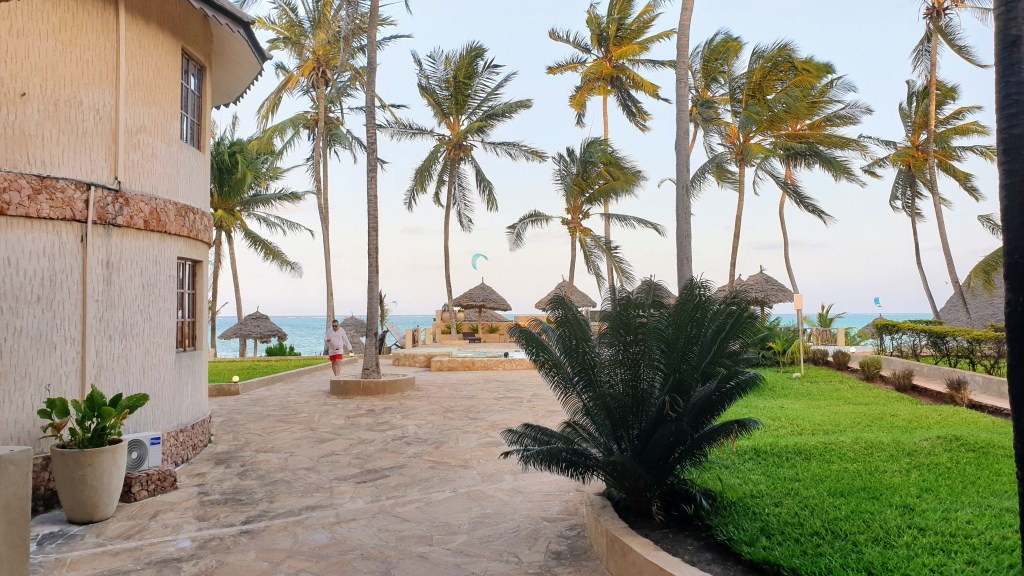
For the last leg of my holiday, I wanted to spend a few days at a nice beachfront resort, but I chose to avoid the northern beach area because it’s said to be overdeveloped and overpriced. I found a nice looking place at the southern end of the island that was a little more than I like to spend on a hotel, but I thought it was a reasonable splurge for a resort right on the beach. It just goes to show that photo angles are everything. Sadly, I was fooled once more by stunning ocean photos that only showed high tide, but turned out to be a seaweed covered strand when I arrived a few hours after the low-tide mark.

By my second day at the resort, I came to the conclusion that it wasn’t beach it was a mangrove. The tides on Paje had been a lot, but these were absolutely wild. At high tide, the water came right up to the edge of the hotel property and the steps that would lead to the “beach” led straight into the water. At low tide, the water vanished to the horizon leaving mucky, algae covered wetlands behind. Mangroves are an amazing ecosystem, beautiful in their own way, but it’s not the thing you want to get when you’ve planned for the turquoise blue Indian ocean at your door.

The blissful quiet that greeted me on arrival turned out to be an anomaly, possibly caused by a combination of the heat of the day and low tide. The restaurant played music all day with a very heavy bass like it was trying to be a night club. There was very limited seating around the pool and waterfront, and almost none of it had any shade. In addition, the geography of the bay meant there was almost zero wind, meaning the air was hot, humid, and stagnant.

The fresh ocean breeze had made Stone Town and Paje bearable in the sun and downright pleasant in the shade. The resort didn’t even have fans in the restaurant or public seating areas! All I wanted was to lounge in a chair on the beach and listen to the soothing sounds of waves, but instead I got a burning hot chair in the scorching sun next to a tidal flat and the wannabe club-groove sounds of the empty restaurant.

The resort was very picturesque, but quite off the beaten path. There was nothing around but local homes, I didn’t even see any local shops on the way in where I could buy snacks or water. I had no choice but to eat all my meals in their restaurant or pay the exorbitant fees for local taxis to drive me to a place with other restaurants. I spent the heat of each day in my room. I tried to go for a cooling swim the first afternoon but discovered that the intense sun had warmed the hotel pool to bathwater temperature, so even if I went in using my UV blocking rash guard and parasol, the water was far from refreshing. The ocean was similarly warm, which was nice in the mornings and evenings, but quite unpleasant from about 10am to 6pm.

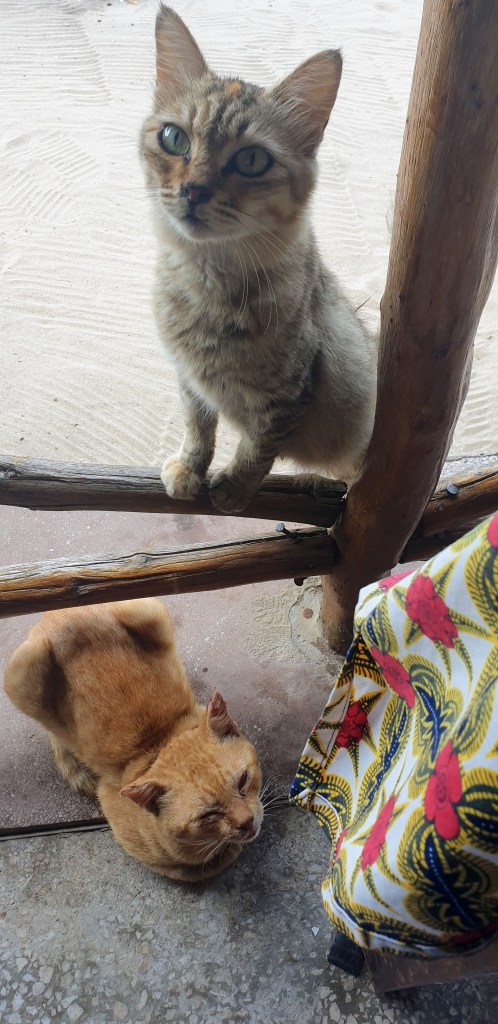
Despite all these issues, the staff were very kind and attentive, the rooms were clean, they sprayed my room for bugs every evening to make sleeping more comfortable. The restaurant was nothing to write about. I got the impression it was very generic tourist food designed to be palatable to a variety of cultural tastes. It was … palatable. There were cats everywhere! I wish I weren’t so allergic because they were very sweet and social, sometimes to the point of being invasive. They surrounded me at every meal begging for scraps, and one even jumped up on my table to try and get at my food.

There were a lot of local boats just to the right of the resort. I couldn’t find anything there on Google Maps, but obviously a local fishing village. The boats came and went with the tides, and the people spent the evening swimming and enjoying the water. One of the upsides to this remote and isolated resort was it’s lack of tourist marketing. It was the only place I went on the island where locals were just enjoying themselves and not trying to sell, commodify, or perform their culture.

Sunsets are the reason to spend a night in this place. The hours spent watching nature’s light show almost made up for the rest of it. The setting sun made beautiful colors: gold, rose, blue, and lavender. There were scads of little crabs scuttling in the retreating tide and cranes hunting them. The hulls of the fishermen’s dhows became black silhouettes resting in inches of water.

The first video is a time lapse of a single sunset, it’s less than a minute so don’t give up after the sun goes down because there’s more colors coming!

🔊 SOUND ON 🔊 This next video is in real time so as to share the sounds of the sea and wildlife with you.
Souvenir Means “Memory”

As an American/native English speaker, the word “souvenir” has always been associated in my mind with consumerism and with the temporary (and often disrespectful) tourist population. I spent part of my childhood living in Panama City, Florida, which was a huge tourist destination famous for it’s sparkling white sand beaches. Whenever my family would go out to enjoy the seaside, we were beset by sellers of overpriced fake key lime pie and tchotchkes made of seashells (which probably weren’t even from the local beaches). We joked about needing t-shirts that said “I’m not a tourist, I live here.”

I am never going to be the person who buys the shell encrusted picture frame or the novelty coffee mug, but I do like having unique keepsakes of my international homes as well as gifts to bring back for friends and family. For my friends, I’ve been gradually accumulating tidbits made from unique Senegalese materials and ingredients by small local businesses, but for myself I found an ethical, local, environmentally sound silversmithing class which seemed like a perfect way to combine a new experience with a physical representation of my tenure in Senegal.

The Existential Crisis Continues

Before I tell you about my cool souvenir experience, I need to talk some more about the (possibly culture shock induced) ongoing existential crisis that is living face to face with the legacy of the colonial and capitalist systems which benefit some at the expense of many. “Kaine, can you talk about Africa without going on about the ethics of it all? Can’t you just tell us the cool story?”, Nope. At least not yet. I don’t get a break from my brain feeding me moral quandaries, so neither do you. But the cool souvenir experience ties into the ethical discussion, and also I am trying my best to make it more “huh, I never looked at it that way” an less “moral philosophy lecture”, so hang with me.

The Global Supply Chain of Souvenirs

I noticed in Zanzibar that a lot of pan-African tourist goods on offer were not actually Tanzanian, being the same exact tropical island stuff I found in SE Asia complete with “Made in Thailand” tags. Even the more “Africa-centric” items like big 5 safari animal themed goods, and Maasai themed goods were not really helping the local economy since the raw materials and production were almost certainly outsourced, while most of the shops are owned by foreign investors. (the exception seemed to be hand painted artwork, which you can often see the artist create on the street)

It’s harder to tell how much of that is the same here in Senegal because Dakar is so much bigger than Stone Town, but it has been a challenge to find good souvenirs and gifts here that are genuinely unique and local. I’ve found that the majority of markets often only sell staples for living, and that many gift oriented markets offer imported items, while tourist oriented markets offer mass produced “pan-African” souvenirs which may or may not be made in China or by exploited workers in neighboring African countries. (the exception seems to be bespoke clothing and furniture, but these are way outside of my luggage size/budget limits).

Toubab Spaces

I only realized here in Senegal that the French word “souvenir” means memory in English, and I really love it because I am far more interested in a memory than a thing. My collection of physical souvenirs are all attached to stories of the experiences I was on when I got them. I’ve been trying to find memorable experiences in Senegal, to see, learn, touch, taste, listen and do things that help me to understand this place and people, but I have noticed that every time I find myself interested in or excited about a product, place, or event it’s probably actually owned by Toubab (the Wolof word for white people).

For example, I found an artisan chocolate shop which uses local fruits, grains, and spices, then I met the Belgian dude who is the half-owner. The woman who owns the other half is Belgian/Congolese, so at least there’s some Africa in there, but not Senegalese, and most Senegalese people couldn’t afford their chocolates anyway. The bar I go to is run by a French/Lebanese man who is super cool, and very dedicated to Dakar, but a foreigner nonetheless. My favorite restaurants are owned by foreigners (Italian, Mexican, Indian) and not just because I love those foods. I really like Senegalese food, but it’s challenging to eat at their restaurants for practical reasons like language barrier (they may not speak French), portion sizes (Senegalese meals are often cooked for groups to share) and “Senegal time” which means it could take 2 hours from the time you order to the time your food arrives.

It’s almost impossible for me to find products and activities that I want to enjoy which are owned and operated by Senegalese. I love to eat at the Senegalese faculty restaurant on campus because they are patient with my bad French, have single serving plates, and respect the fact that the faculty don’t have 2 hour lunches, but I don’t go there unless I’m already on campus. I suspect that Senegalese own and operate lots of small businesses, like all the corner stores, fruit stands, and small bakeries, as well as hardware stores, dry goods stores, and clothing shops, but with the exception of the occasional corner store run, I don’t shop at those places because I don’t need most of the things they sell other than food. My grocery delivery service specializes in selling from local producers, and it’s nice to be able to support local small businesses, but it’s not a souvenir in either the English or French sense of the word.

Cultural Exchange

When I was preparing to move here, my RELO told me there would be a lot of room for cultural exchange like dance lessons, or learning local music styles, local cooking classes, and so on. I was very excited. I don’t expect people to perform their culture for me, but I have become accustomed to being able to find at least a few people (or a government sponsored program) that want to show and tell, who are overjoyed to find a tourist that takes an interest. In New Zealand, I participated in a Maori tribal tour; in Spain I went on a cookie tour of nunneries; in Ireland I went to a trad music/storytelling night in a local performer’s home; Japanese ladies taught me their summer festival dance, Korean ladies taught me a tea ceremony, one of my Chinese friends taught me how to haggle at the market for the first time ever. In Zanzibar, I got to do a Swahili cooking class with a lovely Tanzanian entrepreneur and enjoyed a tour and history lesson from another local. These experiences are always my favorite parts of a trip, and they are usually not that hard to find.

Here in Dakar, I am better off watching YouTube tutorials if I want to learn how to make attaya or thieboudienne. People seem disappointed that I can’t speak Wolof, but I can’t find a class or really any help (one person sent me a pdf of common Wolof phrases, but no pronunciation guide, so again, better off with YouTube) I didn’t move here just to learn about it from my living room. I learned more Swahili in three weeks by chatting to locals than have learned Wolof in 9 months. I am making music, but it’s with other expats… they aren’t Americans at least, and not native English speakers either which makes it all the funnier that they love playing bluegrass covers of classic American rock songs (no, man, it’s “Tex-Arkana” not ‘Turkish-cana” Texas, not Turkey). I love it, it’s so fun and a wonderful way to feel like I’m part of a community, and although it is cultural exchange of a sort, it’s not with Senegalese, which remains a source of frustration 9/10ths of the way through this adventure.

Aid, Colonialism, or White Savior-ism?

I have been struggling since my arrival with the role of foreign aid in Africa in general and the very difficult to navigate line between aid and neo-colonialism, or help and white-saviorism. I think that while there is no hard and fast rule, the general guidelines are not that different from Maslow’s hierarchy of needs. In my opinion so far, the closer to the bottom (survival) the need is, the fewer qualifiers we should put on giving it. If the man is currently starving, give him a fish. Once he’s well fed, teach him to fish, and so on. As helpers, our long term goal needs to be to help the group achieve self-sufficiency, but we may have to do some things for them on the way.

In addition, because those things cost money in our capitalist hellscape environment, that means we will have to publicize the helping to raise that money. I and every other English Language Fellow write little publicity blurbs every time we do something that improves the lives of locals so that Congress can see where the taxpayer’s money is going. However, we don’t call ourselves out by name, and we focus the story on the achievements of the locals. This is the needle we thread to help just the right amount while learning how to say, “no, we will not do that part for you” and also advertising for funding without exploiting anyone’s suffering for personal gain. Fun fact, Chidi Anagonye, the moral philosopher of The Good Place, was raised in Senegal. I feel like my ongoing moral tummyache honors the writers work.

Green and Pink: The Cool Story

The Pink House (Maison Rose) is run by an older French woman and funded mainly by a French charity organization, but it serves a very real need in the community for women escaping domestic violence and sexual exploitation. They have an embroidery workshop where local Senegalese women are employed at a fair wage to hand embroider designs for (mainly French) fashion houses which are committed to raising the quality of life for women in West Africa. It still sounds slightly like a sweatshop, but I am assured that the women are paid fairly, and that for many if not all of the women who work there, not just the money but also the work itself are a huge part of their recovery and financial independence as survivors.

The Green Wave Jewelry shop has only recently started, but their goal is to provide free 3-month training courses to women from Maison Rose, and to then employ them to make the silver jewelry and “sea plastic” home décor items that they sell. The shop is committed to using natural and recycled materials, so their silver is all recycled, the materials for the molds are washed up from the sea, and they even use ocean trash plastic in a beautiful way (sea plastic, lol). The project is designed to give the women a skill which they can not only parlay into a viable economic opportunity, but also something that can build their self-worth back up.

They told me that although things have been slow going, they are selling enough product to train and hire another round of women this fall, plus they hope to hire one of their trainees as the new workshop manager to run things when they are travelling around Senegal or back to the UK. Finally, the fact that foreign founders don’t put themselves front and center on their social media is a good sign that it’s more about the impact than the image. See, I told you the experience was connected to the ethics. Now, let’s make a cuttlefish ring!

Did You Say “Cuttlefish Ring”?

The silversmithing workshop takes place for 5 hours over two sessions (2.5 x 2), and you get to choose if you want to do the sand technique or something called the “cuttlefish” technique. I looked at examples from the Instagram, and decided the cuttlefish was more my style, but I also was deeply intrigued by why it was named that. I guessed (correctly) that the sand technique was casting in sand, which although I’ve never done personally, I see videos of people making jewelry that way on TikTok and Facebook all the time because the algorithm knows I love watching people craft things in condensed 1-2 minute chunks. I very purposely didn’t investigate this jewelry technique before going because I wanted to be surprised, so everything I’m sharing here, I learned at or after the workshop.

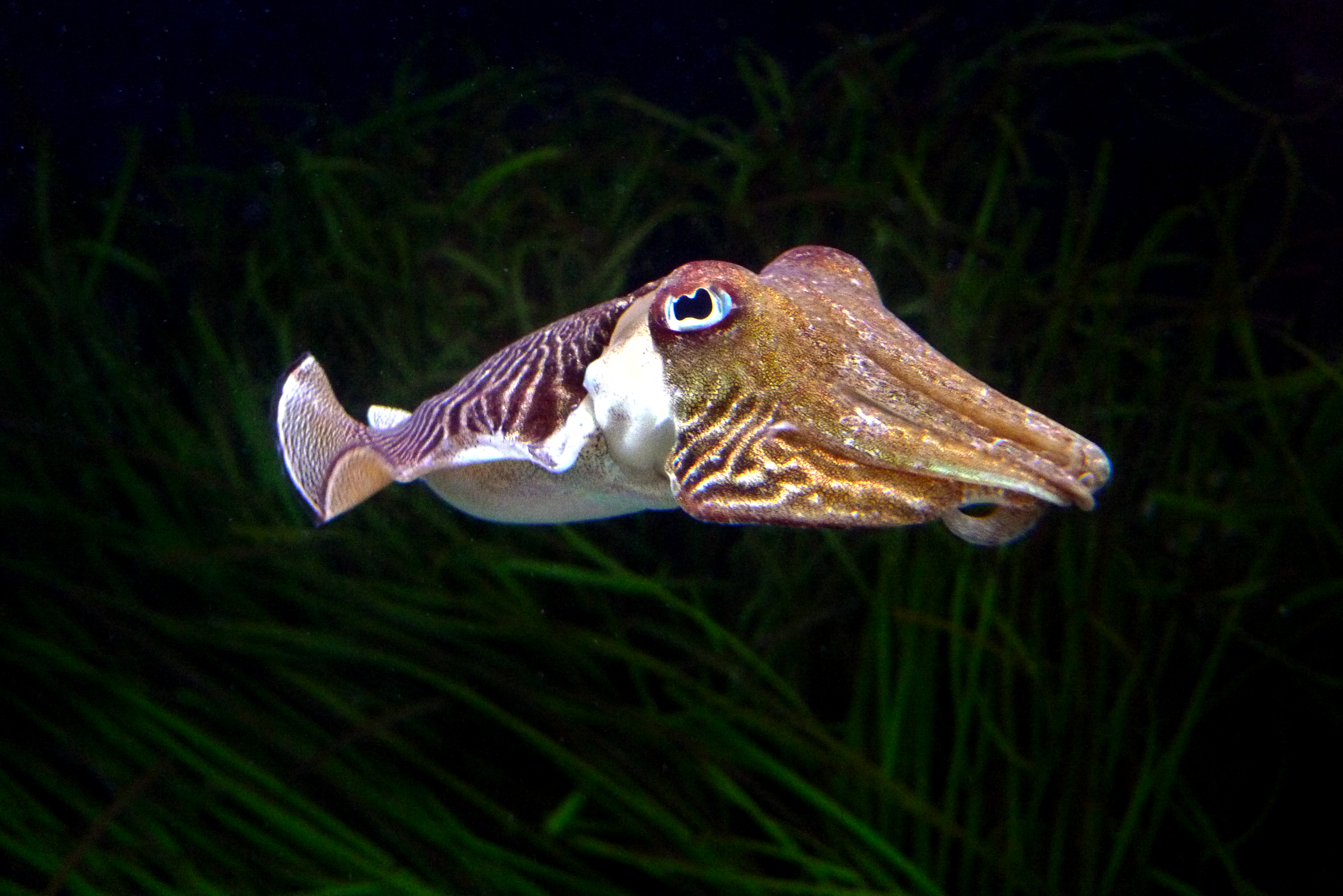
What is a cuttlefish? One of the first questions asked in the workshop was quite reasonable, since although most of us have likely seen these creatures in a nature documentary, we may not know them by name. They are similar to squid, but have a calcium carbonate “bone” (a cuttlebone) that helps them keep their shape and change their buoyancy. When they die, the hard internal structure is left behind and they wash up on shore by the dozens. Cuttlefish have natural predators, but humans enjoy them too for both their high quality ink (that squid ink pasta that looks so pretty in photos?) and for their meat, which is an excellent substitute for calamari. You may have even seen cuttlebone in a pet shop or a parakeet cage before since they are often placed in with the birds to supplement their calcium intake and give them something to gnaw on besides their owners fingers.

Why are we using it to cast metal? The cuttlebone technique may be one of the older metal casting styles around, coming originally from the Mediterranean and traveling upward into Europe. There are examples of belt buckles made in this way in Germany dating back some 1200 years or more, but some antiquarians think the technique could be as much as 5,000 years old.

It’s super easy to carve or press shapes into it, and it’s harder on one side than the other, so the “outside” stays in a solid shape, while the softer “inside” is carved out. But that’s not really it. The way that the layers of calcium carbonate – also called aragonite – form beautiful wave-like patterns in the finished product, not unlike tree-rings. No two are ever alike because it’s an organic process that preserves the life of an organism in precious metal. Neat! The cuttlebone that Green Wave uses is generally that which has washed up on the beaches of Senegal and other neighboring West African countries.

Workshop Session 1

For the casting technique, you need two smaller or one larger (or I guess if you want a Texas sized belt buckle, two larger) cuttlebones. Green Wave had cut ours in half before we arrived. We then learned about the hard and soft side, and how to sand the soft side flat until the two pieces could press together as tightly as possible. That was the basis for our mold. We all sifted through a bowl of rings, mostly made of brass or steel, in order to find the size and style we wanted to use. The model rings were plain and unadorned, just to get the general shape. They told us it’s better to choose a slightly smaller model (foreshadowing) since there will be a later step that files some silver out of the interior. I chose a square ring in a size that would fit well on my index and middle fingers.

With the rings chosen, we learned how to carefully but forcefully press the ring halfway into the newly flattened surface of one of our cuttlebone halves. This is harder than it should be, given how soft the material is. I accidentally broke part of my cuttlebone while pressing in, and thankfully it was a chunk off the larger half towards the top, and we were able to smooth out my initial impression with more sanding and move the placement further down. Unfortunately for me, the narrow end of the cuttlebone is harder and more dense, so instead of a smooth pressing, I had to take the ring out and remove the compressed aragonite dust with a paintbrush like an archaeologist.

Once I got the ring model halfway submerged, I added some ball bearings at two corners (to help align the two sides of the mold) and then gently placed the second half again and pressed some more until the two halves touched and the ring model was completely encased. The dust or powder left behind can also be used to polish jewelry, so doesn’t have to go to waste.

The next step was definitely the most interesting because we took our archeology paintbrushes and went back to the gentle and painstaking work of removing all the powdered remains from the mold. When I first removed my model, the indentation was smooth, and I still hadn’t really realized the link between the cuttlebone and the finished jewelry I’d seen in their shop. Then as I brushed away the compacted dust, the beautiful striations of the cuttlebone began to emerge like layers of sediment in rock. The tiny intricate lines were mesmerizing, and more beautiful than anything I could have thought to carve on my own. The tiny brush was uncovering a lifetime of growth a few grains of powder at a time.

Step 4 was to carve the funnel via which the molten silver would enter the mold. This part was actually the most nerve wracking because we had all spent a painstaking 90 minutes creating the ring mold, and a misstep in the funnel could wreck the whole design. However, our teachers were very patient and kind, encouraging us to take smaller cuts if we felt nervous, and never once made us feel rushed or stressed. The funnel was more technical than I expected since it not only needed to direct the silver into the mold without disrupting the natural cuttlebone pattern, it also had to work with gravity to force the silver all the way to the bottom, and with shape, since silver doesn’t like to flow at sharp angles.

The very last step was to create teeny tiny air vents that would lead from the bottom of the ring mold to the top, once again working with physics. The silver will flow, pushing the air down, meaning the channels have to start at the bottom, but air prefers to go up, so channels that run down or to the side may invite the heavier molten metal, leaving air bubbles in the ring. These final tiny tunnels are made by gently smoothing away a groove that aligns with the existing grooves of the cuttlebone pattern, then arcing it upward once it’s a few mm away from the ring impression. Then end result looks a little like a daddy longlegs spider got smooshed in your cuttlebone. After a final brushing to get any lingering loose powder out, we put our two halves together, assuring perfect alignment with the ball bearings, then taping them together tightly with masking tape.

The Molten Silver

It was a little disappointing to realize I would not be pouring the molten silver myself, but it’s probably for the best. Considering how long it takes to master the act of carefully pouring anything into a tiny space without spilling, the addition of molten to the equation means bulky gloves, long tongs, and heavy protective clothing, not to mention huge liability. Would I have liked to pour it myself? Yes, but I’m also happy knowing that one of the Senegalese trainees will be doing the pouring on my behalf. Also, since it takes a long time to heat the silver to 1000+ degrees Celsius, and then also cool off enough to go in the cooling bath, the employees do this part between the two workshop sessions. They were, however, kind enough to take some unique video and photos of my ring during the process.

I was surprised at how small the workspace actually is. The smelter which heats the silver is no bigger than a Keurig, then they have a small crockpot to keep the food grade acid that is used to cool and clean the silver, and a cake pan full of dirt that holds the mold in place and provides a safe splash zone. They make the pour look so easy, but I am assured it is something which requires a lot of practice not only not to make a molten silver mess, but to make sure no air bubbles mar the finished product.

When the mold comes apart, you can see the scorched cuttlebone and all the excess silver. The large chunk on top is the funnel and gets sawed off (though part of me could not help but think that it might be fun to deliberately make a funnel that could stay as a chunky decoration). The wispy lines are the air vents, which are so thin and delicate, they can be broken off by hand. By the time we all returned for our second and final workshop, the rings had been cooled & sawed, and were ready for the finishing touches.

Workshop Session 2

Disclaimer, I took far fewer photos in the second workshop because it was a lot more intensive and focused work. During the the first workshop I had a lot of breaks and down time where it was easy to grab my phone for some photos, but during the second, my hands were busy busy busy.

The very first thing I noticed was the insane amount of texture that my ring had captured from the cuttlebone. One of the reasons I chose a square ring was that I liked the side pattern more than the top/bottom pattern and I wanted to maximize the texture variety of the finished product.

Next, we learned the 4 stages of the jewelry finishing process: 1) brass brushing, 2) coarse filing, 3) fine filing, 4) polishing. The brass brushing is a way to remove any other bits that stuck to the ring during the molding process or acid bath. It’s the most aggressive scrub brush you could imagine, and it’s very important to keep the ring wet while brushing. It can be done on and off during both the filing stages, but has to be finished before the polishing. I thought my ring was fairly bright silver compared to the others in the pile, but a little brass brush scrub revealed even shinier metal.

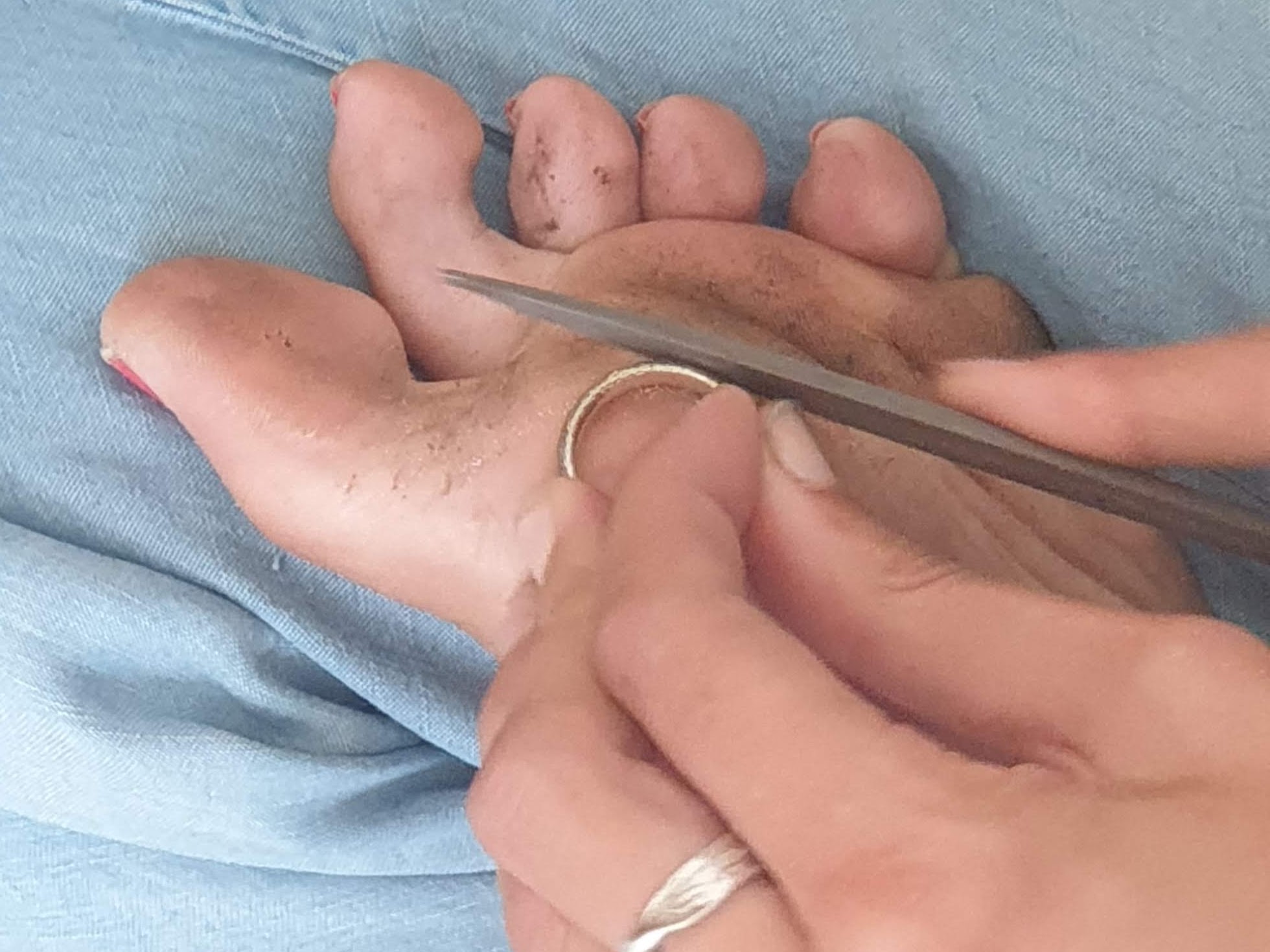
The filing is both physically grueling and mentally satisfying. We start off working on the area where the funnel was cut off since it’s the largest. For people with round rings, this was a smaller area, and involved making the cut blend smoothly into the rest of the ring. For me and the other person with a square ring it meant filing one entire side completely smooth. I toyed with the idea of doing just the part that the funnel had attached to, but it didn’t look as good as the examples they showed us of the fully smoothed side. They showed us two methods for filing, one using a wooden brace attached to the table, and the other using your own foot (a more traditional method that probably works better if you have calluses).

Once we had the funnel edge smoothed, we then worked the interior. Again, at first, I thought I might like to leave some texture on the inside, but as I worked the sharp edges down, and slid the ring on to test size and comfort, I realized that the flatter interior was more comfortable. So, in addition to smoothing one whole exterior edge, I did the interior as well.

They had advised us to choose rings which were slightly small for the mold making process since filing would give it extra size, but mine was still a bit snug once the interior was smooth flat, so they offered to put it on the ring stretcher. This when the its-not-a-disaster-its-a-bonus-lesson accident happened. My ring cracked. I didn’t know silver could crack! I knew that things which were forged or joined with solder might crack due to flaws in the material or process where two different things connected, but I thought poured silver would be like poured concrete and just — be all one piece? But something to do with the physics of the liquid metal means that sometimes the spot at the funnel where the two sides of the pour meet can be a bit weak.

In the end, it’s best that the ring showed this flaw before I left the shop because they had all the tools on hand to fix it. I got to watch as she broke out two types of solder and a mini blow torch. I’ve seen and even used (a long time ago) solder for electronics, but no one cares if electronics are pretty, so I associate solder with lumpy grey metal. This silver solder is a copper silver alloy that matches the ring and even with a hairline crack, the heat causes the solder to sort of suck up into the flaw, like a straw, aka capillary action. So when the temperature gets into the goldilocks zone, you can see the lump almost vanish. A cooling acid bath and a little filing, and there’s no sign of the repair.

The fine filing is done with a series of smaller files to work on any tiny edges which might be left from the air vents or an inexact alignment of the two halves of cuttlebone. It’s almost entirely invisible unless you are looking with a zoom lens or magnifier, but taking the very tiny square or sharp edges and making them rounded and smooth has a big impact on the comfort while wearing and keeps the ring from snagging on skin or clothing.

Last but not least is a polishing process that engages 4-6 types of sandpaper at ever increasing fineness from 240 to 3000, ending with a silver polishing cloth. The end result is that your filed areas have a mirror shine, and your textured areas are free of poking-out bits.

I’m happy with my finished product as both a piece of jewelry and a memory. It’s a unique souvenir of my time in Dakar which encapsulates many aspects of my experiences here: the chronic quest for cultural exchange, the inescapability of toubab spaces, the long road to understanding my ethical role in aid-centered activities outside my own country, and my struggle to find meaningful projects. Plus, it’s pretty.

Manifestation Dakar

It’s no secret that my tenure in Senegal has been a challenge. I got back from Zanzibar at the end of February feeling like I might have a chance at emerging from the blackest depths of culture shock rejection into the somewhat calmer waters of acclimation. I found some new friends; I met some local teachers who wanted to involve me in their professional development activities; I enjoyed the spring weather; I was excited about finally having real classes at the vet school where I might see the same students on a regular basis and be able to develop rapport enough to learn about their lives, and I was really looking forward to the new project my RELO said she would help me start doing more teacher training at the Embassy. My new outlook was to be short lived, however, as just two weeks after returning to Dakar, the troubles started.

Some Context: 2000-2022

Senegal is considered to be West Africa’s Most Stable Democracy(TM), and has been enjoying the very relative peace and prosperity that comes with that honor for about 23 years give or take. The first “free and fair” election held in an independent Senegal was in the year 2000. Before that, elections were limited with by things like bans on any kind of opposition to the sitting president, limited voting rights, etc. Before that they were French occupied, so… Anyway, that first president freely and fairly elected from an opposition party, and peacefully transitioned into power held his office from 2000 to 2012, when the current president, Mackey Sall took over. Cue the drama.

Senegal has an electoral system in which if no candidate wins a clear majority, a second round of voting (a run-off) happens between the top two. Sall was #2 with 26.5% and the incumbent was #1 with 34.8%. Then Sall went around to all the other candidates who lost and said ‘hey, if you tell your supporters to vote for me, I’ll change the presidential term from 7 years to 5 years, and implement a 2 term limit’ (things a lot of people wanted). It worked, he won. Then he decided maybe his first term wasn’t the best time to change the term length, so he served 7 years and won the 2019 elections, in which his biggest opposition was barred from running over some legal trouble. Sall won that largely uncontested election with 58% of the vote.

In 2020 Sall suggested he might run for a third term after all, just six months after signing a law which abolished the post of Prime Minister of Senegal, (consolidating his power as president) and this made people understandably upset. Ousmane Sonko had already gained some popularity in the 2019 elections, and was making a lot of noise about the trend of power abuses going on. In 2021, Sonko was arrested for alleged rape, sparking the first wave of the current protest movement. Clashes broke out again in June 2022 after authorities invalidated the opposition party’s candidate list for the legislative elections, and that unrest also resulted in several deaths.

Spring 2023: The Trial & The Appeal

Fast forward to 2023, Sall was accused of defamation for talking about corrupt officials and brought to trial. The new charges were seen as an attempt to once again remove Sall’s biggest opposition from the race, and a third wave of protests erupted in mid-March (just two weeks after I got back to Dakar).

  • March 14: My teacher’s meeting was postponed from the 15th to the 22nd to make room for the protests. Email alerts started coming in from the Embassy describing the unrest and cautioning Americans to be extra careful.
  • March 15: The email alerts become more serious as the day wore on, warning of road closures, looting, and tear gas.
  • March 16: A “stay home” stern request from the Embassy was issued, and the University cancelled classes. Updates of the situation described burning tires, shop looting, police shooting tear gas, protestors setting up barricades, fires set on state owned buses, and shops burning. The trial was postponed two weeks because Sonko was injured while getting to court
  • March 17: Amnesty International published an article explaining the key issues and human rights violations
  • March 20-22: A teachers’ strike called for the release of the teachers who had been detained and arrested at the protests.

This experience was a little scary and disruptive. My classes were cancelled, the professional development events were put on hold, and I chose to skip out on social events because I didn’t know how bad it might be in some areas of town. The local pub owner (a long term expat) gave me a bit of a hard time about it, saying it was really blown out of proportion, but it was hard to get accurate news because journalists were being arrested. Eventually, my school and many others simply decided to start spring break early rather than deal with the uncertainty of safety, road closures, or online learning.

(Do not even get me started on the crazy privilege that is telework/tele-education in a country like Senegal with limited access to the internet and technology, rolling blackouts, service cuts, and overall poverty. People tell me they did it during COVID, but given how awful that was in Korea which has the wealth, technology and free public Wi-Fi all over the place, I do not imagine it was a success here.)

In the rescheduled trial, Sonko was found guilty of defamation, but his sentence was basically a slap on the wrist that would not prevent him from running in the upcoming elections, and things settled down for a couple weeks until the appeal trial started in mid-April, resulting in more protests and more cancelled classes.

Meanwhile, I was still trying my best to live a happier and more well adjusted life in Senegal, clinging to my post-Zanzibar mood renewal. I had a few classes that weren’t cancelled where I really enjoyed the students cheerful attitudes and learned a small but treasured amount about their own lives and cultures (not all my students are Senegalese). I went out for meals with friends and returned to the pub for trivia and karaoke. One especially memorable night when karaoke was suspended for Ramadan (out of respect for the neighbors) we gathered around the pub owner and a band mate with a couple of acoustic guitars and sang for hours. I struggled still with the school resources (not enough) and the overall quality of life in Dakar with it’s rolling blackouts, random water cuts, and rampant indoor insect population, but I was getting better at finding balance.

Ramadan ends in the holiday of Eid al-Fitr, called Korité in Senegal, which started on April 21st this year, and there was a 5 day celebration, so protests were less intense and people were in a better mood for a while, but it also meant that instead of my classes being cancelled for protests they were not scheduled because of the holiday. It went: protests, spring break, protests, Ramadan, protests, Eid — meaning that I only saw students a couple of times during the spring if at all. In some cases I went as much as 6 weeks between meeting with a group of students from one class to the next.

May 2023: the Next Trial

Sonko was next facing the trial for the rape allegations laid against him back in 2021. This is a touchy subject because it is important to believe women and hold sexual predators accountable, but also, it does look quite shady when there is a pattern of Sall’s political opponents being subjected to legal attacks that removed them from the elections. That trial date was set for the end of May. In the run-up, we saw smaller protests and demonstrations around the city. Classes were cancelled yet again as more and more students attended demonstrations on campus, attracting police responses in some cases.

What I now know is that Sonko was tried in absentia and although acquitted (found not guilty) of rape, he was found guilty of “corrupting the youth” and sentenced to 2 years in prison. I am not a lawyer, and even if I were, Senegalese law is different from the laws of my home country. However, there are some elements of the story that cast doubt on the legitimacy and legality of the proceedings.

In absentia assumes the defendant chose not to come, but Sonko has been prevented from leaving his home by government forces surrounding and blockading him in. These same forces are also keeping all visitors out and restricting his access to phone and internet connections, including his with his lawyer. Is right to council not a thing here? Is this not a textbook example of unlawful detention? Also, he was convicted of a charge that he wasn’t on trial for, which again, just seems like poor jurisprudence to me, but I’m not an expert. I look forward to a time when I can read a detailed explanation filtered through some legal experts to clarify it all.

At the time, however, I was oblivious to all of it, barely paying attention to the reason behind the clashes beyond “more election stuff”. Social events continued even when classes were cancelled. We had a really great turnout at the Embassy when we reopened the American Center to the public and had over 450 Senegalese in attendance. I thought it was all just small demonstrations localized to the campus and a couple neighborhoods. Even when my scheduled Embassy event for May 31st was moved online, I just thought it was an abundance of caution. I was so tuned out of the social climate that the day after this very controversial court ruling, I went out for my regular Thursday night on June 1st.

June 2023 : Dakar is Burning

The ride up from my apartment to the pub that evening was eerily devoid of traffic, and the usually bustling business strip where my pub lives was almost empty. It was deeply freaky and made me question my life choices. I had drinks with two New Yorkers and one Saudi diplomat (the only other customers in the place so we sat together). We noticed that social media was not loading, but chalked it up to spotty service. When it was time to go home, I realized there were zero cars on either ride share app, so I overpaid for a taxi home along more eerily empty roads.

Once home and on my Wi-Fi network, I got error messages from Facebook until I turned on my VPN. Further poking around showed me that not only Facebook and Messenger, but also Instagram, TikTok, Twitter and WhatsApp (the primary method of communication here) were not working from Senegalese IP addresses, but I had no way to know the details until the next day when I found confirmation that the government had initiated a social media blackout.

The next few days were intense. The streets were empty; the shops were closed; motorcycles were banned on the streets; the police, gendarmes and military were out in force. I saw videos of SWAT clad police holding children in front of them while they hurled rocks and tear gas canisters from behind their human shields. At least 16 people died, many due to the use of live ammunition by police and government forces against protestors who were armed with nothing more than rocks and boards. More than 500 people were arrested, many in arbitrary arrests which further violates human rights.

The internet blackouts went from social media to all mobile phone data access, meaning that once I set foot outside of my Wi-Fi range, I was cut off. Most Senegalese didn’t even have Wi-Fi access. Students were fleeing the burned and ravaged campus, trying desperately to get buses back to their family homes, but many didn’t have the money for tickets and were cut off from receiving digital money transfers or crowdfunding options. The university closed indefinitely. This CNN One World video may be the best English language video coverage I have seen about the situation.

It was scary to be in the city knowing all this was going on outside my apartment walls, and yet I was objectively safe. I live in a quiet neighborhood with no banks or large shops nearby. We are not a target area. I had Wi-Fi and VPN access to the internet and social media. I had been on a grocery run a few days before and was well stocked upon food and bottled water. My friends asked if I could leave and it was hard to explain that I was safer inside than trying to get to the airport (that road being one of the target and occupied areas). I spent the days alternating between numbness and panic attacks, trying to follow the story in case it changed and I needed to get out suddenly, but also trying not to let the flood of news and images send me into a spiral.
Although the main campus had closed, the veterinary college where I teach (English) tried valiantly to remain functional, sending out schedules and announcements through the weekend. They tried to move classes online, but the government shut down of mobile internet made it impossible, so they suspended classes for the remainder of the week. I worried about my students, where they would live without access to student housing, or what they would eat with the campus cafeteria closed. Especially I worried about my foreign students from neighboring West African countries who might be more accustomed to violence and instability, but are far from their families and support networks.

The mass arrests and extreme crackdowns did result in quieter streets, but as more and more foreign news agencies and human rights watchdogs were able to sort out the details, international pressure mounted. On Monday the 5th, I ventured outside to visit my local boulangerie and supermarche and I was encouraged to see traffic, including taxis and horse cards, street vendors, and construction workers. By Wednesday June 7th, the mobile data was restored, but social media remained blocked for another day. That Thursday, the Anglophonic expat community gathered for trivia night at the pub and generally tried our best to shake it off, knowing that the troubles were far from over, but finding relief in the breath of normal we could take in the moment.

There were planned gatherings for that weekend, but the government officials denied them permits, citing improper paperwork and public welfare, finally resulting in a general ban on all public demonstrations.

During the worst of the violence (June 1-3) the main university campus was ravaged. Buildings including the library and archives were burned, and the campus remains closed. My vet school is physically very close to the UCAD main campus, but isn’t large enough to have attracted any of the destruction. So, while the university remains closed with courses suspended, my school resumed online functions, reserving in person meetings on campus as deemed necessary for practical courses and oral exams, but limiting it to the hours of 8am to noon. We are now in the final week of the semester, and my English classes were bumped from the schedule entirely to make way for the make up courses of core curriculum, which is honestly just as well because I was really struggling with how to make the content viable online to students with limited access to technology and internet.

Waiting for the Other Shoe

We are fast approaching the holiday of Eid al-Adha, called Tabaski in Senegal, which is a big one. I read an article that sheep and goat farmers were considering not bringing their livestock to Dakar if they didn’t get some assurances that the violence would stop. Sacrificing a sheep or goat is a big part of the holiday celebrations, so they’ve been breeding extra stock and rely on the income to survive the leaner months. I don’t blame them for not wanting to risk all that; however, I’ve seen a LOT of extra goats around town in the last couple days, so I’m guessing they worked it out.

The population may have settled on a decrease in tensions for the holiday (June 26-July 1), but everyone knows it can’t last. Sonko is still under unofficial (illegal?) house arrest, having not yet been arrested officially nor officially presented with his sentence. The administration is under investigation internationally for human rights violations and the use of excessive force against it’s own population, and Macky Sall has floated the idea of pushing the election back a further 2 years (giving himself a second 7 year term instead of the newer 5 year limit) all while refusing to adhere to the 2 term limit he himself helped to establish (claiming that his first 7 year term shouldn’t count towards the limit because that law was not in place when he took office). This space opera is far from over, and as far as I and many others living in Senegal are concerned, this temporary and fragile peace is just waiting for the drop.

More Resources & Articles:

Nine dead as protests rock Senegal after Sonko jail sentence, Al Jazeera
Ousmane Sonko sentenced: Why are tensions flaring in Senegal?, Al Jazeera
In Dakar, “it’s the intifada” after the conviction of Ousmane Sonko, AfriqueXXI
Thread for a better understanding of the current situation in my country, Senegal, @UsseynuTAAL
Demonstrations: “The situation is under control”, Agence de Presse Senegalaise
Senegal: Violent Crackdown On Opposition, Dissent, Human Rights Watch
Their marches banned by the prefect of Dakar, Seneweb.com

Zanzibar East: Paje & Jozani

I spent a full week in Stone Town which might have been too much. It is where almost every tour leaves from, but after day 5 I was starting to feel like I had hit all the highlights. I missed out on Prison Island (where the giant turtles live) because the weather wasn’t good for the boat trip on the day I’d booked and I was too tired to navigate booking another day. Nevertheless, I was ready to move on. My second stop was at Paje Beach on the east coast of the island.

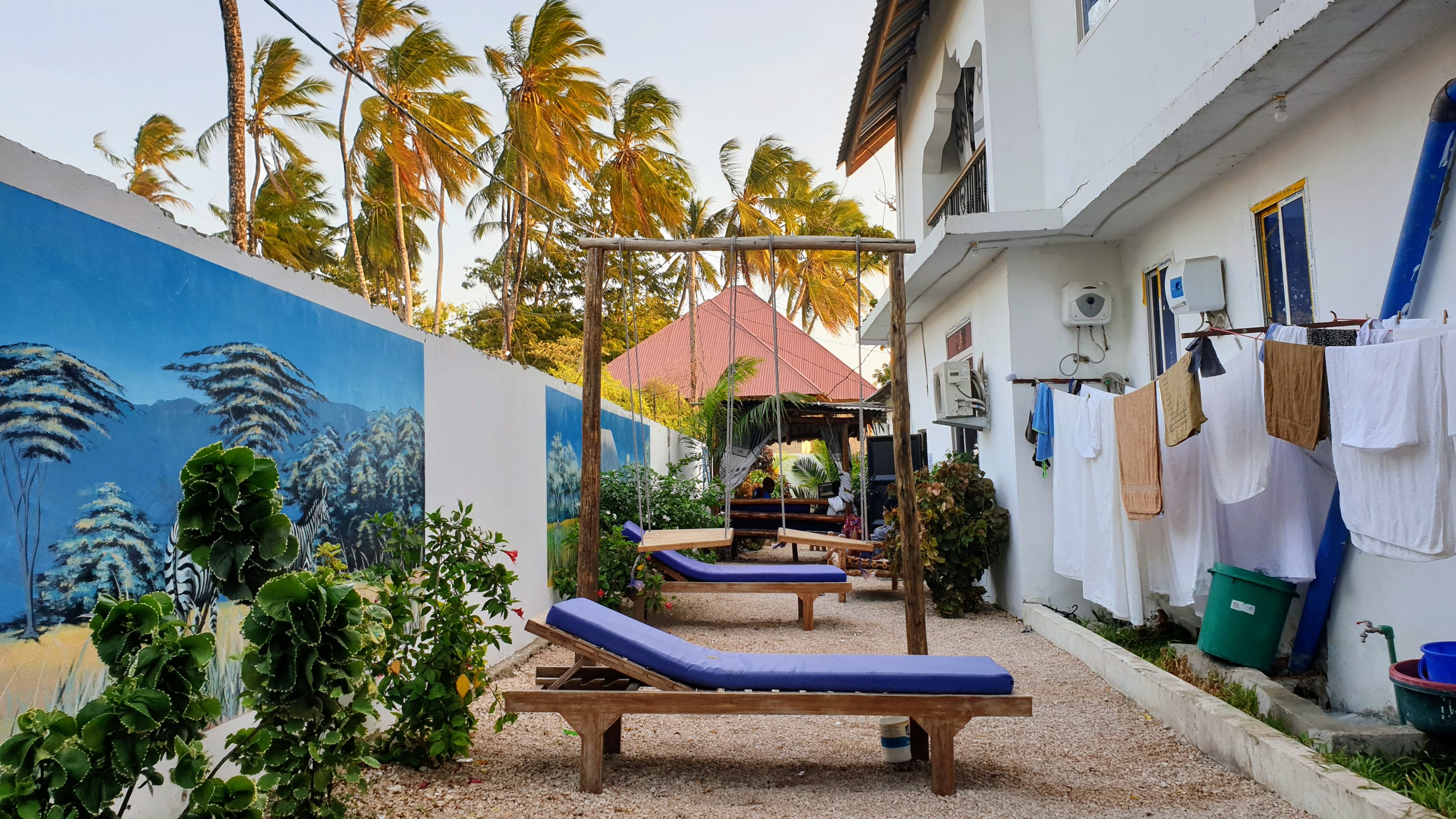
Paje is described as being more low key, less resorts and more backpacking beach bums. I booked a private room in a hostel that was less than 500m from the beach. The hostel itself was very cute with a courtyard filled with greenery and comfortable places to lounge. The art in the room was really strange, but the room was clean and sometimes that’s enough. There’s a single main road that goes through the town that’s lined with a mix of shops that serve locals and tourists. The roundabout has the town’s 3 ATMs only, one of which was working when I went. I met another traveler who said all three were out of cash the day before, so they had to taxi back to Stone Town just to get money since no one outside the resorts takes cards in Zanzibar (my hostel was cash only, too).

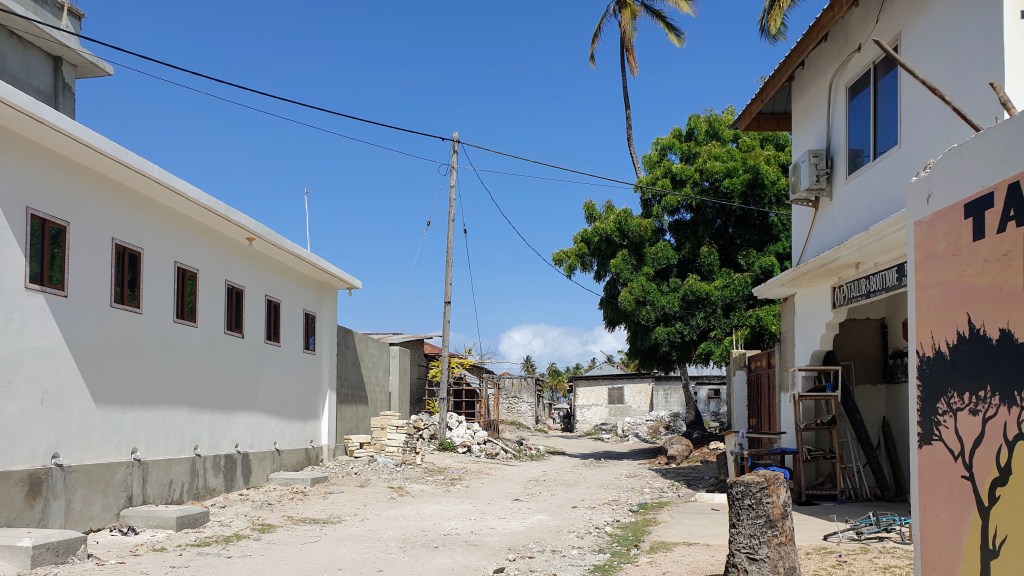
The town layout of Paje is very open compared to Stone Town and is consequently hotter. The afternoon I arrived, I had to hide inside until it cooled off because the walk to the ATM and back almost baked me. As dusk brought cooler air, I headed down to the beach for dinner and was surprised that the short walk was through a local neighborhood (the part not for tourists). It was heart wrenching to see the contrast of how the people who live in this paradise island live so close to the luxury beachfront resorts. Unlike some resort towns, at least the beach at Paje is open to all, and I saw plenty of local kids playing and a mix of abaya clad ladies amid the western beachwear. 

At the restaurant, I accidentally brushed my leg against the leg of the chair and opened a few dozen micro-blisters that I didn’t even know I had. I knew that the burn I got on the back of my calves while snorkeling was not great, but I had spent several days keeping that area carefully out of the sun and applying aloe and shea lotion many many times each day (and night). I thought it was getting better and didn’t realize that there was a layer of blister basically on the whole thing. The casual bump against the chair leg started a cascade event where my skin decided it was time to peeeeeel.

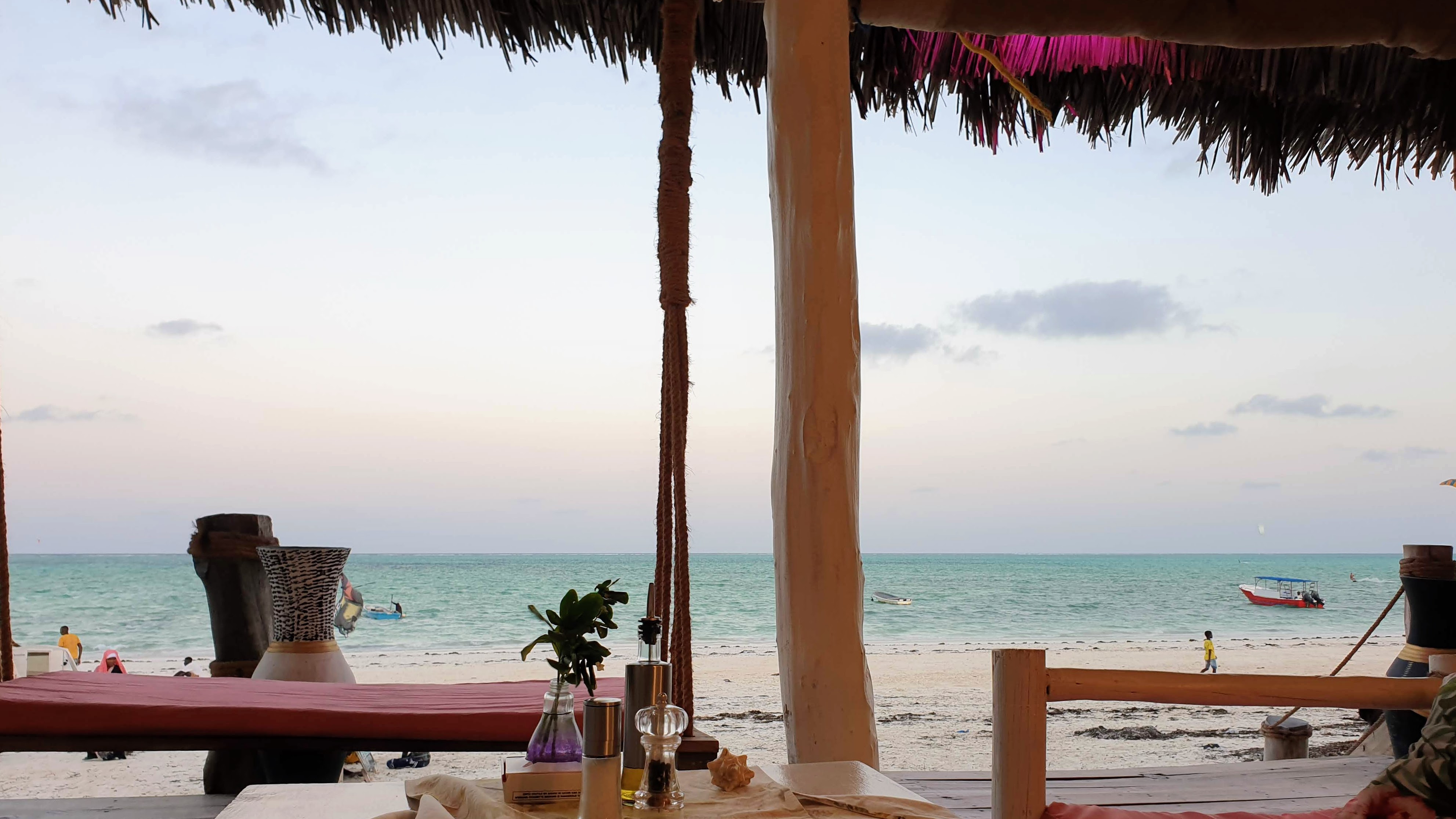
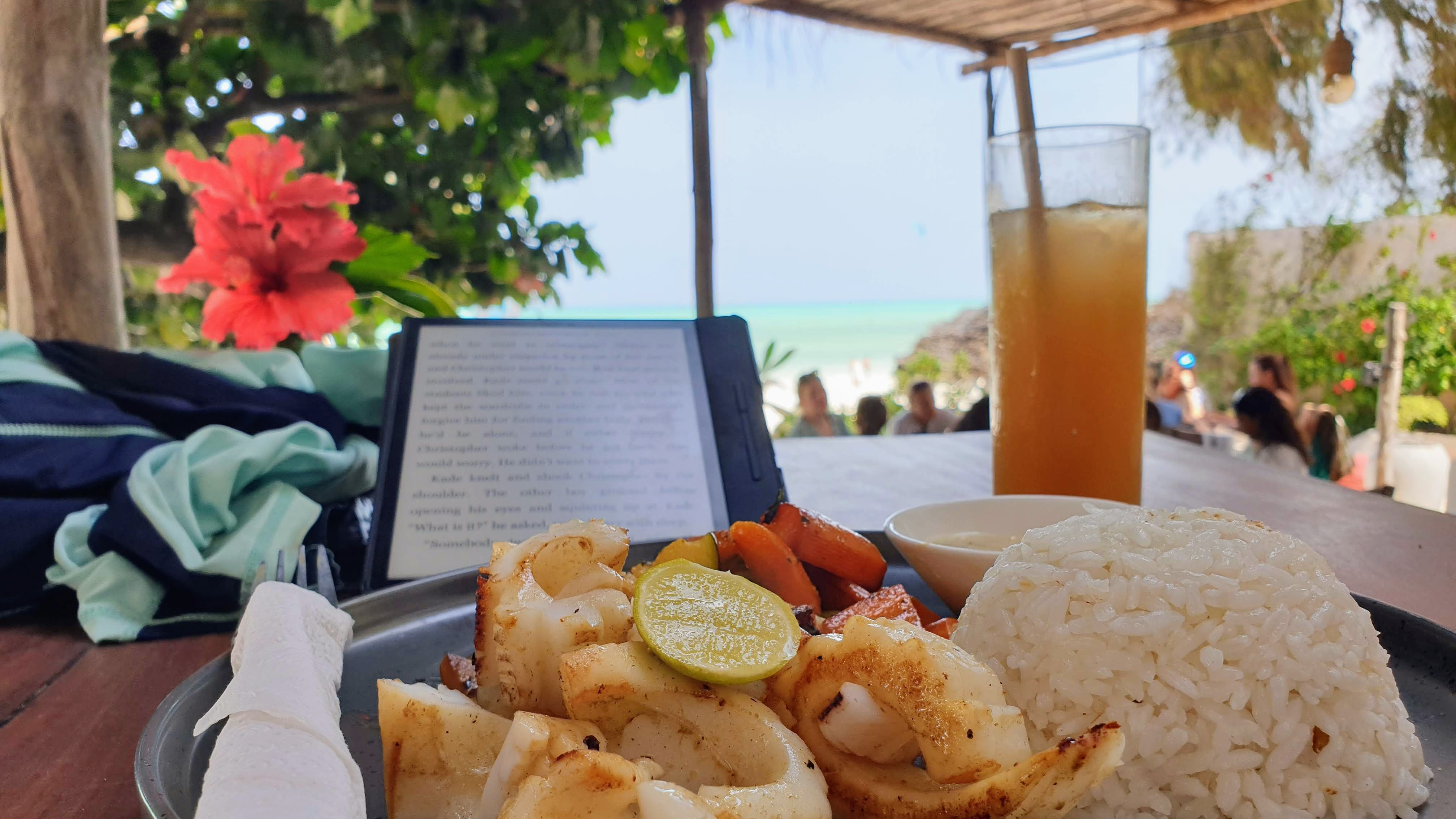
The whole next day I felt like a molting reptile. I knew for sure I couldn’t go swimming until they had some time to heal or else I’d be risking infection. Can I just reiterate how horrible sunburns are, and that with the UV index of OMG sunscreen isn’t always enough? Long sleeves and pants may not be the most fashionable swimwear, but they save not only your skin, but your vacation as well. I spent all that day lounging in a beachfront café ordering drinks and snacks every so often while reading my eBook and watching the ocean. I won’t say that it was a waste of time, because I don’t think any time spent with that view can be wasted, but it would have been more fun if I could have done some of the water activities.

Paje is famous for the beach and the kite surfing. I was interested to try it out. I went parasailing in Mexico. I was able to do a scuba dive in a single day in Aqaba, and I’ve gone caving with guides and minimal training in the US and New Zealand. All those activities can take years of training and practice to master, but can also be done in an afternoon at the beginner level. So when my skin recovered enough for me to be willing to go in the sea again, I sought out the local instructors thinking it would be similar. Nope! The school offered classes that cost 60$/hour or more and said that it usually took students 10-12 hours of training on land before they were even ready to get in the water! There was simply no “try it out for beginners” option available.

Kite surfing is like wakeboarding with a parasail. You have a wakeboard which is a shorter, wider version of a surfboard, and you are harnessed into a thing that looks like a parachute (all those kite looking things in the photo). The wind then pulls you across the water. Some of the windsurfers were even lifted into the air by the strength of the wind. The water at Paje is extremely shallow, so for the most part the kite surfers were skimming over water that was no more than knee deep. However, the kites and lines are pretty expensive, so I imagine that the schools and rental shops don’t want to risk the inexperienced dropping on and having it fly off or get drenched.

The sales pitches on the beach were different from those in Stone Town. There were two main groups of people on the beach selling stuff and they were strongly divided by gender. The men were all dressed as traditional Masai from the mainland. I know at least some were because they also had the body scarring that goes with the Masai cultural milestones, but there’s a portion of locals who adopt the dress code to play on tourists. They are referred to as “Fa-sai”, btw. Real or Fake, the men are gregarious but polite. They would greet me and start walking along with me. The conversation would begin with small talk, asking where I was from and how long I’d been there, then slowly it would move into the sales pitch. The things they had on offer were very much the same as the Masai themed shops in Stone Town. The ladies were almost all in conservative abaya and hijab coverings, and were less likely to follow tourists or engage in small talk. They were peddling massages, hair braiding, and henna tattoos.

Jozani National Park

Jozani is the only national park on the island. It’s part of an environmental conservation movement to preserve the local ecosystem and rare species. Plenty of locals would happily tear it all up for lumber and farm land, so paying for tours helps fund the park as well as the economic projects that run in tandem with it to provide other means of earning a living for those who are being asked not to use the land. It was on my wish list for Zanzibar from the beginning, but I had been on the fence about it since discovering my sunburn. Then, one morning at my hostel’s breakfast, I started talking to a young man about his AbFab phone case (so rare I find a fellow fan these days, sweetie darling). He turned out to be working on his PhD at the Jozani forest. Hearing him talk about the forest and his work gave me the push I needed to get up off my beach bum and go do the thing.

I learned from some folks who’d been in town a while that I could get to the park via the local bus (called Dala Dala) which would stop at the nearby roundabout. There was no bus stop or any signs, so I waited in some shade and watched the locals. Before long a minivan pulled up in front of a small shop and people started rushing to board. It wasn’t hard for me to get in line and verify with the driver that he was heading the right way. The driver and money man were absolutely able to communicate with me in English, though mostly used Swahili in general. The men on board moved around so I could have a seat. There are plastic jugs that can be moved around the aisle to make extra seats, and with the windows down there’s a good road breeze that keeps it from being too hot.

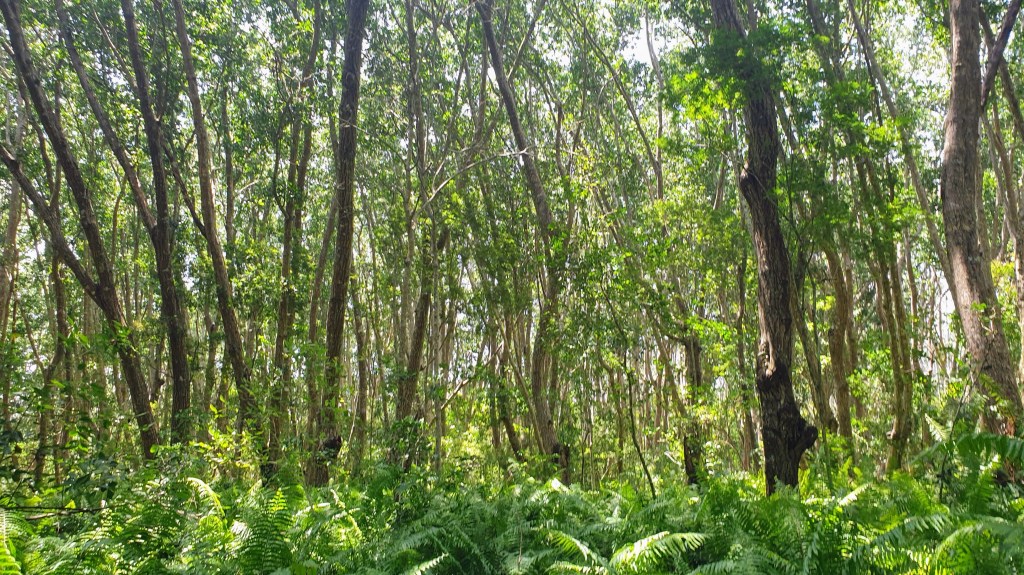
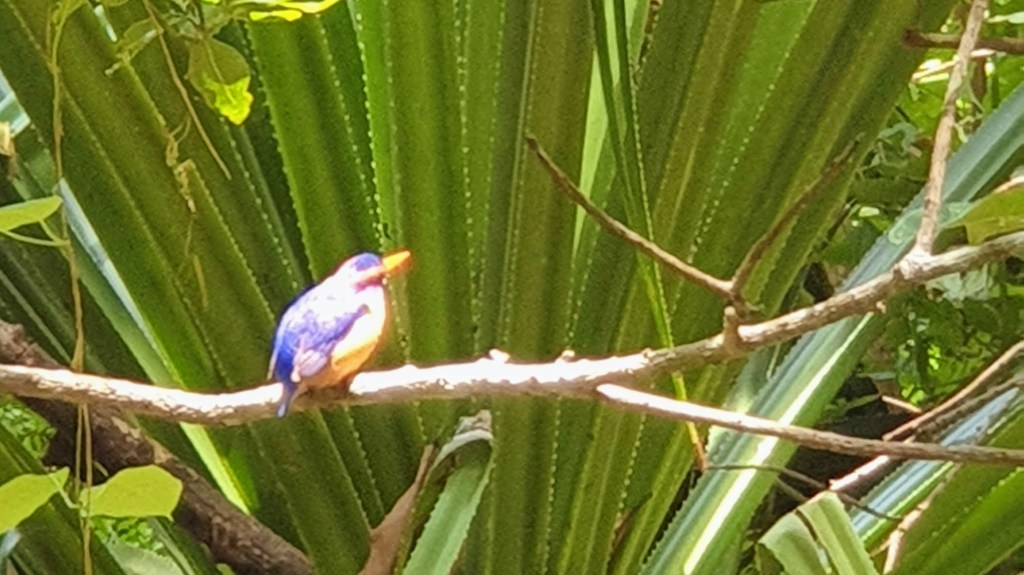
The entry fee to the park is 10.70$ (25,000tzs) and the price includes a mandatory guide. I got a guide all to myself because the only other people coming in at the same time as me were in a hurry and didn’t want to do the whole walk. Their loss. My guide explained things, and helped me avoid looming roots and branches, but didn’t feel the need to fill all the space with talking. Being alone in the beautiful forest with my guide gave me lots of chances to enjoy the silence and see interesting critters. These are photos of the forest itself (some native trees and the remnants of a colonial mahogany plantation) and 3 of the 4 wildlife species I got to see on this part of the walk: millipede, skink, and kingfisher (the larger lizards were too fast to photograph).

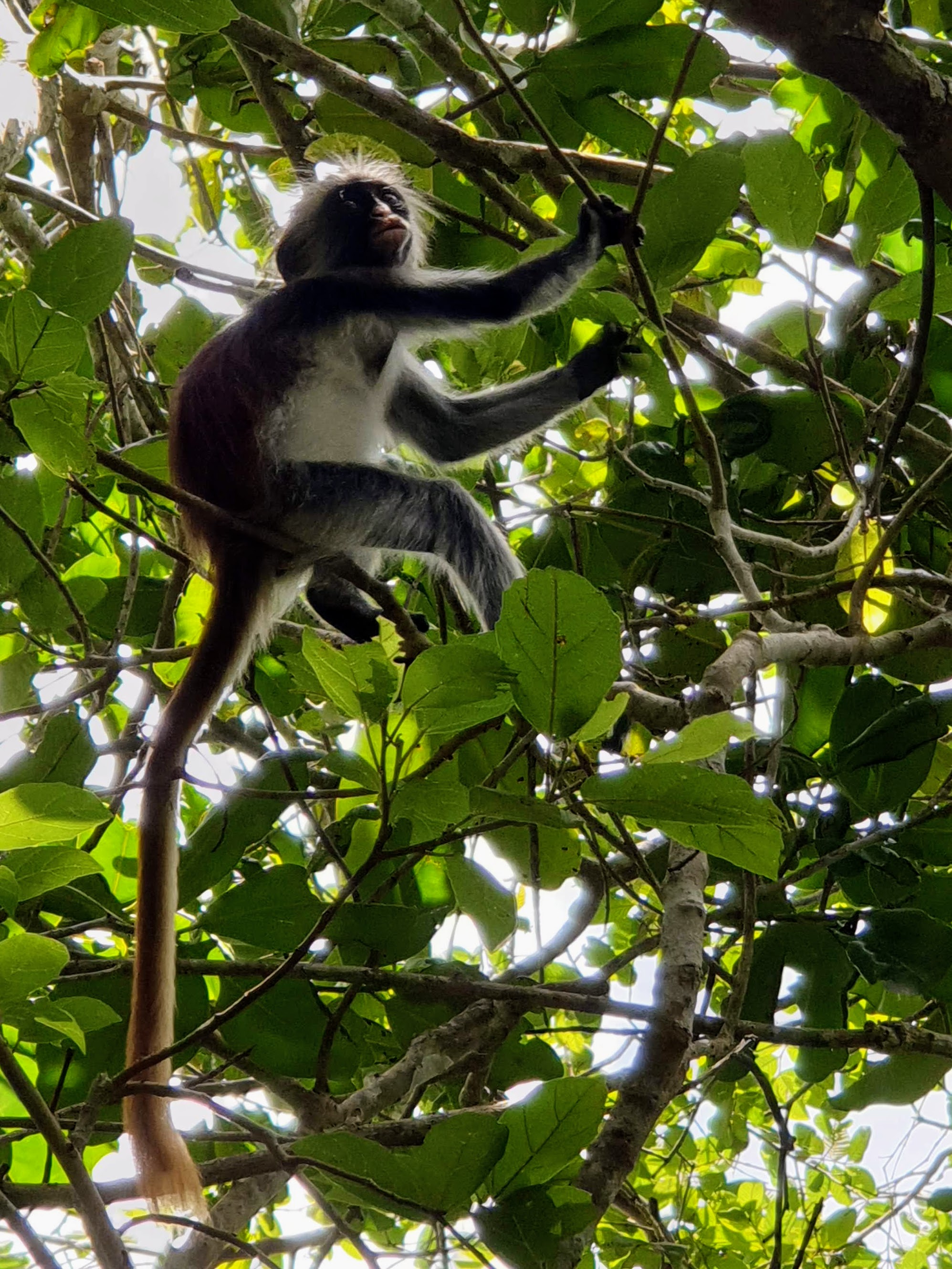
The forest is home to two species of monkey: the more common Sykes and the totally rare unique-to-this-one-island-in-the-whole-world Red Colobus. After we walked around the forest for a while, we went to the area inhabited by the monkeys. The Sykes are very un-shy and enjoy coming down to the ground or low branches to look at the tourists. There are signs warning visitors to stay several meters away from the monkeys at all times, and the monkeys clearly do not wish to obey. It was actually impossible to keep my distance from the curious critters, but they never came so close that I was worried about having my phone snatched.

The Red Colobus on the other hand are more reclusive, more arboreal, and just generally harder to find. The guides text each other with location updates so visitors won’t miss out. When we came upon the tribe that had been located for that day, there was another rather large group of tourists being loud and shoving selfie sticks towards the upper branches. I did see one guide gently push a tourist back who got too invasive, but overall, the animals were far enough above us that they could have run off if they were really annoyed. Maybe human tourists are not more annoying than baby monkeys? I didn’t have a selfie stick for phone extension, but I think I got a couple cute photos anyway.

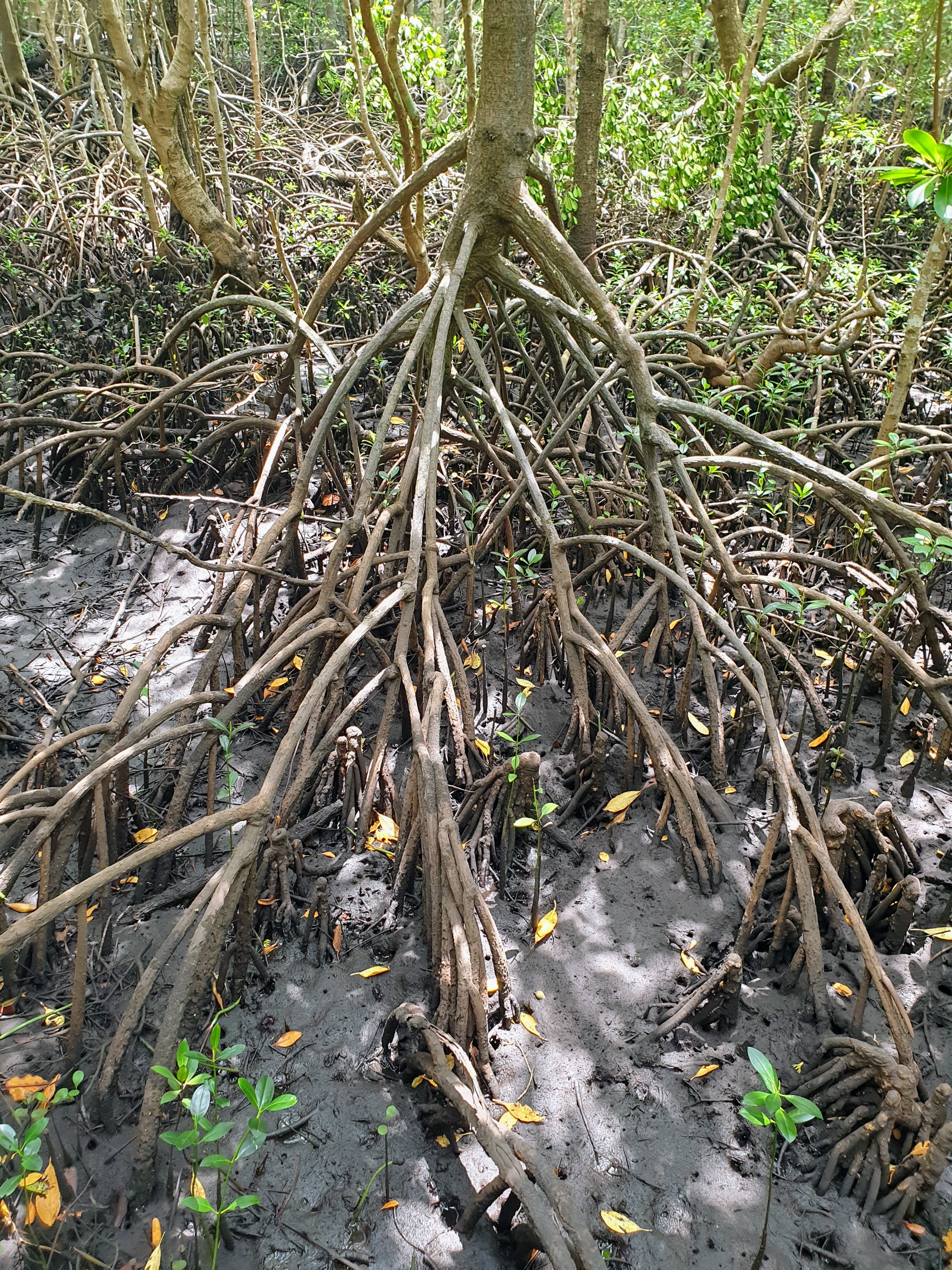
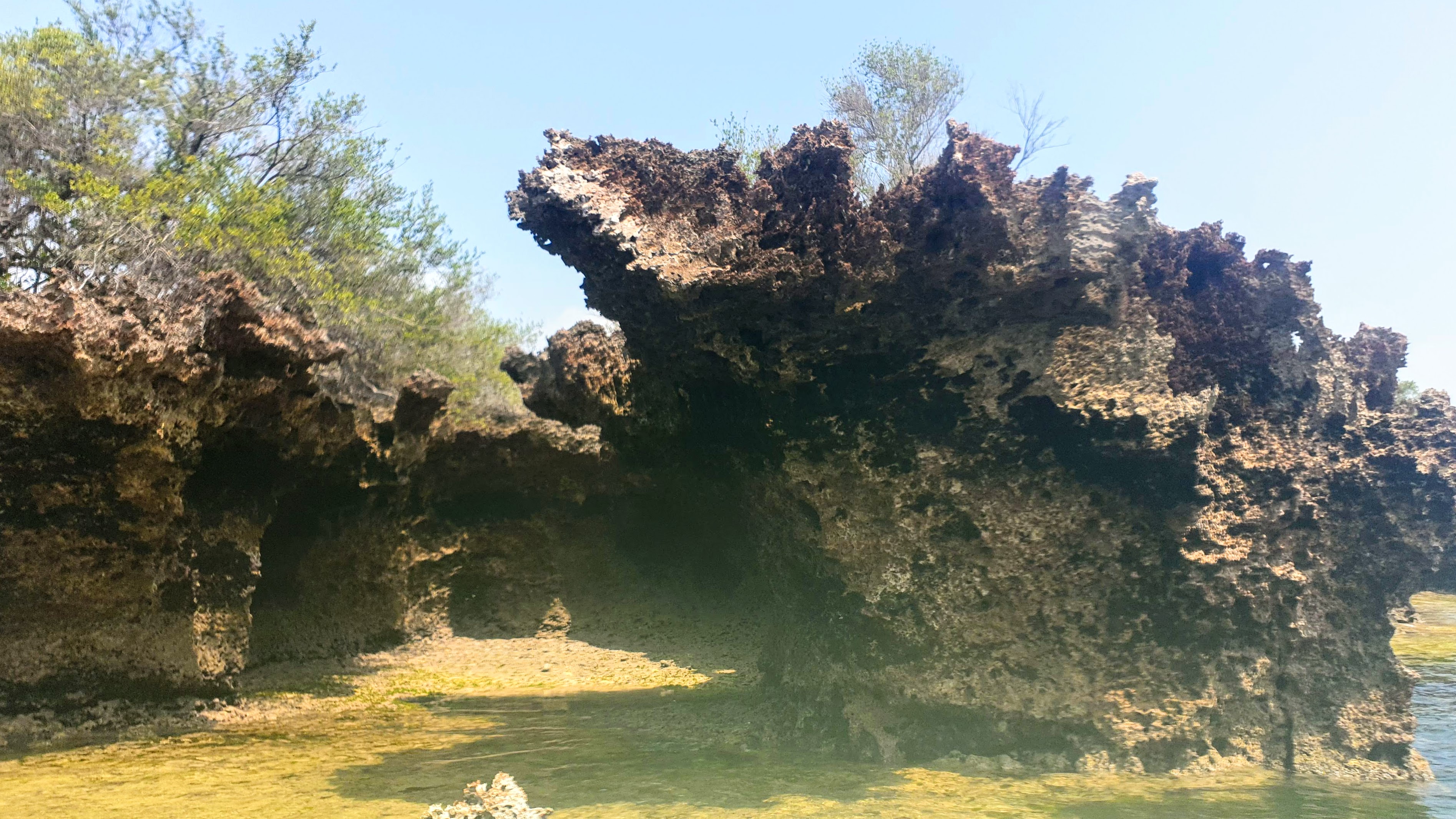
The Jozani mangroves are a little more than a mile away from the main entrance, and my guide seemed flummoxed when I said I’d used the public transit and didn’t have a car or driver waiting to take us over. Quick on his feet, he went to get his own motorcycle to drive us there. Nothing like riding helmetless on the back roads! We made it safely, though, and I got to see the mangroves at low tide (a recurring issue of this visit) which is actually kind of cool because all the roots and crabs that would normally be underwater are visible. I’d like to suggest “low tide mangrove” as someone’s next Halloween theme.

The Butterfly Park isn’t technically part of Jozani, but the entrance is quite close to the mangroves and my guide offered to drive me over and wait while I looked around (very kind offer). It’s another conservation area that’s also working to help employ and educate nearby villagers to help them have income that comes from environmental preservation rather than income that destroys the environment. They breed and release several native species including the bush babies, many butterflies, and chameleons. The cost for tourists is 18,000 TZS (about 7.50 USD), but locals can enjoy it at a hefty discount.

The butterfly guide told me about the work they are doing with the nearby village, the local school, and the forest before giving me the chance to hold some infant bush babies. Squeeee! I don’t normally go in for handling wild animals, but these are a domesticated pair they’re using for education and promoting the conservation. They were entirely comfortable climbing on me (yeah, that’s my pasty white arm in the photo) and were so cute!! As a species, bush babies are usually asleep during the day (the adult pair sure were) so tourists don’t get to see them in the forest and don’t realize there’s more than monkeys being protected there. These fuzzy lil’ ambassadors help raise awareness of the breeding program and need for environmental conservation.

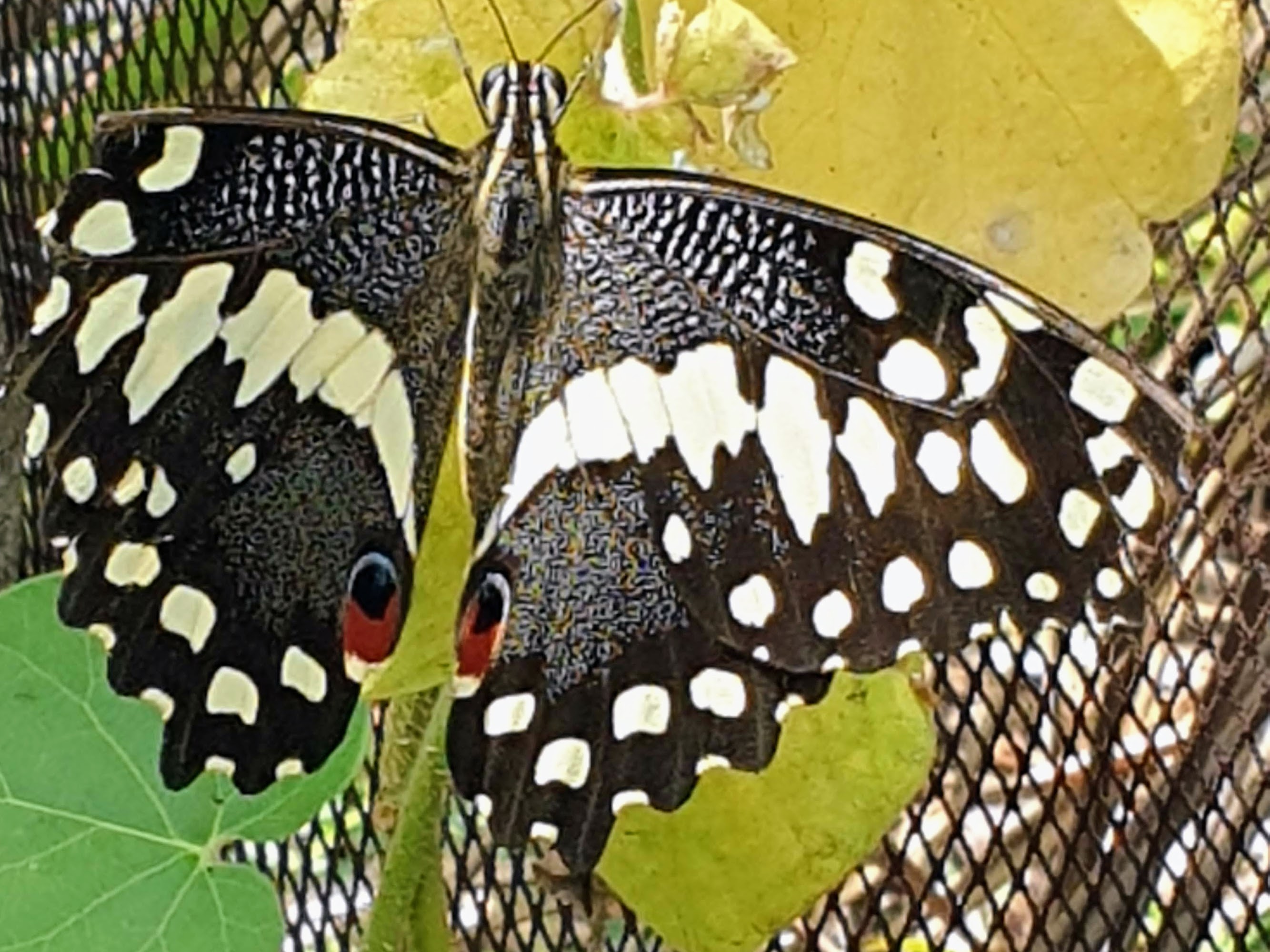
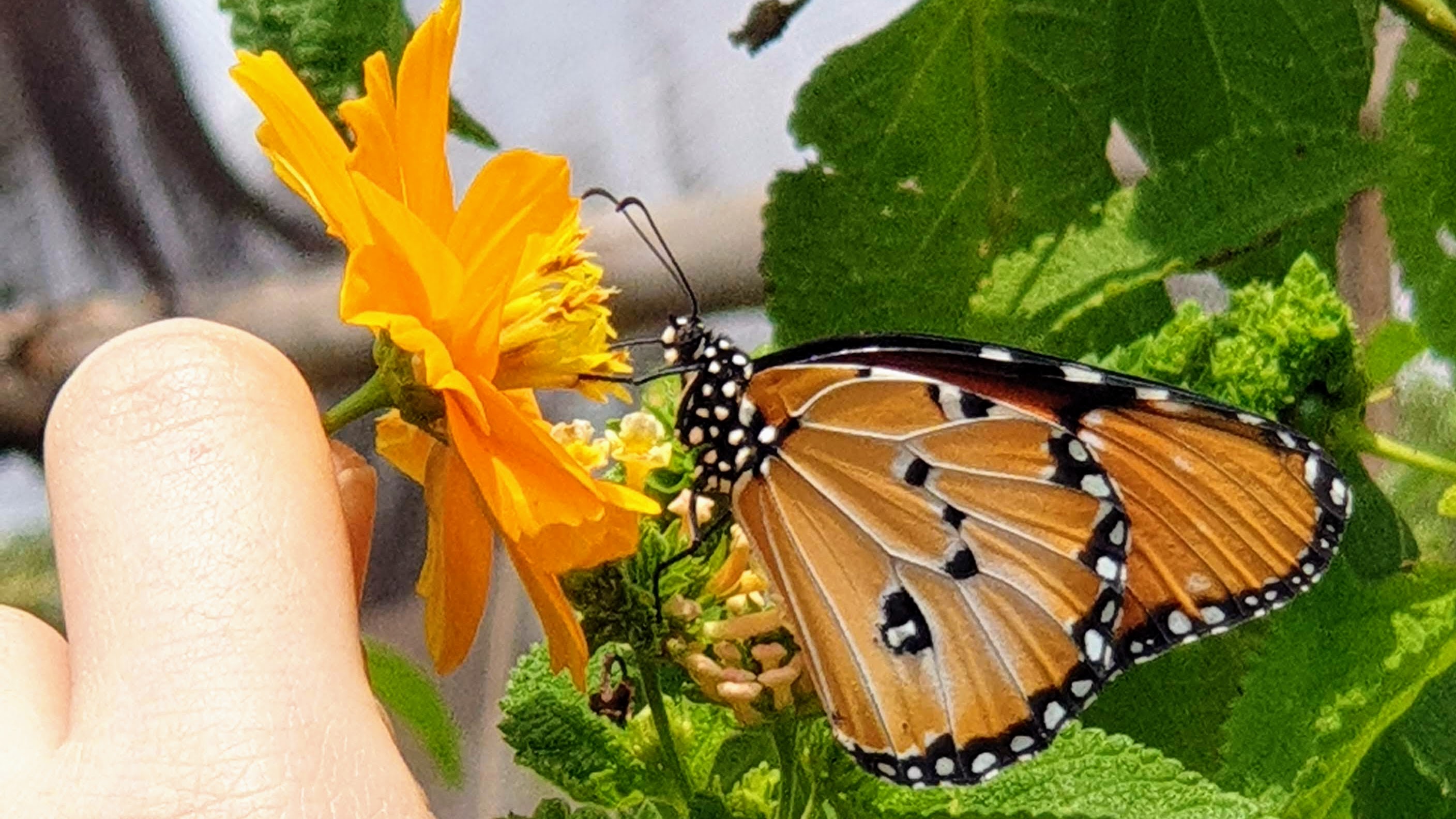
Next we moved on to the butterfly breeding program. In addition to helping the furry species, they are helping the flutters as well. They are much needed pollinators and beautiful as well, but their breeding environments are often under siege by human development or by displaced predators. This park helps breed pollinators year round. As an ongoing part of the hands-on education, I got a handful of caterpillars as he showed me the 4 species they have this time of year (it changes seasonally) at egg, caterpillar and chrysalis stages. We then entered a small enclosure where the butterflies are safe from predators and breeding efforts continue.

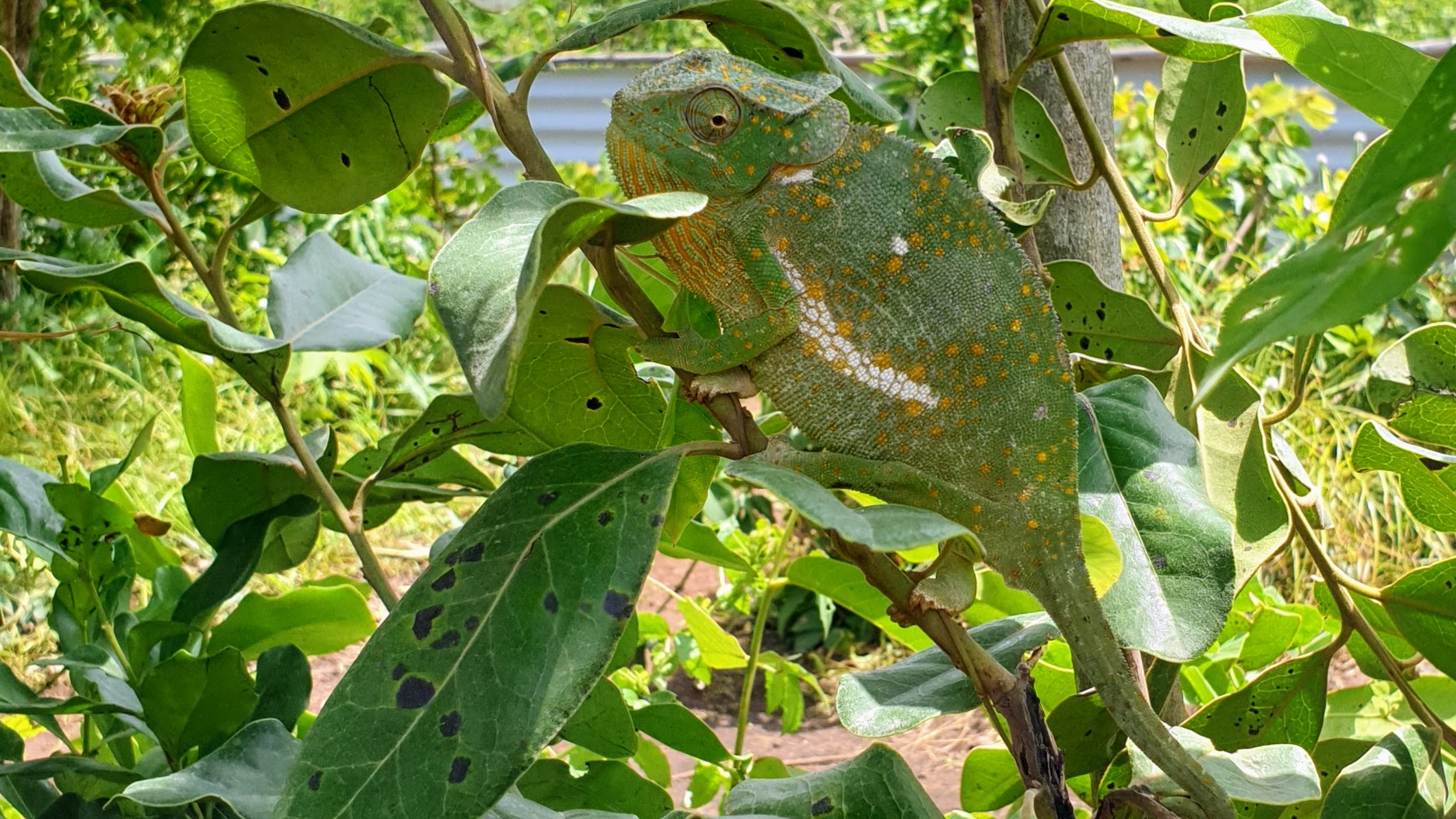
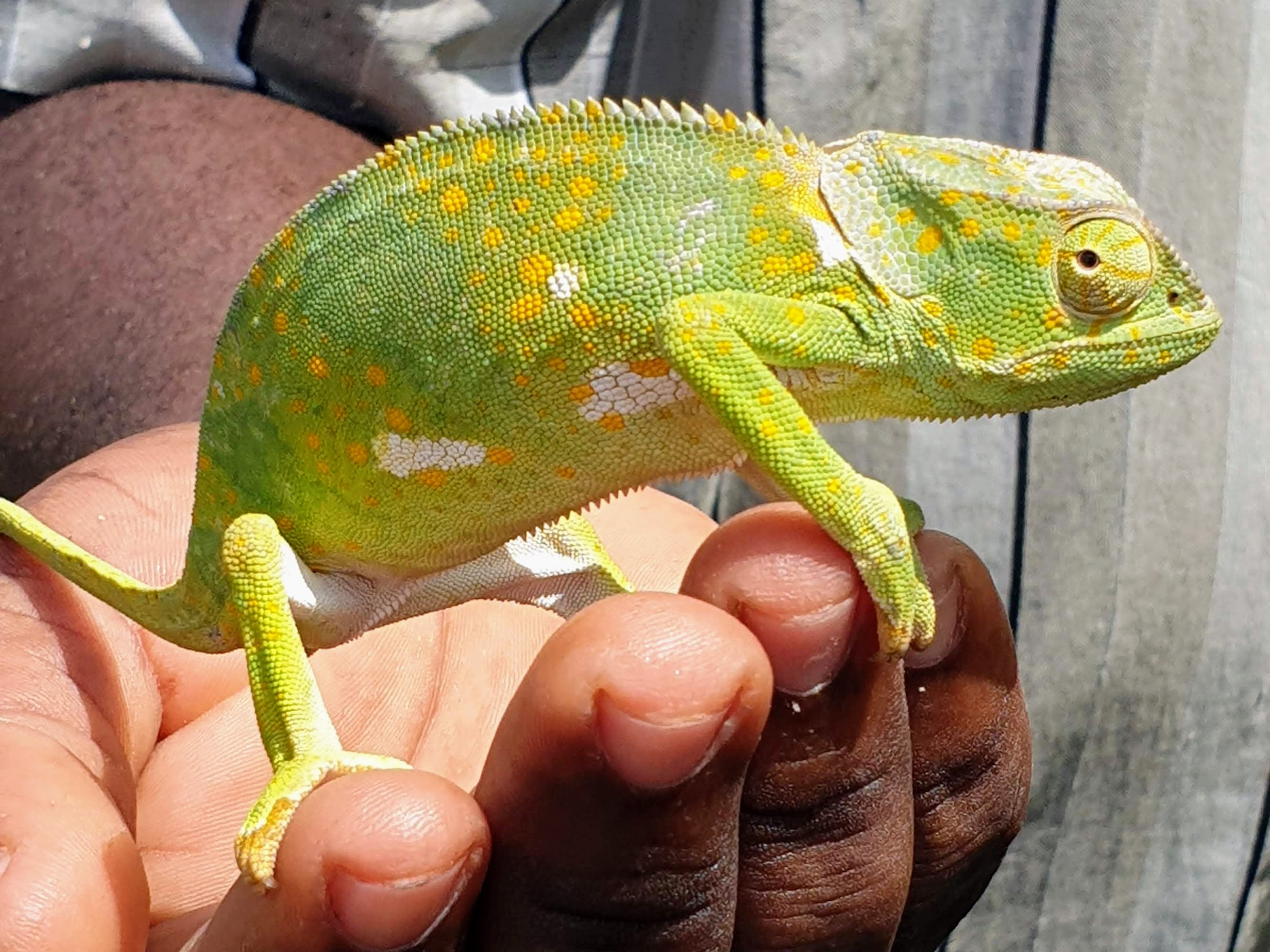
The tour concluded with the chameleon enclosure, although they didn’t need any netting, and were content to hang out on some trees which were roughly segregated by a low fence. I love the way they always seem to be giving a disdainful side-eye.

The Local Economy vs The Tourist Economy

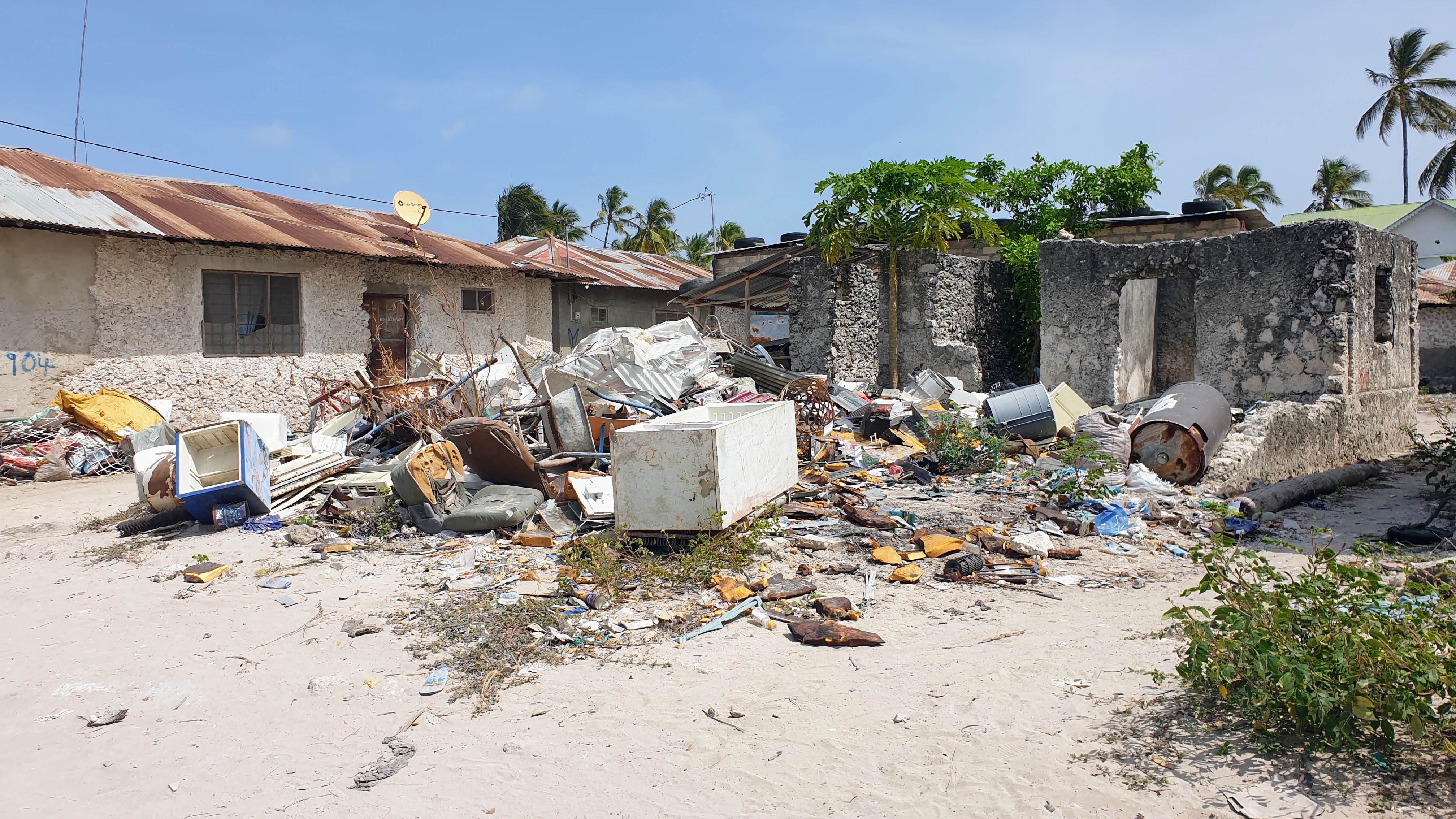
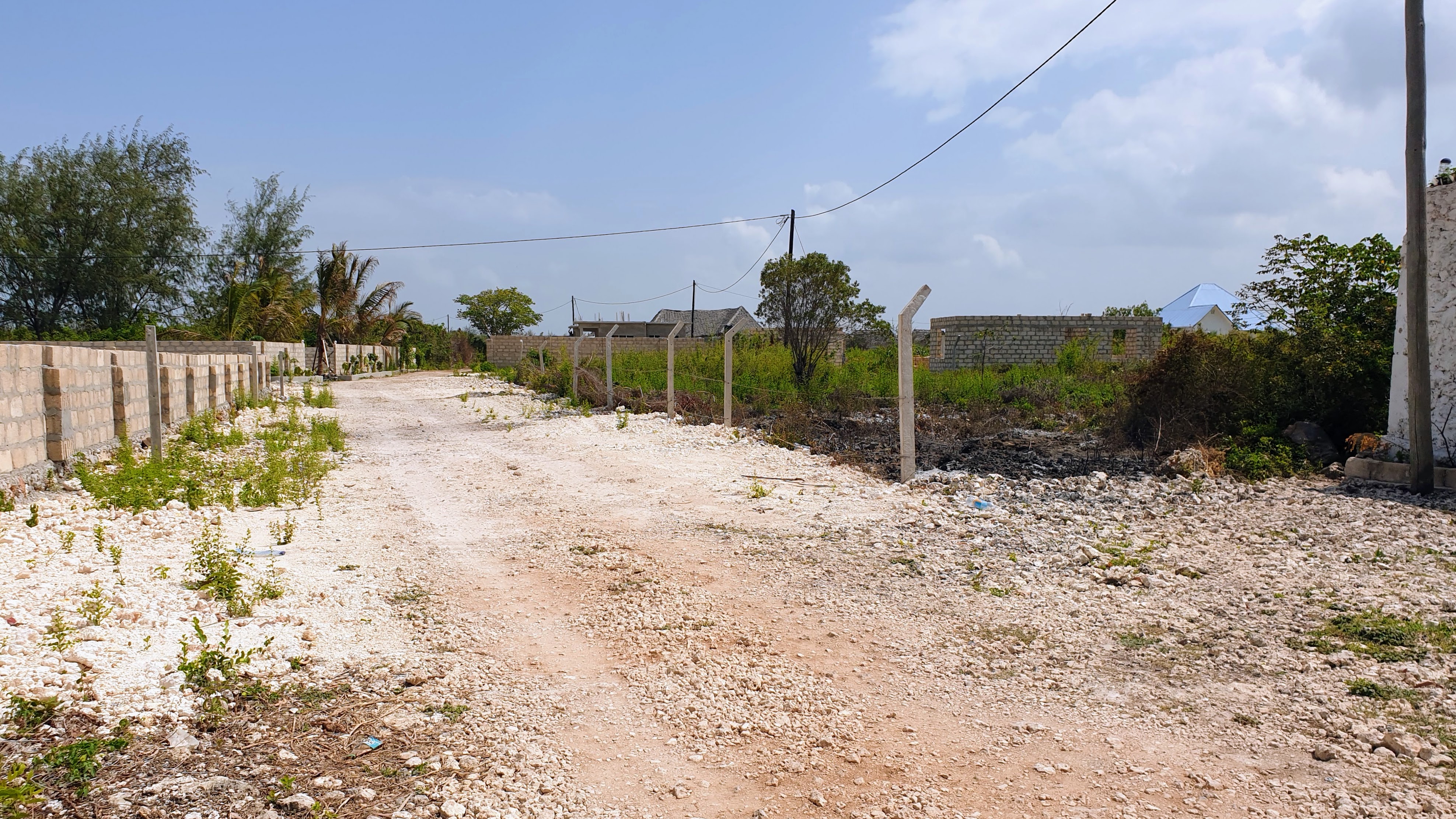
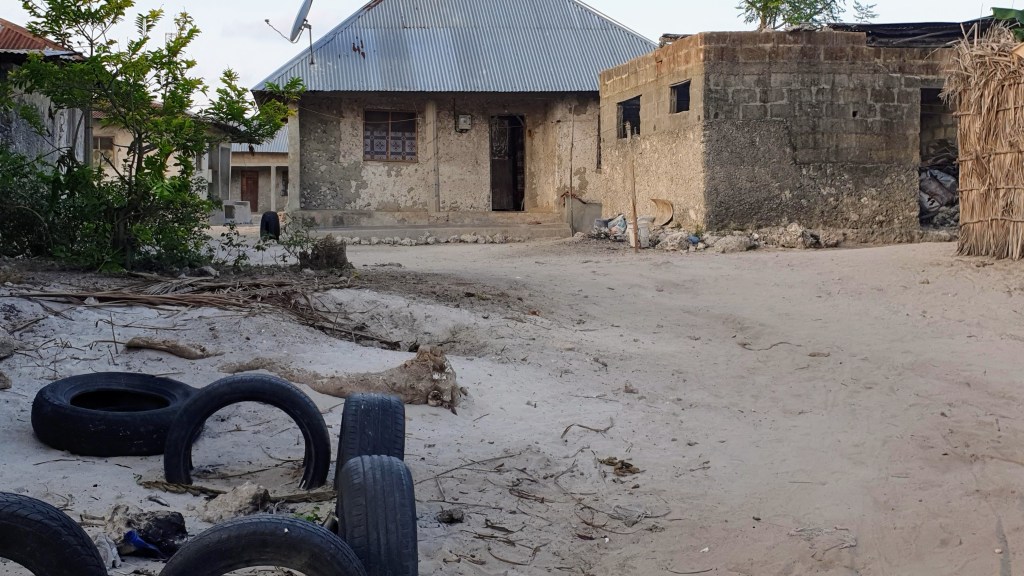
The whole time I was in Zanzibar, I was in shock at how expensive everything is yet how little the average person lives on there ($150-350USD/month). Walking though the local village to get to the resorts in the beach was a real eye opener. The homes don’t have running water, there’s a well and I saw young girls walking to and fro with large buckets. People are cooking on fire. Plenty of cows, goats, and chickens around. Tiny fruit stands and dry goods shops. Places that look like ruins but are actually houses. Then the beach 300m away with luxury resorts.

I ate about one meal a day at tourist restaurants and the quality was nice. Tourist and especially beach restaurants are known to be expensive, but most were less than 25$US for a nice meal and drink, which is not a bank breaker. One night in Paje I decided to try the local street food up on the main road. I got grilled meat skewers, samosas and fresh pineapple slices (all wrapped inexplicably in Korean newspaper for takeaway) for about 2$. Filling and tasty at 1/10 the cost of a meal at a restaurant. I’m used to street food being less, but woah! It’s not just beachfront vs main road either. There’s a place less than 30 feet from the actual street food that calls itself “The Street Food Court” which has several takeaway windows and a common seating area. I tried to go there for lunch earlier and saw that most of the dishes were still in the 10-15$ rangeY yes less than the beach but still 5+ times more than the actual street food!

Then there’s the taxis. There’s no “taxis” in the drop fare charge per mile sense. There’s drivers with vans and special licenses who will take you to places around the island but rates are negotiable. 15-20$ to get from the airport to Stone Town (7-8km), 30$ to go from Stone Town to Paje (50km), 25$ to go from my hotel in Paje to my next one in Menai Bay (27km). The driver at the hotel wanted 40$ round trip to go to Jozani, and the ones out in the taxi lot wanted 50$! For 43¢ each way, I was able to use the public transit. 1/100th the cost of the taxi? I’m used to buses being cheaper but that was next level. (My view from the back of the bus)

Maluum Cave Spring

Another wish list item was the cave pools. I visited one of those in Bohol after my terrible sunburn there and it was ah-maze-ing, so I knew I wanted to do that again with my new sunburn. There are a few caves around the island with natural swimming pools, including one rather famous one about a 10 minute drive from my hostel called Kuza. It was highly reviewed online, and I was trying to figure out how to get there what with all the taxis nearby wanting 30$ to go a few kilometers. Then I met yet another traveler over breakfast who told me about a hidden gem: a little cave pool just one kilometer away that was almost unknown!

This sounded appealing both because of the shorter distance and the potential lack of extreme tourism that had been slowly eating my brain since my arrival on Zanzibar. I looked up the place online and noticed that they had time slots and only allowed a limited number of people into the pool at a time. They also banned sunscreen and other skin/hair products that could harm the ecosystem and provided showers for people to clean off before swimming. It was a level of dedication to ecological preservation that I appreciate everywhere, but had come to see as rare on the island where tourist money was a bigger priority for most than the environment.

I walked the 1.3km rather than trying to navigate the local bus. I’m sure it could have been an option, but the walk was interesting because it gave me a chance to see more of the area that isn’t curated for tourists. Maluum cave is set back a bit from the main road, so the last bit of the walk took me through undeveloped lots on back roads through fields alternately overgrown and filled with construction debris. Like so many things in Africa, the outsides tend to look somewhere between “plain”, “run down”, and “oh god oh god we’re all gonna die”, but the insides can be quite luxurious.

I was greeted at the gate by some young men in Masai garb and checked in at the registration desk. There was a big group that arrived at the same time I did, and I was disappointed when I realized that we’d be sharing the pool because they were very loud and energetic and I was riding the quiet forest & beach bum vibe of the last few days. Thankfully, they were also running late on whatever tour they were doing, so they basically got into the water long enough to take some selfies and then trundled back out leaving me in the pristine natural beauty all by myself.

I didn’t have it to myself for long, but I saw a purple crab, several little fish, and had a short staring contest with a hornbill. Unfortunately, the waterproof case I’ve been using since 2017 finally died that day, so I was only able to take photos while out of the water. The next group that came through shared my calm vibes and I had gotten some time to commune with the nature on my own, so I was happy to share and enjoy the company until the staff signaled my reserved time was up.

They have a restaurant on site as well, so I headed over there for dinner and to air dry before changing back into my street clothes for the return walk. I had green banana curry for the first time. I have had dishes made with green plantains (a banana cousin) which cook a lot like potatoes, but I had never thought of using actual bananas while green. It was delicious and the banana flavor was not at all overwhelming. The weather had cooled somewhat by the time I left, and I had a leisurely walk back to my hostel for my final night in Paje. Here are some cows I passed on the way.

Aside: Due to the current situation in Dakar (where I’m living), I’m adding a little note to let you all know I’m safe. I plan on writing a full post on experiencing this historic unrest in West Africa’s most stable democracy first hand, which I’ll likely publish after my triumphant return to America in August. Until then, I am in a quieter neighborhood with no strategic targets. I have food, water, electricity and a working VPN. If you’re curious about what’s going on, you may have trouble finding details in English, but there’s a lot French resources available and Google Translate is good enough. I recommend searching terms like “manifestation” (French for protest or demonstration), Sonko (the political candidate at the center of the controversy), and of course the popular hashtag “Free Senegal”.

Zanzibar: Stone Town

Stone Town is an architectural love child of Indian, Arabic and Swahili cultures. The narrow maze-like streets car-free (though not cart-free) and stuffed from end to end with life. “Get lost in Stone Town” is another top 10 Zanzibar activity. The whole neighborhood is less than 2km2, bordered by the sea on the west, the Darajani Market on the east, and some fairly uninspiring highways on the north and south. GPS sort of works, but because the streets are so close together and none of them are clearly labeled (or possibly even named) you can only get a general idea of where your destination is. You will get lost trying to get there.

A Brief Historical Context

Zanzibar is an interesting and unique geographical gateway between central Africa and the Arabic and Indian cultures. The trade winds carried ships from India and Arabia then trapped ships on the islands for about 6 months at a time before they were able to sail back. Unlike many other trade centers, where the sailors and foreign merchants were in and out of port in days or weeks, the Indian and Arab merchants who came to the islands of Zanzibar were obligated by the wind to stay for half a year at a time, and so they often married local women, built homes, and had families. Though there is archaeological evidence that the island of Zanzibar was involved in trade with other mainland African cultures, the intercontinental trade seems to have started around the 9th century. There was about 600 years of cultural mixing between the Indian, Arabic, and Swahili people that had ups and downs of who was in charge and who was converting who and who was selling who into slavery, but this is the brief history, so we fast forward to roughly 1500 when Portugal hit the scene.

The 1490s are a bit famous for that trip Columbus took, but he was far from the only European out to find wealth in “unexplored” parts of the world. Vasco de Gama was the first European to reach India by sea, a trade route that required stops along the eastern African coast. Portugal was one of the big European colonial powers and they had their fingers in pretty much every exploited continent. Zanzibar was not only a good resting stop en route to Calcutta, but a source of rare spices and human slaves from the African mainland, which were the big moneymakers in those days. The Portuguese ran Zanzibar for about 200 years, until the late 1690s when the Omani Sultanate took it (possibly at the request of the local Swahili people who thought an Arabic overlord would be better than a European one). Somewhere between 1830-40, the Sultan of Oman moved the capital city from Muscat to Stone Town, and when he died in 1856, he split the empire between his two sons, giving Zanzibar to one and Oman to the other. In a move that surprises no one, they fought about it, but then in a shocking twist, they allowed the will to be arbitrated by the British general protector of India. The Age of Empires remains confusing.

Zanzibar continued as a separate Sultanate until the British decided that actually, slavery was morally reprehensible after all, and that everyone should stop now that they had decided to stop. This didn’t happen all at once, but from about 1822-1873 the British put increasing economic and military pressure on the Sultanate to stop trading in slaves, including trade embargos and the raiding of slave ships. Freetown in Sierra Leone was created to rehome the slaves who were liberated by the British during this time. By 1890, Germany and Britain decided between them that Zanzibar would be a “protectorate” of Britain (which is like colony lite). Finally, in 1963, around the time Britain was being forced to give up on the whole Empire idea, Zanzibar got full independence as a constitutional monarchy. They promptly had a revolution to oust the royals in favor of a representative government, and one year later, merged with the mainland country of Tanganyika to form the modern nation of Tanzania. Despite this unification, Zanzibar remains a separate autonomous region (like Hong Kong and China) with it’s own flag, president and taxes.

First Impressions

My first week in Zanzibar, I decided to stay at a hostel in the heart of Stone Town since it seems to be where a lot of the action on the island is. My ride from the airport (a comedy of errors) tried to just leave me in a random parking lot with a random guy. It felt very sketchy, but I have since learned this is pretty normal and that Stone Town is actually very safe for tourists. In Stone Town, “lost” is a relative term. The streets are close and narrow, but there’s a fair amount of order. There’s the main arterial market streets which are loaded with shops, there are the quiet side streets where locals hang laundry and kids play after school, and there’s the waterfront. You’re only really going to get “lost” in the quiet side streets, and even then only for a few blocks until you’re spit back out to one of the main areas or reach the edge.

I was initially overwhelmed by the number of people talking to me. Unlike Senegal where French is the colonial language, English is the colonial language in Tanzania, and they love greeting tourists with spatterings of friendly Swahili as well. The shopkeepers call out as you pass by, inviting you to look, asking where you’re from, and generally being friendly. Of course they want to sell things, but they don’t physically invade your space and they don’t get mean or angry when you say “no thanks”, they just say “hakuna matata, maybe next time”. There are free range sales people who are arranging tours and excursions and they’ll just walk with you and chat. I got some advice about what to avoid doing and eating while in town, and although I never ended up booking with any of the street tour guides, I quickly came to not mind their chatty presence in my walks through Stone Town the rest of the week.

A Guided Tour

I opted for an Airbnb Experience, again hoping that a more personalized touch would be better than a company tour. It seems like Airbnb in Zanzibar is really just a front for businesses. This may also be related to the rules about tourism and taxi licensing. My spice tour guide explained that it takes a couple years minimum to get the licensing to drive tourists around. Walking tour operators don’t have that concern, but they still have to be able to produce papers if they’re questioned by authorities while leading a group of tourists around. The result is that Airbnb isn’t random locals sharing their culture for a small fee, it’s actual real businesses, and you just have to hope they’re not shady. Reading the reviews helps, but as I learned with my Blue Safari trip is not a guarantee. Thankfully, my Stone Town tour was a win. The other person/people who had booked it never showed up, so I had a totally private tour. The friendly guide was happy to adjust the pace, the amount of time spent at each place, and even the places we went to my personal tastes. He also relaxed and opened up a lot more about the details of life in Zanzibar and Tanzania.

The entirety of Stone Town is a UNESCO Heritage site, and there are a couple buildings in particular (like the House of Wonders) that have their own special status. As a result, everything is always under restorative construction, all the time. UNESCO standards require that repairs must be done in the original work methods with the original construction materials in order to receive funding. This is great in lots of parts of the world, and keeps ancient cultural heritage styles of art and construction alive in places where the local economy might have driven them to extinction. However, in Zanzibar, the original construction was often quick and cheap, and the regular monsoons erode the limestone and coral structures. Walls made of old coral are constantly being replaced and the House of Wonders has been closed for more of the last decade than it’s been open.

In addition to the issue of materials and labor, the currency exchange and corruption are eating away at restoration efforts. The UNESCO funds are issued in Euro but the materials and labor must be purchased in Tanzanian Shillings, so exchange rates affect budgets and cost estimations. In addition, the government officials skim way more than what most countries would consider acceptable graft. My guide expressed a tolerance for “reasonable government corruption” by saying that out of a 20million Euro repair budget, the officials can take up to 2million, but should leave 18 for the work. This 10% skim was his idea of good corruption, but he clarified that in reality the take is much much higher, meaning that most of the UNESCO money goes to lining bureaucratic pockets rather than actually restoring the historical heritage sites.

Doors, Windows, & Walls

The Zanzibari Doors are one of the most famous and easiest things to see on your own while wandering around. Each one is hand carved and unique. They seem to have been a Swahili tradition that was adopted and embellished by the Indian and Arab traders. Most of the accounts of Zanzibari doors I found online seem to have been written by people like myself, visitors who went on the tour, so I’m not sure how historically accurate the information is in details. There’s a serious lack of accessible written history of African cultures. Almost all written records were made by colonizers and traders, and those were generally taken away to live in the basement of libraries and archives in the home countries of those colonizers and traders where they remain in dusty obscurity to this day until a few scholars (also likely not from Africa for economic reasons) decide to sort through them for a PhD dissertation which is itself read only by their peers and advisors, never reaching the general public. Is there a dissertation somewhere on the details of the symbolism of Zanzibari Doors? Possibly? But I can’t find it.

The main differences that everyone knows about are: the Indian style doors which may have round arches and usually have brass spikes, originally used in the Punjab as elephant deterrents, later evolved to a status symbol. The Arabic style doors may have a peaked arch or be square topped, and generally also have some stylized Arabic script, protective prayers from the Quran, engraved on the lintel. The Swahili designs include vines, fish, flowers, and later coffee beans and cloves. My guide told me that pineapples and grapes were a later addition, somewhere around the 1850s, which tracks as 1856 being the year that Zanzibar became a separate Sultanate from Oman.

Though everyone used the doors to signify wealth, each culture had different decorative values otherwise. Arab Muslims were (and in many parts of the world still are) not into external displays of wealth on the home. Exteriors of Arab built homes in Zanzibar are very plain. Windows and balconies are built to protect those inside from the eyes of passersby, and there were even covered bridges between homes to allow the secluded women and children to visit one another without stepping into the public view. The Indians, in contrast, loved to be seen. The exteriors of Indian built homes have flourishes and colors, windows and balconies allow the homeowners to show off their wealth and fashion to the public without going outside.

Modern day buildings and newer doors often incorporate traits from all three main cultural influences for both aesthetic and blended heritage reasons. Architecture isn’t the only thing that blends in Zanzibar. Although Islam is an import from the Arabian peninsula, Zanzibar is currently majority Muslim (while mainland Tanzania seems to be majority Christian). However, the cultural blending of Zanzibari history means that in addition to all the major branches of Islam being represented, Zanzibar also hosts Hindu and Jain temples (of Indian descent) as well as a variety of Christian churches including Catholic, Anglican, Lutheran, Adventist, and Pentecostal. I enjoy this photo op of the mosque and cathedral sharing the skyline.

The Freddie Mercury Museum

The tour stops out front of the the Freddie Mercury Museum. This is one of the big hot-spots of Stone Town. They are really excited to have a globally famous rock star trace his origin to their town. Freddie was born in Stone Town to Persi-Indian parents. He didn’t actually live there much, since he was in India as a small child, then England for boarding school, but Stone Town claims his birthright. This tiny little museum costs 8$US to enter and takes 15-45 minutes to view depending on how much you want to read and how slow a reader you are. The displays are mostly childhood and family photos as well as album covers. They have an impressive collection of lyric notes, which is kind of cool. There is also a tiny side room that has his famous Wembley concert jackets (the yellow as well as the white with red buckles). I have no idea if anything in the museum is authentic since replicas of these items are pretty easy to get online.

The museum is not what you’d call impressive. I’m biased because I lived with the Seattle EMP (now Mo-Pop) for decades, but even diehard Queen fans would likely feel underwhelmed. Nevertheless, I am happy I spent my money there and I hope more people do because Tanzania is still a place where being queer is illegal, punishable with fines and prison time (up to a life sentence). Freddie is a queer icon. As a bisexual man, his sexuality is often subject to erasure. In the West people tend to forget that he was BI and not GAY, ignoring his relationships with women. In the museum in Zanzibar, there is no mention of his relationships with men, and his relationship with Mary Austin is the only romantic reference. Despite this erasure, I think their pride in Freddie can act as a wedge to allow a discussion of LGBTQ+ rights to take place in Zanzibar and eventually on the mainland, so they can have my tourist money.

“[Queen is] just a name…It had a lot of visual potential and was open to all sorts of interpretations. I was certainly aware of the gay connotations, but that was just one facet of it.”

“I’m as gay as a daffodil, my dear!”

-Freddie Mercury

Zanzibar: The Indian Ocean

The Indian Ocean off the coast of Zanzibar is of a deep, brilliant blue that one suspects has been altered in brochure photographs, but is in fact that blue (not every beach every day, but often enough that you are likely to see it at least a few times on a visit). Lounging at a beachfront restaurant while enjoying the sea breeze and insane blueness of it all, is among the top 10 activities recommended to tourists on the island. Snorkeling, diving, surfing, and kitesurfing are also all on offer. I looked into each one, and discovered that three of the four activities were multi-hundred dollar investments (since I am not PADI certified and do not yet have any kind of surfing experience at all). Snorkeling it is, then. Given my lack of planning for this trip, my wishlist simply contained the keyword “snorkeling” and something called “Safari Blue”.

On my first day in town, I happened to spot a PADI certified dive shop that also advertised snorkeling which put me in mind of the trip I’d taken in Bohol where the snorkelers and divers shared a boat. One Ocean Diving is the only PADI certified center in Stone Town and they have a few other boat trips on offer as well. The day I wanted to go was too close for online booking, so I simply walked in and booked an excursion in person.

Safari Blue is on every list of what to do in Zanzibar. Although there is a company by that name, the tour simply refers to the route: a boat trip that departs from Fumba and incorporates the south-western region off the coast with mangrove swimming, snorkeling, a sandbar, (maybe dolphins), and a seafood lunch. I searched online for a good way to take this famous trip without the necessity of being crammed in with heaps of tourists and finally landed on an Airbnb experience with decent ratings.

This is the tale of two sea trips which could not be less alike and still be on the same island.

Safari Blue

When I saw a version listed on Airbnb Experiences, I was excited because I thought I might get a unique local twist on this tourism staple. I was so wrong. The “host” was a tour operator who simply arranged the driver and booked the boat tour for me and the other unsuspecting suckers who thought they were getting a personal experience. It’s normal to join a group on an Airbnb excursion. I recall my Grenada hot springs experience fondly where my hostess drove a group of travelers out to a spring in the mountains and served us a picnic. The whole point of the Airbnb experience is to meet other travelers while a local shows you around in a unique way. This was like booking an Airbnb and discovering it was actually the Best Western all along. It’s not that I wouldn’t stay in a Best Western, I just want to know that’s what I’m signing up for.

Though I would have been happy to meet at the fort, the “host” said the driver would meet me at my hotel and walk me over to the parking lot (Stone Town doesn’t let cars in), which resulted in the driver getting lost, because Stone Town is a maze, and being more than 20 minutes late. There were two other tourists along, which initially, I was pleased about since I had done my previous Zanzibar Airbnb experiences solo. The driver explained he would hand us off to the boat operators at the docks. There we discovered we were joining a group of 6 more on a dhow operated by what seemed to be a very large and well logo’d tour company called Johari.

The boat workers were in a big hurry to get going, and I’m not sure if we were actually late or if it was just the timing of the tides that day, but for the first time in Africa, I felt rushed. We had to get swim fins at the dock and two of the people in my excursion also had to use the tiny brick building to change. This is the location from which all Safari Blue boats leave regardless of which company actually owns one, so it was crowded and busy even in the off season. Once on the boat, we sailed out for a while under scorching sun and finally arrived at the “blue lagoon”. The tour companies definitely put their absolute best photos online for you to view, but what no one tells you about Zanzibar is the way the tides can make or break your experience. Tides don’t happen at the same time every day, but they are predictable. As I learned when visiting the hot spring beaches in New Zealand, tide charts are easy to access online. If you want the brochure photo experience, it’s important to visit Zanzibar at a time of year when the tides are in your favor.

The blue lagoon is advertised as being a refreshing swim in the crystal blue waters of a mangrove pool. Due to the tide being out, it was more like the beige lagoon, and the dhow wasn’t able to get close in the shallow water. We took a smaller motor boat closer to the lagoon entrance where we could see the rocks and mangrove roots laid bare. I imagine it is beautiful at high tide with the lagoon is full to the brim with turquoise blue water, and this was definitely an interesting artistic landscape, but all of us were hot and sweaty and now we were being told we couldn’t even swim, but would get just a few moments for photos before moving on. 

By the time we got back to the dhow, they had put the sail away and erected a shade canopy which was most welcome, even if it meant we would be motoring the rest of the way. They also served a plethora of delicious fresh fruit including young coconut, watermelon, mango, red banana, passion fruit, grapefruit, and the biggest pineapple I have ever seen. Truly nothing compares to eating tropical fruit in the land where it was grown. (or at least the neighboring island).

When we arrived at the snorkeling spot, they handed out life vests, masks and snorkels. I was the only one to pass on the life vest partially because I’m a strong swimmer, but mostly because I am a flotation device. I struggled getting settled in the water, which is no surprise since it has been 4+ years since my last snorkel trip. The strap on my first mask broke. The replacement had a leak that meant I had to surface to drain the water every couple of minutes, and by the time I got the third mask, I was loosing my enthusiasm for the experience. There were a decent number of fish in the water, small tropical standard breeds, but no less beautiful for being common (I like dandelions too). The coral, however, was in a sad state. The cloudy water made it difficult to tell at first. With all the other tour boats in the area running motors and dozens of tourists splashing around, the water was not particularly clear. It was also only partly sunny, which is normally my preferred level of sunny, but clouds cut down on underwater visibility.

When I got the mask situation sorted and was able to swim around the corals with better control and direction, it was really clear that they were close to 70% bleached. The vast majority of the coral was the dead, lunar surface texture and color of coral which no longer hosts any life. I got the impression that the industry relies on the fact that most of the snorkelers who take this tour are amateurs and don’t know what living healthy reefs look like, because many of the other people in my boat were totally thrilled with the view. Only one other traveler who was just as much of a globe trotter as me agreed, though she said it was still better than the condition of the reefs she’d seen in Egypt. Since my first reef exposure was on a private beach in Jeddah, I may be spoiled. I have seen a healthy reef in full bloom and although there were fish and an anemone or two, the biodiversity was scarce and the coral itself was in bad shape. I left the water early because it was just sad to look at.

I had been under the impression there would be two snorkel stops, but they claimed our gear as we re-boarded and said we were heading to the Kwale sand bar. There are several sandbars around Zanzibar which are visible only at low tide, and get swallowed up as the tide comes in. I think tidal events are cool, but a sandbar at low tide is a kind of goopy beach. When we arrived, the sand bar actually connected to the more stable small island of Kwale to the south, reminding me of the Jindo sea parting I went to in Korea where the land bridge becomes walkable only once a year at the lowest of low tide. I love the ocean, I was happy to be swimming in that gorgeous blue, I just… don’t understand the point of taking the boat all the way over to a piece of sand that doesn’t actually look that different from other pieces of sand. At least in Koh Lipe, the island we stopped at was totally unique being made of ocean polished rocks.

The sand bar was also a parking lot of dozens of dhows taking all the other tourists on the exact same trip. Quite possibly hundreds of white tourist bodies on this little strip of sand made me think of Lilo taking photos of the tourists in Hawaii. I walked across the sand bar just for the experience, and then I sat in the sea contemplating my life choices and being rather sad about the chunks of dead coral mired in the silt and the dead starfish a group of Russian tourists were taking turns posing with behind me. Then we were bundled back into the boat and taken to the Kwale Island, which again because of low tide was a long walk through a bizarre post apocalyptic moonscape under the blazing sun trying not to trip on rocks, slip on algae, or step on sea urchins left exposed by the retreating ocean. 

The wild thing about this is that I also love tidal pools. I adore going to the coast at low tide and looking at the life revealed there. I have done this up and down the west coast of the US. One of my very first blog posts was about Thor’s Well where we admired the natural phenomenon of the low tide creating the illusion of a hole in the ocean. It’s not “low tide” that I dislike, but the contrast of expectations and reality being miles apart. The photos of these places are high-medium high tide and there’s just zero warning about how insanely different it is at low tide. With the high tide, you get the beautiful crystal blue water coming right up to the sparkling sandy beach. At low tide, you get a sort of salty swamp with slippery and pointy bits that no one’s water shoes are really prepared to walk through. We were not there to admire the sea-life or the interestingly shaped rocks, however, and were once more rushed along since we had so much farther to walk at low tide than those who visit at high tide, and the tour guides were anxious to get us to the destination so they could have their break.

When we reached the small tourist village that nestled above the tide line, we continued on past shops and covered seating areas. I thought perhaps each boat had a designated spot where they took their passengers to avoid confusion, but as we passed the last picnic area and continued into the forested interior, I began to suspect something else was going on. This trek into the brush eventually led to a giant baobab tree fallen on it’s side and still growing. There was a short presentation about the baobab, a taste of baobab candy in an attempt to sell some, and then back we trooped to the eating area. The guide was impatient with those who wanted to take photos after the presentation (you know when the guides weren’t in the way anymore). Then we had a very plain but generous seafood buffet. The entire experience was a study in mismanaged expectations.

After lunch we motored directly back to Fumba, the day was over after three largely disappointing stops and a lunch that was in no way superior to the seafood available on the main island. I lost a flip flop, my sunglasses broke, and somehow also my phone case (which was empty in the waterproof bag because my phone itself was it its waterproof case) also cracked. I spent 20$ to replace the sunglasses and shoes, which is probably about what I’d pay at a Walgreens, but it just felt like an extra cost on top of an already overpriced (100$ USD!) and underwhelming experience. 

I think if I’d known what I was getting into it could have been enjoyable. I know that if I hadn’t had a far superior snorkel and island tour at Koh Lipe for ¼ the cost I would not have been so let down. Tourist trap experiences aren’t bad in and of themselves, but once you have done them a few (dozen) times, the novelty wears thin. I’m tired of seeing the same junk in every shop – some of it was literally the same junk I saw in Thailand, Malaysia, and the Philippines (complete with made in Thailand tags!) I’m tired of hordes of tourists crowding the same beach or swimming hole because it was at one time photographed as a paradise and has become entrenched as the go to spot, the name of the destination meaning more than it’s faded commercialized beauty. I thought that Airbnb would be a different take on the standard tour, not merely a different gateway to it. After all, there are a lot of small reefs, islands and sandbars in the area that could easily be reached by boat. Live and learn. 

One Ocean Dive

The next day a very different and much more enjoyable experience. To start with, One Ocean Dive asks people to show up to the shop early enough to leave time for a cup of coffee, picking out equipment, and getting dressed, so I never felt rushed. The cost of the excursion was less than half that of the Safari Blue and guaranteed 2 snorkel spots while skipping the mucky low tide islands and sand bars. The equipment on offer even to me as a snorkeler was immensely superior quality, and in addition to fins, mask and snorkel, they offer each swimmer a springsuit wetsuit (stops above elbows and knees) to help prevent sunburn.

They also request swimmers to only use reef friendly sunscreen. The chemicals in regular sunscreen kill reef life, and it’s probably one of the reasons why the coral I had seen the day before was in such sorry shape. I declined the wetsuit because I have a rather full coverage swimsuit and my own UV blocking rash guard that fully covers my top when closed, a necessary purchase after the last snorkeling induced sunburn, but it was a thoughtful touch since many tourists arrive in skimpy swimsuits which are entirely inadequate protection from the African sun. (sidenote: I was not spared the sunburn despite all my precautions, but the suit would not have covered the area I was burned on, the lower back of my calves, so I guess the next time I go to a tropical paradise, I’ll be bringing swim pants in addition to my long sleeved rash guard)

We had a bit of a walk along the beach to get to the boat. Although initially annoying, I realized this was in our favor since we were leaving the hordes of tourists behind. There were three of us on the boat, myself and another snorkeler, an older gentleman from Germany, and one scuba diver, a younger American man who was deep into the action-adventure life, but not a jerk about it, which was refreshing. We traded stories of our adventures as the boat motored out to the first dive site and I was even able to recommend a hike to him (Goldmeyer, if you’re curious) since his next trip would be Seattle, my home stomping grounds. The water was picture blue, and when we arrived at our first dive site off Bawe Island, we were the only boat in sight.

One of the guides stayed with the boat, one went with the diver, and one came with us snorkelers. He carried a bright orange life ring which made him easy to find and provided an emergency rest stop should a swimmer get tired, cramped or otherwise need a break. We were not in easy swimming distance of land, but I could still see the thin strip of sand and trees on the horizon. The guide led us to the reef and my heart swelled with the waves to see that here the reefs were bright, diverse, and alive! I had feared so much that the damaged reef at Kwale was indicative that climate change and tourism had destroyed enough of the environment that half-dead reefs would be the normal experience in Zanzibar, but this area proved that the impact of tourism (chemicals from motors and sunscreen as well as the churning of water, litter and other human contributions) was the main culprit since just a few miles away the reefs were healthy and thriving.

I struggled a bit with the waves, as we were far enough from land that we weren’t sheltered. What may seem like a gentle swell from the boat can easily roll right over the top of your snorkel if you’re not paying attention because you are gawping in awe at the scenes of natural nautical beauty beneath and around you. I also struggled more with the camera. My previous snorkel excursions had all been in fairly shallow, calm waters. Even in Bohol where we had a strong current, it wasn’t something you felt until you tried to swim against it. In those places, I was able to simply relax and let my natural buoyancy keep me close enough to the surface to breathe while admiring the view. This meant that navigating the stubborn button pushing and touchscreen touchiness of my underwater phone case was the only thing I had to concentrate on. Now, however, I had to kick my fins almost constantly just to stay in place (necessary for taking photos) and I was trying to time my breaths to the waves above so that I didn’t accidentally inhale at the same time a wave was cresting over my snorkel.

I took turns wrestling with the camera and just enjoying the experience because we need both to be mindfully present in the moment and to preserve memories for our future selves. When you view the photos of this day, bear in mind this was taken on my 4+ year old phone in a 10$ waterproof “case” that was basically a plastic bag with an industrial watertight seal. I do not have anything like a high quality underwater rig, but I still really enjoy being able to capture a few random moments of these magical underwater gardens. I thought 45 minutes might be too much given the paucity of life in my earlier swim, but this reef was so expansive and diverse that I was still engrossed with the guide caught my attention and said it was time to head back to the boat.

On the way to the second site, we had a generous snack of samosas, pastries, and fruits. It wasn’t a “meal” in the traditional sense, but it was delicious and plentiful, and allowed us to refuel without diverting away from the focus or getting too full to swim in open water safely. We talked about the life we’d seen below, and I got only slightly jealous of the diver since he’d spotted an eel, but I was thrilled with the variety of sea life, color, and shapes that my own swim contained and I finally felt like I’d found what I had been promised on this island paradise.

The second site was even further from land, the water was a deep dark blue, and the waves even higher. The site wasn’t just a reef, it was a sunken ship which had been overgrown with corals and other sea life. Despite the depth of the water around us, the boat itself was on a raised part of the sea floor, which made it easy to dive to. I wondered at first if the water was simply clear enough that the boat looked closer to the surface than it was, but when I saw the scuba divers below me it provided excellent scale. The ship is the Great Northern which was a British cable laying ship that sank in 1902. If you’re a boat enthusiast, you can see more about it here. Only a small part of the boat remains after extensive salvage operations, but it was absolutely enchanting to see the outlines of the hull and the mast rising from the sea floor towards me at the surface, colonized by it’s own coral and school of fish.

Despite the physical difficulty of the swim, my spirits were not dimmed by mouthfuls of seawater that came down my snorkel whenever an especially high swell coincided with my attention being diverted by the beauty around me. I saw more species than I know the names of including several giant clams and a small school of squid bobbing along near the surface reminiscent of the ones I had cooked on my spice farm tour.

After many years of not being able to travel due to COVID, and having such a terrible experience landing in Dakar and being unable to rekindle my joy of travel, adventure, and new places, I was genuinely starting to fear that I had lost it. That I had become too soft, too indoorsy, too sedate, or worst of all, too old to continue the kind of adventures which I felt I had only just begun to have in the few years before the pandemic took it all away. My experience with Safari Blue had made me even more uncertain — maybe I had become jaded? Was comparing each new place to a better place from my past adventures stopping me from enjoying what was in front of me the way the other tourists certainly appeared to be?

I emerged from the Indian Ocean that day, breathless, sunburnt, and missing my eyebrow ring, sacrificed to the secure grip of the mask and the pressure applied by the waves. I emerged all these and yet grinning ear to ear. My sense of wonder and my ability to ignore discomfort in the pursuit of adventure were intact! My spirit was not broken by isolation, stagnation, or even terrible heat. I radiated a gratitude that buoyed me for the rest of my stay in Zanzibar and refused to fade even as the sunburn became one of the most epic of my life. The blue of the Indian Ocean is the blue I’ve been dying my hair for the last 6 years without knowing. It is the blue that feeds my soul.

Back in West Africa

Since returning to Senegal, I have not been able to parlay this sense of adventure to Dakar or even it’s neighboring region. Before Zanzibar, I was truly worried that the pandemic had taken my joy and adventure away, but knowing that wasn’t the case, I started trying to understand what it was about Dakar that was keeping me from finding it. Some is definitely a result of the infrastructure and culture. Zanzibar was safe to walk in even after dark with cameras all around and locals who had a strong interest in maintaining that safety because tourism is such a huge part of the economy. Dakar remains a place I can only walk at night if I’m in a group and we are walking a short distance on well lit streets. The beach in Zanzibar is full of restaurants, cafes, boats, and walking areas all of which are within walking distance of the hotels. If I want to go to the beach in Dakar I need to take a taxi; I will stand out as a lone foreigner, and should I walk along the corniche, I’ll be walking next to one of the largest arterial roads of the city, which almost cancels out the joy of walking near the ocean. Zanzibar wants people to explore, so there is a a fleet of tourist taxis made of identical and easy to spot Japanese minivans and yes it’s more expensive for one than for a group to split the fare, but it’s easy and not outrageously costly. Whereas I cannot for the life of me find a safe and affordable option to go on my own from Dakar to Pink Lake or Saly.

But more than the differences between the two places, I also thought about the difference between living in a place and traveling to a place. I spent two of my three weeks in Zanzibar just being a tourist. I let myself sit in the hotel AC watching Netflix when I needed a rest from the relentless heat and trinket sellers, but my focus was on having a good experience in the short term. In Dakar, my focus is on a comfortable life in a longer term which means making sure my home is safe and relaxing, making sure I can do my job without going crazy (both are still a moving target 6 months in), and making friends or at least people I am happy to see on a regular basis. These are all the things we do in daily life which are so different from what we do when we are on holiday. Those things take so much of my time and energy in Dakar that I have none leftover to be a tourist here.

I have emerged from the deep dark depths of “rejection” culture shock that I wrote about here a few months ago. I’m slowly learning to enjoy things here, but I’m more likely to play video games in my apartment or go to the local expat bar to see my new friends than I am to go out looking for some “Dakar” experience. A part of me feels like I’m wasting this opportunity, but another part is speaking softly that maybe I can’t be a tourist if I don’t have a home. Dakar cannot be my home, however much I’m adjusting to it’s idiosyncrasies and cultural differences. Korea had become my home while I wasn’t looking by dint of time and familiarity. I could go out and do touristy things while living there and feel confident that there was a comfortable and safe “home” to go back to. For the last 4-5 years, when I said I was going home, I meant my apartment in Korea, not my friend’s houses in Seattle where I stay when I’m visiting. Perhaps a few years in Dakar would make it feel like home, too, but I’m not going to be around long enough to find out. Most of the people participating in this fellowship around the world have a home to go back to, but I left my Korea home for good and I will be moving to a new situation at the end of my 10 months. I’m in home limbo.

I have 4 months left here, and I think that the best thing for me now is to stop trying to “make the most ” of Dakar and find some stillness where I can listen to what I am thinking, feeling, and experiencing by being in this place which is so far from my comfort zone that I cannot hit it with an ICMB. However much I desperately wanted my time here to be all the adventure which was denied to me for 3 years by the pandemic, the reality is different. I found my sense of adventure again in the blue of the Indian Ocean, and that will have to be enough for now.

Zanzibar Spice Farm & Cooking Class

It took me two days to fly from Dakar to Zanzibar in part because Africa is so much bigger than you’d believe and also because there just aren’t as many flights running every day. I will tell the transit tale of my experience with Ethiopian Airlines in another post, but the result of this travel style was that I arrived in Zanzibar in the early afternoon and had the better part of half a day to explore and think about what I would do during my stay. Stone Town is a winding, alley-filled neighborhood where no cars are allowed to enter. It’s easy to get lost, but also easy to get found again because it’s not that big.

While I was wandering, I was approached by at least half a dozen of the local tour sellers. Usually, I find this sort of thing particularly annoying and intrusive, but these men seem to have refined the art of having a pleasant conversation while mentioning but not pressuring a sale. It gave me a chance to get some ideas about what to do, where to go, and how much I might expect to pay for things. Although I declined to book at the time because I was still worried about being pressured into a bad deal by lack of knowledge or experience, I didn’t feel overwhelmed the same way I have in other tourist cities. In hindsight, I think booking with the “captains” on the beach rather than a tour guide or hotel is perfectly fine as long as you are interested in what they are offering.

I also learned the two Swahili phrases that would echo in my ears for the next 3 weeks: “pole pole” which means “go slowly” and “hakuna matata” of Lion King fame. Despite the extreme popularity of the Lion King, locals seemed surprised that I knew the phrase as a first time visitor. It really does mean “no worries”.

Wishlist in hand, back in my blissfully airconditioned room, I hopped online to start booking the next few days adventures. The first thing I decided to do was an Airbnb experience for a spice tour/cooking class. The “spice farm tour” is one of the staples of Zanzibar tourism. There are possibly several dozen spice farms in the island’s interior. I’m sure they all have some unique qualities, but my pre-arrival research did not seem to make any distinction about which one(s) were recommended / avoided, just “go on a spice tour!”. Most bookings include the ride and the tour and possibly a snack. The Airbnb experience appealed to me because it included a trip to the market and a cooking class by a local. I was a bit worried that the night before was not enough time to book, but the hostess was up for it and I went to sleep content that I had a plan.

The Darajani Market

Lutfia met me with her driver at 9:30 am in front of the fortress, which turns out to be the meeting place for almost all tours that drive out of Stone Town because it’s one of the only places that has car access. The hostess was very kind, but also I think she’s more used to taking groups because she and the driver chatted a lot in Swahili all day, checking in with me from time to time to make sure I was ok, hakuna matata. The one thing they did talk with me about on our first drive was what I wanted to cook. They had a list of choices from a set menu, and we agreed on a menu of coconut rice, vegetable curry, fried squid, and coconut candy.

Our first stop was the Darajani Market, a large open air market like many I’ve seen in SE Asia with almost as much Chinese writing randomly scattered around. The market is at the opposite side of Stone Town from the Fortress where we met, and it’s quite easy to walk to from anywhere in Stone Town, but it was a circuitous drive as we had to go out to the main road and around the car-free zone.

Once at the market, we started at the seafood stalls to get the squid. Zanzibar is famous for it’s fresh local seafood and everything on display had been brought in early that morning by local fishermen. It is, however, an outdoor market in a very hot climate so I was glad our recipe called for a very thorough high heat cooking. They took me through the rest of the fish and meat markets for a photo op and then we went on to get our produce. The veggies were easy enough, but the coconut seemed to be a kind of ritual where two men and my driver took turns holding up coconuts and shaking them. I’m vaguely aware this is a way to test the quality, but they were really into it. The coconut seller was a mute, so all the bargaining took place in sign… I can’t say for sure if it was a type of African sign language or just gestures, but the man was good natured and it seemed that everyone in the market was on board with accommodating his disability which is always nice to see. Finally we got our rice and oil and headed out.

The Drive

It isn’t far from Stone Town on the west coast to the spice farms in the interior, but the drive is “pole pole” because the roads are not in great condition. There were some jokes about the “Zanzibar Ferrari” (a cow drawn cart) which I remarked was similar to the “Senegal Ferrari” (a horse drawn cart) which got a bit of a laugh. Additionally, the driver informed me as we went onto particularly rough patches of roads that I was getting a “Zanzibar massage” – it was both reassuring and a little sad that the jokes made about poverty and lack of infrastructure are standard in the 3 out of 4 regions of the continent I’ve now visited because Egypt and Senegal also have drivers who reference a variation on “African massage” while driving over the roads which are more pothole than pavement.

Lutfia also told me a little about herself, her experiences growing up in Tanzania and being sent away to boarding school in Uganda where she had to learn English by a sink or swim method since the language of instruction there was English (but no English as a foreign language classes were offered) and only a few fellow Tanzanian classmates spoke any Swahili. She also told me that her own children were going to a boarding school, though at their request because they wanted to be around more kids their own age than their home village offered. She has one of the most successful tour experiences in Zanzibar with high ratings on Airbnb and TripAdvisor, but she still wants more. It’s always a joy for me to see women succeeding in the world. Life is still a big struggle for many women in Africa where women’s’ rights and roles are lagging behind the West. Women like Lutfia are perhaps more like my grandmother than myself or my mother in terms of bucking traditions and trailblazing, but it gives me hope that the girls of today are moving towards a better future.

The Spice Farm

Lutfia didn’t conduct the actual spice tour herself, instead leaving me with the farm tour guide while she went off to get the “kitchen” ready. I was the only tourist on that particular tour, although I did see a glimpses of a couple other groups through the trees as we walked. Normally private tours are expensive, but you roll the dice when you book on Airbnb as to whether anyone else has signed up. I almost think I would have preferred a few other visitors with me because being the sole focus of the guide’s attention was daunting at times. It was clear he’d given the tour often enough to have his patter down… pat. Although to my eyes the farm itself was often indistinguishable from a regular forest, he had no trouble identifying all the spices and fruits and finding ripe samples for me to examine and taste.

Spices & Fruits in Order of Appearance:

Turmeric: The bright orange spice is sometimes called the poor man’s saffron and is the backbone of almost every curry. I have had the chance to cook with fresh turmeric maybe once in my life before so I know it looks slightly like ginger or galangal, a twisted root, but this was the first time I got to see the plant in the ground. The guide cut a small slice off of a root for me to see and taste. It instantly stained my fingers orange and was both milder and sweeter than I’m used to in the dried version.

Pepper: Did you know pepper was a parasitic plant? I didn’t. Pepper grows on vines that can only live by climbing a tree and drawing nutrients from it. There weren’t many bunches of pepper berries at this time of year but we found a few and he explained about the 4 colors of pepper and how they happen (black, white, red, green – not to be confused with chili peppers which are a totally different type of plant, but the colonizers who named the spices in European languages basically called anything with a kick “pepper” no matter anything else about it) All 4 are the same plant at different stages of growth and processing. Green is under ripe, red is ripe, black is the sundried version of the red berries, and white – which I found most interesting – is the blanched kernel of the ripe berry, the fleshy red part is boiled away leaving the white hard center which still has a peppery flavor but is much more mild. This explains why white pepper is both more expensive and milder. I ate one of the fresh ripe red ones and honestly, I am amazed that’s not a thing somewhere in haute cuisine. It was like a pepper flavored pomegranate seed. The flesh of the berry has the pop of a pomegranate seed, and there’s a “red berry” flavor essence about it with the unmistakable but still milder and sweeter taste of black pepper.

Cinnamon: The guide informed me it is “the queen of spices” because there is no part of the cinnamon tree that can’t be used. The leaves are used to suppress appetite during the fasting season. The bark of course is the well known cinnamon that dries into the famous curled sticks and is ground for baking all over the world, And the roots are used medicinally to treat cold and flu by grating and boiling then inhaling the steam. I also saw cinnamon seeds for the first time and they are quite pretty. Cinnamon is also a hearty plant. The bark when peeled will grow back in about 2 weeks, and if the trunk is cut, the tree will send out fresh shoots that grow large enough to harvest in a few months!

Clove: This is another plant whose fresh form is close to it’s dried. The clove tree bears bundles of tiny pink buds that will pop off when ripe and be ready for drying as is. The whole cloves you can buy in any supermarket bear the same distinctive shape as their fresh origins.

In quick succession: Ginger was one of the few crops growing in any kind of organized way. I’ve prepared loads of fresh ginger, but it was interesting to see the leafy green part, too! There were chilis (in addition to the pepper) and I was informed that in Swahili the name is “pili pili hoho”, “pilipili” being the name of the type of plant and “hoho” being the sound you make when you eat a spicy one. Aloe plants were growing the next plot over but didn’t hold as much interest for me since I used to grow it myself at home. A small plot of pineapples was the next stop. I knew about pineapple plants from the internet and cooking shows, but it was my first time to see them in person. They only produce one fruit per plant per year! Think about that the next time you complain about the price of pineapples.

Anato (alt spelling annatto) not to be confused with the Japanese fermented dish “natto”. This is a bright red-orange condiment / coloring. My guide said in the past it was used for cosmetics, but now it’s used to add color to certain foods. His faithful assistant, fruit fetcher, and flower weaver also demonstrated the cosmetic use of the seeds for me. Isn’t he cute?

Passion Fruit: I am ashamed to admit that I had never tried a fresh passion fruit before this day. I had passion fruit in sauces, salads, mixed juices and the like, but had no recognition of the small pale green orb that my guide pulled down from the tree. The insides look disgusting, but taste so good! I imagine it ends up mixed into things because it’s texture is basically a gel with (edible) seeds in. I am sure that imported versions won’t be nearly as flavorful as one right off the tree, but if you ever get the chance to try a nice ripe one whole, do it!

Mystery “hair gel” fruit: I can’t find it’s real name and I had never heard of it before, so this is a bit tricky. The fruit was maybe the size of a large grapefruit, it was vaguely reminiscent of quince being green, lumpy and hard. My guide explained that there was a gel around the seeds that was good for cleaning hair, and that it would be mixed with aloe and other perfumes to make a kind of shampoo. If and when I ever figure out what it was, I’ll update this. Until then it remains a mystery.

Starfruit: This is a classic “exotic fruit” that has become more popular in the US in my lifetime. I won’t say we had it often, but I’ve had it often enough to recognize it’s shape and flavor. These were a little under ripe, so tart but still tasty.

Cardamom: I am a sucker for this spice. I would put it in almost anything. I had experience with the pods before as they are sometimes sold whole in the US and of course commonly seen whole in curry dishes. I also love them in desserts and coffee. It was very interesting to see the plant in person. I had imagined the pods being seeds of a sort that maybe came with a flower or in groups like grapes or peas. Turns out they grow along the exposed root system and the majority of the above ground plant has nothing to do with their production beyond photosynthesis.

Vanilla: It is the second most expensive spice in the world. It takes 3 years to grow a vanilla bean and the plant is extremely picky in terms of light and water. It’s also a parasite like pepper and needs to grow on an existing tree. I had hoped to see a flower since I’ve seen pictures and they are gorgeous, but it was still cool to see the bunch of green pods clustered on the vine.

Surprise! The next fruit my guide pulled down looked like a pale yellow-green apricot. It was similar in size and color to the passion fruit, but where the passion fruit had been smooth all around, this had the characteristic divot found in peaches, nectarines and apricots. What could it be? He went on to explain that it was not a fruit at all, and was instead prized for the seed inside. Even more curious, I watched as he opened it to reveal a beautiful seed similar to the pit of the aforementioned fruits, but emblazoned with a flame red pattern. I was captivated. The red portion, he explained, was used to make a kind of local perfume when blended with flowers like ylang ylang, rose, and jasmine, but when I smelled it, it didn’t smell either fruity or floral. Finally, he cut into the seed and offered the flesh for me to taste. It was naggingly familiar, but the fresh spices are just different enough from the dried ones I know that I still couldn’t place it. Then he finally revealed it to me: nutmeg. Mind blown. He gave a rather long explanation of the many uses of nutmeg including its rather infamous drug-like effects (used to conquer shyness, he said) and it’s powers of inciting the female libido. (later research reveals that the red flame-like membrane is also dried and powdered to create the spice “mace” which again, not to be confused, this time with the brand name of a pepper-spray)

The Fruit Section: I tried mangosteen (another supplement fruit we see as an ingredient all the time, but it was a delight to eat fresh), something I didn’t quite hear the name of, and had never seen before which looked like small white pears and had a taste not unlike the starfruit. I think it may be a water apple (syzygium aqueum)? I tried a sour green skinned, but orange fleshed orange (it seems that lemons, limes and oranges all have green skin in Zanzibar), some jackfruit with tasted almost exactly like a banana and a pineapple got caught in a matter transmitter accident, and finally some young coconut.

The coconut tasting was preceded by a show where a young man demonstrated the traditional coconut tree climbing method and sang “jambo bwana” (a song I heard almost every day while in Zanzibar). I suspect he is used to performing this show for a whole crowd and by this time I was very hot and tired, so although I tried to be an appreciative audience, it was probably less rewarding for him than the big groups. He prepared the young coconut for me to have  refreshing drink (much needed) and then to eat the flesh which is not unlike coconut pudding/jello without the artificial ingredients. The assistant guide had been weaving queenly arraignment for me the whole way and I was appointed with a bracelet, necklace and crown decorated with bright red hibiscus to go with the handbag they’d given me at the start to collect my spice samples in. I tipped the young men for their efforts because they really were trying hard, and I could see they were sweating as much if not more than me entertaining tourists all day. I felt a bit bad because they put almost as much effort into my solo tour as they would a whole group, but I couldn’t afford to tip them more than a single person’s worth.

The last stop on the tour was the gift shop of course where I picked up some lemongrass coffee because I can add most any of the other spices like cardamom, cinnamon, ginger or vanilla on offer to my own coffee (and often do, PSL) but the idea of lemongrass coffee was intriguing and not something I’m likely to make at home. I also got a masala mix for tea, which I know I like, but also almost never make at home. I thought it would be supporting the local farm, but later I realized that identical spice packets are sold all over the island. I was also very disappointed in the “coffee” when I finally got home to taste it. The masala mix was nice though. I think if you want to buy spices in Zanzibar, you’re better of at Darajani than at a spice farm, but the farm experience of seeing, smelling and tasting the fresh spices is one hundred percent worth it.

Swahili Cooking

The “kitchen” was a palm thatch shack with half walls that kept the sun out but still let in a fair breeze (a relief in the sweltering heat of the island interior). The only furniture was a shelf where dishes were stacked and the coal burning “stove”. We sat on the floor to do all the food preparation and later for the eating as well. As I was the only tourist and there were 3 locals in the team, they all pitched in to do a lot of prep work while making sure I had a turn to try each station at least once. I was struck most of all by the extremely different methods of preparation. Of course everything was well washed, but the similarities to previous kitchens I’ve cooked in ended there.

I was instructed on how to cut the vegetables “freestyle”, which involved holding the vegetable (tomato, okra, eggplant, etc) in my left hand and slicing random bits off with the knife in my right hand. I’ve never been a huge stickler for uniformity of chop in the French sense of the word, and friends of mine who have taken one or more western style culinary class often cringe at how uneven my mirepoix is, but tend to relent when they taste the end result since stews, curries and casseroles are not all that picky about uniformity of cook. However, I still cut in the general style of the western chef with cutting board and knife, making regular geometric cuts which are only irregular as a lack of refinement of skill rather than a lack of intention of technique. Zanzibar vegetable cutting is just anything goes, hakuna matata. 

The garlic and ginger were peeled and freestyle cut into a large wooden mortar. I tried my hand at the smash, but my hands were just to small to grip the pestle effectively, and I had to switch jobs. When the young man working on it finished, the end result was something that could have come out of a Cuisinart.

They also had a unique tool for shredding the coconut flesh. I had spend my whole life foolishly chipping coconut out of the shell with paring knives or even flathead screwdrivers, then either chopping the result or tossing it in a food processor/blender. This clever device is a stool with a scraper/grater attached so that your body weight as you sit provides the counter to the pressure you exert on the coconut to shred it. I cut myself twice (papercut style not bad) trying to use it, and I still think it’s better than any method I’ve ever tried before. It was one part of food prep that definitely benefited from a traditional rather than modern method. I completely forgot to take a photo of the stool/shredder device while I was there, so here’s one from the Minneapolis Institute of Art that looks remarkably similar.

We took the shredded coconut flesh and mixed it with water. I got to massage the coconut around which was a surprisingly satisfying textural experience. We dumped out the coconut enriched water into a very fine mesh sieve and squeezed the pulp allowing the fresh coconut milk to join our chopped veg and spices. Two turns at that and we moved on to creating a weaker version to cook the rice in. I thought that was dead clever since coconut milk is too rich to just cook rice in it, but the pulp still had more flavor to give, two dishes for the price of one.

The stove was 4 coal burning braziers along one wall. Real coal, not the bricks you find in suburban backyard barbeques, but made from wood cooked down into coal. The pots and pans were placed directly onto the coals with a few metal prongs to keep them from totally falling over. When the coals were piled too high for the pots to sit straight, my hostess just jammed them down until the coals broke up and the pile was more level. I’m sure you can imagine there is but one heat setting in this kitchen.

The vegetables were mixed with a standard range of curry spices like turmeric, cumin, etc. but we used dry spices despite the proximity to the farm. The cooking method was a one pot boil in the fresh made coconut milk with only occasional stirring. It cooked the longest of any dish, and had reduced in size to less than half it’s starting point, all water lost from the vegetables and coconut milk, reducing it down to a stew that went well on the rice. I felt that the miniature white and green eggplants used were perhaps too bitter, that the dish needed more tomato (acid) or more salt, or both to compensate, but the rice ended up oversalted, so together, they worked out fine.

The rice had to be sorted by hand before it could be cooked. I intellectually know that rice has to be winnowed and sorted between the field and the dinner plate, but everywhere I’ve ever bought uncooked rice this process was handled before it came to market. The rice we bought in Darajani was not “ready to cook” and one of my hosts meticulously sorted through the grains a small handful at a time to remove bad grains, small stones, and possibly bugs. When it was clean and sorted, the rice was put in the weaker coconut milk with some salt. When it was about half cooked, the hostess put a lid on it and transferred the coals from the brazier to the lid of the pot to create an “oven” to finish cooking it. This is definitely a rice recipe I’d like to adapt to use at home, perhaps by mixing store-bought coconut milk into the water and finishing the rice in an oven.

I chose squid for the meat dish, though I was basically free to choose anything at the market. Zanzibar is famous for it’s seafood and I try not to eat octopus because they may be smarter than some humans. Squid is safely chicken level smart, which may not be cucumber level, but at least it’s a level I’ve already morally accepted. Also, I happen to like it. I have had it a variety of ways, but this was a new one for me. The meat was mixed with the garlic/ginger mash, pepper, paprika, and cumin, and a generous portion of fresh lime. When it was ready to go, the hostess heated up at least 2 inches of oil over one of the coal braziers and warned me to stand back as she added the squid. She called it deep frying, but I don’t know if I agree. The meat was never totally submerged, nor was it breaded (not technically a requirement, but fried calamari is a familiar dish). It was left to cook in the boiling oil a good long time ensuring excellent food safety. Nothing lives through boiling in oil. I was not sure how this would turn out but it ended up being my favorite dish. The meat was well flavored and since squid is very lean, the oil cooking didn’t make it greasy, it just kept it moist. It was ever so slightly chewy, but far from the rubbery texture of badly cooked squid. I had seconds. 

The coconut candy was made by boiling sugar, water and cardamom pods. Once the syrup was boiling we added the the grated coconut that had been set aside before we made the coconut milk, so it still had all it’s fat and flavor. Like all the dishes, it was boiled with occasional stirring. She told me it would cook until dry and I was doubtful, having made both hard candy and caramel in the past, but she wasn’t kidding. She cooked it with occasional stirring until the water was all boiled off then cooked it with a more constant stirring until the coconut was nice and brown. The whole thing was turned out onto a greased plate and patted down (not unlike the rice crispy treat process), finally it was cut while still warm because I suspect it would be too difficult to cut when cool. The final result was a kind of coconut candy that reminded me of what happened to my peanut brittle when it seized, good on the flavor side, but texturally in a gray area between hard candy and chewy caramel that we are not accustomed to in the west. I have since learned that this is the intentional texture of this particular candy and not a result of unintended sugar seizure but it made me think of how to create a cardamom-coconut caramel which would carry the flavor of this dish with a texture more suited to my palate.

The only dish I played no role in preparing was a fresh salad made by one of the assistants by cutting some leftover vegetables in a fine mince and mixing it with lime. Like an African Pico de Gallo almost.

When everything was ready, Lutfia arranged the dishes on a floor table and passed around plates and flatware to myself and the rest of the hosts. All in all, it was a joyful experience. We worked together while listening to music and dancing. We chopped vegetables in bowls sitting on the floor, and we cooked everything by boiling it over coal, but otherwise it was like any happy kitchen memory I have of family events with multiple dishes and everyone helping out. I don’t think that a spice tour alone or a cooking class alone could have lived up to this combined experience, and I’m happy I chose it.

Lutfia’s Spice Tour & Cooking Class

Zanzibar: the No-Plan (Working) Holiday

My sojourn in Africa has been challenging to say the least, so when it was announced that our annual mid-year professional development conference would be held on the tropical paradise island of Zanzibar, I was hyped to get a chance to travel. Since the school was on break, I was able to get two extra weeks before the conference to spend being a frivolous tourist. Anyone who knows me, or has been reading this blog, also knows that travel for me is a well planned affair with color-coded spreadsheets and back up plans. Africa scoffs at my plans.

One of my regular pre-holiday activities is online research, reading websites like TripAdvisor but also smaller blogs like my own to see what people enjoy and why. There seems to be a lot out there about Zanzibar, and I quickly assembled a wish list of things to do and see, but the more I tried to find out details of quality, transportation, dates, and costs, the more it became apparent there was no easy way to turn my wish list into a plan.

The Wishlist

NORTH: Nungwi Beach

  • Baraka Natural Aquarium, swim with sea turtles
  • Zanzibar Horse Club, swim with horses
  • Mnemba Island – snorkeling, diving, swim with dolphins

SOUTH:

  • Kizimkazi, swim with dolphins
  • Menai Bay, swim with dolphins

EAST: Paje Beach

  • Jozani Forest + Butterfly Center
  • Cuza Cave at Jambiani village*
  • The Rock restaurant

WEST: Stone Town

  • Nakupenda Sankbank
  • Prison Island/Changuu Island- giant tortoises
  • Safari Blue*
  • Spice Farm tour
  • Cheetah’s Rock
  • Forodhani Night Market
  • Anglican Cathedral
  • Freddie Mercury House
  • Zanzibar Doors
  • House of Wonders
  • a rooftop restaurant in Stone Town
  • Sultan’s Palace
  • Old dispensary

The Nope-List:

Swimming with Sea Turtles: The Baraka Natural Aquarium has a lot of reviews which indicate the turtles are not well cared for, and that swimmers are not really monitored, resulting in injuries to both animals and humans. It was further suggested that although the area may have started as a way to encourage fishermen to bring turtles caught in nets by offering a financial incentive, it has turned into a reason for fisherment to hunt and capture sea turtles for the reward. If all that isn’t enough to turn you off, these are not free wild turtles, they are stuck in the enclosed lagoon and have no way to get away from the humans when they need a break. To me, this was both unsafe and exploitative, so I crossed it off the list.

Swimming with Dolphins: I really enjoyed being able to do this in New Zealand, and meeting Fungie in Ireland, but one of the main reasons I was able to enjoy it was the environmental responsibility. Much like with the turtles, the tour guides and boat operators in Zanzibar are more interested in money than in environmental preservation, and there are reports all over the internet of boats with loud motors aggressively following pods of dolphins which can disrupt their feeding cycles and endanger any young present. In addition, there’s no regulations on the tourists behavior, so they enter the water in droves. Although the dolphins can arguably outswim these boats if they want to get away, it’s damaging to their feeding, breeding, and childrearing cycles to be chased around. And if for some reason you don’t care about that (yes, I’m judging), then beware that most tours don’t go out early enough in the day to actually see the dolphins during their most active time, so you may end up disappointed. Dolphins are magical, but they are more magical when they are treated with dignity and respect, so I crossed this off too.

Swimming with Horses: This sounded like such a cool activity, riding bareback through the surf of Zanzibar’s most picturesque beach on a beautiful horse, what could be better? An end to fat-phobia, that’s what. The Zanzibar Horse Club has a very strict weight limit for riders which I do not meet. I am a big proponent of treating the animals well, but I’ve gone horse-riding many times and often seen dudes bigger than me riding as well, so I was confused. Has new animal welfare information come to light that horses (which used to carry knights in full armor weighing in excess of 180kg) cannot manage 95kg tourists? No, nothing like that, although there are some good mathematical formulas to help people know what size of horse they should be riding based on weight. I could understand needing to know the weight of each rider to make sure the horses were a good match, but with a hard weight limit, it seems like the Horse Club simply doesn’t want to do the work of accommodating heavier clients and just picked the weight limit that their smallest horses are safe at. I’m torn between being happy they won’t overload their animals and being mad that they won’t do the extra math to let me ride on one that’s big enough for my size. Either way, it was no-go for me.

The House of Wonders: this building looks like it could be really cool, but it’s been closed for reconstruction more than it’s been open over the last many years. One of the big problems is that UNESCO sites must be restored using the materials and techniques they were originally built with and this house wasn’t built well the first time. Another issue is that most of the money for restoration comes in Euros, but the shifting exchange rates mean the purchasing power for materials and labor is a moving target. There’s nothing wrong with it other than the fact that you just can’t view it, so don’t bother including it in any plans.

Go With the Flow

With these things in mind, I decided against the northern area and booked hotels in Stone Town, Paje, and Menai Bay. I didn’t make any other reservations in advance because the online ticket prices are astronomical for solo travelers and every blog I read said there were better prices to be had upon arrival since lots of tours are happy to pick up an extra one person if they have room on the boat/bus. This advice was borne out on my first evening in town when I was approached by at least half a dozen guides who were very friendly and only slightly pushy. I was invited to schedule a snorkeling trip , a trip to Prison Island, and a sunset cruise while being advised that it’s cheaper to schedule with the boat operators directly because the hotels just charge extra for arranging the boat ride anyway.

There was only one place on my list that I ended really feeling like I missed out on because of lack of advance scheduling – Cheetah’s Rock. This place may be one of the only true animal sanctuaries on the island, and they are very protective of their charges which mainly consist of rescues. There is a strict limit of the number of visitors daily and visitors are monitored carefully by guides for everyone’s safety. They even have an otter swim experience which is booked out months in advance due to the extreme limits placed on the activity for the otter’s health. I could have gotten in for the regular animal visit, but I didn’t have the kind of clothes they wanted visitors to wear (again, safety of animals and humans in mind) and I wasn’t really in a place to take out all my piercings (a requirement since many of the animals love shiny things). I really appreciate the limits in place there and respect what they are trying to do. It was my own fault for giving up on advance planning for this trip before I discovered this one.

There were some other things from my wish list I didn’t get around to, but I’m not terribly upset to have missed, and there were two things I did that I wish someone had told me not to, but for the most part, I managed to have a nice time in Zanzibar by following the local advice of “Pole Pole” and “Hakuna Matata” – take it slowly and no worries!

The Zanzibar Series: coming soon!

Spice Tour & Swahili Cooking Class

On A Boat: Safari Blue vs One Ocean Dive

Stone Town: History, Culture, & Architecture

Paje: Beach Bum & Maalum Cave Pool

Jozani Forest: Monkeys, Mangroves & Butterflies

Menai Bay: Tides & Sunsets

Zanzibar: The Darker Side

The Museum of Black Civilizations

Happy 2023 and year of the Rabbit! I am sad to say my holidays were marred by an illness of unknown cause, a risk of travelling to any new geography where one’s own immune system is naïve to the local microbes. However, I’m bouncing back and getting my new year groove. My first tourist visit for the year was to Le Musée des civilisations noires, and now I’m here to share it with you.

If I could describe the Museum of Black Civilizations after my visit in one word, it would be: aspirational. The museum itself is an enormous building with — as one might say to a child who’s pants need to be rolled up — room to grow. I was initially disappointed with the experience because it has so much hype, but after doing some follow up research online about the history, I’m a little more impressed, and a lot more sad.

It opened in late 2018 with a substantial contribution from China to the tune of $34 million (an especially revealing number since the estimated construction costs were 30mil?) and was built with over 150,000 ft2 (14,000m2) of space over 4 floors to display more than 18,000 exhibits (I have no idea how they reach that number given the varity of size and display needs, but that’s what they say). In 2019 it was hailed on TIME’s list of the World’s 100 Greatest Places.

The museum was built in large part to give a big middle finger to the French (and other colonial countries that … I tried to find a nicer word, but … r*ped the continent). For context, there’s a lot of pushback from European museums about returning the looted treasures and artworks of colonized African cultures. They argue that without sufficient quality display areas like climate controlled museums that it would be irresponsible to return the fragile artworks to the countries they were stolen from. This is a real hot-button issue with lots of discussion about what constitutes ownership and stewardship, especially when discussing artifacts that affect all of humanity like early hominid remains or artifacts that were looted by rival tribes/kingdoms well before they were stolen by colonial masters, but the way I see it, if you just took that thing from someone’s great-grandpa less than 200 years ago and his family is still there, it really should not be a debate.

Regardless, the construction of Museum of Black Civilizations was meant to allay all the concerns that the artifacts would not be properly cared for or displayed in Senegalese stewardship, and France made some conciliatory noises that they would work on giving stuff back. Then before that could be finalized, “ohhhh global pandemic, hands are tied, guess we can’t now”. Fast forward to 2023 and that museum is like a grocery store after a storm alert – empty.

The Ground Floor

The first thing you see (aside from the vast empty space) is “The Saga of the Baobab,” a metallic tree by the Haitian artist Edouard Duval-Carrié in the center of a display about the cradle of humanity aka the “Out of Africa” hypothesis which shows strong evidence that modern day humans evolved in and migrated from the African continent something like 300,000 years ago. There’s debate about this too (I don’t mean creationism) because some fossil evidence has been shown that other versions of humans existed in other places around the world as much as 1.8m years ago. I get a headache when I try to follow the scientific debate because all the versions of hominid are based on bone fragments and mitochondrial DNA. I don’t blame the museum for sticking to a single scientific hypothesis in their presentation, but I was a little let down by the presentation itself.

The vast majority of the exhibit is printouts and blocks of text (French only!) on the walls with a few scraps of skeletal remains under glass. I strongly doubt that these are actual remains since it is the standard practice of museums everywhere to put replicas on display because of the delicate nature of the bones. It’s a cool story to tell, from the origin of the first bipedal apes through “Lucy” and on to the Neanderthal and Cro-Magnon, but it didn’t seem especially unique. One thing I was really fascinated by was this Neanderthal skull because it clearly shows that the front teeth are rounded instead of edged. I remember being taught that our front teeth were made for cutting (cone shaped teeth are for puncturing, gripping, tearing hence why all the carnivores have them) and our molars which are more square are for grinding. It made me really curious about the unique tooth shape of the Neanderthal and what that means about their diet. It was neat to see up close.

The other feature(?) of the first floor was the contribution of African cultures to science and technology. When the greeter at the door told me about this I was really excited. I feel like this is a very under-taught area of global history, and I strongly hoped to learn some things. Even after this, I still hope there are things to learn. However, the exhibit was a real let down. While the cradle of humanity section was maybe 60% wall of text and photos, the “science and technology” section was easily 99%. In addition, other than the origin of smelting iron (a huge contribution to human culture, no doubt) most of the rest of it was limited to Egyptian contributions which could be argued to be a part of the Greek Classical world. I stan negritude and black excellence, but I want to see more than “Egypt did a lot of cool stuff” when we talk about the history of African contributions! Also a museum heralded as one of the best in the world and maybe the best on the continent needs more 3d models. Printing a Wikipedia page on the wall does not a museum exhibit make.

The Next Floor

The elevator lets you out at a room full of recovered pan-African artifacts. Which is… cool? I guess? I know it’s the museum of “black civilizations” so all of Africa and the diaspora included, but I am curious as to how many of the countries whose artifacts are on display gave them willingly? With all the controversy about France putting stolen Senegalese artifacts on display in their museums, I expected more Senegalese focus here. I also would have liked to see some “graciously donated by…” or “on loan from…” signs on those foreign artifacts to reflect the value of only displaying other culture’s property with permission. I was also let down by the lack of context for the items on display. Most of them only came with a card saying something like “mask from Nigeria” with the materials and size listed. Nothing about when it was made, what it was used for, how it related to the culture at the time or now or anything. It was fun to look at, but it left me with a bit of an empty feeling.

The next section was called “Les Appropriations 2022-2023” and was about the presence of monotheism (Judaism, Christianity and Islam) in Africa. I am interested in this kind of thing, but it was hard for me to get through when again 70%+ of the display is a printed a Wikipedia article on the wall in French. The most interesting part of the exhibit on Judaism was a photo of African (black) men in yarmulkes. Christianity was mostly about Egypt (the Coptics) with a few references to the African officiants appointed by the Catholic Church. I was most interested in the Islam section since I know sub-Saharan Islam is quite different from Arabic/North African Islam. I even captured all the French text to peruse at my leisure later with Translate to help me, but it was still really basic. I actually think the Wikipedia entry on Sufism has more information. Also, since Islam is pretty iconoclastic there was an even higher ratio of wall-text to object display in that section. There was a whole wall dedicated to the teachings of Sheik Ahmadou Bamba who is a really fascinating historical figure in the fight for Senegalese independence, but if I had not known that about him before going to the museum, I wouldn’t have figured it out from the display.

ART

The next section was the highlight of my experience at the museum. However disappointing the first floor was, the modern art section made up for it in spades. The “Africa Now 2022-2023” exhibit was stunning. Everything I dreamed of for a beautiful modern African art exhibit was turning it out. Art that really made me feel things and think things and go WOOOOOW. 

The very first painting at the entry was just a punch in the gut, but so beautifully done.

Yrneh Gabon BROWN, Troubled Waters, mixed medium

I enjoyed a range of colors, materials, styles and subject matters, and as with all modern art, I didn’t “get” all of it. I tried to capture a few of the ones that either reached out to me or just were photogenic. The huge wall mural was only ‘meh’ to me until I got up close and realized it was made of a mix of African print fabric scraps and garbage, which made it suddenly a huge statement about the trash problem I’ve been noticing literally every time I walk outside. Trash isn’t only a local problem. A lot of the “developed” aka rich countries in the world export their trash to poor countries, so basically there are places around the world being paid (not much) to become our landfills. The practice is slowing down mostly because the countries receiving the garbage are saying “no more”.

There was also a field of oversized cotton made of metal and … cotton. I know it’s oversized because I used to live in a place where I drove through cotton fields on the regular, I know how tall it grows. This cotton was enormous and I think the choice of size and material really spoke to the impact of the cotton industry on the slave trade and the decimation of Africa as well as to the diaspora.

If there is ONE artist you look up after reading this let it be Malaika Dotou Sankofa. I don’t know why these jumped into my soul the way they did, but these photographs are amazing. The juxtaposition of African prints and western clothes, the angel in broken and shabby environments, and sure the model is easy on the eyes too.

Environmental Awareness

The last section of the museum was a corner dedicated to environmental awareness called l’incivisme or “incivility” that opened in December of 2022. It had informative displays and photos about environmental preservation projects like the great green wall (a multinational effort to plant trees and ground cover along the border of the Sahara desert to keep it from expanding). There were displays about pollution, garbage, over harvesting lumber, lack of clean water, traffic congestion, noise pollution, and public hygiene. It suggested a strong sense of self-reflection and a desire to improve living conditions in Senegal and on the continent in general. It makes me happy to know that there’s a local movement about it, but also a bit sad that it’s relegated to a tiny space at the top corner of the displays.

I also went up to the third floor just to see if I could. It looked like maybe it was used for meetings or celebrations. It was quite empty, but I could see a stage and risers as well as a lot of blank walls that hoped to receive more art someday. There was a nice balcony with a cute view, but it felt very surreal being in this vast space that remained totally unused 4+ years after the museum opened.

Like most of Dakar, Senegal, and West Africa that I’ve experienced so far, the museum of black civilizations was a mixed bag – I’m glad to have the experience, but most of the feelings I come away with are difficult and heavy. I’ve been to a lot of museums in my life from the Smithsonian to tiny hole-in-the-wall unairconditioned rooms in the backwaters. I know that money can go a long way, but in the end the displays need to be unique, interesting, and educational. I am glad that Dakar has this building because it’s the first step in the reclamation of their historical treasures, but right now, the museum is more a testament about what black civilizations have lost rather than a display of their achievements. Hopefully it will live up to it’s aspirations someday.