I gave no small amount of thought into how to organize this 10 month long process from application to arrival. It’s a lot, both in terms of time and in details. I’ve started with a division between the paper and the people, and I’m hoping to get some of the orientation and training process recorded as well. It’s been a long time since I wrote a bureaucracy post, but it is a tradition here. I hope that reading about it is more fun than doing it, that it sheds some light on what goes on behind the scenes of a glamorous globetrotting life, and that it might help anyone in the future who is struggling to navigate a similar sea of red tape.
Application Process:
I was doing general job searches over the winter break, you can read about my decision to leave Korea in the “안녕히계세요 Korea” series. Most of the world starts the school year in the fall, so if I wanted to transition out of Korea, I would need to start looking in the winter/spring, and even though most schools only hire a few months in advance, looking for work over the winter gave me a sense of control my life was sorely lacking.
In January, I saw the ad for the English Language Fellowship and vaguely remembered trying to apply for it years ago. Back in 2015, I didn’t realize it was a program for more experienced English teachers, I had only 2 years of experience back then, so I wasn’t quite eligible yet. In January 2022, I didn’t really know what to expect, but I had committed to applying to any position that was cooler than my current one. I was on winter break, so a lengthy and detailed application process was not as daunting as it might have been during classes.
The online application process is fairly similar to most in that you have to enter all your information, and relevant work history and skills. It’s a little different in the amount of detail you are expected to provide, including that each skill you claim requires specific examples. There are also a lot of essays. It more resembles an application for an academic program than for a job, which makes sense. In addition to the statement of purpose, you have to answer essay questions with specific examples from your past about:
- work ethic
- flexibility
- judgement
- classroom management
It’s a lot of writing, which as you may guess wasn’t too onerous for me, but the really hard part was that I had to get my three references (at least one from my current job) to log into the portal and write their recommendations directly into the application (the program sends them a link via email, but I did personal outreach before adding them to the mailing list). It was awkward to contact my current team leader and break the news that I was looking to leave by asking for a recommendation. Thankfully, he thought it was a great opportunity and was very quick to get his positive assessment in.
Recommendations
In my early working life (age 16-25) I didn’t encounter letters of recommendation. Every job application had a space for references contact information, but I didn’t really see behind the curtain of what went on during those phone calls. Later, I was introduced to the concept of letters of recommendation. The way I was taught was that I request a letter when I’m leaving a job or school and then keep it on file for future applications. I didn’t start getting them at all until I was applying for grad school, after which I tried to remember to ask at the end of a job or project because it’s really hard to get one years later. I was also told that it’s common practice to write the letter about myself that they would then sign. All of this was very intimidating to young me, and it took me years to get decent at asking for letters and writing them for myself and for other people.
This was the first time I encountered an application that wouldn’t even be considered until all three references responded with essay answers containing unique and specific details about me (basically the same questions I had to write essays about) with real world examples. It’s a lot to ask for a reference. One of the original three people I asked wasn’t up to it when she realized how different it was from a regular letter, and so I had to find a back-up. I’m really grateful to the people who were willing to put in the work for me, especially after I realized how much work it actually was! If I could do it again, I’d offer to help them brainstorm examples. Many people who give references may think they need to keep them private from the applicant, but if you can co-author your reference, I think it will help you get what you need and be a little easier on the person you are asking to help you.
I suspect part of the reason they want these three detailed reference essays is because this fellowship requires a certain amount of networking, and relying on other people (inspiring other people to be willing to do things on your behalf). I had always hated the idea that my goals or even survival could depend on other people (who might flake out or stab me in the back), but I know now that is just the voice of my past trauma. Humans are team-based social creatures and our ability to thrive depends on our social connections. The fact that I succeeded in getting three wonderful, talented, and accomplished people to want to take the time and effort to write nice things about me and our work together so that I could partake in this opportunity shows me how far I’ve come and how much I mean to others.
Almost immediately after my last reference was completed, I got an invitation to my first interview and was subsequently placed in the applicant pool by early February. I was told my match and second interview could happen anytime from 1 week to 6 months, and in the mean time, there was more paperwork.
NOTE: If you’re interested in applying, the 2023-24 academic year application process opened in September: https://elprograms.org/fellow-program/
Health Verification Part 1:
One of the other complicated piles of paperwork participants have to complete is the Health Verification Form or HVF, and it must be done under the care of a physician. They need to make sure that everyone going is healthy enough to live in a place with … intermittently reliable healthcare. Although I personally think Americans have an incorrect perception of the quality of healthcare abroad, believing it to be substandard or inferior when actually it’s just cheaper, there is something to be said for the fact that in some cases, fellows will go to remote locations that are far from urban centers and hospitals. In addition, very few countries offer the disability and mobility accommodations that America is required to have by law.
None of this is to say that people with extra health care needs or disabilities can’t or shouldn’t travel. I think everyone should travel. There are lots of places you can visit with good, reliable, cheap healthcare, though mobility may require a companion to help navigate difficult spaces. They just don’t want the liability of sending someone with known severe health issues that could result in hospitalization or death if they are unable to receive the same level of care that would have access to with comparable insurance within America.
In addition, the form has to be completed within 15 days of when you receive your official offer, which I had not yet, and would not until I had a match and my second interview and was accepted by the local coordinator of the program. For people in the US, this would be fairly easy. I looked at the sample form and although it’s rather long, most of it is medical history and personal planning. There’s a short part that is an actual exam. The exam is comprehensive (full body) but basic (no blood work or other bodily samples involved, unlike many visa health checks). In America, I could imagine just going in to my GPs office and discussing the history and plan, then getting a quick once over and a sign off. Two weeks is not unreasonable.
Korean Mode Bureaucracy Challenge:
In Korea, there are no GPs. Once every year or two (depending on your job and health plan) you get a full body work up for free! You go to the testing center and it’s like 8 doctors all in one area so you all the preventative medicine checks at once (really, everything). Then if there’s an abnormality in your results, they tell you what kind of doctor you need to see to follow up. In between these work ups, if you have a problem that you need a doctor for, you go directly from the reception desk to the specialist that the intake nurse thinks best fits your reported symptoms. If your back and your knee hurt, you’re likely going to see two different doctors. The good news is they are all right there together and it’s very easy to go between doctors and testing facilities in one visit. The bad news is that no one doctor was likely to file this whole body form.
I knew it was going to take me longer than the allotted time to find a place I could go, so I started the hunt early. I also made a much more comprehensive version of the history and plan than I would have done with an American doctor, since I knew the Korean doctor was unlikely to be comfortable with writing that much English themselves, and I wanted to offer something they could cut and paste, editing as needed. Most places that spoke enough English to take on a form like this flat up said no. A couple places said they could do it, but that it would be billed as a pre-employment health screening, which included a ton of tests and scans that I didn’t need, bringing the price tag up to about 500$ (which is crazy in Korea). One hospital in Seoul said they could do it for less, but still about 200$. I was feeling really disheartened. I knew in the US this would be a 25$ co-pay for other applicants and it just felt like such an extreme barrier.
At the end of February, I got a reply from a nurse in the International Office of Hyoseong Hospital in Daegu. When I arranged to talk with her on the phone, I was so relieved to learn that this hospital had many accommodations for foreigners due to the fact that they worked closely with the US military in the area. I emailed her a copy of the form and a few days later she said not only could they do it, but that it would be cost of a regular doctor visit (10-20$) or at the absolute most 40$ if the doctor decided he needed to run any extra tests. I also talked to her about the time requirements and that I would need the form within two weeks of an as yet unknown date sometime in the next couple of months. She said she would make a note about my situation so that she could remember the details when I called back at go time.
The Intake Paperwork, Georgetown U, and the Portal:

After rounds of waiting and interviewing and more waiting, I got my official offer on May 5th and the race was on to file all the paperwork. The PORTAL is the central data collection for everything you need to be a fellow. The first “step” is the onboarding to-do list. Some of the items on this list are fast and easy like your contact information, others like the Health Verification form and the Supplier ID require multiple steps in and of themselves. I had check off everything you see here to get my agreement finalized. The visa remains unchecked because at the time I took this screenshot, I was still waiting to get mine, although I really hope that by the time this pre-scheduled post drops, I have it. Most of this isn’t actually difficult, it’s just tedious, but I had one major hurdle to jump.
Getting the HVF
When I got my official offer on May 5th, and my acceptance package on May 7th which started the 15 (business days) countdown. I realize they sent the email on their Friday 6th, but Korea is in the future, so I couldn’t do anything about it. I contacted the nurse at Hyoseong the following Monday 9. Then it transpired that the nurse I needed to help me was in COVID quarantine! (She was not too sick, but couldn’t go into the office with a positive test). I had to wait until Monday 16 to try again. On top of that, my school had scheduled me in such a way that it was impossible for me to get to a hospital in another city without cancelling and rescheduling at least one class, limiting the possible days of the week I could hope to go. I got an appointment for Friday 20 (the easiest class to reschedule) which would just give me enough time for a re-do the following week if anything went wrong.
Thankfully, I’d done all my prep work months before and I was able to copy and paste my answers into the form and print off some hard copies for the doctor to sign. Once I arrived, the nurse did most of the work (as nurses so often do), making sure the information I couldn’t write in advance was added in and double checking some details. Then she went off to talk to the doctor while I sat in the waiting room. When I went in to see the doctor, he asked me a couple of basic health questions, offered to refill my inhaler, and signed off. Months of stress, and it was the easiest thing. I know if I’d shown up with a blank form, it would not have been so easy, but one of the many knots of low grade anxiety in my guts unwound a little.
The Visa
While I didn’t need to have my visa in hand to complete the onboarding checklist, I did have to know the visa requirements to enter Senegal. While everything with the hospital was going on, I also contacted the Senegalese Embassies in DC and in Seoul. There was confusion about the visa process and requirements. I didn’t need a work visa, since I would not be working for a Senegalese company, but was it a business visa? or something else? Online research turned up a very complex process that required piles paperwork, a French translation of my birth certificate, and regular in person renewals for a residency permit that would be granted after I arrived, but that seemed like something for immigrants, people moving to Senegal. Americans can visit Senegal for up to 90 days with no visa, and there’s student and work visas, but none of that applied to me.
I explained to the Senegalese embassy here in Korea that I was American (not Korean) and needed a visa, but they informed me that it wasn’t possible to get the visa in advance. It took me longer to get in touch with someone from the DC embassy, but when I did, she was very helpful and once she understood my situation, said that I could get a 1 year visa in advance and helped me get a list of all the documents I’d need and where to send it. At the time of writing this (August), I’m still in in Korea and won’t be able to ship off my passport to DC until after I arrive in the US in September. Hopefully, by the time this publishes, I’ll have good news on the visa front.
Wrapping Up the Pre-Departure Paperwork
I got my supplier ID accepted on May 19, my HVF form approved on May 24, and my completed onboarding accepted June 4, the same day I received pre-departure orientation schedule.
June 10 was the day I finally let myself believe it was real, and that the bureaucracy was safely appeased and declined my simultaneous job offer (yes, I was so nervous I would be rejected on technical grounds, new COVID spike, or other bureaucratic nightmare that I was still entertaining other opportunities even after I got the offer). I still didn’t have my actual contract/agreement in early June, but that was the day I finally jumped with both feet. Is there a story here? Why yes, there is, thanks for asking, but it’s in the “people” part of this series.
June 25 was the day I got my agreement to print, sign, and scan, but an internet glitch meant that instead of sending, my return email went into drafts and it wasn’t until after the deadline that the office sent me a reminder. Thankfully they understand about computer error (or at least accepted my excuse) and my final signed agreement was added to my PORTAL on July 6.
Some Thoughts:
Just about 7 months after I first decided to apply, and 3 months before I was scheduled to arrive, the Starter Pack Bureaucracy was finally complete. There is plenty more paperwork to look forward to. No government funded project could possibly avoid it, but it makes me pointedly aware of the privileged position I’m in. It wasn’t that long ago in my life that the idea of spending 7 months to prepare for a job would have been unthinkable. The closest experience I had was applying to grad school, which I had to do about 9-10 months in advance of the fall semester, but as difficult as that application was at the time, it was basic compared to this and took far fewer overall hours. My application process to get into Saudi was challenging, especially that visa, but it also wasn’t as long or as many hours. My process to get into Korea was the closest in terms of complexity, but took less time (by more than half).
I had stable if undesirable job all of those times. I made the application process into something between homework and a really boring hobby. But how often is someone in the position where they can financially afford to wait 7-10 months from when they apply to when they start? How many people can be working full time and dedicate the needed hours and brainpower to complete pages and pages of complex and detailed essays and forms? How many people can have a good enough job to give them the financial and mental stability to do all this, while also being able to leave that job for 1-2 years or forever?
In order to apply for, get, and participate in this fellowship, a person has to have education, experience, financial stability, a good professional network, decently good health, and a reasonable expectation that they won’t lose all of that after 1-2 years in another country. When I think back to the version of myself that stood in line at the food bank in order to eat, who almost ended up living in her car when she lost her home (but for the grace of some friends with an attic), who struggled to keep a bank balance out of overdraft and didn’t always succeed… it seems so unreal that I came from that and arrived here. I feel shocked and amazed, surprised and lucky. I can’t even really make sense of it yet, I just know I need to recognize that this is rare and amazing, and I didn’t get here alone. Gratitude.


 I have great coverage in Korea, but it is ONLY in Korea. Generally speaking, traveler’s insurance DOES NOT cover the country you reside in… or the one you are a citizen of. You know, in case those are different. Even though I live, work, and am insured in Korea, traveler’s insurance policies would not cover me in the US because of my citizenship. Foreigner’s visiting America can get traveler’s insurance. People who live in the US can get regular insurance. But Americans who live overseas? Well, heck, that should only be military personnel, no private citizen could POSSIBLY want to live overseas and come home on holiday while still being exempt from medical bankruptcy! /sarcasm








 Ok, a business pays fees to have water, but there is no way customers are going to drink a tenth of what you use operating a food stand. Washing a single load of dishes is more water than all your customers could drink if you gave them each a cup. Water is basically free in a drinking capacity, and even if you wanted to charge me for using your tap water, 20-30¢ would way more than cover my water bottle and not be actual extortion. In a record setting heat wave. While the whole country is having train delays.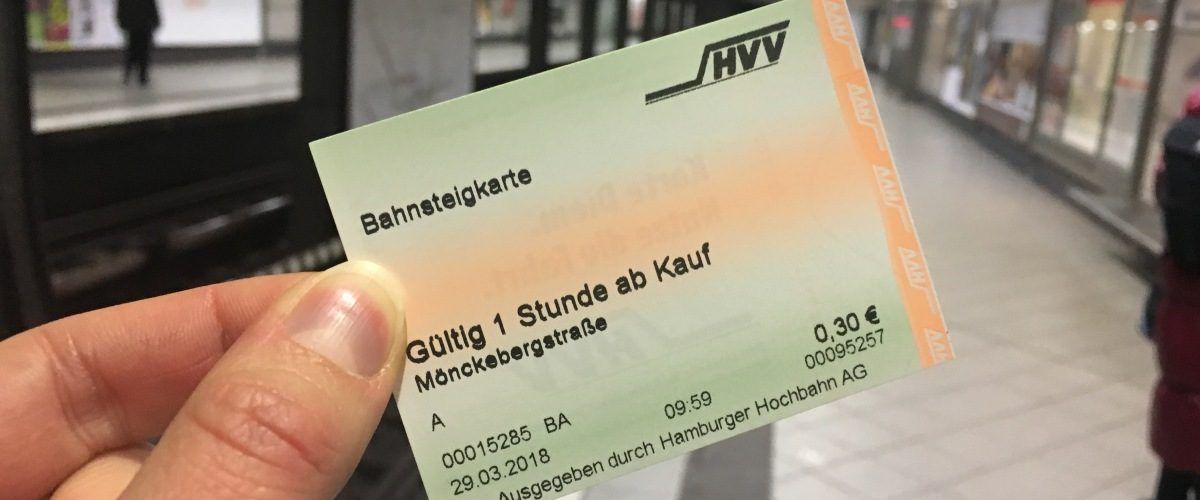



_tickets_(billettautomater)_for_Ruter_nettbuss_Bus4You_IMG_6050.jpg)

 As I began to apply to university positions, it became clear to me that these were really competitive and difficult to obtain unicorn jobs, which I might technically be qualified for but would also be at a massive disadvantage because I wasn’t already in Korea with a visa in hand. Apparently the catch-22 of needing experience to get the job you need to get the experience is not limited to the US. So I decided I needed a solid backup plan. After all the work I was doing for this Korean visa, it would be a real shame if it all went to waste simply because I overreached in my job applications. Don’t get me wrong, I’m was still holding out hope as many schools said they would be conducting interviews in late Nov-early Dec, but I like back up plans.
 This form is 8 pages long (not counting the 5 page lesson plan you are meant to attach to the end). It asks for your complete academic records including the names and dates of your elementary and middle schools. (I’m an Air Force brat, it’s not just one school.) It includes several essays, explicit details about any piercings and tattoos, 5 years of residency history and even more of job history. I once applied for a job with the US government that required the SF-86 background form. This wasn’t quite as detailed, but it was a near thing. I sent this form in as an email attachment prior to my intake interview, and then part of the interview process was reviewing the form in painstaking detail to correct any formatting or informational mistakes I had made in filling it out the first time so that I could redo it before printing the hard copy to mail to Korea with all the other documents.
 This lesson plan was pretty intense too. When I did my TESOL certification classes, we had to write long elaborate lesson plans basically to demonstrate a grasp of the material we were learning, how to organize a lesson, how to manage time, how to actually teach the material, etc. At no point since then have I been asked to write anything so long as 2 pages for a 45-50 minute class. That’s not a lesson plan, it’s a script. The 5 pages of lesson plan that is part of the EPIK application is ostensibly meant to be 2 pages of actual plan and 3 pages of materials. I don’t have any lesson plans that long from actual teaching jobs, so I broke out the one I used for TESOL and revamped it to fit the EPIK format provided in the application file.
 I hate having to ask for these things. It’s always awkward. It takes up the time and energy of the people involved, many of whom do not have experience writing such kinds of letters and end up stalling because they don’t know what to write. In the past, I have written letters and simply asked the people to sign them. I did this because teachers have asked me to do it that way to save them time and to make sure that the letter has what I want in it. I hate even more having to ask for them on a deadline, or in a specific format, because then I feel like I’m asking for a really difficult favor, which I basically am. Thankfully, I am in a situation where two people are willing to print and sign new copies of the letters they just wrote for me should I need more than one original, but what it basically comes down to is that any time someone wants an original letter of recommendation, expect to have to inconvenience someone in a position of authority over you.
 None of my other experience will count towards the 2 years for the level 1 pay grade (my summer jobs can’t count because only whole years count, not cumulative ones) and this means I get bumped to a level 2+ pay grade, which is a difference of 200,000 won per month (170$US) so I’m not super happy about the situation, but it isn’t the end of the world.
 I couldn’t find a SMOE website at all. Now I know why. Only after you’re accepted by EPIK can you fill out the SMOE attachments, addendum and contract to add yourself to the Seoul list of schools possible teaching pool.
 see your picture first. Plus, a lot of government documentation will require “passport style” photos to be attached to official forms. When I was going through the Saudi application process, I spent way too much money getting passport photos from a local drug store at 10$ per 2 photos. A long time ago this made more sense because they had to take your photo against a plain white background and it had to be aligned correctly, then developed and cut to size. Now, you can take your own passport selfie against any white wall and crop it to passport regs in your phone. So why are they still charging me 10$ to take a digital picture?
 o date stock of fun photos (no NSFW photos) so that I can provide some shots of me being a fun loving, outdoorsy, go-getter, but the professional shots really confounded me. Korea specifically seems a little schizophrenic about what they want, because I was told professional attire, but BIG smile.I have a hard time working up a fake smile, so my business pose tends to be a small smile, polite and friendly, but not “hey I’m having a great time in this suit!”. The picture I sent to EPIK the first time wasn’t “smiley” enough. However, it’s still easier to do this yourself or with a friend. You don’t even need Photoshop anymore to touch up your imperfect selfies because Pixlr offers most PS features for free online. I was able to remove my facial piercings (easier to Photoshop them out than to take them out for a photo, I’ll remove them for real before I fly out), change the background to a better shade of white, and brighten up the colors all pretty quickly. It’s also great for removing zits.
 To make things more fun, each country could have a different standard size or ratio for passport style photos.America is 2”x 2” square, but Japan and Korea use a rectangular aspect ratio (and cm). So a standard “passport photo” from your local drugstore is not only expensive, it might be the wrong size. When I realized I needed a million passport photos for Saudi, I decided to make my own sort of contact sheet by putting the photos into an A4/letter sized document and just having them printed off on photo stock paper. It was certainly cheaper, but thanks to the internet there’s an even better way.
 One day after I’d moved across town, I got a text from the former roomie letting me know that the letter from China had arrived. Not being willing to wait another 5-6 days until the next time I had planned to visit their house, I drove up in the middle of the night (after I get off work, plus less traffic) to retrieve the letter. I was so excited to finally have everything together I actually couldn’t get to sleep until I’d gone over the checklist one more time and put everything together for the great mailing. The instruction packet sent to my by EPIK on how to assemble my documents is 15 pages long, by the way. Here’s the final list:
 The next day, once the letter had been scanned and copied dutifully, I checked the checklist and every piece of paper again before sliding it all into a thick manila folder and heading over to FedEx… where I paid nearly 100$ to ship this brick of paper to Korea. I’m really happy to be there, but man I don’t know why we couldn’t just do this electronically for free. I tried to remember how much it cost me to ship my documents to Saudi and eventually realized I never did, I only sent them to a US based visa specialist, so got the far cheaper domestic overland shipping costs.
 Do your own research:I’d like to add to that – research should include phone calls and/or emails with a person who will oversee whatever it is or who has undergone the process before. Cursory internet/website research is often incomplete, outdated or just plain wrong. So are untrained cogs.
 nd laugh at the red tape blooper reel. I still think keeping the story is important, but now I’m looking at it more as a learning opportunity. The paperwork isn’t going away. Re-reading my Bureaucracy stories from Saudi really put some things in perspective for me about my current trials.

 I have come to terms with the fact that I’m going to be a wizard level expert at international red tape by the time I am done with this phase of my life. As rewarding as travelling around the world can be, it seems that it’s always going to be expensive. It just so happens in my case, the expense is time, sanity and maybe gray hair and only a little bit of money. Eh, I guess until I’m independently wealthy, I have to pay the red tape price for pursuing my dreams. So, welcome to Bureaucrazy, the ongoing cycle of dull boring (frantic, insane) paperwork that I must complete in pursuit of my life of wonderment and adventure.
 It’s not really surprising that we need a criminal records check to get a job. I had to get one from City of Seattle for my Saudi gig, after all. But Korea is not satisfied with a mere city, county or state level criminal records check, oh no. They need the Federal Bureau of Investigation to be in on this. MIB, Moulder and Scully, Quantaco. So, I head over to the FBI website to find out what the process for criminal background check actually is.
 I moved habitation in the meantime, so I was hoping to go to a police department closer to the house I was staying in, and then to the local post office to send off this new round of application materials, but as it turns out, you can’t get your fingerprints taken at most police stations without an appointment and proof that you live in their jurisdiction. Since I’m basically couch surfing while I’m back in the States, I don’t have proof of living where I’m staying like a driver’s license, bank statement or utility bill, so there was simply no way for me to get my own fingerprints taken except to go to the large municipal police department in downtown Seattle. Round 2 fingerprinting took a little longer because there were more people in line, but still a pretty positive experience (way to go Seattle PD, well done). I take my new fingerprint cards and my application to the Channeller, and go to the post office to mail them registered style so I never have to fear a lack of package arrival again.

 occasionally gets to see the barest glimpse of the bureaucracy wars (like that time she got up at 4am to help me call airlines and bring this bunny home from China). Also like this time where we were basically stuck between two people in positions of relative authority telling us totally contradictory information. So, sitting in the car and fuming slightly, I decided that the best option was to call the Secretary of State’s office and find out what the heck was going on.
  My American readers will have a good understanding of how far away from Seattle Memphis actually is. When I fly over to visit my mother there, it’s a good solid day of flying, like 7-9 hours. For the non-Americans, think about how far from your home country you can get in 7-9 hours of flying and know that isn’t even all the way across America, only about 2/3. So there is no way for me to do this in person. I couldn’t imagine that there was not a way for people living outside the state to achieve this, so I waited until the next business day and called the office to ask what methods existed for people who no longer resided in Tennessee. I was told to find someone who was willing to run around and get the stamps/signatures for me. Because Tennessee is trapped in the mid 1970s and knows nothing of the information age.
 In addition to the CBC itself and the application form and the money, the US Secretary of State also wants a self-addressed stamped envelope. These aren’t difficult, although they’ve become increasingly rare because most companies want to be able to track their packages and so simply ask clients to include a return shipping fee (or just raise the fee to account for return shipping cost). It’s been a long time since I had to include an SASE. But it’s not just this, the application form wants to know the shipping carrier and tracking number of the SASE that is inside the envelope that the application form is also inside. I think the poor little guy at the post office hates me.

 Some of you will have noticed that this isn’t in the list. This is because it wasn’t something I thought I would need, but rather something I discovered in the process of applying for jobs. Basically every single school I applied for wanted these letters from previous employers simply stating that I had in fact worked there and from what day/month/year to what day/month/year. I have not ever encountered such a thing before. I have always been in a situation where someone either took my word for what was on my resume or simply called the company to verify my employment with HR. As such, it had simply not occurred to me to get these letters on my way out of previous jobs. I had tried to get one leaving Saudi, because my boss suggested it, but the company (not surprisingly if you’ve read anything else about my exit process) did not deliver.



 Gallivantrix