I spent my second night in a farm town called Dargaville in a tiny little, um, place that I found on AirBnB. I don’t want to be unkind, but this was a great example of why you shouldn’t book rooms when you can’t see the interior in the add. The host was friendly and generous, however, and although the town of Dargaville is quite small, I found an Indian restaurant that was open late and wandered along the “downtown” waterfront before heading to bed. The next morning, I left with much alacrity, heading further up the western coast of the northern peninsula in search of the biggest and oldest Kauri trees in all of New Zealand, and by extension, in the world.
The Kauri are only found naturally in the northern peninsula and Coromandel peninsula of New Zealand, so this part of the trip was a unique chance to see a new species for me. The ancestors of the Kauri appeared first in the Jurassic age, and have changed little over time, contributing to the intense pre-historic feel of the Waipoua forests. Despite looking nothing like the average pine, spruce or fir tree we associate with evergreens, they are nonetheless coniferous. After a century and a half of extensive logging, the trees are now protected, but the Kauri Die-back Disease is still killing them. As with all of our ancient forests, they cannot be replaced in our lifetimes. Save the Forests! Am I a tree-hugging hippie? Yes. I literally hug trees, especially ones as magnificent as these.
GETTING THERE IS HALF THE FUN
Google has some interesting interpretations of directions. Occasionally it will attempt to get to physically closer to the GPS coordinates listed for a site than the official car park for that site. This may mean it wants to go on strange back roads, private roads, or even closed roads on its quest for global positioning proximity. I followed Google Maps on one such mad quest this morning and the simple 45 minute drive up the main highway to Te Matua Ngahere became several hours of single lanes, dirt roads and gravel service paths.

Amid my wanderings I came across a hilltop between two farms that peeked between the rolling pastureland and cows straight out to the sea. I found hidden valleys filled with pale yellow grasses amid the vibrant green ones. I found a river that was crossed by a narrow, single lane, non-railed bridge that also doubled as a dam.

(I had to cross that twice, by the way, once going out and once coming back.) I found a lookout tower that offered 360 views of the whole region, and a path leading down the mountain that promised kiwi birds (although I saw none). Then finally, when I found that these roads did not lead to the Kauri I sought, I found the Waipoua Visitor’s Center. There I not only found directions, but another (or possibly the same?) river with a carving along its banks that had long since grown over with moss and plants, as well as a surprising field of bright pink flowers. Sometimes it pays to get lost.


THE FATHER OF THE FOREST
 When I did find the trail-head car park it was a bit later in the day than I’d hoped. The sun sets around 6pm in August where I was, so I had to make the most of the daylight hours. The first stop had 3 trails in one that lead to the 4 Sisters, Yakas, and Te Matua Ngahere. I was there for Te Matua, the second oldest living Kauri, known as the Father of the Forest. His viewing platform is the farthest in on the main trek, with trails for the other two branching off at intervals. The trails aren’t loops, so it’s just an in-and-back on the same path.
There are signs everywhere imploring hikers to stay on the path. Kauri trees, despite their immense size, have fragile root systems that rest near the surface and can be damaged by the passing feet of visitors. Parts of the path were even elevated to keep as much pressure off the roots as possible. I passed the turnoff for Yakas first, but it said 30 minutes (I don’t know why all the trails in NZ are posted in minutes rather than km., and worse, I didn’t know if that meant 30 min. one way or round trip!) I wasn’t sure I could spare an hour yet, so I postponed the decision, knowing I would come back this way on my return. The turn off for the 4 sisters said only 1 minute, so I decided to have a look. The path was elevated the whole way and I began to see trees whose girth inspired awe, but were not even labeled or named. As the path took me closer to the trees, I noticed their bark was quite peculiar, but I was still too far away to touch it.
 The 4 Sisters are 4 large kauri trees growing close together. It’s fun to see tree formations like this, but I have to admit, it was a little underwhelming. The elevated trail that protected the roots also kept me far away from the Sisters. I’m used to being able to get up close with trees, and things farther away always do look smaller. Or maybe I’m spoiled because I’ve been to the giant redwood forests of California where it’s still possible to drive a car through a living redwood. Not to say I didn’t enjoy the view or the quiet energy of the forest. There’s a reason I’ll seek out ancient and giant trees anywhere I can, and it’s because they are always amazing. But, I also know what’s “big” in a tree and the 4 sisters weren’t it.
Returning to the main trail I found the sign telling me that Te Matua Ngahere was only 15 minutes away. I guess these are 5kmph “minutes”, but I walk slowly in the woods. I get engrossed in the scenery. I look at the plants and listen to the birds. In this forest, for example, there was a bird that sounded for all the world like the Mockingjay from the Hunger Games movies, except it was 5 tones instead of 4. There were strange plants that grew from a ropy core up the trunk of a tree and sprouted cascades of green. There were stages of new growth, old growth, decay and rebirth that I had learned about in the WA rain forests and now observed here with different plants. It seems like such a shame to walk swiftly and purposefully through so many small wonders.


Along the way, the path led me right up to the base of an old Kauri too large for me to even get my arms halfway around. I had an excellent opportunity to explore the bark up close and feel the unique texture. The bark is designed peel away like paper if it gets a fungus or other infection, so it’s worn like river rocks. There were no areas of splintering or wood shards, only rippling smoothness pocked and dotted with equally smooth bumps and whorls. There was a tiny little vine that grew up the trunk with little green leaves smaller than my pinky nail. There were a few spots of moss and lichen as well, but however long I ran my hands around the bark, the tree offered nothing but polished smoothness. It’s quite a contrast to the redwoods which tend to be rough and pitted with deep grooves between raised patches of bark. Running your hands over a California Redwood the way I was with this Kauri could easily result in a splinter or seven.


Between my frequent pauses and my long tree hugging indulgence, I lost all hope of measuring my walk by time. I had no idea how close to the end I was. I walked on, enjoying breathing in the smell of the forest. Despite the decay and end-of-winter leaf mould, the forest did not smell dead, but rather the preponderance of evergreens and the fresh moving water gave the air an invigorating, clean and above all alive smell. I was feeling tremendously lucky to have had my wish to touch one of the giants granted, and just generally bursting with happiness when I rounded a corner and came face to trunk with the true giant: Te Matua Ngahere.

Ok, not quite face-to-trunk. He was still quite far off, but the path ended just ahead of me in a little cul-de-sac of benches and the forest canopy parted like a curtain to frame the enormous girth of the Father of the Forest. He is said to be the second largest living Kauri, but it depends on what you’re measuring. As far as I know, Te Matua Ngahere is the widest living Kauri, but does not have the total timber mass of the actual largest.  At a total girth of 16.3m, he’s only a little thinner than the tour-thru tree in Kalamath (shown here). He’s also probably about 2000 years old. There are several factors that make him impressive. One of course is the surprising view. Rounding a corner and coming upon him without warning is certainly a show-stopper. Compared to even the largest trees on the path, he is a giant, so he stands out among the forest in a way the redwoods (surrounded by similarly sized trees) do not. Another is that he is not that tall. He’s only 30m high and compared to the redwoods especially (which can be over 100m) he is short, like a withered old man whose spine has bent with age. The contrast of his girth and height make him seem wider, while the redwoods are proportionately similar to other cedars around them and can look almost ‘normal’ without some kind of prop for perspective. (Te Matua, left: 16.3m girth 30m height). Giant California redwood, right: 14.3m girth, 6+m height)


Either way, I did not begrudge my time to come and visit this squat giant. If anything the longer walk through the woods to reach him made the experience more serene, more spiritual. I took my obligatory photos, but then I simply sat there for ages, admiring the trees and listening to the animals who lived there. I could easily have spent hours just breathing the sweet air and soaking in the forest, but I could tell the light was changing and I wanted to visit Tane Mahuta before dark.
I spent so long lingering over the one trail that the afternoon was slipping away from me, so I opted not to visit Yakas on the way back. Taking another hour or more would have put the sun would behind the mountains by the time I got to Tane Mahuta. However, I found out later that even though Yakas is the 7th largest kauri in New Zealand, it is the largest that has a path leading right up to the trunk. Both Te Matua Ngahere and Tane Mahuta are set back from the walking trails so you can’t interact with them. When I learned about this I was a little sad to have missed the chance, but doubly glad to have spent some time with the touchable kauri on my way in, even if it wasn’t quite as big as Yakas.
 Right at the trail head, positioned where everyone had to pass through it going in and out, there was a strange shoe cleaning contraption designed so you could scrub the soles and sides of your shoes, and then stand in a shallow sponge-full of disinfectant in hopes of reducing the spread of the horrible tree killing fungus, Kauri Die-Back. On the way out, I ran into some guys doing maintenance there and we talked a bit about the disease and the attempts at preservation around the area. Despite how clever the contraption seemed in concept, they weren’t actually too happy it, pointing out some flaws in effectiveness (like the brushes transfering debris from shoe to shoe instead of cleaning it away, and the disinfectant sponges going dry between scheduled refills) as well as the fact that it had turned a previously wheelchair accessible path into a non-accessible path. Hopefully NZ comes up with a good way to protect the trees and accommodate tourists soon.
LORD OF THE FOREST
Tane Mahuta is known as the Lord of the Forest. His trail-head is about 1km up the road from the three trails I had just seen and the parking area is much smaller. To make up for this, the trail itself is much shorter. About 1 minute away from the road, Tane Mahuta emerges to the left. His reveal is not so stunning as Te Matua Ngahere, and if you happen to be as I was, glancing off to the right or ahead (where orange signs draw the eye and indicate the trail ahead is closed), you may not even realize you are in the presence of the giant tree to your left. One of the maintenance guys told me that there was enough timber in Tane Mahuta to build a whole village. Although he isn’t as wide as Te Matua Ngahere (13.7m girth compared to TMG’s 16.3), he is taller (51m compared to TMG’s 30)and there seemed to be a whole other ecosystem in his upper branches. Other travelers have likened him to the central tree in Avatar and looking up into a tree that could build a village, whose canopy hosted a garden, I could understand why.

There is also a legend related on a nearby informational sign, which I later heard repeated by the Maori in Rotorua. Tane Mahuta is the son of Ranginui, the sky father and Papatuanuku, the earth mother. In early days these two remained in such a tight embrace that there was no space between them, and their children were forced to live in the cramped darkness. Eventually they decided to separate their parents, but none were able until Tane set his shoulders in the earth and his feet in the sky and drove them apart, making room for all his brothers. He is seen as the father of all life. During his quest for a wife, he first found only non-human females and fathered various insects, birds and trees. Finally he created a woman from the soil to be his wife and the first human.

artist: Jane Crisp
As impressive as Tane is, because he’s so much closer to the road his glade lacked the peaceful serenity of Te Matua’s and after the 4th group of tourists wandered by, I decided it was time to go. I thought hard about going back to hike to Yakas, but in the end I drove on to Piahia instead. I ended up picking up a hitchhiker, a local Maori farmer, which I almost certainly would not have done after dark. His accent was thick and sometimes hard for me to follow, but he was an amicable fellow and talked to me about his plans to use his farm and horses to draw in some tourists for riding adventures and lessons. It rained on our way, despite the fact that the day had been sunny, so I was glad I had taken the extra daylight after all. I dropped him off one town shy of my destination where I arrived just as the sun was going down in the bay.

It turns out that New Zealand kauri forests are mostly evergreens, even if they don’t have needles, so exploring in the winter is a great way to see the giants with the place to myself. Two days into my adventure and I’d enjoyed the cool mild weather and some unique and magnificent natural wonders, but perhaps the least winter friendly of my plans was coming up in day 3. Piahia is one of the two main townships on the Bay of Islands where I discovered that dolphin viewing and even wild dolphin interactions were possible. Stay tuned for more tales from Aotearoa and until then, check out the full photo album from Waipoua Forest on my Facebook. Thanks for reading!

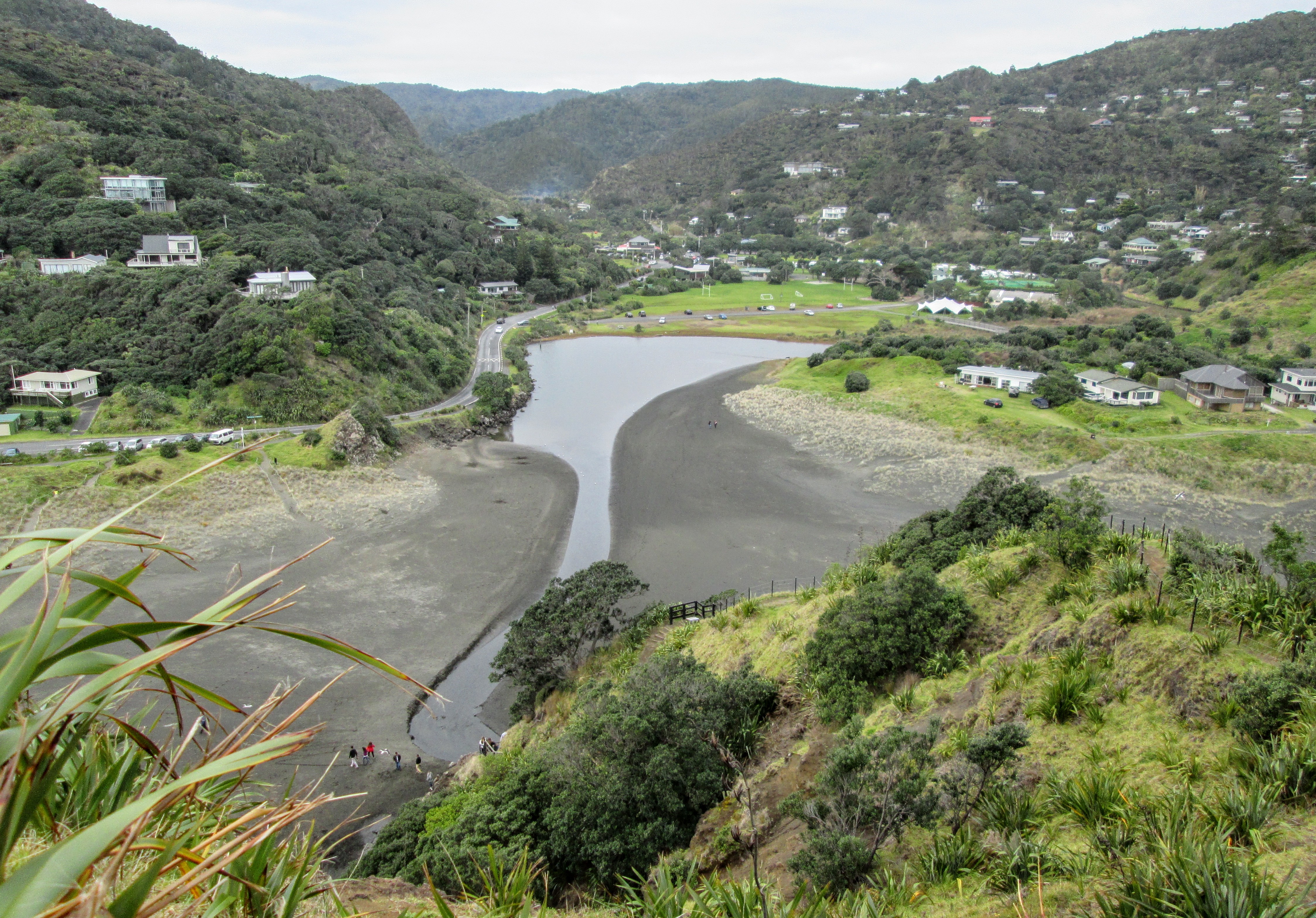
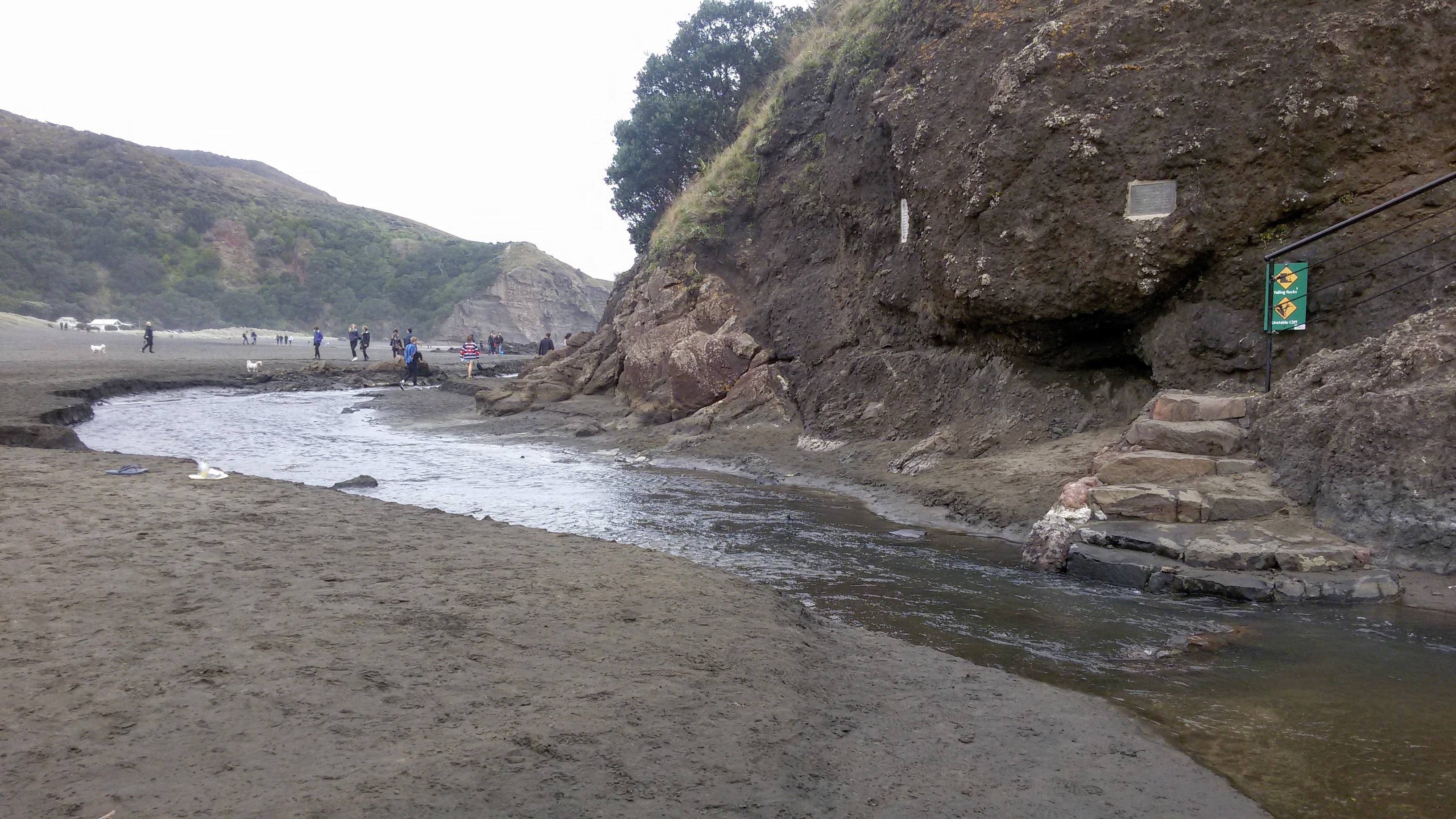
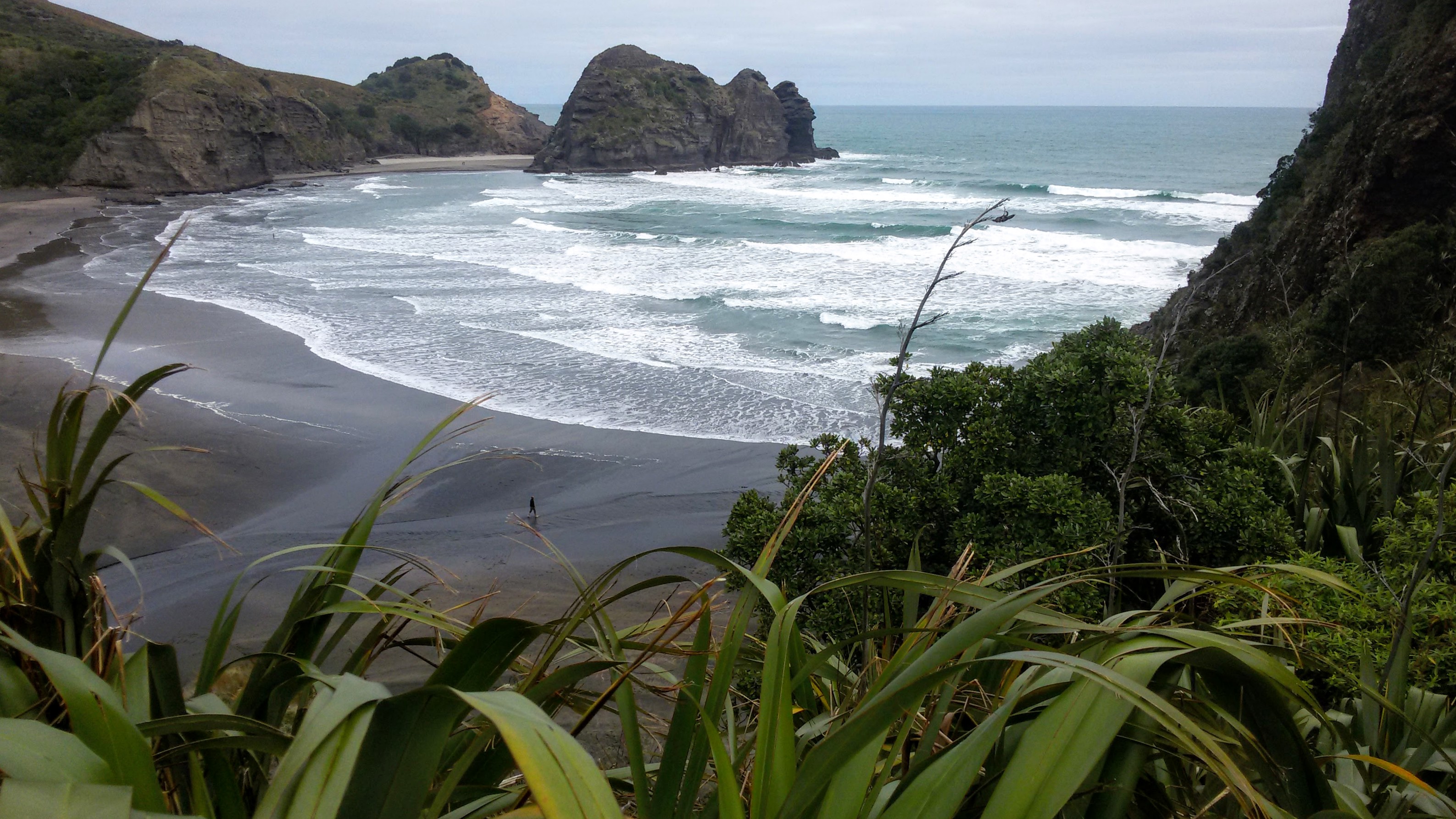
 This was my first glimpse of the crazy twisting roads that would mark every journey for the rest of my vacation. More than that, however, it was my first interaction with NZ flora. The drive made me feel like I was zooming back into a prehistoric age on earth. Familiar evergreens and less familiar variations of deciduous trees were mixed about with giant ferns and palms. Grasses grew in tufts taller than my car. The pictures don’t really do the forests justice because you just can’t see the enormous scale of these plants that makes you expect to see a triceratops around the next bend in the road. It didn’t take long before I got my first view of the ocean, either. The rugged coastline often included mountains and trees growing right down to the thin strip of sand marking the delineation of land and sea. The sea itself is crystal shades of blue and aquamarine, dotted with rocky islands or jutting peninsulas from further along the coastline. Because of the Queen’s Chain, the beaches remain undeveloped by private enterprise. Even right outside of Auckland, the beautiful, pristine coast just goes on and on.





 This bizarrely internationally inconsistent cultural habit changes drastically from country to country and making a mistake while you’re visiting can be awkward or even offensive. Quick guide to NZ tipping is that you don’t. It’s not a tipping culture except…
  For some reason, despite all the research that I did before going to New Zealand, I did not realize that they drove on the left until the day before I got on the plane. I even read about NZ traffic laws because I planned to rent a car and drive around, but somehow the government sponsored website failed to put that in an obvious place. As a result, when I landed in Auckland and got the shuttle to my rental car company, I was frantically trying to watch the traffic and the driver as closely as possible. On top of that, it was dark by the time I got my car, so I had to navigate my way to my airbnb in this backwards car on the wrong side of the road and in the dark. I do not think I have gripped a steering wheel that hard in years.
  I cannot tell you how many times I accidentally turned on my wipers while trying to signal. The gearshift is on the left. Thankfully, I had an automatic and the only times I was shifting were in parking lots, but I often found myself reaching for a steering column mounted shift that simply wasn’t there because my muscle memory found that to be the default when there was no gearshift to my right. Good news, gas and brake were still the same, otherwise I might have had some nasty accidents.
  There are a preponderance of roundabouts. All the roundabouts. I usually only saw “intersections” in the more pastoral areas. In anywhere with civilization, the preferred interchange was the roundabout. These were quite intimidating at first because there are no stop indicators, only “give way” or yields. You have to check to your right to see if anyone is already there, then go. Then count exits to find yours and trust that everyone else is going to yield to you once you’re in the roundabout. I made several mistakes, but no crashes.
 Lastly: one lane bridges… I don’t know why. Maybe it’s too much infrastructure? Maybe the bridges were built at a time when all the roads were one lane? Maybe kiwis just like driving dangerously? I lost count of how many one lane bridges I crossed. There are helpful signs that tell you which lane has right of way. It’s based on who has better visibility of the bridge. If you can see the bridge, you have to give way. Only once did I have someone fail to yield to me when they should have, I assume another visitor confused by the rules, but I managed to stop in time.


 beaches that have just been developed to death because hotels can charge big bucks for access to their private beach. When I lived in Florida, the small stretch of beach that didn’t cost an arm and a leg to get into was limited and often overcrowded. In tropical paradises in the Caribbean, beaches have become little more than oceanfront bars. In Dubai they are oceanfront dance clubs. In Washington state, when we want to go to a hot spring or waterfall that’s undeveloped, we have to go into a state or national park and hike for several km. In NZ, however, these things are all near roadways with easy public access and safe off road parking. Many of them are even handicapped accessible.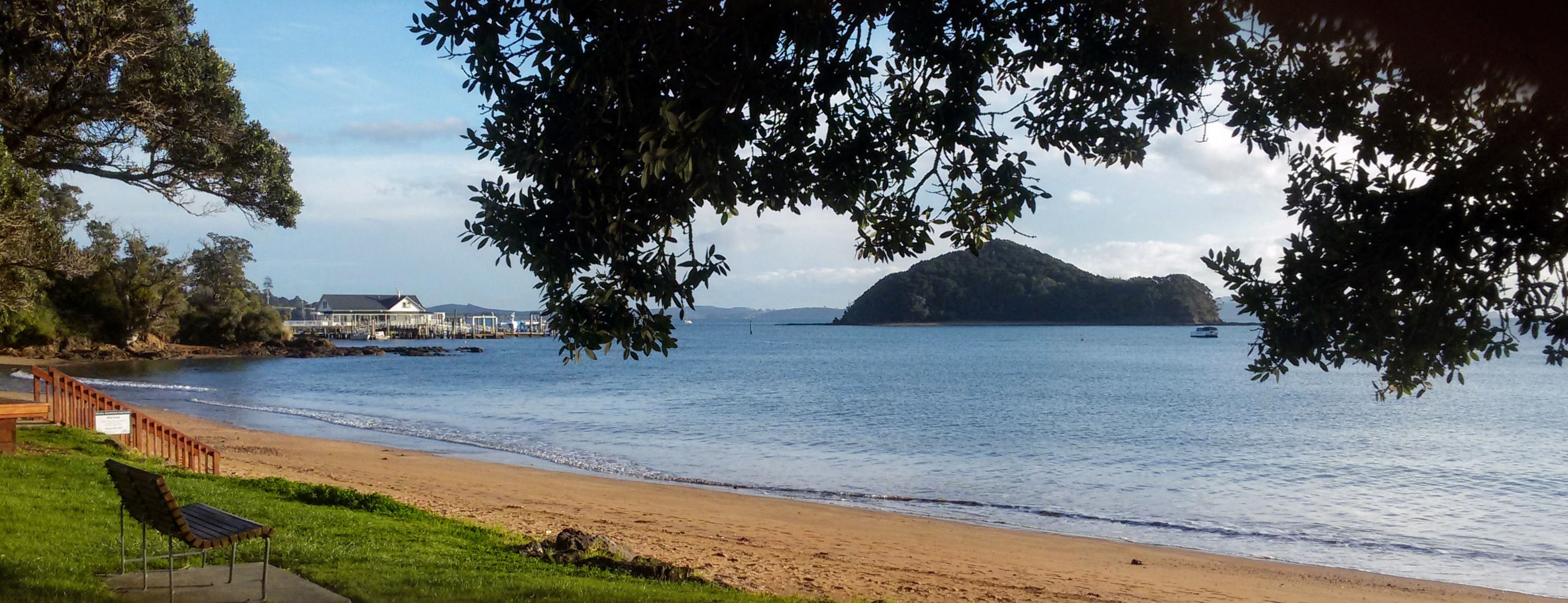

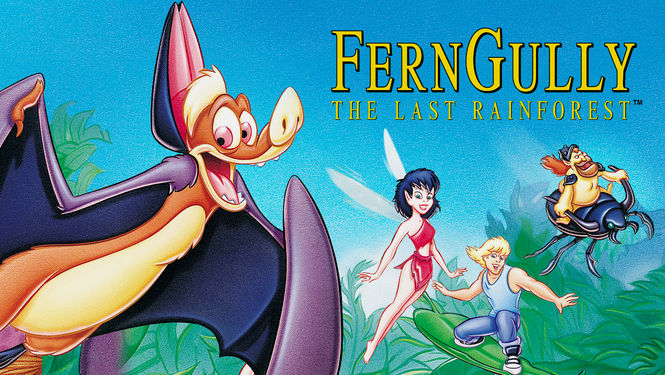
 of bird that represented knowledge and wisdom and incorporated it into their tattoos. You can see lots of NZ plant life as well as other unique New Zealand creatures in the movie including the large gecko that tries to eat Zack and the cave full of glow worms that Crystal and Jack go to be romantic in.
 Gallivantrix