My last week got overrun by more vacation planning and I didn’t really have time to do much writing. However, since I’ve turned my gaze once more to the fun fun prospect of organizing my next international adventure, it seemed like a great time to share my process with you.
 Plan? That sounds like WORK! Isn’t a holiday supposed to be FUN? Yes, but if you want to maximize your vacation time and money, taking the time and effort to plan ahead makes a world of difference. Unless you’re rich enough to just hire someone to plan the trip for you (and even then, finding the right tour company is important too!) you need to commit to planning. The time-money-quality triangle applies to everything, even holidays. The more time you put into the plan, the less money you need for high quality results.
Step 1: Find Your Holiday Mission Statement
Planning a trip doesn’t start with booking a hotel and flight. There are some pre-trip questions you should really think about before any web searches or bookings take place.
How do you want to feel?

One of my friends loves laying on the beach with a book for days on end, but that sounds boring as heck to me after about 3 hours. Neither of us is right or wrong, but we want different things from our holiday. It’s important to know what your goals are, it’s kind of your vacation mission statement. From then on, any time you’re faced with an option or choice you can check to see if it matches your mission statement. Much like for a business, a vacation mission statement works best when it’s as specific as possible, while still being brief.
What you want from your holiday? Leisure? Adventure? Food? Shopping? Change of scenery? Nightlife? Art? History? Be pampered? Get dirty?
What do you want to see?
Decide if you’re having a destination holiday or an experience holiday.
Destination holidays are those where you want to see a specific place like Rome or the Pyramids. There are awesome things everywhere in the world, but there’s only one Rome. Destination driven holidays should be more focused on off-season travel to maximize savings and also to avoid the high-season crowds.
Destination driven holidays also need to think about weather as well as expenses. My favorite Thai island is closed 6 months of the year. Last fall, I had to find a different magical island getaway. My friend wants to go to Egypt and for a minute she thought she’d go in the summer break until I showed her the weather reports that include regular temps in the 40s (C). Now we’re going in February.
Experience holidays are ones in which you first consider your time off, and then see what’s having an off season sale that you might be interested in at that time. Sometimes, you can’t help but go to the popular place at the popular time. Work and school schedules are not always cooperative, but it is worth considering what else is available.
How long do you want to go?
Long weekend? 10 days? A month? There are vacations for nearly every length of time. Bear in mind shorter times should focus on one or two main activities in a single place with minimal travel.
The less time you have in one place, the more detailed the planning needs to be. You might be fine spending an afternoon getting lost in town or just sitting at a cafe people watching if you have several days to spare, but if you get lost on your only day to do/see THE THING you’ll be really sad.
How much do you want to spend?
There are places in the developing world where you can book a luxury resort for 300$ a week (I did that in Egypt), places where you can eat amazing gourmet food for 25$ a meal or less (China and the Philippines for sure), there are places where a beer is 0.50 cents (Prague!) and places where a beer is 8-12$, places you can get a private room for 5$ a night with breakfast included, and others where a room in a dorm (sheets not included) costs 40$.
Don’t worry about the cost of individual things at this point, just think about how much you are willing to spend per day on average (take your total trip budget, subtract airfare, divide by the number of days you want to travel). Once you know your budget, you can check it against other travelers’ experiences to see if it’s enough for the place you’re dreaming of. I find that a lot of the blogs for backpackers are decently accurate for minimal daily expenses, and that the cost of living websites are more accurate for “family vacation” style spending. Most of SE Asia is 30-40$ a day for good times and EU is 80-100$ a day if you’re frugal. (post-COVID edit: I found in 2024 that these prices have gone up considerably, but you can still do a lot in SE Asia for 40-60$US/day, and in EU for 100-150$)
Who are you going with?
Discuss the practical things – I almost forgot this one because I’m so used to travelling alone, but it is important. Not only do you have to ask all the previous questions of your travel buddies, you also have to think about room sharing (my mother snores so loud I’m not sure how that’s going to work when we travel together), as well as age or ability limitations (meeting my friend with a 3 yr old last summer, I had to think about 3yr old human needs). Travel buddies can be great company and help save money on things like renting a car or a room when you can share, but it’s a compromise on location and activities.
Be upfront about your goals and expectations – If possible, try to pick travel buddies who share your travel goals and habits. If you can’t do that, discuss them in advance so you have a way to handle when you want different things. It is so easy for a holiday to turn into resentment when people are tired, sunburnt, hungry and didn’t get to see/do the thing they wanted. If you are travelling with people who don’t share your goals, make sure you’re both ok splitting up sometimes so that no one’s feelings are hurt when you want to do something different.
Make time for each other – I don’t just mean plan with them, I mean that they need to have a place on your itinerary. What will you share together other than the hotel room? It’s almost impossible to make another person your top priority when you’re going on a (probably expensive and unique) travel experience, but it will help if part of every day is focused on each other more than the sites, even if it’s just one of your meals or a drink before bed. This applies to anyone, not just a romantic interest or spouse, but family, friends, and acquaintances.
Step 2: Accommodation and Transit
Wait! All that was Step 1??? Yes, but it’s not as bad as it sounds. Step one is mostly thinking, and a little bit of research to help you get the answers to those questions. Don’t skip it, though, because you’ll use those answers to shape everything that comes next.
The Flight
The flight is the biggest purchase you’re going to make and it defines the rest of your holiday. I think of it as the spine of the vacation.

For a destination trip (or once you’ve decided your experience locations):
The flight search matrix used by Google is a great way to be able to see all available flights between to airports. Websites like Travelocity, Priceline, Expedia, and Kayak ALL use the matrix to search. It’s faster to go directly to the matrix instead of comparing 20 websites.
For experience vacations (or to narrow a list of potentials in a specific area):
You can look at a website like Kiwi.com to search “Anywhere” and see the cheapest flights during your holiday time, or you can search by country, or you can use the map function to just scroll around the globe and see where cheap prices are. I love this for wanderlusties who find themselves with time and money restraints because there’s always something awesome at the other end and discovering can be fun.
(post-COVID edit: although many 3rd party airfare websites still operate, I no longer recommend them for anything other than research. Issues with delays and missed connections are becoming more and more common, and the best way to make sure you will get help is to purchase your fight from the airline directly. It might cost a bit more, but I assure you that it is worth it when things go wrong.)
My trip to the EU was I’d say 40% destination 60% experience. I wanted to go to north Europe, I was less picky about the specifics. I looked around at prices and noticed that CDG is cheap and convenient to fly into. I could have opted for round trip, but it would have meant making my route a circle or doing a long backtrack and I wanted to get at least one Nordic country in on this trip. I did a quick check on some sample bus prices (like Paris to Amsterdam, Amsterdam to Oslo) and decided I could do it. Thus my return flight airport was decided, and I went over to the Matrix to find the cheapest flight. I got a ticket with Russian airline Aeroflot through Moscow for under 1000$. The cheapest options on flight booking websites were 500-700 more.
Conversely, my winter holiday is far more destination driven. It’s going to be much harder to find such a great deal. I originally wanted to do Morocco, Israel, Jordan and Egypt (my friend is joining me for Jordan and Egypt). I haven’t found the perfect ticket yet. Kiwi thinks it will be around $2000 to fly Korea to Morocco to Jordan to Egypt and back to Korea. It IS a lot of flights, but I hold out hope that several hours of testing options on the flight matrix will save me a few hundred dollars.
Search nearby airports – Flying one airport and then taking a bus or train out to a cheaper destination could save you hundreds of dollars. It’s worth comparing airports, and checking the price and timing of the ground transit before you buy, just to be sure. I don’t recommend this for short holidays (less than 3 days), but the longer your holiday is, the more worthwhile this becomes. In New Zealand, I flew in and out of Auckland even though I didn’t want to do anything in that city. In the Philippines, I had to fly into Manila, sleep in a little airport hostel, then fly to Bohol the next morning.
Choosing Your City/Cities

Destination vacation people will have done this step before buying plane tickets.
Experience vacation – “I’ll just see what’s there when I land” is not a reliable recipe for a great holiday. It’s a little like the lottery. Stack the odds in your favor and read up. Even if you think you know where you’re going, it doesn’t hurt to read about your destination on something other than Trip Advisor and Lonely Planet.
In the winter of 2016/17 my destination was “the Malay peninsula”. It looks small on a map, but it is big on the ground. I almost ended up missing out on Koh Lipe because Langkawi has been famous longer. Reading more sources gave me more options, and better information to make my decision with.
Read the blogs – Find some bloggers who share your holiday mission statement. It doesn’t do me any good to read bloggers who love to bike across Europe because I will not be doing that. Ever. I found a blog that talked about running tours of cities and nearly fainted from thinking about it. Find unique bloggers who share real details. Mainstream bloggers like Nomadic Matt are fine for finding out the basic details and some run off the mill travelling advice, but for my taste, when I’m trying to decide where to go, I need the atmosphere, the mood, and the experiences of someone like me.
Check the local transport options – In addition to attractions, hotels and ground transit can shape your city choices. If you’re going to places with good public transit, it’s easy to land in one place for a bit and then move to another hub. If rental cars are cheap, you might consider driving around some of the rural parts of your chosen holiday spot.
Move at least once a week – Happiness experts say that the shiny new vacation smell wears off after about 7 days in the same place. I like to change cities at least once a week, but if you want to spend your whole summer in the Maldives laying on the beach, it’s still a good idea to break it up by moving to a hotel on the other side of the island or taking a weekend to explore the mainland. After 7 days, things become a “routine” and the mental mood boosting benefits of vacationing begin to taper off sharply. Relaxing holidays will tend to move less, while exploring holidays will need to move more. How much more often than every 7-8 days you move will depend on your goal.
Finding Accommodation
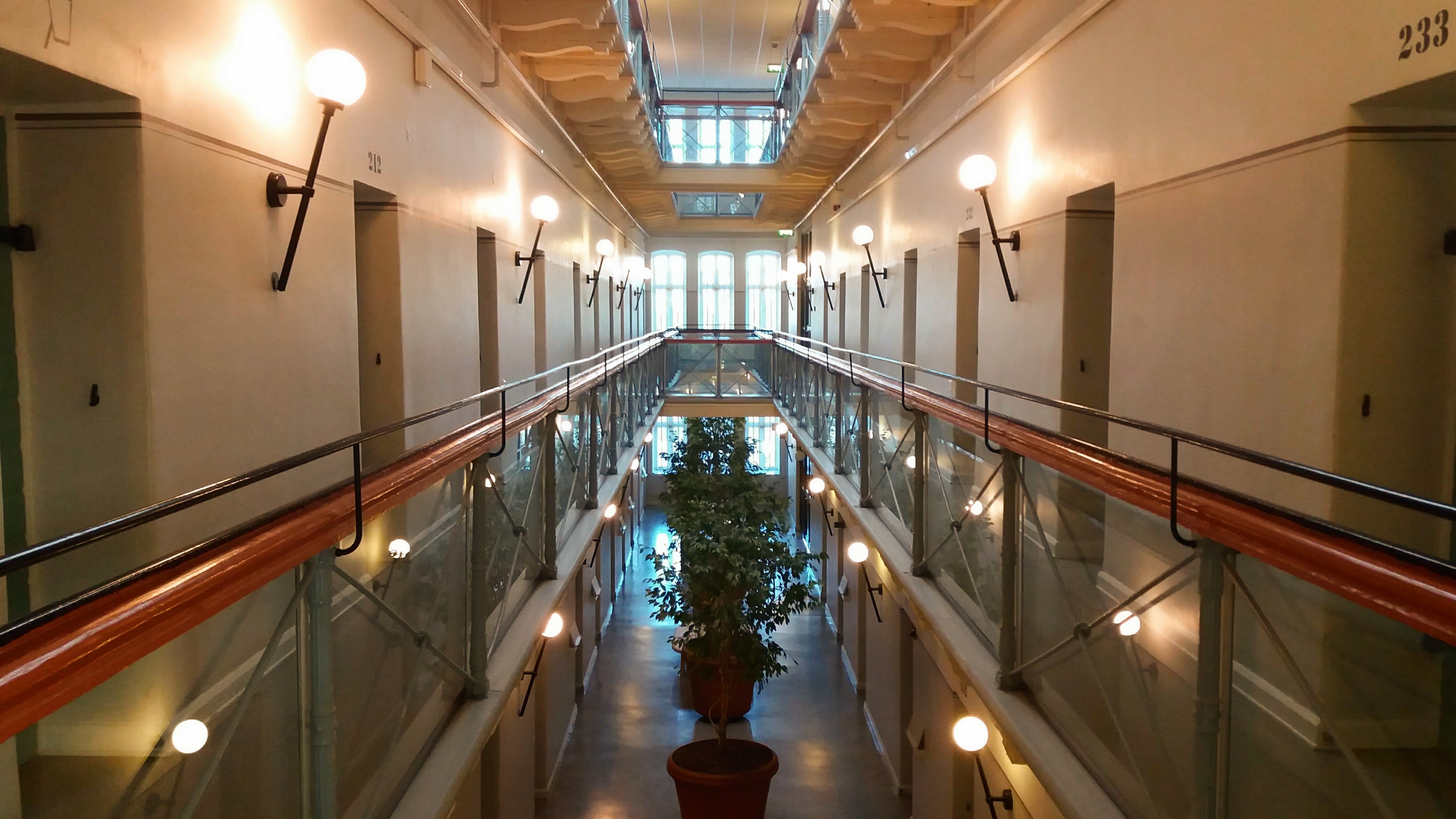
Don’t stay anywhere you don’t feel safe or can’t get good sleep. It’s not worth saving money if you’re stressed or too tired to enjoy the next day’s activities.
Do try to minimize your accommodation costs unless the resort itself is the center of your holiday (which is fine, private beaches are dreamy).
Shop around – It’s good to have a range of search options to keep your prices down. I like Airbnb and Booking.com the best, but I’ve been known to poke around Hostelworld. Sometimes I’ve just made email arrangements because I’m traveling to the back end of nowhere. Most of these places give discounts to non-cancellable reservations, but if you want to maintain flexibility, its a good idea to book places you can change later in case you find something better or change your plan altogether.
Beware hidden costs – Things to think about besides the room price: are any meals included? Do you need parking? Do you need a shuttle service? Will you need laundry service? Is it close to public transit? A great room price can be ruined if you have to pay 20$ a night for parking, if you have to walk a mile to the bus stop, or if there’s no place to eat nearby (this happened to me once in Korea and my hostess, bless her heart, fed us, but it was embarrassing!)
Location, location, location – When booking my rooms, I’m typically going back and forth between the booking site, a map of the region, and some travel blogs. Sometimes the map will show me something interesting because Google does that now. Sometimes the hotel will mention famous nearby sights to check out, and always travel bloggers will tell you about their own experiences there. I spend ages staring at maps, reading blogs, and looking at the map function of the booking website of your choice. It can show you the prices of a large geographical region. Sometimes I find great prices and realize I don’t really want to GO to that place so it’s useless.
Quality is subjective – Reading reviews of accommodation is tricky. If the person leaving the review has a different set of values and expectations than you, their review may not be helpful. Don’t just look at stars. Look at how many people reviewed something. A 4 star rating from 200 reviews is better than a 5 star rating from only 10 reviews. Read the things people liked, but also read what they didn’t like. Are those things important to you? Can you sleep in a room where you might see a rat to save $$? Do you HAVE to have A/C? Do you want to meet other guests or have more privacy? What is the standard in that country? I found that a 2-3 star (of 5) rating in developed countries is equivalent to a 4 or 5 star place in developing nations.
Prioritize – For me, feeling safe is #1. I don’t like to stay in co-ed dorms if I can avoid it, but female only dorms are often more expensive. I also won’t stay in a place with all men (one or many, I don’t do it unless there’s a female in the house). I’ve learned I can sleep just about anywhere for one night, but I prefer a single room, or a women only dorm in a clean place in a non-party part of town (I do not like hearing people throwing up from being drunk while I’m trying to sleep). I also look for transportation options (parking if I have a car, bus stop if I don’t).
Things like lux decorations, pools, spas, and services are less important to me, but you need to know your own priorities. If you want to party all night, stay in the party zone. If you can’t enjoy yourself unless you’re staying in the Marriott, then increase your budget or pick cheaper parts of the world where those resorts are affordable. Sharm el-Sheik in Egypt is great for that. You can stay in fancy beach resorts for a fraction of the cost of other countries.
Local Transportation

Minimize travel time – I’ve seen tourists travel for hours to reach someplace and look for 15 minutes, take a few pics, and then get back on the bus. I don’t understand this method of travel. I think transit should be minimized. I don’t like to spend more than 4 hours a day in transit (except the flights in and out). It’s not always possible, but it is important. The comfort level of your transit is also important, as I learned in Thailand. A 3 hr bus ride in a plush comfy air conditioned seat is much more tolerable than a 3 hr ride in a cramped, hot, minivan.
Travel in your down time – In EU this summer, I traveled on Saturday so I wouldn’t have to fight weekend crowds at popular venues, and I used them as rest days where I could just relax and travel from one place to another. On shorter trips, I like to do intercity transit early in the morning or last thing at night. If you have to go a long way, it might be worth looking into sleeper cars. When we were in China (a huge landscape) we did that a couple times and skipped out on hotels for the 8-10 hour train rides overnight.
Research the details – If you’re going in the off season, you can probably buy tickets the day of your travel, but in the high season it’s best to make reservations. Look at the time tables and make sure you can get to the bus/train station on time. Compare the bus and train costs. I found that taking the bus around France and Holland was great, but that in Germany the train was cheaper. I took a bus from Singapore to KL, but a train from KL to Ipoh.
Look at alternative travel options – Sometimes local flights can be more efficient and cheaper than bus or train. Sometimes there are even boats. Which I love. I took a ferry from Jordan to Egypt last time I was there. It was not any cheaper than flying, but it was a much cooler experience. I also had to take a boat to get to Koh Lipe and back since there are no airports on the tiny little island. Now that I’ve been, I know I probably could have bought my ticket when I got to the port, but at the time I had no idea how full it would be so I made sure to book online.
Check the reviews – In some cases you won’t have choices, but when you do it’s best to check and see if you can find a picture of the fleet that is NOT on the company website. I thought the boat to Koh Lipe would be like the ferries I’m used to where we could go up on deck and with that in mind, I was looking into a 3 hr boat ride. When I read more and realized that the Thai ferries in the region are all very restrictive and make passengers stay seated below decks, I opted for the shortest possible ride instead.
When in Rome – Not literally, but when it comes to getting around, it’s a good idea to see what locals do. I did so much research on inter-city transit to get from one place to another, I neglected to pre-research city buses to learn how to get around once I was there! It turns out, every one is different and it was a huge source of stress for me last summer. How do you use the bus/tram/metro system? Do you need a bus pass? Where do you buy tickets? Does it cost more to buy one at a time or get a pass? Is the tourist pass worth it? Don’t assume it will be easy to figure out when you get there… it won’t be.
Step 3: The Details
Now you have your cities chosen, your hotels booked, and a solid idea of how you’ll get around. Time to narrow your focus and figure out what you’ll do in each location. Show up and see what happens is not a strategy that works for most people. It seems very romantic, but most people find they end up sitting around on Google trying to do the research they should have done before they arrived.
Brainstorm
Write a list – Just make a list of names of all the places you can find where you’re going. Websites like Trip Advisor and Lonely Planet come in handy at this stage. They are great resources for building a basic list of things to see. They are a bit limited to the most popular tourist attractions, however, so try adding something like Atlas Obscura to your search.
Dig deeper– For more unique travel opportunities, check travel blogs and Facebook pages and other types of social media from smaller voices to see what isn’t being seen by the big famous travel sites. I found a magical heated waterfall in NZ this way. I’ve learned about unique food in tiny restaurants, and the less famous but just as beautiful temple or church next to the one full of tourists. You get beautiful memories and you often get the place mostly or even all the way to yourself. I can’t provide links because each blogger focuses on different places and experiences, but if you type the name of the place + “blog” or “travel blog” you should get some decent results.
Check the map– Once you get a list written down, you can start searching for what’s near them geographically. Pull up the Google Map and see what pops up next to your famous site or on the route from your hotel to that site. Read more blogs about people who went to a famous site and see if they did any side trips. I had a side trip for buffalo ice cream on my way back from a famous site in Bohol. Local water-buffalo being milked for ice cream… that’s a unique holiday experience.
Expand your search – If you’re staying in one hotel more than 3 days (it hardly ever takes longer to see the highlights of one city, although of course you could explore a single city for years and not see everything, many people on holiday like to maximize experiences), you can look at day trips from the city you’re in. Can you do a tour to a nearby natural reserve for hiking, kayaking, fishing, etc? Can you get a bus to a neighboring city and see their sights? I found an amazing spa in Aachen Germany about 2 hours away from my hotel in Lanaken Belgium.
Read until your eyes blur – Keep adding things to your list. Make your list as long as you like, don’t worry about all the details of each place yet, this is the brainstorm phase. Anything that sounds interesting, put it on the list.
Edit the List

Location, Location, Location – things that are close together can be done on the same day, while things that are far away, not on the public transit line, or not near anything else cool might be cut from the list. I had the Tower of Eben-Ezer on my list, but when I realized how far out it was and that it would take me hours each way without a car, I reluctantly took it off the list. Other times I’ve gone to a place I was only semi-interested in because it was 5 minutes walk from my primary stop and had a great experience.
Timing is everything – Check the days and hours of operation, and the price. If it’s not open when you’re there, if it conflicts with something you want more, if it costs too much, cross it off the list. Do you need to book in advance or can you buy tickets at the door? How long is the line? Many attractions have “skip the line” tickets that let you save time. When we went to the Catacombs in Paris, the line was 3 hours long. We had skip the line tickets and got in with only about 5 minutes wait. I completely failed to buy my Kremlin tickets ahead of time, and had to choose between standing in line and seeing the Kremlin or doing literally anything else in Moscow that day.
Read the reviews – Read reviews, look at pictures, visit the website. Look beyond rating and see what people are saying. Are the things they talk about important to you? Does this seem like something you’ll like? More than once I’ve declined to visit a city’s most popular tourist destination because it just didn’t seem that interesting to me.
Prioritize – Your list should be divided into “must see” and “see if there’s time”, with a side of “bad weather options”. Make sure you have no more than 50% of your list as “must see”. Even after editing out all the places you can’t get to, can’t afford, aren’t open, or aren’t interesting, the list should still be huge, and contain more things that you can actually do in the time you have because you might need to change something based on weather, unexpected closures, illness, or random acts of gods.
Step 4: The Schedule
It’s a good idea to have a schedule, as long as you know that it will change. I don’t want to spend my precious vacation time thinking about what to do each day. Sometimes I write detailed schedules down to the half hour, other times I make “day itineraries” grouping nearby activities together so I can wake up and say, ok today I’ll do itinerary 3.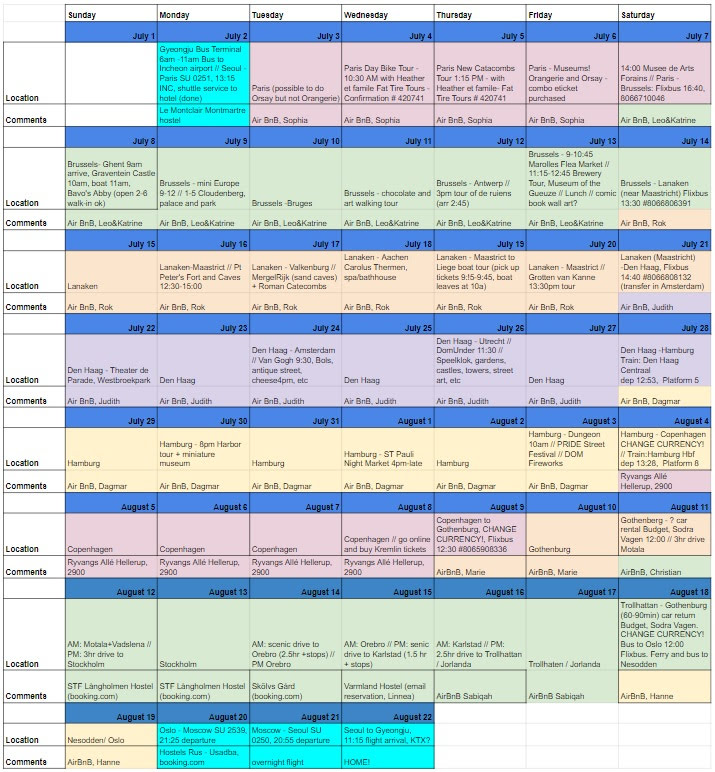
Booking in Advance
Use your priority list and start with things on your “must see” list that require (or strongly suggest) advance reservations. Once those are filled in, you can start adding things that have variable times and things from your “see if there’s time” list.
Visit the website – Almost all of them have an English page and will tell you how important it is to buy tickets in advance. Some places don’t even sell tickets at the door.
Don’t Over-schedule
The temptation to squeeze sightseeing into every moment of the day is strong. Avoid it. A single event or a bike/walking tour that lasts 2-3 hours is a “half day” event (2 per day). Anything more than 5 hours is an “all day” event (1 per day). I can’t make you slow down, but thousands of travelers over several decades agree that seeing fewer things, but experiencing them more fully is a more satisfying experience.
Make time for meals! Oh man, the number of times I’ve ended up not getting food because I’ve been so busy looking around. It’s a tragedy especially if you’re travelling anywhere with good food… soooo basically everywhere. Street food is awesome and should be tried, but you need to sit down and rest too.
Organize by geography – When I was in the Philippines, I had itineraries that could be done on any day, as long as the items were done as a group because they were all close together. You can sneak tiny things into a day this way. If there’s something that will take less than an hour quite close to one of your half or all-day events you can work that in without killing yourself.
Time is a Gift – You look at an itinerary like this and you think, OH we’re wasting so much time, but you are not. You are giving yourself a precious gift. Now you have time to get lost, to explore, to check out that cool thing on the way you didn’t know about, to stop for an ice cream or coffee, to meet people along the way.
Be Prepared to chuck the plan – If you travel with an open eye and open mind, you’ll also find new and interesting things along the way. Sometimes it’s meeting people who invite you along, sometimes the concierge or Airbnb host tells you about a local secret, sometimes you just walk into a wine festival in the park (true story, happened to me in Prague). You want to be able to make time for these things, and in order to do that you need things you can move around in your itinerary.
Step 5: Organize Your Documents

Gone are the days of having to print our whole holiday itinerary and carry them around in waterproof document cases! Yes, people did that. Sometimes I still see older couples doing it. I’m not saying it’s a bad idea, and if you’re not going to be around computers or the internet, it’s VITAL, but now that we can store everything in the cloud, we can access schedules, booking details, and vouchers with our phones!
At a Glance – There are countless apps you can use to organize your itinerary, but be sure you get one that is easy to read at a glance. You’ve seen my color coded spreadsheet that shows a calendar where I put the things I’ve scheduled and bought tickets for, but I also use something like a Word.doc for the list of things I can do more or less whenever that includes addresses, websites and phone numbers I may need, and any itinerary groupings.
On the Cloud – I make a dedicated folder in my cloud storage for all vouchers and receipts for everything I bought online from hotel reservations to museum tickets for each trip. I filter all my emails related to the holiday into a dedicated email folder for easy reference. I also keep photos of my critical documents. I know not everyone is comfortable with this, but if you lose your passport or ID, it will be easier to show your Embassy a picture of your missing credentials so they can help you faster.
Offline – If you won’t have data or internet when you arrive you can also download the documents you need to the phone’s storage. Some strange places in the world are still requiring printed vouchers/ tickets, so double check when you make reservations if you can use the pdf or email as proof or not.
What is all this for?

Planning a holiday can certainly be fun and help you build anticipation for your upcoming adventure. However, it can also be a lot of work and there are days when you’ll want to throw the towel in and just wing it when you get there. Trust me. Don’t.
All of this painstaking work helps make sure you get to see the best your holiday destination has to offer you.
- make sure you don’t show up to a venue that is closed or sold out.
- minimize transit time by grouping your events together.
- maximize your bucket list by prioritizing only one or two things a day.
- have enough time to do everything and a way to stop and rest as needed.
- alleviate the stress of where to go and how to get there while you’re jet-lagged and culture-shocked.
- explore organically by leaving a little extra time every day that could be filled or changed as needed.
I hope your next adventure is everything you dream.
Happy Travels!

 Mas Ago Falls is possibly the “most famous” of the Bohol waterfalls. I don’t mean to imply that it is famous, simply that of the dozens or more that dot the island, this one is better known and more often visited by tourists than any other. The drive time was a bit more than an hour, and there was a small fee to park my motorcycle and another small fee to enter the “park”. The parking attendant didn’t have any change so simply let me drive by and asked me to pay him as I left since the admittance fee collector would likely have change for me. She did, and also offered to hold my helmet in her office while I went down.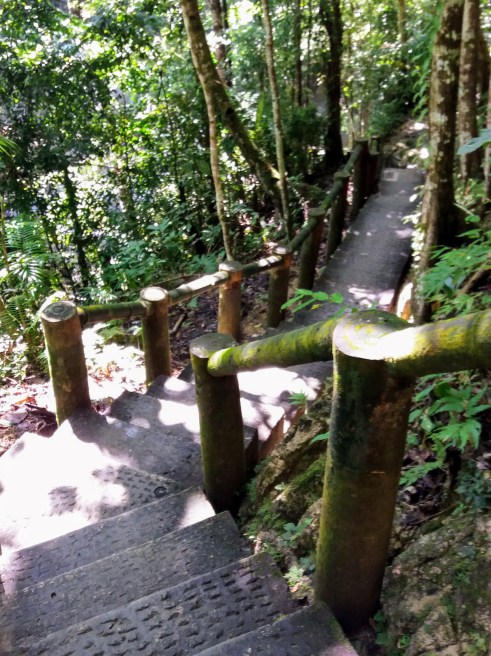
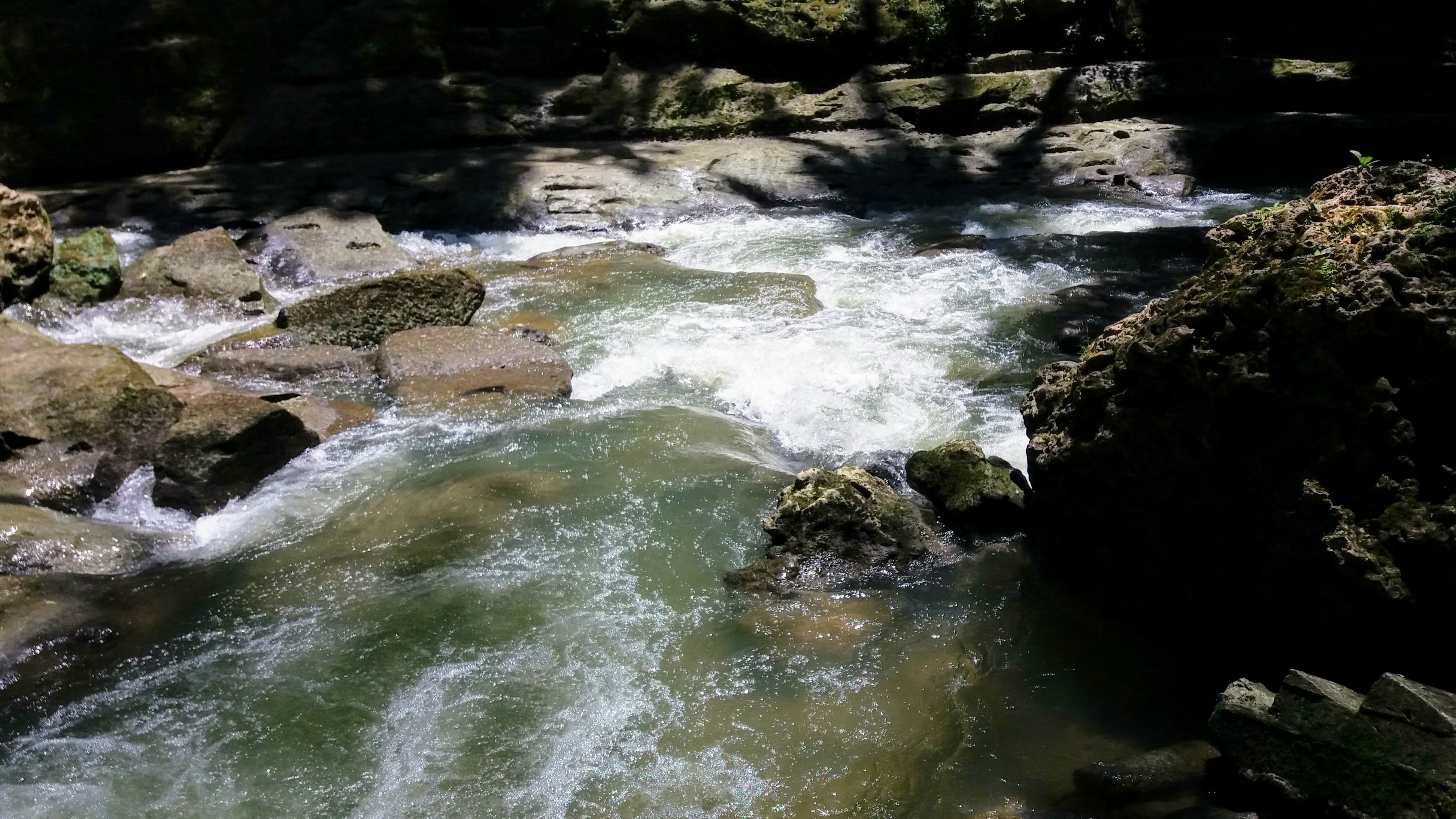


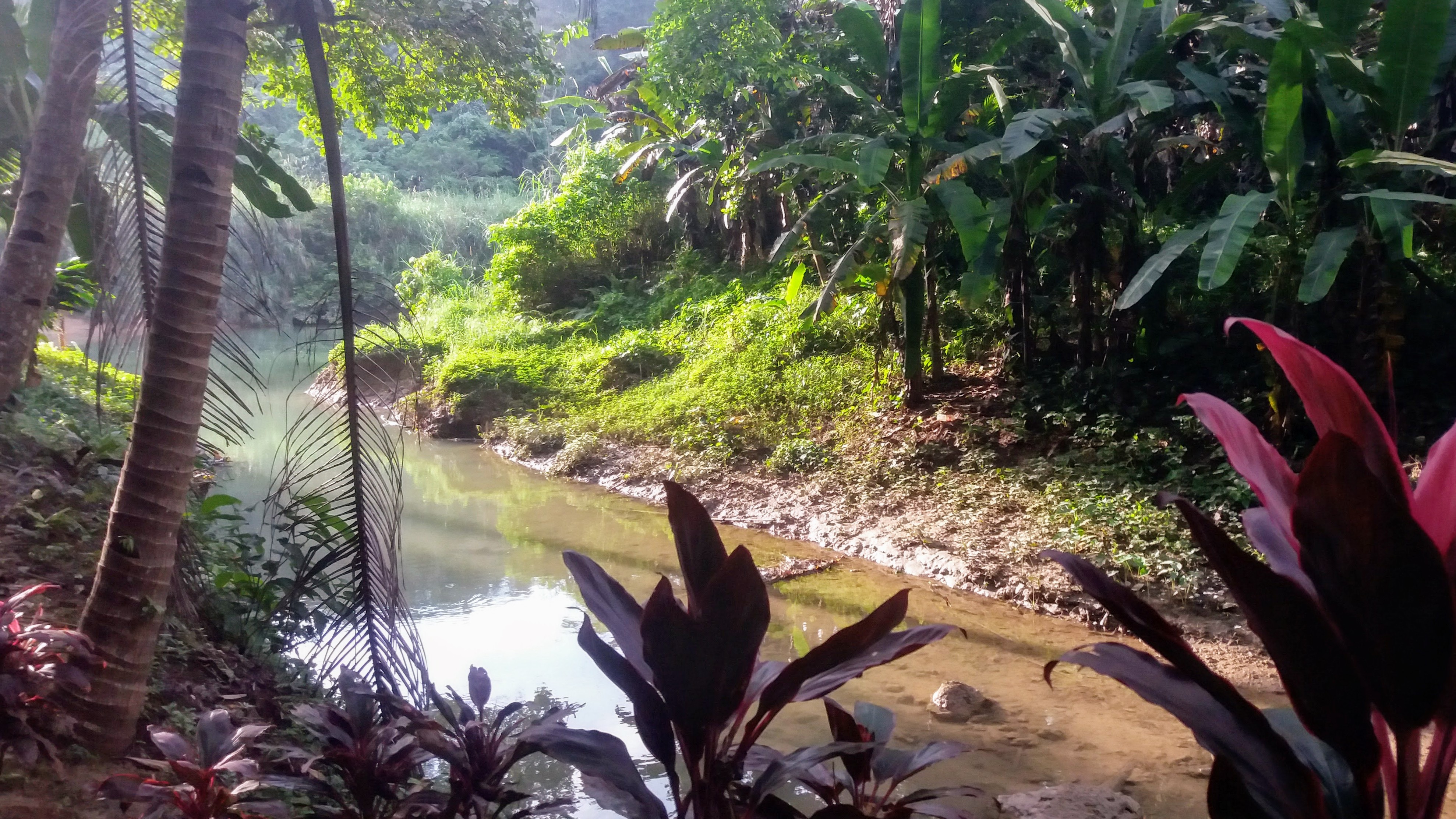
 After checking the routes, it seemed that even though it was farther as the crow flies, that it was closer as the motorcycle drives and so I headed over to this less well known waterfall site. After driving for a bit on well maintained roads, Google Maps directed me to turn down a dirt side road. I wasn’t especially bothered by this, since several places I’d visited during the last week were down this kind of side road. There was a sign at the intersection for the waterfalls. Although it was a very temporary kind of sign made of hanging vinyl, at least it told me I was headed the right way. As I continued down the road, the gravel and dirt gave way to mud and grass. I passed some bewildered locals and asked querulously if I was heading the right way to the falls. They indicated I was, so I kept on going.


 I was humbled by the absolute unselfish behavior of these teens. They were kind and patient, and generally the type of teenagers no one thinks exist anywhere in the world (love Facebook, K-pop, and their phones, but are kind and helpful to each other and strangers?). I hope that their lives are as good as they are.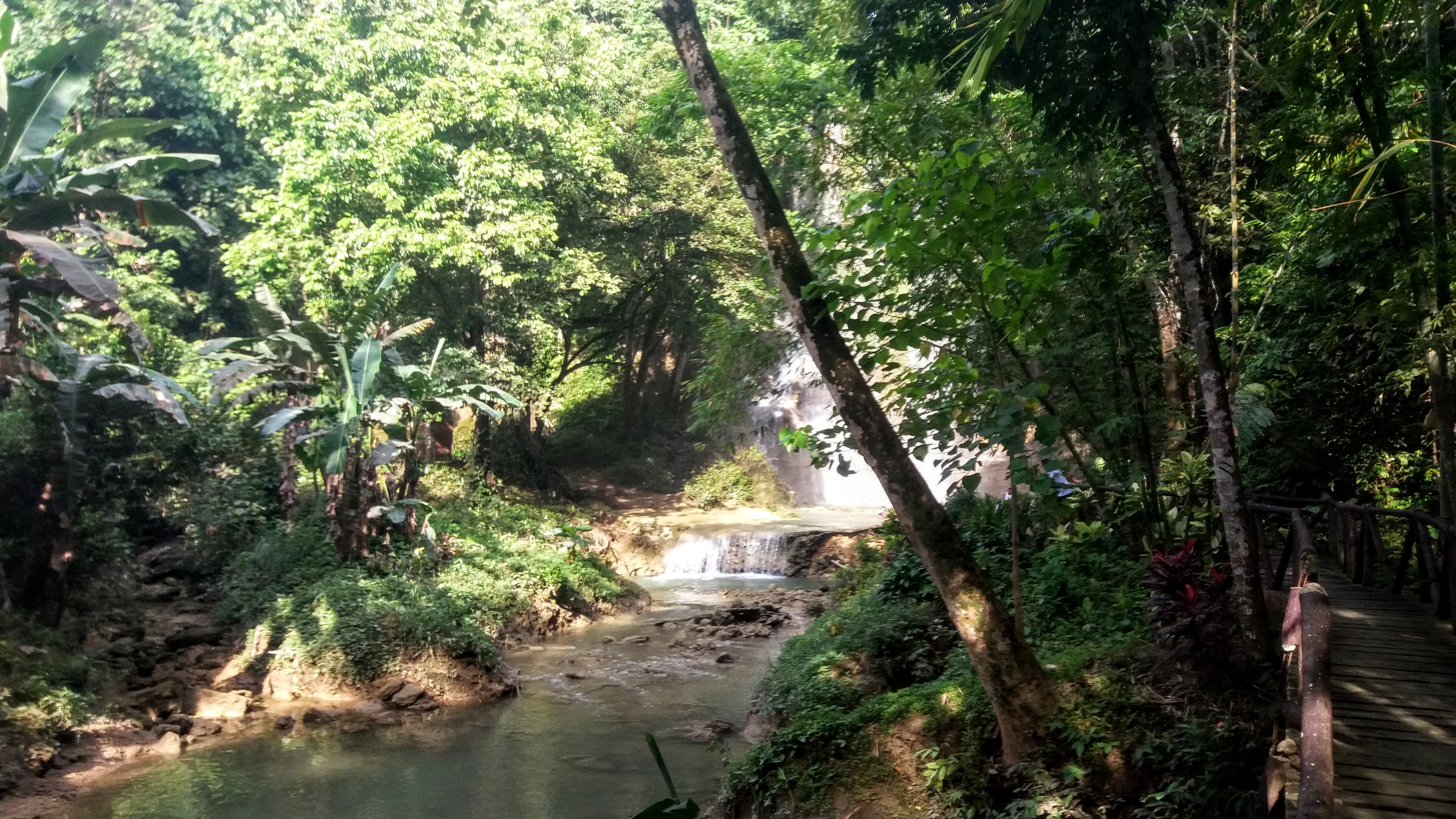








 She took up a nearby lamp and shone it into the depths so that I could see the water below.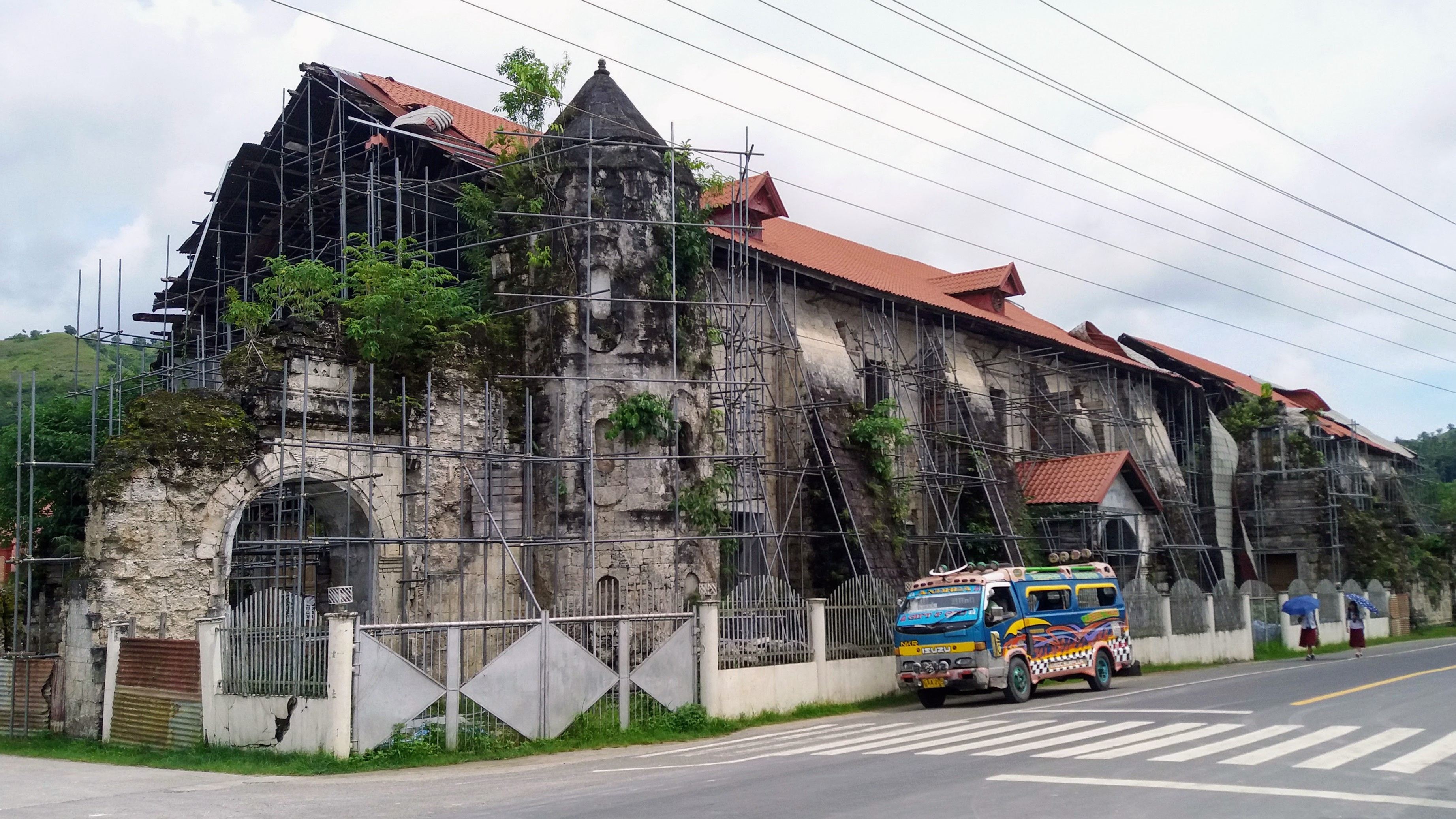

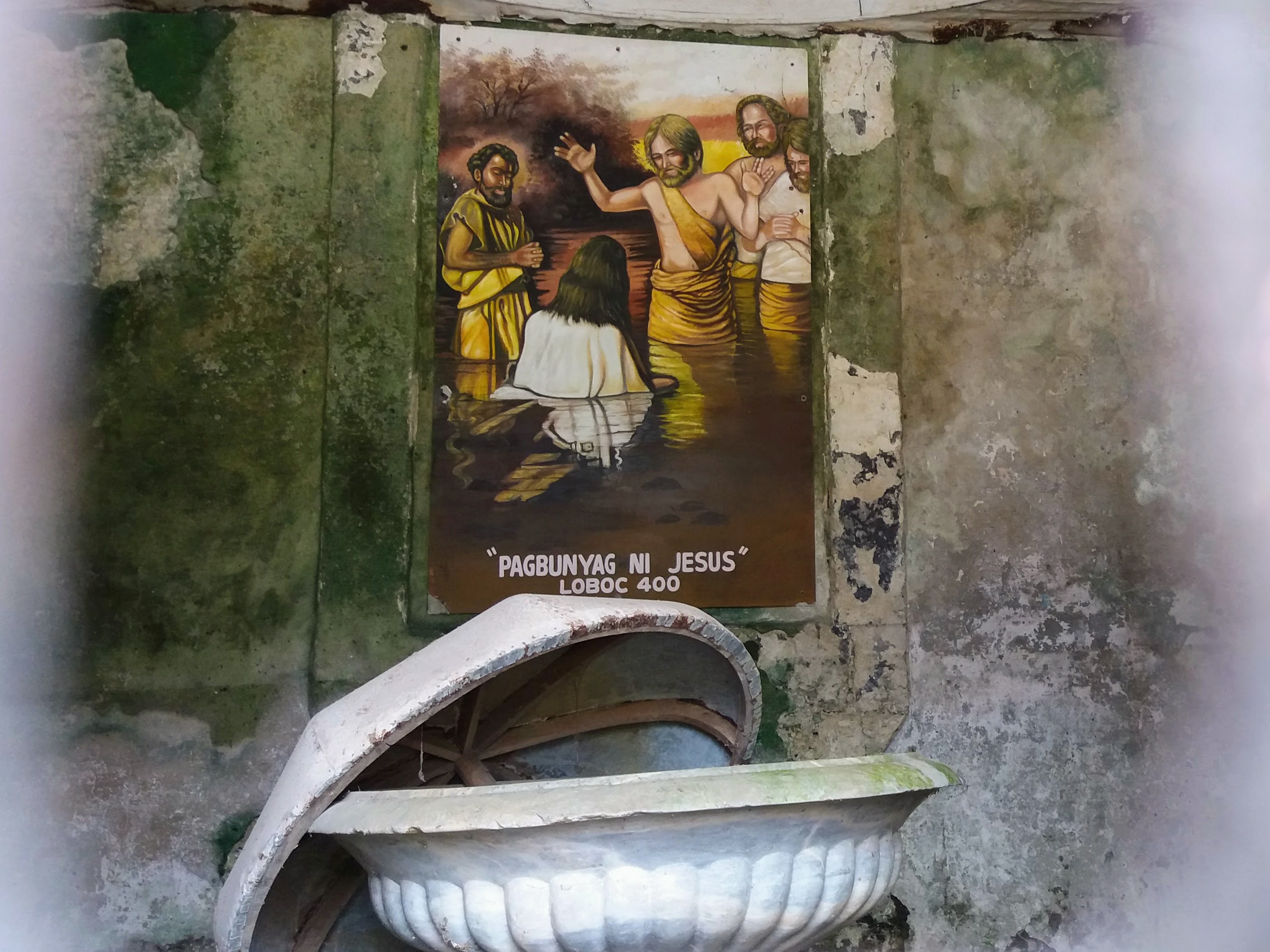


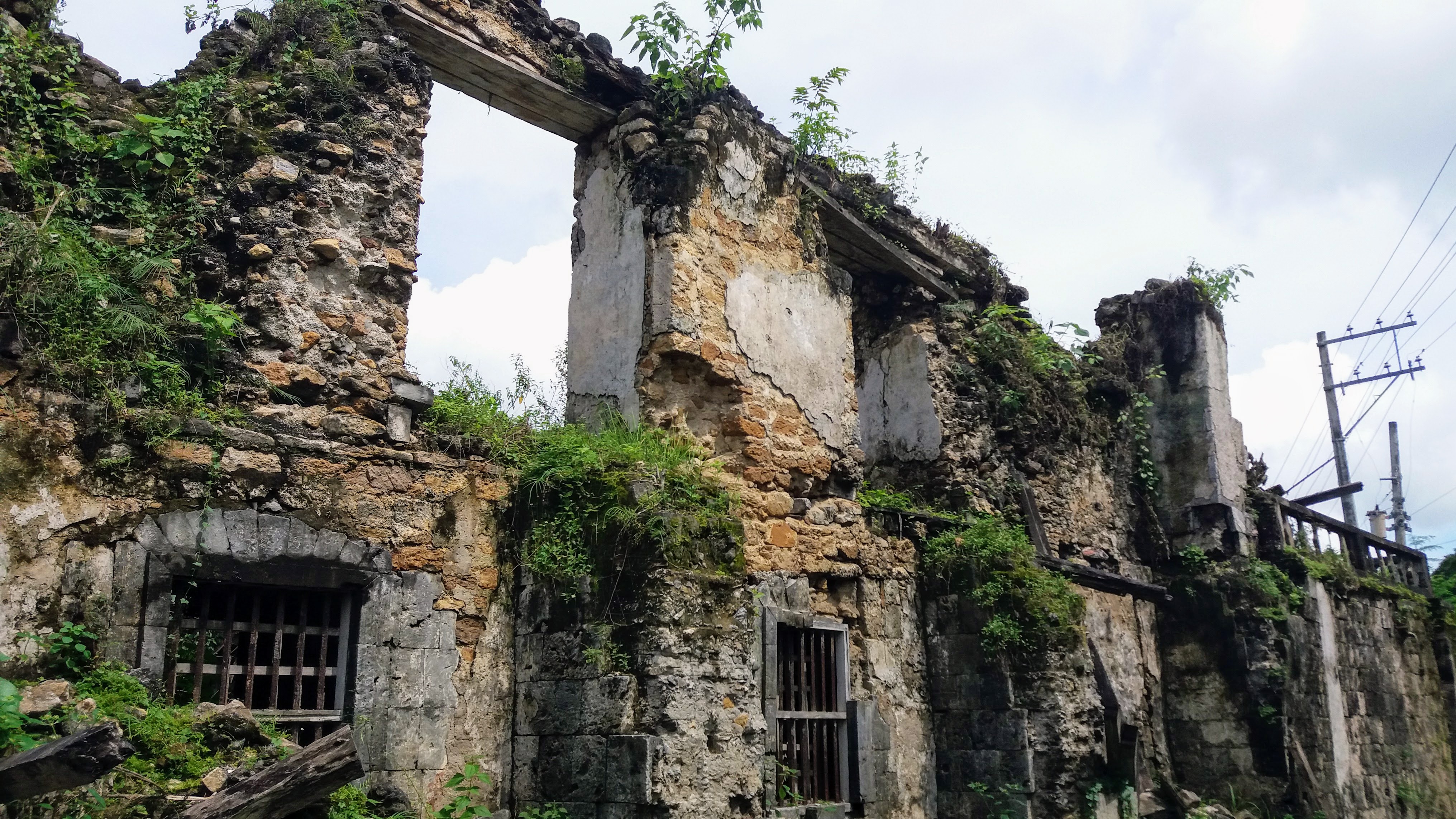
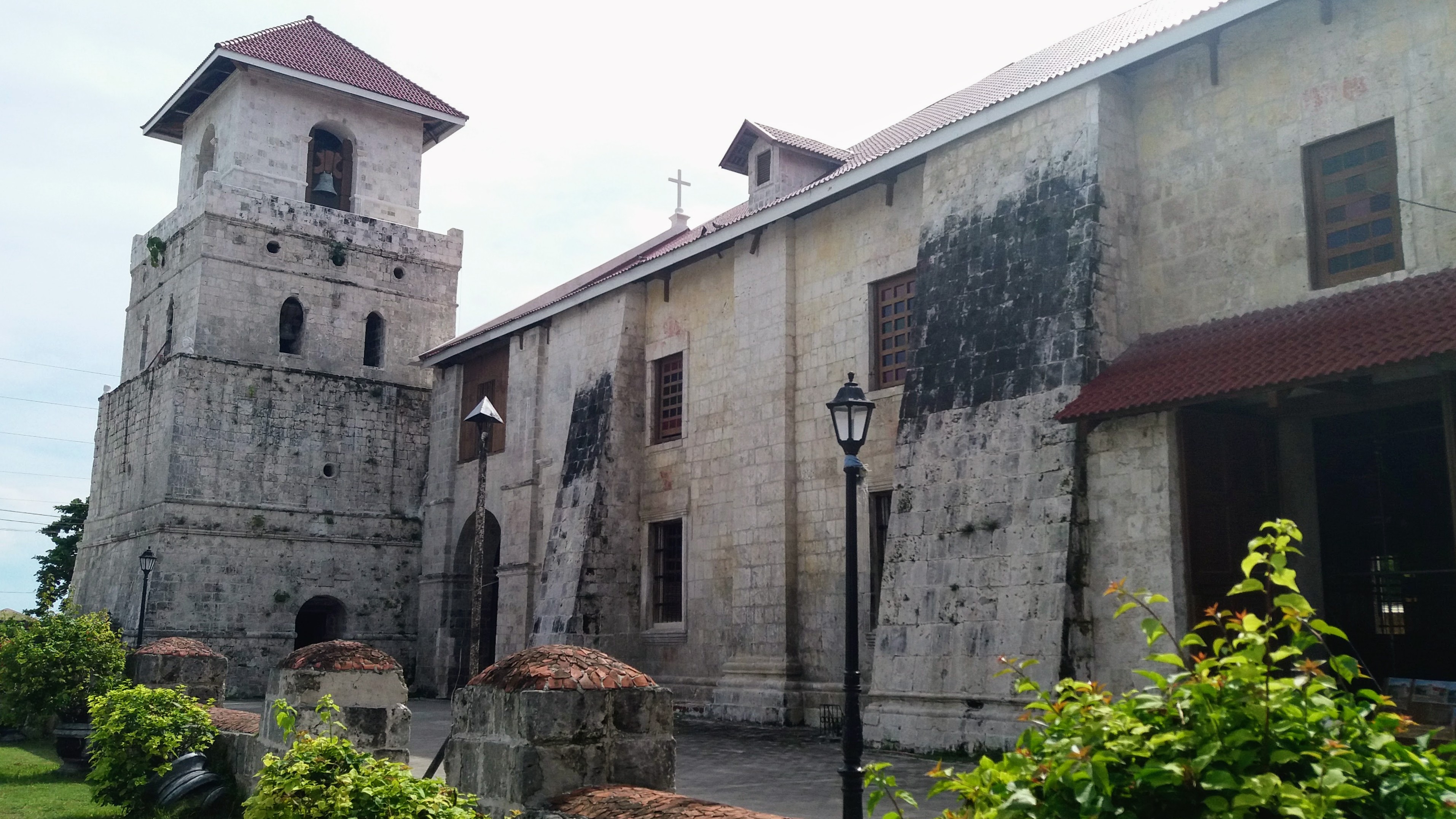
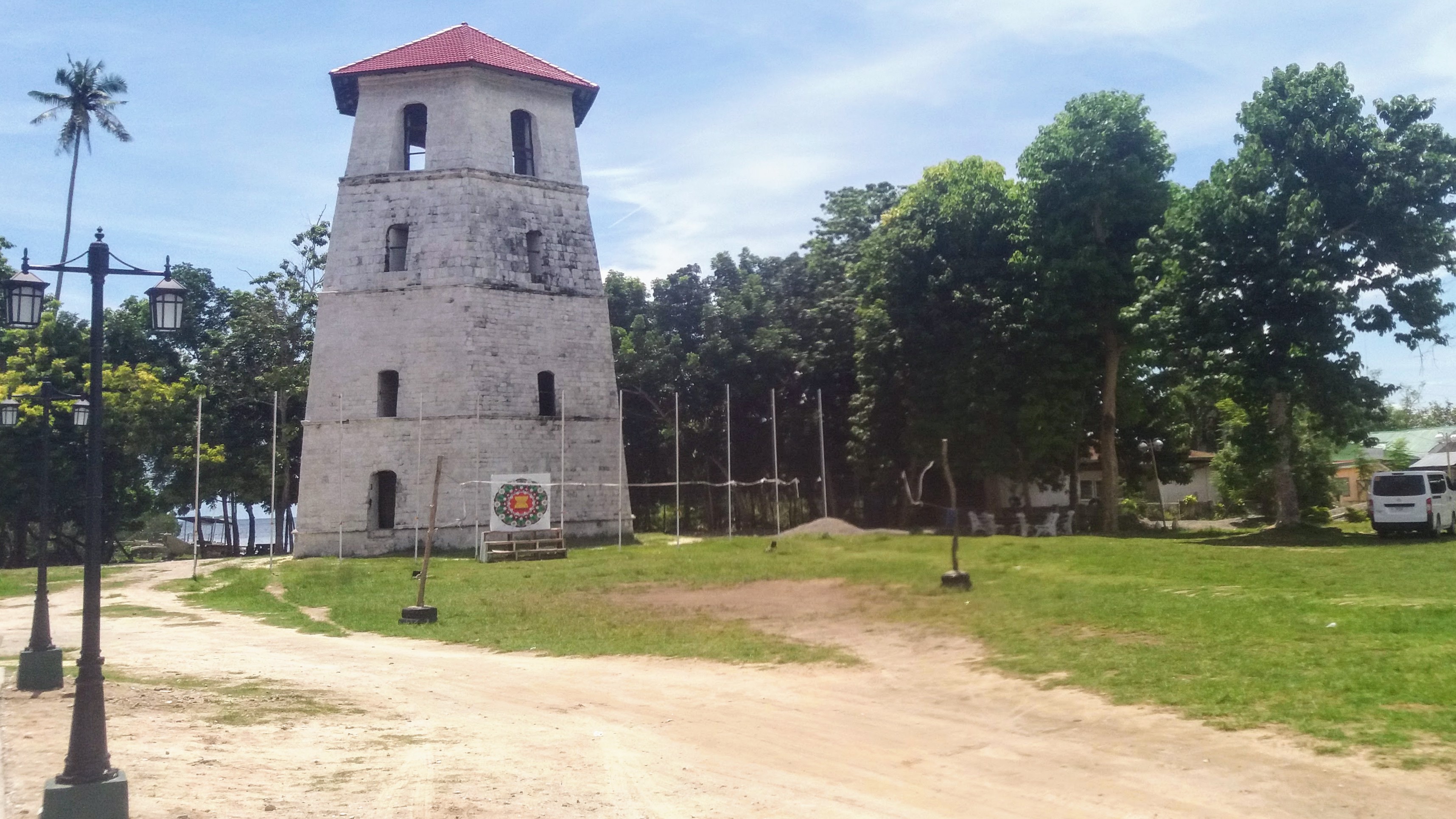
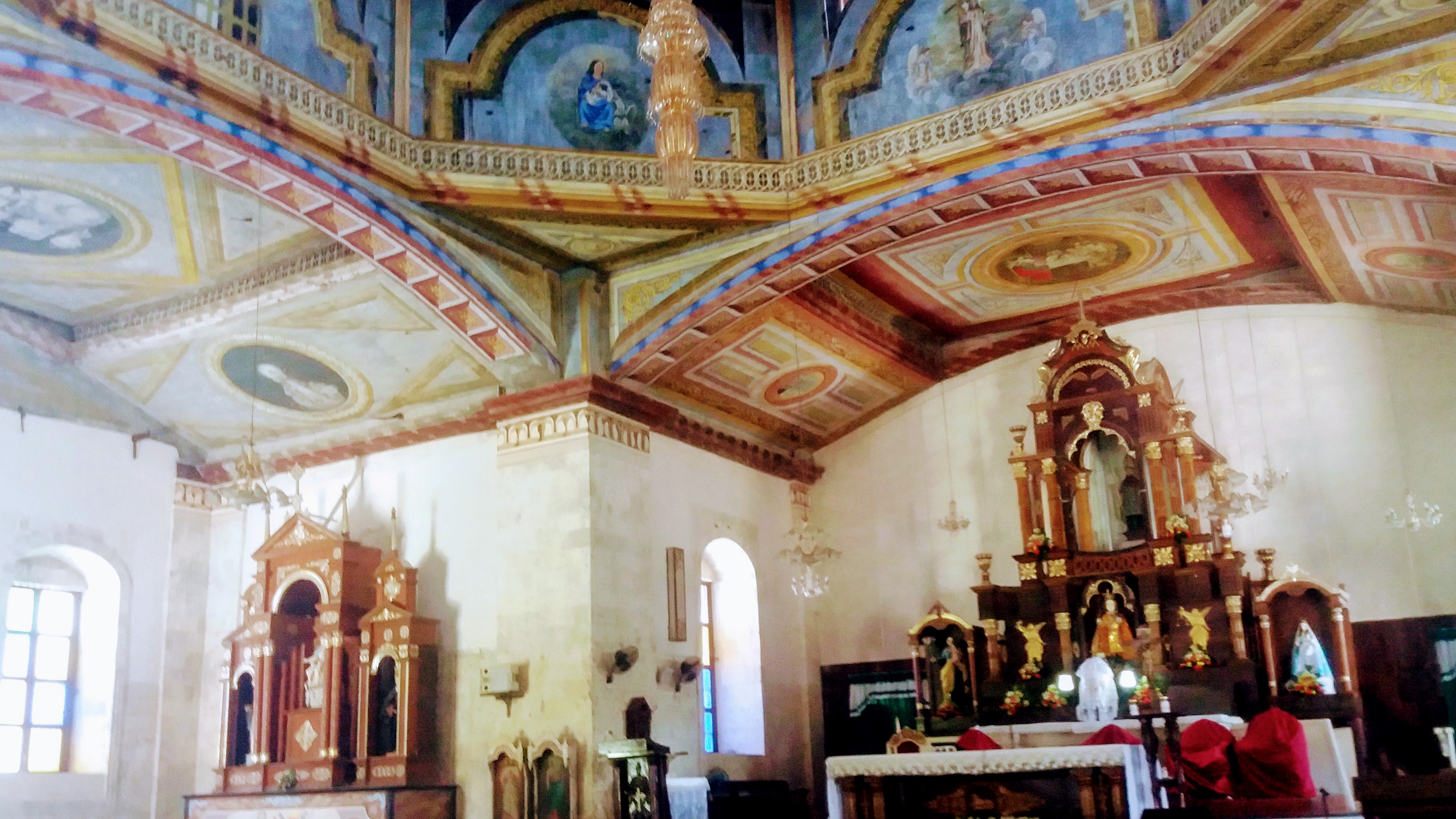
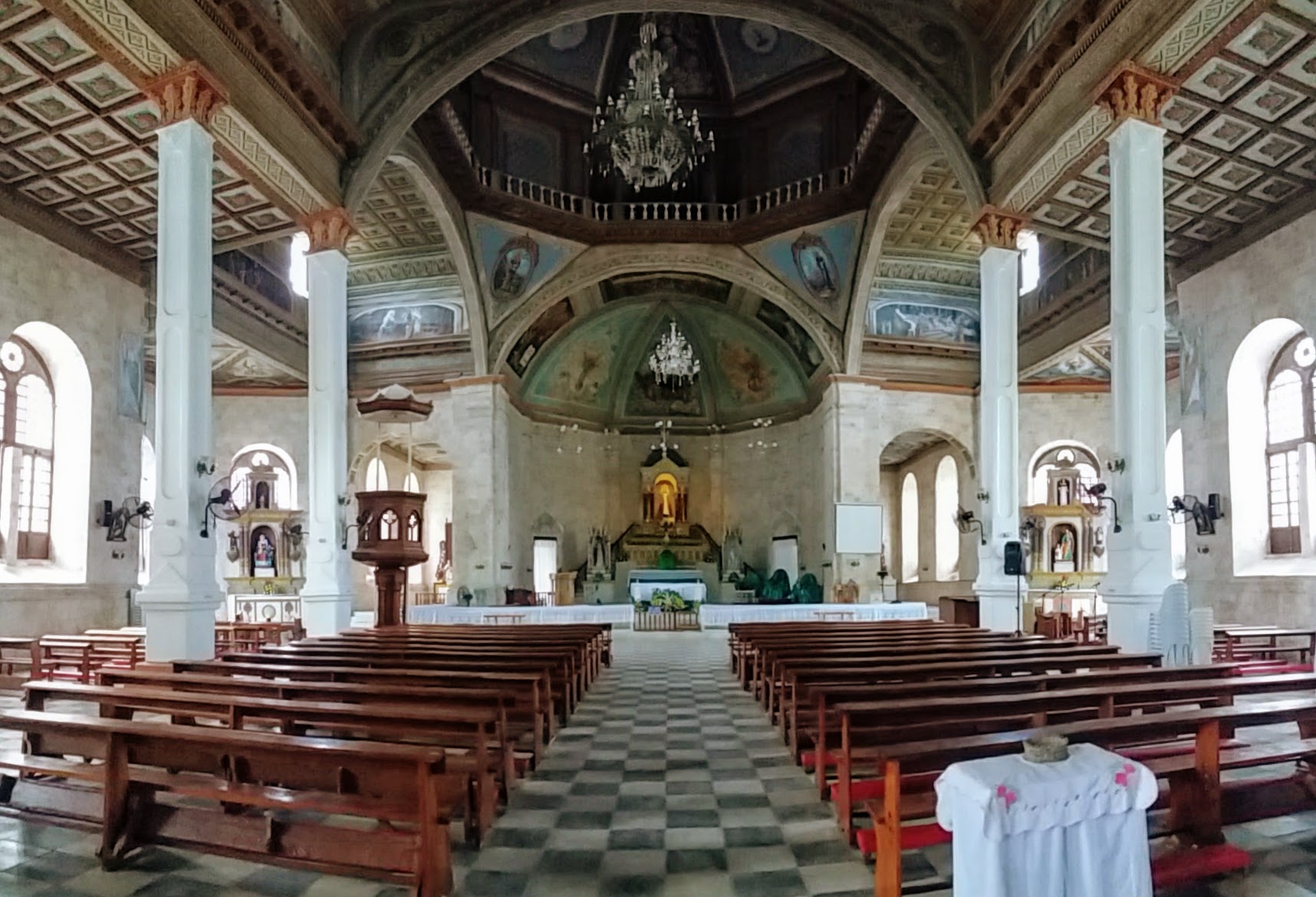
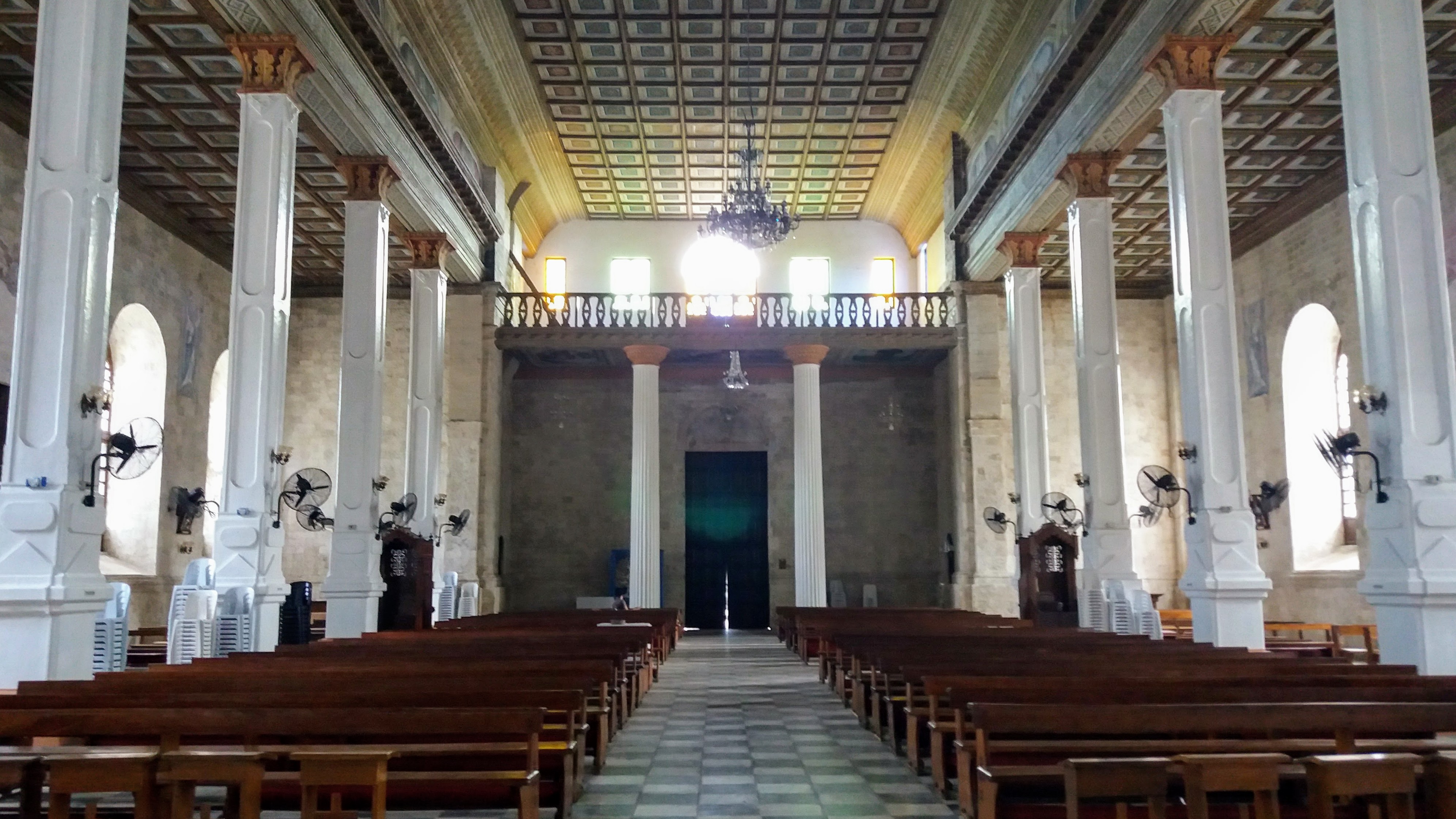
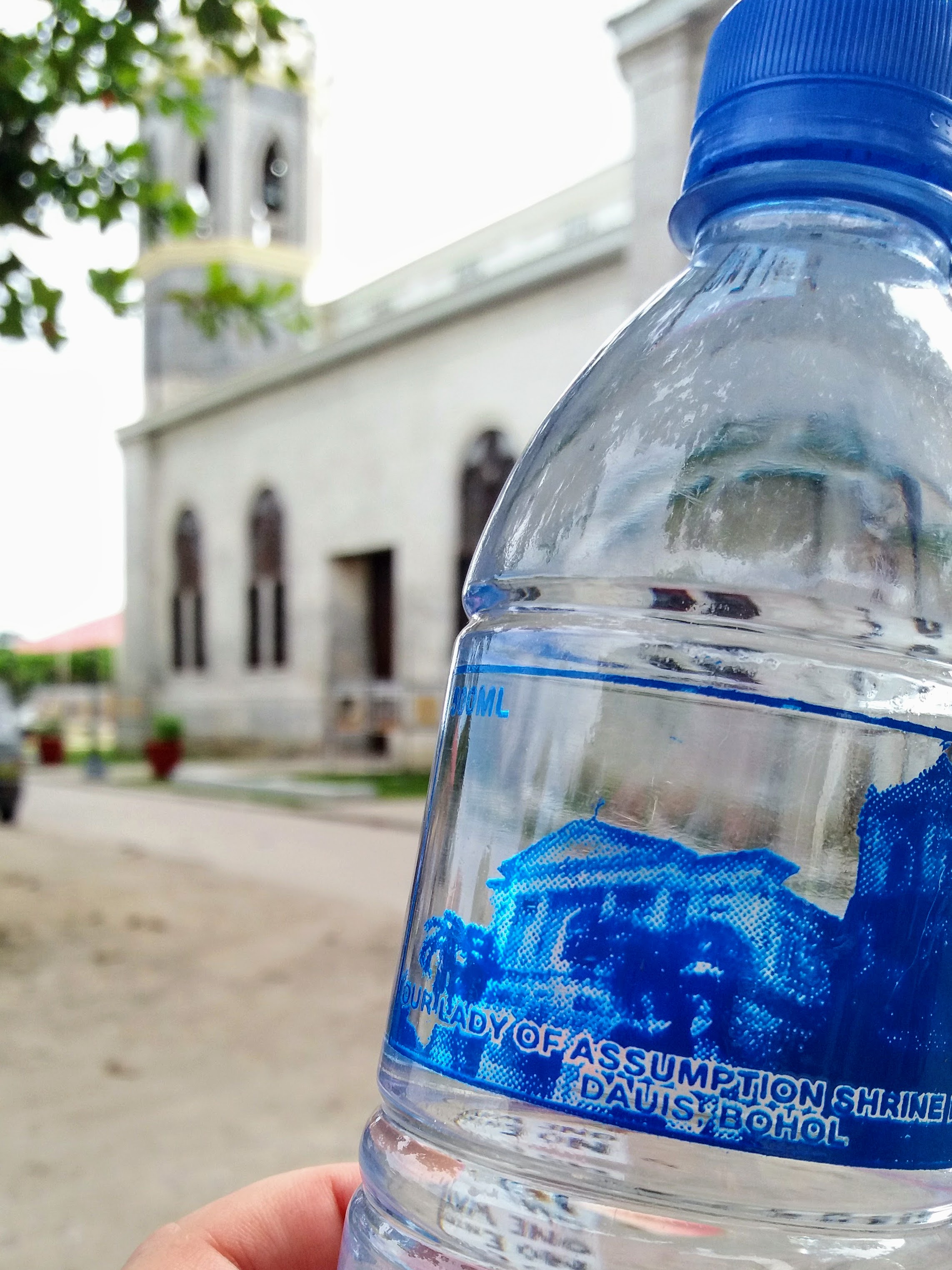
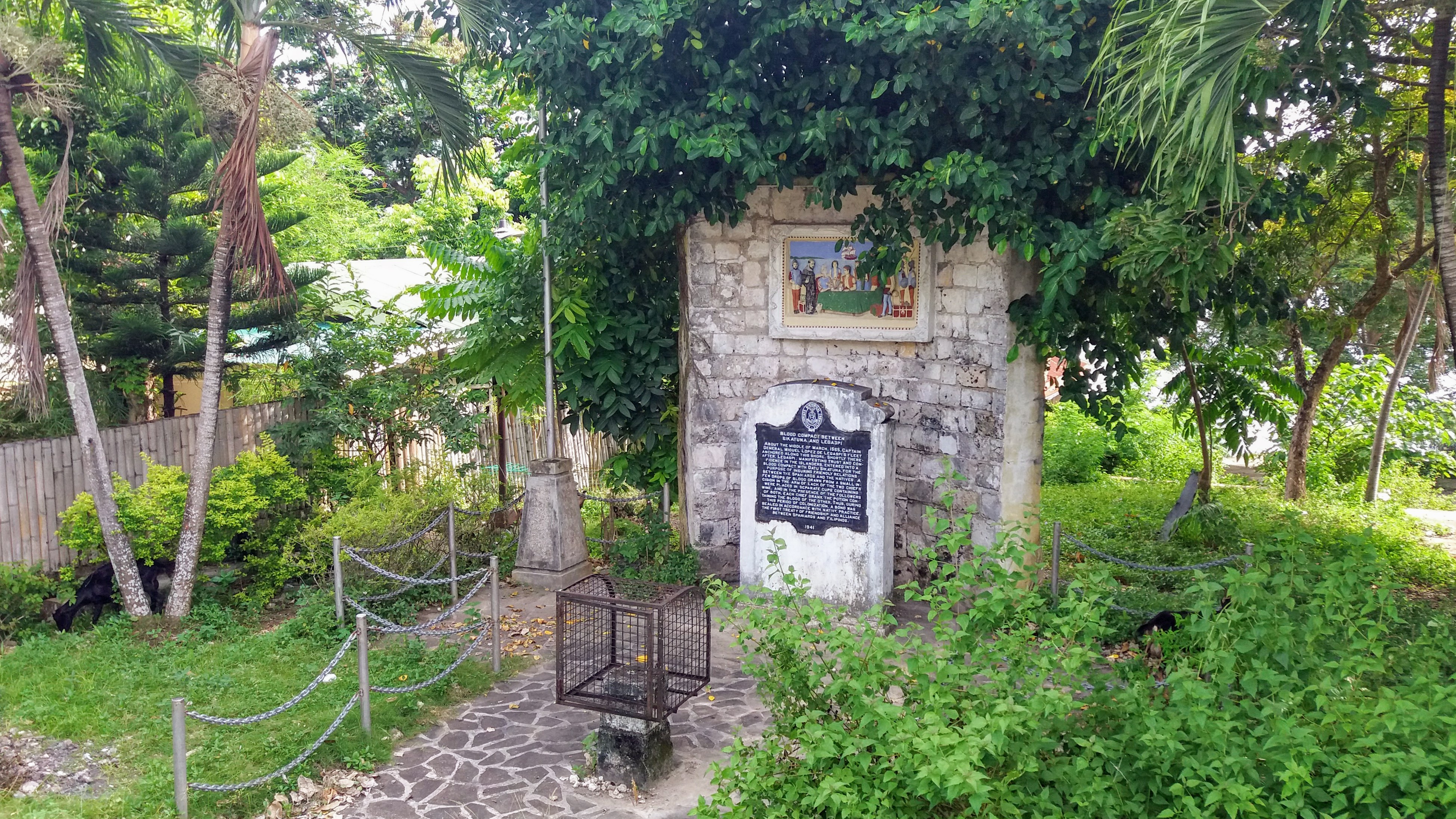
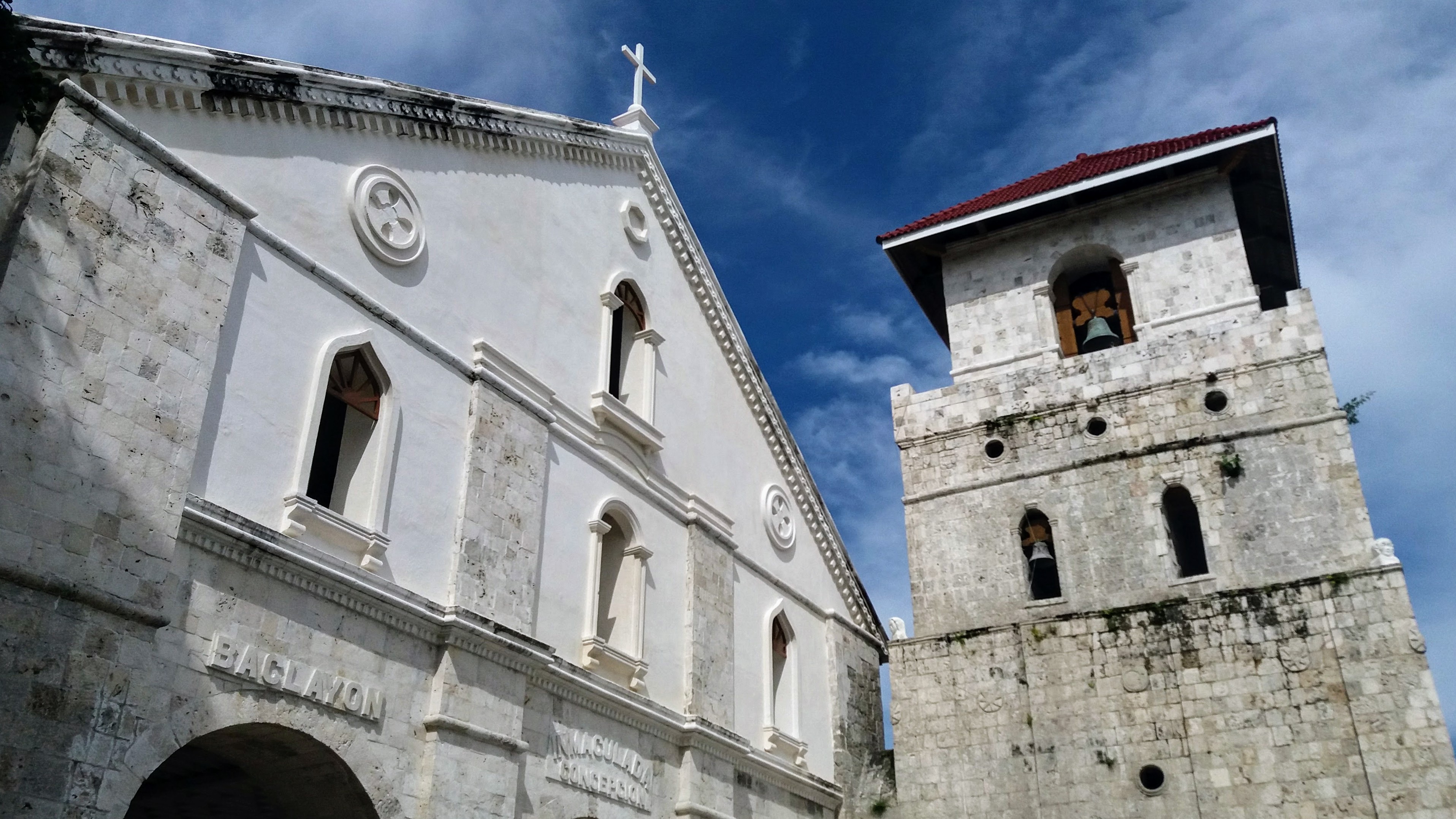 There is very little sign of damage on the exterior. This is not because the damage was minimal, but because the effort has been great. There was a before and after photo out front as well, showing what the damage looked like just after the quake and it’s much closer to what Loboc Church still looks like. I wandered around the exterior taking more photos and found several more blocks with that organic sea-life look that I now know to be coral stone. It seemed that the sanctuary proper was still under construction, but it is scheduled to re-open this year.







 The only actual tour I signed up for in the whole 9 day holiday was the firefly tour. After my
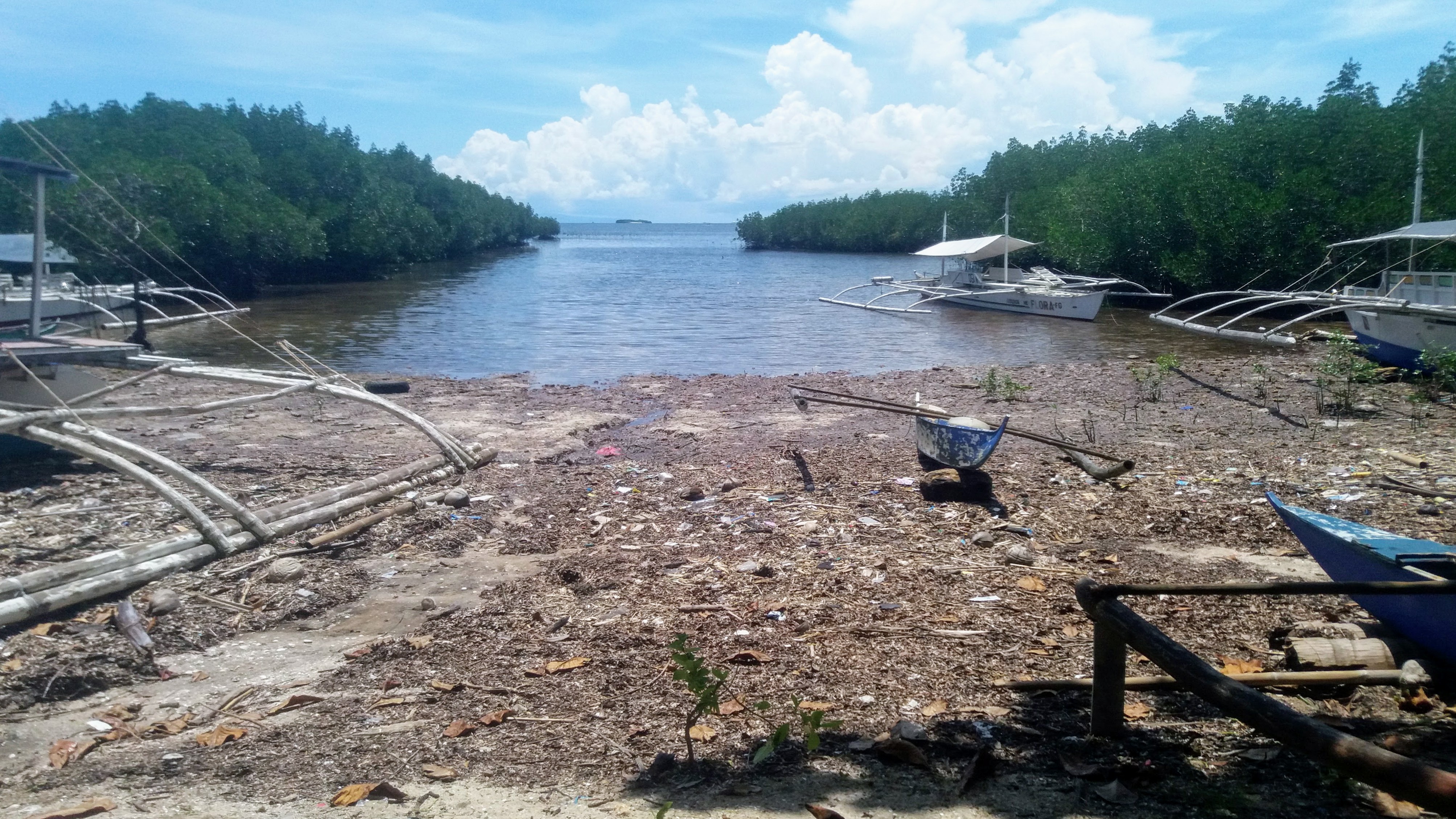
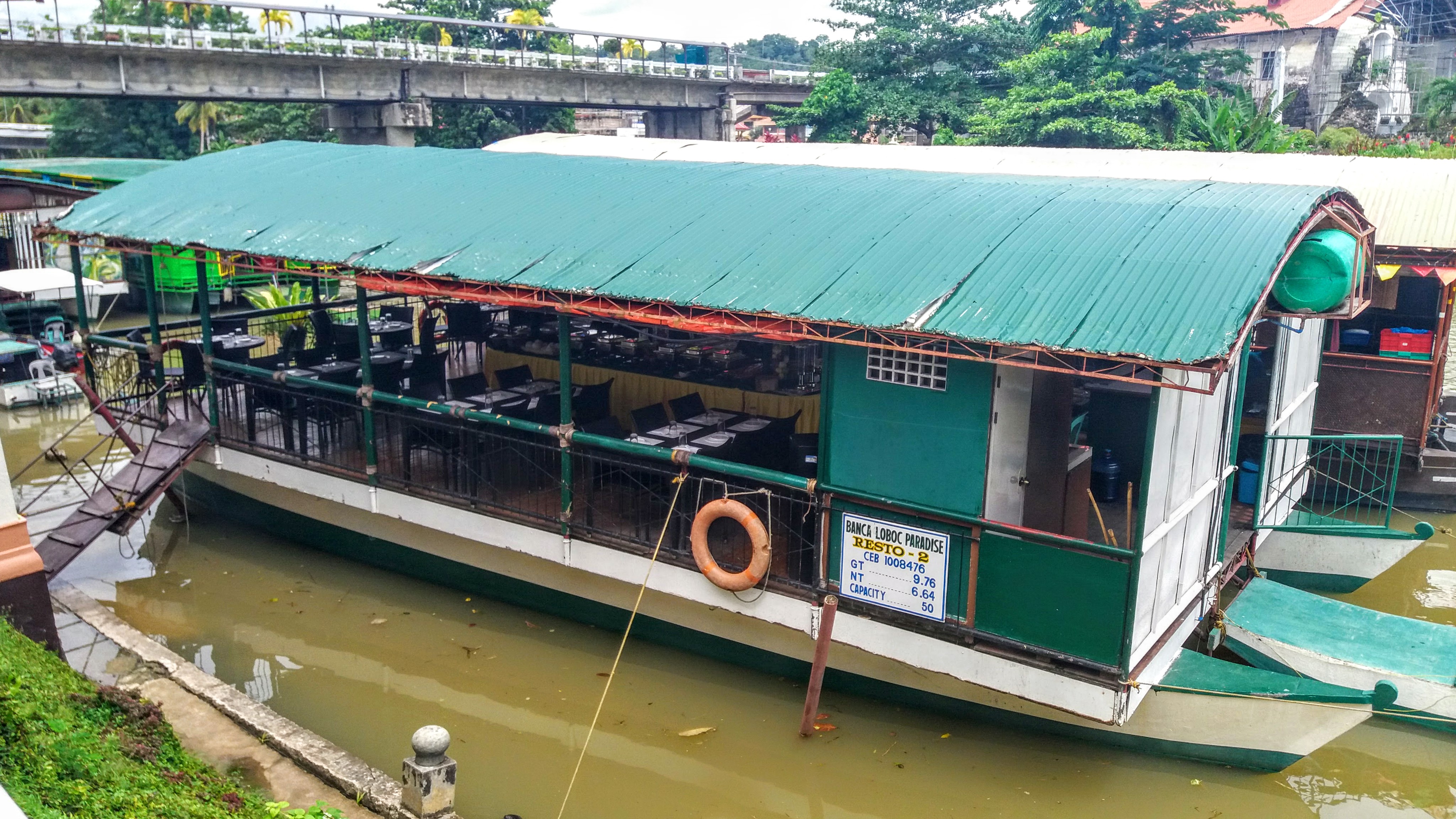
 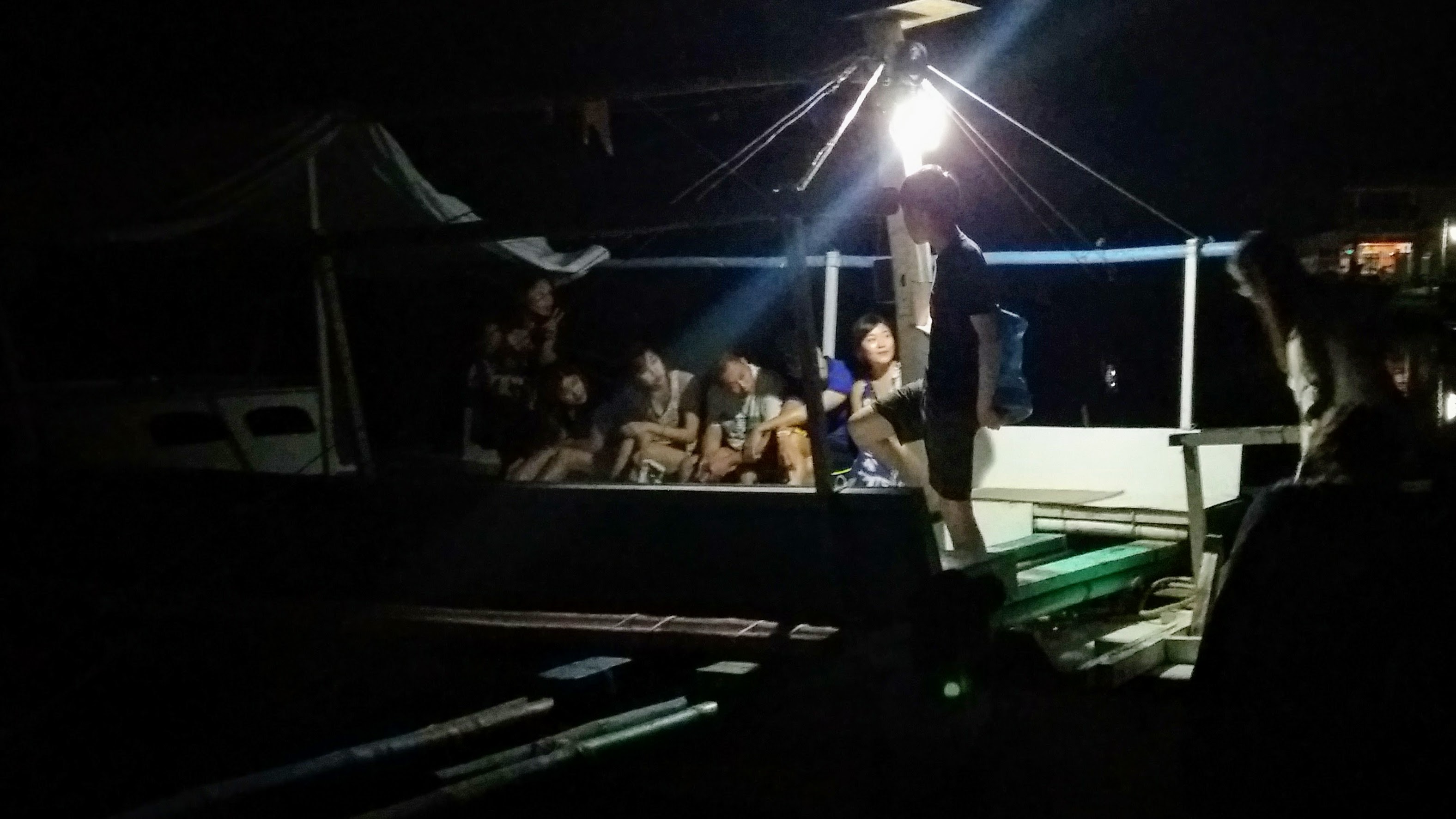 When we arrived, it was at a small riverside dock where several other drivers also unloaded vans full of tourists and we were herded onto a large boat in the Loboc river. Once all aboard, we drove up into the mangroves. The night was amazingly beautiful. It happened to be a full moon and the river was wide enough to make a space around us and let the moonlight illuminate the trees and mountains in pale blue. The night air was warm, but the wind of the boat’s passage kept us cool and bug free. I was a little put off by the huge crowd, but it was a beautiful night and I was enjoying the scenery nonetheless. People had pointed to one or two lone flashes, wondering if that was the bugs we were coming to see, but of course it was not.


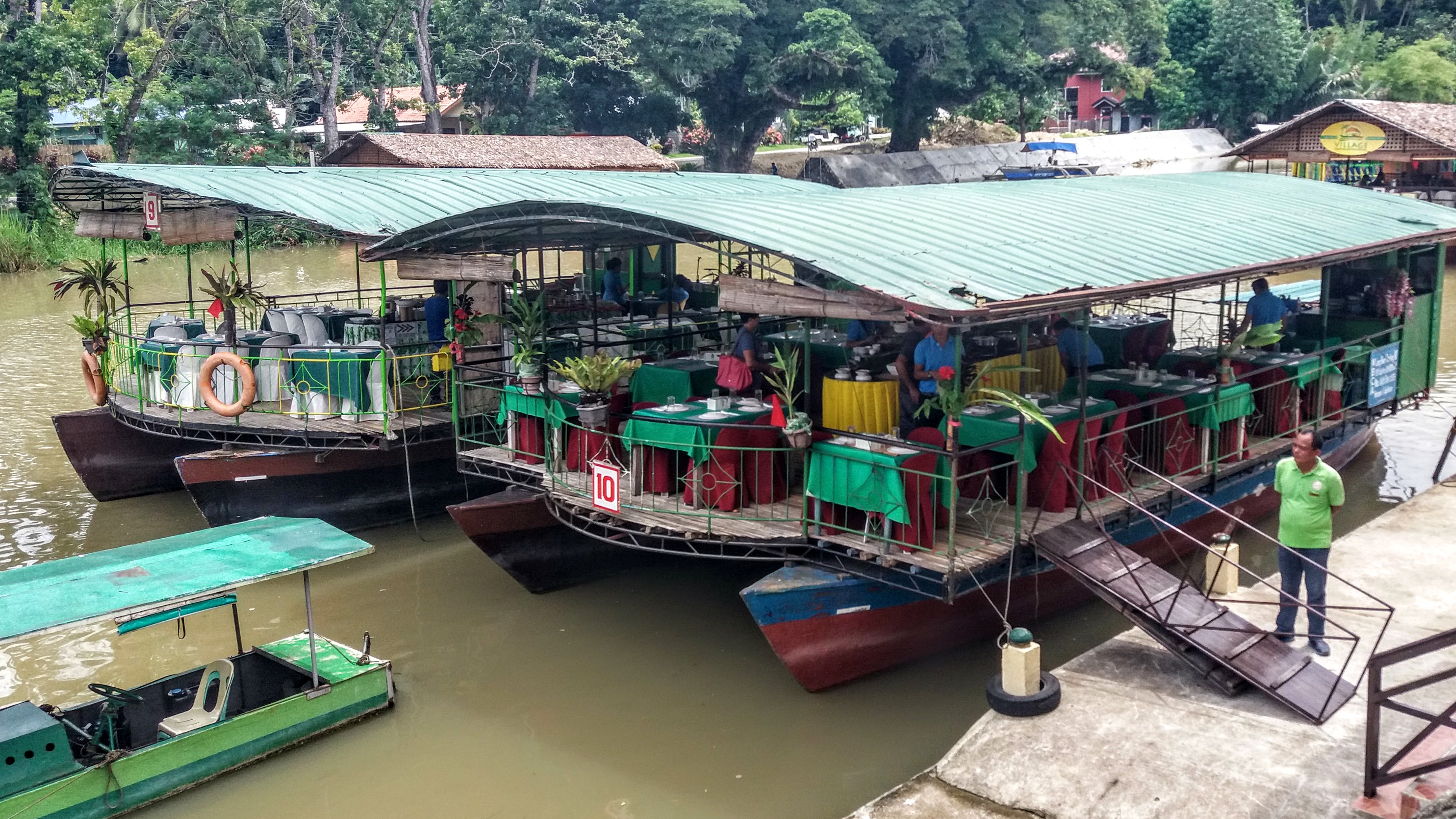
 I took lots of photos, most of which are nearly identical in retrospect, and a few videos which I’ve managed to string together to give a general impression of the experience (see below). My seat provided an unrivaled view of both sides and a constant breeze that kept me cool and comfortable. Boat staff offered to take pictures (with my own camera, not as a souvenir gimmick), and when I was ready to go get my seconds of maja blanca, I offered my spot at the railing to a young lady with a very serious camera who I thought would appreciate the vantage point while I wasn’t using it.
 We pottered down the river, admiring the plants and scoping out some other floating platforms where we theorized the dance performances would be held. At one point, I began to notice lamp posts along the riverside, seemingly alone in the jungle. I suppose that there may have once been a path there, perhaps wiped out by the 2013 earthquake or just by the changing course of the river, but it was more than a little Narnian to see a perfectly normal lamppost in the woods.
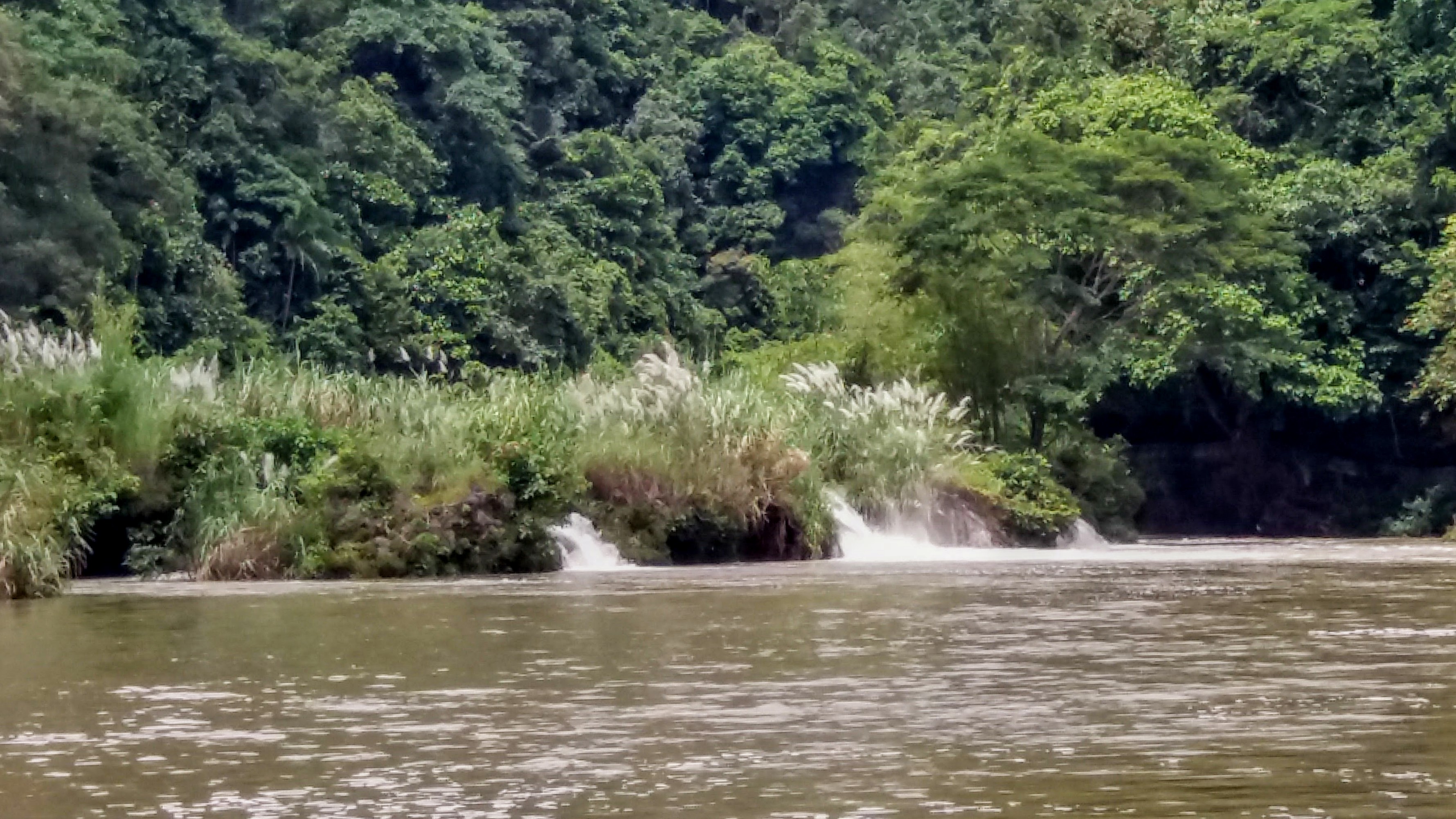 If you’ve ever been up and down a river, you’ll appreciate that the view on the way back is not actually the same as the view on the way out, so I didn’t mind at all. Plus, on the way back we pulled up to one of the floating platforms and got treated to some local traditional dancing. The sign indicated the dance is called Kuradang, which seems to be a kind of dance used at many celebrations in Bohol. It likely started before the Spanish colonization but has just as likely been influenced over the centuries. It’s still special here, though, because it’s considered to be a uniquely Boholano dance.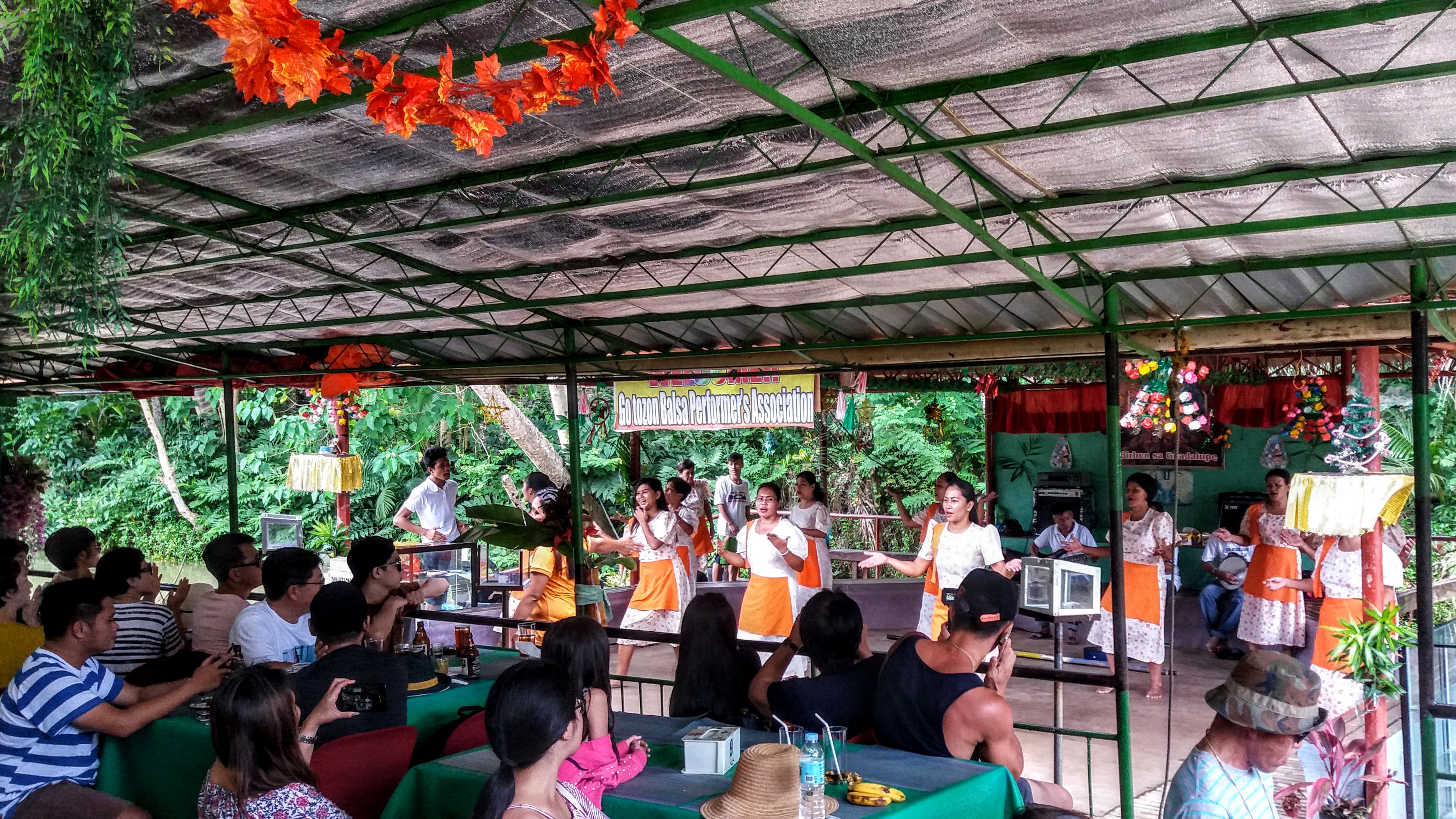

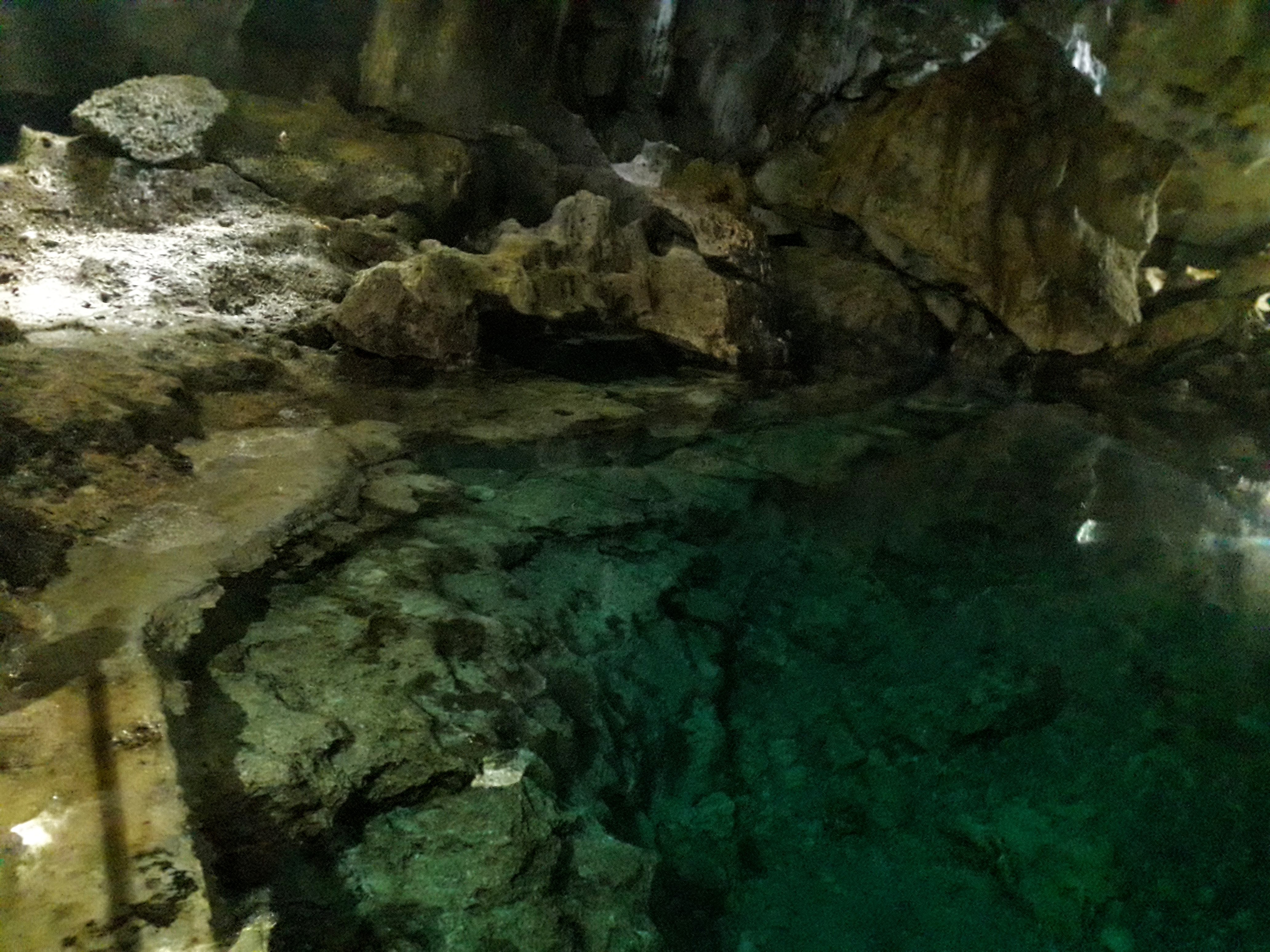
 We signed the guest book and the guides at the top of the entrance offered to keep an eye on our helmets while we went down. The stairwell looks like a black hole into nothingness, and the cave entrance is more like a sinkhole than a cave mouth. The stairs are steep, but sturdy and have a handrail, and it’s a short trip down. Once inside, there’s plenty of room to stand up straight and look around. It’s a small cavern with some lovely, though not stunning formations. The main attractions are the natural skylight that fills the cavern with the warm light of the sun like a spotlight, and the beautiful crystal clear pool. Looking at the water, I couldn’t understand why anyone had complained about it in the reviews. I suppose it’s possible that weather or too many swimmers might have clouded it up during their visit, but for us, just past opening time, the water was still, blue, and so clear that every rock on the bottom was visible even in the dim cavern.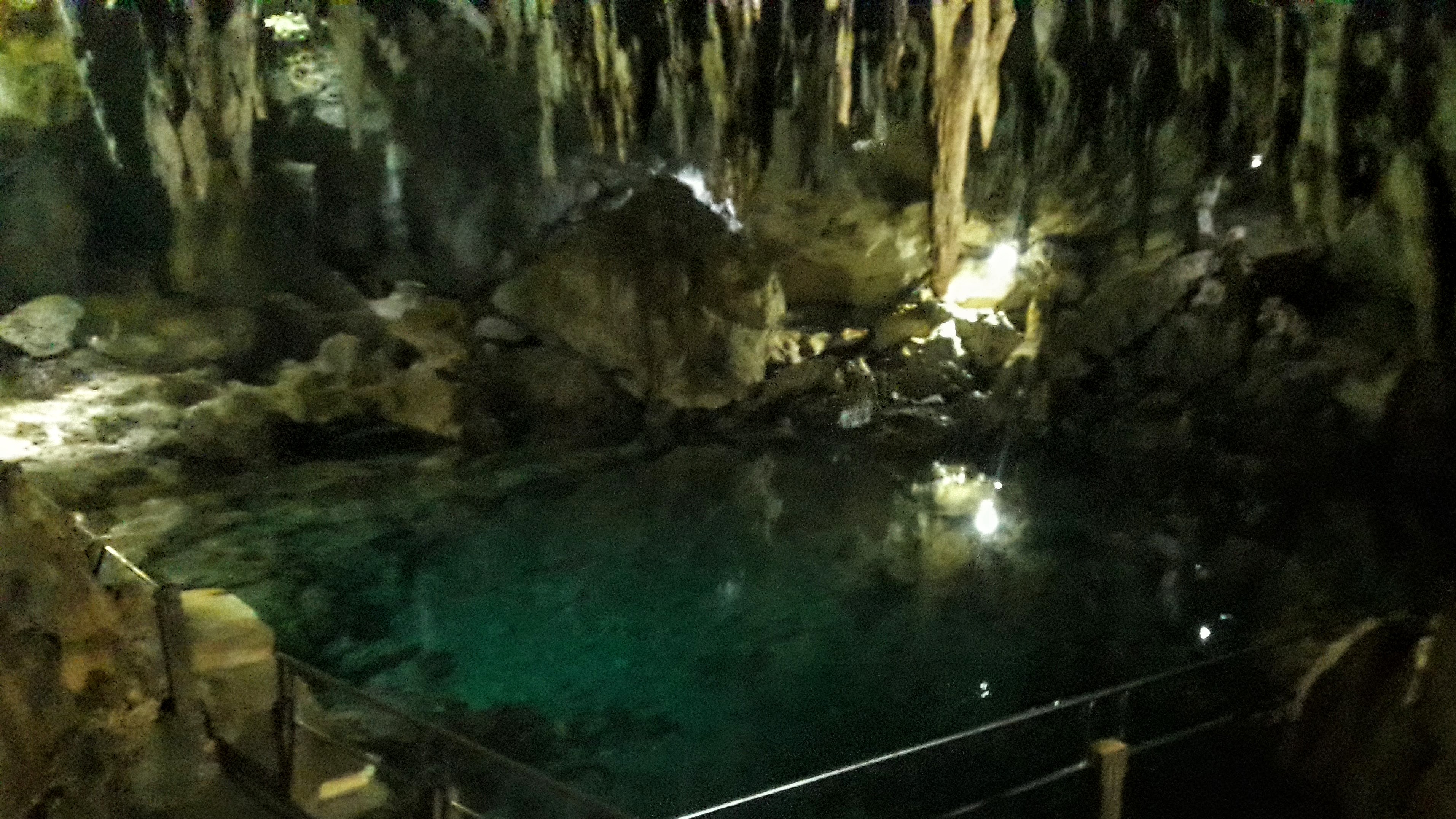

 We drove around in hopes of getting a glimpse of the water or perhaps some boating opportunity, but mostly what we found was a kind of upscale neighborhood where the people seemed rather surprised to see us. It seemed not unlike other lakefront neighborhoods, and we still had no view of the water which I presumed was visible from the back windows of these beautiful houses. At last we came up to the bridge that crosses the narrow point where the river meets the lake and we got our viewing spot.
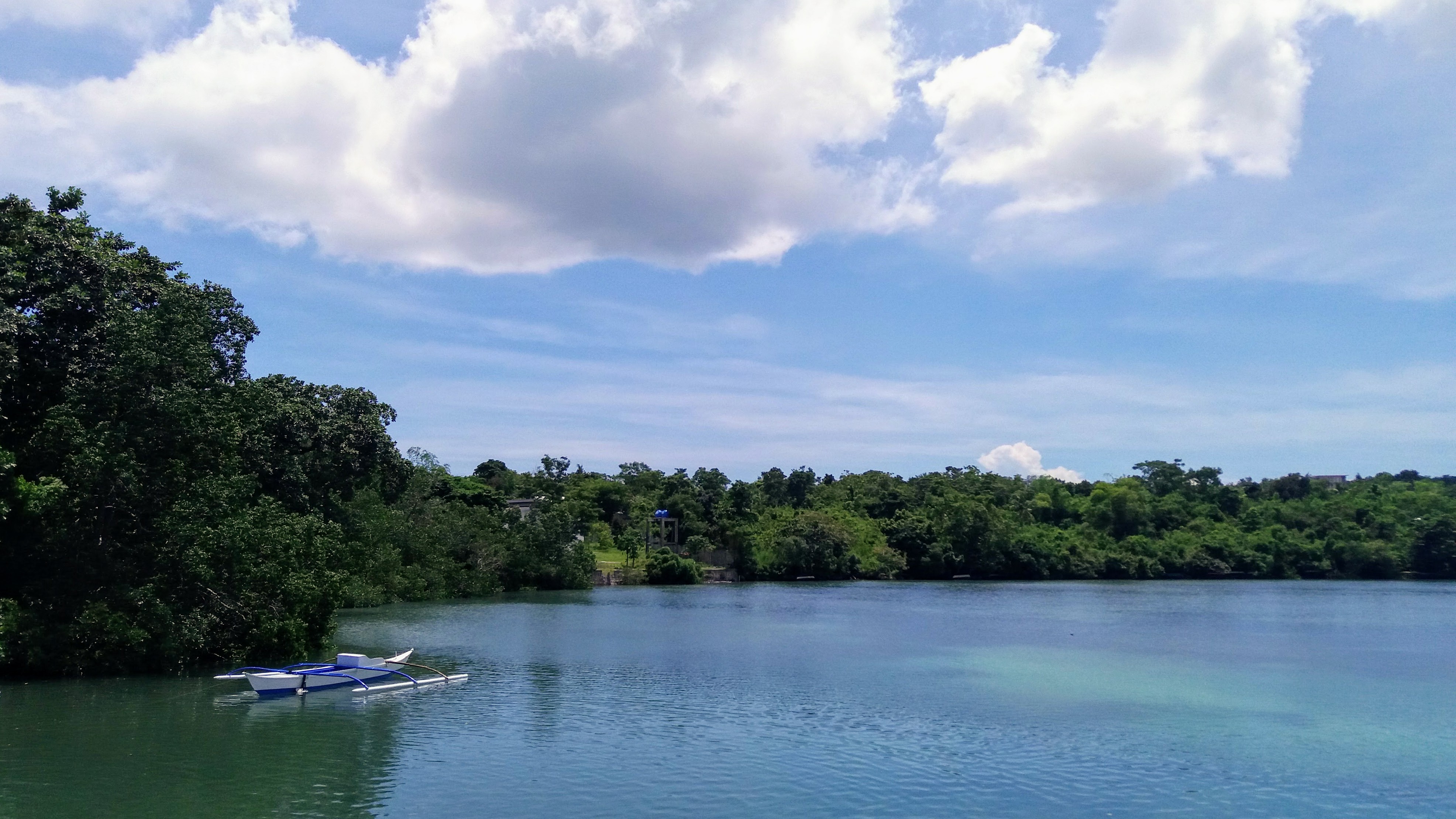 I’m sure everyone thought we were nuts for pulling over and walking out on the bridge to take pictures, but it was very pretty, and we’d driven over there more or less just to find out if there was anything to see at all. At the far end of the bridge I found a staircase that led down to a shaded swimming area in the lake, but it was occupied by a local family and I wasn’t entirely sure of the etiquette so I waved politely and moved on.

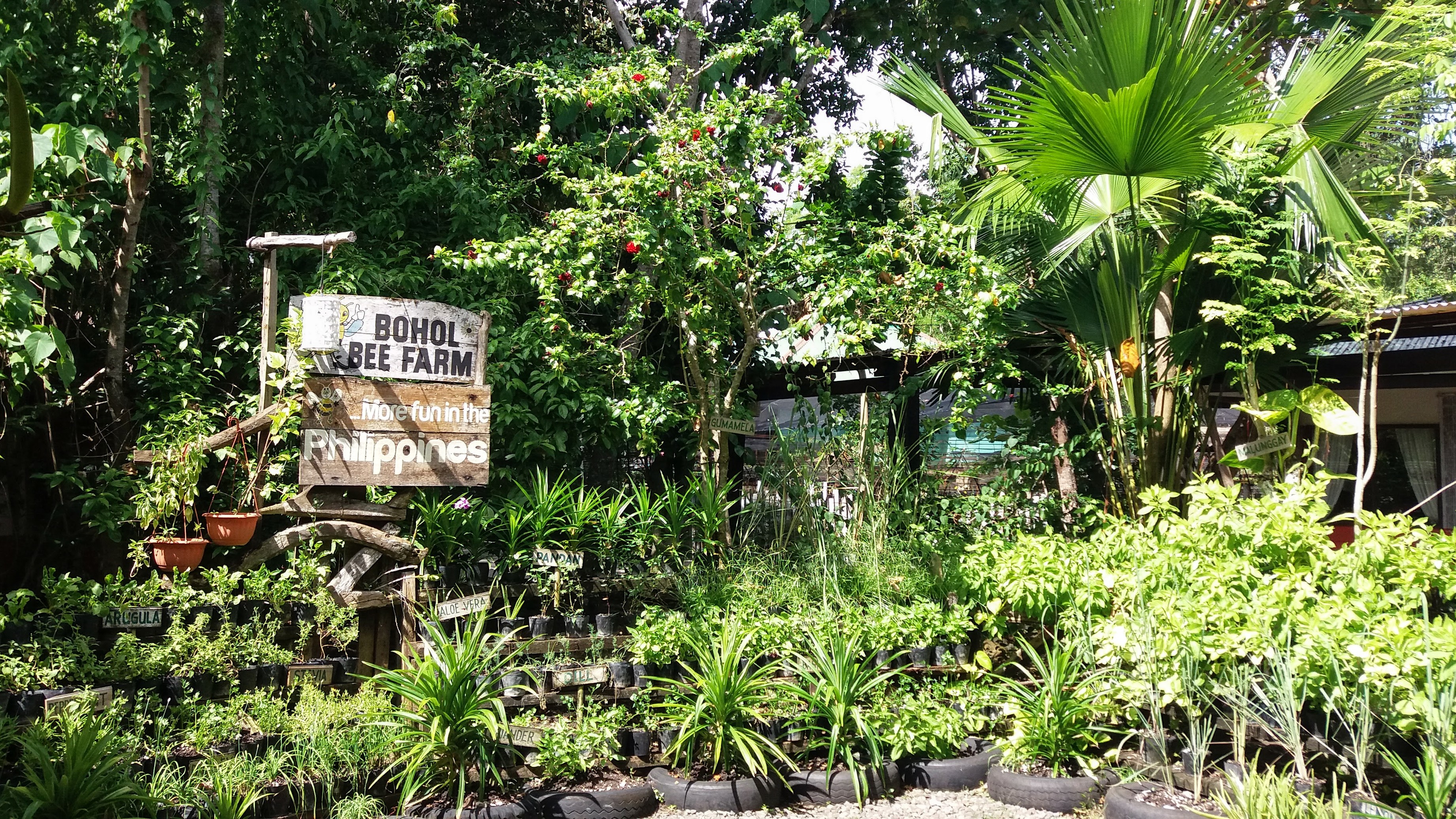 We went back to the Bee Farm for lunch and the “tour”. Arnold, our guide, started us out with a little cooking lesson in the herb garden where we played “name that herb”. I recognized nearly all of them, but the oregano completely stumped me. What? Oregano? How hard is that to spot? Yeah, but this crazy Filipino oregano was completely different with HUGE leaves. The guide asked the names of each plant in English, Tagalog, and Boholano, and when we got to the oregano and everyone saw how surprised we were, we had to explain the differences in the plant’s appearance in Europe and America versus the one growing in the Philippines. Arnold said he’d heard about that but never seen the European varieties. Behind him ranged a huge display of potted herbs with their names displayed, and I recognized most, but had to ask about Pandan.
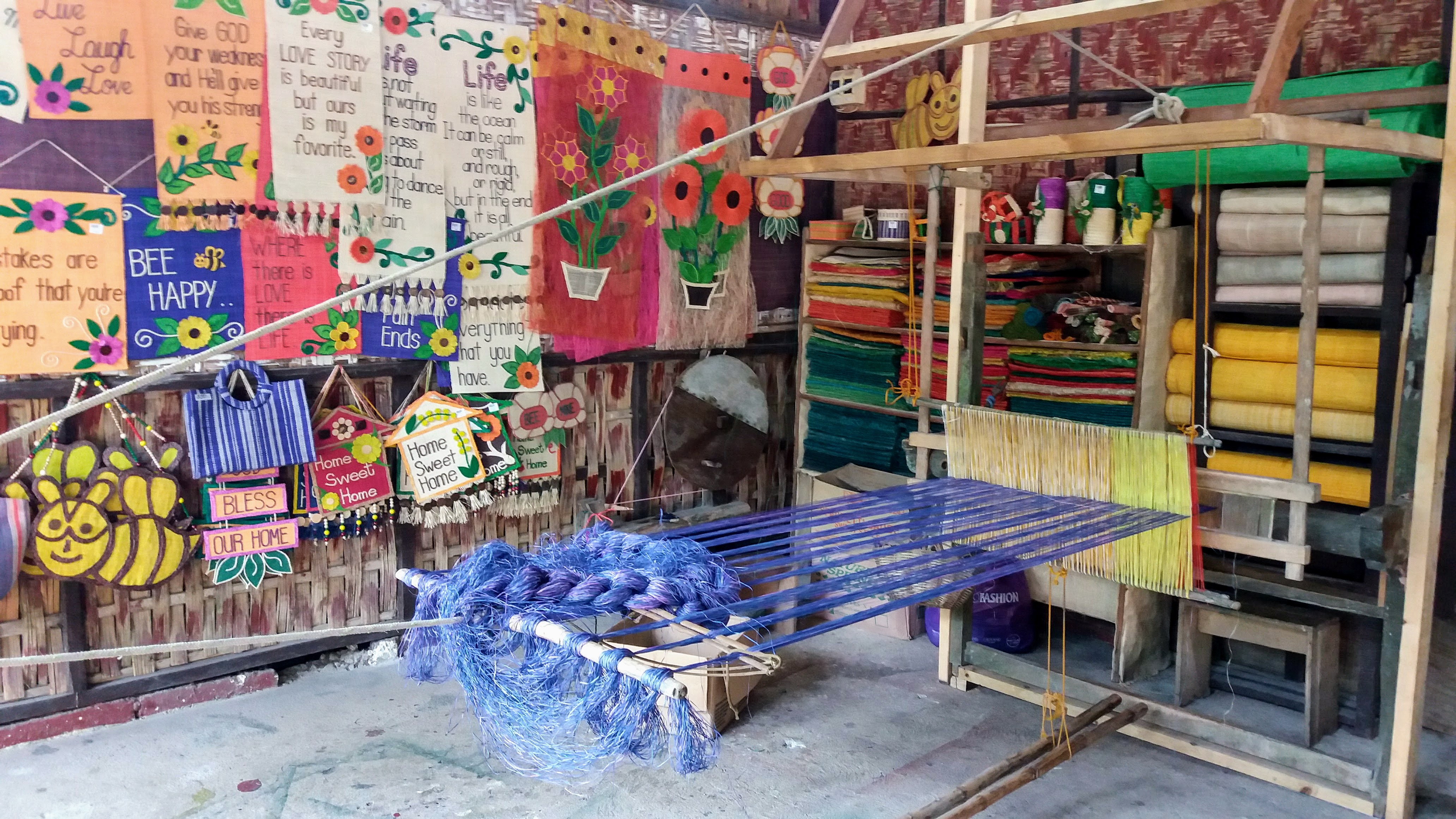 Once we were finished in the herb garden, we moved over to the manufacturing areas. Arnold explained that while they do use as many of their own ingredients as possible, the farm has grown too large for them to do tours of the farmland itself anymore. We saw the bakery where they made the wonderful squash bread. We saw the creamery where they were busy making ice cream, sadly it smelled like Durian was the flavor of the moment. And we saw the prepping areas where they made and packaged the teas, honeys, and other goodies used in the restaurant and sold in the gift shop.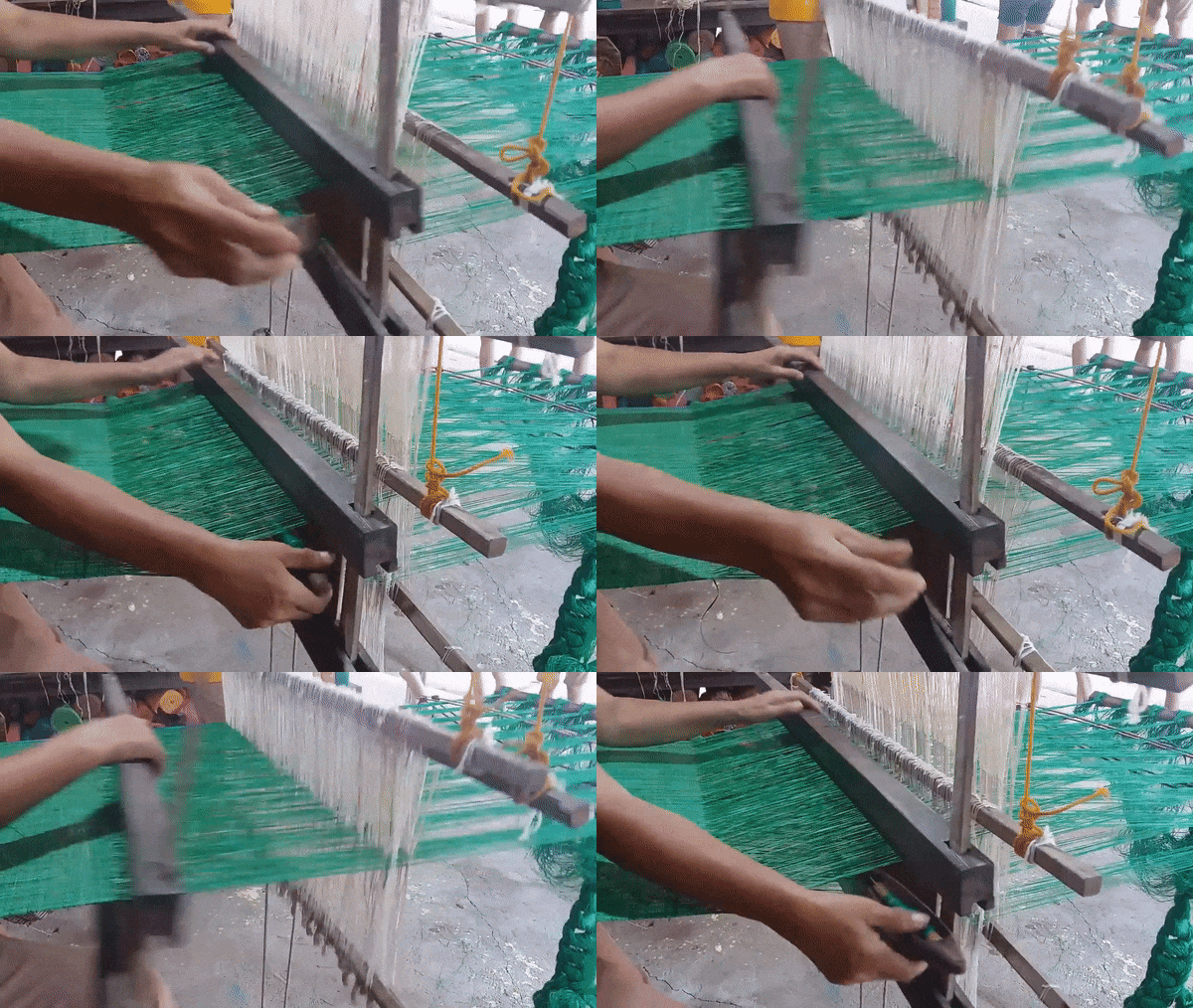


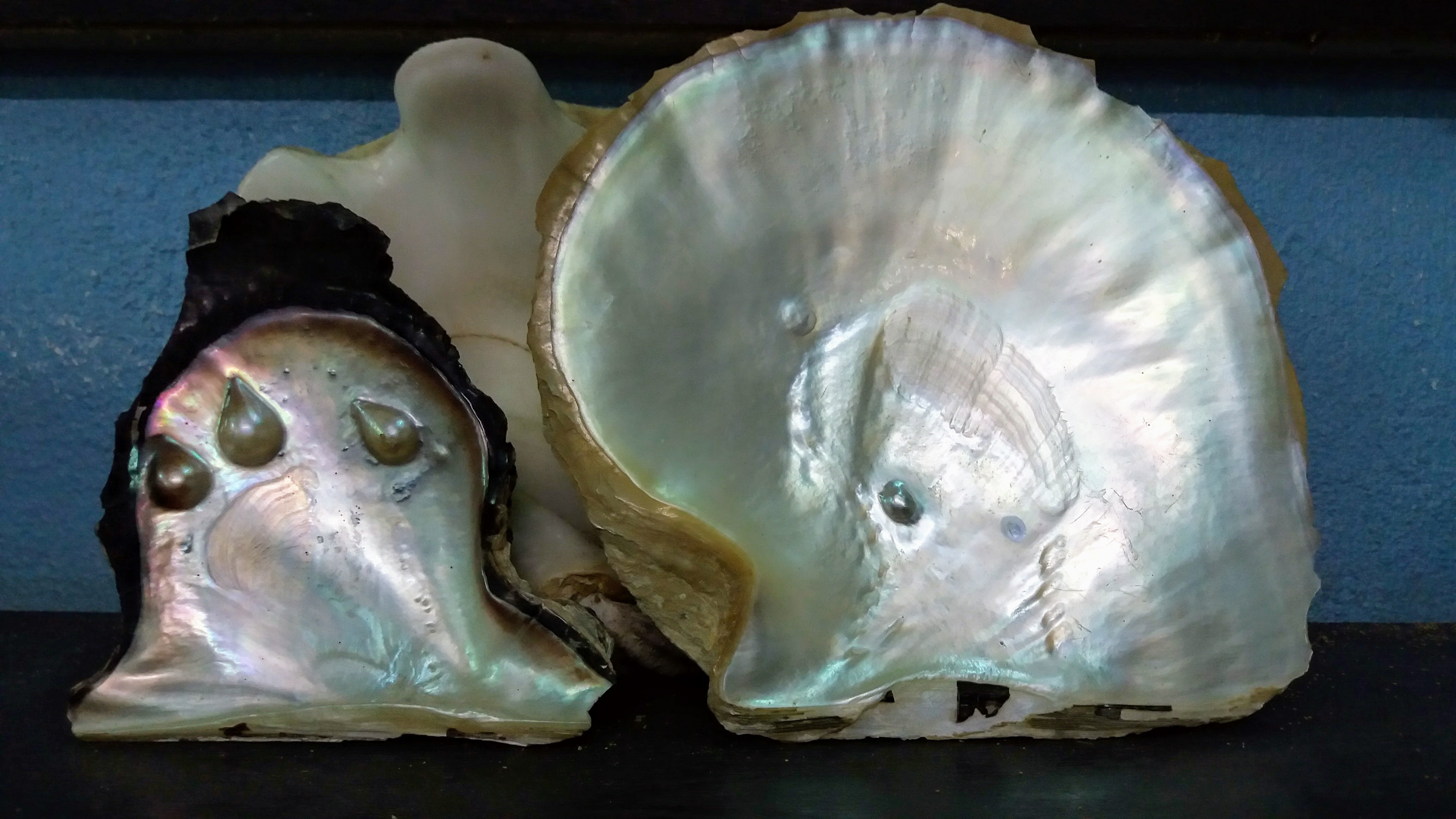 After lunch I went in search of the Nova Shell Museum, because I like seashells and museums. The whole area of Bohol is filled with tiny little roadside tourist attractions that are so cheesy and cost 20-60p to go see. I realize looking back on this experience that there is a high probability I enjoyed these because they reminded me of the random roadside attractions that we would sometimes visit on road trips when I was a kid. The US has (had? I’m not sure how many are still there) a huge number of tiny local sights setup for families to stop and look at while stretching their legs or getting a snack. None are sights that are destinations in and of themselves but they are fun to see if you’re passing by. This is how I felt about the Shell Museum. Would I have driven out of my way for it? Probably not, but it was right there next to one of my go to restaurants (La Familia) and only a few minutes drive from our hotel, so why not?


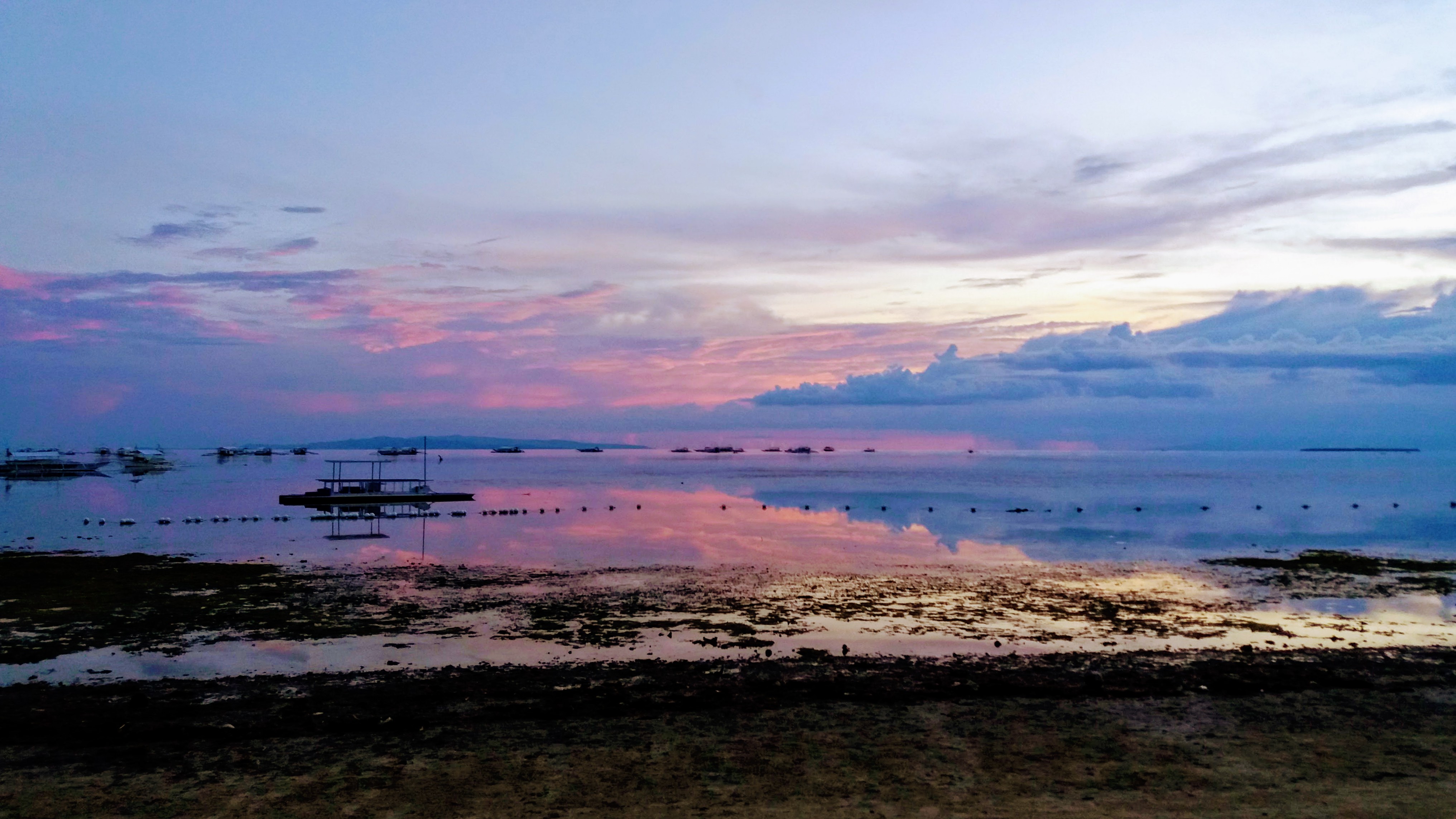
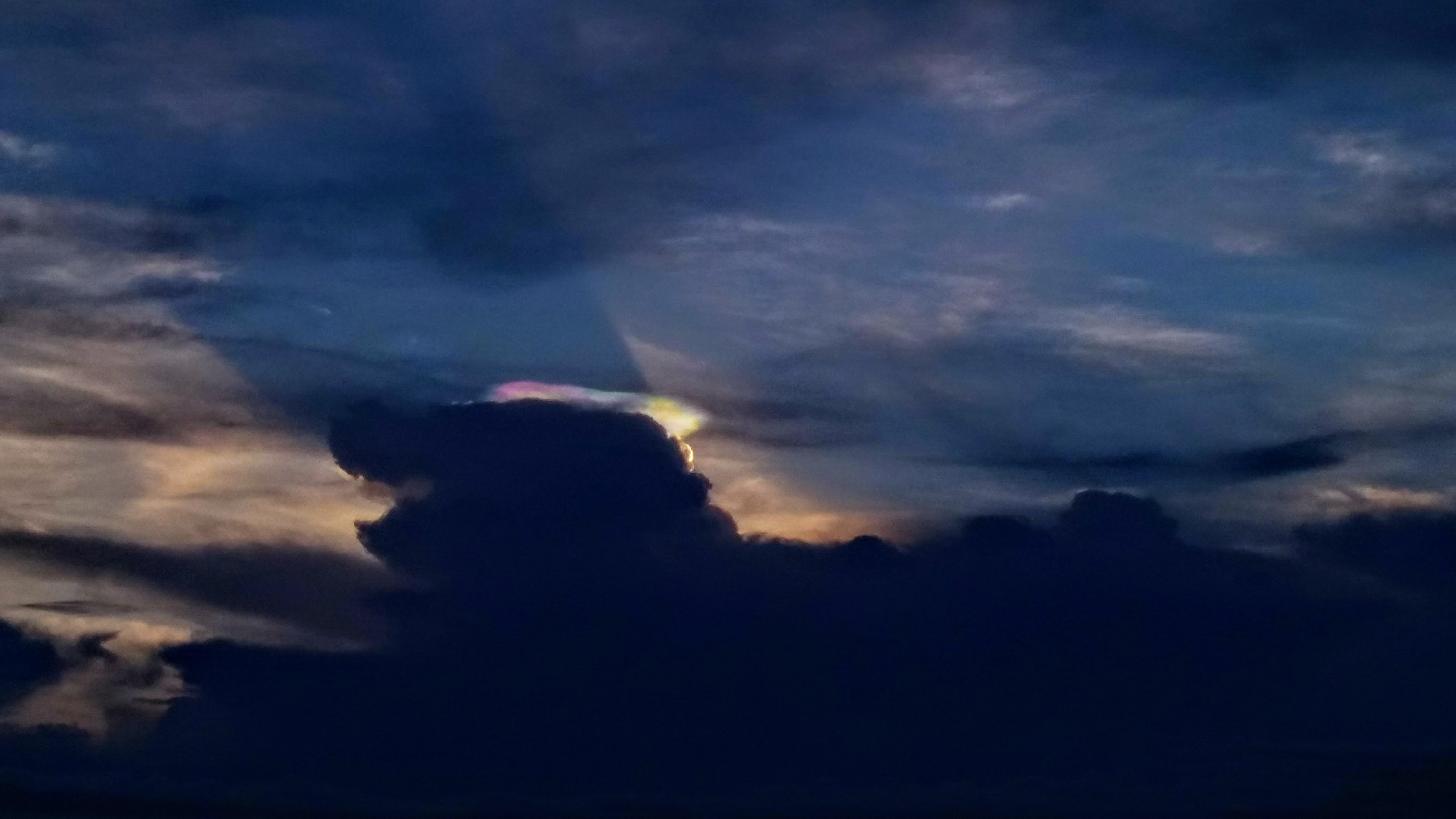
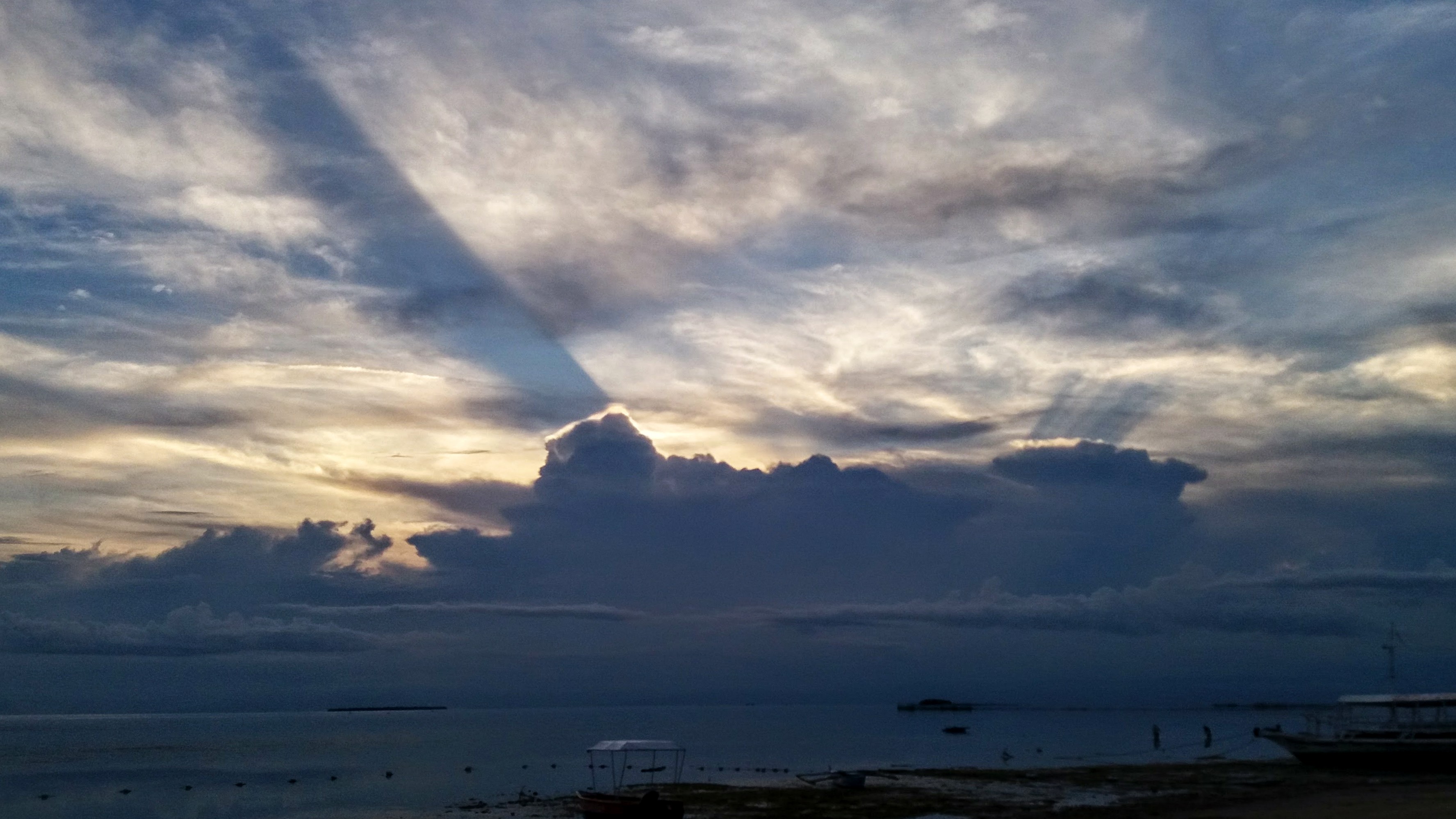 That night we went back to the Pearl at Linaw for a sunset diner on the beach. I spent more or less the entire vacation being in absolute awe of the cloud formations that piled up in fluffy mountains around our island, and this night was no exception. I got up from the table several times to walk the few meters to the water’s edge and get the most unobstructed sunset views possible. However, we got treated to something a little more than your average (stunning) tropical sunset. As the sun worked it’s way downward, I noticed an odd smudge of color at the top of the tower of clouds. I thought that it was that beautiful golden lining effect that so often happens when the sun back-lights dark clouds. I took more photos, admiring the glow and the strong beam-like shadow that was being cast into the sky.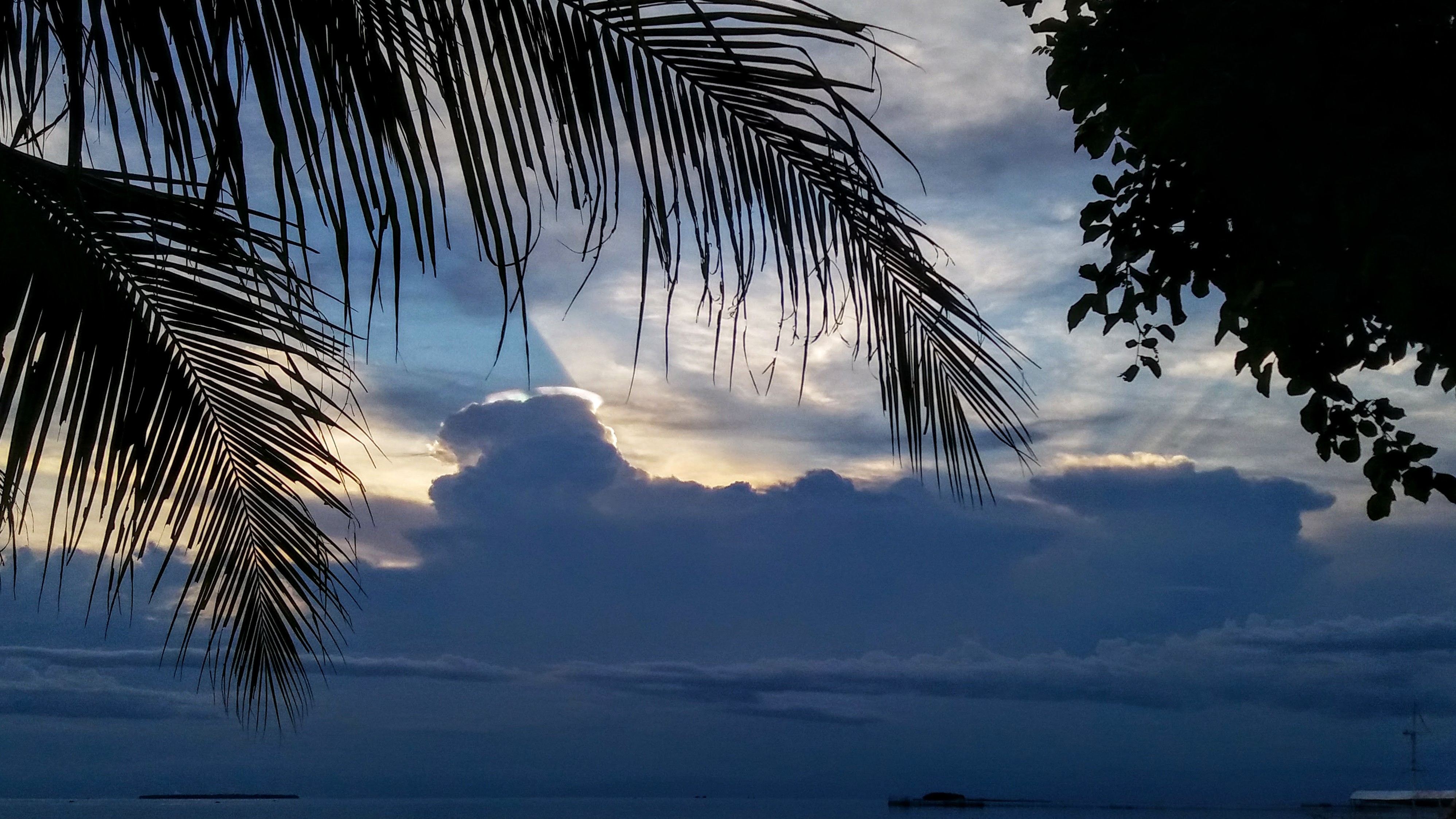
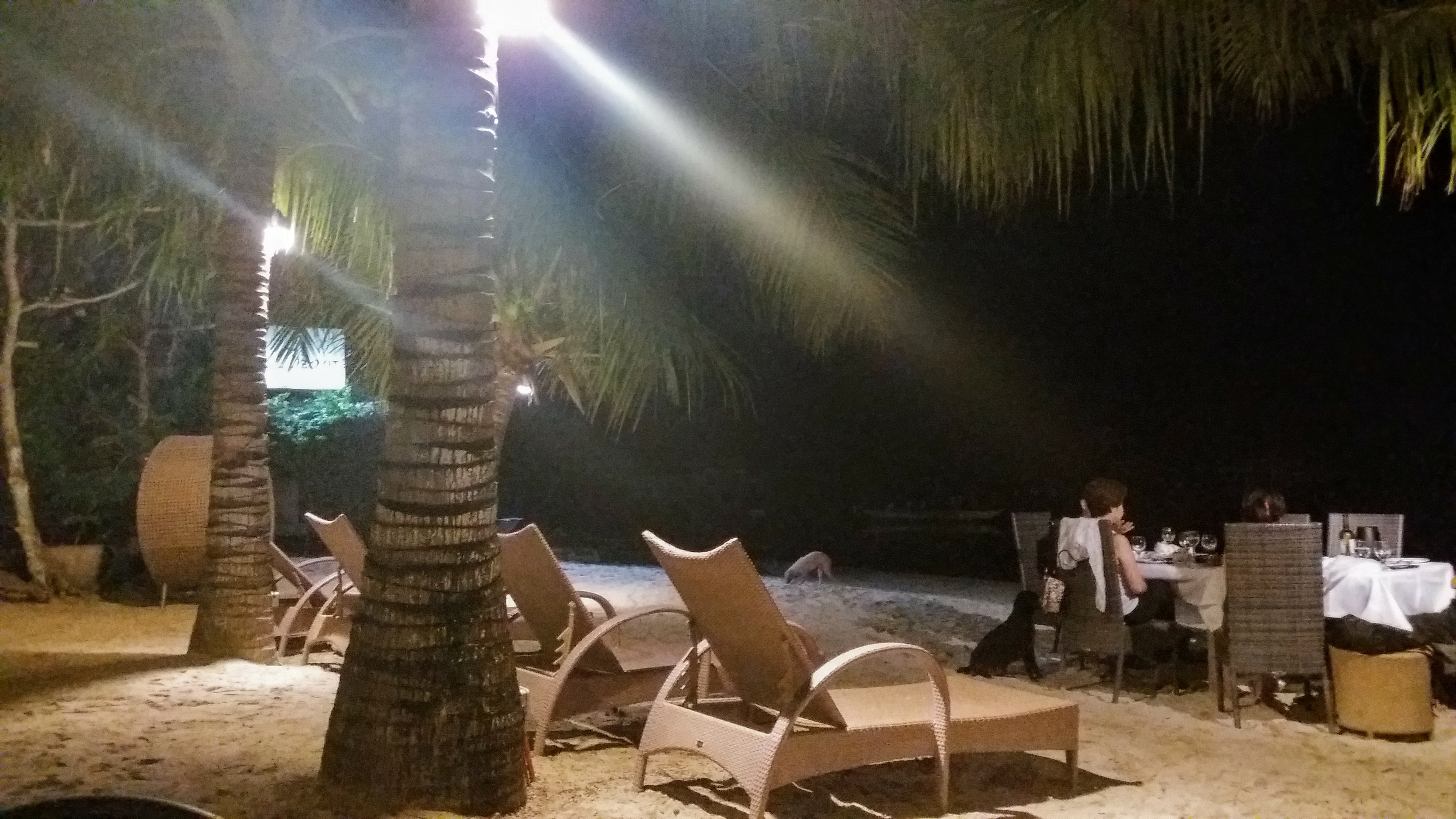

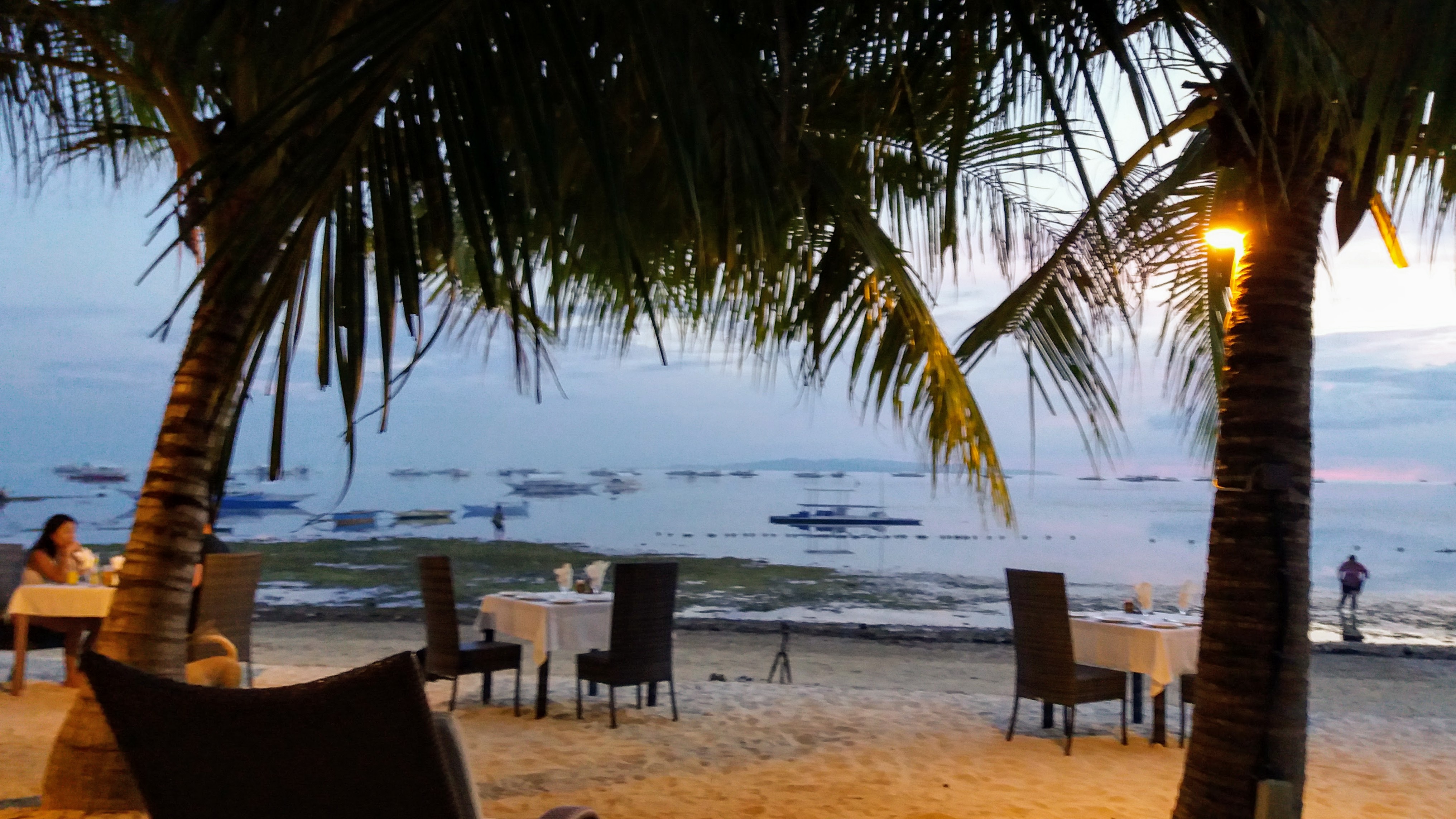


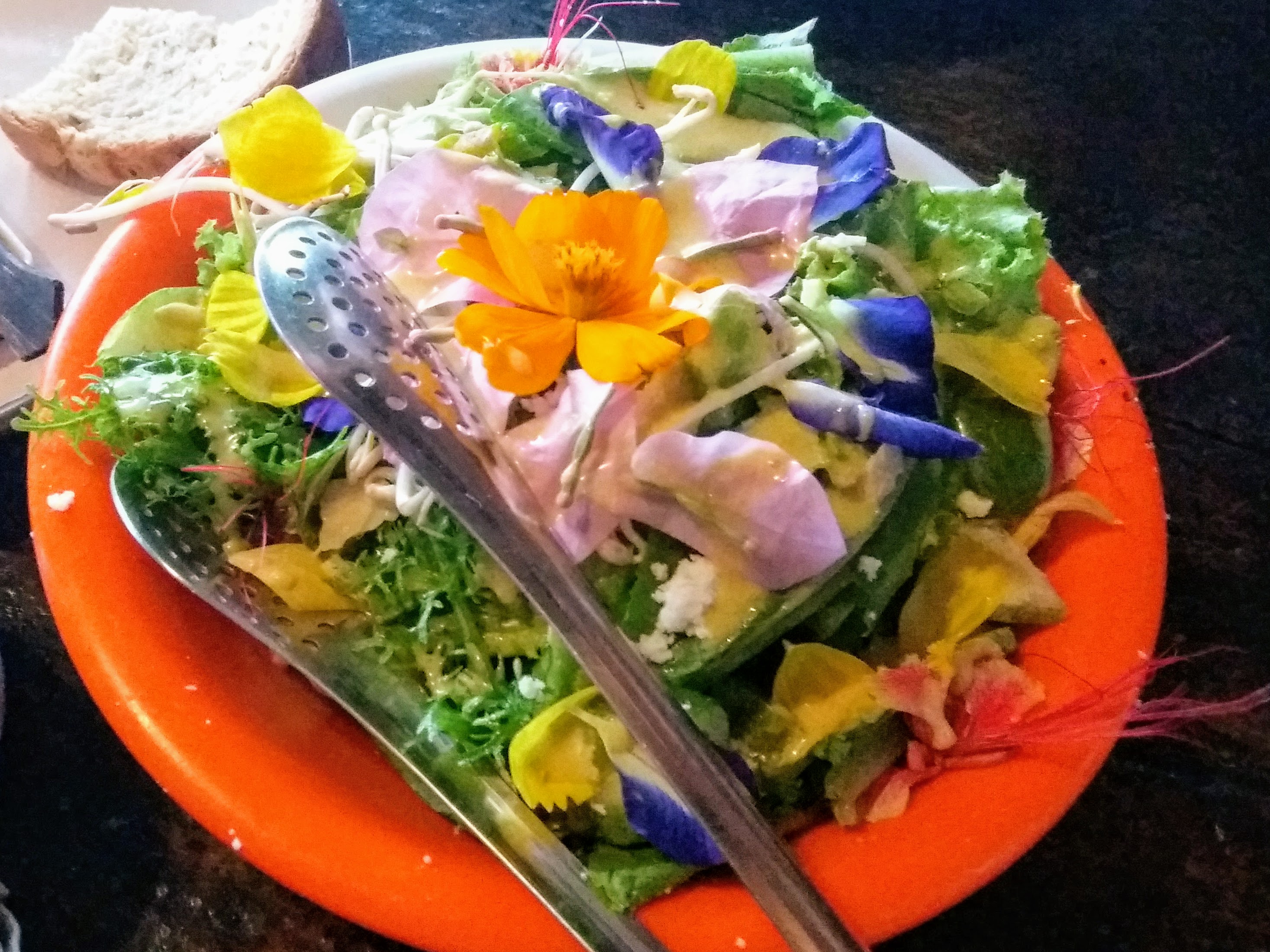

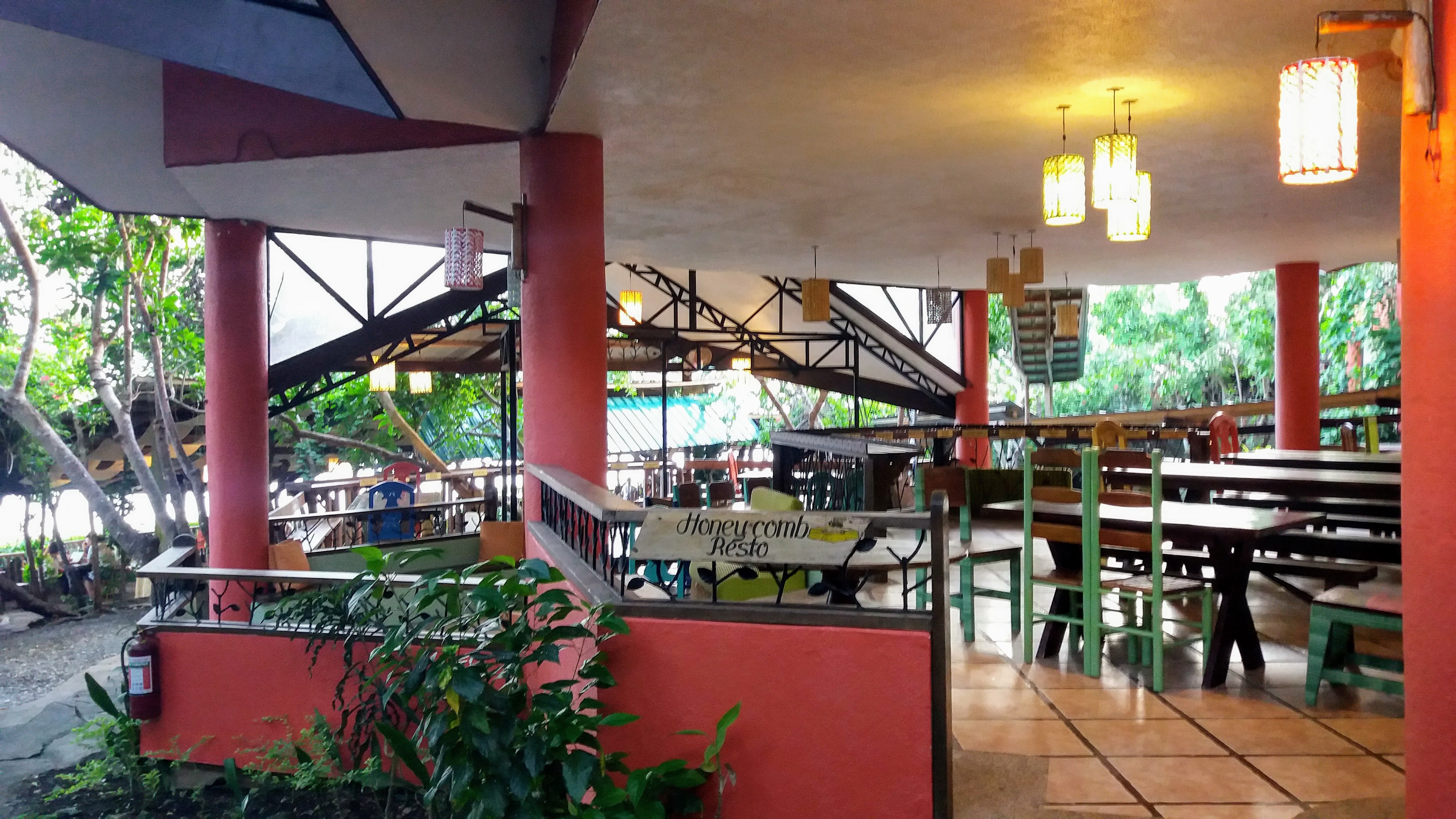


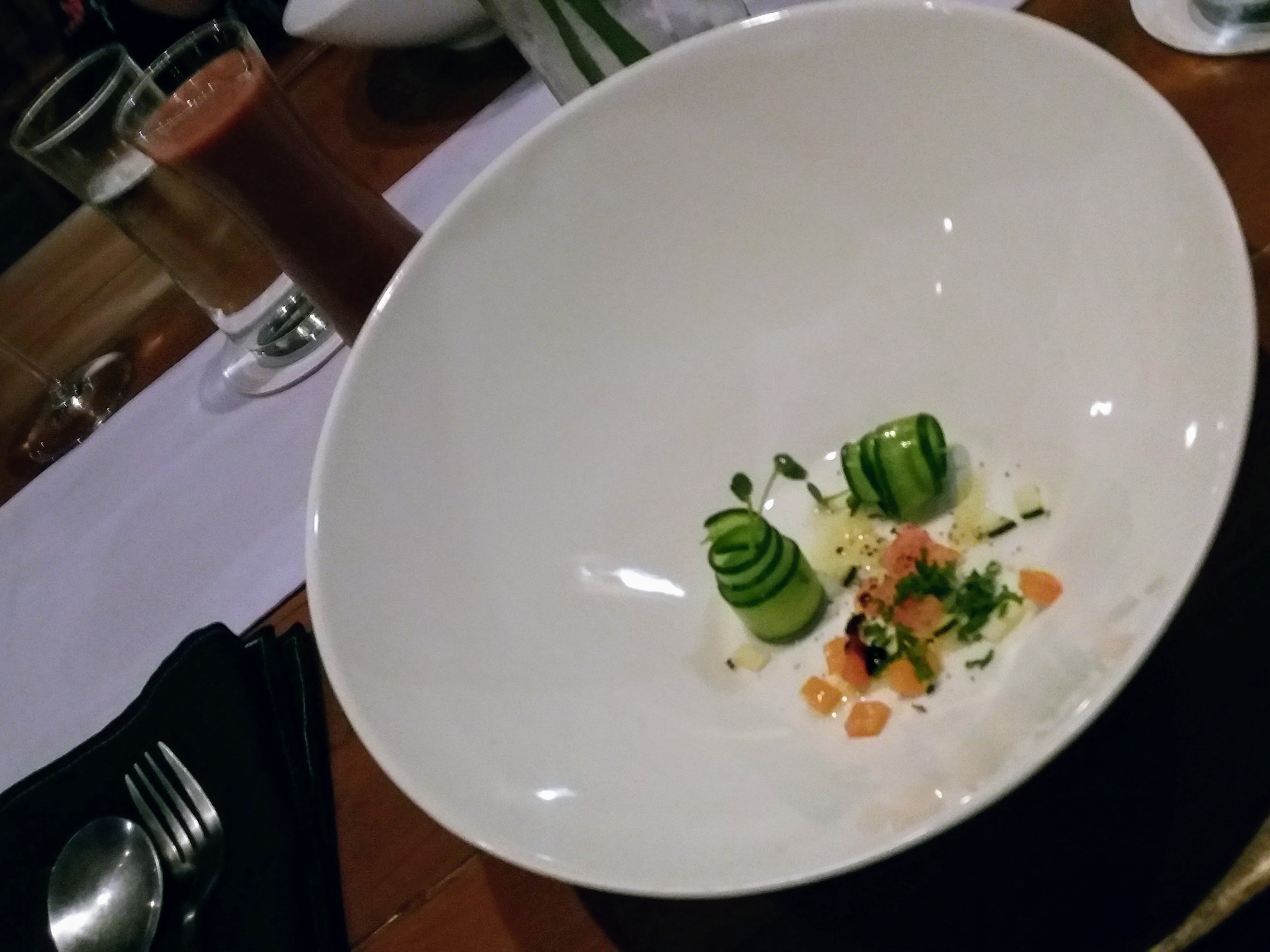
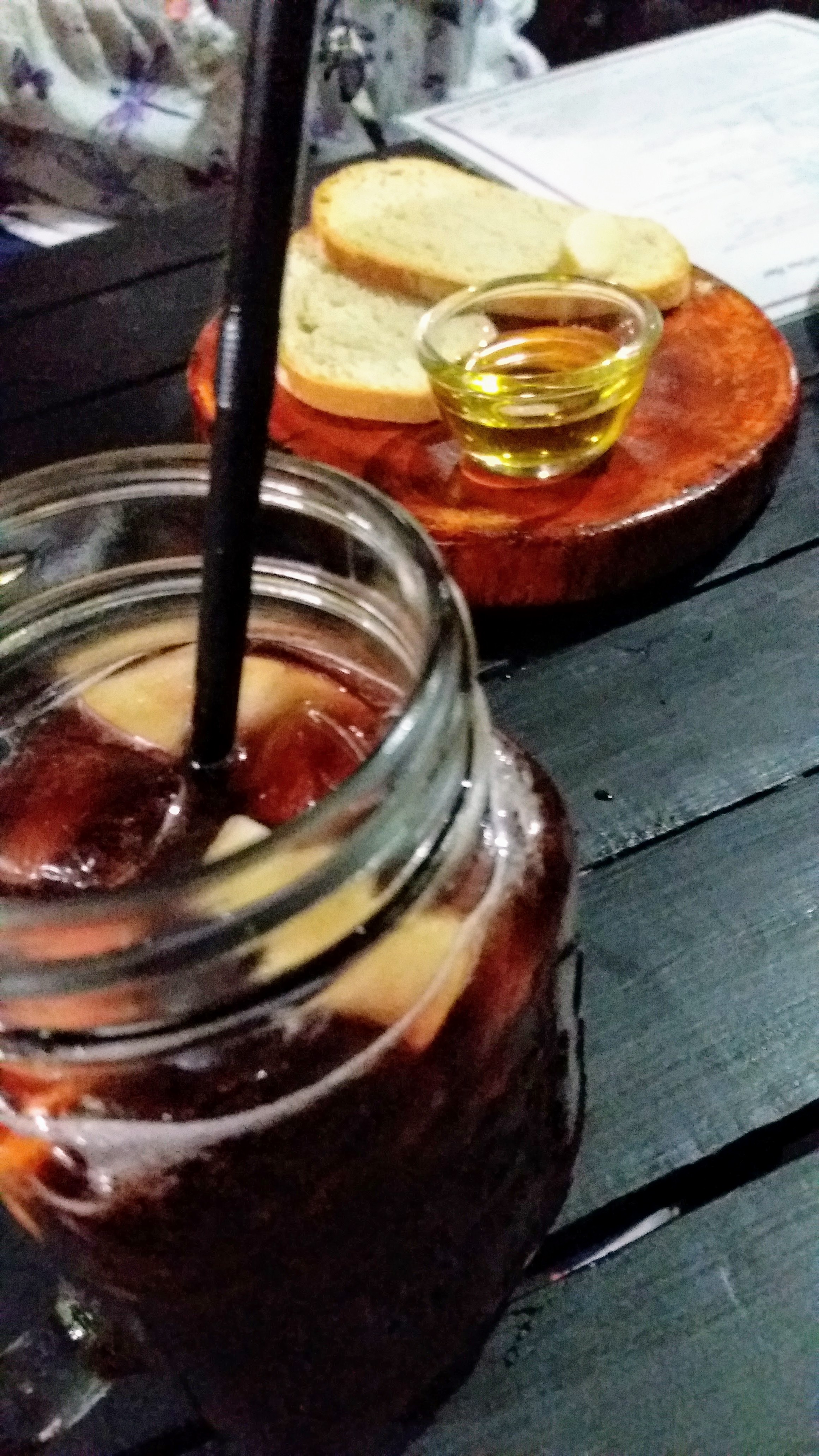

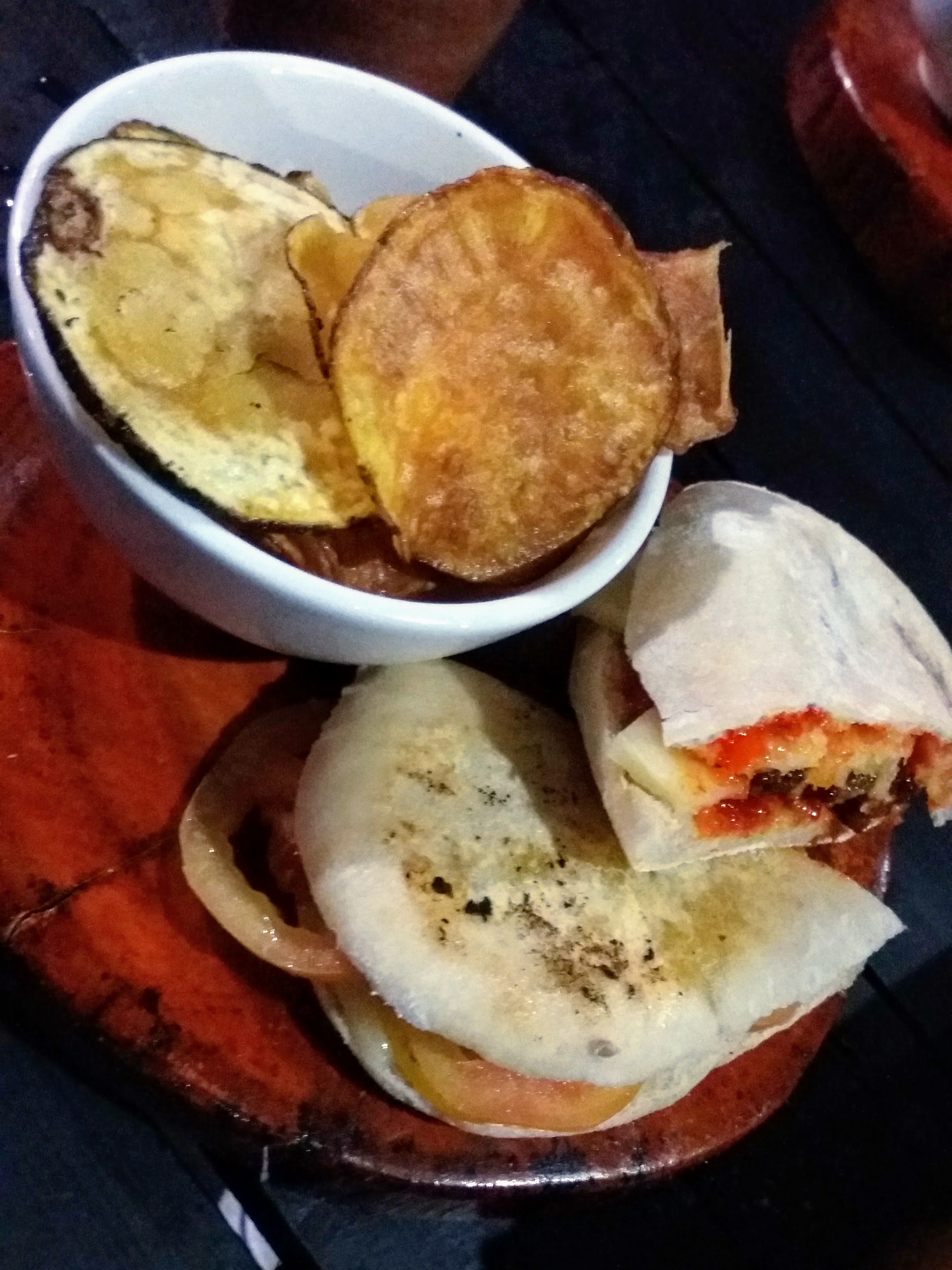
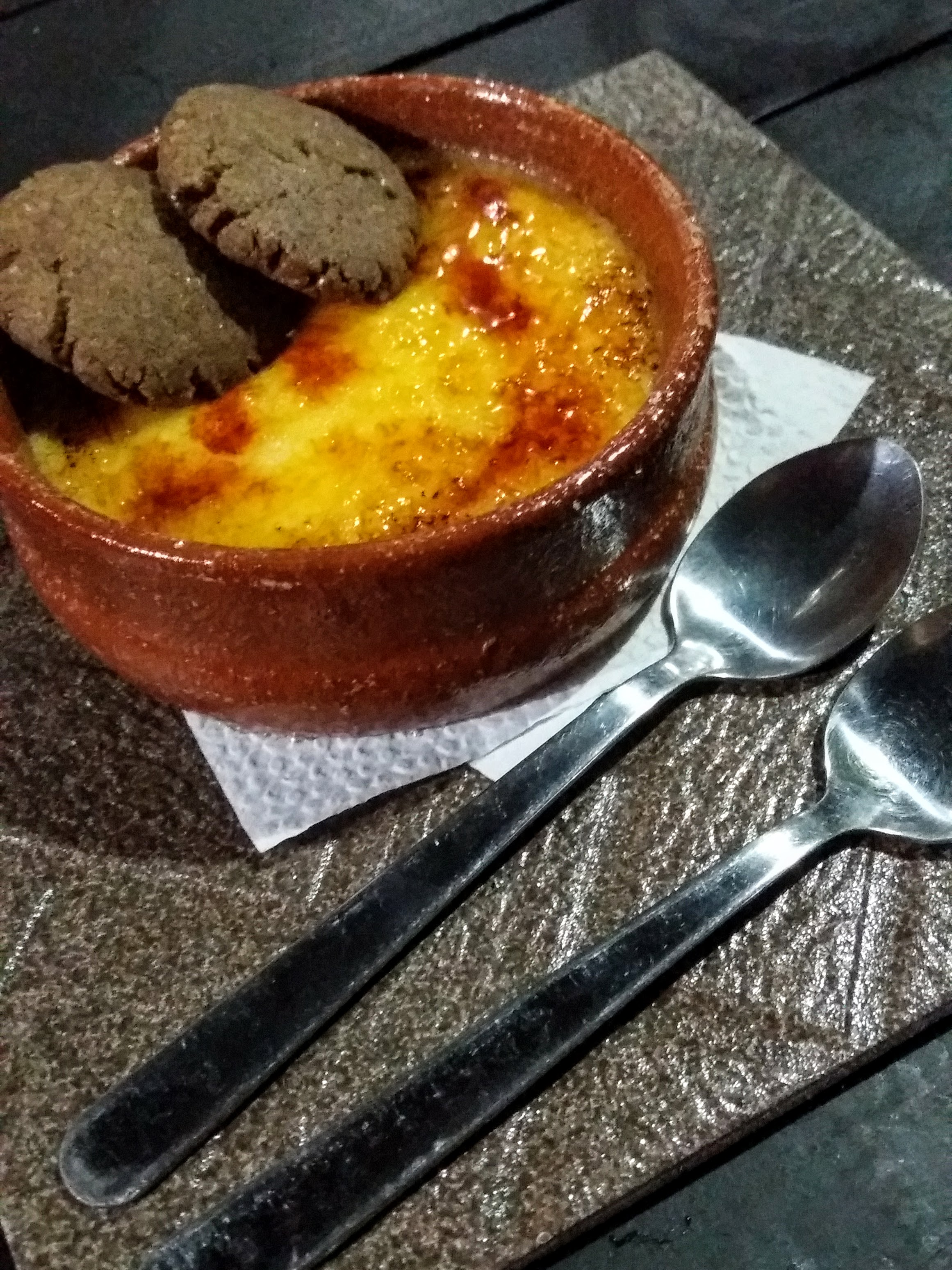


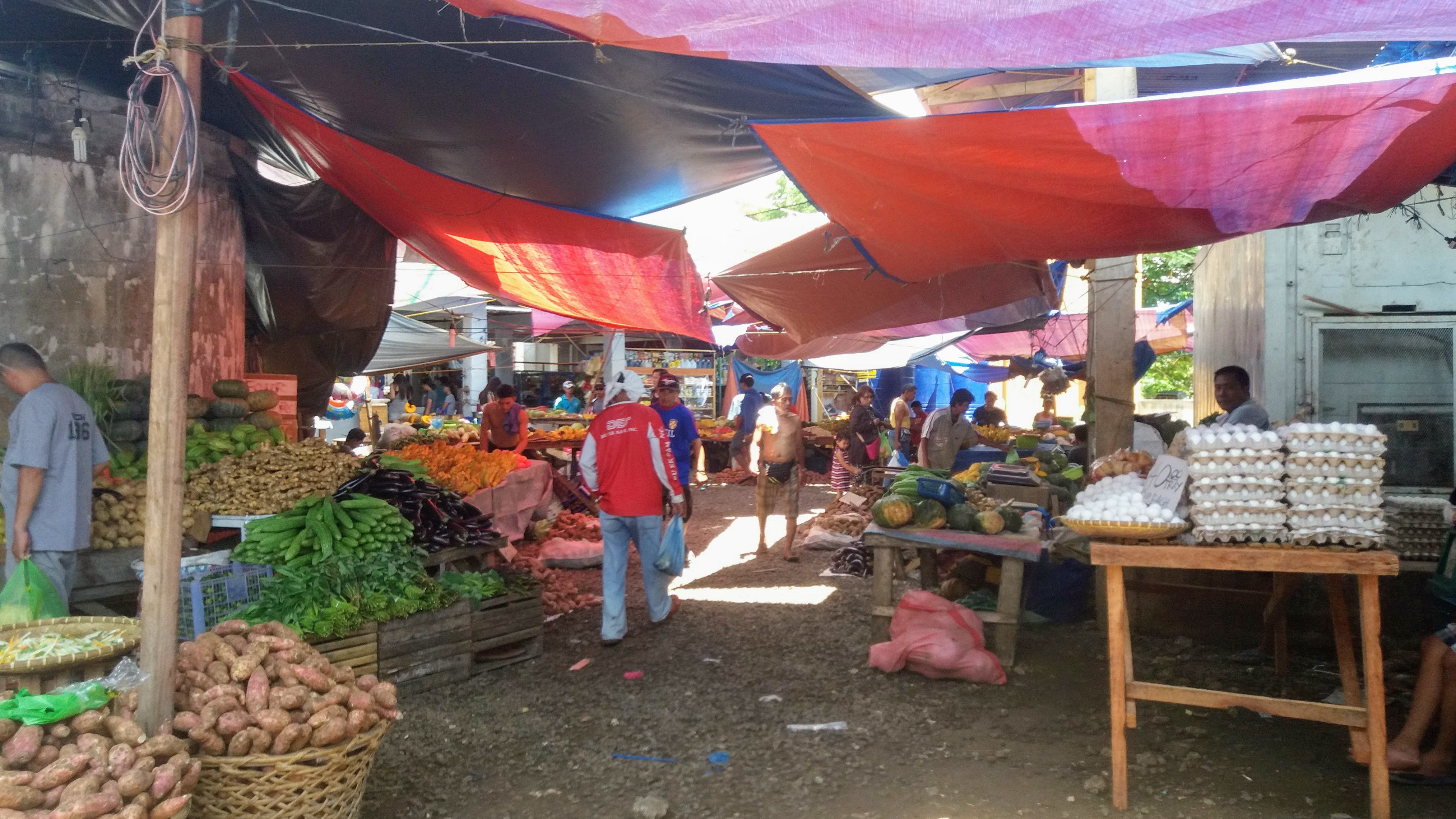 I went to the Alona Market on the first day.




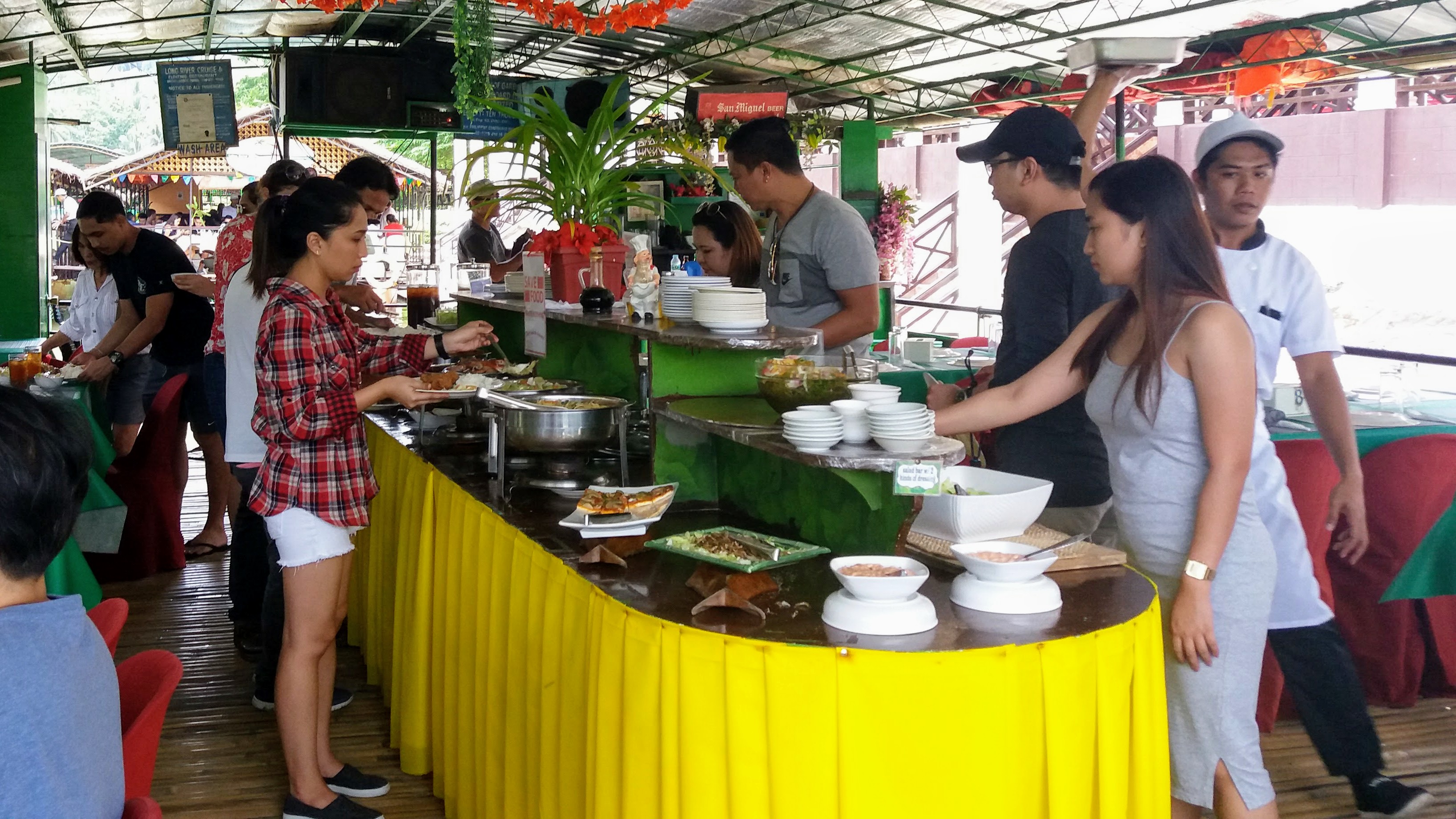 It was not the best meal I had on the trip, but everything was good and it’s a buffet so you can eat as much as you like, as long as you don’t leave food on your plate (they charge 50p for leftovers to discourage food waste).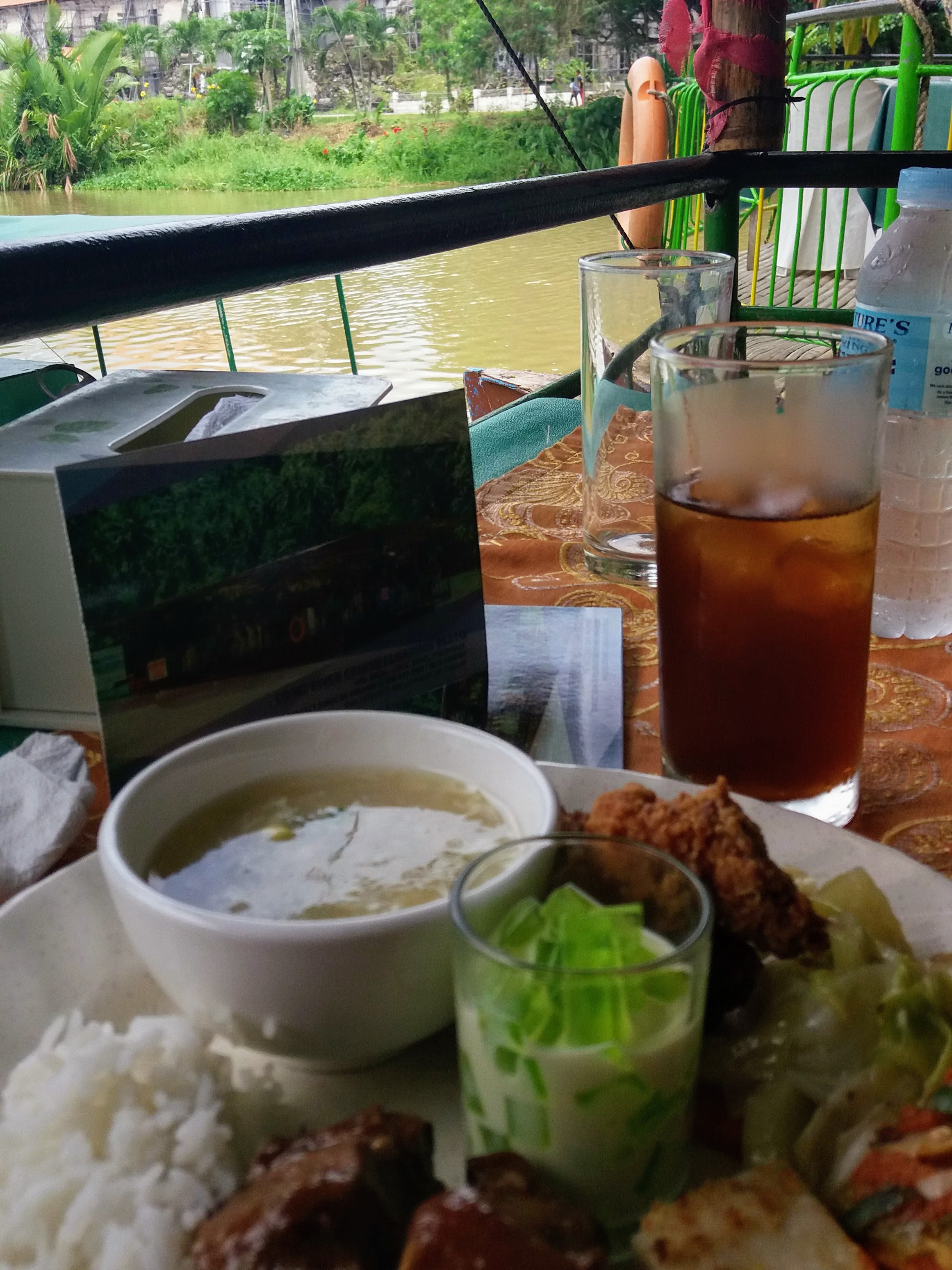


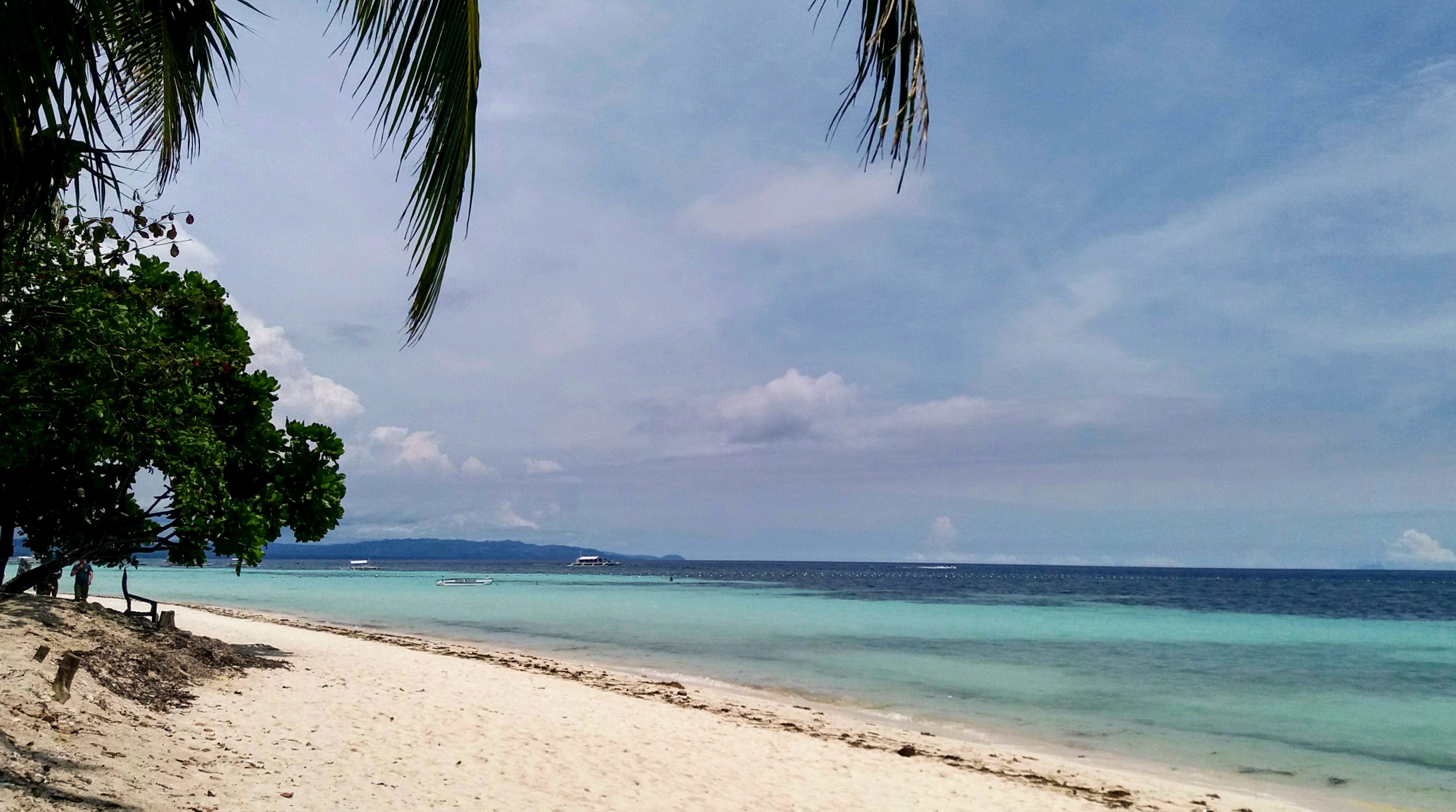
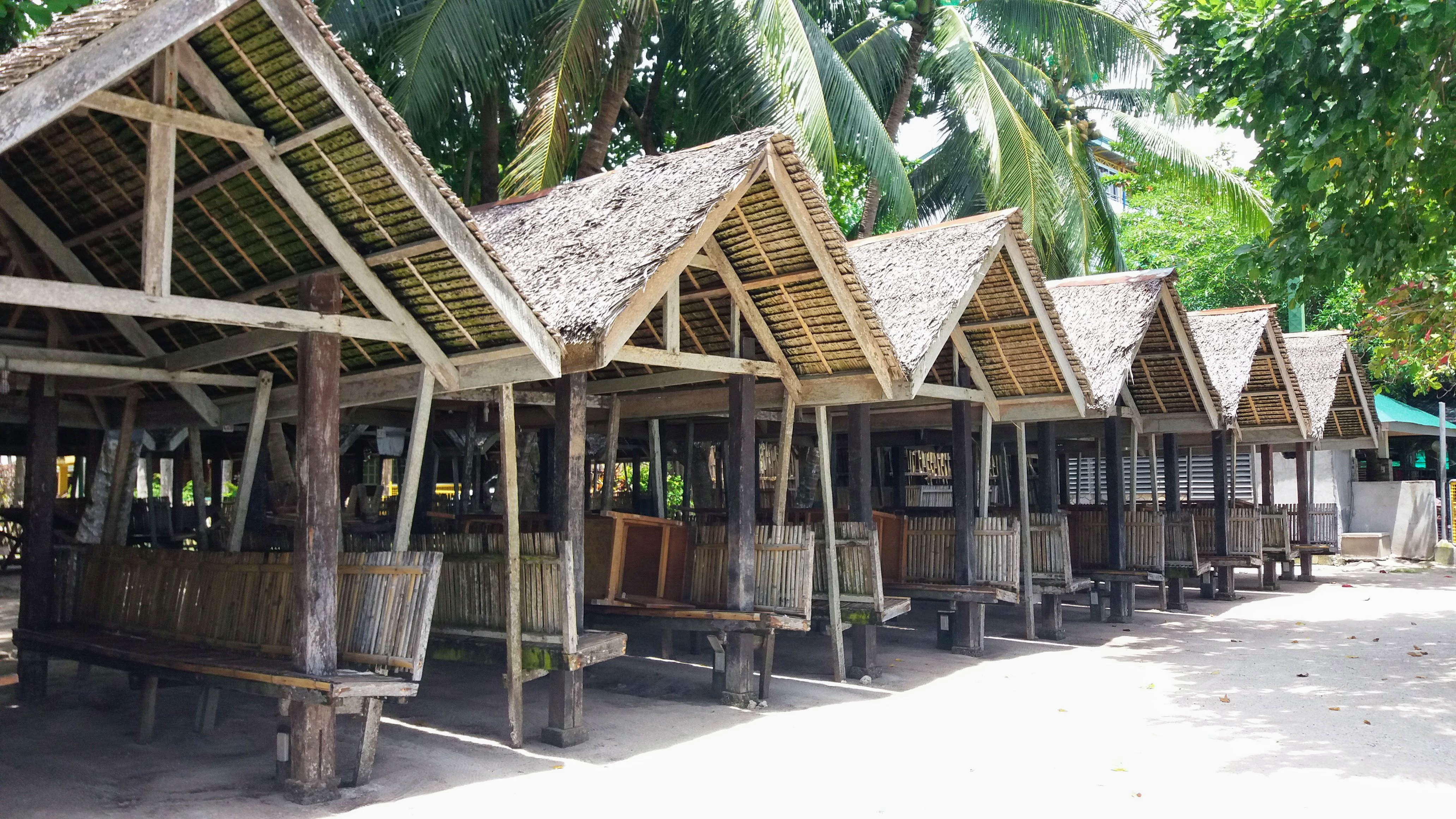
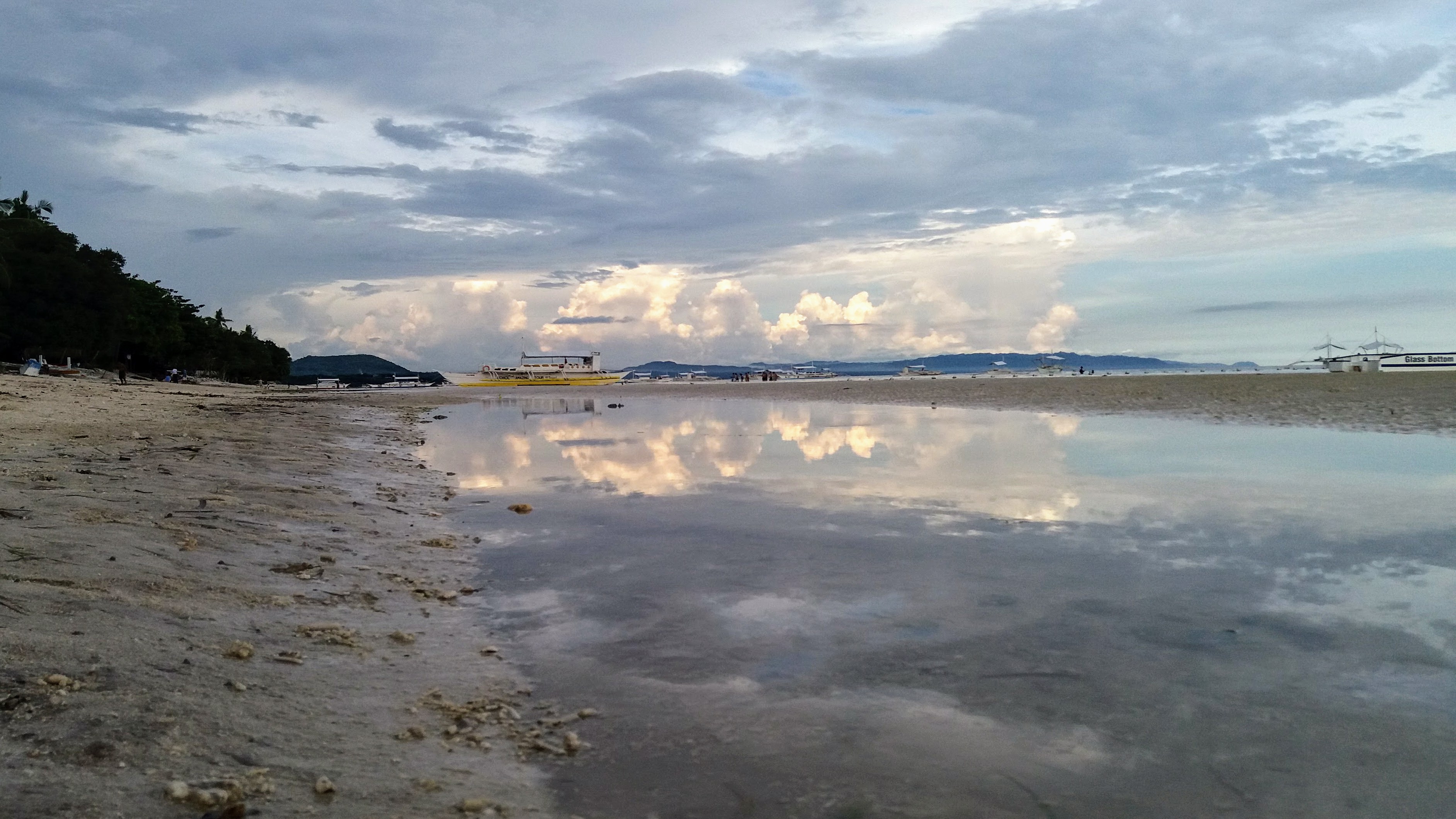


 I’ll have to make do with a winter wonderland weekend in the snow instead.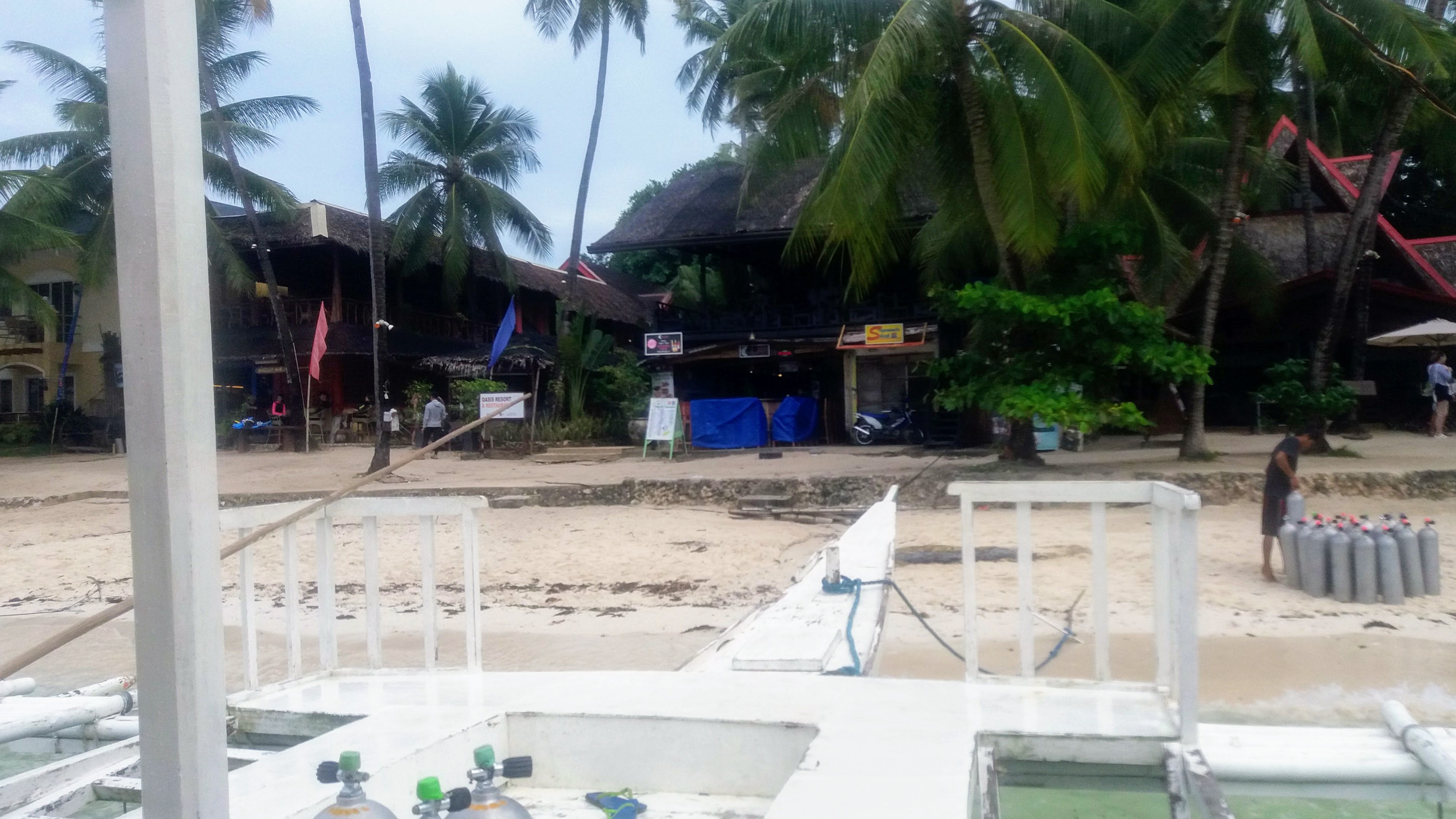
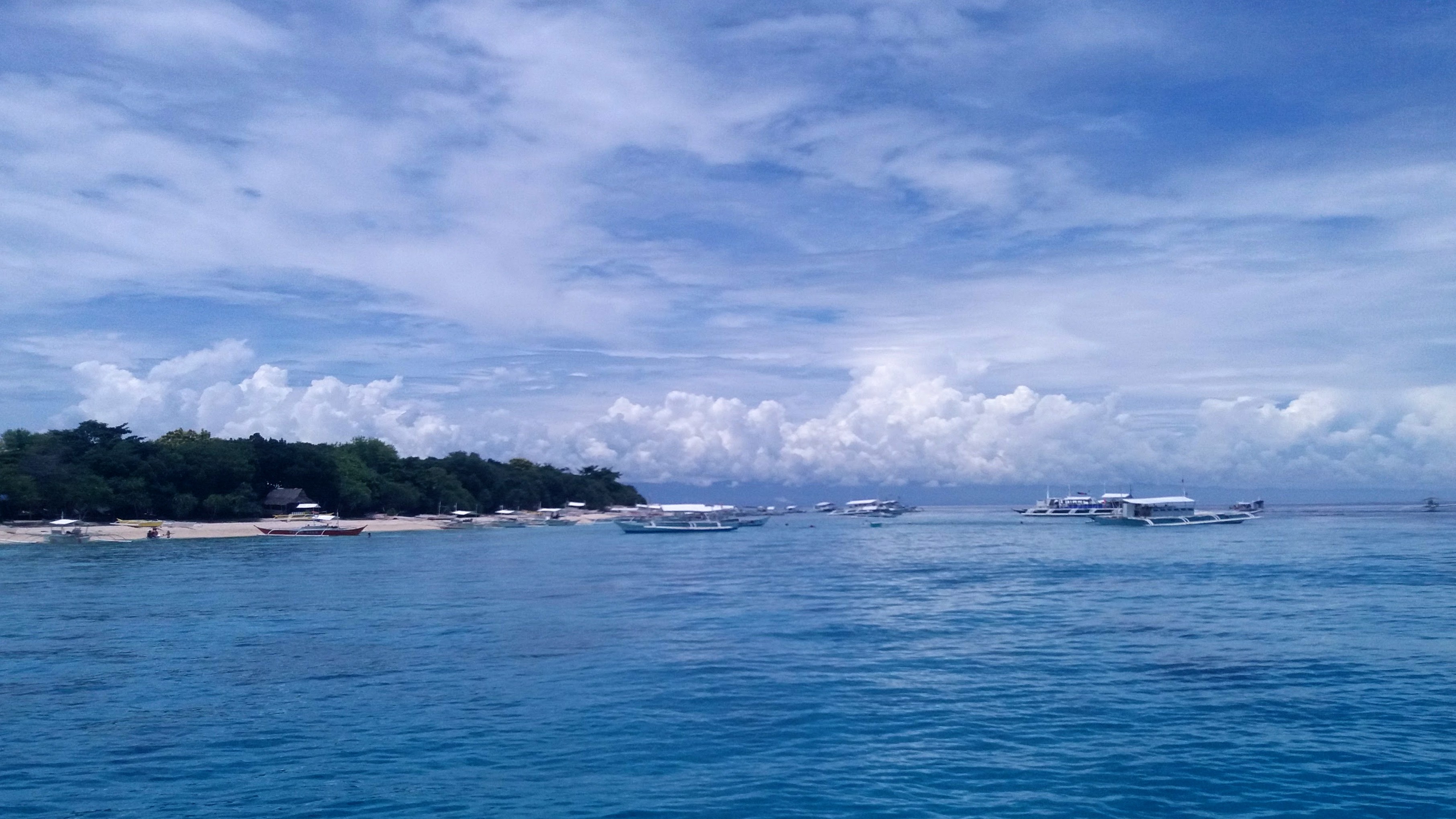 The Wall
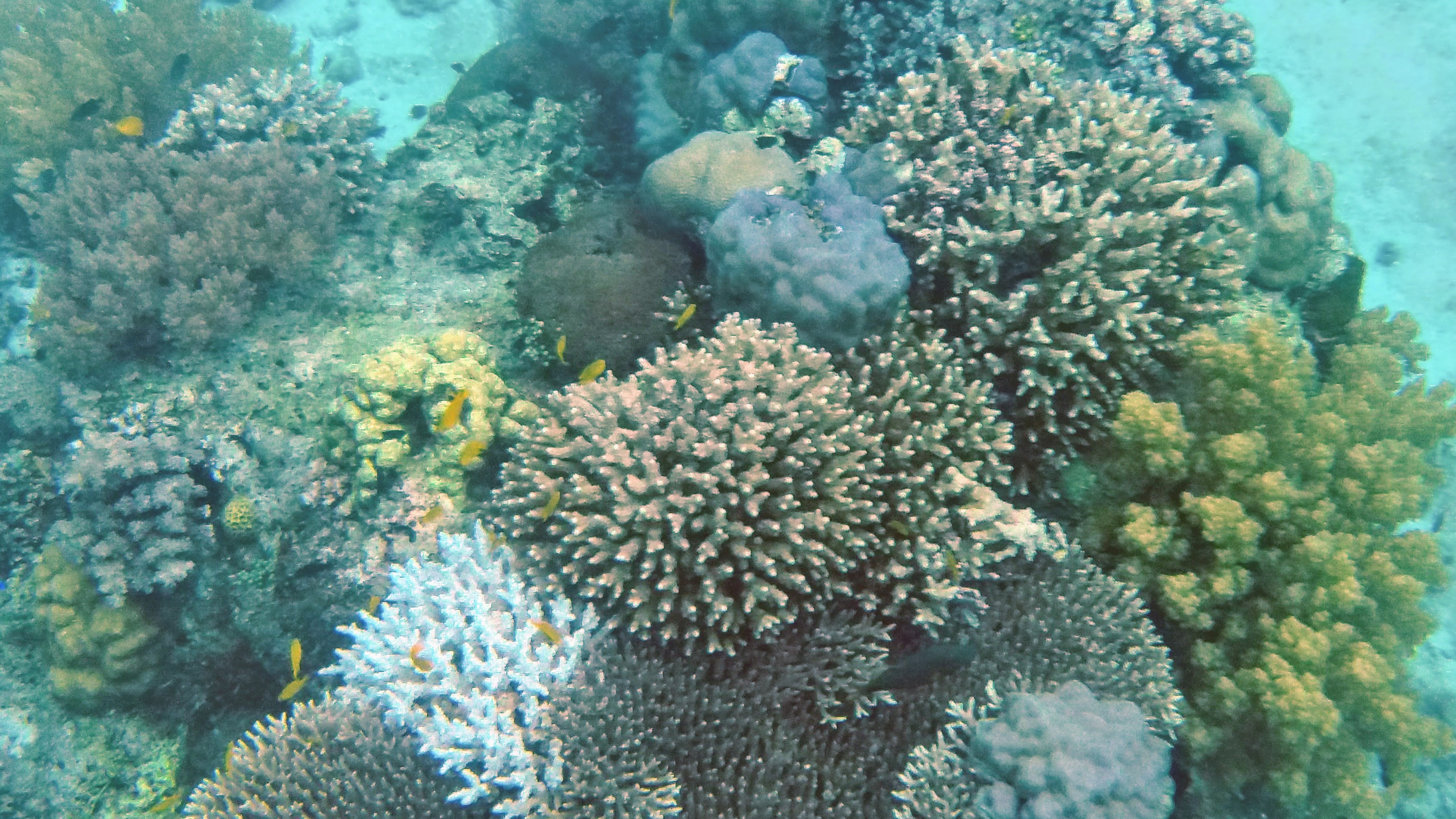 The corals were lovely, and I wasn’t in a hurry to get anywhere in particular. It was my first real chance to play around with my new underwater photo taking capability. Almost as soon as we got in the water, I spotted my first turtle hugging the edge of the drop off. I did my best to keep pace with him, but especially swimming against the current, I had no real hope of catching up to a turtle, no matter how lazily he seemed to be swimming. Finally, I had to give up. I swam using as little energy as possible, but it was hard going because the current was much stronger than I was used to and it was impossible to hold still while taking a picture.
 I wove back and forth above the stunning coral shapes, trying to get my camera to focus when I was spotted by a little rainbow wrasse, maybe 5 inches long. It was clearly watching me, swimming back and forth in front of me in quick zipping lines, and once it was sure it had my attention too, it swam straight at my face. I was honestly worried it was going to hit my mask, not for my safety, it was a small harmless fish, but worried that it might hurt itself bashing into the plastic. Fortunately at the last moment it turned aside.
 It seemed like a strange behavioral anomaly, but the fish came back and did it several more times. As I got used to the pattern I tried to get a picture. I wish I could have done a video, but I hadn’t quite figured out the trick I needed for that with the waterproof cover.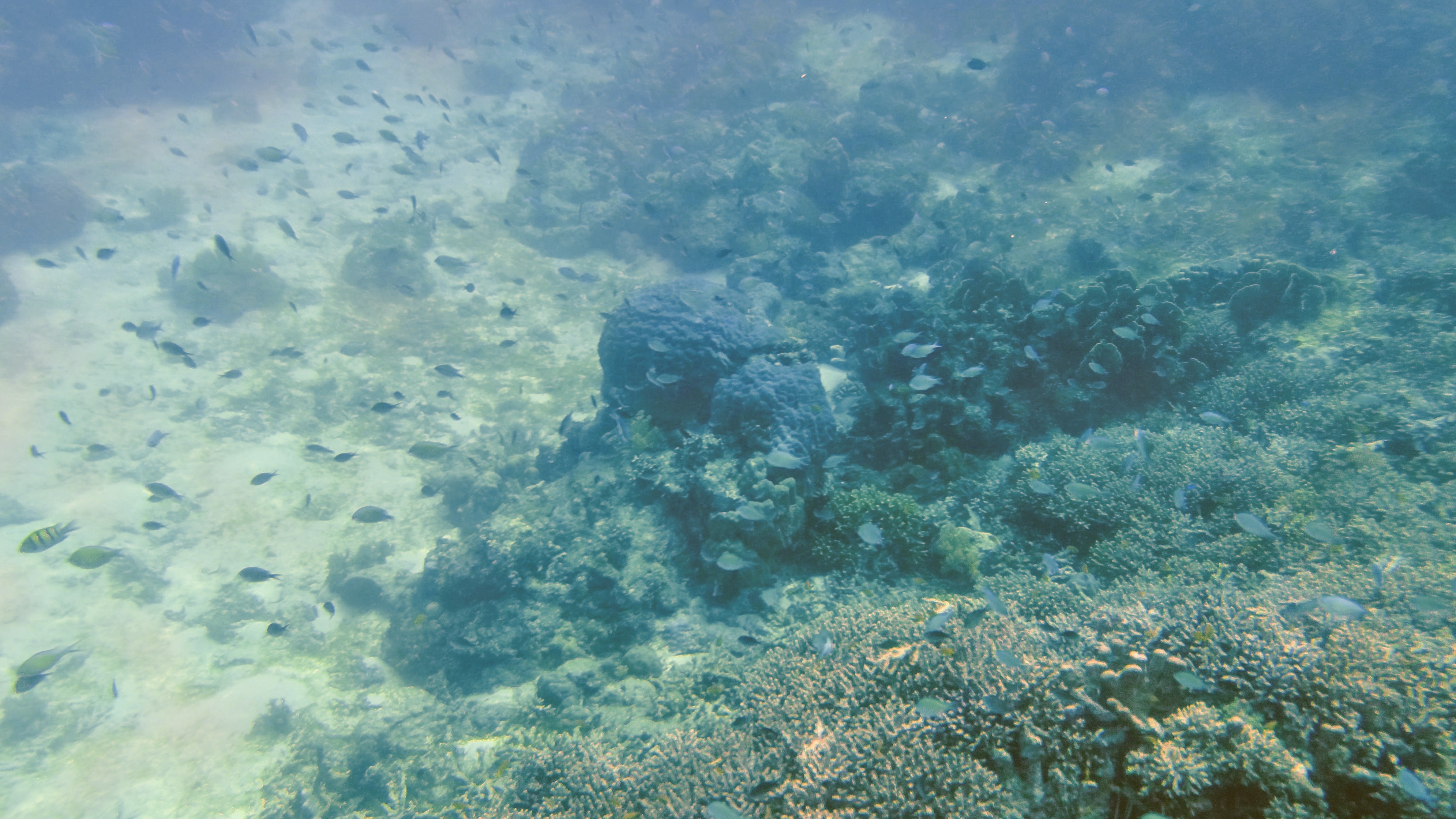


 After 2 and a half hours of driving, we finally made it to the Chocolate Hills Lookout (sometimes called the Chocolate Hills Complex). There was a line of cars and vans stopping at something on the way, but they all looked like tourist groups and there were no clear signs, so we just drove around them and on up to the parking lot at the top. Motorbikes always have a separate parking area from cars here, so we pulled in and were asked for our tickets… which we didn’t have. I’m not sure if that was what we should have done in that long line of cars or not, but it didn’t seem to bother anyone, we just gave an attendant the money for the parking and tickets and she returned with our passes and receipt. We left the bikes there, and although we had to leave them unlocked, the lot was watched so we weren’t too worried.
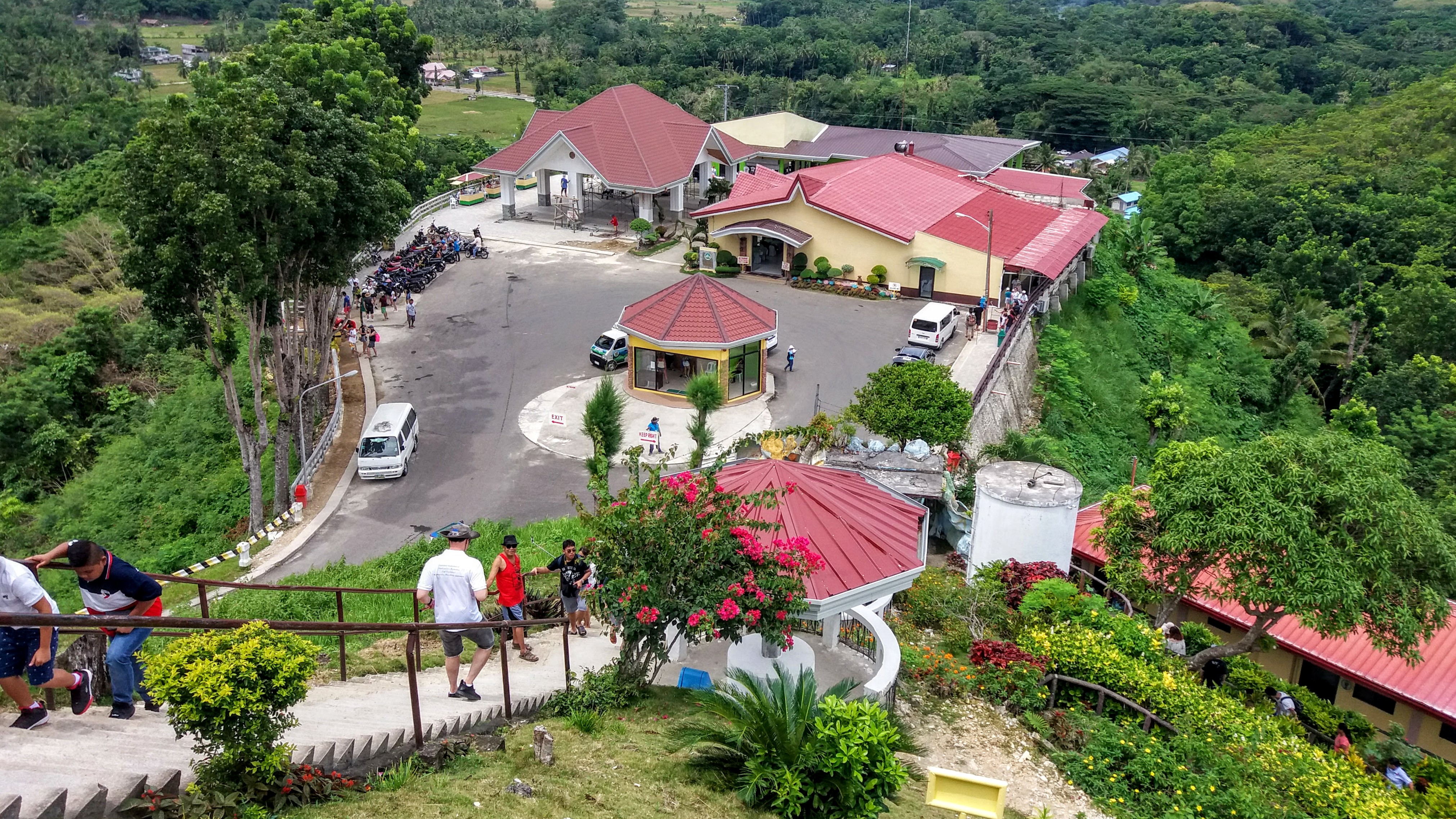 When going to view the Chocolate Hills, there are two main scenic points, the one I went to, and another on the opposite side called Sagbayan Peak. The descriptions I’d read online make Sagbayan seem like a great place to go with kids, with a water park and giant animal sculptures and other places to play, but after a 2.5 hour drive to the Complex in Carmen, I opted not to drive to Sagbayan as well. There are other places to get a view, and there are some ATV rental places you can do an off road drive in the area, but it seems like the best way to be sure of getting a nice look is to go to one of these two peaks for a high ground advantage.
 Once we completed the survey of the base level, we headed over to the stairs. I’m not a champion stair climber, but there were lots of places to stop, and a few side paths for extra sights. It’s not too much of a climb for all that it’s the tallest of the hills. Part way up is the turn off to see the “Our Lady of Lourdes” Grotto. The Philippines are mostly Catholic, a holdover from the Spanish colonization. There are churches and shrines everywhere, but I don’t mind too much as Catholic art tends to be beautiful, and no one was trying to convert me.
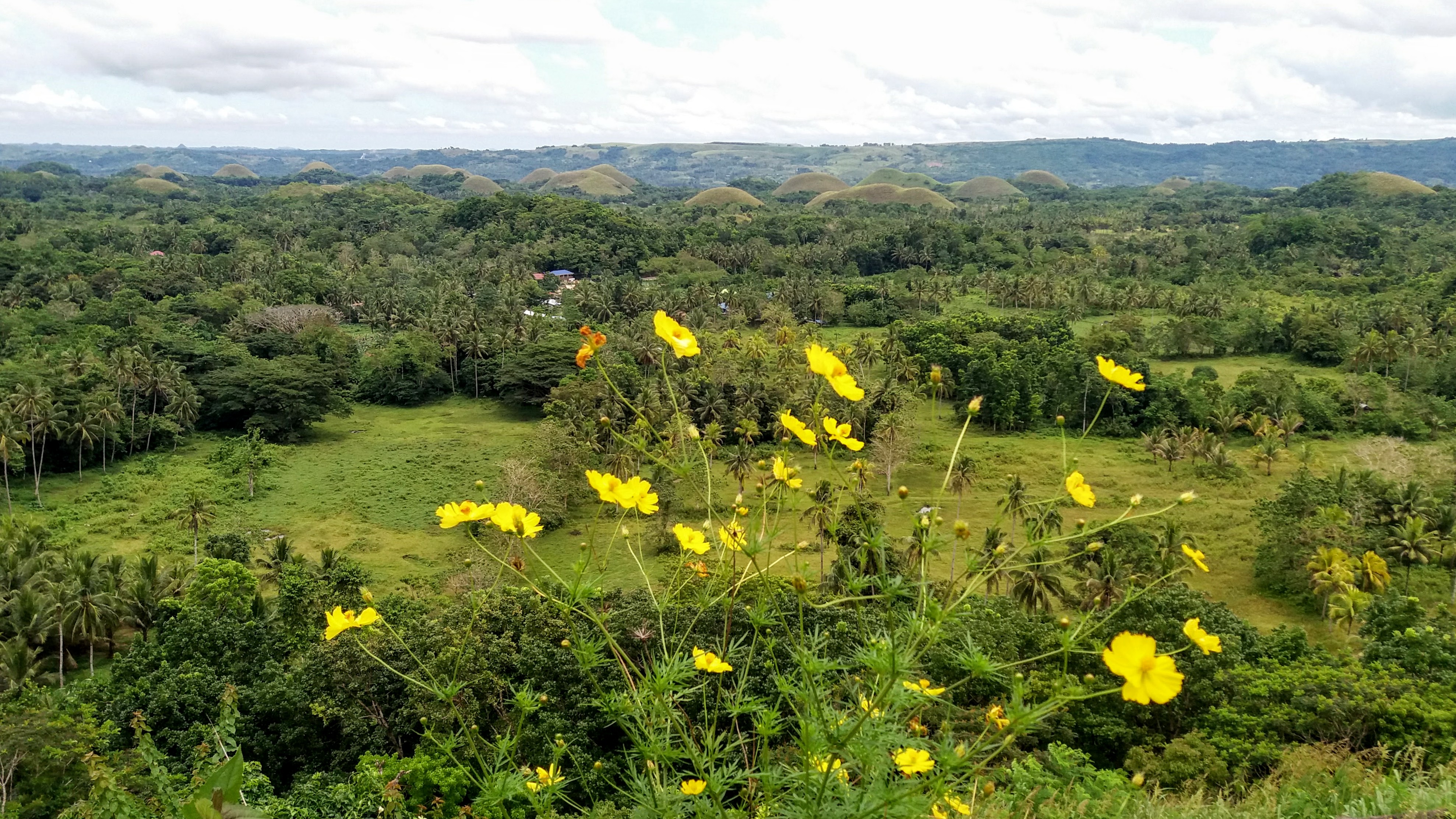 I took about a million pictures of beautiful flowers and the shifting view on our way to the top. And when I finally reached the peak, took obligatory selfies from the viewing platform. I also went to find the not-actually-famous-at-all well with a a bell to ring the bell and make a wish. There was also a cute little backdrop on one side for people who like to pose with man-made scenery. I liked it despite or perhaps because of it’s total kitsch, but I’m glad it was off to one side and not covering the whole viewing platform.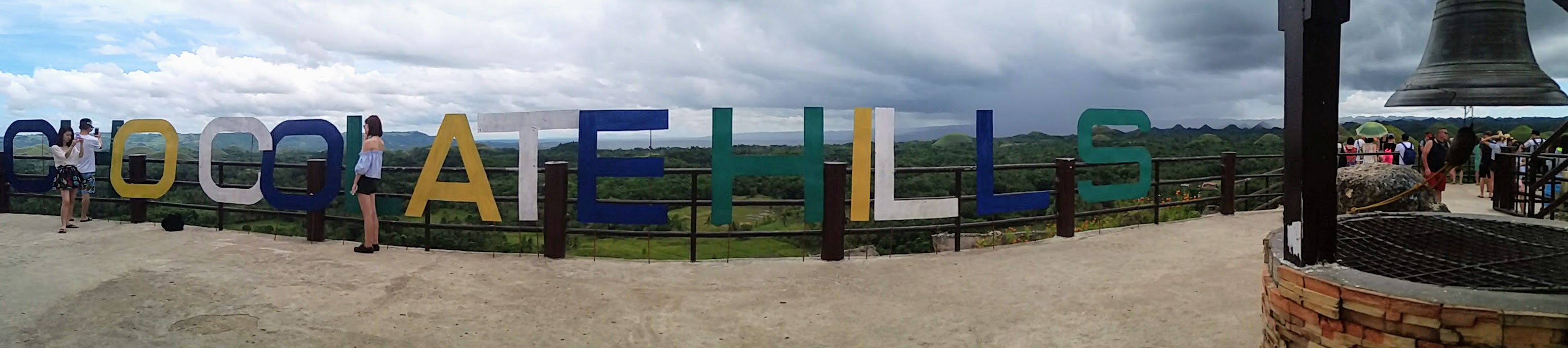
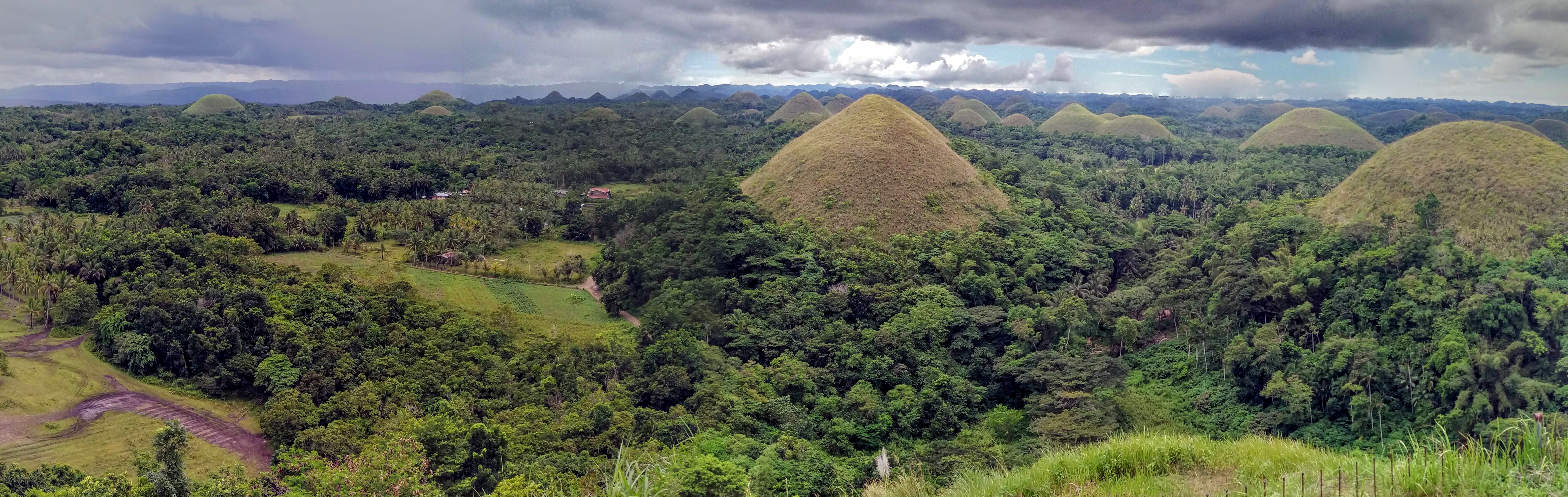 Even as the week continued, we experienced very little rain. I am told that the rainy season is short but has strong showers every day, and the hotel hostess did say that the weather was a little unusually dry for my visit, so maybe I just got lucky? Anyway, not wanting to be caught on the very top of the highest peak around if a thunderstorm hit, we began to descend the stairs.
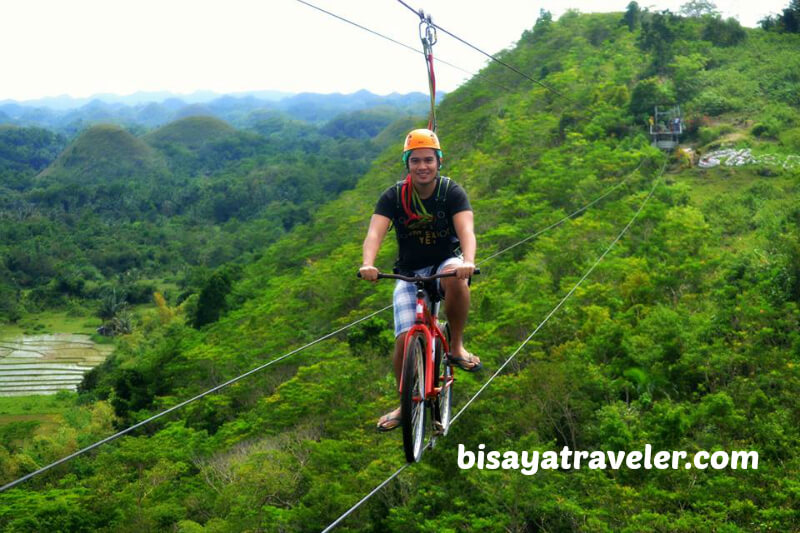 One of the many things I found online about Bohol was the prevalence of adventure parks. We have these in Korea too, and for some reason I still haven’t ziplined. The Chocolate Hills Adventure Park advertised a kind of zip bike, where you pedal a special bike (with a safety harness) along a zip line between two chocolate peaks. I have nothing against ziplining, it just doesn’t seem like a great way to actually see anything, so I keep putting it off in favor of taking in sights until I manage to find one in a place I’ve thoroughly explored. But this bike thing seemed unique and slow enough to get a great view with plenty of time to look around and admire the scenery instead of zipping through it.
 I read online that the park had a weight limit, but we decided try anyway and see how much they actually meant it and how much was just a liability disclaimer. It turned out to be sort of both. We were each a few kilos over the weight limit, but instead of telling us straight up “no”, the staff advised us to head on up to the zip bike area and try on the harness with the safety guide to see if it would fit anyway. In retrospect, I’m not sure if this was their way of shifting the responsibility or not. I think if we’d been WAY over the limit they would have turned us away, but since we were close?
 We headed further in, following signs to the zip bike and were led to a steep stone stairway with the sign “fitness test starts here” at the bottom. I theorized that anyone who couldn’t climb the stairs to the starting point wasn’t fit enough for the activity, and we began the ascent. Whatever your opinions of stairs are, know that the jungle makes it harder. Humidity. Nonetheless, we persevered and made it to the top and were rewarded with a breathtaking view and a less than stellar ride attendant. I do try to give people the benefit of the doube, and maybe she was annoyed with her coworker on the radio or something else we couldn’t even see and not with us at all, but it was clear she was annoyed with something.
 We waited on the viewing platform, and I have to say that even though we’d just come from the tallest peak in the hills, the Adventure Park’s view was stunning. I don’t think I would have gone there only for the view, but it was certainly a nice perk. We also watched a few more tourists take the bikes out and back on the lines from the tower above us to the hill next door. The attendant at first told us that we had to wait due to lightning (the storm that had just passed us?), but then we saw people riding anyway? I’m not sure what was the deal there. I also accidentally got doused in ants trying to take a picture of the hanging trellis flowers. The ants really liked the flowers too, and when I bumped into one, they transferred from the petals to me. Thankfully, they were just small black ones, and I was able to brush them off with no bites, but it reminded me to keep an eye out for what I touch or lean on in the jungle.


 If you’re going to the Adventure Park anyway, go ahead and visit their butterflies, but don’t go out of your way for this display. We were accompanied by a guide who had been trained to take lots of pictures for us (with our phones, they weren’t trying to sell them back to us or anything, but Asian tourists especially love appearing in their own travel photos in a way I never will) and move people through. She showed us a display on the life-cycle of a butterfly, and we got to hold a caterpillar. Then we walked through a path in a netted off part of the forest. We only saw a couple butterflies and at one point our guide threw a rock in an attempt to get on up on the top net to fly. We quickly stopped her from continuing that and said we were fine with the way things were. She said the butterflies were inactive because of the rain, but I felt like I’d seen half a dozen just climbing down the stairs from the zip bike.
 After the butterfly enclosure, we were guided over to the suspension bridge which is included in the park entrance fee already. This kind of bridge through the canopy is another very common tourist must do in Bohol, available at multiple locations. Even though I may not deliberately go looking for the silliest touristy things to do, I’m hardly going to turn it down if it’s right there in front of me. We had fun, and got a nice view of the park from the air before descending the stairs on the far side and heading back to the bikes.
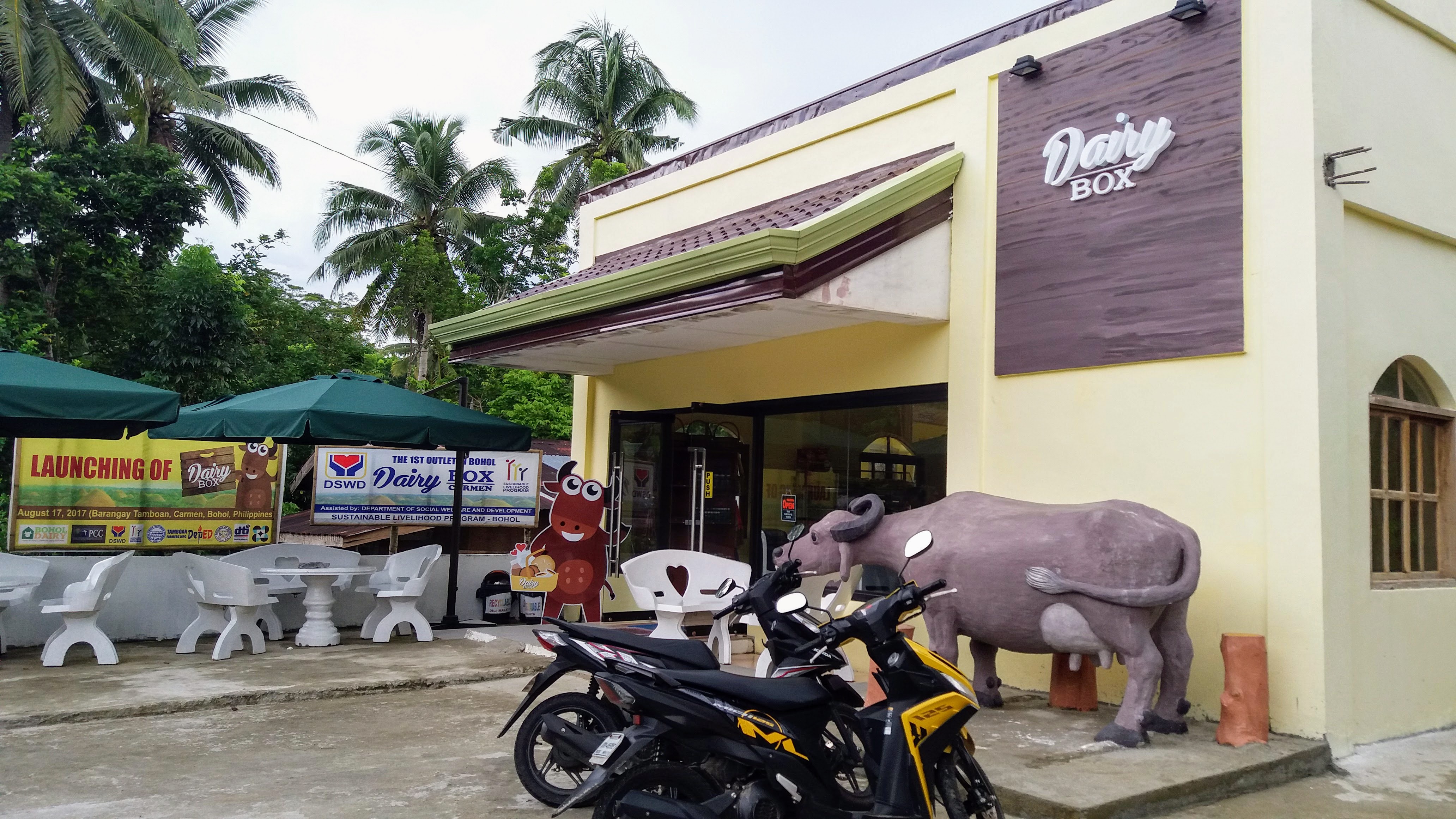
 Following a delightful and refreshing stop for some locally sourced buffalo milk ice cream, we headed back down the main road where were would be able to find the Tarsier Conservation Area (not to be confused with the “Philippine Tarsier Sanctuary”). Bohol is also famous as the home of the world’s smallest primate, the tarsier. There are two tarsier spots near the Chocolate Hills, and it was worth it to me to visit both, since I was already planning other road trips near each one. I’ll say now, if you can only do one, do the Sanctuary, but seeing both was nice.
 I can’t be sure if they are placed at these viewing stations or if the park simply made attractive bowers in good places and hoped. I did see one little guy hanging out in a not great viewing spot with no guide to point him out, so at least a few must be slightly rogue. We were also told they are territorial, and tend to stay in or near one tree as adults.
 Whether we like it or not, tourism is the main reason species like these will survive. In fact, the growing interest in ecotourism is a big part of what’s paying for conservation in developing countries. It can be hard to draw the line between exploitation and preservation, but I think the Conservatory is leaning on the right side. Of course, the park dumps you back into a souvenir shop between the exit and the parking lot which was full of tarsier themed everything, and one shelf of wooden phallus ashtrays for no discernible reason at all.
 Several days later on my way to a lunch cruise on the Loboc river, I started out extra early to make time for the Philippine Tarsier Sanctuary to see how it compared to the Conservation Area. I tried to get there as close to opening as possible to beat the crowds of tourists, and I think I very well may have been the first customer of the day since cashiers had to be found, then change had to be found. It’s not an expensive tour, but like every little adventure in Bohol, it does cost a small amount to go in. I got a personal guide who walked me through a kind of netting air lock into the forest beyond.
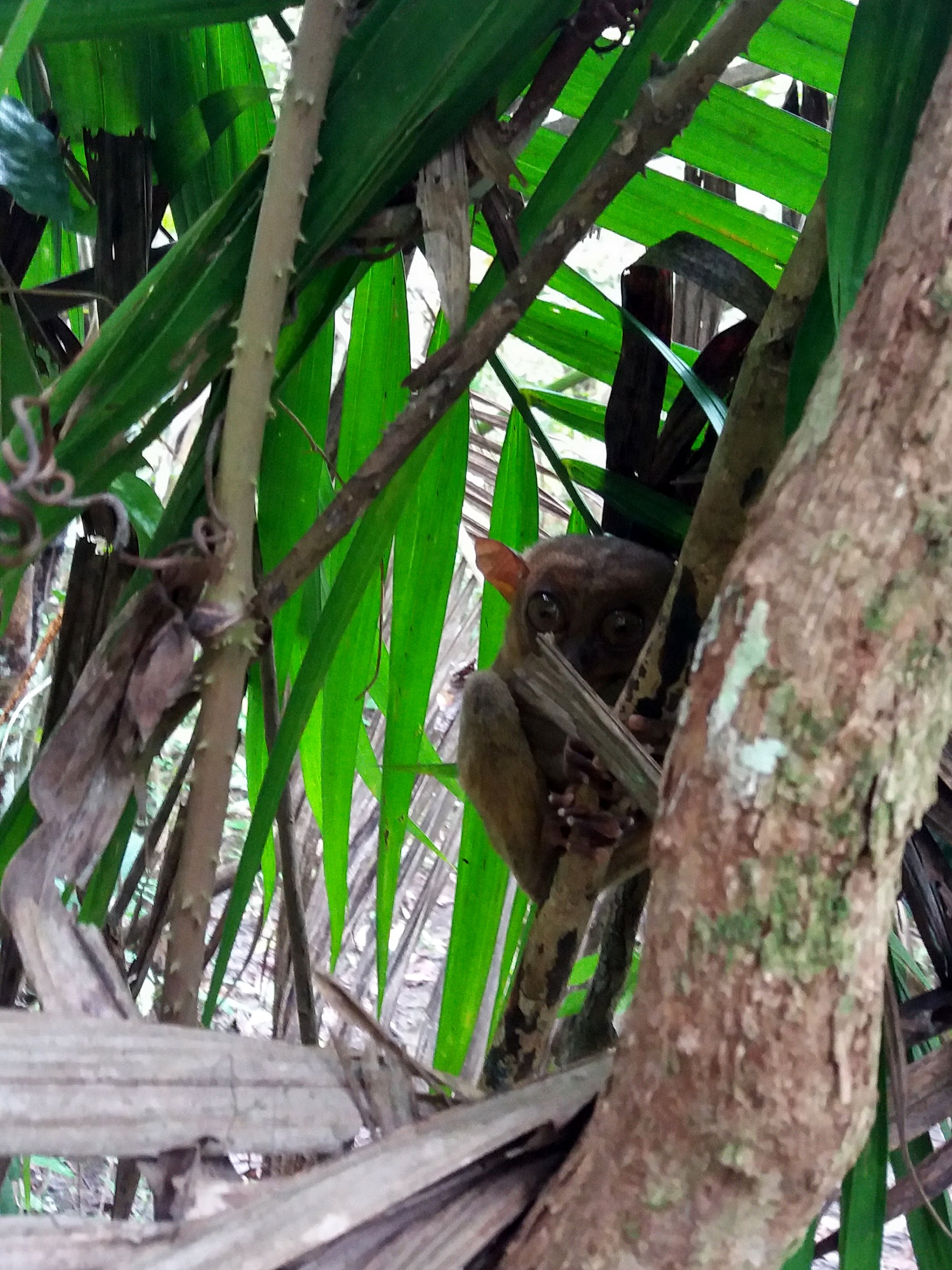 While the Conservation center had been paved paths with guides stationed at each Tarsier, the Sanctuary was much more a natural jungle with mud paths through the trees. I doubt I would have gotten lost in the small area behind the building, but I certainly wouldn’t have seen as many tarsiers without my guide. The Sanctuary is closed in, but the fence and netting are very unobtrusive, designed more to keep predators out than to restrict the tarsiers. I also felt like the tarsier perches here were probably man made to encourage the critters to good viewing sites, and to make sure they were visible from the paths while being sheltered from the sun. However, where the Conservatory perches were obviously man-made, the Sanctuary perches looked far more natural, drawing less attention to themselves and who knows, maybe being more comfortable.
 My guide quietly and confidently led me through the tangle of muddy paths, stopping every few minutes to point out a tiny sleeping primate. I was surprised at how close they were to the path after my experience at the Conservation center. While I’d been hard pressed to get any decent photos at the Conservation center, I had merely to hold up my phone to be close enough for great detail here at the sanctuary. I was worried about disturbing the little critters, so I tried to keep a reasonable distance, although more than once they were close enough for me to have reached out and touched, I know that would have been dangerous and damaging for them, so I resisted the urge. My guide was in no rush, and was happy to stand by while I got a good look at each one, and until I was satisfied with my photos. I can’t say I always had a good photo before I decided to move on, since I was keenly aware that simply by watching me back, I was keeping them awake and didn’t want to become a source of greater stress. I probably stayed at each spot between 2-5 minutes before moving on.
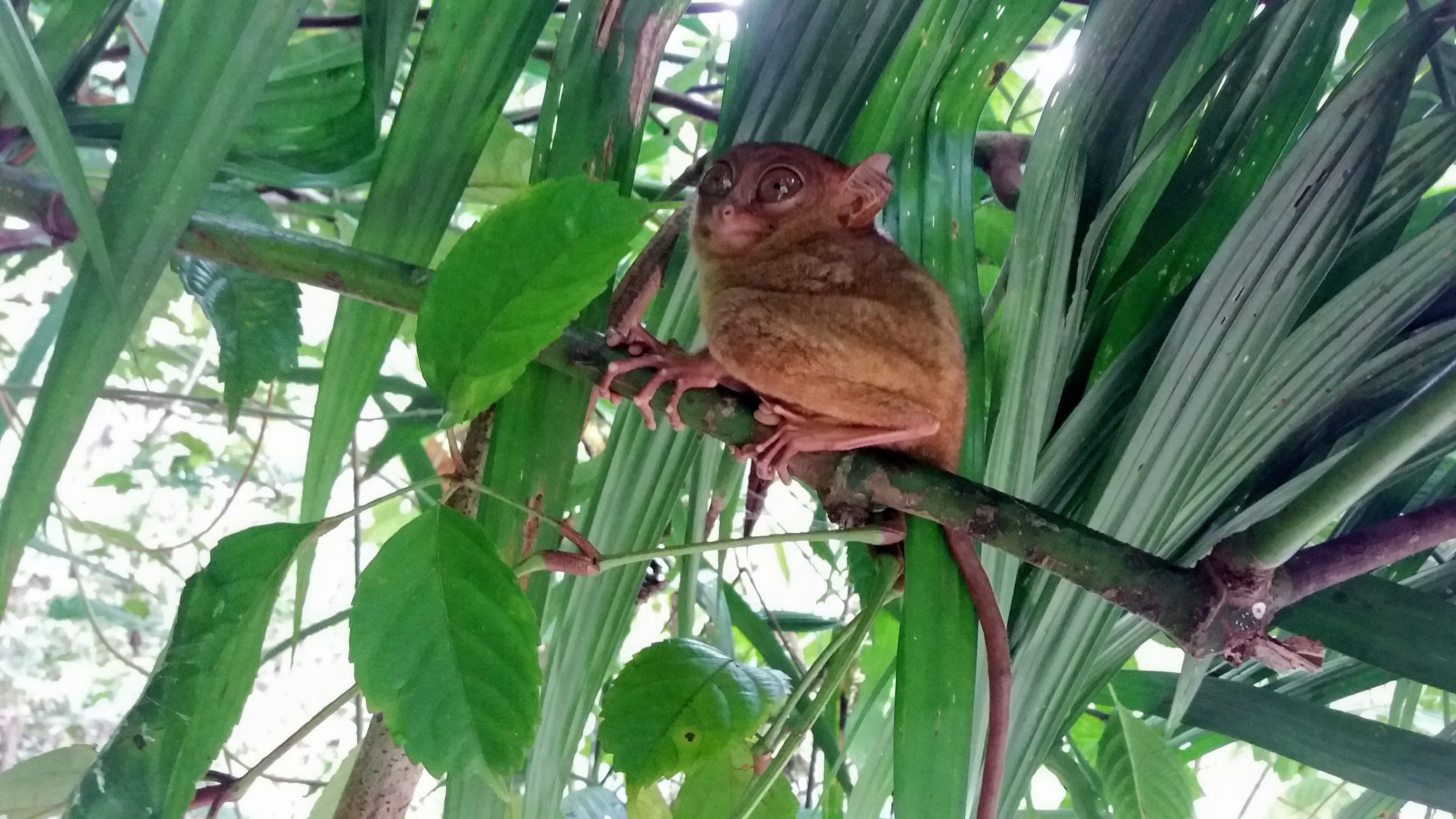 The Sanctuary jungle was also the hottest thing I did on this vacation. The trees were so close together and the netting caught the breezes, so even at 9:30 am it was sweltering hot and I was drenched in sweat the whole time. It was entirely worth it.
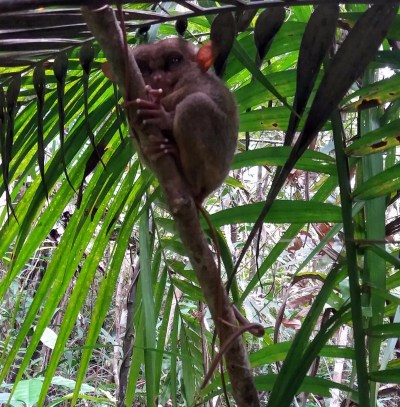 It was so peacefully quiet and there were no other visitors in the park so I felt very special getting to have this beautiful jungle and adorable creatures all to myself. I talked to them in soft reassuring tones like I was trying to sooth a scared kitten, and I have no idea if that was effective at all or just my own human oddness, but it was so obvious that they were watching me back, I couldn’t help but wonder how many myths of goblins or fairies these peculiarly shaped animals inspired. Their eyes are so large in comparison with their heads and yet the gaze is penetrating. Their hands are smaller than a newborn, but their fingers long and deft with large pads at the tips like a lizard or a frog.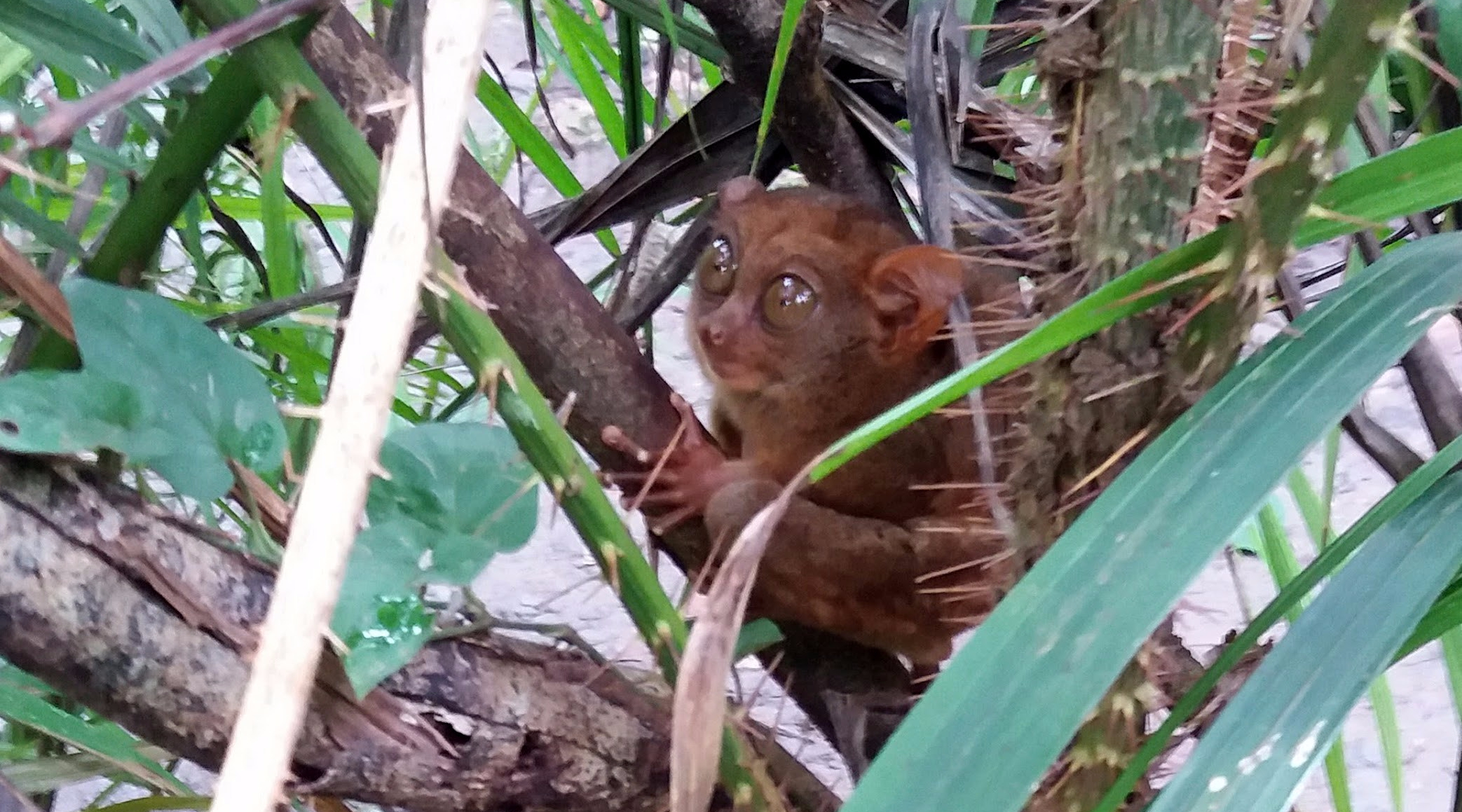
 Gallivantrix