I had a plan to go through my books in order of reading, and that plan has, like so many before it, fallen totally apart. I am working on writing up thoughts and reflections on everything I read in 2020, but I’m still reading, and it seemed really easy to just write up the books as I finished them rather than to go back and remember. Plus, going back and remembering made me feel like reading those books again. Which I’m also doing, in between the new ones. So, to heck with linear time. I’m just going to put these posts out as I am able and try to put some temporal context in the beginning, like those movies that jump back and forth from “now” to some past which will maybe explain how we got here.
The Tao of Fully Feeling, Pete Walker
After re-reading CPTSD Thriving to Surviving, I realized I have a deep appreciation for this author. The Tao of Fully Feeling is a much earlier book by him, and he mentions it a few times in CPTSD, mostly in terms of what he felt he has learned since then, and things he wishes he could have included. I feel like reading them “backwards” was a good choice because I got to read Tao with the author’s hindsight in mind.
There are obvious similar themes dealing with childhood trauma and it’s effect on us as adults, but this book focuses on one main message: feel your feelings! This resonates with me because Brené Brown’s TED talk on vulnerability was a huge turning point for me in 2012 when I had been pummeled into a terrible life condition by an abusive relationship and ravaging illness back to back from 2004-10. I had started to physically recover in 2010/11 and by 2012 I was done wallowing in pain and decided to do something about it. Learning how to regain access to my genuine emotions was a huge step because we cannot, as Brené says, numb selectively, and if we want to feel genuine love, joy, wonder and other positive things, we must also allow ourselves to feel anger, sorrow, pain and other less pleasant feelings.
Things I particularly liked about the book include the myriad ways he gives examples of what kind of damaging behavior he is talking about, the way he is open about his own experiences without suggesting any need to compare experiences (it’s not the Pain Olympics, after all), and the absolute validation to go ahead and BE MAD. Grieving the loss of love, the death of a fantasy of parental security, the loss of who we might have been if we were not treated this way, the pain, the injustice… feeling all of that is important. He talks about how to feel and express the emotions of anger, sadness, grief, etc in healthy and cathartic ways, and advises on how to avoid expressing those emotions in ways that could harm ourselves or those around us.
Forgiveness
Walker approaches this concept from the goal of processing trauma, healing enough to curtail the damaging behaviors it causes in us, and learning to forgive. That last part is a little tricky. Walker himself was urged to forgive his abusive parents before he was ready, and it caused more problems than it fixed. He advocates against “false forgiveness”, and includes in that when we delude ourselves into wanting to “forgive and forget” in order to move on without doing the work. He says we have fully feel our anger, sadness, and blame impulses in order to process them. Suppressing the pain of past actions just means that pain stays around and sneaks out of us in messy and unexpected ways. He also stresses that forgiveness doesn’t mean we start talking to people who hurt us. Finally, he underscores the importance of forgiving ourselves. Many adult children of abuse, emotional distance, or neglect have internalized blaming ourselves for what happened to us. A critical part of recovery, Walker states, is forgiving our past selves for assuming and perpetuating that self-blame.
Generational Trauma & Empathizing With Your Parents
This is also the only book I’ve read so far that addresses the parents themselves as something more than merely the deliverers of trauma. He talks about discovering his parent’s own history of childhood abuse, and further, his grandparents’ painful youth. The generational trauma that goes back untold centuries can cause us to suffer for the abuse our great great grandparents suppressed and repeated. He acknowledges that we can have empathy for our parent’s extenuating circumstances (they were badly abused, they didn’t have any positive parenting examples, they did the best with what they had, but were pretty damaged themselves) while still being angry and sad that we were mistreated. Feelings aren’t simple and we can and should welcome ambivalence into our lives when it’s called for. There’s even a small section of the book directed at such parents who were both the victims and perpetrators of abuse/neglect on how they can work on healing themselves and on helping their adult children. The book ends with a helpful if not comprehensive list of things we can say to our children (inner children or the next generation) at different developmental stages to help them grow up feeling seen, heard, and loved with a strong sense of self-worth and curiosity.
The “Good Parent” Fantasy
My personal ah-hah moment in this book was realizing how it was possible for me not to see what my mother was doing for SO LONG. Walker explains that because children are so fully dependent on parents not only for physical security, but for emotional connection, self-esteem, and intellectual development, that young children simply can’t accept that their parents are unloving or cruel (intention on the part of the parent is pretty irrelevant at this stage of child development). As a result, young children develop intense defense mechanisms to simply not see or not remember when a parent acts in a toxic manner. Most children with early trauma have massive memory blocks that can last from birth to 12 years old. Although many start developing memories as early as 5, the memories are heavily redacted by the brain’s own internal self-guard. In my case, my father was scapegoated for leaving (took me 20+ years to learn that my mom gave him a pretty good reason for that), and my step parents were not … kind. It was easy for me as a child to revile 3/4 of the parental figures in my life, but then I turned all my need for parental connection and love onto my mother, who was oh so narcissistically happy to have it. Even when I knew things were bad between us, I assumed it was my fault and although I didn’t give up on being independent or moving out, I did seek to regain a loving connection with her after I’d been an adult for a while. I don’t think it was until I saw her repeating her behavior towards my sister’s children that I really broke through those decades of denial. When I did recognize my mother’s abusive and toxic behavior, I tried instantly to shift my ‘good parent’ fantasy over to my dad, which didn’t work because … well, he isn’t. He may not be as bad as my mom wanted me to believe, but that doesn’t erase the very real damage he did.
When Is Confrontation Helpful or Harmful?
I spent most of my life thinking that I had to confront my father (or anyone else who hurt me) in order to express my pain and move on, and Walker helped me to realize that is not only unnecessary but potentially harmful. Yes, a person (parent or otherwise) who is continuing to act toxically in the present needs to be addressed. We shouldn’t ignore it, and as Schulman suggests in Conflict is Not Abuse, we also should not simply cut people out of our lives for bad (non-abuse) behavior, but we might need to give them limits to protect ourselves if they are unwilling or unable to stop the harm.
Tao of Feeling helped me to understand that part of the reason I struggle so hard to have any kind of adult relationship with my father is that every single time we are together, I’m in a state of emotional flashback and hypervigilance. I want to have an adult relationship, but I can’t help but clench every muscle in my gut when I see his name in my inbox. I’ve learned in the last year or two that I need to take my time with those emails, get mad/sad, yell/cry, etc. then sit down to respond after a few days when the emotional flashback is subsiding. I know that identifying this is a good step, but as of this moment, I’m still not exactly sure what to do with it. I’ve done a little verbal or written ventilating since starting my recovery work, but I need to do more. Verbal ventilating, as Walker defines it, is a process of giving our past traumatic experiences and feelings words. It’s a huge part of healing because most traumatic memory and pain exists in a non-verbal part of the brain, and transferring it into words gives us the power to process it in to the past. This is the root of my feeling that I had to confront someone to “work it out”. A confrontation would force me to put it into words, which is the actual healing tool. The other person does not need to be there. As much as I need to say it, my father doesn’t need to hear it. Yes, he needs to understand there was hurtful behavior if we are ever to move on together, but he will not be served by listening to or reading an unexpurgated recollection of our time together the way I will be helped by saying or writing it.
If another person’s behavior is causing harm in the present (recent past, likely to happen again if not addressed) then you need to address it with the other person, but if our own emotional flashbacks are causing us to have disproportionate emotional responses, we have to address within ourselves. This is no place more difficult than with parents. A parent’s past abuse or neglect is the source of the trauma, the original cause of the painful emotions, while a parent’s mere existence in the present can be a trigger which causes an emotional flashback to that trauma they caused before. It’s almost impossible to untangle. For example, when my friend acts like my mom and triggers a flashback, I can (now) realize what’s going on, tell her I need a time out to handle my flashback, then when it’s passed, I can talk with her about what the trigger was and whether it’s something that she needs to take any action about. However, when I see an email from my dad, or some FB memory of my mom’s emotional manipulation, I can get triggered into a flashback in a snap just by seeing their names. How do we deal with that? Walker says I need to get it all out by fully feeling; remembering enough of the painful history to rail against it in full expression of bodily rage, and total surrender to open grief. It doesn’t sound fun, but it does sound better than squashing all my feelings because I can’t confront them directly.
The Boy Who Was Raised as a Dog, Bruce Duncan Perry
I was very skeptical when this book popped into my inbox. I didn’t actually remember placing the library hold, so clearly, I’d been waiting for it for a long time. The title also made me worried that I was about to read a non-stop trauma-rama of abused child case studies. However, it turns out that it is much more a ‘Neuroscience for Non-science Majors’ kind of book. Dr. Perry is an accomplished scholar, doctor, and researcher who spent most of his career on the cutting edge of childhood trauma research and treatment. The book does include several case studies, some of which are pretty much guaranteed to make you loose faith in humanity, at least temporarily, but it isn’t a voyeuristic inspiration-porn thing. There’s just enough details to give you the basic idea, then there’s a lot of discussion of therapy sessions, research, and basic neuroscience.
Neuroscience for Dummies
I’ve personally been fascinated by neurology and neuropsychology since I learned about it mumblemumble years ago. I enjoyed reading books by Sam Harris, watching every TED Talk on the function of the brain, perusing studies performed with the wonderful fMRI, which wasn’t even invented until 1990 and certainly not widely available for random research for a while after that. Plus lab research takes TIME, so the late 2000s to early 2010s was kind of an explosion of neuroscience research into the public sphere. I often wish I had been born just a little later, so that I could have found out about it before I went to college. I’ve also had some very financially irresponsible thoughts about going back to school just for this, but … money.
In general, if you need a good intro to the science of neurology with a focus on child development and trauma, he does a great job of explaining a very complex topic in easy to follow and engaging ways. I share his hope that by understanding what is happening inside our brains and the brains of those around us, we may learn to be more compassionate with ourselves and others when we are not able to instantly achieve best behavior through willpower alone. I think that is also a big reason I tend to talk about mental illness and trauma in terms of brain function so much. When we think of this as a physical function, like a diabetes, asthma, or myopia, then we can recognize that no amount of wishing or positive thinking will make it just disappear. (yes, positive thinking plays a very important role in healing, but it’s not The Secret). We need to learn to live with it, how to accommodate it and treat it, but also recognize that it isn’t going anywhere, and it isn’t a moral failing or lack of willpower.
The Evolution of Trauma Science
The other part of the book I enjoyed was the historical perspective. It is a bit painful to realize that I’m talking about events that happened in my own lifetime as “historical”, but in the last 40 years, there’s just been so much growth in research, understanding, and treatment of childhood trauma (and adult trauma for that matter) that I can’t really think of it as anything besides a historically important development. He talks about the things that even well regarded doctors believed in the 80s, how very very wrong they were, and some of the absolutely terrifuckingfying things that “professionals” advised parents do to “treat” /problematic/ children. (No amount of punctuation is going to express my combination horror-disgust about this.)
He walks us through the neurological renaissance of the 90s and the way that understanding the physical function and development of the brain changed the way we understand behavioral problems and mental illness. The book was published in 2007, so there have been even more developments since then, but the big re-think definitely started in the 90s, and it gives me a lot of hope for the people who are parenting now and have access to this kind of information that my parents just didn’t have. Maybe, just maybe, if we understand these new discoveries and the long term damage that trauma does (even when it happens on the watch of or at the hands of well-meaning and generally caring parents) then we can stop the cycle of generational trauma and start raising whole and emotionally healthy human beings.
There were several cases and studies referred to by Perry where physical symptoms provided the first clue to doctors that there was a bigger problem. I don’t mean “mysterious bruises”, but issues of sleep, appetite, weight gain or loss, resting heartrate, and so forth. There were also discussions of how often children were being misdiagnosed with behavioral or learning issues even when the trauma was a known factor. Trauma from abuse, neglect, or other traumatic events in a child’s life was often totally disregarded because the pervasive attitude of the day was “kids are resilient, they’ll be fine” or “they’re just doing that to get attention”. This argument is still used today to downplay things like the traumatic impact of school shootings, ICE camps, catholic priests, and anything else that’s too inconvenient to stop doing because it primarily affects children.
Expert Validation
Part of the reason I think case studies and personal anecdotes are important in the field of trauma psychology is the same reason group therapy works. We need to see our own experiences reflected in others to feel valid. Every time an expert in this field says something that resonates with me, I feel a little more validated and a little less broken. I had another “omg that’s my mom” moment while reading this book. On it’s own, the fact that multiple authors have described my mother’s toxic behaviors is kind of stunning. It reveals the fact that she isn’t even very original in her crappy behavior. Perry says, “people like [that] have a pathological need to be seen as nurturers and caregivers”. I had been trying to find a way to verbalize this aspect of her narcissism for a while. A lot of narcissistic people want to be seen as attractive, smart, better than you in every way that matters, but my mom’s narcissistic ideal is to be seen as the most wonderful caring nurturer in the world. It was so liberating to see this renown psychiatrist go, ‘yeah, that’s a thing that happens fairly often, usually in healthcare workers who were also abused or neglected as kids’ (check and check). Knowing that my mother’s specific type of narcissistic abuse is common doesn’t fix it, but it does help me feel more grounded in my own experience – less gaslight and more electric bulb, if you know what I mean.
The Boy Who Was Raised as a Dog
Spoilers. For those of you reading and thinking, “ok, but what about that boy in the title? What kind of shitty parents did he have?” I will relieve you of your mystery. The case was an infant (Justin) whose parents were unable to keep him at home, but rather than go in to foster, he was left with a relative (Arthur) who had zero childrearing experience, but did breed and raise dogs. “Left to his own devices, Arthur made care-giving decisions that fit his understanding of childrearing. He’d never had children of his own and had been a loner for most of his life. He was very limited himself, probably with mild mental retardation [sic]. He raised Justin as he raised his other animals—giving him food, shelter, discipline and episodic direct compassion. Arthur wasn’t intentionally cruel: he’d take both Justin and the dogs out of their cages daily for regular play and affection. But he didn’t understand that Justin “acted like an animal” because he’d been treated as one—and so when the boy “didn’t obey,” back into the cage he went. Most of the time, Justin was simply neglected.”
This is terrifying, but it isn’t evil in the way that many stories of extreme childhood abuse can be. The man didn’t hate or resent the child, he simply didn’t know what to do, and in addition had his own cognitive challenges which made him unable to process this new task. It is a good (if extreme) example of how a damaged/ignorant yet caring parent can fuck up royally.
The absolutely most terrifying part of this story isn’t that Justin was left with a mentally challenged man who treated him like a dog. (yeah, that’s not the worst part) The worst part is that the DOCTORS WHO SAW JUSTIN DECIDED HE WAS JUST RETARDED. Arthur didn’t try to hide anything. He took the boy to doctors when he realized that Justin wasn’t developing into a human child. The doctors who saw Justin in his first few years of life actually did some very intense testing including chromosome analysis and brain scans searching for the cause of his developmental delay and just NEVER ASKED about the boy’s home conditions. They told Arthur that the child was permanently brain damaged from an unknown birth defect and would never be able to care for himself. They straight UP abandoned this child because they did not want to look for trauma. This happened in the 1990s. If not for Dr. Perry’s intervention (1995), Justin would still be trapped in the life of a dog, unable to speak, or connect with fellow humans. You can read the full excerpt on Oprah’s website, but honestly, I’d recommend just reading the whole book.
Adventure Time: Distant Lands
This is not a book, and it’s not labelled as therapy (although I am of the opinion that the creators know what they are doing). Adventure Time is (ostensibly) a children’s cartoon set in the far future of Earth, now called Ooo, where mutants made of candy, ice, fire, and slime rule the many kingdoms. Our hero Finn is the only human, and he is 11 when the series starts. But I am not writing about Finn’s adventure. After 10 seasons of watching Finn cope with puberty and adulthood, the series came to a close, but the world of Ooo was not finished. A few longer episodes were released under the title “Distant Lands”, a nod to the theme song, and cover what is happening with a few of the supporting cast outside of the main series. Maybe you can watch it as a stand alone, but I don’t feel like it would make any sense, and I know it would not have the same emotional impact.
Why am I talking about a cartoon here?
I have noticed a trend in newer cartoons toward addressing actual emotional issues children experience rather than the things adults think are happening. I don’t really understand this disconnect. I can only assume that most adults forget or more likely suppress the memories of their own childhood, because I can’t understand why else they have no idea how complex the inner world of children really is. Not to sound like an old biddy, but “when I was a kid”, most of our cartoons were meaningless advertising for toys, cereal, or anti-drug campaigns that did no good whatsoever. Going back further, cartoons were full of casual racism and violence along with some war propaganda. I love some classic Warner Bros, but dang. And, I think it’s totally fine for cartoons to be meaningless entertainment. Not everything has to be a PSA or a life lesson. (NevergonnastopbeingmadatSpongebobforpromotingbullyingtho) Ahem.
But it IS nice to see kids content that actually deals with emotions and childhood issues in a genuine and healthy while still being fun and entertaining way. I’m pretty blown away by the reboot of MLP compared to the original. Same for the new She-ra. Big fan. There’s a growing number of these sort of “art house” cartoons that help children navigate the language of emotions and interpersonal conflicts. I mentioned Steven Universe in my last post, and I’ll talk about it again because it’s been a part of my healing journey. Today, I’m talking about Adventure Time.
Marcelene spent her whole life feeling like a monster, acting out, being angry, feeling unlovable. Her father was a demon king, so I guess she was sort of half monster, but that’s not really what this is about. For Marcelene it was a thousand years of teen anxt, shitty abusive relationships, trying and failing to have an adult relationship with her estranged father, and deeply self destructive behavior before she found love and learned that being a half demon vampire queen doesn’t make her a monster because that’s not what “monster” means.
In “Obsidian” we learn that she feels this way because her mother sent her away as a child after her (demon king) father abandoned them. As a child, she used her demon powers to defeat a mutant wolf threatening her mom, then shortly after, her mom lied to her about some stuff and sent her away. Child Marcelene didn’t know why her mother would do that, so her child brain made it her own fault. “Mom is scared of me and ran away because I’m a monster.” A thousand years later, she learns the truth: her mom was sick, dying, and not only couldn’t care for her daughter in the hellscape of postapocalytic Earth/Ooo, but also didn’t want her daughter to see her that way.
The problem is: It doesn’t matter why parents push us away- illness, stress, survival, 3 jobs, personal emotional issues, divorce, any number of reasons that are very legit and do not involve a lack of love on the parents’ part and are frequently things they either can’t control or don’t know how to start to change. It doesn’t matter because the child will always find a story that makes it their own fault.
Mom and/dad can’t be sick/weak/crazy or I could die (literally small children can’t survive without adults), so I must be the problem. I must deserve this. I am broken. I am a monster.
Somehow, reading this in multiple books had not had the deep emotional impact that seeing one of my favorite characters experience it would have. It hasn’t been a thousand years for me but it feels that way. It has been a lifetime of anxiety, shitty abusive relationships, failed connection with an estranged father, deeply self destructive behavior and a thorough feeling of being a monster who is unworthy of love. I cried and cried and screamed and raged, and then cried some more. (Remember, Pete Walker says we need to do that.) I’m angry that I have felt this way as long as I can remember and I’m just now finding books and shows to help me understand it. I am angry for myself, but I am so hopeful that the existence of cartoons like this means we are starting to teach people how to see it and talk about it before a lifetime goes by. Our inner child needs to heal just as much as our adult self. Maybe these cartoons are a good companion to books and therapy as a way to reach that part of us. I couldn’t connect the child in me to the words I was reading in the books (and there’s good neuroscience about why), but seeing young Marcelene on the screen, hearing her sing about being an unlovable monster, it reached deep down to my past child self and brought those feelings home. After I cried it out, I was able to use the words from my books to connect my present adult thoughts with my past childhood feelings, and that’s healing.
Thank you for reading and for coming along with me on a very different type of travel. I know that this blog started as travel and adventure, but not all journeys are geographical. I look forward to the day we can visit each other’s nations again freely and safely, but until then, the internet remains to connect us all, and we must tend to ourselves and each other during this time of global trauma. Be kind, be gentle, persist.
A year ago, after attending the Seoul Queer Culture Festival (Pride), my elation was destroyed by the Pulse shooting and after some time to process the grief and anger, I wrote this. Now, with the political climate of the US and the world drifting more and more into divisive, unhealthy, and downright dangerous territory, I think it’s important to remember these things, so I’m reposting.
It’s not a traditional rant, but I’m not soft-balling it either. I’m not going to curse and yell and insult people. That doesn’t help. But I’m not pulling punches and guarding every turn of phrase. I’m pretty sure if you’re reading this, you have an open mind (I don’t have a big enough following for trolls yet) so I’m hoping you’ll be open to some different perspectives on the issues this has brought up and won’t nitpick every detail or metaphor to death in an attempt to avoid the message.
Disclaimer: I have employed the word “you” here as a general term for “a person” or “a group of people” because it’s shorter and more convenient than those phrases, and because it sounds less awkward than “one”. If you (actually you) don’t feel like you fall into those thought patterns, please feel free to observe how other humans do. If you (personally) think it applies to you, then please do the awesome thing and admit your past errors and strive for personal improvement.
Connection
The problem of violence in America has no quick fix. It’s not one type of problem. It’s a gun problem, and a mental health problem, and a male problem, and a sexual entitlement problem, and a loneliness problem, and a homophobia problem, and and and….
The fact that I can’t remember which shooting this came after is a horrible sign, but someone pointed out that socially well connected humans don’t go off and kill a bunch of fellow humans. I don’t mean socially acceptable people, by the way. Not the kind of person everyone says “he seemed so nice” about. I’m talking about connection. Genuine meaningful social connection is possibly the most important thing we can do for another human being. Love and belonging are the third tier of Maslow’s hierarchy, only overshadowed by the need for food and safety and integral to achieving esteem and self-actualization. They are NOT OPTIONAL for humans.
In order to make the connections that provide us with the sense of love and belonging we need so much, we have to feel safe (second tier) and have our physical needs met (first tier). This means things like jobs, minimum wage, enough to eat and no fear the power will be cut off soon are important not just for the person at risk of snapping and being violent, but for all the people around him (yes, him, they’ve all been men) who need to be in a safe place in their lives in order to be available for social connections. It’s not about handouts and food stamps for the lazy or entitled. It’s about creating an environment where people are capable of achieving love and belonging, because only then can they start investing back in that environment in a positive way.
To make social connections we need to be mentally and emotionally healthy too. Mental health care availability and removal of mental health care stigma are a big part of making that happen. Plus, it has the side benefit that people who are really struggling can get some extra help before they feel the need to lash out violently.
We need a social value of peer care. This whole “every man for himself”, “not my circus, not my monkeys” attitude is destructive. A society is dependent on co-operation and co-care for success. It’s supported by science and religion. But I don’t even know how to get this idea off the ground in the US. Rugged individualism (aka “selfishness”) is deeply ingrained in the American identity these days, but it hasn’t always been. Once upon a time, there was a horrible war against some evil men and our country banded together. I don’t know if it takes Nazis to make us help each other, but it does prove that we’re capable.
2017 Add on:I could not have dreamed when I wrote that sentence what was coming, I thought I was speaking in hyperbole about Nazis…
The “Or” Problem
America is fascinated, hypnotized, enslaved to the idea that every issue has two and only two sides which are so opposed to one another that any form of compromise or middle ground is simply unthinkable. I don’t mean uncomfortable to think about, I mean, people’s brains are actually incapable of thinking the thought. Thought rejected. This is known as the “false dichotomy”.
Example: All the guns or none of the guns. If you are for gun rights, you must be in favor of all the guns. If you are for gun control, surely you want to destroy all the guns. Many of you say, no no, we don’t think that way. BUT, when you tell a die-hard NRA conservative you want gun legislation, all they hear is “‘Bama wants to take our guns” and the next thing you know we’re being moved at state owned gunpoint into UN appointed Orwellian style living blocs. Madness! (I’m not making this up, I wish I were.)
Ugh. I said I didn’t want to have a conversation about guns. Sorry. You can look at many aspects of American life and see that you’ve been sold on an idea that something must be A or B and there simply is no alternative or middle ground. Political parties and candidates are another great example. Republican or Democrat… anyone heard of the Green Party? Many people seem to think that the alternative to hating LGBTQ+ is embracing it wholeheartedly. And, while I wish you would, I also know that it’s totally possible to disagree with a person’s life choices and still not hate them. I do it every day.
Even in this way, Americans are dichotomous. You love it or you hate it. Well, you know what? I don’t love or hate pistachio ice cream. I bet there’s a lot of that stuff in your life and you don’t even think about it. But, when it comes to a hot button issue, you must choose a side. Team Tony, Team Cap. Team Edward, Team Jacob. Team Coke, Team Pepsi… really, that’s what you’re reducing complex social issues like religion and sexuality to when you do this.
And while we’re at it, a side note on false equivalencies. , such as this lovely comparison of Obama to Hitler. Both were in favor of a policy, therefore they are the same? No. Obama =/= Hitler. I could spend the rest of the year finding examples of how this is used in all these polemical arguments, but the ones I want to bring up are: anger =/= hate, and dislike =/= hate.
I’m angry at my sister for staying in a crappy city, but I still love her. I’m angry with my friends when they are stubbornly stupid about writing in a vote that won’t count in their state, but I still love them. I’m angry with my students when they don’t do their homework, but … you get the idea.
I don’t like Donald Trump. I don’t like the creepy homeless guy on the street corner who smells funny. I don’t like Kanye West. But, I still think they all deserve fundamental human rights and that old American goodie: “life, liberty, and the pursuit of happiness”.
But Kaine, that kind of anger/dislike isn’t the same as what I feel toward (insert group here… oh, let’s say Westboro Baptist, but pick your own if it helps). Yeah, it’s smaller maybe. WB makes me want to pull my hair out. Makes me want to scream. Makes me want to go to a junkyard and smash things. BUT, it doesn’t make me want to kill them. It doesn’t make me want to take away their right to free speech. It also kind of makes me want to make them some tea and say, hey do you need a hug cause you’re clearly very upset about something (though in the case of the homeless guy, maybe not a hug until he’s showered).
We need to stop buying into A or B. We need to ask “why” about everything over and over until we discover the root issues. We need to remember it’s “liberty and justice for all” full stop, not “all white Christians” or “all men” or “all heterosexuals”. And then we need to take a long hard look at “life, liberty, and the pursuit of happiness” as it applies to everyone. We’ve already decided that taking someone else’s life (murder) or property (stealing) is not a liberty anyone is permitted no matter how happy it will make them. We’ve decided that absolute freedom to do whatever you want is not the path to a healthy society. We already curtail certain actions deemed destructive to the well-being of our nation and its people. Of course we must be careful about what we choose to curtail, but we cannot act like it is an anathema to do so. Ben Franklin said that a person who would surrender freedom in exchange for security deserves neither, but that’s become another “or”: freedom or security. Why? Why can’t it be and?
Freedom and security.
Dislike and respect.
Disagreement and compassion.
Can v Should: As It Applies to Free Speech
When I was living in the Middle East, I learned some very valuable lessons about free speech. I’ve been working on a separate post about that, but the core of it I think is important to this issue as well. But let me be clear: I am in NO WAY advocating for the government control of speech or expression. I am talking about social and civic responsibility that comes with having that freedom. Abraham Lincoln once said that “we should be too big to take offense and too noble to give it.” There are some people out there who are just easily offended by things that are genuinely not damaging to others. There are things that need to be said that will be hard to hear. I will support the legal right to free speech forever. But, the second part of that quote is damn important.
In America, when someone says something insulting (about your faith, your lifestyle, your weight, appearance, gender, orientation, skin color, etc) the result is all too often “You’re an adult, suck it up”. The expectation is that adults should just be able to deal with being insulted or having their feelings hurt (even though arguably many of these insults are signs of bigotry and oppression and not just about hurt feelings).
In the Middle East, when I had conversations about such insults, I explained that we didn’t want the government to police what we could say about religion or anything else for that matter. This is the core of our free speech amendment, that the government can’t punish you for the insult. People understood that part, but what they couldn’t wrap their heads around was why anyone would want to be so insulting in the first place.
Sometimes I get to explain about how important it is to be able to speak out against powerful institutions that may be corrupt or have a corrupting influence, that may be stealing or hurting people. That’s the reason we have the first amendment, after all, not simply to protect the Westboro Baptist Church screaming insults at a funeral, but to protect people like Edward Snowden who tell us when our government is breaking laws, or in a less controversial light, people like Neil Degrasse Tyson who speaks out about climate change and evolution despite how unpopular those things are in the US.
In other words, the right to free speech is protected so we can punch up at those in power who are ostensibly abusing it. Using your words to hurt, bully, intimidate, threaten, marginalize or oppress other people isn’t exercising your first amendment rights, it’s just being an asshole.
When you tell the story of someone who is insulted for their race, religion, gender, orientation, etc and the reply is “You’re an adult” the follow up shouldn’t be “suck it up”, the comment isn’t directed at the victim, it’s directed at the attacker. “You’re an adult. You should know better”. Kids insult each other, bully each other, and call each other names because they are learning. As adults we tell them it’s wrong. We ask them to think of how they would feel if someone called them that name. You’re an adult, you should know better than to insult someone that way for no reason other than to prove you can. What are you 6? Like two kids in the backseat of the car, one sibling holding a finger just millimeters away from the other’s skin. “I’m not touching you! There’s no law against it. I have free speech.”
Just because you can, doesn’t mean you have to.
You’re an adult. You should know better.
2017 Add on: Freedom of speech also doesn’t come with a guarantee of platform or audience. No one is obliged to invite someone to speak at an event, and no one is obliged to listen to them. People like Ann and Milo don’t have a right to an auditorium or TV air time and failing to give them a chance isn’t an infringement of their right to speak without persecution or prosecution by the government, which is what the amendment guarantees.
And, because it’s come up more than once over the last year
YES THERE ARE LIMITS TO THE FREE SPEECH GUARANTEE IN THE BILL OF RIGHTS.
The first amendment does not give everyone the right to say whatever they want without legal consequences. Things not protected include: incitement to violence, false statements of fact (slander, libel, perjury, etc), obscenity (with caveats), child pornography (thank goodness), “fighting words” and offensive speech, plagiarism, and a few others. So before you get all defensive of that alt-reich, neo-nazi’s right to free speech, check out if his words really qualify.
The Crab Bucket
When I was learning how to be happy (another one of those things I keep meaning to write about in more detail), I read a lot of studies, and listened to a lot of psychiatrists, therapists, sociologists and neuroscientists. One day, I’ll make a comprehensive list with links and you can all take the shortcut to the searching I did, but until then, it gets doled out piecemeal.
Today’s piece: toxic relationships & crab bucket tribes. I had to learn about vulnerability from Brene Brown. I had been hurt so much that for part of my life it was easier not to feel. But Brene reminded me that is not a sustainable model for happiness, it’s only a barrier to pain and the absence of pain is not the same as the presence of joy.
Being vulnerable is the only way to experience love, and love is key to happiness. Don’t just take my word for it, watch her TED talks, read her research. Being vulnerable means you open up to people and experiences. You let them in. That means people can hurt you. As a result, it’s really important to back away from the people who will hurt you often and badly. They may have the best intentions. They are certainly worthy of love, but that is not your job.
Additionally, I learned that our mental tracks, our personal narratives if you will, are greatly influenced by the people we spend time with. If we hang out with people who have no ambition, who are negative and critical all the time, who always find something to complain about or some reason not to try, then it becomes harder for us to break out of those thought patterns.
Even worse is the “crab bucket”. I learned this word from Sir Terry Pratchett, but I don’t think he made it up. Basically, there is no need to put a lid on a bucket of live crabs because as soon as one tries to climb out, it’s bucket-mates grab on and pull it back down. People do this too. People who are in bad situations for whatever reason, people who have had to learn to accept those situations (bad job, too many kids, crappy apartment, bad relationship, wrong career, etc), people who are unhappy but unwilling (or unable without great effort) to change it. They are comfortable in their discomfort. Seeing someone else get out, “make it”, improve their lives should be a cause for celebration, but too often it simply reminds them that their own lives are less than they want and it breeds resentment. They will attempt to keep those around them in the crab-bucket for all kinds of reasons besides flat up jealousy or resentment. It could be because they like you and want you around, they want to have things in common with you, or because they don’t want to be alone, but it’s still not good for you.
Whether someone is actively toxic in the sense of abuse and chronic negativity or passively crab-bucket in the best meaning friendly way, they are still an obstacle to your happiness and you can’t be vulnerable to them, you can’t invest your time in them without expecting them to have a commensurate impact on your life.
Excising toxic and crab-bucket people from my life was not easy. It was a deeply painful process. I admit, I didn’t confront many people. I let most of them quietly drift away. Moving out of country helped that a bit. Only the ones I truly deeply cared about did I try to talk to. Sometimes it worked and we improved our relationship. Sometimes it didn’t and it blew up in my face.
Now I’m getting better at making non-toxic friends up front, so hopefully I won’t have to do that again. But I’m encountering a new toxic, crab-bucket relationship in my life that I didn’t really see before: my country.
Your country is a lot like your family. You don’t get to choose where you’re born. I’ve often thought I was lucky to be born in the US. So much privilege and wealth. Such a wonderful history of freedom and innovation. Anything was possible… the American dream.
I learned the hard way that’s not real, but I was still hoping America was going to pull through. I admire people who work tirelessly to improve it, who don’t give up. I said before that even toxic people are worthy of love and I meant it. Just because I can’t be the person who gives it to them doesn’t make them unworthy. I guess I feel the same way about America. I’m starting to feel like hanging around America is overly negative. I definitely feel like America is turning (has turned?) into one big crab bucket. People tell me all the time “every place has problems” as a way of minimizing the problems in America or somehow trying to equate them with problems in other places. People tell me all the time, “not everyone can just leave” as a way of reasoning out why they can’t.
Every place does have problems, just like every relationship has problems. You don’t stop talking to all humans because of it. You don’t give up on vulnerability or love. But you don’t stay in an abusive or toxic relationship either. Yes, in case it wasn’t clear, I’m comparing the US to an abusive or toxic friend/partner. I hear people in bad relationships say things like “no one’s perfect” and that’s what I hear when people say “every place has problems” in the wake of the Orlando shooting. Places that have problems like that are the national equivalent of abusive spouses. If you’re comparing yourself to central Africa to find something worse, it’s like saying yeah, he slaps me around sometimes, but at least he doesn’t cut me up or break any bones like Betty and Paul down the street. Neither one is ok!
And yes, it’s probably true that not everyone can leave the way I have. But more people could leave than are doing so. Countries like Germany are struggling with record low population growth and are desperate for immigrants who can contribute to their society as well as their population numbers. Places like Korea are giving away scholarships (transportation and living expenses included) to people who want to come here and commit to a multi-year study of Korean language. Furthermore, the people who are going to stay should be doing so because they want to fight for America, to work and toil and loose sleep and gain gray hairs to rebuild a place worth living in. That’s worth doing, oh gods yes.
Not every bullied LGBTQIA+ leaves the bigoted southern towns they were raised in as soon as they turn 18. Some because they don’t know how, can’t afford it, think they have no place to go. But some because they want to stay to work to improve conditions for the next generation and that’s work worth doing. I met an amazingly bright young lady while I was teaching in China. She could have easily used her intelligence and education to get a job and move to a great city, or even leave China which is the dream of so many there. Instead, she told me her dream was to go back to her tiny village where people don’t even have indoor plumbing and teach at the local elementary school to give the next generation a better chance. Wow.
There are people in my life I thought were worth fighting for. I haven’t abandoned every relationship that was damaging. But I’ve made choices and worked for the ones I wanted in spite of the risk.
I’m looking really hard at America right now, because I don’t think I can passively live in the crab-bucket anymore. Right now, I’m taking a “break”, travelling around the world, but before I go back for anything longer than a vacation, I have to decide if this is a toxic relationship I have to cut loose, or if it’s a painful relationship I want to work to fix.
2017 Add on: I’m heading back to the US this summer to dispose of my stateside material goods and visit my family again. After this, I don’t think I’ll be back for a while, certainly not until there’s adequate health care and I don’t have to worry about getting stabbed to death for standing up against Islamaphobia. My mom is retiring next year, so I’m hoping she’ll be able to come out and visit me and bring my niblings along so they get to see more of the world.
That said, I’ve met several Americans who are heading home. When I asked them why, they said they felt they needed to stand up and do something about the state of things. Even when we talked about the fact that they were unlikely to ever find as good a job as we have here, let alone as good a healthcare plan, they looked sad, but resolved. I admire these people immensely and I hope that they can make a difference.
Ghandi said we have to be the change we want to see in the world, but only you can decide what that means for you.
I can’t even begin to list all of the horrible things that have happened since I first wrote this post. Increases in white supremacist violence, more restrictive laws to increase the school to prison pipeline, the Trump administration, the Paris accord withdrawal, Syria, Russia… people are scared, some feel under threat by the government’s plans to dismantle health care and other social services, and others are under threat because of the color of their skin, the god they worship, or the person they love. Don’t give up. #Resistwithcompassion.
It’s taken me a long time to put this post together. The events I’m talking about happened 3 weeks ago which is a lifetime in social media terms. And yet, I feel like for once, it’s good that it took so long. I feel like it gave me and others time to absorb and process, but I don’t think any amount of time will cause this to stop being relevant until civil rights and gun-violence are solved. In the first week after the events, I was riding the emotional roller-coaster and nothing I wrote was worth reading. In the second week, I settled down to some serious writing, but before I could publish, the third week brought me low with that child-borne plague — the common cold. It’s finally done, however. It’s much longer than my usual posts because I just couldn’t bring myself to break this experience up into smaller pieces. I do hope you’ll give it the extra time and read all the way to the end. There’s a love “crust” down there waiting for you… like with pie.
When I first found out about the festival in March, I was excited to see it. When I found out it was the 17th annual one, I was blown away. Try as I might to keep up with real news and world events, I still had a solid perception that LGBTQ+ rights platforms were the domain of the West (and that America might actually be the farthest behind in that race) while the rest of the world lagged far behind in tackling this important civil rights issue. I saw things like Russia banning LGBTQ+ at the Olympics and China striking down gay marriage as signs that the East just wasn’t doing that much.
And, to a certain extent, the East still has a long way to go. These are cultures that haven’t had to deal with the different and the other that often in their history. Or, when they have, they’ve dealt with it by employing the classical Asian two-level system: above-what is acknowledged, seen and talked about; below- what everyone knows is really going on but never vocalizes. It’s a kind of national “don’t ask, don’t tell” policy on all kinds of things from gambling and drugs, to porn and alternate sexuality. The Japanese actually have words for this (“honne” and “tatemae”), but I’ve witnessed it in other Asian cultures as well.
Korea just recently had, for the first time, two (famous) men petition the courts for legal marriage. The case was rejected, but there was some room in the language for future laws to be added to the books that would allow it. Considering it was the very first time that anyone in Korea tried, it’s not really a surprise that it was struck down. But it’s definitely becoming more and more of a public issue, thanks in no small part to a 17 year tradition of publicly celebrating LGBTQ+ pride in the nation’s capital every summer.
Previous years’ festivals have seen large groups of protesters who have screamed at, spat at, taken pictures of, and occasionally engaged in greater displays of violence and harassment toward the festival goers. They’ve reportedly lay in the street to block the march, and even engaged in physical violence against the police to try to get at the Pride participants. Protesters have tried to shut out Pride by booking up the space, nearby spaces, and hotels to keep people out. This year, the conservative anti-gay Christians tried to petition the courts to shut down the festival on the basis of public indecency, but they were denied. However the Korean culture may feel about LGBTQ+ currently, at least the government respects everyone’s right to peaceful assembly, which is awesome. More than merely respecting it, the government issued stern warnings to the protesters to refrain from violence, because violent protests are illegal.
I’m from Seattle, where being LGBTQ+ is more often the assumed state than being straight. Where it’s so normal for people to see gay couples in public that my BFF was often mistaken for my GF, and *not* in the “you’re going to hell” way that happened to me in Memphis. Pride in places like Seattle is no longer a civil rights issue (plenty of places in the US it is, keep marching guys). In Seattle, Pride is one big party with corporate sponsorship. It’s a fun party, don’t get me wrong, but it’s not a civil rights movement, it’s a victory celebration. And worse, because of the division within the LGBTQ+ community, the G (and to a lesser extent the L) tend to drown out the BTQ+. The people who still need protection and help even in a culture like Seattle are the ones being most ignored by their own supposed community.
Because of all of this and more, I was very excited to see what a Pride festival would look like in a country where LGBTQ+ is legal but not common or (to most people here) socially acceptable. I knew it could get ugly because I’d read about the protesters in previous years. I knew it might be small and underfunded because it doesn’t get a lot of support here. I knew it might be full of foreigners who just wanted to bring their own culture into Korea. I knew it might just be a marketplace full of cheap souvenirs and magkoli stands because it was a festival in Korea. But I didn’t care, I wanted to see it. And I’m so glad I did because it was none of those things.
(Ok, one magkoli stand.)
Getting There
My Busan Bestie and I headed to Seoul Friday after work, arriving after midnight and experiencing the very beginning of the Seoul public transportation headache. We managed to find the right bus, but missed our stop and got stuck on the wrong side of the bridge, which I guess technically people walk across, but it was the middle of the night and we had luggage, so we thought, oh hey, we’ll just take a taxi… nope. Scarcely any to be had and none for us. We finally found another bus and got back on the right side of the bridge but didn’t make it to our hotel for almost 2 hours after our train arrived. Why didn’t we take a taxi from the train station? Well, the line for real taxis was 30 people deep and no taxis were coming, the bus ride was only supposed to be 30 minutes, and as we found out later, there are plenty of fake-out taxis waiting to charge you an arm and a leg for a 15 minute drive.
The hostel was nice. I’d sent them a note after the Taean pension disaster to let them know we would be arriving quite late, so they left me a note on the whiteboard telling my my room, and they left the key in the door as well so we didn’t have any trouble getting into the room. I’m torn about this hostel, because they did nice stuff like that, and they helped drive another patron to a place he could catch the airport bus, but they had some advertising issues that could have been handled better, like “air conditioning” which was only central and kept at an uncomfortably warm temperature, and “continental breakfast” which was cook your own eggs and toast in the rooftop kitchen. I think I could have been ok with these things had I not been expecting something else, so it’s hard to say.
Due to the lack of AC, I didn’t sleep especially well, but my excitement woke me up well enough and after a leisurely breakfast that I cooked myself, we headed back out into the city to find City Hall and Seoul Plaza, the site of the Festival.
I have been entirely spoiled by Busan public transportation. I was a little frustrated when I first arrived in Korea that Google Maps didn’t really work here, but I learned how to use the local version (Naver Maps) and have had an easy time getting to most places. For some reason, I thought that the transportation in Seoul would be better than it is in Busan. I’m not sure why. I’ve used the Beijing and Tokyo subway/train systems and so I’m not a novice at complex rail maps. I looked up the plaza on my app and saw it was a short two trains away and we were right next to the station. Lies.
We managed to get on our first train with minimal fuss, our national transportation cards work everywhere (which is so nice). But in trying to transfer to the second train, we somehow wound up going the wrong way. Then waiting at a platform where no train was coming (no signs about this either), then waiting at a platform where trains only arrived to, but didn’t depart from, then finally getting on a train heading the right way, only to find out we had to get off it and move to another train to continue going the right way. I wanted to take the train instead of a bus because train stops are usually well announced in advance while the buses tend to be a mystery and you might not know it was your stop until it’s too late. Buses are great if you know where you want to get off, but subway/train things tend to be easier for the first time traveler. Plus, the directions on the festival website explicitly said to use the metro exit 6 to get into the festival because access was being controlled to keep out the protesters.
Maybe it’s a great train system once you get to learn its idiosyncrasies. But considering the dearth of taxis and the intensely confusing blend of intra/inter city trains and subways, I’m going to say Seoul is definitely a bus town.
Safety First
When we finally emerged from the station, we were greeted by a huge wall of police. I saw the protesters well before I saw the festival. They were set up across the street with a giant stage where they were having speeches, performances, and blasting Christian music in an attempt to drown out the Pride music. The streets around Seoul Plaza were lined with police standing shoulder to shoulder. When the light changed, they parted to allow us access to the crosswalk by which we entered the park. I have to admit, I was becoming anxious, and not in a good way. My heart was aflutter and my adrenaline was definitely going. I’m in no way anti-police. My sister is a police officer, and I have a lot of respect for the men and women who do a necessary and often thankless job. In the US, if I get pulled over or approached by an officer in public, it does not make me nervous. But something about seeing thousands of officers creating a human wall made me more than a little twitchy.
Later, I realized that the police were there to protect us. They recognized the protesters as the threat, not the LGBTQ+ folks. They were keeping an eye on them, and were nothing but courteous to us. It was an amazing feeling. I expect many of the officers did not personally approve of the festival or the LGBTQ+ lifestyle, but they didn’t let it show in their faces that day. They stood around us through rain and scorching sun with no tents to shelter them. They stood facing the protesters so we didn’t have to. During the march, they ran ahead of us to maintain that protection at all times, which was good because protesters followed us too. By the end of the day, I just wanted to give them all hugs and say thank you, because they did so much to make the day possible, whether they agreed with it or not. This is what it means to do your job well and to respect the freedoms of others. Without them, the protesters surely would have entered and berated us up close, ruining what was otherwise a beautiful occasion. Because they were there, festival goers and marchers felt safe to be themselves in a city where that can often be so hard.
Speaking of being free to be themselves, the festival also went out of it’s way to make the space especially safe. In the past, protesters used pictures of festival goers to publicly shame them, or get them fired, or even disowned by family. It’s no laughing matter to be Out here. Homosexuality can’t get you arrested, but there are no laws protecting employment yet. Many families feel it’s shameful and will disown children who come out. LGBTQ+ Koreans mostly have to pretend to be cis-het to get by. A few have managed to make enough money that they aren’t afraid to come out, like the filmmaker who petitioned for a marriage to his lover, like the small community of drag queens that simply make their living as performers. But the average person is hiding. This festival is a chance to be among people who accept and understand, but the attendees probably have to go back to homes and offices where they have to pretend again, and thus, having their pictures plastered on the internet can be scary and damaging.
The festival made it clear that anyone taking pictures for anything other than strictly personal use (eg, keep it on your phone and never show it to anyone) must get a press pass and sign the agreement. I like sharing my pictures, so my first stop upon entering the park was to the press booth. I read a multi page contract that stated the rules for taking and sharing photos. It was heavy on permission. (yay consent!), and very strict about not posting anyone’s face you didn’t get permission from. I asked people all day, and handed out cards to the site so they really understood where the image was going. They also collected our IDs, so they can hold us accountable should someone take issue with my following the rules. I told my school where I was going that weekend because I don’t like lying, so I personally am not worried about it ‘getting back’ to my employer, but I know it’s a real issue for many Koreans and I’m glad the festival took such pains to protect them.
Maybe it’s just me (doubt it), but when I see the US paying lip service to equal rights then doing less than nothing to protect endangered minorities (people targeted for violence, discrimination, etc), it makes it really hard for me to accept that whole “land of the free” shtick. I sure as Sherlock wasn’t pleased about the protesters, but everyone there respected their right to peacefully speak their piece. Not everyone in the government involved in protecting the rights (assembly, speech) and safety of the LGBTQ+s like it as a lifestyle, but they respect us as people. It was more important to maintain the core values of respect, safety, and peaceful assembly than it was for them to express their personal opinions on the subject. America, please take notes.
The Festivities
Seoul Plaza is this big oval lawn in front of city hall.
On the day we arrived, it did not look like that. It looked more like this.
This photo is from 2015, however, so imagine it with 20,000 more people. The main stage is just off the lower right corner and the protesters are on both the left and right on the other side of the street.
After securing our press passes and verifying our reservations for the after party, we slowly started to explore the booths that lined the plaza. Unlike events in the US, there was very little corporate representation. And unlike events in Korea, there was a lot more than endlessly repetitive booths of food and trinkets. Most of the booths were operated by groups trying to raise awareness and understanding for some aspect of the LGBTQ+ community. There was a group called “Dignity for Soldiers”, another booth was from the first (and only) NPO that does outreach and support for at-risk LGBTQ+ youth in Korea. There were booths for just about every shade of the rainbow including Trans, Poly, Pan, Ace, Bi, BDSM… I think maybe the only sexual type not represented were Furries. But it’s ok, I found one in the parade later on.
There were also plenty of booths promoting general sexual awareness through sex toys, masturbation tools and positive attitudes. Koreans are often reticent to talk about sex, even when it’s cis-het, so getting out there to help people take some initiative in their own sexuality is still a big deal.
I was really on the verge of tears to see this. Many booths were selling things, pins or flags, erotic books and drawings, non-erotic books and drawings featuring LGBTQ+s, jewelry, booze, snacks, and so on. But making money wasn’t the point for anyone. For most of these booths, they were simply covering the cost of being there and making the materials that they were handing out for free to raise awareness. I have a stack of literature. Every booth was so full of friendly excited people. Any time we bought anything they cheered. Even just a little 50 cent postcard. Everything was a victory in their goals of increasing the awareness of their cause.
I kept getting distracted from the booths by people in fun costumes. Asking permission to take a picture is not as much a hardship after I got used to the Middle East photo culture. I can’t put all the pictures in the blog, but they are all in the Facebook album. You’ll probably notice that a lot of the people I snagged photos of are Westerners. This does not mean that the festival was all expats. Actually, of the 50,000 people who showed up (record breaking by the way), I’d say less than 10% were expats. However, the Koreans tended to be a bit more conservative in their costuming, and so there is a disproportionate photo representation.
I found this fun lady in rainbows and feathers who, when I asked if I could take a photo, told me she was with the US Embassy. It turned out there was a whole row of Embassy booths there, each country sending official representatives to support LGBTQ+ rights (and promote tourism, let’s be honest). And for just a few hours, I was really proud of my country for making this public, overt, international, diplomatic, and above all enthusiastic statement of support for LGBTQ+ and gentle pressure for Korea to catch up. (Spoilers: This feeling does not get to live long.)
We wandered around the booths looking at the huge array of inclusiveness and outreach. We watched some of the shows on the stage- so very Korean, people doing K-pop dances and such. It rained on us a couple times, but it didn’t slow anything down; everyone just popped open umbrellas or put on raincoats. Even the performances didn’t stop in the rain, they dancers just put on some plastic ponchos and kept right on dancing. I heard later that some of the protesters had apparently been praying for rain to ruin our day. I can only imagine their frustration when we didn’t let it dampen our spirits. If anything, it was a refreshing cool down during the summer heat!
Lest you think that all the churchy-folks were on the wrong side of the police line, we also found a couple of religious booths there embracing LGBTQ+ with signs and slogans about love, acceptance and Jesus. There was at least one Methodist group, and another group of Anglicans. Before you go on thinking that Archbishop Tutu is a crazy Drag Queen stage name, no. He’s a real Archbishop from South Africa whose daughter gave up the ministry to marry her girlfriend. He’s totally a real ally.
We got some mojitos in a bag, took silly pictures with the folks from Lush (maybe the only non-sex related corporate sponsor there, but I really like them as a company so I’m OK with them supporting the Festival to promote their stuff). They had this giant pink triangle people could hold and take selfies in. We took lots of other photos too. There was a girl with a beautiful bird who, when I tried to ask if I could take her picture, instead put her bird on my shoulder and took my phone to take a picture of me instead. There was a giant Kiwi at the New Zealand booth. And there were countless people in fun and adorable costumes.
Among the performers too numerous to count, I recognized one of the Queens from the show I went to here in Busan the weekend before. This time she had a set of 4 hunky dancers in fun costumes with her. I enjoyed the show, but I think even more impressive was the massive audience enthusiasm. The crowds on the lawn came hurtling toward the stage for her performances and fans were screaming and waving hands and signs in the air like a Beatles concert.
It took us over 2 hours to make a full circuit of the plaza and then we realized we’d missed some stuff! I cannot talk enough about how inclusive this festival was. So much representation, everyone sharing love and information. Smiles everywhere. There were also more disabled Koreans there in one day than I’ve seen in the 4 months I’ve lived here. Folks with mobility issues that left them in motorized wheelchairs, and not just old people, young people with a variety of disabilities. Everyone was welcome.
Another big thing here was the sheer volume of Koreans. Yes, it’s Korea, there *should* be more Koreans, but a lot of people, both Korean and expat, seem to think that events like this are led by and dominated by expats. There’s a horrible myth among the anti-LGBTQ people here that Korean’s actually can’t be gay and that any Korean who thinks they are has been infected by outsiders. Many of the protester signs that weren’t telling us that Homosexuality is a sin were telling the gays to get out because they believe it’s a foreign infection and not a domestic issue. The more Koreans co-ordinate events like KQCF, the more who operate awareness booths and distribute information to their countrymen in Korean, the more who show up to support and learn, the better off LGBTQ+ is in Korea. Expats can show up, but we’re like allies here, we can’t change the country from the outside, we can only tell our Korean bros & sis’s that we support them and love them.
The March
The “parade” did have some “floats”, but it was not what we tend to think of as parades these days. There were a few trucks out in front with banners and people in costume on display in the truck beds, but the majority of the affair was much more akin to a political march than a celebratory parade. The walking area had us leaving the plaza, going up several blocks and around a big loop before returning to the plaza. It was around 3km, so not a huge hike, but definitely enough to attract attention, which was the point after all. The trucks out front had a few decorations, mostly pink triangles and rainbows, and the people on the trucks were holding pro-love signs and dancing to encourage the crowd. There was nothing like a “parade float” in sight. Actually, that’s not totally true, the protesters had some pretty swanked up gear on the side of the road, but they didn’t march with us.
The majority of people in costumes (as I mentioned before) were foreigners who are more used to the out and proud attitude of Pride parades in the West. There were a few lovely Korean drag queens and a couple others in interesting get ups, but most were wearing fairly every day clothes. Some had on T-shirts with slogans for their cause, some wore various pride flags as capes, a few dressed in traditional Korean historical garb, lots had little signs or buttons, many people had rainbow umbrellas up to shield them from the sun, some waved giant flags high overhead and one couple even put some rainbow dusters in their packs to look like wings! Just because they weren’t going “all out” Western Pride style didn’t mean they hadn’t put thought and effort into their appearance that day.
I could have speculated that a percentage of those 50,000 in the plaza just turned up to stare and had little idea of what was going on, but nobody marches 3km in the June Seoul heat for a lookie loo. So, I’m sure that everyone marching that day was dedicated. I personally felt incredibly lucky to be involved because it felt more like a march than a parade. I felt like here was a thing that people still need to see. There are no “victory” signs at Pride in Korea yet.
The police continued to be amazing. They flanked the streets, blocking traffic as well as guarding us from the protesters along the route. The march was quite long and there weren’t enough police to line it all from start to finish, so as the tail end passed one group of police, they had to run ahead of us to take their place at the next phase of the route. Dedication!
There were plenty of protesters right at the start of the route near the plaza, but as we went on, their number dwindled and the amount of supportive bystanders increased. I’m so incredibly proud of the marchers that day.
The protesters constantly screamed at us, often with megaphones, words of hate and fear and rejection. However, not once did anyone in the festival or parade retaliate with anything other than words of love. As the protesters screamed “homosexuality is a sin” the marchers yelled back “I love you”. We echoed their “hallelujah”s and smiled at them and blew them kisses. I’m personally a big fan of meeting hate with love, but it’s hard and I’ve never before seen such a huge crowd so determinedly return love while receiving so much hate. I think Jesus would be proud.
As the protesters fell away, we began to notice people on the sidewalk holding signs of support or waving and smiling and giving us thumbs up signs. Restaurant owners leaned out of their second and third story windows to wave down at us. A group at Starbucks had clearly planned ahead, because not only had they gotten seats right by the window, but they all held up rainbow signs reading “support equality”.
I know it’s not up to me, as an outsider, to tell a country how it should be. I didn’t march because I thought my presence would change someone’s mind. I admit, I went to the festival to see what it would be like here, and it completely blew me away.
The After Party
We sat around the plaza until things wound down because we were pooped after the march and we were more than slightly terrified of the public transport while the place was emptying out. The after party we chose to go to was the “official” Korea Queer Culture Festival one, although there were several around and I might choose a different one if I’m able to go again next year.
We bused back to the hostel for a shower and some dinner, but the location of the party was not conducive to public transport, so we had to try for another taxi (where are all the taxis, Seoul?). The nice young man in the convenience store called a taxi for us, but the driver refused to come because it wasn’t a big enough fare. It was pouring down rain and after 10pm, and the poor guy trying to help us is like, oh you can walk there in 20 minutes. No, thanks. Eventually we got a taxi to stop for us and made it to our goal.
The location for the party was stunning: a man-made island in the river. The buildings were huge and fun to look at with sweeping shapes and color changing windows. The party itself was a little lackluster for my tastes, but the one great thing about it was that it was about 98% Koreans. I sound like a broken record, but a lot of events I’ve gone to have had a large expat attendance and that’s fine for fun fun festivals, but this is more than that, it’s a civil rights movement with some party trappings and there can’t be a movement if the people of the country aren’t behind it, so it made me really happy to see so many Koreans there being openly gay in a way they can’t be in their day to day lives yet.
There were some vendors in the main hall selling snacks and t shirts. The VIP lounge was quite classy, but the line for the bar was insane. The mojitos were outstanding, however, and there was a classical quartet performance as well. The dance floor was roomy and the DJs were fun, but he dancing was very Korean. This meant that groups of people got up on the stage and danced the moves to K-pop songs while the audience/dance floor did their best to keep up with the same moves… that they all knew… to all the songs. This is an aspect of Korean culture I may just never get used to.
We danced a while (not the right moves, but it was fun anyway), had some drinks, chatted with the few other English speakers we found and finally headed back out sometime around 2am. The next day was all buses and trains again. I got home Sunday afternoon thanks to the speedy KTX train and went to bed that night with a head and heart full of love and hope.That lasted until Monday morning when I opened my Facebook.
This next part is going to be the sad part. It will be followed by the rant part, and finally the bottom layer in the love pie as previously promised. If you want to skip all or any of it, I won’t be offended. I thought a lot about what to say and while I don’t feel comfortable just ignoring it, I know many people have been over-saturated by the events in Orlando. That being said, I hope you read it.
Monday (the Sad Part)
I think everyone knows about the stages of grief, but I think there is one missing at the beginning: empty. I place it before denial because going “no no no, that’s not real” is a distinct and separate phase from “empty”. It’s happened to me only a few other times, typically when the news hits me first thing in the morning. I remember feeling it on September 11th, because I woke up to 14 messages on my answering machine from my mother making sure I was OK (no, I didn’t live anywhere near NY or DC at the time, but moms). She told me what happened and I was like … “what?” There were no feelings at all for a while. Same thing on November 30th (you can read that post if you want). It was several hours before it started to have an impact.
This Monday was the same way. I read the news, several times. I even went to google to find an actual journalistic report or 20 and not just some Facebook posts. I got dressed, cooked breakfast, went to work. Explained to my co-teachers that I might be a bit emotional that day because there was a horrible mass shooting in my home country and proceeded to get ready to teach classes. I think I made it through 2 classes before I actually started crying. I didn’t know anyone involved. I’m somewhere beyond “colleagues” yet well inside of “lookie loos” on circle of tragedy in the ring theory. After experiencing the love and warmth of the Korean Pride Festival, it was devastating to me to see what my own country had been up to.
Over the next week I went through plenty of ups and downs. I had an upset stomach from the feelings, so I was nauseous even when I was hungry. I randomly started crying, or talking way too loudly as I try to avoid screaming. I tried to explain the situation to Koreans, but things I take as givens about American culture are so confusing to them, I had to back up and give mini-history lessons just to catch up to how f*d up things were before this shooting. Phrases like “so they buy a politician” send my Korean co-workers reeling. When they asked me why we don’t just vote against pro-gun legislators, I had to explain the NRA, lobbying and gerrymandering. But even with that said, I’m incredibly lucky to have co-workers who will listen, discuss and sympathize because I’ve read other teachers here are forced to avoid it entirely at work.
The next day, a gunman was arrested in my hometown before (thankfully) he could shoot up a mosque just 2 blocks from a dear friend’s home. The internet is covered from head to toe with stuff about this event, and yeah, we should be talking up a storm. We should be shocked, angry, hurt, outraged. Stuff like this should not be normal. I started and deleted about a million posts because I couldn’t focus on anything without swaying wildly all over the emotional spectrum and ending up with some all caps version of “wtfbbq stop killing ppl!!!”.
I’ve gotten some thoughts condensed now. There’s plenty of stuff that’s been hashed and rehashed about anti-discrimination laws, gun control laws, immigration, religion, and so on. I’m not going to do those again because so many people on the internet have already said things more eloquently than I ever will (such as John Oliver on the NRA:Part 1, Part 2)
Instead, I’m going to talk about connection, the “or” problem, can vs should as it applies to free speech, and the crab bucket.
The “Rant” in 4 Sets
It’s not a traditional rant, but I’m not soft-balling it either. I’m not going to curse and yell and insult people. That doesn’t help. But I’m not pulling punches and guarding every turn of phrase. I’m pretty sure if you’re reading this, you have an open mind (I don’t have a big enough following for trolls yet) so I’m hoping you’ll be open to some different perspectives on the issues this has brought up and won’t nitpick every detail or metaphor to death in an attempt to avoid the message.
Disclaimer: I have employed the word “you” here as a general term for “a person” or “a group of people” because it’s shorter and more convenient than those phrases, and because it sounds less awkward than “one”. If you (actually you) don’t feel like you fall into those thought patterns, please feel free to observe how other humans do. If you (personally) think it applies to you, then please do the awesome thing and admit your past errors and strive for personal improvement.
Connection
The problem of mass shootings in America has no quick fix. It’s not one type of problem. It’s a gun problem, and a mental health problem, and a male problem, and a sexual entitlement problem, and a loneliness problem, and a homophobia problem, and and and….
The fact that I can’t remember which shooting this came after is a horrible sign, but someone pointed out that socially well connected humans don’t go off and kill a bunch of fellow humans. I don’t mean socially acceptable people, by the way. Not the kind of person everyone says “he seemed so nice” about. I’m talking about connection. Genuine meaningful social connection is possibly the most important thing we can do for another human being. Love and belonging are the third tier of Maslow’s hierarchy, only overshadowed by the need for food and safety and integral to achieving esteem and self-actualization. They are NOT OPTIONAL for humans.
In order to make the connections that provide us with the sense of love and belonging we need so much, we have to feel safe (second tier) and have our physical needs met (first tier). This means things like jobs, minimum wage, enough to eat and no fear the power will be cut off soon are important not just for the person at risk of snapping and being violent, but for all the people around him (yes, him, they’ve all been men) who need to be in a safe place in their lives in order to be available for social connections. It’s not about handouts and food stamps for the lazy or entitled. It’s about creating an environment where people are capable of achieving love and belonging, because only then can they start investing back in that environment in a positive way.
To make social connections we need to be mentally and emotionally healthy too. Mental health care availability and removal of mental health care stigma are a big part of making that happen. Plus, it has the side benefit that people who are really struggling can get some extra help before they feel the need to lash out violently.
We need a social value of peer care. This whole “every man for himself”, “not my circus, not my monkeys” attitude is destructive. A society is dependent on co-operation and co-care for success. It’s supported by science and religion. But I don’t even know how to get this idea off the ground in the US. Rugged individualism (aka “selfishness”) is deeply ingrained in the American identity these days, but it hasn’t always been. Once upon a time, there was a horrible war against some evil men and our country banded together. I don’t know if it takes Nazis to make us help each other, but it does prove that we’re capable.
The “Or” Problem
America is fascinated, hypnotized, enslaved to the idea that every issue has two and only two sides which are so opposed to one another that any form of compromise or middle ground is simply unthinkable. I don’t mean uncomfortable to think about, I mean, people’s brains are actually incapable of thinking the thought. Thought rejected. This is known as the “false dichotomy”.
Example: All the guns or none of the guns. If you are for gun rights, you must be in favor of all the guns. If you are for gun control, surely you want to destroy all the guns. Many of you say, no no, we don’t think that way. BUT, when you tell a die-hard NRA conservative you want gun legislation, all they hear is “‘Bama wants to take our guns” and the next thing you know we’re being moved at state owned gunpoint into UN appointed Orwellian style living blocs. Madness! (I’m not making this up, I wish I were.)
Ugh. I said I didn’t want to have a conversation about guns. Sorry. You can look at many aspects of American life and see that you’ve been sold on an idea that something must be A or B and there simply is no alternative or middle ground. Political parties and candidates are another great example. Republican or Democrat… anyone heard of the Green Party? Many people seem to think that the alternative to hating LGBTQ+ is embracing it wholeheartedly. And, while I wish you would, I also know that it’s totally possible to disagree with a person’s life choices and still not hate them. I do it every day.
Even in this way, Americans are dichotomous. You love it or you hate it. Well, you know what? I don’t love or hate pistachio ice cream. I bet there’s a lot of that stuff in your life and you don’t even think about it. But, when it comes to a hot button issue, you must choose a side. Team Tony, Team Cap. Team Edward, Team Jacob. Team Coke, Team Pepsi… really, that’s what you’re reducing complex social issues like religion and sexuality to when you do this.
And while we’re at it, a side note on false equivalencies. , such as this lovely comparison of Obama to Hitler. Both were in favor of a policy, therefore they are the same? No. Obama =/= Hitler. I could spend the rest of the year finding examples of how this is used in all these polemical arguments, but the ones I want to bring up are: anger =/= hate, and dislike =/= hate.
I’m angry at my sister for staying in a crappy city, but I still love her. I’m angry with my friends when they are stubbornly stupid about writing in a vote that won’t count in their state, but I still love them. I’m angry with my students when they don’t do their homework, but … you get the idea.
I don’t like Donald Trump. I don’t like the creepy homeless guy on the street corner who smells funny. I don’t like Kanye West. But, I still think they all deserve fundamental human rights and that old American goodie: “life, liberty, and the pursuit of happiness”.
But Kaine, that kind of anger/dislike isn’t the same as what I feel toward (insert group here… oh, let’s say Westboro Baptist, but pick your own if it helps). Yeah, it’s smaller maybe. WB makes me want to pull my hair out. Makes me want to scream. Makes me want to go to a junkyard and smash things. BUT, it doesn’t make me want to kill them. It doesn’t make me want to take away their right to free speech. It also kind of makes me want to make them some tea and say, hey do you need a hug cause you’re clearly very upset about something (though in the case of the homeless guy, maybe not a hug until he’s showered).
We need to stop buying into A or B. We need to ask “why” about everything over and over until we discover the root issues. We need to remember it’s “liberty and justice for all” full stop, not “all white Christians” or “all men” or “all heterosexuals”. And then we need to take a long hard look at “life, liberty, and the pursuit of happiness” as it applies to everyone. We’ve already decided that taking someone else’s life (murder) or property (stealing) is not a liberty anyone is permitted no matter how happy it will make them. We’ve decided that absolute freedom to do whatever you want is not the path to a healthy society. We already curtail certain actions deemed destructive to the well-being of our nation and its people. Of course we must be careful about what we choose to curtail, but we cannot act like it is an anathema to do so. Ben Franklin said that a person who would surrender freedom in exchange for security deserves neither, but that’s become another “or”: freedom or security. Why? Why can’t it be and?
Freedom and security.
Dislike and respect.
Disagreement and compassion.
Can v Should: As It Applies to Free Speech
When I was living in the Middle East, I learned some very valuable lessons about free speech. I’ve been working on a separate post about that, but the core of it I think is important to this issue as well. But let me be clear: I am in NO WAY advocating for the government control of speech or expression. I am talking about social and civic responsibility that comes with having that freedom. Abraham Lincoln once said that “we should be too big to take offense and too noble to give it.” There are some people out there who are just easily offended by things that are genuinely not damaging to others. There are things that need to be said that will be hard to hear. I will support the legal right to free speech forever. But, the second part of that quote is damn important.
In America, when someone says something insulting (about your faith, your lifestyle, your weight, appearance, gender, orientation, skin color, etc) the result is all too often “You’re an adult, suck it up”. The expectation is that adults should just be able to deal with being insulted or having their feelings hurt (even though arguably many of these insults are signs of bigotry and oppression and not just about hurt feelings).
In the Middle East, when I had conversations about such insults, I explained that we didn’t want the government to police what we could say about religion or anything else for that matter. This is the core of our free speech amendment, that the government can’t punish you for the insult. People understood that part, but what they couldn’t wrap their heads around was why anyone would want to be so insulting in the first place.
Sometimes I get to explain about how important it is to be able to speak out against powerful institutions that may be corrupt or have a corrupting influence, that may be stealing or hurting people. That’s the reason we have the first amendment, after all, not simply to protect the Westboro Baptist Church screaming insults at a funeral, but to protect people like Edward Snowden who tell us when our government is breaking laws, or in a less controversial light, people like Neil Degrasse Tyson who speaks out about climate change and evolution despite how unpopular those things are in the US.
In other words, the right to free speech is protected so we can punch up at those in power who are ostensibly abusing it. Using your words to hurt, bully, intimidate, threaten, marginalize or oppress other people isn’t exercising your first amendment rights, it’s just being an asshole.
When you tell the story of someone who is insulted for their race, religion, gender, orientation, etc and the reply is “You’re an adult” the follow up shouldn’t be “suck it up”, the comment isn’t directed at the victim, it’s directed at the attacker. “You’re an adult. You should know better”. Kids insult each other, bully each other, and call each other names because they are learning. As adults we tell them it’s wrong. We ask them to think of how they would feel if someone called them that name. You’re an adult, you should know better than to insult someone that way for no reason other than to prove you can. What are you 6? Like two kids in the backseat of the car, one sibling holding a finger just millimeters away from the other’s skin. “I’m not touching you! There’s no law against it. I have free speech.”
Just because you can, doesn’t mean you have to.
You’re an adult. You should know better.
The Crab Bucket
When I was learning how to be happy (another one of those things I keep meaning to write about in more detail), I read a lot of studies, and listened to a lot of psychiatrists, therapists, sociologists and neuroscientists. One day, I’ll make a comprehensive list with links and you can all take the shortcut to the searching I did, but until then, it gets doled out piecemeal.
Today’s piece: toxic relationships & crab bucket tribes. I had to learn about vulnerability from Brene Brown. I had been hurt so much that for part of my life it was easier not to feel. But Brene reminded me that is not a sustainable model for happiness, it’s only a barrier to pain and the absence of pain is not the same as the presence of joy.
Being vulnerable is the only way to experience love, and love is key to happiness. Don’t just take my word for it, watch her TED talks, read her research. Being vulnerable means you open up to people and experiences. You let them in. That means people can hurt you. As a result, it’s really important to back away from the people who will hurt you often and badly. They may have the best intentions. They are certainly worthy of love, but that is not your job.
Additionally, I learned that our mental tracks, our personal narratives if you will, are greatly influenced by the people we spend time with. If we hang out with people who have no ambition, who are negative and critical all the time, who always find something to complain about or some reason not to try, then it becomes harder for us to break out of those thought patterns.
Even worse is the “crab bucket”. I learned this word from Sir Terry Pratchett, but I don’t think he made it up. Basically, there is no need to put a lid on a bucket of live crabs because as soon as one tries to climb out, it’s bucket-mates grab on and pull it back down. People do this too. People who are in bad situations for whatever reason, people who have had to learn to accept those situations (bad job, too many kids, crappy apartment, bad relationship, wrong career, etc), people who are unhappy but unwilling (or unable without great effort) to change it. They are comfortable in their discomfort. Seeing someone else get out, “make it”, improve their lives should be a cause for celebration, but too often it simply reminds them that their own lives are less than they want and it breeds resentment. They will attempt to keep those around them in the crab-bucket for all kinds of reasons besides flat up jealousy or resentment. It could be because they like you and want you around, they want to have things in common with you, or because they don’t want to be alone, but it’s still not good for you.
Whether someone is actively toxic in the sense of abuse and chronic negativity or passively crab-bucket in the best meaning friendly way, they are still an obstacle to your happiness and you can’t be vulnerable to them, you can’t invest your time in them without expecting them to have a commensurate impact on your life.
Excising toxic and crab-bucket people from my life was not easy. It was a deeply painful process. I admit, I didn’t confront many people. I let most of them quietly drift away. Moving out of country helped that a bit. Only the ones I truly deeply cared about did I try to talk to. Sometimes it worked and we improved our relationship. Sometimes it didn’t and it blew up in my face.
Now I’m getting better at making non-toxic friends up front, so hopefully I won’t have to do that again. But I’m encountering a new toxic, crab-bucket relationship in my life that I didn’t really see before: my country.
Your country is a lot like your family. You don’t get to choose where you’re born. I’ve often thought I was lucky to be born in the US. So much privilege and wealth. Such a wonderful history of freedom and innovation. Anything was possible… the American dream.
I learned the hard way that’s not real, but I was still hoping America was going to pull through. I admire people who work tirelessly to improve it, who don’t give up. I said before that even toxic people are worthy of love and I meant it. Just because I can’t be the person who gives it to them doesn’t make them unworthy. I guess I feel the same way about America. I’m starting to feel like hanging around America is overly negative. I definitely feel like America is turning (has turned?) into one big crab bucket. People tell me all the time “every place has problems” as a way of minimizing the problems in America or somehow trying to equate them with problems in other places. People tell me all the time, “not everyone can just leave” as a way of reasoning out why they can’t.
Every place does have problems, just like every relationship has problems. You don’t stop talking to all humans because of it. You don’t give up on vulnerability or love. But you don’t stay in an abusive or toxic relationship either. Yes, in case it wasn’t clear, I’m comparing the US to an abusive or toxic friend/partner. I hear people in bad relationships say things like “no one’s perfect” and that’s what I hear when people say “every place has problems” in the wake of the Orlando shooting. Places that have problems like that are the national equivalent of abusive spouses. If you’re comparing yourself to central Africa to find something worse, it’s like saying yeah, he slaps me around sometimes, but at least he doesn’t cut me up or break any bones like Betty and Paul down the street. Neither one is ok!
And yes, it’s probably true that not everyone can leave the way I have. But more people could leave than are doing so. Countries like Germany are struggling with record low population growth and are desperate for immigrants who can contribute to their society as well as their population numbers. Places like Korea are giving away scholarships (transportation and living expenses included) to people who want to come here and commit to a multi-year study of Korean language. Furthermore, the people who are going to stay should be doing so because they want to fight for America, to work and toil and loose sleep and gain gray hairs to rebuild a place worth living in. That’s worth doing, oh gods yes.
Not every bullied LGBTQ+ leaves the bigoted southern towns they were raised in as soon as they turn 18. Some because they don’t know how, can’t afford it, think they have no place to go. But some because they want to stay to work to improve conditions for the next generation and that’s work worth doing. I met an amazingly bright young lady while I was teaching in China. She could have easily used her intelligence and education to get a job and move to a great city, or even leave China which is the dream of so many there. Instead, she told me her dream was to go back to her tiny village where people don’t even have indoor plumbing and teach at the local elementary school to give the next generation a better chance. Wow.
There are people in my life I thought were worth fighting for. I haven’t abandoned every relationship that was damaging. But I’ve made choices and worked for the ones I wanted in spite of the risk.
I’m looking really hard at America right now, because I don’t think I can passively live in the crab-bucket anymore. Right now, I’m taking a “break”, travelling around the world, but before I go back for anything longer than a vacation, I have to decide if this is a toxic relationship I have to cut loose, or if it’s a painful relationship I want to work to fix.
Ghandi said we have to be the change we want to see in the world, but only you can decide what that means for you.
The Bottom Layer of Love
Penny: “Sometimes people are layered like that. There’s something totally different underneath than what’s on the surface.”
Billy: “And sometimes there’s a third… even deeper level… and that one is the same as the top surface one…Like with pie.”
-Dr. Horrible’s Sing Along Blog
I promised in my preview that I would end the blog post on a positive note because it’s important to emotional health. I admit I’m not feeling super positive about the situation myself, but I’m going to do my best.
For me and others here in Korea, we experienced the love of the Pride festival before the shock of Orlando, but as the hours and days passed I began to see that in the US, they experienced news of the Korea Queer Culture Festival after learning about Orlando. So let’s start with a recap of the beautiful day. I found this great video on YouTube made by an English speaking Korean vlogger. Enjoy!
It’s the 1 year anniversary of legalized gay marriage in all 50 states.
The Pentagon has lifted the ban on transgenders serving in the military.
Kim Davis’ acts are now officially illegal and court clerks have to issue marriage licenses whether they like it or not.
Despite how dark it may seem in the wake of tragedies like this one, we need to remember the singular rallying cry “love conquers hate”. After the shooting, one friend still in the US sent a link to me of a news article about Korean parents who came to the festival to give out hugs and tell the festival goers that they were loved just as they were. She told me it gave her great hope after reading about the news in the US to see that love was still fighting around the world, so I’ll just leave you with this message of love.. like with pie.

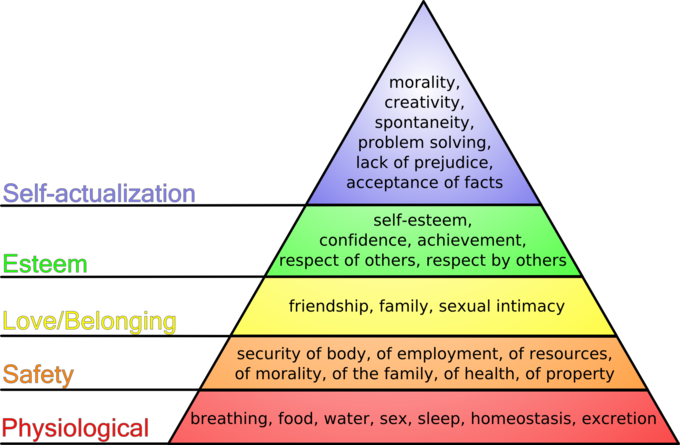 Love and belonging are the third tier of Maslow’s hierarchy, only overshadowed by the need for food and safety and integral to achieving esteem and self-actualization. They are NOT OPTIONAL for humans.
 America is fascinated, hypnotized, enslaved to the idea that every issue has two and only two sides which are so opposed to one another that any form of compromise or middle ground is simply unthinkable. I don’t mean uncomfortable to think about, I mean, people’s brains are actually incapable of thinking the thought. Thought rejected. This is known as the “
 Even in this way, Americans are dichotomous. You love it
  And while we’re at it, a side note on false equivalencies. , such as this lovely comparison of Obama to Hitler. Both were in favor of a policy, therefore they are the same? No. Obama =/= Hitler.
 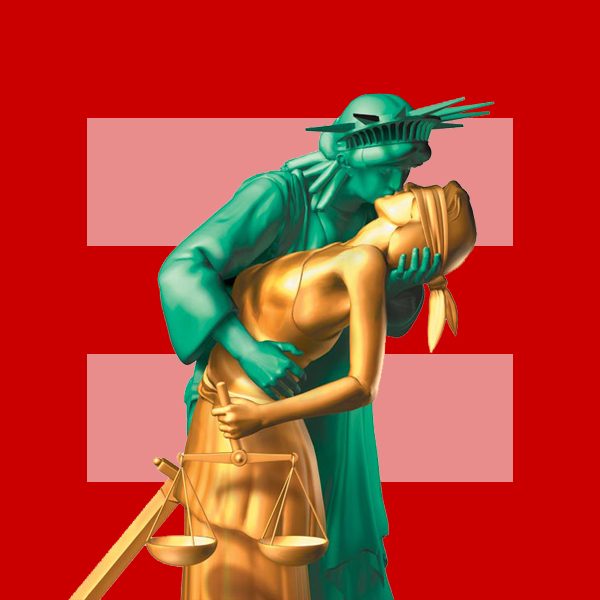 We need to stop buying into A or B. We need to ask “why” about everything over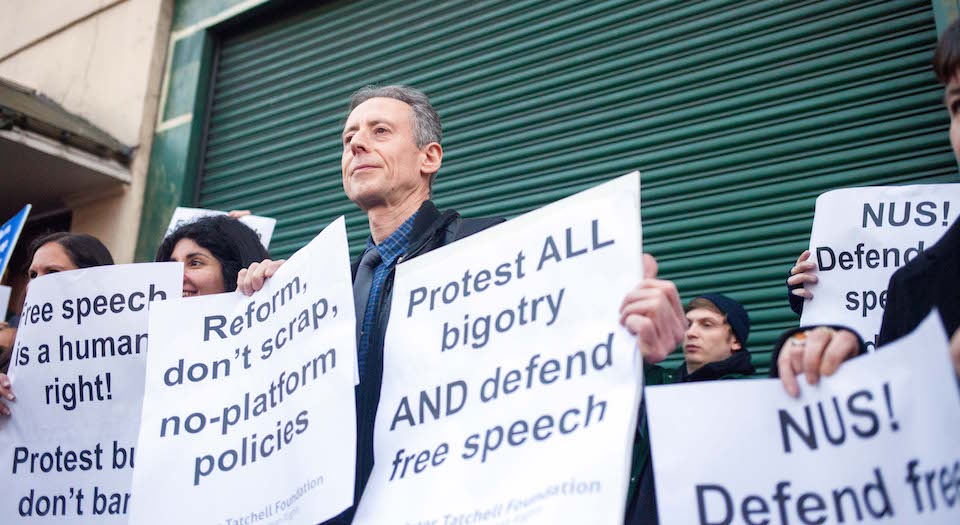
 In America, when someone says something insulting (about your faith, your lifestyle, your weight, appearance, gender, orientation, skin color, etc) the result is all too often “You’re an adult, suck it up”. The expectation is that adults should just be able to deal with being insulted or having their feelings hurt (even though arguably many of these insults are signs of bigotry and oppression and not just about hurt feelings).


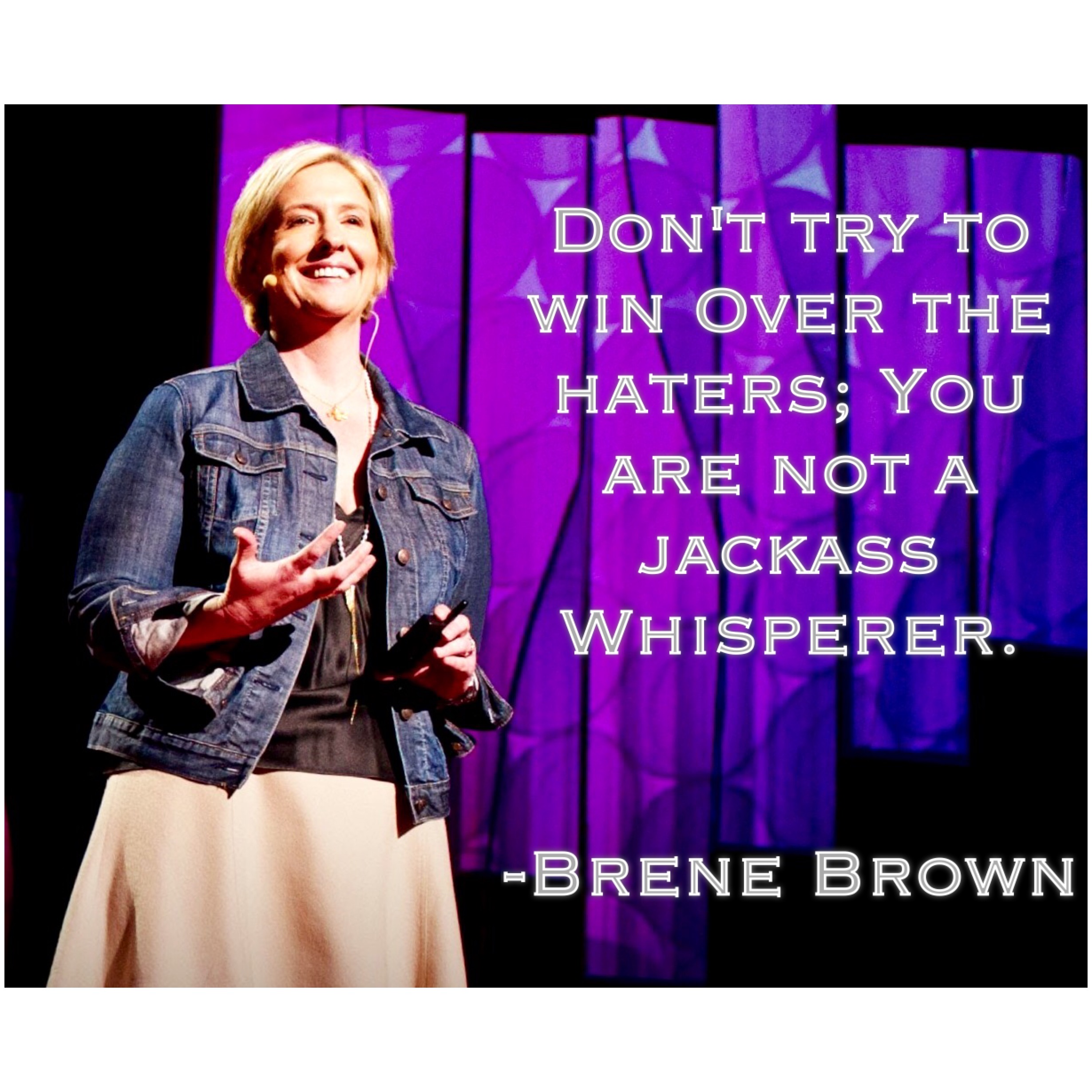
 America is overly negative. I definitely feel like America is turning (has turned?) into one big crab bucket. People tell me all the time “every place has problems” as a way of minimizing the problems in America or somehow trying to equate them with problems in other places. People tell me all the time, “not everyone can just leave” as a way of reasoning out why they can’t.
 When I first found out about the festival in March, I was excited to see it. When I found out it was the 17th annual one, I was blown away. Try as I might to keep up with real news and world events, I still had a solid perception that LGBTQ+ rights platforms were the domain of the West (and that America might actually be the farthest behind in that race) while the rest of the world lagged far behind in tackling this important civil rights issue. I saw things like Russia banning LGBTQ+ at the Olympics and China striking down gay marriage as signs that the East just wasn’t doing that much.
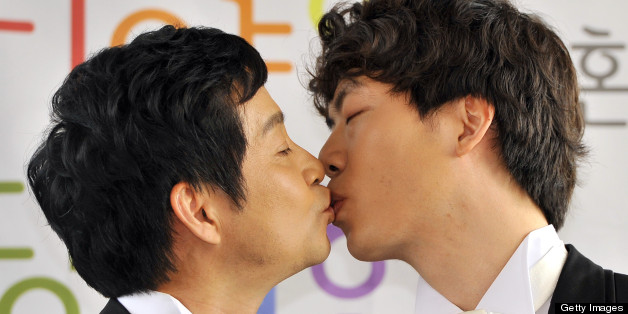 Korea just recently had, for the first time, two (famous) men
  Previous years’ festivals have seen large groups of protesters who have screamed at, spat at, taken pictures of, and occasionally engaged in greater displays of violence and harassment toward the festival goers. They’ve reportedly lay in the street to block the march, and even engaged in physical violence against the police to try to get at the Pride participants. Protesters have tried to shut out Pride by booking up the space, nearby spaces, and hotels to keep people out. This year, the conservative anti-gay Christians tried to petition the courts to shut down the festival on the basis of public indecency, but they were denied. However the Korean culture may feel about LGBTQ+ currently, at least the government respects everyone’s right to peaceful assembly, which is awesome. More than merely respecting it, the government issued stern warnings to the protesters to refrain from violence, because violent protests are illegal.
 My Busan Bestie and I headed to Seoul Friday after work, arriving after midnight and experiencing the very beginning of the Seoul public transportation headache. We managed to find the right bus, but missed our stop and got stuck on the wrong side of the bridge, which I guess technically people walk across, but it was the middle of the night and we had luggage, so we thought, oh hey, we’ll just take a taxi… nope. Scarcely any to be had and none for us. We finally found another bus and got back on the right side of the bridge but didn’t make it to our hotel for almost 2 hours after our train arrived. Why didn’t we take a taxi from the train station? Well, the line for real taxis was 30 people deep and no taxis were coming, the bus ride was only supposed to be 30 minutes, and as we found out later, there are plenty of fake-out taxis waiting to charge you an arm and a leg for a 15 minute drive.
 When we finally emerged from the station, we were greeted by a huge wall of police. I saw the protesters well before I saw the festival. They were set up across the street with a giant stage where they were having speeches, performances, and blasting Christian music in an attempt to drown out the Pride music. The streets around Seoul Plaza were lined with police standing shoulder to shoulder. When the light changed, they parted to allow us access to the crosswalk by which we entered the park. I have to admit, I was becoming anxious, and not in a good way. My heart was aflutter and my adrenaline was definitely going. I’m in no way anti-police. My sister is a police officer, and I have a lot of respect for the men and women who do a necessary and often thankless job. In the US, if I get pulled over or approached by an officer in public, it does not make me nervous. But something about seeing thousands of officers creating a human wall made me more than a little twitchy.
 Speaking of being free to be themselves, the festival also went out of it’s way to make the space especially safe. In the past, protesters used pictures of festival goers to publicly shame them, or get them fired, or even disowned by family. It’s no laughing matter to be Out here. Homosexuality can’t get you arrested, but there are no laws protecting employment yet. Many families feel it’s shameful and will disown children who come out. LGBTQ+ Koreans mostly have to pretend to be cis-het to get by. A few have managed to make enough money that they aren’t afraid to come out, like the filmmaker who petitioned for a marriage to his lover, like the small community of drag queens that simply make their living as performers. But the average person is hiding. This festival is a chance to be among people who accept and understand, but the attendees probably have to go back to homes and offices where they have to pretend again, and thus, having their pictures plastered on the internet can be scary and damaging.
 The festival made it clear that anyone taking pictures for anything other than strictly personal use (eg, keep it on your phone and never show it to anyone) must get a press pass and sign the agreement. I like sharing my pictures, so my first stop upon entering the park was to the press booth. I read a multi page contract that stated the rules for taking and sharing photos. It was heavy on permission. (yay consent!), and very strict about not posting anyone’s face you didn’t get permission from. I asked people all day, and handed out cards to the site so they really understood where the image was going. They also collected our IDs, so they can hold us accountable should someone take issue with my following the rules. I told my school where I was going that weekend because I don’t like lying, so I personally am not worried about it ‘getting back’ to my employer, but I know it’s a real issue for many Koreans and I’m glad the festival took such pains to protect them.

 After securing our press passes and verifying our reservations for the after party, we slowly started to explore the booths that lined the plaza. Unlike events in the US, there was very little corporate representation. And unlike events in Korea, there was a lot more than endlessly repetitive booths of food and trinkets. Most of the booths were operated by groups trying to raise awareness and understanding for some aspect of the LGBTQ+ community. There was a group called “Dignity for Soldiers”, another booth was from the first (and only) NPO that does outreach and support for at-risk LGBTQ+ youth in Korea. There were booths for just about every shade of the rainbow including Trans, Poly, Pan, Ace, Bi, BDSM… I think maybe the only sexual type not represented were Furries. But it’s ok, I found one in the parade later on.


 ady in rainbows and feathers who, when I asked if I could take a photo, told me she was with the US Embassy. It turned out there was a whole row of Embassy booths there, each country sending official representatives to support LGBTQ+ rights (and promote tourism, let’s be honest). And for just a few hours, I was really proud of my country for making this public, overt, international, diplomatic, and above all enthusiastic statement of support for LGBTQ+ and gentle pressure for Korea to catch up. (
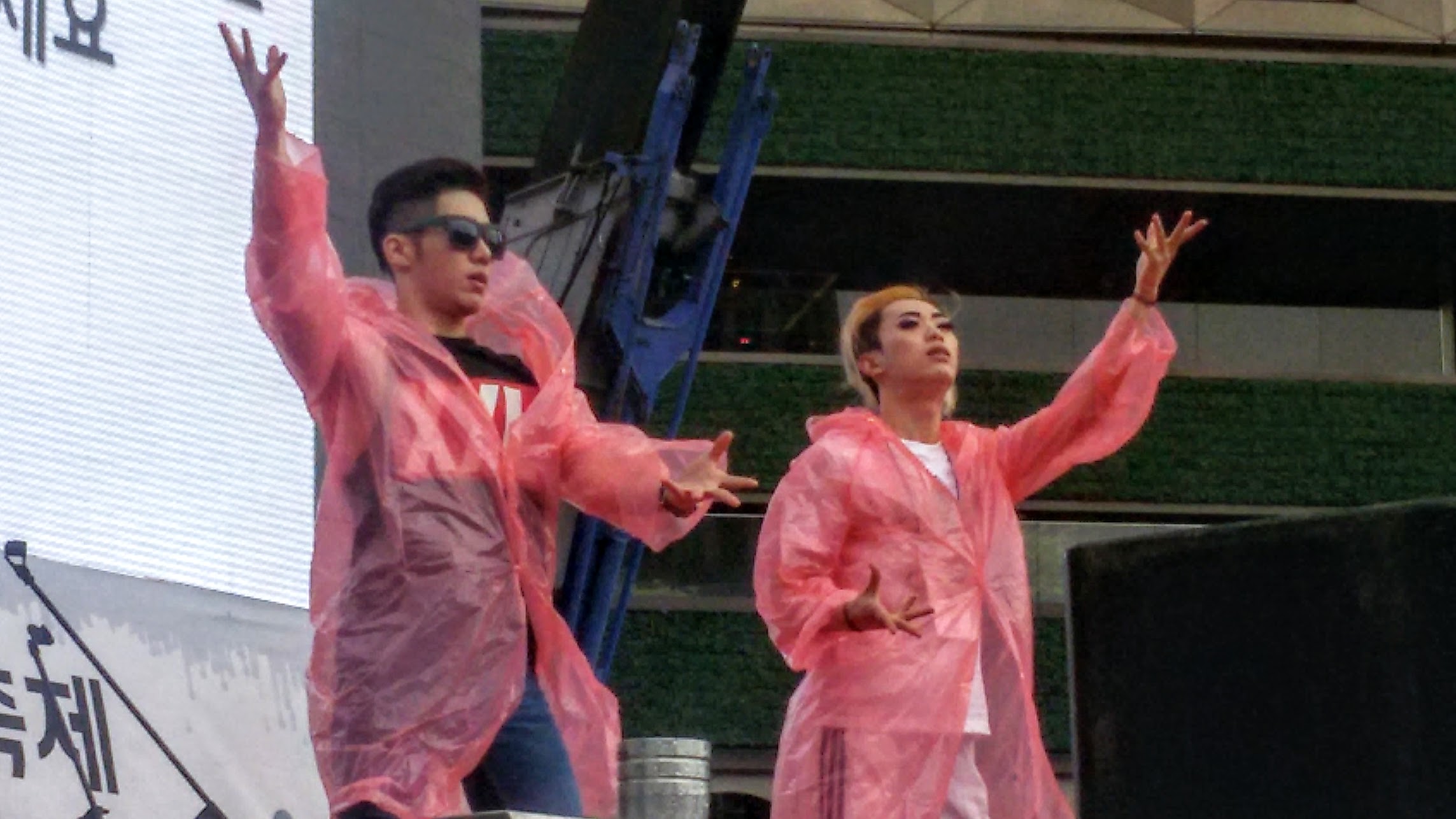 rain, they dancers just put on some plastic ponchos and kept right on dancing. I heard later that some of the protesters had apparently been praying for rain to ruin our day. I can only imagine their frustration when we didn’t let it dampen our spirits. If anything, it was a refreshing cool down during the summer heat!


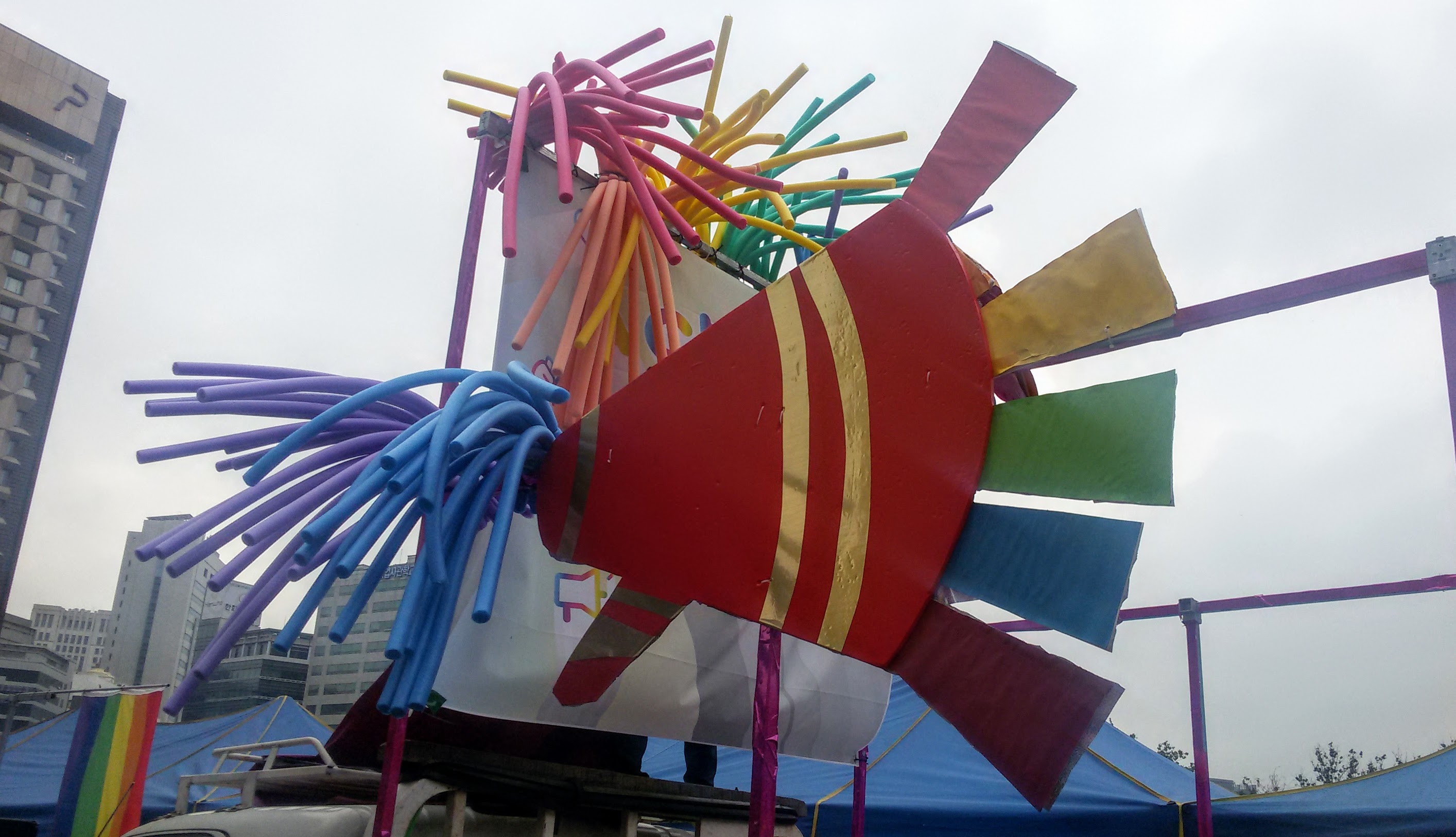 The “parade” did have some “floats”, but it was not what we tend to think of as parades these days. There were a few trucks out in front with banners and people in costume on display in the truck beds, but the majority of the affair was much more akin to a political march than a celebratory parade. The walking area had us leaving the plaza, going up several blocks and around a big loop before returning to the plaza. It was around 3km, so not a huge hike, but definitely enough to attract attention, which was the point after all. The trucks out front
  had a few decorations, mostly pink triangles and rainbows, and the people on the trucks were holding pro-love signs and dancing to encourage the crowd. There was nothing like a “parade float” in sight. Actually, that’s not totally true, the protesters had some pretty swanked up gear on the side of the road, but they didn’t march with us.


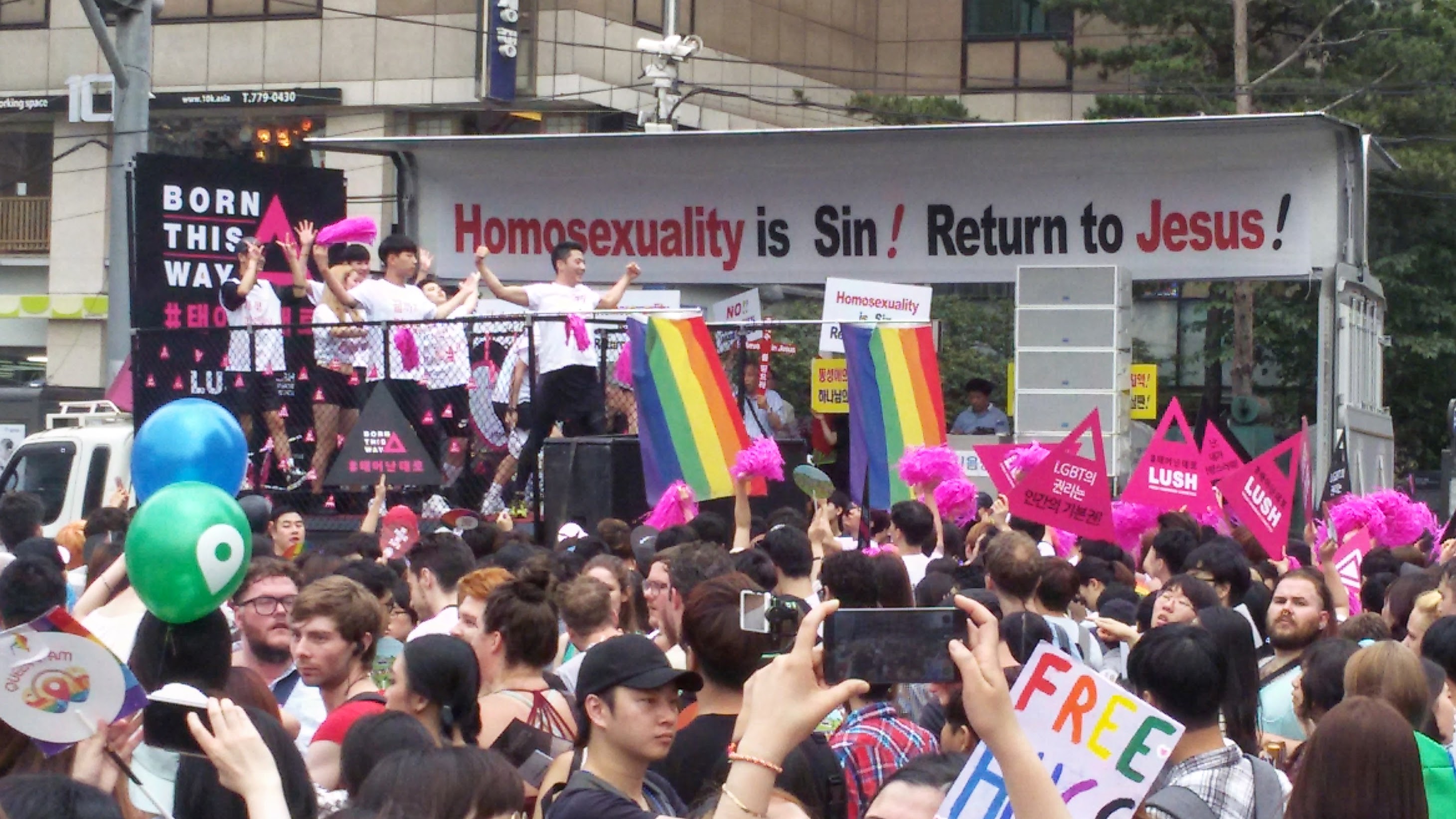 There were plenty of protesters right at the start of the route near the plaza, but as we went on, their number dwindled and the amount of supportive bystanders increased. I’m so incredibly proud of the marchers that day.
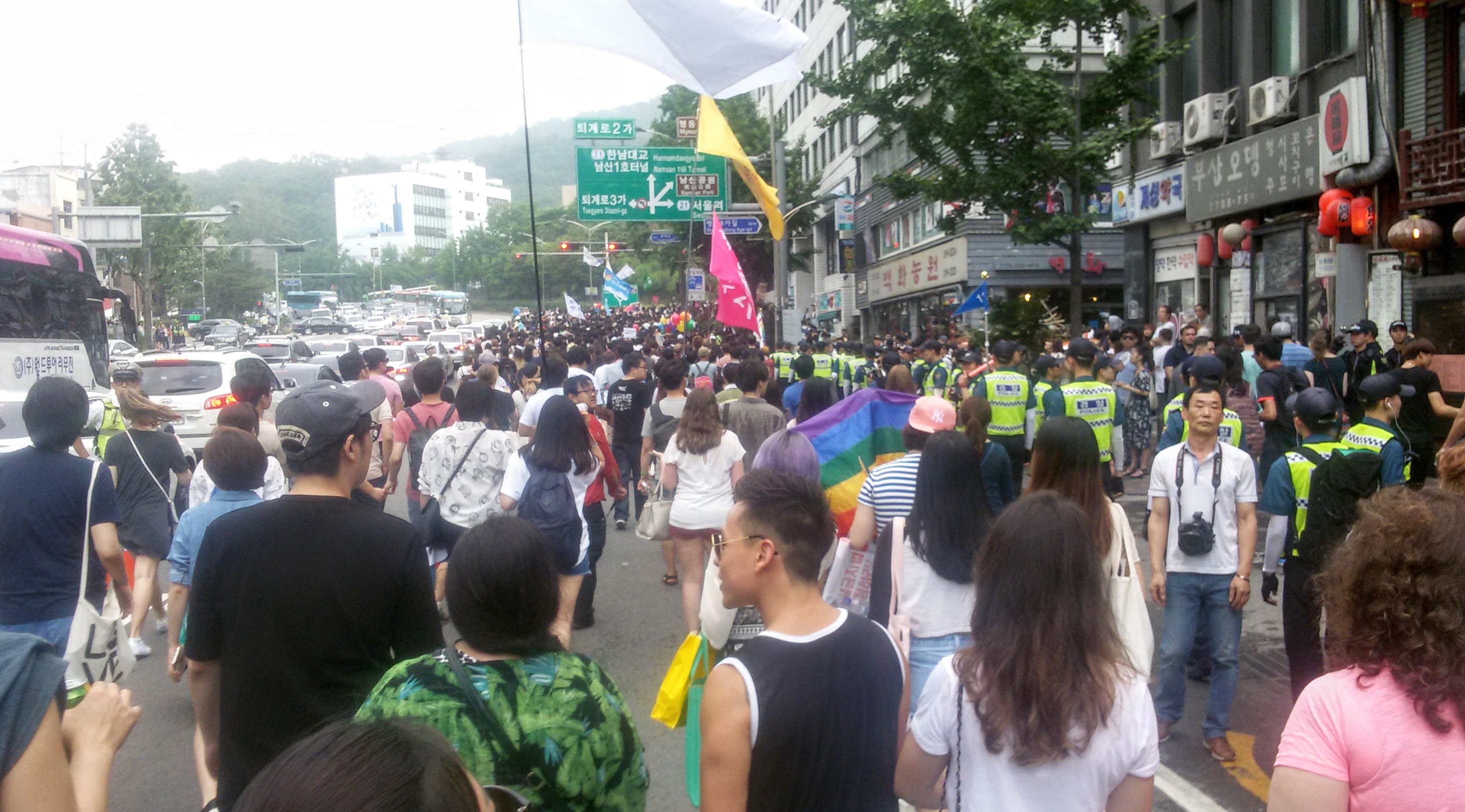 marchers yelled back “I love you”. We echoed their “hallelujah”s and smiled at them and blew them kisses. I’m personally a big fan of meeting hate with love, but it’s
  As the protesters fell away, we began to notice people on the sidewalk holding signs of support or waving and smiling and giving us thumbs up signs. Restaurant owners leaned out of their second and third story windows to wave down at us. A group at Starbucks had clearly planned ahead, because not only had they gotten seats right by the window, but they all held up rainbow signs reading “support equality”.
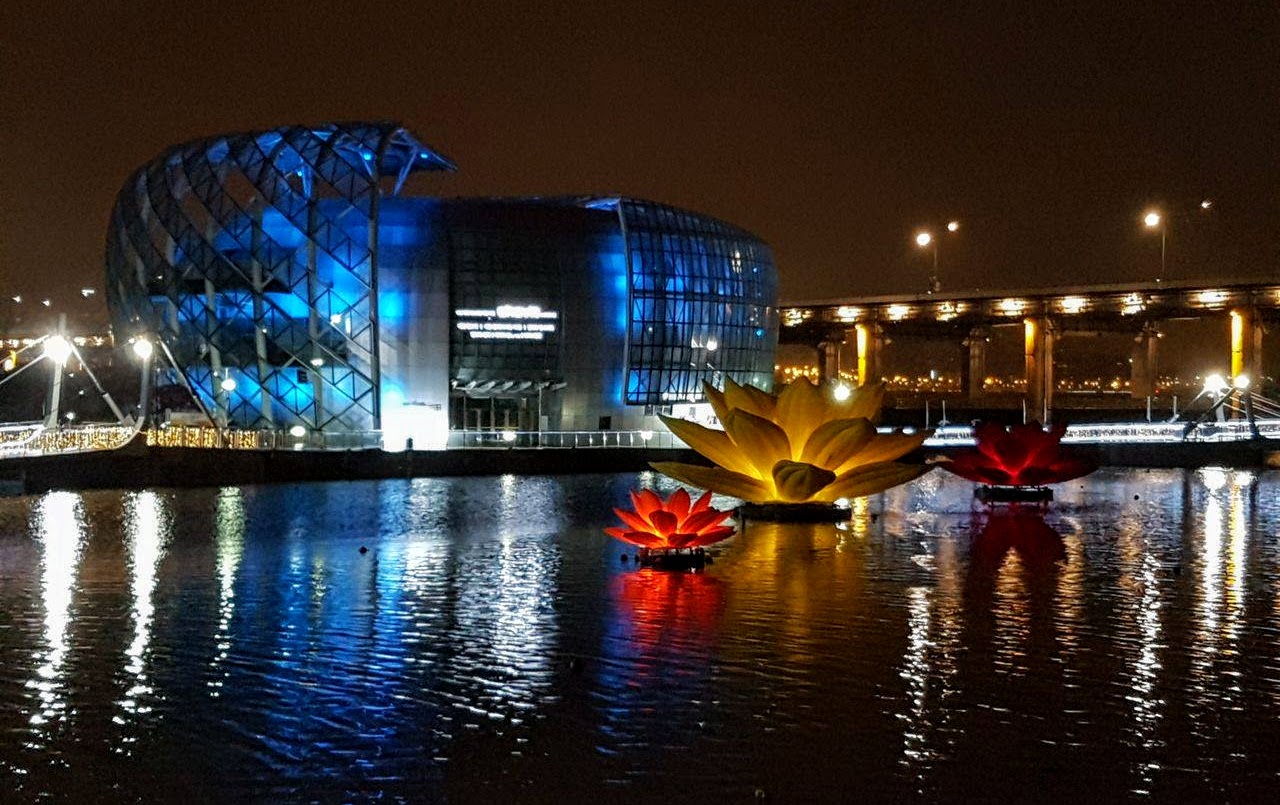 The location for the party was stunning: a man-made island in the river. The buildings were huge and fun to look at with sweeping shapes and color changing windows. The party itself was a little lackluster for my tastes, but the one great thing about it was that it was about 98% Koreans. I sound like a broken record, but a lot of events I’ve gone to have had a large expat attendance and that’s fine for fun fun festivals, but this is more than that, it’s a civil rights movement with some party trappings and there can’t be a movement if the people of the country aren’t behind it, so it made me really happy to see so many Koreans there being openly gay in a way they can’t be in their day to day lives yet.
 There were some vendors in the main hall selling snacks and t shirts. The VIP lounge was quite classy, but the line for the bar was insane. The mojitos were outstanding, however, and there was a classical quartet performance as well. The dance floor was roomy and the DJs were fun, but he dancing was very Korean. This meant that groups of people got up on the stage and danced the moves to K-pop songs while the audience/dance floor did their best to keep up with the same moves… that they all knew… to all the songs. This is an aspect of Korean culture I may just never get used to.
 That lasted until Monday morning when I opened my Facebook.
 This Monday was the same way. I read the news, several times. I even went to google to find an actual journalistic report or 20 and not just some Facebook posts. I got dressed, cooked breakfast, went to work. Explained to my co-teachers that I might be a bit emotional that day because there was a horrible mass shooting in my home country and proceeded to get ready to teach classes. I think I made it through 2 classes before I actually started crying. I didn’t know anyone involved. I’m somewhere beyond “colleagues” yet well inside of “lookie loos” on circle of tragedy in
  Gallivantrix