I Want to Learn the French Art of Living

Why are you going to France?

It was astonishing how many people asked a version of this question. While it is true that I often travel for a job, I’ve visited 5-6x as many countries for pleasure as I have for work, and until this spring when I decided to stop working in order to take my holidays at a nicer time of the year, no one asked me why. “Because I want to”, was the real answer, but it seemed to confuse people. Other times, I told people I was going for the food, but most who have never been to France simply can’t imagine the food here being that much different. I once counted myself among them, but after my first meal in France, I thought that I had died and gone to food heaven. 

Now that I’ve been in France for a couple of weeks, I know that what I was struggling to find the words to say was that I wanted to go to France to learn the French art of living. The French call this “Joie de Vivre” (Joy of Life), but it is perhaps better translated as “The Art of Living Joyfully”, and it’s a very deep rooted value in French culture. Joie de vivre isn’t about parties or euphoric joy, it’s finding happiness through living. Since arriving in Tours, I have been receiving a swift and enlightening crash course.

Musée des beaux-arts – “La Joie de vivre” (Victor Prouvé, 1904)

Practicing Kindness

I will say again that French people in general are more likely to be kind than rude (I’m sure they can be rude when called for, and that there are some percentage of rude people everywhere, but rudeness is not the default way of life). My first week in town, I had to run errands and do shopping while jet lagged and after my 3.5 hour French immersion class which left my brain feeling like a wet noodle. I could barely make comprehensive sentences in English (my native language) let alone in French. Despite my overt disorientation, every shopkeeper was kind and patient with me, most were even happy to use both French and English with me when I explained I was learning, giving me a chance to practice but also helping when the language was outside my skill.

I have not formally studied French since middle school. I came into this language program with a hodgepodge of random vocabulary and grammar that does not conform to standard learning levels in any way. I am not a quiet student, but I also felt that if I asked about everything I didn’t understand, I would derail the whole class. On my second day, I experienced an intense moment of frustration, and the teacher worked very hard to find out what was confusing me. I wanted to shut down and look it up later in private, but she worked it out with me in class. In the moment, I wasn’t happy to be the focus of so much time and attention, but in retrospect, it was a glorious act of kindness and support on her part. I’ve done the same for my own students, and it’s eye-opening to feel it from the other side.

I also had some disappointment in the apartment when I arrived –the washing machine was broken, and there was no Wi-Fi. In most other places I’ve lived, these kinds of problems were dismissed and I was left to handle them on my own or forced to nag the property manager (my last apartment in Korea was a nice exception, those people were great). I didn’t feel any animosity at the lack of amenities. I had of course emailed ahead of my flight to be sure that I would have access to a washing machine and Wi-Fi (among other things), but my response to the absence of promised resources while traveling abroad is less often anger and more often resignation. 

To my surprise and delight, the owner of the school arranged for me to get 120gb of data for the month so I would be able to do things like make video calls, watch YouTube, and write in my blog. His efforts were above and beyond what he needed to do to meet his obligations to me as a paying student. The landlady came the next day with a repair man to fix the washing machine, so it was working again before I had a full load of laundry. While we waited for the repairman to finish his work, she engaged me in conversation, despite not speaking any English, and was patient and kind with my poor French, repeating things more slowly or finding simpler phrasing. She told me about several beautiful tourist attractions around the area that I look forward to exploring.

It’s hard to believe, but even panhandlers on the street here are nicer. I don’t speak French well and in any case have fallen out of the habit of carrying cash. I have nothing to give them, but even after I tell them this, they smile and ask where I’m from, try to speak some English with me, and wish me a good day.

Receiving Kindness

This is all in stark contrast to my experience in Sénégal where I was promised support and given none, treated brusquely by shopkeepers, and viewed as a walking wallet by most. Even in the US, my job had offered support and fallen short, resulting in an overabundance of stress, and my co-workers (who are nice people) still took a couple months to really warm up to me.

My knee-jerk response to this level of kindness and support was shock. For the first several days, every time it happened, I gawped like an idiot, stunned for a moment before a part of my mind went, “it’s ok, relax, trust, let yourself be supported by your fellow humans not because of prior relationships, not because of obligations, but merely because we are humans together.”

Photo Credit:  www.semtrio.com/

It wasn’t until later when I went to write about my experiences that I realized how much I craved this kind of human connection. I love my friends and family, I enjoy forming relationships with my coworkers, but there’s something deeply healing in looking up from our bubbles and saying “hello fellow human, this world is tough enough, so let’s do our best to make it softer for each other while we’re here”.

A Culture of Joyfulness

By the middle of my second week, it was apparent that the effect of joie de vivre is exponential. When everyone is focused on enjoying the little things, it’s easy to be happy and kind which makes everyone happier and kinder. Joie de vivre isn’t at its best when experienced in isolation, it’s something that needs a majority of people to buy into in order to reach its full potential. I can feel it soaking into me, too. I don’t need or want to run around looking for one exiting experience after another because the everyday life here is good. Not ecstatic, or overflowing with awesome, just persistently good.

The other day I gave my seat on the tram to a mother with two younger girls. I enjoyed watching them interact on the trip. The girls were talking about my blue hair, and when they got restless, the mom played “find that body part” (where’s your nose? touch your ears!, etc.) which was also fun for me because I’m not the best at French vocabulary. I was able to relax and enjoy the experience. It made me smile to see their small delights. No one was giving the mom dirty looks for her kids being kids, and the mom didn’t have to be self-conscious about playing with her kids on public transit.

Joy and Other Feelings

Joie de vivre could be compared to the practice of mindfulness, in that one of the goals is to be present in the present. Lingering over a meal, sharing an afternoon with friends, and watching kids on the tram are all wonderful examples of the everyday, but international vacations and once in a lifetime experiences are not excluded. The definition of joie de vivre isn’t what you are doing, but how you are doing it: a lunch without an agenda, a hangout with friends for no reason, an international vacation without the stress of focusing on what could go wrong, or what is waiting for you when you get back.
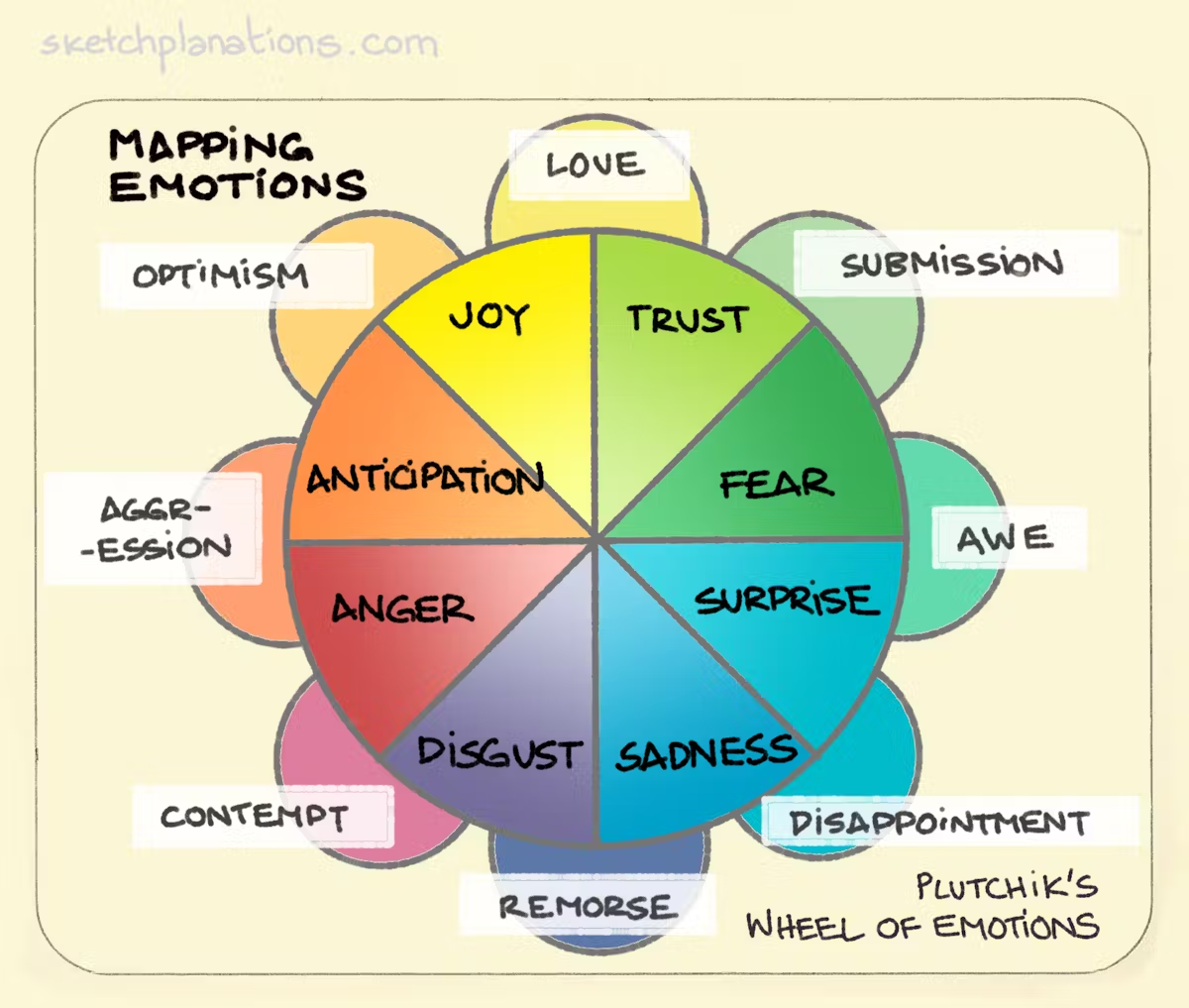
Joie de vivre also isn’t about being happy all the time. Obviously the French have “negative feelings”, I mean, have you read Sartre? But a range of feelings is the normal human experience. The impression I get is that “pretty good” is the baseline here, and feelings of more extreme happiness, sadness, anger, boredom etc. are all coming from and returning to that. In contrast, when I look at people in the US and a few other places I’ve lived, I see them defaulting to a baseline of “meh” (numbness or boredom) or even a baseline of anxiety and sadness. Image Credit: https://sketchplanations.com

Regardless of what culture they are from, people are capable of feeling a full range of emotions, and a normal human will experience most of them in a lifetime, but living in a culture that forwardly values kindness and everyday joy makes a difference in everyone’s quality of life.

Can Americans Live Joyfully?

My initial answer to the question “Why are you going to France?” was often greeted with the suspicion that anyone going to live in a foreign country and not work for a couple of months just to enjoy things was dangerously decadent. This happened so often that I began to become suspicious of myself. Was I leaving my students and co-workers in the lurch? Would they be ok without me? Could I really justify the expense, not only of the vacation but of the time spent not working? The regular messaging of the culture around me made it harder and harder to be sure I was making the right choice.

There is a tendency in (but not exclusive to) American culture to view any action that is not productive (making money) as frivolous (selfish, useless, a drain). For me, joie de vivre is more likely to involve things that make you happy but don’t make money, nor lead to making money in the future. These are things that you do just because you like them (and that don’t hurt anyone else). I rate this kind of joy as sitting from tier 3-5 of the Maslow’s hierarchy. It’s hard to go after it when you don’t have basic needs met, but I would argue that it’s integral to love and belonging, self-esteem, and self-actualization.

When I started telling people instead that I was going to France to study French, they seemed much more comfortable. Once there was a cultivation of skill involved, it wasn’t just frivolous happiness, it was productive, and that was more socially acceptable. One day as I was hand-wringing about whether I needed to justify my trip to France, someone said to me, “Why are you beating yourself up about this? You deserve this. You can do this without going broke or wrecking your life, so go enjoy it.” It was an extremely succinct account of the two most important obstacles to frivolous (non-monetizable) happiness:  Can you afford this? Have you earned this?

Can you afford this?

Credit: FreePix.uk

It’s a valid question, but I don’t think it’s the only hurdle to frivolous joy. There are many people who do not have travel money, or have other challenges to travel such as health and children, and I’m not suggesting (as I have seen other travel bloggers do) that one can simply manifest global travel with enough bootstraps. Maybe they can’t afford a trip to Paris, but what types of joie de vivre can they afford but are held back from doing because they feel guilty about it?

During my experiences in developing countries where almost no one has enough money, the social values writ large tend to be more focused on “slow living” and finding joy in daily experiences such as community, shared meals, nature, children, and expressing creativity – things that don’t cost much if any money. While people in these cultures may feel guilt about spending money on themselves instead of their family or community, they don’t seem to have any trouble enjoying themselves when it’s not a question of money. Even in Japan and Korea, wealthy countries famous for overworking, I still noticed people placing importance on these types of low cost joys.

Have you earned this?

American culture is embedded with an exchange rate of work for pleasure. You must burn x number of calories to “earn” dessert. You must work x hours to “earn” a break. I talked to people in my income bracket and above who can absolutely afford to travel, but felt that they could never possibly, because they haven’t hit the ever-shifting goal post of “enough work” to earn the pleasure.

The earning in question isn’t financial; it’s the unspoken moral economy. Many Americans have internalized the idea that we don’t really deserve to feel good (at least until we’ve suffered enough to “earn it”, which may mean never). But because we are human, we sneak around with minor infractions we call guilty pleasures while lacking the ability to fully feel the delight these activities should bring because we are too busy feeling guilty and wondering how we’ll be judged.

What will people think? If I eat a second slice of cake? If I skip mowing the lawn to have a nap in the afternoon sun? If I take my kids out of school for a day to drive up to the mountains and splash around in a glacial river? If I leave my spouse to feed themself and the kids and they end up eating Cheerios and ice cream while I have a nice dinner with my friends? If I leave the office when there’s a big project (and there’s always a big project) and my co-workers all have to pick up my slack while I’m tasting wine in the Loire Valley?

Look at the horrible social media backlash that middle and lower income people get for having nice things deemed by society to be “too luxurious”. When they use food stamps to buy steaks instead of rice and beans, or dare to have a new phone, a nice laptop, play video games, drink frilly coffee, eat avocado toast or anything else that might make life bearable, the internet loves to pile on. Grind culture tells us that the one true path to financial success is to have nothing that brings joy, and only to work as much as possible until you can earn your way to a house, a car, and a (maybe once yearly) family vacation to a theme park.

Let me be clear, none of these examples are likely to result in anything bad actually happening, but the real world consequences are not reflected in the imaginary consequences of people who are held back by these thoughts. The extreme version of this is called “catastrophizing” and people who suffer from this type of anxiety (as you might guess) imagine catastrophic results of actions they perceive as risky. The less extreme version is a bunch of people who don’t critically examine what is likely to happen, they just feel the guilt and shame as a gut-level reaction.

A New Way of Thinking

I don’t take these internalized feelings of guilt and shame lightly. They are deeply ingrained in us from childhood, and can feel like an irrefutable pillar of reality. But they need to go. Maybe in the way black mold or an insidious termite infestation needs to go, or maybe in the way a cavity needs to go: knock down a wall, drill a hole, excavate the rot and repair the damage. It isn’t something a person can just do –wake up one day suddenly be free of the pressure of guilt induced by unproductive pleasure. However, I suggest that everyone reading this start the long and difficult process of releasing the weight of these fears and finding the freedom to do things just for fun. 

“[Joie de vivre is] revolutionary because for work-driven, vacation-and-long-lunch deprived Americans, it almost requires brain surgery. Why? Because to make that lunch a moment with a French touch it has to be just for fun, no rush, no agenda. An American [said] that her French women friends, who are physicians, ‘work long hours but find time to meet their friends, take vacations, and indulge in the life part of life, which is as important or perhaps more important to them than work.'”
— Huffington Post, “What is joie de vivre, and why are the French so good at it?”

This isn’t “run away with the circus” advice. I do not advocate joy at the expense of security or community. We still need to be able to answer the question “Can I afford it” with “yes”. Please do not go into debt chasing a consumerism driven idea of happiness (been there, done that, regretted my financial choices). It’s important to balance joy and responsibility, but until we learn what things are truly our responsibilities and what things are the weight of other’s expectations and demands that we have taken on unnecessarily, we won’t be able to say “yes” when asking “Do I deserve it?”

Once we are able to accept that we deserve to enjoy things without having to earn the moral currency to do so, there is a different way of life ahead. 

They Say You Can Never Go Home

“When I’m talking and someone else is listening, I am invariably left with the uneasy suspicion that I’ve made myself quite tiresome. If one is really bursting with things to say and has no one to say them to, perhaps the only recourse is to go forth and accomplish earth-shattering deeds, so that when the time comes for an autobiography, one need no longer be concerned that no one will take any notice. This is a childish fantasy, of course, of which I have been disabused as I have slowly come to realize that I have scant hope of becoming a celebrated public figure worthy of a best-selling autobiography. Better, then, to write a little about myself and let off some steam, so that I don’t become an insufferable chatterbox when I get old.”

Written on Water by Eileen Chang,  Chinese-born American essayist, novelist, and screenwriter
— written in Japanese occupied Shanghai and first published in 1944.

My last post was more than 8 months ago as I left Senegal to return to the US. I always seem to have a hard time writing when I’m in the US because it doesn’t feel like “travel” or “adventure” to me the way being in other countries does. When I return to Seattle, I focus on enjoying my time with friends and family, having quiet daily experiences of shared meals or parallel play, and even when blog-worthy things do happen, the stories feature people who trust me not to share their private lives online. So, I end up not writing at all.

When I made my plans to return to America in 2023 I told myself and others that I would stay for at least 6 months and not more than 12. I looked forward to it. I felt that I had been away for so long that a quick pass wasn’t going to cut it. I wanted to “water my roots”. I wanted to bask in the everyday mundanities of my friends’ lives, to see the seasons change, to celebrate the holidays of my childhood. Being a long term expat means never giving up on the idea that our country of birth is our true home, while also never quite being as comfortable there as once were.

I wanted to work in the US, not only for income, but also to give my days structure. COVID era Korea and the schedule nightmare of Senegal left me for years in a state of temporal blur where days ran together and there never seemed to be a good enough reason to do anything. During my sojourn in the US, I neither wanted nor needed to work full time. My goal was to soak up my community, not to sink into a daily grind. A part time job would keep me from decimating my savings, and give me a regular routine, but leave me with plenty of free time to enjoy being home.

In reality, I accepted a full-time position teaching an English immersion course for immigrants and refugees. The position came with a lot of challenges, but possibly more rewards. Being back in a physical classroom with a regular schedule and the ability to form a relationship with my students was so good. Learning the bureaucracy of the WA state college system… less so. (drawing of me teaching courtesy of a student’s daughter. I was wearing a floral patterned mask, not speaking with a mouthful of marbles, lol)

Meanwhile, when it came to housing, I knew I didn’t want to rent my own apartment since that would mean committing to a full year lease, and likely cost 1500$+ a month. Therefore, I arranged to move into the spare bedroom of a former roommate. After just 3 months of living together, it became clear that whatever had changed for us since our last cohabitation made a reprise totally impossible. I moved in with some other friends of mine who agreed to let me stay at least through my current work commitments. (pic of the backyard below) That beautiful home with a healthy family and 2 bright and loving kids was an absolute balm to my soul after the back to back combo of the pandemic isolation and the Senegal experience.

Nonetheless, it was always destined to be a short term solution, and I had to start seriously considering my options: renew my contract at this reasonably good job and work on finding a place of my own in the USA or bounce?

Reverse Culture Shock

Coming back to a life in the USA isn’t as simple as it sounds, and however much I may love my home and my community, there is no going backward when it comes to the march of time which wreaks changes in both society and personal growth. When you travel, you leave your familiar surroundings and go to a place where you are shaped by different forces and grow into a new version of yourself. While you are gone, the place you left behind also continues to evolve, shaped by local and world events, so when you return, you no longer fit. It is uncomfortable, and often more unnerving than the experience of not fitting in with a foreign culture. Abroad, you know you are the alien, but at home a part of your brain is constantly telling you that you are SUPPPOSED to fit here. It’s a dysmorphia of the whole sense of self.

But Kaine, you’ve been back to America since you left in 2014, you saw the changes as they happened! Yes and no. I saw America during my vacations the same way any tourist might see a country they visit for only a few weeks. I focused on excursions and experiences, the only real difference was that I made excursions of visiting friends and family rather than visiting tourist attractions. I planned sailing days and camping trips and cookouts. I went to house parties and dragged people out to karaoke nights. I didn’t pay a lot of attention to the cost of groceries or what was happening in politics. For those few weeks at a time, America wasn’t my “home” it was my holiday, and it wasn’t until I was back in my home abroad that I returned to viewing the US economy and politics through the lens of the internet.

This is an excellent article about the experiences of long term expats returning home, and honestly reading it made me feel both seen and called out.

“Americans often develop new attitudes, values and perceptions as a result of their travels. These can often cause stress on reentry.

  • I see America through a sharper lens, both its strengths and weaknesses. I no longer take this country for granted and I really resent unbalanced criticism by Americans who haven’t experienced the rest of the world.
  • I see the validity of at least one other culture. That makes me realize that the American way is not always “right” or “best.” I am impatient with people who criticize other countries and blindly accept everything American causing them to never question anything.
  • I have an unclear concept of home now.
  • I place more value on relationships than other Americans seem to. People here are too busy for one another.
  • Everyone in America is always so stressed and frantic. They never relax. I feel like I can’t relate to others

The Economy

It’s normal to become critical during the second phase of culture shock. I’ve published about these effects before, and the article above is great for explaining how it manifests in reverse culture shock. Nonetheless, even while I was still in the first (honeymoon) phase during August & September, I started feeling the negative impact of some big changes in the US.

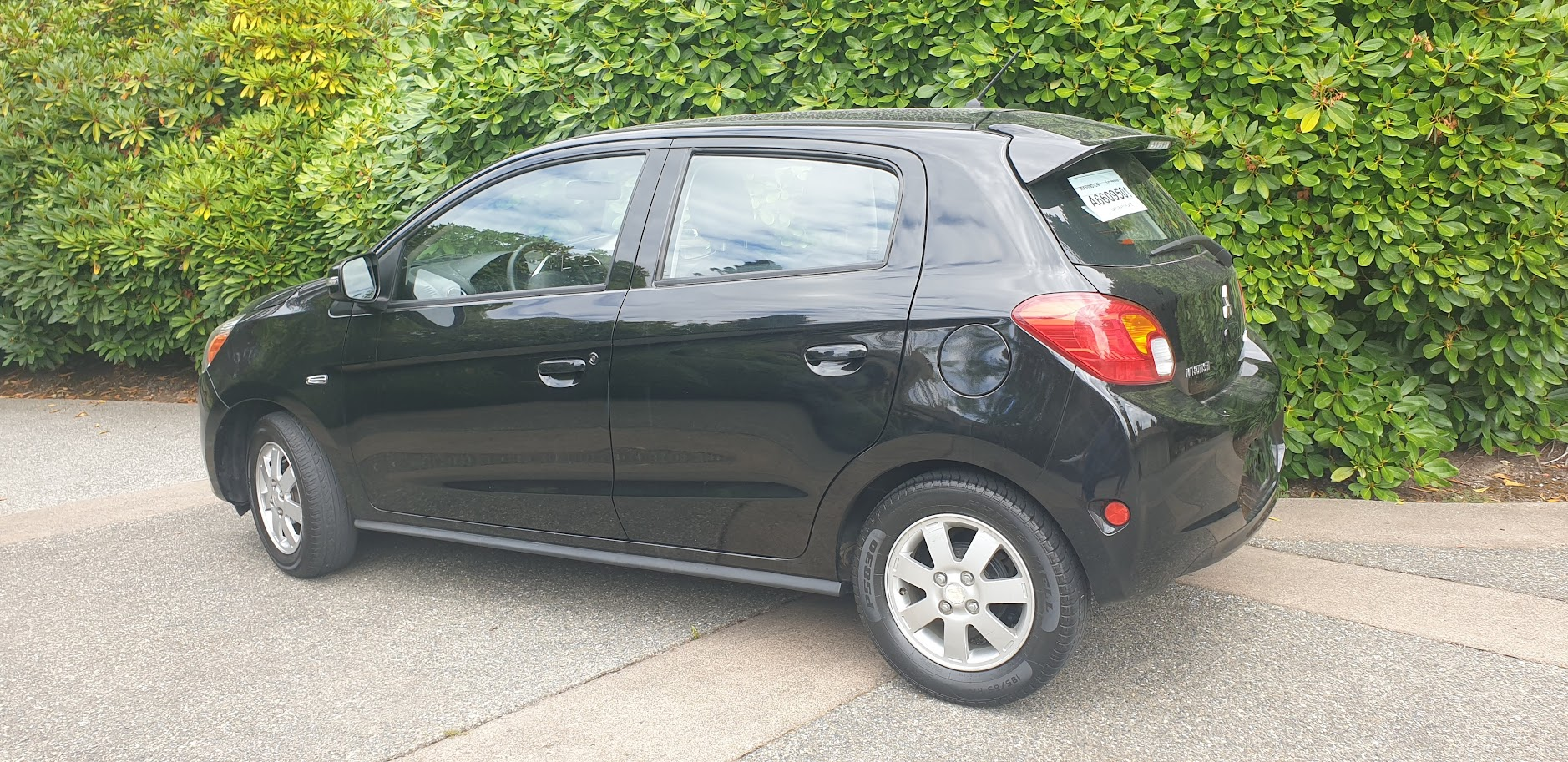
I needed a car because it’s almost impossible to navigate American cities via public transit, but I was absolutely shocked at the prices, even on used cars! In 2015 when I was in the US for a few months doing the paperwork for my Korean work visa, I bought a car for $1,750, drove it while I was in country, then sold it for the purchase price when I left. In late 2023, I couldn’t find a used car for less than about 7k$, and those were very sketchy.

My plan to buy a clunker for under 3k and sell it on to a poor college student went up in smoke. I ended up buying a used car from a dealership and hoping that the good gas mileage makes up for the loss in sticker price when I sell it back.

Then there are the grocery stores. I can’t say exactly why, but sometime after I moved to Korea in 2016, American grocery stores became increasingly overwhelming. I can’t even say it’s the size, because I have successfully gone to large box stores like Home Plus and Carrefour in other countries and not felt the pressure that American stores give me. I remember walking into a Safeway in 2019 and just staring at the wall of ice cream for a full 5 minutes, totally flummoxed by the array of nearly identical products. 

When WA grocery stores became liquor sellers (2012), they had to figure out how to add new products without removing existing ones. The eventual solution was that many stores made the aisles smaller so they could incorporate more shelf space in the same square footage. The aisles got narrower, but stores didn’t replace their shopping carts with smaller versions. By 2023, the sensory overwhelm had gone from merely being too many choices and no way to choose, to a feeling of being totally lost and crowded in by impatient and frustrated shoppers in narrow aisles with giant carts which made passing an Olympic sport.

The products and packaging were unfamiliar, I struggled to assess healthy and frugal choices. Products that I did know had somehow doubled in price, overtaking average inflation at light-speed. In 2008, a person could buy a whole roasted chicken for $5, eat it for several meals AND make soup. An organic bird would be $7-9. Now the conventional chickens are $10+ and the organic/farm raised $12-18. In the end, I found that the only store which didn’t make me want to run away screaming was Trader Joe’s, and I did 99% of my shopping there.

Not only grocery stores, but the nature of in-person shopping had changed across the board. In-store service and options had become extremely limited. Once 24 hour shops had become practically European in their hours, and stores were chronically understocked and underserviced. Several times when I popped into a shop to pick up a small item or to look for something I could touch, measure, handle, or try on before buying, I was told plainly by the clerk that it was out of stock and I should look on Amazon.

Eating out was another huge sticker shock. My favorite Seattle staple food is pho (the Vietnamese noodle soup). At my graduation lunch in 2007, we could get a big filling bowl of rich meaty pho for about $5. Now a bowl of pho is $12-15. I went to a couple of what I would call mid-range independent (not chain) restaurants and dropped $80-100 on a single meal (after taxes and tip). Many places I lived and visited abroad, you could get a high-end meal out for between $25-40 (inclusive of taxes and service).

mahalie from International District, Seattle, Washington, CC BY-SA 2.0 https://creativecommons.org/licenses/by-sa/2.0, via Wikimedia Commons

The Food

Food remained a contentious issue for me the whole time I was in the US. In the past, I have had food intolerances which contributed to chronic inflammation, pain and fatigue. I stopped eating dairy and wheat back in the early 2000s and it made a huge difference. Starting in 2008, I experimented with eating wheat and dairy in other countries as compared to in the US. Country after country, as long as I avoided imported US foods, I could eat what I liked and feel fine. However, in the US, it seemed my body only tolerated organic wheat & dairy products, and conventional ones still resulted in inflammation (a general flu-like bleh feeling all over). I thought as long as I managed my bread and milk, food in the US would be easy enough. My body laughs at me when I think like this.

It has been widely discussed that the quality of food in the US is very different from that of other countries. There are hundreds of articles about pesticides, hormones, preservatives, and processing chemicals out there you can read, and I’m not going to recap that here other than to say it is a well documented issue that food in the USA is problematic and contributing to many health problems for her citizens. (pic below, my first and only experience with Chicago deep-dish pizza)

After a couple of weeks of eating novelty junk treats and processed frozen meals, my body protested loud and clear. I had to be pickier and pickier about what I would eat and eventually, food that was too sugary or over-processed simply stopped tasting like food. I remember taking a slice of a cake that looked so delightful, then on my first mouthful wondering how it tasted so awful. The cake was sugary and vaguely spongy, while the frosting tasted like it was actually made of melted plastic. The people around me seemed to enjoy it. I visited a friend’s house where they made a meal I would have made myself 10 years ago and been happy with. I took a small amount to be polite, but again, my body made sure I knew that what I was eating had only a passing resemblance to food. 

Not only did I feel constantly disgusted by the majority of US food, I felt bad about complaining or even abstaining when others around me were eating, enjoying, and offering to share. Sharing food is one of the most fundamental social bonding activities humans can engage in, and my friends, many of whom are still in financial struggles, wanted to share their food with me. How could I tell them that my body didn’t think what they were eating was food? (pic below, a Thanksgiving “turkey” made of Baskin Robbins ice cream and frosting, just one example of the absurd food-options that abound in the USA)

And, despite my caution around eating, and reintroducing an exercise regimen, I GAINED weight in the US. It is my belief that the food itself was the bigger part of the problem, but I also tend to overindulge in sugar when I am stressed, a condition that pervades the life of any American trying to achieve work-life balance. I don’t know what it would really take for me to be food-healthy in the US long term, but I expect it would require a LOT more work and money than would be required to eat a basically healthy diet almost anywhere else.

The People

I had to confront the feeling of failing to fit not just in the larger cultural sense, but also among my own friend/chosen family community. I changed and grew, and so did they. Most of them for the better, thankfully, but in all cases they weren’t quite sure where to put me in their lives when I was in town for months rather than weeks. When I was only available for 12 days, it made sense for people to rearrange their schedules for a unique event, so vacations were filled with revelry and reunion. However, I feared that living there would make my presence mundane, banal, and that my friends would think there would be time later, so they wouldn’t make time now. Thankfully, that fear did not come to pass. Although some people I saw only once or not at all during the 8 month stay, many others made time for me or invited me to planned events at least once a week. I treasure my community.

“General Challenges

  • People at home aren’t as interested in hearing about your foreign experience as you are in telling them about it . 
  • You aren’t as interested in hearing about what has happened at home as they are in telling you about it. 
  • You miss the tight-knit foreign affairs community you were a part of.

I have learned over the years that people stuck in one country (especially Americans) have strong feelings about listening to my adventures. Some of them love it, they see me as their own personal documentary, and it’s delightful. Others are busy comparing their lives to mine and dislike hearing about what I’m doing abroad. I try to respect everyone’s wishes in this, but it can be hard since 95% of the last 10 years of my life has been abroad and I can’t tell stories about my life experiences without involving travel.

Whichever way it goes, it’s massively different from talking to other expats. I had almost forgotten how much I loved swapping stories among the expat community when I ran into another long-term expat at a party in early April. I realized that it was the first time since coming back to the US that I felt comfortable talking about my life abroad for more than a few minutes or in any detail.

It felt like I was holding my breath around my friends and family. I talked about my American experiences with them all the time, shopping, work, things happening at the home I lived in or with other friends’ lives, but I minimized my expat-self, trying to fit into the shape that was left for me. I don’t think my friends consciously asked me to do this, and many would be shocked or saddened to learn that I had been suppressing a part of myself for their comfort. I know they love me and I chose to change the way I interacted with them to make them comfortable because I love them. Call it masking, call it code switching — choosing to focus on a different part of my life and activities when I’m with different people is normal. However, it has made me realize that I can’t live with ONLY this kind of interaction. I need the expat community too, which makes long term residence in the US challenging.

The other difference I noticed in people was more general, society at large. I don’t mean the blatantly obvious “us vs them” divide in America that you cannot help but see if you follow any news at all, but a quieter and less politically motivated change. The shared trauma of COVID changed everyone in some way. I cannot speak for the whole country, but in and around Seattle, people were more closed off, less trusting, less willing to be open.

It’s part of my mental health journey to notice nice things and to make the world around me better than I found it, so I trained myself in the habit of talking to strangers, offering compliments and help whenever I can. I made a game of my daily commute to see how many drivers I could be nice to each day as a way of fending off road rage. (strangely, the commute was one aspect of American life that didn’t bother me) Yet I found that often my overtures of friendliness toward strangers elicited a mixture of confusion and even suspicion before giving way to acceptance and relief.

I am far from the first or only person to notice this trend. A simple Google search will reveal many think pieces searching for reasons why Americans are becoming less social and more isolated, most stressing the dangers for our collective mental and physical health.

My friends who had regularly exchanged hosting dinner and game nights had stopped during lock-down and never re-started. The feeling I got was that the inertia of staying home was so strong that going out required a more special occasion than “dinner and board games”. I also tried for a little while to make some new friends or even (gasp) date. I met people who seemed nice, who I was happy to spend time with and get to know, but they had no ambition to do anything different in their lives. They wanted a new friend or a partner who would fit seamlessly into their existing lifestyles without necessitating a change of habits or hobbies.

People know they crave connections, but seem unwilling or unable to sacrifice even the tiniest bit of safety and comfort for the privilege. People who have been isolated for long periods of time can absolutely suffer increased social anxiety. When I floated this theory past an expat friend of mine who has been back in the US about 18 months longer than me, she said it wasn’t exactly social anxiety, but that everyone felt “tight”, and I understood exactly what she meant. I sympathize with how difficult and uncomfortable they must feel, but it’s both sad and horrible to see.

The American Dream?

Americans are also feeling a lot of financial anxiety. Almost all my coworkers were working overtime, some as much as double time (two full time class loads!) and felt completely unable to stop, either from the weight of their financial obligations (high cost of living) or from a fear that setting any boundaries for work-life balance would cost their job. I had coworkers who were astonished (and envious) that I simply didn’t read work emails outside the office. Others who fretted and stressed that their quarterly contracts might not be renewed despite the massive teacher shortage and high demand. The insecurity was so strong that even though everyone I talked to had noticed certain problems, no one wanted to speak up about them. (Did I? Yes, but it was neither easy nor consequence free. Still glad I did it.)

It was also hard for me to reconcile the gulf between online calls for social justice with the fear people experienced of getting personally involved. Having watched the struggle for civil rights and equity in the US take place almost entirely online for years, it had seemed to me like more people were getting involved, but after living in the US for a few months, I am concerned that the involvement is performative. People can safely speak out online and issue company memos to make themselves feel involved (or if you’re more pessimistic, to make themselves look better to others), yet when it comes to real practical solutions for enacting these policies, no one seems to want to take action. The college that claimed the top ranking for social justice, equity, and accommodation in the region had completely failed its non-English speaking students in this regard and when it was pointed out, they simply changed the subject. Only one person in the whole administration ever actually admitted to me they were failing in that area, and they still didn’t know what can be done about it.

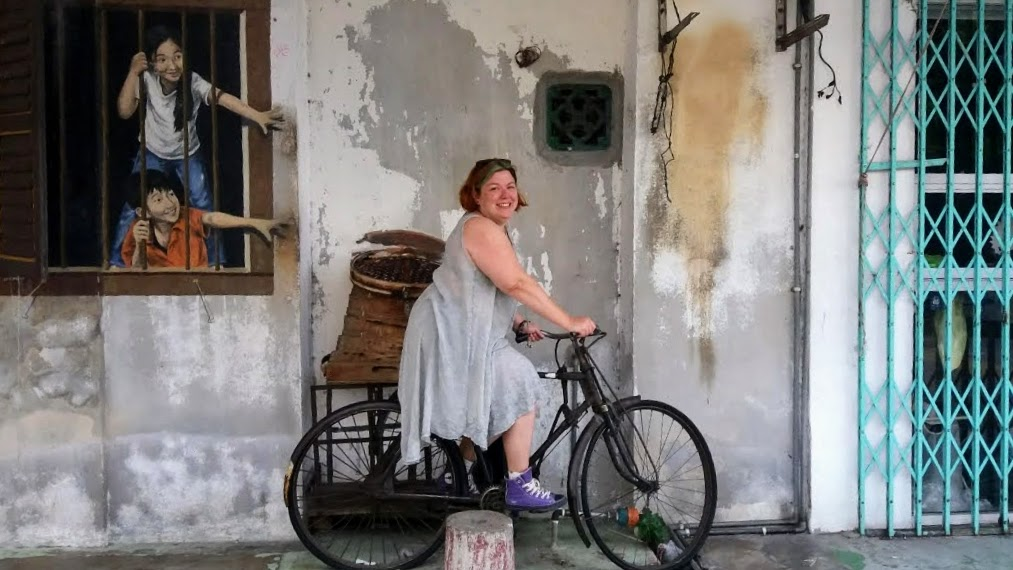
To me, the fear of getting involved in social issues seems like an extension of the same fear that is preventing people from forming deeper social connections, and that fear feels to me like the fear of a child who has skinned a knee falling off their bicycle and doesn’t want to ever ride again. “No, no, walking or being driven is safe and comfortable, the bike is too risky, too painful, I don’t really need it anyway.” Yet, we tell our children to get back on the bike because we know that the better part of life isn’t about falling, it’s about getting back up, and that while it may not be strictly necessary for a safe and comfortable life, the joy of riding a bike with the wind in your hair, and the feeling of freedom it brings is worth the risk of a skinned knee.

Get Back on the Bike

The decision for to strike out again was unexpectedly difficult. My emotional and mental state had become a mélange of post-Covid insecurity, second-hand PTSD, and of course – reverse culture shock induced depression.

My “secondary trauma” (also called second-hand trauma and compassion fatigue) came close on the heels of all the work I did to process my own primary trauma. Secondary trauma is what happens when you are repeatedly exposed to other people’s primary trauma. It’s usually care providers like doctors and psychiatrists who treat trauma sufferers that get this, but it turns out aid workers in developing countries and teachers of students fleeing violence are 100% exposed to secondary trauma. Oh look, it’s me.

This combo meant that my overall resilience was lower, my anxiety was higher, I was less able to focus on new ideas, got tired more easily, had brain fog, and difficulty generating enthusiasm. Even after I decided that what I needed was to travel for joy (rather than work), I had trouble feeling excited or engaging in research and planning. This was especially devastating since prior to COVID, one of my favorite activities was researching and planning my global vacations. (the color coded spreadsheets brought me joy!)

One of my friends also pointed out that I was likely reluctant to make plans to leave because I was in a safe and comfortable place. There simply wasn’t anything uncomfortable (enough) for me to run away from anymore. What a wild notion. I’ve known for several years (thanks therapy) that when I started this journey I was running away from who I was in the US at least as much as I was running toward adventures and experiences in other countries. On this visit, armed with the new tools of my COVID-isolation induced therapy work, I was better able to be a person that I liked while in America. And due to quirks of fate, I found myself living in a home that had the kind of “good enough” parenting and comfortable easy love that I dreamed of having in my own childhood home. Who would want to give that up?

Yet as I cast my gaze across the sea once more, the idea of going to France for the spring took root in my brain. The lack of enthusiasm and general feelings of ennui made implementing any sort of plan quite challenging. I dragged my feet on making any decisions or booking anything for so long. People would ask me if I was excited to go to France, and I would lie and say “yes”, while inside I had a nightmare vision that I would do all this work and spend all this money and somehow arrive in France but be just as unenthusiastic as I was in Seattle. It was an act of faith on my part that I would do the minimum needed to embark, and that my sense of adventure would catch up to me at some point. And now, here I am in Tours, in the Loire Valley, taking French lessons and eating at a boulangerie every day. 

Although it took weeks (maybe months?) for me to imagine and enact my plan, it only took a few days after my arrival for the fog to lift and my enthusiasm to come rushing back, but I don’t think it was the change of scenery (or quality of food) alone that performed this seeming miracle. Every single person I have met and interacted with in this historical French city has been open, kind, generous, and trusting with me. At first, I too was surprised, suspicious and even resistant, but when I let myself relax into it, I found that I could take joy even in the simple act of ordering lunch.

I may not be able to change the economy or the political landscape of my country, but I do have the power to change myself. I can decide to take risks and to be open to new experiences, even when I don’t feel like it. My favorite part of all my adventures has always been the people, and yet the people I love most are suffering in isolation. Perhaps the way forward is to put in some work towards rebuilding openness, connection, and wonder, and trust that the absence of an instant reward is not indicative of failure. Thanks to a combination of the support of my chosen family, my willingness to work toward a goal in the absence of enthusiasm, and the relentless kindness of a whole bunch of strangers, I’m finally feeling less “tight” and more excited for the future. I hope you can, too.

Aventure en France, me voici!

So Long and Thanks for All the Thieboudienne

This is not a “fun” story of joyous tourism exploits and happy expat life. I had a lot of fun in Zanzibar, and I even had quite a few memorable good times in Senegal, even if most of them never made it into the blog. However, living and traveling in both places, I confronted some things that were hard to see, hear, think about, and know. I am personally both deeply pained and extremely grateful to have been smacked so far out of my comfort zone that it took me most of the year to process through denial, anger, sadness, and bargaining to reach a place of fragile acceptance. I travel to experience and learn, not just to have a good time. Though it is difficult, these aspects of a globetrotting life are just as treasured as my fun memories because they help me to understand the complex world we are all a part of in and to be a more compassionate human being to those around me.

The Stone Town Slave Museum 

Just as every historical tour in Europe has a section about WW2, every historical tour in Africa has a section about the slave trade. Zanzibar was the center of the East African slave trade, where slavers from the interior brought their captives by forced marches overland and a short boat trip to the slave market in Stone Town. The city where I live (Dakar, Senegal) has a similar historical site on Gorée Island, which is the center of the West African slave trade, and has a similar legacy of gathering slaves from the interior in one place to board on ships. Slaves went not only to the new world to work sugar, tobacco, and cotton plantations, but also to the Arabic world. These sites which commemorate the worst of humanity are not fun tourist attractions, but they are worth visiting because they instill a sense of reality that no amount of textbooks and documentary films can convey. You are standing where the people stood, both the boot and the neck. The blood is soaked into the earth and stones.

In the case of the Zanzibari slave trade, there existed a type of slavery before the growth of new world plantations exploded demand for free labor. Intertribal slavery between African (and indeed First Nations people in many parts of the world) was not uncommon, but it was a much smaller part of the economy. Prisoners of war were taken as slaves and although some were treated badly, some were integrated into the new tribe over a period of years. No version of slavery is “nice”, but I think it’s relevant to acknowledge how different slavery was in Africa before the foreigners got involved. Not only my guide, but a few other locals I spoke to there tried to excuse the West saying we wouldn’t have bought slaves if Africans weren’t selling them, and this is a level of internalized shame that I’m not ok with.

The increased demand for millions more slaves to serve in the Arabic peninsula and the new world colonies changed the entire dynamic of slavery and the economy of many places in Africa. The slaves that had previously been taken as prisoners of tribal skirmishes weren’t enough to meet the export demand and so a new industry emerged: to wage wars for the sole purpose of taking slaves. Government leaders also captured and sold their own people when they couldn’t get enough from “enemy” tribes. Slaves were forced on long marches with little to no food or water, and those who fell sick were left to die.

By contrast, the free people in Zanzibar prospered by collecting fees from the inland slavers as well as the foreign traders for every slave sold in their markets. When the West abolished slavery, the leaders in Zanzibar didn’t want to stop because it was too lucrative, even without the Euro-American market! The modern attitudes of hakuna matata and pole pole (no worries, and take it slow) on the island are likely a direct result of the fact that for centuries the islanders had to do very little work for the passive income of slave taxes to make them comfortable. Although they no longer sell anyone directly into slavery, the local governments in many places in Africa continue to exploit their own people in extreme ways in order to preserve the legacy of easy money their ancestors had in the slave trade days.

The slave museum in Stone Town tells not only of the horrors of slavery, but also of Livingstone’s mission of abolition. While some in the West may see Livingstone as an embodiment of the “white man’s burden”, many in Africa still praise his abolitionist efforts. Although it was the British government and navy that did most of the work of stamping out the slave trade, Livingstone’s published accounts of the atrocities of the slave trade in Africa helped spread discontent with the continuation of the practice. In American education, the end of slavery is often taught as something that just happened one day upon the signing of the Emancipation Declaration. Few white Americans know the history of the holiday Juneteenth (June 19th) celebrating the day the last group of confederate forces in Texas were finally uprooted, freeing the remaining slaves almost 2 1/2 years later. Even fewer know that the last slaves weren’t actually freed until 6 months after that with the 13th amendment. Almost no one I talk to knows that the 13th amendment didn’t end slavery for all – it’s still legal as a form of punishment for criminals in the United States.

The museum in Stone Town makes no bones about the lengthy process of eliminating slavery and the challenges newly freed slaves faced with no homes, no money, no family ties, and nowhere to go. Even after the Sultan finally caved to the pressure to stop the practice of selling slaves, he didn’t banish the owning of slaves for some time after. The women were the last to be freed because owners tried to claim them as wives rather than slaves, and the difference wasn’t easy to spot. Freed slaves were taken to “apprentice” at plantations where their lives were little different from they had been before; the only difference being their backbreaking labor was rewarded with meager wages and their food and housing came at a price. Freed children were sent to Christian missionary schools which molded them into “good” colonial citizens and converts. Slowly, the freed slaves were able to use their meager wages to move away from the plantations and missions, some to uncultivated land and others to the city for urban work. The legacy of the slave trade is long lasting for Africans everywhere, and museums like this help us understand not only our history, but our present — and hopefully help us to shape a better future.

The abolishment of slavery in the 19th century only made slavery illegal, yet it still continues to this day. Slavery exists in every country of the world and has dramatically increased in the 21st century. There are more slaves today than were seized during the entire African slave trade. While some countries have larger numbers than others, it is an issue that affects all of us.

Modern day slavery is defined as a relationship in which one person is controlled and exploited by another, usually by the use or threat of violence, for the purpose of profit, sex, servitude or the thrill of domination-deprived of free will, restricted in movement and paid nothing beyond subsistence. A slave may be kidnapped, captured, tricked or born into slavery.

Modern slavery is a hidden crime The International Labor Organization (ILO) estimates the illicit profits of forced labor to be $US150 billion a year. From the Thai fisherman trawling fishmeal, to the Congolese boy mining diamonds, from the Uzbeki child picking cotton, to the Indian girl stitching footballs, from the women who sew dresses, to the cocoa pod pickers, their forced labor is what we consume. Modern slavery is big business.

TYPES OF MODERN DAY SLAVERY

BONDED LABOUR
Workers who have received or are tricked into taking a loan and are unable to leave until their debt is repaid. Often times, children of bonded laborers must continue to work off the debts, leading to generations of enslaved families. It is the most common type of slavery today.

FORCED LABOUR
Any work or services which people are forced to do against their will under the threat of some form of punishment. Almost all slavery practices, including trafficking in people and bonded labor, contain some element of forced labor.

CHILD SLAVERY
Children who are used by others for profit. For example in forced marriage, prostitution pornography begging petty theft, drug tracing, labour, armed fighting or wives’ for soldiers. Usually, child slavery is accompanied with violence, abuse and threats.

EARLY AND FORCED MARRIAGE
Women and girls entering marriage without choice, forced to live a life of servitude often accompanied by physical violence and with no realistic choice of leaving the marriage.

DESCENT-BASED SLAVERY
The legal ownership of a person by another person or state, including the legal right to buy and sell them as any common object.

Products made by modern day slaves flow into the global supply chain and eventually into our homes leaving most of us unaware of our contribution in supporting it.

From the Slave Museum, Stone Town Zanzibar

A Talk With A Zanzibari Guide

My guide around Stone Town was a young man of mixed Arab and Swahili heritage (his mother is Arabic and his father Swahili) and I think had a unique perspective on Zanzibari culture as a result of living with one foot in two worlds while belonging to neither. When we reached the church at the slave museum, we sat down for a break from all the walking in 33C/UV11 weather and he opened up to me about his life. As with any personal account, I know that it’s his perspective and opinion, and not an objective truth, but I found it to be a fascinating conversation, and I’d like to share some of what he told me.

What he described to me was a life of codependency. I know Americans are extremely independent, and I’ve seen how extended family structures can bind young people in other countries often making them feel like they have no choice in what they study or who they marry. Yet what my guide explained to me of the family networks here, it is not only impossible to survive outside of one, the parents (especially fathers) can be very harsh, and abuse is normal. He shared his opinion that children need to have things explained to them because just hitting them makes them live in fear, so I hope that when he has his own children he will practice this. His parents are less bound by their own families. Both families disapproved of the mixed marriage, so they had to go it more independently. He feels very lucky to not be bound by the familial codependence he sees his peers trapped in.

Women have little freedom. He said most men have 2 wives (though they are allowed up to 4) because the first wife will be who his parents want him to marry, and the second will be who he wants to marry, which seems critically unfair to everyone involved. Women are encouraged to stay at home. Though young girls here are in school, many don’t pursue a degree after high school or have any desire to work outside the home. Parents pressure young women to prepare for marriage and think men will not want a woman who works (or possibly that a woman who earns her own money will put up with less BS from a husband?) My guide told me that many young women watch romantic dramas from around the world and get the impression that marriage will be a better life than getting a job, and are later very disappointed that it’s not true. My guide said hopes to find a wife who wants to work, not because they need more money, but because she wants something for herself.

Men are also trapped into a life decided by others. They must go into the career their fathers choose, marry the woman their parents select, and spend their salary to support their own parents, their wives’ parents, their wives, and their children, meaning a single salary supports up to 7 adults and possibly more than 7 children. Zanzibar is even more economically challenging because people from the mainland come over and do jobs for dirt cheap (140$ a month!). Mainlanders can send home 20$ and it goes a long way to support the family living there, while families that live in Zanzibar need 350$ or more a month just to scrape by. A gift of 100$ from a hardworking son may be seen as a trifle on the island but a fortune on the mainland.

Despite the fact that tourists are paying 100$/night for a hotel room, 100$+/ day on tours and god knows how much on food and trinkets, the average salary for the workers here is around 250-300$/month USD. Where is all this money going? The government takes big cuts in the form of double income taxes (Tanzania and Zanzibar each have taxes that islanders must pay while mainlanders only pay Tanzanian taxes), and licensing fees for anyone who wants to sell, make, display, tour, drive, etc. I saw an actual paddy wagon loaded up with unlicensed street vendors on their way to jail, and my guide said they’ll be right back on the street selling souvenirs as soon as they can. Once the government takes their cut, the owners take the rest, and the owners are mostly foreigners. Several guides throughout my stay told me with bitterness edging their voices about the new development on one of the small islands that was bought up by Indians. Locals never get enough money to invest in property or larger businesses which is a big part of what keeps them trapped in the codependent and often abusive family structures for survival their whole lives.

It reminded me also of a conversation I had with an aid worker who had recently returned from the Congo. The warlords there keep everyone in a state of fear and violence and poverty while reaping the rewards of the mining operations. The mining work gets priority even over subsistence farming, leaving the population without enough food to live on. Many African countries are rich in resources, minerals, fertile land, skilled labor, and yet so often it is mismanaged to benefit only a few while leaving the rest to struggle for less than scraps. There should be enough to go around; the scarcity is artificial. The greed is real.

Final Thoughts in Dakar

As I prepare this post, I am 4 days from leaving Senegal to return to the US. Although I would prefer to end my journey on a high note, I feel that would be disingenuous. Living, working, and traveling in sub-Saharan Africa has been one of the most challenging experience of my life so far, but as such, one that will have a large and lasting impact. In addition to the quality of life challenges, it has been an unending revelation of my own biases and privilege, which is a hard pill to swallow. My friends and family, in a well meaning attempt to offer comfort when I’m so obviously discomforted, have used phrases like “living nightmare” to describe the conditions here while saying they simply can’t imagine how anyone could live this way, and telling me how brave and resilient I am. But. These words are not comforting. I am a guest in a place that may be objectively lower on the international quality of life index (yes that’s a real thing), but millions of people still call it home.

People in Africa are struggling with the legacy of colonial war and exploitation that still colors the culture, language, economy, and even religion today. There is no doubt that centuries of foreign rule and resource theft has left deep wounds and little with which to heal them. However, the human spirit is indominable. The people born into this reality are aware of what they don’t have because one thing they do have is enough TV and internet to see the literal and metaphorical greener grass of the northern hemisphere. Yet, every day, they get up and live.

They collect water from a centralized source when the infrastructure fails. They wash clothes in buckets on the front stoop because washing machines are an expensive luxury. There are orphans begging in the streets who will become adults selling peanuts and candy on the roadside. Families struggle to pay high fees for substandard services offered by corrupt politicians and businesses resulting in unreliable electricity, water, and healthcare in even the most developed and cosmopolitan cities. Schools cram 100 students into a room with 20 desks where they learn without computers or enough books. The government of the most stable democracy in the region violates the human rights of its citizens when they complain too much.

But also. They cook delicious food which they share with friends and family when they celebrate holidays, marriages and births. They create music and art in any available space. They stay out late partying and take naps in the heat of the day. Christians and Muslims exchange gifts of food across faiths on their respective high holy days. People gather at public screenings to cheer wildly for their favorite football (soccer) teams and set up casual matches in any open lot or field. They love their children and help their neighbors. They march and protest for better conditions while carrying their national flags because they have national pride and believe their country is capable of more. They open salons on every street and work out in the evenings along the corniche because they take pride in their appearance and wellbeing. They splash in the ocean and laugh with the sheer joy of it. They bring color to the dry and dusty land with bright fabric prints and billowing swathes of bougainvillea that climb every wall and patio.

It is not a tribute to the bravery or resilience of visitors who temporarily partake in a life which so different from the one we were raised to. It is not a fairy tale of the “noble savage” that lets us imagine some kind of mythical innate goodness and moral superiority of the people who have less, and are making the best of it. It is not a whipping post for white guilt where we come to cry and wring our hands about the horrors of the past in order to feel better when we shop fair trade and have someone tell us how good we are for not being racists. It’s just people. The traumas of life affect everyone: individuals, societies, generations. I want to be able to acknowledge the past and honor the pain of another without turning it into inspiration porn or a hairshirt self-flagellation. What do you see when you look at someone who is living a life that you imagine would break you? What are you living with that might break someone else?

In Wolof, the greeting expression often translated as How are you? is “Nanga def?”, but it literally means Where are you?. In English, we have to answer that question with an adjective of value: fine, ok, great, not good, etc. In Wolof, you answer, “Mangi fi.” I am here. I am here.

Senegal Time: a Road Trip & a Conference

The Fellowship is so much more than just a job. It’s an ongoing series of projects which are loosely connected by the theme of English Language and Cultural Exchange. The project for the weekend of December 10 was the 25th annual conference of the Association of Teachers of English in Senegal (ATES). Like everything else I’ve experienced here, it happened on a timeline all it’s own.

T-minus 1 Month: November 8th-28th

I received the call for submissions in my inbox. If you recall, my arrival in Senegal was marred by a minor crisis of housing, and at that time I was in my 4th temporary housing situation, living with the Fulbright English Teaching Assistants. That was also the week I got my first real details about what I would be doing at the Veterinary School, and it was at the same time I was given a Zoom meeting project to organize and direct. When it happened, I didn’t fully appreciate what I was getting myself into, but since the submission was a 100 word abstract due by November 20th, I decided in the end to go with a variation on the workshop I’d designed for my most recent professional development course, “Training of Trainers”: how to use TikTok to motivate ESL learners. Decision made, I moved on with the very grinding work of designing the materials for the school (needed by Dec 5) and the Zoom debrief (Dec 3).

It may be relevant to note that my brainstorm for this TikTok workshop was at that time entirely theoretical, since I had only encountered TikTok videos when they were occasionally ported over to my Facebook feed. I didn’t actually install TikTok until I was preparing for this conference. I could have done something for both the class and the conference that I was more familiar or experienced with, but I wanted to use this Fellowship to really push my boundaries and try new things. Mission accomplished.

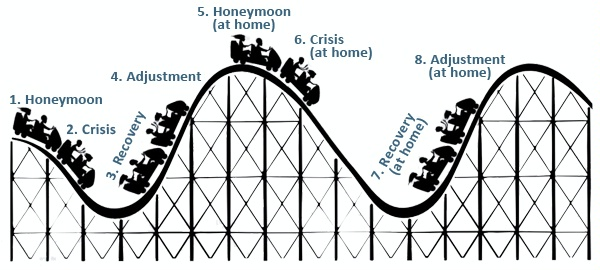
I had a fair amount of emotional rollercoaster over this process as well. Despite how long I’ve been teaching abroad, I haven’t actually given very many presentations to peers in my career. Teaching is a daily presentation, but professional opportunities like this are just not things that have come along often. I worried that my topic would be too different, but then I also worried that it wouldn’t matter what I proposed because I’d seen as the “foreign expert”. Then the RELO made it seem like the submissions process was more exclusive because they were limiting the number of foreigners to make space for local presenters (which would have honestly been great because I don’t want to be chosen just for being American, and I really don’t want to take a platform away from a Senegalese teacher), and then it turned out there were not actually that many submissions anyway, so probably didn’t matter.

I turned in my material on time (November 20) and was expecting to hear back by the 25th (their own deadline for announcements). In the mean time, I moved into my new apartment, kept working on my materials for the school and Zoom debrief, and put the conference on the back burner, unwilling to prioritize mental and temporal resources to it until I knew whether I would actually be presenting or not. Friday the 25th came and went with no news, and I waited patiently until the following Monday to write and ask. With less than 2 weeks left, I was told everyone who submitted was accepted. Way to make a girl feel special.

T-Minus 10 Days: November 28-December 8

I finally knew that I would be presenting and started on the process of travel plans. Particularly since the RELO from the Embassy and other ATES teachers from Dakar would all be going, I thought that there might be some kind of assistance or direction in how I would get to this conference. I was so very wrong. I have made my own travel arrangements in many countries, often “off the the beaten track”. This isn’t usually something I balk at, but I had come to appreciate the deep difficulties involved in transit here in Senegal which are like nothing else I’ve ever experienced.

I tried to get more information from the conference organizers about the location of the conference within the town of Kaffrine, or any advice on hotels or transportation options, but they simply referred me back to the Embassy staff who had no answers either since they were provided a US Govt issue driver. To make matters more fun, although Google Maps showed several hotels in Kaffrine, only one even had a website and that website was a photo and phone number. Booking and Airbnb had no listings for the town at all. Booking a hotel online would not be possible, and yet I didn’t feel comfortable going without a reservation since this was “the largest” conference for English teachers of the year, and we thought the nearby hotels might all be booked up. Silly me. (also that railway station marked so optimistically on the map is a shut down relic of the colonial past. no trains)

That Wednesday, November 30, I met up with the Fulbrighters to hammer out the reservations. I don’t know if I would have been able to do any of this without them. They are both much more fluent in French than me, plus one of them speaks passable Wolof and has a local boyfriend. This turned out to be a big advantage in the “getting shit done” arena. She called the main car service in Dakar and they were willing to drive us to Kaffrine on Friday (Dec 9) for 85,000CFA (140$USD) but they refused to send someone to Kaffrine to pick us up the following Sunday.

I considered the possibility of renting a car and driving it myself. I got my international driver’s license before leaving the states and verified it’s valid here. I wouldn’t want to drive in the city, but the countryside seemed ok, and for 140$ I felt like we could rent a car for 3 days and then we wouldn’t have to worry about getting back and forth between the hotel and conference either. However, I didn’t know if there was any reason that the Embassy might disallow it, so I called the RELO to ask. I left the conversation with the impression that it was technically allowable for me to rent a car, but by then the Fulbrighters had turned up more information on the rental situation, and the availability of automatic transmissions here is even less than in Europe. I really need to learn to drive stick. We put car rental on the back burner as an option of last resort and got back to searching.

Talking to the other Fellow in St. Louis (also about 5 hours away from Dakar) I learned that the ATES teachers there were planning to rent a bus as a group to drive down on Friday, and I tried to reach out to the ATES leader in Dakar to see if they were doing the same. When we finally did get an answer back (several days later), we found they planned to leave Dakar in the wee hours of Saturday morning rather than spend Friday night at a hotel. The conference was set to start at 9am, and presentations at 11am. I couldn’t imagine leaving Dakar at 4am Saturday to just barely get there in time. Additionally, the Embassy has strong feelings about us not being on the road after dark.

We checked on the Dakar/Kaffrine bus route via an app called Yobuma; however, the daily bus going from Dakar to Kaffrine was not matched by a daily return, and we would not be able to get a return bus until the following TUESDAY. We looked also at Kaolac which had a better bus schedule, but then realized we still didn’t know how to get between Kaolack and Kaffrine. Finally, we gave up and called the Senegalese boyfriend for help. He got in touch with a driver he knows and we finally got a quote, 120,000CFA for the round trip with A/C. That’s 195$ for those playing the US currency game.

Africa is surprisingly expensive: I can’t really wrap my head around this. I have taken buses, trains, and rideshare cars all over the world, and that’s just an insane amount of money to get to a city 5 hours away and back. The previous week I’d done some internet research about tour groups to various sights around Senegal and was shocked by the high prices, but it seems like that’s just what drivers cost around here. Travel really is a luxury. Additionally, it blows my mind that the conference was set in an out of the way place. I understand the desire to move it around the country each year, but the neighboring town of Kaolack would have been far easier to arrange both transportation and lodging for.

Thankfully, the hotel was much easier. A simple phone call in French got us room rates and basic information about things like air conditioning and payment options. Single rooms were 30CFA (about 45USD) per night. We booked the rooms with relative ease, although, again, I’m sure if I had to do it on my own, with my terrible French, it would not have been so easy. I had hoped to use this trip as a way to learn more about how I might go sightseeing, but all I really learned was how expensive and difficult everything is when compared with nearly every place else I’ve been lucky enough to travel.

I spent the next week juggling plates as two of my three projects came home to roost, and I frantically tried to create the visual accompaniment to my presentation in between. It’s not enough to just say TikTok is useful for motivating students, I had to figure out a way to show a room full of older teachers who had also likely never used the platform themselves how to use it. I also had no idea if there would be internet at the conference, so I planned to download every example video and be able to make the presentation offline if needed. In addition to finding a wide cross section of TikTok videos to use as examples. Every waking hour that week from December 1-8 I was working, either with students, in a meeting, or on my laptop at home scouring the corners of the internet for data, commons license images, and TikTok videos, all while frantically trying to practice the speaking portion and timing over and over to be sure it made sense, flowed, and fit in the available time.

T-Minus 1 Day: December 9th

Friday the 9th finally arrived. We were expecting the driver around 11:30am. Sometime around 11:15 I got a message that he was running late because of traffic. The ongoing stream of messages for tardiness continued for the next 2.5 hours. The traffic in Dakar is truly awful, but it shouldn’t have taken more than an hour to get from one place to another, and any driver who’s worked here for more than a week should know to plan for the traffic. All things considered, I didn’t expect him to actually be on time, but I didn’t think it would be more than 30-45 minutes delay.

By the time we got on the road, all of us were very frustrated. Our goal of getting to Kaffrine before dark was entirely impossible now. The conference schedule (which I’d received only a day before) indicated a cultural event on Friday evening at 5pm that I was looking forward to attending, and felt disappointed that this delay by our irresponsible driver would make us miss that. In addition the traffic to get out of the city was truly insane. It took us over an hour to go the 15km to the highway, adding even more time to our estimate.

The ride itself was not unpleasant, especially once we got out of the city. The sun was glaring, but the driver had agreed to run the A/C for our quoted price and so we were fairly comfortable. We had some road snacks and enjoyed watching the baobab trees and cows throughout the countryside. I took some video of a small town we passed through which was fairly representative of the journey. In English, I’d use the colloquialism “one horse town” to refer to a place so small, but in reality they had quite a few horses around!

The very large highways are fairly well-kept and clear. The one connecting the airport to the city, for example, is impressive. However, once we got out past the airport, we were on roads that were full of potholes and speedbumps, and frequently stuck behind enormous trucks hauling goods around at very slow speeds. The process for passing was pretty much just peek around the truck to see if the oncoming lane was clear and going for it. There was definitely a type of headlight flashing communication between drivers, but it seemed to signal anything from “I’m here” to “you’re clear”. It wasn’t until the sun started setting that I realized the road dust and haze might make an oncoming car hard to see, and the flashing was a good way to stand out.

While on the road, I got word that the cultural event was being pushed back to “not earlier than 8pm” but more likely 9pm to midnight, and also that it was relocated from the conference venue to a nearby hotel.. I thought the delay was probably wise given how many of the attendees would be unlikely to arrive in Kaffrine before dark. The bus of teachers which had left from St. Louis hours before us was still hours behind us, even though the actual distance between St. Louis and Kaffrine was only slightly farther than that between Dakar and Kaffrine. I guess the bus was travelling much slower.

We arrived at the hotel around 9pm and were able to check in fairly easily. We had been told there would be food at the cultural event, so we decided to head over to that location and eat there while enjoying the event. One hitch, we hadn’t seen any taxis since arriving. We asked the front desk at the hotel to call a car for us since our driver was only contracted for the inter-city driving and had taken off as soon as we were at the hotel. The “taxi” was a plain car, and the driver was asking an entirely unreasonable fare. It’s hard to put in perspective, so don’t think of it in terms of USD, think of it in terms of Dakar taxi costs. Dakar is the big city, things are supposedly more expensive, and for me to take a 5km trip up to the pub costs between 1,500 and 2,000 CFA depending time of day. The trip to the cultural event was about 2km and if it hadn’t been dark (and also like 35C/95F) we could have walked it. He wanted 3,000CFA. I’ll admit, it’s not like we had a lot of options, but he also didn’t have a lot of customers. In the end, I think we got down to 2,000 and got his number for the return ride. (he ended up being our defacto Kaffrine driver and made close to 10,000 off our group that weekend for a few trips under 3km)

When we arrived at the location we were given for the cultural event, no-one seemed to know what we were talking about. It was after 9:30 and while we had been warned things would be late, I had expected the hotel staff to at least be aware of something happening. We were all road weary and hungry, and decided to go ahead and order food from the hotel restaurant since no event food was forthcoming. We sat down and got some beers, and a few of the local people came over to say hi: one a rather skeezy dude who kept insisting one of our party looked just like his ex-Scandinavian girlfriend, and the other a very sweet woman who was delighted that two of our party spoke some Wolof and wanted us to dance with her.

Like so many restaurants in Senegal our meal took a very long time to arrive. We joked that they had to catch the chicken after we placed our orders. We didn’t get our meals until around 10:30, and by then there was finally some sign of an event. Drummers and a stringed instrument player were joined by a couple of singers for a kind of African improv jam session called Ngoyane. More people arrived and the place started to fill up, but we were loosing stamina fast and were expected to be at the conference at 9am the next day.

By the time we finished eating, our cohorts from St. Louis had still not arrived and according to an ongoing WhatsApp chat were experiencing a comedy of errors that put our own to shame. At one point, they transferred from the bus to car, but then the car stopped in an empty parking lot and the driver got out to look around with a flashlight. No one seemed to know what they were looking for, only that it made no sense to look for a whole hotel with a flashlight. We decided to wait until 11:30 to see if they would make it before we had to turn into pumpkins and they did with minutes to spare. It gave us a good chance to say hi and exchange crazy travel stories, but none of us wanted to visit too long because the day had been exhausting for everyone. We got back to our hotel a bit after midnight and I was able to sleep fairly well if all too briefly.

The Conference

9AM – The morning of the conference, we called our local “taxi” and headed over, knowing we’d arrive after the scheduled start time but before anything actually started. Again our expectations of just how late “late” is here were wildly inaccurate. The 9am opening ceremonies finally started at 11am. Sometime around 10am, I and the other presenters were asked to sit up on the stage instead of in the audience. It was very uncomfortable, but at least I was in the second row, behind the real VIPs. I didn’t really enjoy being on display, but in the end it may have been a cooler place to sit due to airflow.

11AM– The vast majority of the speakers were addressing the conference in French, which is fine, because it’s the primary language here, though I had hoped at a conference of English teachers there might be more English. I can follow along ok with basic French, but the content of the speeches was not especially easy, interesting, or relevant to me, and it was very difficult to maintain focus. Finally, the opening ceremonies concluded and the keynote speaker was set to begin. He was given a long introduction… Senegalese people love to talk … and talk… and talk. His presentation was in English and he was an excellent speaker. I genuinely enjoyed listening and was appreciative of his attitude towards students and education. He started the presentation by reviewing the movie Akeelah and the Bee, which shows two very different approaches to mentoring students through a spelling bee competition, and shows in the end that love and encouragement work better than harsh discipline and criticism. He was very student centered, focused on student-led learning and the need for engaging and motivating activities, but above all, support and encouragement.

At the end, the moderator claimed she was going to limit questions to the first three people, but instead of questions, it was mostly stories and praise, and as much as I admire this cultural devotion to storytelling and mutual uplifting, it wasn’t only us Westerners getting impatient at this point in the proceedings. I overheard one of the local VIPs on stage with me say to his neighbor in a frustrated tone that the time for paying tribute was over and the people should just sit down. Even then, after the 3rd person to take the microphone finished, the moderator called a 4th to speak. I’m mildly surprised there wasn’t a riot. In the end, the tech in charge of the sound board simply cut her mic off, forcing her to abdicate the stage.

1PM– When we were finally allowed to get up, it was nearly 1pm. According to the schedule, we should have not only concluded the opening ceremony and keynote speech, but also a coffee break, and both presentation slots, and be on our way to lunch by 1pm. It’s no surprise that as soon as we were released everyone flooded to the snack tables outside.

I personally booked it for a restroom. The only ones we had found were co-ed and non-flushing. I don’t mind co-ed for single seaters, but it is a bit awkward when there are stalls. The lack of flushing is harder because with “seat” toilets it almost always means it’s not clean. I want to hope that maybe when classes are in session at the building the restrooms are cleaned more regularly, and maybe it was just dirty because of the overuse by conference attendees. I want to believe that no one has to use facilities like that on the regular. I’ve been in a lot of different styles of toilet over the years, and what I’ve come to find is that all of them are basically ok if they are clean, and all of them are truly miserable if they aren’t. Whether you are flushing, pouring water, or sprinkling ashes/sawdust doesn’t matter as much as the overall maintenance.

Next, I set off in search of coffee (it was a “coffee break” after all) and found some Nescafe packets and hot water. Once I was reasonably refreshed, I began to look for my presentation room. It was obvious the written schedule that had been handed out was meaningless for times, but I had been assigned room 1 for the first set of presentations. There were 5 of us presenting simultaneously, which I found odd when I first received the schedule: two rounds of presentations before lunch and then it’s over? Wouldn’t it make more sense to have a round of presentations after lunch to let people attend more talks? Of 10 presentations, each person could only see 2, and presenters could only see one. I wouldn’t be able to watch any of my colleagues who were all scheduled to speak at the same time as me. Yet, as it was approaching 2pm before the first presentations even started, the plan made more sense to me. Somehow, even though they felt obligated to schedule the event for an early start, the planners knew in their hearts that things would end up like this.

2PM- It took a while to find my room. No one from the conference staff made any attempt to help me find it or help me get set up and organized. The “moderator” for my slot turned up in the room as I was setting up my laptop, and in the process of discovering that there was no audio available in the room. The thing about TikTok is that its an AUDIO visual medium, and for my purposes it’s about speaking practice more than anything. Without audio, my presentation would be confusing and pointless. We started the search for audio equipment, delaying the start of my presentation even further.

When a speaker was finally brought in, the person trying to hook it up had two power plugs and no audio cables. I couldn’t seem to get them to understand that the second power cable would NOT actually connect the computer and the speaker. Thankfully, one of the Fulbrighters had offered to take photos for me that day and was playing assistant. She figured out the speaker had a Bluetooth option and after no small amount of fiddling with the settings, we got the computer and speaker paired and I was able to proceed – with sound – more than 3 hours after my talk was originally set to begin.

Perhaps because of everything that had already gone wrong, I felt my anxiety drop away as I started to speak. I got through the whole thing and I really enjoyed watching the audience of teachers slowly change their minds about this crazy young-person fad. I had a fruitful Q&A session afterwards which gave me some quality insight into how I can improve the presentation before the next conference, and then it was done. I wandered back outside and rode a little wave of serotonin for having made it through what had come to feel like a Herculean task. We sang songs with a group of high school English club students and I did a short video interview for a teacher from the Casamance region. By the time I came down enough to question what was happening with the second round of talks, they were already underway and so I just stayed in the shade sipping water and chatting to the other attendees who had also opted to sit out the second round of talks.

4PM- When the last presentations were over, we tried to file over for the lunch on offer, but the rooms which had been set up were not large enough to accommodate the number of attendees. I don’t think it was more than 200 people, but it looked like the long tables would seat 100-150 depending on how cozy they wanted to be. Additionally, it was hot AF and the meal was Thieboudienne served in the traditional huge communal dishes and eaten with hands. I think I could have done 2 out of 3 of those variables (hot, crowded, messy eating) and I was not alone in that feeling. All the Americans collectively decided that rather than trying shove in, we would call it a day and go back to eat at our hotel. The remainder of the conference was internal business to the organization of which we are not members, so we didn’t feel obligated to stick around.

The hotel restaurant was, of course, out of most of the food on their menu, but grilled chicken and pizza were good enough. We even managed to get ice cream for desert. I collapsed under the air-conditioning in my room before 8:30 and watched old cartoon network videos on YouTube via the sketchy Wi-Fi until I fell asleep.

The Aftermath

The next day, our inter-city driver was actually early to take us back to Dakar (no traffic in Kaffrine). We had our hotel included breakfast of baguette, butter, eggs and cheese-product with a side of Nescafe. The drive back to Dakar was just as long and full of cows, but we all made it home before dark this time, at least.

I don’t know what to say about this trip other than it was a wild cultural experience. It was so much harder and more stressful than anything that small and close to “home” has a right to be, and yet I’m also very grateful that I was able to participate in it, not only for the professional opportunity to present at the conference, but also for the cultural experience in all its gritty glory. This will help me know how to approach future travels in Senegal and Africa. Whether it’s tourism or my next scheduled event in Zanzibar, it will give me a metric by which I can set appropriate expectations and experience fewer frustrations as a result. Every experience helps me not only to understand this place and it’s people, but to reflect on myself and my place in the world, and what that means for my obligations to myself and my fellow humans. So yes, it was hard, and hot, and frustrating, and dirty, but it was also an entirely unique and worthwhile experience in which I got to come face to face with the teachers and students who are shaping Senegal and ultimately West Africa into strong and independent culture of the future.

Myths & Tales from China 10: The End

This is the tenth and final entry in my Chinese Myths series. All the traditional tales were translated by me in the era before Google Translate from children’s books that I got while traveling in China. These are the stories that the Chinese know and love the way that Westerners know and love the Grimm’s Fairy Tales. Many are now movies, tv shows, comic books and adaptations that are well worth partaking in. I hope that by reading my short translations, you have some more interest in and framework for appreciating Chinese art and cinema.


The Cowherd and the Weaving Maid

In Heaven, there lived an immortal fairy maiden named Zhi Nu, the Weaving Maid. She could use a magical thread to weave layer upon layer of beautiful clouds. These clouds could also change color with the seasons. She and another immortal, Qian Niu Xing who is Altair the Cowherd Star had a lot in common and fell in love. However, the Immortals of Heaven were not allowed to love one another without permission. After the Heavenly Mother, Wang Mu found out, she banished Qian Niu Xing to the human world. Zhi Nu missed him very much. All day long her face was washed in tears, and her eyebrows were knotted in worry.

1-150912204QM35

One day, several of the fairy maidens begged Queen Mother Wang Mu to let them go to the human world to play at Jade Lotus Pond and help Zhi Nu drive away her cares. Wang Mu agreed.

It is said that after Qian Niu Xing was banished to the human world he was reborn into a peasant family and named Niu Lang, which means Cowherd. After Niu Lang’s parents passed away, his older brother and his sister-in-law bullied him in earnest, drove him out of the house and only gave him one old cow. After that, Niu Lang and the Cow were dependant on one another to live.

Niu Lang cultivated some land to farm and built a house. Several years passed, and at last he had a small homestead. However, aside from the old Cow, there was only Niu Lang in the family home, and the days passed cold and lonely. In reality, the old Cow was actually the Star of the Celestial Golden Bull, Taurus who originally carried messages for Qian Niu Xing and Zhi Nu and was also banished from the Heavenly Court.

One day, the old Cow suddenly opened its mouth and spoke to Niu Lang, “Oh, Niu Lang, today the immortal fairy maidens will come down into the world to bathe in Jade Lotus Pond. If you go and hide the red robe of immortality, then the fairy it belongs to will become your wife.” Niu Lang was amazed and wonderingly asked, “Brother Cow, you can talk! Is what you say really true?” the Cow nodded its head. Niu Lang happily hurried to Jade Lotus Pond, hid in a thicket of reeds by the bank of the pond and waited for the maidens to arrive.

unnamed

Before long the beautiful fairies arrived as expected, floating in the air. They undressed and jumped into the clear water of the pond, bathing and chatting Then Niu Lang came out of the reed bed and carried off the red cloak of immortality. The fairy maidens saw that a human had come and quickly got dressed and flew away. Only one fairy couldn’t find her red robe and was unable to escape. That fairy maiden was Zhi Nu. When Zhi Nu saw that her own cloak of immortality was in the hand of a young man, she became shy and nervous. As soon as Niu Lang saw Zhi Nu he was attracted by her, and felt like he recognized her from a long time ago. He stepped out and sincerely requested that Zhi Nu be his wife. Zhi Nu looked up and saw that Niu Lang was really her own Qian Niu Xing whom she had missed day and night, and was both surprised and happy, so she nodded her head, blushing and agreed.

Zhi Nu became Niu Lang’s wife, and the two of them loved each other and were kind to one another. Nine years passed. They had a pair of daughters and their days passed happily.

One day, Niu Lang hurried home from tilling the fields and spoke sadly to Zhi Nu, “The old Cow has died, but before he passed Death’s door, he told me to take his hide and if something ever happens to drape it over my shoulders and then I would be able to fly up to Heaven.” Zhi Nu heard this and thought it was strange, but still let Niu Lang keep the Cow’s hide and bury the old Cow properly.

Suddenly, the air was filled with a fierce wind, and many soldiers came down from the Heavens, and without a word, they grabbed Zhi Nu and flew straight back to Heaven. In fact, When Queen Mother Wang Mu found out that Zhi Nu went down to the mortal world to get married, she was enraged and sent the Celestial Soldiers to go and bring her back. Zhi Nu cried out anxiously, “Niu Lang, put on the Cow’s hide!”

unnamed

Niu Lang quickly put both his children in wicker baskets, carried them on a pole across his shoulders, put on the Cow’s hide and flew up to heaven after her. Niu Lang was about to overtake Zhi Nu when Wang Mu suddenly pulled out her golden hair pin and with it, drew a line between them. In a split second, there appeared a huge river surging between them, separating them completely.

Zhi Nu gazed toward the opposite bank with Niu Lang and their children and cried broken-hearted. Niu Lang and the children also wept bitterly as if they were dying. Queen Mother Wang Mu saw this scene and didn’t have the heart to go through with it. So she agreed to let Niu Lang and the children stay in Heaven, and allow them to be a whole family for the first week of the seventh month once every year.

Since then, Niu Lang and his daughters have lived in Heaven, gazing at Zhi Nu from across the great river through Heaven, the Milky Way, separating them. The first week of the seventh month every year thousands and thousands of black billed magpies fly in and make a bridge across the Milky Way allowing them to come together. It is said that if you listen quietly and carefully, you can still hear them endlessly speaking words of love to each other.

1394.jpg_wh300


Wang Di Becomes a Cuckoo

Very early in history, the people on the Western embankment of the Shu Kingdom mostly made their living by fishing. They arrived in the wind and departed in the waves; it was very dangerous. If there was a fierce wind or torrential rain, there was no way to go to sea, and many people would go hungry. Days passed in great difficulty.

One day, a strange man suddenly fell from the sky. He was called Du Yu and claimed to have the solution for dealing with the natural disasters. He taught people how to cultivate a wild area for farming and to plant grains and vegetables. Under Du Yu’s command, people were industrious and hardworking, until at last they made the desolate Shu lands become productive and abundant fertile lands. Everyone was completely grateful, and unanimously chose him to serve as the King of Shu, known as Wang Di, or Hope Emperor.

unnamed (1)

However good times can’t last forever, one year the rains were especially large, and the river water overflowed. At that time, one person called Bieling requested an audience with Wang Di, and said that he could rule the water. So Wang Di sent him to manage the flood. Bieling led the common people to fight bravely for several years, and as expected they completely controlled the flooding. Because of his meritorious deeds controlling the waters, Wang Di let the title of King be given to him, and be known as Cong Di. He continued to lead the Shu people to excel at irrigation and waterworks, to open more land for farming, causing the Shu people to live happy lives.

But as time went on, Cong Di became prideful and arrogant, thus not concerned with the pain and suffering of the common people. After Wang Di found out, he was burning with anxiety, and decided to go into the palace to advice Cong Di. After the common people heard this, they followed one after another behind Wang Di, wanting to go into town together and see Cong Di. Cong Di saw this situation and was worried that Wang Di would take back the title of King, so he ordered the city gates to be shut.

998

Wang Di had no way into the city, so he changed into a cuckoo bird, flew onto a large tree in the Shu Palace Imperial Gardens, and cried in a loud voice, “People are precious! People are precious!” Cong Di heard the cuckoo’s plaintive call, and made up his mind to improve. The cuckoo flew out to the fields, calling nonstop, “Cuckoo! Cuckoo!” urging people to master farming seasons, to work diligently plowing and planting. The common people knew that the Cuckoo was Wang Di Du Yu transformed, so they called it the Du Cuckoo. Du Cuckoo cried day and night, every cry shed a drop of blood, dropped on the ground and gave rise to a cluster of red flowers, people call this kind of flower the Du Cuckoo Flower, and we know it as a Rhododendron.


The Story of Ashima

Once upon a time, there was a place called A-Zhaodi, where the poverty stricken Gelu Reming family birthed a beautiful daughter. Father and Mother hoped that she would be a precious shining thing like gold, so they gave her the name Ashima, which means “gold”.

Ashima gradually grew up; her beauty was like that of the gorgeous meiyi flower. She could sing and was good at dancing; many young men were all fond of her. She fell in love with her childhood friend and sweetheart, the kind and loving orphan, A-Hei, and promised she would not fail to marry him. At the Torch Festival one year, she and clever brave A-Hei got engaged.

Untitled

One day, Ashima was hurrying down the street when A-Zhi, the son of the A-Zhaodi rich man, Rebubala, took a fancy to her. A-Zhi wanted to take Ashima for a wife, so he went back home to plead with his father to find a matchmaker in order to propose marriage. Rebubala requested the powerful and influential matchmaker Hai Re to go ahead to discuss marriage. The matchmaker first used sweet speech and honeyed words to persuade Ashima to wed A-Zhi, later on he used threats and bribes, but it was all to no avail, Ashima simply would not agree.

In no time at all, autumn arrived, the water grew cold and the grass dried up in A-Zhaodi, the sheep could no longer eat their fill, A-Hei had no choice but to bid farewell to Ashima, driving the flock of sheep to far away Dian Nan to graze. After A-Hei left, Rebubala dispatched a hired thug and his own household servant to capture Ashima and force her to get married. From beginning to end, Ashima did not comply; she refused to marry A-Zhi. Rebubala flew into a humiliated rage and ordered his servant to use the lash to flog Ashima ferociously. Finally he commanded her to be placed in a dark prison. Ashima suffered the worst hardships, but she believed without a doubt that A-Hei would certainly come to save her.

Untitled2

One day, A-Hei was in the middle of grazing the sheep when a town crier from A-Zhaodi found him and told him the news that Ashima had been captured. A-Hei immediately spurred his horse into action, he traveled at full speed day and night, and hurriedly returned home to rescue Ashima. He arrived at the entrance of Rebubala’s home, A-Zhi, who had securely closed the main gate and would not let him in, suggested that he and A-Hei should sing a duet, and only if A-Hei beat him would he allow him to enter the gate. A-Zhi sat on the upstairs of the gate and A-Hei sat beneath a tree, both men faced off singing, they dueled for three days and three nights. A-Zhi lacked talent and had little knowledge, the more he sang the fewer lyrics he had, he quickly became red in the face and angry, his voice became more and more unpleasant to hear. However, the more that talented and knowledgeable A-Hei sang the more energetic he became, his face was suffused with a smile, his singing voice was strong and clear. A-Hei won at last, A-Zhi had no choice but to let him through the main gate. But A-Zhi wanted to make it hard in all respects, so he suggested to A-Hei that they compete at chopping trees, catching trees and planting seeds. How could A-Zhi have A-Hei’s skill at this workmanship. A-Hei excelled over A-Zhi in all these things. Rebubala flew into a humiliated rage, and had his servant release three tigers to pounce on A-Hei. A-Hei drew out his bow and arrows, and shot at the tigers, whoosh whoosh whoosh three arrows in a row, and shot three tigers dead, then rescued Ashima.

Untitled4

Rebubala father and son watched anxiously as A-Hei led Ashima away. They refused to accept it and thought of a completely heartless evil plan. They knew that A-Hei and Ashima would have to pass by twelve cliff bases on their way home, so they collaborated with the cliff spirits to change the small river at the base of the cliffs into a large river. They hoped to drown A-Hei and Ashima.

Rebubala father and son brought along their servant; they overtook A-Hei and Ashima and arrived at the river before them. They pushed aside the stones for walking across the small river and let the water out. When A-Hei and Ashima got to the river a surging flood arrived as well. Ashima was swept up into a whirlpool, and soon no sign of her could be seen. A-Hei, struggling up the bank, looked everywhere for Ashima. He searched and searched, he searched until the big river became a small river, but he never found Ashima. He cried out in a loud voice, “Ashima! Ashima!” but he heard only the twelve cliff tops answering, “Ashima! Ashima!” 

Actually, a girl named Ying Shan’ge on the top of the twelve cliffs saw Ashima carried off by the flood, so she jumped into the whirlpool and rescued Ashima. And together, living under the cliffs, Ashima became the goddess Shou Pai Shen (the Echo goddess). From then on, whatever you shout to her, she answers back to you, her voice forever echoes in the Stone Forest. 

Untitled3

Note: Ashima was made into a very famous film in 1964. It’s a little hard to watch because it’s a weird cross between a colorized silent film and a musical. Yeah, that makes no sense to me either, but see for yourself? The story is about the Sani ethnic minority, hence the distinctive clothing.


The Story of the Twelve Zodiac Animals

Legend has it that a long long time ago the Jade Emperor decided to choose a few animals to grant immortal status, to represent the Zodiac of the mortal world. All the animals could go to the Heavenly Temple to be chosen. They would be ranked according to the order in which they arrived. And what’s more, only the first twelve to arrive would be chosen.

Blogfeature_jadeemperor

Back then, Mouse and Cat were great friends; they agreed to go to the Heavenly Temple together. However, when the appointed day arrived, Mouse didn’t go call on Cat, and instead hurried to the Heavenly Temple on his own.

On the road, Mouse ran into Cow. Cow took such large strides forward as he walked that Mouse ran along gasping for breath until he caught up with Cow. Mouse thought to himself: “The road is still far, and I already can’t run any faster, what should I do?” He rolled his eyes, thought of a plan, and said, “Brother Cow, how boring is this walk, I’ll come sing for you.” Cow said, “Alright.”

But after waiting a while, he still didn’t hear any singing, Cow asked, “Hey, how come you aren’t singing?” Mouse said, “I am singing, how come you can’t hear me? Oh, my voice is too soft. How about this, I’ll sit astride your neck and sing, then you’ll be able to hear.” Cow said, “Alright.” Mouse then climbed up Cow’s neck, and made Cow carry him. Now he could save his breath. He bobbed his head and began to sing in earnest.

As Cow listened to the singing he also let loose his legs and put all his effort into running. He ran until he saw the place to enroll/sign-up. The other animals had not yet arrived, then happily he cried, “Moo! I am number…” Cow hadn’t finished speaking when Mouse leapt down from atop Cow’s neck and got in front of Cow. As a result, Mouse came in first, and Cow came in second. Not long after, Tiger and Rabbit arrived one after the other.

Twelve kinds of animals quickly filled the line, they were: Mouse, Cow, Tiger, Rabbit, Dragon, Snake, Horse, Sheep, Monkey, Rooster, Dog and Pig.

RP-Dominating-the-Rat-Race-696x522

Cat waited at home a long time but Mouse never came to call on him. He had no choice but to go to the Heavenly Temple on his own. As soon as he hurried over, the twelve Zodiac limit was already filled. Cat got angry and when he saw Mouse, he pounced to bite him, and so it continues to this very day.

Notes: In some versions of this story, mouse meets cat and they both ride on cow until mouse pushes cat off into the water about halfway. Either way, cat gets betrayed by mouse and ends up eternally angry about it. Because of translation difficulties, the signs of mouse and cow are often seen in English as rat and ox, but it is the same thing in Chinese.

Appropriately, 2020 is the year of the rat (mouse) so it’s a great story to end on, showing how mouse became the first of the 12 zodiac animals.

unnamed (2)

Ireland: The Ring of Kerry

If one is doing a road trip in Ireland, a couple of “must dos” are the Wild Atlantic Way, and the Ring of Kerry. The main point of the Ring of Kerry isn’t actually the many interesting stops along the way, but the beautiful views of the Atlantic Ocean from the road. However, since it is an extremely long drive, it’s nice to have places to stop and get out for a while. The main ring is the N70, which is a lovely wide (for Ireland) highway, but all the really good stuff is off the highway and down a series of narrow twisty side roads. Neither Valentia Island nor Skellig Ring are technically part of the Ring of Kerry, but it could be argued they are more interesting.


Car or Bus?

Driving in Ireland is not for the faint of heart, but if you are nervous, then you can also take a bus tour. The advantage of a bus tour is that you can spend the whole time looking out the window at the view. The disadvantage is that they only stop at a few very popular spots, and you have to contend with all the other tourists around your photos.

I personally enjoyed most of the drive, with the exception of a few moments of extremely heavy rain and one point where we managed to drive through a cloud. Low visibility on narrow steep roads is… challenging. Despite the white knuckle moments, I’m glad I drove myself because I got to pick and choose my own stops. There’s a nearly infinite list of things to see, and no way at all to do them in a single day drive of the Ring. The good news is, the Ring of Kerry is very affordable. I believe that some of the restoration houses and museums do charge a small fee to come inside, but as far as I know, all the outdoor attractions are free of charge.

ring of kerry map.jpg

This is the route I traveled according to my Google Maps history. We spent 10 hours on (and off) the Ring of Kerry, starting in Killorglin (a smaller town than Killarny, so the Airbnb was cheaper) and ending in Killarney (although we continued to drive on to Dingle that evening). For reference, most bus tours are 6-8 hours and start and end in Killarney, so you can imagine they move faster and see less.

The Challenge of Skellig Michael

Possibly the most popular place to visit on the peninsula is Skellig Michael. It is a phenomenally beautiful island with a wonderful wildlife preserve and interesting ruins of an old monastery. To preserve the environment, only a limited number of people are allowed to set foot on the island per day. If you are lucky enough to get a spot, the boats may be cancelled due to bad weather, even if the weather on land seems ok. They don’t call it the “wild” Atlantic for nothing.

Skelig Michael Steps, Credit: IrishFireside via FlikrEven before 2017, it was a popular attraction that required lots of booking ahead. Then the Last Jedi came out, and suddenly the whole world knew about Skellig Michael as the beautiful and remote island where Rey finds the reclusive Jedi Master, Luke Skywalker. Those sweeping staircases and round stone huts weren’t inventions for the film, those are the actual ruins. Thanks to the Creative Commons I have photos to show you.
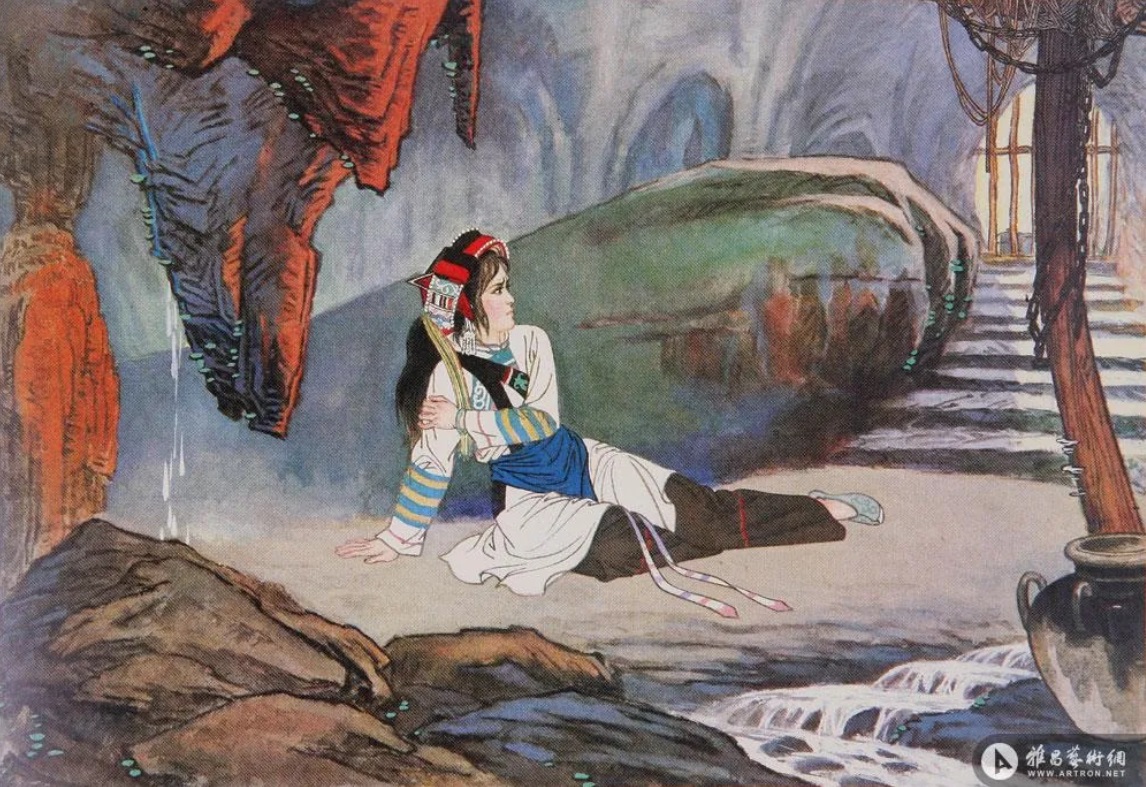
Reservations for boats that simply sail next to the island must be made up to a year in advance in the high season and I spoke to one couple that had been waiting for a spot on a boat that allowed people to walk on the island for more than 3 years.

As amazing as it would be to have the chance to go explore this beautiful place, I think that it would be something I’d have to plan a whole trip around, choosing a time of year that is just off enough to have availability without having your chances of bad weather above 80%, and then also being willing to stay nearby for several days/a week because when your boat does get cancelled, you are still around for the “make up” tour.

Skellig hivesThere are so many beautiful small islands along the west coast of Ireland, and while none are the same as Skellig Michael, I think for most people, they are going to be just as enjoyable while being much more accessible and far less expensive. I myself visited the Blasket Islands (from Dingle), the Aran Islands (from Doolin), and a teeny little place called Inishbofin (from Galway). And if you just HAVE to have that Skywalker connection, the Blasket islands are actually in the film as well.

Finally, there is the Skellig Experience Center, which is on Valentia Island. I gather it is a warm, dry, indoor experience involving models, miniatures, and a video. I ended up skipping this as well because it was a recommended 45 minute visit, and we simply ran out of time for everything we hoped to do that day.

What I Actually Did on the Ring

Cahergall Stone Fort

Stone forts or ring forts are ubiquitous in Ireland. There are more than 45,000 ring forts, some of earth, some of stone. Many are on private land, so you can’t necessarily just drive up to them, but lots and lots are open to the public and managed by a park service. This is not to say they are easy to find, or that they have any parking facilities, but if you are intrepid, you can do it.

There’s a very small parking area along a very narrow road with a little sign pointing to a sheep trail through a meadow, and if you follow this trail, avoiding the sheep poo, you will come up to the stunning sight of this majestic stone monument crowning the highest hill in the area. It’s not roped off, and you can freely touch, climb, enter and explore which is great. Because we were not with a tour group, we only ran into one or two others while at the fort, and it was easy to take lots of beautiful, if somewhat gray, photos.

20190803_094217.jpg

I feel like the term “fort” is a bit misleading. I originally thought that these were military installments placed on high hills for visibility and ease of defense. It turns out that these “forts” were probably more like farmsteads where people and livestock lived full time. The double ring looks like a good way to keep the animals safe in the outer ring, and the humans in the inner ring, with a ragged stairway up to a walking path. The strong stone walls would protect from weather, predatory animals, and rival clans. The livestock could be let to roam and graze in the day / good weather, and then gathered in, like a barn or paddock, as needed. The double ring with livestock would mean the inner circle of humans would be much warmer than the surrounding countryside. 

20190803_095046 (1)

Many historians think that the size of the ring indicates the owner’s social standing, which makes sense if you consider that richer families would have more livestock and more (living) children. The one at Cahergall is about 70 ft / 25m across.  It also makes a lot more sense why there are 45,000 of them if you think of them as farms/homes rather than military forts.

20190803_094911

Cahergall is one of the more famous rings because it has recently been restored and is quite beautiful. Some people think that the restoration is “cheating”, but it’s 1400 years old and was made by dry stacking flat stones (no mortar of any kind). The restoration makes it safe to climb and gives a good idea of what it would have looked like.

20190803_100316.jpg

On our way back to the car, a farmer had come down to greet a tour bus with a young lamb in his arms. He wasn’t “charging” for the privilege of holding and petting this adorable soon-to-be-dinner, but everyone was giving him a Euro or two as a tip/thank you. We beat the tour bus by only a few minutes and figured that farmer would probably get 50 Euro or more from that bus alone for sheep petting… not a bad deal for him.

Valentia Tetrapod Trackway

There’s a trope in the story of evolution of the first “fish” crawling out of the sea and onto land. This is a very oversimplified version of how evolution works, but it’s a good story because it helps us visualize and understand the process. There was a period known as the Devonian between 350 and 370 million years ago where that process occurred and sea creatures gradually developed legs from fins and began to explore the food and safety options of damp land.

There are only 4 locations of earth where you can go and actually see the footprints of one of those animals and one of them is in Ireland along the Ring of Kerry.

20190803_104742

I spent an inordinate amount of time in the Smithsonian Museum of Natural History as a kid and I even did a few amateur fossil  hunts. I was delighted to find stones with the imprint of life that was millions of years old, and growing up did not reduce that delight. I recall finding fossilized seashells in the desert of Saudi Arabia, and being completely awed. So, when I found out that this level of rare fossil was available for the viewing, I had to go.

We had variable weather on the day of this drive, and were mostly lucky that the rain came down while we were driving and let up when we parked, but this stop was the one big exception. The tracks, like everything outside a city in Ireland, are not super easy to find, but Google Maps helped and there are also plenty of websites with landmark based directions. There’s a decent parking lot, but it is a bit of a walk down to the water from there. On the day I went, there was a documentary film crew on site, and they thought we were crew too because they just couldn’t imagine any tourists crazy enough to come down in that weather.

20190803_105753

It was only a light drizzle when I started the walk, but turned into a serious downpour about half way down. I decided that since I was going to get just as wet walking back to the car as down to the shore, I might as well carry on. I got entirely soaked. Only my shoe covers kept my feet dry. Waterproof shoes or shoe covers are an absolute must in Ireland.

It’s a beautiful rocky shore, and the steps down are a little tricky in the rain, but not too bad. There are several informative signs with models of the tracks (so you know what to look for) and a bit of history about the site itself. 385 million years ago, Ireland was actually south of the Equator, and what is now a cold and rocky shore was a warm, silt laden river delta. In addition to the footprints, there are also fossilized ripples (below) made as the muddy silt dried in patterns and was covered over by layers of different soil. Both ripples and prints were compressed over millions of years as the landmass drifted north. Finally, the erosion of rain and sea revealed this layer of the strata.

20190803_110335.jpg

The footprints are accompanied by a tail drag, since tetrapods were still heavy and low to the ground with long, broad tails for swimming. I think without the informative signs showing me what to look for, I (not a paleontologist) might have missed it entirely. Once you get all the way down to the shore, you know where to look because one area is roped off. Since this isn’t a restorable relic, we can’t walk on it or touch it lest we erode it away completely.

20190803_110945.jpg

Before I went, I was thinking these footprints might be much larger because in my head, dinosaurs are huge. However, the Tetrapod was only about a meter long (3ft). For perspective, the average alligator is about 4x that size. The footprints are tiny little polka dots with a sidewinder looking divot between them (lower left quadrant of the photo above). They look not unlike a close up of a sewn edge with the thread removed. Once I got over the fact that I was soaking wet and that these were really small dinos, it was a very cool experience.

It’s not that you can’t see these kind of tracks in a museum, but there’s something… deep and connecting about seeing it where it happened, to know that this piece of rock was once thousands of miles away, and that your feet are there on the same ground that this ancient ancestor and key link in the evolution of life on land once walked.

Skellig Ring: St. Finian’s Bay & Skellig Chocolates

Skellig Ring is not part of the Ring of Kerry. It’s a little side loop down a peninsula and closer to the coast. While looking at the map, it seemed rather silly to go to Valentia and then backtrack to the official ring, so we kept hugging the coastline, which made for some lovely views.

I think we stopped at St. Finian’s because it was pretty and I needed a place to pull over and check the map. We were on our way to the Skellig Chocolate store and I was struggling to navigate the narrow roads, strange turn offs, and Google Maps all while driving a car on the “wrong” (to me) side of the road in the rain. It is a beautiful little beachfront, and I while it makes for a gloomy and picturesque photo op on the rainy afternoon I stopped there, I am sure it’s also stunning in nicer weather.

20190803_120413.jpg

As for the Chocolate store, it’s a cute little chocolate shop, and they have lovely tastings where you can sample all the flavors before you decide which ones you want to buy. It was good, but not spectacular. I think I’m spoiled on chocolates. I’ll generally avoid the slave labor chocolate companies like Hershey’s, but I can order my fair trade online easy enough, so chocolate shops aren’t usually on my travel itinerary.

Theo’s Chocolates in Seattle is a stop I always recommend because they roast their own beans and actually make the chocolate from scratch (unlike most shops which buy chocolate then remelt it to add flavors and shapes). Plus, I love their factory tour which makes me feel like oompa loompas are hiding just around the corner. I also spent more than a glorious day in Brussels making my way around all the famous, historical, and newly excellent chocolate shops, chatting with makers and sampling a variety of confections, some of which were “meh” and others sent me over the moon with chocolate joy.

Skellig Chocolates are certainly better tasting than Hershey or Nestle. I enjoyed the flavors, but I wasn’t over the moon. Also, although they are making some confections on site, there is no tour or museum where you can learn about chocolate making. If you happen to be passing by, and have time, great, but you can buy the same chocolates in most Ireland gift shops or at the airport if you really want to try it and don’t fancy stopping your driving tour of natural/historical wonders for this tourist money trap.

valentia map.jpg

If you want to see Valentia without driving the Skellig ring, I’d recommend taking the ferry (5 Euro/car one way) from Reenard Point and drive off the island via the bridge next to the Skellig Experience center, then follow R565 East back to the N70. I personally wish I’d been able to spend more time on Valentia to take in things like the Glanleam Gardens or the Fogher Cliffs, so even though I only wrote about the Tetrapod tracks, there’s a lot more to see there.

Staigue Fort

I like ruins. They are one of my favorite things to see. I like the stretching sense of history, and of being connected to other humans who lived and built things hundreds or thousands of years ago. I will almost never pass up the chance at a ruin. I wasn’t planning to see any stone rings after the Ring of Kerry, so I was happy to have an opportunity to compare two.

The Staigue Fort is considered one of (if not the) largest stone rings in Ireland. It is even larger than the Cahergall Fort, but it lacks the inner ring. It is older by about 300-500 years, and it hasn’t been restored as heavily, so it’s a little rougher around the edges. However, I did think that it was much easier to climb and walk on than Cahergall. The steps were wider and the path at the top was wide and smooth.

20190803_151403

Unlike Cahergall which was on high ground, the Staigue Fort is surrounded by higher hills. It was deeply foggy when I was there, and so the whole place had that kind of ancient, spooky, mysterious vibe. I got to climb to the top and walk around.

20190803_151554

I also learned what nettles look like for the first time from a local lady who was there showing her family around. I’m actually really glad I found out, because they sting if you grab them (or fall on them) so it’s nice to know what to avoid. I’ve read about nettles, stinging nettles, nettle tea and such in a wide variety of books, particularly by British authors, starting from childhood. I got so used to not knowing what they were, it never even occurred to me to look them up once Google was invented, and so now I know. Sadly, later on this trip, I was destined to find out how their sting feels… ow.

20190803_150348.jpg

There is a sign at the gate stating that there is a 1 Euro charge, but there is no one to collect it, only a collection box, which was jammed by two coins in the slot when we were there. The local lady who told me about the nettles, also said it wasn’t really necessary to pay, but we left a coin anyway because I like to support the care and maintenance of historical relics.

The final bid to collect some coins is a small “waterfall” and “wishing well” which is really a cute little stream where coins can be thrown with a wish, so if you want to contribute in a more creative way than the collection box, you can always toss a coin in the water. If you’re lucky, you might even see some of the famous “rainbow sheep” up close!

Kenmare Stone Circle

Stone circles are quite distinct from stone forts. The most famous stone circle in the world is, of course, Stone Henge in England, but there are thousands of stone circles around the British Isles and northern Europe (France, Germany, etc). Stone circles are much older than stone ring forts, and most date from around 5000 years ago. They show no signs of habitation (leftover bits of pottery, food, or tools) and that has led most archaeologists to believe they serve a religious or ceremonial purpose. Lots of the stone circles are also aligned with the sunrise or sunset on the equinox or solstice, which lends some credence to their use as annual calendars.

Some archaeologists think anything they don’t understand must be about religion, but there are other possibilities, one of which is that these were meeting places for nomadic or semi nomadic groups to come, exchange goods and stories, perhaps even find spouses. The solar link of the stones would make it easy for everyone to agree on the right meeting day. Maybe there was some liturgical aspect to this as well, but think about how many of our modern holidays that focus on commerce, gift exchange, and extended family visits started out as and still involve at least a little bit of a religious day. (*cough*Christmas*cough)

20190803_164047

Maybe if I went to a stone circle in the countryside on a dim gray misty day, it would feel more druidic or sacred, but the Kenmare Stone circle is in a town, and when we arrived, the town was also setting up for a fair and there were carnival tents and rides being built all around. I gave up trying to find real parking and just put the car down out of the way on the side of the road. There’s a small booth asking for a 2 Euro fee to view the stones, but like the other places, there is no attendant or enforcement, so donate or not as your conscience dictates.

I put the Kenmare circle on my list because stone circles are cool, and this one is considered quite large. It would have been silly to drive so close and not stop, but it was so strange to see this 4-5000 year old monument in such a cute suburban garden setting. The trees and lawn are well manicured, and there’s even an attempt at some flower beds nearby. Finally, there’s a wishing tree where people can write their wishes on paper and tie them to the tree branches.

20190803_164013.jpg

As an American, it can be strange to me to see things that are more than 400 years old. When I do see ancient things, it is almost always in the context of a heritage site or museum or such, but there’s just so much old stuff in northern Europe that it isn’t at all uncommon to see it integrated into modern day life. I was watching a British interior design show, and one of the houses was 800 years old. It wasn’t some special historical site or museum, it was one of many homes in the village that was still being lived in by totally average people. The designers were looking at the wooden beams in the walls and roof and talking about when those beams were put in place 800 years ago and still in people’s living rooms. That kind of thing blows my mind.

The Kenmare Stone Circle is just that kind of thing: it’s a millenia old site that has been built into a modern public garden. It’s wild to see the contrast, and it’s amazing to contemplate the stretch of human civilization between the people who buried these enormous boulders and the people who mow the lawn and plant the peonies today. What it isn’t, is a magical connection to my druid ancestors, real or imagined, and that’s ok. Not every stone circle has to be a mystical experience.

Torc Waterfall

I love waterfalls. I will make a day of waterfall hunting, or drive miles out of my way to visit a waterfall. I honestly have to say, I could have skipped this one. The national park is gorgeous, and the waterfall itself is quite beautiful, since Ireland rains enough to keep the rivers full. However, this might be the single most popular stop in the whole south-west of the island. The car park was enormous, filled with tour buses and private drivers like myself. I’d seen almost no one all day (except at the chocolate store) and suddenly it was like the mall at Christmas. We had to circle the parking lot several times waiting for a spot to open up, and when we did finally find a place, and embarked on the short 5 minute walk to the falls, I was accosted by the noise of the crowd.

20190803_180152.jpg
After a full day of quiet (often empty) Irish countryside and coast-way, it was a real shock. On top of that, it was our last stop of the day and we were tired, hungry, and in a hurry to get to our beds that were another 2+ hours away. I think on the whole, I would have been more satisfied to stop at one of the other viewpoints like Moll’s Gap or the Ladies View and skipped Torc. That, or spend more than one day on the ring so that Torc could be part of a greater exploration of the national park. There are several nice walking trails of different lengths and difficulty that would be a nice way to spend a day (or at least a half day), but sadly not a great way to end one. It should also be much more empty earlier in the day since all the tours end their day at the falls.

In Conclusion

The Ring of Kerry is a lot to do in a single day. If you are going to try to be crazy like me, carefully pick your stops in advance and plan rests since long periods of driving on those roads can be tiring. GPS and cell service gets spotty outside the towns, so load up your maps and make sure they’re available offline before you hit the road. Expect to have to turn around and ask directions, and know it will take you longer than Google says. Regardless of the expectations of speed limit, unless you are a very skilled/reckless driver, it is likely that the narrow curving roads will slow you down, and inevitably you will have to do some back up, drive around, wait for sheep.

Follow the advised direction (counterclockwise). I looked at the idea of going clockwise to avoid the tourists and I am SO GLAD I did not. There were several sections of the ring that would have been terrifying if not impossible to navigate going the “wrong” way. Everything is set up to make it easy for drivers following the route, and clever dicks online who advise you to go the other way are mad.

Take 2 or more days if you can. If I had it to do again, I’d still start from Killorglin, but I’d slow down, and stay in one of the small towns maybe 2/3 of the way through (Sneem or Kenmare) then spend the second day exploring the rest of the ring and the Killarney National Park. Live and learn.

Viking Country 4: The Happy Ending

I did not want to leave Sweden. Ever. Well, at least not until the snows came. I thought very hard about immigration until I looked at the winter weather temperatures and decided that I’m just going to have to build my summer home there instead. I’m kidding of course, I’ll never be wealthy enough for a summer home in Sweden or anywhere else, but it is now where my imaginary lottery winning self has built her summer home. The last days in Sweden were a gift on top of a gift, and even my one day in Norway turned out to be pretty magical despite all the odds. I will always be enchanted by this Nordic land and I hope that you’ve enjoyed the stories so far. It’s time to say goodbye to Scandinavia.


Trollhättan

I can’t lie, I partially chose Trollhättan as a place to stop on my way back to Gothenburg because of it’s name. It pretty much means what it sounds like it should. I didn’t want to do a bunch of driving on my way out of Sweden because it was important to turn the car in on time and get to my bus that would take me on to Oslo. I’d already scheduled a stay in Gothenburg at the front end of the trip, so during my planning phase I was trying to find someplace different that was still not too far. Trollhättan won.

Trollhattan Falls

One of the reasons it won was the name, but another was the promise of a large and beautiful waterfall. The waterfall… is a lie. Trollhättan Falls isn’t a natural waterfall at all. It’s a hydroelectric power plant and when the water is “on” it does create a lovely view of the water cascading over the dam, which is what all those beautiful photos I saw online were. Perhaps because Sweden was the end of such a very very long research and planning exercise, and Trollhättan was the end of my stay in Sweden, I simply took the internet at face value, and trekked on up to see the “falls” on my way to my Airbnb that night.

The signs to the “falls” are fine, but when I found myself in the parking lot of a power plant with no waterfalls in sight, I was sure I was in the wrong place. I was not. There was a river below, and the view was lovely, but no falls. I drove across the bridge and up to trail head. I thought perhaps that might be leading to a waterfall, but there wasn’t much information. A family pulled up after me and set onto the trail. As politely as possible, I approached them to see if they knew where we were and how to get to where I wanted. They didn’t really speak English, and I didn’t speak Swedish at all. In the end we settled on Spanish… The world is a curious place.

20180816_190050

He gave me directions back the way I’d come and I tried following a little narrow road that ran down towards the river. This took me to a viewing platform and fishing spot below the power plant that was also very pretty but lacked any waterfall. At this point I pulled up the photos that led me here and started looking for landmarks. It was only then that I realized the tall dry wall of the damn dam was where the water was actually gushing from in these pictures. Lucky me, I found the only waterfall with an “off” switch. At least Sweden is insanely beautiful, and the view of the river gorge was worth stopping for even without any falling water.

20180816_190331

I made it to my Airbnb, a beautiful house that was out in the exurbs. The couple that hosted me had two delightful young children and were kind enough to let me do laundry while I was there. When I asked for some tips on local things to see, the wife suggested Marstrand (another island in the huge pile of archipelago, more north than any ferry would have taken me from Gothenburg, but along the same coast), and to drive some of the local scenic highways. Both sounded good to me, so I set off in search of Marstrand.

20180817_143405.jpg

It was a beautiful island, for sure, and I saw much beautiful scenery on the way, but Marstrand was highly developed and mostly filled with boat slips and marinas. Some of the most beautiful little bits of fjord were visible from the road, but there was no safe place to stop and admire them. I stopped off in a busy parking lot to re-examine my options and decided to visit one island north, the island of Tjörn.

Tjörn 

I don’t know what made Tjörn sound good, but it was. It was like a driving re-visit of everything I’d loved about my first day in Sweden. I stopped frequently for beautiful ocean vista photo opportunities, and drove as far out onto the tiniest of the connected islands I could get to, then walked out to the very edge of the land.

20180817_153327

It was filled with more of the tiny, delicate flowers and signs of life and whenever I looked out at the sea I was filled with an awesome sense of contentment. I sat there in the sun until I felt ready to go and drove on in search of lunch. Google Maps drew me to the Sundsby Gårdscafé where I could get a delicious local lunch and have a nice hike in the woodland nearby.

20180817_154245

Lunch was an enormous slice of smoked salmon, which I will never get tired of eating, along with some new potatoes and a generous slice of bread and butter. I mention the bread and butter rather specifically, because toward the end of my meal when I was the last person left in the outdoor dining area, I was joined by an unexpected diner companion who wanted to share my bread.

20180817_180127

After I was completely stuffed, I walked off my meal in the woods. There were several paths of different difficulties and I opted for an easy walk that would lead me up to the 900 year old oak tree. The woods were a bit brown after the summer drought, but the recent rains had brought out the tiny forest animals in force and I got to see a little brown frog no bigger than my thumb and any number of slugs out for an evening constitutional. Driving back to my Airbnb, I felt like I had just had the most wonderful farewell ever.

20180817_183623

The next morning, I joined my hosts for breakfast. The husband was just home from a work trip in Australia and it was a big family meal with Swedish pancakes, which he was very surprised I’d eaten before. One of the few foods I knew about Sweden before I came! His were quite delicious, and I very much enjoyed being able to just chat with the family and share our experiences of our own countries and other’s we had visited. Meeting people is still one of the most amazing parts of travelling the world.

20180817_183844

Oslo & the Wood Burning Hot Tub

Norway was an odd experience for me. When I bought my plane tickets into Paris and out of Oslo, I thought I’d have my road trip in Norway. When I looked at the prices in Norway, I decided to do it in Sweden instead, but my plane out was still in Norway. I think if I’d known how much I’d love Sweden, I might have planned things differently, but when I was booking buses and rooms, I thought I’d like to at least look at Oslo if I was going to pass through.  I was wrong about that.

However much I looooved the road trip in Sweden, after 7 weeks of travel I was getting very worn out. Even amazingness takes energy. Olso being super expensive, I reserved an Airbnb out on a nearby fjord peninsula called Nesodden. It was much more affordable, there was an inexpensive ferry that ran until about 3am to Oslo, and the hostess advertised a wood burning hot tub as one of her amenities. Sitting out on the fjord in a rustic hot tub looking up at the night sky seemed like a pretty good deal.

20180819_115512

It was a little awkward getting to the house, and only slightly awkward getting in. My hostess was on her own vacation, but there was a lodger in a side cabin who was able to help me find the key box. The house was nice, but simple. The water in the tap was not drinkable, so there was a large fresh water bottle available. The decorations were cute and witchy, and the garden was pretty with some ripe strawberries waiting to be picked.20180819_115155

In my mind, I was going to take that ferry back out to Oslo the next day and do all the sightseeing, but when I actually woke up I realized that I had no desire to move at all. Not to mention, I had no idea of how to deal with the transit since I had zero Norwegian money on me, and the bus ticket app wouldn’t take my foreign credit card. The whole thing just seemed like too much to deal with, and I had enough groceries left over to keep me going so I just stayed.

After a few hours of lounging around, I decided to investigate the hot tub. It was a bit warm to use it in the afternoon, but I knew by evening, it would be perfect. The instructions on using the hot tub warned that it would take a couple hours to heat the water, so I wanted to be sure and start earlier rather than later. Then I discovered the hot tub was empty.20180819_114126

I wandered all around looking for any sign of how it was meant to be filled. I found the draining mechanism, but nothing that looked like an “in” flow. In the end, I had to go back to the neighboring lodger for help, but she didn’t really know either. We decided to just use the garden hose. Sure the water isn’t drinkable, but it’s safe for skin. In any case, before I could fill it, I had to clean the whole thing. Despite the cover, it was coated with a film of dirt, dried leaves, and random dead insects.

Once it was clean(er), I plugged up the drain and began to fill it. The water was… very brown. I had used the hose to clean it, but only a splash at a time, and I had assumed the brown-ness of the puddles was because of the dirt in the hot tub being washed away. Maybe some of it was, but the water in the garden hose was actually pumped up from some local lake and was not filtered!! The hot tub looked intensely like it was filled with tea.20180819_170729

I debated while the tub filled and decided that I swim in the ocean and in lakes without hesitation, so why should a lake-water filled hot tub be any different. It took a long time to fill the whole thing, and I prepared to start the fire up before it was all the way full, but then I couldn’t find the wood! There was a sign inside the house that gave directions about firewood being “on the other side of the house” but since the sign itself was on a door in the middle of the living space separating the kitchen from the bedrooms, I had no idea what “other side” meant. I found a little wood near the hot tub, it looked like the remains of the last bag used, but not enough to heat all that water, and so one more time, I went to the neighbor for help.

The wood turned out to be near her house, and was on “the other side” from the hot tub side. The oven in the hot tub would not hold much wood at one time, and the wood burned very fast. I had to return again and again to reload it, and one time the fire was reduced to a few smoldering coals because I waited too long between visits. I’m not sure where the 2 hour estimate my hostess left comes from, perhaps if one spent the whole time constantly feeding the fire to it’s maximum? It took me a bit longer.20180819_170707

I spent just about my whole day managing this hot tub experience, and as the sun began to set, it was finally ready! While I was soaking in the blissfully warm water and enjoying the last of the sunset, a timid little deer came into the yard after some of the fallen fruit, but she ran off before I could take a picture.

Once I was settled in, it was a very lovely experience. The smell of the wood-smoke mixing with the air of the sea and the fresh clean forest smells from the woods behind the house. I got in and out several times as I became too warm. The house was secluded from the road and the neighbors and I had to get on a plane the next day, so I didn’t bother with a swimsuit, although I did keep a borrowed robe nearby just in case. It felt wickedly decadent to soak naked in the outdoors and I enjoyed dipping in and out for several hours until the sky was black and the stars were out.

20180819_210117

The next day, on my ferry ride back into Oslo to catch my plane out, a beautiful rainbow appeared from the fluffy clouds to see me off.  There is no doubt in my mind that the Scandinavian peninsula is one of those places I’ll want to return someday and get to know a little better. I’m grateful that this ending of my long, and often fraught summer holiday travels were so beautifully magical.

20180820_172705

Alaina Goes to Ghana

My friend who is in pharmacy school had an amazing opportunity to go to Ghana this year with Global Brigades to help set up medical clinics and educate people about healthcare. She says she hates writing, but I’ve managed to convince her to let me compile and edit her Facebook posts into a story to share with you. It is written in her voice and only edited for grammar and clarity.


Day 1

I have arrived safely in Ghana. Our lodge was three hours from the nearest airport. The air was wet and slightly scented, like being in a sauna. On the long drive through the countryside, we got our first glimpses of Ghana, covered in green trees with deep red soil. We drove through countless small villages on the way. Every time we stopped at a traffic light, vibrant people would cluster around and try to sell us treats from the overflowing bowls balanced on their heads.

35427395_10155352333095824_7391464207599796224_oOur lodge is lovely and surprisingly ornate, compared to the small shelters nearby. We are sleeping in rooms of four with bunk beds and private bathrooms with showers. The rooms are air-conditioned and that is heavenly. There is a large common seating area with big windows where we meet to talk and eat the wonderful food they prepare for each meal. Most meals are served buffet style, with a chicken dish, a fish option in rich sauces, grilled veggies, salad, some sort of dessert or bread, and fresh juice made from ginger and pine that tastes like paradise. 

Day 2

This morning we enjoyed an English-style breakfast, with eggs, toast, baked beans, coffee and an Ovaltine-style malty chocolate drink. We spent the morning sorting and repackaging the medical supplies we brought. We counted out one month supplies of vitamins into zip-lock bags using plates and butter knives to hold and sort the pills as we worked. Directions for medications are marked with symbols instead of words: a circle for once daily and two circles for twice daily.

35629170_10155357661450824_4076825258496098304_o

We enjoyed a delicious lunch of chicken, fish, salad, and plantains and then headed to one of the villages. We wanted to get to know some of the people we would be seeing and invite them to join us at the clinic the next day.

The whole village was overrun by adorable animals, wandering in and out of the houses and sleeping in pots and on roofs. Baby goats, cats, and chickens stumbled between our legs. We set out in groups of six plus a translator to meet the members of the community.

Everyone was very welcoming. They have a tradition in Ghana of inviting you into their homes and offering you a seat, water, and food in ritual fashion before asking why you’ve come. We were able to ask lots of questions about their lives and culture, as well as their experiences with healthcare.

I brought a Polaroid camera and took pictures of everyone we visited. The children went crazy about it, running around and posing for us. One family played music for us on their radio and invited me to dance with them. I can’t stop smiling about how wonderful and kind everyone was. 

35490852_10155352402665824_5405476595559301120_o (1)We learned that many of them walk an hour in the hot sun everyday to farm. They can’t find buyers for their crops, so they have food but no money. That means they can eat, but can’t buy basic non-food necessities. The little kids asked us for toothbrushes by miming brushing their teeth with their fingers. I’m glad we brought lots of toothbrushes and supplies to share.

They all seemed happy to have us there and excited to visit the clinic the following day. It was hard not to give them everything I had. They were kind, beautiful, proud, and generous. I’m looking forward to spending more time with them.

35634011_10155352400430824_2850625135008808960_oAfter dinner, we attended a talk from their local doctor, Dr. Cornelius to hear more about the healthcare challenges he faces in the region and the tools they are using to treat people.

Day 3

On Monday we set up our first clinic in their local hospital. It was a good building but had almost no medicine or supplies. There were only five hospital beds and otherwise it was mostly empty rooms. We set up a small pharmacy by laying out boxes of medicine on the floor.

35777187_10155357661315824_8270300656225484800_oThis particular village has easier access to medical care than most because it is so close to a facility with trained nurses. People in other villages in Ghana often have to travel on foot long distances to find a clinic with nurses and if they need any prescription medicine, they need to go farther still to reach a regional health center. This typically requires hiring a cab and taking a day off of work, which few of them can afford.

35629056_10155357662225824_2182456922446233600_o.jpgThey rely heavily on yearly medical brigades to bring medical supplies and care, however there have been several years where no aid arrived due to fear of the zika virus. I’m glad we’re here now.

The first village we went to is one that our program has visited before. It’s helpful to see that some of the positive changes brought in previous visits have stuck with them. During the first encounter with this village everyone was cooking inside, which was causing them to have respiratory disorders. We helped them create community outdoor cooking areas which they are still using.

35955080_10155362817785824_8263619722927407104_o.jpgHypertension is still a huge problem and many people came to the clinic with systolic blood pressure far over 200. (Note: below 120 is healthy, above 140 is red alert) Global Brigades has helped many people in the village become enrolled in the national Ghanaian health insurance which makes visits and medicine mostly affordable.

It is difficult to convince people to come to the clinic for chronic care if they’re feeling well. We spent a long time trying to help people understand that high blood pressure can lead to stroke, which they’re familiar with and afraid of. Those who have gotten medication in the past have only taken them sporadically, so a lot of time went into education and motivational interviewing to help people engage in maintenance care and preventative care.

35802247_10155357662475824_3485987004385067008_o.jpgWe are working to help the villages develop systems for chronic disease management, such as having a monthly day where a doctor visits from the regional center to provide care for people with chronic conditions. If we can get funding toward it, this could become a celebratory day with a meal provided to encourage people to attend. Hopefully some of these changes will help people stay healthier.

These clinics have been incredible to experience. I can’t get over how patient and grateful everyone has been. The villagers are usually lined up long before we arrive and some wait all day to be seen without complaint. When we spoke in their language or used our Ghanaian names the mothers would light up and smile proudly at us. In Ghana your name is based on the day of the week you were born. My name here is Afua, Friday born.

35894297_10155357685495824_8890960470295445504_o.jpgThe clinics are set up with a number of stations, starting with intake, triage, physician visits, optometrist visits, pharmacy, and counselling/education. We rotate between these different areas and home visits. My favorite station so far has been optometry. The doctor spent a long time teaching us about how to diagnose eye disorders and conduct exams. So many people came in with poor vision, sometimes unable to see the chart at all and restricted to finger counting at 3 meters or light only. It felt wonderful to give these people medicines and glasses and watch the change on their face as they were able to see clearly for the first time in their lives. It felt like we were peddling miracles.

35847113_10155357682330824_1518291520619282432_o.jpg

Day 5

My adventures were mildly paused when I became quite sick for a few days. It seems the food disagreed with me and after eating I had to collapse into bed with painful shivering and fever. Good news about being on a medical brigade is that you’re surrounded by doctors and medicine. After some rest, antibiotics, and restricting myself to just bread, hard boiled eggs, and rice, I’ve made it through and can go back to clinics at last. Looking forward to being back in action and grateful for the wonderful people who took care of me and luxuries I often take for granted like shelter and running water. I feel so lucky to live a life with so many gifts, when so many struggle.

Day 6

36063103_10155366573540824_2358097174769696768_o.jpgWe moved to another village called Otuam. Their health facility was much smaller and patients had to wait outside under tents to be seen. I worked with Dr. Cornelius, testing for malaria and checking blood sugar. In Ghana, Malaria is seen more as a nuisance than a life-threatening sickness. It’s similar to the way people in America relate to the flu. The flu occasionally kills people in the US, but most of us expect to get it at some point. Since we were already on malaria prophylaxis (vaccine), I followed their lead and have been mostly skipping insect repellent. Amazingly I haven’t gotten a single bite all week.
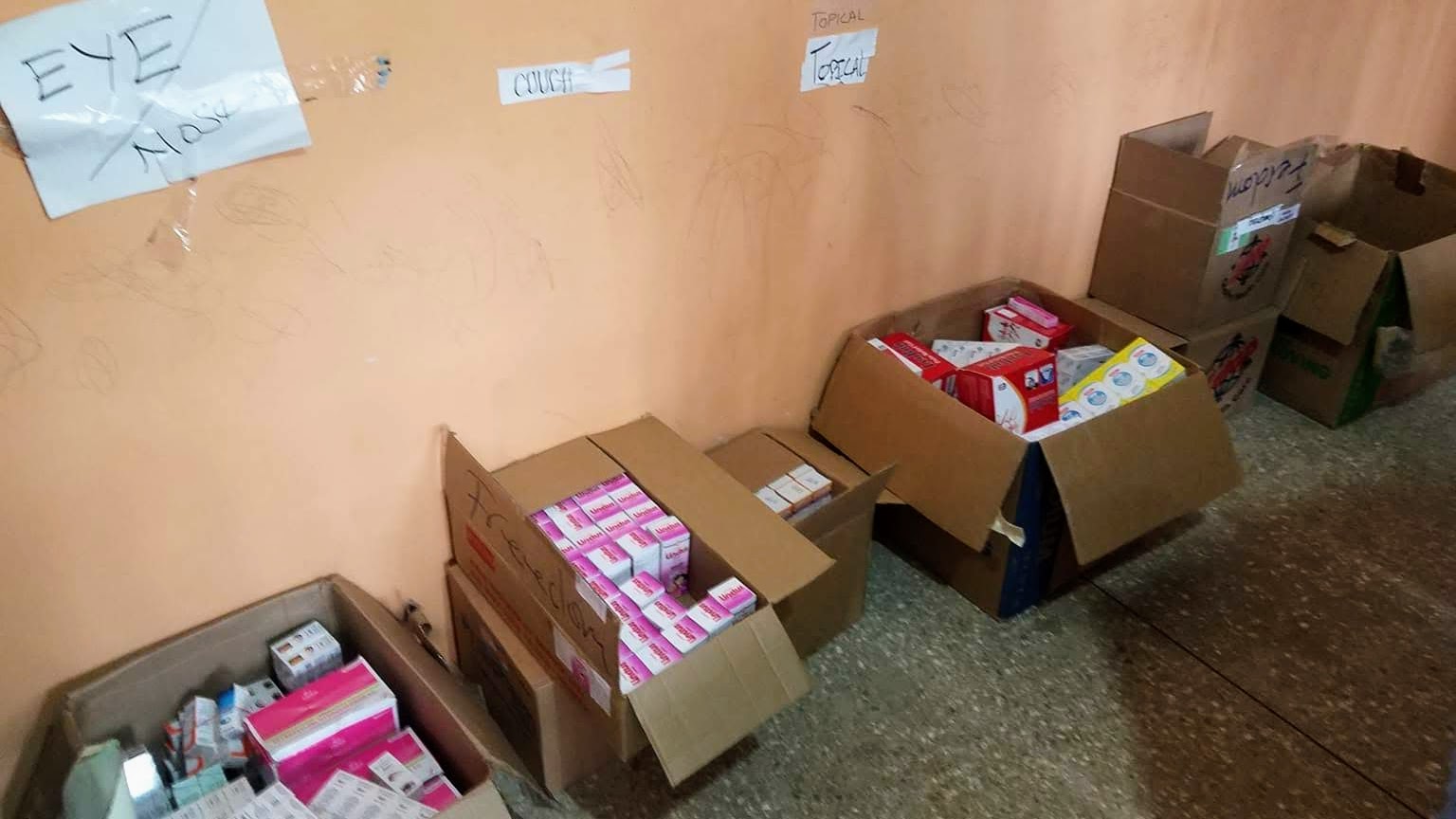
Working with the physicians was wonderful. I learned so much about how to diagnose the common diseases and developed a talent for getting blood from kids without making them cry. I was sad to see how many little ones had swollen bellies. I always associate it with undernourishment, but on our clinic intake form everyone indicated that they were able to eat.

Later in the day we went from home to home taking blood pressures and inviting people to the clinic if they needed additional care. Otuam was close to the sea and many of the houses were made out of palm fronds. There was a quality to the place that felt like Neverland, with forts hidden among the trees and laundry and nets hanging like pirate sails. Hungry cats watched as people cleaned fish and radios dangled from branches. The children were curious and wild as ever and I had fun playing and adventuring with them. It was an incredible day.

Day 7

We visited the large regional hospital that patients are referred to if they can’t be treated in the clinics. If they have Ghanaian health insurance many things are covered, but if they didn’t register or can’t afford it they have to pay cash for services. Registering can be challenging and is already closed for this year because the machine that prints cards is broken.

Getting to the hospital is difficult for people in the villages. Even those who can grow enough food to eat well still may not have any money to pay for a taxi. Those who can’t afford a cab may walk for days under hot sun.

36176328_10155366573850824_2128956022373482496_oThis hospital is rare and unique in Ghana. It has a special team to manage chronic conditions like diabetes and hypertension. We spent some time talking to their director and making plans to work together over the next year to bring their amazing work to more communities. We are also going to try to get them additional funding for important equipment they need, such as the ability to test HbA1c levels (a diabetes blood sugar test). We were able to tour the hospital and were overjoyed to find that, unlike the rural village clinics, they kept medical records and charts on their patients. I’m excited to see teams in Ghana working to initiate chronic condition management and hope other hospitals are inspired by their work.
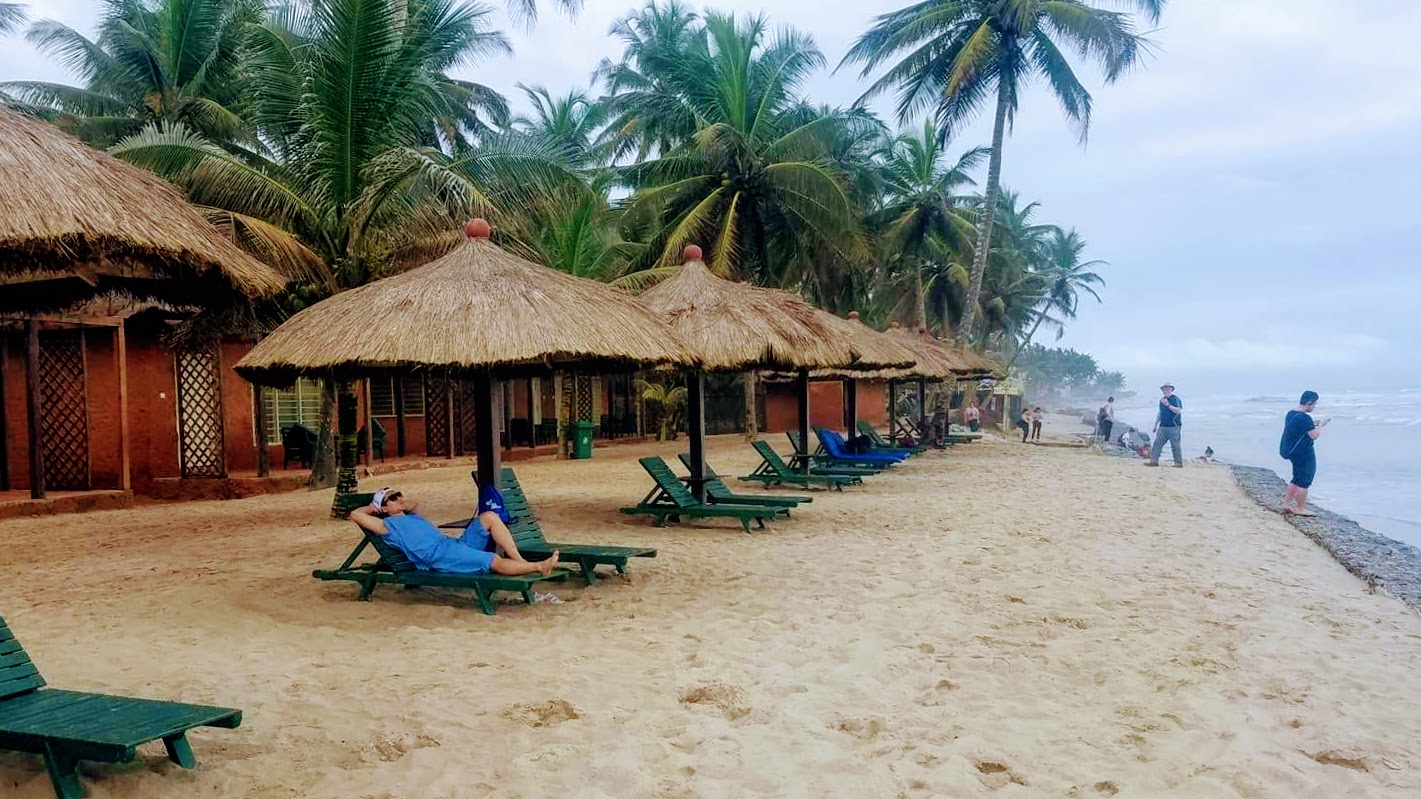
36063908_10155366573485824_3676942903927635968_o.jpgOn the way home from the hospital we took some time to relax at one of the local beaches. It was incredibly beautiful, but parts were covered in litter and we were told the water wasn’t clean enough to swim in. It was nice to listen to the sound of the waves and rest in a place with a cool breeze. Such a lovely day.

Reflections

The best part about Ghana has been the people. The adults are generous, wise, proud, beautiful, sad, and kind and the children are playful, curious, clever, and mischievous. Most people wear beautiful colors and there is a tailor in the community who makes custom clothing for everyone.

While we were setting up the clinic there were always little faces peering in the windows at us or running up when our bus arrived. They were eager to play and quick to ask for treats and supplies. One boy gave me big eyes and mimed brushing his teeth. This broke my heart and caused me to skip the normal process of giving adults all the supplies needed for their family at the end of the visit to sneak a toothbrush for this boy. It was a foolish choice. Soon they were swarmed around me begging for toothbrushes. I tried to stop handing them out and had a nurse translate that their mothers would be getting some for them, but they wouldn’t release their hold on the ones in my fingers. I eventually was able to give them to one of the mothers and escape.

I distracted them further by taking pictures of them using a Polaroid camera I brought. They went wild for the pictures, posing and dancing around. Eventually I decided I had used enough of the film and wanted to save some for the other communities. I started playing with them by showing them dance steps, like the Charleston and the salsa basic and spinning them around. They were thrilled and tried to show me their version of head, shoulders, knees, and toes as well as some local kicking games. We also taught each other different clapping games and high fives.

Whenever I had to go inside to help clean up they would follow and call for “sister Afua” after me. I got lots of hugs and happy bounces whenever I would emerge again. At one point we were finishing up at the clinic and it started pouring with rain. Everyone was huddled under the shelter but the kids were being adventurous and darting into the rain. It seemed refreshing after the hot day in the clinic so I followed and played in the rain with them, spinning around and dancing. It was wonderful and by the time I got to the bus my heart was so full it could have burst.

35889133_10155360507615824_1134829989959565312_o

A Dark Past

Our last full day in Ghana was a cultural day, where we visited a local market and enjoyed Ghanian music and dancing. We also visited Cape Coast Castle, a notorious stronghold of slavery and torture.

36347144_10155376294000824_7797909770412752896_nCape Coast Castle was a trade fortress that was converted for use to house and break the spirit of slaves before they were loaded onto boats. Our visit began wandering around the open air area and looking at the canons over the sea, then into a museum detailing the history of the castle and its role in the slave trade. When I was about halfway through the museum our guide collected us for a tour of the dungeons where the people who were to be slaves were imprisoned.

36393991_10155376293940824_8802817987510796288_n.jpgTo give us a glimpse of the fear they must have felt, he had us initially descend in complete darkness, only turning on lights once we had reached the stone wall on the other side of the male dungeon. He explained that this small underground space held up to a thousand men for months at a time. They were forced into complete darkness where they had to live in their own filth and excrement, packed against their brothers. The floor we were standing on was false, built on top of the human waste that had accumulated there.

36335527_10155376294175824_8162317408808206336_nTo add insult, directly above the slave dungeons where people endlessly suffered was a Christian church. Our guide described the thought process that many slaves went through when they decided to convert to Christianity. To a person experiencing such agony, it would seem like your God had abandoned you or was weak, yet those who followed the Christian faith were clean and happy, prospering above. It must have appeared to many that the Christan god was stronger or better to his worshippers.
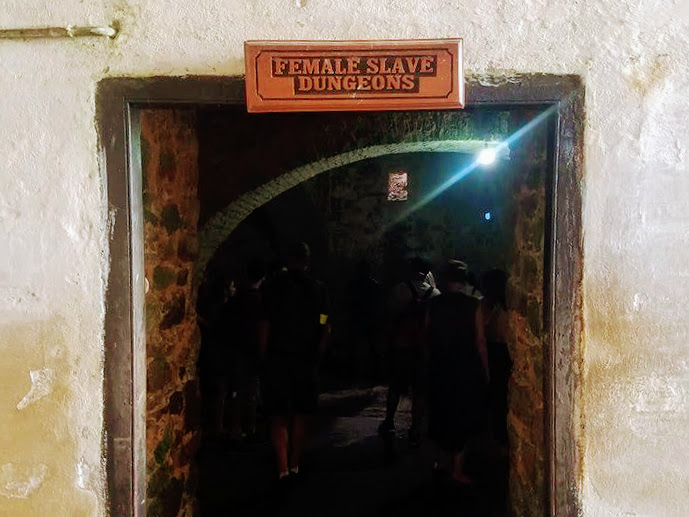
The men in these dungeons would never come out the door the entered again. The governor didn’t want the people of the castle to see the slaves, so they were moved, shackled together and driven forth by other slaves, through an underground tunnel to be loaded onto the ships.

36306542_10155376294415824_4634339883559682048_n.jpgThe women’s cells were similar to the men’s, except that their door was regularly opened so they could be grabbed and raped at will. Sometimes they were bathed before this occurred, and other times drunk soldiers would not even afford them that decency. Women who resisted were beaten or put into a hotter cell where they were locked without food and water and often died if their spirits weren’t quickly broken. Our guide shut us into the boiling confinement cell for about 30 seconds, which was enough to have some of us panicking.

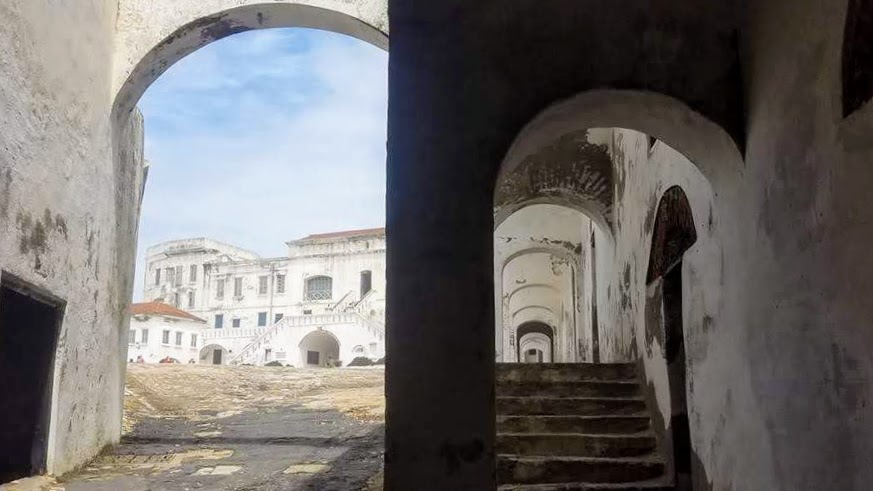
The last they saw of their country was the Door of No Return: a portal that brought them to the water where they were lowered and packed into the ships as cargo. By the time they emerged through that door, they had been in darkness for many months and thus were blinded by the bright sun, unable to fight. Those who did not die at sea lead painful backbreaking lives in slavery.

Immediately after walking back through the Door of No Return, our guide took us up to the airy hall where slave prices were negotiated and then up to the British governor’s chambers. The governor had a beautiful set of airy rooms with large windows that looked out on the picturesque coastline. The dichotomy was so startling I felt shaken and revolted.

36350563_10155376294695824_4792468016619061248_nWe were left with a plea to remember that slavery is not gone from this world. People are still taken against their will and forced into terrible suffering and servitude. He asked us to see, to take a stand, and to remember.

We have so much work to do, in our country alone, to ensure that people are able to lead fair and decent lives. The horror of the atrocities that we do to each other when we dehumanize our brothers and sisters is echoing around in my heart.

These terrible things happen when we group people together and see them as ‘other’. We do this sometimes because we want power or wealth, other times because we don’t understand them or are afraid of them. As we band together to stand against injustice, I urge you all to avoid the slippery road of dehumanizing those you stand against. Fight them with all of your fury, but don’t follow the dangerous path of talking the humanity away from anyone.

It is ideas that we fight, not people. Fight against the idea that anyone can be treated as less than human. Our trustest goal is to stop that idea from spreading, to take it out of the minds of people, and until that is accomplished to stop those people from acting on this deadly idea through any means necessary. Stand together against the heinous crimes happening in our country. Do not let this terrible sickness enter your minds and hearts. Keep fighting.

35883030_10155360504230824_5450899048695332864_o


You can donate to Global Brigades on their website. I don’t work for them or get any kind of kickbacks or sponsorship, I just like charity.

Gardens and Kindess: Hisaya Odori, Tokugawaen, & One Treasured Umbrella

We are at the end of my stories about this recent visit to Nagoya. I saved a special story of human awesomeness for this last post because nowadays I feel like we need all the random acts of kindness available. I’ve also collected the various encounters I enjoyed with the city’s greenery and gardens. I love living an urban life for so many reasons: transportation, culture, food, a wide variety of craft beers… but after spending so much of my life near trees I get antsy if I’m not next to one for a while. Nagoya could give any green city a run for it’s money as far as that goes, and although the Atsuta Jinju Shrine was far and away the most immersive natural experience, there were other treasures around town worth mentioning.


The Nagoya Green Belt, Hisaya Odori

Image result for Hisaya Odori

photo credit: ume-y

Hisaya Odori is one of the main streets in Nagoya, and it runs through the Sakae neighborhood for about 2km. It’s filled with flower gardens, green grassy spots, beautiful fountains, the Nagoya TV tower and the Oasis 21 center, plus some truly large trees. It’s like a lovely green ribbon in the heart of downtown. I adore this and want one in every city.

After shopping in Osu, and the surprise dance show in Sakae, we headed over to the Hisaya-odori Garden Flarie, which is a cross between a botanical garden and an outdoor barbecue restaurant. It’s free to enter and explore. That day I was greeted with a magical rose maze filled with hundreds of varieties of roses in full bloom. It smelled amazing! It wasn’t huge, but it was so packed with flowers I felt completely overwhelmed! In a good way. I wasn’t the only one appreciating the blooms, as an entire photography class had come out with their very expensive cameras to have a chance at the wonderful backdrops.

Once I made it through the roses, I found a small lake surrounded by more flower beds. One of the city’s giant crows was having a bath in the stream feeding into the pond, and didn’t seem at all bothered by the humans wandering around. Finally, my flower power boost wound down and we plopped into some comfy chairs to listen to the live music.

Beer Festival Walk Through

Later that evening we ran into the Belgian Beer Festival taking up about two blocks worth of the park, so we decided to stroll around as an after dinner food-settling walk. It did look like a decent beer selection was available, however, it was set up more like a beer garden than a tasting festival. A glass was 8$, and although tickets to get it filled were 2$ each most beers were 3-5 tickets. They were good looking beers from nice craft breweries, so I don’t mean to suggest they weren’t worth 6-10$ a pint. However, neither of us really wanted a keepsake glass, and we found it a little sad there was no option for tasting available.

A few years ago I ran into a wine festival in Prague that had what strikes me as the perfect set up. Five dollars for the glass (a better price point), and then wine could be had in “taste” portions (1-2 oz) for a single ticket, or full glass portions for more tickets. This allowed guests to taste several wines without going broke or getting drunk, and then settle into buying full glasses or even bottles of their favorites. Beer is so filling, I couldn’t imagine drinking even a full pint after my wonderfully huge meal of Hitsumabushi, let alone drinking enough to even taste the 3-4 beers that had caught my eye. Still, it was fun to see what was on display, and it was a nice slow post-meal walk before we turned up the speed to find the subway.

Tokugawa gardens

20180508_151625Tickets to the Tokugawa Gardens can be purchased at the same time you buy your Nagoya Castle ticket (combo ticket ftw) which gets you a slight discount if you are planning to do both, but does not include the art museum at the gardens.
After I finished at the castle grounds I took the Me-Guru tourist bus to the next stop, Tokugawa Gardens. The Me-Guru stop is on the opposite side of Castle from where I came in, but the ladies at the ticket office were well familiar with the bus I was looking for and gave me directions. If you do take the Me Guru TO Nagoya Castle, just be aware it will pass you through a little “village” with food and shops. I am not sure if the golden ice cream is in that one as well, but you can get your hand stamped at any gate should you want to exit and return later on the same day.

I finally found the Me Guru stop, but the first golden bus to pull up was going to the wrong place! I thought like most hop-on-hop-off buses it would be a single circular route, but I was mistaken. Be sure you ask the driver if he’s going to your stop when you get on (no need for elaborate Japanese, they mostly know the stop names). In my case, the driver advised me to hop back off and let me know about what time the bus I actually wanted would arrive. Very kind and helpful.

I ended up waiting for about 30 minutes. It probably would have taken about the same amount of time to walk over to a subway/ regular bus station and go from there… maybe? But I didn’t have WiFi to check any alternate route and it honestly felt nice to just sit still for a while after walking the palace grounds all morning. If I’d checked the Me Guru routes and schedules better, I could easily have spent that time in the little village of shops I passed between the castle and the bus stop, so that’s on me.

For more info on how to use the Me Guru, see my post about Nagoya Castle.

20180508_151313The golden bus drops you off right at the gates to the gardens, and I was able to show my combo ticket to get in with no trouble. The gardens start out with a main square that houses the entrance gate and the museum (which I did not go in that day). There is a large lake to walk around and feed koi fish in. The koi are ginormous. Biggest koi I have ever laid eyes on. I think there are smaller tuna. Some were close to a meter. There were also many colors, mainly the gold color and the calico mix of orange, black and white, but there were also ghostly solid black koi that were invisible even a few cm under the water until they broke the surface. They were like swimming shadows of fish. It was fascinating to watch.
20180508_152040

Near one edge of the lake, the concrete path leads right up to the edge of the water and the fish are clearly used to associating humans with food because they come in droves as soon as any two-legs gets within sight of the water. I was able to get some very close up photos of the koi who were trying to see if my phone was edible. Good thing they don’t have teeth!

20180508_152009

I thought about circling the lake because it was quite pretty, but the rain was beginning to patter around and I had left my umbrella at the restaurant the night before, and had passed exactly zero convenience stores that day so far to buy a replacement. It was still light rain, and it was warm, but it’s hard to take sweeping vista photos of a beautiful body of water in the gray drizzle. I decided to head into the trees for shelter and to see if I could find some more picturesque views.

20180508_152354

The woods are criss-crossed with paths and stairs that lead all around what is a fairly small area. Despite it’s diminutive size, the paths all lead to new and unique viewpoints. I found a little rest area/ cottage at the top of a low hill. It looked like a great place to hide from the sun or rain. There was also a small suikinkutsu, a traditional garden ornament made in such a way that the water falls onto an upturned pot and makes a kind of chiming sound. I don’t know if this one was clogged or broken, but I could not hear the sound it is famous for making at the time I was there. You can hear a sample on the wikipedia page, though.

20180508_155900

Next, I found the river that fed both from and into the lake in a kind of faux natural fountain. There were more of the shadow koi dancing in smaller ponds around the woods. I watched butterflies flitter through the trees looking for the recently departed spring flowers. I found an inch worm that I tried desperately to photograph, but he was just moving so fast that everything is blurry. It was still fun to watch the little bug I know only from kids songs.

Although the spring flowers were gone, and the summer flowers were not yet blooming, I did find one fascinating splash of color among the green leaves. The Japanese maple trees were putting out “helicopter” seeds that were bright pink! Not autumn leaf red, no… like hyper-Barbie pink. They very tips of the green leaves took on the same pink hue. This was beyond fascinating to me, not only because I had no idea leaves could be pink, but because there’s no reason for it. Flowers evolved colored petals to attract insects (and other animals) that will help spread the pollen and fertilize more plants. The maple seeds are wind blown. The helicopter blades fly on the wind. Any kid who ever lived near any such seed bearing tree has played games watching how far the spinning seeds will go. They don’t need insects to be attracted, so why the heck are they pink?

20180508_153348Finally, because I can’t take a vacation without finding the waterfall, I found the waterfall. I am reasonably sure given the size of the park that the river and falls are man-made, but they don’t look like artificial fountains, they look like natural waterways. It’s a specialty of Japanese gardens to cultivate nature in a pleasing manner while still maintaining the natural beauty.


About that Umbrella?

Sometime while I was in the trees, the rain really picked up and when I came back into the open, it was definitely umbrella weather, and I still didn’t have one. Plus, the map indicated that my walk to the nearest public transit station was just over 1km, a distance I don’t mind walking in better weather.

20180508_155009

I decided it was time to leave the gardens. I could have spent much more time there in better weather, but even in the rain I feel like it was worth the entrance fee and the walking around time. It truly is a beautiful and relaxing place. I pulled up my map (satellite map works even without data or WiFi) and oriented myself to find the park exit nearest my destination. I double checked with the ladies at the gate on my way out that I was heading the right way. I love Google Maps, but I still like double checking.

With a 1km+ walk ahead, I was sure that I’d pass any kind of convenience store on my way between the gardens and the station where I could re-umbrella myself, but it was very residential. I know Korea has an insane number of convenience stores, but most places I’ve been in Japan have a reasonable number (at least one every couple blocks) or if they don’t have those, then they have tourist stands selling stuff which always includes umbrellas on rainy days for people who forgot theirs. The neighborhood around Tokugawa is bereft of all these.

Image result for anime umbrella sharing

artist credit: Rolfyram

Some way into my walk, I just became committed to being wet. I was on my way back to the apartment after all, so I just had to survive the subway and I could get a hot shower and a change. Then suddenly, a kind faced Japanese lady came up beside me. She spoke rather quickly, but I came to understand that she was offering to share her umbrella space with me as we walked in the same direction. As we walked along the otherwise abandoned streets, she asked me the usual foreigner questions: where are you from, what are you doing here, etc. I was struggling with my Japanese all week because it kept getting mixed up in my brain with Korean and I felt embarrassed by my total inability to string together a sentence, but she was patient and kept at it, smiling the whole time.

When she asked where I was going and I told her, she was completely shocked. But that’s so far! Yes, I know, but I’ll be ok, I’m going back to my friend’s house next. She tutted a bit more about the distance and when we came to the intersection where we would part ways she began to give me her umbrella. This was no cheap conbini umbrella, it was a nice, heavy, decorated affair. I shook my head and gestured for her to keep it while trying again to explain I would be ok. I’m not going to melt however often my students say I’m a witch. But she insisted further.

I remember learning back in my first year of Japanese classes that it is necessary to refuse 3 times to be really sure, and while I would certainly have appreciated an umbrella, I felt awkward accepting such a nice one from a stranger. So I refused again, and again she insisted, telling me her house was just across the street. And a third time, really are you sure, I will be ok, you shouldn’t do that. And a third time she offered the umbrella, so I finally decided I should accept it with grace and gratitude. I thanked her profusely and bowed. She was grinning from ear to ear, so I think somewhere she’s telling the other version of this story where she got to rescue a poor foreign visitor in her neighborhood. It was such a nice umbrella, it kept me dry all the way home, and I made the effort to get it on the plane back to Korea because even though it didn’t fit in my carry on luggage, it’s too precious a souvenir to leave behind.

Related image


That night we feasted on conbini food and managed to make some working rubrics for her essay classes. The next morning I made the long trek back to the airport and my home in Korea. Because she and I both live a bit far from our airports, it’s still about 6 hours of total transit time from my house to hers. Too long for a regular weekend, but I hope for another long one where I can go back and see some of the things I missed or at least see the best ones in better weather.

Less than a week till I’m wheels up again. It’s getting down to the wire trying to finish my end of semester work at the University and get my trip planned out enough to be sure I can get tickets to everything I really want, and have back up plans for when I can’t. I hope you enjoyed Nagoya. Thanks for reading!

Nagoya Castle: Now with 10% more Ninja!

If there is one famous place that exemplifies Nagoya, it is the sprawling grounds of the reconstructed Nagoya Castle. I couldn’t possibly visit Japan’s fourth largest city without spending some time at it’s most famous historical monument! I was hoping to get a sunny day and take some sweeping landscape photos of this majestic structure, but the weather was not on my side. Even without the sun, Nagoya Castle was beautiful, fun and educational to visit. Plus, there were Ninjas!


I woke up Tuesday to the sodden realization that the weather forecast had changed again, and the rain was not going to stop until I was back in Korea. It wasn’t as bad as Monday, however, mostly cloud cover and the occasional sprinkle. I had forgotten my umbrella at the katsu restaurant the night before, but I wasn’t worried since umbrellas are for sale in every subway station and convenience store (right next to a huge steaming pile of foreshadowing).

Golden Bus or Subway?

I looked into the possibility of doing the Golden Tour Bus day pass. The Me-Guru is a kind of hop on hop off bus that runs around the most popular places in Nagoya. You can get a Me-Guru day pass for 500 yen which is great if you are planning to hit up several tourist hot spots in one day. Unfortunately for me, there wasn’t a stop anywhere near my friend’s house, so I was going to have to take the subway at least 2 times (out and back) making the 500 yen ticket less attractive to me. If the Me-Guru isn’t getting you where you want to go, you can also get a city day pass for subways for 740 yen, or subway bus combo for 850 yen.

Nagoya Subway ticket machines

Photo Credit: Nagoya Station.com

The main attraction of the Me-Guru Golden Bus is that it drops you very close to tourist attractions that might otherwise be a hefty walk from the nearest regular bus or subway stop. Atsuta Jingu is very central and easy to access, but the Nagoya Castle and Tokugawa Gardens are rather out of the way. Lucky for me, the Me-Guru bus also offers single ride tickets for 210 yen which you can buy on the bus just like any other city bus. I would recommend the Me-Guru day pass if you happen to be staying anywhere near one of the bus’s stops, however I opted to take the subway (270 yen trip) to Nagoya Castle, then the Me-Guru to Tokugawa (210 yen), and finally the subway again (270 yen) back to my ersatz home base for a grand total of 750 yen.

I mention all this because it’s acutely important to figure out transit in Japan before you go unless you are made of money and time. Since most of us aren’t… Data plans and mobile WiFi hot spots are expensive and not really necessary given the proliferation of free WiFi, but it does mean you can’t to a Google search any time anywhere, you have to find the WiFi first. I like to research my routes over breakfast and take screenshots of the map and directions to reference later when I’m out of WiFi range. So, Tuesday morning, while I was enjoying my “morning service” again, I pulled up a million maps to see where I would go and how far I would have to walk/wait between each one. The public transit options between the Castle and the garden are dreadful. Hence the one stop Me-Guru ride.

screenshot_20180619-191133

If you don’t plan ahead, you may not know where the next bus stop/subway station you need is (it might not be the one you came out of or the closest one may not go where you want to go). You could find yourself walking farther than you want, which doesn’t sound like much, but we tracked our walking on Sunday and got almost 10 km in one day of aimless tourist meandering. It adds up fast, and while I don’t mind walking for health or enjoyment, I don’t want to waste vacation time and energy walking extra to the bus stop when I could be using it to walk through something cool! Plus, if you suddenly find yourself knackered from unexpected heat, humidity, and ridiculous amounts of walking (this happens to me at least once per vacation), taking a taxi back to your hotel in Japan could cost 50-100$, that’s US dollars, folks. Taxis are EXPENSIVE in Japan. Ubers are not better.

Let Them Eat Gold

From the nearest subway station, the walk into the Castle compound is down a little restaurant corridor that sells everything from Nagoya specialties to the Castle’s very own gold plated ice cream. Yes, gold plated ice cream. It’s not actually very expensive, and it’s highly Instagramable, but I couldn’t bring myself to buy one as I have recently been complaining about the out-of-touch rich people in America eating gold plated tacos while children can’t get fed in school… soooooooo…. no gold ice cream for me.

The ice cream isn’t trying to be Richie Rich, it’s actually meant to imitate the golden tiger-fish that is the symbol of the castle. During my post vacation research phase, I got curious about how they could afford to sell these golden ice creams for 6-9$ a pop, and I discovered that you can buy edible gold sheets for surprisingly cheap. One seller on Amazon is selling 10 sheets for 7$. The gold taco I was upset about? 25,000$… US….At 0.70 per sheet, it may be silly to eat a golden ice cream cone, but it’s not actually Louis XVI levels of decadence and class warfare. Eat the rich.

Fire Bombing Damage

Nagoya Castle is the number one tourist stop in Nagoya and it’s not even finished! Almost everything you see there was destroyed by Americans in WW2 during the fire bombings. A fact the informative signs will not let you forget since everything you read will tell you how the original was destroyed and whether what you’re looking at is a transplant or a reconstruction.

20180508_133330

Traveling around Asia, you inevitably see signs like this because nearly every temple, castle and historical site has been sacked during one war or another. In China and Korea, you find things that were destroyed by the Japanese. In Japan, you find things that were destroyed by the Americans.

The castle and grounds were still heavily under construction during my visit, but I’m told with some degree of excitement by the locals that the reconstruction should be finished this (2018) summer.

20180508_132446

Hommaru Palace

The first sight that greeted me walking in the gate was the tower of Hommaru Palace. The tower is done in a similar style to the main castle, but is much smaller. Once you get around the corner and over the moat, there is a beautiful brand new palace. According to the literature I was given to take home, the Nagoya Castle was declared a National Treasure back in 1930, but sadly destroyed in the 1945 air raids… ok they don’t call out America by name, but we all know. The palace compound has been undergoing reconstruction on and off since 1959, but the Hommaru palace reconstruction only started in 2009!20180508_134013

I am not an architecture buff, but I do enjoy a beautiful building. I especially appreciate that Nagoyans decided to use all traditional materials and craft techniques to remake the structure. It doesn’t just look like the original, it preserves the artistry and history of Japanese culture — not only the woodwork, but also the fittings, metalwork, and paintings. There was an intense research project designed to microscopically and chemically analyze the original scraps that survived the fire bombing (have we mentioned that recently, because Nagoya Castle does not want you to forget) so that the paintings could be replicated as authentically as possible.

Despite the chronic reminders of our history of conflict, the restoration process is fairly interesting. If you want to see more details, they’ve got a lovely website.

As I approached the palace proper, there was a group of Japanese businessmen having a chat in front of a very photogenic area. However, my faith in Japanese politeness was rewarded. As soon as one noticed me holding my camera (phone) nearby, they gestured to the others to move out of the way and we all smiled and bowed to each other before I went on to take the photo. So much politeness!

20180508_120144

Following the path, I noticed an area where a few other visitors were lining up and entering the building so I paused to check it out. The staff were sooooo excited to share with me. They showed me a little video of how to tour the building correctly (no touching, no flash photos, etc) and explained the character in costume stopping all the bad behavior on screen was the father of the famous king who had ruled from this palace and a famous general.

20180508_123652

I was asked to wear my backpack on my front to avoid bumping anything, and all of us were asked to remove our shoes before going inside. Slippers were available, of course, and there were free shoe lockers as well. For an extra 100yen, an audio tour of the palace was availble in several languages. I thought about getting the English one, but it was taking the staff 10+ minutes to set up the couple at the front of the line, and I wasn’t second in line. I decided to risk moving on less informed.

The palace itself is bright and open. Although the day was cloudy, the inside of the palace somehow still managed to feel sunny with the warm wood halls, paper windows, and gold accents. Drifting sock footed through the hallways, I felt a sense of what visiting the royal palace might be like. Everything was hushed and clean. The halls were made of the same pale wood on all 4 sides creating an effect of being inside a tree. Every few meters, the interior hall wall would open up into an opulent room. The 3 visible walls inside each room were covered with the ornate and painstaking replicas of the Edo period paintings.

In practice, each of the rooms would have had a specific ceremonially significant purpose. A room for receiving guests of a certain social standing or another. A room for dining, one for tea, one for drinking sake and listening to music. One room had a fire pit built gracefully into the floor and a hidden vent in the ceiling to carry the smoke of roasting meat and fish up and out. The low wooden bars are just to keep people from walking into it, not an actual part of the function. Indoor fire pit is now added to my list of things I want in my imaginary dream house of the future.

20180508_123034

The palace doesn’t take long to explore and it’s included in the park entry fee. I highly recommend a walk through. On my way out, I ran into the very helpful staffer again. It turns out she had lived in America a while ago and was happy to practice English with me (although I don’t think she really needed “practice”) She told me some more about the restoration process and said I really needed to come back after the construction was complete to see it at it’s best. It made me happy that the people working there take so much pride and interest in the history and culture of the site. Enthusiasm is highly contagious and just talking with her made me more excited to be there.

Surprise! Ninjas!

Just after leaving Hommaru, the path turns a slight corner and suddenly there’s the first real view of the Castle proper. This was the real moment I was sad about the weather. Nagoya Castle is elevated, and huge, so any photo will have plenty of sky in the background. My cloudy, rainy day resulted in a very plain light gray sky instead of a fluffy cloud filled azure backdrop. Is it cheating to use filters?

Did I mention there are ambulatory ninja on the castle grounds? It’s part of a cultural and historical show. According to the ninja website, two words I never thought I would string together in a non-hyperbolic fashion, there are performances every weekend, but weekdays are listed as “hospitality”, a kind of meet and greet.  I was there on a Tuesday, so I only met the two posing for photos and promoting their future shows.

20180508_124042

No Nagoya Castle for Me

Sadly, the castle was closed for the finishing touches of construction, so I couldn’t go inside, but I’ve heard there’s an excellent view from the top. Looking at other people’s photos online, it seems the decoration style is very similar to that of Hommaru palace. The only truly distinctive thing I missed out on seems to be the huge Shachihoko (the tiger fish) that you can sit on and pose with, and the tall geometric stairwell. Next time.

nagoyajo_20160113_e

photo credit: Matcha Magazine

Since the castle proper and some of the other areas were closed off for construction, I was encouraged to wander a little off the beaten path. In addition to stopping for teeny tiny flowers which earned me some very strange looks. (Why is she looking at the grass when the castle is right there?) I also wandered off into a little forest grove filled with large, semi-flat stones. It was not cordoned off, but also not really connected to the main walkway either. After some assistance from the Google oracle, it seems I discovered a stone tomb of unique historical properties.

20180508_125002

I’m still unclear if it’s an original or a replica given the whole bombing debacle, and I don’t know why it was over there all by itself in an extremely unmaintained state in the middle of what were otherwise meticulously maintained grounds. The only informative sign was in Japanese and it mostly focused on the description of the architectural style, geography and time period with no mention as to its context near the castle. Still, it was pretty, and from inside the trees, I got some fun new perspective angles on the castle itself that don’t look identical to every other tourist shot on the web, so yay!

20180508_130642

A large chunk of the grounds were completely blocked off during my visit. I found a few more interesting goodies like ancient gates and the working tea house where you can stop and have a traditional cup of matcha green tea and a sweet. Of course the souvenir shop would never be closed for construction, but I found the gardens to be a bit lackluster, as though they had not been tended to yet this year, so even though they were not blocked off, they weren’t exactly visitor ready.

Samurai and Shachihoko

20180508_131428On my way back toward the main gates, I happened to run into the Samurai. Ninjas AND Samurai. It’s like cosplay meets museum, so very Japanese. Much like the ninja, the Samurai pace the palace grounds daily for photo ops and perform shows on weekends and holidays. My desire to avoid weekend/holiday crowds may have backfired here, but the guys I met were pretty cool nonetheless.
The last important sight before my path led me outward was the Shachihoko – the fish tiger. What’s up with that? Well, it’s a mythological creature that is half fish (specifically a carp) and half tiger. The Japanese characters that make up the name of the creature is also a combination of “fish” and “tiger”. 鯱 (shachi) = 魚 (sakana, fish)+ 虎 (tora, tiger) Some argue that the fish is really an orca because “shachi” also translates as “orca” in Japanese.  I love language.

It’s often put on temples and palaces to ward off fires, but in Nagoya it has become the special symbol of Nagoya Castle due to the two large golden Shachihoko on the roof. Most of the souvenirs, or omiyage, of the castle involve this magical creature in some way, and of course, so does the golden ice cream.

20180508_132024


I do hope that I’ll have the opportunity to return to Nagoya again after the construction is complete. I would not only enjoy seeing the inside of the Castle proper, I suspect I would greatly enjoy the gardens and side buildings that were inaccessible during my visit. What little I could see through the scaffolding looked intriguing. Plus, next time I won’t feel guilty about trying that glittery frozen treat now that I know more about the edible gold market.

Due to the weather, there is no accompanying photo album to this trip, but I hope you’re enjoying the Instagram photos in the mean time. As always, thanks for reading ❤

Oh, and the umbrella foreshadowing? I’m afraid you’ll have to read the next post to find out about that adventure. 🙂