The Body Keeps the Score, Bessel van der Kolk

This remains one of my favorite books for trauma recovery. I read it right after CPTSD: Surviving to Thriving, so close that they seemed like one big book. I finally had a chance to re-read it almost a year later. Those wait times at the public library are intense, but I guess I’m glad so many people are reading this kind of book, especially during COVID. This book currently lives in my top 5 list for therapy books, and I highly recommend reading them together like I did, as they are very complementary. This post is very long because this book is very full of important ideas. I hope you stick with it.

Bessel van der Kolk is a very accomplished and experienced psychiatrist and researcher in the area of trauma. He started working with Vietnam veterans in the 1970s (before PTSD was a known diagnosis) and has been instrumental in hundred of studies and research projects to better understand the impact of both single traumatic events and long term traumatic exposure. His work with war veterans led him to understand how childhood trauma was both similar and different from combat trauma, and he has been vital to the understanding of CPTSD. He is an expert the experts defer to. “The Body” was published in 2014, so it’s fairly up to date as far as technology and research techniques described.

This post is so much longer than other book reviews because the book itself covers so much. It tells the history of understanding and treatment of trauma. It explains the scientific studies used to advance that understanding and treatment. It addresses the social, political, and economic barriers to the study, understanding, and treatment. It shares case studies of individuals suffering from and recovering from trauma. It shares statistics of the staggering number of people who have been traumatized in one way or another in life. It addresses the critical link between “mind, brain, and body” in how trauma affects us and how we heal from it. And it looks into a range of treatment options, explaining how and why they work, or don’t. Yet somehow, Van der Kolk does all of this in a casual and personal narrative style that carries the reader through his life’s work in a compelling and interesting way.

Just My Highlights

There’s no way for me to even try to summarize everything that Van der Kolk talks about here. I won’t do it justice. I stress again how worthwhile a read this is for everyone. Understanding trauma and the historical, social, and political context of cycles of abuse is the only way we will ever make changes. There some standout points that I want to zero in on for my review, and some opinions I’m squeezing in because this might be my last therapy book review post.

The Historical Cycle of Trauma and Suppression

Hysteria and Sexual Abuse

In the mid-late 1800’s some ‘scientists’ named Jean-Martin Charcot and Pierre Janet were studying hysteria. Although a lot of the people diagnosed with hysteria were women, there were also cases of “hysterical blindness”, “hysterical paralysis”, memory loss, and a host of strange behaviors that occurred in people across the gender/age spectrum. At first, Charcot was looking for a physical cause, but when he was unable to find one, he turned to hypnosis, and came to the conclusion that all these problems were being caused by the repressed memory of traumatic events.

Freud came along and got really into finding out what those traumatic events were and got deep into talk therapy, actually listening to his clients (not something doctors had done before). He determined that the young women suffering in this way were all suffering as a result of sexual abuse at the hands of an older male relative. He thought he had a great breakthrough, until he realized that it would mean that a huge number of the well respected men in Vienna would be guilty of raping their daughters and nieces, including his own father. He thought that maybe the promiscuous FRENCH could be doing that, but he just couldn’t countenance that his own Viennese men could be doing the same. He backpedaled and changed his theory, placing the blame on the girls as “seducers” of their fathers and uncles.

World War I & Shell Shock

Then a few short years later, as WW1 came around, and there were British soldiers having weird symptoms after battle. The term “shell shock” was coined and some scant treatment began. However, as the tide of the war shifted against the British, the top brass decided that “shell shock” was just a coward’s excuse. That “real men” don’t break down from a little light war trauma, and they banned the use of the word in any documents. Some soldiers were arrested, imprisoned and even executed because they had trauma that no one in charge wanted to believe in.

There were plenty of doctors pleading to be allowed to study and treat it, but the gag order was politically expedient to win the war. Another generation was blamed for exhibiting symptoms of trauma that those in power had caused. In America, the WW1 vets had it a little better for a brief moment. They were temporarily greeted as heroes and awarded combat bonuses, the money to be given as a delayed payout. When the depression hit, the veterans rallied in DC to ask for their bonuses so they could afford housing and food. The police and army were sent in to scatter them and burn their camps. Congress voted to never give the vets their money, and they were left to fend for themselves as a new crop of young men were lined up for the slaughter of the next big war.

World War II, Vietnam & PTSD

WW2 of course went through just about the same thing. Suddenly “shell shock” was rediscovered to be real. It was even treated for a hot minute before being dismissed again when the reality of the extreme damage being done to a generation of people in the name of war turned out to be too big a price tag for the law-makers at home. Generals and politicians would much rather believe that men and women are faking it, or fragile, or damaged in some way that the leadership cannot be held accountable for. It wasn’t until the Vietnam veterans came back that we finally started to see a break the cycle of discover and repress. PTSD is now a well recognized condition, but the battle isn’t over. It’s currently recognized almost exclusively for combat veterans, with some exceptions for civilians in war, major catastrophes like the 9-11 building collapses, or devastating natural disasters.

Van der Kolk and his associates, however, found that trauma comes far more frequently and affects far more people than this commonly accepted understanding of PTSD can encompass. In addition, the results of ongoing or repeated trauma, of childhood trauma, or of sexual trauma may have many similarities to PTSD as described in the DSM, but it’s not 100% the same and more importantly, the treatments are not equally effective. These discoveries led doctors like Van der Kolk to advocate for a new diagnoses in the DSM:  Disorders of Extreme Stress Not Otherwise Specified (DESNOS) aka Complex-PTSD, or CPTSD for short.

The DSM is BROKEN

What is the DSM? Some of you may know it well, others may be totally confused. DSM stands for Diagnostic and Statistical Manual of Mental Disorders and it’s the big book of Mental Health. Doctors and insurance companies use the DSM for diagnosis and treatment, but in America anyway, more importantly MONEY. Insurance will not cover a diagnosis or treatment that is not listed in the DSM. This gets tangled up very quickly, because when health and money meet in a room, health loses every time. I can’t even scratch the surface of everything that is wrong with the American DSM model, but in regards to PTSD and CPTSD the main problem is that they are NOT the same.

Multiple studies have shown over and over that they are not the same, and that treatments for one do not work for the other (or may work, but less effectively). As a result of this, people who are suffering from prolonged traumatic exposure get diagnosed with: ADD, ADHD, GAD/anxiety, depression, bipolar, BPD/borderline personality, anorexia, bulimia, OCD, alcoholism, drug addiction, and a bunch of other acronyms because the doctor is trying to address their symptoms in a way that fits the DSM. The best case scenario is that they do this because they know the insurance won’t pay for it if it doesn’t match the book. The worst case is that they simply do not believe any diagnosis not in the book is real.

DSM 5 Defines Trauma

I did some extra reading about the DSM, since van der Kolk only mentions the failed attempt to get CPTSD into the DSM 4 in 1994, and we are currently on DSM 5. I wanted to know if any progress was made. The answer is unfortunately, not really… They did expand the diagnostic criteria for PTSD, and added a “children under 6” category, but it’s still not going to cover most people in the CPTSD range.

What is considered “trauma” by the DSM is extremely limited : “The person was exposed to: death, threatened death, actual or threatened serious injury, or actual or threatened sexual violence”. It fails to reflect any of the studies of long term exposure to many other types of trauma, such as the ACE study, nor has any relation coercive control style abuse.

I discovered another diagnostic manual called the ICD-11 (International Classification of Diseases) has added a separate category for CPTSD. The bad news is that it is very limited in scope. It still focuses on exclusively horrific traumatic circumstances where escape is unlikely, like torture, genocide, slavery, etc. “Prolonged domestic violence” is there, but not well defined. There remains no reference to the coercive control or psychological control that prohibits escape, nor of issues like systemic racism or medical trauma. In addition, it requires flashbacks (intrusive memories & images) as a symptom, which are common in PTSD, but according to most experts, not in CPTSD where emotional flashbacks (which lack a visual component) are more common.

Treating a Symptom Instead of a Cause

Without the ability to get a correct diagnosis for the underlying cause, many CPTSD sufferers are limited to receiving treatment only for their symptoms, so while these people may experience relief of symptoms while under treatment, their suffering resumes as soon as that treatment stops. Not only is this a massive healthcare disservice, but it’s contributing to a huge waste of money. Traumatized individuals are unable to function in a healthy way, and often need government resources for chronic health issues, job loss, and criminal behavior. (if you need more proof of this, read the book)

Additionally, some of what are seen as “problems” might really be “solutions” within the context of trauma. An alcoholic is not merely physically addicted to alcohol; their drinking is a self prescribed treatment to forget some pain they are unprepared to deal with or in some cases even acknowledge. The same can be true for any addiction including gambling, drugs, sex or food. In the Realm of Hungry Ghosts by Gabor Maté is an excellent exploration into the traumatic roots of addiction including socially prized addictions like overworking.

Obesity is another great example of why we can’t just treat symptoms. It is a major health epidemic in modern America, but if people are overeating as a trauma response, a defense mechanism, or to self-sooth, then no diet/exercise program will ever be successful until the core wound is healed. Van der Kolk explains that many obese patients also have a history of sexual molestation, assault, or abuse. Others may have been bullied or beaten up when they were small, and may feel strong and powerful by being larger than anyone else in the room. They feel safe from future assault or abuse because of the extra weight.

Of course, most people suffering this are not consciously aware of this in the mind. They do not think “fat will protect me” as they have another scoop of ice cream. They just feel better when they eat, so they eat. When they go to a doctor for help, it should not only be about diet, exercise, or surgery, but should include a look for deeper mental health causes that lie at the root of addiction issues. The problem with that is, as long as the DSM and major health organizations refuse to recognize that systemic social problems and resultant trauma are causing all these health problems, patients will continue to be misdiagnosed, mistreated, and inevitably blamed and shamed when their incorrect treatment fails.

The Cycle Isn’t Broken

My takeaway from all of this, the history and the DSM, and stories in the book of how van der Kolk and his associates were thwarted from doing research or having that research recognized, is that we have not escaped the cycle of notice and repress. We are still as a society unwilling to recognize that parents, caretakers, leaders and other people who are supposed to love and protect us are the deep root cause of untold amounts of pain and suffering. Crime, violence, illness, and death are all linked to childhood and domestic trauma, yet we can’t even properly diagnose or treat it. We’re looking for ways to blame the victims, a faulty gene or just a lack of moral fiber, but heavens forfend we look hard at ourselves and see the damage that our blindness is causing.

So many of the books I’ve read on this journey talk about the fact that trauma is caused by what the brain perceives as a threat, not what is objectively a threat or agreed upon by society to be a threat. Limiting PTSD and CPTSD diagnoses and treatment to people who have experienced “bad enough” trauma by someone else’s standards is part of the denial and suppression cycle. Of COURSE genocide and sexual slavery are undeniably horrible. OF COURSE the people who experience that are traumatized. What Van der Kolk and many others are trying to show us is that trauma is neither rare nor limited to such obvious horrific sources — that in reality, trauma is widespread and pervasive in the world, and that it comes from places we don’t want to see.

Although the scientific and ethical advances of the last 40 years enable us to look back at the hysterical women or the shell shocked soldiers and finally recognize the injustice done to them, we are not immune to selective blindness and denial. Just like Freud could not admit his own father or other “respectable” men of the city were committing atrocities on their own daughters, just like the generals could not accept that the decision to send young men into war was dooming their minds as well as their bodies, modern society struggles to accept that parents, teachers, lovers, doctors, and bosses are responsible for traumatizing millions under their care. Being able to admit the reality should not be about blame or retribution, but rather about truth and reconciliation. Until we are willing to face the facts, millions of people will be barred from true healing, and inevitably pass their pain on by traumatizing others in continued generational cycles.

Mind, Brain, Body

The other main takeaway of this book is the way in which the brain and body interact. Van der Kolk refers to a triad of “mind, brain, and body”, which has some nice literary overtones, the rule of three is a popular way to go. It also, I think, helps people to bridge a previously unbridgeable gap between mind and body. Starting with Aristotle and made ‘accepted fact’ by Descartes, a lot of people for a large part of history have believed that the “mind” is a totally separate thing from the “body”. Despite the fact that Descartes was a philosopher and had no physical or medical evidence to support his theory, it was so pervasive in the minds of the educated men that when modern medicine made the scene, no one really thought to challenge this “accepted fact”. At most, doctors believed that while the mind may be able to exert some control over the body through conscious effort or willpower, that the feed was strictly one way. ‘Mind over matter”, right? Wrong.

Advances in Science Change Our Understanding

As the study of neurology really came into its own in the 1990s, we got to learn all kinds of amazing stuff about how the brain works. The brain is a physical organ that runs on chemical and electrical reactions and controls the body, more or less. But… it is also where the mind resides. We still haven’t found the “seat of consciousness” in the brain, because it turns out that what makes us “us” is a very complex system of electro-chemical reactions, only a very small amount of which we are aware of at any time.

Start by thinking of your “mind” as the part that does the thinking (your “self”, your autobiographical memory, your inner monologue, and such); and your “brain” as the gray stuff inside your skull that releases hormones and neurotransmitters, and handles the auto-pilot for all the organs you can’t be bothered to think about (what does a spleen actually do? Your mind doesn’t know, but your brain does); and then your body is everything else. Then you can start to see where van der Kolk is going with this triad, but it’s not really three separate things, it’s more like three concentric circles. The mind, after all, resides in the brain, and the brain resides in the body. They are connected intimately and they are inseparable, and the flow of information goes in all directions.

We think of our body as being under our mind’s control, yet, that’s barely true. You don’t control most of your organs. You can hold your breath for a bit, and control your toilet needs for a short time, but other than that, you can’t really interfere with the body’s functions. Moving my fingers along the keyboard is a conscious effort of my mind, but if there’s an unexpected loud noise while I’m working, I will flinch and look around well before I’m aware of doing so. My “mind” doesn’t make that decision, my brain and body get on about it without me.

In fact, there is a lot that happens in our bodies that affect our brains, and then in turn change the way we think. For one example, the vagus nerve is a large nerve road that leads up from the gut into the brain, but most of the information that travels along it is not sending instructions down from the brain, but instead is sending information up from the guts/abdomen/lungs/heart to the brain. Van der Kolk examines the way in which mental health issues manifest in the body, and even more cool, how engaging the body in therapeutic techniques can help to heal mental health.

The Body Manifests the Damage of the Mind

In addition to the long list of mental health issues that can result from unrecognized PTSD or CPSTD, there are a lot of body health issues that can crop up as well. We can all think of physical reactions to stress like an upset stomach, or a headache, but that’s just the tip of the iceberg. As the trauma goes untreated and often suppressed or ignored, the body takes up the symptoms. Thus, the name of the book: The Body Keeps the Score. Things like asthma, chronic fatigue, chronic pain, epilepsy, obesity, diabetes, heart disease and cancer are all common body reactions to long standing traumatic suffering. The ACE study (Adverse Childhood Experiences) done with the CDC and Pfizer found that people with an ACE score of 4 or more had a much much higher incidence of all these physical health issues*. That means that the more types of trauma children suffer at home, the more likely they are to be sick as adults.

*NOTE: the ACE study is not a diagnostic tool. It was a study of trends over a population and should not be taken as an indication for any individual. Many contributing factors for trauma and recovery are not accounted for in ACE. Not all children who experience multiple ACEs will have poor outcomes, and not all children who experience no ACEs will avoid poor outcomes—a high ACEs score is simply an indicator of greater risk

I was personally struck by the chronic fatigue and pain issues because I struggled with both while I was still a teenager living in my mother’s house. In the end, I was told I had fibromyalgia: a diagnosis that is based on patient’s reported symptoms and a lack of evidence for any other clinical diagnosis. I had many other health problems while under the control of my parents that diminished as I gained independence and distance, only to return in other stressful times of my life.

It’s All In Your Mind, But Not The Way You’ve Been Told

“Psychosomatic” is a word that is far too often used as a synonym for “imaginary”, and yet, that’s not what it means. Psycho means “of the mind” and somatic “of the body” so, yes, it means that a bodily symptom is caused in the mind rather than from an outside agent like a virus, bacteria, tumor, etc. Chronic illness sufferers frequently have physical symptoms ignored, dismissed, and even been accused of making things up for attention. Far too many medical professionals are stuck in an outdated model of medicine in which the mind and body are separate, and must be treated separately, so that if no evidence of illness exists in the body, then they believe no illness exists. Have you ever told your doctor something hurts only to have them say, “well, it shouldn’t” or worse “no, it doesn’t”?

As I read this book, I began to see the connection between my original trauma, my trauma triggers, and my health issues, and I gained validation for my rejection of the idea that any of my physical issues are “all in my head” in the standard western medicine pejorative use of the phrase. I learned a new way of understanding what “in my head” really means. Van der Kolk and his associates have conducted a number of studies that demonstrate that the physical symptoms generated by traumatic stress are real, and they can be healed by addressing that trauma. It may be “in our mind”, but it’s also in our brain and in our body because those three concepts are not truly separate.

How To Heal Trauma

Professional Help

Most professionals in PTSD/CPTSD agree that it is necessary to access and integrate traumatic memories in order to heal. Up until very recently, the primary way to do this has been talk therapy: a specialist helping to guide a patient to talk about the traumatic experience and then guide them into placing it in the past. Exposure therapy and hypnosis have also been used with alternating success. Hypnosis got a bad rap for supposed “planted memories”, and that turned out to be mostly media hype, but the damage is done. Exposure therapy can work for some things, but a lot of trauma survivors end up being re-traumatized by exposure therapy, not healed. Talk therapy has the best track record, but it’s hard because you have to form a trust-based relationship with a trained therapist which takes a lot of time and money.

There are a few other therapies that need to be done by a professional that use the brain body connection. One of these is EMDR (eye movement desensitization and reprocessing), it uses bicameral stimulation to help patients access traumatic memories and to integrate them into the proper context. EMDR is not hypnosis; it does not require a trusting relationship nor rely on the doctor to uncover or interpret anything, and it has a pretty good success rate with very low recidivism. It works better on PTSD than CPTSD, and better in adult onset trauma than for childhood trauma. No one really knows why the bicameral stimulation works this way. The leading theory is that it simulates a sleep state (REM) when the brain sorts memories out of the “now” bin (hippocampus) and into the “past” bin (neocortex). Memory integration is a normal function of sleep, but traumatic memories are often stuck in the “now” bin, which is why they still feel so urgent. I know the chances of it working for me are not great, but I would still like to try it if I ever get the opportunity.

Another method is neurofeedback. Using an EEG to measure brainwaves, doctors can show patients what various parts of their own brains are doing by translating the brainwaves into audio or video signals. Then the patient can learn to control certain types of brainwave activity through a kind of trial and error while getting easy to understand feedback from the music or video. Being able to hear/see our own brainwaves gives us a concrete goal to focus on and enables us to use the mind to control the brain.

The last one examined in the book is “psychodrama“, which sounds like what you go through with your crazy ex, but it’s actually a kind of theater therapy. Actors and doctors worked together to create a variety of programs to help trauma survivors process their feelings. It can give patients a way to roleplay out experiences in a safe environment, thus getting resolution to previous instances, or plan on how to handle future triggers. It can help patients find words they need to express their feelings, or it can even provide words when the patients cannot find their own. An episode of the medical drama New Amsterdam showed the hospital psychiatrist making vets with PTSD put on a performance of one of Sophocles’ plays about a soldier abandoned by the military after being wounded. It is not a medically accurate TV show, but it was cool to see psychodrama being used in pop media, and that particular play is actually used in psychodrama therapy in real life to help soldiers process feelings of loss and betrayal in therapy for PTSD.

Self-Help

The big message of this book is that our mind, brain, and body are inextricably interconnected. We can’t treat symptoms without treating the cause. In order to heal, we must heal all three together. The mind-body connection flows both ways. The mind can make the body sick, but the body can also heal the mind. If you can’t afford or even find a therapist who is knowledgeable in CPTSD or the techniques listed above, you can do body work on your own.

Body work, or somatic therapy, is a way that trauma survivors can learn to feel safe and present in our own bodies again. Things like massage, yoga, meditation, dance, or tai chi can all help a trauma survivor to re-establish a healthy mind-body connection and learn how to listen to the signals of the body again. It’s not necessary to do those activities with any particular focus on your trauma because the benefit comes from establishing a deep connection between your mind, brain, and body, and these activities on their own have been shown to reduce symptoms of depression, anxiety, invasive thoughts, emotional dysregulation, and executive dysfunction when done regularly over time. 

It’s hard to believe that something so simple (and free) can have such a large impact on our mental and physical health, but if you’re struggling, then it can’t hurt to try. There are tons of free YouTube videos, apps and games for the phone, and even a few gaming systems that take all the guesswork out of what to do, just follow along for 10-20 minutes at a time. A quick Google search will turn up dozens, but here are the ones I use:

Yoga: I enjoy going through this 30 day challenge because it’s a little different every day, and I don’t get bored. It’s ok to skip activities that hurt or are too hard.

Grounding/Mindfulness app: PTSD Coach was designed for veterans and is sponsored by the VA, but you don’t have to be a vet to use it. Even though it’s aimed at combat PTSD, many of the free activities are good for anyone in need of more grounding and mindfulness.

The Tripp app on Oculus Quest: I know not everyone can afford a gaming system, but if you happen to already have one in your home, this is a stunning audio-visual experience that makes daily meditation and breathing exercises a real joy.

If you’re like me, and you want to see the science behind why this works, then there’s no better place to start than this book.
Trauma and Recovery, Judith Lewis Herman

I’m Mad as Hell, and I’m not Gonna Take It Anymore!

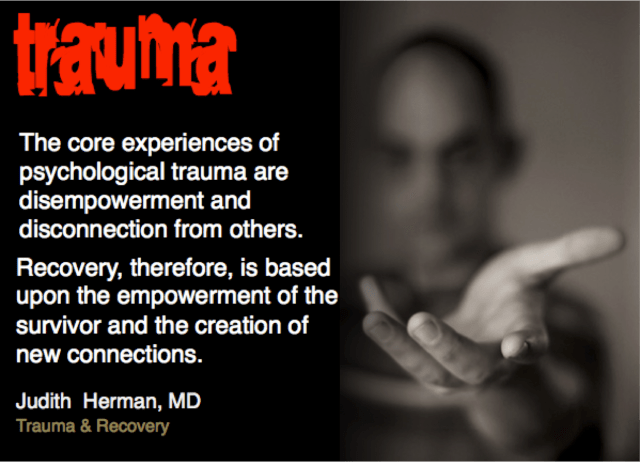
This book made me angry. Like, really angry. Not because it’s a bad book, on the contrary, it’s excellent. It just revealed a lot about our culture and society that infuriated me. This may be the OG source of the “C” in CPTSD, so props to Dr. Herman, but her main point is the rise and fall of realizing as a society that we f*ck over women, children, and powerless minorities inducing horrible trauma, and then we (again as a society) balk at horror of the reality of HOW MANY people are traumatized, abused, raped, assaulted, and systematically wrecked by status quo systems of power and authority and we then collectively decide it can’t actually be that bad, or that maybe it was that bad, but it’s better now, and we don’ have to think about it or look at it ever again. And that we have been doing it every few decades for at least 150 years. She somewhat optimistically follows this dire assessment with the cheerful notion that now we’re having a resurgence in awareness and it’s so good, so maybe we’ll learn something this time… only the book was published in 1992. So she was writing about the collective recognize-outrage-token-change-forget cycle in 1990-91 hoping it might be the last time, and I was reading it in 2020, in the wake of the 2017-8 version of #metoo and #blm (those are older than you think, too) going, “are you f@cking kidding me?! how long have we been doing this bullsh!t?”

She talked about how Freud, Mr. All-Girls-Want-To-Fuck-Their-Daddies-And-Rape-Isn’t-A-Thing-Cause-They-Secretly-Want-It-Freud actually wasn’t a total dickhead when he started. Originally, he worked with a bunch of “hysterical” young women (whoo boy howdy and that is a can of worms because the way those ladies were treated *before* him was even worse! seriously, just read the book). He tried the radical approach of (gasp!) actually talking to the women, an approach no doctor ever tried before. Said ladies revealed a lot of details of abuse and incest, which led Freud originally to begin to crack open the lid on trauma as a cause of both mental and physical ailments, but then he basically went, oh, wait, there’s no way that SO many respected, rich, men are doing this to their daughters and nieces, so they must be seducing these men! *gag*. Some sources imply the decision to change his mind came as a result of serious pressure from the gentlemen in his community. Either way, he recanted and we’re still dealing with that consequence nearly 2 centuries later.

She outlines historical occurrences where we (humans) start to realize what’s going on and then back away in fear and horror from Freud to the 1992 version of #metoo, which I vaguely associate with Grrl Power and Lilith Fair, and angrily singing Alanis Morrissette at the top of my lungs, but no real “movement” and certainly no substantive change. She doesn’t focus only on women or sexual abuse, but also men and the trauma of war. Over and over we’ve come close to understanding combat trauma only to turn away and reject it again. (the details of this cycle are more deeply covered by Van der Kolk in The Body Keeps the Score). Whether it’s sexual assault, domestic violence, street gangs, or war – the people who are hurt over and over are the young: children and young adults. She calls it “the adult conspiracy of violence” and it is a concept that fills me with rage.

The Adult Conspiracy of Violence:

Obviously it’s not a conspiracy in the sense that all the adults got together and decided to do this. It’s more like a set of unspoken and unbreakable rules. I suspect that Herman uses the word “conspiracy” to describe this phenomenon because although no organization exists, most adults are more aware of the violence than they are willing to acknowledge, and few are willing to break those unwritten rules. In my own understanding, it is the cycle in which every generation is abused and traumatized then goes on to grow up and fall into one of 4 categories (although fluidly and on a spectrum):
1) suppress what happened and live in denial
2) recognize what happened to them, but think that it a) is very rare b) doesn’t happen anymore
3) are angry about what happened to them and think everyone should suffer like they did
4) are greedy dickheads who don’t care who they have to hurt to get what they want

As a result, the next generation is subjected to just as much horror, abuse, and trauma by 3&4 while receiving zero support from the 1&2 adults around them who simply refuse to see it. I am infuriated because now that I’m “an adult” I can see it, I can see the whole cycle and the whole “conspiracy”, I can see it and I have no idea how to protect the kids from it. I have a niece and a nephew, I have friends with kids, I have students… I want to find a way to blow the lid off this thing, make a blockbuster movie, get a Greta Thunberg to stage a national school walk out in protest of violence against children, to make a giant statue you can see from space and paint it in Pinkest Pink and Vantablack so everyone has to go “why?” and we can explain the adult conspiracy of violence.

Note 2022: I’ve found that Alice Miller discusses this a lot as well in the two books of hers that I’ve read: The Drama of the Gifted Child, and For Your Own Good. Other authors discuss the effects of this cycle of trauma, but few delve deep into it’s roots as Miller and Herman do.

A good solid part of why this book made me angry is because in 1992 I was 14. I was already well down the path of being consumed by the adult conspiracy of violence. When this book was published, and this information was in the public eye, it did not find me. It did not find my friends, my sister. It faded from view and it’s wisdom was of no help to me in understanding or processing any of the things that happened to me as a child, a teen, and a young adult — when at various times I was neglected, abused, raped and my friends and family refused to see what was done to me. When instead they joined the conspiracy of silence and denial and told me it was nothing: you’re making it up, you’re exaggerating, it was your fault anyway, you must have wanted it, buyers remorse, be grateful anyone wants you that way, you weren’t really hurt, you have it so good, that never happened, I don’t remember it that way, look at how bad it could have been, be grateful it wasn’t worse, be happy, be silent.

She tried to reach people at a time it could have made a real difference in the course of my life, but it didn’t reach anyone close enough to reach me. I can’t help but think of all the 14 year-olds out there who need to hear this, who need to know about the Adult Conspiracy of Violence and be shown a way out.

There may be a fifth category that didn’t have a large enough footprint for Herman to write about 30 years ago: the cycle breakers. I see it more and more online in memes and YouTubes and blogs. The more young adults are normalizing therapy and seeking healing for past trauma, the more they want to break the cycle of intergenerational trauma and abuse. Only time will tell if this movement can truly challenge the Adult Conspiracy of Violence or if it is just another peak in the recognize-outrage-token-change-forget cycle.

Post Trauma Fantasies: False Healing

Aside from the above cycle of violence and suppression, the book had a lot of information that was in line with what I’d already read and served mainly as reinforcement. There was one other stand out concept in this book which was the addition of more types of post-trauma fantasies. I was already whammied by the Healing Fantasy that Dr. Gibson introduced me to in Adult Children of Emotionally Immature Parents, so I was intrigued by the idea that there were more. Dr. Herman talks about the Revenge Fantasy, the Forgiveness Fantasy, and the Compensation Fantasy. Being able to further recognize some of my thinking as fantasy was both hard to hear and somewhat reassuring. It was like being given permission to let those thoughts go.

The Healing Fantasy is the idea that you can make it all better if you just do the right thing. If you can heal enough for both of you, or if you stop doing whatever it is that makes them mad or sad or cold, if you can teach them to be more self-aware, if you can help them heal from their own pain so they stop allowing their own trauma responses to result in abusive or toxic behavior, whatever it is, you take on the responsibility of healing THIER trauma in hopes that it will get them to stop hurting you. Gibson says it’s the idea “that more self-sacrifice and emotional work will eventually transform their unsatisfying relationships” and that the “healing fantasy always involves the idea: It’s up to me to fix this”. If I just find the magic feather, then everything will be ok.

The Revenge Fantasy is where the American justice system and every Spawn fan live. The idea is that by taking revenge on the person or people who caused pain, that the scales will be balanced, the perpetrator will be filled with shame and remorse for their wrongdoings, and your pain will go away. That last part is the key fantasy part. Making someone else hurt doesn’t heal your own pain. On an individual basis, this can lead to a lot of anger and rage, since the fantasies themselves are often violent. On a cultural level, it results in people who are happy to imagine prison rape or delight in police brutality for “those that deserve it”. The preference to punish rather than reform, to see people suffer rather than receive help is, I believe, at the core of the rot in America’s criminal justice system, and as far as I can tell, it comes from a widespread indulgence in the Revenge Fantasy.

The Forgiveness Fantasy is the church route (any church/spirituality), if you let go of your anger and forgive the person who hurt you, then your pain will go away. Forgiveness may or may not be a part of your healing journey, but it’s definitely not the only thing. Forgiving a person without making any other changes will simply result in the pain getting shoved further down, where it will continue to harm you. In many of the forgiveness-fantasy cultures, you are expected to forgive a person who doesn’t apologize or change, and are often blamed/shamed for being unable or unwilling to do so. Some people who cling to this fantasy will also use the continued existence of the pain to prove that you haven’t “really forgiven” your abuser, shifting the blame for your own pain onto your “unwillingness” to forgive.

In another type of forgiveness fantasy you dream you can get the other person, your abuser or toxic partner, to understand what they did is actually hurting you, and then when they understand it, they will apologize and want to change! After all, people who love you don’t hurt you on purpose, an will totally stop when you say ouch. Healthy people and people who are trying to get healthy totally will, but Spoiler Alert: toxic people and abusers will never stop, and any apology they offer is just to get you to stay. I had fallen into trap this many many times before learning about it, and I now know the importance of letting this particular fantasy go.

I’ve also seen a large number of memes and tweets about cutting out toxic people that strike me as woefully unnuanced. Not everyone who hurts you is toxic/abusive, so how do you know when to give someone the chop? To me, the difference between a toxic person and a toxic behavior is the way they approach healing. Every traumatized person has toxic behaviors at some point, but only those who are willing to do the deep work of self reflection and healing will be willing to admit it and work to change. It’s important to communicate when we are hurt. Relationships of all kinds are strengthened by good communication and successful conflict resolution, but there also comes a time when the healing process becomes the Healing Fantasy and we have to let go. Dr. Gibson addresses this in her book, and I also found Conflict Is Not Abuse, by Sarah Schulman has a lot of good advice on how to identify and deal with the distinction between being hurt and being abused.

The Compensation Fantasy was the hardest for me. This says that you deserve good things in life for what you have suffered, that if you get those good things it makes up for the bad things. I realized in one terrible epiphany that I had been holding up my joy as the compensation for all terrible things I’d gone though. In 2012-14 I went through a round of therapy research and practice that focused on positive psychology, and centered around the works of Brené Brown and Martin Seligman. I learned how to be happy, like, really happy, not just wine-mommy happy. Then, it was somehow ok that I had suffered so much, because I had so much joy! The sudden removal of everything that brought me joy due to a global pandemic made me crash very hard. The pandemic had not merely deprived me of some fun trips, or a fulfilling career, it had taken away what I was owed for my pain. Obviously, that’s not true, and now I can work experiencing joy for it’s own sake and not as a trade off for pain.

30 years later

This is a great book that didn’t make it into my top 5 but is definitely in my top 10. Despite being 30 years old, it still has a lot of useful and important information, however it’s no longer the only source for such. I recommend this for older readers (who remember the 90s), for younger people who are interested in the history or may be trying to understand a parent (older relative), and for anyone who is doing a deep dive into their own Trauma and Recovery.

Finally Writing About Ireland

I have published something like 6 posts that are distinctly NOT about Ireland since I got back this past summer. Usually that would be because I was hard at work chronicling my adventures and polishing each post into a sparkly gem, but this time… it’s not. This post is going to be the start of the Ireland Chronicles, however, I’m going to take some time at the beginning to talk about a personal issue, so for those who are just here for the tourism, please feel free to skip down to the second segment. 


Why Aren’t You Writing About Ireland Yet?

It’s starting to feel like I can’t go traveling with anyone really important to me. I’ve now had two close relationships disintegrate after a trip, while the travels I take with friends who are less close have been great. I don’t define “relationship” as only romantic or sexual, by the way. I happen to think that any degree of association can be a relationship (work relationship, teacher-student relationship, my favorite barista relationship, etc). In this case I am talking about people with whom I felt a long term and deep emotionally intimate connection.

In reality, those close relationships were never actually healthy, and the constant close exposure of travelling together simply put them under a microscope until it was impossible to deny the core problems. As I learn about healthy relationships and boundaries, I find that it’s easy to spot the red flags in a new person, but almost impossible to drag myself out of denial with a person I’m significantly attached to. When you’re so used to something being a certain way, even if that way is awful, it just seems normal, and the abnormal situation of long international trip can cast it into sharp relief.

KUrN1Ee
In this case, I think I was most of the way out of the fog of denial before we actually embarked, but the plans had been made and the money spent, and I genuinely hoped that a nice, low stress holiday would reduce the big problems that I was still blaming on things like job and life stress. The only thing that could have made that more sarcastically apt is if we’d gone to Egypt instead of Ireland and I could really make some d’Nile jokes. I suppose I’ll have to settle for Blarney jokes instead.

I know in my heart of hearts that a single vacation cannot ruin or fix any relationship, it can only blow the truth up to billboard sized letters. However painful the experience was, I’m glad it happened because I think it’s better in the long run to identify unhealthy relationships so that we can either work to make them healthy or if that’s impossible to walk away. However, it makes it hard to write about a holiday when the memories are either good memories tainted by loss or just plain old bad memories. It’s like that movie, Inside Out, when Sadness touches all the memories and they turn blue and sad forever.

img_1063

When I wrote about the Philippines I did my best to simply leave out any and all references to the person I was with, treating it like a blank space in the narrative and jumping around the timeline to avoid describing the personal details of arguments and emotional clashes. I think it helped, too. The memories of that relationship are still painful, but now I can look at the experiences I had in the Philippines and remember the joy I took from them, happily recommend the island, and even think positively about going again someday.

I’m going to try to take the same approach with Ireland, yet at the same time, I don’t want to paint this in some kind of idyllic holiday life. Those who read this blog often know that I don’t like fake-positive online life, but I struggle to balance my need to be honest about the challenges I face with my desire to share only the best and most delightful experiences. I’ve been putting off writing about Ireland explicitly because I don’t want to think about the hurtful parts, and yet I think it’s vital to my gratitude practice and to my remembering self that I take the time to tease out the good parts and keep them alive.

So here’s the disclaimer: I’m cutting out all the personal negative experiences, I’ll only be including things that could happen to any traveler or group based on regular travel challenges. It could result in a choppy or unbalanced story, but that’s just how it has to be. My life is far from perfect, but I’m trying my best to be better.

Without any further ado… Irish Road Trip

20190805_121453.jpg

Renting a Car

I enjoy road trips when I’m getting out of a city. I love public transit and happily take buses and trains on most of my excursions, but I had some lovely experiences driving in the US, and later in Germany, France, New Zealand and Sweden. When I choose to get a car it’s because I want more freedom to go to places that are off the beaten track, way outside the city, or just generally hard to get to. Ireland is no exception.

When I was planning my trip, a friend of mine told me that he and his wife had done an Irish road trip about 20 years ago, before there was any kind of highway system at all. Although there is a large intercity highway system today, most of the things we wanted to see in the countryside were still on the old roads (more on that later).

In case you’re curious about renting a car, we used EuropeCar. I looked at a few local rental places, but it seems that there are a fair number of hidden fees with those places that can add up and be frustrating and expensive. By opting for a larger company, we got a real price quote up front and the process of picking up the car was much smoother. I was initially irritated that they were trying to up-sell us the “full coverage” insurance (quite expensive) at the pick up. I was extremely tired from running around Paris all day and a delayed flight into Dublin, so all I wanted was to get to our hotel. When we were standing there it felt like a scam sell, and I was very dubious.

The regular minimum insurance covers any scratches or dings that are less than a 2 Euro coin size (it’s a law) so the car companies can’t charge tourists for tiny chips, dings and scratches that occur in the normal course of driving. It also covers a minimum amount of liability in case you damage someone else’s car or property, or have to go to a hospital. There was a high deductible, but to me, it seemed worth it not to pay a few hundred more in insurance. However, since I wasn’t the one paying, we got the full coverage, and after I saw the driving conditions in the countryside, I was very glad that we did. To sum up, if you want to drive anywhere other than the cities and highways, get the extra insurance. If you want to stay in the cities and highways… ride the bus.

Driving in Ireland

The first thing to mention here is that driving in Ireland is done on the left side of the road, and that the driver’s seat is on the right side of the car… completely backwards from the US where I learned to drive. Lucky me, this wasn’t going to be my first time driving left as I’d had a chance to learn in New Zealand some three years previously. Nonetheless, I still spent a good portion of the first few days just reciting “left side, left side, left side” under my breath the whole time.

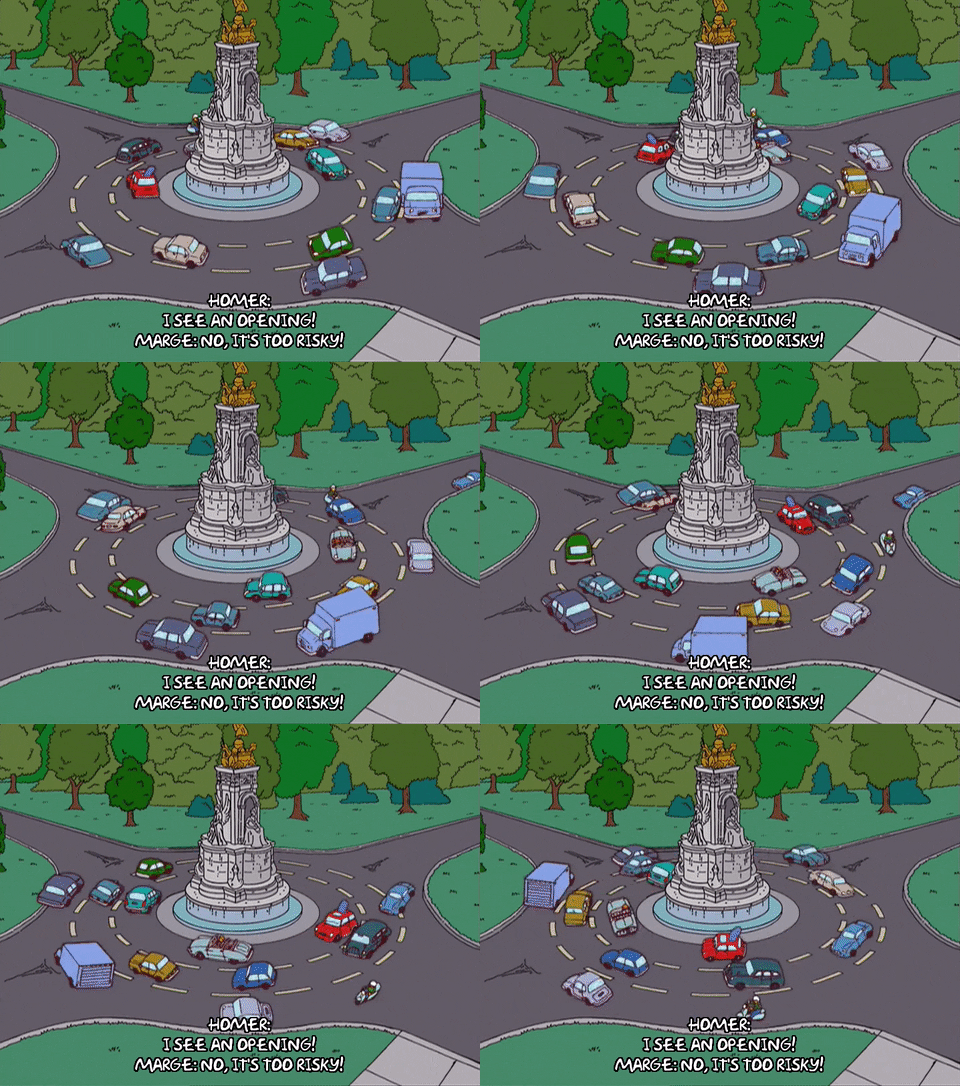
You also need to know how to use a roundabout, which is a complex system of yielding and merging that is supposed to be safer and more efficient than traffic lights. Basically, anyone already on the roundabout has right of way over anyone trying to join it. Interestingly, some of the busiest roundabouts at major highway interchanges also included traffic lights because otherwise no one would ever get on.

giphy.gif

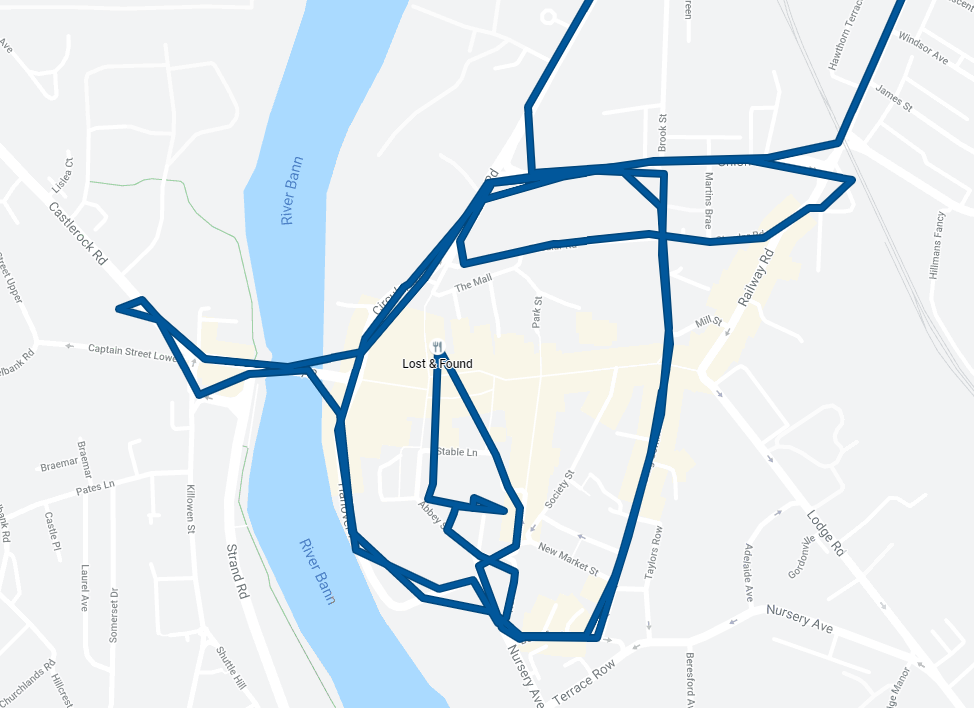
The road signs are pretty good, written in both English and Irish, and the streets often have painted arrows to help you remember your lane, and also let you know which lane to be in if you want to turn or go straight. There were a few times that the signs an Google Maps did not agree and I got a bit tangled up, but it never took more than a few minutes to sort out.  Except Coleraine (pronounced call-rain) in Northern Ireland, which is a hellhole of one way roads and inaccessible streets. My Google travel history looks pretty linear everywhere else, but in Coleraine it looks like a Gordian knot. Don’t get sucked in, drive around.

coleraine driving map.png

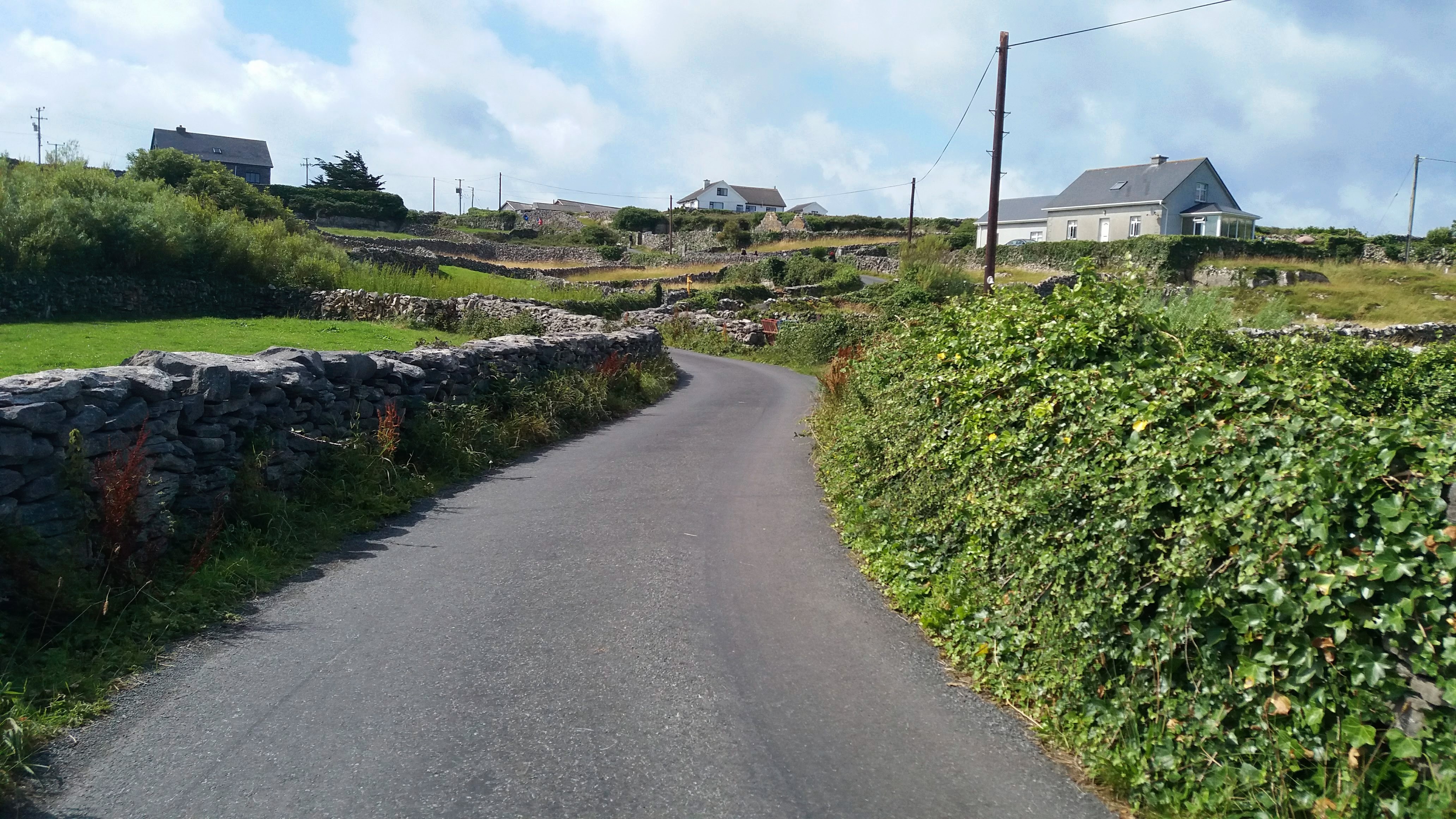
There’s only one more very important note about driving in Ireland which is that outside the cities and arterial highways, the roads are typically only one car wide, but accommodate two way traffic. Even in the villages with two lane roads, there are so many cars parked along the roadside that traffic is reduced to a single lane’s width. In a lot of places, they are also lined closely with thick hedges, deep ditches, or stone walls meaning you have zero shoulder room. Two way traffic includes other normal sized cars, tour buses, farm equipment, and livestock.

20190802_175544

On the one hand, it can be a relief driving these roads because there’s no need to worry about left-side or right side. On the other hand, when you meet oncoming traffic, your knuckles immediately whiten on the steering wheel as you try to figure out how not to have a head on collision.

The good news is that the locals are very used to this. There are a fair number of turn outs on the most narrow roads, and often there is *just* enough room for two cars to pass on the single lane if we’re both willing to rub up against the shrubbery. Once I realized that the vast majority of other drivers were polite, careful, and familiar with the process, I did relax a little bit. As intimidating as these roads can be, it’s worth it to drive them because a lot of little hidden gems can only be accessed this way.

Public Transit in Cities

While we were in Dublin, we were actually able to simply walk everywhere we wanted to go by getting a room next to Trinity College. The main tourist district is quite tightly packed and walk-able, but if you want to go a little further or it’s just too rainy, there’s a great system of buses and trams. However, paying for these modes of transit are unnecessarily complicated. Fares change based on where and when you board and exit, so you can easily end up paying the maximum if you don’t know how to navigate the system.

The easiest way around this is to get a LEAP card. There’s a few ways to do this, but the simplest is to walk into nearly any convenience store and buy one. They cost about 5 Euro and are re-loadable. Fares are automatically calculated if you tap in AND tap out, plus you get a fare discount for using the card instead of cash. I wasn’t able to get the reloading app to work for me, but it’s very easy to reload at any number of grocery shops and convenience stores.

There is a tourist LEAP, but I’d shy away from that one because of the limitations. They are technically unlimited travel, but they only apply to city transit (and a few airport options). Generally, visitors to Ireland want to see the countryside or travel to more than one city, and the LEAP doesn’t cover that. The LEAP is good for most major cities (NOT Derry or Belfast as that is a different country), so I think the top-up card is the way to go.

Please note that the LUAS tram system is a bit unique. There is a post at the tram stop OUTSIDE the tram where you need to tap your LEAP card BOTH before you get on and AFTER you get off. If you don’t tap when you leave, you’ll be charged the maximum fare! I was a bit thrown off by the tapping posts being at the stops rather than inside the tram, but it did make boarding more efficient. I used this in Dublin.

download
I used buses in Galway. With a bus you need to tell the driver what stop you plan to get off BEFORE you tap your LEAP card. The driver will program your fare and then you can hold your card to the reader. It takes much longer than the tram, but the drivers are generally pretty nice about it. Just make sure you use Google Maps or similar to know the name of your stop before you board. Again, failure to do so means a much larger fee.

Traveling Outside the Cities: Public Bus and Tour Bus

If you do want to travel to another city, there are great and affordable inter-city bus options. I used CityLink. You get a slight discount for booking online. The drivers don’t generally require a printed ticket, so you can book online from your phone or hostel no problem. You can also buy tickets at the bus stations in each city.

Finally, another great way to see Ireland without a car is to join tour buses that leave from the major cities and head out to the countryside. I personally did this twice: once from Dublin to the Wicklow mountains, and once from Galway to Kylemore Abbey.

20190815_114817.jpg

I shopped around using Viator to compare deals and I found that a LOT of agencies overcharge or misrepresent their tours. Read the details carefully. One of my day trips from Galway was to go out to Inishbofin. I did find a “tour” but it was nothing more than the public bus (CityLink) and the public ferry. They wanted to charge three-four times the cost of those tickets and didn’t even offer a guide to help you find the bus/ferry!

Long story short, if you can use the public transit to get someplace, do it. If there is no public transit, then make sure you pick a reputable tour company with plenty of positive reviews for the tour you are interested in. You can find the links for the tours I went on here:  Kylemore Abbey with Galway Tour CompanyWicklow Mountains with Gray Line Dublin.

If you do choose to join one of these tours, please be aware that not all the buses offer all the amenities. WiFi, charging ports and the like are hit or miss, but the seats are comfy and the drivers are very entertaining. I would recommend bringing lots of snacks or even a pack lunch as the timing doesn’t always allow you to eat when you’re hungry or both eat and sight see. They also have deals with some random tiny towns that they stop in for lunch. There’s usually only one place to eat, so it can get crowded or expensive.

Planning the Route

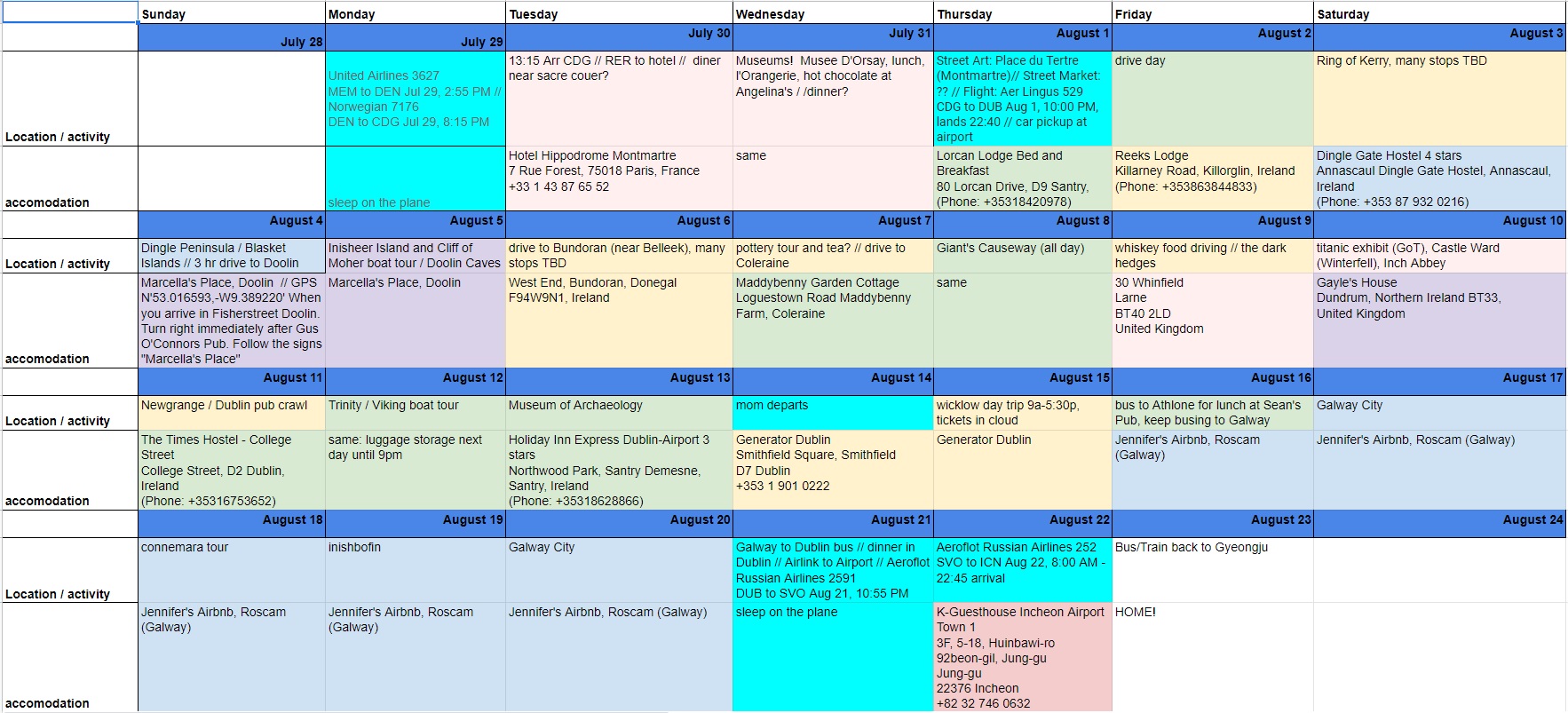
We had decided on a basic road trip itinerary before arriving. I think it’s important on any time sensitive vacation to schedule a certain amount of things. I like to schedule where I’ll sleep, as well as breakfast and dinner (lunch can be on the fly unless there’s a special reason to schedule it). I like to schedule one or two things in a day and also leave myself room to change, rearrange, add or subtract. The schedule for Ireland was unusually tight because my travel companion had a very long bucket list and while I might go back one day, it’s unlikely they will, so I tried hard to accommodate them. Even with a tight schedule, I don’t like to buy tickets in advance unless they’re likely to sell out so that I have the freedom to change things around as needed.

calendar

Our schedule was also based on not doing more than about 4 hours of car time a day. It’s a holiday after all, there’s no point in spending all day driving. As a consequence, there were a couple places we visited just because we needed to stop. No regrets, though, even the small out of the way places were awesome. Our final road map looked like this:

ireland map

Finally, the end of the trip we spent in Dublin, so we returned the car and used the excellent buses or just walked from our very central hostel next to Trinity College.

After 16 crazy busy days, my travel companion returned home, and I had a much more slow paced week spent between Dublin and Galway where I relied on coach bus tours and public transit to enjoy myself.


EXPANDED 3 WEEK ITINERARY

For those who either want a sneak preview or need some ideas to plan your own Irish holiday. You could use this in all or part:
two week drive -day 1-14
one week drive: South = day 2-6+12&13 or North = 11-7 (backwards) + 12&13
one week Dublin/Gallway no-car experience – 12, 13, 15, 16/17 combo, 18, 19, 20/21 combo

Day 1:
arrived very late at Dublin airport, picked up car, stayed in a hotel near the airport

Day 2:
Irish National Stud
Leap Castle (haunted?)
Sol y Sombra Tapas, Killarney

Day 3:
Kerry Ring
(ancient stone forts, sheep, waterfalls, chocolate, and prehistoric fossils)

Day 4:
Fungie the Dingle Dolphin & the cliffs of Star Wars

Day 5:
Inis Oir (of the Aran Islands)
Doolin Cave
Traditional Music House

Day 6:
Lough Key: castle in a lake + treetop walk
Seaweed Baths @ Enniscrone

Day 7:
Belleek Pottery
Derry: Bog Murals, Guild Hall, Peace Bridge
Downhill Demesne

Day 8:
Giant’s Causeway
Carrick-a-Rede Bridge
Dunluce Castle

Day 9:
Bushmills Distillery Tour
The Dark Hedges
Glenarm Gardens
Glenariff Waterfall

Day 10: Game of Thrones Day
Belfast TEC: GoT Exhibit
Castle Ward (aka Winterfell)
Inch Abbey

Day 11:
Newgrange
return car to Dublin Airport
Pub Crawl in Temple Bar
This is the day we were supposed to go to Newgrange, but had a “zero damage” accident with a German family in the parking lot and ended up doing police and insurance reports instead, then had to leave to get the car back to Dublin on time.

Day 12:
Viking Splash Tour
Dublin Walking Tour
The walking tour was cancelled last minute, but we were so tired that neither of us actually minded and we spent the afternoon resting.

Day 13:
Trinity College Library & the Book of Kells
The Museum of Archaeology
The Museum of Natural History, aka “The Dead Zoo”

Day 14:
End of two week version, companion departed from Dublin airport
As the person doing the 3 week version, I took this day to rest and do laundry.

From this point, the schedule is FAR more relaxed… and I really needed it after so much fast paced adventuring. I also did the final week on public transit or tour groups.

Day 15:
Wicklow Mountains and Glendalough (GrayLine)

Day 16:
Bus to Galway
Honestly, you could do more, but I was enjoying the slow pace life.

Day 17:
Downtown Galway + unexpected Pride march

Day 18:
Kylemore Abbey (Galway Tour Group)

Day 19:
Inishbofin Island (public transit)

Day 20:
More downtown Galway… really good Irish food.

Day 21:
Bus back to Dublin airport and fly home.