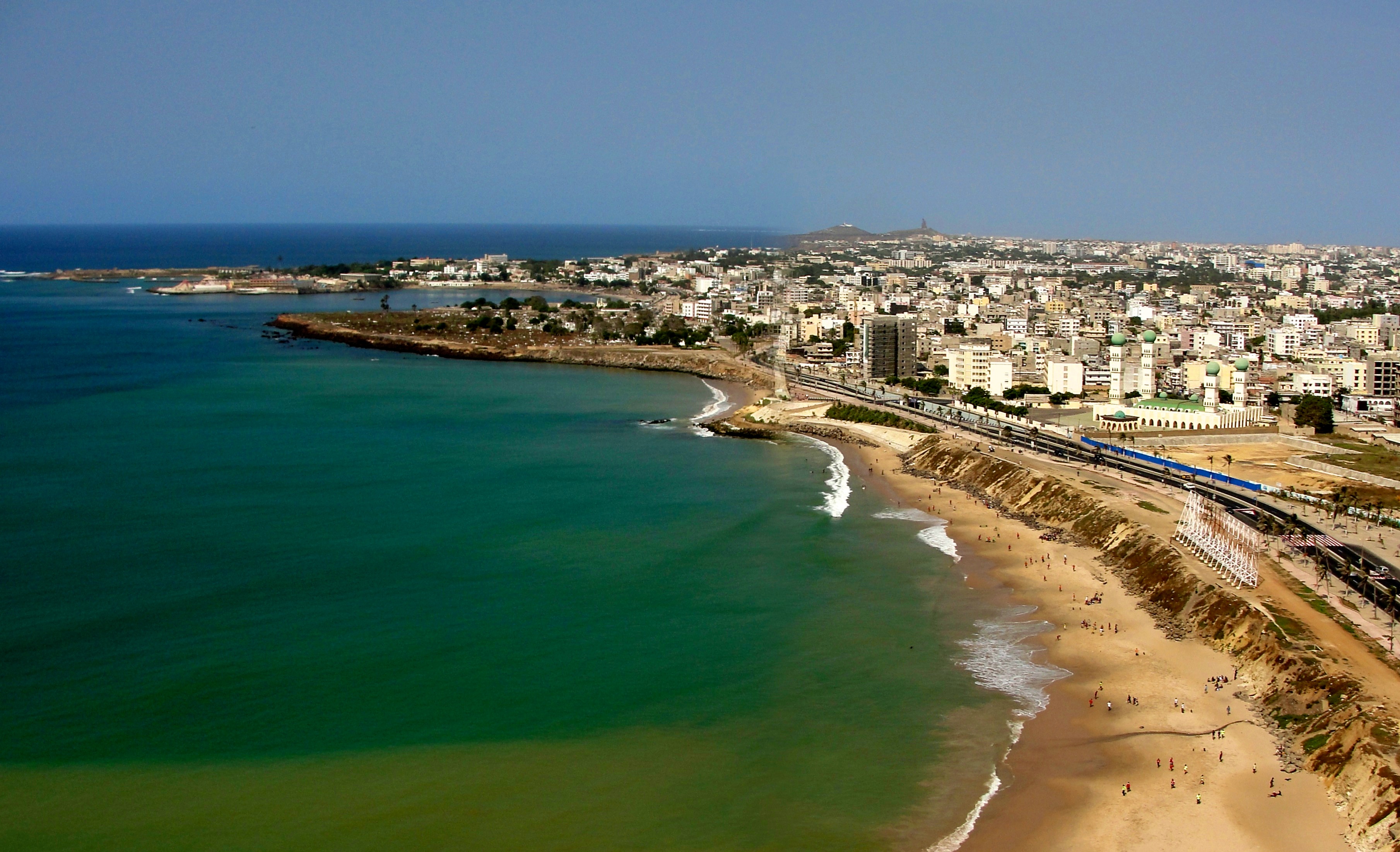
Je Suis Arrivé: Senegal First Impressions

I’ve been in Senegal for 2 weeks. I’m about to lay down some solid developing nation meets first world privilege complaining, but despite all that, I’m still glad I came here. It’s been a REALLY long time since I had to adjust to a new country to live in (vacation is not the same, because you get to stay in temporary housing and explore and have fun while knowing your safe and comfy bed is waiting for you at the end of the trip), and besides – no vacations during COVID! More than that, adjusting to Korea was very different than here, it was almost all culture and language barrier based because the standard quality of life in Korea is overall quite high. This reminds me more of learning to adjust to China or Saudi, the main 2 differences now are: I’m over 40 and I crave a basic level of creature comforts that younger me was more willing to do without in the name of sparkly new adventure – and this is objectively less developed than either of those places. It may in fact be the least developed part of the world I’ve traveled to, and that’s not an insult, it just means as a white American lady I didn’t have this perspective. It’s good for me, stretching me outside of my complacency and comfort zone (again), so I don’t regret it. I’m not mad about the conditions here, nor am I demanding unreasonable levels of comfort (clean, safe & accommodating my health). I just want to be honest about what I’m experiencing here, and how it makes me feel.

Getting There Is Half the Battle?

Arriving was not actually difficult. A long flight – 3 flights – but nothing a regular international traveler can’t handle. Flying in over the Sahara was fascinating. I could see the landscape change from endless sand to green farmland. There’s the jet lag package (fatigue, dehydration, swollen feet, etc), but I had a whole day in my hotel to rest before orientation. I had arranged an airport pickup with the hotel as well. So far, so good. The program is covering all those costs (assuming my expense report is accepted). The drive from the airport was looooooong, almost 2 hours. The main highways here are fairly well kept, but once you get off the main drag, the roads are not just dirt, but the dirt that remains after badly laid asphalt has cracked and eroded from flooding. There were potholes that could be kiddie pools on the road my hotel was on and I have to say it surprised me to see that this was the norm in the ritzy part of town, and made me wonder what the rest of the city looked like.

The hotel was nice, but I had forgotten to think about things like a mini fridge or a kettle, and there were no shops nearby anyway, just beachfront restaurants and an American imported goods store because I was staying in the fancy part of town near the Embassy. I thankfully have had experience with finding and using local delivery apps and quickly got my first meal delivered to my room (Dakar Food Delivery if anyone needs it). I was also a bit sticker shocked by the prices, but it seems only the expensive restaurants can afford to do delivery. A meal was costing me 10,000-13,000 CFA or 15-20$ USD. I know Americans think that’s a good deal for delivery food, but it’s wildly cognitively dissonant to be in a place that is so underdeveloped and also costs that much. Plus, I have a lingering “former poor” brain function that gets activated when I’m under stress so it feels insanely opulent to eat delivery food 2x a day for a week, which is basically what I did minus 2 lunches at the Embassy. For comparison, my Embassy cafeteria lunch was 4,000 CFA about 6$ US. I survived by reassuring myself that I was still well within the average daily food/transit allowance that is included in my budget, though I now better understand that a person eating at Western style restaurants and taking a taxi (buses are not recommended for expats for safety as well as comfort reasons) could actually use the full budget allotted to us. I expect when I’m comfortable enough to actually start taking taxis to explore other parts of the city, I’ll need that budget, too.

Post Arrival Orientation

We were hosted at the US Embassy for a 3 day orientation from Wednesday Oct 18-Friday 19. The orientation was a good way to introduce us to Senegalese culture because nothing started on time or went according to plan. (I said there would be complaining, but it’s not helpful to think of cultural differences like this as better or worse. I honestly think the number of cultures that place a high value on timetables and deadlines is much smaller than those that are more … flexible. It’s just frustrating to be raised in one style and have to live and work in the other). The policy on Embassy provided drivers changed but no one told our coordinator until the first morning, so while I could have easily walked the distance to the Embassy from my hotel, she had me ask the hotel to call a taxi and then also called the hotel herself to confirm. I have to say that while I found the whole process frustrating and confusing at the time, I do appreciate the lengths she went to that morning to make sure we were all safe and comfortable. It’s not her fault that my comfort level is directly linked to my ability to control my own environment (yay trauma responses!) so waiting around for ages and relying on other people to tell me what to do or how to do it or even do it for me is deeply anxiety inducing to me. I walked the remaining 2 days.

Getting into the Embassy is an ordeal if you don’t work there. One at a time, we handed over our passports in a little secure bank teller style window and got a visitor badge in return. Then again one at a time, we entered the security screening room where we handed over all electronics (including charging cables!) and for some reason also my nail clippers and umbrella. Even the TSA lets umbrellas through security. All our banned things were placed in a numbered box, we were given a token with the number on it and then a fairly standard x-ray for the bags and metal detector portal for us. Then we walked across a courtyard into another building where we again had to pass through a metal detector, have our bags visually examined and record the number from our token on a visitor log. We were also limited to only the front area (the American Center, the meeting room, and the restrooms) unless we had an escort, and our coordinator could only escort 4 people at a time, so had to get help when it was time to take us to the cafeteria. Somehow the free English language program that they run here is inside all this security, and local Senegalese people who want to participate have to go through an application process and pass through this kind of security every time they want to come to a class or event. It does make me kind of glad that it’s not my primary base of operations, though I am sure I’ll go back to do a guest lesson or something.

I enjoyed meeting everyone in the orientation. There were only 2 of us Fellows (we are the older, more experienced teachers… grizzled veterans of expat life) and 6 Fulbright English Teaching Assistants (ETAs) who are all adorable 22 year old Gifted Children™ that just graduated from their BAs and all speak fluent French. Only myself and 2 of the ETAs are stationed here in Dakar, the rest are scattered around St. Louis and Thies. There were also a metric ton of presenters, but since there was zero printed or electronic materials (beyond the schedule which as I mentioned was not followed), I don’t really know who all of them were and remember even less about the details of the programs they talked about. I’m trying to get it in written form, but it’s hard especially as our full time Regional English Language Officer (RELO) isn’t here yet and the deputy (our faithful coordinator) is trying to do all the work on her own.

People I remember well – the press officer and cultural officer were both fun to talk with mostly because they were also new to Senegal and more relatable to me in terms of common background and interests; the HR person who gave us our cultural lesson was awesome (Betty Hubbard, which sounds SO white, but she’s really an African woman with a lot of experience in the US and several African countries, and was delightful, I wish I had a good photo of her, but I only have what the embassy emailed me, which is mostly us). The guy who runs the largest English Club network made a good impression simply by virtue of his enthusiasm, but I was a bit sad that I probably won’t do much with their organization (although he has ‘threatened’ to invite me to come and give a guest lesson) since it is for k-12 ages and I’m going to be spending most of my time with the University. Other presenters were … not used to presenting. Several had classic “read the slides verbatim” or monotone voices. Almost all the Senegalese spoke so quietly that even at the other end of a small conference table, I struggled to hear them. It made me want to create a workshop just for them to be better presenters, an idea I may pitch to the Embassy later on.

Health & Safety

There was a security briefing, which we also got in the EPIK orientation in Korea, and those are almost always extreme, but here I’m not so sure. Things like ‘motorcycle thieves’ people who ride double on a motorcycle so the passenger can snatch bags off pedestrians and the driver speeds away are apparently very real here, such that even locals have warned me to wear my backpack on both arms or at very least, move it to the side away from the road. Don’t carry more than your money and empty shopping back into open air markets (regular brick and mortar shops are ok). Don’t walk after dark alone. Don’t hold your cell phone too loosely or someone might snatch it (motorcycle thief style). Don’t use ATMs on the street, only inside a guarded building. But also, say hello to everyone in your neighborhood, greetings and inquiring after wellbeing are crucial to being recognized by the people who might help you if you’re ever in trouble. People who keep to themselves are left that way.

There was also a health briefing from a nurse who instilled in us the very real fear of Senegalese water if nothing else. They also talked about soaking any fruits or veg you don’t peel in a diluted bleach solution and rinsing with bottled or boiled water. I’m actually not sure what her policy on dish washing is, but I’m using the tap so far, just make sure it’s all the way dry before I put food on it? I have already mentioned my extensive vaccination regimen and of course my weekly anti-malaria pills, so I was fairly well prepared. I figured out how to get smaller (1.5L) water bottles delivered to my hotel, but I’m still working on proper water delivery. I’m going through 2-3 liters of water a day here, so it’s thing. Maybe when I get my “real” housing I’ll be able to do a night boil for the next day’s water, but so far that’s been fairly impossible. The nurse also said that we would all definitely get diarrhea (yeah ok, gross, but this is a very real issue travelling to places with massively different bacteria). The ETAs kind of laughed it off until the older of us were like, no, she’s right, this isn’t a thing you avoid, it’s a thing you minimize and prepare for.

I hoped my globe trotting stomach was well equipped but I still had some antibiotics my pharmacist prescribed to me before I left the US for this exact reason. I have only had bad travelers diarrhea once in my adult life, and that was my first visit to Egypt when I got so sick I could not even keep down water. I remain hopeful that was a once in a lifetime event. My issues in Dakar were comparatively very mild. The first bout passed in a day, and I thought I was free and clear, but then it came back and lasted and lasted. Part of the problem was a lack of ability to eat gentle food. I tried to order things like a labneh (similar to yogurt) on pide (like a pizza dough but oblong) and plain rice or plain chicken, but it was difficult. I only got to go to a grocery store when I moved to a new “hotel” after my first week. Then I ate yogurt, bread, bananas, rice and oatmeal for 2 days before I gave up and went to the pharmacy for some Imodium.

Phone: Connection, Translation, Maps and More

I don’t know how I lived in China and Saudi without a smartphone. I know I did it, but for the life of me, I am baffled. I walked literally everywhere in China with my little pocket dictionary and took months to learn how to properly use the public transit system on my own. I used Wi-Fi on a tablet to pull up maps in Saudi, but mostly I only had a company driver to take me places. During my travels from 2015 on, it seems like having access to a local Sim card and internet was essential to getting around, navigating language barriers, public transit, shopping and everything else really. I like having data as soon as I land. I often get it in the airport or at a shop near my accommodation on the very first day. In this case I had deliberately not taken care of getting my own SIM card because it was on the schedule for the first day of orientation that we would do it as a group. I decided to go with the group because maybe they will be more help than I could have been on my own. No.

First we went to an Orange kiosk (Orange is a telecommunications company in this part of the world), which did not sell SIM cards (I feel like this could have been ascertained ahead of time). When we finally got to the store itself, they collected all our passports and had us wait. The store actually closed with us inside it, and finally they said that they had no SIM cards that day, and we should come back tomorrow. When we returned the following day, we had a better idea of what to expect, but we still got a bit of runaround, being told to go out to a different location to get the SIMs. I suspect they simply didn’t want to deal with a large group at the end of the day. Which, I sympathize with. I can think of several ways to have done this which would have made life easier for everyone including the shop employees, but it’s a learning experience. 

In addition to our fearless deputy RELO (a local who has worked at the Embassy for many many years), several of the French speaking ETAs got involved in trying to solve the issue, which also resulted in crossed wires. We went out, we came back, we waited. Finally they began to issue us SIM cards. They cost 500CFA (75cents US) and are connected to our passports, but that’s normal in most countries that aren’t America. It took a while to get everything sorted out, finding our numbers, loading the Orange app, etc. It was hot (no AC in the store) and stressful (language barrier and multiple mixed messages), but once I got back to my hotel and could examine the system on my own in cool air, it was easy enough. We also went back the kiosk from day 1 to learn how to add money to an Orange account. Phones are all pay as you go and there’s no way to add money online, so you have to physically take cash to an Orange kiosk. Fortunately they are everywhere. The minutes and data that came with my SIM expired after one week after which I found that the minimum purchase for a 30 day period was 2200CFA or about 3.30$. I chose a flex plan and started with 2 hours of talk time, 500 text messages, and 1.5G of data at that price point. I don’t know how much of that I’ll actually use in 30 days. Since I’m on Wi-Fi at the hotel and at school, and I only use the phone to talk to delivery drivers, I think it will last. All this could change if I go somewhere without decent Wi-Fi, but for now, it seems like the phone plans (unlike the housing and restaurants) are DEAD CHEAP, which is nice because it means more locals (students) are likely to have access.

Home Is Where You Hang Your Hat?

Housing has been a source of some great stress. I discovered as I was preparing to leave Korea that having safe stable comfortable home base is very critical to managing my anxiety levels and my willingness to do new adventurous things. My friends in the US did a magnificent job of making me feel safe stable and comfortable while I was in their home, but it’s their home. Here in Senegal, I knew that we would search for apartments after I arrived (frustrating but ok it’s probably better to see them in person), but I did not expect the reality. No amount of looking at apartments online could even slightly prepare a person for the reality. The day after our orientation finished (Saturday) my social sponsor (the only professor at my uni who speaks English and therefore got stuck with this job) picked me up to go house hunting. I had spoken with him at length in advance about the budget needs (monthly rent + finding a pre-furnished apartment) & my health requirements which include the need for air-conditioning & my inability to navigate stairs. He said he understood, but when the day came, it was obvious he did not.

Side note about stairs and health: a lot of people judge me because I’m overweight, they assume it’s laziness, and that if I’d just eat less and exercise more I’d be healthy! Nope. I’m a member of the invisible disability club “But You Don’t Look Sick”. Sometimes I am well enough to climb multiple flights of stairs, but not always. Heat makes it worse. If I’ve already walked a lot, it will be harder. It’s hot AF here and I walk everywhere. I’m going to be hoarding my spoons the whole time I’m here. (spoon theory) I don’t believe that people with chronic illness or disabilities should just NOT do things. We know what we need to accommodate ourselves. I can’t do as much. I need to rest more. I need AC for my health not just my comfort. And I need stairs to be a choice as often as possible.

The first apartment we stopped at was inside a restaurant. I mean, the entrance was at least. There were 2 ways to access it, but fundamentally the stairwell was inside a restaurant. Ok, hey, easy access to prepared food at least? However after we completed the first flight of stairs and began the second, I stopped and reminded my sponsor that I could not live in a place with that many stairs. I think he thought I was just being a lazy American when I told him about it in email, but thankfully(?) my edema was bad enough on that day that I could show him the physical effects. I hate that people have to see a health problem before they believe it’s real, but here we are.

The second place we went to was under construction and slightly underground. They told me things could be cleared away and cleaned up, but there was no AC, no kitchen, and very little in the way of natural light. Plus it was under some stairs and had a canted ceiling which gave the whole thing a Harry-Potter-at-the-Dursley’s feeling. In that case, not only would I have had to wait until it was finished and cleaned up, but I would have had to arrange to furnish it with literally every appliance and stick of furniture. I’m only here for 10 months! And even if I was up for all that, the place was tiny and dim, and I remembered how depressed I was in my shoebox in Gyeongju vs how much better I was with a more open space and a view. Another no.

The third place had a ground floor entrance, but only the living room was on the ground floor. The bedroom and kitchen were up a flight of stairs. Having to continuously explain your needs and not be listened to over and over is exhausting and demoralizing. They showed me another room in the same complex that was so tiny that the bed almost completely blocked the entrance to the kitchen. Like, you had to side scoot around the bed to get into the kitchen. Plus, no place to do any work besides the bed (again, a thing I knew from my first Gyeongju apartment during COVID was a recipe for depression). I began to suspect that they deliberately took me to some sketchy places so that the mediocre place they actually wanted me to live would seem great by comparison.

The 4th place we visited was actually a very nice building. Concierge at the front desk, and an elevator! The unit we viewed was only one floor up, but still, not having to do stairs with heavy groceries or on a bad day is always wonderful. The unit however, was unfurnished (though at least had AC installed already). I do have a budget that would allow for buying necessary furnishings, but it takes time and expense reports, and then what do I do with it when I leave? Despite all this, I almost went with this unit because it was the nicest by far. However, they demanded 4 months rent up front, and it became apparent that 3 of those months would never be returned. 1 was just an agency fee, and 2 were a security deposit that by all accounts would vanish and I would have no real recourse after leaving the country to get it back.

The 5th place, and the place they clearly want me to end up living, is the building I’m staying in now. It’s called a hotel, but is in reality a series of furnished apartments rented out by the day. My social sponsor has negotiated a monthly rate, but the apartment we viewed will not be ready until November 5 or 6, so I’m in a different room paying the day rate for 2 weeks, I guess. More expense reports.

This room is … unideal. It had a lot of flies when I moved in, but it seems since I killed them, no new ones have appeared. It only has AC in the bedroom, so I’m not inclined to use the other room. The TVs don’t work so I’m back to watching Netflix on my laptop. There was a washing machine which I was able to get the staff to help me use, and that was nice, being able to do laundry after a week of sweating. However, the shower was 80% broken, water came out of the seams around the shower head, and there was some kind of a leak around the toilet that made the floor always wet. I was not supposed to be in that room at all. I was supposed to go to a different room while we figured out the long term housing, but the person leaving that room hadn’t left by the time we arrived. Then I was supposed to be in this room for only one day, and I waited around the entire second day for someone to tell me where I was moving to, only to learn at the end of the day that I’d be there until Saturday (29th). Now I know I’m staying in this room until my monthly room is ready. I got the bathroom fixed at least.
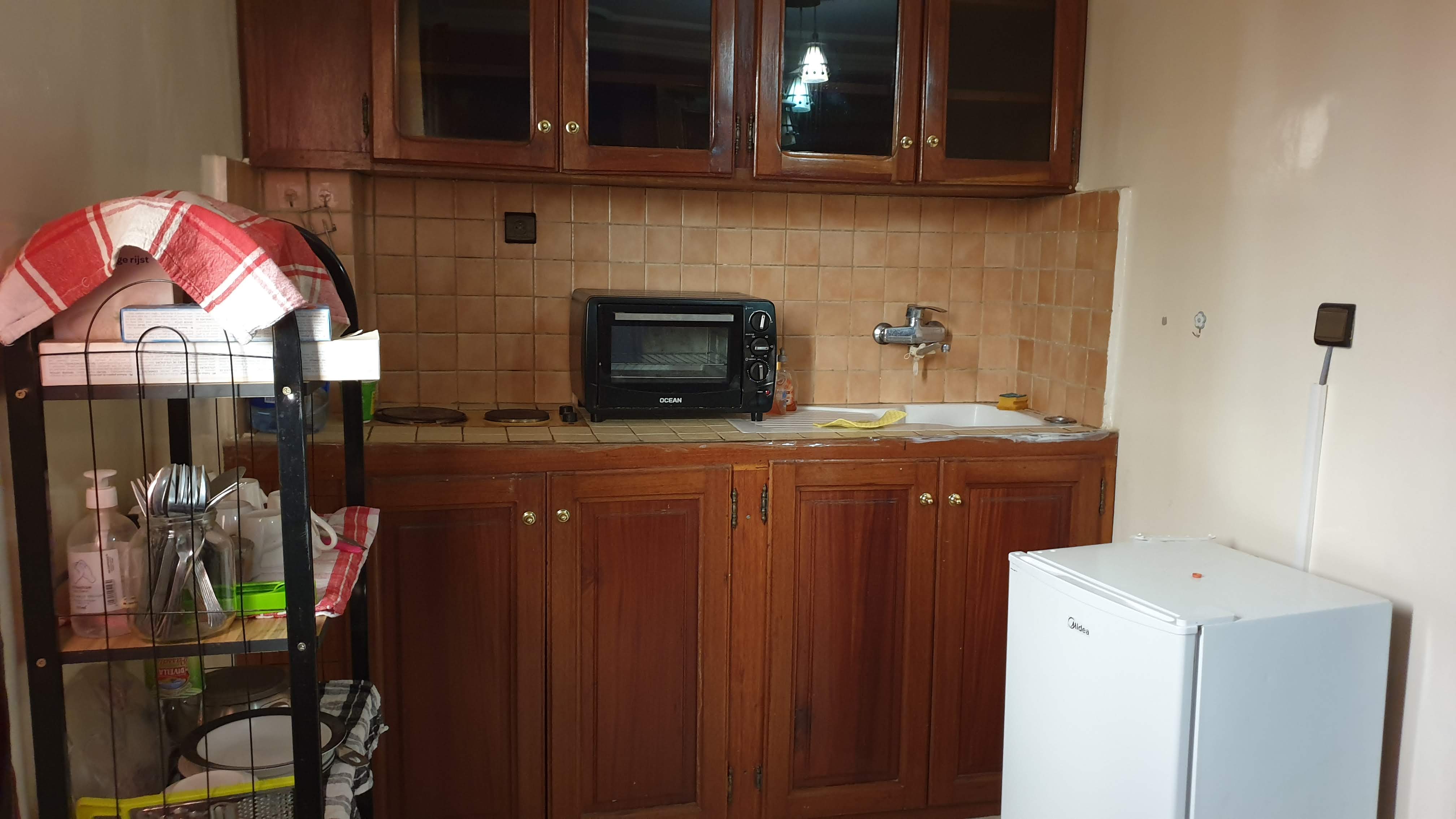
I desperately want a room that I can know will be mine for at least a few months. I need to unpack, and settle .Twice now, I’ve woken up at 4am to discover the power in ONLY my room is out and had to get dressed enough (Alhamdulillah I still have my abaya, socially suitable to put over PJs in any country) to go the front desk to ask (in sleepy French) for the power to come back. By then, I’m too hot and agitated to go back to sleep well. The weekend brought the exciting discovery that somewhere above me someone is trying to run a nightclub from 1-5am with extreme bass. I mostly can’t hear it with my headphones in, but it was not conducive to good sleep. Aside from my comfort level, there’s finances to consider. My contract covers RENT, not hotels (it does cover hotels for a short while at the beginning, but at one point one of the people helping us look for apartments thought it would be reasonable to stay in a hotel for a whole month while we figured out housing!) And the even crazier part is that my “moving in” budget comes from the same pool of money for any projects I want to do that benefit my host country, so the longer they make me stay in hotels, the less money I have to spend on materials, supplies, or even micro-scholarships for them. I need to be in a monthly rent agreement place for so many reasons both personal and project based.

In a very recent development, a new option appears. One of the other ladies here on the Fulbright program had already done a homestay last spring, and her host mother turned out to be a realtor. In many countries, realtors help you find and rent apartments. I had that arrangement in Korea, too. The realtor my social sponsor arranged was the one who picked out all the sketchy apartments. Anyway, they got her in touch with me, so now I have a thread of hope that a better apartment may be forthcoming.

The School – Veterinarians

Ah, my “job”. I keep telling people this isn’t a job like other jobs. It’s a fellowship (yeah like Frodo!, no not really) and a project. My primary goal is the university I’m assigned to, but I’m also supposed to have side projects and other cultural whatsits to be involved in. I’ve already put out some good feelers for a side project which I’ll write more about if anything comes of it, and I’ve been invited to come and speak at some nebulous future date at at least 2 venues. Secondary projects abound, and I can take, leave or redefine them fairly easily. The challenge is my host university.

I was placed with the Ecole Inter-Etats des Sciences et Médecine Vétérinaires, and even if you don’t speak French, some of those words will be familiar science, medicine, veterinary… It is a veterinary school located inside the Cheik Anta Diop Univeristy here in Dakar. They aren’t into the humanities. They don’t have an existing English department, and for reasons I’m not clear on, they can’t just send their students over to the school of foreign languages next door to take some English, they are in fact trying to create their very own curriculum.

There is really only one guy who speaks English well enough to be comfortable talking to me, and he’s (self described) low on the totem pole, so doesn’t have a lot of the answers to my questions about the details of what they want and what resources they have for this. I finally got their curriculum proposal (in French, but Google Translate is better than nothing) which is only half written and clearly by people who have no clue how language acquisition works. I also had a brief meeting with the gentleman in charge of scheduling details, but can’t get any answers about things like instruction hours. I clearly don’t know how the semesters are structured here. It’s been explained that it’s not like a liberal arts style class where you go at the same time every week for 10-16 weeks (quarter vs semester), but that students rotate through very short and very intensive courses of study (2-3 weeks at a time?). I’m still trying to figure out if I need to design English classes on that time scale or if it’s even possible to have students regularly show up 2x a week. So far I’ve written a 4 page counter memo explaining the overambitious nature of their dream and the crushing weight of compromising with reality, but I don’t know who to give it to.

They also want clinic workshops which are much easier to create and run, but less effective for overall language acquisition. Since I have next to no data or guidance, and everyone who could speak to me about it is apparently out of town or busy for the next two weeks, I’ve decided to spend some time on YouTube and TikTok looking for videos by vets that are: a) educational, b) funny, c) both — in order to design some short one-shot workshops around those. However, since I can’t design anything until I have some idea of the students actual English level, implementing a widespread level assessment test is the first goal.

But that’s not all! They want the faculty, admin, and IT staff to have English lessons relevant to their needs! While I was cleaning 3 years of dust off the pre-COVID Fellow’s desk (now my desk) I found a schedule which had him doing 18 hours of classes a week! That is a high amount even if it’s your only job because on average, 2 hours outside of class for every hour in class is a good balance for adequate lesson prep and homework/assessment grading and feedback on a new course. Once you’ve done a course a time or two, you can drop that down to 1:1 because the lessons are basically made and you’ve developed some tricks to grading the assignments, but considering I’ll be designing the curriculum and either finding or creating all the materials, and I’m expected to have outside projects, that’s INSANE.

What Am I Doing Here?

So, here I am, wandering between my shabby hotel apartment and the local café, writing in my blog and diving down a veterinary rabbit hole on YouTube because I have no qwerty keyboard at my office and no access to the curriculum material or student information, and my social sponsor is out of town.

I wish I could tell you about the city, and the food, and culture, but honestly, I’ve been fairly mono-focused on my base level Maslow’s needs here, contending with vaguely poor health while having to negotiate in a foreign language daily for things like food, water, and shelter. I’ve talked before about culture shock, and the fact that even simple tasks take more energy in a foreign place/language. It’s no joke, and it hasn’t left me with much energy for adventure type exploring. I’ve walked around some. The sidewalks are used for parked cars leaving pedestrians to walk in traffic (yay). There are lots of vendors on the street that I look forward to investigating soon. I have downloaded the recommended ride share apps that should allow me to avoid haggling with taxi drivers, but I probably won’t do much “touristing” until December when the weather is less aggressive and I can be outside for more than an hour or two without getting dizzy.

Welcome to Senegal.
English Language Fellowship: the People Side

The human element is something that I got less and less of during the pandemic, but will be a big part of my next adventure. Although interminable paperwork is the hallmark of any international and/or academic project, the English Language Fellowship application also requires multiple interviews, and the pre-departure process benefits from making early contacts.

Interview Process:

Almost as soon as I got the application fully submitted, and my last reference completed their essays, I got an email inviting me to a video interview. It happened much faster than I thought possible. The email gave me a basic overview of what to expect in the interview and three date/time slots to choose from.

The time allotted was 30-minute for the Zoom interview. I was told it would focus on “behavioral competencies which have been identified as important to the success of Fellows working overseas in challenging environments” including: Flexibility, Resourcefulness and problem solving, Leadership, Cultural adaptability, and Working with others. For each behavioral competency, I then had to address three aspects: (1) the situation or task in which you displayed the behavior, (2) the actions you took, and (3) the results of those actions. A recording of my answers, I was told, would then be added to my application.

I agonized the entire time between receiving this email and having the interview. I had to take a later date because I had already planned my trip to the ski resort, so I used the time to brainstorm ideas and bounce them off my friends. I wrote down multiple possible situation/tasks for each competency and thought through the actions and results. I got one friend who was skilled in education and one who was more skilled in presentations and projects, and I asked them for time to listen to my options and help me choose. I am so glad that I did this. Although I was nervous, after really discussing each competency and how my examples highlighted them, I felt truly prepared. I also decided to tell my situations as stories, which, again, if you’re here on the blog, you know is something I love to do.

It was a great decision. The interviewer loved my storytelling! He really complimented my presentation style and said it was something that would serve me well in the fellowship. After participating in the pre-departure orientation, I realized why – there are a lot of videos and presentations where fellows tell stories from their fellowship as a way to share their experiences and help promote cultural exchange.

The first interview was just to gather my answers so I could be placed in the matching pool. The day after my zoom call, I got the email that I was officially in the applicant pool and could receive my 2nd interview anywhere from a week to 5 months. This process is not for people who can’t live with uncertainty, but again, they are looking for flexibility in candidates. I was putting off giving notice at my university until the absolute last moment I could responsibly and professionally do so, which is 90 days for me by the way. February was still early enough in the semester that I wasn’t too worried about a delay, but I was anxious in that kids before Christmas way because this was by far the best opportunity I had encountered in my search, and I really really wanted it.

Nevsehir, Turkey

It took me most February to find my future HVF Dr., and in the mean time I was still doing my online classes and applying for other jobs, not knowing how serious the “not a guarantee of placement” the disclaimers were. Finally, on April 21 I got a match with the program in Turkey. This was a little startling, as I had just declined a job offer in Ankara, Turkey in March (that university didn’t think I would have any time to explore the country because of my work hours, which was a pretty big red flag). The Fellowship position was in Nevsehir, which is a little remote, but not any worse than my current town in Korea, and I’ve never been to Turkey, so it would be something new.

Unfortunately, the interview was a bit underwhelming. Before my interview, I was sent a pdf guide that outlined questions we might be asked and might want to ask, which was a very thoughtful tool. But, when I was given the chance to ask questions back to them, they seemed entirely unprepared. I asked some fairly basic ones, like “what do you like most about your town?” (the tourist attraction “fairy chimneys” was the unanimous answer, and I believe they are beautiful, but I have been living in a beautiful but boring town for 4 years now, so if the locals don’t have anything else to say about it, hmmmm).

Nevşehir, Turkey. Original public domain image from Wikimedia Commons Credit: rawpixel.com

I asked some things about the school, and teaching styles, which got some cookie cutter answers, and I asked why they wanted me, why they were in the program. That was the hardest, because the answer was basically, “We want an American because our students never see one.” And, I totally understand that getting students to speak to native speakers is great, and that this town wanted more tourism and needed to get people used to seeing Americans. But, I have played token foreigner before, it’s an unfulfilling role. Like being a character in a theme park. It can be fun when you’re out at the big tourist destinations, but it stops being fun when you just want to do your shopping. I don’t think there’s anything objectively wrong with what they want from the program, I just worried that I was not going to be as fulfilled by it as I had hoped.

I left the interview with a lot of mixed feelings. I really wanted to be in the program, and to get out of my current situation, and to have a new adventure. I had applied to the other job in Turkey because I though that since flights are crazy with COVID, maybe living someplace where I could do a little extra travel by train would be nice (Korea has great trains, but you can’t get to another country from there overland). Turkey has a lot of cool neighbors, and it seemed like I could get a lot of adventure from there. Conversely, it seemed like plenty of schools in Turkey hired English teachers directly, so why go through this particular program to this particular school if I felt safe, comfortable and competent to get a position in Turkey on my own?

I decided that I would accept the match if it was offered. I worried that turning it down would boot me or at least make me less desirable to future matches. To be very clear, I would not have accepted any position that was not an improvement on my current circumstances. This wasn’t me settling for less. I had some very high hopes for the ELP after everything they told us about remote and unusual locations, but I was already looking at a position in Turkey (just one with a better work-life balance than my March interview). I didn’t think I would be unhappy in Nevsehir, and I was dreaming of how to help locals make English language AirBnB experiences to meet their tourism goals, and looking at local activities, photos, and blogs that very night to think about the cool things I could do.

I woke up the next day to see that the host university declined the match. I was a little bit sad, but mostly relieved. I was back in the pool, which meant more limbo waiting, but it also meant a chance a match that could be more in line with my ideals.

Taiwan Sidebar

In the mean time, I was still applying for other schools and conducting other interviews this whole time because the DoS kept saying “no guarantee you’ll be placed”. One such was in Taiwan. Although Taiwan has the same ‘fly to leave’ problem as Korea, it was still on my list of desirable countries because a) I speak Chinese better than Korean, and b) I really like Chinese culture, but didn’t see myself going back to the mainland c) Taiwan is the most liberal and forward thinking democracy in Asia, and d) the food.

I had an earlier interview with one university whose representative was extremely enthusiastic about my demo video (a real video of one of my real classes that I edited for highlights). I was awaiting a secondary interview with them when I got the match for Senegal. Although my interview for Dakar was May 4, and on May 5 I was offered the post, nothing was official until that health form and all the other intake paperwork was complete and approved, so I wasn’t quite willing to put all my eggs in one basket yet. As a result, I accepted their invitation for a second interview when it came.

Despite the fact that they were quite enthusiastic about my resume and demo, they were very demanding as well. Part of that was entirely understandable, they needed to be sure I had all the required documents to meet the governments visa rules. The other part was more red flag, or at least a yellow card. There was desk warming, and micro-management, and pretty much zero flexibility. It wasn’t bad enough for me to walk away from (no worse than EPIK), but it wasn’t awesome either. Plus they were REALLY pushing me for a multi-year commitment. They were only hiring because their last English teacher didn’t meet the new updated visa requirements. I said that if things went well, I was happy to stay 2-4 years, but that I wouldn’t know until I got there. They did not like that answer.

Dakar, Senegal

Just a week after the interview for Nevsehir, I got my next potential match for Dakar, Senegal. The overview of the job struck me as a little strange since it was for a veterinary school, but without any additional details, I assumed their English program would focus on international standards for participating in study abroad, international conferences, and publications (spoiler alert, there IS no English department!). I was far more excited at the prospect of Dakar than I had been about Nevsehir. For one, I have wanted to experience sub-Saharan Africa for years with no real opportunity to do so. Tourism in Africa is actually both difficult and expensive, while jobs for English teachers are thin on the ground, the only ones I’d found before were either volunteer, pay to volunteer, or required French fluency.

For another, Dakar is a big urban space on the sea, which is definitely one of my favorite combinations. Senegal is a very stable African country, and Dakar is a cultural hotspot. I could live and work in Africa with support and security, be based in an urban center, but have reasons and ability to travel to the countryside and villages. 10/10 on the adventure scale more than made up for whatever obstacles I could imagine encountering teaching English at a veterinary school. I had to wait some more, there were some holidays in Senegal at the time, so my actual interview was May 4.

The interview process was night and day different from the one with Nevsehir. The first match interview was a group zoom with the Embassy representative and three English teachers form the local university. I was obviously there to talk to the teachers, and the Embassy rep was trying to facilitate. It felt a lot like a traditional job interview for any university program. The zoom call with the folks in Dakar was 2 people from the Embassy, the very American white guy and a local woman who had worked in the Embassy for many years (oh, and the American guy has since relocated, so I get a new boss!). There was no one from the university involved. Additionally, the mood of the interview was more causal, laid back and easygoing, where the one for Turkey felt very stilted and performative.

We chatted about expectations and obstacles. I think they understood how challenging West Africa is for Americans to adjust to with rolling blackouts, unreliable water supplies, and a general lack of teaching supplies in most schools. I told some stories from my own life (pre-Korea, cause let’s face it, it’s really soft there), and I told them the one and only time I’ve had to leave due to such issues, and they seemed quite shocked that I had lasted as long a I did at that particular place, and assured me they did not expect anything quite so bad in Dakar. Once we reassured each other that I could take the problems they anticipated and they wouldn’t expect me to put up with conditions I knew I would not, we had a really lovely chat.

They did briefly address the lack of any concrete plan for me or English classes, but in the end, I told them quite honestly that I was so excited by the chance to live and work in this part of the world with a support network and safety net, that there was very little they could say to dampen my enthusiasm. I got the official offer the next day. (despite the many surprises that I have encountered since accepting and the mounting pile of confusion and uncertainty, I am still very enthusiastic).

Life Choices:

Although I got the offer May 5, I didn’t get my actual contract until June 25th. Experience has taught me that it’s not real until the contract is signed. In the case of life-after-COVID, a signed contract is still dependent on travel conditions and government restrictions, but it’s as reliable as I can expect. During this very long wait, I had a lot of thoughts and anxieties, not the least the political unrest in Dakar over the summer about the elections. My brain started having tiny little panic attacks about the idea of giving up my safety and comfort. Was I being totally irresponsible to wander off on a short term project in a pandemic and a brewing European war impacting travel, the economy, and the job market?

The Taiwan school had yet to make me an official offer, but had made their interest very apparent. They were pressuring me all this time for a commitment, and I kept trying to tell them that I was interviewing at other places, but that IF they offered me a job and I accepted, I wouldn’t back out. They kept saying I had to commit before they made the offer. It seemed like neither one of us wanted to be the first to say yes.

I told the story about Taiwan because at this point in the process I had a come-to-Disney moment (it’s like a come-to-Jesus moment, but Disney). I got Pocahontas’ first song stuck in my head. I don’t even like that movie very much, but I know all the songs because it was one of the ones my little sister watched daily for about a year. I still like the song about rivers because I want an adventure life too. It’s the same reason I love Belle’s song about “adventure in the great wide somewhere”, though I’m not as into Ariel’s “part of your world”. My Disney Princess Moment was experienced while sitting on my balcony I realized that the job in Taiwan was more stable: they wanted a long term commitment, Taiwan just launched a “bilingual by 2030” initiative so job stability was in. I already knew I could communicate, and get around having visited back in 2019 on my own. It would be new enough to be exciting but also familiar enough to be safe. Then it hit me: Taiwan was Kocoum.

(In this metaphor, Senegal is NOT John Smith, I really prefer the no-prince spate of recent Disney movies to the romance minded and culturally problematic movies of my own childhood, but in the context of the song, it’s Kocoum vs Adventure. I prefer more “Moana choosing the sea” as a metaphor, but I never memorized the lyrics to that song, so it doesn’t pop into my head unbidden in moments of existential crisis).

Both Feet In:

I got the agreement June 25, signed it and sent it back, checking the online portal to see the last piece of paperwork approved, and it didn’t come. It turns out that there had been a glitch in the internet when I hit send, and it went into my drafts folder instead of to the program. Thankfully, they checked on me, and I found and fixed the mistake, and the final approval was granted on July 6. It took me a few days to realize that the school in Taiwan was not going to take a subtle hint, so on July 10 I finally sent a very clear, “thanks but no thanks” email. They didn’t reply.

Once I was committed, I started the work of preparing my necessary travel vaccines. Unlike with the HVF, living in Korea was actually an advantage this time. I could see that my required vaccines were up to date, but there was a laundry list of other recommended vaccines and one that might be required for me because I had been in Korea. Korean citizens are required to get the Yellow Fever vaccine before going to Senegal while Americans are merely recommended to do so, but that’s about location and exposure, and I didn’t want to take any chances that they’d see my Korean visa and turn me away. In the end, I got 6 vaccines – 2 boosters and 4 new. The yellow fever vaccine was the worst in terms of side effects because it’s a live vaccine, but rabies vaccine required 3 shots over 4 weeks.

Maybe I won’t need any of these, Dakar is a very cosmopolitan place, the risk of exposure is low there. However I will be spending a lot of time at a veterinary school and animals are vectors for a lot of disease, plus I hope to get opportunities to travel into the countryside where unfortunately risk of exposure is higher. The vaccines help me feel like I can do all that without worrying too much, and in Korea they are 3-4x cheaper than in the US where most of them aren’t even covered by health insurance. I don’t think I would have gotten them all if I had to pay US prices. My year supply of anti-malarials was also 1/4 the cost of the same medicine in America. If I was in America, I probably would have bought a 90 day supply in advance and then acquired more when I got to Dakar, but it’s one less thing to worry about. Yay Korean healthcare!

The Community of Practice:

Since that time, I’ve zoom calls and WhatsApp chats with former Senegal fellows, the new RELO, and the COP (community of practice) for both the fellowship orientation and the Training of Trainers course. It’s so different from any other job or program I’ve been a part of because I’ve been working on it in one way or another all year and it hasn’t even started yet. It’s also different in that peer & mentor support are everywhere! Whether I’m getting reassurance from a more experienced mentor or reassuring a peer who has less international experience than me, it’s truly marvelous to be a part of a supportive community, and I look forward to meeting even more folks face to face when I arrive including the embassy staff, the Fulbright scholars, and my host institution professors.

I’m currently in the US, busily having fun with friends and family so, I haven’t written as much about the TOT (training of trainers) course as I would have liked. It’s a lot of work, and wrapping my brain around new ideas, but I feel like I’m elevating to a whole new level in my career! Also, my start date in Dakar was pushed back to October 18, so keep an eye out for the “Welcome to Dakar” post around Halloween. Thanks for reading!


Jeff Attaway from Abuja, Nigeria, CC BY 2.0 https://creativecommons.org/licenses/by/2.0, via Wikimedia Commons

English Language Fellowship: The Paper Side

I gave no small amount of thought into how to organize this 10 month long process from application to arrival. It’s a lot, both in terms of time and in details. I’ve started with a division between the paper and the people, and I’m hoping to get some of the orientation and training process recorded as well. It’s been a long time since I wrote a bureaucracy post, but it is a tradition here. I hope that reading about it is more fun than doing it, that it sheds some light on what goes on behind the scenes of a glamorous globetrotting life, and that it might help anyone in the future who is struggling to navigate a similar sea of red tape.

Application Process:

I was doing general job searches over the winter break, you can read about my decision to leave Korea in the “안녕히계세요 Korea” series. Most of the world starts the school year in the fall, so if I wanted to transition out of Korea, I would need to start looking in the winter/spring, and even though most schools only hire a few months in advance, looking for work over the winter gave me a sense of control my life was sorely lacking.

In January, I saw the ad for the English Language Fellowship and vaguely remembered trying to apply for it years ago. Back in 2015, I didn’t realize it was a program for more experienced English teachers, I had only 2 years of experience back then, so I wasn’t quite eligible yet. In January 2022, I didn’t really know what to expect, but I had committed to applying to any position that was cooler than my current one. I was on winter break, so a lengthy and detailed application process was not as daunting as it might have been during classes.

The online application process is fairly similar to most in that you have to enter all your information, and relevant work history and skills. It’s a little different in the amount of detail you are expected to provide, including that each skill you claim requires specific examples. There are also a lot of essays. It more resembles an application for an academic program than for a job, which makes sense. In addition to the statement of purpose, you have to answer essay questions with specific examples from your past about:

  • work ethic
  • flexibility
  • judgement
  • classroom management

It’s a lot of writing, which as you may guess wasn’t too onerous for me, but the really hard part was that I had to get my three references (at least one from my current job) to log into the portal and write their recommendations directly into the application (the program sends them a link via email, but I did personal outreach before adding them to the mailing list). It was awkward to contact my current team leader and break the news that I was looking to leave by asking for a recommendation. Thankfully, he thought it was a great opportunity and was very quick to get his positive assessment in.

Recommendations

In my early working life (age 16-25) I didn’t encounter letters of recommendation. Every job application had a space for references contact information, but I didn’t really see behind the curtain of what went on during those phone calls. Later, I was introduced to the concept of letters of recommendation. The way I was taught was that I request a letter when I’m leaving a job or school and then keep it on file for future applications. I didn’t start getting them at all until I was applying for grad school, after which I tried to remember to ask at the end of a job or project because it’s really hard to get one years later. I was also told that it’s common practice to write the letter about myself that they would then sign. All of this was very intimidating to young me, and it took me years to get decent at asking for letters and writing them for myself and for other people.

This was the first time I encountered an application that wouldn’t even be considered until all three references responded with essay answers containing unique and specific details about me (basically the same questions I had to write essays about) with real world examples. It’s a lot to ask for a reference. One of the original three people I asked wasn’t up to it when she realized how different it was from a regular letter, and so I had to find a back-up. I’m really grateful to the people who were willing to put in the work for me, especially after I realized how much work it actually was! If I could do it again, I’d offer to help them brainstorm examples. Many people who give references may think they need to keep them private from the applicant, but if you can co-author your reference, I think it will help you get what you need and be a little easier on the person you are asking to help you.

I suspect part of the reason they want these three detailed reference essays is because this fellowship requires a certain amount of networking, and relying on other people (inspiring other people to be willing to do things on your behalf). I had always hated the idea that my goals or even survival could depend on other people (who might flake out or stab me in the back), but I know now that is just the voice of my past trauma. Humans are team-based social creatures and our ability to thrive depends on our social connections. The fact that I succeeded in getting three wonderful, talented, and accomplished people to want to take the time and effort to write nice things about me and our work together so that I could partake in this opportunity shows me how far I’ve come and how much I mean to others.

Almost immediately after my last reference was completed, I got an invitation to my first interview and was subsequently placed in the applicant pool by early February. I was told my match and second interview could happen anytime from 1 week to 6 months, and in the mean time, there was more paperwork.

NOTE: If you’re interested in applying, the 2023-24 academic year application process opened in September: https://elprograms.org/fellow-program/

Health Verification Part 1:

One of the other complicated piles of paperwork participants have to complete is the Health Verification Form or HVF, and it must be done under the care of a physician. They need to make sure that everyone going is healthy enough to live in a place with … intermittently reliable healthcare. Although I personally think Americans have an incorrect perception of the quality of healthcare abroad, believing it to be substandard or inferior when actually it’s just cheaper, there is something to be said for the fact that in some cases, fellows will go to remote locations that are far from urban centers and hospitals. In addition, very few countries offer the disability and mobility accommodations that America is required to have by law.

None of this is to say that people with extra health care needs or disabilities can’t or shouldn’t travel. I think everyone should travel. There are lots of places you can visit with good, reliable, cheap healthcare, though mobility may require a companion to help navigate difficult spaces. They just don’t want the liability of sending someone with known severe health issues that could result in hospitalization or death if they are unable to receive the same level of care that would have access to with comparable insurance within America.

In addition, the form has to be completed within 15 days of when you receive your official offer, which I had not yet, and would not until I had a match and my second interview and was accepted by the local coordinator of the program. For people in the US, this would be fairly easy. I looked at the sample form and although it’s rather long, most of it is medical history and personal planning. There’s a short part that is an actual exam. The exam is comprehensive (full body) but basic (no blood work or other bodily samples involved, unlike many visa health checks). In America, I could imagine just going in to my GPs office and discussing the history and plan, then getting a quick once over and a sign off. Two weeks is not unreasonable.

Korean Mode Bureaucracy Challenge:

In Korea, there are no GPs. Once every year or two (depending on your job and health plan) you get a full body work up for free! You go to the testing center and it’s like 8 doctors all in one area so you all the preventative medicine checks at once (really, everything). Then if there’s an abnormality in your results, they tell you what kind of doctor you need to see to follow up. In between these work ups, if you have a problem that you need a doctor for, you go directly from the reception desk to the specialist that the intake nurse thinks best fits your reported symptoms. If your back and your knee hurt, you’re likely going to see two different doctors. The good news is they are all right there together and it’s very easy to go between doctors and testing facilities in one visit. The bad news is that no one doctor was likely to file this whole body form.

I knew it was going to take me longer than the allotted time to find a place I could go, so I started the hunt early. I also made a much more comprehensive version of the history and plan than I would have done with an American doctor, since I knew the Korean doctor was unlikely to be comfortable with writing that much English themselves, and I wanted to offer something they could cut and paste, editing as needed. Most places that spoke enough English to take on a form like this flat up said no. A couple places said they could do it, but that it would be billed as a pre-employment health screening, which included a ton of tests and scans that I didn’t need, bringing the price tag up to about 500$ (which is crazy in Korea). One hospital in Seoul said they could do it for less, but still about 200$. I was feeling really disheartened. I knew in the US this would be a 25$ co-pay for other applicants and it just felt like such an extreme barrier.

At the end of February, I got a reply from a nurse in the International Office of Hyoseong Hospital in Daegu. When I arranged to talk with her on the phone, I was so relieved to learn that this hospital had many accommodations for foreigners due to the fact that they worked closely with the US military in the area. I emailed her a copy of the form and a few days later she said not only could they do it, but that it would be cost of a regular doctor visit (10-20$) or at the absolute most 40$ if the doctor decided he needed to run any extra tests. I also talked to her about the time requirements and that I would need the form within two weeks of an as yet unknown date sometime in the next couple of months. She said she would make a note about my situation so that she could remember the details when I called back at go time.

The Intake Paperwork, Georgetown U, and the Portal:

After rounds of waiting and interviewing and more waiting, I got my official offer on May 5th and the race was on to file all the paperwork. The PORTAL is the central data collection for everything you need to be a fellow. The first “step” is the onboarding to-do list. Some of the items on this list are fast and easy like your contact information, others like the Health Verification form and the Supplier ID require multiple steps in and of themselves. I had check off everything you see here to get my agreement finalized. The visa remains unchecked because at the time I took this screenshot, I was still waiting to get mine, although I really hope that by the time this pre-scheduled post drops, I have it. Most of this isn’t actually difficult, it’s just tedious, but I had one major hurdle to jump.

Getting the HVF

When I got my official offer on May 5th, and my acceptance package on May 7th which started the 15 (business days) countdown. I realize they sent the email on their Friday 6th, but Korea is in the future, so I couldn’t do anything about it. I contacted the nurse at Hyoseong the following Monday 9. Then it transpired that the nurse I needed to help me was in COVID quarantine! (She was not too sick, but couldn’t go into the office with a positive test). I had to wait until Monday 16 to try again. On top of that, my school had scheduled me in such a way that it was impossible for me to get to a hospital in another city without cancelling and rescheduling at least one class, limiting the possible days of the week I could hope to go. I got an appointment for Friday 20 (the easiest class to reschedule) which would just give me enough time for a re-do the following week if anything went wrong.

Thankfully, I’d done all my prep work months before and I was able to copy and paste my answers into the form and print off some hard copies for the doctor to sign. Once I arrived, the nurse did most of the work (as nurses so often do), making sure the information I couldn’t write in advance was added in and double checking some details. Then she went off to talk to the doctor while I sat in the waiting room. When I went in to see the doctor, he asked me a couple of basic health questions, offered to refill my inhaler, and signed off. Months of stress, and it was the easiest thing. I know if I’d shown up with a blank form, it would not have been so easy, but one of the many knots of low grade anxiety in my guts unwound a little.

The Visa

While I didn’t need to have my visa in hand to complete the onboarding checklist, I did have to know the visa requirements to enter Senegal. While everything with the hospital was going on, I also contacted the Senegalese Embassies in DC and in Seoul. There was confusion about the visa process and requirements. I didn’t need a work visa, since I would not be working for a Senegalese company, but was it a business visa? or something else? Online research turned up a very complex process that required piles paperwork, a French translation of my birth certificate, and regular in person renewals for a residency permit that would be granted after I arrived, but that seemed like something for immigrants, people moving to Senegal. Americans can visit Senegal for up to 90 days with no visa, and there’s student and work visas, but none of that applied to me.

I explained to the Senegalese embassy here in Korea that I was American (not Korean) and needed a visa, but they informed me that it wasn’t possible to get the visa in advance. It took me longer to get in touch with someone from the DC embassy, but when I did, she was very helpful and once she understood my situation, said that I could get a 1 year visa in advance and helped me get a list of all the documents I’d need and where to send it. At the time of writing this (August), I’m still in in Korea and won’t be able to ship off my passport to DC until after I arrive in the US in September. Hopefully, by the time this publishes, I’ll have good news on the visa front.

Wrapping Up the Pre-Departure Paperwork

I got my supplier ID accepted on May 19, my HVF form approved on May 24, and my completed onboarding accepted June 4, the same day I received pre-departure orientation schedule.

June 10 was the day I finally let myself believe it was real, and that the bureaucracy was safely appeased and declined my simultaneous job offer (yes, I was so nervous I would be rejected on technical grounds, new COVID spike, or other bureaucratic nightmare that I was still entertaining other opportunities even after I got the offer). I still didn’t have my actual contract/agreement in early June, but that was the day I finally jumped with both feet. Is there a story here? Why yes, there is, thanks for asking, but it’s in the “people” part of this series.

June 25 was the day I got my agreement to print, sign, and scan, but an internet glitch meant that instead of sending, my return email went into drafts and it wasn’t until after the deadline that the office sent me a reminder. Thankfully they understand about computer error (or at least accepted my excuse) and my final signed agreement was added to my PORTAL on July 6.

Some Thoughts:

Just about 7 months after I first decided to apply, and 3 months before I was scheduled to arrive, the Starter Pack Bureaucracy was finally complete. There is plenty more paperwork to look forward to. No government funded project could possibly avoid it, but it makes me pointedly aware of the privileged position I’m in. It wasn’t that long ago in my life that the idea of spending 7 months to prepare for a job would have been unthinkable. The closest experience I had was applying to grad school, which I had to do about 9-10 months in advance of the fall semester, but as difficult as that application was at the time, it was basic compared to this and took far fewer overall hours. My application process to get into Saudi was challenging, especially that visa, but it also wasn’t as long or as many hours. My process to get into Korea was the closest in terms of complexity, but took less time (by more than half).

I had stable if undesirable job all of those times. I made the application process into something between homework and a really boring hobby. But how often is someone in the position where they can financially afford to wait 7-10 months from when they apply to when they start? How many people can be working full time and dedicate the needed hours and brainpower to complete pages and pages of complex and detailed essays and forms? How many people can have a good enough job to give them the financial and mental stability to do all this, while also being able to leave that job for 1-2 years or forever?

In order to apply for, get, and participate in this fellowship, a person has to have education, experience, financial stability, a good professional network, decently good health, and a reasonable expectation that they won’t lose all of that after 1-2 years in another country. When I think back to the version of myself that stood in line at the food bank in order to eat, who almost ended up living in her car when she lost her home (but for the grace of some friends with an attic), who struggled to keep a bank balance out of overdraft and didn’t always succeed… it seems so unreal that I came from that and arrived here. I feel shocked and amazed, surprised and lucky. I can’t even really make sense of it yet, I just know I need to recognize that this is rare and amazing, and I didn’t get here alone. Gratitude.


English Language Fellowship: I’m In!

I am pleased to share with you that I have been selected by U.S. Department of State for a prestigious English Language Teaching Fellowship, and on October 11, 2022, I will start my 10-month fellowship project training teachers and teaching English in Dakar, Senegal at Ecole Inter-Etats des Sciences et Medecine Veterinaire as one of only 200 U.S. citizens chosen to travel to over 80 countries for the 2022-2023 English Language Fellow Program.  The program enables Fellows to enact meaningful and sustainable changes in the way that English is taught abroad, and is sponsored by the U.S. Department of State’s Bureau of Educational and Cultural Affairs (ECA) with funding provided by the U.S. government. Fellows work directly with local teachers, students, and educational professionals to improve the quality of English language instruction offered at prestigious universities and other academic institutions.

Since 1969, the English Language Fellow Program has sent thousands of TESOL scholars and educators abroad to promote English language learning, enhance English teaching capacity, and foster mutual understanding between the U.S. and other countries through cultural exchange. On assignment, Fellows teach English, conduct teacher training, develop resources, and organize events and conferences. These projects are challenging and the teachers selected represent the best of the U.S. TESOL community. In return, the program provides professional development opportunities to help participants experience different cultures and build skills that can greatly enhance their TESOL careers.

This is a program of the U.S. Department of State, administered by Georgetown University, Center for Intercultural Education and Development. For further information about the English Language Fellow Program or the U.S. Department of State, please visit their website, contact them by telephone at 202-632-6452, or e-mail ECA-Press@state.gov.

And if that sounds like a press release, it’s because it is! Formalities aside, I am extremely excited. The English Language Fellowship mini-series will start with stories about my application process, interviews, and pre-departure training and prep. After that, I hope to have plenty of posts about Life in Dakar starting in mid-late October once I’m settled in and get the Wi-Fi rolling.

Welcome to the next adventure!!!