Welcome to the 4th and final post about my 5 week sojourn in Tours, France. Saving the best for last, it’s all about the wonderful food and drink I managed to sample. It’s hard to go wrong with any French cuisine, but there are a nearly infinite number of local and regional specialties to try. Food production in France is heavily protected and you will often see products labeled either AOC or AOP (Appellation d’Origine Protégée, and Appellation d’Origine Contrôlée). The labelling applies to food like cheese, wine, and certain cured meats, as well as any other regional specialty. AOP is more broadly European, while AOC is explicitly French (I think?). My understanding is that the regulations for AOC are a little more strict, but both guarantee that the product is made with the standards set by the region to preserve the integrity of the product and taste. This includes everything from where the animals can be raised, what they can be fed, how they can be milked (or slaughtered), where the fruit can be grown, the genetic strain of the produce, the time and method of harvesting, and all of that before you even get to how the food is then processed, packaged and stored! They take their regional specialties very seriously here.
My school was just off the main square in Old Tours and so I got to walk through it every day. I would go to local boulangerie for breakfast and/or lunch, sampling a wide array of pastries and sandwiches. My favorite sandwich in France remains the butter, salami, and cornichon on baguette, but I have enjoyed an array of sandwiches with versions of butter, pork products, cheeses, and even smoked salmon. There are also a lot of restaurants on the square, everything from traditional French to dumplings, sushi, tacos, burgers, and even an Afghani restaurant! Tours is both a tourist town and a university town, so it’s full of variety.


Bakeries
A simple bakery (boulangerie) may have 10+ different types of bread which are baked fresh every day and must follow the strict laws for quality and freshness. Bread must be baked on the premises where it is sold, and may only contain 4 main ingredients (flour, water, salt & yeast) with the exceptional addition of seeds, nuts, dried fruits, or chocolate. Because it is made without preservatives, the bread must be eaten with a day or two at most.


Boulangerie also sell pastries (patisserie), which includes everything from simple croissant and pain au chocolate to various types of tarts and cakes, all of which must also be fresh and preservative free. The best part about boulangerie is the freshness and quality of the food, but following that, the prices are very reasonable. A baguette is often less than 1€, and other types of bread are weighed out by the kilo. Treats like a pain au chocolate (often called a chocolate croissant in English) are usually a between 1-1.50€, and more complex desserts like tarts and cakes between 3-4€ per serving. Thirdly, the boulangerie do not restrict food sales to lunch and dinner hours like restaurants. They sell food from open to close. In addition to bread and sweets, they offer sandwiches and savory pastries like quiche at any time (before 7pm). This is especially useful for tourists who may not be accustomed to restaurant hours in France where no food is served between 3-7pm.
I visited a boulangerie pretty much every day for a sandwich and pastry. It can be a lot of fun to try all the different options, and see the interpretations of the same dishes from one bakery to the next. Many even offer a fixed menu of a sandwich, drink, and less expensive pastry (like an eclair) for 6-7€.
In addition to all the pastries I got at various bakeries around town, my school is also partnered with a pastry school, so sometimes we got extra treats from the pastry students. One week, a German couple were attending classes with us in town to visit their daughter who owns a patisserie and they brought boxes of her fine pastries to share with us. Another night, the sister pastry school hosted a party with tables laden with canapes and tiny bite size pastries. Heaven!

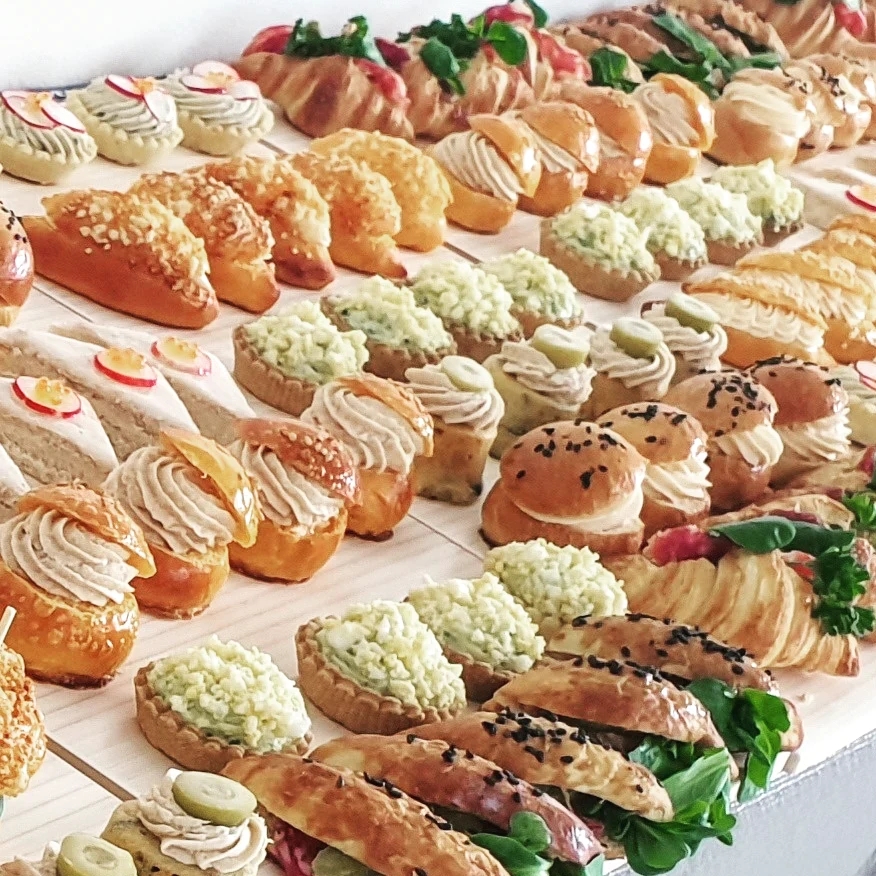

The one local pastry specialty is called Nougat of Tours. It’s not a nougat at all, it’s a cake. Specifically a “travel cake” made for easy transport and meant to stay fresh for several days (unlike bread and most other pastry which really needs to be eaten the same day).
In my quest for culinary experiences, I bought one to try, but I was a bit underwhelmed. It’s a cake with almond flour, dried fruits and apricot preserves, which should be lovely, and it’s definitely as good or better than most things you’d find in a US bakery, but after the beautiful apricot tarts and apple turnovers ate which were buttery and bursting with fruit and just the perfect amount of sweet with a hint of salt… This cake landed on the candy side of too sweet, and because the fruit used is dried and or in jam form, it lacks the pop of acidity and brightness in other fruit desserts. The cake itself was a bit dry (maybe that’s the “travel” quality?) but otherwise a nice texture.

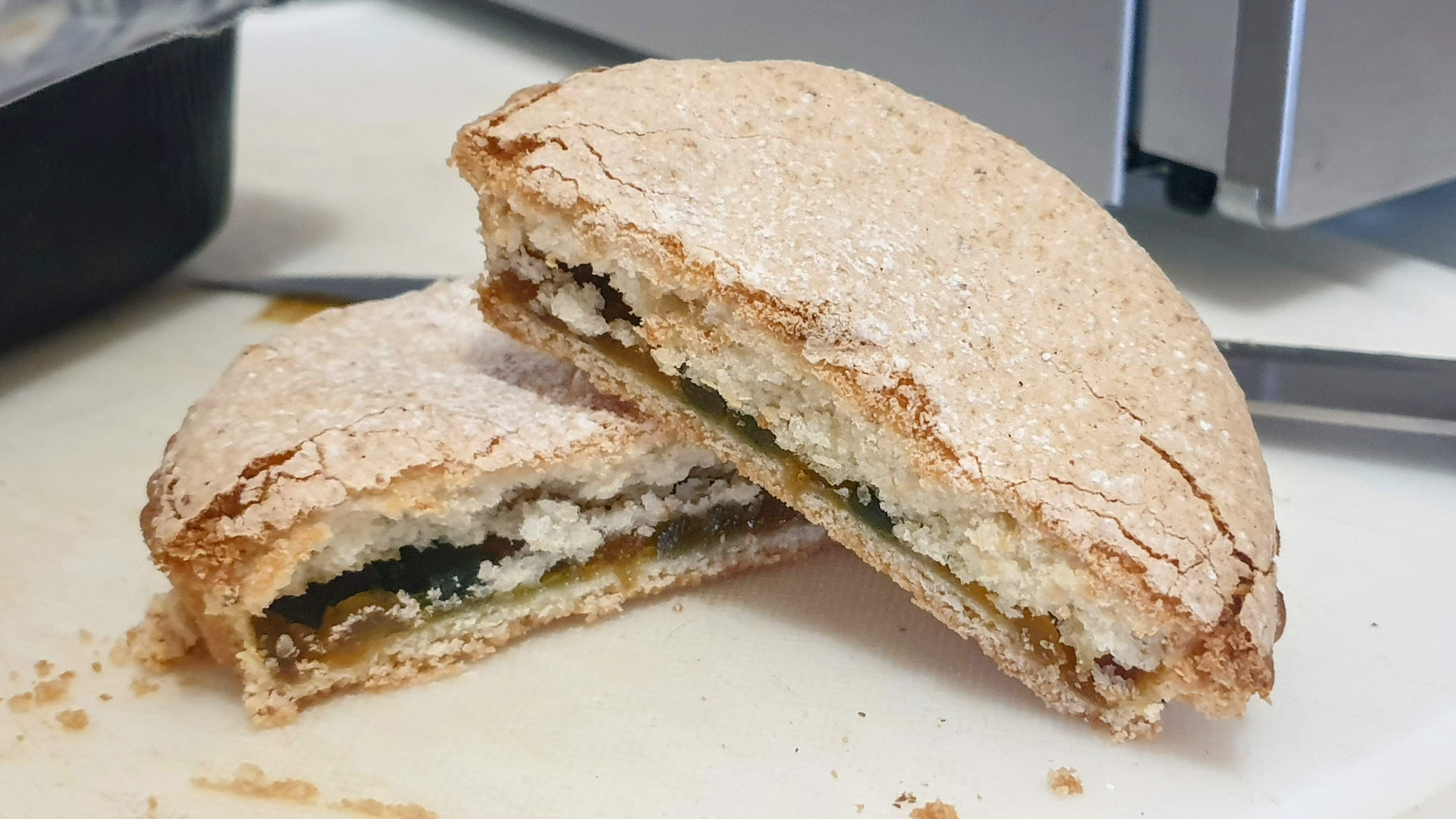
After a couple of initial assessment bites, I ended up finishing it with some Comté cheese (a hard aged cheese that is rather sharp) which may or may not be blasphemous but it took the edge off the sweetness.
On my very last day of classes, the school’s field trip included a final trip to the pastry school where the students were sharing the results of their final exams. The five desserts we were privileged to taste included an excellent cheesecake with a grapefruit coulis, a chocolate cake, a chocolate flan (very new experience for me!), a strawberry cream tart with fresh mint, truly an inspired combination, and very most specially, an award winning 5 texture vanilla gâteau. This last creation is the brainchild of Chef Angelo Musa, who had come to the school as a guest instructor. It’s called the 100% Vanille and is served at high tea at the restaurant La Galerie inside the Hôtel Plaza Athénée in Paris where it sells for 21€ a pop!


Restaurants
I don’t go to restaurants that often when travelling because they are more expensive, but they are fantastic and invariably both better and cheaper than any in the US. Years ago, I discovered the joy of the set menu (formule or prix fixe) where you can get an appetizer, main dish, and dessert for a fixed price by choosing from a more limited menu. In fact, you can usually find this combination for 25-30€ depending on where you are, and unless you have your heart set on a particular dish, the set menu that is chosen by the restaurant each day represents the food they most recommend and may even be based on fresh products they found in the market that morning. Ordering from the menu a la carte can set you back 50-60€ for the same amount of food! And don’t forget, in France, taxes and services are included in the price of the meal, so you don’t need to worry about tacking on an additional 20-30%.


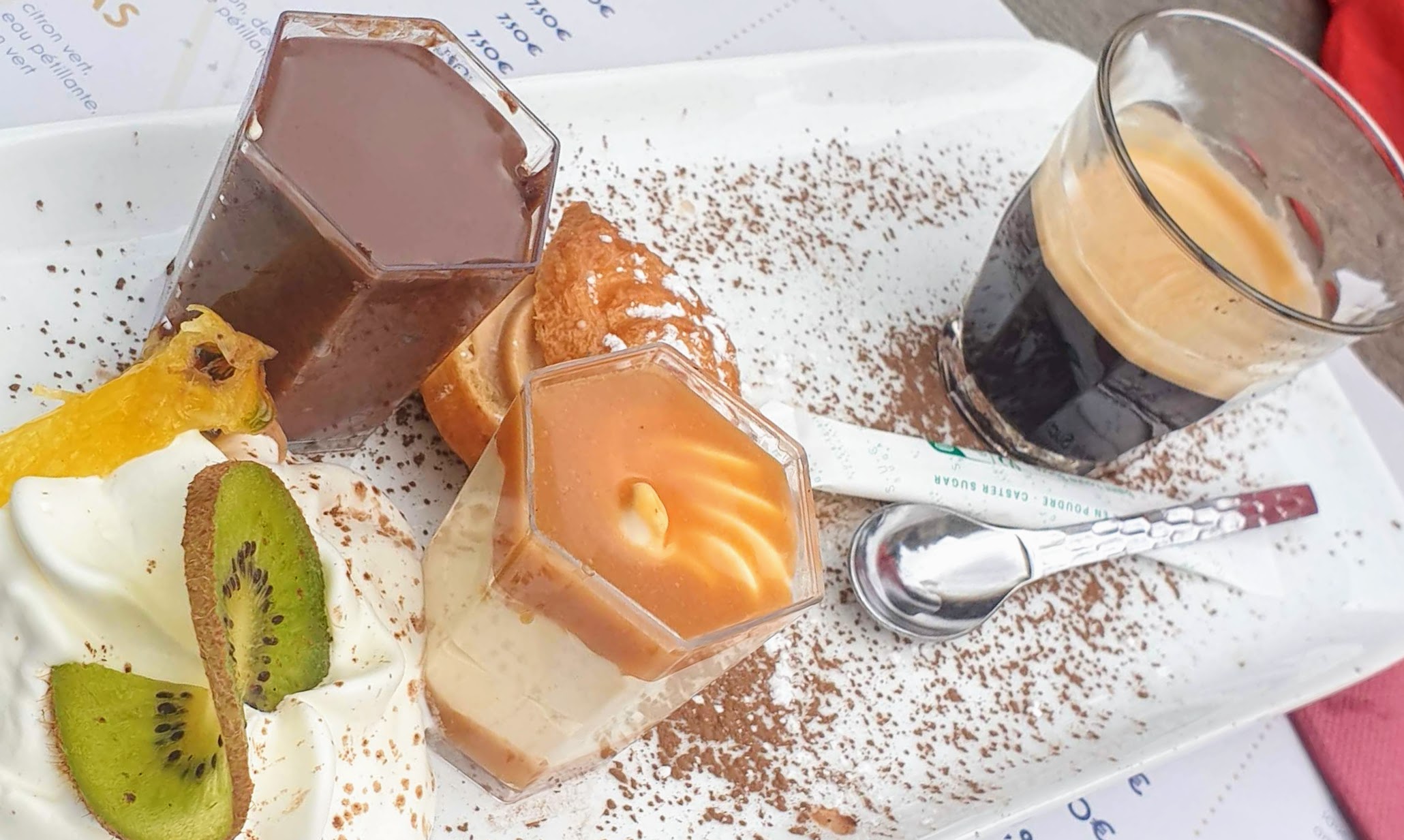
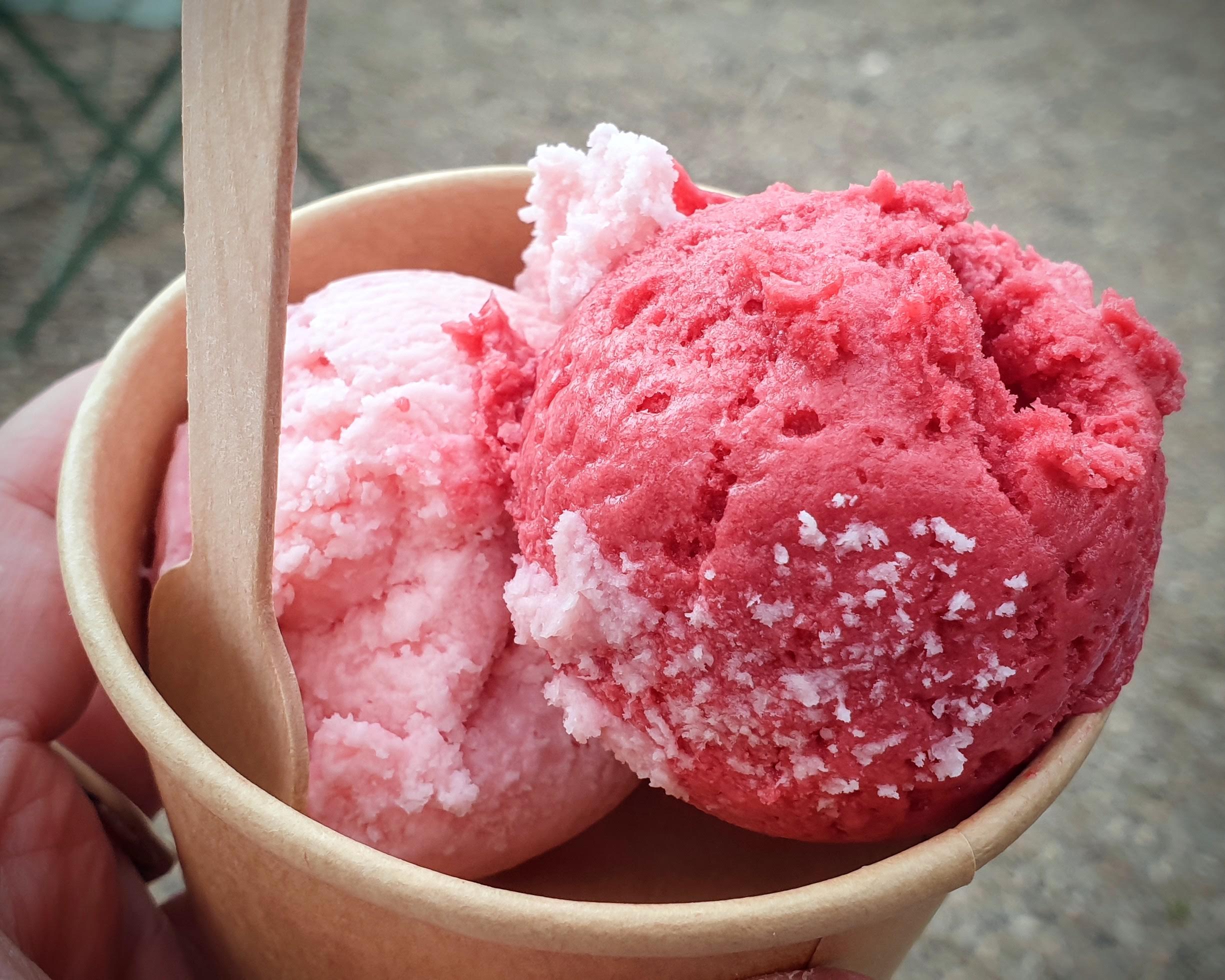
I found a restaurant close to my school here in Tours that offers a lunch menu of main dish plus dessert for just 13.90€! I had steak lunches a few times as a break from my boulangerie sandwiches. It’s not a Michelin experience or anything, but it never ceases to amaze me how easy it is to get good quality, well prepared food at extremely reasonable prices in this country. I enjoyed the desserts outside the patisserie, too. My long time favorite is the cafe gourmand, which features a selection of small bites of the restaurant’s daily dessert alongside a cup of espresso. There were also a number of ice cream and gelato shops with interesting flavors like raspberry-bergamot and rose.
Cheese
One of the best ways to explore local food specialties is to find ‘the Hall” (les Halles). It’s an indoor market space, like a mall but for high quality food vendors. In my second week, I discovered Les Halles. There I began my education in the food products local to the area, especially the cheese. The prices tend to be higher than the Carrefour (a grocery store), but the products are amazing and less expensive than eating at restaurants every day. It’s a good compromise that enables me to indulge in fantastic local products without breaking the bank.
The region around Tours is called Touraine, so you can see certain products labelled this way if they are local specialties. I started my cheese journey with Sainte-Maure de Touraine. It’s a light and creamy cheese made from goat’s milk (don’t knock it because you had bad chevre in another country). I fell head over heels in love with it and went back for more three times. Interestingly, the second time I bought it from a different shop and it was different! I had thought that the AOC/AOP labelling would mean that the products were all the same, but then I learned a whole new set of information about cheese.

Soft cheese made from raw milk (not pasteurized) does a wild thing as it ages… it liquifies. The French people I talked to about this did not approve of my use of the description of liquid, apparently it’s called creameaux (which I thought meant “creamy”?) In any case, you can see the clear differences in the textures of the younger Sainte-Maure and the slightly older one. I had to do some Googling to make sure my cheese hadn’t gone off (it hadn’t), but when I ate it, I was surprised to find that the flavor had also changed. The younger cheese with a single texture was light and slightly woodsy. The more aged version was significantly stronger with a more pungent flavor. I felt that I could eat the young cheese on its own, but I wanted some bread to support the older and stronger version. During the few days it took me to devour my log of cheese, I noticed it got runnier each day. Online reviews of the aged soft cheese (correctly called “ripe”) said that the more ripe (runnier) the better, but acknowledged that it was still a matter of personal taste. When I went back for my third purchase, I was able to ask the vendor about it, and he told me there are actually 3 ages for the Sainte Maure. I never even tried the oldest version! I guess that means I have to go back some day.
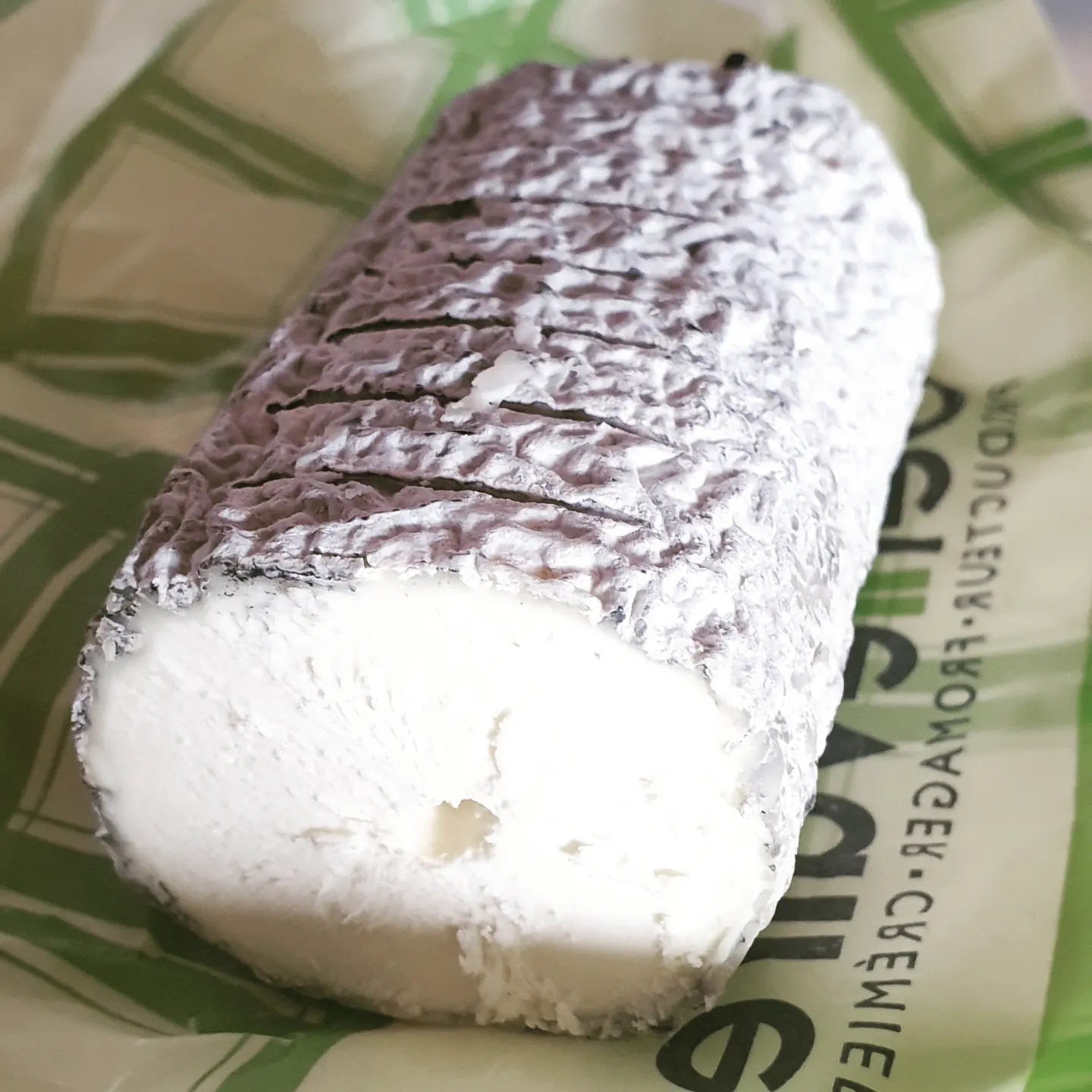


Since it’s not legal in the US to make soft cheeses from raw milk, I had never in my life encountered such a thing as “ripe” cheese. I’ve had aged hard cheeses aplenty and even taken a workshop in Amsterdam about the process, but it took some effort to learn to dive in to the runny soft cheese and enjoy it.
In addition to the Sainte-Maure, I also tried Brossauthym, a local sheep cheese made with thyme. It’s very very soft and has a wild toasted grain flavor alongside it’s rich and complex creaminess. It’s also a local specialty with strict rules. The sheep kept in special pastures with local grasses and wildflowers to graze on, and they aren’t even milked during lambing, limiting the supply to half the year. My piece was largely one texture when I cut the rind, but within a few days, it too was ripening and the flavor changed little by little. By the last day, at least half of the remaining cheese had oozed out of the rind and pooled at the bottom of the waxy cheese paper I stored it in.

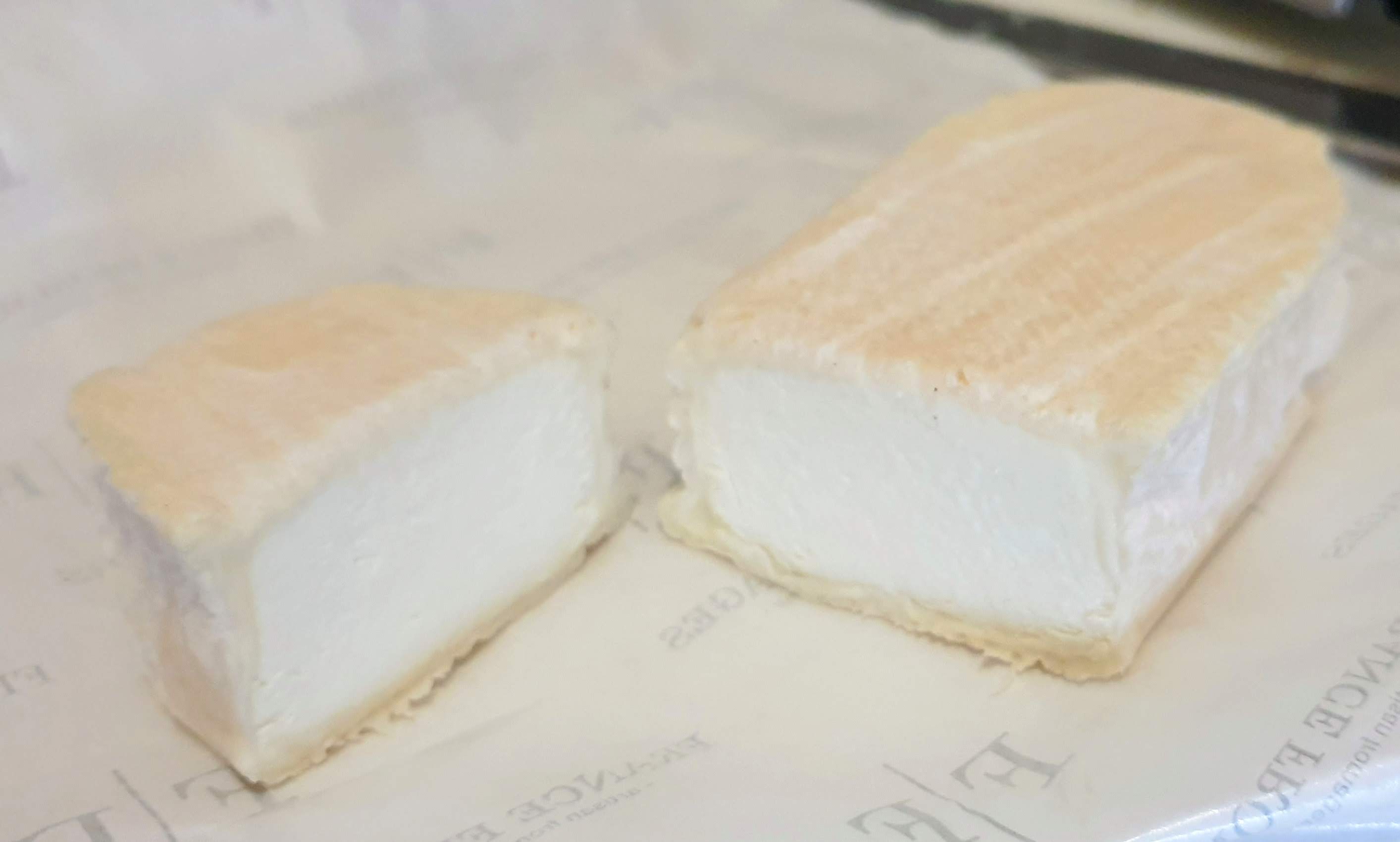
Pouligny St Pierre is another goat cheese, but it’s pyramid shaped. The exterior of the one I purchased was very soft to the touch, not soft as in the opposite of firm, but soft like you want to pet it. It was a bit unnerving because “velvety” is supposed to be about mouthfeel, not touch when it comes to food, but peaches are kind of fuzzy and they taste good, so I went for it. It has a similar creamy nutty flavor to the Sainte-Maure but a bigger punch than the unripened version, enough so that after my initial taste, I decided it also needed to be eaten with bread.

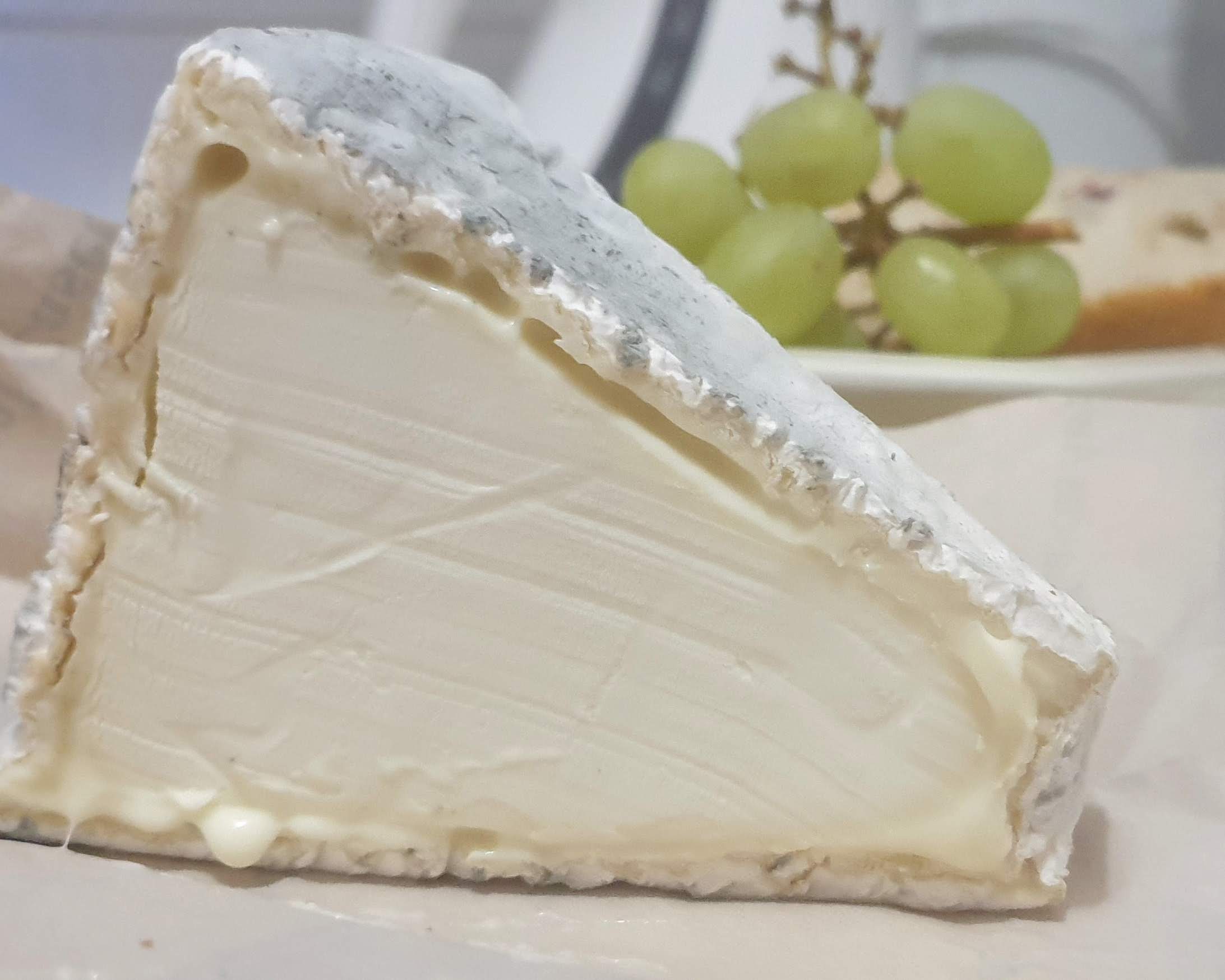
The last local cheese I tried was Couronne Lochoise. Although it has a distinctive ‘crown’ shape, it is otherwise very similar in texture and flavor to the young Saint Maure. I enjoyed it immensely on its own, with fruit, and with bread.


I did eat some non-regional cheeses as well such as Comté and Tomme, but these are cheese which can have a lot of variety depending on how they are made and aged. They are not soft cheeses, so the aging process results in saltier more intense flavors getting drier the longer they age. Also, since they are hard cheeses, it is likely to be easier to find them outside of France because import requirements for hard cheese are generally easier than for soft. If you happen to be able to find either in your local cheese section, I highly recommend trying them out.
This cheese is a 3 year aged Comté. I found it hard to describe the flavor, but apparently so does everyone else. It’s a little creamy, a little nutty, a little salty, and goes with anything. Check out a professional description here: Link

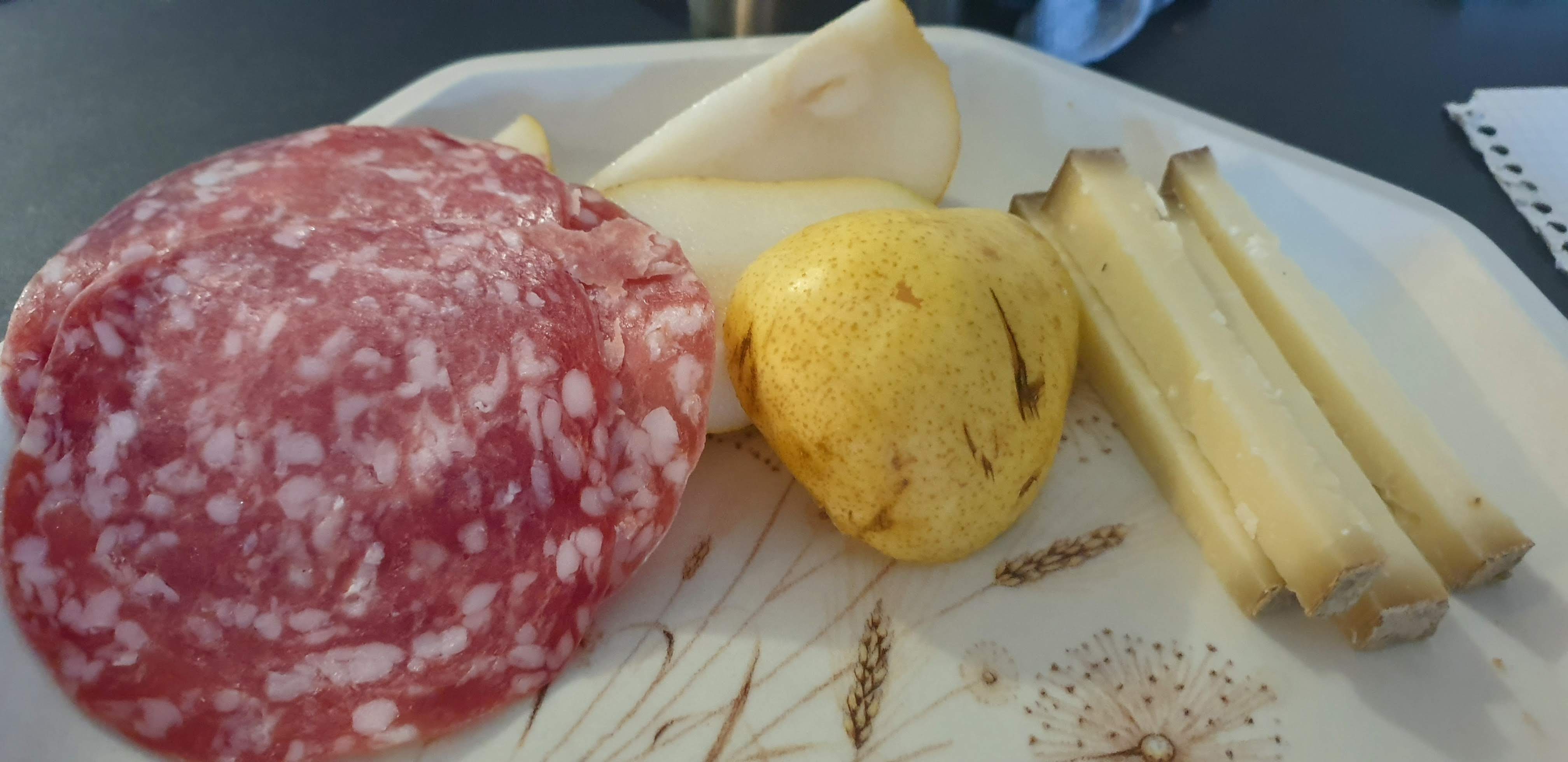
Other non-Touraine cheeses I tried while in Tours include Grand Causses, which is variety of Tomme made from sheep’s milk, 3 months aged, fruity, nutty, woodsy, and firm; and St Nectaire Fermier Du Marechal, a cow cheese, pressed, and cellar aged, with mushroom, cream, straw flavors.


I also had a couple of cheese failures. My first grocery trip in Tours I bought some Pont-l’Évêque. I got this thinking it was in the same family as brie or camembert, but it was far too “stinky cheese” even for me. The online flavor profile is described as “pronounced, rustic farmyard”. Farmyard is right! The other cheese I tried but didn’t like was Fumaison, a smoked sheep cheese, which should have been great because I love both those things, but I couldn’t enjoy it. At first I thought it was just the crust/rind that had a flavor I disliked. It tasted almost like melted plastic, so much so I thought I accidentally ate part of the plastic wrap on my first bite. I tried it without the rind, and it was less immediately “nope”, but not actually a flavor I enjoyed.

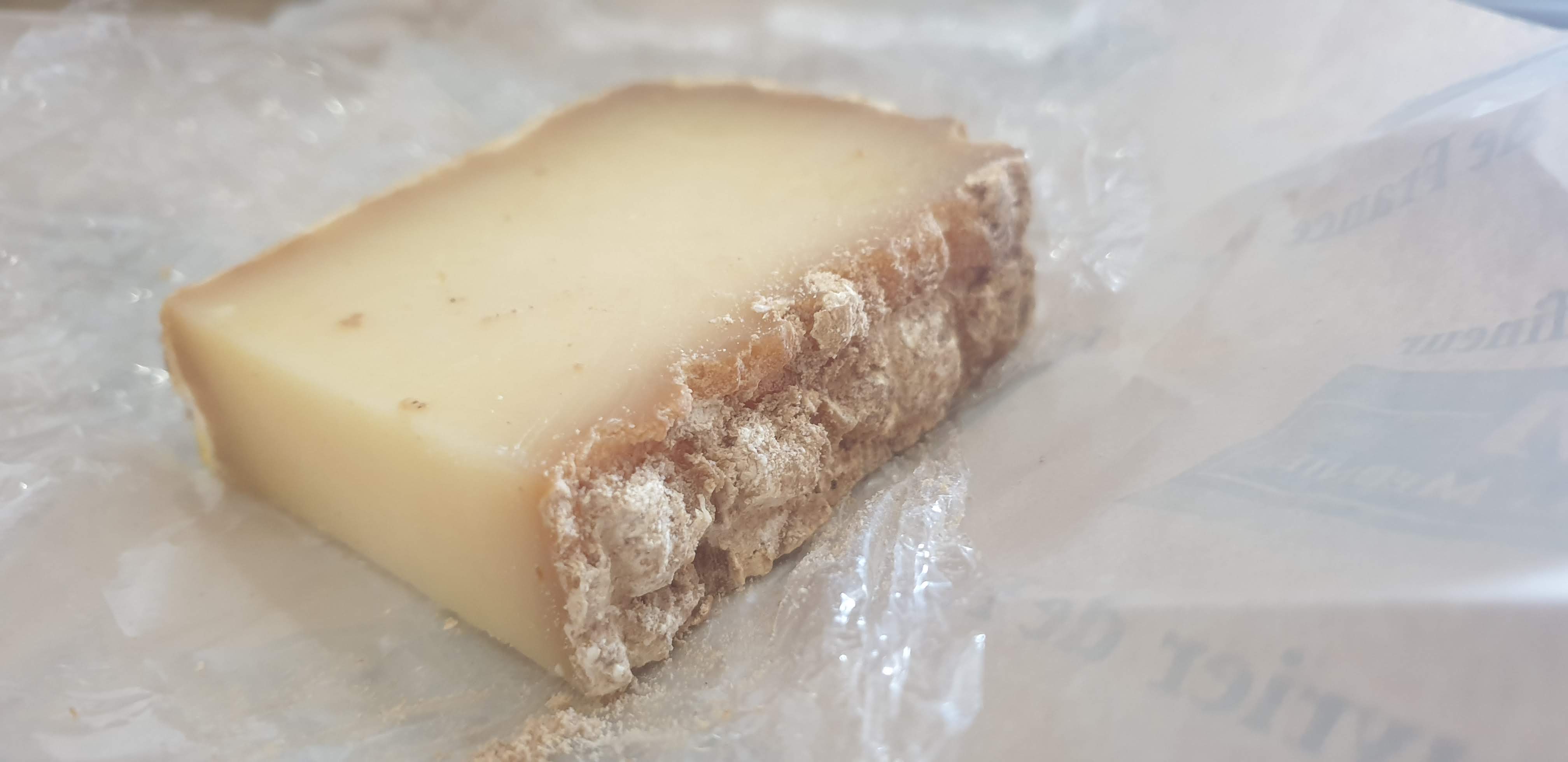
I also learned some interesting things about cheese vocabulary and etiquette on this trip. French has a LOT more words to describe cheese than English does. My teacher gave me a vocabulary worksheet on my last day as a little souvenir. There’s also some pretty strict rules about eating a shared cheese at any kind of event. Different shapes of cheese must be cut in different ways and with different tools, partly in deference to the texture, but mostly to make sure that everyone gets a fair share of the best part of any cheese: the middle.
Wine
France is obviously famous for wine, but this is an expensive hobby. I looked into trying a wine tour, but most are over 100$ and require you to get yourself out to the countryside and back. I’ll keep looking, but until then, I’m mostly just sampling things by getting a glass at a restaurant, or other random encounters.
I am not a sommelier. I do not speak the language of wine flavors, so when people go on about notes of cherry or whatnot, I get a bit glassy-eyed. I love learning about the techniques of wine-making and I appreciate that there are complex flavors across different varieties, regions, and ages which people train for years to be able to distinguish and discuss, and I think that’s an amazing part of the human experience, but… I also sometimes just want to drink delicious wine.
I’m not a fan of wines which are very sweet or very dry, I prefer a middle range. I also do not like wines which may be described as “citrusy” (I do not like “citrus notes” in my beer, chocolate, or coffee either, so this comes as no surprise). I often find that wines from California (for one example) are too acidic for my tastes. On of the reasons I fell in love with the Argentinian Malbec was its buttery, velvety taste. So, while I can’t discuss my wine tastes in sommelier terms, I know in general that I’m looking for things which are neither sweet nor dry, that do not have too many tannins, and that never would be described by any citrus fruit. When I say a wine is delicious to me, this is usually what I mean.
I did have a look at the grocery store collection, and some small wine shops, but since I’m tragically under-educated when it comes to French wines, I was rather at a loss. I discovered what I like to think of as my “favorite” French wine several visits ago when I bought a glass with a dinner and was simply blown away. It’s called Viongier, and is a delightful white wine from the Rhone Valley. It’s recently become more popular outside of France, so I’ve seen it in shops in other countries from time to time.


During my time in Tours, I got to try a Vouvray and two types of Chinon. Vouvray is a range of white wines grown in (surprise!) Vouvray, an area just outside of Tours in the Loire Valley. They make several different types of wines including, sweet, semi-dry, dry, and sparkling. What I had was called the Vouvray Cuveé Silex. Cuveé means vintage, and Silex refers to the stone and clay content of the soil where the grapes are grown, which impacts the final flavor. I was treated to a glass at the party hosted by the pastry school and managed to snap a photo of the bottle for later reference because I liked it so much.
Chinon is another nearby region in the Loire Valley, but it produces mostly red wines. The grape used for the reds is a Cabernet grape grown on clay-limestone or sandy-clay soil (again, affecting the end flavor compared with cabernet grapes grown elsewhere) and the wines are aged in large clay pots inside of local caves. Apparently, the clay jars increase the micro-oxygenation of the wine as it ages which results in a grape-forward flavor. The caves are at a constant temperature which is also necessary for properly aging the wine. I’m told that Chinon wines are popular abroad, so I’ll have to keep an eye out now that I know about it. I had a glass with a steak lunch and felt that it held up well to the rich red meat without being in any way acidic or tannin forward – bold, but mellow.
The other Chinon wine I got to try was a gift of Philippe Brocourt Chinon Chenin, one of the rare white wines from the Chinon region. One of my teachers introduced me to this wine since the vintner is a friend of his. I enjoyed the wine very much, and was surprised to see it listed as both very dry and very acidic when I researched it online. I didn’t feel like it came close to my limit for wine in terms of tannins or acidity, yet the French seemed to think that this was the top level. I tried to find the answer, but the internet tells me American wine is actually sweeter than EU wines. It’s also possible that the wines I buy in US shops have been stored improperly and oxidized, but it seems strange that such a thing would be so pervasive. Or it could be the balance of the tannins and acidity in CA wines is just not to my liking. One day, I may learn how to pick out a bottle of wine based on the description, but I’m afraid today is not that day.
Tasting My Way Around France
When I first started international tourism (about 10 years ago now), I was often too distracted by activities and sightseeing to think of stopping for food. Although my very first trip to France in 2015 was a culinary revelation, it’s taken me a long time to learn how to prioritize food tourism, and not just view eating as something I squeeze in between museums and waterfalls. Being able to stay in Tours for so long gave me a great opportunity to ease my way into understanding local and regional specialties. As my France trip continues to unfold, I look forward to reading about and eating more such delights along the way.
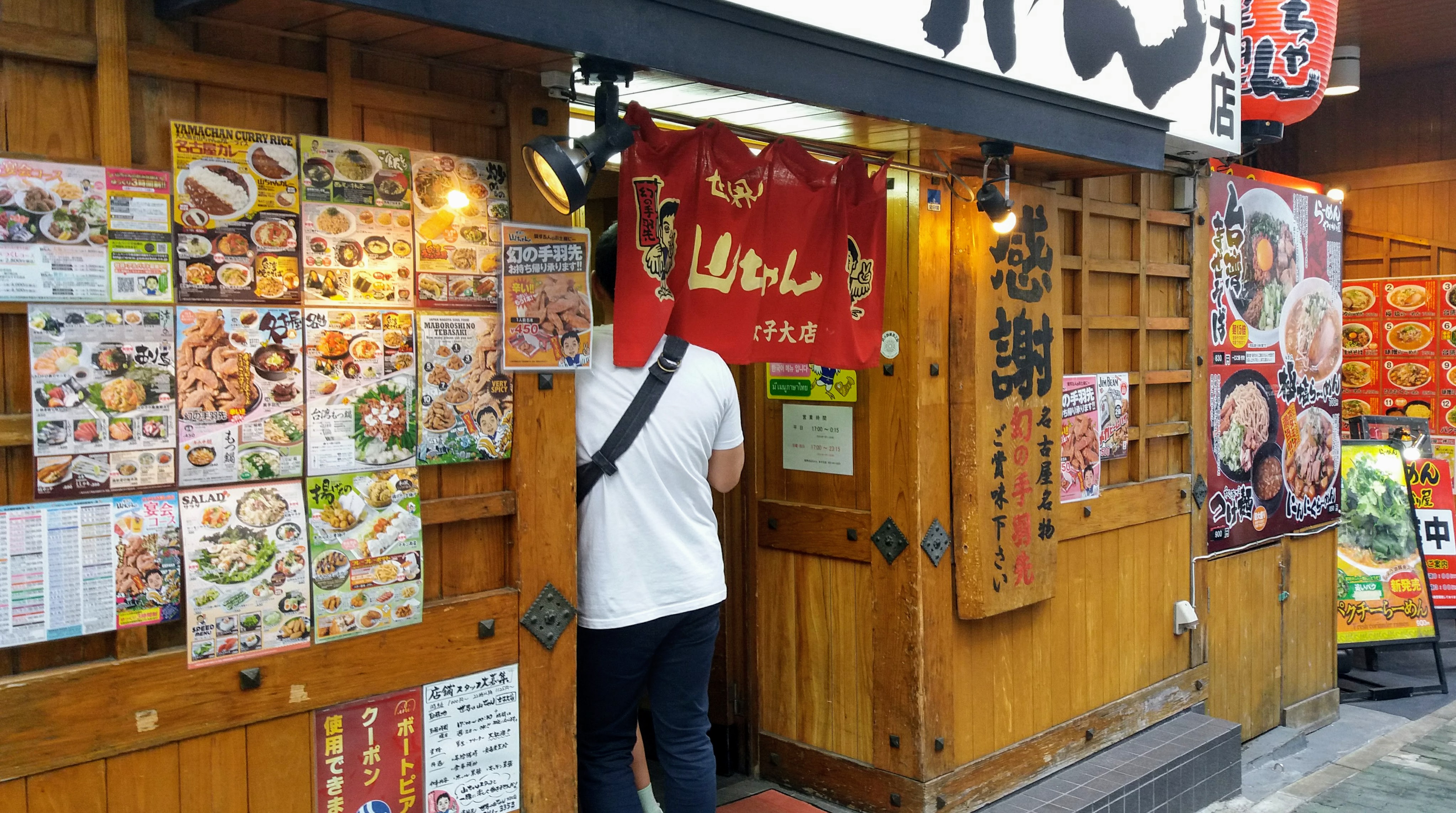 Our first famous food sight was Yamachan, a chicken joint that is usually so popular that wait times can be over an hour. Yamachan is famous for chicken wings. Initially, I was very skeptical since I get plenty of chicken in Korea, but when we arrived we were sufficiently early as to be able to get a table. We had to take the smoking section, but it was still clear air when we were seated.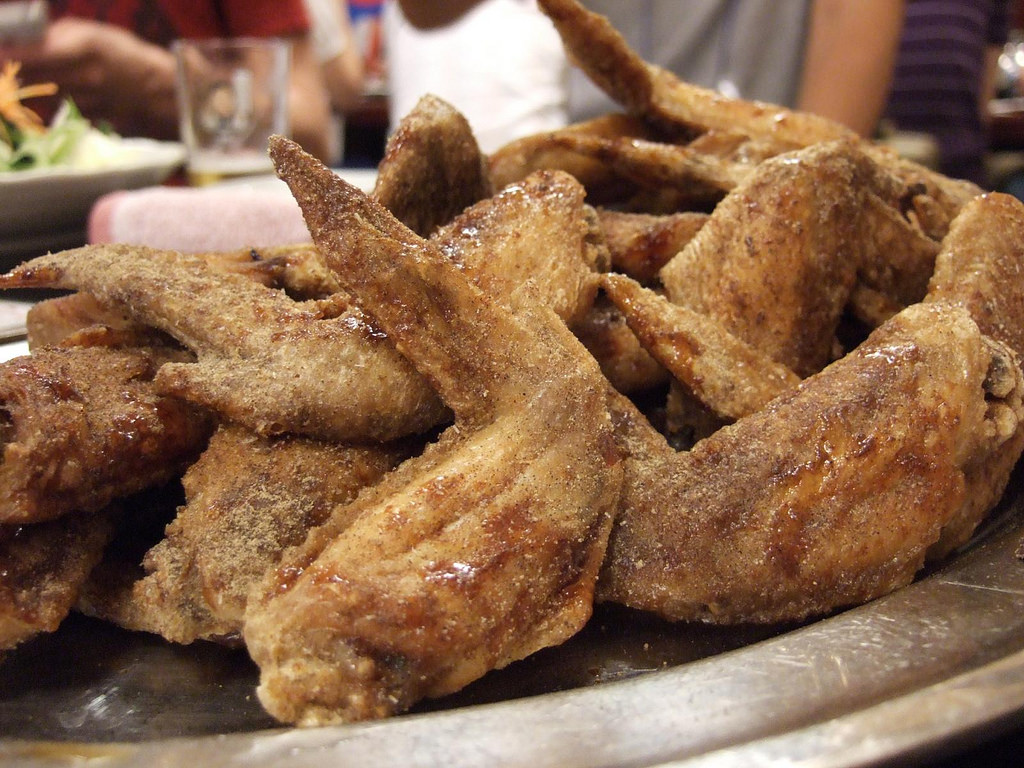
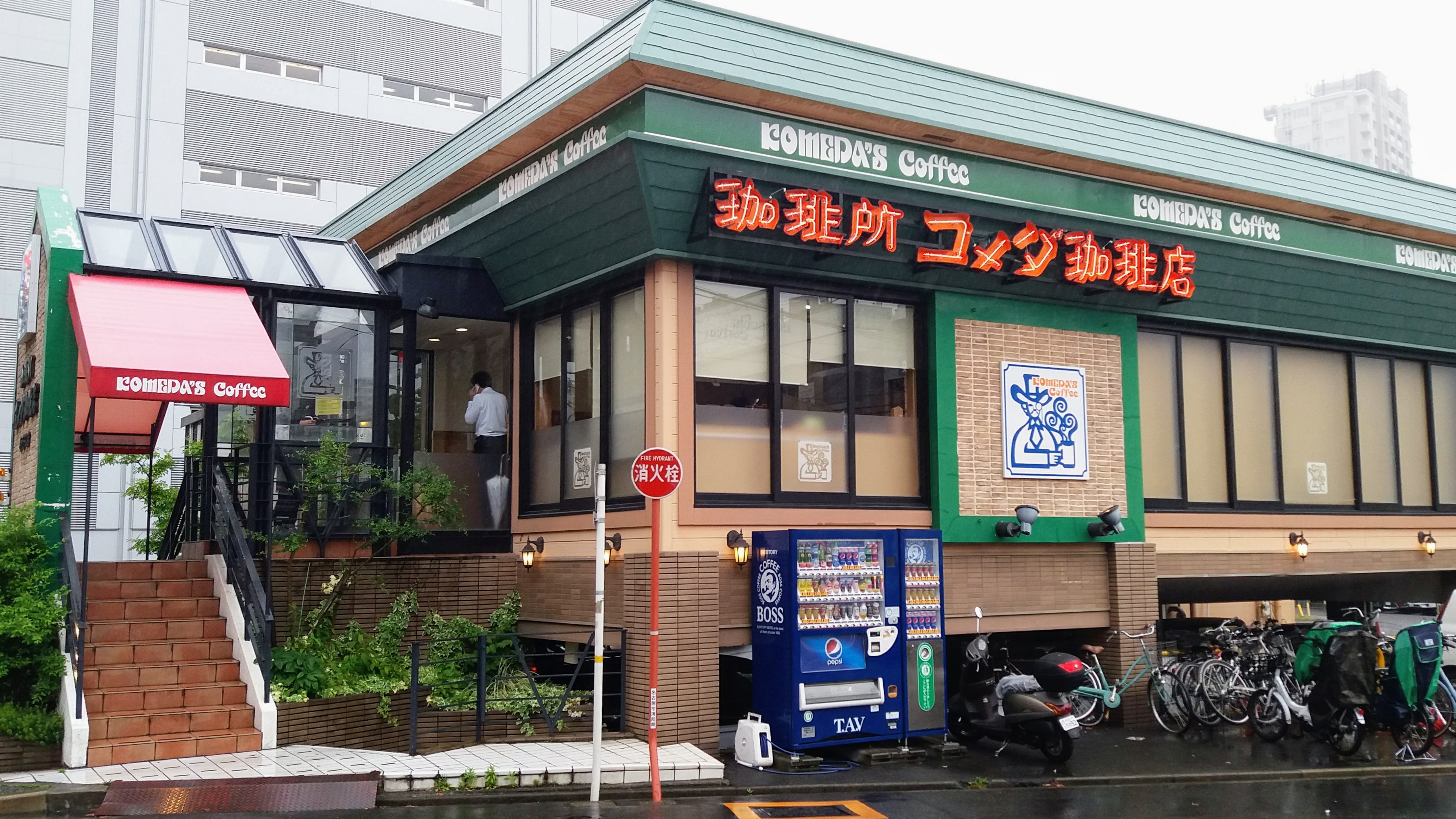 Amid the many things that I found to try while in Nagoya is the “morning service”. Many of the cafes around town have begun to offer a light breakfast (egg and toast or ogura toast) for free (“service” in Japanese) with any order of coffee. Sunday morning my friend and I headed over to Komeda Coffee. This cute little coffee shop is a chain restaurant famous for it’s special morning service of thick, fluffy, buttery toast and red bean paste, also known locally as “ogura toast”. While lots of places in east Asia love sweet red bean paste in pastry (I eat it in Korea all the time), Nagoya got famous for ogura toast by adding… wait for it… margarine! The sweet thick red bean spread with creamy salty margarine creates a unique Nagoya flavor that should definitely be on your “to eat” list. Plus, their coffee is pretty good.


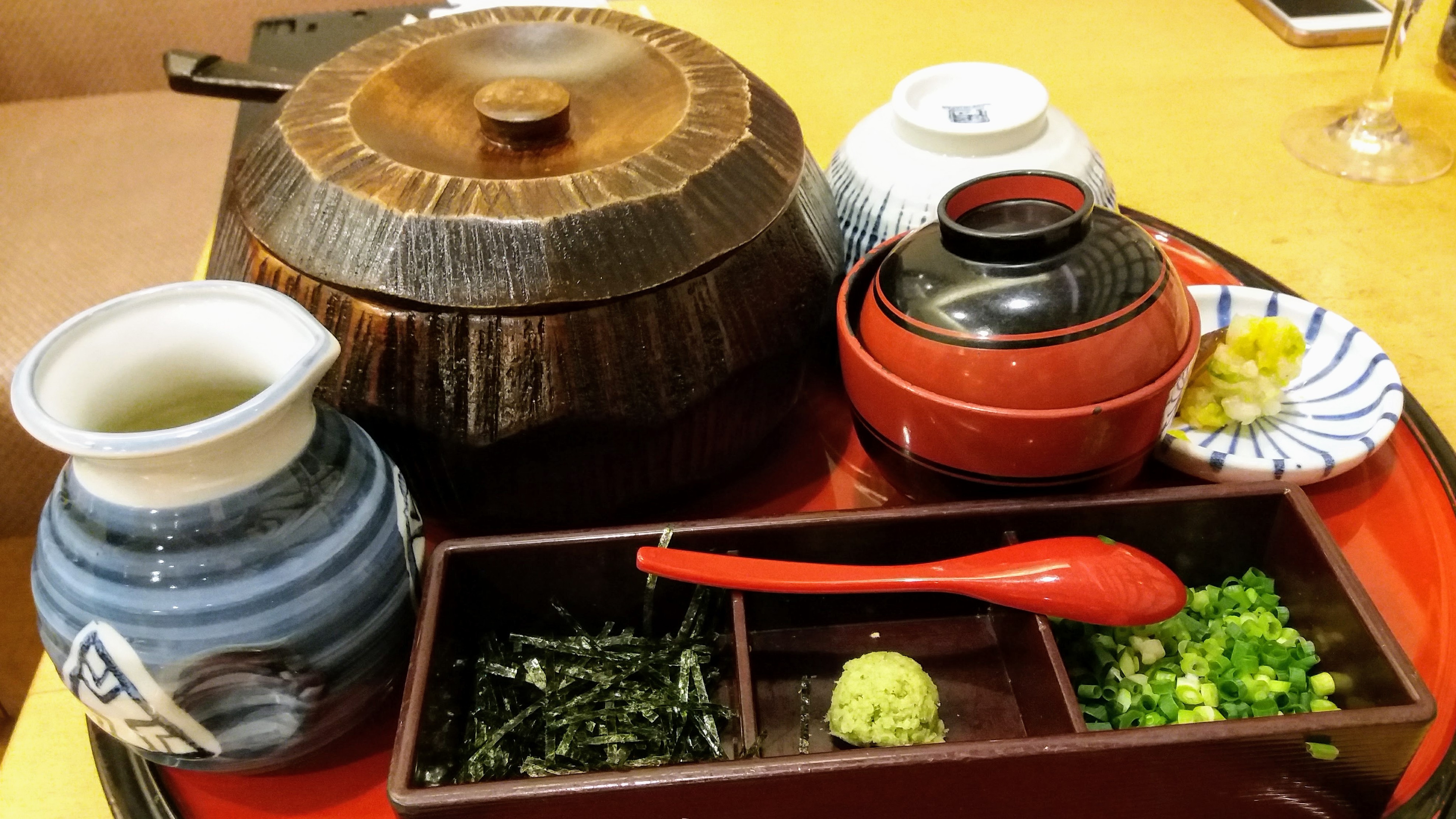
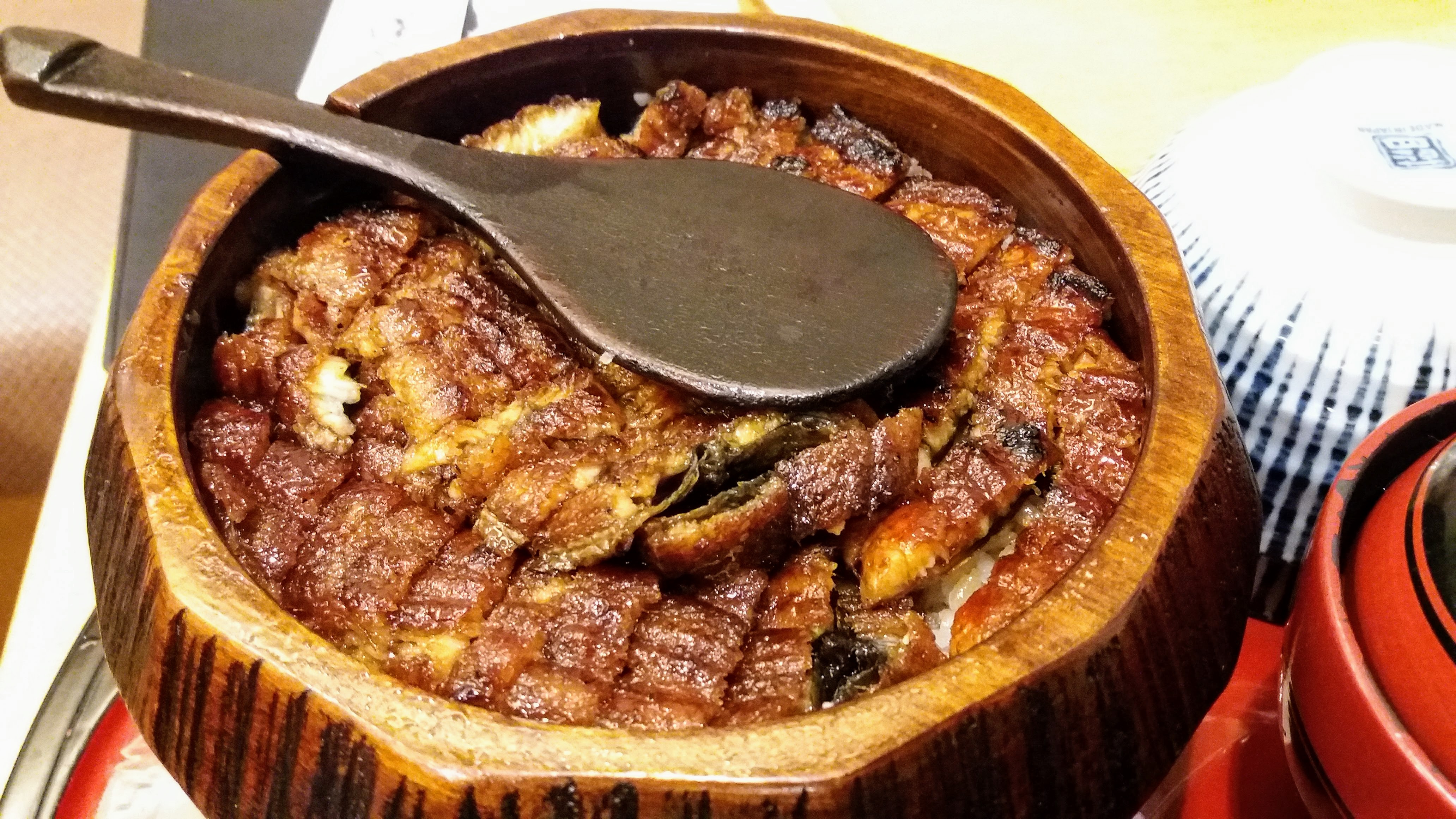
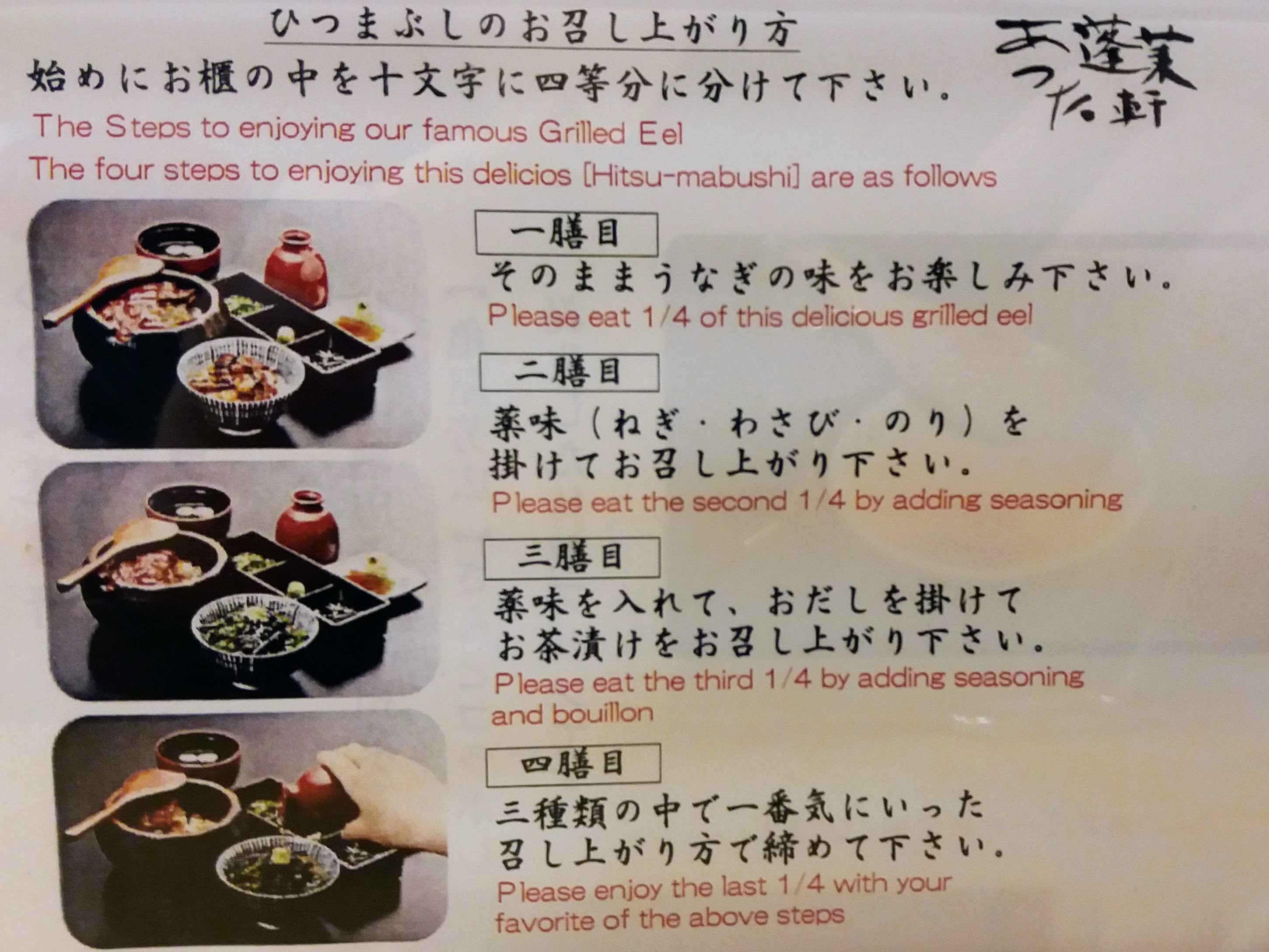 Even in normal restaurants, eel is one of the more expensive dishes. I tend to avoid buying it here in Korea because it’s often not prepared well. Nonetheless, it is one of my all time favorite Japanese foods. The “plain” hitsumabushi still had plenty of flavor. Of course the smokey, fishy unique flavor of the eel itself, but also a lighter version of the sauce it’s cooked with, as well as the vinegar in the rice. It had so much of what I look for in a good meal, I instantly knew the price was well worth it.
 The second ¼ of the dish is meant to be served with the dry fixings provided in the little side box. In our case, we were given small slices of spring onions, thinly shredded nori (seaweed), and what very well may have been fresh wasabi. Most wasabi in the world is fake, sadly, it’s just green horseradish. Now, I love horseradish too, so that doesn’t usually bother me. I’ve learned a little about fresh wasabi from watching cooking shows and documentaries, but I’ve never had any. When I looked at this wasabi, I noticed the texture was very different from what I’m used to. Instead of a smooth paste, it had little shredded bits of plant matter.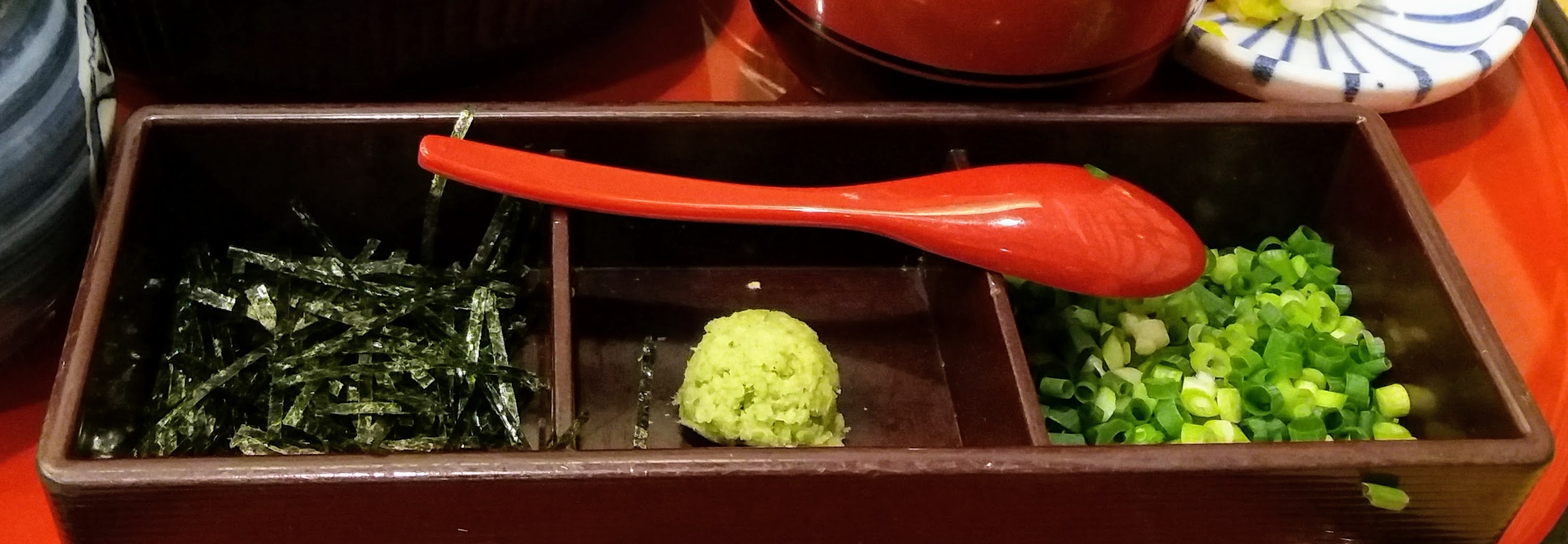
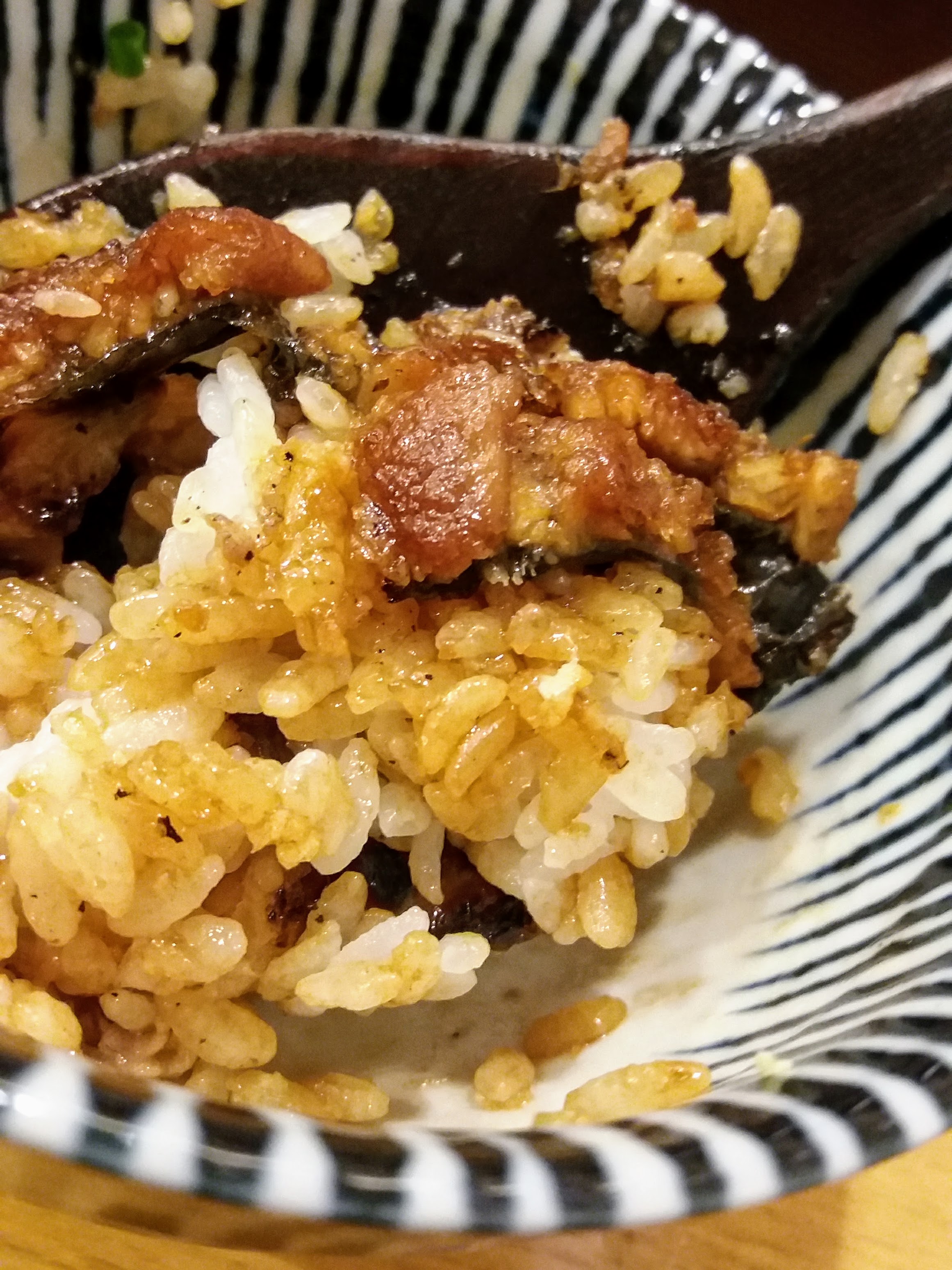 Round 3 we were instructed to replicate round 2 and then add broth. I don’t really know how to describe the flavor of the broth. It was also a little smoky, a little umami. I suspected there were some dried shitake involved in the flavor as well as some konbu dashi. It was nice, but for my taste it didn’t really add to the flavors the way that the spices alone had. Additionally, it drastically changed the texture of the dish, turning crispy eel and rice into a wetter soup. It was still delicious, and I’m glad that I was able to try all the different styles of eating hitsumabushi, but I was grateful for that final ¼ serving where we were instructed to return to whichever of the first three we had liked best and do it again!






 Gallivantrix