Zanzibar: The Indian Ocean

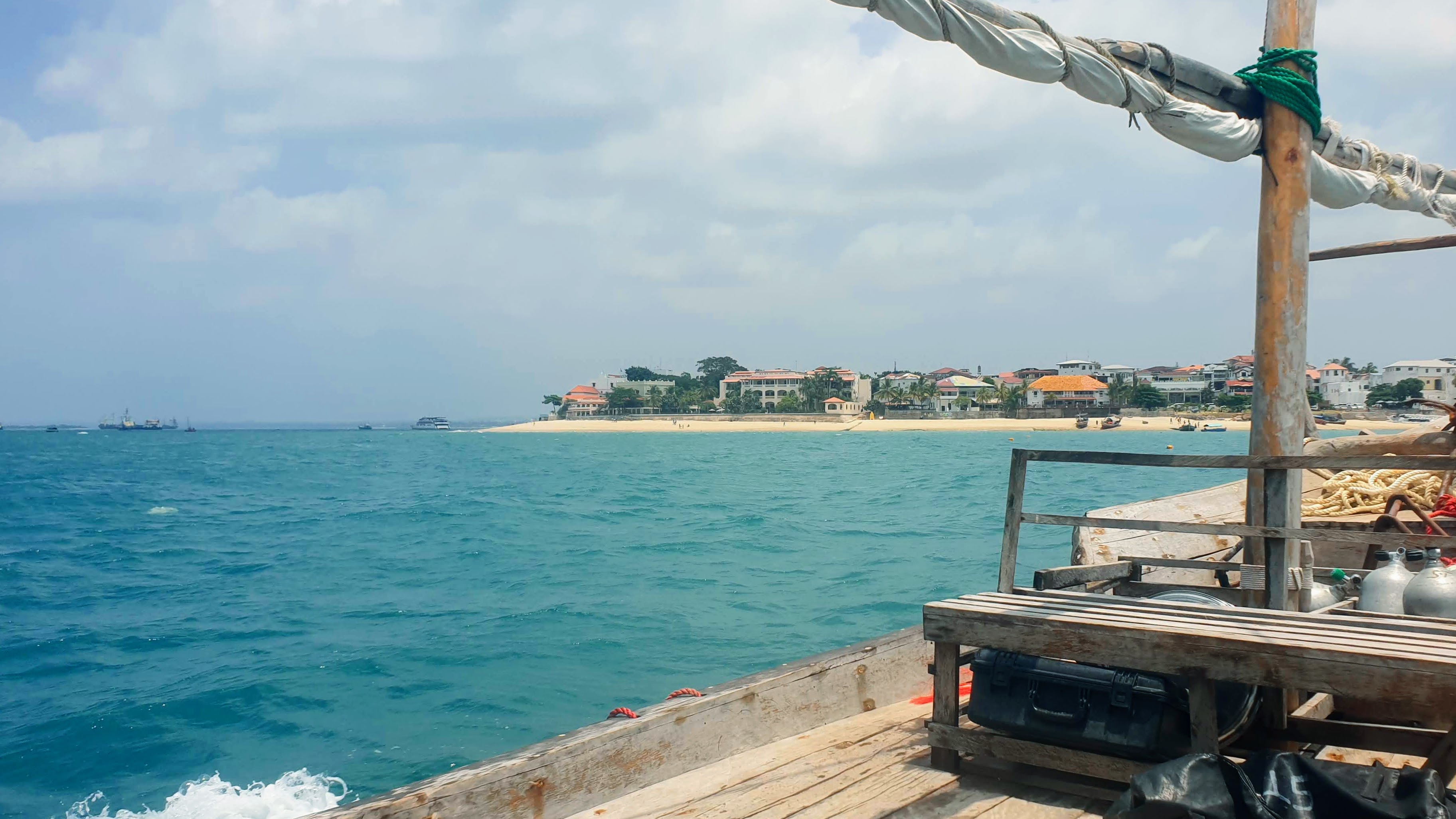
The Indian Ocean off the coast of Zanzibar is of a deep, brilliant blue that one suspects has been altered in brochure photographs, but is in fact that blue (not every beach every day, but often enough that you are likely to see it at least a few times on a visit). Lounging at a beachfront restaurant while enjoying the sea breeze and insane blueness of it all, is among the top 10 activities recommended to tourists on the island. Snorkeling, diving, surfing, and kitesurfing are also all on offer. I looked into each one, and discovered that three of the four activities were multi-hundred dollar investments (since I am not PADI certified and do not yet have any kind of surfing experience at all). Snorkeling it is, then. Given my lack of planning for this trip, my wishlist simply contained the keyword “snorkeling” and something called “Safari Blue”.

On my first day in town, I happened to spot a PADI certified dive shop that also advertised snorkeling which put me in mind of the trip I’d taken in Bohol where the snorkelers and divers shared a boat. One Ocean Diving is the only PADI certified center in Stone Town and they have a few other boat trips on offer as well. The day I wanted to go was too close for online booking, so I simply walked in and booked an excursion in person.

Safari Blue is on every list of what to do in Zanzibar. Although there is a company by that name, the tour simply refers to the route: a boat trip that departs from Fumba and incorporates the south-western region off the coast with mangrove swimming, snorkeling, a sandbar, (maybe dolphins), and a seafood lunch. I searched online for a good way to take this famous trip without the necessity of being crammed in with heaps of tourists and finally landed on an Airbnb experience with decent ratings.

This is the tale of two sea trips which could not be less alike and still be on the same island.

Safari Blue

When I saw a version listed on Airbnb Experiences, I was excited because I thought I might get a unique local twist on this tourism staple. I was so wrong. The “host” was a tour operator who simply arranged the driver and booked the boat tour for me and the other unsuspecting suckers who thought they were getting a personal experience. It’s normal to join a group on an Airbnb excursion. I recall my Grenada hot springs experience fondly where my hostess drove a group of travelers out to a spring in the mountains and served us a picnic. The whole point of the Airbnb experience is to meet other travelers while a local shows you around in a unique way. This was like booking an Airbnb and discovering it was actually the Best Western all along. It’s not that I wouldn’t stay in a Best Western, I just want to know that’s what I’m signing up for.

Though I would have been happy to meet at the fort, the “host” said the driver would meet me at my hotel and walk me over to the parking lot (Stone Town doesn’t let cars in), which resulted in the driver getting lost, because Stone Town is a maze, and being more than 20 minutes late. There were two other tourists along, which initially, I was pleased about since I had done my previous Zanzibar Airbnb experiences solo. The driver explained he would hand us off to the boat operators at the docks. There we discovered we were joining a group of 6 more on a dhow operated by what seemed to be a very large and well logo’d tour company called Johari.

The boat workers were in a big hurry to get going, and I’m not sure if we were actually late or if it was just the timing of the tides that day, but for the first time in Africa, I felt rushed. We had to get swim fins at the dock and two of the people in my excursion also had to use the tiny brick building to change. This is the location from which all Safari Blue boats leave regardless of which company actually owns one, so it was crowded and busy even in the off season. Once on the boat, we sailed out for a while under scorching sun and finally arrived at the “blue lagoon”. The tour companies definitely put their absolute best photos online for you to view, but what no one tells you about Zanzibar is the way the tides can make or break your experience. Tides don’t happen at the same time every day, but they are predictable. As I learned when visiting the hot spring beaches in New Zealand, tide charts are easy to access online. If you want the brochure photo experience, it’s important to visit Zanzibar at a time of year when the tides are in your favor.

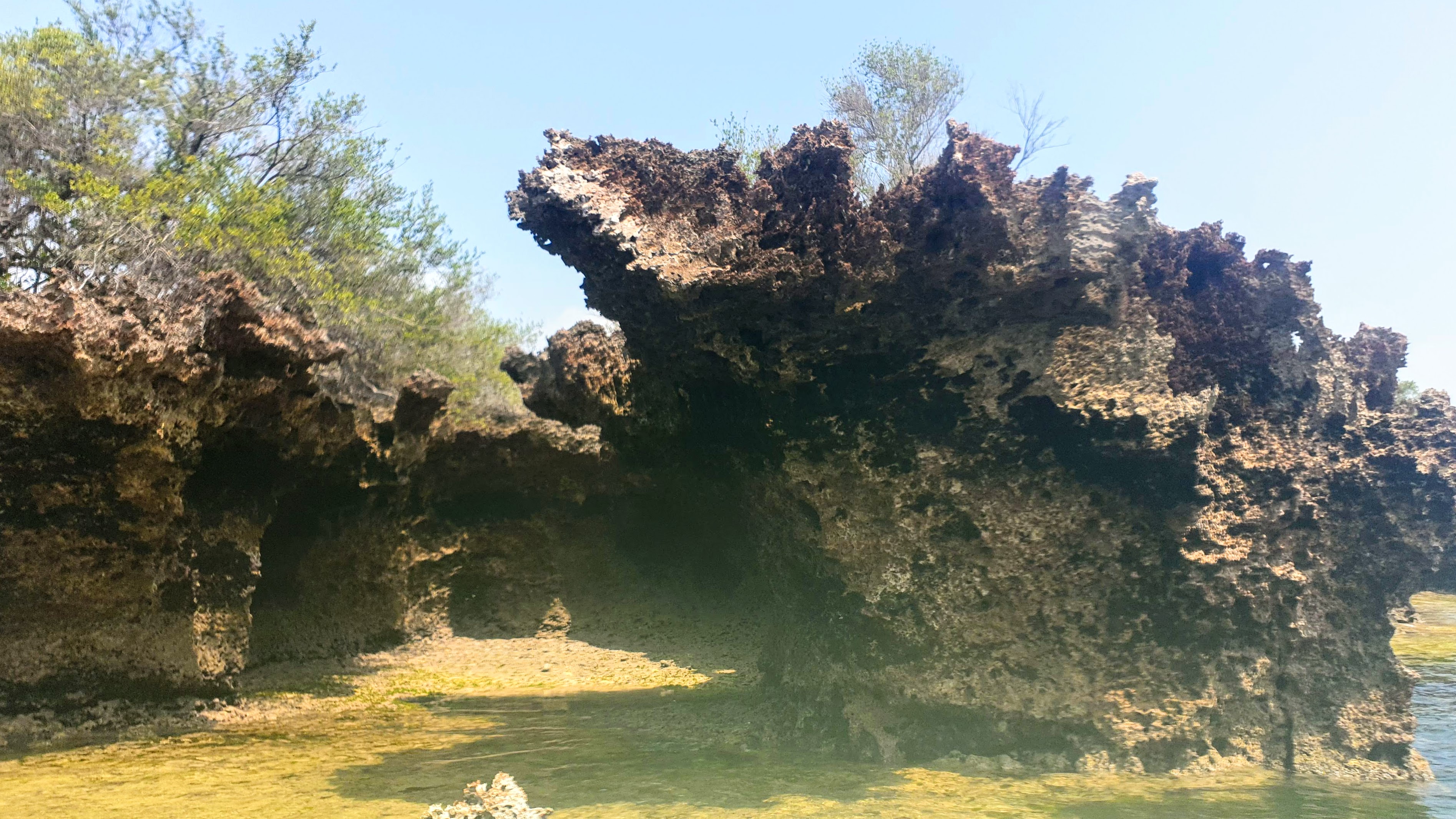
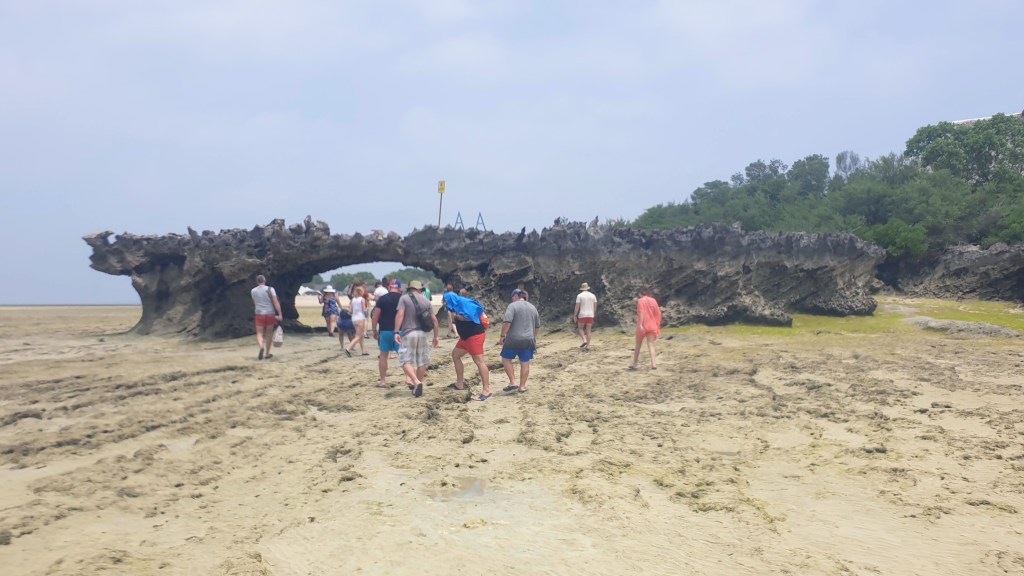
The blue lagoon is advertised as being a refreshing swim in the crystal blue waters of a mangrove pool. Due to the tide being out, it was more like the beige lagoon, and the dhow wasn’t able to get close in the shallow water. We took a smaller motor boat closer to the lagoon entrance where we could see the rocks and mangrove roots laid bare. I imagine it is beautiful at high tide with the lagoon is full to the brim with turquoise blue water, and this was definitely an interesting artistic landscape, but all of us were hot and sweaty and now we were being told we couldn’t even swim, but would get just a few moments for photos before moving on. 

By the time we got back to the dhow, they had put the sail away and erected a shade canopy which was most welcome, even if it meant we would be motoring the rest of the way. They also served a plethora of delicious fresh fruit including young coconut, watermelon, mango, red banana, passion fruit, grapefruit, and the biggest pineapple I have ever seen. Truly nothing compares to eating tropical fruit in the land where it was grown. (or at least the neighboring island).

When we arrived at the snorkeling spot, they handed out life vests, masks and snorkels. I was the only one to pass on the life vest partially because I’m a strong swimmer, but mostly because I am a flotation device. I struggled getting settled in the water, which is no surprise since it has been 4+ years since my last snorkel trip. The strap on my first mask broke. The replacement had a leak that meant I had to surface to drain the water every couple of minutes, and by the time I got the third mask, I was loosing my enthusiasm for the experience. There were a decent number of fish in the water, small tropical standard breeds, but no less beautiful for being common (I like dandelions too). The coral, however, was in a sad state. The cloudy water made it difficult to tell at first. With all the other tour boats in the area running motors and dozens of tourists splashing around, the water was not particularly clear. It was also only partly sunny, which is normally my preferred level of sunny, but clouds cut down on underwater visibility.

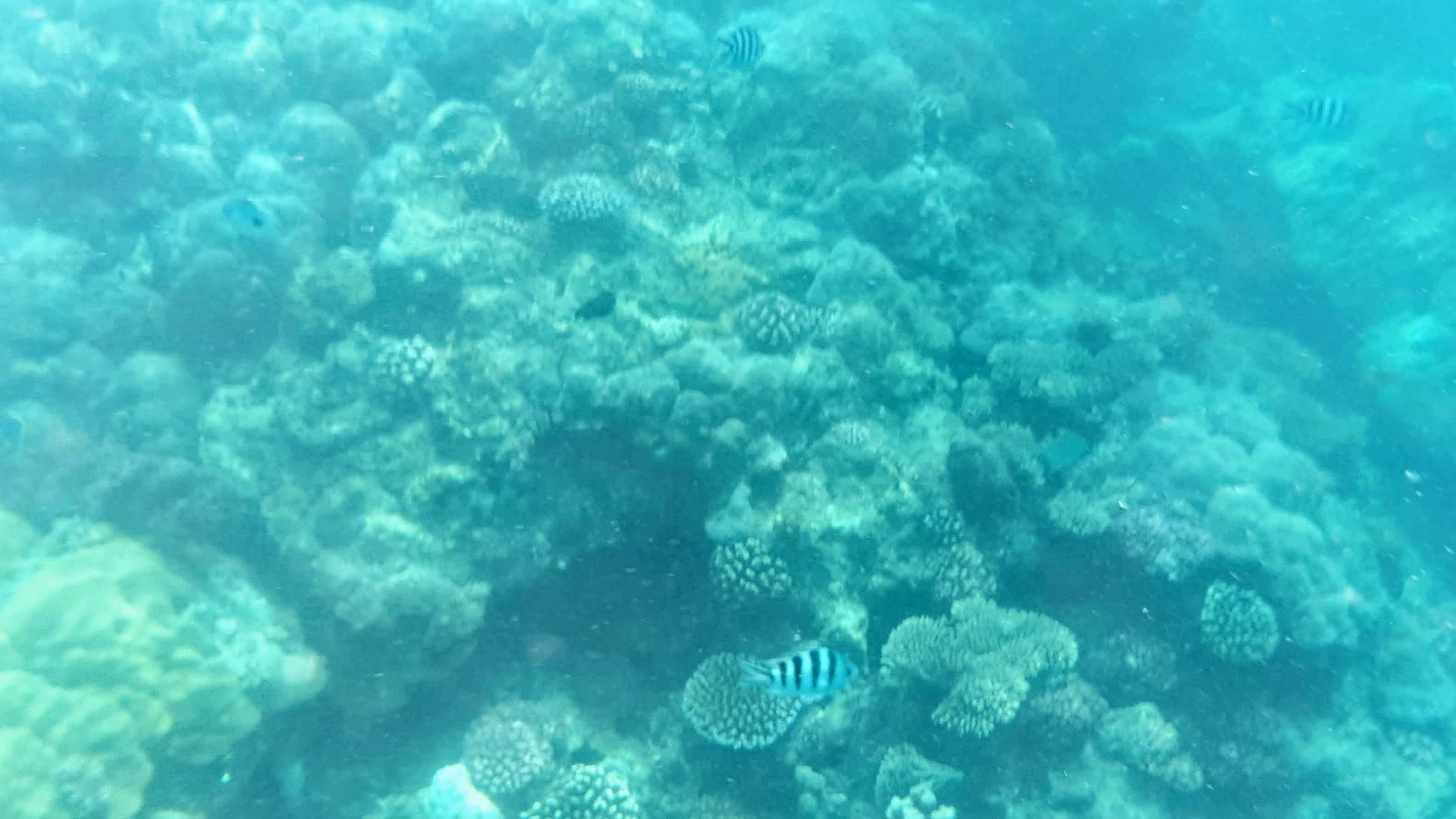
When I got the mask situation sorted and was able to swim around the corals with better control and direction, it was really clear that they were close to 70% bleached. The vast majority of the coral was the dead, lunar surface texture and color of coral which no longer hosts any life. I got the impression that the industry relies on the fact that most of the snorkelers who take this tour are amateurs and don’t know what living healthy reefs look like, because many of the other people in my boat were totally thrilled with the view. Only one other traveler who was just as much of a globe trotter as me agreed, though she said it was still better than the condition of the reefs she’d seen in Egypt. Since my first reef exposure was on a private beach in Jeddah, I may be spoiled. I have seen a healthy reef in full bloom and although there were fish and an anemone or two, the biodiversity was scarce and the coral itself was in bad shape. I left the water early because it was just sad to look at.
I had been under the impression there would be two snorkel stops, but they claimed our gear as we re-boarded and said we were heading to the Kwale sand bar. There are several sandbars around Zanzibar which are visible only at low tide, and get swallowed up as the tide comes in. I think tidal events are cool, but a sandbar at low tide is a kind of goopy beach. When we arrived, the sand bar actually connected to the more stable small island of Kwale to the south, reminding me of the Jindo sea parting I went to in Korea where the land bridge becomes walkable only once a year at the lowest of low tide. I love the ocean, I was happy to be swimming in that gorgeous blue, I just… don’t understand the point of taking the boat all the way over to a piece of sand that doesn’t actually look that different from other pieces of sand. At least in Koh Lipe, the island we stopped at was totally unique being made of ocean polished rocks.

The sand bar was also a parking lot of dozens of dhows taking all the other tourists on the exact same trip. Quite possibly hundreds of white tourist bodies on this little strip of sand made me think of Lilo taking photos of the tourists in Hawaii. I walked across the sand bar just for the experience, and then I sat in the sea contemplating my life choices and being rather sad about the chunks of dead coral mired in the silt and the dead starfish a group of Russian tourists were taking turns posing with behind me. Then we were bundled back into the boat and taken to the Kwale Island, which again because of low tide was a long walk through a bizarre post apocalyptic moonscape under the blazing sun trying not to trip on rocks, slip on algae, or step on sea urchins left exposed by the retreating ocean. 

The wild thing about this is that I also love tidal pools. I adore going to the coast at low tide and looking at the life revealed there. I have done this up and down the west coast of the US. One of my very first blog posts was about Thor’s Well where we admired the natural phenomenon of the low tide creating the illusion of a hole in the ocean. It’s not “low tide” that I dislike, but the contrast of expectations and reality being miles apart. The photos of these places are high-medium high tide and there’s just zero warning about how insanely different it is at low tide. With the high tide, you get the beautiful crystal blue water coming right up to the sparkling sandy beach. At low tide, you get a sort of salty swamp with slippery and pointy bits that no one’s water shoes are really prepared to walk through. We were not there to admire the sea-life or the interestingly shaped rocks, however, and were once more rushed along since we had so much farther to walk at low tide than those who visit at high tide, and the tour guides were anxious to get us to the destination so they could have their break.

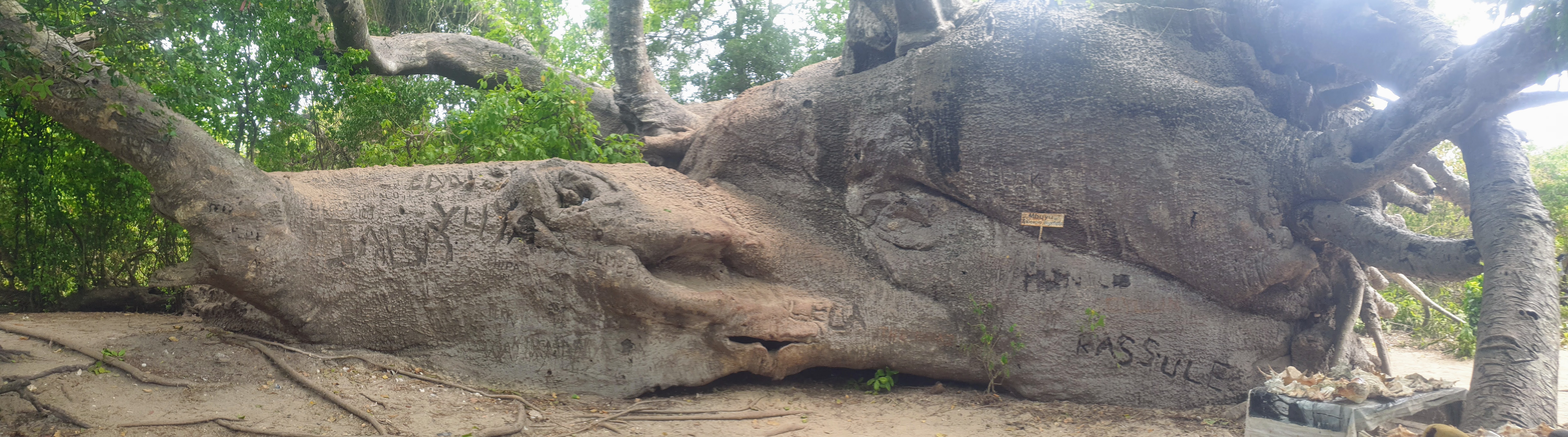
When we reached the small tourist village that nestled above the tide line, we continued on past shops and covered seating areas. I thought perhaps each boat had a designated spot where they took their passengers to avoid confusion, but as we passed the last picnic area and continued into the forested interior, I began to suspect something else was going on. This trek into the brush eventually led to a giant baobab tree fallen on it’s side and still growing. There was a short presentation about the baobab, a taste of baobab candy in an attempt to sell some, and then back we trooped to the eating area. The guide was impatient with those who wanted to take photos after the presentation (you know when the guides weren’t in the way anymore). Then we had a very plain but generous seafood buffet. The entire experience was a study in mismanaged expectations.
After lunch we motored directly back to Fumba, the day was over after three largely disappointing stops and a lunch that was in no way superior to the seafood available on the main island. I lost a flip flop, my sunglasses broke, and somehow also my phone case (which was empty in the waterproof bag because my phone itself was it its waterproof case) also cracked. I spent 20$ to replace the sunglasses and shoes, which is probably about what I’d pay at a Walgreens, but it just felt like an extra cost on top of an already overpriced (100$ USD!) and underwhelming experience. 

I think if I’d known what I was getting into it could have been enjoyable. I know that if I hadn’t had a far superior snorkel and island tour at Koh Lipe for ¼ the cost I would not have been so let down. Tourist trap experiences aren’t bad in and of themselves, but once you have done them a few (dozen) times, the novelty wears thin. I’m tired of seeing the same junk in every shop – some of it was literally the same junk I saw in Thailand, Malaysia, and the Philippines (complete with made in Thailand tags!) I’m tired of hordes of tourists crowding the same beach or swimming hole because it was at one time photographed as a paradise and has become entrenched as the go to spot, the name of the destination meaning more than it’s faded commercialized beauty. I thought that Airbnb would be a different take on the standard tour, not merely a different gateway to it. After all, there are a lot of small reefs, islands and sandbars in the area that could easily be reached by boat. Live and learn. 

One Ocean Dive

The next day a very different and much more enjoyable experience. To start with, One Ocean Dive asks people to show up to the shop early enough to leave time for a cup of coffee, picking out equipment, and getting dressed, so I never felt rushed. The cost of the excursion was less than half that of the Safari Blue and guaranteed 2 snorkel spots while skipping the mucky low tide islands and sand bars. The equipment on offer even to me as a snorkeler was immensely superior quality, and in addition to fins, mask and snorkel, they offer each swimmer a springsuit wetsuit (stops above elbows and knees) to help prevent sunburn.

They also request swimmers to only use reef friendly sunscreen. The chemicals in regular sunscreen kill reef life, and it’s probably one of the reasons why the coral I had seen the day before was in such sorry shape. I declined the wetsuit because I have a rather full coverage swimsuit and my own UV blocking rash guard that fully covers my top when closed, a necessary purchase after the last snorkeling induced sunburn, but it was a thoughtful touch since many tourists arrive in skimpy swimsuits which are entirely inadequate protection from the African sun. (sidenote: I was not spared the sunburn despite all my precautions, but the suit would not have covered the area I was burned on, the lower back of my calves, so I guess the next time I go to a tropical paradise, I’ll be bringing swim pants in addition to my long sleeved rash guard)

We had a bit of a walk along the beach to get to the boat. Although initially annoying, I realized this was in our favor since we were leaving the hordes of tourists behind. There were three of us on the boat, myself and another snorkeler, an older gentleman from Germany, and one scuba diver, a younger American man who was deep into the action-adventure life, but not a jerk about it, which was refreshing. We traded stories of our adventures as the boat motored out to the first dive site and I was even able to recommend a hike to him (Goldmeyer, if you’re curious) since his next trip would be Seattle, my home stomping grounds. The water was picture blue, and when we arrived at our first dive site off Bawe Island, we were the only boat in sight.

One of the guides stayed with the boat, one went with the diver, and one came with us snorkelers. He carried a bright orange life ring which made him easy to find and provided an emergency rest stop should a swimmer get tired, cramped or otherwise need a break. We were not in easy swimming distance of land, but I could still see the thin strip of sand and trees on the horizon. The guide led us to the reef and my heart swelled with the waves to see that here the reefs were bright, diverse, and alive! I had feared so much that the damaged reef at Kwale was indicative that climate change and tourism had destroyed enough of the environment that half-dead reefs would be the normal experience in Zanzibar, but this area proved that the impact of tourism (chemicals from motors and sunscreen as well as the churning of water, litter and other human contributions) was the main culprit since just a few miles away the reefs were healthy and thriving.

I struggled a bit with the waves, as we were far enough from land that we weren’t sheltered. What may seem like a gentle swell from the boat can easily roll right over the top of your snorkel if you’re not paying attention because you are gawping in awe at the scenes of natural nautical beauty beneath and around you. I also struggled more with the camera. My previous snorkel excursions had all been in fairly shallow, calm waters. Even in Bohol where we had a strong current, it wasn’t something you felt until you tried to swim against it. In those places, I was able to simply relax and let my natural buoyancy keep me close enough to the surface to breathe while admiring the view. This meant that navigating the stubborn button pushing and touchscreen touchiness of my underwater phone case was the only thing I had to concentrate on. Now, however, I had to kick my fins almost constantly just to stay in place (necessary for taking photos) and I was trying to time my breaths to the waves above so that I didn’t accidentally inhale at the same time a wave was cresting over my snorkel.
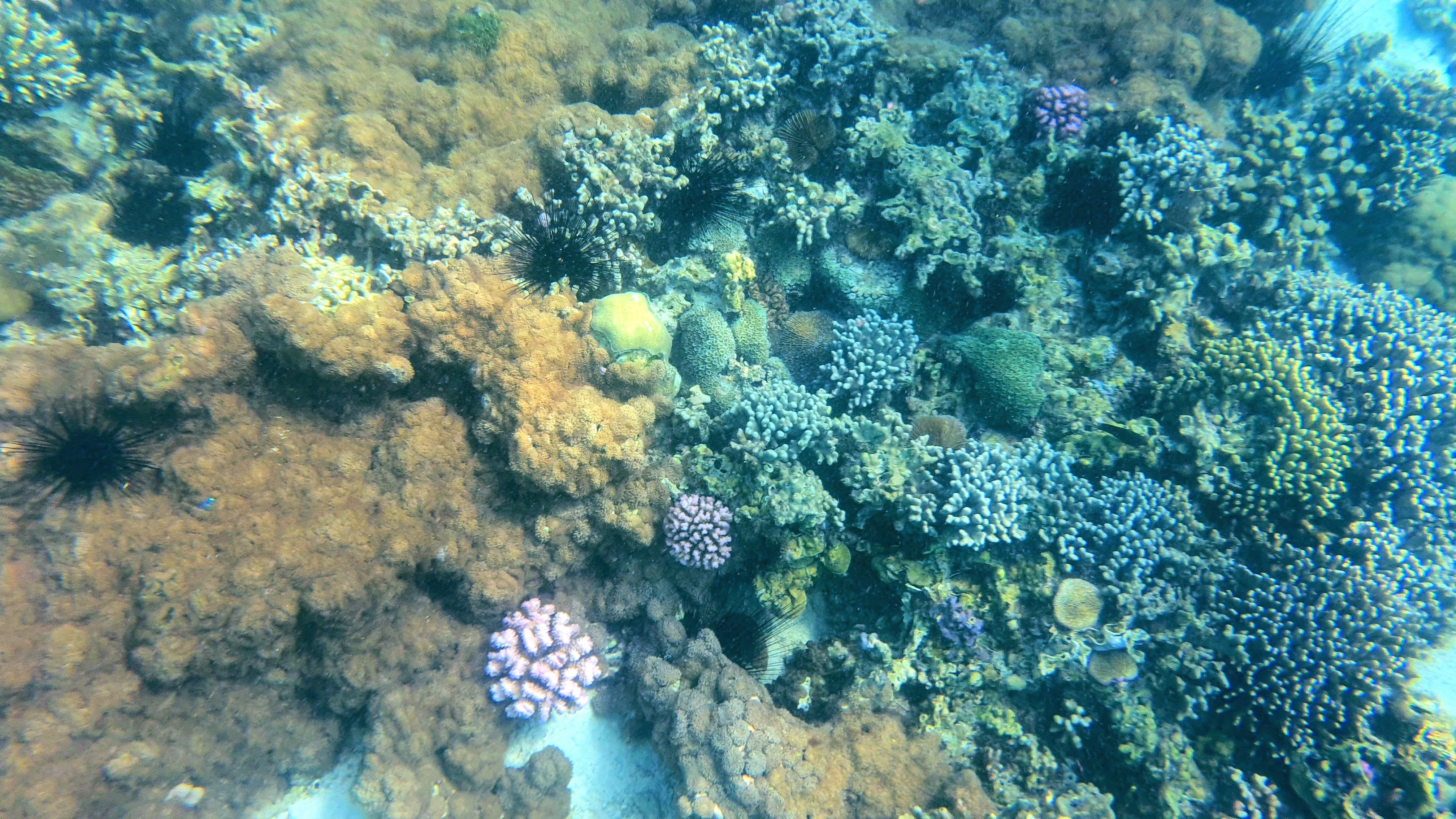
I took turns wrestling with the camera and just enjoying the experience because we need both to be mindfully present in the moment and to preserve memories for our future selves. When you view the photos of this day, bear in mind this was taken on my 4+ year old phone in a 10$ waterproof “case” that was basically a plastic bag with an industrial watertight seal. I do not have anything like a high quality underwater rig, but I still really enjoy being able to capture a few random moments of these magical underwater gardens. I thought 45 minutes might be too much given the paucity of life in my earlier swim, but this reef was so expansive and diverse that I was still engrossed with the guide caught my attention and said it was time to head back to the boat.

On the way to the second site, we had a generous snack of samosas, pastries, and fruits. It wasn’t a “meal” in the traditional sense, but it was delicious and plentiful, and allowed us to refuel without diverting away from the focus or getting too full to swim in open water safely. We talked about the life we’d seen below, and I got only slightly jealous of the diver since he’d spotted an eel, but I was thrilled with the variety of sea life, color, and shapes that my own swim contained and I finally felt like I’d found what I had been promised on this island paradise.

The second site was even further from land, the water was a deep dark blue, and the waves even higher. The site wasn’t just a reef, it was a sunken ship which had been overgrown with corals and other sea life. Despite the depth of the water around us, the boat itself was on a raised part of the sea floor, which made it easy to dive to. I wondered at first if the water was simply clear enough that the boat looked closer to the surface than it was, but when I saw the scuba divers below me it provided excellent scale. The ship is the Great Northern which was a British cable laying ship that sank in 1902. If you’re a boat enthusiast, you can see more about it here. Only a small part of the boat remains after extensive salvage operations, but it was absolutely enchanting to see the outlines of the hull and the mast rising from the sea floor towards me at the surface, colonized by it’s own coral and school of fish.

Despite the physical difficulty of the swim, my spirits were not dimmed by mouthfuls of seawater that came down my snorkel whenever an especially high swell coincided with my attention being diverted by the beauty around me. I saw more species than I know the names of including several giant clams and a small school of squid bobbing along near the surface reminiscent of the ones I had cooked on my spice farm tour.

After many years of not being able to travel due to COVID, and having such a terrible experience landing in Dakar and being unable to rekindle my joy of travel, adventure, and new places, I was genuinely starting to fear that I had lost it. That I had become too soft, too indoorsy, too sedate, or worst of all, too old to continue the kind of adventures which I felt I had only just begun to have in the few years before the pandemic took it all away. My experience with Safari Blue had made me even more uncertain — maybe I had become jaded? Was comparing each new place to a better place from my past adventures stopping me from enjoying what was in front of me the way the other tourists certainly appeared to be?

I emerged from the Indian Ocean that day, breathless, sunburnt, and missing my eyebrow ring, sacrificed to the secure grip of the mask and the pressure applied by the waves. I emerged all these and yet grinning ear to ear. My sense of wonder and my ability to ignore discomfort in the pursuit of adventure were intact! My spirit was not broken by isolation, stagnation, or even terrible heat. I radiated a gratitude that buoyed me for the rest of my stay in Zanzibar and refused to fade even as the sunburn became one of the most epic of my life. The blue of the Indian Ocean is the blue I’ve been dying my hair for the last 6 years without knowing. It is the blue that feeds my soul.
Back in West Africa

Since returning to Senegal, I have not been able to parlay this sense of adventure to Dakar or even it’s neighboring region. Before Zanzibar, I was truly worried that the pandemic had taken my joy and adventure away, but knowing that wasn’t the case, I started trying to understand what it was about Dakar that was keeping me from finding it. Some is definitely a result of the infrastructure and culture. Zanzibar was safe to walk in even after dark with cameras all around and locals who had a strong interest in maintaining that safety because tourism is such a huge part of the economy. Dakar remains a place I can only walk at night if I’m in a group and we are walking a short distance on well lit streets. The beach in Zanzibar is full of restaurants, cafes, boats, and walking areas all of which are within walking distance of the hotels. If I want to go to the beach in Dakar I need to take a taxi; I will stand out as a lone foreigner, and should I walk along the corniche, I’ll be walking next to one of the largest arterial roads of the city, which almost cancels out the joy of walking near the ocean. Zanzibar wants people to explore, so there is a a fleet of tourist taxis made of identical and easy to spot Japanese minivans and yes it’s more expensive for one than for a group to split the fare, but it’s easy and not outrageously costly. Whereas I cannot for the life of me find a safe and affordable option to go on my own from Dakar to Pink Lake or Saly.

But more than the differences between the two places, I also thought about the difference between living in a place and traveling to a place. I spent two of my three weeks in Zanzibar just being a tourist. I let myself sit in the hotel AC watching Netflix when I needed a rest from the relentless heat and trinket sellers, but my focus was on having a good experience in the short term. In Dakar, my focus is on a comfortable life in a longer term which means making sure my home is safe and relaxing, making sure I can do my job without going crazy (both are still a moving target 6 months in), and making friends or at least people I am happy to see on a regular basis. These are all the things we do in daily life which are so different from what we do when we are on holiday. Those things take so much of my time and energy in Dakar that I have none leftover to be a tourist here.

I have emerged from the deep dark depths of “rejection” culture shock that I wrote about here a few months ago. I’m slowly learning to enjoy things here, but I’m more likely to play video games in my apartment or go to the local expat bar to see my new friends than I am to go out looking for some “Dakar” experience. A part of me feels like I’m wasting this opportunity, but another part is speaking softly that maybe I can’t be a tourist if I don’t have a home. Dakar cannot be my home, however much I’m adjusting to it’s idiosyncrasies and cultural differences. Korea had become my home while I wasn’t looking by dint of time and familiarity. I could go out and do touristy things while living there and feel confident that there was a comfortable and safe “home” to go back to. For the last 4-5 years, when I said I was going home, I meant my apartment in Korea, not my friend’s houses in Seattle where I stay when I’m visiting. Perhaps a few years in Dakar would make it feel like home, too, but I’m not going to be around long enough to find out. Most of the people participating in this fellowship around the world have a home to go back to, but I left my Korea home for good and I will be moving to a new situation at the end of my 10 months. I’m in home limbo.

I have 4 months left here, and I think that the best thing for me now is to stop trying to “make the most ” of Dakar and find some stillness where I can listen to what I am thinking, feeling, and experiencing by being in this place which is so far from my comfort zone that I cannot hit it with an ICMB. However much I desperately wanted my time here to be all the adventure which was denied to me for 3 years by the pandemic, the reality is different. I found my sense of adventure again in the blue of the Indian Ocean, and that will have to be enough for now.

Ahhhh… That’s Better: Getting Settled in Dakar

I knew when I was drifting through the cortisol laden depths of anxiety and despair that getting my own space to live in was going to make a huge difference in my outlook and wellbeing, and wow I was right. As of November 22, I finally got my very own place to live! It’s made a huge difference in the way I feel and my ability to tackle other challenges of living here. After 6 weeks of living in Dakar, I’m so pleased to finally be able to start sharing something good.

Good News, Good Vibes

I know my first three posts about Dakar were very rough, but it’s so here’s some other fun things/achievements I’ve gotten to do.

Trivia Night!

Every other Thursday there’s English language trivia at a bar by the sea. The bar is called Kraken and it’s in a tourist/expat part of town, so there’s a lot of people leaning in and trying to sell us stuff over the railing. They have a decent selection of drinks, but I tried a local beer with Picon added in. I had never heard of this before, but apparently Picon is the French version of Amaro and has a bitter orange botanical flavor. Picon beer is a thing. It was nice and added a lot of depth of flavor to the otherwise cheap local beer. The theme that night was FIFA which did not go well for us, but I had fun anyway, and I plan to keep going.

Thanksgiving Dinner

One of the ETAs I temporarily lived with hosted her very first Thanksgiving (first as hostess) and went full out with it. The ETAs from orientation came back into town and we had a nice evening sharing food and conversation. She made chicken instead of turkey (I helped because she’s vegetarian and didn’t know how to tell if it was done) plus mac and cheese, cornbread, cornbread stuffing, green beans, roasted root vegetables, mashed potatoes, a zhuzhed up canned cranberry sauce, and three pies: pumpkin, apple, and peanut with both vanilla ice cream and whipped cream. It was wonderfully homey to have a group of good people to share the holiday and meal with, too.

Loman Art Gallery

I didn’t realize it at the time we went, but it turns out there’s a gallery very close to my apartment. It’s an Airbnb and artist residence with a rooftop bar/restaurant. They had a lovely Ethiopian buffet the night we went. The art installations weren’t fully up inside, but the rooftop was gorgeous and we sat in the most elaborate gazebo-esque table to enjoy the food. I ordered a house wine and was pleasantly surprised (I guess the French influence extends that far) and I got some fresh roasted coffee afterward. The barista brought the pan over to the able to show us how she was roasting the beans small batch!

Shopping

I had a fun day out at the Sea Plaza shopping mall. There’s a disproportionate number of handbags and shoes for sale there, but I found a cute café and more importantly the large version of the Casino grocery store that I visited in my second week here. I don’t want to have to go there every week to shop, but it is nice to know what’s there in case I get a craving. There’s also a plethora of import food shops for different ethnicities around town. My friends found a Chinese shop, and I spotted a Korean grocery from a taxi the other day. It’s really nice to have regular access to variety!

English Club

I went to the first official day of the English Club at my university. I was pleased to be able to help the student led club get a real faculty sponsor and a classroom to use. I’m not real faculty, but I sent some messages out to people in charge and asked for them to get what they needed, and my voice carried more weight than the students alone. They meet on Saturdays, and I’m busy every Saturday in December, so I definitely wanted to visit before November ended. It was a lot of fun to see the students engaged in practicing English by debating veterinary medicine hot topics and I’m looking forward to going back in January.

PO Box / BP

I went to the post office to get my PO Box (boite postal) set up in order to get mail and packages. I was deeply entertained by the fact that they wanted to know my address … buddy if I knew my address I wouldn’t need a BP? Eventually they just wrote the general area along with my phone number and email. They made a copy of my passport, and collected my 5k (about 7.50$) which pays for a full year of service (it’s usually 10, but they were having a reduced rate special, Thanksgiving may only be in America but Black Friday is global). Then we searched through a box of about 100 keys, everything from 24000-24099. The three of us (me and the two postal workers) had a little race to see who would find my number first. They gave me one copy of my key and showed me where to go to find the box. I’m not sure how well this will work, or how long it will take things to get to me here, but I have a way to get mail now. 

Apartment!

I finally got a place to live!

What I Learned About Finding Housing in Dakar

This was not supposed to be a thing I had to do on my own. You can read the stories in my other Dakar posts, but it turned out to be one more thing I needed to do for myself while here and what I learned is: the best thing you can do to find a place to live here is ASK OTHER EXPATS. There are real estate agents (required for official rentals) and even some websites where you can search and view apartments, but it’s a minefield. The real resource is fellow foreigners.

If you’re coming here for more than a week, I’d say book something very reputable (high ratings, good reviews) for the first few nights you’re in town so you can touch down in comfort and safety, then move to a cheaper place after you arrive and can go see it in person before you book, and finally, find your long term stay by reaching out to the expat community. If you are moving here for the long haul (5+ years), you might want to get an unfurnished place and fill it yourself. The deposits are murder (4 months of rent!) and furnishing will be a hassle, but the rent is much cheaper on unfurnished units. If, like me, you are planning to be here less than 2 years, you might want a pre-furnished place.

For any length of stay, look before you pay! If you have to book a place sight unseen, check the reviews, make sure there are verified reviews that are recent and not just the landlord’s friends and family. I saw a lot of places on Airbnb that were total lies. The ones that were true to photo were mostly other expats. Ask about everything. Don’t assume a thing works because it’s there. Check it yourself. Make sure all the appliances, wifi, electric, hot water, a/c etc work. Imagine your apartment is a used car you are buying from a sketchy used car salesman. Kick the metaphorical tires. It will be exhausting, but worth it in the end. 

There are tons of people “renting” furnished apartments by the night who are entirely willing to make monthly discounts. The place I’m in was going for 25k/night (would be 750k/month) but I got it for 600k (local currency). I found it because one of the ETAs who has been here longer was able to reach out to her WhatsApp group to ask if anyone had something. There’s also a FB group called Dakarium Turfs & Cribs that people can post what they are looking for on and get replies from people who have places to rent. I didn’t use that method because I was not really sure how it would go with total strangers, but I think if you don’t know any expats from your work or whatever brings you here that it might be a better bet than trying to go through a Senegalese agent.

Another reason to go through expats is the language/culture barrier. It’s much harder to get repairs done from Senegalese landlords in part because you are as unlikely as I to speak Wolof, and in remainder because things just aren’t urgent here. My American landlady understands my American urge to have things fixed ASAP, so anything she can fix, she has done right away. There are things she’s stuck waiting on some locals for, but she communicates about it with me. Meanwhile, my friends renting from a local were washing dishes in the bathroom for several days while waiting for their landlord to get a plumber into the kitchen sink. Thankfully, they got it fixed before Thanksgiving!

Home Sweet Home

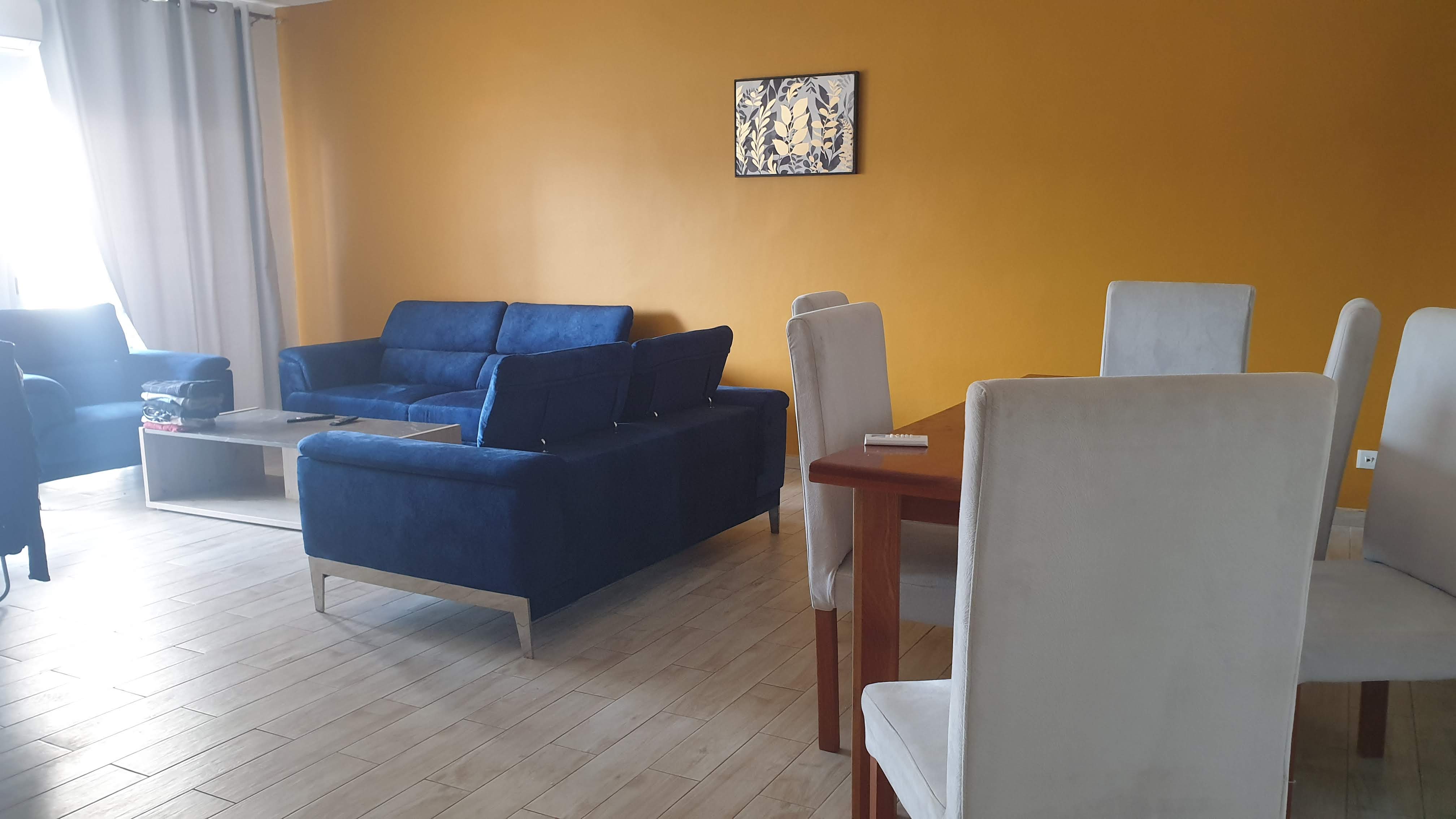
After 5 weeks of stress, I have moved into a nice furnished apartment in Mamelles (which is a neighborhood that means “boobs” in French because the French colonizers saw the two hills and were 12 yr old boys about it). The building is shared with some businesses on the ground floor and has a fairly new elevator (less than 2 years old) which speaks with a very interesting (not remotely African sounding) accent. There’s a lot of people around and the building manager is friendly and helpful, so I feel safe and welcome. The lady renting to me is also American, and usually rents the apartment out by the night on Airbnb but is happy to have me in for a long term rental since it means a steady income and probably less breakage of furniture. 

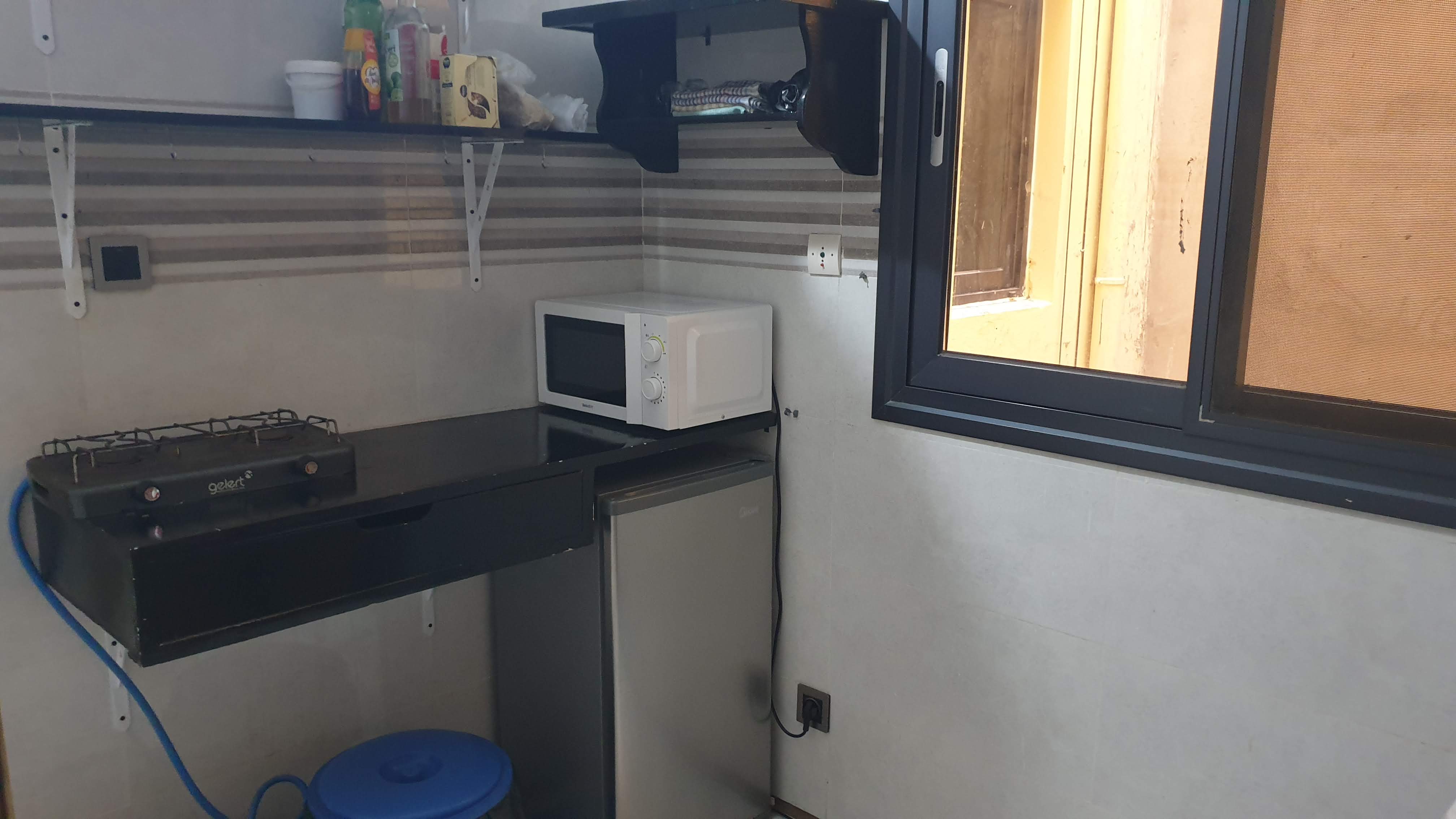
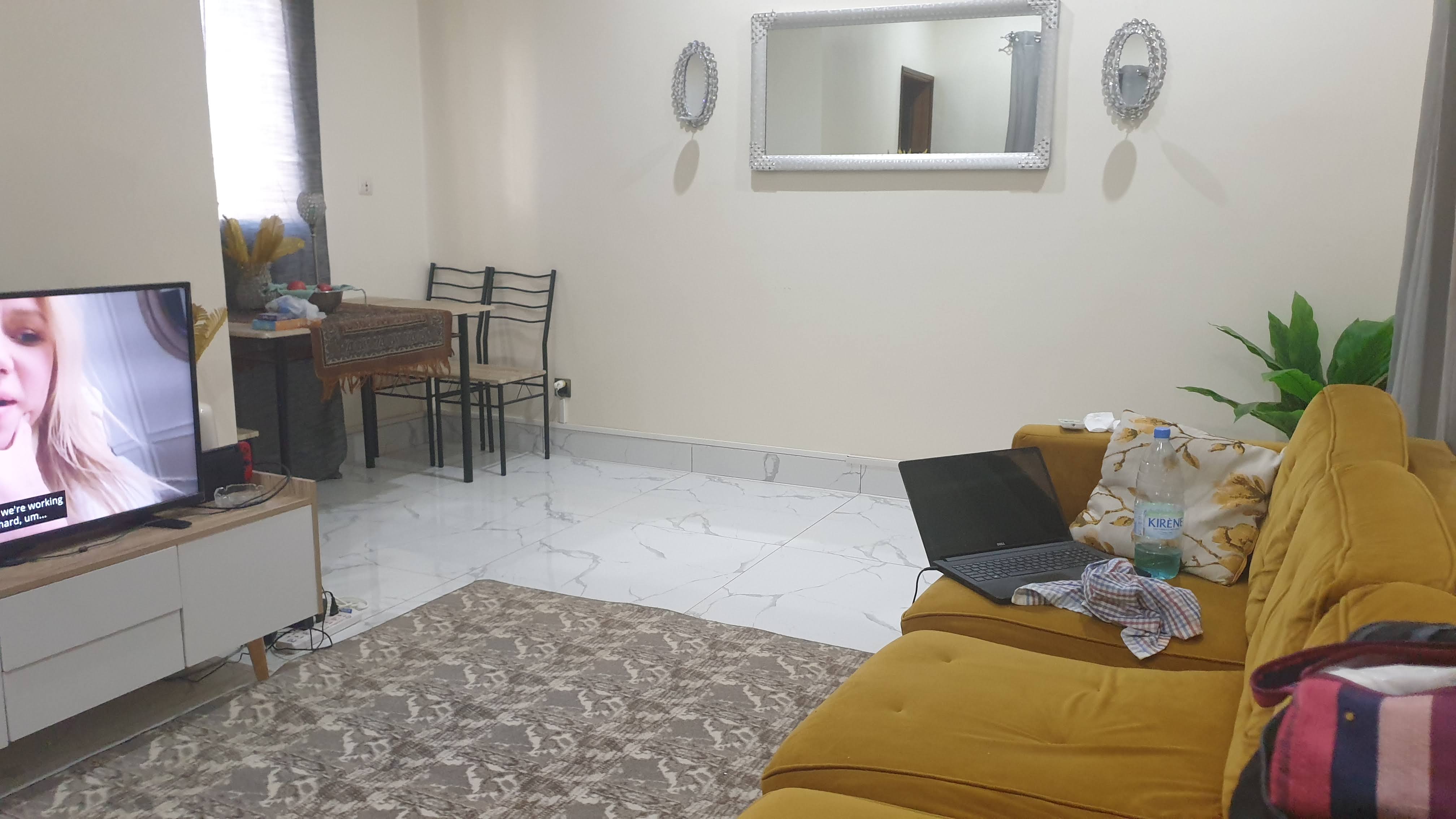
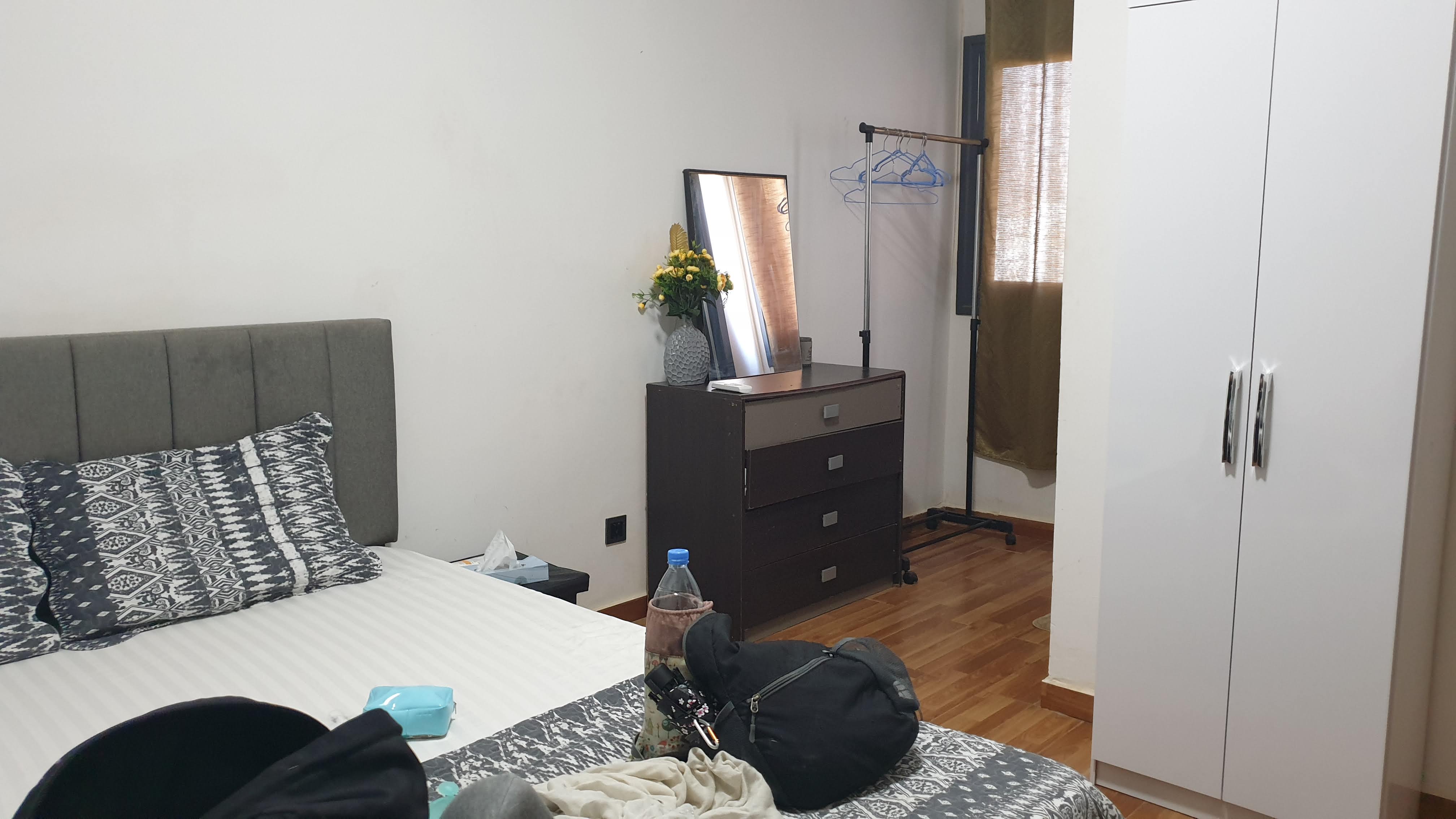
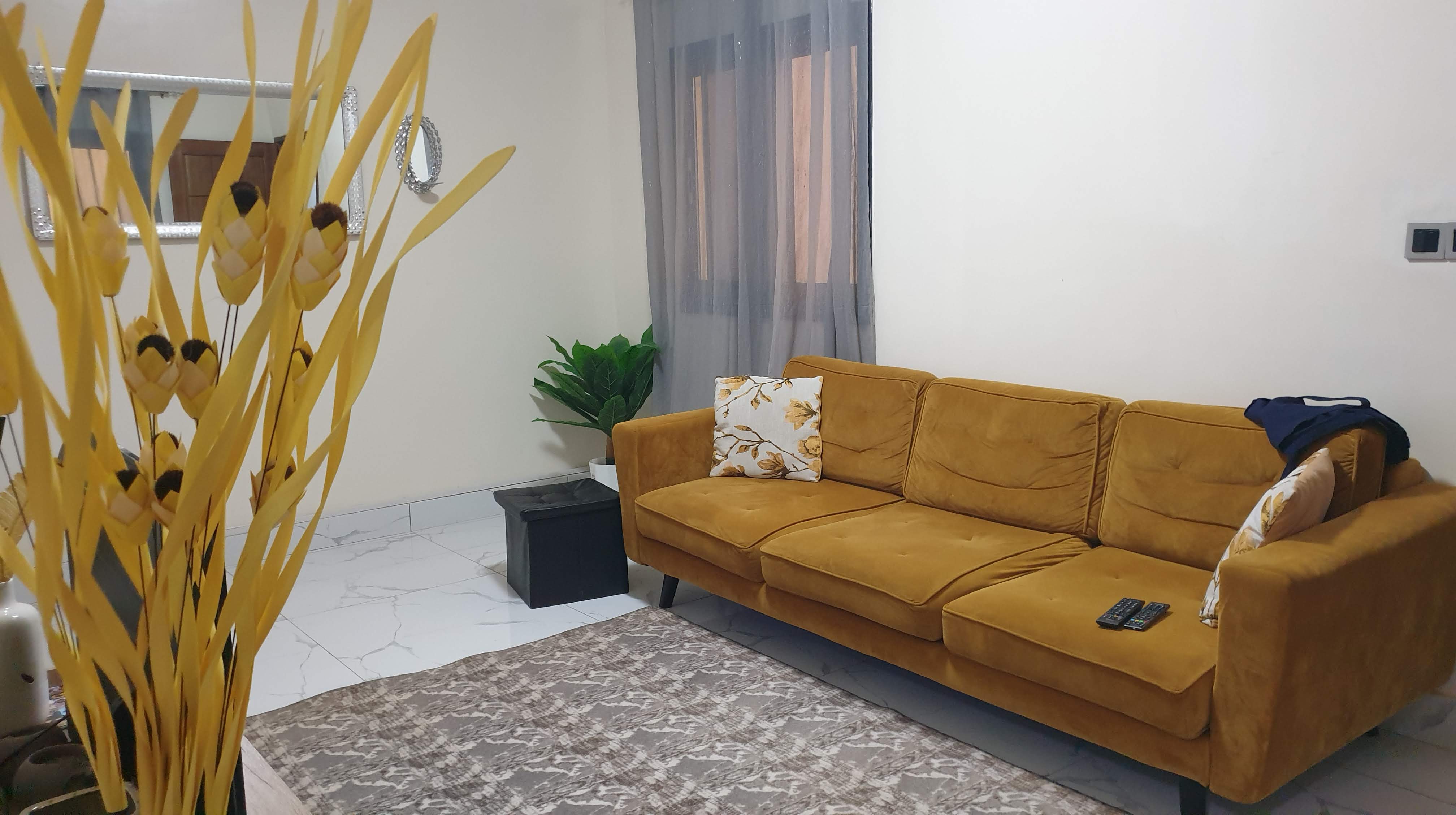
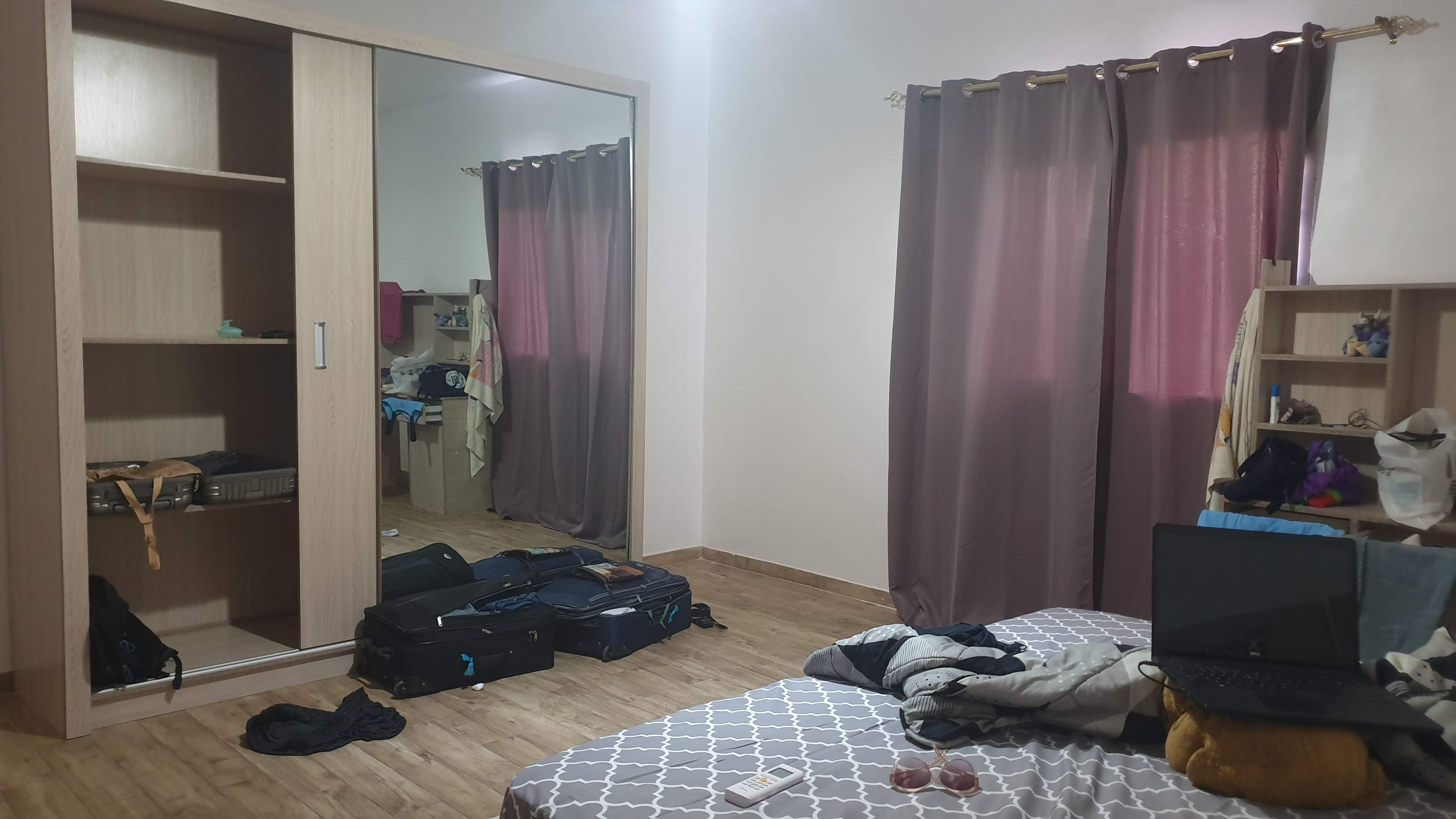
There’s a small kitchen which we made smaller by installing a washing machine. I think it’s worth it to be able to wash my own clothes at home and not in the sink. It’s got a dorm fridge, so I guess I don’t get to keep pints of ice cream at home, and the “stove” is a propane hot plate on a wooden countertop. The main room is a living/dining area, but I’ve shoved some of the furniture aside to make a space for me to VR dance in. I’ve also installed my Chromecast and switch on the TV. The bedroom is a bit sparse, but the bed is comfy and the bathroom has ALL THE HOT WATER. I didn’t really realize how much I missed that until my first shower in here where the water came out steamy and stayed that way the whole long shower… my first really good long hot shower since arriving in Senegal, btw.

It came furnished, including a towel and 2 sets of sheets, but I got some new pillows for myself. It also comes with a cleaner, which is something I may never get used to. The places I lived in Jinan (China) and in Tabuk (Saudi) had cleaners, but the one in China only came once a week, and the one in Tabuk was in a hotel, so they came when I asked, but I didn’t ask often, and I always pre-cleaned because all I really need help with is floors and bathroom scrubbing, and I don’t really *need* that, because I lived without a cleaner the whole time I was in Korea and did not drown in dirt. This lady comes 3x a week. Her service is included in the rent. It definitely makes me think about not leaving my undies on the floor or my dishes on the sofa.

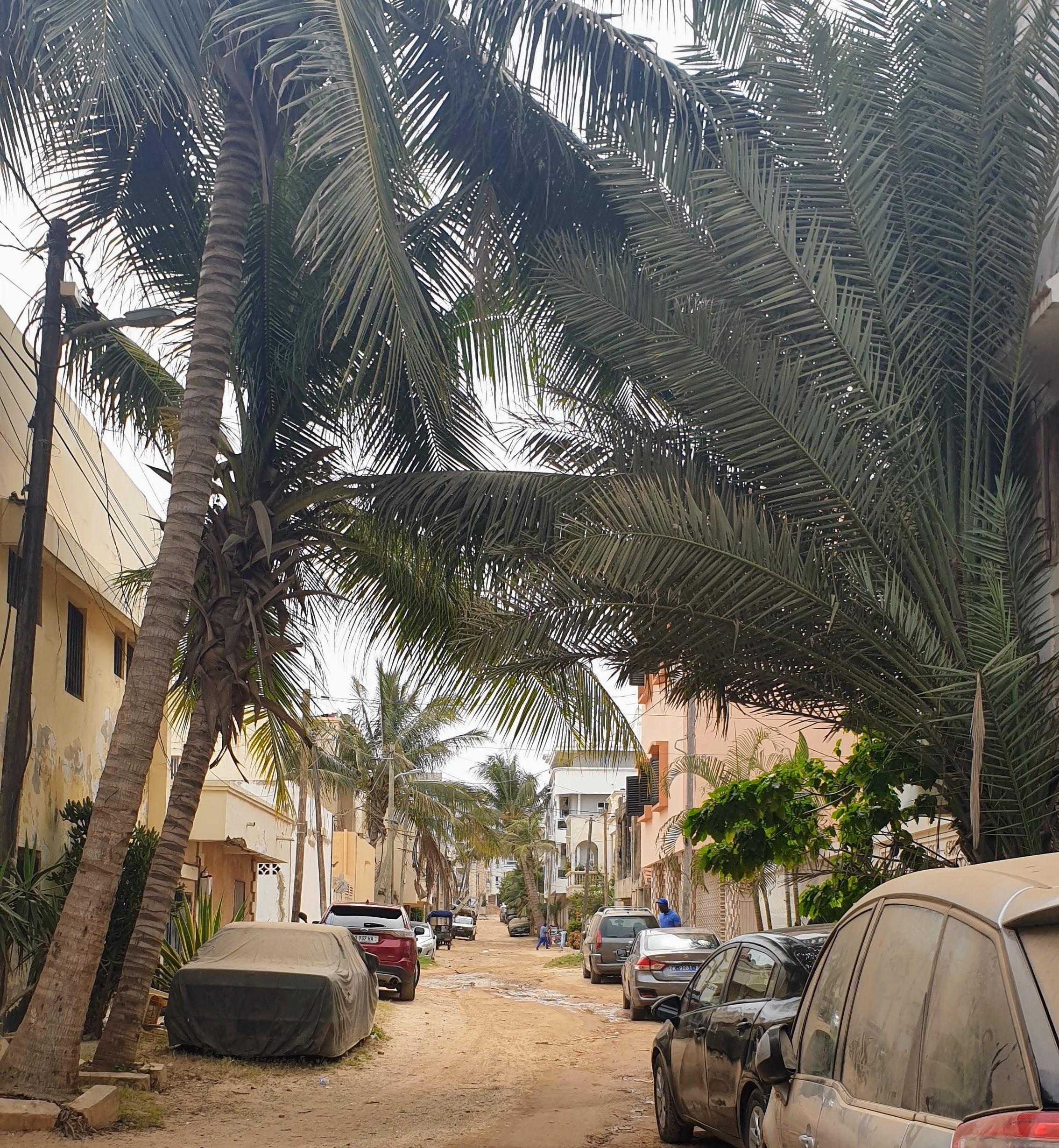
It’s in a very residential area, which has pros and cons, but overall is probably for the best because it’s quieter and safer. The roads are made of dirt, and there’s a larger than average number of horse drawn carts. There’s not as many restaurants and no big grocery stores, but the manager at the corner grocery store was really kind to me when I came in, and showed me where to find the stuff I was looking for and welcomed me to the neighborhood. There’s a bakery, and some fruit sellers around too. Plus, it’s a much easier area to describe in this addressless land when I get stuff delivered. I don’t have a private terrace, but there’s rooftop access and there’s a beautiful view that includes both the lighthouse and the Renaissance Monument.

#Thankful

I literally cannot say enough how much better my life is now that I have this place to live. Nothing feels too big or too broken or too overwhelming anymore. Even when I went to see the English club only to discover that my new laptop didn’t connect to the projector, and also for some reason had the wrong country plug (even though I bought it here), and that the cleaning crew had disconnected my office desktop from power (which I was able to fix) and apparently also the internet (which I was not), I wasn’t particularly upset. I was just like, oh, ok, I’ll take the laptop back home and figure out the problem, I have an adapter there, too. My latest online order had a problem where they took my money and then said the order didn’t go through and I couldn’t speak to a rep because language barrier, but I was ok with figuring it out later, and it was ok, two days later the website had resolved the issue itself and my stuff is on the way.

I’ve been exploring, walking, taking photos, taking…. Well not risks, but getting comfortable living more normally. I finally got to dye and cut my hair and I have high hopes that being able to have a regular bed means a regular bedtime skincare routine and my hands and feet might be able to recover from the DRY. I was able to start working on stuff like minor sewing repairs and LAUNDRY. I have a space to disinfect my produce and can finally have fresh fruit/veg snacks again. It’s SO nice not to be living with the weight of stress and anxiety and just be able to enjoy living here. I’m astonished it took so long, but I’m glad that I was right when I promised myself that I’d get to this point.

Bienvenue au Sénégal!

Life in Dakar: Week 3 Part 2 – Side Adventures & Footnotes

The blog was too long when I tried to put everything that happened to me that week together, so here’s the stuff I cut out of the first post that wasn’t directly related to Maslow, but might still be interesting.

When Last We Saw: More Tier 1 Struggles

The first post about week 3 is almost entirely about housing. The other tier 1 concerns of food/water/climate were a ‘manageable struggle’. I had not yet figured out water delivery and was thinking to put it off until after I got my “permanent” home, but I was able to boil water on the stove in a saucepan and create a reserve of clean, safe water that way. I had only a small saucepan which took a long time to heat up and had to be watched and checked on so it didn’t boil dry either. Then had to be covered while it cooled down and transferred to another container once it was cool enough. This had to be done multiple times a day. I have now purchased an electric kettle which boils 1.7L in a couple of minutes and turns itself off. I set up a cycle where I fill my water bottle from the bottle in the fridge, refill the fridge bottle from the water in the kettle, and boil a fresh pot that will have time to cool off before the next cycle. Also, the cord on the kettle is so short that I can’t plug it in anywhere in the kitchen, so it’s in my bedroom. Because I go through 3L or more a day here, this method still requires far more thought, time, and energy than “tap to glass”, but it’s a huge upgrade.

Food had to be ordered or I had to go out to purchase it at least every other day. I didn’t have the resources to clean produce safely in the room, nor to store and cook things like fresh meat. I had bread, peanut butter, oatmeal, rice and yogurt (yay traveler’s tummy troubles), but I had to negotiate with a delivery driver to get food most days (remember, no addresses). I know, it sounds like a privilege problem, but I didn’t HAVE the ability to prepare much for myself, so delivery was how I got food. In habitation #4, I have access to a better kitchen and slightly less concern about having to move anything I don’t eat in a few days, but we still don’t have produce sanitizing set up here (the ETAs have only been in this apartment about a week longer than I have) and I’m not settling in to buy staples like cooking oil. They are mostly living on pasta, and while I’m more comfortable eating cheese or peanut butter sandwiches here than other places, that’s about the extent of my food prep, so I’m still heavily reliant on delivery. The main difference is that one of the ETAs speaks both French and the local dialect Wolof and can direct the drivers much better than I can.

The A/C has worked pretty well everywhere I’ve been so far. In hot enough weather, A/C isn’t a luxury for anyone and I’m one of the unlucky people with a condition known as “heat intolerance” which is just doctor for “you get sick from being hot faster than baseline”. Everyone gets sick from being too hot. It’s called heat exhaustion and heat stroke. I just get sick faster than most. My core temp rises above 100F/37.7C quite fast in hot weather, so I need better access to climate control aids. Habitation #4 is the first place I’ve been with A/C in the living room, which has meant I can venture out of my bed and do some work at the table or sitting on the sofa which may seem minor, but there are big mental health bonuses to separating your sleep and work spaces. When I was teaching online classes from my bed in Korea at the beginning of the pandemic, it fueled my depression hardcore and made getting a desk/workspace a top priority for that move in 2021.

Tuesday Nov 1: Unexpected Holiday

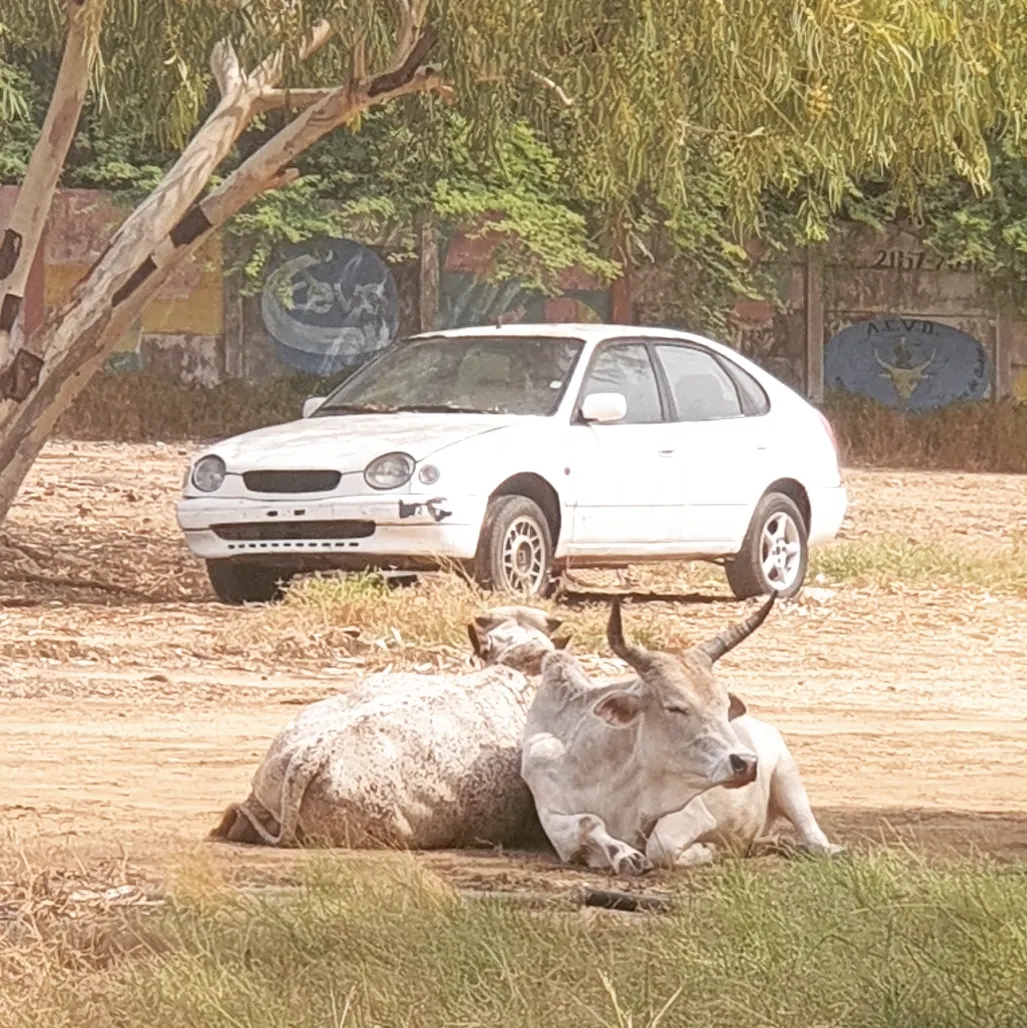
That day, I got myself together and dressed and headed over to the university to show my face because that’s what I was asked to do while I don’t have any other duties, classes, or even enough data to start building towards those things. (I wanna be working, I really do, but every time I ask I get told “later”.) Anyway, I got to the university and it was a ghost town. My contact was in South Africa for a conference, and I sent a message to the person who had my office key to find out what was going on. There’s some kind of “one key” policy here so the cleaners can’t get into my office if I have a key? But I can’t get into my office if I leave it for the cleaners? I still don’t know how this is actually going to work long term. In the mean time, I took photos of the animals laying around and got totally startled by the existence of random cows. I had to hop on my zoom meeting from my phone standing outside my office so I could use the Wi-Fi. At least the hallways have good ventilation even though there’s no A/C. It turns out that All Saint’s Day is a non-working holiday in this Muslim majority country.

Wednesday Nov 2: Still the Longest Day

Hotel #2 check out – What’s up with expense reports anyway?
I have to get pre-approval and receipts to claim my “settling in” expenses, which cool, but I didn’t book hotel #2. I didn’t sign any agreements or log in as a guest. I think maybe they made a copy of my passport when I got there? But also maybe just looked at it because I don’t think they had a copy machine. I also had to pay for that room in cash. The bigger hotels and shops here do take Visa/Mastercard but it’s not very common. The lady helping me to check out said that the manager would bring me a printed receipt to the school the next day, and while I don’t under any imaginary circumstances think that she was being deceitful, I just had no faith in the reality of that manifesting due to cultural experiences I’ve had in the past. It’s not a scam or anything, I paid the agreed price. I just wouldn’t be able to claim my reimbursement without a receipt. I managed to talk her into giving me a handwritten one that day. I still haven’t seen the “official” receipt, btw, and ended up submitting my expense report with the handwritten one.

Hotel #3 check in – The Case of the Forgotten Medicine:
The power was out when I arrived at hotel #3, but there was a good breeze in the living room, so I settled in to wait. Just then it hit me: I had left my medicine at the other apartment/hotel! Due to the heat, I’d been keeping it in the fridge and I had a crystalline memory of taking it out of the fridge and not putting it in the bag with the groceries because I wanted to put it in my backpack (less possibility of it falling out in transit, the irony).

The good news was that the two hotels were actually just over 1km apart. I only needed the taxi to deal with the bags. I took off down the main street and frantically tried to figure out how to send a message to hotel #2 to let them know I was on my way. I didn’t book that place. I didn’t have any contact info for them. They weren’t in Google. I got my social sponsor to send me the phone number and sent a text message in French but got no reply. I was left to hope that the cleaners hadn’t just thrown it away before I could get back. As I came in the bottom entry, I ran into the helpful and kind lady who had managed my departure and, in very broken French, tried to convey that I’d left medicine behind. She knew exactly what I was talking about and bid me to wait (she remembered about the stairs <3) while she went to get it. So grateful!

Medicine in hand, it occurred to me that without the added adrenaline, I was too hot and tired to make the walk back just then, so I got out my ride share app and summoned a car. It took about 20 minutes to arrive, but he did call and warn me about the wait, and I was sitting on the stairs in the shade with a decent breeze, so I was ok. Better than walking in the blazing sun. The car, when it turned up, was newer than most taxis and had actual running A/C. The driver didn’t have the appropriate change, so I ended up paying 500cfa extra, but later I discovered that I could claim that on the app as a credit, so I’m giving that a shot to see if it works.

Thursday November 3: ATMs & Budgets

ATM in French:
No, I don’t assume everyone uses English all the time, but ATM is a very common loan word in many other countries and even where it isn’t a lot of people know what it is because they want the tourists to get access to more spending cash. It should not have surprised me that French was having nothing to do with our tawdry English acronym. Google Translate gives the translation of ATM as AU M.

Google Search turned up the expression “distributeur automatique de billets” and further Googling showed that maybe some people use DAB as an acronym but it wasn’t common. The linguist in me was skeptical about this answer because humans don’t like to use long words or expressions when short ones will do. We like to abbreviate. There had to be a short form equivalent of ATM, but no amount of searching on my part was yielding results that day, so I went back out into the world armed with “distributeur automatique de billets”. People looked at me funny, but at least it worked.

I have since learned this is, as I suspected, wrong. The machines are properly called “guichet automatique bancaire” (sometimes guichet automatique de banque and guichet automaique de billet) and abbreviated as GAB (pronounced “gab” not gee-ay-bee). Google Translate knows full well how to translate these terms from French into English, by the way. Just goes to show we can’t rely on the Oracle for everything.

Apartment Hunting & Budget Allowance:
After the repeated failed apartment viewings, much conversation has ensued between myself and both my social sponsor and realtor about the problem of my budget, which I have no control over. The US Government promised in my contract that I would have a furnished room with private bathroom/bedroom + kitchen access and good security, although they themselves do not provide the housing, they will intervene to make sure the minimum standards are met. They also decided that it should cost no more than 700$ US a month to rent this dream. I’m willing to pay a little over budget out of my own pocket for a good place, especially because of the issue with stairs and a/c, and I’m not attached to being walking distance from the school, no matter how bad my social sponsor makes it sound. The ETAs and the RELO don’t walk to work and they are fine. But it’s increasingly obvious that 700$ US a month is not actually enough even to meet the minimum standards laid out in my contract. What to do?

Friday November 4: Bureaucracy

My American RELO:
Normally, these projects are overseen by a Regional English Language Officer, or RELO for short. Unlike the project managers in Washington DC, the RELO is in the physical location of the project and therefore able to oversee arrangements, claims and conditions before the Fellow (that’s me) arrives. The one and only Fellow in Dakar before me came in late 2019 and left early because of COVID. They never really had a chance to settle in and besides, a lot changed during the pandemic. The former RELO in Dakar left earlier this year, back in the spring sometime, basically right after doing my interview. The new RELO just arrived in town a week or so after me. Things did not get done in an ideal manner during the intervening months. The deputy RELO (a local Senegalese woman) was, I’m sure, doing her best, but it’s a LOT for one person, especially one person whose job it actually isn’t, so no blame attaches. This is not a blame or fault sort of situation, it’s more of a Lemony Snickett situation.

Our conversation that morning was very surreal because it turned out her housing situation is actually worse than mine. The place she’s supposed to live is still being built and the place the embassy stuffed her is apparently a concrete box with no a/c where her husband is doing laundry in a bucket, so… I had to rather awkwardly inform her that air-conditioning is not that rare here (not ubiquitous like Korea but it’s at least been in the bedrooms of almost every place I’ve looked at) and that washing machines do exist. She actually asked if they had washing machines here and I still don’t know if she was being ‘Merican or sarcastic…

The Reports Never End: Working for Uncle Sam
I filed another round of expense reports that day as well for the last 2 hotels and a qwerty keyboard for the office at the school (the one my contact at the university said would take 3-5 weeks to get and I got in 2 days). Expense reports involve an excel spreadsheet with the items, descriptions, local and US costs; copies of the pre-purchase approval, copies of the receipts, and a screenshot of the daily exchange rate using Oanda all bundled up in a single pdf file. It isn’t hard work, but it is tedious and time consuming. I also wrote my post-arrival report which I had been putting off in the vain hopes that I’d have more solutions to report than problems, but since the report is due mid November and no one expects anything to change before then, I figured I might as well. It could be argued that things have changed because I have better options, but the questions they were asking were about my permanent housing and about my primary project at the host university, neither of which I expect to have up and going before Christmas.

Broken Down After Dark:
By the time I finished chatting with the hostess of the Airbnb, it was getting late so I went into a nearby restaurant to order take out with plans to use the ride app to get back to my room because dark was descending and I’m not supposed to walk alone after dark. Much like the first time I used the app, the driver messaged me to say it was going to take a while because traffic, but I was ok to wait inside the restaurant until he got there. I suppose that’s going to be the trade off for taxi vs ride share: waiting without haggling or haggling but less waiting.

The car seemed nice, and we drove most of the way with no problem other than traffic. Then just as we get to the busiest roundabout the car died. Dead. No amount of prayer was getting the engine going again. Cars were going around us three deep with motorcycles and pedestrians weaving in between. The open air market and the bus stop are right there. If it was daylight, I’d have walked the short distance back to the room, but it was full dark and we were in the busiest and most crowded spot.

The driver was obviously embarrassed but very polite and professional. He arranged a taxi for me, haggled for the price, didn’t take any money from me for the part of the ride I did with him, and escorted me through the traffic and crowds into the taxi safely. Of course I left him a good review.

The Weekend: Resting Day & Moving Day

I did as little as possible Saturday. It was glorious. I lazed about in the air-conditioning eating leftover takeout food and drinking the last of my bottled water because I didn’t want to carry it on moving day. I didn’t even post on Facebook.

Sunday, the Fulbright ETAs came over and very efficiently helped me get all my bags down the elevator and into a taxi, then with similar efficiency back up two flights of stairs to their own apartment where I will live for the next two weeks. I feel like the most backward adult, having to ask two ladies in their early 20s if I can crash with them because I have no place to live. I suppose I could have found another hotel, but the problem of the “moving in” budget which I described in arrival post still loomed large. I felt like it was a horrible waste of money to keep living in hotels. Plus, kitchen! The ETAs have a nice 3 bedroom apartment with a/c in every bedroom and the living room. Aside from the fact that I feel silly living with people young enough to be my children (if I had children), they are hosting out of town folks for Thanksgiving and getting a third roommate in Dec/Jan, so it has to be temporary. Nonetheless, I overflow with gratitude at being able to know where I would lay my head for 2 weeks in a row and for being able to finally have the time/space/energy to go through my luggage and rearrange the suitcases so I could stop wearing the same 3 outfits. I’m still mainly living out of the “carry on” size one, but at least now the 3 bags are more suitably arranged for daily access, occasional access and storage.

I offered to pay rent and utilities of course, but then found out later that it might have been disallowed because of conflicting expense reports. Between you and me, I would have paid them out of my own pocket if the expense had been disallowed because I’m the frickin’ adult here, not a freeloading broke-a$$ college student (no matter how much I still feel like one sometimes). Adults pay for things when they are with the youngers. That’s the social contract. I also bought them Indian food for dinner as a thank you for not just letting me stay, but helping with the move. It’s a slight step up from pizza and beer that accompanies most broke-a$$ college student moving days.

Monday: Mo Money Mo Problems?

I received word that the budget for my housing has been increased! Apparently between my searches and the deputy RELO’s searches, the RELO had enough data to make a case for an increased budget. I’ve told both my social sponsor (who is supposed to be the person helping me secure housing) and the realtor I contacted through the ETAs about the increase to help in the search, but so far the social sponsor gave me a single thumbs up emoji, and the realtor tried to show me a place that was even more expensive than the last one (and still way outside even the increased budget allowance).

For one horrible moment, it looked like the RELO wanted me to do a shorter stay at the Airbnb because she thought we could find real housing faster with the increase, but I pointed out that after living at 4 places in 3 weeks with that hope, I really needed some stability and she agreed.

Looking Forward

It’s relevant to note that no matter how much I’m complaining, all my solutions are “stay here and make it work” oriented. I’m not interested in giving up. I’m also not exclusively having bad experiences. It’s harder for me to write about the good ones because they are small and wedged in between the difficult ones.

Now that I’m not spending every waking moment on food/water/sleep needs, I can hopefully start to focus on other things. I still have a long way to go to get the project at my host university going, and I am hoping to make some progress on my secondary project as well in November. In addition, I’ve received an invitation to submit for a presentation at a conference in December, so I now have the bandwidth to work on that as well.

I have to acknowledge the lack of photos, too. It’s very difficult to remember to get out my phone to snap a pic in many of these situations. I want to take more photos because I like having those memories to look back on, but it turns out you have to feel secure and well rested before photography makes it into the picture, so to speak. Once I’ve been in a neighborhood long enough to know what feels safe and what feels sketchy, I’ll be more confident in holding my phone in my hand to take those pictures, but a very real concern of having my phone snatched or of taking a photo of the wrong person and causing a problem has kept me from doing so even when the thought has managed to pierce the veil of stress.

Finally, I’m still glad to be on this crazy adventure. I’m enjoying seeing the different parts of the city. I’m plotting places I want to explore more when I have my basic needs met and the weather cools off. I’m seeing beautiful clothes, and interesting street food, and random butterflies and flowers and trees that make me smile.

I’m holding on to the fact that my future self will treasure the positive parts of this journey while downplaying the crying because that’s what’s happened to me literally every other time.

As always, thanks for reading along with my crazy adventures even, and possibly especially, when they get difficult.

English Language Fellowship: The Paper Side

I gave no small amount of thought into how to organize this 10 month long process from application to arrival. It’s a lot, both in terms of time and in details. I’ve started with a division between the paper and the people, and I’m hoping to get some of the orientation and training process recorded as well. It’s been a long time since I wrote a bureaucracy post, but it is a tradition here. I hope that reading about it is more fun than doing it, that it sheds some light on what goes on behind the scenes of a glamorous globetrotting life, and that it might help anyone in the future who is struggling to navigate a similar sea of red tape.

Application Process:

I was doing general job searches over the winter break, you can read about my decision to leave Korea in the “안녕히계세요 Korea” series. Most of the world starts the school year in the fall, so if I wanted to transition out of Korea, I would need to start looking in the winter/spring, and even though most schools only hire a few months in advance, looking for work over the winter gave me a sense of control my life was sorely lacking.

In January, I saw the ad for the English Language Fellowship and vaguely remembered trying to apply for it years ago. Back in 2015, I didn’t realize it was a program for more experienced English teachers, I had only 2 years of experience back then, so I wasn’t quite eligible yet. In January 2022, I didn’t really know what to expect, but I had committed to applying to any position that was cooler than my current one. I was on winter break, so a lengthy and detailed application process was not as daunting as it might have been during classes.

The online application process is fairly similar to most in that you have to enter all your information, and relevant work history and skills. It’s a little different in the amount of detail you are expected to provide, including that each skill you claim requires specific examples. There are also a lot of essays. It more resembles an application for an academic program than for a job, which makes sense. In addition to the statement of purpose, you have to answer essay questions with specific examples from your past about:

  • work ethic
  • flexibility
  • judgement
  • classroom management

It’s a lot of writing, which as you may guess wasn’t too onerous for me, but the really hard part was that I had to get my three references (at least one from my current job) to log into the portal and write their recommendations directly into the application (the program sends them a link via email, but I did personal outreach before adding them to the mailing list). It was awkward to contact my current team leader and break the news that I was looking to leave by asking for a recommendation. Thankfully, he thought it was a great opportunity and was very quick to get his positive assessment in.

Recommendations

In my early working life (age 16-25) I didn’t encounter letters of recommendation. Every job application had a space for references contact information, but I didn’t really see behind the curtain of what went on during those phone calls. Later, I was introduced to the concept of letters of recommendation. The way I was taught was that I request a letter when I’m leaving a job or school and then keep it on file for future applications. I didn’t start getting them at all until I was applying for grad school, after which I tried to remember to ask at the end of a job or project because it’s really hard to get one years later. I was also told that it’s common practice to write the letter about myself that they would then sign. All of this was very intimidating to young me, and it took me years to get decent at asking for letters and writing them for myself and for other people.

This was the first time I encountered an application that wouldn’t even be considered until all three references responded with essay answers containing unique and specific details about me (basically the same questions I had to write essays about) with real world examples. It’s a lot to ask for a reference. One of the original three people I asked wasn’t up to it when she realized how different it was from a regular letter, and so I had to find a back-up. I’m really grateful to the people who were willing to put in the work for me, especially after I realized how much work it actually was! If I could do it again, I’d offer to help them brainstorm examples. Many people who give references may think they need to keep them private from the applicant, but if you can co-author your reference, I think it will help you get what you need and be a little easier on the person you are asking to help you.

I suspect part of the reason they want these three detailed reference essays is because this fellowship requires a certain amount of networking, and relying on other people (inspiring other people to be willing to do things on your behalf). I had always hated the idea that my goals or even survival could depend on other people (who might flake out or stab me in the back), but I know now that is just the voice of my past trauma. Humans are team-based social creatures and our ability to thrive depends on our social connections. The fact that I succeeded in getting three wonderful, talented, and accomplished people to want to take the time and effort to write nice things about me and our work together so that I could partake in this opportunity shows me how far I’ve come and how much I mean to others.

Almost immediately after my last reference was completed, I got an invitation to my first interview and was subsequently placed in the applicant pool by early February. I was told my match and second interview could happen anytime from 1 week to 6 months, and in the mean time, there was more paperwork.

NOTE: If you’re interested in applying, the 2023-24 academic year application process opened in September: https://elprograms.org/fellow-program/

Health Verification Part 1:

One of the other complicated piles of paperwork participants have to complete is the Health Verification Form or HVF, and it must be done under the care of a physician. They need to make sure that everyone going is healthy enough to live in a place with … intermittently reliable healthcare. Although I personally think Americans have an incorrect perception of the quality of healthcare abroad, believing it to be substandard or inferior when actually it’s just cheaper, there is something to be said for the fact that in some cases, fellows will go to remote locations that are far from urban centers and hospitals. In addition, very few countries offer the disability and mobility accommodations that America is required to have by law.

None of this is to say that people with extra health care needs or disabilities can’t or shouldn’t travel. I think everyone should travel. There are lots of places you can visit with good, reliable, cheap healthcare, though mobility may require a companion to help navigate difficult spaces. They just don’t want the liability of sending someone with known severe health issues that could result in hospitalization or death if they are unable to receive the same level of care that would have access to with comparable insurance within America.

In addition, the form has to be completed within 15 days of when you receive your official offer, which I had not yet, and would not until I had a match and my second interview and was accepted by the local coordinator of the program. For people in the US, this would be fairly easy. I looked at the sample form and although it’s rather long, most of it is medical history and personal planning. There’s a short part that is an actual exam. The exam is comprehensive (full body) but basic (no blood work or other bodily samples involved, unlike many visa health checks). In America, I could imagine just going in to my GPs office and discussing the history and plan, then getting a quick once over and a sign off. Two weeks is not unreasonable.

Korean Mode Bureaucracy Challenge:

In Korea, there are no GPs. Once every year or two (depending on your job and health plan) you get a full body work up for free! You go to the testing center and it’s like 8 doctors all in one area so you all the preventative medicine checks at once (really, everything). Then if there’s an abnormality in your results, they tell you what kind of doctor you need to see to follow up. In between these work ups, if you have a problem that you need a doctor for, you go directly from the reception desk to the specialist that the intake nurse thinks best fits your reported symptoms. If your back and your knee hurt, you’re likely going to see two different doctors. The good news is they are all right there together and it’s very easy to go between doctors and testing facilities in one visit. The bad news is that no one doctor was likely to file this whole body form.

I knew it was going to take me longer than the allotted time to find a place I could go, so I started the hunt early. I also made a much more comprehensive version of the history and plan than I would have done with an American doctor, since I knew the Korean doctor was unlikely to be comfortable with writing that much English themselves, and I wanted to offer something they could cut and paste, editing as needed. Most places that spoke enough English to take on a form like this flat up said no. A couple places said they could do it, but that it would be billed as a pre-employment health screening, which included a ton of tests and scans that I didn’t need, bringing the price tag up to about 500$ (which is crazy in Korea). One hospital in Seoul said they could do it for less, but still about 200$. I was feeling really disheartened. I knew in the US this would be a 25$ co-pay for other applicants and it just felt like such an extreme barrier.

At the end of February, I got a reply from a nurse in the International Office of Hyoseong Hospital in Daegu. When I arranged to talk with her on the phone, I was so relieved to learn that this hospital had many accommodations for foreigners due to the fact that they worked closely with the US military in the area. I emailed her a copy of the form and a few days later she said not only could they do it, but that it would be cost of a regular doctor visit (10-20$) or at the absolute most 40$ if the doctor decided he needed to run any extra tests. I also talked to her about the time requirements and that I would need the form within two weeks of an as yet unknown date sometime in the next couple of months. She said she would make a note about my situation so that she could remember the details when I called back at go time.

The Intake Paperwork, Georgetown U, and the Portal:

After rounds of waiting and interviewing and more waiting, I got my official offer on May 5th and the race was on to file all the paperwork. The PORTAL is the central data collection for everything you need to be a fellow. The first “step” is the onboarding to-do list. Some of the items on this list are fast and easy like your contact information, others like the Health Verification form and the Supplier ID require multiple steps in and of themselves. I had check off everything you see here to get my agreement finalized. The visa remains unchecked because at the time I took this screenshot, I was still waiting to get mine, although I really hope that by the time this pre-scheduled post drops, I have it. Most of this isn’t actually difficult, it’s just tedious, but I had one major hurdle to jump.

Getting the HVF

When I got my official offer on May 5th, and my acceptance package on May 7th which started the 15 (business days) countdown. I realize they sent the email on their Friday 6th, but Korea is in the future, so I couldn’t do anything about it. I contacted the nurse at Hyoseong the following Monday 9. Then it transpired that the nurse I needed to help me was in COVID quarantine! (She was not too sick, but couldn’t go into the office with a positive test). I had to wait until Monday 16 to try again. On top of that, my school had scheduled me in such a way that it was impossible for me to get to a hospital in another city without cancelling and rescheduling at least one class, limiting the possible days of the week I could hope to go. I got an appointment for Friday 20 (the easiest class to reschedule) which would just give me enough time for a re-do the following week if anything went wrong.

Thankfully, I’d done all my prep work months before and I was able to copy and paste my answers into the form and print off some hard copies for the doctor to sign. Once I arrived, the nurse did most of the work (as nurses so often do), making sure the information I couldn’t write in advance was added in and double checking some details. Then she went off to talk to the doctor while I sat in the waiting room. When I went in to see the doctor, he asked me a couple of basic health questions, offered to refill my inhaler, and signed off. Months of stress, and it was the easiest thing. I know if I’d shown up with a blank form, it would not have been so easy, but one of the many knots of low grade anxiety in my guts unwound a little.

The Visa

While I didn’t need to have my visa in hand to complete the onboarding checklist, I did have to know the visa requirements to enter Senegal. While everything with the hospital was going on, I also contacted the Senegalese Embassies in DC and in Seoul. There was confusion about the visa process and requirements. I didn’t need a work visa, since I would not be working for a Senegalese company, but was it a business visa? or something else? Online research turned up a very complex process that required piles paperwork, a French translation of my birth certificate, and regular in person renewals for a residency permit that would be granted after I arrived, but that seemed like something for immigrants, people moving to Senegal. Americans can visit Senegal for up to 90 days with no visa, and there’s student and work visas, but none of that applied to me.

I explained to the Senegalese embassy here in Korea that I was American (not Korean) and needed a visa, but they informed me that it wasn’t possible to get the visa in advance. It took me longer to get in touch with someone from the DC embassy, but when I did, she was very helpful and once she understood my situation, said that I could get a 1 year visa in advance and helped me get a list of all the documents I’d need and where to send it. At the time of writing this (August), I’m still in in Korea and won’t be able to ship off my passport to DC until after I arrive in the US in September. Hopefully, by the time this publishes, I’ll have good news on the visa front.

Wrapping Up the Pre-Departure Paperwork

I got my supplier ID accepted on May 19, my HVF form approved on May 24, and my completed onboarding accepted June 4, the same day I received pre-departure orientation schedule.

June 10 was the day I finally let myself believe it was real, and that the bureaucracy was safely appeased and declined my simultaneous job offer (yes, I was so nervous I would be rejected on technical grounds, new COVID spike, or other bureaucratic nightmare that I was still entertaining other opportunities even after I got the offer). I still didn’t have my actual contract/agreement in early June, but that was the day I finally jumped with both feet. Is there a story here? Why yes, there is, thanks for asking, but it’s in the “people” part of this series.

June 25 was the day I got my agreement to print, sign, and scan, but an internet glitch meant that instead of sending, my return email went into drafts and it wasn’t until after the deadline that the office sent me a reminder. Thankfully they understand about computer error (or at least accepted my excuse) and my final signed agreement was added to my PORTAL on July 6.

Some Thoughts:

Just about 7 months after I first decided to apply, and 3 months before I was scheduled to arrive, the Starter Pack Bureaucracy was finally complete. There is plenty more paperwork to look forward to. No government funded project could possibly avoid it, but it makes me pointedly aware of the privileged position I’m in. It wasn’t that long ago in my life that the idea of spending 7 months to prepare for a job would have been unthinkable. The closest experience I had was applying to grad school, which I had to do about 9-10 months in advance of the fall semester, but as difficult as that application was at the time, it was basic compared to this and took far fewer overall hours. My application process to get into Saudi was challenging, especially that visa, but it also wasn’t as long or as many hours. My process to get into Korea was the closest in terms of complexity, but took less time (by more than half).

I had stable if undesirable job all of those times. I made the application process into something between homework and a really boring hobby. But how often is someone in the position where they can financially afford to wait 7-10 months from when they apply to when they start? How many people can be working full time and dedicate the needed hours and brainpower to complete pages and pages of complex and detailed essays and forms? How many people can have a good enough job to give them the financial and mental stability to do all this, while also being able to leave that job for 1-2 years or forever?

In order to apply for, get, and participate in this fellowship, a person has to have education, experience, financial stability, a good professional network, decently good health, and a reasonable expectation that they won’t lose all of that after 1-2 years in another country. When I think back to the version of myself that stood in line at the food bank in order to eat, who almost ended up living in her car when she lost her home (but for the grace of some friends with an attic), who struggled to keep a bank balance out of overdraft and didn’t always succeed… it seems so unreal that I came from that and arrived here. I feel shocked and amazed, surprised and lucky. I can’t even really make sense of it yet, I just know I need to recognize that this is rare and amazing, and I didn’t get here alone. Gratitude.


Gardens and Kindess: Hisaya Odori, Tokugawaen, & One Treasured Umbrella

We are at the end of my stories about this recent visit to Nagoya. I saved a special story of human awesomeness for this last post because nowadays I feel like we need all the random acts of kindness available. I’ve also collected the various encounters I enjoyed with the city’s greenery and gardens. I love living an urban life for so many reasons: transportation, culture, food, a wide variety of craft beers… but after spending so much of my life near trees I get antsy if I’m not next to one for a while. Nagoya could give any green city a run for it’s money as far as that goes, and although the Atsuta Jinju Shrine was far and away the most immersive natural experience, there were other treasures around town worth mentioning.


The Nagoya Green Belt, Hisaya Odori

Image result for Hisaya Odori

photo credit: ume-y

Hisaya Odori is one of the main streets in Nagoya, and it runs through the Sakae neighborhood for about 2km. It’s filled with flower gardens, green grassy spots, beautiful fountains, the Nagoya TV tower and the Oasis 21 center, plus some truly large trees. It’s like a lovely green ribbon in the heart of downtown. I adore this and want one in every city.

After shopping in Osu, and the surprise dance show in Sakae, we headed over to the Hisaya-odori Garden Flarie, which is a cross between a botanical garden and an outdoor barbecue restaurant. It’s free to enter and explore. That day I was greeted with a magical rose maze filled with hundreds of varieties of roses in full bloom. It smelled amazing! It wasn’t huge, but it was so packed with flowers I felt completely overwhelmed! In a good way. I wasn’t the only one appreciating the blooms, as an entire photography class had come out with their very expensive cameras to have a chance at the wonderful backdrops.

Once I made it through the roses, I found a small lake surrounded by more flower beds. One of the city’s giant crows was having a bath in the stream feeding into the pond, and didn’t seem at all bothered by the humans wandering around. Finally, my flower power boost wound down and we plopped into some comfy chairs to listen to the live music.

Beer Festival Walk Through

Later that evening we ran into the Belgian Beer Festival taking up about two blocks worth of the park, so we decided to stroll around as an after dinner food-settling walk. It did look like a decent beer selection was available, however, it was set up more like a beer garden than a tasting festival. A glass was 8$, and although tickets to get it filled were 2$ each most beers were 3-5 tickets. They were good looking beers from nice craft breweries, so I don’t mean to suggest they weren’t worth 6-10$ a pint. However, neither of us really wanted a keepsake glass, and we found it a little sad there was no option for tasting available.

A few years ago I ran into a wine festival in Prague that had what strikes me as the perfect set up. Five dollars for the glass (a better price point), and then wine could be had in “taste” portions (1-2 oz) for a single ticket, or full glass portions for more tickets. This allowed guests to taste several wines without going broke or getting drunk, and then settle into buying full glasses or even bottles of their favorites. Beer is so filling, I couldn’t imagine drinking even a full pint after my wonderfully huge meal of Hitsumabushi, let alone drinking enough to even taste the 3-4 beers that had caught my eye. Still, it was fun to see what was on display, and it was a nice slow post-meal walk before we turned up the speed to find the subway.

Tokugawa gardens

20180508_151625Tickets to the Tokugawa Gardens can be purchased at the same time you buy your Nagoya Castle ticket (combo ticket ftw) which gets you a slight discount if you are planning to do both, but does not include the art museum at the gardens.
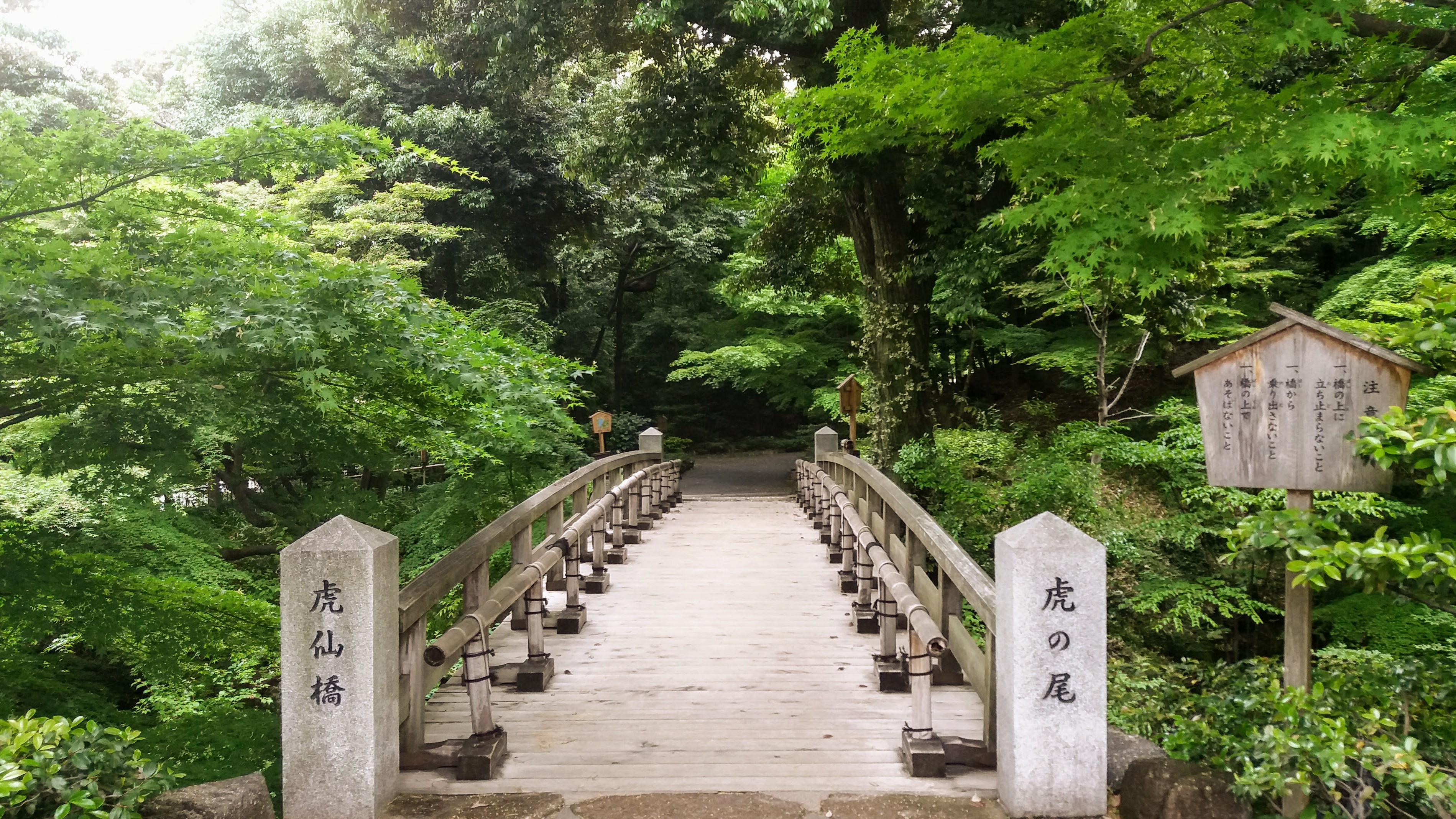
After I finished at the castle grounds I took the Me-Guru tourist bus to the next stop, Tokugawa Gardens. The Me-Guru stop is on the opposite side of Castle from where I came in, but the ladies at the ticket office were well familiar with the bus I was looking for and gave me directions. If you do take the Me Guru TO Nagoya Castle, just be aware it will pass you through a little “village” with food and shops. I am not sure if the golden ice cream is in that one as well, but you can get your hand stamped at any gate should you want to exit and return later on the same day.

I finally found the Me Guru stop, but the first golden bus to pull up was going to the wrong place! I thought like most hop-on-hop-off buses it would be a single circular route, but I was mistaken. Be sure you ask the driver if he’s going to your stop when you get on (no need for elaborate Japanese, they mostly know the stop names). In my case, the driver advised me to hop back off and let me know about what time the bus I actually wanted would arrive. Very kind and helpful.

I ended up waiting for about 30 minutes. It probably would have taken about the same amount of time to walk over to a subway/ regular bus station and go from there… maybe? But I didn’t have WiFi to check any alternate route and it honestly felt nice to just sit still for a while after walking the palace grounds all morning. If I’d checked the Me Guru routes and schedules better, I could easily have spent that time in the little village of shops I passed between the castle and the bus stop, so that’s on me.

For more info on how to use the Me Guru, see my post about Nagoya Castle.

20180508_151313The golden bus drops you off right at the gates to the gardens, and I was able to show my combo ticket to get in with no trouble. The gardens start out with a main square that houses the entrance gate and the museum (which I did not go in that day). There is a large lake to walk around and feed koi fish in. The koi are ginormous. Biggest koi I have ever laid eyes on. I think there are smaller tuna. Some were close to a meter. There were also many colors, mainly the gold color and the calico mix of orange, black and white, but there were also ghostly solid black koi that were invisible even a few cm under the water until they broke the surface. They were like swimming shadows of fish. It was fascinating to watch.
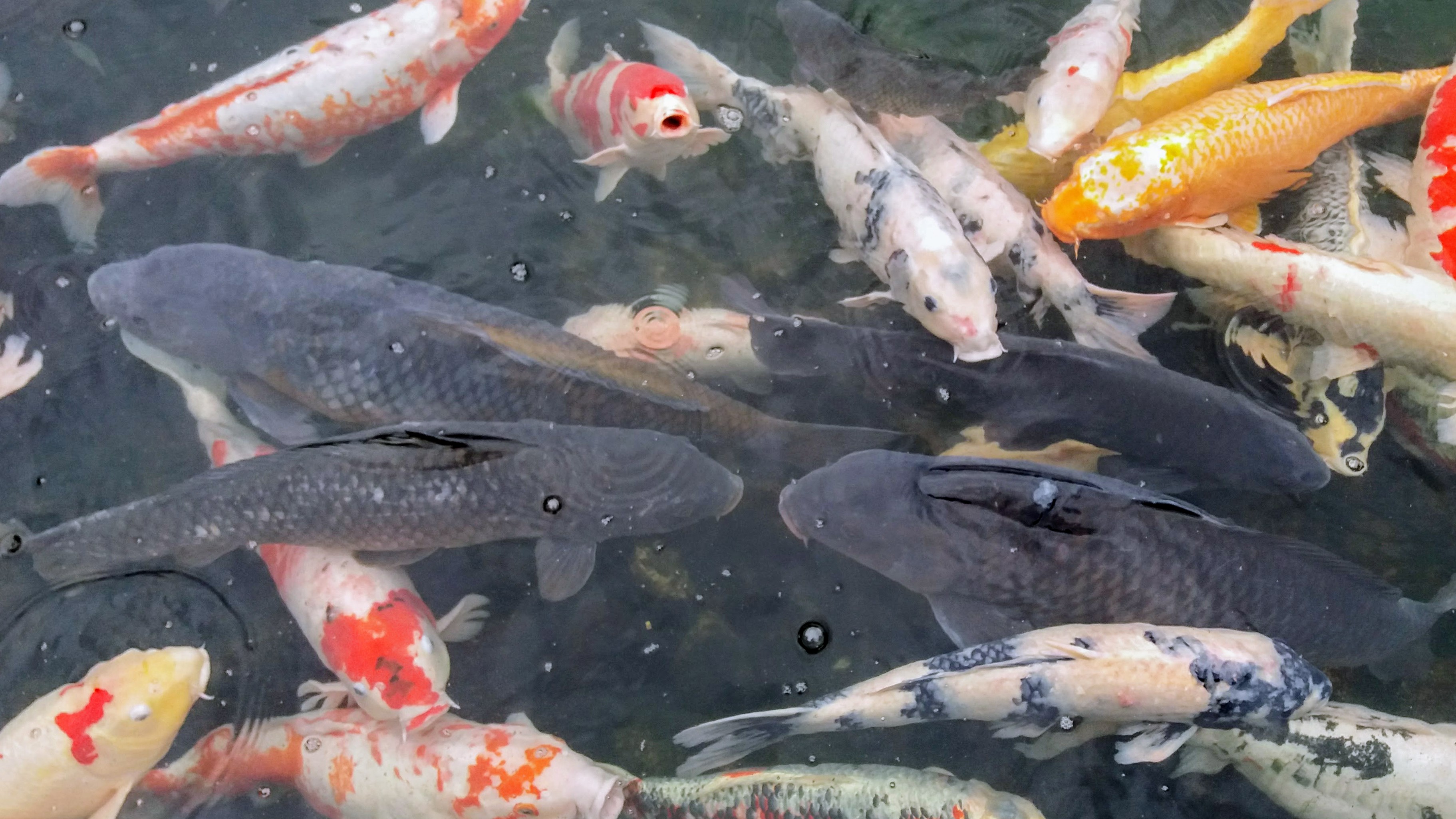
20180508_152040

Near one edge of the lake, the concrete path leads right up to the edge of the water and the fish are clearly used to associating humans with food because they come in droves as soon as any two-legs gets within sight of the water. I was able to get some very close up photos of the koi who were trying to see if my phone was edible. Good thing they don’t have teeth!

20180508_152009

I thought about circling the lake because it was quite pretty, but the rain was beginning to patter around and I had left my umbrella at the restaurant the night before, and had passed exactly zero convenience stores that day so far to buy a replacement. It was still light rain, and it was warm, but it’s hard to take sweeping vista photos of a beautiful body of water in the gray drizzle. I decided to head into the trees for shelter and to see if I could find some more picturesque views.

20180508_152354

The woods are criss-crossed with paths and stairs that lead all around what is a fairly small area. Despite it’s diminutive size, the paths all lead to new and unique viewpoints. I found a little rest area/ cottage at the top of a low hill. It looked like a great place to hide from the sun or rain. There was also a small suikinkutsu, a traditional garden ornament made in such a way that the water falls onto an upturned pot and makes a kind of chiming sound. I don’t know if this one was clogged or broken, but I could not hear the sound it is famous for making at the time I was there. You can hear a sample on the wikipedia page, though.

20180508_155900

Next, I found the river that fed both from and into the lake in a kind of faux natural fountain. There were more of the shadow koi dancing in smaller ponds around the woods. I watched butterflies flitter through the trees looking for the recently departed spring flowers. I found an inch worm that I tried desperately to photograph, but he was just moving so fast that everything is blurry. It was still fun to watch the little bug I know only from kids songs.

Although the spring flowers were gone, and the summer flowers were not yet blooming, I did find one fascinating splash of color among the green leaves. The Japanese maple trees were putting out “helicopter” seeds that were bright pink! Not autumn leaf red, no… like hyper-Barbie pink. They very tips of the green leaves took on the same pink hue. This was beyond fascinating to me, not only because I had no idea leaves could be pink, but because there’s no reason for it. Flowers evolved colored petals to attract insects (and other animals) that will help spread the pollen and fertilize more plants. The maple seeds are wind blown. The helicopter blades fly on the wind. Any kid who ever lived near any such seed bearing tree has played games watching how far the spinning seeds will go. They don’t need insects to be attracted, so why the heck are they pink?

20180508_153348Finally, because I can’t take a vacation without finding the waterfall, I found the waterfall. I am reasonably sure given the size of the park that the river and falls are man-made, but they don’t look like artificial fountains, they look like natural waterways. It’s a specialty of Japanese gardens to cultivate nature in a pleasing manner while still maintaining the natural beauty.


About that Umbrella?

Sometime while I was in the trees, the rain really picked up and when I came back into the open, it was definitely umbrella weather, and I still didn’t have one. Plus, the map indicated that my walk to the nearest public transit station was just over 1km, a distance I don’t mind walking in better weather.

20180508_155009

I decided it was time to leave the gardens. I could have spent much more time there in better weather, but even in the rain I feel like it was worth the entrance fee and the walking around time. It truly is a beautiful and relaxing place. I pulled up my map (satellite map works even without data or WiFi) and oriented myself to find the park exit nearest my destination. I double checked with the ladies at the gate on my way out that I was heading the right way. I love Google Maps, but I still like double checking.

With a 1km+ walk ahead, I was sure that I’d pass any kind of convenience store on my way between the gardens and the station where I could re-umbrella myself, but it was very residential. I know Korea has an insane number of convenience stores, but most places I’ve been in Japan have a reasonable number (at least one every couple blocks) or if they don’t have those, then they have tourist stands selling stuff which always includes umbrellas on rainy days for people who forgot theirs. The neighborhood around Tokugawa is bereft of all these.

Image result for anime umbrella sharing

artist credit: Rolfyram

Some way into my walk, I just became committed to being wet. I was on my way back to the apartment after all, so I just had to survive the subway and I could get a hot shower and a change. Then suddenly, a kind faced Japanese lady came up beside me. She spoke rather quickly, but I came to understand that she was offering to share her umbrella space with me as we walked in the same direction. As we walked along the otherwise abandoned streets, she asked me the usual foreigner questions: where are you from, what are you doing here, etc. I was struggling with my Japanese all week because it kept getting mixed up in my brain with Korean and I felt embarrassed by my total inability to string together a sentence, but she was patient and kept at it, smiling the whole time.

When she asked where I was going and I told her, she was completely shocked. But that’s so far! Yes, I know, but I’ll be ok, I’m going back to my friend’s house next. She tutted a bit more about the distance and when we came to the intersection where we would part ways she began to give me her umbrella. This was no cheap conbini umbrella, it was a nice, heavy, decorated affair. I shook my head and gestured for her to keep it while trying again to explain I would be ok. I’m not going to melt however often my students say I’m a witch. But she insisted further.

I remember learning back in my first year of Japanese classes that it is necessary to refuse 3 times to be really sure, and while I would certainly have appreciated an umbrella, I felt awkward accepting such a nice one from a stranger. So I refused again, and again she insisted, telling me her house was just across the street. And a third time, really are you sure, I will be ok, you shouldn’t do that. And a third time she offered the umbrella, so I finally decided I should accept it with grace and gratitude. I thanked her profusely and bowed. She was grinning from ear to ear, so I think somewhere she’s telling the other version of this story where she got to rescue a poor foreign visitor in her neighborhood. It was such a nice umbrella, it kept me dry all the way home, and I made the effort to get it on the plane back to Korea because even though it didn’t fit in my carry on luggage, it’s too precious a souvenir to leave behind.

Related image


That night we feasted on conbini food and managed to make some working rubrics for her essay classes. The next morning I made the long trek back to the airport and my home in Korea. Because she and I both live a bit far from our airports, it’s still about 6 hours of total transit time from my house to hers. Too long for a regular weekend, but I hope for another long one where I can go back and see some of the things I missed or at least see the best ones in better weather.

Less than a week till I’m wheels up again. It’s getting down to the wire trying to finish my end of semester work at the University and get my trip planned out enough to be sure I can get tickets to everything I really want, and have back up plans for when I can’t. I hope you enjoyed Nagoya. Thanks for reading!

Hello Bohol: Firsts and Lasts

This post is a collection of tales of how I came to spend 9 days in Bohol, and of my first and last impressions of the country. I warned you that this holiday would not be presented in chronological order, and how much more out of order can you get than putting the first evening and last morning together? Read on to find out more about Korean holidays, Philippine toilets, a little about tipping culture, and a little about human kindness.


What Am I Doing Here?

gimhae-airport.jpg

Image Credit: Haps Magazine

What made me think it was a good idea to take a 9 pm flight on a Friday before a major holiday? Considering I bought the plane tickets back in early May, I don’t have a clear recognition of that decision making process, but I’m sure it had to do with some combination of maximizing vacation time and minimizing price/layover time. Regardless of why I made the decision at the time, when the day arrived and I stood outside in the dark waiting on the limousine bus to the airport at a time of the week I’m usually in my PJ’s with a glass of wine recovering from the school week, I asked myself this question.

When I arrived at Gimhae airport to find it more full of humans than I’ve ever seen it before, the line for my check in counter already stretched across the large room, and the flight itself delayed by an hour, I asked myself again. One day, we’ll invent teleporters, or I’ll finally steal a TARDIS, but until then, airports are the necessary evil I face to enjoy the world.

The Big Holiday Gets Bigger

It was Chuseok again in Korea, that wacky lunar fall holiday that moves around more than Easter, but is a bigger deal than Christmas. Last year, you may recall, I took a 5 day weekend in early September down to Jeju, the “Hawaii of Korea” because Chuseok fell on a Wednesday-Saturday, and I also had no idea it was coming until it was almost here, so no real time to plan a getaway (thanks Enjoy Korea for saving me there). This year, Chuseok is in early October, and because of magical lunar calendars, the timing for no work days was awesome. The actual holiday was Tuesday-Friday, but many businesses (including my school) decided not to bother opening on the Monday before. Plus, the Monday after was October 9th, a controversial holiday in the US (I prefer “Indigenous People’s Day” to that other dude), and Canadian Thanksgiving this year also, in Korea, it was Hangeul Day, the day we celebrate the creation of the Korean phonetic writing system that freed them from the complex Chinese writing system and enabled the country to become super-literate. To save you the arithmetic, that’s 10 straight days of not working.

Choose Your Own Adventure

I wanted at first to go back to Koh Lipe, but the island is closed this part of the year due to the weather. *sigh. I pulled up my new favorite flight searching website, as well as several old standbys to see what the cheapest fares to the most interesting places were during my window of opportunity. It turns out that even though I started looking as early as April, most Koreans had been looking since last Chuseok, and the prices were already 2-4x what they normally would be for every destination. It’s also the “rainy season” in all of SE Asia, so trying to pick someplace I wouldn’t simply drown in a monsoon was on my mind. Finally, I settled on going to the Philippines, to the island of Bohol, and the even smaller island of Panglao.

I chose this destination for a combination of 1) ticket price, 2) new country experience, 3) recommended by a friend who lives in Manila, 4) Bohol is surrounded by larger islands, so I hoped they would serve as a weather break to protect me from the worst of any ocean going storms, 5) it’s not a total tourist resort yet. But first, I had to stop over in…

Manila

My flight landed in Manila around 1am. There were huge lines for immigration, and although I had no bags to collect, it still took me a while to navigate the terminal to find customs (no one even looked at me as I breezed through, let alone checked my paperwork or bags), and then to find the only open SIM card vendor at 2am. They gave us vouchers on the flight for a free SIM and I knew that I could try to get one in the morning on my way out of Manila, but when I found a lone agent manning a tiny booth outside the taxi pick up, I joined the short line and paid up for a working data connection. My lifeblood restored, I went off in search of my ride.

I had a 9 hour layover in Manila, which became an 8 hour layover when the flight was delayed, and then 7 because I didn’t get out of the airport until 2am… you see how this is going. But at the time I booked the tickets I did not relish spending 9 hours in a mostly closed airport with unknown facilities (just as well, since the Manila airport is severely lacking in comfort and entertainment even during operating hours, and it was positively barren overnight). While searching for options to rest my feet during the break I found a little hostel right next to the airport that clearly decided to make a business of the long Manila layovers.

Jorvim Apartelle arranged an airport shuttle, a comfortable room (shared bathrooms), working AC, and a fresh breakfast before the return shuttle as part of their package deal. Maybe I could have paid less by doing it all piecemeal, but it was worth it not to have to hunt down a taxi at 2am or worry about feeding myself at 6am. It wasn’t a long nap, but I was horizontal and cool and I awoke much refreshed. Breakfast was a simple egg, fried slice of spam and scoop of rice with Nescafe on the side, but it enough to be getting on with, and the driver made sure we all got to the airport in time to go through all the security.

Oh the security. Manila is going through some weird stuff politically, which I’ll get into later, but I’m assuming that is part of the security set up at the airport. While customs had seemed wholly unconcerned with what I brought into Manila, once I was going on to another port, I had to pass through a gauntlet of x-ray machines. Simply to enter the terminal, one must pass through bag x-rays and metal detectors. I didn’t have to stand in line to check in since I already had my boarding pass, but to get to the gates, I had to pass another screening. I’m not sure what they thought we might put in our bags or pockets between the front door and the boarding gates, but there it was.

For a major international airport, the Manila airport is pokey. At first I thought it was just because I was on a domestic flight, but my wait in the international terminal on the way out was not much better. I went to get an iced coffee, only to discover that this just meant nescafe over ice… and it tasted awful. The first time it was so sweet I felt I was drinking sugar syrup, when I went back and reminded them I’d asked for no sugar, I got something that sort of tasted like a mix of coffee and chalk. It seems that the Starbucks invasion of the Philippines hasn’t reached the airport yet. It did not bode well for my coffee prospects on holiday, but I consoled myself with the idea of beach drinks instead while I discreetly tipped my cup in the bin.

Tagbilaran

When we left Manila, I stared out the plane window at the bustling city, tall buildings and concrete from one coast to the other with little spots of green here and there. When we flew in over Bohol, it seemed the opposite was true. Not a single high rise building or city-like cluster tainted the green below us. I could see the rolling dark green of mountains and the brighter green of farm land.

As we got closer, I could make out palm trees and rice fields, and the Chocolate Hills that are the most famous land feature of the island. The water we passed over was so clear and shallow I could see the outlines of the reefs from the air. I began to seriously wonder about the “city” we were supposed to land in as we passed over more and more jungle broken up with the occasional road or group of houses.

When we finally landed in Tagbilaran, the entire airport was a single building that was smaller than the hostel I’d stayed in in Manila. The runway was short and the tarmac could not have accommodated more than one plane at a time. We disembarked via stairs and walked to the terminal a few yards away while bags were unloaded onto carts. There was a small luggage carousel in the building, but to be honest, I’m not sure why. The flight was so small it seemed like it might have been easier to simply let passengers claim bags as they came off the plane rather than use the tiny moving circle inside.

20170930_103533

A Word About the Bathrooms

Because my hotel at least 30 minutes away, I stood in line for the restroom in the airport, only to discover that Philippine toilets don’t come with seats… They weren’t Asian style squatters, they just looked like Western toilets without a seat. I thought maybe it was broken, but I saw many more like this any time we were in a very Filipino place, so I’m thinking it’s normal there. Plus, the first non-Muslim country I’ve seen the hose regularly installed. Toilet culture.

I found a decent article later on about the bathroom situation in the Philippines. I think it’s gotten better in the last 9 years since the blogger wrote this, but some of it is still true. Even in Bohol, most of the places “for tourists” had toilet seats. Many had paper (although still best to throw that in the trash and not the bowl). But when I did go to a less touristy area, I was greeted with seatless bowls, flushless toilets (like the ones in Koh Lipe that had to have water poured down them), and either the Arabic style hose or the Philippine traditional tabo (bucket and ladle) for cleaning. I’m reasonably open to doing things like the locals, but I still bring my own paper when I’m touring in case of emergency.

philippines-comfort-room-cr

Image Credit: markblackard.com

Finding Food on Foot

The hotel I’d chosen was only a couple km from the most famous Alona Beach, but far enough away to be much cheaper while still being quite nice. There were animals everywhere. Goats, cows, dogs, chickens… and I could hear the roosters from my room, but they weren’t too loud inside so I didn’t think it would be a problem to sleep through them. Once I got in and had a little look around, I asked my hostess, Becca where to get some food.

Becca is the best, by the way. I seriously recommend everyone who wants to go to Panglao go to Imagine Bohol and stay with her, because she is wonderfully attentive, speaks great English, and will recommend or arrange anything you’re looking for.

20170930_113725There were no food delivery options nor any restaurants in walking distance and although it was my plan to rent a motor bike (scooter) for the week, I was waiting until my travel companion arrived on a her flight 4 hours behind me so we could handle both rentals at once. However, my breakfast had been a long time ago, and I needed something to quiet the growling tummy. As we reviewed our options, she mentioned hesitantly that there was a small convenience store just down the street where I could get some ramen. Done! She said she’d show me where it was and I expected it to be hidden or at least farther, but when we got to the gate of the hotel drive, she pointed at a sign barely down the street, less than 2 minutes walk.

I headed over, meandering my way, taking in the flowers and greenery on the side of the road as well as playing a short game of peekaboo with a shy child hiding behind a tree. A man came out from a house and began to purposfully cut small branches from a tree, but he was collecting them, not discarding them, so I assumed it was not merely pruning. I asked him what the tree was and he replied “mulungway”. “What’s that?” I asked, not yet understanding how strange a question it must have seemed to him. However, his English was not up to the task and he simply said, “for eating”. I didn’t recognize the tree and vowed to look it up when I got back to the room, but sadly I had forgotten it by then and didn’t hear it again for several days.

The convenience store folks were surprised to see me, and were endlessly helpful as I bumbled around the tiny aisles looking for lunch. I ended up with cup noodles, an egg, and an ice cream cone. As I was paying, the ladies wished me farewell, and I said, oh, you’ll probably see me again since I’m staying right down the street. This seemed to make them happy and we chatted some more before I finally left.

I had heard from other travelers how friendly the Filipino people are, but I was starting to understand that it was not actually an exaggeration. I mean, I like talking to locals everywhere I go, and usually I find kind and helpful people and have good experiences, but dang if every single school kid didn’t break into a grin and wave and say hello when I passed by. Leaving tourist spaces can be scary, but I think in Panglao is well worth it.

Leapin’ Lizzards

20171005_182724As the sun set, the lizards came out, and when I went back to the room, I was greeted on the porch by a gecko. It was maybe 6 inches long, not huge, but so unexpected I let out a little yelp, and Becca sent someone to save me. I insisted they did not need to shoo the little lizard away with a broom, but Becca said sometimes they bite. She also pointed out the tiny 1-2 inch lizards elsewhere that were totally safe. I asked if the gecko was poisonous, but it’s not, and it wasn’t even slightly aggressive, but I still kept a distance from the others I saw so as not to add gecko bite to my list of minor travel injuries.
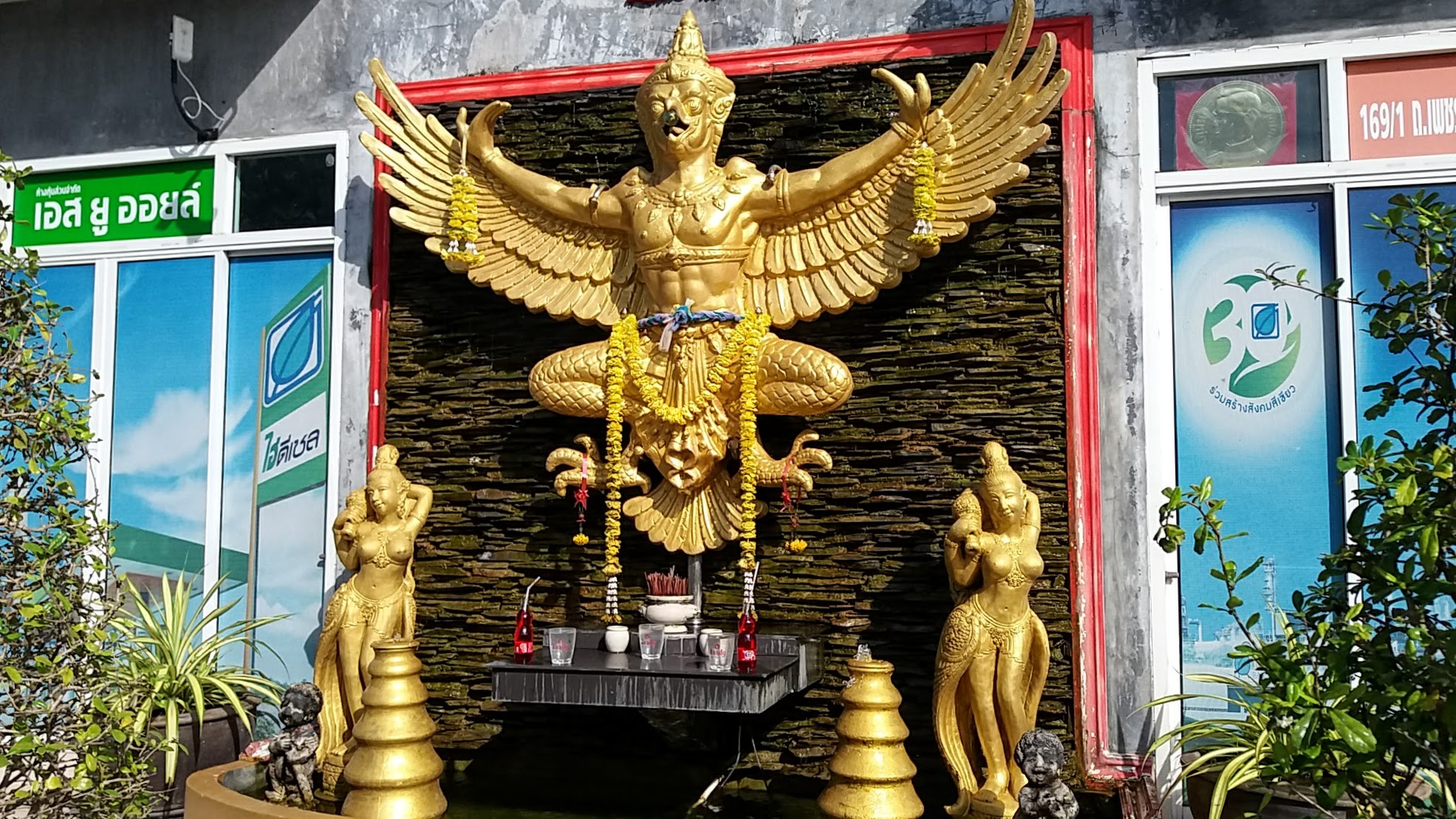
Grateful Farewell

The last morning of vacation, it was time to settle our account with Becca, the hostess with the mostest at our little apartelle. Like most places in Bohol, they only take cash, and she’d been careful to politely remind us the day before in case we needed to get to an ATM. Tipping culture in the Philippines is not yet standard, but I’d read up a bit before coming, and I’d seen many things I’d read confirmed. Fancy restaurants tended to add a 10% tip into the bill, most places didn’t expect a tip but were happy to get one. Tips are still expressions of gratitude there, and so when we felt we were treated especially well, we left a special tip, and if we felt the service was adequate, we left 10% (often included) at fancy places, and not at all in “regular” places. But when it came to the hotel we were both in agreement that Becca and her staff deserved more, and to be honest, it wasn’t a very expensive hotel to begin with, so 20% was still only about 40$. I don’t know if that seems big or small to you. I’ve never stayed in one hotel for 9 days before. I’ve left tips for housekeeping before, but usually only when I made a mess or when they did extra work for me. But Becca was so gracious, always there for us, making sure we had everything we needed, the apartment was cleaned up every day, fresh towels and sheets, she arranged our motorbike rentals (at a much better rate than other places around the island), scheduled our firefly tour, recommended beaches and restaurants and was just generally a fantastic part of the holiday.

I took our rent and her tip bundled together and brought it to her room in the morning, letting her know that the extra money was for her, and not waiting around for her to count it before heading back to finish packing up. A few minutes later she came by our room to see if we’d made a mistake. This is I think the most amazing insane part of this story. We gave her 20%, like I said about 40$US in tip. I can almost imagine someone questioning a mistake if we’d given her hundreds, but in the grand scheme of my life, 40$ (or really 20$ from 2 people) is not that much even to loose accidentally. But she was so honest that she came back to see if we gave her too much money by mistake. No, I told her, you’ve done so much to help us and make us feel welcome and cared for, this is our way to say thank you.

She teared up. Actual tears in her eyes, and she asked if she could give us hugs and told us we had been such wonderful guests. It blew my mind a little bit that such simple things as appreciating her with words and a small gift meant so much. This was obviously not an everyday occurrence in her life at the hotel and it struck me not for the first time how the people here are treated simply because of the reputation of their country as a source of cheap labor and maids.

I hope in some small way that sharing my experiences of Bohol and it’s people can help paint the Filipino people as a caring, friendly, generous and worthwhile group of people who deserve the same respect and courtesy as all of us no matter what their job is. A little kindness goes a long way here, so spread it around.

20170930_113737


The weather in Busan is decidedly cold these days, and the mountain outside my window has turned from green to russet as the trees change for autumn. I’m still pressing though a monumental amount of healthcare. It turns out that suddenly having access to good and affordable care means you actually go. I’m totally fine, I’m just a dental and medical anomaly and require more specialists than the average bear. Despite this drain on my time and energy, I try to stay grateful that I’m doing this here and not in some country with totally inadequate health insurance plans. Hopefully by January I’ll be able to do some kind of adventuring again. Stay tuned for more tales from Bohol as I get my first (and only) motorcycle lesson, and the wonderful freedom and unique experiences that came with this new mode of transportation in our next installment: My Own Two Wheels. Thanks for reading! ❤

Malay Peninsula, Post Script: Airports, Visas & Life Lessons

Although the adventure in the Malay Peninsula was finished, I had one more obstacle to overcome before I could return home. Vietnam. In this tragic comedy of errors, I learned about the only airport in the world that doesn’t have a fly through policy, and I managed to check one more item off my bucket list. Never underestimate the stopping power of Communist bureaucracy or the healing power of pho. Don’t want to read about airports? Check out the end for some heartwarming life lessons about challenge and gratitude.


The Airports

Normally, I would not write about an airport, but it seemed that Thailand just could not let me go without a fight. Surat Thani was no trouble. A giant double decker plush AC bus (the kind I wish I’d been in on every other occasion in Thailand) pulled up to the hotel at 11am to whisk me off to the airport for a small fee. The airport was miniscule, but the staff were helpful. Nothing was labeled, but it was small enough that didn’t matter. Instead of posting about delays, they just told us.

I met a fun person in the airport, because I magnetize them to me. After our introductions, she gave me one of the nicest compliments I’ve ever gotten: “You’re way more interesting than looking at my phone!” So we pocketed our devices and talked until the late plane arrived to take us to Bangkok. And so it was, in this pleasant lackadaisical mood that I arrived in Bangkok with a several hour layover and plans to do some last minute shopping and get a nice meal.

I wandered out of domestic and over to the international terminal with only a mild case of being lost twice, and finally found my check in counter amid the totally not at all labeled rows of counters by the simple expedient of going up to a person and asking. However, here’s where the regular international airport challenges start to level up. While going through the check in process, I was informed that I cannot be issued my boarding pass without a visa. I don’t need a visa, I tell her, I have a residence card, showing my Korean ID. No, she says, for Vietnam.

You Need A Visa to Get In

Now, my flight, which I booked on the amazing and cheap website kiwi.com, took me from Surat Thani, through Bangkok, through Hanoi, and finally to Busan (where I live). In normal reality, catching a connecting flight in a country does not require a visa unless  you plan to leave the airport for some layover sightseeing. This is standard operating procedure around the world. China (which up until recently had a monstrously complicated tourist visa application with huge fees and wait times) has lots of people fly through without visas. Even Saudi Arabia which does not issue tourist visas will let people catch connecting flights in Jeddah on their way to some more touristy section of the Gulf. You don’t need visas to catch connecting flights. It’s like an immutable law of reality.

“I’m not going to Vietnam, I’m just catching a connecting flight.”, I say. “I don’t need a visa because I’m not leaving the airport.”

“No,” she says. “You need a visa. I can’t give you a boarding pass without a visa.”

Call Your Embassy

I search the internet frantically looking for supporting documentation, and while it is true that every single web search I get back tells me this immutable fact over and over, they do not care. They will not issue me a boarding pass without a visa. I’m having nightmare flashes of being stranded in Thailand, of missing work, of non-refundable tickets I’ve paid for… Unable to find anything on the US State Department travel site OR the Vietnam Embassy sight about airport transit, I finally called the US Embassy to see if they could confirm or deny this situation and maybe point me at some official document that supported my not needing a visa. The on call staffer at the Embassy agreed, this is bizarre, and he’s never heard of an airport where you need a visa to change planes, but they are also unable to find any official statements anywhere online. Then I run out of minutes and the call is disconnected.

I try to talk to the airline to see if I can get the flight changed, but that’s going to take a day or more because there are no flights that day with room. The Vietnam Embassy website has an online visa application, but it takes 5 days. Expidited forms won’t load on my phone, I need a real computer. I’m losing my mind. The check in counter staff show me a website that’s a private business (vietnam e-visa) who I can pay to get my visa quickly, but my flight is in less than 2 hours now. 30 minutes, they promise. The fee for the visa was only 19$ US, BUT, since I needed it in 30 minutes, and it was a Sunday, AND it was Tet (the very famous Vietnamese holiday that is in literally every Vietnam war movie), it was going to cost me an extra 190$ in processing fees. Before plunking down 200$ on a visa, I wanted to vet the website, and found that there are apparently a large number of fraudulent websites that advertise Vietnamese visas and don’t deliver. Finally, I found a traveler who had used the site I was on and had reported success, but advised us all to spring for the “airport fast check in” option for an extra 25$. Her story of waiting around the airport for hours to get approval was convincing, and so it came to pass that I paid 234 American dollars to buy a visa into Vietnam for the privilege of changing planes in the Hanoi airport also known as “the Story of the Most Expensive Bowl of Pho Ever”.

Getting to Hanoi

I didn’t have time to eat or shop. I managed to buy an overpriced sandwich from a cafe by the gate before boarding because I hadn’t eaten since breakfast at my hotel and it was now after 6pm. Between the delayed flight in Surat Thani and the visa ordeal, I had used up all my layover hours. I got several emails from the visa service with instructions, very dire and specific instructions, as well as a pdf of a letter of visa application (not even a real visa yet).

When I got to Hanoi, the staff from the visa company was thankfully waiting for me with a sign. She ushered me into a waiting area and took my letter and passport away for processing. I was expecting to have to take some passport sized photos there for the paperwork, but I guess somehow they copied the photo from my actual passport instead and used that. Less than 15 minutes later she came back and handed me my passport with Vietnamese visa inside, while other people were still standing in line at the visa counter. At least that “fast check in” option paid off.

From there, I was able to go through immigration. For reasons unknown to any but the arcane inner circle of the Vietnamese bureaucracy, there is not an international waiting area. I’m told that if you’re travelling through Hanoi with both flights on the same airline, that it is possible to bypass the visa and customs rigamarole, but since many ticket sellers and even airlines use partners to get you from one leg of your journey to the next, buying your ticket from one place, doesn’t guarantee all your flights are on the same airline.

The Most Expensive Bowl of Pho

I had to go through customs and immigration. There was no need for me to leave the airport, mind you, since once through immigration, I could simply turn around and re-enter the security screening and boarding areas. But, since I’d spent so much on a visa, I did step outside and breathe the external Vietnamese air, just to say I did. I also fulfilled one of my long time bucket list items, to eat pho in Vietnam.

If you don’t know pho, you are missing out. This magical Vietnamese noodle soup took Seattle by storm more than a decade ago and it’s a staple cheap and delicious food for all occasions. Sick? Eat pho. Celebrating? Eat pho. Too busy to cook? Eat pho. Having a first date? Than Brothers it is. I even had my grad school graduation dinner there. You can get a fairly large bowl of it for 5-6$ which is dirt cheap when you realize that it’s actually good homemade food and not the McProcessed value menu. I love pho. I idolize pho. And typically, when people ask me what food I miss from America the most, I answer pho, because even though it’s not “American” that’s often the only country I can find it in with regularity. So of course, being in Asia is a big opportunity to have pho in the land of it’s origin. Bucket list, check.

The moral of the story is, if you have a connecting flight in Vietnam, call the airlines, ask, and even if they say you don’t need a visa, it might be worth it to drop the 20$ a week before your flight and get that paperwork rolling. Otherwise you could end up with a very expensive bowl of pho, too.

The Lesson of the Malay Adventure

This vacation was very different from what I have experienced recently and from what I expected. In many ways, I am grateful that my boundaries were pushed and my comfort zone was challenged. It’s easy to fall into a “new normal” and for me that meant more travel, more maps and trekking and becoming comfortable with navigating new cities, new modes of transportation and multiple languages. Which used to be challenging and exciting and even a little scary, but has become normal. It never ceases to amaze me what the human mind can adapt to.

I learned some very practical lessons about the balance between knowing your limits and being confined by them. I spent so long learning how to say “yes, I can do that” that I kind of forgot how or when to say, “no, that’s too much”. Plus, those goalposts move throughout our lives. As a teenager, staying up for 3 days and sleeping in a car on a road trip was fine. And no matter how many people told me that my body would not let me do those things as I got older, it’s hard to accept being “older”. The list of things I have to do with modification is getting longer, and my ability to function on less than 8 solid hours of sleep is greatly diminished.

Part of me wishes for every holiday to be as perfect as the New Zealand holiday, but there are two reasons I am glad they aren’t. One, I don’t want perfect to ever be my “new normal”. I would stop appreciating it if there were nothing to contrast it with. I would no longer feel the same amount of joy and gratitude for amazing things if they were regular. And two, I think we need adversity to know ourselves and to grow. I never want to stop growing and learning, so I need obstacles and challenges to help me achieve that. I don’t want to live in a constant state of challenge, I like it when my day to day life is quiet and enjoyable, but I value being pushed beyond my “normal”. I value expanding my comfort zone. I even value learning there’s a place my comfort zone is never going be.

Finally, every time we overcome, we become more capable. With each obstacle conquered, we look at lesser challenges more serenely. In 2012, I climbed a huge mountain in China. We were fat, out of shape Americans, and even though we took the bus and gondola as high up as we could, we still climbed stairs for 7.5 hours to get to the top. I’m sure fit people do it faster, but it wasn’t a race or even a comparison. It was about us, in our state at that time conquering something that many people (probably even ourselves) would have considered too hard for us. We made it to the top, we slept up there overnight and we watched the sunrise because that’s what you do on this particular mountain. And for years afterward, when one of us was struggling with something in life, we said, ‘remember the mountain’.  

Something was harder than I thought, but I did it anyway. That’s what builds confidence, what encourages healthy risk taking, and ultimately those lead to a more interesting and more fulfilling life. So keep it up world. Bring me your stunning beaches and awe-inspiring caves. Bring me your mind-mindbogglingly beautiful flowers and butterflies. Bring me your humans full of welcoming and their delicious food. But don’t let me leave behind your scungy alleyways, or your hotel invading rats, or your foot scarring coral reefs. I’ll take the whole package deal and know that each new wonder or obstacle lives with me forever, shaping the person I will be tomorrow.

Malay Peninsula 14: Kayaking at Bor Thor

Thailand is best described as hours of cramped, hot, sweaty transportation interspersed with mind blowingly beautiful scenery and majestically unique experiences. Is it worth it? Well, I might do some things differently if I ever go back, but I can’t deny that the positive experiences will stay with me far into the future. Kayaking at Bor Thor was one of those things that I didn’t even know I was missing until I was there, and now I can’t imagine passing up the opportunity to experience it. Even if it did come with some discomfort.


Day 11 of the trip was a half day journey to some sea caves at Bor Thor with kayaking.

*The kayaking was a half day because I hoped to be doing an elephant experience on day 12 near Khao Sok. The internet revealed that getting to Khao Sok from Krabi was very challenging, but getting there from Surat Thani was easy. I toyed with the idea of staying that night in Khao Sok, but I was told the only transport from Krabi to Khao Sok left at 10am, which would leave me no time to do anything in Krabi at all. But the last bus from Krabi to Surat Thani left at 430pm and was plenty of time to do a half day kayaking tour, then get to Surat Thani for the night and take one of the many bus options to Khao Sok the next morning.  It sounds so good, doesn’t it? Lies. Anyway, kayaking.

Thai Transportation

I signed up for a tour that included hotel pick up and drop off. My pick up time was a 15 minute window and 30 minutes later the driver finally showed up. We drove for a while and then pulled over on the side of the highway. I was ushered from the truck that had picked me up into a minivan with a different driver. The minivan sat there on the side of the road waiting for more passengers, I was told. That minivan never went anywhere. Eventually, another minivan pulled up across the highway and I was instructed to cross several lanes of highway traffic to join them.

That minivan had a few more tourists in it, making me feel less like I was about to join the white slave trade, and we drove a bit further until we paused at a rest stop where we could use the restroom, get a snack and hang out with this giant bird shrine. I’m not sure why we stopped there or stayed so long, because the end of our journey was only a few more minutes down the road and also had restrooms and snacks for sale. Nonetheless, between the three vehicles and multiple stop and waits, it had taken over 2.5 hours to get from my hotel to the pier.

Garuda

20170127_092233

I got curious about this giant bird man, so after my holiday was over, I did some research and discovered that he is Garuda, the mount of Vishnu. Vishnu is a very important god in the Hindu pantheon and plays a prominent role in Buddhist mythology as well. (what? Buddhists aren’t atheists? Yeah, you’ve been lied to your whole life, but I can’t get into that now). I could do an entire dissertation on this creature, but I’m going to try to sum it up and focus on Thai Buddhism (because that’s where this statue is from).

The Garuda are a species of deva (we might call them demi-gods or supernatural in the west). They are giant part man-part bird creatures and are the sworn enemies of the Naga (half man half snake creatures). They have their own culture, cities, civilizations, etc. Not totally unlike how Fair Folk in Ireland have their own cities, courts, and markets. In Thailand, the Garuda have been associated with the royal family on and off since the 14th century, but it wasn’t until 1910 that this image of Garuda was adopted as the official emblem of Thailand.

In it’s role as national emblem, the Garuda is the vehicle (mount, ride, etc) of the King of Thailand. The kings are seen as either the earthly descendants of Rama (an incarnation of the god Vishnu) or the earthly incarnation of Narayana (a complicated super-diety that may either BE the supreme being, incarnating himself into the other gods as needed, or may have merely given birth to Brahma, the creator god) Either way it explains why the Thai people revere their King so much! Although both Vishnu and Narayana are originally found in Hindu stories, they are present in Buddhist mythology, and the Thai king is actually required by law to be a Theravadan Buddhist.

Everything I’ve read indicates these emblems are highly regulated. They’re used in all official government documents and buildings, and only allowed to be displayed on private property by royal appointment. In the 90’s it was punishable by jail time to use the emblem without permission and it’s unclear to me if the PM turned that around in his most recent (2001) edict about the treatment of Garuda, but it’s definitely an important and revered symbol in Thailand.

10 More Minutes

20170127_095951
I mentioned this was a half day event? The schedule for the tour I bought was 8am pick up to 2pm drop off. Yet at almost 11am, we were still standing on the dock, waiting for who knows what for just “10 more minutes”, the catchphrase of all Thai tour guides and drivers when something is delayed. It is not a measurement of time that correlates at all to the clock, but rather a phrase of amelioration of putting off confrontation when they are asked what’s going on.

Finally, after what seemed like an aeon of waiting, they were ready to get us into the boats. The boats were 2 person affairs, and not all of us were in pairs, so groups had to be split and partners assigned. A group of three South Asians (probably Pakistani, but could be Indian?), two women and one man, caused yet more delay. Neither woman wanted to row herself (why are they kayaking? I don’t know), each wanted a paid guide to ride with them and do the rowing. I am not kidding. So, a second guide had to be located.

I feel like even if this was the only thing I planned to do all day, I would be frustrated by the time spent just standing around. I have managed to let go of a lot of my need to keep to a schedule and just roll with the punches, especially while on holiday, but I couldn’t help being anxious about the time since my plans rested on getting to the bus station in town in time to catch the last bus. When I thought I’d be at my hotel by 2pm, getting to a 430pm bus deadline seemed easy. Lies.

Actually Kayaking

20170127_114638
Despite all the crazy transportation and infinite time vortex of waiting, the kayaking itself was amazing. I wish I’d had time to do the second half of the day and enjoy more of it. I’d never kayaked before this, just some rafting which is quite different. It didn’t take too long to learn how to use the paddle, but a bit longer for my partner and I to get a rhythm. The river we were on was surrounded by mangrove forests and tall limestone … I don’t even know what to call them, mountains or cliffs or just big rocks, very unique to SE Asia and a stunning backdrop. The day was sunny sunny sunny and while I had put on sunscreen and wore my Korean ajuma hat, I still felt the extra heat of the blazing midday sun on my skin. Each time my paddle splashed or dripped river water over my legs it was a welcome relief.
20170127_105643
The primary goal of the tour was the sea caves. 
We paddled down the river, enjoying the easy going with the current, admiring the view and trying to take pictures without getting our phones wet.  We turned off the main channel of the river into a smaller side stream in the mangroves. A short paddle through the trees took us to the entrance of our first cave. I haven’t gotten tired of caves yet, any more than I could get tired of forests or mountains. Nature is new and unique each time you look at it, and this day was no exception.

20170127_105908Approaching the cave via the water was a special experience all by itself, but gliding through the dark tunnel was wondrously beautiful. First watching the boat ahead of me disappear into the gloom and then watching the silhouettes against the bright background of the other side. We emerged into a closed canyon, the high walls of the limestone mountain surrounding us with lush jungle growth. The guide told us that depending on the tide, sometimes the water was so high, they had to lay down flat and pull themselves through the cave by the ceiling, and other times so low they could not bring boats in at all. The little body of water was like an island in reverse, not land rising from the sea, but a patch of the sea sunken deep within the land around it. I could understand why people would go through the difficulty involved in getting to these places as the price for experiencing the splendor.

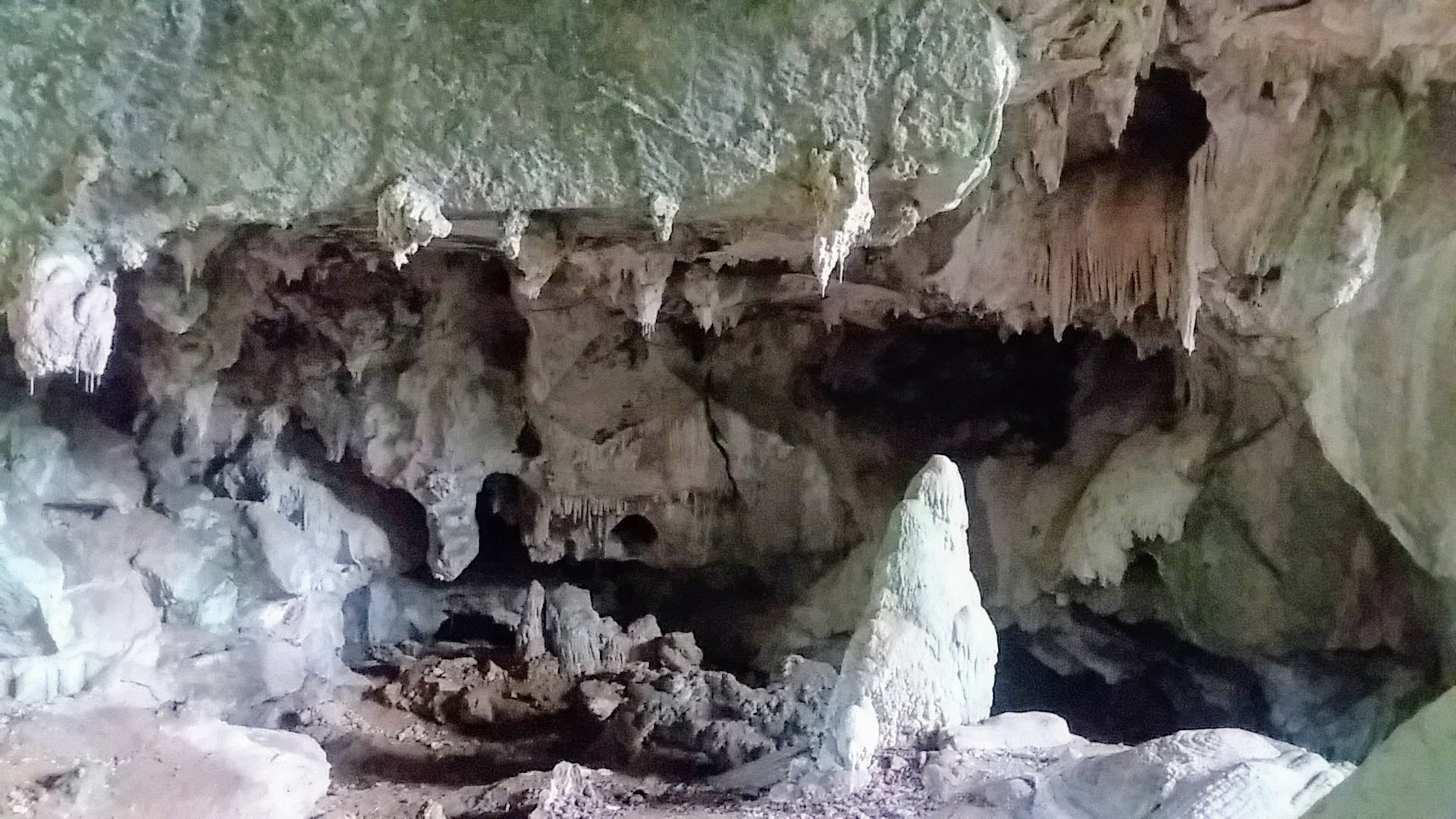
Magical Mangroves & Mermaid Cave

20170127_113417
We paddled back out the way we came, the only passage into the secluded cove, and moved further on down the river. Before too long, our guide advised us to make another turn into the mangroves. Our goal this time was not a cave, but the mangroves themselves. Although another tour focused on the jungle, the guides said there were only a few times of day when the little route we were on was passable due to the tides, so they wanted to share it with us, even though it wasn’t a cave. It was much harder to navigate in the tangled roots and we often got hung up on trees and had to back up and try again. My pictures, I’m afraid, do not do the experience justice. But once again, I felt like I was on the inside of a nature documentary. We saw lots of little crabs hanging out in the trees as well as a few large sea snails. The water was so tranquil and we were shaded by the trees. There weren’t as many insects as I was expecting, either. The whole area was quite comfortable.
20170127_115624
Too soon we emerged back out onto the river and headed toward our next cave. The tunnel was longer than the first one, and far more filled with delicate and detailed cave formations. We were told it was called “mermaid cave” because of a pillar formation that looked particularly like a mermaid. The cave itself was the main attraction at this stop and we paddled through to the other side just long enough to turn around and get an awesome view coming back the other way. There are no artificial lights in these caves, because the water level changes so much. All of our admiration had to be done by sunlight, and suddenly I was more grateful for the bright day.

Big Headed Ghost

20170127_122408
The third and final cave was Tham Pi Hua To (big skull ghost), famous for it’s ancient cave paintings. We had to actually disembark from our kayaks and walk to the cave mouth. This presented an interesting challenge since my damaged foot (exposed to sunlight and brackish mangrove water) was not doing so well with shoes, and my shoes themselves were wet and slippery. However, I was excited to see the cave paintings in person, so I put on the shoes and walked up the seashell fossil encrusted pathway to the cave mouth. I tried my best to get around with the shoes, but once we were past the seashells, the ground was slick with mud and to be brutally honest, bat droppings. I nearly had a nasty fall when my wet foot and wet shoe decided to part ways on a steep surface. I had no choice but to proceed barefoot into the cave.
20170127_122212
The Big Headed Ghost Cave is believed to have the highest concentration of mural wall paintings of any cave in Thailand. The paintings themselves are thought to be about 3000 years old, made by nomadic tribes of the time who used the caves for shelter and as burial grounds. I tried to find some official scientific research data on the cave, but it’s not widely published about in English. At this point, I’m taking the Thai tourism and national park service’s word for it.  Our guide used the term “gypsy”, which confused me until I realized he was just referring generally to nomadic people. (Yay, English as a second language!) He showed us some of the most famous paintings in the cave, but due to the fact that he used his flashlight hand to gesture with, I wasn’t able to get a decent photo. You can see my attempts (left) next to the much clearer picture from the official Krabi Tourism website (right).

We saw the most famous one, the big headed ghost, or maybe goat headed man, no one knows for sure. We saw some human figures, a man and a woman that were portrayed more than once around the cave. Our guide constructed a story that these were events in their lives, but we have no way to know. There is a set of hands on the ceiling which are very clear, and one of them has 6 fingers. Whether it’s an artist error or the 6 fingered man visited Thailand before killing Inigo’s father, we’ll never know. I believe there are over 100 different paintings in the caves here, but I couldn’t see them all in the gloomy cave interior.It was still interesting to see the 3000 year old human artworks in person.

We were left on our own to explore the small cave and climb out to the viewing point, through a pair of holes that looked from below like the eye sockets of a giant skull. After a decent period of poking around the cave, we were herded back to the boats to face the long upstream paddle back to the pier. By this time, my boat partner and I had finally found a good rhythm and we were able to stay at the front of the pack. I was quite surprised. I think of myself as not being big with the upper body strength, but there was a noticeable difference when we paddled together and when I took a break to snap pictures. We even raced the girls from France for the last leg of the journey. Far from feeling like dead weight, I felt like a contributing member of a team in a physical activity, which was a bit of a novelty, since I’m always feeling like the slowest one in a group. Maybe I should take up kayaking?

20170127_123024

Lunch With the Kathoeys

We unloaded back at the pier and were invited to sit down to enjoy some food. I was pleasantly surprised since my half day booking had said it included only a fruit snack, not lunch. There was a different meal for the all day folks, but the rest of us got a generous portion of shrimp fried rice and fresh fruit. The tiny pier had a large staff and a diverse one. At least two trans ladies (kathoeys) were present, and it seems employed at the shop there. One was super dolled up on the verge of queening. I noticed her putting on makeup when we arrived in the morning, and that she was still working on her hair and makeup while we were eating lunch. Another had beautiful long natural hair, which meant she’d been growing it for years, very minimal make-up, and simple everyday clothes. It was nice to see how casually accepted they were by everyone else.

*later research has shown me that the term “Kathoey” can refer to any or all of the following: feminized men, drag queens, MtF trans – regardless of how the individual genders themselves. They are and have been a prominent part of Thai culture for a long time and that has resulted in more tolerance and acceptance of their lifestyle out in the open, but there is still discrimination and as yet, no laws protecting them from it.

Moving On

After eating, I began to get a bit worried, as our guide had talked about moving on to the next location for more kayaking, but hadn’t said much about heading back into town. The clock was moving past 1pm, past 1:30, and I was becoming trepidatious about my inability to catch my bus. I fantasized briefly about spending the rest of the afternoon kayaking and just doing another night in Krabi, but I had hotel reservations in Surat Thani and the last plan of my holiday was an ethically responsible elephant visit, which I didn’t want to miss. I finally asked the guide about our schedule and let him know about my concern to catch an intercity bus that day. It seemed to help a bit because they got motivated to start heading toward the parking lot, and by 2:15 (15 minutes after I had been promised a drop off at my hotel) we were stuffed back in a minivan driving back to Krabi.


Adventure, vacation, holiday… these words are loaded with preconceptions. It seems to me by now, I might have come to know what to expect, or how handle it all, and yet the world continues to amaze me in so many ways. Natural beauty, such as what I shared on this little river tour, of course, but just the sheer variety of humanity. Growing up, I was taught to look past our differences and see our similarities. This was some well meaning philosophy meant to decrease racism, sexism, and other isms/phobias. But as an adult, I see the great diversity of the human experience and I despair at the idea that we should have to hide those to get along. I know that I could live a thousand lifetimes and not see all the wonders that the world has to offer, but I hope I can be grateful for every one that I do and that I will never let the obstacles stop me from the journey.

As always, thanks for reading, and don’t forget to like me on Facebook and Instagram to see more beautiful photos of my adventures. ❤