In October, I’d gotten into the swing of my teaching schedule, and the oppressive heat of the summer began fading into autumn coolness, affording me the chance to spend more time exploring Beijing and other nearby sights. I took some trips on my own, and others under the supervision of the school which made arrangements to take the English teachers to the Great Wall. In the original letters, I put thumbnail links of every photo, but in this re-posting, the majority of the pictures are in the Fabcebook albums. Enjoy!
Oct 4, 2007 at 8:04pm
Another round of pictures.
The first place we went was the Lama Temple, the largest Buddhist Temple in Beijing, and home of the world’s largest standing wooden Buddha statue. Last time I was here (2005), I was running low on memory space, so I only got about 6 pics, but yesterday I got tons, so hopefully you’ll enjoy.
First we have the main gate, the guardian lions and a couple of monks grabbing a snack.
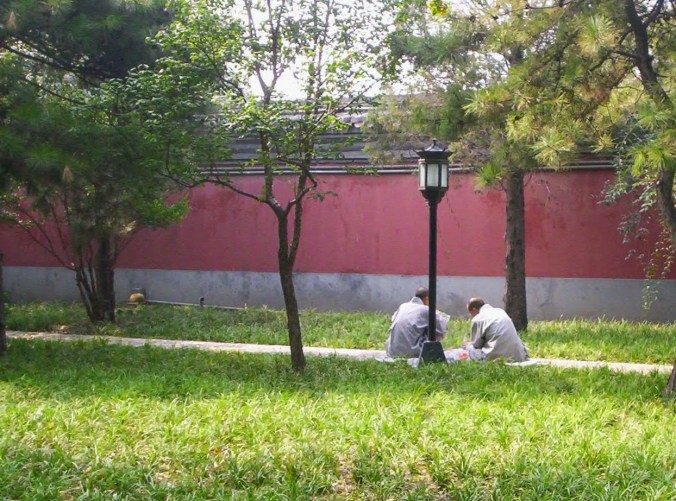
Next there is a secondary gate, a detailed map and history of the temple (you can actually read it if you zoom in), a nice bell, me next to another lion and one of the many buildings around, this one houses the statue that follows.
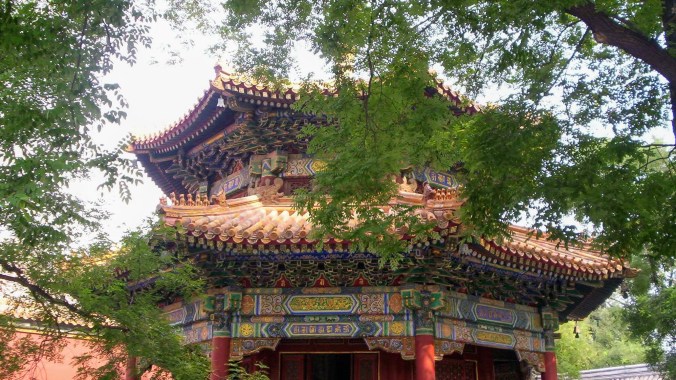
And now we see the Turtle and carvings that are in building just above.

Next is me with a prayer wheel, a kite trapped in a tree, a little girl throwing a coin for luck, a temple replica, and me with some more statuary.

Some nice trees, roof spirits, and a giant lotus statue thingy.

More lovely architecture, and in the last two you can see part of the city in the background. It amuses me to see the incongruity.

This next line is one you need to read and look at to appreciate. These six statues are large, they go in order from smallest up, and each one is further into the temple complex. The first is about 5 or 6 feet high. You can see the roof in the next two, and its a vaulted ceiling, so these are 10-12 feet or so. The fourth is over 15 feet high, the fifth is at least 2 stories high, and the last, being the largest wooden buddha in the world stands about 4 stories high. There’s not much in each photo to present scale, the flowers and other decorations are to scale with the statues so they are ginourmous too.


And some parting shots on our way out.

After a hour or so of wandering around the temple, we headed over to the lake district, flopped on the first soft seat I’ve been on since I got here at Club Obiwan and enjoyed some tasty fresh fruit smoothies. After the rest, we headed off for a walk around the lake, punctuated by the occasional pit stop for lunch and a happy hour mojito.
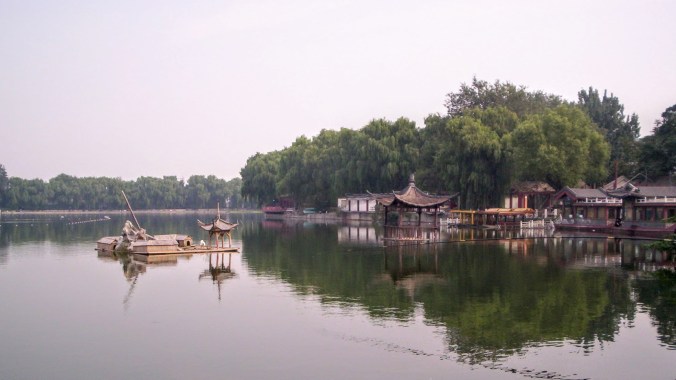
On our way back to the bus station we spotted what we think was a gate house left over from when the old city wall was there.

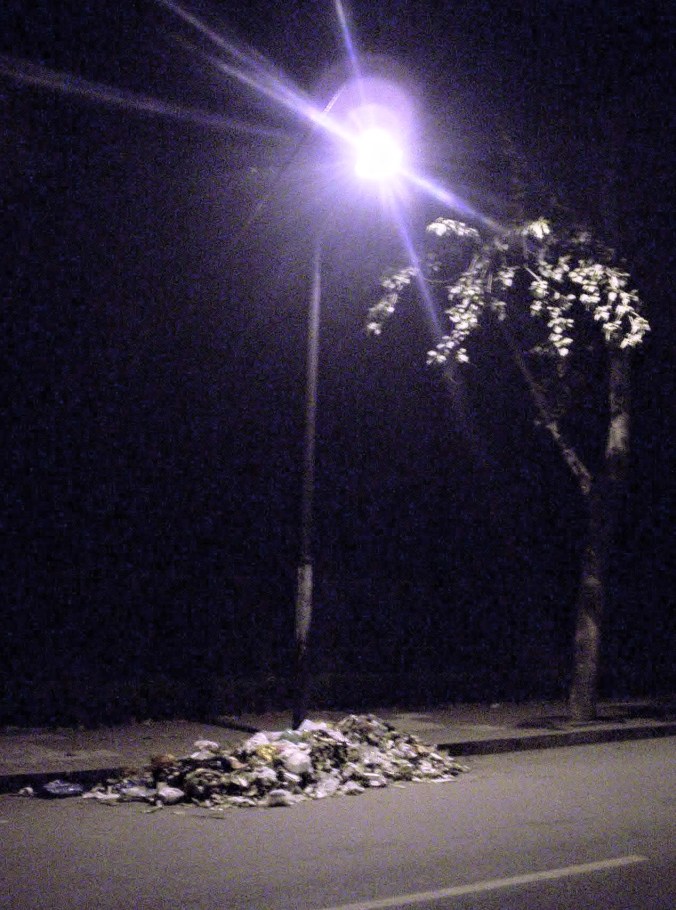
And after a long day in the city, we took a bus with standing room only back to our home in Yanjiao to be greeted by the evening piles of garbage left behind by passing citizens and collected by duly employed street sweepers.
*(See the full day’s photos in the Facebook album)
Oct 15, 2007 at 10:20pm
The school took us on a little field trip to Huangyaguan, which is a section of the Great Wall near Tianjin. It was initially built in Northern Qi Dynasty (550-577 C.E.) and later renovated and lengthened in Sui Dynasty (581-618 C.E.) and again during the Ming Dynasty (1368-1644C.E.) The Great Wall is not actually one continous wall, its built in several sections, and over time those sections have been repaired or lost so its seriously broken up nowadays, this section is about 26 miles long here.
It is regarded as an ‘Impregnable Pass’ in Tianjin. This section is the longest restored section of the Great Wall with a length of about 3337 yards. The city at the base also contains some gardens and a museum which will be in the second post.
We went up the shorter of the two sides, and it was still quite a climb. You can see the other side in the background of many pictures, and I urge you to realize that it went all the way over the mountain and down the other side.
Anywho. We left at 9am, preparing for the 2 hr drive, and it turned out to be three, since we were stalled by a police blockade which was stopping overloaded trucks. The traffic backed up to the point that there were 5 lanes of driving on a two lane road. We passed thru many very rural spots which I almost regret not taking pictures of, but its a little scary.
When we arrived at the wall, we had lunch before beginning out climb, fairly plain local food, including what appeared to be a whole chicken chopped up in a bowl, anyway I found feet.
We started our climb in the rain, and the school cordinators rented umbrellas for us.

The beginning of the climb was easy enough, mild stairs and long flats. A nice view of the gardens below, one of which you see here, other’s you’ll see in the second post. We made it to the first watchtower with little trouble.

Leaving the watchtower, the climb started getting more steep. There was a pretty harsh incline and some pretty scary stairs. And of course, endless gift stands. Some of the views are looking forward, some are looking back to give perspective on how far we’ve come and how far we have still to go. I’m pretty sure you still can’t see our final destination in these pics.

I continue to impress upon you the steepness of these stairs, we’re going up a mountain here, and the Chinese take a very direct route to the top of a mountain, straight up. In this series, we made it to the second tower, or really I should say I made it, as I was rather slower than the rest of the group and paused often to take pictures.
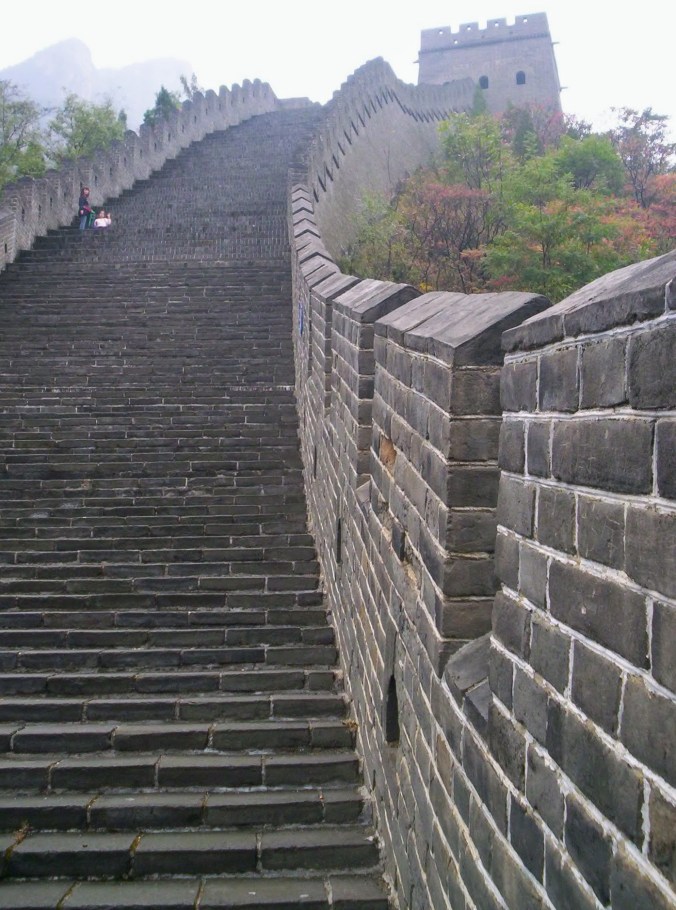
On the way to the last tower of this section, the construction of the wall changes a bit, becoming much less even and alot more multicolored. The sun finally started coming out and I captured a fantastic example of a tourist leaving thier mark on the wall… I felt only slightly mollified that they were Spanish.

There was more up, but it got considerably rockier and there were no more towers, so most of the group settled for stopping here. I went up a bit more for some more photo ops from the top.
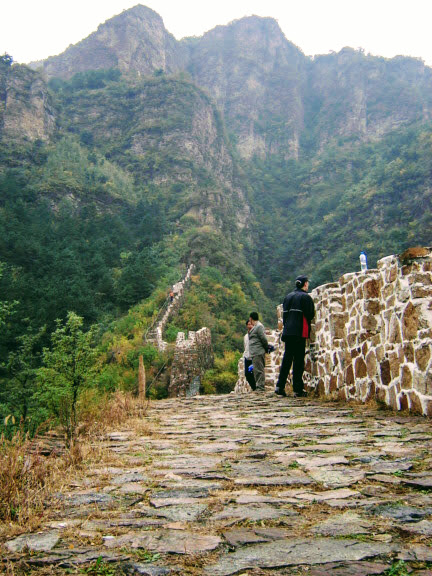
We then began our descent, and since the sun came out, I took a bunch more pictures, I tried not to include duplicates.
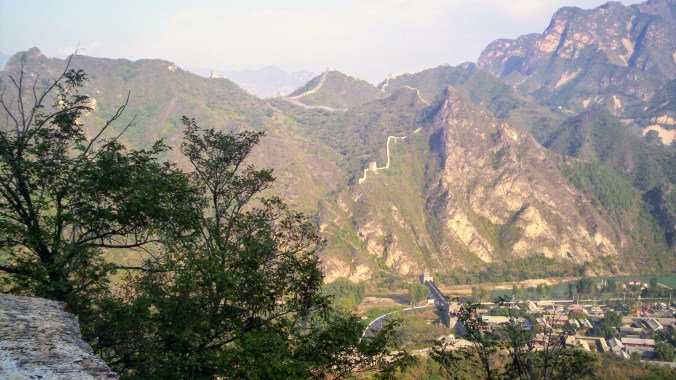
I hope you enjoyed, and again, I encourage you to take the time to look at the full size pics by clicking on them, as there are sooo many lovely details that can’t be seen in the thumbnails.
Coming soon: Great Wall Part II, in which there will be pictures and descriptions of the unique gardens at the base.
Oct 16, 2007 at 2:47pm
Guancheng (Pass City) is the center of the Huangyaguan section. Guancheng was itself a perfect defensive project and it is also where Bagua Village (The Eight Diagrams Village) is situated. Bagua Village was built in the Ming Dynasty according to the Eight Diagrams created by Fuxi (an ancient tribal leader).
In the reparation during the 1980s, more tourist sites were built at the foot of the Huangyaguan Great Wall in Bagua Village, including Huangyaguan Great Wall Museum and the Stele Forest. Huangyaguan Great Wall Museum is the first Great Wall museum in China.
We went thru the maze at Bagua, the Museum, as well as the stele garden (yes that’s how its spelled), saw a lovely miniature wall garden and the longevity garden.
The first pictures are of the bagua maze, there’s a lovely yinyang on the floor at the center, and later on in the museum section, you can see a model of it as well.

Next is the Stele Garden and the miniature Wall. I didn’t take pictures of the poetry on the walls, since none of you can read it, I figured we’d all rather see the wall.

Next we have the museum itself, not terribly impressive, but i’ve noticed that Chinese museums tend to lack the flair we’re used to in the states. I mostly took landscape photos, since the displays were not to interesting, but I did take a couple of the model of the city so you can see the basic layout. And a neat door knocker.
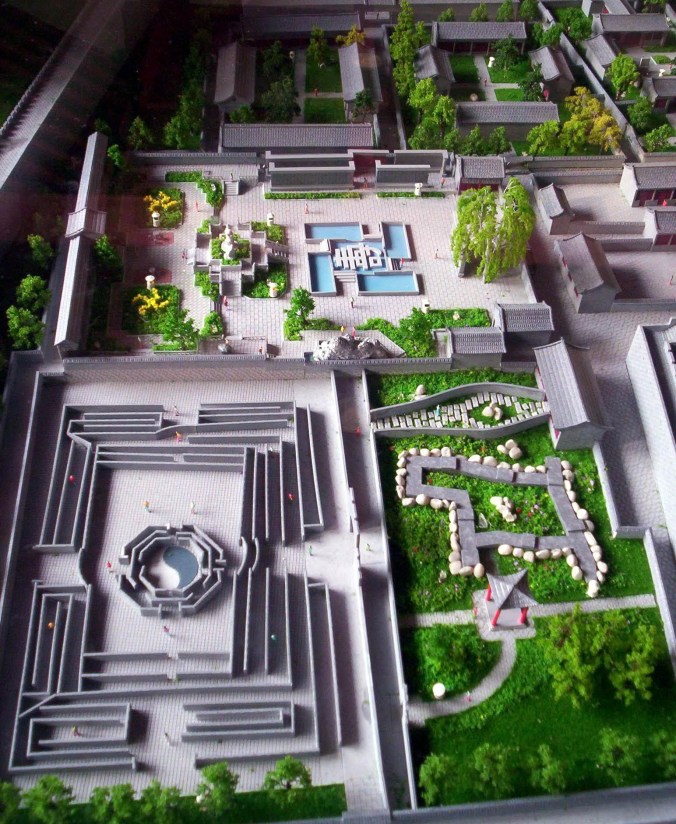 Lastly is the Longevity Garden, which you can see in the second layout model above. It has a nice waterfall, and a reflecting pool in the shape of what may appear to be a swastika, but it really a sacred symbol of Buddhism. And while I’ve seen this figure in a statue before, I’m still not sure who it is, other than it seems to be someone important in Buddhist history.

Hope you enjoyed! I think my next major trip will be to the home village of one of my students this coming weekend, which should be a real adventure.
The Lama Temple was a revisit for me, but the Wall at Huangyaguan was a new experience. In both cases, the art, architecture and history of China were still new to me. This is not to say that I do not still enjoy them, but I find that once I’ve gotten past the big tourist bucket list, there is so much left to see. When I compare this to my trip in 2012, or even my explorations more recently, I can see the seeds of my tourism habit forming in this place: a blend of bucket list and local flavor. A good reminder as I head off to explore a new land for the Chuseok holiday this year.


 Gallivantrix