It’s no secret that my tenure in Senegal has been a challenge. I got back from Zanzibar at the end of February feeling like I might have a chance at emerging from the blackest depths of culture shock rejection into the somewhat calmer waters of acclimation. I found some new friends; I met some local teachers who wanted to involve me in their professional development activities; I enjoyed the spring weather; I was excited about finally having real classes at the vet school where I might see the same students on a regular basis and be able to develop rapport enough to learn about their lives, and I was really looking forward to the new project my RELO said she would help me start doing more teacher training at the Embassy. My new outlook was to be short lived, however, as just two weeks after returning to Dakar, the troubles started.
Some Context: 2000-2022
Senegal is considered to be West Africa’s Most Stable Democracy(TM), and has been enjoying the very relative peace and prosperity that comes with that honor for about 23 years give or take. The first “free and fair” election held in an independent Senegal was in the year 2000. Before that, elections were limited with by things like bans on any kind of opposition to the sitting president, limited voting rights, etc. Before that they were French occupied, so… Anyway, that first president freely and fairly elected from an opposition party, and peacefully transitioned into power held his office from 2000 to 2012, when the current president, Mackey Sall took over. Cue the drama.
Senegal has an electoral system in which if no candidate wins a clear majority, a second round of voting (a run-off) happens between the top two. Sall was #2 with 26.5% and the incumbent was #1 with 34.8%. Then Sall went around to all the other candidates who lost and said ‘hey, if you tell your supporters to vote for me, I’ll change the presidential term from 7 years to 5 years, and implement a 2 term limit’ (things a lot of people wanted). It worked, he won. Then he decided maybe his first term wasn’t the best time to change the term length, so he served 7 years and won the 2019 elections, in which his biggest opposition was barred from running over some legal trouble. Sall won that largely uncontested election with 58% of the vote.
In 2020 Sall suggested he might run for a third term after all, just six months after signing a law which abolished the post of Prime Minister of Senegal, (consolidating his power as president) and this made people understandably upset. Ousmane Sonko had already gained some popularity in the 2019 elections, and was making a lot of noise about the trend of power abuses going on. In 2021, Sonko was arrested for alleged rape, sparking the first wave of the current protest movement. Clashes broke out again in June 2022 after authorities invalidated the opposition party’s candidate list for the legislative elections, and that unrest also resulted in several deaths.
Spring 2023: The Trial & The Appeal
Fast forward to 2023, Sall was accused of defamation for talking about corrupt officials and brought to trial. The new charges were seen as an attempt to once again remove Sall’s biggest opposition from the race, and a third wave of protests erupted in mid-March (just two weeks after I got back to Dakar).
- March 14: My teacher’s meeting was postponed from the 15th to the 22nd to make room for the protests. Email alerts started coming in from the Embassy describing the unrest and cautioning Americans to be extra careful.
- March 15: The email alerts become more serious as the day wore on, warning of road closures, looting, and tear gas.
- March 16: A “stay home” stern request from the Embassy was issued, and the University cancelled classes. Updates of the situation described burning tires, shop looting, police shooting tear gas, protestors setting up barricades, fires set on state owned buses, and shops burning. The trial was postponed two weeks because Sonko was injured while getting to court
- March 17: Amnesty International published an article explaining the key issues and human rights violations
- March 20-22: A teachers’ strike called for the release of the teachers who had been detained and arrested at the protests.
This experience was a little scary and disruptive. My classes were cancelled, the professional development events were put on hold, and I chose to skip out on social events because I didn’t know how bad it might be in some areas of town. The local pub owner (a long term expat) gave me a bit of a hard time about it, saying it was really blown out of proportion, but it was hard to get accurate news because journalists were being arrested. Eventually, my school and many others simply decided to start spring break early rather than deal with the uncertainty of safety, road closures, or online learning.
(Do not even get me started on the crazy privilege that is telework/tele-education in a country like Senegal with limited access to the internet and technology, rolling blackouts, service cuts, and overall poverty. People tell me they did it during COVID, but given how awful that was in Korea which has the wealth, technology and free public Wi-Fi all over the place, I do not imagine it was a success here.)
In the rescheduled trial, Sonko was found guilty of defamation, but his sentence was basically a slap on the wrist that would not prevent him from running in the upcoming elections, and things settled down for a couple weeks until the appeal trial started in mid-April, resulting in more protests and more cancelled classes.
Meanwhile, I was still trying my best to live a happier and more well adjusted life in Senegal, clinging to my post-Zanzibar mood renewal. I had a few classes that weren’t cancelled where I really enjoyed the students cheerful attitudes and learned a small but treasured amount about their own lives and cultures (not all my students are Senegalese). I went out for meals with friends and returned to the pub for trivia and karaoke. One especially memorable night when karaoke was suspended for Ramadan (out of respect for the neighbors) we gathered around the pub owner and a band mate with a couple of acoustic guitars and sang for hours. I struggled still with the school resources (not enough) and the overall quality of life in Dakar with it’s rolling blackouts, random water cuts, and rampant indoor insect population, but I was getting better at finding balance.
Ramadan ends in the holiday of Eid al-Fitr, called Korité in Senegal, which started on April 21st this year, and there was a 5 day celebration, so protests were less intense and people were in a better mood for a while, but it also meant that instead of my classes being cancelled for protests they were not scheduled because of the holiday. It went: protests, spring break, protests, Ramadan, protests, Eid — meaning that I only saw students a couple of times during the spring if at all. In some cases I went as much as 6 weeks between meeting with a group of students from one class to the next.
May 2023: the Next Trial
Sonko was next facing the trial for the rape allegations laid against him back in 2021. This is a touchy subject because it is important to believe women and hold sexual predators accountable, but also, it does look quite shady when there is a pattern of Sall’s political opponents being subjected to legal attacks that removed them from the elections. That trial date was set for the end of May. In the run-up, we saw smaller protests and demonstrations around the city. Classes were cancelled yet again as more and more students attended demonstrations on campus, attracting police responses in some cases.
What I now know is that Sonko was tried in absentia and although acquitted (found not guilty) of rape, he was found guilty of “corrupting the youth” and sentenced to 2 years in prison. I am not a lawyer, and even if I were, Senegalese law is different from the laws of my home country. However, there are some elements of the story that cast doubt on the legitimacy and legality of the proceedings.
In absentia assumes the defendant chose not to come, but Sonko has been prevented from leaving his home by government forces surrounding and blockading him in. These same forces are also keeping all visitors out and restricting his access to phone and internet connections, including his with his lawyer. Is right to council not a thing here? Is this not a textbook example of unlawful detention? Also, he was convicted of a charge that he wasn’t on trial for, which again, just seems like poor jurisprudence to me, but I’m not an expert. I look forward to a time when I can read a detailed explanation filtered through some legal experts to clarify it all.
At the time, however, I was oblivious to all of it, barely paying attention to the reason behind the clashes beyond “more election stuff”. Social events continued even when classes were cancelled. We had a really great turnout at the Embassy when we reopened the American Center to the public and had over 450 Senegalese in attendance. I thought it was all just small demonstrations localized to the campus and a couple neighborhoods. Even when my scheduled Embassy event for May 31st was moved online, I just thought it was an abundance of caution. I was so tuned out of the social climate that the day after this very controversial court ruling, I went out for my regular Thursday night on June 1st.
June 2023 : Dakar is Burning
The ride up from my apartment to the pub that evening was eerily devoid of traffic, and the usually bustling business strip where my pub lives was almost empty. It was deeply freaky and made me question my life choices. I had drinks with two New Yorkers and one Saudi diplomat (the only other customers in the place so we sat together). We noticed that social media was not loading, but chalked it up to spotty service. When it was time to go home, I realized there were zero cars on either ride share app, so I overpaid for a taxi home along more eerily empty roads.
Once home and on my Wi-Fi network, I got error messages from Facebook until I turned on my VPN. Further poking around showed me that not only Facebook and Messenger, but also Instagram, TikTok, Twitter and WhatsApp (the primary method of communication here) were not working from Senegalese IP addresses, but I had no way to know the details until the next day when I found confirmation that the government had initiated a social media blackout.
The next few days were intense. The streets were empty; the shops were closed; motorcycles were banned on the streets; the police, gendarmes and military were out in force. I saw videos of SWAT clad police holding children in front of them while they hurled rocks and tear gas canisters from behind their human shields. At least 16 people died, many due to the use of live ammunition by police and government forces against protestors who were armed with nothing more than rocks and boards. More than 500 people were arrested, many in arbitrary arrests which further violates human rights.
The internet blackouts went from social media to all mobile phone data access, meaning that once I set foot outside of my Wi-Fi range, I was cut off. Most Senegalese didn’t even have Wi-Fi access. Students were fleeing the burned and ravaged campus, trying desperately to get buses back to their family homes, but many didn’t have the money for tickets and were cut off from receiving digital money transfers or crowdfunding options. The university closed indefinitely. This CNN One World video may be the best English language video coverage I have seen about the situation.
It was scary to be in the city knowing all this was going on outside my apartment walls, and yet I was objectively safe. I live in a quiet neighborhood with no banks or large shops nearby. We are not a target area. I had Wi-Fi and VPN access to the internet and social media. I had been on a grocery run a few days before and was well stocked upon food and bottled water. My friends asked if I could leave and it was hard to explain that I was safer inside than trying to get to the airport (that road being one of the target and occupied areas). I spent the days alternating between numbness and panic attacks, trying to follow the story in case it changed and I needed to get out suddenly, but also trying not to let the flood of news and images send me into a spiral.
Although the main campus had closed, the veterinary college where I teach (English) tried valiantly to remain functional, sending out schedules and announcements through the weekend. They tried to move classes online, but the government shut down of mobile internet made it impossible, so they suspended classes for the remainder of the week. I worried about my students, where they would live without access to student housing, or what they would eat with the campus cafeteria closed. Especially I worried about my foreign students from neighboring West African countries who might be more accustomed to violence and instability, but are far from their families and support networks.
The mass arrests and extreme crackdowns did result in quieter streets, but as more and more foreign news agencies and human rights watchdogs were able to sort out the details, international pressure mounted. On Monday the 5th, I ventured outside to visit my local boulangerie and supermarche and I was encouraged to see traffic, including taxis and horse cards, street vendors, and construction workers. By Wednesday June 7th, the mobile data was restored, but social media remained blocked for another day. That Thursday, the Anglophonic expat community gathered for trivia night at the pub and generally tried our best to shake it off, knowing that the troubles were far from over, but finding relief in the breath of normal we could take in the moment.
There were planned gatherings for that weekend, but the government officials denied them permits, citing improper paperwork and public welfare, finally resulting in a general ban on all public demonstrations.
During the worst of the violence (June 1-3) the main university campus was ravaged. Buildings including the library and archives were burned, and the campus remains closed. My vet school is physically very close to the UCAD main campus, but isn’t large enough to have attracted any of the destruction. So, while the university remains closed with courses suspended, my school resumed online functions, reserving in person meetings on campus as deemed necessary for practical courses and oral exams, but limiting it to the hours of 8am to noon. We are now in the final week of the semester, and my English classes were bumped from the schedule entirely to make way for the make up courses of core curriculum, which is honestly just as well because I was really struggling with how to make the content viable online to students with limited access to technology and internet.
Waiting for the Other Shoe
We are fast approaching the holiday of Eid al-Adha, called Tabaski in Senegal, which is a big one. I read an article that sheep and goat farmers were considering not bringing their livestock to Dakar if they didn’t get some assurances that the violence would stop. Sacrificing a sheep or goat is a big part of the holiday celebrations, so they’ve been breeding extra stock and rely on the income to survive the leaner months. I don’t blame them for not wanting to risk all that; however, I’ve seen a LOT of extra goats around town in the last couple days, so I’m guessing they worked it out.
The population may have settled on a decrease in tensions for the holiday (June 26-July 1), but everyone knows it can’t last. Sonko is still under unofficial (illegal?) house arrest, having not yet been arrested officially nor officially presented with his sentence. The administration is under investigation internationally for human rights violations and the use of excessive force against it’s own population, and Macky Sall has floated the idea of pushing the election back a further 2 years (giving himself a second 7 year term instead of the newer 5 year limit) all while refusing to adhere to the 2 term limit he himself helped to establish (claiming that his first 7 year term shouldn’t count towards the limit because that law was not in place when he took office). This space opera is far from over, and as far as I and many others living in Senegal are concerned, this temporary and fragile peace is just waiting for the drop.
More Resources & Articles:
Nine dead as protests rock Senegal after Sonko jail sentence, Al Jazeera
Ousmane Sonko sentenced: Why are tensions flaring in Senegal?, Al Jazeera
In Dakar, “it’s the intifada” after the conviction of Ousmane Sonko, AfriqueXXI
Thread for a better understanding of the current situation in my country, Senegal, @UsseynuTAAL
Demonstrations: “The situation is under control”, Agence de Presse Senegalaise
Senegal: Violent Crackdown On Opposition, Dissent, Human Rights Watch
Their marches banned by the prefect of Dakar, Seneweb.com
 In the weeks leading up to the event, Facebook groups circulated ads, support, rumors and questions as it became murky as to whether the festival’s organizers were in fact granted the required permits to host vendors, performers and the ever important march through the crowded streets of Haeundae. There was some fear that the vendors would be denied a permit and a rallying cry for them to show up anyway and risk arrest for the cause. (Thankfully, that didn’t seem to be necessary).
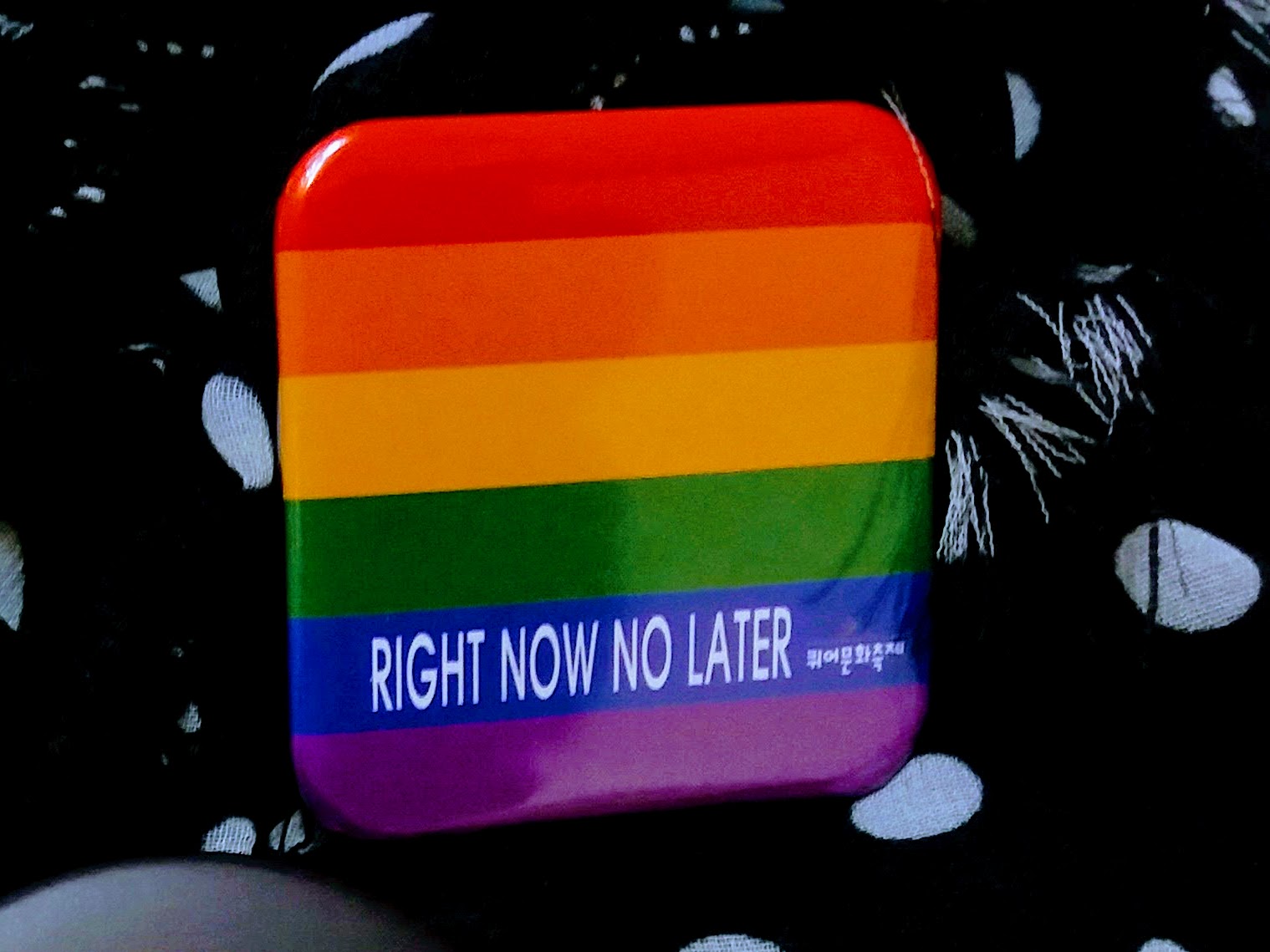
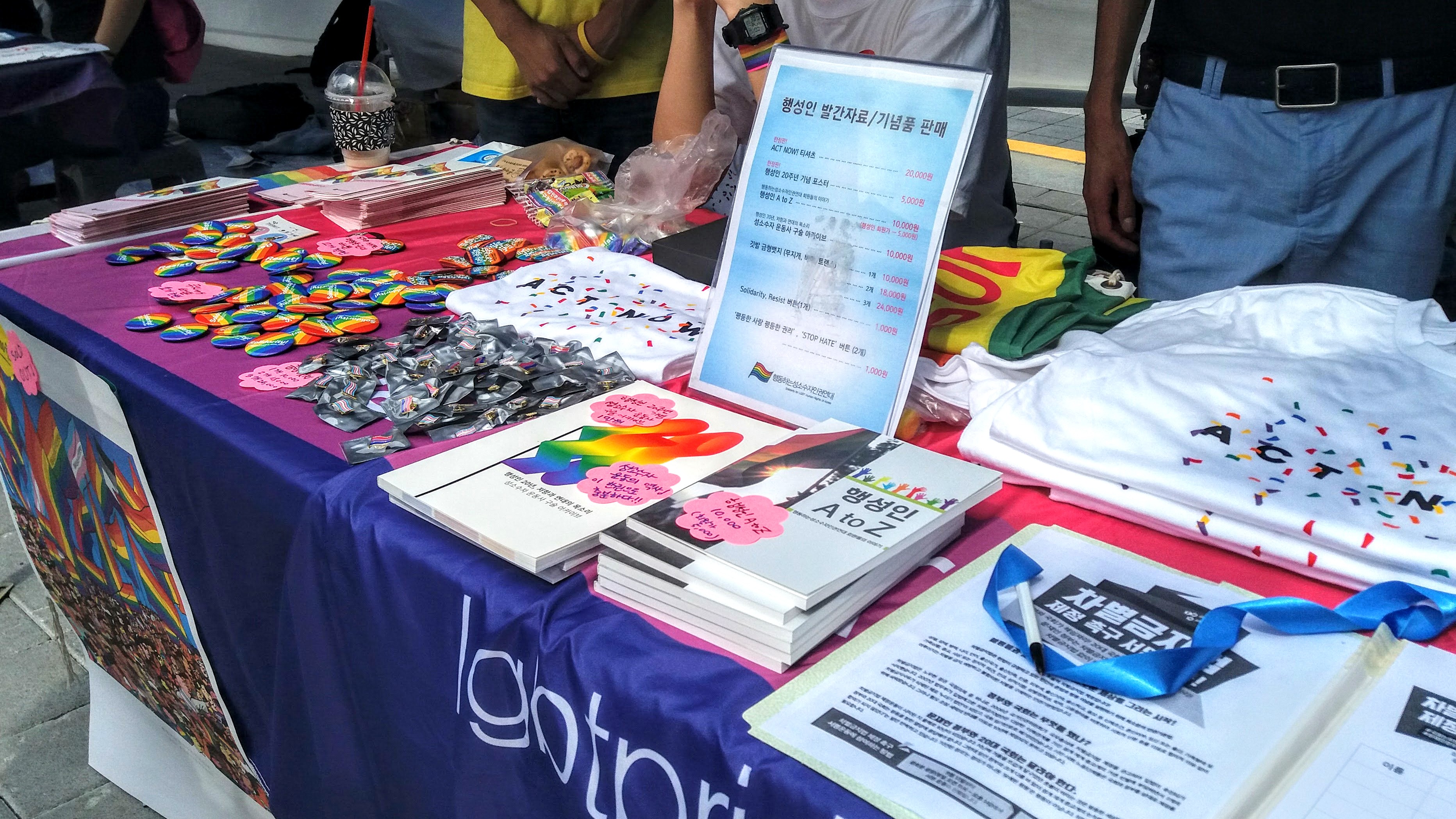 We passed booths promoting awareness, selling pride pins, flags, t-shirts, art and books. We bought a few small things, more to support the vendors than anything else. One booth was just for birth control awareness, which is a major issue in Korea since it is still very stigmatized and difficult for women to use it regularly without facing harsh judgement from friends, family and even medical professionals.
 While the booth selection was not as big as the Seoul event, the protesters weren’t as bad as their Seoul counterparts. There were far fewer of them, and they didn’t have any giant trailers with loudspeakers or competing musical performances. Most of them simply held their signs quietly. A few shouted slogans, but the only one shouted at me was “Jesus is love” which is not bad as protest slogans go… I mean, really it’s the same reason why enlightened Christians think marriage equality is right… love is love, man.
 When the sign wavers got too close, the police gently moved them back. There was no force or violence, but the police would form a blockade and firmly move the problem folks back out of range. One man was so transported by his prayer, he knelt as close to the event as he could get, clutching his sign and praying feverishly, eyes screwed shut and knuckles white.
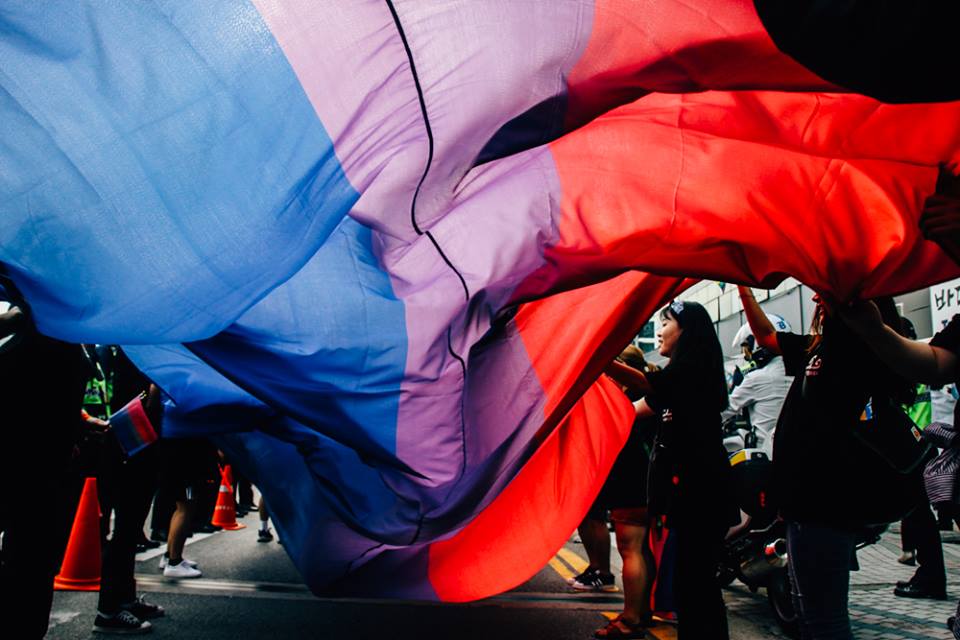
 Frantically trying to IM another friend in the parade to figure out which way to go, we walked up and down the street lined with protesters holding signs about sin and Jesus and homosexuals out out out. When the marchers finally arrived, we found ourselves on the wrong side of the police line! We stood among the protesters who waved their fists and signs and chanted their message of opposition. From this vantage point we saw the giant rainbow flag at the head of the procession and we cheered as loud as we could to drown the voices of those around us and support the marchers we had been unable to join in time.
 As the parade moved closer to us, the police moved the line of protesters further and further back to prevent clashes. We pointed somewhat frantically at our own rainbow pins and flags as we asked the officers if we could cross the line and join the group inside. Finally, realizing we were not a threat, they let us through and we joined the group of hundreds (possibly thousands) dancing and singing along to the K-Pop blaring from the backs of the trucks that had lead them on the brief march around the block.
 I’m not sure what the actual parade route was, but I know it must have been short for it was scheduled to start at 4, and was more or less over by 4:30. By 4:45 everyone had dissipated and the plaza was being swiftly converted for whatever event had reserved the space for the evening hours. I also cannot report on the turn out at this time, as there has not been any English language media follow-up reporting on the numbers of attendees, counter-protesters, or police. If I get some information later, I’ll update it here.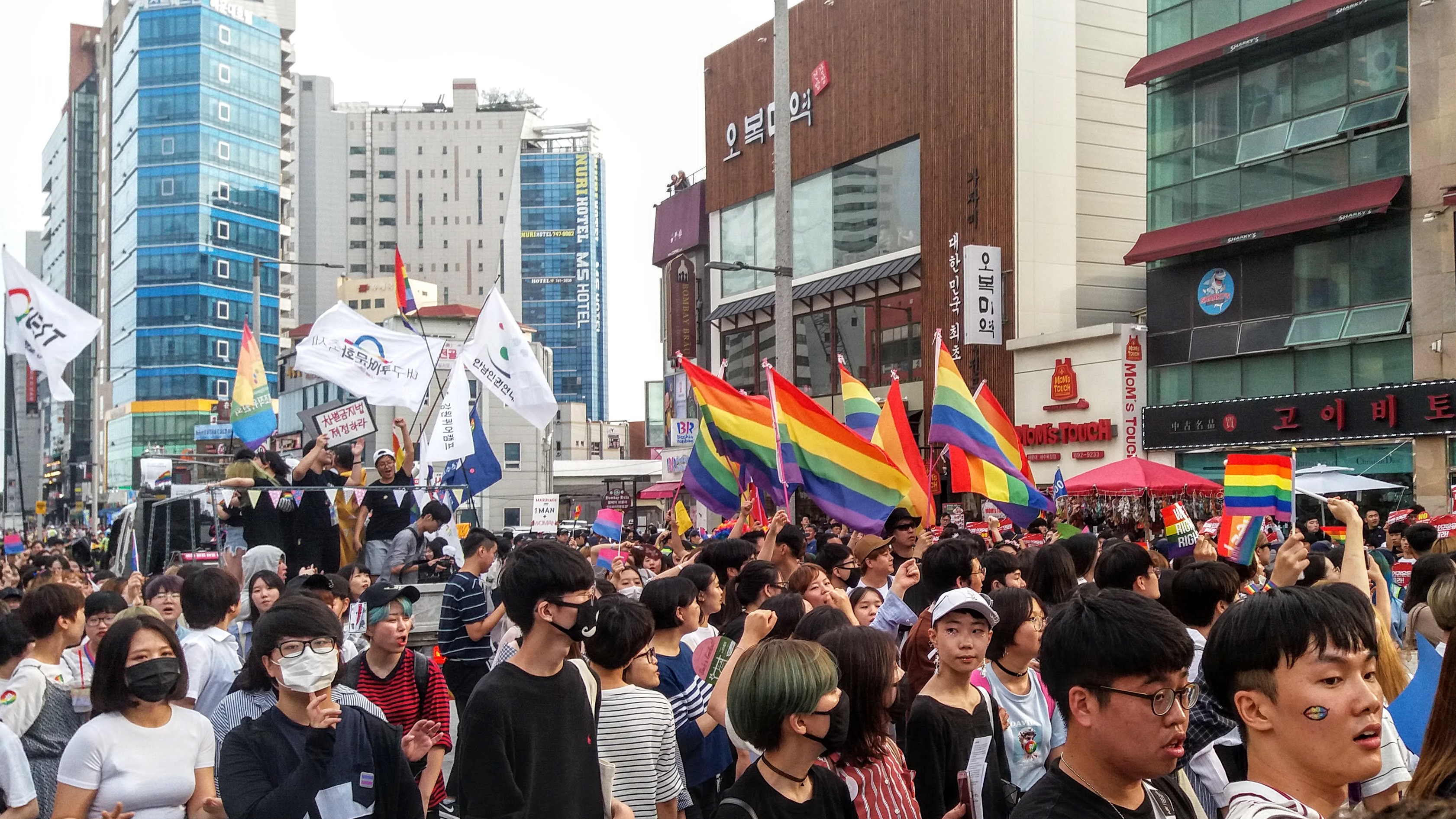

 Gallivantrix