10 Years of Being The Gallivantrix:

At the time of writing, Gallivantrix has 290 posts which average 4000 words each. That’s over a million words or two copies of War and Peace. 

In 2024, I watched as my 10 year achievement flew by. It’s hard to mark a life of gradual change with anniversaries, but a decade is a good amount of time to take stock. I started the blog in May of 2014 while I was preparing to re-launch my international ESL teaching life by heading to Saudi Arabia that September.  As I noticed both of those decade markers fly by in 2024, I thought to myself how nice it would be to sit down and quietly reflect on what the last 10 years has brought and how it has changed me. It is only now, staring down the barrel of the New Year that I finally feel like a quiet sit-down is possible. Still, better late than never. 

A Life Dedicated to Travel

In the last 10 years I have lived and worked in 4 foreign countries, and visited an additional 27. That’s more than ¾ of the international travel I’ve done in my lifetime so far and nearly all of the travel I have done as an adult. But what does it mean to live a life that nomadically?

One of the big things that I encounter when I tell people how I live is envy. I have no illusions about how amazing the experiences of my life have been, nor do I think I live in a way that is accessible to everyone. It can be a bit strange to remind people that I’m not rich, and in fact, have spent chunks of my life being poor, eating from food-banks (charities), and relying on friends for a roof over my head. And, no, I didn’t win the lottery or get an inheritance. Luck, circumstances, and the support of others have played a big role, but also I made a conscious choice to prioritize travel over almost everything else in my life, and then I worked very hard to make that happen.

I found a career that allowed me to work in a variety of countries. I took extra education to gain the necessary credentials. I took terrible jobs to build experience. I reduced my life’s possessions to what would fit in 2 large suitcases and a carry-on. I had no home, no car, no bed, no books, no dishes, no spouse, no children, no pets, no musical instruments, no garden, I gave all my art away, and my sister is keeping the few family heirlooms we treasure. I ate cheaply, used public transit, and wore free, thrifted, or clearance bin clothes. I bought second-hand phones and cheap laptops and used them until they died, relying on my office computer for any big projects. I only got a portable video game system during COVID because I couldn’t go anywhere.

I don’t feel like I’m missing out on these things because I don’t have them, but I think it’s helpful to remember that no one actually “has it all”. The people who envy me usually have stable, local jobs, a lease or a mortgage, a car (and payments), kids and pets, a multi-seasonal wardrobe, hobbies and crafts, new phones and complex computer set-ups, and a lifetime of memories in the form of stuff that has to have a place to exist. They can’t afford all of those things AND prolific travel, but neither can I. I didn’t make that choice all in one go, either. It took years of gradual change to reach a point where I have a 2-suitcase life. I had plenty of chances to change my mind and back out, but I *like* my life. I just want others to understand it isn’t a traditional life + travel, it is a life purpose-built for travel.

From the Inside

10 years is a long time no matter what lifestyle you have, and I hope that everyone grows and changes in that amount of time. It is a well-studied phenomenon that travel has a big impact on the human brain, and sustained travel with its joys, challenges, and culture shocks has forced me to look more closely at myself and my place in the world.

Although therapy didn’t take a starring role in the blog until COVID-times, it’s been an on and off part of my personal journey for a while. In the 2 years leading up to the launch of Gallivantrix and my international life, I dedicated a lot of my free time to researching and practicing positive psychology. TED has a wonderful series of talks on the subject and several practical resources that I still recommend to people like Superbetter and AuthenticHappiness.

I believe it was a direct result of this work that I was able to embark on the journey, but it did more than give me the strength to adventure. From 2015-2019, I gradually changed the way I approached interactions with others. Some of this work resulted in stronger, healthier relationships and some resulted in the end of years-long ties. The people who remain in my life are strong communicators & loyal friends. Those who left were, for the most part, not “bad people”, they simply had their own struggles with trauma and healing that left us incompatible. Perhaps the hardest of all of these was with my mother.

From 2020-2022 I dove back into the world of mental and emotional health, this time with a focus on childhood experiences and generational trauma. You can read through my book list in the archives if you’re interested. Even though I made good progress using these tools, the circumstances of the pandemic meant that by the end of 2021 I needed to make plans to leave Korea and get out in the world around other people in order to keep improving. 

Bouncing off to Senegal after years of isolation may have been a bit like trying to ski black diamond right after recovering from a compound fracture. It hit me hard, and you can see most of it in the essays I wrote during that time. I will be forever grateful for the experience, for what I learned and how it changed me, but it was not the joyful return to global travel that I had been craving. It took me 9 more months of trying various things and eventually moving to France to finally find what I was looking for in myself that I thought I had lost in 2020.

10 years of international living, a global pandemic, and a deep commitment to emotional healing later, and I am now a much more emotionally mature person than I was in the past, capable of identifying and sitting with my feelings to understand what is reasonable, and what is reactionary. I am able to approach conflict resolution with an eye toward responsibility and solution instead of blame. I know my limits mentally and physically and I plan my life, work and travel in such a way as to protect the hard limits while pushing soft ones. I want to make the world around me a better place, and while I’m ok doing that one person at a time, I’m also interested in how I might do more. I have learned so much about the world and the human race, that I will never be able to look at it without that knowledge seeping in. At some times that is beautiful, and at others it is profoundly painful. I have flaws, just like every human, but I am learning to love myself, and to extend grace and compassion inward and outward for flawed humans everywhere. I don’t want to look away.

Accommodating My Needs

Whether you want to call it chronic illness, invisible disability or anything else, there is a growing awareness of this category of health issues that limit what people can do without making us unable to work, travel, and live independently. I received my first couple diagnoses as a late-teen/young adult, so it isn’t new to me, but as I age, not only does the list get longer, my ability to simply push through my limits is sharply diminishing.

Back in 2018, I had a real “come to Jesus” moment during a long summer holiday backpacking across Europe. It made me start rethinking my priorities and what tools I could use to make the most of my travels without destroying my physical and mental health in the process. Over the next three trips, and the pandemic induced therapy-work, I slowly built not only a list of practical tools to make travel easier and more enjoyable, but also the ability to accept my limitations. The second one means I don’t get so tempted to do things which will result in burnout later on, and I get to enjoy things I am able to do without dwelling on regrets, missed opportunities, or generally hating my body.

I am more likely to book larger seats on long haul flights because I know the difference it makes in my recovery time and pain levels. I always check the accessibility options for places I will stay, including distance from transit, number of required stairs, and how far the toilet is from the bed. I take extra time when walking everywhere, usually planning at least double the Google Maps estimate. I carry snacks, meds, and water everywhere. I keep a little extra in the budget for when I need to catch a taxi or ride-share because the walk/transit is too much. I accept that hot weather means I’ll need extra rest and extra painkillers, and I must plan to do very few things. 

That last one continues to boggle the mind. Spending spring in France, I was able to walk longer distances and do things for hours, even spending 12+ hours a day walking around some places! I’m never going to be up for a 5k run, but when the weather is mild-cold, I have so much more energy and mental focus and so much less pain. It has become important for me to keep notes when I am in different climates because it’s easy to forget how dramatically the heat affects me, and I need to be able to reference daily and weekly records of my experiences to hold onto the fact that it’s real and not a trick of memory.

Even knowing this, I still choose to go to hot places sometimes, like India… in August. But I made sure to always keep water and NSAIDs on hand, to walk very slowly, use a sun-shielding umbrella, and crank the AC in the car and the hotels. I was exhausted by the end of it, but I got to see some very amazing cultural and historical sites. I also went to Taiwan for 3 months starting at the tail end of August, knowing that the weather would be too hot until October. For the first 5 weeks, I did almost nothing besides go to class and get food. I knew heading into Taiwan that I would not be able to do a bunch of touristy things, but I still wanted the language study and cultural experience, so it was worth it.

Accepting my limits doesn’t keep me from going places, but it changes the way I go and what I expect to get out of it. I may not get as much out of my trip to India or Taiwan as a more healthy and fit person, but I definitely get more out of it than someone who never goes at all.

From the Outside

When I started the blog, I harkened back to the early days of social networking (Live Journal, My Space, and even bulletin boards!) where everyone who was online in those days was producing what we now call “content”. I know I sound like a get-off-my-lawn antique (and I am GenX), but objectively, it’s not just me that’s changed in the last decade. The internet / blog-o-sphere and the world at large have also undergone some dramatic makeovers in that time, too.

Demographics

It’s always hard to compare the present to memories of childhood, so I can’t say how much of what I recall about the travel I did with my family as a child is accurate, but one thing I think is objectively measurable is just the sheer number of people flooding popular travel destinations.

When we lived near the beautiful white sand beaches of Panama City, Florida, my mom and I joked about buying shirts that said, “I’m not a tourist, I live here.” because we felt like we could hardly go near a beach without being accosted by cheap seashell trinkets (made overseas) and green key-lime pie (it’s supposed to be yellow!). Perhaps because of this formative childhood experience, I have never enjoyed a tourist trap even though I have not always been able to avoid them. Yet, when I lived in Florida, the population of the US was 107 million fewer people than it is today. Not all of them visit Floridian beaches, but it stands to reason that the population rise alone will result in more humans per beach.

This NYT headline said in 1984, 27 million Americans travelled abroad, a new record at the time. By 2014 that number was 68 million, and by 2023 it was 98.5 million. Data on 2024 isn’t out yet, but I would bet it breaks 100 million. And that’s just Americans!

The global population has risen by almost a billion (that’s B) in the last decade, and more and more of them are living higher wage, higher quality lives which include international travel. Over 1.1 billion tourists (15% of the global population) travelled internationally in 2014, in 2019 (just before the pandemic) it rose to 1.5 billion (roughly 19-20% of the global population). Obviously, the pandemic saw a lapse in travel, but most statistical analyses agree that in 2024, international travel levels caught up with and then exceeded 2019 levels.

Also, there’s more people living in most of the popular locations. Only a few countries have been experiencing declining populations. Meanwhile, swift urban development and technological advances mean that a smaller percentage of people are living a rural/agricultural life, choosing instead to flock to cities and suburbs for better schools and higher paying jobs. In many places, migrant workers who come in to do things like drive taxis, work in kitchens, clean homes, and do construction do not show up on official statistics of urban populations, yet they certainly contribute to the body count.

When I arrived in Senegal, many people told me that the city had nearly doubled in size since the start of the pandemic, and that the cost of living was skyrocketing as migrant labor from the villages flooded in. Although official statistics show about a 3% yearly rise in population for that city, that is still much faster than the infrastructure can keep up with. Senegalese citizens and immigrants from less stable West African countries want to live in the city because they can earn more money to send home to their families. The flood of people coming in has resulted in overcrowding, lack of adequate sanitation, lack of housing, lack of food, and lack of employment. 

Dakar isn’t a hotspot for tourism, but many developing countries that rely on tourist dollars are experiencing a similar trend, meaning more locals are in the cities we travel to and more of them are struggling to get by. My foray to Zanzibar in East Africa highlighted this most dramatically where I would walk through a neighborhood with no running water to reach the high end resort hotels on the beachfront. As hard as it might be to live in a developing country and see first world lives on TV and the internet, how much harder must it be to see them across the street when you must carry water from the well and dig a hole for a toilet?

Among the expat communities, people who live and work abroad, not just traveling for fun, we have anecdotally noticed an upturn in the tendency to be treated as a “walking ATM”. The rise in the number of locals living in cities but struggling financially has led to a (totally understandable) level of desperation in the competition for foreign dollars that hasn’t always existed. And don’t get me wrong, I feel an enormous amount of compassion for those less fortunate than I who have not had the chances and support or even the citizenship that give me my advantages. However, I cannot singlehandedly change the fortunes of a developing economy with my few thousand dollars. 

Then, when I come back to the US, I am shocked at prices and poverty here, too. 100 million of us may be able to travel internationally this year, but how many of those scrimped and saved to do so? How many are using airline miles they earned buying groceries and gas? How many only go once a decade or once in a lifetime? How many are taking on debt to do it? And of the remaining 235 million, how many are food insecure (47 million), how many are one paycheck away from homelessness (200 million). People shouldn’t travel if they can’t afford it. Please, do not travel on credit! But regardless of how we pay for it, most people can’t afford to go over a carefully planned budget while on holiday.

I want to spend my money on local small businesses when I travel, but it isn’t fair to be treated like a bottomless money pit because we were born in affluent countries. What’s more, it makes for a very unpleasant experience which will only damage the future of their tourist economy. I work hard to avoid these kinds of situations, and have developed tactics over time to deter scammers and hawkers, but it’s exhausting and demoralizing to be walking around a beautiful historical and/or sacred monument only to have to fend off junk-sellers every 5 ft. Many take “no thank you” and move on, but others will follow you around telling sad stories about their kids to try and guilt you into buying some cheap trinket you don’t want.

This experience isn’t new in and of itself, as I recall having had it in China back in 2005, but it feels like the number of such “sellers” and their persistence, willingness to invade personal space, and leverage emotional manipulation has dramatically increased. I think it was one of the big reasons Senegal was so hard for me, as well as the main reason why in places like India and Egypt, I opted to hire local drivers and guides who I can budget a gratuity for in advance, and expect them to act in part as a barrier to the other hands being held out for cash.

The upshot of all of this population growth, demographic change, and economic inequity is that many places are more crowded and fighting harder to extract every penny from the visitors that they can. There are still places in the world that do not have this problem, or at least do not have it in excess, but I feel like it’s much harder now to plan a trip that avoids them, especially if you have any bucket list items that include major historical sites, world-class museums, or unique natural wonders. Maybe it’s easy for me to say because I’ve already gotten to visit quite a few of these, but now when I give travel advice, I tell people to focus on small local experiences rather than grand bucket list ones since you’ll be more likely to have the space and peace to enjoy it.

Going Viral

In addition to the population and economy, there’s one more very large factor that’s changing the face of travel and travel-blogging: the social media revolution. My 5 week stay in Tours France was relaxing, idyllic, and felt almost nothing like tourism at all, but when I left Tours and went on my color-coded-spreadsheet trip of tourist highlights including Disney, Lyon, Marseille, and all the big bucket list spots in Paris I had somehow never gotten around to like the Louvre and Versailles. Although almost every place I went was new to me, the experiences of being a tourist all seemed eerily familiar.

Authors and researchers like Jonathan Haidt have been studying the changes in social media over the last 10-15 years, and there are some fairly strong conclusions about the manner in which content is created and consumed. Other old-fashioned travel bloggers like me who want to share personal content over rubber-stamped listicles are also expressing frustration.

As social media drives attention to ever more similar short-form bucket lists and glam photos, tourist attractions have also started to become homogenized. This isn’t all bad, nor is it fully ubiquitous. I have written before about the fact that cathedrals in western Europe are all kinda the same in the way that roses are all kinda the same, and I still like them both every time. Huge enough attractions like Disney and Versailles don’t need to change too much to keep attracting visitors, and they will always be tourist processing machines filled with photo-happy crowds and overpriced souvenirs. Yet, everything in between seems to be riding a post-Instagram, post-COVID wave of striving to provide travellers with photo-ready experiences that exactly mimic what they have already seen online. Stand in this line to get the perfect photo, order this dish at the restaurant, look for this “hidden gem” that’s now overrun with tourists, and always post your best photos!

I have been going to Angelina’s in Paris since 2015 (that makes it sound like I go a lot. I do go at least once every time I visit, but it’s only like 6-7 times total) and yet sometime between 2019 and 2024 it got internet famous, and for the first time ever, when I went this year, there was a LINE out the door and they were no longer accepting reservations. My patience was rewarded in the end, and when I went back a few weeks later at a better time, there was no line at all. Despite Angelina’s appearing to have handled their newfound fame well, many local restaurants that receive viral treatment do not.

Internet fame can send tourists in droves to small businesses that are unprepared for the volume of new customers which ends up leading to disappointing experiences and bad reviews. Some businesses overextend themselves financially trying to keep up, only to be left with debt when the viral spotlight turns elsewhere. Very few small-scale restaurants survive viral fame, and even fewer benefit from it. Additionally, the desire to have a replica of the online experience leads to long lines at one location while those around it languish. This is bad for both local businesses and for the tourists themselves. The joy of a hidden gem or hole in the wall is that it is unique, different, likely thriving off of local and seasonal ingredients meaning that the dining experience is different from day to day. Meanwhile, viral sensation seekers want to experience what they have seen online and nothing else.

Jerusalem Demas famously wrote, “Tourists are like bees. I don’t want a bunch of them circling around me, but I also don’t want them to disappear.” Developing countries are not the only ones that are both economically dependent on, and simultaneously damaged by increasing tourism. Many large cities in affluent developed nations are experiencing an overdose of tourists that is causing chaos and unhappiness among the locals. This Forbes article goes into more detail of the struggle between reliance on tourism for economic success and the damage that over-tourism brings.

Viral fame hasn’t just damaged food experiences, but also art, music, and nature. One beautiful Mediterranean beach may be edge to edge bodies while a few villages over, a pristine beach boasts only a few locals. The government of the Philippines had to shut down some extremely popular tourist beaches because the sheer number of tourists was damaging the environment, yet there are hundreds of practically empty beaches around the Philippines that no one is going to. Is it because they don’t know about them or because they want to recreate that experience they saw online?

Imitate and Recreate

When “influencer” first became a job, they would try to use clout or ad space to get free meals and accommodations. A very small number of extremely successful ones still can, but remember a billion+ people are traveling every year, so an influencer with a million followers is only 0.1% of the potential market, and most of their followers aren’t actually going to travel, because travel lifestyle influencers are largely aspirational.

Now the issue is less influencers trying to get free stuff and more that a small number of tourists with influencer dreams have their hearts set on recreating a viral photo or video on location. Surveys and polls vary a bit, but generally speaking somewhere between 50-80% of Gen Z consider influencer a desirable and realistic career option, with more than 40% of adults overall feeling the same.

As a result of this, you get people doing choreographed dances in the middle of a UNESCO World Heritage site, or self-employed ‘models’ posing over and over in front of the thing that literally every other tourist there wants a photo of. This has gotten so bad that in many places, the government or local businesses have posted signs banning tripods and costume changes.

I am not criticizing dancing nor taking photos. Normal polite people usually spend a few minutes taking photos, arranging poses, and checking to make sure no one was making funny faces before moving on. On the rare occasion I indulge in a selfie, I tend to take a handful before I get one I don’t hate. I think it’s fair to want to look your best in your photos. But these people will stay for 30 minutes to an hour, taking pose after pose or restarting their dance 17 times, all while blocking everyone else from being able to take photos of the site. Tourists are often on a tight schedule, and will end up missing out on their photo ops for their own memories because a wanna-be influencer can’t share.

Even when they aren’t taking photos, they will often sit or stand in desirable photo-op spots to scroll their phones instead of moving off to the side to allow others a chance. And again, I’m not criticizing wanting to check your phone while at a famous landmark or museum or whatever. They might want to make sure photos turned out; they might be checking their itinerary for the day; they might be reading about the site they are visiting to learn more; they might be trying to contact their group; they might even just be scrolling because it’s so crowded and overwhelming that they need a break. All of these are fine and valid reasons to be on your phone. None of them are reasons to block the view while you do it.

AI photo editing has made it easier to cut out unwanted hordes of tourists, but it can only do so much. Plus, my photos are primarily a gateway to my memory. I can wait for the perfect shot or edit out a stray person in the background, but if I look at the photo and remember the obnoxious influencers and pushy junk-sellers more than I remember the awe and beauty of the place I came to see, then what am I even doing?

What Am I Even Doing?

In 2014 when I started this website, there were (according to Google) hundreds of thousands of travel bloggers across several platforms. Now in 2024, those same estimates place the number of travel bloggers in the millions. Far and away the vast majority of them are just in it for the money. There’s nothing wrong with wanting to a bit of extra cash to support an already expensive hobby, but the current monetization model of social media pays for eyes, for attention, for engagement, and so using keywords and creating short 1 min or less content allows social media influencers to maximize money while minimizing effort. Millions of travel content creators exist, yet the format for a travel blog has been trimmed down to those few most monetizable models on platforms like Instagram and TikTok, meaning everything is starting to look the same while containing less and less original or unique information. 

I have never thought of Gallivantrix as something to monetize, no matter how many times well-meaning people suggest that I turn this hobby into a side hustle. I hoped my blog would primarily serve as a way to connect with my loved ones while I was abroad, give people a deeper perspective of the world, and maybe add a soupçon of helping other travelers. 5 years ago when I checked in about my motivations for writing, I stood by my long-form and intermittent style and I am still drawn to long form essays with no particular schedule, but the content of my writing is changing.

I have always been an essay writer, tending mainly towards narrative essays. I used to call my writing style “narrative nonfiction”. Sometimes, I write descriptively, giving detailed accounts of what an experience is like, to paint a picture that my readers can imagine. Sometimes I involve research and write more informatively to talk about the history or broader context of an experience. Since COVID, my writing has taken a more personal bent, with liberal doses of expository and reflective writing.

Writing narrative essays about my experiences not only allows me to share my adventures, it gives me good motivation to go out and do things and to live mindfully while experiencing those things. By setting myself up to notice things “for the blog”, I’m more likely to have a deeper and richer experience and remain mindfully present. Later, writing the memory allows me to review all the photos and relive the experience vividly in order to record it. I may not want to do this for every single place I visit, but it’s a great tool to have in the box.

During my France holiday, I wrote narratively about Tours, and I meant to do the same for the other places I visited, but over and over I came up against the idea that I could not say anything that was not already said both more succinctly and more informatively. 

It seems now when I’m travelling in places that are inevitably viral, I no longer have any interest in publicizing my journey. I still take photos and share them with my friends, and I write little highlights for myself, things that in the past would be the notes I used to write blog posts from later, but I don’t have any interest in spending hours creating content that a million other people have already created. I found that when I am already in a good headspace mentally and emotionally, I am able to be mindful and present in the experience. It isn’t necessary to try to find ways to make yet another blog about Disney, I could just enjoy it.

When I went to South Asia, I was surprised and inspired by Sri Lanka in part because since the civil war and the earthquake, not a lot of people have focused on tourism and travel there. I never have time to write while travelling, so I tucked it away for later, only to be confronted with the contrasting experience of India, and capping off my South Asian odyssey with a visit to a third wildly different environment in Nepal.

I knew I didn’t want to write a bunch of blogs about sightseeing and history at places which have been endlessly blogged about, but I started to think about how I would like to write about South Asia. Nestled in between my May and September decade markers, the trip made me think about who I want to be in my next decade as Gallivantrix. I thought about the essays I wrote in the pandemic about deep emotional issues, those that I wrote while in Senegal about the social, political and economic impacts of colonialism and white supremacy, and about the essay I wrote in France about finding joy in the everyday. I want to combine my experiences as an expat and tourist with what I have learned about the world, historically, politically, and economically, and how the countries I visit fit within that broader understanding. I don’t intend to fully discard narrative or informative writing, but I want to embrace the personal and the reflective.

Is anyone even interested in reading something like that? Wouldn’t it do better as a podcast? A video-essay? Is my approach too old-fashioned, too long, too nuanced, or just not cute enough? Eeehhhh. There’s millions of travel bloggers out there, but I don’t need an audience of millions. I hope there are a few people in the world who will read and think and share those thoughts with others. In the end, I write what I most need to say in order to process my experiences and ideas in a flow of words that may be only for the void.

If you happen to be here in the void with me, Happy New Year.
Je Suis Arrivé: Senegal First Impressions

I’ve been in Senegal for 2 weeks. I’m about to lay down some solid developing nation meets first world privilege complaining, but despite all that, I’m still glad I came here. It’s been a REALLY long time since I had to adjust to a new country to live in (vacation is not the same, because you get to stay in temporary housing and explore and have fun while knowing your safe and comfy bed is waiting for you at the end of the trip), and besides – no vacations during COVID! More than that, adjusting to Korea was very different than here, it was almost all culture and language barrier based because the standard quality of life in Korea is overall quite high. This reminds me more of learning to adjust to China or Saudi, the main 2 differences now are: I’m over 40 and I crave a basic level of creature comforts that younger me was more willing to do without in the name of sparkly new adventure – and this is objectively less developed than either of those places. It may in fact be the least developed part of the world I’ve traveled to, and that’s not an insult, it just means as a white American lady I didn’t have this perspective. It’s good for me, stretching me outside of my complacency and comfort zone (again), so I don’t regret it. I’m not mad about the conditions here, nor am I demanding unreasonable levels of comfort (clean, safe & accommodating my health). I just want to be honest about what I’m experiencing here, and how it makes me feel.

Getting There Is Half the Battle?

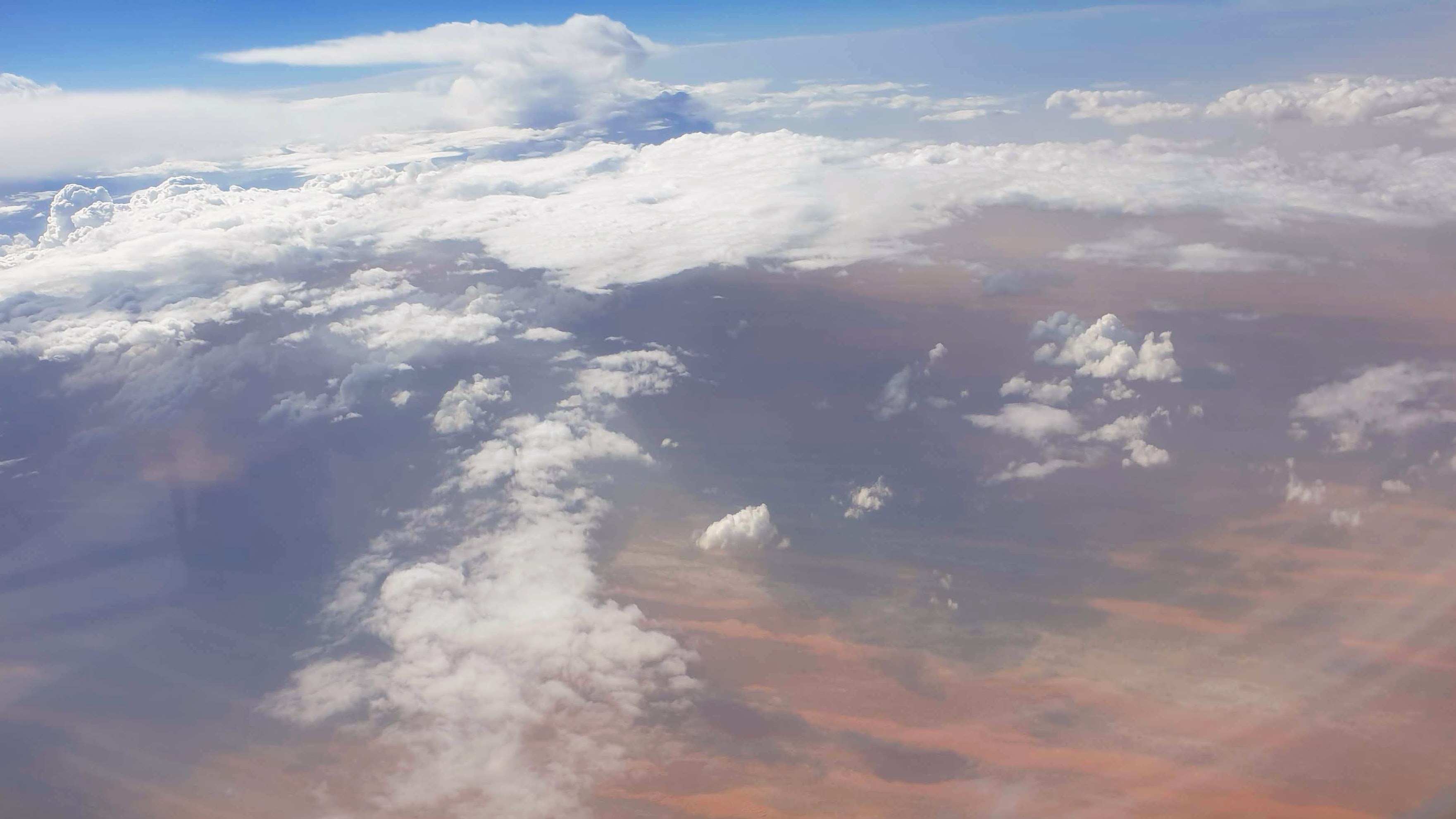
Arriving was not actually difficult. A long flight – 3 flights – but nothing a regular international traveler can’t handle. Flying in over the Sahara was fascinating. I could see the landscape change from endless sand to green farmland. There’s the jet lag package (fatigue, dehydration, swollen feet, etc), but I had a whole day in my hotel to rest before orientation. I had arranged an airport pickup with the hotel as well. So far, so good. The program is covering all those costs (assuming my expense report is accepted). The drive from the airport was looooooong, almost 2 hours. The main highways here are fairly well kept, but once you get off the main drag, the roads are not just dirt, but the dirt that remains after badly laid asphalt has cracked and eroded from flooding. There were potholes that could be kiddie pools on the road my hotel was on and I have to say it surprised me to see that this was the norm in the ritzy part of town, and made me wonder what the rest of the city looked like.

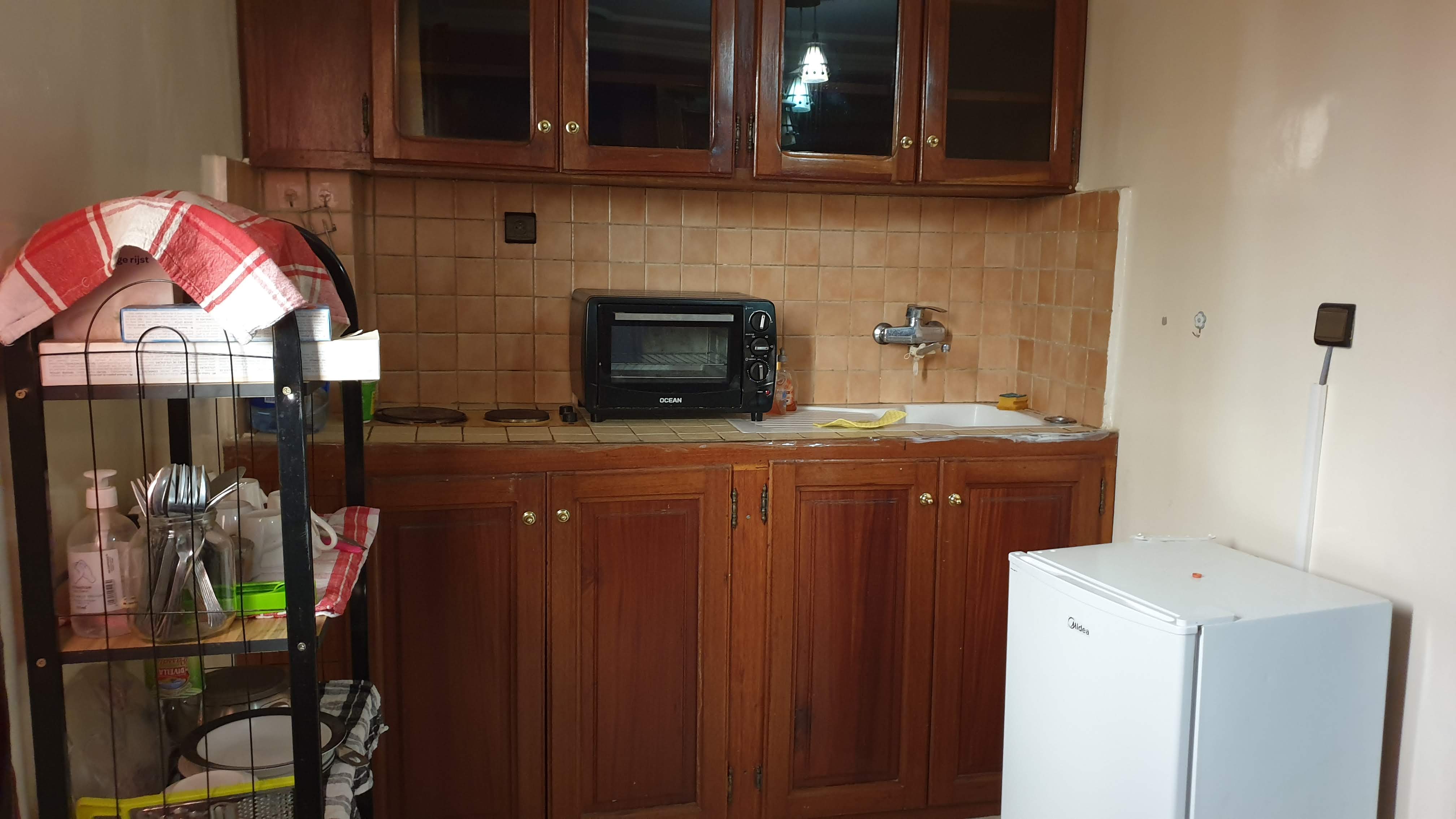
The hotel was nice, but I had forgotten to think about things like a mini fridge or a kettle, and there were no shops nearby anyway, just beachfront restaurants and an American imported goods store because I was staying in the fancy part of town near the Embassy. I thankfully have had experience with finding and using local delivery apps and quickly got my first meal delivered to my room (Dakar Food Delivery if anyone needs it). I was also a bit sticker shocked by the prices, but it seems only the expensive restaurants can afford to do delivery. A meal was costing me 10,000-13,000 CFA or 15-20$ USD. I know Americans think that’s a good deal for delivery food, but it’s wildly cognitively dissonant to be in a place that is so underdeveloped and also costs that much. Plus, I have a lingering “former poor” brain function that gets activated when I’m under stress so it feels insanely opulent to eat delivery food 2x a day for a week, which is basically what I did minus 2 lunches at the Embassy. For comparison, my Embassy cafeteria lunch was 4,000 CFA about 6$ US. I survived by reassuring myself that I was still well within the average daily food/transit allowance that is included in my budget, though I now better understand that a person eating at Western style restaurants and taking a taxi (buses are not recommended for expats for safety as well as comfort reasons) could actually use the full budget allotted to us. I expect when I’m comfortable enough to actually start taking taxis to explore other parts of the city, I’ll need that budget, too.

Post Arrival Orientation

We were hosted at the US Embassy for a 3 day orientation from Wednesday Oct 18-Friday 19. The orientation was a good way to introduce us to Senegalese culture because nothing started on time or went according to plan. (I said there would be complaining, but it’s not helpful to think of cultural differences like this as better or worse. I honestly think the number of cultures that place a high value on timetables and deadlines is much smaller than those that are more … flexible. It’s just frustrating to be raised in one style and have to live and work in the other). The policy on Embassy provided drivers changed but no one told our coordinator until the first morning, so while I could have easily walked the distance to the Embassy from my hotel, she had me ask the hotel to call a taxi and then also called the hotel herself to confirm. I have to say that while I found the whole process frustrating and confusing at the time, I do appreciate the lengths she went to that morning to make sure we were all safe and comfortable. It’s not her fault that my comfort level is directly linked to my ability to control my own environment (yay trauma responses!) so waiting around for ages and relying on other people to tell me what to do or how to do it or even do it for me is deeply anxiety inducing to me. I walked the remaining 2 days.

Getting into the Embassy is an ordeal if you don’t work there. One at a time, we handed over our passports in a little secure bank teller style window and got a visitor badge in return. Then again one at a time, we entered the security screening room where we handed over all electronics (including charging cables!) and for some reason also my nail clippers and umbrella. Even the TSA lets umbrellas through security. All our banned things were placed in a numbered box, we were given a token with the number on it and then a fairly standard x-ray for the bags and metal detector portal for us. Then we walked across a courtyard into another building where we again had to pass through a metal detector, have our bags visually examined and record the number from our token on a visitor log. We were also limited to only the front area (the American Center, the meeting room, and the restrooms) unless we had an escort, and our coordinator could only escort 4 people at a time, so had to get help when it was time to take us to the cafeteria. Somehow the free English language program that they run here is inside all this security, and local Senegalese people who want to participate have to go through an application process and pass through this kind of security every time they want to come to a class or event. It does make me kind of glad that it’s not my primary base of operations, though I am sure I’ll go back to do a guest lesson or something.

I enjoyed meeting everyone in the orientation. There were only 2 of us Fellows (we are the older, more experienced teachers… grizzled veterans of expat life) and 6 Fulbright English Teaching Assistants (ETAs) who are all adorable 22 year old Gifted Children™ that just graduated from their BAs and all speak fluent French. Only myself and 2 of the ETAs are stationed here in Dakar, the rest are scattered around St. Louis and Thies. There were also a metric ton of presenters, but since there was zero printed or electronic materials (beyond the schedule which as I mentioned was not followed), I don’t really know who all of them were and remember even less about the details of the programs they talked about. I’m trying to get it in written form, but it’s hard especially as our full time Regional English Language Officer (RELO) isn’t here yet and the deputy (our faithful coordinator) is trying to do all the work on her own.

People I remember well – the press officer and cultural officer were both fun to talk with mostly because they were also new to Senegal and more relatable to me in terms of common background and interests; the HR person who gave us our cultural lesson was awesome (Betty Hubbard, which sounds SO white, but she’s really an African woman with a lot of experience in the US and several African countries, and was delightful, I wish I had a good photo of her, but I only have what the embassy emailed me, which is mostly us). The guy who runs the largest English Club network made a good impression simply by virtue of his enthusiasm, but I was a bit sad that I probably won’t do much with their organization (although he has ‘threatened’ to invite me to come and give a guest lesson) since it is for k-12 ages and I’m going to be spending most of my time with the University. Other presenters were … not used to presenting. Several had classic “read the slides verbatim” or monotone voices. Almost all the Senegalese spoke so quietly that even at the other end of a small conference table, I struggled to hear them. It made me want to create a workshop just for them to be better presenters, an idea I may pitch to the Embassy later on.

Health & Safety

There was a security briefing, which we also got in the EPIK orientation in Korea, and those are almost always extreme, but here I’m not so sure. Things like ‘motorcycle thieves’ people who ride double on a motorcycle so the passenger can snatch bags off pedestrians and the driver speeds away are apparently very real here, such that even locals have warned me to wear my backpack on both arms or at very least, move it to the side away from the road. Don’t carry more than your money and empty shopping back into open air markets (regular brick and mortar shops are ok). Don’t walk after dark alone. Don’t hold your cell phone too loosely or someone might snatch it (motorcycle thief style). Don’t use ATMs on the street, only inside a guarded building. But also, say hello to everyone in your neighborhood, greetings and inquiring after wellbeing are crucial to being recognized by the people who might help you if you’re ever in trouble. People who keep to themselves are left that way.

There was also a health briefing from a nurse who instilled in us the very real fear of Senegalese water if nothing else. They also talked about soaking any fruits or veg you don’t peel in a diluted bleach solution and rinsing with bottled or boiled water. I’m actually not sure what her policy on dish washing is, but I’m using the tap so far, just make sure it’s all the way dry before I put food on it? I have already mentioned my extensive vaccination regimen and of course my weekly anti-malaria pills, so I was fairly well prepared. I figured out how to get smaller (1.5L) water bottles delivered to my hotel, but I’m still working on proper water delivery. I’m going through 2-3 liters of water a day here, so it’s thing. Maybe when I get my “real” housing I’ll be able to do a night boil for the next day’s water, but so far that’s been fairly impossible. The nurse also said that we would all definitely get diarrhea (yeah ok, gross, but this is a very real issue travelling to places with massively different bacteria). The ETAs kind of laughed it off until the older of us were like, no, she’s right, this isn’t a thing you avoid, it’s a thing you minimize and prepare for.

I hoped my globe trotting stomach was well equipped but I still had some antibiotics my pharmacist prescribed to me before I left the US for this exact reason. I have only had bad travelers diarrhea once in my adult life, and that was my first visit to Egypt when I got so sick I could not even keep down water. I remain hopeful that was a once in a lifetime event. My issues in Dakar were comparatively very mild. The first bout passed in a day, and I thought I was free and clear, but then it came back and lasted and lasted. Part of the problem was a lack of ability to eat gentle food. I tried to order things like a labneh (similar to yogurt) on pide (like a pizza dough but oblong) and plain rice or plain chicken, but it was difficult. I only got to go to a grocery store when I moved to a new “hotel” after my first week. Then I ate yogurt, bread, bananas, rice and oatmeal for 2 days before I gave up and went to the pharmacy for some Imodium.

Phone: Connection, Translation, Maps and More

I don’t know how I lived in China and Saudi without a smartphone. I know I did it, but for the life of me, I am baffled. I walked literally everywhere in China with my little pocket dictionary and took months to learn how to properly use the public transit system on my own. I used Wi-Fi on a tablet to pull up maps in Saudi, but mostly I only had a company driver to take me places. During my travels from 2015 on, it seems like having access to a local Sim card and internet was essential to getting around, navigating language barriers, public transit, shopping and everything else really. I like having data as soon as I land. I often get it in the airport or at a shop near my accommodation on the very first day. In this case I had deliberately not taken care of getting my own SIM card because it was on the schedule for the first day of orientation that we would do it as a group. I decided to go with the group because maybe they will be more help than I could have been on my own. No.

First we went to an Orange kiosk (Orange is a telecommunications company in this part of the world), which did not sell SIM cards (I feel like this could have been ascertained ahead of time). When we finally got to the store itself, they collected all our passports and had us wait. The store actually closed with us inside it, and finally they said that they had no SIM cards that day, and we should come back tomorrow. When we returned the following day, we had a better idea of what to expect, but we still got a bit of runaround, being told to go out to a different location to get the SIMs. I suspect they simply didn’t want to deal with a large group at the end of the day. Which, I sympathize with. I can think of several ways to have done this which would have made life easier for everyone including the shop employees, but it’s a learning experience. 

In addition to our fearless deputy RELO (a local who has worked at the Embassy for many many years), several of the French speaking ETAs got involved in trying to solve the issue, which also resulted in crossed wires. We went out, we came back, we waited. Finally they began to issue us SIM cards. They cost 500CFA (75cents US) and are connected to our passports, but that’s normal in most countries that aren’t America. It took a while to get everything sorted out, finding our numbers, loading the Orange app, etc. It was hot (no AC in the store) and stressful (language barrier and multiple mixed messages), but once I got back to my hotel and could examine the system on my own in cool air, it was easy enough. We also went back the kiosk from day 1 to learn how to add money to an Orange account. Phones are all pay as you go and there’s no way to add money online, so you have to physically take cash to an Orange kiosk. Fortunately they are everywhere. The minutes and data that came with my SIM expired after one week after which I found that the minimum purchase for a 30 day period was 2200CFA or about 3.30$. I chose a flex plan and started with 2 hours of talk time, 500 text messages, and 1.5G of data at that price point. I don’t know how much of that I’ll actually use in 30 days. Since I’m on Wi-Fi at the hotel and at school, and I only use the phone to talk to delivery drivers, I think it will last. All this could change if I go somewhere without decent Wi-Fi, but for now, it seems like the phone plans (unlike the housing and restaurants) are DEAD CHEAP, which is nice because it means more locals (students) are likely to have access.

Home Is Where You Hang Your Hat?

Housing has been a source of some great stress. I discovered as I was preparing to leave Korea that having safe stable comfortable home base is very critical to managing my anxiety levels and my willingness to do new adventurous things. My friends in the US did a magnificent job of making me feel safe stable and comfortable while I was in their home, but it’s their home. Here in Senegal, I knew that we would search for apartments after I arrived (frustrating but ok it’s probably better to see them in person), but I did not expect the reality. No amount of looking at apartments online could even slightly prepare a person for the reality. The day after our orientation finished (Saturday) my social sponsor (the only professor at my uni who speaks English and therefore got stuck with this job) picked me up to go house hunting. I had spoken with him at length in advance about the budget needs (monthly rent + finding a pre-furnished apartment) & my health requirements which include the need for air-conditioning & my inability to navigate stairs. He said he understood, but when the day came, it was obvious he did not.

Side note about stairs and health: a lot of people judge me because I’m overweight, they assume it’s laziness, and that if I’d just eat less and exercise more I’d be healthy! Nope. I’m a member of the invisible disability club “But You Don’t Look Sick”. Sometimes I am well enough to climb multiple flights of stairs, but not always. Heat makes it worse. If I’ve already walked a lot, it will be harder. It’s hot AF here and I walk everywhere. I’m going to be hoarding my spoons the whole time I’m here. (spoon theory) I don’t believe that people with chronic illness or disabilities should just NOT do things. We know what we need to accommodate ourselves. I can’t do as much. I need to rest more. I need AC for my health not just my comfort. And I need stairs to be a choice as often as possible.

The first apartment we stopped at was inside a restaurant. I mean, the entrance was at least. There were 2 ways to access it, but fundamentally the stairwell was inside a restaurant. Ok, hey, easy access to prepared food at least? However after we completed the first flight of stairs and began the second, I stopped and reminded my sponsor that I could not live in a place with that many stairs. I think he thought I was just being a lazy American when I told him about it in email, but thankfully(?) my edema was bad enough on that day that I could show him the physical effects. I hate that people have to see a health problem before they believe it’s real, but here we are.

The second place we went to was under construction and slightly underground. They told me things could be cleared away and cleaned up, but there was no AC, no kitchen, and very little in the way of natural light. Plus it was under some stairs and had a canted ceiling which gave the whole thing a Harry-Potter-at-the-Dursley’s feeling. In that case, not only would I have had to wait until it was finished and cleaned up, but I would have had to arrange to furnish it with literally every appliance and stick of furniture. I’m only here for 10 months! And even if I was up for all that, the place was tiny and dim, and I remembered how depressed I was in my shoebox in Gyeongju vs how much better I was with a more open space and a view. Another no.

The third place had a ground floor entrance, but only the living room was on the ground floor. The bedroom and kitchen were up a flight of stairs. Having to continuously explain your needs and not be listened to over and over is exhausting and demoralizing. They showed me another room in the same complex that was so tiny that the bed almost completely blocked the entrance to the kitchen. Like, you had to side scoot around the bed to get into the kitchen. Plus, no place to do any work besides the bed (again, a thing I knew from my first Gyeongju apartment during COVID was a recipe for depression). I began to suspect that they deliberately took me to some sketchy places so that the mediocre place they actually wanted me to live would seem great by comparison.

The 4th place we visited was actually a very nice building. Concierge at the front desk, and an elevator! The unit we viewed was only one floor up, but still, not having to do stairs with heavy groceries or on a bad day is always wonderful. The unit however, was unfurnished (though at least had AC installed already). I do have a budget that would allow for buying necessary furnishings, but it takes time and expense reports, and then what do I do with it when I leave? Despite all this, I almost went with this unit because it was the nicest by far. However, they demanded 4 months rent up front, and it became apparent that 3 of those months would never be returned. 1 was just an agency fee, and 2 were a security deposit that by all accounts would vanish and I would have no real recourse after leaving the country to get it back.

The 5th place, and the place they clearly want me to end up living, is the building I’m staying in now. It’s called a hotel, but is in reality a series of furnished apartments rented out by the day. My social sponsor has negotiated a monthly rate, but the apartment we viewed will not be ready until November 5 or 6, so I’m in a different room paying the day rate for 2 weeks, I guess. More expense reports.

This room is … unideal. It had a lot of flies when I moved in, but it seems since I killed them, no new ones have appeared. It only has AC in the bedroom, so I’m not inclined to use the other room. The TVs don’t work so I’m back to watching Netflix on my laptop. There was a washing machine which I was able to get the staff to help me use, and that was nice, being able to do laundry after a week of sweating. However, the shower was 80% broken, water came out of the seams around the shower head, and there was some kind of a leak around the toilet that made the floor always wet. I was not supposed to be in that room at all. I was supposed to go to a different room while we figured out the long term housing, but the person leaving that room hadn’t left by the time we arrived. Then I was supposed to be in this room for only one day, and I waited around the entire second day for someone to tell me where I was moving to, only to learn at the end of the day that I’d be there until Saturday (29th). Now I know I’m staying in this room until my monthly room is ready. I got the bathroom fixed at least.

I desperately want a room that I can know will be mine for at least a few months. I need to unpack, and settle .Twice now, I’ve woken up at 4am to discover the power in ONLY my room is out and had to get dressed enough (Alhamdulillah I still have my abaya, socially suitable to put over PJs in any country) to go the front desk to ask (in sleepy French) for the power to come back. By then, I’m too hot and agitated to go back to sleep well. The weekend brought the exciting discovery that somewhere above me someone is trying to run a nightclub from 1-5am with extreme bass. I mostly can’t hear it with my headphones in, but it was not conducive to good sleep. Aside from my comfort level, there’s finances to consider. My contract covers RENT, not hotels (it does cover hotels for a short while at the beginning, but at one point one of the people helping us look for apartments thought it would be reasonable to stay in a hotel for a whole month while we figured out housing!) And the even crazier part is that my “moving in” budget comes from the same pool of money for any projects I want to do that benefit my host country, so the longer they make me stay in hotels, the less money I have to spend on materials, supplies, or even micro-scholarships for them. I need to be in a monthly rent agreement place for so many reasons both personal and project based.

In a very recent development, a new option appears. One of the other ladies here on the Fulbright program had already done a homestay last spring, and her host mother turned out to be a realtor. In many countries, realtors help you find and rent apartments. I had that arrangement in Korea, too. The realtor my social sponsor arranged was the one who picked out all the sketchy apartments. Anyway, they got her in touch with me, so now I have a thread of hope that a better apartment may be forthcoming.

The School – Veterinarians

Ah, my “job”. I keep telling people this isn’t a job like other jobs. It’s a fellowship (yeah like Frodo!, no not really) and a project. My primary goal is the university I’m assigned to, but I’m also supposed to have side projects and other cultural whatsits to be involved in. I’ve already put out some good feelers for a side project which I’ll write more about if anything comes of it, and I’ve been invited to come and speak at some nebulous future date at at least 2 venues. Secondary projects abound, and I can take, leave or redefine them fairly easily. The challenge is my host university.

I was placed with the Ecole Inter-Etats des Sciences et Médecine Vétérinaires, and even if you don’t speak French, some of those words will be familiar science, medicine, veterinary… It is a veterinary school located inside the Cheik Anta Diop Univeristy here in Dakar. They aren’t into the humanities. They don’t have an existing English department, and for reasons I’m not clear on, they can’t just send their students over to the school of foreign languages next door to take some English, they are in fact trying to create their very own curriculum.

There is really only one guy who speaks English well enough to be comfortable talking to me, and he’s (self described) low on the totem pole, so doesn’t have a lot of the answers to my questions about the details of what they want and what resources they have for this. I finally got their curriculum proposal (in French, but Google Translate is better than nothing) which is only half written and clearly by people who have no clue how language acquisition works. I also had a brief meeting with the gentleman in charge of scheduling details, but can’t get any answers about things like instruction hours. I clearly don’t know how the semesters are structured here. It’s been explained that it’s not like a liberal arts style class where you go at the same time every week for 10-16 weeks (quarter vs semester), but that students rotate through very short and very intensive courses of study (2-3 weeks at a time?). I’m still trying to figure out if I need to design English classes on that time scale or if it’s even possible to have students regularly show up 2x a week. So far I’ve written a 4 page counter memo explaining the overambitious nature of their dream and the crushing weight of compromising with reality, but I don’t know who to give it to.

They also want clinic workshops which are much easier to create and run, but less effective for overall language acquisition. Since I have next to no data or guidance, and everyone who could speak to me about it is apparently out of town or busy for the next two weeks, I’ve decided to spend some time on YouTube and TikTok looking for videos by vets that are: a) educational, b) funny, c) both — in order to design some short one-shot workshops around those. However, since I can’t design anything until I have some idea of the students actual English level, implementing a widespread level assessment test is the first goal.

But that’s not all! They want the faculty, admin, and IT staff to have English lessons relevant to their needs! While I was cleaning 3 years of dust off the pre-COVID Fellow’s desk (now my desk) I found a schedule which had him doing 18 hours of classes a week! That is a high amount even if it’s your only job because on average, 2 hours outside of class for every hour in class is a good balance for adequate lesson prep and homework/assessment grading and feedback on a new course. Once you’ve done a course a time or two, you can drop that down to 1:1 because the lessons are basically made and you’ve developed some tricks to grading the assignments, but considering I’ll be designing the curriculum and either finding or creating all the materials, and I’m expected to have outside projects, that’s INSANE.

What Am I Doing Here?

So, here I am, wandering between my shabby hotel apartment and the local café, writing in my blog and diving down a veterinary rabbit hole on YouTube because I have no qwerty keyboard at my office and no access to the curriculum material or student information, and my social sponsor is out of town.

I wish I could tell you about the city, and the food, and culture, but honestly, I’ve been fairly mono-focused on my base level Maslow’s needs here, contending with vaguely poor health while having to negotiate in a foreign language daily for things like food, water, and shelter. I’ve talked before about culture shock, and the fact that even simple tasks take more energy in a foreign place/language. It’s no joke, and it hasn’t left me with much energy for adventure type exploring. I’ve walked around some. The sidewalks are used for parked cars leaving pedestrians to walk in traffic (yay). There are lots of vendors on the street that I look forward to investigating soon. I have downloaded the recommended ride share apps that should allow me to avoid haggling with taxi drivers, but I probably won’t do much “touristing” until December when the weather is less aggressive and I can be outside for more than an hour or two without getting dizzy.

Welcome to Senegal.

9 Days in Taiwan 2/2: City Scenes & Foodie Dreams

Taiwan part 2: In addition to beautiful natural scenery and a wide variety of temples, I meandered around some of the more famous urban settings such as the “old streets”, night markets, subway stations, urban parks, and street art. Winding through every Taiwanese experience is the food, unique and delicious. I often forget to eat while out doing tourist activities, but here the food IS the tourist activity, so come hungry!


City Scenes

Taipei

Shifen Old Street 十分老街
I went here as part of a day tour which also included the Geo-park, the waterfall, and the other famous old street, Jiufen. Old streets are very heavily curated quaint “old timey” feeling places that are actually tourist traps, but they’re fun tourist traps, with good food and excellent instagram photo-ops, so very worth going to. There’s nothing wrong with enjoying inauthentic-yet-fun attractions.

Shifen is famous for it’s train-tracks and the lanterns. It’s one of the only places you can send off a flying lantern, and probably the only place you can do it while standing on working railroad tracks. It’s a very small place, you won’t spend a day there, but it’s fun to walk around and see the small shops, specialty local foods, and of course, the lanterns.

Jiufen Old Street 九份老街
My views this day were severely inhibited by a very dense fog. This is advertised as the place that inspired the art of Spirited Away, but my guide told me that Miyazaki said he’s never been here. When I followed up later, what I found was this interview he gave (sorry, it is NOT in English) where he says he bases the scenes of his movies on his own surroundings in Japan, not in Taiwan.

20190111_141403

Jiufen does bear a striking resemblance to the city scenes in Spirited Away, but it is purely coincidence. I actually find it very sad that the Taiwanese tourism industry is promoting this untruth to attract visitors because Jiufen is amazing in it’s own right both because it is beautiful, and because of all the amazing food. People who go only because of it’s nonexistent connection to the movie come away disappointed instead of just enjoying Jiufen for what it is.

If you’re in Taipei, it’s certainly worth the visit. We took a city bus to the top of the road and walked back down to the tour bus parking lot. It’s about 200 stairs and only one way, so you won’t see different sites walking both up and down. I have a lot more to say about Jiufen in the “Foodie Dreams” section of this post below.

Taichung

Xinshe Castle 新社莊園古堡
This is a fantasy resort designed to look like a European fairy tale. It’s a little piece of Europe for those who can’t visit. When you think about it, it’s not that different from a Western country having an Oriental garden with little Tang Dynasty style buildings and pagoda gazebos. Sometimes you forget that other people are watching us while we’re watching them. I probably wouldn’t have gone on my own, but I was invited along with an ESL teacher who was also on holiday from Korea that I met in my hostel. She used to live in Taiwan and spoke quite highly of the garden and grounds. She was most excited about the swarms of fish in the pond that practically shove one another out of the water to get at the fish pellets tourists drop for them.

Most tourists go there to take pictures. Asian cultures really enjoy posing in photos, so much that there are often lines to stand next to famous landmarks or views. People will respect the line, but if you only want a photo of the view with no people it can be a real challenge. Since it was winter, there weren’t too many people in the park and I got a lot of photos, but I still had to wait strategically to get the best views free from posers.

Houli Forest Park 后里森林園區-天上掉下了一顆種子
After Xinshe we went to a flower garden which was less flowers and more interesting visuals including a really immersive video of pollen and a giant globe light show. I’m still not sure we went to the “right” place, because while everything on the internet says “go to the Houli Flower Farm”, what they actually mean (and show pictures of) is the Zhongshe Flower Market, which is in Houli, and probably very pretty, but reported as very small.

I on the other hand ended up in the Houli Forest Park which doesn’t turn up if you search in English (you can copy paste my Chinese above, or use the link). We had to park a ways out and there were shuttle buses into the park. If you take transit to the Houli Station, it’s less than 1km to walk from the station to the park.

This slideshow requires JavaScript.

The Houli Forest Park is gigantic with displays of flowers and garden styles from around the world. It’s got a bit of United Nations through plants thing going on. There weren’t too many flowers because it was winter, but the garden displays were still fun and interesting. After dark, the large sphere puts on a lights and music show that is visually hypnotizing.

20190113_183841_000-ANIMATION

Kaohsiung

Dome of Light 光之穹頂 at Formosa Boulevard Station 美麗島站
This is the world’s largest public art installation made from individual pieces of colored glass. It also just happens to be in a subway station in Kaohsiung. There’s no reason not to see this stunning work of art if you are in the city.

Pier2 Art Center 駁二藝術特區
I heard about the amazing street art of Pier2 and set aside a full afternoon to visit. I was pretty disappointed at first because, although I found what was clearly a very artsy area, it was much more artist work space than art on display. I enjoyed everything I saw, but I couldn’t understand where all the photos on Google Image search of Pier2 were hiding.

Only after a bubble tea break did I finally figure it out! All the signs point you to the right (if you’re facing the water). However, if you go left, away from all the “pier 2” signs and across the street and around the corner– there are all the warehouses filled with cute artist shops and restaurants!! Along with more murals, crazy street art, and giant art installations. The local street signs and maps of the area were very confusing, but it was worth it in the end.

Food

Before going to Taiwan, I asked people what they recommended I eat. I scoured the internet for recommendations of “must try” foods, and while I did find things that people ate, there wasn’t any kind of definitive “Taiwanese Food” list. Now that I’ve been, I realize that this is because you can go anywhere and eat anything and it’s going to be awesome. There are just too many wonderful variations and local/seasonal limited editions that it’s impossible to compose a full list, but if you are looking for some definitive items: bubble tea (boba), pineapple cake, beef noodles, pork rice, and dumplings. Here’s what I ate, and I can recommend all of it, but if you can’t find it, don’t worry because you can’t miss out on delicious dishes as long as you eat at any non-franchise place.

Taipei

Theif Chen Tea House 大盜陳茶飲 (the name is only in Chinese on Google Maps)
On the day I got my SIM card, I was just wandering around the neighborhood, and happened to spot a sign in the window for smoked oolong rose milk tea. Milk tea and boba (bubble tea) are absolute must haves in Taiwan, and there are lots of chances. The flavors are the fun part. This was made with smoked oolong and rose syrup and it was entirely dreamy! Smoky and dark, floral and sweet, creamy and cold.

20190110_120228

Lin’s Wagashi Confectionery 滋養製菓
Just down the street I spotted a confectionery shop with  fresh strawberry red bean rice cake. A traditional mochi style rice cake with sweet red bean paste, a combination I already love, with the added bonus of a fresh ripe strawberry. Heaven!

20190110_122012

Food Stalls near Taipei Station: not on a map
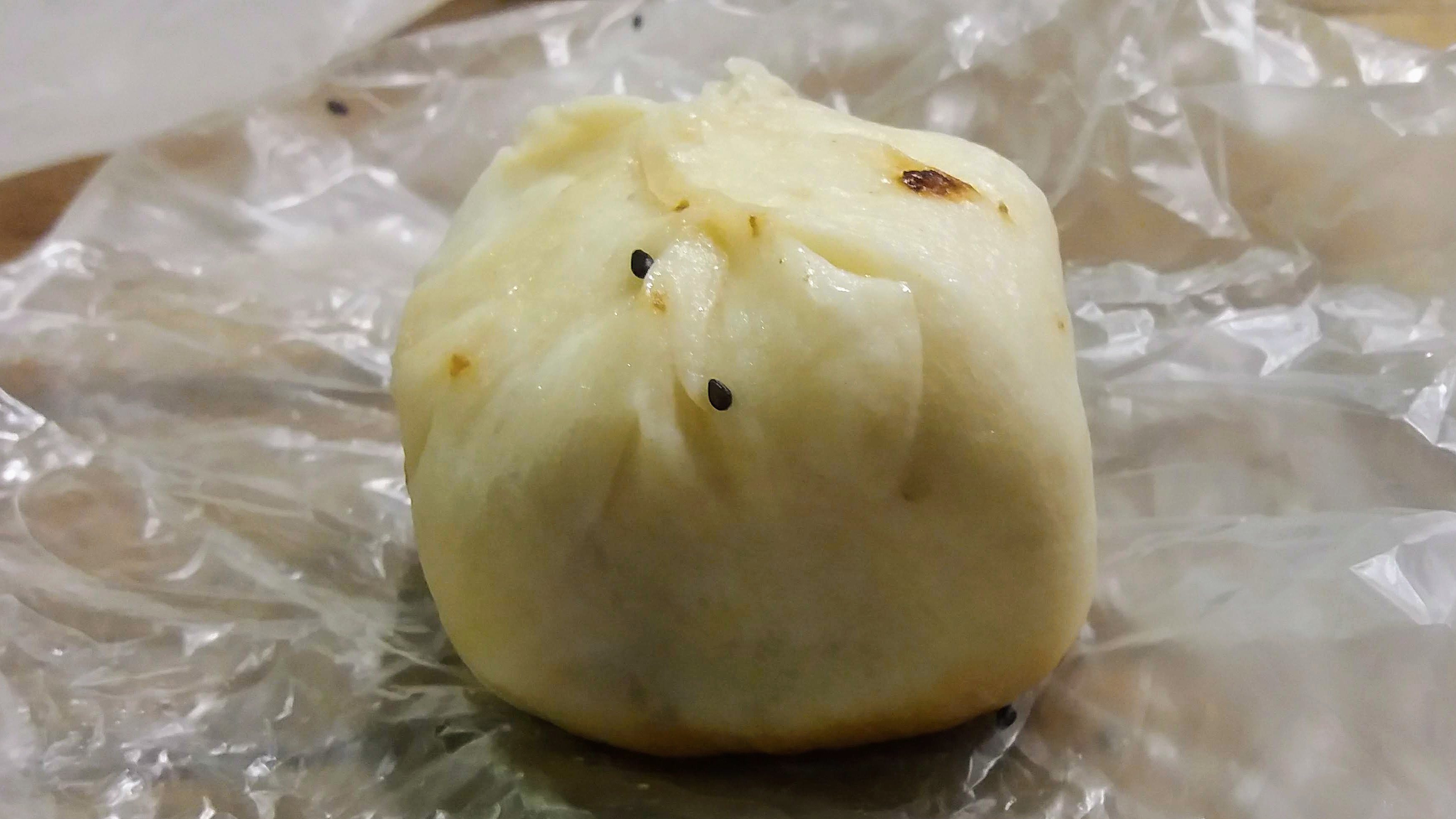
There are things like semi-permanent food trucks, but not all the way to “night market” status. Walk up, buy some food, walk away, zero seating. My Google Maps history says I got out at exit M5 and headed toward my hostel (We Come Hostel), so somewhere in that area there are amazing dumplings. I got pork and cabbage, good alone but awesome with the spicy sauce ($1.25), and the winner of savory food that day was the pork bun. I thought it was a little plain at first because my first bite was bun and juices, but the meat filling was amazing, tender, and a little lemongrass flavored (.50¢).

20190110_204803

Literally any convenience store:
It’s not only local food stands and tea houses that have food adventures. I got a ginger Twix at the corner store. It’s basically a Twix with a gingersnap core. I do enjoy trying local variants of global brands. If you pop in for a bottle of water, take a look around and see if there’s something unique on the shelves.

20190110_205521

Shifen Old Street
While reading about the Shifen Old Street, I discovered a recommended local delicacy of chicken wings stuffed with fried rice. There is one small shop which takes the bones out of chicken wings and stuffs them with fried rice. It’s absurd and delicious. Walk all the way up (it’s not far) and look for this cart.

Jiufen Old Street
This is a foodie bonanza. Other than the night markets, this was the greatest concentration of interesting foods in one place. I didn’t even have time to sample most of it because I couldn’t eat enough! Of what I did get to try, the winners were pineapple cake and peanut ice cream. Pineapple cake is another super famous Taiwan treat. I did not understand what the big deal about the pineapple cake was until I ate some. I had an idea of western style pineapple upside-down cake, which is a bit like a fruitcake and not a thing I’m very into. The Taiwanese pineapple cake is nothing like this. It looks like a very plain beige square, but holds a taste explosion. The middle is a perfect pineapple compote and the outside is a crumbly rich butter cookie.

The peanut ice cream (above) is actually pineapple and taro ice cream with shavings from a huge block of candied peanut wrapped burrito style. It’s a wonderful mix of sweet, salty, fruit, and creamy. I also tried an award winning nougat cookie. The coffee flavor was rich and well balanced with sweet, salty, and bitter. I understand why it won awards. The most interesting was a kind of thin pork jerky (paper thin) spiced with cinnamon and wrapped in seaweed. I would have never thought, but nori and cinnamon go well together. I mostly ate samples because a lot of the goodies were only sold in large gift boxes, but I’m glad I got to try so many things! Taiwan food is epic!

At the Underground Mall at Taipei Station
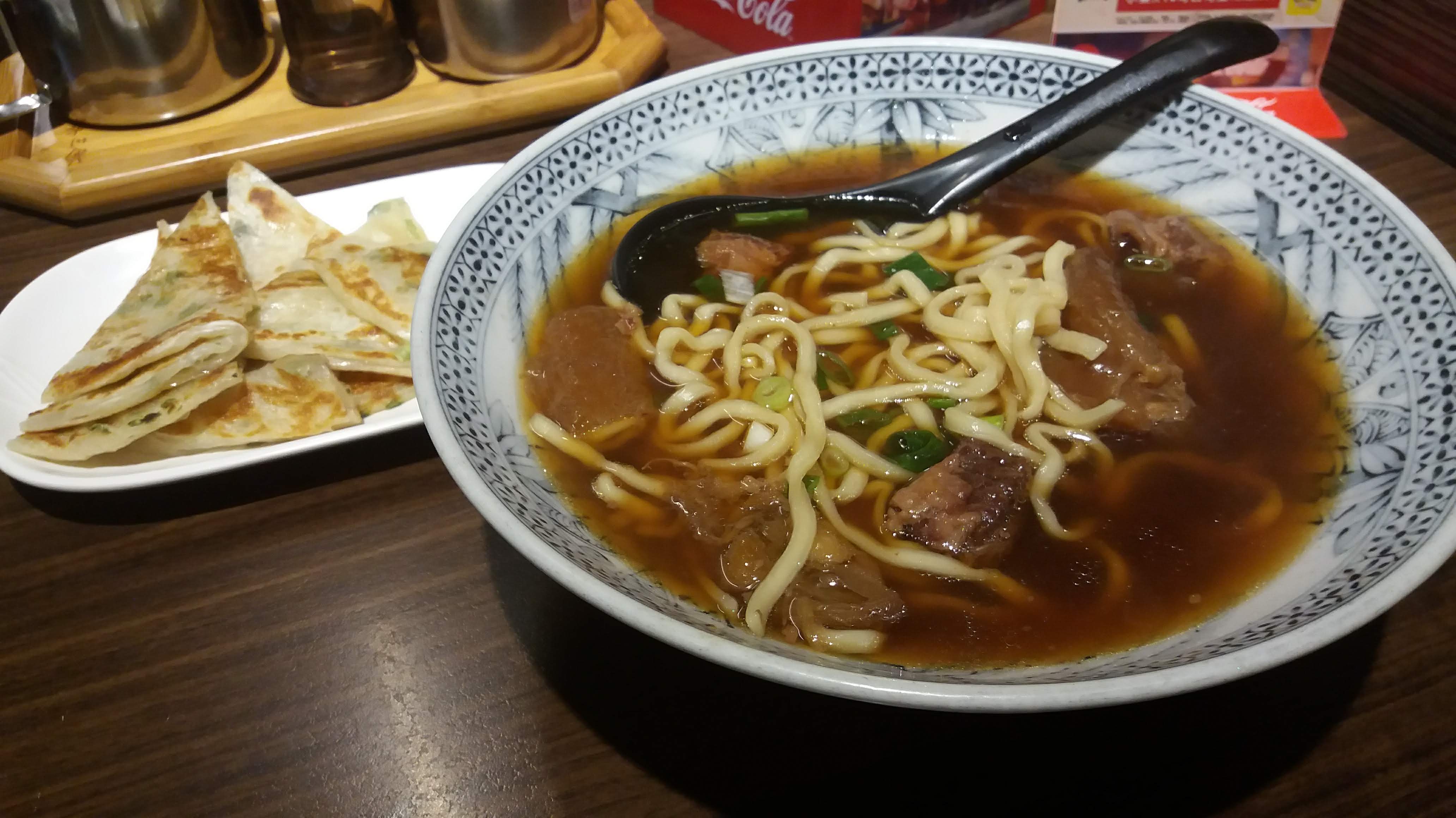
Somehow I was still hungry after all that food in Jiufen, so I got some beef noodles and onion pancake for dinner when we got back. The beef noodles are another famous item, and you can find them just about anywhere. It’s nothing different from what you’d expect, beef broth, noodles, beef and spices… it’s just… yummy.

20190111_174244

Taichung

Yizhong Street Night Market 一中街夜市
I chose a less famous and more local night market at the advice of my hostel, and ate so much food! I had fried squid for dinner and candied fruit for dessert. This type of candied fruit was something I first had in China and love love love. I was only sad they didn’t have the tart haw fruit version, but strawberries are a good substitute. While exploring, I kept seeing signs for black sugar bubble tea, turns out “black sugar” is basically molasses. The tapioca pearls are cooked in the molasses mixture and then mixed into the milk tea. SO GOOD!

Across the street from No. 65, Zhongxing Street, Dongshi District Taichung City
While I was hanging out with another ESL teacher and her local buddy, he drove us to a small hole in the wall restaurant. Google Maps doesn’t have the place I went, but in street view, I can see it’s across from No.65. Look for the teal awning, not the red sign. It’s a Kejia restaurant (Kejia are a local minority people) and I ate so many delicious vegetables.

The Uptowner  雙城美式餐廳
The ESL teacher I met on my trip invited me out to brunch at a local American influenced place. I got these beautiful Florentine Bennys, perfectly poached eggs, and delicious sauces with spinach and tomato added. I know it seems strange to go to Taiwan to eat American, but remember I don’t get this kind of food in Korea.

20190114_135523

Miyahara Ice Cream  宮原眼科
While I was looking online for famous food spots in Taichung, the Miyahara Ice Cream factory came up. It’s a top of the line gourmet ice cream and chocolate place that is in the old remains of a Japanese ophthalmologist’s building. Today it has a magical atmosphere that reminds visitors of Hogwarts. The building alone is worth a visit, but since you’re there, be sure to eat the ice cream too. They do sell single cones and cups out front (no seating), but if you come in, you can get one of the amazing 4 scoop sundaes as I decided to do in place of a normal dinner that night.

The 4 flavors I chose were 44% chocolate (light and creamy), 80% chocolate (dark and smokey), black tea and green tea. When they bring your ice cream to the table, they wheel out a toppings cart and you can choose 5. I went for cheesecake, pineapple cake, fruit candy, butterfly and bear cookies. While I was eating, the staff brought by a bonus raspberry flavor fluffy cheesecake dream to taste, so I ended up with 6 toppings. The ice cream was a bit gelato-like, very smooth, and dense, creamy not icy. The flavors were strong but balanced, and there was so much variety in my sundae I never got tired of combining different ice creams and toppings together. Taiwan really is foodie heaven!

Kaohsiung

Liuhe Night Market/Liuhe Tourist Night Market 六合夜市/六合觀光夜市
The night markets are the best place to get dinner if you’re willing to forgo seating (and it’s worth it to eat standing) At this one, I got baked scallop for an appetizer, Aboriginal style wild boar ribs for the main dish, and Chinese style candied sweet potato for dessert (also one of my favorites from China). It was so much fun to see all the foods on offer and to talk with the vendors. There’s less tourism in Kaohsiung, so they were more excited to have a visitor try their food.

Bonnie Sugar 駁二店 (at Pier2)
Another great example of serendipity. I was just feeling a little hungry after hours of walking and taking photos, so I popped into a cafe in the art area. I was rewarded with an amazing fresh fruit tart that the Parisians would be proud of and a carafe of fancy tea with fruit ice cubes. Too posh!

Near the FlyInn Hostel
Kaohsiung is much more industrial than either of the other two cities and there was very little to eat near my hostel, so I ended up with some strange food choices including whatever this chicken thing is and a random place where the old lady called her son out to help me because my dictionary won’t work on the menu. I really don’t know what it was… mystery dinner!

Just goes to show that no matter where you choose – the 5 star Yelp reviewed restaurant or the soup shop down the alley, you’re going to find Taiwan a gastronomic delight.


If you want to end your view of my Taiwan travel here on a high note, I certainly don’t blame you, but I continue to post stories of my physical/mental/emotional limitations during my travels because I want people with invisible limitations or chronic illnesses to know they aren’t alone and that your limits don’t have to stop you from seeing the world. 

Invisible Illness & Love of Travel

In Taipei, a day of temples and a full day tour wiped me out in the warm weather. Far from being “warm winter”, the unusually hot weather and high humidity (25c + 85% humidity is unseasonable) combined with hours of walking and hiking. By the third day I had to cancel additional sightseeing because the body said no. 

In Taichung, I met some fun people to spend the day with, another teacher who in lives Korea and her local friend. The local friend had a car and offered to drive us around and we had a lot of fun taking photos and being silly tourists together, but at some point I ran out of spoons and had no idea how to explain or adapt with these friendly strangers.

Trying to explain a few of my limitations and the accommodations I’ve made for myself (not expecting anyone to do for me, just the way I’ve come to manage my issues) I got a lot of push back from the girl who invited me along. Don’t get me wrong, it was 90% a good day but it was so hard to get her to understand why I was in pain and tired at the end and why I wasn’t going to be up for more the following day. She’s 13 years younger than me and basically said everything in the “you don’t look sick” playbook. I love meeting people and making new friends, I know I had more fun and more experiences with them than I would have alone, I just hate that I have to push myself beyond my limits just to be the slowest one in a group.

In Kaohsiung, going to Maolin and Foguang Shan on the same day was a lot. I got on the road at 7am, hiked all over a mountain for several hours, navigated the bus system on my own when Google turned out be a liar, hiked more at a mountain monastery (so. many. stairs.) and navigated back to town without relying on Google which is frankly crap about Taiwan public transit info. It was a 13+ hr day, and about 5-6 hrs spent hiking the hills and stairs.

By the end, I was tired, and my feet hurt like hell, but my legs were fine. It’s not a matter of being weak or out of shape because the parts of my body complaining (feet, ankles, lower back, hands) aren’t the muscles used to climb. I slept hard and long, and while not fully recovered the next day, I mentally/emotionally felt better than I did after the tour group day in Taipei or the day in Taichung with the other teacher and her friend.

It seems I just handle the challenges better when I’m on my own time table rather than trying to keep up with others. Being on my own still isn’t 100% guaranteed to be “at my pace” because sometimes I still have to hurry to catch a bus or something, but it definitely has less negative impact on my well-being. It makes me a little sad to think I’m just going to have to turn down invitations hang out with fellow travelers on the move, I love meeting people, and I get lonely quite often, but knowing I can achieve my travel goals if I’m patient with myself is something that can help me out while I’m on the road. 


That was my reflection at the end of the Taiwan trip a year ago. I still think it’s very much true. Even just walking to dinner with friends from the office, I struggle to keep up. In Ireland, I could see that some terrains I pulled ahead and in others my travel companion did. I had one good “hiking” day in Korea last fall, but mostly because we all agreed to go super slow and stop often for photos and the weather was awesome. Here in Spain as I write this I can tell that some days I have more or less brain fog, or that my ankles or knees are more or less able to handle the stairs. It’s not fun, but I can handle my body and brain most of the time, even the bad times. The hardest part is the isolation I feel when I get left behind because other people can’t. I ask if you have a friend or relative who is fine one day, but can’t do anything the next, don’t make a fuss. If they are a little bit slow, just slow down, too, but don’t say anything about it. It means more than you can imagine to be included without being made to feel like a burden.

Get By With a Little Help From My Friends

I know I publish in a maddeningly irregular schedule. The reality is, this blog is my hobby and not my job, not even a part time one. I actually spend money to run this sucker and I’ve been able to do that for 5 years while never asking for anything from the readers except possibly some likes and subscriptions which are really only for the serotonin boost because I do zero monetizing here.

I have some deeply mixed feelings about the ability and tendency to monetize every possible aspect of our lives, but that’s not what this blog post is about. This is the first time in 5 years I’m going to ask for money, but it’s not for me…


They say that 40% of America is just one missed paycheck from disaster. That rises to 60% for even a small health crisis. I had a medical disaster in 2008 that I’ve alluded to here from time to time, and it made me understand just how quickly a smart, driven, well-educated and experienced person can go from a reasonably good life to being homeless and unemployed. It’s terrifying. One day I’ll actually write that whole story, but I’m still not ready.

The only reason I made it through is because of my family: chosen and bio. People who let me crash, people who let me use their homes to sleep, bathe, cook, and eat in. People who loaned me money or just bought things for me when I needed it: medicine, clothes, food, gas. People who kept helping me for years, even after I got a job and wasn’t in “crisis” mode because they understood that it can take years to fully recover from a fall like that.

One of those people is my chosen-sister, Carla Jones.

20151216_180348_LLS

We met as teenagers back in Tennessee and when I moved to Seattle, she was only a couple years behind me. She slept on my couch for more than a month when she landed, even though she had a job within a week (a job she still has 14 years later) because she didn’t have enough money to pay first and last month’s rent until she got a couple paychecks under her belt. It was a tight fit. I hadn’t yet broken up with my abusive boyfriend (because I was still in that brain fog of denial and guilt), and the three of us were trying to live in a one bedroom apartment while he was trying to turn me against her to retain his control (which I now know is a common abuser tactic, yay). Seeing the way he treated her was probably the biggest catalyst for me to finally escape.

Several years later, when I was recovering from my health crash I needed to move again. I had been living in the attic of an insanely kind and generous family with a new baby and although I had found a job again, I was still not making enough money to rent my own place. I’d been “paying” about 300$ a month to the household I was living in, but I promise that’s a fraction of what any room in a house in Seattle will actually go for. Really, look it up. There’s people renting a couch in the living room to sleep on for 500-600$. It’s crazy.

They were being incredibly nice about the whole thing, and had not given me any kind of eviction notice, just a request that I move on so they could better use the space for their own family. Reasonable! Meanwhile, Carla’s living situation had become untenable. She was living in a rundown basement apartment with a slumlord of an owner who refused to fix anything including the leaks that were contributing to the masses of mold, and an ex-con, ex-roommate who refused to get their stuff out of the apartment.

We decided to pool our resources and move in together. I didn’t have much in the way of money, I was making thousands less than her, but I did have good credit (thanks dad), and the tenacity to spend 3 months searching every apartment for rent in Seattle to find The One. In the end, I found us a space with 2 bedrooms, 2 bathrooms, a dishwasher, a disposal, a fireplace, and a balcony! For only 950$ a month!  My problem? I didn’t HAVE half of rent, plus half of internet, water, garbage, electric, etc… I had taken a shitty phone job expressly because it paid 100% of my health insurance premiums and I was still hella sick.

Despite the fact that Carla also has a chronic illness, she was in a much better position. Her job was unionized, and she couldn’t lose it for being sick. She had a home office, so she could crawl from the bed to the chair on bad-but-not-too-bad days. She had disability insurance that would pay out if she had to miss too much work. She agreed to take the larger bedroom with the en suite bath and to pay the lion’s share of the rent and shared bills.

I honestly have no idea how much money this saved me during the time that we lived together, but I know that I would never have been able to achieve my current dreams without her support. When I left in 2014 to move to Saudi Arabia, she let me pack my things into the front closet, and to leave my furniture, books, tv, art, etc all around the shared space. It saved me the cost of a storage unit at a time when I was sure I’d be returning to Seattle to live again.

On top of the financial help, Carla has been a steadfast emotional support to me since we met. She accepts all my weirdness and all my illness without batting an eye. In many ways, that’s worth even more because there’s no way to measure love.

I could tell you more about Carla’s life, about her childhood poverty, how she lost her mother because of doctors who were too biased against women and poor people to find the cancer until it was too late, about her lifelong battle with extreme migraines and trying to navigate the same biased healthcare system that killed her mother, how she struggles daily to be understood as a person with an invisible illness.

I could tell you how she loves tacos and crazy socks and weird hats and dressing up like a zombie. She is one of the kindest and most generous people you’ll ever meet. She’ll give whatever she has to help others, even when she probably shouldn’t. She’ll feed anyone that comes in the door, and loves to make Christmas stockings full of shiny dollar store junk because everyone should have a full stocking Christmas morning.

She cooks the most amazing food, and I could tell you about every magical birthday cake she ever baked that made me feel loved and special. How one year, while I was deep in a My Little Pony obsession, she figured out how to make the MMMM cake (Marzipan Mascarpone Meringue Madness) because she saw how happy it made me.

I could tell you about her for thousands of words, and hundreds of pages because she is that much a part of my story. For more than two decades she’s been there for everything, and now she needs more help than I can give.

She’s having another flare up that’s causing her to miss a lot of work. She’s not going to get fired, but she could get evicted because landlords don’t wait for disability insurance to pay out. While she’s sick, she doesn’t get a regular paycheck, and the disability insurance is taking an unusually long time to come through. She’s burned through her savings and although I’ve been able to take some of the pressure off by paying a few other bills, there’s just more than I can do alone, however much I might want to.

Today I’m asking in the true American crowd-fund-your-illness tradition, but not for myself: for Carla. If you like my blog (which is free), think of donating to this fund as a way to say thank you to me by helping someone I love. If you have a friend or relative with a chronic illness, and you know what this is like, spare a couple dollars. Every little bit helps. Click the link or button to open a link to the Just Giving page for Carla:

download

I hope that you and your loved ones never have to experience these things, but if you do, then I hope there is a world of kind strangers out there willing to lend a hand, too.

Thank you everyone!

283338_1029369291415_4319378_n

Travel & Invisible Disability

I am not a “normal, healthy person”. I have been diagnosed with a wide variety of “low grade” / “high functioning” disabilities. One was actually considered severe enough to get me financial aid and accommodation for my BA studies, but only accommodation by the time I got to MA because the state of Washington didn’t have enough money to give to priority 2 disabilities. Priority 2 or “high functioning” are considered to be people who are strongly impacted by a disability, but still able to care for themselves without outside help like an in-home nurse or expensive medical equipment, and mostly still able to participate in socially economically valued work with only moderate limitations or accommodations. They’re often also called “invisible disabilities” because … “You don’t look sick!”.

I don’t feel the need to list my diagnoses, or defend my illness. That’s between me and my doctor. If you want to learn more about invisible disabilities and how you can be a better friend/boss/family member to people who have them, please read more on the youdontlooksick website. This post is about what it’s like for me personally to travel abroad with an invisible illness and how I deal with it physically and emotionally.


The Background:

Just living my life I try to spend at least one day a week doing nothing, or as close to nothing as possible. I might do laundry or take a shower, or wash some dishes. And somewhere, there’s a “more disabled” quotes because I hate comparing disability or trauma because wtf that shit is relative not absolute, person who is like wow laundry! Laundry isn’t nothing; that’s like 4 spoons, are you kidding??

Image result for spoon theory meme

*Follow this link to read about Spoon Theory in relation to Invisible Disability
If I go more than two weeks without this rest day I get pretty messed up. Again if you can’t imagine, think of how you feel if you miss two nights of sleep in a row. You can still go to work, but it sucks a lot and everything is harder.

Think of my body like a very fuel inefficient car. I get 12-15 miles to the gallon. Average is 25-30, and very fit people are like Priuses… in a lot of ways. You can’t turn a lemon into a Prius with diet and exercise. Even when I’m putting a lot of time and energy into my body, it isn’t going to do much better than about 20-25. So if I spend a lot of time, money, and effort I might be able to reach the low end of average? And then have no time money or energy to do anything else… yeah, I’ve tried it before, special diet, measuring all the food, exercising every day, and it helped me get in better shape, I could do more exercise, I could hike a bit better, I thought “wow this is so much improvement for me” until I went on a short hike with some very physically average people (not athletic types) and was left in the dust…

People say “you can do it if you’re determined enough”, but when you have a disability that limits your metaphorical mpg or spoons, it can take more energy to get to the healthy food and exercise than you get back by doing it. It stops being worth it. If you’re tempted to say “but…” or offer some advice, please, please, go look at the You Don’t Look Sick website first.
Image result for spoon theory meme

In nearly every vacation/travel in my life before the summer of 2018, the trips were so short that even if I pushed myself to the limit of my ability, I could rest when I got home. This summer, I was on the road for 7 weeks and I learned the hard way that is too long of a time for me to “push through”.


The Buildup:

Paris:

Unable to keep up with my friend and her family, I wonder if there’s something wrong with me. I often struggle to keep up and I tend to think it’s because the people I meet on travels are a bit younger and more athletic, but I’m finding I really need more rest stops than the average bear my age and older.

It wasn’t until I was seated at dinner and realized I was struggling to mentally focus on what the kids were saying that I realized how tired I actually was. I don’t know how much is jet lag, how much is the weather, and how much is just my ever decreasing number of spoons.

I think once I’m free to sit and pause for rest and refreshment at my own pace it will be better? I don’t mean to complain (except about the heat) I’m having fun. I’m just worried about spoons.


Belgium:

(after returning from Sunday in Ghent) My feet reached a point of pain that is found only in uncensored fairy tales. I remember in the original little mermaid she felt like every step was walking on knives. Ursula had nothing on this OG witch. We’re talking Bruce Willis at the end of Die Hard levels of foot pain. I honestly expected blood when I took off my socks.

Image result for die hard foot pain
I have a known medical issue in the left one and usually wear a compression bandage when I’ll be walking a lot. I think the right foot was forming a blister under a callous.
My back was almost entirely unwilling to bend. I really puff up and stiffen in the heat, and the more I stand and walk the worse it gets. I’m not trying to be a whiny baby, I went anyway. But it’s not a thing I can push through forever.

I ditched all my Monday plans. You can’t enjoy things if you’re too tired or in to much pain. Instead I woke up around 8 and made myself a Brie sandwich for breakfast and ate the rest of the chocolate (I’m in Belgium, for heaven’s sake) then passed out again until after noon.

Tuesday in Brussels: The high temperature today was only 16C. It was such a relief. I am in denial about how badly the heat affects me. But every time it cools off, I have so much more energy. This is not to say I was filled with energy today, but I went from feeling like the walking dead to merely slightly sore.

I’m having an early evening, more rest maybe another hot bath later on. I feel like such a broken human that I can’t keep going without so much rest. I don’t know why. I know I need to rest when I’m at home. I usually have at least one “do nothing day” a week to keep myself going. Yeah, that’s life with my invisible disability. It’s so hard to do that on holiday, though, I feel like I’m missing out or not talking full advantage and I just have to keep thinking of that night in Thailand when I hit the wall so hard I crashed. I am not giving up on adventure life just because I don’t have perfect health, I’m going to keep living to my fullest, even if that isn’t someone else’s fullest or even younger me’s fullest. I’m going to do self care and be ok with resting and watching cartoons on vacation so that I can really enjoy when I do go out to do things.


The Netherlands:

(Airbnb in Lanaken, Belgium. Nearest “city” Maastricht, Netherlands.)
It turns out misophonia sound triggers are a real thing for me. I had them in Saudi but was so emotionally wrecked there from other problems that they weren’t a huge change from my daily state of mind.

Related image
It happened to me in Korea this year where a produce truck came and parked near my house and just left his loudspeaker going. I went from annoyed to panicking, my heart rate soared and I couldn’t think. I tried closing all the windows but the sound was too loud. It isn’t just volume, I listen to rock and roll super loud and love it. It’s about not being able to escape. The sound is an invading force, it’s attacking me and the flight/fight/freeze response in my Amygdala is triggered. This one is especially “fun” because it could be related to any one of my diagnoses, since it can be a symptom of several, but I’m not really interested in fighting through more doctors to find out since every visit to a doctor is a fight to be believed and treated. The cost/benefit of seeking help is a thing we have to consider very carefully when we have limited energy to invest.

Anyway, here I am in my Airbnb making coffee and reading Facebook, and the church bells start. Normally, church bells ding for the hour and then stop, but this day they don’t stop and suddenly I feel it starting. I jam my fingers in my ears and start humming to try and drown out the sound and every time I check it’s still going. Not even a tune, just ding ding ding ding ding ding ding ding ding ding ding ding ding ding ding ding ding ding ding ding ding ding ding…

Then I’m just standing in the kitchen fingers in my ears trying to do parasympathetic breathing to bring my amygdala under control and I realize that I’m in terrible fear of becoming too broken to function.


The Breakthrough!

This is why the obstacles are hitting me so hard emotionally, of course heat and culture shock are contributing factors but this has been so much harder than previous challenges emotionally and I couldn’t figure it out.

It has been like peeling an onion to get inside this thing. Yes it’s too hot, yes there’s culture shock, and the nature of the obstacles themselves, the bathroom is too far away from the bedroom, the transit is unreasonably difficult, and the conservative old white colonialism-is-great attitude in the Netherlands was seriously harshing my groove especially compared with the vibrant multiculturalism of Paris and Brussels. And finally today I got to what I really hope is the gooey center of this Gobstopper of ick, the fear of being too broken to function, fed by all the above issues.

But this is it. I’m afraid there will come a point when I can’t manage. When my dream, which I just got a hold of these past few years, will slip away as my body and mind betray me and I sink back into a life of mere survival. I did that for so long: find the only job that you can manage with your existing disabilities, lie about them so you don’t get fired, spend 90% of your free time resting and hope your friends and family don’t give up on you.

Image result for brain fog meme


The Resolution

“What can I control” is one of my lessons from Saudi. Life is full of crap you can’t control, expat life maybe more so. KSA life? Woah. The point is to survive in that kind of mess you need to focus on the things you can control to maintain balance against the things you can’t.

In my case, that means a lot more “me time”. I was worried going into this summer that I wouldn’t get that. Even slow days involve a lot of variables and people I can’t control. I’m staying in other people’s homes. Even with a private room, there are elements I can’t control.

Image result for saving spoons
Everyone understands how much it sucks to get sick on holiday, to feel like you lose precious vacation hours to illness but also most people think you should just push through if you can. I find I don’t enjoy things as much if I’m feeling like crap. I do what I can to prevent getting to the point I can’t do things, and sometimes that means spending hours resting when I don’t feel sick yet.

I’d love to be normal bodied. I’d love to be able to just go and do. I’m not saying disabled people don’t have worth or can’t enjoy life, but I don’t know anyone who wouldn’t rather have full functionality. It doesn’t benefit me to spend so much of my life resting except that it allows me to live the other parts more enjoyably.

I remember how devastating it was when I was told I was going to be sick forever and the long list of things I couldn’t do. I was so relieved when that turned out not to be as bad as the doctors told me, and I’ve been trying so hard to accommodate myself, but as I get older, my symptoms are getting worse.

Every year my body’s response to the heat it getting harder to bear. It went from ‘getting slightly swollen feet and needing more rest’ to ‘watermelon feet that stay swollen all summer and not being able to be outside for more than an hour before I just start shutting down’. If you don’t have a disability, you might not realize what ‘shutting down’ looks like. Watch a tired toddler. Or imagine how you feel after a very intense weekend of high activity and low sleep. Yeah, it can take ableds 16+ hours to get as tired as I get in 1-2 hours of high heat.
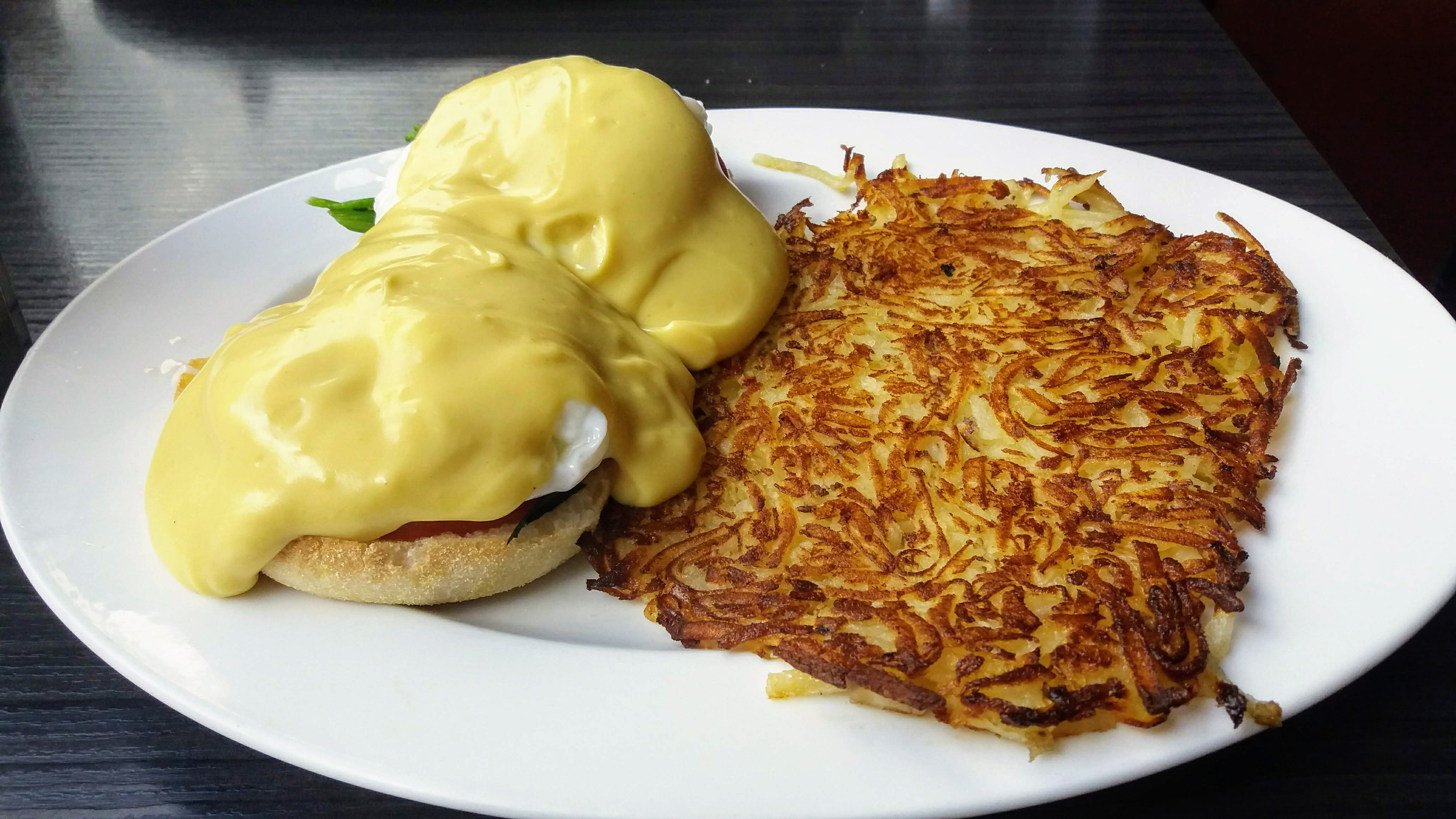
I tried to keep up with a faster walking woman I met at the brewery and got lunch with and had to quit because aside from the fact that I was feeling like I was at the gym instead of on holiday, I got a blister after just 15 minutes of walking at her pace. Yes, part of that is being “out of shape” but if it had been cooler weather I could have done better, I know because I do better with physical activity under 18°C. No hot yoga for me.

What is the worst that could happen? I think Thailand showed that. I ended up so thrashed I couldn’t do anything. Instead I have to try and make sure I’ve got the spoons to do the things I was most interested in or already paid for and I let go of the rest if conditions aren’t right. I’ll still do and see more than I would if I didn’t go at all.


The Aftermath

By Hamburg I came to terms with the fact that it is ok to just relax on the sofa with the windows open and enjoy the breeze from my bed. I gave myself permission to be comfortable without feeling guilty for “wasting opportunity”. I don’t have to go someplace less comfortable, that requires more clothes or money just because I’m in another country.

By Copenhagen the weather had returned to temperatures that were no longer destroying me and I found that I had the energy to get up at or before 9am and keep going until midnight or later for several days in a row. Even with better weather, after about 4 days of this I really wanted a rest day, but my friend felt very left behind because had to return to the Airbnb to long into work every afternoon/evening, so decided to push through to spend one more day with her. It wasn’t ideal for my health, but it wasn’t a catastrophe either. I was able to take my rest day when I arrived in Sweden.

Sweden was the best environment for my body and mind. The weather was great – cool and lightly rainy (some heavier rain, but I was lucky to always be inside or driving for it). My pain was mostly gone and my energy was way up. If it weren’t for the record of notes I kept in earlier parts of the summer I might have thought my memory was playing tricks on me in regards to how bad I’d actually felt before. How can a body go from being so inoperable to being mostly fine from something as simple the weather? I still don’t know, but it’s becoming increasingly obvious that I need to do my best to avoid high temperatures, and to accept that my limitations apply to long term travel, not just when I’m at home. It turns out napping on vacation can be pretty cool, too.