I Want to Learn the French Art of Living

Why are you going to France?

It was astonishing how many people asked a version of this question. While it is true that I often travel for a job, I’ve visited 5-6x as many countries for pleasure as I have for work, and until this spring when I decided to stop working in order to take my holidays at a nicer time of the year, no one asked me why. “Because I want to”, was the real answer, but it seemed to confuse people. Other times, I told people I was going for the food, but most who have never been to France simply can’t imagine the food here being that much different. I once counted myself among them, but after my first meal in France, I thought that I had died and gone to food heaven. 

Now that I’ve been in France for a couple of weeks, I know that what I was struggling to find the words to say was that I wanted to go to France to learn the French art of living. The French call this “Joie de Vivre” (Joy of Life), but it is perhaps better translated as “The Art of Living Joyfully”, and it’s a very deep rooted value in French culture. Joie de vivre isn’t about parties or euphoric joy, it’s finding happiness through living. Since arriving in Tours, I have been receiving a swift and enlightening crash course.

Musée des beaux-arts – “La Joie de vivre” (Victor Prouvé, 1904)

Practicing Kindness

I will say again that French people in general are more likely to be kind than rude (I’m sure they can be rude when called for, and that there are some percentage of rude people everywhere, but rudeness is not the default way of life). My first week in town, I had to run errands and do shopping while jet lagged and after my 3.5 hour French immersion class which left my brain feeling like a wet noodle. I could barely make comprehensive sentences in English (my native language) let alone in French. Despite my overt disorientation, every shopkeeper was kind and patient with me, most were even happy to use both French and English with me when I explained I was learning, giving me a chance to practice but also helping when the language was outside my skill.

I have not formally studied French since middle school. I came into this language program with a hodgepodge of random vocabulary and grammar that does not conform to standard learning levels in any way. I am not a quiet student, but I also felt that if I asked about everything I didn’t understand, I would derail the whole class. On my second day, I experienced an intense moment of frustration, and the teacher worked very hard to find out what was confusing me. I wanted to shut down and look it up later in private, but she worked it out with me in class. In the moment, I wasn’t happy to be the focus of so much time and attention, but in retrospect, it was a glorious act of kindness and support on her part. I’ve done the same for my own students, and it’s eye-opening to feel it from the other side.

I also had some disappointment in the apartment when I arrived –the washing machine was broken, and there was no Wi-Fi. In most other places I’ve lived, these kinds of problems were dismissed and I was left to handle them on my own or forced to nag the property manager (my last apartment in Korea was a nice exception, those people were great). I didn’t feel any animosity at the lack of amenities. I had of course emailed ahead of my flight to be sure that I would have access to a washing machine and Wi-Fi (among other things), but my response to the absence of promised resources while traveling abroad is less often anger and more often resignation. 

To my surprise and delight, the owner of the school arranged for me to get 120gb of data for the month so I would be able to do things like make video calls, watch YouTube, and write in my blog. His efforts were above and beyond what he needed to do to meet his obligations to me as a paying student. The landlady came the next day with a repair man to fix the washing machine, so it was working again before I had a full load of laundry. While we waited for the repairman to finish his work, she engaged me in conversation, despite not speaking any English, and was patient and kind with my poor French, repeating things more slowly or finding simpler phrasing. She told me about several beautiful tourist attractions around the area that I look forward to exploring.

It’s hard to believe, but even panhandlers on the street here are nicer. I don’t speak French well and in any case have fallen out of the habit of carrying cash. I have nothing to give them, but even after I tell them this, they smile and ask where I’m from, try to speak some English with me, and wish me a good day.

Receiving Kindness

This is all in stark contrast to my experience in Sénégal where I was promised support and given none, treated brusquely by shopkeepers, and viewed as a walking wallet by most. Even in the US, my job had offered support and fallen short, resulting in an overabundance of stress, and my co-workers (who are nice people) still took a couple months to really warm up to me.

My knee-jerk response to this level of kindness and support was shock. For the first several days, every time it happened, I gawped like an idiot, stunned for a moment before a part of my mind went, “it’s ok, relax, trust, let yourself be supported by your fellow humans not because of prior relationships, not because of obligations, but merely because we are humans together.”
Photo Credit:  www.semtrio.com/

It wasn’t until later when I went to write about my experiences that I realized how much I craved this kind of human connection. I love my friends and family, I enjoy forming relationships with my coworkers, but there’s something deeply healing in looking up from our bubbles and saying “hello fellow human, this world is tough enough, so let’s do our best to make it softer for each other while we’re here”.

A Culture of Joyfulness

By the middle of my second week, it was apparent that the effect of joie de vivre is exponential. When everyone is focused on enjoying the little things, it’s easy to be happy and kind which makes everyone happier and kinder. Joie de vivre isn’t at its best when experienced in isolation, it’s something that needs a majority of people to buy into in order to reach its full potential. I can feel it soaking into me, too. I don’t need or want to run around looking for one exiting experience after another because the everyday life here is good. Not ecstatic, or overflowing with awesome, just persistently good.

The other day I gave my seat on the tram to a mother with two younger girls. I enjoyed watching them interact on the trip. The girls were talking about my blue hair, and when they got restless, the mom played “find that body part” (where’s your nose? touch your ears!, etc.) which was also fun for me because I’m not the best at French vocabulary. I was able to relax and enjoy the experience. It made me smile to see their small delights. No one was giving the mom dirty looks for her kids being kids, and the mom didn’t have to be self-conscious about playing with her kids on public transit.

Joy and Other Feelings

Joie de vivre could be compared to the practice of mindfulness, in that one of the goals is to be present in the present. Lingering over a meal, sharing an afternoon with friends, and watching kids on the tram are all wonderful examples of the everyday, but international vacations and once in a lifetime experiences are not excluded. The definition of joie de vivre isn’t what you are doing, but how you are doing it: a lunch without an agenda, a hangout with friends for no reason, an international vacation without the stress of focusing on what could go wrong, or what is waiting for you when you get back.
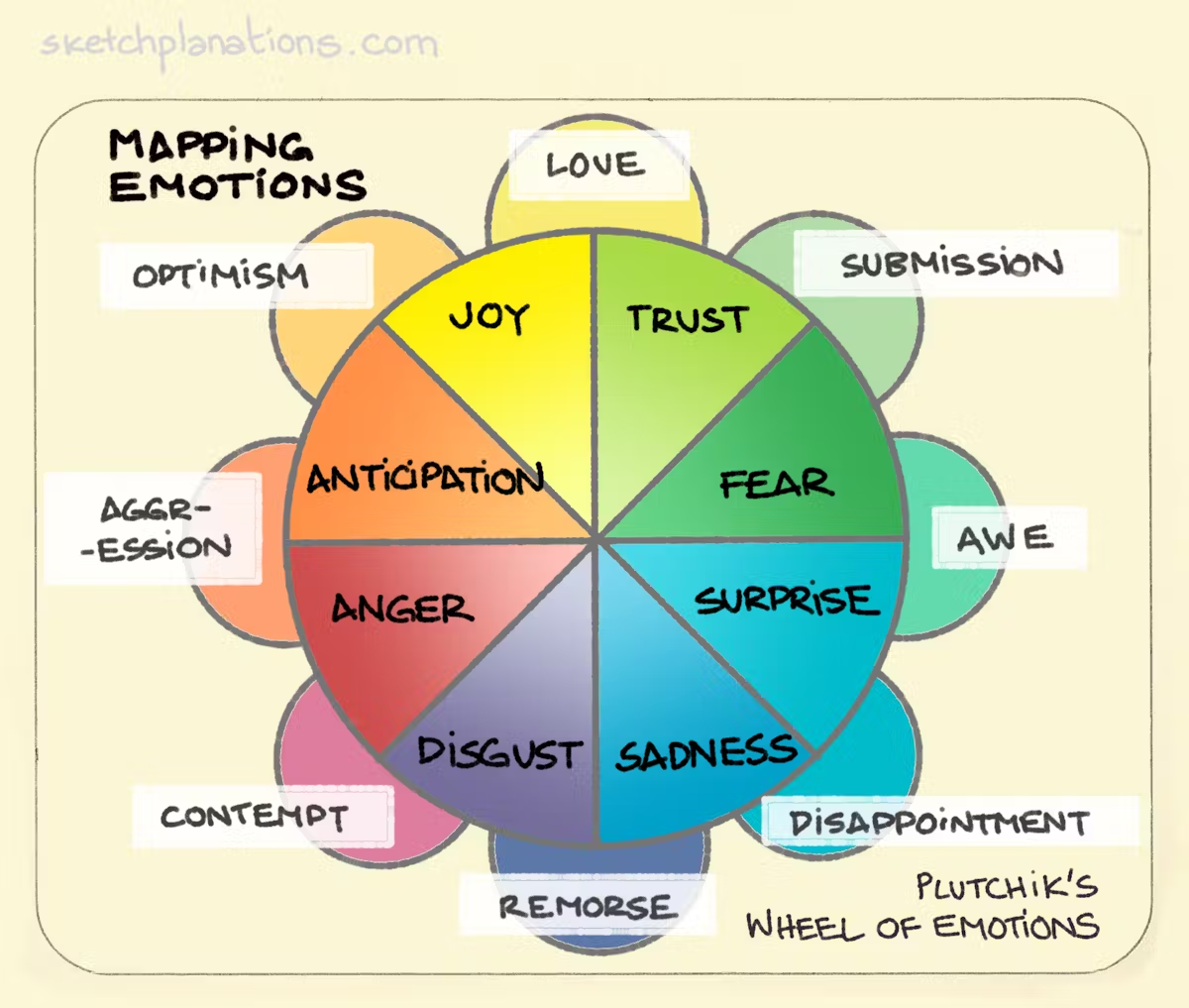
Joie de vivre also isn’t about being happy all the time. Obviously the French have “negative feelings”, I mean, have you read Sartre? But a range of feelings is the normal human experience. The impression I get is that “pretty good” is the baseline here, and feelings of more extreme happiness, sadness, anger, boredom etc. are all coming from and returning to that. In contrast, when I look at people in the US and a few other places I’ve lived, I see them defaulting to a baseline of “meh” (numbness or boredom) or even a baseline of anxiety and sadness. Image Credit: https://sketchplanations.com

Regardless of what culture they are from, people are capable of feeling a full range of emotions, and a normal human will experience most of them in a lifetime, but living in a culture that forwardly values kindness and everyday joy makes a difference in everyone’s quality of life.

Can Americans Live Joyfully?

My initial answer to the question “Why are you going to France?” was often greeted with the suspicion that anyone going to live in a foreign country and not work for a couple of months just to enjoy things was dangerously decadent. This happened so often that I began to become suspicious of myself. Was I leaving my students and co-workers in the lurch? Would they be ok without me? Could I really justify the expense, not only of the vacation but of the time spent not working? The regular messaging of the culture around me made it harder and harder to be sure I was making the right choice.

There is a tendency in (but not exclusive to) American culture to view any action that is not productive (making money) as frivolous (selfish, useless, a drain). For me, joie de vivre is more likely to involve things that make you happy but don’t make money, nor lead to making money in the future. These are things that you do just because you like them (and that don’t hurt anyone else). I rate this kind of joy as sitting from tier 3-5 of the Maslow’s hierarchy. It’s hard to go after it when you don’t have basic needs met, but I would argue that it’s integral to love and belonging, self-esteem, and self-actualization.

When I started telling people instead that I was going to France to study French, they seemed much more comfortable. Once there was a cultivation of skill involved, it wasn’t just frivolous happiness, it was productive, and that was more socially acceptable. One day as I was hand-wringing about whether I needed to justify my trip to France, someone said to me, “Why are you beating yourself up about this? You deserve this. You can do this without going broke or wrecking your life, so go enjoy it.” It was an extremely succinct account of the two most important obstacles to frivolous (non-monetizable) happiness:  Can you afford this? Have you earned this?

Can you afford this?

Credit: FreePix.uk

It’s a valid question, but I don’t think it’s the only hurdle to frivolous joy. There are many people who do not have travel money, or have other challenges to travel such as health and children, and I’m not suggesting (as I have seen other travel bloggers do) that one can simply manifest global travel with enough bootstraps. Maybe they can’t afford a trip to Paris, but what types of joie de vivre can they afford but are held back from doing because they feel guilty about it?

During my experiences in developing countries where almost no one has enough money, the social values writ large tend to be more focused on “slow living” and finding joy in daily experiences such as community, shared meals, nature, children, and expressing creativity – things that don’t cost much if any money. While people in these cultures may feel guilt about spending money on themselves instead of their family or community, they don’t seem to have any trouble enjoying themselves when it’s not a question of money. Even in Japan and Korea, wealthy countries famous for overworking, I still noticed people placing importance on these types of low cost joys.

Have you earned this?

American culture is embedded with an exchange rate of work for pleasure. You must burn x number of calories to “earn” dessert. You must work x hours to “earn” a break. I talked to people in my income bracket and above who can absolutely afford to travel, but felt that they could never possibly, because they haven’t hit the ever-shifting goal post of “enough work” to earn the pleasure.

The earning in question isn’t financial; it’s the unspoken moral economy. Many Americans have internalized the idea that we don’t really deserve to feel good (at least until we’ve suffered enough to “earn it”, which may mean never). But because we are human, we sneak around with minor infractions we call guilty pleasures while lacking the ability to fully feel the delight these activities should bring because we are too busy feeling guilty and wondering how we’ll be judged.

What will people think? If I eat a second slice of cake? If I skip mowing the lawn to have a nap in the afternoon sun? If I take my kids out of school for a day to drive up to the mountains and splash around in a glacial river? If I leave my spouse to feed themself and the kids and they end up eating Cheerios and ice cream while I have a nice dinner with my friends? If I leave the office when there’s a big project (and there’s always a big project) and my co-workers all have to pick up my slack while I’m tasting wine in the Loire Valley?
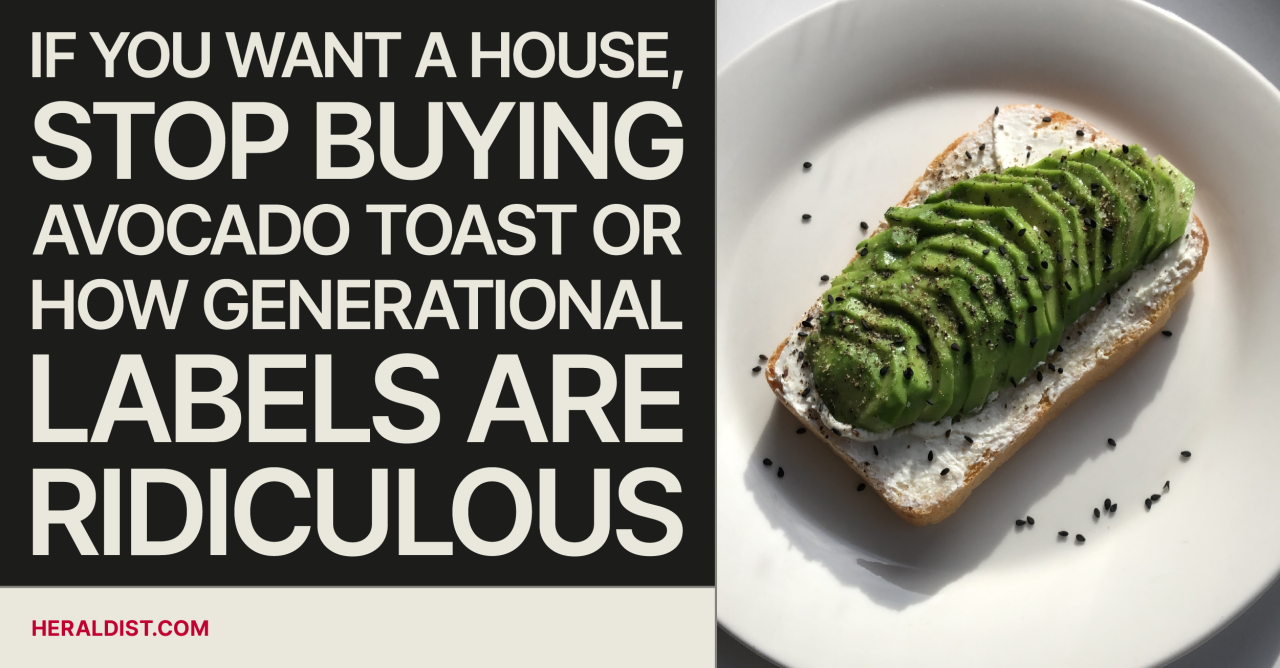
Look at the horrible social media backlash that middle and lower income people get for having nice things deemed by society to be “too luxurious”. When they use food stamps to buy steaks instead of rice and beans, or dare to have a new phone, a nice laptop, play video games, drink frilly coffee, eat avocado toast or anything else that might make life bearable, the internet loves to pile on. Grind culture tells us that the one true path to financial success is to have nothing that brings joy, and only to work as much as possible until you can earn your way to a house, a car, and a (maybe once yearly) family vacation to a theme park.

Let me be clear, none of these examples are likely to result in anything bad actually happening, but the real world consequences are not reflected in the imaginary consequences of people who are held back by these thoughts. The extreme version of this is called “catastrophizing” and people who suffer from this type of anxiety (as you might guess) imagine catastrophic results of actions they perceive as risky. The less extreme version is a bunch of people who don’t critically examine what is likely to happen, they just feel the guilt and shame as a gut-level reaction.

A New Way of Thinking

I don’t take these internalized feelings of guilt and shame lightly. They are deeply ingrained in us from childhood, and can feel like an irrefutable pillar of reality. But they need to go. Maybe in the way black mold or an insidious termite infestation needs to go, or maybe in the way a cavity needs to go: knock down a wall, drill a hole, excavate the rot and repair the damage. It isn’t something a person can just do –wake up one day suddenly be free of the pressure of guilt induced by unproductive pleasure. However, I suggest that everyone reading this start the long and difficult process of releasing the weight of these fears and finding the freedom to do things just for fun. 

“[Joie de vivre is] revolutionary because for work-driven, vacation-and-long-lunch deprived Americans, it almost requires brain surgery. Why? Because to make that lunch a moment with a French touch it has to be just for fun, no rush, no agenda. An American [said] that her French women friends, who are physicians, ‘work long hours but find time to meet their friends, take vacations, and indulge in the life part of life, which is as important or perhaps more important to them than work.'”
— Huffington Post, “What is joie de vivre, and why are the French so good at it?”

This isn’t “run away with the circus” advice. I do not advocate joy at the expense of security or community. We still need to be able to answer the question “Can I afford it” with “yes”. Please do not go into debt chasing a consumerism driven idea of happiness (been there, done that, regretted my financial choices). It’s important to balance joy and responsibility, but until we learn what things are truly our responsibilities and what things are the weight of other’s expectations and demands that we have taken on unnecessarily, we won’t be able to say “yes” when asking “Do I deserve it?”

Once we are able to accept that we deserve to enjoy things without having to earn the moral currency to do so, there is a different way of life ahead. 

They Say You Can Never Go Home

“When I’m talking and someone else is listening, I am invariably left with the uneasy suspicion that I’ve made myself quite tiresome. If one is really bursting with things to say and has no one to say them to, perhaps the only recourse is to go forth and accomplish earth-shattering deeds, so that when the time comes for an autobiography, one need no longer be concerned that no one will take any notice. This is a childish fantasy, of course, of which I have been disabused as I have slowly come to realize that I have scant hope of becoming a celebrated public figure worthy of a best-selling autobiography. Better, then, to write a little about myself and let off some steam, so that I don’t become an insufferable chatterbox when I get old.”

Written on Water by Eileen Chang,  Chinese-born American essayist, novelist, and screenwriter
— written in Japanese occupied Shanghai and first published in 1944.

My last post was more than 8 months ago as I left Senegal to return to the US. I always seem to have a hard time writing when I’m in the US because it doesn’t feel like “travel” or “adventure” to me the way being in other countries does. When I return to Seattle, I focus on enjoying my time with friends and family, having quiet daily experiences of shared meals or parallel play, and even when blog-worthy things do happen, the stories feature people who trust me not to share their private lives online. So, I end up not writing at all.

When I made my plans to return to America in 2023 I told myself and others that I would stay for at least 6 months and not more than 12. I looked forward to it. I felt that I had been away for so long that a quick pass wasn’t going to cut it. I wanted to “water my roots”. I wanted to bask in the everyday mundanities of my friends’ lives, to see the seasons change, to celebrate the holidays of my childhood. Being a long term expat means never giving up on the idea that our country of birth is our true home, while also never quite being as comfortable there as once were.

I wanted to work in the US, not only for income, but also to give my days structure. COVID era Korea and the schedule nightmare of Senegal left me for years in a state of temporal blur where days ran together and there never seemed to be a good enough reason to do anything. During my sojourn in the US, I neither wanted nor needed to work full time. My goal was to soak up my community, not to sink into a daily grind. A part time job would keep me from decimating my savings, and give me a regular routine, but leave me with plenty of free time to enjoy being home.

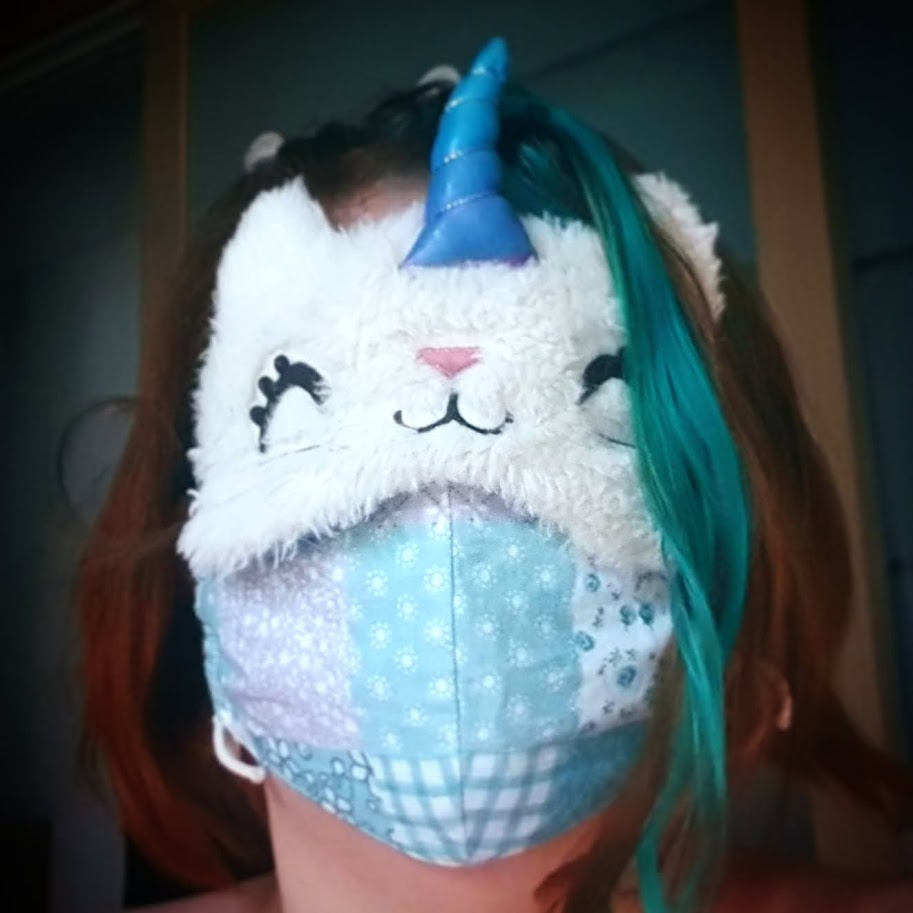
In reality, I accepted a full-time position teaching an English immersion course for immigrants and refugees. The position came with a lot of challenges, but possibly more rewards. Being back in a physical classroom with a regular schedule and the ability to form a relationship with my students was so good. Learning the bureaucracy of the WA state college system… less so. (drawing of me teaching courtesy of a student’s daughter. I was wearing a floral patterned mask, not speaking with a mouthful of marbles, lol)

Meanwhile, when it came to housing, I knew I didn’t want to rent my own apartment since that would mean committing to a full year lease, and likely cost 1500$+ a month. Therefore, I arranged to move into the spare bedroom of a former roommate. After just 3 months of living together, it became clear that whatever had changed for us since our last cohabitation made a reprise totally impossible. I moved in with some other friends of mine who agreed to let me stay at least through my current work commitments. (pic of the backyard below) That beautiful home with a healthy family and 2 bright and loving kids was an absolute balm to my soul after the back to back combo of the pandemic isolation and the Senegal experience.

Nonetheless, it was always destined to be a short term solution, and I had to start seriously considering my options: renew my contract at this reasonably good job and work on finding a place of my own in the USA or bounce?

Reverse Culture Shock

Coming back to a life in the USA isn’t as simple as it sounds, and however much I may love my home and my community, there is no going backward when it comes to the march of time which wreaks changes in both society and personal growth. When you travel, you leave your familiar surroundings and go to a place where you are shaped by different forces and grow into a new version of yourself. While you are gone, the place you left behind also continues to evolve, shaped by local and world events, so when you return, you no longer fit. It is uncomfortable, and often more unnerving than the experience of not fitting in with a foreign culture. Abroad, you know you are the alien, but at home a part of your brain is constantly telling you that you are SUPPPOSED to fit here. It’s a dysmorphia of the whole sense of self.

But Kaine, you’ve been back to America since you left in 2014, you saw the changes as they happened! Yes and no. I saw America during my vacations the same way any tourist might see a country they visit for only a few weeks. I focused on excursions and experiences, the only real difference was that I made excursions of visiting friends and family rather than visiting tourist attractions. I planned sailing days and camping trips and cookouts. I went to house parties and dragged people out to karaoke nights. I didn’t pay a lot of attention to the cost of groceries or what was happening in politics. For those few weeks at a time, America wasn’t my “home” it was my holiday, and it wasn’t until I was back in my home abroad that I returned to viewing the US economy and politics through the lens of the internet.

This is an excellent article about the experiences of long term expats returning home, and honestly reading it made me feel both seen and called out.

“Americans often develop new attitudes, values and perceptions as a result of their travels. These can often cause stress on reentry.

  • I see America through a sharper lens, both its strengths and weaknesses. I no longer take this country for granted and I really resent unbalanced criticism by Americans who haven’t experienced the rest of the world.
  • I see the validity of at least one other culture. That makes me realize that the American way is not always “right” or “best.” I am impatient with people who criticize other countries and blindly accept everything American causing them to never question anything.
  • I have an unclear concept of home now.
  • I place more value on relationships than other Americans seem to. People here are too busy for one another.
  • Everyone in America is always so stressed and frantic. They never relax. I feel like I can’t relate to others

The Economy

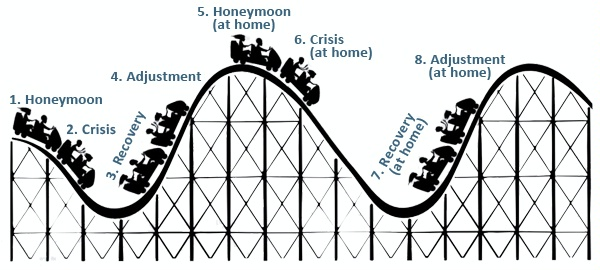
It’s normal to become critical during the second phase of culture shock. I’ve published about these effects before, and the article above is great for explaining how it manifests in reverse culture shock. Nonetheless, even while I was still in the first (honeymoon) phase during August & September, I started feeling the negative impact of some big changes in the US.

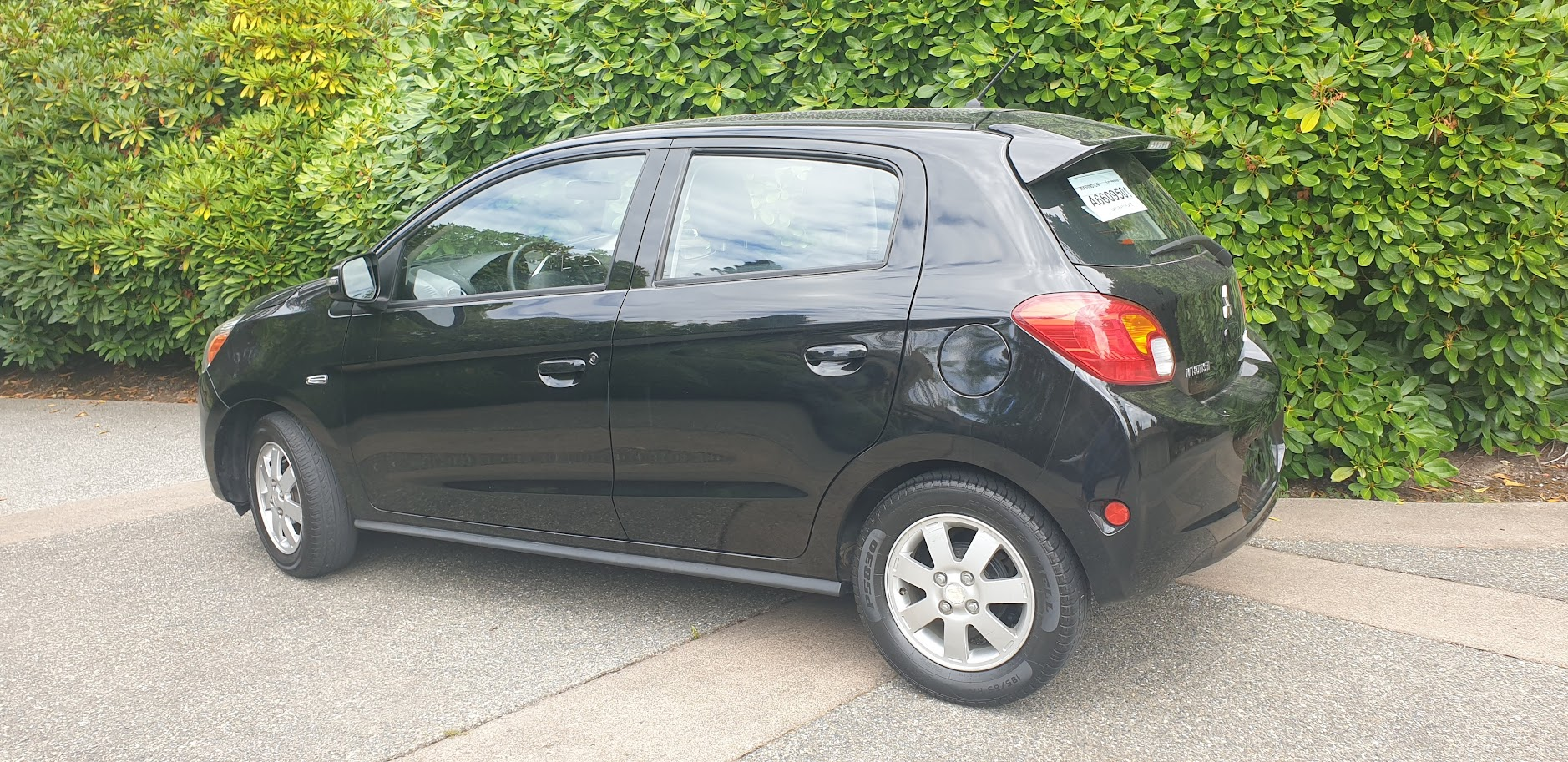
I needed a car because it’s almost impossible to navigate American cities via public transit, but I was absolutely shocked at the prices, even on used cars! In 2015 when I was in the US for a few months doing the paperwork for my Korean work visa, I bought a car for $1,750, drove it while I was in country, then sold it for the purchase price when I left. In late 2023, I couldn’t find a used car for less than about 7k$, and those were very sketchy.

My plan to buy a clunker for under 3k and sell it on to a poor college student went up in smoke. I ended up buying a used car from a dealership and hoping that the good gas mileage makes up for the loss in sticker price when I sell it back.

Then there are the grocery stores. I can’t say exactly why, but sometime after I moved to Korea in 2016, American grocery stores became increasingly overwhelming. I can’t even say it’s the size, because I have successfully gone to large box stores like Home Plus and Carrefour in other countries and not felt the pressure that American stores give me. I remember walking into a Safeway in 2019 and just staring at the wall of ice cream for a full 5 minutes, totally flummoxed by the array of nearly identical products. 

When WA grocery stores became liquor sellers (2012), they had to figure out how to add new products without removing existing ones. The eventual solution was that many stores made the aisles smaller so they could incorporate more shelf space in the same square footage. The aisles got narrower, but stores didn’t replace their shopping carts with smaller versions. By 2023, the sensory overwhelm had gone from merely being too many choices and no way to choose, to a feeling of being totally lost and crowded in by impatient and frustrated shoppers in narrow aisles with giant carts which made passing an Olympic sport.

The products and packaging were unfamiliar, I struggled to assess healthy and frugal choices. Products that I did know had somehow doubled in price, overtaking average inflation at light-speed. In 2008, a person could buy a whole roasted chicken for $5, eat it for several meals AND make soup. An organic bird would be $7-9. Now the conventional chickens are $10+ and the organic/farm raised $12-18. In the end, I found that the only store which didn’t make me want to run away screaming was Trader Joe’s, and I did 99% of my shopping there.

Not only grocery stores, but the nature of in-person shopping had changed across the board. In-store service and options had become extremely limited. Once 24 hour shops had become practically European in their hours, and stores were chronically understocked and underserviced. Several times when I popped into a shop to pick up a small item or to look for something I could touch, measure, handle, or try on before buying, I was told plainly by the clerk that it was out of stock and I should look on Amazon.

Eating out was another huge sticker shock. My favorite Seattle staple food is pho (the Vietnamese noodle soup). At my graduation lunch in 2007, we could get a big filling bowl of rich meaty pho for about $5. Now a bowl of pho is $12-15. I went to a couple of what I would call mid-range independent (not chain) restaurants and dropped $80-100 on a single meal (after taxes and tip). Many places I lived and visited abroad, you could get a high-end meal out for between $25-40 (inclusive of taxes and service).

mahalie from International District, Seattle, Washington, CC BY-SA 2.0 https://creativecommons.org/licenses/by-sa/2.0, via Wikimedia Commons

The Food

Food remained a contentious issue for me the whole time I was in the US. In the past, I have had food intolerances which contributed to chronic inflammation, pain and fatigue. I stopped eating dairy and wheat back in the early 2000s and it made a huge difference. Starting in 2008, I experimented with eating wheat and dairy in other countries as compared to in the US. Country after country, as long as I avoided imported US foods, I could eat what I liked and feel fine. However, in the US, it seemed my body only tolerated organic wheat & dairy products, and conventional ones still resulted in inflammation (a general flu-like bleh feeling all over). I thought as long as I managed my bread and milk, food in the US would be easy enough. My body laughs at me when I think like this.

It has been widely discussed that the quality of food in the US is very different from that of other countries. There are hundreds of articles about pesticides, hormones, preservatives, and processing chemicals out there you can read, and I’m not going to recap that here other than to say it is a well documented issue that food in the USA is problematic and contributing to many health problems for her citizens. (pic below, my first and only experience with Chicago deep-dish pizza)

After a couple of weeks of eating novelty junk treats and processed frozen meals, my body protested loud and clear. I had to be pickier and pickier about what I would eat and eventually, food that was too sugary or over-processed simply stopped tasting like food. I remember taking a slice of a cake that looked so delightful, then on my first mouthful wondering how it tasted so awful. The cake was sugary and vaguely spongy, while the frosting tasted like it was actually made of melted plastic. The people around me seemed to enjoy it. I visited a friend’s house where they made a meal I would have made myself 10 years ago and been happy with. I took a small amount to be polite, but again, my body made sure I knew that what I was eating had only a passing resemblance to food. 

Not only did I feel constantly disgusted by the majority of US food, I felt bad about complaining or even abstaining when others around me were eating, enjoying, and offering to share. Sharing food is one of the most fundamental social bonding activities humans can engage in, and my friends, many of whom are still in financial struggles, wanted to share their food with me. How could I tell them that my body didn’t think what they were eating was food? (pic below, a Thanksgiving “turkey” made of Baskin Robbins ice cream and frosting, just one example of the absurd food-options that abound in the USA)

And, despite my caution around eating, and reintroducing an exercise regimen, I GAINED weight in the US. It is my belief that the food itself was the bigger part of the problem, but I also tend to overindulge in sugar when I am stressed, a condition that pervades the life of any American trying to achieve work-life balance. I don’t know what it would really take for me to be food-healthy in the US long term, but I expect it would require a LOT more work and money than would be required to eat a basically healthy diet almost anywhere else.

The People

I had to confront the feeling of failing to fit not just in the larger cultural sense, but also among my own friend/chosen family community. I changed and grew, and so did they. Most of them for the better, thankfully, but in all cases they weren’t quite sure where to put me in their lives when I was in town for months rather than weeks. When I was only available for 12 days, it made sense for people to rearrange their schedules for a unique event, so vacations were filled with revelry and reunion. However, I feared that living there would make my presence mundane, banal, and that my friends would think there would be time later, so they wouldn’t make time now. Thankfully, that fear did not come to pass. Although some people I saw only once or not at all during the 8 month stay, many others made time for me or invited me to planned events at least once a week. I treasure my community.

“General Challenges

  • People at home aren’t as interested in hearing about your foreign experience as you are in telling them about it . 
  • You aren’t as interested in hearing about what has happened at home as they are in telling you about it. 
  • You miss the tight-knit foreign affairs community you were a part of.

I have learned over the years that people stuck in one country (especially Americans) have strong feelings about listening to my adventures. Some of them love it, they see me as their own personal documentary, and it’s delightful. Others are busy comparing their lives to mine and dislike hearing about what I’m doing abroad. I try to respect everyone’s wishes in this, but it can be hard since 95% of the last 10 years of my life has been abroad and I can’t tell stories about my life experiences without involving travel.

Whichever way it goes, it’s massively different from talking to other expats. I had almost forgotten how much I loved swapping stories among the expat community when I ran into another long-term expat at a party in early April. I realized that it was the first time since coming back to the US that I felt comfortable talking about my life abroad for more than a few minutes or in any detail.

It felt like I was holding my breath around my friends and family. I talked about my American experiences with them all the time, shopping, work, things happening at the home I lived in or with other friends’ lives, but I minimized my expat-self, trying to fit into the shape that was left for me. I don’t think my friends consciously asked me to do this, and many would be shocked or saddened to learn that I had been suppressing a part of myself for their comfort. I know they love me and I chose to change the way I interacted with them to make them comfortable because I love them. Call it masking, call it code switching — choosing to focus on a different part of my life and activities when I’m with different people is normal. However, it has made me realize that I can’t live with ONLY this kind of interaction. I need the expat community too, which makes long term residence in the US challenging.

The other difference I noticed in people was more general, society at large. I don’t mean the blatantly obvious “us vs them” divide in America that you cannot help but see if you follow any news at all, but a quieter and less politically motivated change. The shared trauma of COVID changed everyone in some way. I cannot speak for the whole country, but in and around Seattle, people were more closed off, less trusting, less willing to be open.

It’s part of my mental health journey to notice nice things and to make the world around me better than I found it, so I trained myself in the habit of talking to strangers, offering compliments and help whenever I can. I made a game of my daily commute to see how many drivers I could be nice to each day as a way of fending off road rage. (strangely, the commute was one aspect of American life that didn’t bother me) Yet I found that often my overtures of friendliness toward strangers elicited a mixture of confusion and even suspicion before giving way to acceptance and relief.

I am far from the first or only person to notice this trend. A simple Google search will reveal many think pieces searching for reasons why Americans are becoming less social and more isolated, most stressing the dangers for our collective mental and physical health.

My friends who had regularly exchanged hosting dinner and game nights had stopped during lock-down and never re-started. The feeling I got was that the inertia of staying home was so strong that going out required a more special occasion than “dinner and board games”. I also tried for a little while to make some new friends or even (gasp) date. I met people who seemed nice, who I was happy to spend time with and get to know, but they had no ambition to do anything different in their lives. They wanted a new friend or a partner who would fit seamlessly into their existing lifestyles without necessitating a change of habits or hobbies.

People know they crave connections, but seem unwilling or unable to sacrifice even the tiniest bit of safety and comfort for the privilege. People who have been isolated for long periods of time can absolutely suffer increased social anxiety. When I floated this theory past an expat friend of mine who has been back in the US about 18 months longer than me, she said it wasn’t exactly social anxiety, but that everyone felt “tight”, and I understood exactly what she meant. I sympathize with how difficult and uncomfortable they must feel, but it’s both sad and horrible to see.

The American Dream?

Americans are also feeling a lot of financial anxiety. Almost all my coworkers were working overtime, some as much as double time (two full time class loads!) and felt completely unable to stop, either from the weight of their financial obligations (high cost of living) or from a fear that setting any boundaries for work-life balance would cost their job. I had coworkers who were astonished (and envious) that I simply didn’t read work emails outside the office. Others who fretted and stressed that their quarterly contracts might not be renewed despite the massive teacher shortage and high demand. The insecurity was so strong that even though everyone I talked to had noticed certain problems, no one wanted to speak up about them. (Did I? Yes, but it was neither easy nor consequence free. Still glad I did it.)

It was also hard for me to reconcile the gulf between online calls for social justice with the fear people experienced of getting personally involved. Having watched the struggle for civil rights and equity in the US take place almost entirely online for years, it had seemed to me like more people were getting involved, but after living in the US for a few months, I am concerned that the involvement is performative. People can safely speak out online and issue company memos to make themselves feel involved (or if you’re more pessimistic, to make themselves look better to others), yet when it comes to real practical solutions for enacting these policies, no one seems to want to take action. The college that claimed the top ranking for social justice, equity, and accommodation in the region had completely failed its non-English speaking students in this regard and when it was pointed out, they simply changed the subject. Only one person in the whole administration ever actually admitted to me they were failing in that area, and they still didn’t know what can be done about it.

To me, the fear of getting involved in social issues seems like an extension of the same fear that is preventing people from forming deeper social connections, and that fear feels to me like the fear of a child who has skinned a knee falling off their bicycle and doesn’t want to ever ride again. “No, no, walking or being driven is safe and comfortable, the bike is too risky, too painful, I don’t really need it anyway.” Yet, we tell our children to get back on the bike because we know that the better part of life isn’t about falling, it’s about getting back up, and that while it may not be strictly necessary for a safe and comfortable life, the joy of riding a bike with the wind in your hair, and the feeling of freedom it brings is worth the risk of a skinned knee.

Get Back on the Bike

The decision for to strike out again was unexpectedly difficult. My emotional and mental state had become a mélange of post-Covid insecurity, second-hand PTSD, and of course – reverse culture shock induced depression.

My “secondary trauma” (also called second-hand trauma and compassion fatigue) came close on the heels of all the work I did to process my own primary trauma. Secondary trauma is what happens when you are repeatedly exposed to other people’s primary trauma. It’s usually care providers like doctors and psychiatrists who treat trauma sufferers that get this, but it turns out aid workers in developing countries and teachers of students fleeing violence are 100% exposed to secondary trauma. Oh look, it’s me.

This combo meant that my overall resilience was lower, my anxiety was higher, I was less able to focus on new ideas, got tired more easily, had brain fog, and difficulty generating enthusiasm. Even after I decided that what I needed was to travel for joy (rather than work), I had trouble feeling excited or engaging in research and planning. This was especially devastating since prior to COVID, one of my favorite activities was researching and planning my global vacations. (the color coded spreadsheets brought me joy!)

One of my friends also pointed out that I was likely reluctant to make plans to leave because I was in a safe and comfortable place. There simply wasn’t anything uncomfortable (enough) for me to run away from anymore. What a wild notion. I’ve known for several years (thanks therapy) that when I started this journey I was running away from who I was in the US at least as much as I was running toward adventures and experiences in other countries. On this visit, armed with the new tools of my COVID-isolation induced therapy work, I was better able to be a person that I liked while in America. And due to quirks of fate, I found myself living in a home that had the kind of “good enough” parenting and comfortable easy love that I dreamed of having in my own childhood home. Who would want to give that up?

Yet as I cast my gaze across the sea once more, the idea of going to France for the spring took root in my brain. The lack of enthusiasm and general feelings of ennui made implementing any sort of plan quite challenging. I dragged my feet on making any decisions or booking anything for so long. People would ask me if I was excited to go to France, and I would lie and say “yes”, while inside I had a nightmare vision that I would do all this work and spend all this money and somehow arrive in France but be just as unenthusiastic as I was in Seattle. It was an act of faith on my part that I would do the minimum needed to embark, and that my sense of adventure would catch up to me at some point. And now, here I am in Tours, in the Loire Valley, taking French lessons and eating at a boulangerie every day. 

Although it took weeks (maybe months?) for me to imagine and enact my plan, it only took a few days after my arrival for the fog to lift and my enthusiasm to come rushing back, but I don’t think it was the change of scenery (or quality of food) alone that performed this seeming miracle. Every single person I have met and interacted with in this historical French city has been open, kind, generous, and trusting with me. At first, I too was surprised, suspicious and even resistant, but when I let myself relax into it, I found that I could take joy even in the simple act of ordering lunch.

I may not be able to change the economy or the political landscape of my country, but I do have the power to change myself. I can decide to take risks and to be open to new experiences, even when I don’t feel like it. My favorite part of all my adventures has always been the people, and yet the people I love most are suffering in isolation. Perhaps the way forward is to put in some work towards rebuilding openness, connection, and wonder, and trust that the absence of an instant reward is not indicative of failure. Thanks to a combination of the support of my chosen family, my willingness to work toward a goal in the absence of enthusiasm, and the relentless kindness of a whole bunch of strangers, I’m finally feeling less “tight” and more excited for the future. I hope you can, too.

Aventure en France, me voici!

Gardens and Kindess: Hisaya Odori, Tokugawaen, & One Treasured Umbrella

We are at the end of my stories about this recent visit to Nagoya. I saved a special story of human awesomeness for this last post because nowadays I feel like we need all the random acts of kindness available. I’ve also collected the various encounters I enjoyed with the city’s greenery and gardens. I love living an urban life for so many reasons: transportation, culture, food, a wide variety of craft beers… but after spending so much of my life near trees I get antsy if I’m not next to one for a while. Nagoya could give any green city a run for it’s money as far as that goes, and although the Atsuta Jinju Shrine was far and away the most immersive natural experience, there were other treasures around town worth mentioning.


The Nagoya Green Belt, Hisaya Odori

Image result for Hisaya Odori

photo credit: ume-y

Hisaya Odori is one of the main streets in Nagoya, and it runs through the Sakae neighborhood for about 2km. It’s filled with flower gardens, green grassy spots, beautiful fountains, the Nagoya TV tower and the Oasis 21 center, plus some truly large trees. It’s like a lovely green ribbon in the heart of downtown. I adore this and want one in every city.

After shopping in Osu, and the surprise dance show in Sakae, we headed over to the Hisaya-odori Garden Flarie, which is a cross between a botanical garden and an outdoor barbecue restaurant. It’s free to enter and explore. That day I was greeted with a magical rose maze filled with hundreds of varieties of roses in full bloom. It smelled amazing! It wasn’t huge, but it was so packed with flowers I felt completely overwhelmed! In a good way. I wasn’t the only one appreciating the blooms, as an entire photography class had come out with their very expensive cameras to have a chance at the wonderful backdrops.

Once I made it through the roses, I found a small lake surrounded by more flower beds. One of the city’s giant crows was having a bath in the stream feeding into the pond, and didn’t seem at all bothered by the humans wandering around. Finally, my flower power boost wound down and we plopped into some comfy chairs to listen to the live music.

Beer Festival Walk Through

Later that evening we ran into the Belgian Beer Festival taking up about two blocks worth of the park, so we decided to stroll around as an after dinner food-settling walk. It did look like a decent beer selection was available, however, it was set up more like a beer garden than a tasting festival. A glass was 8$, and although tickets to get it filled were 2$ each most beers were 3-5 tickets. They were good looking beers from nice craft breweries, so I don’t mean to suggest they weren’t worth 6-10$ a pint. However, neither of us really wanted a keepsake glass, and we found it a little sad there was no option for tasting available.

A few years ago I ran into a wine festival in Prague that had what strikes me as the perfect set up. Five dollars for the glass (a better price point), and then wine could be had in “taste” portions (1-2 oz) for a single ticket, or full glass portions for more tickets. This allowed guests to taste several wines without going broke or getting drunk, and then settle into buying full glasses or even bottles of their favorites. Beer is so filling, I couldn’t imagine drinking even a full pint after my wonderfully huge meal of Hitsumabushi, let alone drinking enough to even taste the 3-4 beers that had caught my eye. Still, it was fun to see what was on display, and it was a nice slow post-meal walk before we turned up the speed to find the subway.

Tokugawa gardens

20180508_151625Tickets to the Tokugawa Gardens can be purchased at the same time you buy your Nagoya Castle ticket (combo ticket ftw) which gets you a slight discount if you are planning to do both, but does not include the art museum at the gardens.
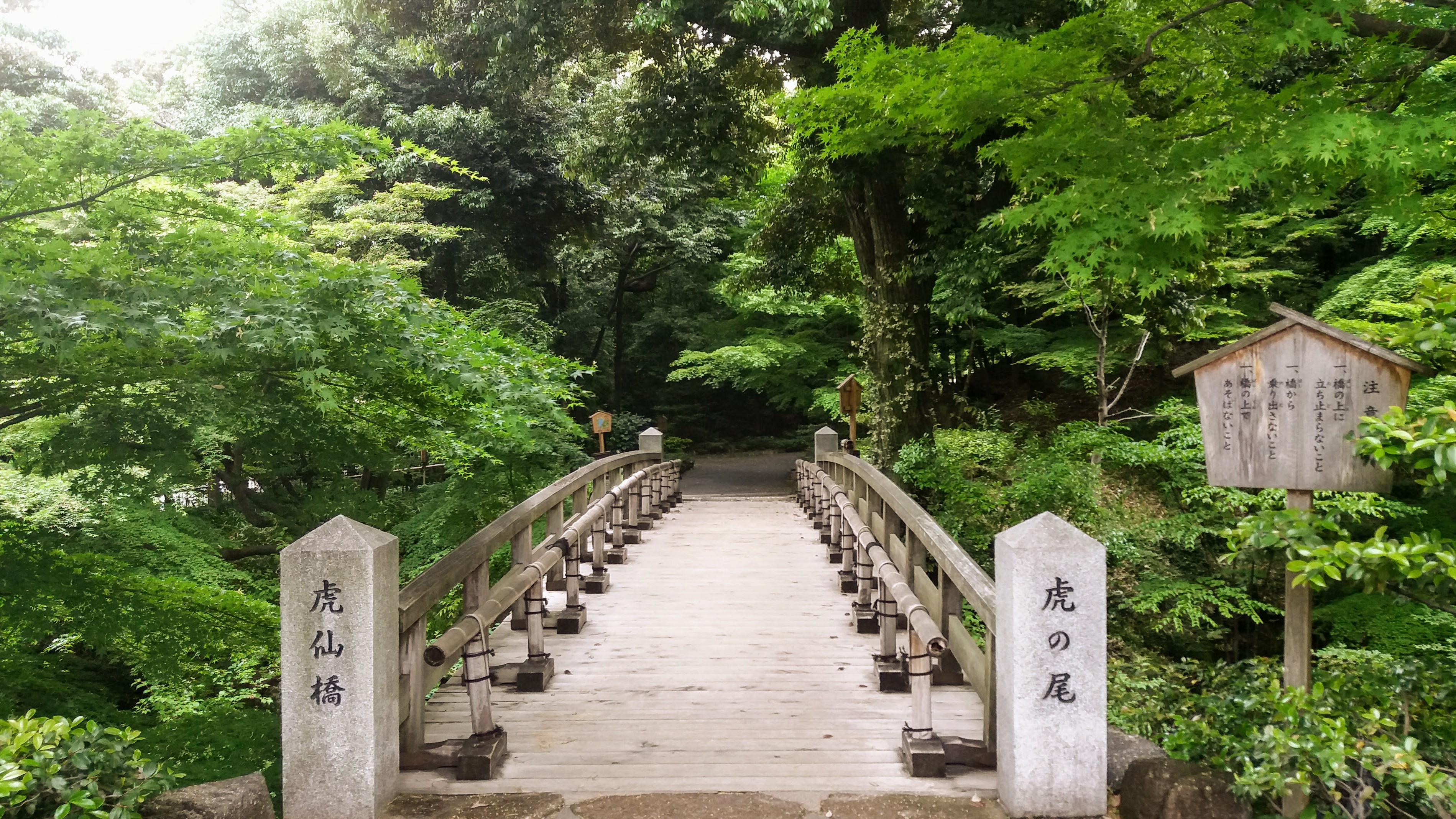
After I finished at the castle grounds I took the Me-Guru tourist bus to the next stop, Tokugawa Gardens. The Me-Guru stop is on the opposite side of Castle from where I came in, but the ladies at the ticket office were well familiar with the bus I was looking for and gave me directions. If you do take the Me Guru TO Nagoya Castle, just be aware it will pass you through a little “village” with food and shops. I am not sure if the golden ice cream is in that one as well, but you can get your hand stamped at any gate should you want to exit and return later on the same day.

I finally found the Me Guru stop, but the first golden bus to pull up was going to the wrong place! I thought like most hop-on-hop-off buses it would be a single circular route, but I was mistaken. Be sure you ask the driver if he’s going to your stop when you get on (no need for elaborate Japanese, they mostly know the stop names). In my case, the driver advised me to hop back off and let me know about what time the bus I actually wanted would arrive. Very kind and helpful.

I ended up waiting for about 30 minutes. It probably would have taken about the same amount of time to walk over to a subway/ regular bus station and go from there… maybe? But I didn’t have WiFi to check any alternate route and it honestly felt nice to just sit still for a while after walking the palace grounds all morning. If I’d checked the Me Guru routes and schedules better, I could easily have spent that time in the little village of shops I passed between the castle and the bus stop, so that’s on me.

For more info on how to use the Me Guru, see my post about Nagoya Castle.

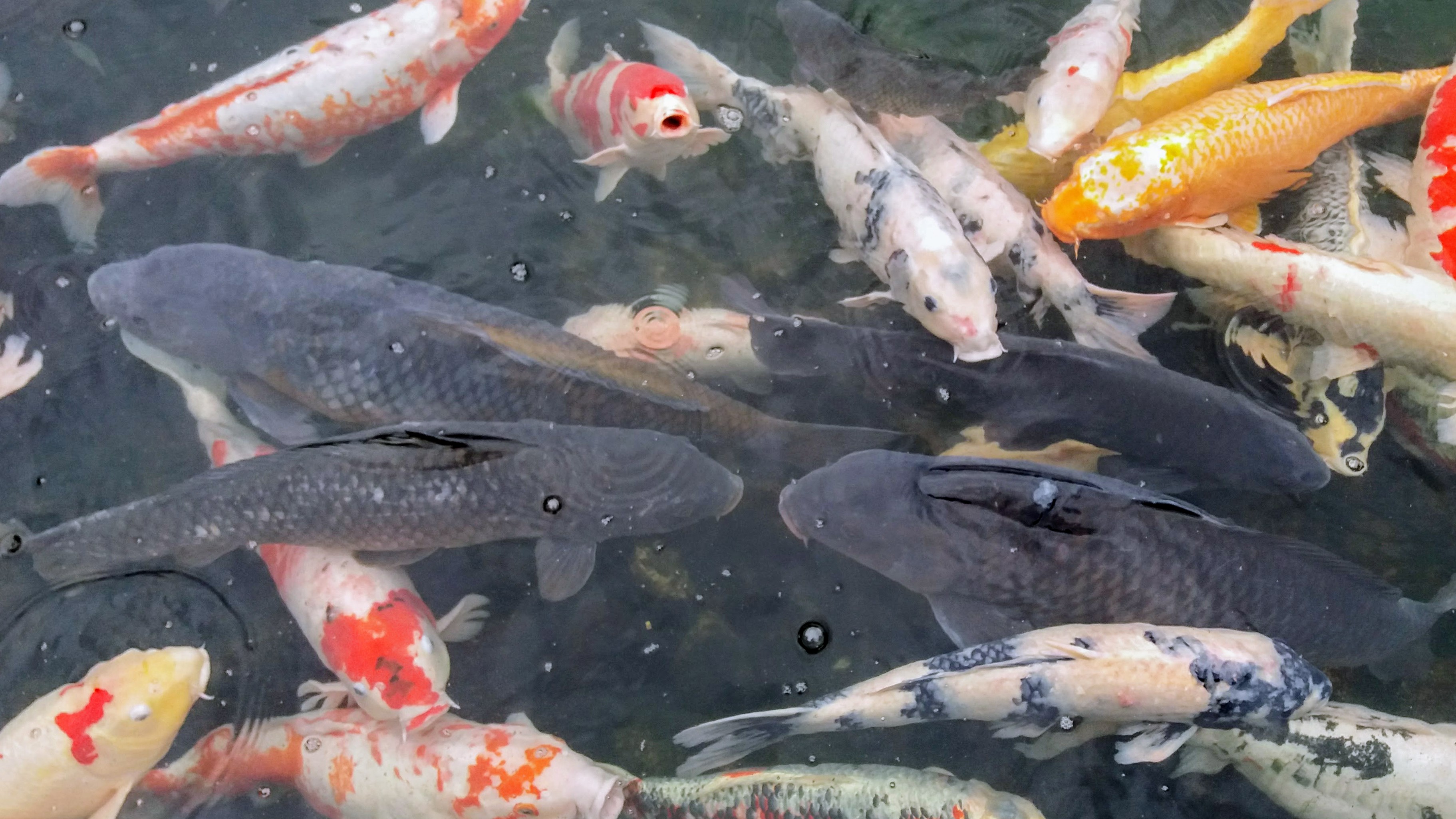
20180508_151313The golden bus drops you off right at the gates to the gardens, and I was able to show my combo ticket to get in with no trouble. The gardens start out with a main square that houses the entrance gate and the museum (which I did not go in that day). There is a large lake to walk around and feed koi fish in. The koi are ginormous. Biggest koi I have ever laid eyes on. I think there are smaller tuna. Some were close to a meter. There were also many colors, mainly the gold color and the calico mix of orange, black and white, but there were also ghostly solid black koi that were invisible even a few cm under the water until they broke the surface. They were like swimming shadows of fish. It was fascinating to watch.
20180508_152040

Near one edge of the lake, the concrete path leads right up to the edge of the water and the fish are clearly used to associating humans with food because they come in droves as soon as any two-legs gets within sight of the water. I was able to get some very close up photos of the koi who were trying to see if my phone was edible. Good thing they don’t have teeth!

20180508_152009

I thought about circling the lake because it was quite pretty, but the rain was beginning to patter around and I had left my umbrella at the restaurant the night before, and had passed exactly zero convenience stores that day so far to buy a replacement. It was still light rain, and it was warm, but it’s hard to take sweeping vista photos of a beautiful body of water in the gray drizzle. I decided to head into the trees for shelter and to see if I could find some more picturesque views.

20180508_152354

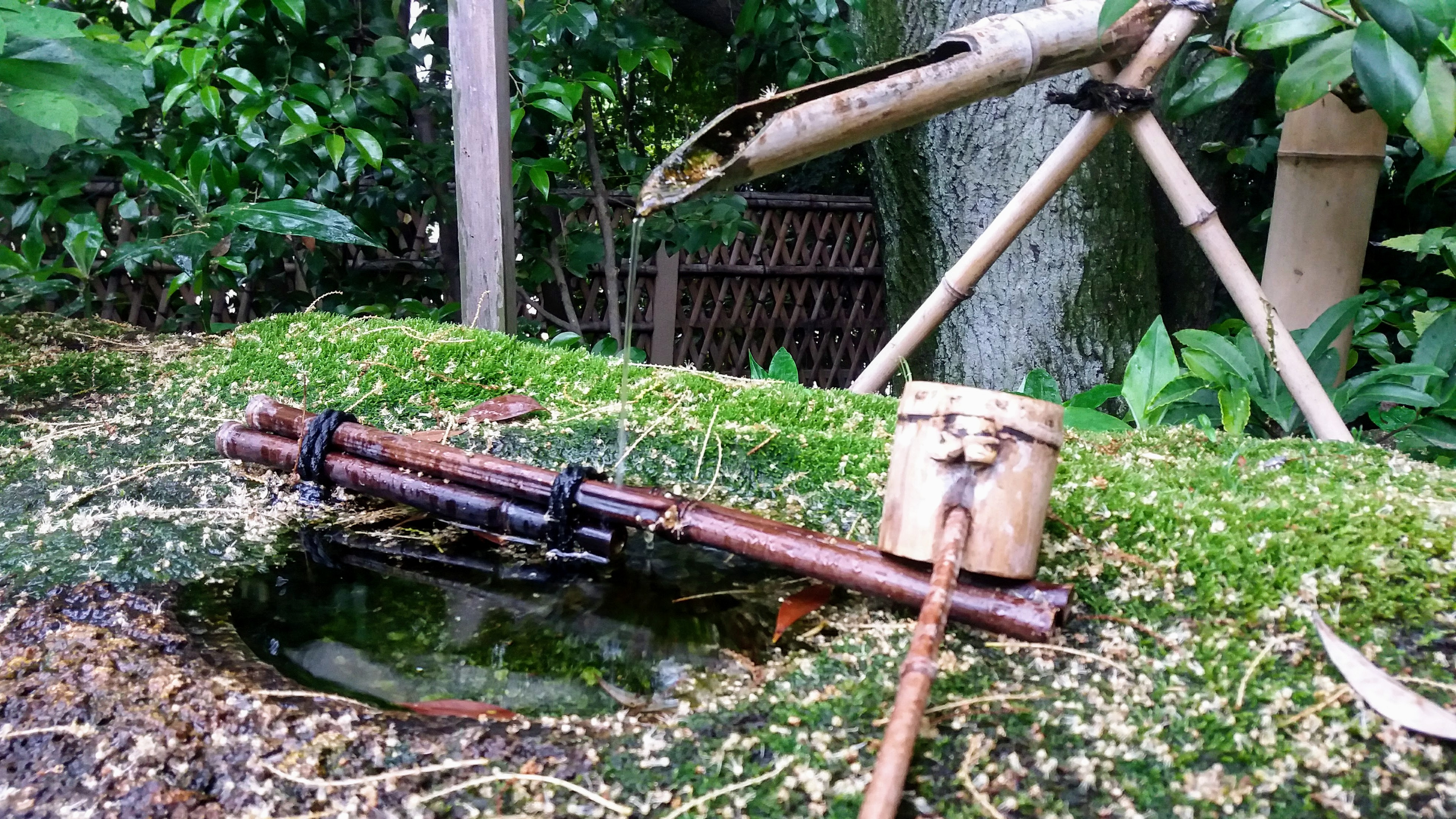
The woods are criss-crossed with paths and stairs that lead all around what is a fairly small area. Despite it’s diminutive size, the paths all lead to new and unique viewpoints. I found a little rest area/ cottage at the top of a low hill. It looked like a great place to hide from the sun or rain. There was also a small suikinkutsu, a traditional garden ornament made in such a way that the water falls onto an upturned pot and makes a kind of chiming sound. I don’t know if this one was clogged or broken, but I could not hear the sound it is famous for making at the time I was there. You can hear a sample on the wikipedia page, though.

20180508_155900

Next, I found the river that fed both from and into the lake in a kind of faux natural fountain. There were more of the shadow koi dancing in smaller ponds around the woods. I watched butterflies flitter through the trees looking for the recently departed spring flowers. I found an inch worm that I tried desperately to photograph, but he was just moving so fast that everything is blurry. It was still fun to watch the little bug I know only from kids songs.

Although the spring flowers were gone, and the summer flowers were not yet blooming, I did find one fascinating splash of color among the green leaves. The Japanese maple trees were putting out “helicopter” seeds that were bright pink! Not autumn leaf red, no… like hyper-Barbie pink. They very tips of the green leaves took on the same pink hue. This was beyond fascinating to me, not only because I had no idea leaves could be pink, but because there’s no reason for it. Flowers evolved colored petals to attract insects (and other animals) that will help spread the pollen and fertilize more plants. The maple seeds are wind blown. The helicopter blades fly on the wind. Any kid who ever lived near any such seed bearing tree has played games watching how far the spinning seeds will go. They don’t need insects to be attracted, so why the heck are they pink?

20180508_153348Finally, because I can’t take a vacation without finding the waterfall, I found the waterfall. I am reasonably sure given the size of the park that the river and falls are man-made, but they don’t look like artificial fountains, they look like natural waterways. It’s a specialty of Japanese gardens to cultivate nature in a pleasing manner while still maintaining the natural beauty.

About that Umbrella?

Sometime while I was in the trees, the rain really picked up and when I came back into the open, it was definitely umbrella weather, and I still didn’t have one. Plus, the map indicated that my walk to the nearest public transit station was just over 1km, a distance I don’t mind walking in better weather.

20180508_155009

I decided it was time to leave the gardens. I could have spent much more time there in better weather, but even in the rain I feel like it was worth the entrance fee and the walking around time. It truly is a beautiful and relaxing place. I pulled up my map (satellite map works even without data or WiFi) and oriented myself to find the park exit nearest my destination. I double checked with the ladies at the gate on my way out that I was heading the right way. I love Google Maps, but I still like double checking.

With a 1km+ walk ahead, I was sure that I’d pass any kind of convenience store on my way between the gardens and the station where I could re-umbrella myself, but it was very residential. I know Korea has an insane number of convenience stores, but most places I’ve been in Japan have a reasonable number (at least one every couple blocks) or if they don’t have those, then they have tourist stands selling stuff which always includes umbrellas on rainy days for people who forgot theirs. The neighborhood around Tokugawa is bereft of all these.

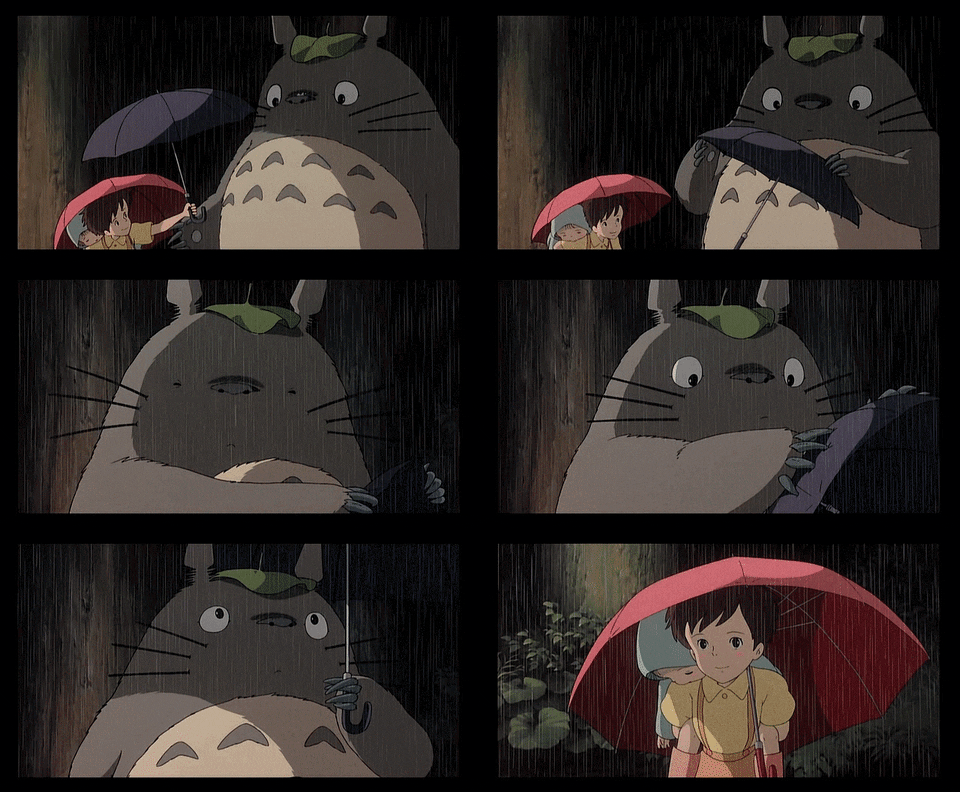
Image result for anime umbrella sharing

artist credit: Rolfyram

Some way into my walk, I just became committed to being wet. I was on my way back to the apartment after all, so I just had to survive the subway and I could get a hot shower and a change. Then suddenly, a kind faced Japanese lady came up beside me. She spoke rather quickly, but I came to understand that she was offering to share her umbrella space with me as we walked in the same direction. As we walked along the otherwise abandoned streets, she asked me the usual foreigner questions: where are you from, what are you doing here, etc. I was struggling with my Japanese all week because it kept getting mixed up in my brain with Korean and I felt embarrassed by my total inability to string together a sentence, but she was patient and kept at it, smiling the whole time.

When she asked where I was going and I told her, she was completely shocked. But that’s so far! Yes, I know, but I’ll be ok, I’m going back to my friend’s house next. She tutted a bit more about the distance and when we came to the intersection where we would part ways she began to give me her umbrella. This was no cheap conbini umbrella, it was a nice, heavy, decorated affair. I shook my head and gestured for her to keep it while trying again to explain I would be ok. I’m not going to melt however often my students say I’m a witch. But she insisted further.

I remember learning back in my first year of Japanese classes that it is necessary to refuse 3 times to be really sure, and while I would certainly have appreciated an umbrella, I felt awkward accepting such a nice one from a stranger. So I refused again, and again she insisted, telling me her house was just across the street. And a third time, really are you sure, I will be ok, you shouldn’t do that. And a third time she offered the umbrella, so I finally decided I should accept it with grace and gratitude. I thanked her profusely and bowed. She was grinning from ear to ear, so I think somewhere she’s telling the other version of this story where she got to rescue a poor foreign visitor in her neighborhood. It was such a nice umbrella, it kept me dry all the way home, and I made the effort to get it on the plane back to Korea because even though it didn’t fit in my carry on luggage, it’s too precious a souvenir to leave behind.

Related image


That night we feasted on conbini food and managed to make some working rubrics for her essay classes. The next morning I made the long trek back to the airport and my home in Korea. Because she and I both live a bit far from our airports, it’s still about 6 hours of total transit time from my house to hers. Too long for a regular weekend, but I hope for another long one where I can go back and see some of the things I missed or at least see the best ones in better weather.

Less than a week till I’m wheels up again. It’s getting down to the wire trying to finish my end of semester work at the University and get my trip planned out enough to be sure I can get tickets to everything I really want, and have back up plans for when I can’t. I hope you enjoyed Nagoya. Thanks for reading!

Hello Bohol: Firsts and Lasts

This post is a collection of tales of how I came to spend 9 days in Bohol, and of my first and last impressions of the country. I warned you that this holiday would not be presented in chronological order, and how much more out of order can you get than putting the first evening and last morning together? Read on to find out more about Korean holidays, Philippine toilets, a little about tipping culture, and a little about human kindness.


What Am I Doing Here?

gimhae-airport.jpg

Image Credit: Haps Magazine

What made me think it was a good idea to take a 9 pm flight on a Friday before a major holiday? Considering I bought the plane tickets back in early May, I don’t have a clear recognition of that decision making process, but I’m sure it had to do with some combination of maximizing vacation time and minimizing price/layover time. Regardless of why I made the decision at the time, when the day arrived and I stood outside in the dark waiting on the limousine bus to the airport at a time of the week I’m usually in my PJ’s with a glass of wine recovering from the school week, I asked myself this question.

When I arrived at Gimhae airport to find it more full of humans than I’ve ever seen it before, the line for my check in counter already stretched across the large room, and the flight itself delayed by an hour, I asked myself again. One day, we’ll invent teleporters, or I’ll finally steal a TARDIS, but until then, airports are the necessary evil I face to enjoy the world.

The Big Holiday Gets Bigger

It was Chuseok again in Korea, that wacky lunar fall holiday that moves around more than Easter, but is a bigger deal than Christmas. Last year, you may recall, I took a 5 day weekend in early September down to Jeju, the “Hawaii of Korea” because Chuseok fell on a Wednesday-Saturday, and I also had no idea it was coming until it was almost here, so no real time to plan a getaway (thanks Enjoy Korea for saving me there). This year, Chuseok is in early October, and because of magical lunar calendars, the timing for no work days was awesome. The actual holiday was Tuesday-Friday, but many businesses (including my school) decided not to bother opening on the Monday before. Plus, the Monday after was October 9th, a controversial holiday in the US (I prefer “Indigenous People’s Day” to that other dude), and Canadian Thanksgiving this year also, in Korea, it was Hangeul Day, the day we celebrate the creation of the Korean phonetic writing system that freed them from the complex Chinese writing system and enabled the country to become super-literate. To save you the arithmetic, that’s 10 straight days of not working.

Choose Your Own Adventure

I wanted at first to go back to Koh Lipe, but the island is closed this part of the year due to the weather. *sigh. I pulled up my new favorite flight searching website, as well as several old standbys to see what the cheapest fares to the most interesting places were during my window of opportunity. It turns out that even though I started looking as early as April, most Koreans had been looking since last Chuseok, and the prices were already 2-4x what they normally would be for every destination. It’s also the “rainy season” in all of SE Asia, so trying to pick someplace I wouldn’t simply drown in a monsoon was on my mind. Finally, I settled on going to the Philippines, to the island of Bohol, and the even smaller island of Panglao.

I chose this destination for a combination of 1) ticket price, 2) new country experience, 3) recommended by a friend who lives in Manila, 4) Bohol is surrounded by larger islands, so I hoped they would serve as a weather break to protect me from the worst of any ocean going storms, 5) it’s not a total tourist resort yet. But first, I had to stop over in…

Manila

My flight landed in Manila around 1am. There were huge lines for immigration, and although I had no bags to collect, it still took me a while to navigate the terminal to find customs (no one even looked at me as I breezed through, let alone checked my paperwork or bags), and then to find the only open SIM card vendor at 2am. They gave us vouchers on the flight for a free SIM and I knew that I could try to get one in the morning on my way out of Manila, but when I found a lone agent manning a tiny booth outside the taxi pick up, I joined the short line and paid up for a working data connection. My lifeblood restored, I went off in search of my ride.

I had a 9 hour layover in Manila, which became an 8 hour layover when the flight was delayed, and then 7 because I didn’t get out of the airport until 2am… you see how this is going. But at the time I booked the tickets I did not relish spending 9 hours in a mostly closed airport with unknown facilities (just as well, since the Manila airport is severely lacking in comfort and entertainment even during operating hours, and it was positively barren overnight). While searching for options to rest my feet during the break I found a little hostel right next to the airport that clearly decided to make a business of the long Manila layovers.

Jorvim Apartelle arranged an airport shuttle, a comfortable room (shared bathrooms), working AC, and a fresh breakfast before the return shuttle as part of their package deal. Maybe I could have paid less by doing it all piecemeal, but it was worth it not to have to hunt down a taxi at 2am or worry about feeding myself at 6am. It wasn’t a long nap, but I was horizontal and cool and I awoke much refreshed. Breakfast was a simple egg, fried slice of spam and scoop of rice with Nescafe on the side, but it enough to be getting on with, and the driver made sure we all got to the airport in time to go through all the security.

Oh the security. Manila is going through some weird stuff politically, which I’ll get into later, but I’m assuming that is part of the security set up at the airport. While customs had seemed wholly unconcerned with what I brought into Manila, once I was going on to another port, I had to pass through a gauntlet of x-ray machines. Simply to enter the terminal, one must pass through bag x-rays and metal detectors. I didn’t have to stand in line to check in since I already had my boarding pass, but to get to the gates, I had to pass another screening. I’m not sure what they thought we might put in our bags or pockets between the front door and the boarding gates, but there it was.

For a major international airport, the Manila airport is pokey. At first I thought it was just because I was on a domestic flight, but my wait in the international terminal on the way out was not much better. I went to get an iced coffee, only to discover that this just meant nescafe over ice… and it tasted awful. The first time it was so sweet I felt I was drinking sugar syrup, when I went back and reminded them I’d asked for no sugar, I got something that sort of tasted like a mix of coffee and chalk. It seems that the Starbucks invasion of the Philippines hasn’t reached the airport yet. It did not bode well for my coffee prospects on holiday, but I consoled myself with the idea of beach drinks instead while I discreetly tipped my cup in the bin.

Tagbilaran

When we left Manila, I stared out the plane window at the bustling city, tall buildings and concrete from one coast to the other with little spots of green here and there. When we flew in over Bohol, it seemed the opposite was true. Not a single high rise building or city-like cluster tainted the green below us. I could see the rolling dark green of mountains and the brighter green of farm land.

As we got closer, I could make out palm trees and rice fields, and the Chocolate Hills that are the most famous land feature of the island. The water we passed over was so clear and shallow I could see the outlines of the reefs from the air. I began to seriously wonder about the “city” we were supposed to land in as we passed over more and more jungle broken up with the occasional road or group of houses.

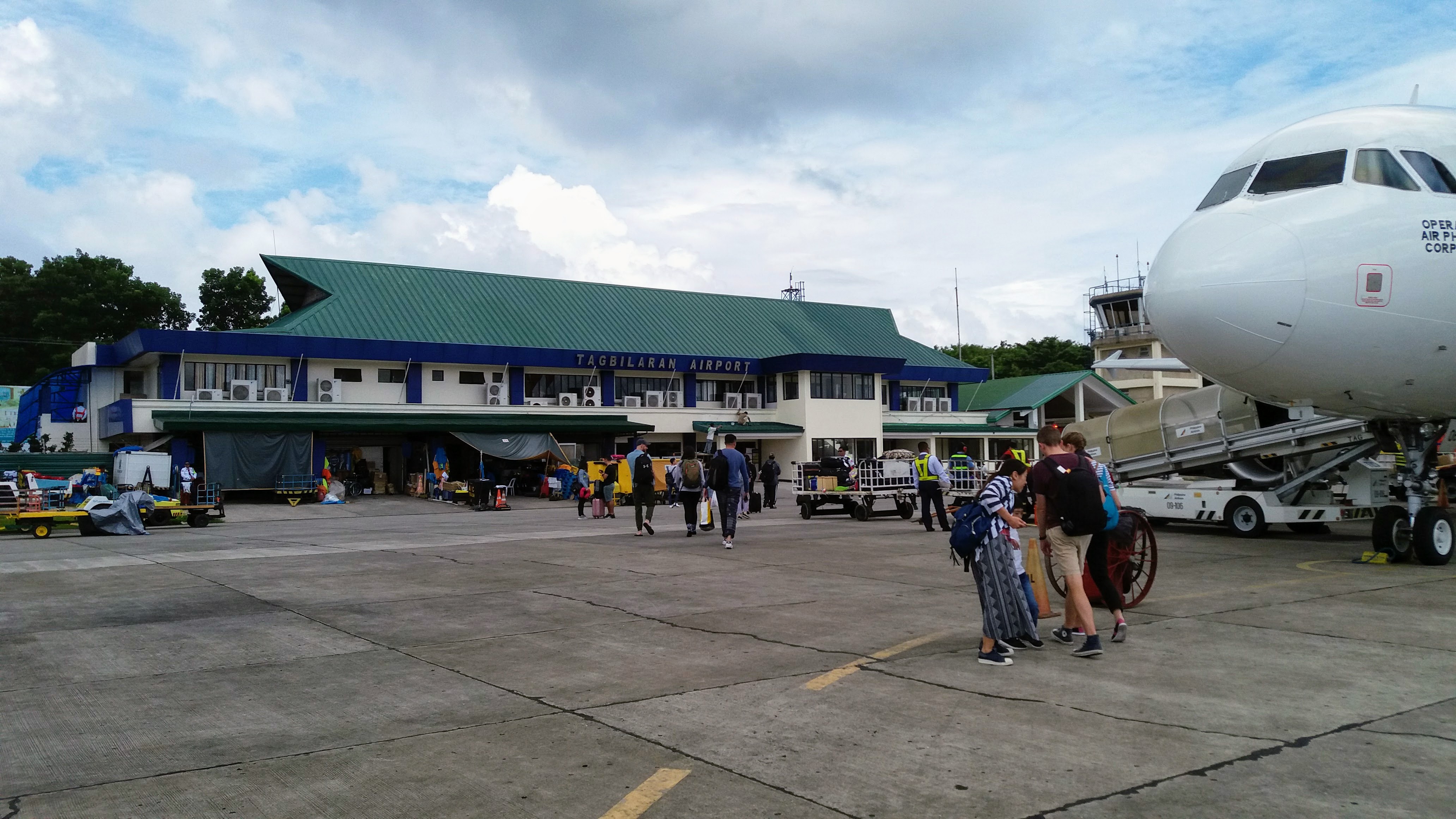
When we finally landed in Tagbilaran, the entire airport was a single building that was smaller than the hostel I’d stayed in in Manila. The runway was short and the tarmac could not have accommodated more than one plane at a time. We disembarked via stairs and walked to the terminal a few yards away while bags were unloaded onto carts. There was a small luggage carousel in the building, but to be honest, I’m not sure why. The flight was so small it seemed like it might have been easier to simply let passengers claim bags as they came off the plane rather than use the tiny moving circle inside.

20170930_103533

A Word About the Bathrooms

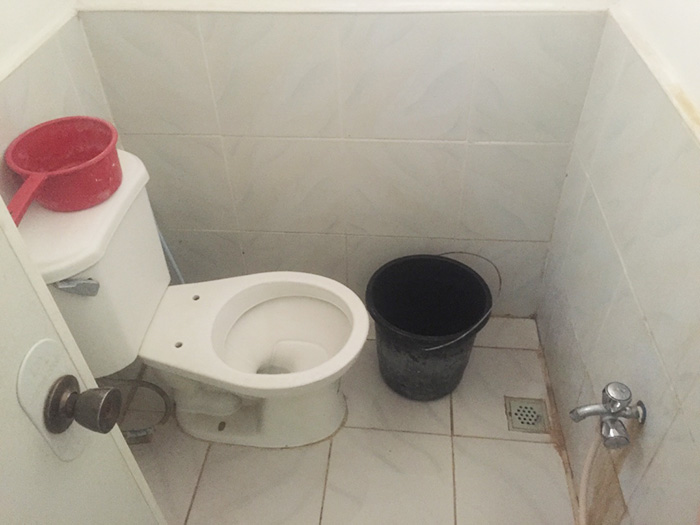
Because my hotel at least 30 minutes away, I stood in line for the restroom in the airport, only to discover that Philippine toilets don’t come with seats… They weren’t Asian style squatters, they just looked like Western toilets without a seat. I thought maybe it was broken, but I saw many more like this any time we were in a very Filipino place, so I’m thinking it’s normal there. Plus, the first non-Muslim country I’ve seen the hose regularly installed. Toilet culture.

I found a decent article later on about the bathroom situation in the Philippines. I think it’s gotten better in the last 9 years since the blogger wrote this, but some of it is still true. Even in Bohol, most of the places “for tourists” had toilet seats. Many had paper (although still best to throw that in the trash and not the bowl). But when I did go to a less touristy area, I was greeted with seatless bowls, flushless toilets (like the ones in Koh Lipe that had to have water poured down them), and either the Arabic style hose or the Philippine traditional tabo (bucket and ladle) for cleaning. I’m reasonably open to doing things like the locals, but I still bring my own paper when I’m touring in case of emergency.

philippines-comfort-room-cr

Image Credit: markblackard.com

Finding Food on Foot

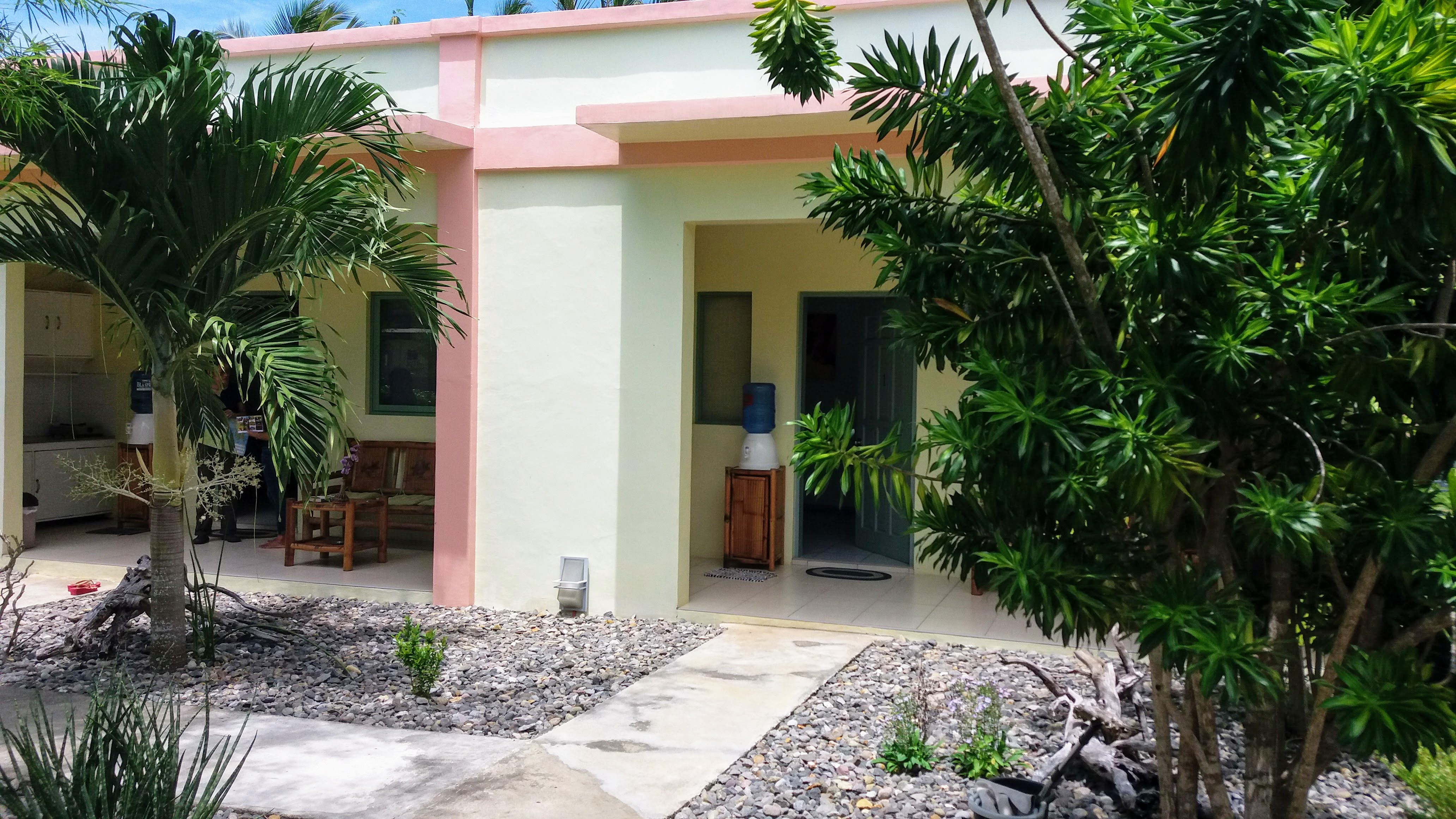
The hotel I’d chosen was only a couple km from the most famous Alona Beach, but far enough away to be much cheaper while still being quite nice. There were animals everywhere. Goats, cows, dogs, chickens… and I could hear the roosters from my room, but they weren’t too loud inside so I didn’t think it would be a problem to sleep through them. Once I got in and had a little look around, I asked my hostess, Becca where to get some food.

Becca is the best, by the way. I seriously recommend everyone who wants to go to Panglao go to Imagine Bohol and stay with her, because she is wonderfully attentive, speaks great English, and will recommend or arrange anything you’re looking for.

20170930_113725There were no food delivery options nor any restaurants in walking distance and although it was my plan to rent a motor bike (scooter) for the week, I was waiting until my travel companion arrived on a her flight 4 hours behind me so we could handle both rentals at once. However, my breakfast had been a long time ago, and I needed something to quiet the growling tummy. As we reviewed our options, she mentioned hesitantly that there was a small convenience store just down the street where I could get some ramen. Done! She said she’d show me where it was and I expected it to be hidden or at least farther, but when we got to the gate of the hotel drive, she pointed at a sign barely down the street, less than 2 minutes walk.

I headed over, meandering my way, taking in the flowers and greenery on the side of the road as well as playing a short game of peekaboo with a shy child hiding behind a tree. A man came out from a house and began to purposfully cut small branches from a tree, but he was collecting them, not discarding them, so I assumed it was not merely pruning. I asked him what the tree was and he replied “mulungway”. “What’s that?” I asked, not yet understanding how strange a question it must have seemed to him. However, his English was not up to the task and he simply said, “for eating”. I didn’t recognize the tree and vowed to look it up when I got back to the room, but sadly I had forgotten it by then and didn’t hear it again for several days.

The convenience store folks were surprised to see me, and were endlessly helpful as I bumbled around the tiny aisles looking for lunch. I ended up with cup noodles, an egg, and an ice cream cone. As I was paying, the ladies wished me farewell, and I said, oh, you’ll probably see me again since I’m staying right down the street. This seemed to make them happy and we chatted some more before I finally left.

I had heard from other travelers how friendly the Filipino people are, but I was starting to understand that it was not actually an exaggeration. I mean, I like talking to locals everywhere I go, and usually I find kind and helpful people and have good experiences, but dang if every single school kid didn’t break into a grin and wave and say hello when I passed by. Leaving tourist spaces can be scary, but I think in Panglao is well worth it.

Leapin’ Lizzards

20171005_182724As the sun set, the lizards came out, and when I went back to the room, I was greeted on the porch by a gecko. It was maybe 6 inches long, not huge, but so unexpected I let out a little yelp, and Becca sent someone to save me. I insisted they did not need to shoo the little lizard away with a broom, but Becca said sometimes they bite. She also pointed out the tiny 1-2 inch lizards elsewhere that were totally safe. I asked if the gecko was poisonous, but it’s not, and it wasn’t even slightly aggressive, but I still kept a distance from the others I saw so as not to add gecko bite to my list of minor travel injuries.

Grateful Farewell

The last morning of vacation, it was time to settle our account with Becca, the hostess with the mostest at our little apartelle. Like most places in Bohol, they only take cash, and she’d been careful to politely remind us the day before in case we needed to get to an ATM. Tipping culture in the Philippines is not yet standard, but I’d read up a bit before coming, and I’d seen many things I’d read confirmed. Fancy restaurants tended to add a 10% tip into the bill, most places didn’t expect a tip but were happy to get one. Tips are still expressions of gratitude there, and so when we felt we were treated especially well, we left a special tip, and if we felt the service was adequate, we left 10% (often included) at fancy places, and not at all in “regular” places. But when it came to the hotel we were both in agreement that Becca and her staff deserved more, and to be honest, it wasn’t a very expensive hotel to begin with, so 20% was still only about 40$. I don’t know if that seems big or small to you. I’ve never stayed in one hotel for 9 days before. I’ve left tips for housekeeping before, but usually only when I made a mess or when they did extra work for me. But Becca was so gracious, always there for us, making sure we had everything we needed, the apartment was cleaned up every day, fresh towels and sheets, she arranged our motorbike rentals (at a much better rate than other places around the island), scheduled our firefly tour, recommended beaches and restaurants and was just generally a fantastic part of the holiday.

I took our rent and her tip bundled together and brought it to her room in the morning, letting her know that the extra money was for her, and not waiting around for her to count it before heading back to finish packing up. A few minutes later she came by our room to see if we’d made a mistake. This is I think the most amazing insane part of this story. We gave her 20%, like I said about 40$US in tip. I can almost imagine someone questioning a mistake if we’d given her hundreds, but in the grand scheme of my life, 40$ (or really 20$ from 2 people) is not that much even to loose accidentally. But she was so honest that she came back to see if we gave her too much money by mistake. No, I told her, you’ve done so much to help us and make us feel welcome and cared for, this is our way to say thank you.

She teared up. Actual tears in her eyes, and she asked if she could give us hugs and told us we had been such wonderful guests. It blew my mind a little bit that such simple things as appreciating her with words and a small gift meant so much. This was obviously not an everyday occurrence in her life at the hotel and it struck me not for the first time how the people here are treated simply because of the reputation of their country as a source of cheap labor and maids.

I hope in some small way that sharing my experiences of Bohol and it’s people can help paint the Filipino people as a caring, friendly, generous and worthwhile group of people who deserve the same respect and courtesy as all of us no matter what their job is. A little kindness goes a long way here, so spread it around.

20170930_113737


The weather in Busan is decidedly cold these days, and the mountain outside my window has turned from green to russet as the trees change for autumn. I’m still pressing though a monumental amount of healthcare. It turns out that suddenly having access to good and affordable care means you actually go. I’m totally fine, I’m just a dental and medical anomaly and require more specialists than the average bear. Despite this drain on my time and energy, I try to stay grateful that I’m doing this here and not in some country with totally inadequate health insurance plans. Hopefully by January I’ll be able to do some kind of adventuring again. Stay tuned for more tales from Bohol as I get my first (and only) motorcycle lesson, and the wonderful freedom and unique experiences that came with this new mode of transportation in our next installment: My Own Two Wheels. Thanks for reading! ❤