Paris in the Spring

Despite the detour, this is still mainly a travel blog, so without further ado, I bring you a sunny day in April exploring Paris. The romantic ideal of Paris in the spring is perhaps more marketed to lovers, but having been to Paris both in spring and in summer, I can say I have a definite preference. The weather is better, the crowds are fewer, and if you go early enough in the spring, you get cherry blossoms! (For those looking for tips and advice, specific details about transportation and accommodation are at the end).

When I decided that I would spend a couple months in France, I knew I didn’t want to have Paris as my home base for a few reasons. The top being “oh my god it’s expensive”. The next being “it’s full of tourists”, and the last and perhaps most important: I wanted to see other parts of France. Nonetheless, every international flight into France lands in Paris, so although I would start classes in Tours on April 15th, the best price to fly was April 11th (several hundred dollars cheaper than the 12-14th). I decided that I’d rather spend the money in Paris, so I booked a dorm and planned a laid back day of viewing the gardens and eating delicious food.

Breakfast

Refreshed from my flight by a good night’s sleep, I headed into the city center to my favorite breakfast place in Paris: Angelina’s. I have gone to Angelina’s every time I’ve visited Paris for their amazing hot chocolate, even in the worst summer heat wave. For people who have only had packet hot chocolate, I can’t express my sympathies deeply enough. Some of you have been lucky enough to have real hot chocolate made from milk and chocolate (not a powder) and you begin to know the heights to which this beverage can soar. Those of us who have been graced by the chocolat chaud at Angelina’s know the celestial chocolate experience.

The last time I was in Paris in 2019, I made breakfast reservations because we had tickets to the museum and I wanted to make sure we were not rushed to finish eating. It turned out we didn’t need the reservations since most tables were still empty when we arrived. This year, Angelina’s website says they are no longer accepting reservations, and when I arrived, I discovered the otherwise totally empty sidewalk to be teeming with a crowd in line at my favorite breakfast spot. I queued up while I looked on my phone to see if there was some explanation. I was informed by my neighbors in line that the restaurant had recently become TikTok famous, which is why they themselves where there.

I’m never sure how to feel when a restaurant gets influencer famous. Many restaurants have actually been destroyed by fame induced crowds flocking in numbers that their small scale production process simply could not handle. Others have had to reduce the quality of their once famous dishes in order to keep up with the demand. I stood in line thinking that there must be another restaurant in Paris that had really good hot chocolate, and maybe it was time for me to try a new thing, when the line started moving. It only took perhaps 15-20 minutes before I was at my own table. The wait was considerably shorter than I would have expected at a restaurant in Paris. It may be that foreigners are accustomed to eating quickly, and tourists who had made Angelina’s a stop on an otherwise full day of activities were eager to get on.

I was fully prepared to order my breakfast in French (knowing I didn’t need to), and the server was very kind about it. Then I realized that about half the patrons in the dining room were Asian, and were all using English to communicate with the staff. I told my Korean students over and over again that English was the key to world travel, but it strange to see it in action here in Paris after struggling though my bad French on previous visits. Stereotypes about the Parisians persist, yet I have never known them to be anything but kind. It’s possible they appreciate the attempt to speak French more from native English speakers because of the stereotypes about English speakers being monolingual, but they seemed quite content to speak English with me and with every other tourist around.

When my order arrived, I was delighted to discover that despite the newfound TikTok fame, the quality of Angelina’s hot chocolate had not diminished in any way, and that the French cultural value of never rushing a diner at the end of a meal was still going strong. Regardless of the line at the door, everyone seated was fully welcome to spend as long as they liked savoring the thick chocolatey goodness and rich pastries. Bliss!

Jardin des Tuileries

An online search for cherry blossoms in Paris revealed that the largest grove of cherry trees was about 90 minutes on transit from my hostel, and after viewing the blossoms at some of Asia’s biggest collections, I doubted at the mere volume of trees would be a top draw for me in France. Instead, I opted for closer gardens with fewer trees where I could have a lovely stroll with less time in the Metro. My first stop was Jardin des Tuileries, right across the street from Angelina’s.
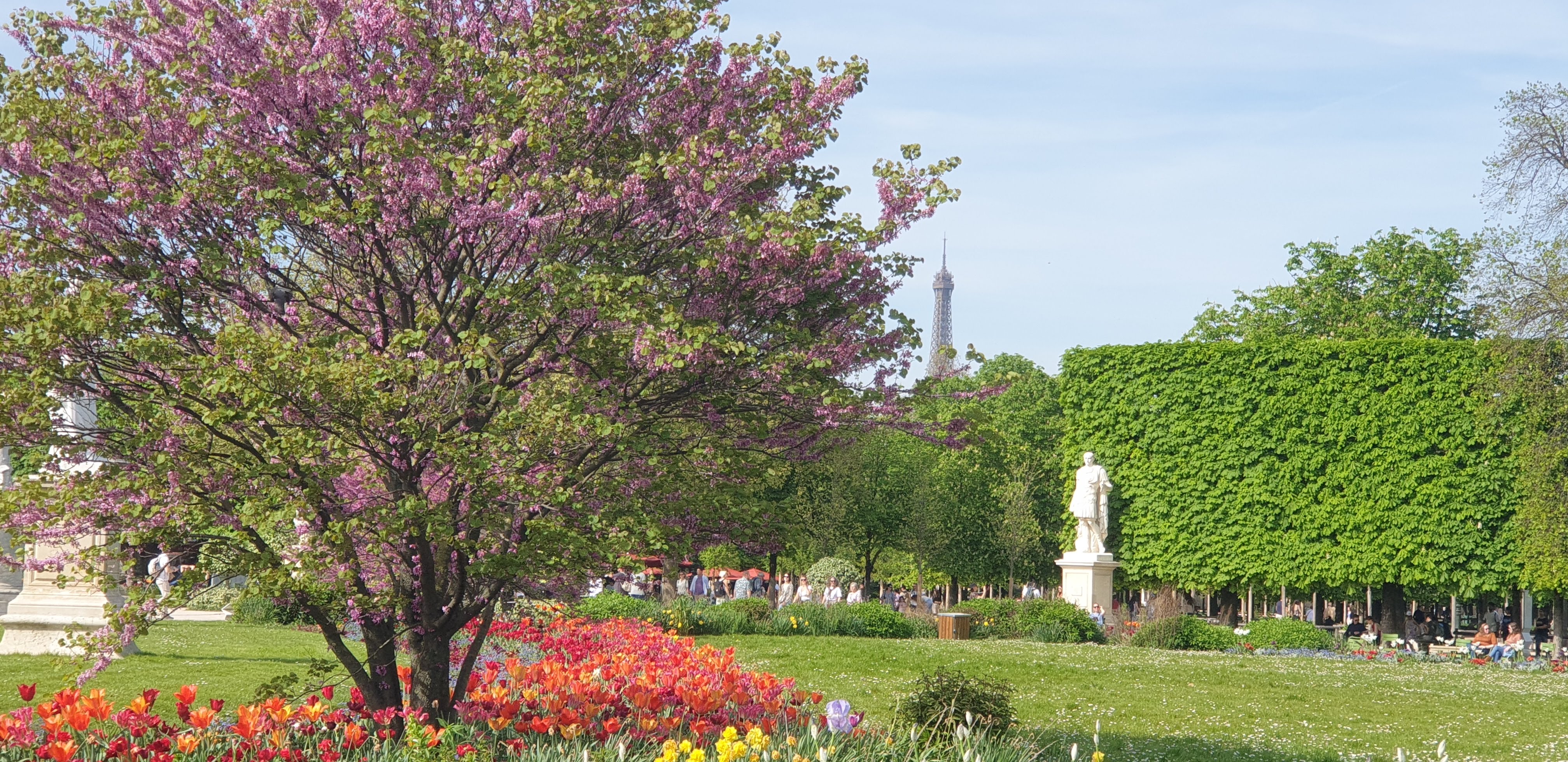
I like to come to this garden when I’m in Paris no matter what else I’m doing. My first time in Paris (2015), I ended up in Tuileries purely by accident, and ate a glorious sandwich next to a fountain with a view of the Eiffel Tower. It’s a memory that sticks in my mind because I felt in that moment that I had “made it”, that all my repeated struggles towards my dream of global travel and daydream freedom had landed me in this garden, with the best sandwich I’d ever eaten, basking in the sun and watching the Eiffel tower in the distance. I like to come and visit the park and relieve that memory whenever possible.


There were plenty of people, both locals and tourists, enjoying the unseasonably warm sunny spring day in the park. I ambled around and taking photos of the pink blossomed trees, stopping occasionally to take photos for groups who were struggling to use the timer on their phones or get everyone into one selfie. My feet were still swollen from the flight and my back hurt, but none of that could impact the growing sense of ease and contentment I experienced just discovering that I had once again “made it”. I survived the COVID induced lockdowns, I took my years of isolation and I packed them up in a box in the closet and I once again embraced travel for joy.

Jardin des Plantes

The next garden I visited was the Jardin des Plantes, a botanical garden that I had not been to before. It also houses a small zoo, and some indoor exhibits, but I was there for cherry blossoms! Priorities.

When I found the area where the park’s cherry trees grow, I was initially disappointed. It seemed that all the “white” (very pale pink) trees had finished blooming the week before I arrived. There were four darker pink blossomed trees of prodigious size, but they too seemed to be at season’s end. Thankfully, that was an illusion. These enormous trees look full of fading blossoms from a distance, but once you step under the sprawling canopy, you have entered the bower of a magical fairy land. Queen Titania herself might set up a divan there and feel entirely appropriately decorated. 

It was like stepping into a snow globe of pink petals. The branches swept from high above all the way down to the ground, cutting off the view of the outside world. Fallen petals covered the ground as well, resulting in a 360° sphere of pink. I lost track of how much time I spent under just one tree, discovering new delights at every angle I looked or aimed my camera. When the spring breeze came by and the petals fluttered around us like pink snow, everyone stopped their photo posing and gasped in awe.


I visited the other three cherry trees and then branched (haha) outward to look at other plants and flowers. In early spring, there aren’t as many blooming, but I found some other pink trees, some purple irises and a garden with enormous blooms I do not know the name of.

Un Pause

Still jetlagged and walking for hours, I decided to stop at a sidewalk cafe. I couldn’t find any coffee places with seating near the gardens, but I did find a little bistro from which I ordered a delightful craft cocktail. As I sat in the shade of the awning with my drink and watched the daily life of Paris around me, a quote from Anthony Bourdain came to my mind:

“Most of us are lucky to see Paris once in a lifetime. Make the most of it by doing as little as possible. Walk a little, get lost a bit, eat, catch a breakfast buzz, have a nap…Eat again. Lounge around drinking coffee. Maybe read a book. Drink some wine, walk around a bit more, eat, repeat. See? It’s easy.”

― Anthony Bourdain, World Travel: An Irreverent Guide

However much I wish it had not taken me 4 visits to Paris to learn this, I don’t think anyone could have convinced me on my first trip that I shouldn’t be running around trying to see the Arc de Triomphe, the Eiffel Tower, the art museums, the catacombs, the cemeteries, Montmartre, and every other cool thing in Paris. The tourists I talked to in line at Angelina’s and whose photos I helped take in the garden were just as eager to squeeze in as many sights as possible. I can’t blame them, but I’m very grateful that I finally reached a point where I can just enjoy sitting at a sidewalk table with a drink.

Jardin du Luxembourg

My last stop on the way back to my hotel, Jardin du Luxembourg, was also a garden that I had not previously visited. I found it to be much more like a park than a garden with plenty of places to walk and sit and play sports, but fewer flowerbeds or decorative trees. Most of the gardens in Paris have lawns (tapis vert, or green carpets) that are cultivated to within an inch of their lives that no one is permitted to walk or sit on (thank you, Louis XIV). It creates a beautiful landscape, but leaves one yearning to run barefoot in the grass. Luxembourg had many sweeping no-touch lawns, but added a sitting lawn! (There is another good sitting lawn just in front of the Eiffel Tower). Large blocks of soft dark green grass just for lounging around or having picnics on.

Given the beautiful weather that day, all the parks were full, but it was not hard to find a spot to plop down and enjoy the cool green lawn. I watched the people and the pigeons. Every pigeon I had seen all day seemed to be unusually plump and healthy. I’ve seen pictures and videos of show pigeons, but street pigeons are so often sickly and deformed that it’s become a trope, people calling them “rats with wings” or “cooing plague pits”. And yet an animal is only as healthy as it’s ecosystem. If pigeons in New York are malnourished, diseased, and deformed, it is not a result of the natural state of pigeons, but rather a reflection of the life they are forced to live. It really made me think about how much healthier Paris must be as an ecosystem than the vast majority of other dense urban cities I’ve visited. It also gave me a new appreciation for the presence of squab in French cuisine.

La Fin

As the day drew to a close, I realized I had made no plans for dinner, and that the combination of Saturday plus glorious weather meant more people than usual would be going out to eat. From my seat in the grass, I searched online for nearby options and snagged a last minute reservation at a restaurant across the street. Once more, the staff were very friendly and happy to speak in English (where does the stereotype of rude Parisians come from?) I ordered the daily special of duck confit, with a bière picon (a beer mixed with picon, a sweet orange liquor, not available in the US, I’m afraid), and for dessert, a chocolate cake and coffee with bailey’s and Chantilly. I may have gone a little overboard, but it was delightful to sit on the indoor balcony and look out the restaurant’s giant picture window at the garden across the road while dining on top notch food and drink. Not an everyday occurrence, and I think a worthwhile treat to end my day in Paris.

The next day, I repacked my bags and caught the bus to Tours, the small city in the Loire Valley that was to become my home and my school for the next 5 weeks. Stay tuned for more on life in the Loire!

Planes, Trains, & Hotels

If you are interested in the practical side of this trip, this Post Script is for you. Here I have attempted to include some useful information and links about airfare, public transit, and accomodation.

When searching for airfare, I was lucky enough to find an off brand company that didn’t suck called French Bee. Their cheapest package is very similar to Spirit or Ryan (no luggage, no meals, etc.), but the price difference for the upgrade to a more inclusive fare was only about 40$. I ended up with a normal international luggage allowance, an inflight meal, the ability to choose my seats, and the no-fee change policy.

The Paris public transit system is good, but confusing to outsiders. I have an old Navigo card which was still valid and could be topped up, but my research revealed there is now an app which allows you to buy tickets online and scan your phone via RF/NFC rather than having to carry a card and top it up at ticket kiosks. The app for local Paris transit is My Navigo Tickets, and the intercity train system is Bonjour RATP. It is a big improvement since my previous visit. The Navigo app also offers a good trip planner, showing the best transit routes to get from where you are to where you want to be. Sadly, after you find your route, and press the “buy ticket” button, it just takes you to the general ticket page with no indication of what you need for the journey you have planned.

Why does this matter? Paris has 5 zones, and transit tickets are sold in groups of zones. The more zones, the higher the price. I want there to be a way to easily see what zone you and your destination are in, but I haven’t found it. The last time I was in Paris, I just talked to the ticket seller about the places we wanted to go, and she knew what zones I needed. In general, if you’re sticking to the city center, 1-2 is enough, but there are some high demand tourist spots in zone 3. And if you’re staying further out to save on hotels, you may even be in 4-5. Transit to and from the airports and Disney Paris have their own special rates.

Additionally, passes are available by day, week, or month, but the week is Saturday to Sunday, no matter when you purchase it (not 7 days from the day of purchase). Is your head spinning yet? Do you suddenly want a taxi? Well, just remember the taxi rates from the airport are 50$+, but the bus rate is about 12$. Taxis in the city traffic can be difficult to catch, drivers may not speak English, and they may rely on your poor knowledge of fees and laws to overcharge you (this happens everywhere, it’s not unique to Paris). Transit trips cost about 2 each or a day pass of unlimited rides for about 8. I like the unlimited rides because I never have to worry about transfers or having to take extra transit if I get lost (which happens at least once a trip).

On to hotels! Paris is definitely one of the top most expensive places to spend a night. Before COVID, my usual travel budget was 100$ a day split 30/30/30 (hotel/food/entertainment) with a small extra cushion. Even then, I couldn’t find a room in Paris for 30$, I couldn’t find a bed in a dorm for 30$! There are a few youth hostels where, if you happen to be a young man, you can bunk down in a 12-16 bed dorm with other young men for around 35$ a night. If you would like a female-only dorm, be prepared for the pink-tax. All-girls dorms cost on average 10$ more than the male or mixed dorms. I stayed in a mixed dorm in Paris once, and it was fine. I was safe. No one was skeezy or anything. But, the older I get the harder it is for me to spend time in dorms. I find I need a private space to decompress at the end of a long day.

In post-COVID inflation-land, room prices in Paris seem to have risen (although to their credit, not as much as US based inflation). The best deal I found was a bed in an all-girls dorm for 50$ a night. (are there cheaper? Yes, but then you start getting issues with cleanliness, quality, safety, and distance from the transit stations). Hotels and hostels are getting better at tricking the algorithms to promote their place in search engines and reservation websites. It’s important to read real reviews (good and bad), see what people liked and didn’t (it might be things that don’t matter to you), and look at a good map to see not just how far the hotel is from a landmark or transit station, but also, how you can get there. 

It can take hours of searching to find a good price, a good location, and a good quality, but the time you spend in advance is worth it not to have unexpected unpleasant surprises after you arrive. My decision to take a dorm bed at the Eklo also related to factors like the photos of the dorm rooms, the reviews by other guests, and the closeness of the bus stop. I knew it would be hard to be really comfortable in a dorm, but I was willing to take it for just two nights.

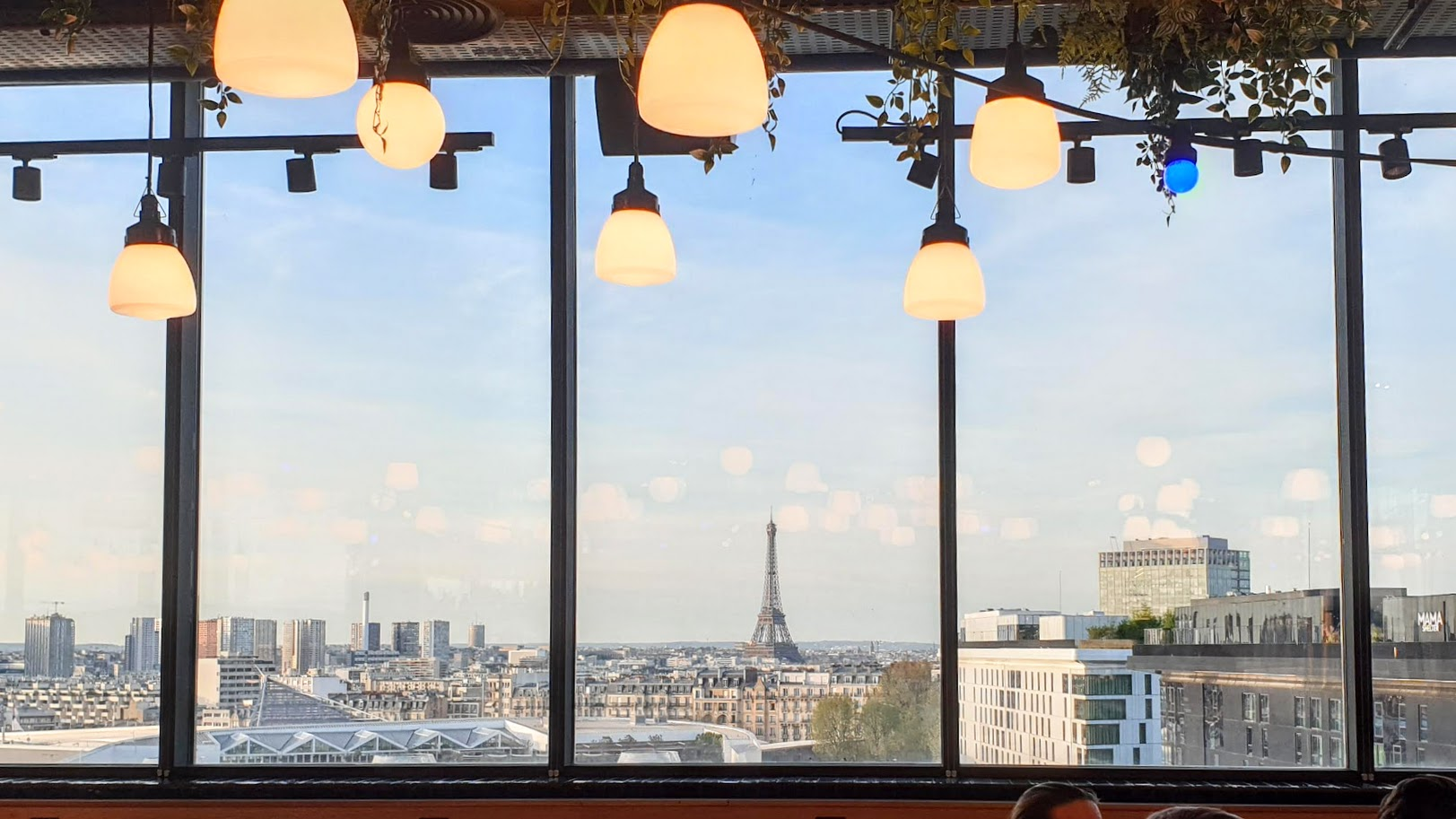
I ended up eating at the rooftop restaurant for dinner the night I arrived. I am always skeptical of eating in a place so clearly designed to cater to tourists. High end hotels have amazing restaurants, but hostels tend to focus on alcohol and cheap food. The Eklo partners with a small chain restaurant called French Kiss which had a good looking website, and I was too worn out from the flight to go anywhere else. The view was stunning, and the food surpassed my expectations for hostel restaurant fare, and the staff were all friendly and quite fluent in English.
Using Public Transit in Europe

I am completely spoiled by Asian transit. In Korea, my transit pass is linked to my bank card and so I just tap to get on any bus/subway/train in any city in the whole country. Tourists can buy a transit card from any convenience store that will work the same way, and also let you buy things at most convenience stores like pre-paid debit cards. I kept my transit card from Japan and used it again 3 years later with no problems. Again, they work on all the transit country-wide. I knew that visiting 8 countries in Europe would mean I’d have to navigate multiple public transit systems, but I had no idea how complex they would actually be.

This post is part rant, and part hopefully useful information for future travelers who encounter the same obstacles I did.


Paris, France:

Paris has a huge subway system, and tickets are priced by zone. It’s a good idea to look at the map and decide what zones you actually need before you buy. Buying tickets one trip at a time is the most expensive way. You can also buy a ticket book for a slight discount, which is what I did my first visit that only lasted 2 days. This summer, I was in Paris for 6 days, and wanted a better option, and one that would include buses, not only the metro.

Related image

In the end, I bought a week long transit pass for cheaper than the 5 day tourist pass. When I asked about it the teller told me there’s no benefit to the tourist pass, that it’s basically there to bilk tourists, and I should stick to the cheaper option. Most cities have some version of the tourist card which includes “unlimited transit” and a few free attractions or discounts, however every single one I checked into was not worth it. In order to actually save money, a person would have to be running around like crazy and do 4+ activities a day!

You can see there’s a spot for a photo there, so it’s a good idea to have one ready when you buy your card. The lady who was working when I bought mine said I could add the photo later, but advised me to carry my receipt with me in case the metro authority asked to see my card and to prove it was not stolen. No need to get a fancy passport photo made, however, you can make a photocopy of your passport or other ID and use that.


Belgium:

In Brussels I got a Mobib Card with ten trips which is cheaper than buying your each trip one at a time. I was able to buy it easily in the subway station nearest to my arrival spot. The tickets are per trip, regardless of distance, and that if you have to go above ground and pass back out of the ticket scanning devices, or use a tram, there’s no transfers. Most of the Metro stations have a way you can connect underground, but be sure you get out on the correct side of the train car, since in some cases one platform leads OUT and the other leads to connecting tracks, while at other stops, it’s all the same.

Related image

It is also worth noting that the doors on the subway cars have to be manually activated. You have to tug the handle or it doesn’t open. I was a little panicked the first time thinking I couldn’t get on, but then I saw someone else open a door and followed suit. When in doubt, watch the locals.

The only downside is that the Mobib Card is exclusively for Brussels, and I needed to figure out transit again and again when I went out to nearby cities like Ghent and Antwerp.

In Ghent I could not find the tram for a while I thought about just taking a taxi from the train station to my boat but I did eventually find it, then realized I had no idea how to use it and no way to look that information up online since the SIM I bought in Paris wasn’t working in Belgium.

I managed to get change from a convenience store and buy a tram ticket at a machine near the stop, but I couldn’t find instructions on how to use it. I got on the tram with my ticket but didn’t see any place to use it so I just sat down. Of course I was doing it wrong but no one challenged me or corrected me. I’m sure if I didn’t look like a middle aged white tourist it could have gone differently. Although I did see a lot of barrier hoping in France….

In retrospect, I think the paper tickets have RF chips in them that you tap just like a plastic transit card. *shrug, they got my money anyway.

At the Ghent train station returning to Brussels, I got confused because it looked like nothing was going back to the “Midi station” in Brussels. It turns out that there are just too many languages in Brussels. Midi is the name I had seen in Brussels, but Zuid is another name for the same thing!!!

20180708_185808

Overall, I think the transit issues in Ghent would have been avoided if I’d had mobile data. I did wonder how people navigated these transit options before smart phones, but I also think the technology of the trans, trams and metros has upgraded from paying cash and paper tickets to having RF chips in tickets dispensed by a machine and read by another machine. It’s great automation until you don’t know how to use it.

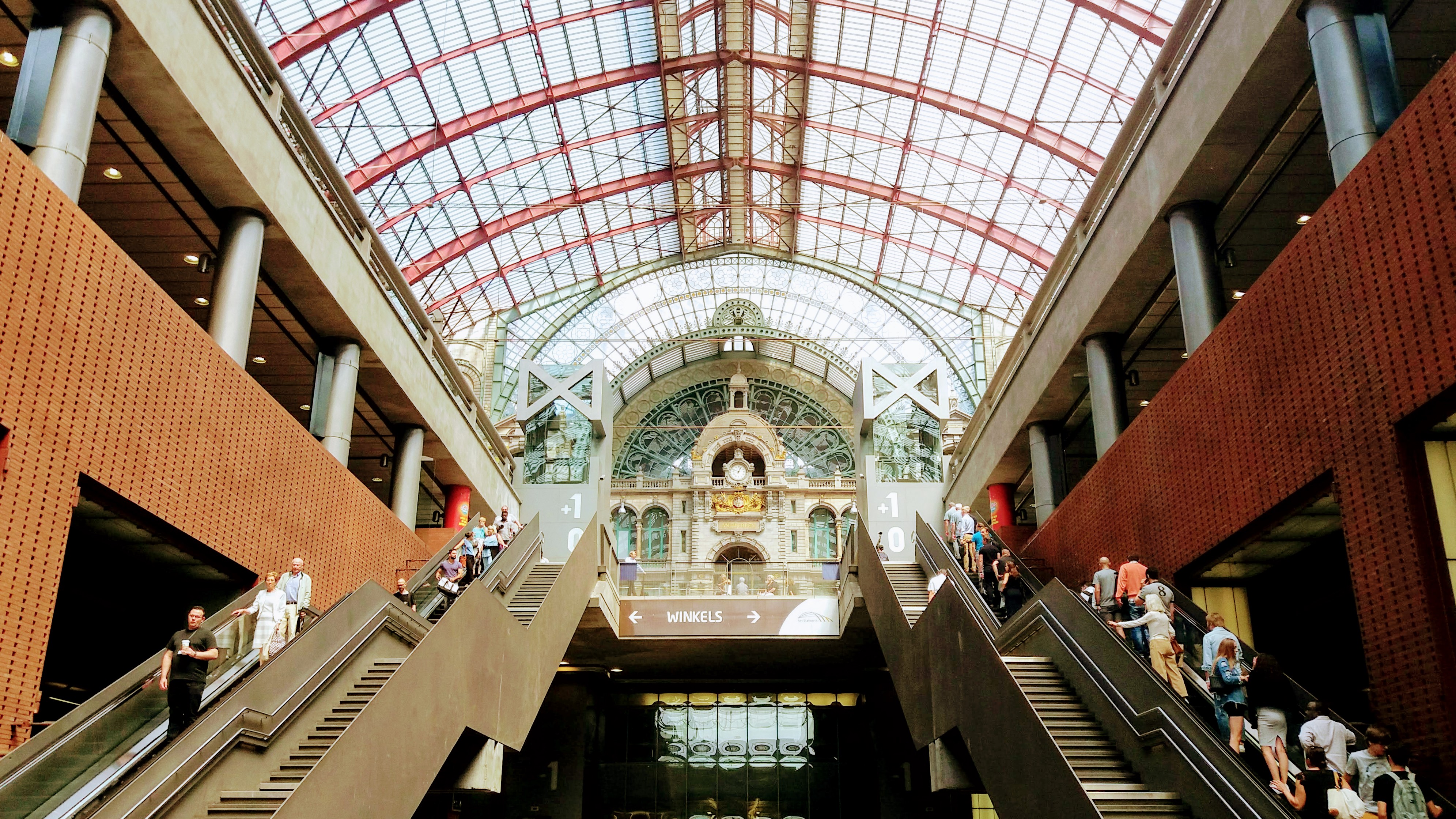
In Antwerp I decided to walk. The places I wanted to see were all within 30 minutes walking of the main train station and I wasn’t in a hurry. As a result, I have no idea how the transit inside the city works. On my out, the trains were running late but the kind conductor lady helped me hop off and change to a faster train at one of the stops. The tickets are somewhat flexible as to which trains you use to get to your destination.20180712_124849


The Netherlands:

First, in Maastricht, the bus company that runs the bus between Lanaken and Maastricht is the Belgian company De Lijn, and I was able to buy a ticket at the Maastricht main station. The front of the buses had a space to insert the ticket and a date/time/remaining balance was printed on it each time. I think I ended up with about 0.60€ left unused on the ticket at the end of the week, but it was much easier than trying to buy a ticket every time.

Image result for De Lijn ticket

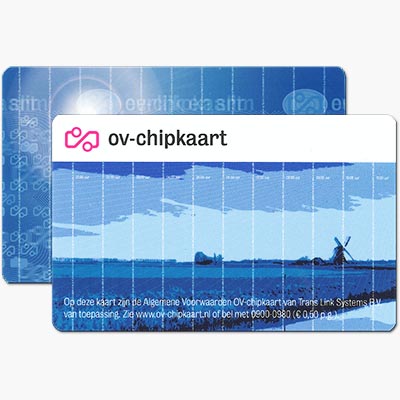
I needed a different transit card (the OV Card) to get around the city of Maastricht, but at least I was able to use that transit pass to buy my passage into Aachen. Once I figured out the basic system it was not too bad, and the people in the Maastricht station were quite helpful in getting me the best prices when I was getting my cards set up on the first day.

The only complaint is that because Lanaken and Maastricht are smaller towns, the buses do not run often and there is no metro at all. This requires more careful planning to get to and from places, to get back to my room at night, etc. It also requires more walking since bus stops are fewer and farther between than in big cities.

Later, in Den Haag

I need to preface this by saying Den Haag was the single WORST transit system I encountered in Europe. I was not a huge fan of Maastricht because the infrequent bus schedule, and that was not an issue in Den Haag, but what turned my brain completely inside out was the pay structure and it’s deep deep bias against foreigners. In the Netherlands, you can use the OV Card everywhere, so I was able to use the same card from Maastricht, which I thought would be a convenience…. ohhhhhh no.

When you ride in Den Haag, you have to tap in and out every time because the price of your trip is based on distance traveled; however, sometimes it double tapped or didn’t tap at all so I suddenly found myself completely out of credit on my OV card with no way to get more!

Image result for ov chipkaart

There are almost no recharging kiosks for OV in Den Haag either. I found one in the grocery store near my Airbnb, but it wouldn’t take my credit card and the cashier didn’t seem to care much. She eventually just stopped trying to even speak English which was only annoying because everyone else there had been like “of course we speak flawless English!” So, it seemed a little implausible she is the only one who doesn’t…

I tried to use the OV website to find kiosks in my area, but the website map wasn’t working… of course.

I tried to go out anyway, thinking I’d just buy a ticket on the bus but they don’t take cash and a 1hr ticket is 3.50€! I’d end up paying 7€ to go out and get back? I left the bus with sticker shock and stood around cursing the entire transit system that had robbed my card and left me with no way to top up and charged exorbitant fees to get to a top up place. Finally I decided to take the tram back to the train station and sort it out. Then the ticket box on the tram refused to take my debit card! How is a person supposed to pay for this????

I asked a ticket monitor about it because just at that moment I was feeling too honest to steal a ride. She directed me to the app where I bought a ticket then told me I didn’t need to ride all the way to the station I could just stop at Centrum and use the machine there. Great! Except when I got off to use it, it was out of order. I waited for the next tram and got on as my e-ticket was good for an hour, then realized it was going the wrong way, got off and waited again to go the other way. The only good news is they run every 10 minutes instead of 30 like in Maastricht.

I finally got to the train station and put more money on the card. I looked at my transactions history and realized that one point I was charged 4€ for a trip. If you tap in and don’t properly tap out, it’s 4€ no matter how far you go. That’s right, it costs more to mess up your transit card than to just buy the flat ticket. Gouge much?

Image result for ov chipkaart kiosk

My tram ride back from the station? .90€! It cost me 3.50€ to go using the app, and 0.90€ to go using the card. It’s worth using the OV Card, it’s just hard to use correctly. Eventually, I was able to go online to the OV website and submit a request for a refund of the over-charges and it was granted, although I still had to get to the train station kiosk to actually claim the credit.

I specifically say it’s biased against foreigners because most people who live there have their OV linked to their bank account directly, and can easily contest overcharges or incorrect charges at their leisure without worrying about not being able to pay for a trip. Meanwhile, visitors who front load the cards can still contest overcharges, but have no recourse for getting to a charging kiosk if a mistake has drained our account.

Returning from Amsterdam

The OV card isn’t evil in and of itself. I had very little issue using it in Maastricht and Amsterdam. It was nice to be able to move from city to city without having to invest in yet more transit passes (glares at Belgium and France).

However, the vaunted European train system turned out to be a massive disappointment. I know I’m kinda old, but I remember when the dream was “get a Eurail pass and back pack around Europe for your gap year”. My parents had good things to say about the trains. The trains are 2-3x the cost of a bus in most places there. I expected the trains to be GOOD. It was not true.

I hopped on my train back to Den Haag thinking I’d had a wonderful if over-budget day and then about halfway back the train just stopped.

There was a problem with some other train stuck on the tracks (I heard because of the heat) and we sat there for about 90 minutes. The main problem with this is that I only had a small bottle of water, enough for the anticipated one hour journey but not longer after a long day in extreme heat (it was averaging 35-37C that week), and several alcohol drinks (wine with the cheese tasting, Bols distillery tour, and beer with dinner!). I even thought about buying a larger bottle in the train station and thought “no I’m ok, it’s not far.” FML.

There was a toilet in the train but no potable water. I tried to distract myself with Netflix, but I was getting insanely thirsty. We finally moved backwards to Harlem and I was told to ride to Leiden and transfer there to another train. My ticket would cover all my transfers to get me back to Den Haag, but nothing would make up for the extra hours added to what should have been a short and direct trip. At least I got to watch a beautiful sunset from the unmoving train?

20180724_210859

When we got to Harlem, my first priority was water and I even willing to buy some but by 10:30 at night, most places weren’t open (Europe closes at 8pm) and the one I went to wanted 2€ for a tiny bottle!!! I pulled up my reusable and asked about tap water. It’s safe to drink from the tap in Europe. The sales clerk looked at me like I had suggested eating his grandmother and said “it’s not free” with the most contempt I have ever heard in regards to being asked for water.


A Little Rant About Water

20180705_121804Ok, a business pays fees to have water, but there is no way customers are going to drink a tenth of what you use operating a food stand. Washing a single load of dishes is more water than all your customers could drink if you gave them each a cup. Water is basically free in a drinking capacity, and even if you wanted to charge me for using your tap water, 20-30¢ would way more than cover my water bottle and not be actual extortion. In a record setting heat wave. While the whole country is having train delays.
I know I was raised in the US where the first thing a waitress gives you is water and it’s bottomless and always free, but I’ve traveled a lot and never encountered such water stinginess as exists in Europe. I’ve also lived in places where the tap water is not safe and never had trouble buying drinking water at very reasonable prices, and many businesses still give away clean drinking water and public water fountains are available in parks and public spaces.

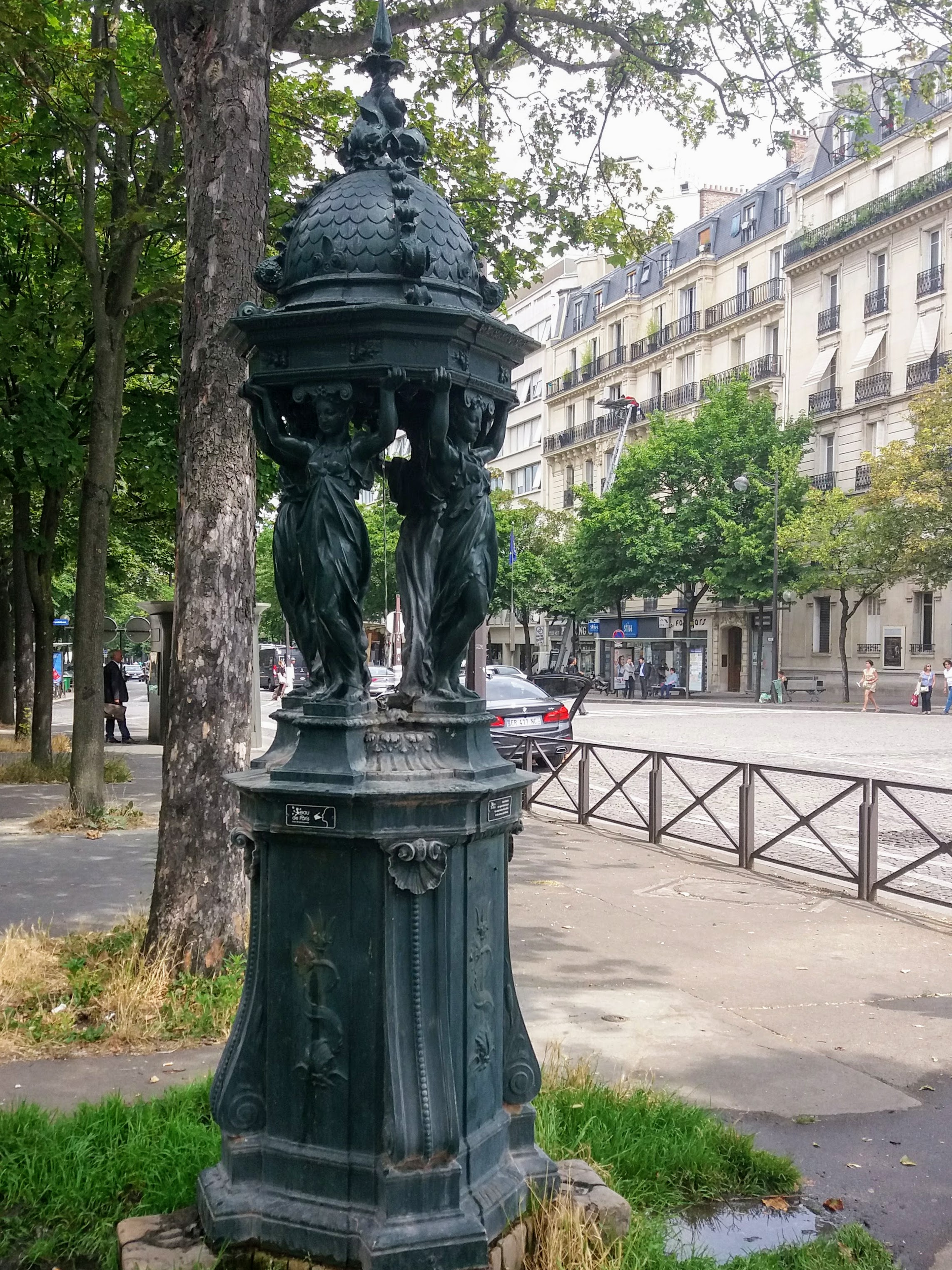
I thought France was stingy with the water but at least you could get it if you asked and in France and Belgium I was able to find some public drinking water (the photo above is a public drinking fountain in Paris). The rest of the time I filled my bottle in bathroom sinks… the bathrooms are very clean because there are no free bathrooms.

I just don’t understand the water hoarding going on here. I don’t think it would be hard to install cheap water stations like the paid public toilets to let people refill their own bottles and reduce plastic waste. If you must make people pay for water then keep it affordable. Besides, free water in tourist areas makes people stay longer. In the end the EU is calling for clean drinking water to be a human right, but F.U. if you’re travelling in a heat wave and get stuck when the infrastructure breaks!

End Rant.


Hamburg,  Germany:

I had been using Flix Bus to get between my main cities up to this point, and it’s about as advertised. It’s a cheap bus. There is usually a bathroom, and sometimes WiFi. It’s nothing to write home about, but it’s ok. Additionally, it’s often less than half the cost of the trains. When it came to getting in and out of Germany, however, the costs were suddenly inverted and the train became the cheaper option by half. Germany + trains? That has to be efficient and on time right? Oh, stereotypes, you fail me again. The trains are expensive, overcrowded and often late. Take a bus.

The train ride on DB Bahn from Den Haag was long. It took three trains and I always had to be aware of my stop because there are lots and no one will tell you where to get off. There is no WiFi on the trains in Germany. And outside the main cities I didn’t get good reception either. There was some air-con on the trains but only between stops, so it would get hot again while people got on and off. By the time I got to Hamburg 7.5 hours later I was soaked in sweat and tired. 

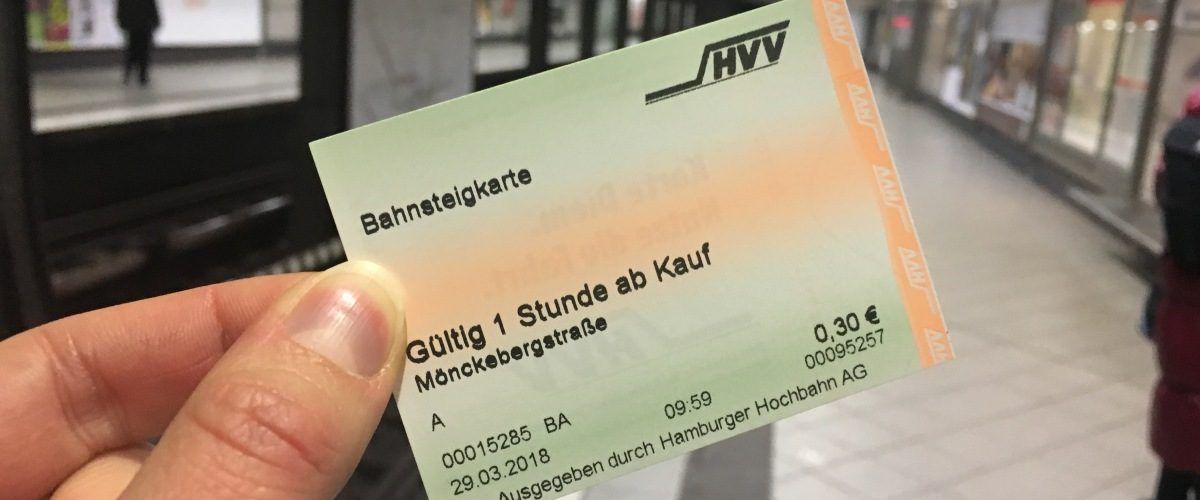
The good news is HVV (the transit authority in Hamburg) is great! Although the website is total gibberish, I went to their office in the station as soon as my train arrived, and the kind woman behind the counter helped me figure out what zones the places I wanted to go were in and helped me to save money on the week long transit pass. It was a tremendous relief to have unlimited transit and not have to worry about tapping in and out and possibly running out of credit due to a computer error!

Related image

In fact, there’s no RF readers or tapping in and out at all. The HVV transit pass is just piece of paper in a plastic sleeve that you can show to the bus driver or ticket checker and it’s all good. 

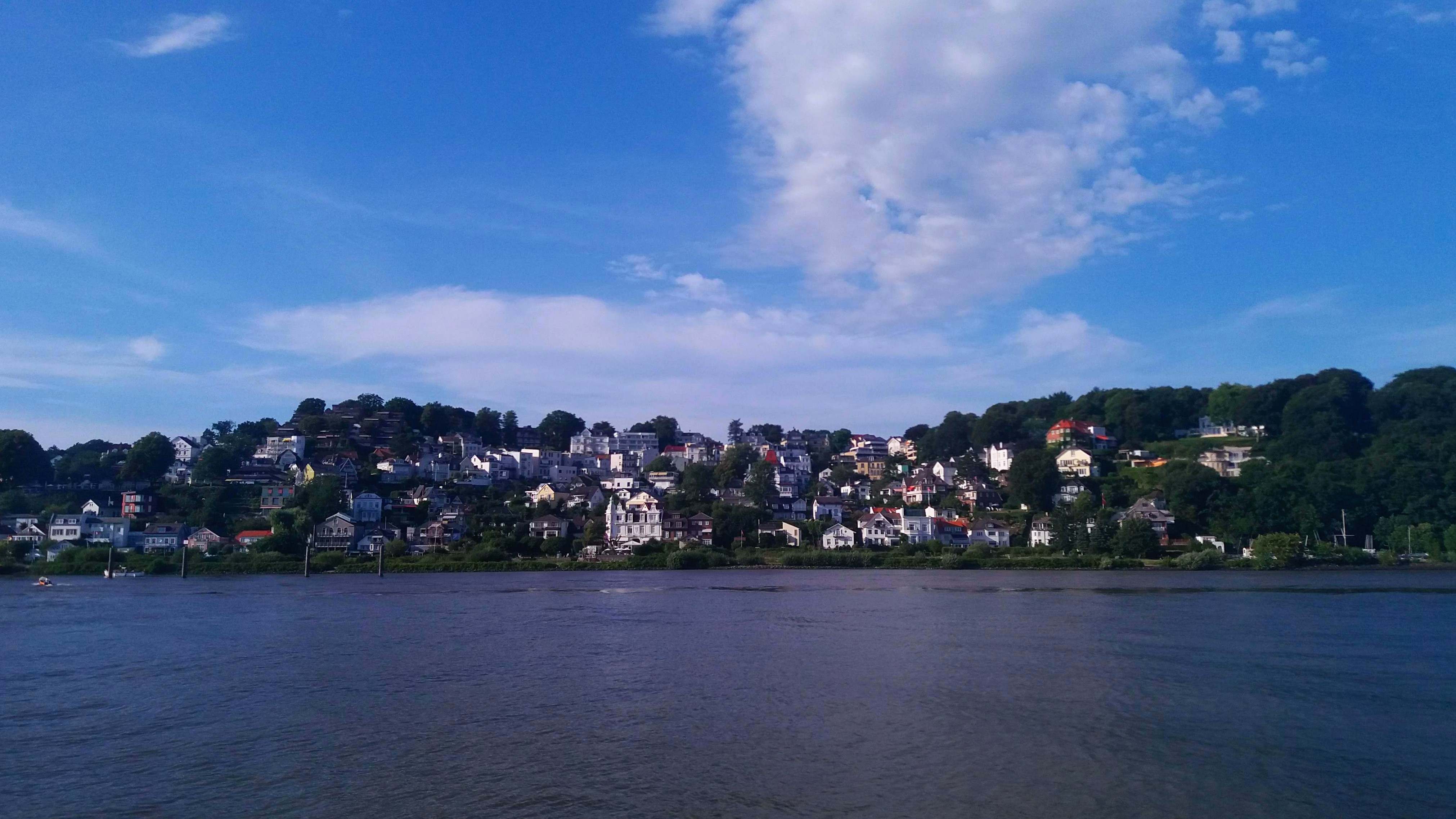
However! The one time I went outside my pass’s zone, I did have to buy a single use ticket. It was supposed to be cheaper this way… it turned out to be a royal pain. I still don’t know the correct way to buy a single use ticket across multiple zones. I thought I got the correct multi zone pass to head out to Blankenese, I got on the first leg ok, but the bus driver at Blankenese refused to let me on, saying I had purchased the ticket in the wrong zone. I don’t know if he was just being a jerk or what, because otherwise it seems I’d have to buy one ticket to get from downtown to Blankenese and then ANOTHER to get around Blankenese. I ended up walking to the beach.

On the way back from Blankenese, I decided to take the ferry, which was an excellent choice. It’s recommended to use the public transit ferry as a cheap tour of the Hamburg harbor and they’re not wrong. At 10.80€, it was certainly more expensive than using land transit, but much cheaper than a cruise up the Elbe with all the same wonderful views.

20180801_182801

Leaving Germany, the last train

The original train I booked with DB Bahn was a single train from Hamburg to Copenhagen on Saturday, but the heat wave in Germany was KILLING ME, so I changed to a Friday ticket instead and left a day early. The new train route had two transfers, each giving me less than 10 minutes to change trains. A situation I would have thought could only be offered if the trains were reasonably on time. Silly me!

My first train was 10 minutes late in arriving, but that was ok because my second train was 15 minutes late departing, so I did at least get on it. However, so did EVERYONE ELSE. I’ve seen less crowded trains in China. Oh, and the platform wasn’t clearly marked so, even though I was standing under the sign for my train, my train actually pulled up at a totally different part of the platform and we only realized it when the hordes of people started running past us to get to it.

Hamburg-railway-station hg

The first several cars were so full that I couldn’t even get in the door. I mean, seats all full, aisles all full, stairs all full, entryway all full, full. I finally found one car I could squeeze into and found myself standing on the stairs (with all my luggage) compressed by bodies. There was an option to buy a reserved seat on the website, but I thought it was just for if you wanted to be sure you and your group had seats together or if you wanted to be sure to get one of the ones with tables. I didn’t realize they oversold the trains by so much that it was the equivalent of the Beijing subway. If you find yourself forced to take a train in Europe, pay the extra 4$ to get a reserved seat or else be prepared to stand.

As the tiny stops went by, and people got on and off, I was shuffled off the stairs and into an actual compartment where a very kind man getting off at the next stop gave me his seat and I was able to rest at last. By about halfway, most of the standing people were gone or seated, but it was still ridiculous.

That train was, of course, also late to my second connection, and I missed my connecting train altogether. The conductor gave us instructions on where to find connecting trains to various destinations and I stepped out onto the platform to wait for the last train of the day. It was going to be about 20 minutes later than my first scheduled train, but I didn’t think that was too bad.

I met a young American lady, just graduated from college and off for her summer in Europe with her Eurail Pass and we got to chatting in the station. When we boarded the next train it seemed that too would be standing room only, and two bicycles blocked off 4 folding seats entirely.  Luckily, as the train filled up, and started moving, a kind lady pointed out that there were two empty seats after all and we rushed over to grab them gratefully.


Copenhagen, Denmark:

The train took 90 minutes longer to arrive than the one I was supposed to be on, and instead of arriving in Copenhagen around 10pm, it was almost midnight. I expected the train to let us out into a train station where I could find shops, an ATM, and ticket machines for the public transit system. Instead, the train let us off basically on the street. I had no idea which building was likely to contain the train station/atm/ticket machine so I began to cast about for any ticket machine at all.

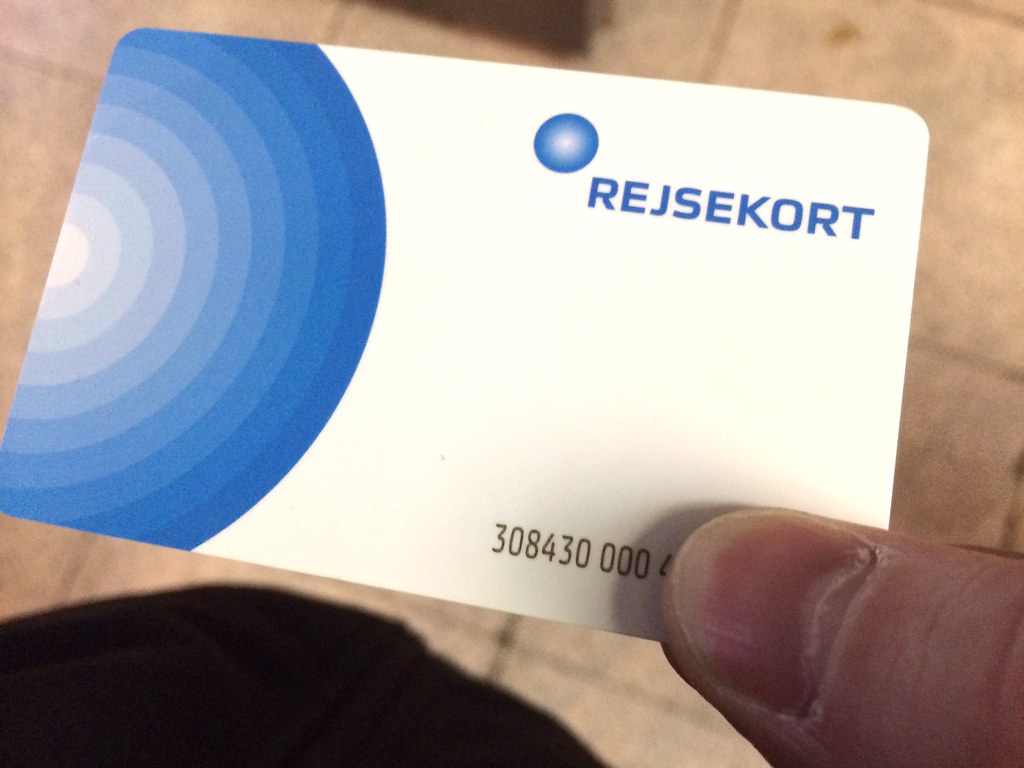
Image result for Rejsekort

I found one at the bus stop but as far as I could tell, the only option I could do with a credit card was to buy the Rejsekort transit card. For this you must pay for the card (80kr), then pay a minimum of 100 danish krone as a balance. So it cost me about 24 euro to get a transit card. But it was midnight and I was exhausted so I just bought it and got on the bus. Being extra sure to tap out as I exited and see the fare, I was pleased to note that even the fairly long journey out to the diplomatic quarter was about 12 kr and figured I’d be able to use that 100kr for a while yet (foreshadowing!)

The Rejsekort transit card worked similarly to the Netherlands OV Card in that each trip required a tap in and out and money was deducted from the card. However! There are two types of cards, registered and unregistered. Guess what? Of course since I bought mine from a machine at midnight it was unregistered which meant I had to maintain a minimum balance of 70kr in order to USE the card. Please remember that the trip between our Airbnb and the main train terminal is only 12kr, so that’s a little more than 5 trips in and out of town that I have to load up and NEVER USE. I was not amused.


Gothenburg, Sweden:

The local transit company here is Västtrafik. The transit in Gothenburg is good, but Google Maps has the wrong names for almost everything, so it says “get on the 10 going to abc-Swedish name” but none of the bus stops match that name on the sign. You can’t just guess by which side of the street it’s on because they use bays to remove the transit from the flow of traffic (very cool idea) so the stops are all together on an island in the middle of the roads. They have stop letters, so Google could just say take the 10 from Bay A but no. I blame Google for this failure, not the city of Gothenburg. 

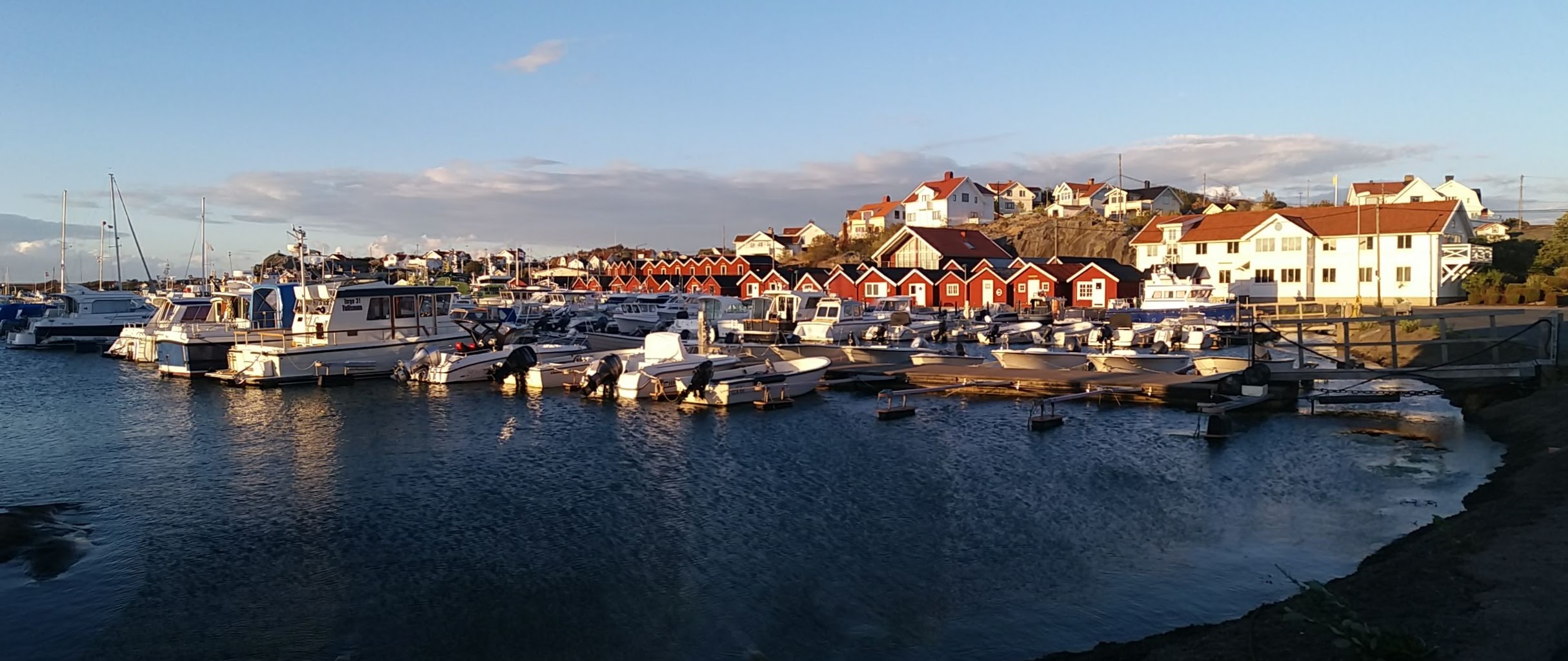
Most of my time in Sweden was in a rental car, but for the time I spent in Gothenburg before getting my car, I was able to use the public transit easily enough by purchasing a three day pass which included unlimited use of buses, trams, and ferries. This is especially worthwhile since the archipelago near Gothenburg are PHENOMENAL.

20180810_201933

Driving in Sweden was great. The roads are in good condition and the signs are very easy to follow. It is likely going to rank in my top 5 all time road trips. 10/10 would do again.

Even with the car, when I was in Stockholm, I opted to leave the rental at the hotel parking lot and take the bus around the city. In a surprising turn of absolute convenience, I downloaded the transit app on my phone and used that to buy my tickets for the day. I’m sure there are longer term options, but I was happy to just get the single use tickets since I was only using it for two trips and it was drastically cheaper than paying for parking.


Olso and Nesodden, Norway:

I was only in Norway because I was flying out of Oslo. My Airbnb was on Nesodden, one of the fjords a ferry ride away from Oslo. A single trip transit ticket is only good for an hour, but would take more than that to reach my Airbnb from the bus station where I arrived. Do I really have to buy two tickets for this? Turns out… no.

20180820_172938

I took the local bus to the ferry terminal, but the buses on the fjord considered anyone getting OFF a ferry to be transferring and did not require an additional ticket. Whew. The ferry tickets were only mildly confusing, and with minor investigative skills I was able to navigate the ticket kiosk at the ferry terminal.

Once the bus dropped me off at the stop closest to my Airbnb, I was truly worried however since it was very rural, with no signs of any ticket machines near the bus stop. I had no Norwegian cash on me and was not walking distance from anything. I tried to use the transit app for Oslo, but it refused to accept my Korean bank card OR my American credit card (which was a much bigger surprise). Unlike the ultra convenient Stockholm app, the Oslo app would only accept payment from a limited number of EU countries.

In the end, I just went to the bus stop when it was time to leave and explained my situation to the driver. Of course he had a solution, and I was able to get to the ferry terminal, then from the Oslo side of the ferry, I was able to walk to the nearest train station that would take me to the airport…. where I promptly bought the wrong ticket.

Bus Terminal in Oslo, Norway (Oslo bussterminal) tickets (billettautomater) for Ruter nettbuss Bus4You IMG 6050

I’m still not sure I completely understand what happened. I went to a ticket kiosk and bought a ticket to the airport, then followed the signs and got on the train. There is no place to have the tickets checked on the way to getting on the train. Once I left the train at the airport, our tickets were checked on the way out. The ticket checker told me I had bought the wrong ticket, and that I’d bought the city public transit ticket, but gotten onto a private company express train (not clearly marked, and don’t check tickets on the way IN?). The money I’d spent went to the city transit authority (Ruter) and there was no way for the private train company to get it. I tried to offer to fix my mistake, but it seems there’s no way to fix it on the back end and she waved me on through exhorting me to pay more attention to the trains in future.

I would never have hopped on the wrong train intentionally, but it wouldn’t hurt if they had some kind of a barrier to scan tickets on the way in?


Moscow, Russia:

Ironically, as in counter to expectations, Moscow had the best running and least expensive public transit. I was only in Moscow for 20 hours, and I got a 24 hour unlimited pass for less than the cost of a single trip ticket in any European city. The ladies at the ticket counter spoke enough English for me to easily get the one I wanted.

I had a little trouble finding my first Metro station (I should have got a SIM card so my Map would work better) but once I realized what to look for in a Metro entrance, getting around Moscow was a breeze. The stations are so well labeled and the metro maps are clear (if you know how to read a metro map). Plus, Moscow is famous for it’s beautifully decorated stations. Even when I got lost because I read the stops wrong there were helpful people to turn me around and help me find my way.

20180821_145452

I also used the airport express train here which was crowded, but reasonably priced and running on time with no surprises. I guess there are some things communism does well?


I have come to realize that I’m a novelist, not a blogger. I think other people would have made each country a separate blog post in order to spread out the words, and get more posts out there. At 5200+ words, I gave some serious thought into dividing this post up into bite size chunks… but tbh, I’m not that thrilled to be writing about transit, and I’m mainly including it because these were hard won lessons that I hope can spare at least one other human my trials and tribulations. I also think it helps sometimes to see that the adventure life is not always one of joy and excitement, and that we must also contend with learning basic life skills over and over in each new place we visit.