The majority of the August 2019 was spent in the Irelands, but I decided that I wanted to spend a few days in Paris on the way. You can’t really fly direct from the US to Dublin (without forking over a fortune). Connecting flights go through Heathrow or CDG. Any excuse to visit Paris. I know it’s very stereo-typical, but apparently I’m more basic than I want to admit: I love Pumpkin Spice Lattes and Paris is one of my favorite cities on Earth.
Where All Good Food Goes When It Dies
Pardon my mangling of Oscar Wilde’s famous quote, but this was the thought I had the first time I had a meal in France (not actually Paris yet, since I was on a road trip from Prague and my first stop was in Metz: photo album). I have not had any disappointing food experiences in France at all. I have been trying to figure out how to afford to live and work in France doing nearly anything just so I could have daily access to the food. Since I haven’t yet figured that out, I am having to make do with an annual pilgrimage to see my favorite art and food stops.
I was only able to spend a few days in Paris this time around, so it was mostly a food oriented excursion. I wanted to get a full range of food experiences from fine dining to street food. The first dinner was at a beautiful souffle-centric restaurant called Le Souffle which serves a three course menu of entirely souffles. I was a bit apprehensive that it might be textually monotonous, but they serve each course with some sides like salad or croquette, and the main course was a mild cheese souffle with the beef bourguignon in a side dish so you could pour the meat and sauce into the souffle, breaking up the taste and texture. For dessert, I was torn between chocolate and creme brulee… I love both, but the idea of a creme brulee souffle was too intriguing to pass up. My only regret was an inability to finish everything.

I got to have just “regular” (amazing) French food in a nice neighborhood bistro. I got to have breakfast at my favorite chocolaterie: Angelina’s. This place has arguably the best hot chocolate, and the breakfast pastries were exquisite. I got some “fast food” at Paul’s, and a picnic lunch from the Marche d’Aligre which included this fantastic “blue” cheese. It’s actually a Tomme duBerry a la lavande. It’s a mild, uncooked, pressed cow’s milk cheese that’s colored blue and flavored with lavender and rosemary. With some lemon olives, fresh bread, ripe apricots, and a lemon tart for dessert it was a magical meal in the park.

I could go on and on about the food in Paris. Many people have. I was going to say I have, but it turns out that for some reason I never actually wrote about my first time in Paris, and when I wrote about the second trip, I wasn’t very food focused because of the extreme heat wave going on at the time ruining my appetite. Perhaps the next time I go, I’ll actually dedicate myself to taking good food photos and notes so I can do a proper foodie write up of all my favorite places.
Let’s Go For a Walk
Since I never actually wrote about my trip in 2015, all the main Paris attractions that I did on the first trip never actually made it into the blog: Eiffel Tower, Père Lachaise cemetery, Sacré-Cœur, the Champs-Élysées with Arc de Triomphe, the Place de la Concorde and the beautiful Tuileries Garden.
If you happen to be in Paris when the weather is nice, these are all wonderful places to go. In 2018, I went on a cycling tour and I have almost no photos and less memory about what we saw because it was 37°C and I didn’t bring enough water. The moral here is, don’t force yourself to see the beautiful outdoor attractions if you aren’t going to be able to enjoy them. There’s plenty of museums and indoor / covered activities like street markets. I made it to the March d’Aligre on this last visit which not only had plenty of wonderful fresh food on offer, but also had a rambling rummage sale of old and lost things.

I personally think that places like the Eiffel Tower (photo album), the Champs-Élysées, the Arc de Triomphe (photo album), and the Place de la Concorde are all things you could go and see one time for a few minutes and check that off the Paris bucket list. They just aren’t that exciting… Although, it was fun to realize that I’ve now seen the matched set of obelisks that reside in Paris and Luxor respectively. The one in Paris was given to France by Muhammad Ali Pasha, Ruler of Ottoman Egypt in exchange for a French mechanical clock in 1832. It’s twin still stands outside the temple of Luxor.


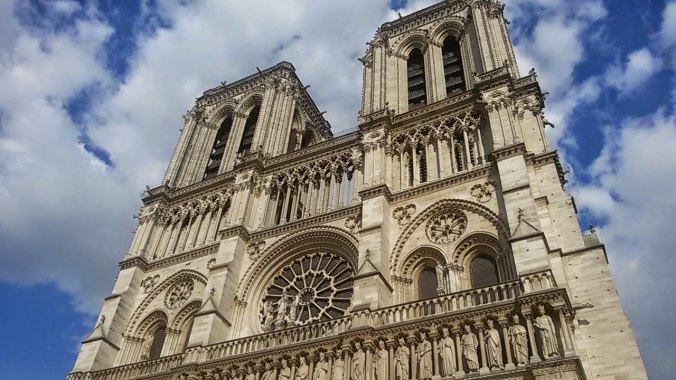
Notre Dame (photo album) is a place that I would have recommended as a one and done, however, since the fire, I’m not sure this stands true any more. I personally will be interested to see how it looks in a few years. Regardless, unless gothic architecture is your jam, it’s not worth more than a couple hours one time. It is totally worth that, because it’s a very beautiful structure, but it can be very crowded and I think it’s a little overhyped since there are a few hundred (thousand?) churches around Europe that are very very similar. But you’re in Paris, so you might as well.
The Père Lachaise (photo album) could easily be several days of wandering through a stunning gothic mausoleum laden park taking endless photos of the natural and the macabre. Plus, lots of famous graves like Oscar Wilde and Jim Morrison. If you’re really into the dead, I think the Catacombs are a great indoor option, although I highly recommend a skip the line ticket because when we went, people were waiting 3+ hours for a tour. Also, while the above ground cemetery is definitely good for repeat meandering visits, I think that the catacombs are a single visit attraction unless you REALLY love bones.


The Sacré-Cœur (photo album) as a church is on my “one and done” list, but as a beautiful part of Paris is on the repeat visit list. The views from the top of the hill are absolutely stunning, and the culture around Sacré-Cœur is fascinating: from the roving “vendors” selling anything and everything on the steps to the famous Place du Tertre where local artist are painting and selling beautiful original works of art direct to the public.

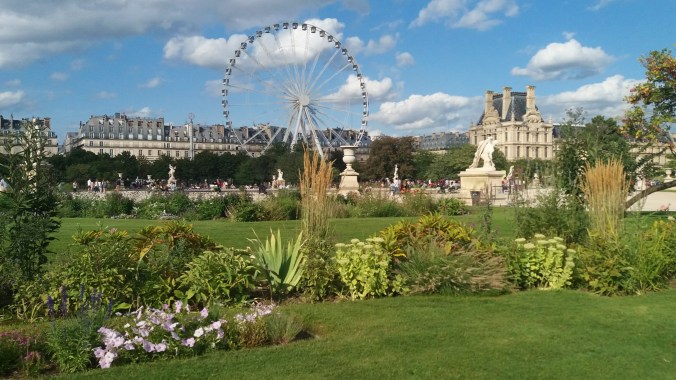
Last but not least, the Tuileries Garden is a large green space between the Louvre and the Musée de l’Orangerie. It’s a beautiful place to have a stroll any time of year. There’s wide open green spaces, chairs placed freely around the fountains, shady tree lined pathways, little bistros and of course a bit of a fun park at one end with a giant ferris wheel. I love to come here when I need a break between sights to enjoy the day and people watch.
Paris Art & Feminism
I wrote a broader piece about my experiences in these two museums (d’Orsay & l’Orangerie) from my visit in 2017. In this essay, I’m going to focus on a temporary exhibition in the l’Orangerie about cubism and the unexpected feminist moment I found there.
In case it was never obvious before, I do consider myself a feminist (no I don’t hate men, no I won’t use the term “equalist”, yes I have lots of reasons. This Bustle article sums them up nicely if you want to read more). I’m constantly frustrated by the way in which all the historical artists, musicians, scientists, writers, politicians, philosophers… everything … of any note or record are almost always men. White men. Old. White. Men.
It’s not because old white men are better at these things. It is because the women who did them were suppressed. They were put down in their own lifetimes. Their work was stolen by men who took the credit. Their work was copied by men who took the credit. They were just written out of history. By the men who write history books.
Women are supposed to cook for the family, but only men can be great chefs? Women have historically been expected to spin, weave and sew yet fashion is a man’s business? Art forms that men can’t steal are just demeaned, like embroidery or textile crafting. It’s nice this is finally starting to break down in the 21st century, but we still don’t have enough of a balance in the way we teach and promote artists in mainstream culture. Adding women artists to the public consciousness doesn’t mean removing male artists, and it’s high time we start.
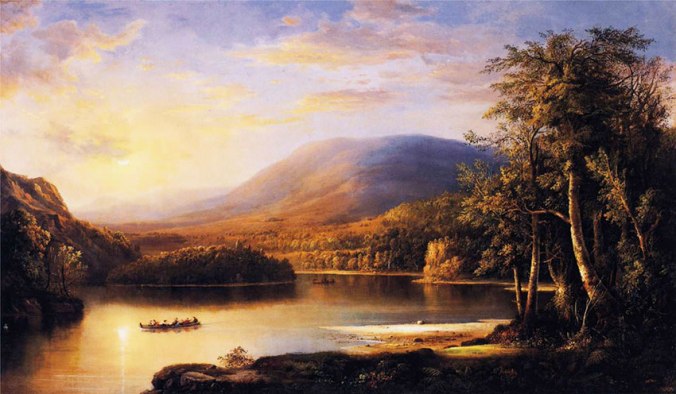
Many of the artists and composers and even authors on my “love it” list are dudes. I’m not going to stop enjoying their work just because I’m adding female artists to my worldview. I don’t know if I would have identified with any female artist growing up simply because I wasn’t ever exposed to any. I don’t think we have room for a limited number of artists in our lives. I think the more art the better. While we’re at it, maybe start adding non-eurocentric art and POC artists too, like Robert S. Duncanson (1821–1872) who was an African-American man who escaped to Canada during the Civil War and taught himself to paint.
The museums in Paris, in particular the l’Orangerie, have been trying to have more women artists on display. Last time I was there in 2018 it was Helen Frankenthaler. I wasn’t that into her art because I am not a fan of abstract impressionism, but I was really happy to see her in an installation that included Rothko and Pollock. The museum talked a lot about her life and the challenges she faced being a woman in the highly sexist art scene. She was talented, dedicated and prolific yet she’s not discussed when most people talk about this period of art history.
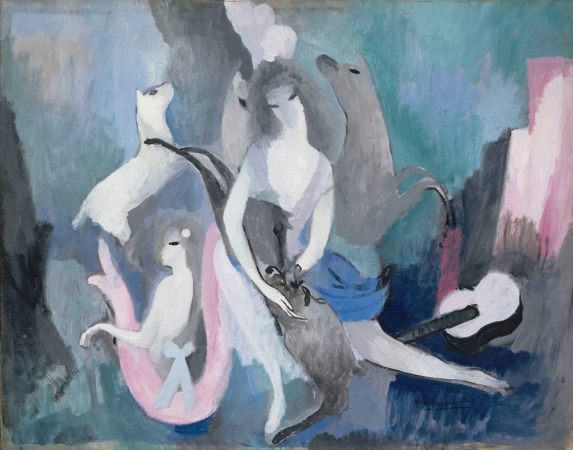
This time, the featured woman artist was much more personally to my liking and I became much more invested in her art and identity. I am only human, and tend to spend more time and energy on the things that personally interest / impact me. If you’ve never seen her work before, then it is my distinct pleasure to introduce you to the art of Marie Laurencin.
“Marie Laurencin (1883-1956) initially studied porcelain painting, before going on to study drawing at a school in Paris and at the Academie Humbert. She was part of the circle of friends at the Bateau-Lavoir known as the “Picasso gang”, and it was here that she met the poet Guillaume Apollinaire with whom she had a passionate and stormy affair.
Attracted to Fauvism for a time, Marie Laurencin, the “Cubist Muse”, simplified and idealized her forms under their influence. From 1910, she preferred a palette of pastel tones, particularly grays and pinks. She went on to discover the painting of Goya in Spain.
In 1920, she began to paint the willowy, ethereal female figures that she would return to later in paintings with pastel tones, evoking a magical world. She painted portraits of famous Parisian figures, and designed stage sets, for the Ballet Russes in particular. Through this, she became interested in metamorphosis, bringing together two of her favorite themes: young women and animals.”
— Informative sign at l’Orangerie
It’s not that Laurencin or Frankenthaler have been erased. They have (short) Wikipedia pages and it’s not hard to find their paintings online. Before the internet, however, they were virtually invisible to anyone who was not an art history student. Artists like Pollok and Picasso have had hundreds of books, movies, and t-shirts made about their lives and art. They’re referenced frequently in pop culture and have been made to stand as the premier examples of their art eras.
Picasso was a womanizer, an abuser, a narcissist and highly misogynistic. This isn’t just my opinion. It’s well documented. Yet we treat him and his work as sacrosanct as though it is the ONLY example of cubism in all of history. I’m not suggesting we bury the male artists just because they’re jerks, however I think it’s time we start taking a look around and who else might be worthy of historical preservation and artistic praise.
Honestly looking around the museum that day, there was plenty of Picasso on display. It isn’t that impressive.. OK cubism did all this great stuff for “art” and the advancement of creativity, but he wasn’t the only one. I found his works that day to be coarse and overly focused on women as sexual objects. I’ve had a chance to go back through a photo collection of his body of work and I think that whoever curated that particular display may have been selecting for contrast, and I acknowledge that wasn’t a universal trait. However, that day, it was jumping out at me that he was painting women as breasts with a body and maybe a face attached.
Even though Picasso insisted on referring to her as a Cubist Muse or “Our Lady of Cubism” Laurencin didn’t think of her art as cubist, but rather more impressionist. She’s still classed as a cubist artist to this day because art historians would rather listen to how the men defined her rather than how she defined herself.
Despite all this feminism, Laurencin didn’t paint women for empowerment. She also thought they were beautiful. “Why should I paint dead fish, onions and beer glasses? Girls are so much prettier,” she once said.

To me it seemed that she focused on their beauty rather than their ability to please a male gaze/touch. Her paintings reached out and grabbed me despite their pastel colors and watery images. The idea that a women could paint women because they are pretty the way flowers or rainbows are pretty rather than because they stir the passions of men. There have been a few queer male artists in the well documented side of history that painted beautiful women in an absence of sexual desire, but mostly you get people like Raphael who literally made up non-existent sex goddesses to paint out of the most attractive parts of the hundreds of ladies he seduced. Really early photo-shopping of models, I guess?
It isn’t to say that Laurencin didn’t sexualize women at all. Apparently she was known for attending sapphic parties “comprised of lesbian and bisexual women socialized and discussed links between female desire and creative production”. If anything she was likely bi- or asexual since her long term relationship with Guillaume Apollinaire is well documented. However, if she did sexualize women in her paintings, it serves to highlight the extreme difference in what a male and female sexual gaze focuses on.
Regardless of Laurencin’s sexual orientation, the sapphic parties weren’t lesbian orgies. The hostess and participants of those parties were early first wave feminists seeking to own their desire and creative power at a time that most women were expected to stay home and raise a family. For context, the suffragette movement in France was happening at the same time (1909-1945).

It doesn’t surprise me to learn in retrospect that she was a feminist and (probably) queer. I didn’t really know any of this while I was standing agape in the museum wondering how it was that Picasso had been shoved down my throat my whole life while I had never once seen these ethereal and graceful monuments of feminine self-celebration. All I knew was that they were beautiful and yet strong. They were made by a woman for women (Coco Channel, above, was one of her more famous clients) and that they showed beauty within a wholly feminine framework.
For a longer and more comprehensive story of her life, I recommend this website:
https://www.theartstory.org/artist/laurencin-marie/life-and-legacy/
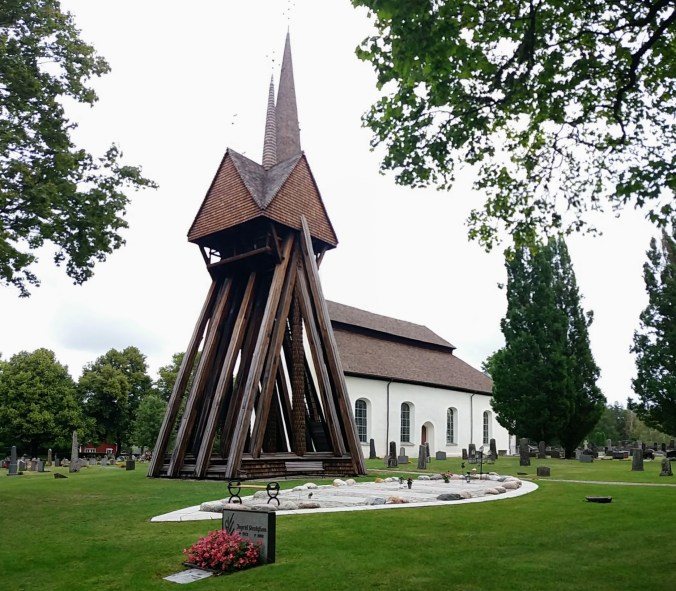


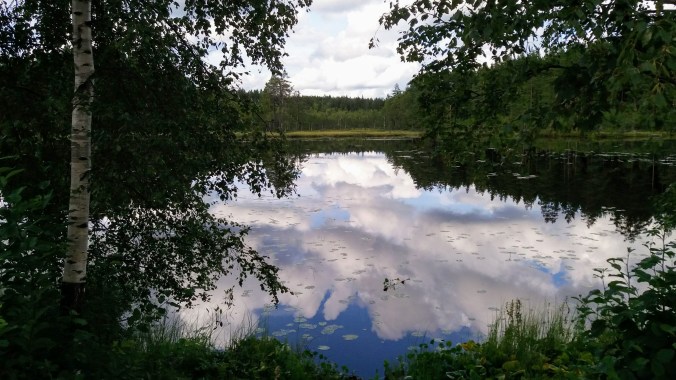


 NotQuite is an artist community built in an old paper factory in the middle of nothing. The art on display is far more experimental and boundary pushing than anything else I’d seen that summer, and not all of it was good, but all of it was sure trying to BE something. I wandered into the abandoned factory floor where art installations were scattered around almost as though they had been abandoned along with the paper. Small bright displays stood alone in large concrete rooms, and almost all of the signage was only in Swedish.


 Gallivantrix