Paris in the Spring

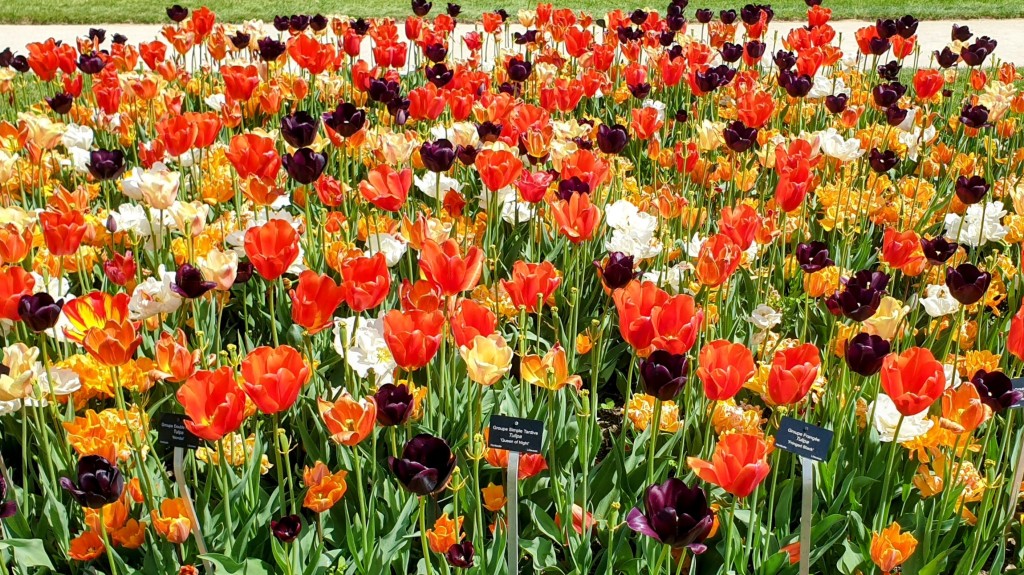
Despite the detour, this is still mainly a travel blog, so without further ado, I bring you a sunny day in April exploring Paris. The romantic ideal of Paris in the spring is perhaps more marketed to lovers, but having been to Paris both in spring and in summer, I can say I have a definite preference. The weather is better, the crowds are fewer, and if you go early enough in the spring, you get cherry blossoms! (For those looking for tips and advice, specific details about transportation and accommodation are at the end).

When I decided that I would spend a couple months in France, I knew I didn’t want to have Paris as my home base for a few reasons. The top being “oh my god it’s expensive”. The next being “it’s full of tourists”, and the last and perhaps most important: I wanted to see other parts of France. Nonetheless, every international flight into France lands in Paris, so although I would start classes in Tours on April 15th, the best price to fly was April 11th (several hundred dollars cheaper than the 12-14th). I decided that I’d rather spend the money in Paris, so I booked a dorm and planned a laid back day of viewing the gardens and eating delicious food.

Breakfast

Refreshed from my flight by a good night’s sleep, I headed into the city center to my favorite breakfast place in Paris: Angelina’s. I have gone to Angelina’s every time I’ve visited Paris for their amazing hot chocolate, even in the worst summer heat wave. For people who have only had packet hot chocolate, I can’t express my sympathies deeply enough. Some of you have been lucky enough to have real hot chocolate made from milk and chocolate (not a powder) and you begin to know the heights to which this beverage can soar. Those of us who have been graced by the chocolat chaud at Angelina’s know the celestial chocolate experience.

The last time I was in Paris in 2019, I made breakfast reservations because we had tickets to the museum and I wanted to make sure we were not rushed to finish eating. It turned out we didn’t need the reservations since most tables were still empty when we arrived. This year, Angelina’s website says they are no longer accepting reservations, and when I arrived, I discovered the otherwise totally empty sidewalk to be teeming with a crowd in line at my favorite breakfast spot. I queued up while I looked on my phone to see if there was some explanation. I was informed by my neighbors in line that the restaurant had recently become TikTok famous, which is why they themselves where there.

I’m never sure how to feel when a restaurant gets influencer famous. Many restaurants have actually been destroyed by fame induced crowds flocking in numbers that their small scale production process simply could not handle. Others have had to reduce the quality of their once famous dishes in order to keep up with the demand. I stood in line thinking that there must be another restaurant in Paris that had really good hot chocolate, and maybe it was time for me to try a new thing, when the line started moving. It only took perhaps 15-20 minutes before I was at my own table. The wait was considerably shorter than I would have expected at a restaurant in Paris. It may be that foreigners are accustomed to eating quickly, and tourists who had made Angelina’s a stop on an otherwise full day of activities were eager to get on.

I was fully prepared to order my breakfast in French (knowing I didn’t need to), and the server was very kind about it. Then I realized that about half the patrons in the dining room were Asian, and were all using English to communicate with the staff. I told my Korean students over and over again that English was the key to world travel, but it strange to see it in action here in Paris after struggling though my bad French on previous visits. Stereotypes about the Parisians persist, yet I have never known them to be anything but kind. It’s possible they appreciate the attempt to speak French more from native English speakers because of the stereotypes about English speakers being monolingual, but they seemed quite content to speak English with me and with every other tourist around.

When my order arrived, I was delighted to discover that despite the newfound TikTok fame, the quality of Angelina’s hot chocolate had not diminished in any way, and that the French cultural value of never rushing a diner at the end of a meal was still going strong. Regardless of the line at the door, everyone seated was fully welcome to spend as long as they liked savoring the thick chocolatey goodness and rich pastries. Bliss!

Jardin des Tuileries

An online search for cherry blossoms in Paris revealed that the largest grove of cherry trees was about 90 minutes on transit from my hostel, and after viewing the blossoms at some of Asia’s biggest collections, I doubted at the mere volume of trees would be a top draw for me in France. Instead, I opted for closer gardens with fewer trees where I could have a lovely stroll with less time in the Metro. My first stop was Jardin des Tuileries, right across the street from Angelina’s.
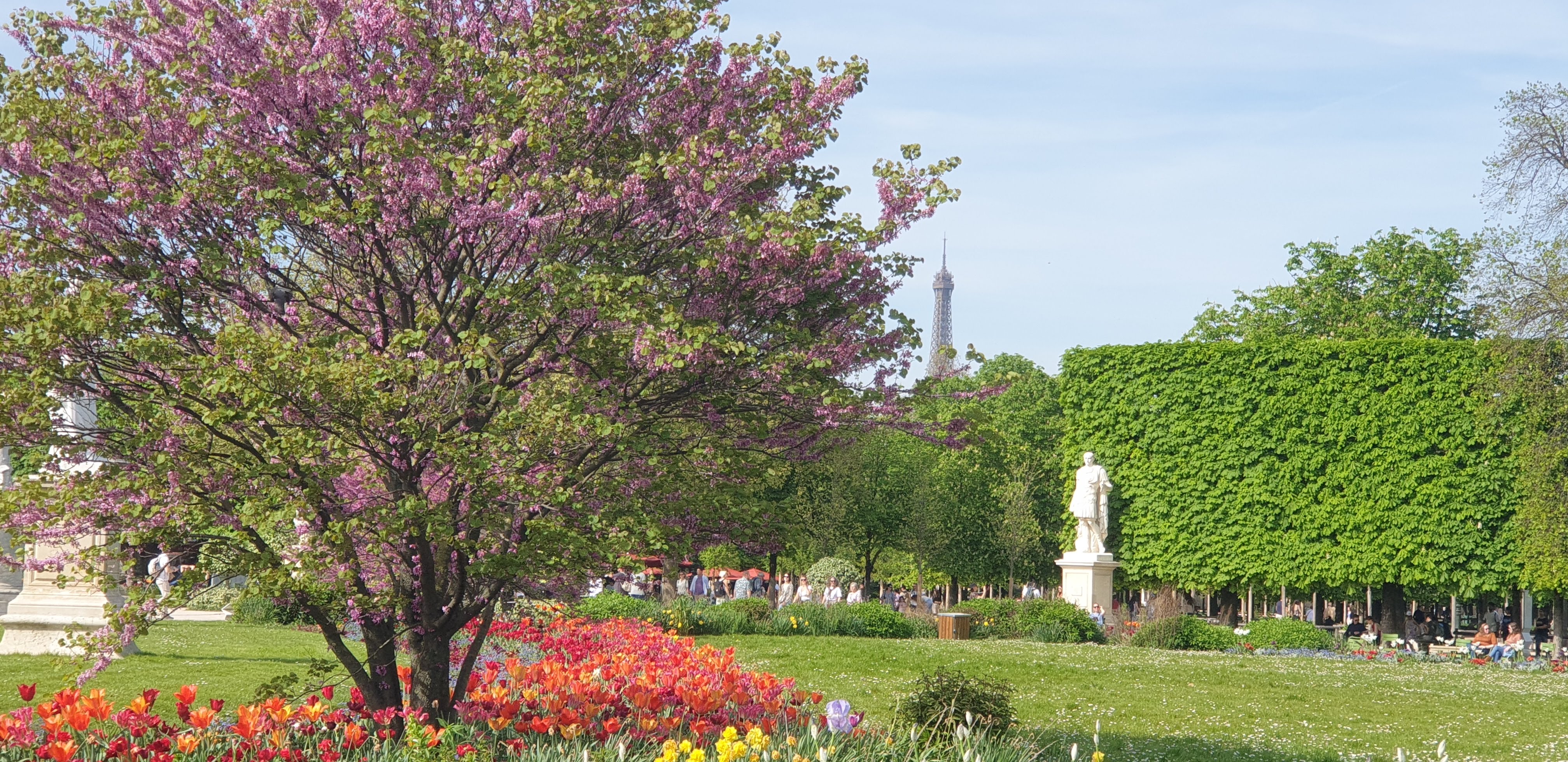
I like to come to this garden when I’m in Paris no matter what else I’m doing. My first time in Paris (2015), I ended up in Tuileries purely by accident, and ate a glorious sandwich next to a fountain with a view of the Eiffel Tower. It’s a memory that sticks in my mind because I felt in that moment that I had “made it”, that all my repeated struggles towards my dream of global travel and daydream freedom had landed me in this garden, with the best sandwich I’d ever eaten, basking in the sun and watching the Eiffel tower in the distance. I like to come and visit the park and relieve that memory whenever possible.

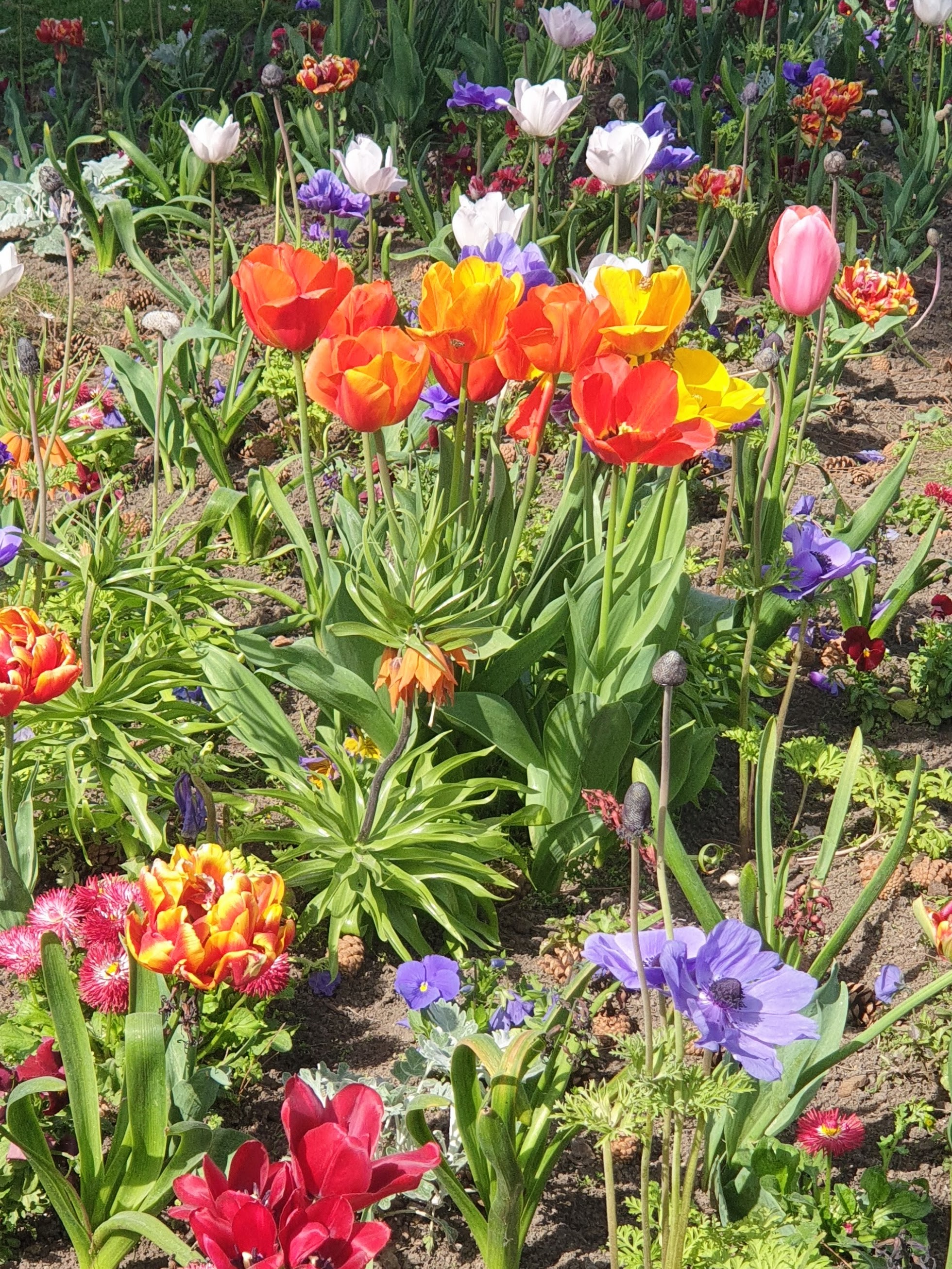
There were plenty of people, both locals and tourists, enjoying the unseasonably warm sunny spring day in the park. I ambled around and taking photos of the pink blossomed trees, stopping occasionally to take photos for groups who were struggling to use the timer on their phones or get everyone into one selfie. My feet were still swollen from the flight and my back hurt, but none of that could impact the growing sense of ease and contentment I experienced just discovering that I had once again “made it”. I survived the COVID induced lockdowns, I took my years of isolation and I packed them up in a box in the closet and I once again embraced travel for joy.

Jardin des Plantes

The next garden I visited was the Jardin des Plantes, a botanical garden that I had not been to before. It also houses a small zoo, and some indoor exhibits, but I was there for cherry blossoms! Priorities.

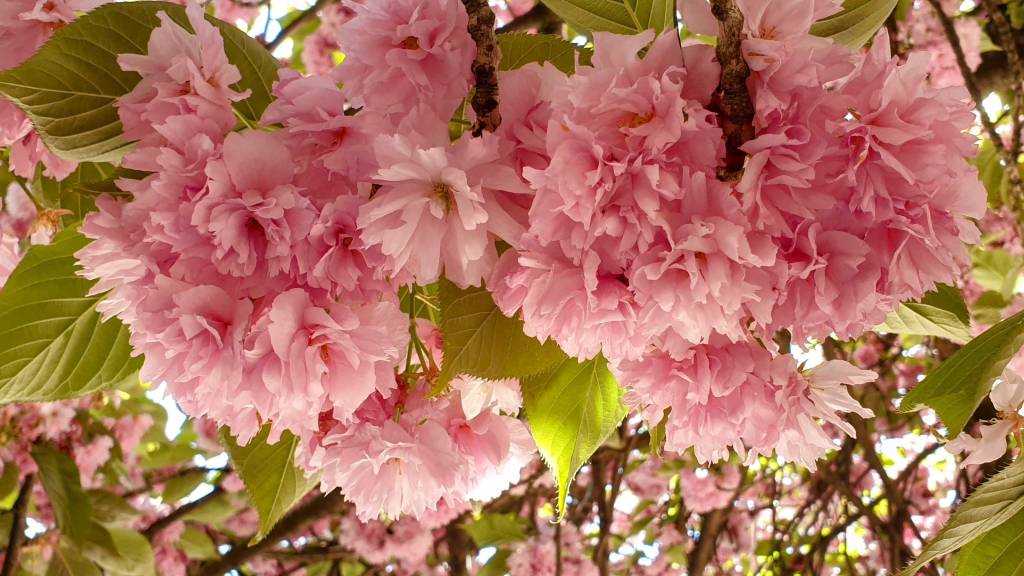
When I found the area where the park’s cherry trees grow, I was initially disappointed. It seemed that all the “white” (very pale pink) trees had finished blooming the week before I arrived. There were four darker pink blossomed trees of prodigious size, but they too seemed to be at season’s end. Thankfully, that was an illusion. These enormous trees look full of fading blossoms from a distance, but once you step under the sprawling canopy, you have entered the bower of a magical fairy land. Queen Titania herself might set up a divan there and feel entirely appropriately decorated. 

It was like stepping into a snow globe of pink petals. The branches swept from high above all the way down to the ground, cutting off the view of the outside world. Fallen petals covered the ground as well, resulting in a 360° sphere of pink. I lost track of how much time I spent under just one tree, discovering new delights at every angle I looked or aimed my camera. When the spring breeze came by and the petals fluttered around us like pink snow, everyone stopped their photo posing and gasped in awe.


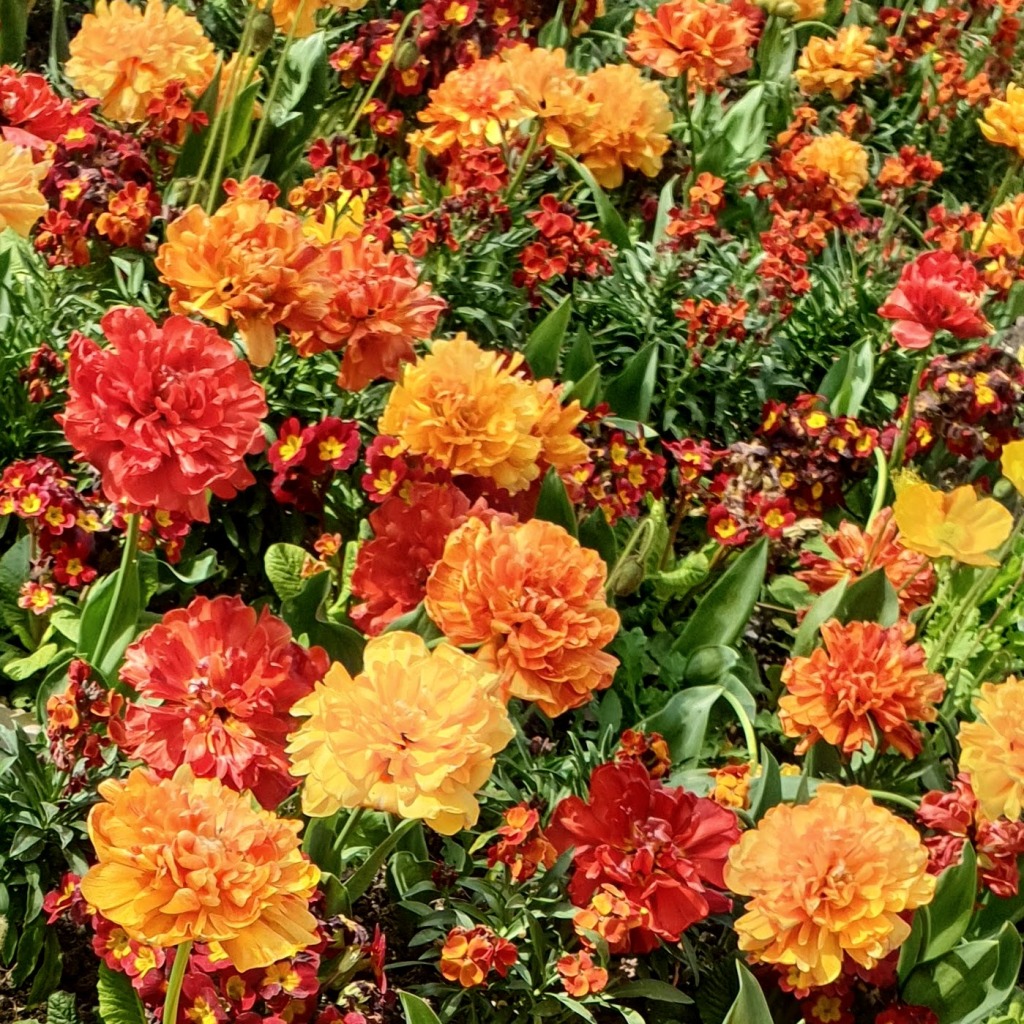
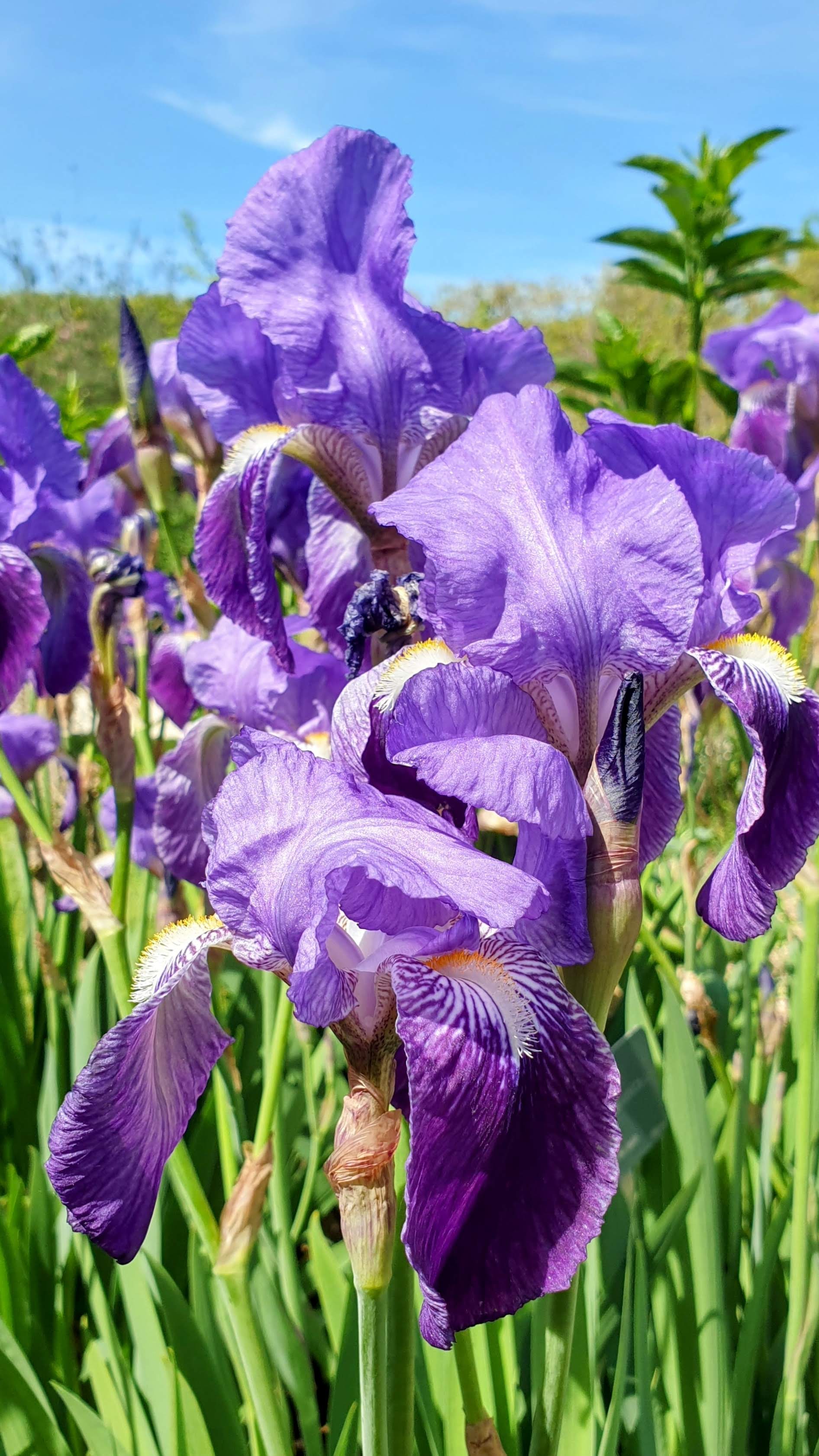
I visited the other three cherry trees and then branched (haha) outward to look at other plants and flowers. In early spring, there aren’t as many blooming, but I found some other pink trees, some purple irises and a garden with enormous blooms I do not know the name of.
Un Pause

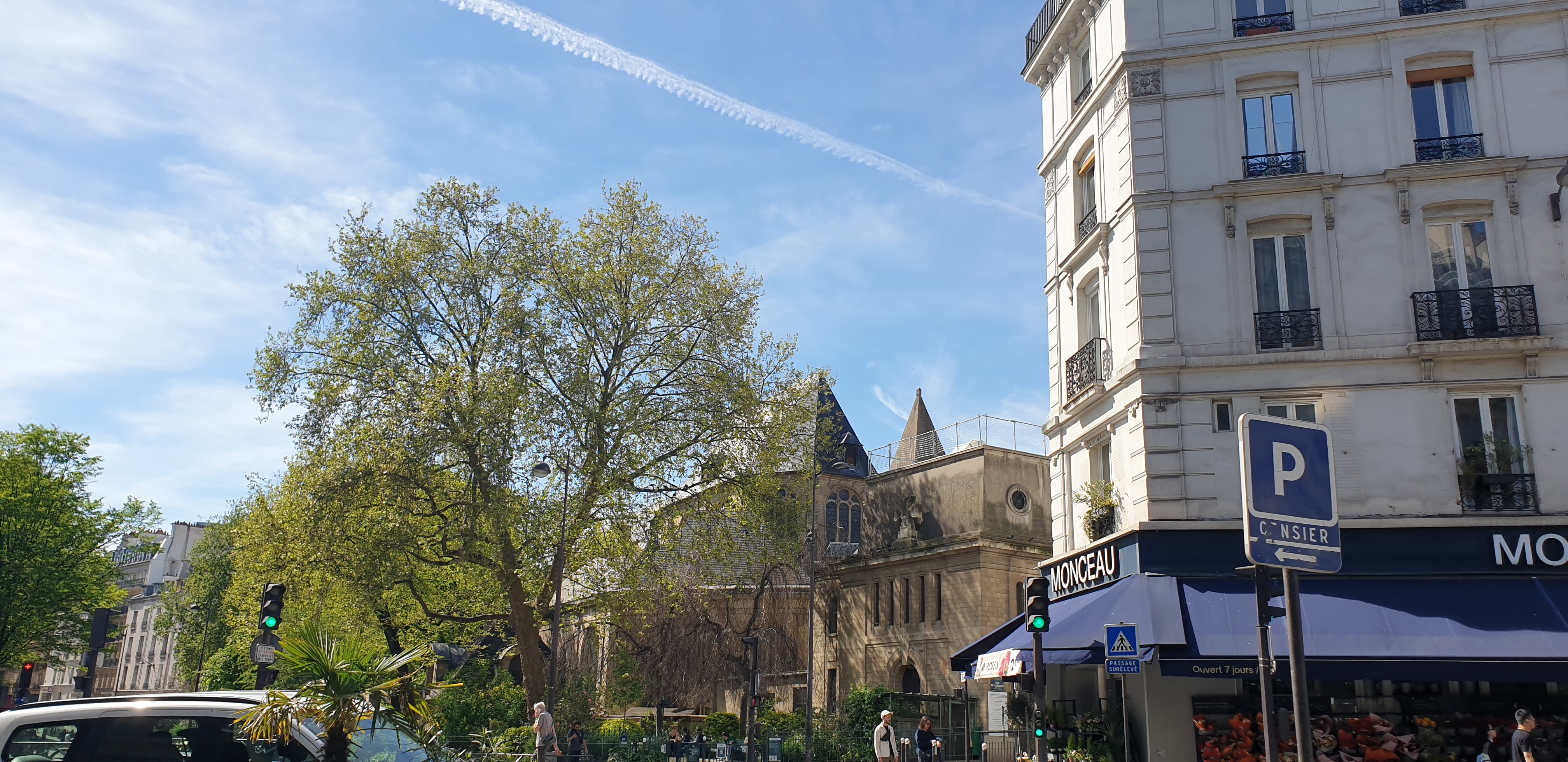
Still jetlagged and walking for hours, I decided to stop at a sidewalk cafe. I couldn’t find any coffee places with seating near the gardens, but I did find a little bistro from which I ordered a delightful craft cocktail. As I sat in the shade of the awning with my drink and watched the daily life of Paris around me, a quote from Anthony Bourdain came to my mind:

“Most of us are lucky to see Paris once in a lifetime. Make the most of it by doing as little as possible. Walk a little, get lost a bit, eat, catch a breakfast buzz, have a nap…Eat again. Lounge around drinking coffee. Maybe read a book. Drink some wine, walk around a bit more, eat, repeat. See? It’s easy.”

― Anthony Bourdain, World Travel: An Irreverent Guide

However much I wish it had not taken me 4 visits to Paris to learn this, I don’t think anyone could have convinced me on my first trip that I shouldn’t be running around trying to see the Arc de Triomphe, the Eiffel Tower, the art museums, the catacombs, the cemeteries, Montmartre, and every other cool thing in Paris. The tourists I talked to in line at Angelina’s and whose photos I helped take in the garden were just as eager to squeeze in as many sights as possible. I can’t blame them, but I’m very grateful that I finally reached a point where I can just enjoy sitting at a sidewalk table with a drink.

Jardin du Luxembourg

My last stop on the way back to my hotel, Jardin du Luxembourg, was also a garden that I had not previously visited. I found it to be much more like a park than a garden with plenty of places to walk and sit and play sports, but fewer flowerbeds or decorative trees. Most of the gardens in Paris have lawns (tapis vert, or green carpets) that are cultivated to within an inch of their lives that no one is permitted to walk or sit on (thank you, Louis XIV). It creates a beautiful landscape, but leaves one yearning to run barefoot in the grass. Luxembourg had many sweeping no-touch lawns, but added a sitting lawn! (There is another good sitting lawn just in front of the Eiffel Tower). Large blocks of soft dark green grass just for lounging around or having picnics on.

Given the beautiful weather that day, all the parks were full, but it was not hard to find a spot to plop down and enjoy the cool green lawn. I watched the people and the pigeons. Every pigeon I had seen all day seemed to be unusually plump and healthy. I’ve seen pictures and videos of show pigeons, but street pigeons are so often sickly and deformed that it’s become a trope, people calling them “rats with wings” or “cooing plague pits”. And yet an animal is only as healthy as it’s ecosystem. If pigeons in New York are malnourished, diseased, and deformed, it is not a result of the natural state of pigeons, but rather a reflection of the life they are forced to live. It really made me think about how much healthier Paris must be as an ecosystem than the vast majority of other dense urban cities I’ve visited. It also gave me a new appreciation for the presence of squab in French cuisine.

La Fin

As the day drew to a close, I realized I had made no plans for dinner, and that the combination of Saturday plus glorious weather meant more people than usual would be going out to eat. From my seat in the grass, I searched online for nearby options and snagged a last minute reservation at a restaurant across the street. Once more, the staff were very friendly and happy to speak in English (where does the stereotype of rude Parisians come from?) I ordered the daily special of duck confit, with a bière picon (a beer mixed with picon, a sweet orange liquor, not available in the US, I’m afraid), and for dessert, a chocolate cake and coffee with bailey’s and Chantilly. I may have gone a little overboard, but it was delightful to sit on the indoor balcony and look out the restaurant’s giant picture window at the garden across the road while dining on top notch food and drink. Not an everyday occurrence, and I think a worthwhile treat to end my day in Paris.

The next day, I repacked my bags and caught the bus to Tours, the small city in the Loire Valley that was to become my home and my school for the next 5 weeks. Stay tuned for more on life in the Loire!

Planes, Trains, & Hotels

If you are interested in the practical side of this trip, this Post Script is for you. Here I have attempted to include some useful information and links about airfare, public transit, and accomodation.

When searching for airfare, I was lucky enough to find an off brand company that didn’t suck called French Bee. Their cheapest package is very similar to Spirit or Ryan (no luggage, no meals, etc.), but the price difference for the upgrade to a more inclusive fare was only about 40$. I ended up with a normal international luggage allowance, an inflight meal, the ability to choose my seats, and the no-fee change policy.

The Paris public transit system is good, but confusing to outsiders. I have an old Navigo card which was still valid and could be topped up, but my research revealed there is now an app which allows you to buy tickets online and scan your phone via RF/NFC rather than having to carry a card and top it up at ticket kiosks. The app for local Paris transit is My Navigo Tickets, and the intercity train system is Bonjour RATP. It is a big improvement since my previous visit. The Navigo app also offers a good trip planner, showing the best transit routes to get from where you are to where you want to be. Sadly, after you find your route, and press the “buy ticket” button, it just takes you to the general ticket page with no indication of what you need for the journey you have planned.

Why does this matter? Paris has 5 zones, and transit tickets are sold in groups of zones. The more zones, the higher the price. I want there to be a way to easily see what zone you and your destination are in, but I haven’t found it. The last time I was in Paris, I just talked to the ticket seller about the places we wanted to go, and she knew what zones I needed. In general, if you’re sticking to the city center, 1-2 is enough, but there are some high demand tourist spots in zone 3. And if you’re staying further out to save on hotels, you may even be in 4-5. Transit to and from the airports and Disney Paris have their own special rates.

Additionally, passes are available by day, week, or month, but the week is Saturday to Sunday, no matter when you purchase it (not 7 days from the day of purchase). Is your head spinning yet? Do you suddenly want a taxi? Well, just remember the taxi rates from the airport are 50$+, but the bus rate is about 12$. Taxis in the city traffic can be difficult to catch, drivers may not speak English, and they may rely on your poor knowledge of fees and laws to overcharge you (this happens everywhere, it’s not unique to Paris). Transit trips cost about 2 each or a day pass of unlimited rides for about 8. I like the unlimited rides because I never have to worry about transfers or having to take extra transit if I get lost (which happens at least once a trip).

On to hotels! Paris is definitely one of the top most expensive places to spend a night. Before COVID, my usual travel budget was 100$ a day split 30/30/30 (hotel/food/entertainment) with a small extra cushion. Even then, I couldn’t find a room in Paris for 30$, I couldn’t find a bed in a dorm for 30$! There are a few youth hostels where, if you happen to be a young man, you can bunk down in a 12-16 bed dorm with other young men for around 35$ a night. If you would like a female-only dorm, be prepared for the pink-tax. All-girls dorms cost on average 10$ more than the male or mixed dorms. I stayed in a mixed dorm in Paris once, and it was fine. I was safe. No one was skeezy or anything. But, the older I get the harder it is for me to spend time in dorms. I find I need a private space to decompress at the end of a long day.

In post-COVID inflation-land, room prices in Paris seem to have risen (although to their credit, not as much as US based inflation). The best deal I found was a bed in an all-girls dorm for 50$ a night. (are there cheaper? Yes, but then you start getting issues with cleanliness, quality, safety, and distance from the transit stations). Hotels and hostels are getting better at tricking the algorithms to promote their place in search engines and reservation websites. It’s important to read real reviews (good and bad), see what people liked and didn’t (it might be things that don’t matter to you), and look at a good map to see not just how far the hotel is from a landmark or transit station, but also, how you can get there. 

It can take hours of searching to find a good price, a good location, and a good quality, but the time you spend in advance is worth it not to have unexpected unpleasant surprises after you arrive. My decision to take a dorm bed at the Eklo also related to factors like the photos of the dorm rooms, the reviews by other guests, and the closeness of the bus stop. I knew it would be hard to be really comfortable in a dorm, but I was willing to take it for just two nights.

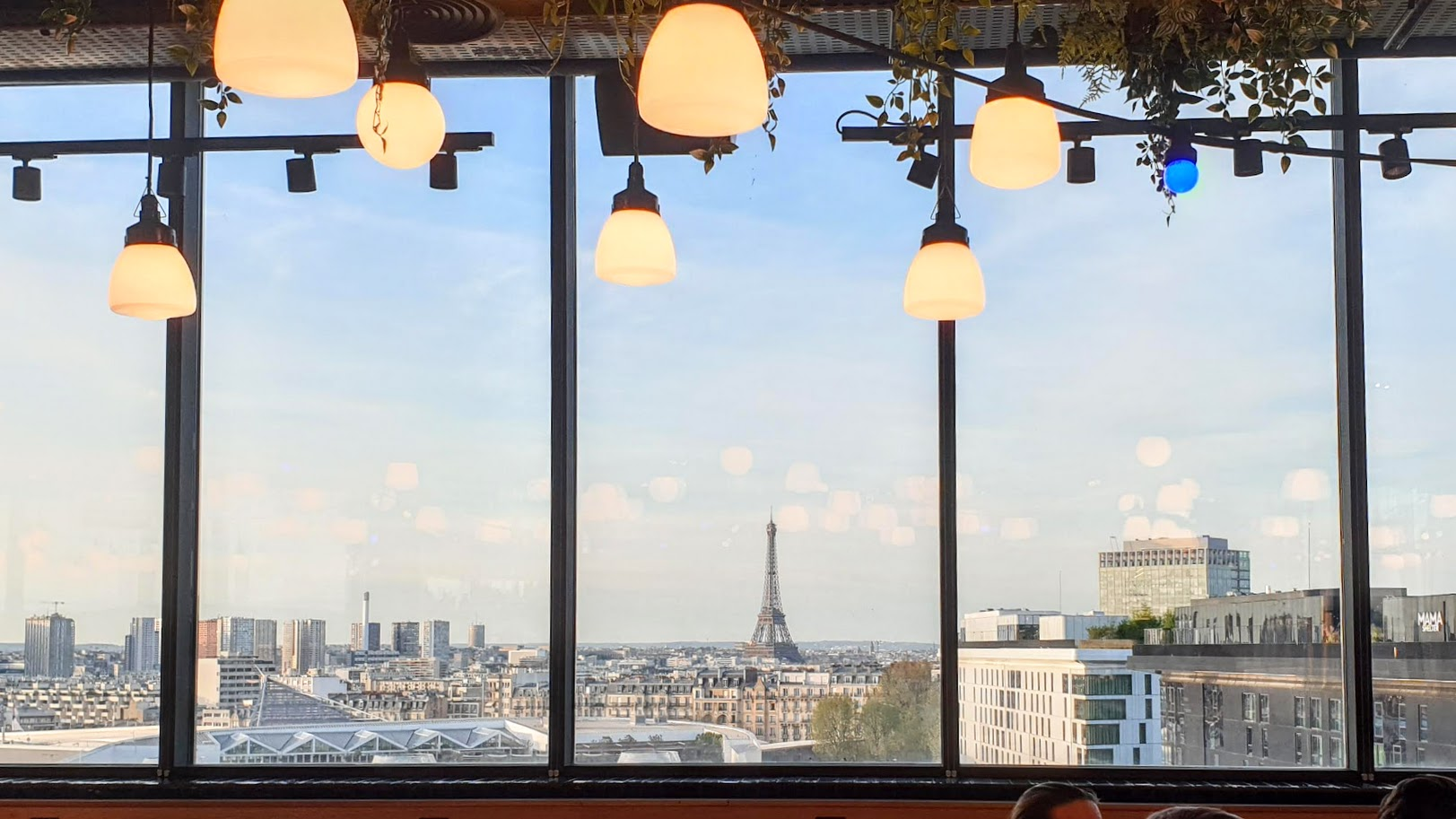
I ended up eating at the rooftop restaurant for dinner the night I arrived. I am always skeptical of eating in a place so clearly designed to cater to tourists. High end hotels have amazing restaurants, but hostels tend to focus on alcohol and cheap food. The Eklo partners with a small chain restaurant called French Kiss which had a good looking website, and I was too worn out from the flight to go anywhere else. The view was stunning, and the food surpassed my expectations for hostel restaurant fare, and the staff were all friendly and quite fluent in English.
Zanzibar East: Paje & Jozani

I spent a full week in Stone Town which might have been too much. It is where almost every tour leaves from, but after day 5 I was starting to feel like I had hit all the highlights. I missed out on Prison Island (where the giant turtles live) because the weather wasn’t good for the boat trip on the day I’d booked and I was too tired to navigate booking another day. Nevertheless, I was ready to move on. My second stop was at Paje Beach on the east coast of the island.

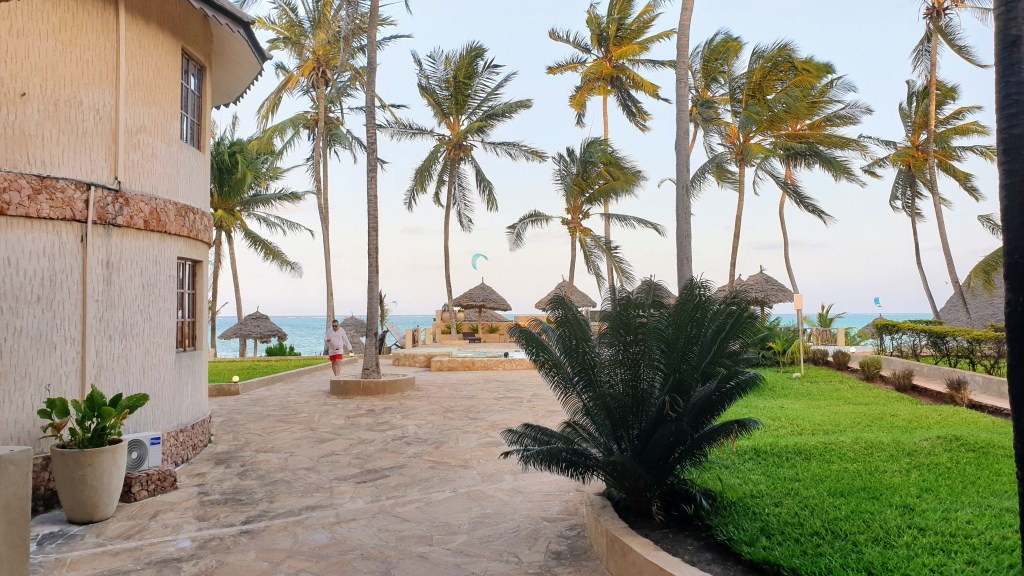
Paje is described as being more low key, less resorts and more backpacking beach bums. I booked a private room in a hostel that was less than 500m from the beach. The hostel itself was very cute with a courtyard filled with greenery and comfortable places to lounge. The art in the room was really strange, but the room was clean and sometimes that’s enough. There’s a single main road that goes through the town that’s lined with a mix of shops that serve locals and tourists. The roundabout has the town’s 3 ATMs only, one of which was working when I went. I met another traveler who said all three were out of cash the day before, so they had to taxi back to Stone Town just to get money since no one outside the resorts takes cards in Zanzibar (my hostel was cash only, too).

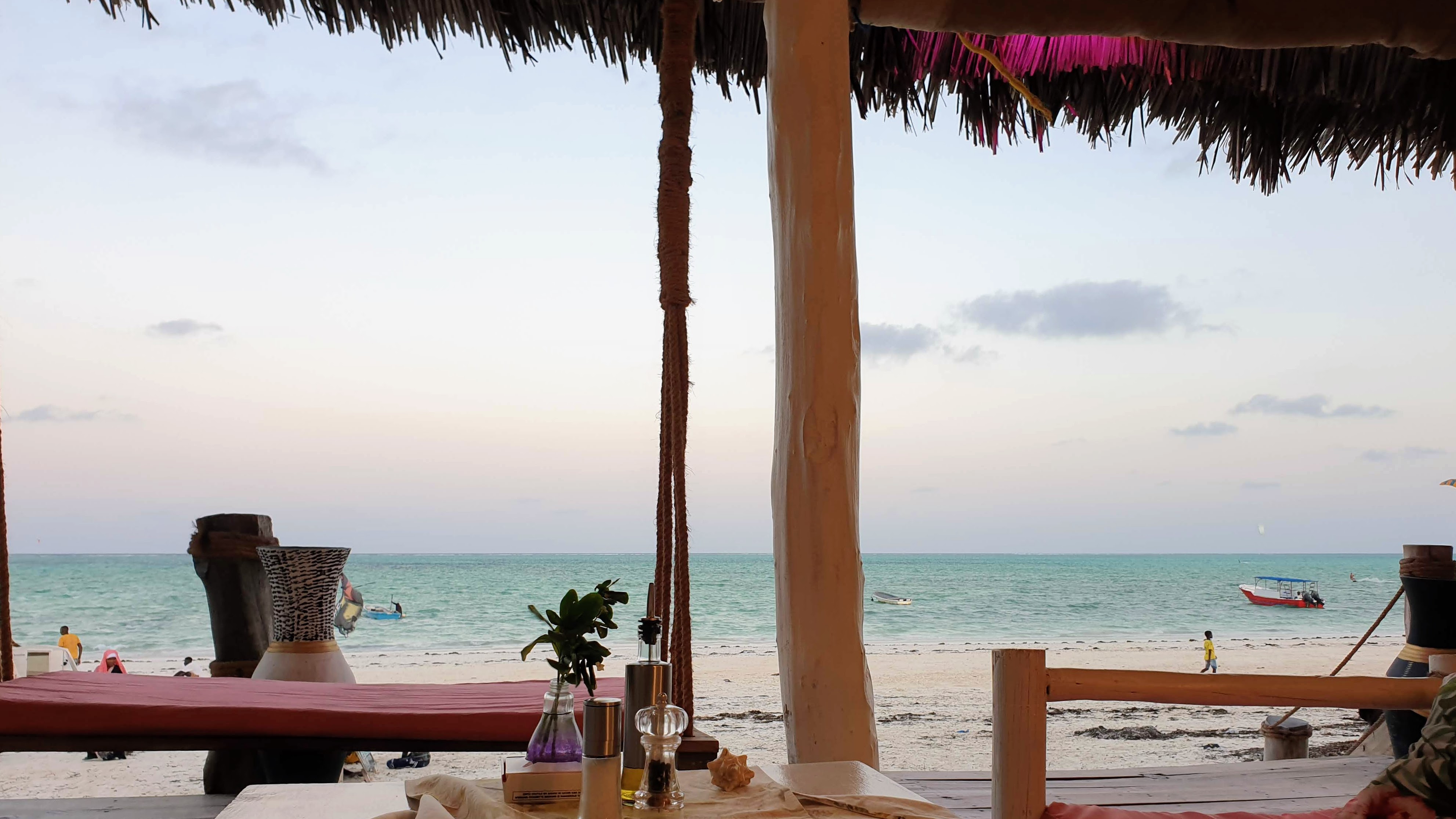
The town layout of Paje is very open compared to Stone Town and is consequently hotter. The afternoon I arrived, I had to hide inside until it cooled off because the walk to the ATM and back almost baked me. As dusk brought cooler air, I headed down to the beach for dinner and was surprised that the short walk was through a local neighborhood (the part not for tourists). It was heart wrenching to see the contrast of how the people who live in this paradise island live so close to the luxury beachfront resorts. Unlike some resort towns, at least the beach at Paje is open to all, and I saw plenty of local kids playing and a mix of abaya clad ladies amid the western beachwear. 

At the restaurant, I accidentally brushed my leg against the leg of the chair and opened a few dozen micro-blisters that I didn’t even know I had. I knew that the burn I got on the back of my calves while snorkeling was not great, but I had spent several days keeping that area carefully out of the sun and applying aloe and shea lotion many many times each day (and night). I thought it was getting better and didn’t realize that there was a layer of blister basically on the whole thing. The casual bump against the chair leg started a cascade event where my skin decided it was time to peeeeeel.

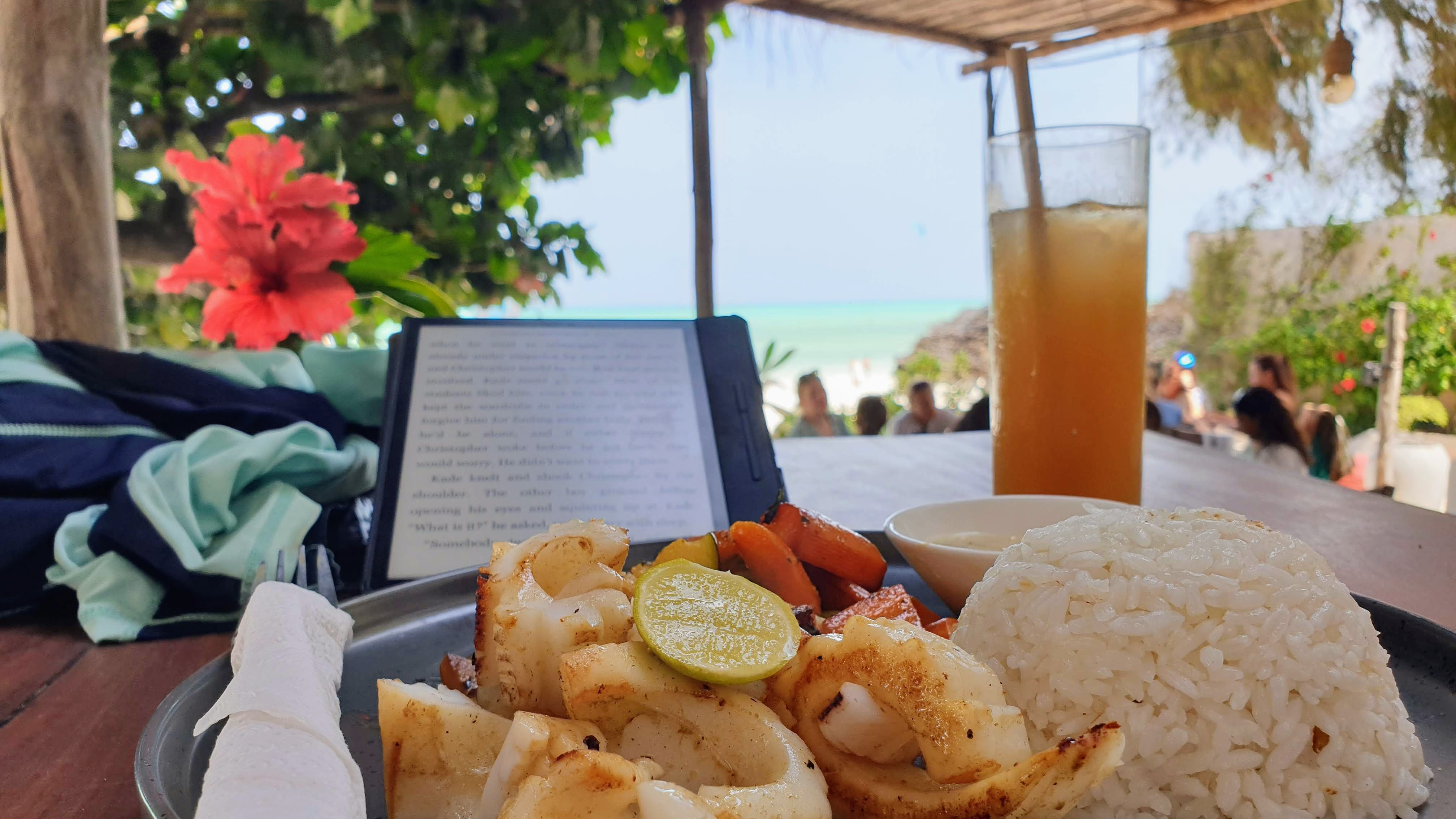
The whole next day I felt like a molting reptile. I knew for sure I couldn’t go swimming until they had some time to heal or else I’d be risking infection. Can I just reiterate how horrible sunburns are, and that with the UV index of OMG sunscreen isn’t always enough? Long sleeves and pants may not be the most fashionable swimwear, but they save not only your skin, but your vacation as well. I spent all that day lounging in a beachfront café ordering drinks and snacks every so often while reading my eBook and watching the ocean. I won’t say that it was a waste of time, because I don’t think any time spent with that view can be wasted, but it would have been more fun if I could have done some of the water activities.

Paje is famous for the beach and the kite surfing. I was interested to try it out. I went parasailing in Mexico. I was able to do a scuba dive in a single day in Aqaba, and I’ve gone caving with guides and minimal training in the US and New Zealand. All those activities can take years of training and practice to master, but can also be done in an afternoon at the beginner level. So when my skin recovered enough for me to be willing to go in the sea again, I sought out the local instructors thinking it would be similar. Nope! The school offered classes that cost 60$/hour or more and said that it usually took students 10-12 hours of training on land before they were even ready to get in the water! There was simply no “try it out for beginners” option available.

Kite surfing is like wakeboarding with a parasail. You have a wakeboard which is a shorter, wider version of a surfboard, and you are harnessed into a thing that looks like a parachute (all those kite looking things in the photo). The wind then pulls you across the water. Some of the windsurfers were even lifted into the air by the strength of the wind. The water at Paje is extremely shallow, so for the most part the kite surfers were skimming over water that was no more than knee deep. However, the kites and lines are pretty expensive, so I imagine that the schools and rental shops don’t want to risk the inexperienced dropping on and having it fly off or get drenched.

The sales pitches on the beach were different from those in Stone Town. There were two main groups of people on the beach selling stuff and they were strongly divided by gender. The men were all dressed as traditional Masai from the mainland. I know at least some were because they also had the body scarring that goes with the Masai cultural milestones, but there’s a portion of locals who adopt the dress code to play on tourists. They are referred to as “Fa-sai”, btw. Real or Fake, the men are gregarious but polite. They would greet me and start walking along with me. The conversation would begin with small talk, asking where I was from and how long I’d been there, then slowly it would move into the sales pitch. The things they had on offer were very much the same as the Masai themed shops in Stone Town. The ladies were almost all in conservative abaya and hijab coverings, and were less likely to follow tourists or engage in small talk. They were peddling massages, hair braiding, and henna tattoos.

Jozani National Park

Jozani is the only national park on the island. It’s part of an environmental conservation movement to preserve the local ecosystem and rare species. Plenty of locals would happily tear it all up for lumber and farm land, so paying for tours helps fund the park as well as the economic projects that run in tandem with it to provide other means of earning a living for those who are being asked not to use the land. It was on my wish list for Zanzibar from the beginning, but I had been on the fence about it since discovering my sunburn. Then, one morning at my hostel’s breakfast, I started talking to a young man about his AbFab phone case (so rare I find a fellow fan these days, sweetie darling). He turned out to be working on his PhD at the Jozani forest. Hearing him talk about the forest and his work gave me the push I needed to get up off my beach bum and go do the thing.

I learned from some folks who’d been in town a while that I could get to the park via the local bus (called Dala Dala) which would stop at the nearby roundabout. There was no bus stop or any signs, so I waited in some shade and watched the locals. Before long a minivan pulled up in front of a small shop and people started rushing to board. It wasn’t hard for me to get in line and verify with the driver that he was heading the right way. The driver and money man were absolutely able to communicate with me in English, though mostly used Swahili in general. The men on board moved around so I could have a seat. There are plastic jugs that can be moved around the aisle to make extra seats, and with the windows down there’s a good road breeze that keeps it from being too hot.

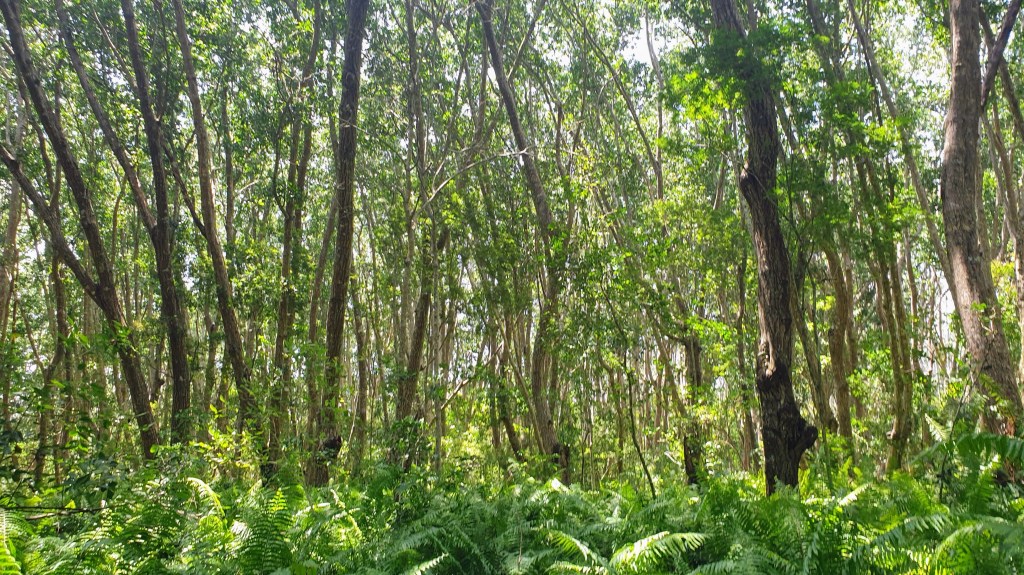
The entry fee to the park is 10.70$ (25,000tzs) and the price includes a mandatory guide. I got a guide all to myself because the only other people coming in at the same time as me were in a hurry and didn’t want to do the whole walk. Their loss. My guide explained things, and helped me avoid looming roots and branches, but didn’t feel the need to fill all the space with talking. Being alone in the beautiful forest with my guide gave me lots of chances to enjoy the silence and see interesting critters. These are photos of the forest itself (some native trees and the remnants of a colonial mahogany plantation) and 3 of the 4 wildlife species I got to see on this part of the walk: millipede, skink, and kingfisher (the larger lizards were too fast to photograph).

The forest is home to two species of monkey: the more common Sykes and the totally rare unique-to-this-one-island-in-the-whole-world Red Colobus. After we walked around the forest for a while, we went to the area inhabited by the monkeys. The Sykes are very un-shy and enjoy coming down to the ground or low branches to look at the tourists. There are signs warning visitors to stay several meters away from the monkeys at all times, and the monkeys clearly do not wish to obey. It was actually impossible to keep my distance from the curious critters, but they never came so close that I was worried about having my phone snatched.

The Red Colobus on the other hand are more reclusive, more arboreal, and just generally harder to find. The guides text each other with location updates so visitors won’t miss out. When we came upon the tribe that had been located for that day, there was another rather large group of tourists being loud and shoving selfie sticks towards the upper branches. I did see one guide gently push a tourist back who got too invasive, but overall, the animals were far enough above us that they could have run off if they were really annoyed. Maybe human tourists are not more annoying than baby monkeys? I didn’t have a selfie stick for phone extension, but I think I got a couple cute photos anyway.

The Jozani mangroves are a little more than a mile away from the main entrance, and my guide seemed flummoxed when I said I’d used the public transit and didn’t have a car or driver waiting to take us over. Quick on his feet, he went to get his own motorcycle to drive us there. Nothing like riding helmetless on the back roads! We made it safely, though, and I got to see the mangroves at low tide (a recurring issue of this visit) which is actually kind of cool because all the roots and crabs that would normally be underwater are visible. I’d like to suggest “low tide mangrove” as someone’s next Halloween theme.

The Butterfly Park isn’t technically part of Jozani, but the entrance is quite close to the mangroves and my guide offered to drive me over and wait while I looked around (very kind offer). It’s another conservation area that’s also working to help employ and educate nearby villagers to help them have income that comes from environmental preservation rather than income that destroys the environment. They breed and release several native species including the bush babies, many butterflies, and chameleons. The cost for tourists is 18,000 TZS (about 7.50 USD), but locals can enjoy it at a hefty discount.

The butterfly guide told me about the work they are doing with the nearby village, the local school, and the forest before giving me the chance to hold some infant bush babies. Squeeee! I don’t normally go in for handling wild animals, but these are a domesticated pair they’re using for education and promoting the conservation. They were entirely comfortable climbing on me (yeah, that’s my pasty white arm in the photo) and were so cute!! As a species, bush babies are usually asleep during the day (the adult pair sure were) so tourists don’t get to see them in the forest and don’t realize there’s more than monkeys being protected there. These fuzzy lil’ ambassadors help raise awareness of the breeding program and need for environmental conservation.

Next we moved on to the butterfly breeding program. In addition to helping the furry species, they are helping the flutters as well. They are much needed pollinators and beautiful as well, but their breeding environments are often under siege by human development or by displaced predators. This park helps breed pollinators year round. As an ongoing part of the hands-on education, I got a handful of caterpillars as he showed me the 4 species they have this time of year (it changes seasonally) at egg, caterpillar and chrysalis stages. We then entered a small enclosure where the butterflies are safe from predators and breeding efforts continue.

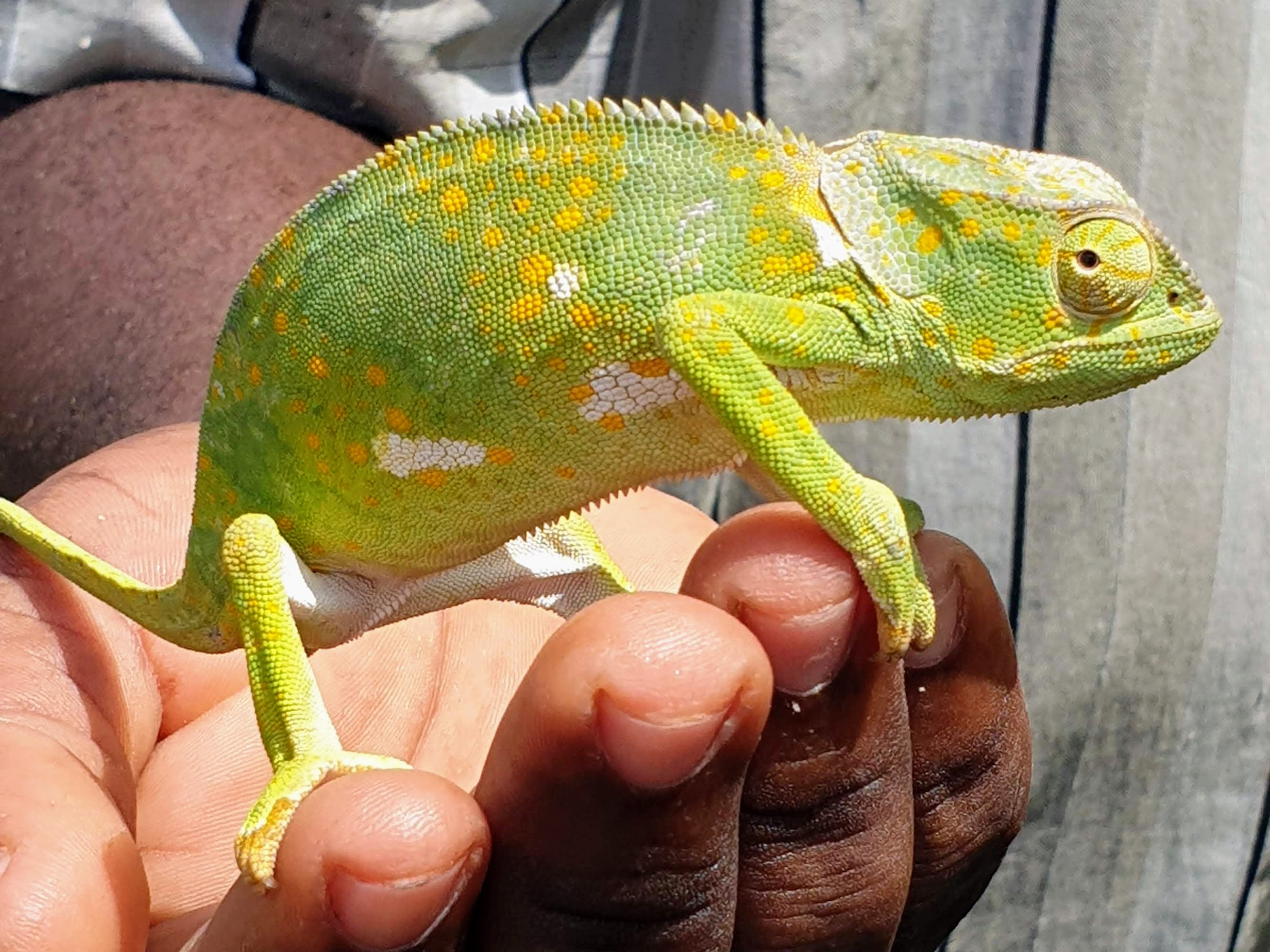
The tour concluded with the chameleon enclosure, although they didn’t need any netting, and were content to hang out on some trees which were roughly segregated by a low fence. I love the way they always seem to be giving a disdainful side-eye.

The Local Economy vs The Tourist Economy

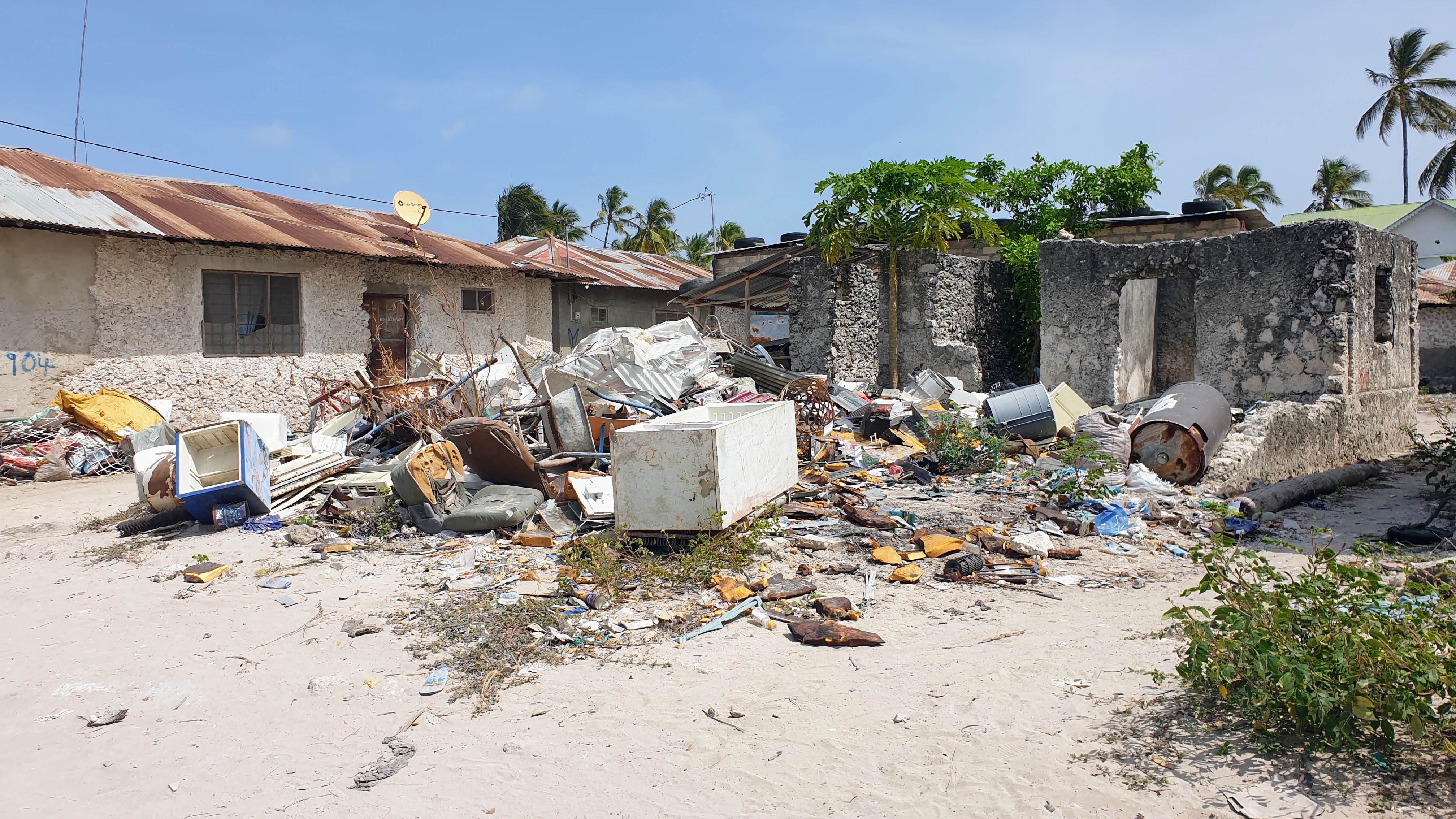
The whole time I was in Zanzibar, I was in shock at how expensive everything is yet how little the average person lives on there ($150-350USD/month). Walking though the local village to get to the resorts in the beach was a real eye opener. The homes don’t have running water, there’s a well and I saw young girls walking to and fro with large buckets. People are cooking on fire. Plenty of cows, goats, and chickens around. Tiny fruit stands and dry goods shops. Places that look like ruins but are actually houses. Then the beach 300m away with luxury resorts.

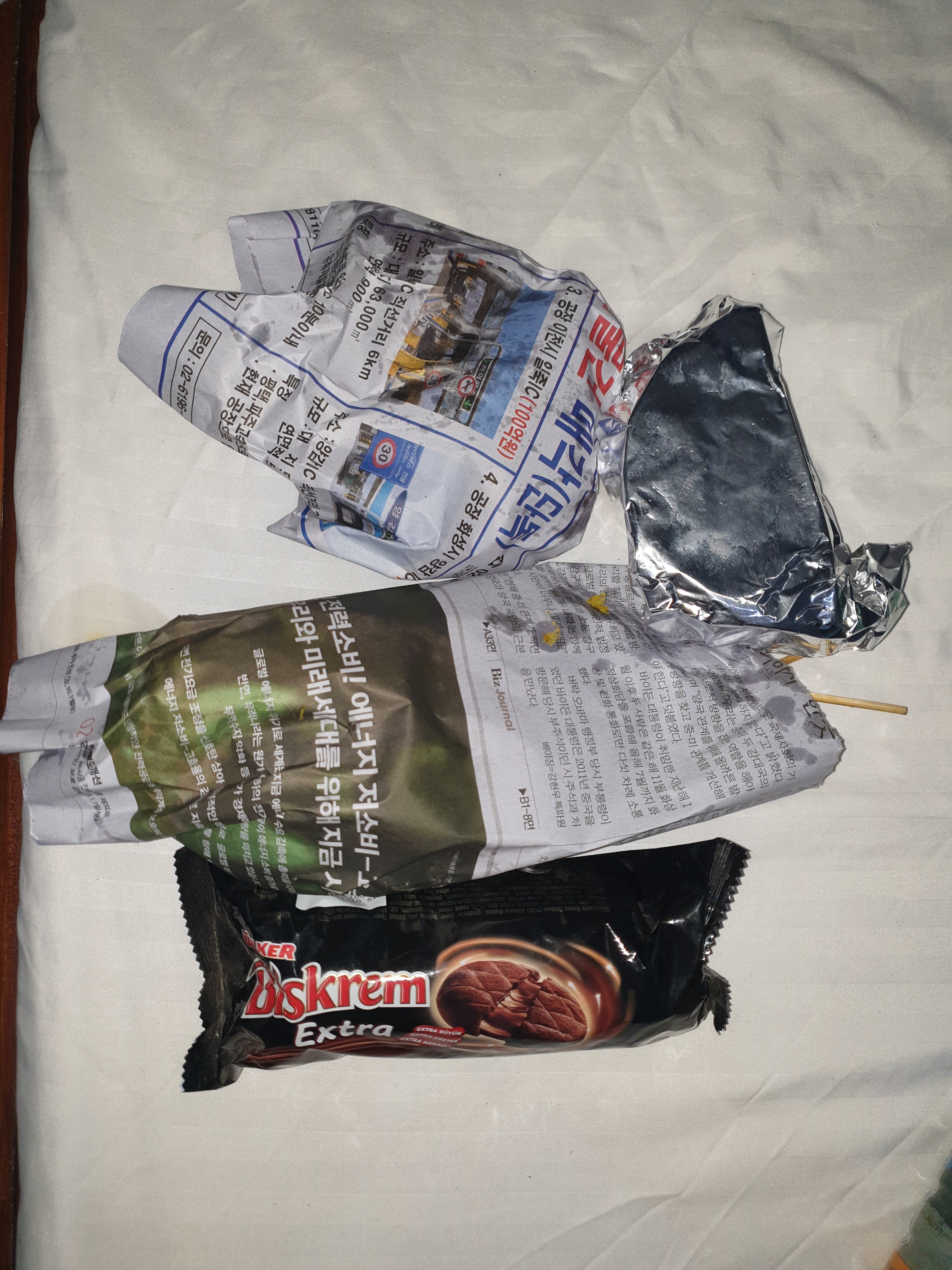
I ate about one meal a day at tourist restaurants and the quality was nice. Tourist and especially beach restaurants are known to be expensive, but most were less than 25$US for a nice meal and drink, which is not a bank breaker. One night in Paje I decided to try the local street food up on the main road. I got grilled meat skewers, samosas and fresh pineapple slices (all wrapped inexplicably in Korean newspaper for takeaway) for about 2$. Filling and tasty at 1/10 the cost of a meal at a restaurant. I’m used to street food being less, but woah! It’s not just beachfront vs main road either. There’s a place less than 30 feet from the actual street food that calls itself “The Street Food Court” which has several takeaway windows and a common seating area. I tried to go there for lunch earlier and saw that most of the dishes were still in the 10-15$ rangeY yes less than the beach but still 5+ times more than the actual street food!

Then there’s the taxis. There’s no “taxis” in the drop fare charge per mile sense. There’s drivers with vans and special licenses who will take you to places around the island but rates are negotiable. 15-20$ to get from the airport to Stone Town (7-8km), 30$ to go from Stone Town to Paje (50km), 25$ to go from my hotel in Paje to my next one in Menai Bay (27km). The driver at the hotel wanted 40$ round trip to go to Jozani, and the ones out in the taxi lot wanted 50$! For 43¢ each way, I was able to use the public transit. 1/100th the cost of the taxi? I’m used to buses being cheaper but that was next level. (My view from the back of the bus)

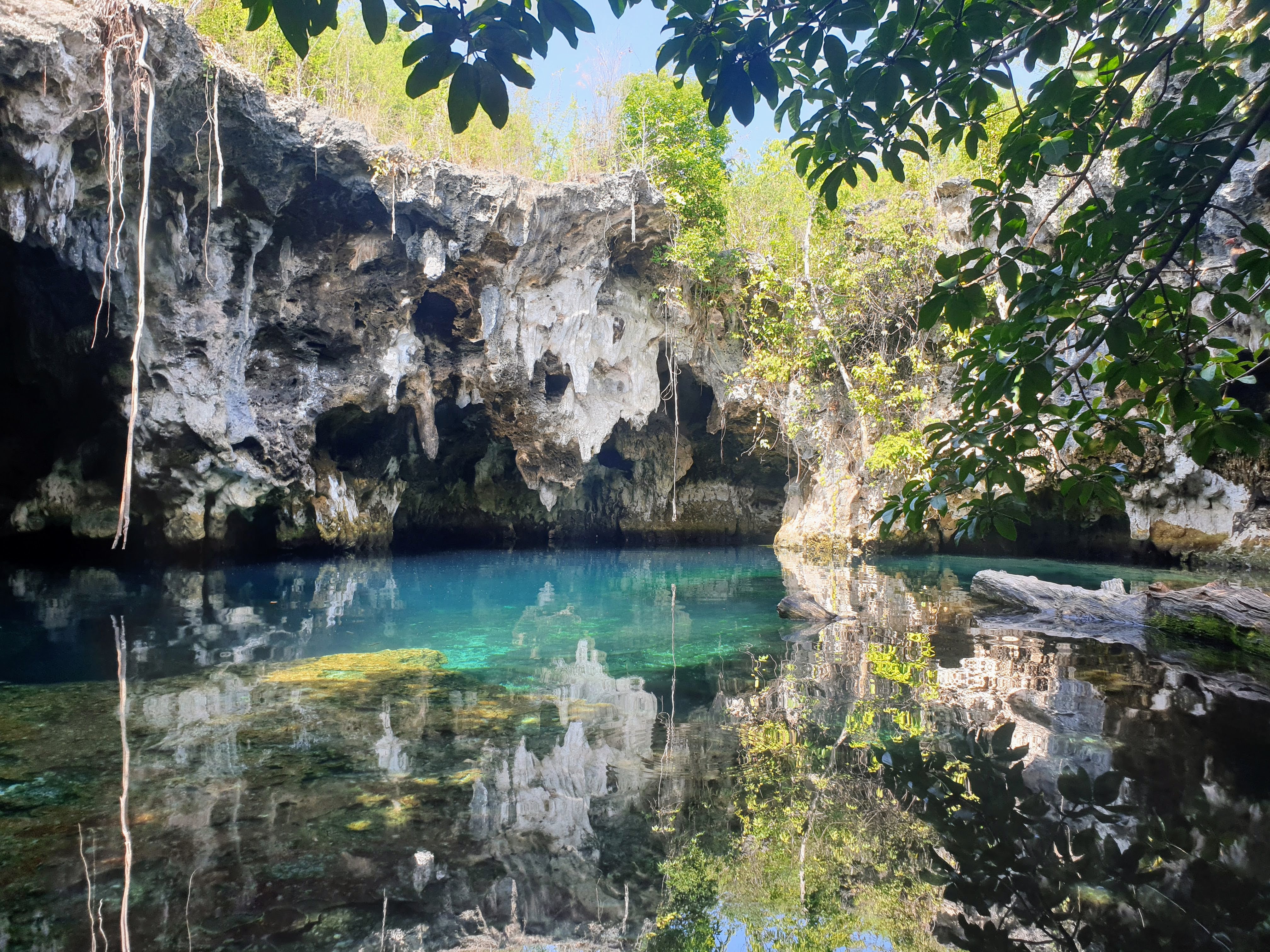
Maluum Cave Spring

Another wish list item was the cave pools. I visited one of those in Bohol after my terrible sunburn there and it was ah-maze-ing, so I knew I wanted to do that again with my new sunburn. There are a few caves around the island with natural swimming pools, including one rather famous one about a 10 minute drive from my hostel called Kuza. It was highly reviewed online, and I was trying to figure out how to get there what with all the taxis nearby wanting 30$ to go a few kilometers. Then I met yet another traveler over breakfast who told me about a hidden gem: a little cave pool just one kilometer away that was almost unknown!

This sounded appealing both because of the shorter distance and the potential lack of extreme tourism that had been slowly eating my brain since my arrival on Zanzibar. I looked up the place online and noticed that they had time slots and only allowed a limited number of people into the pool at a time. They also banned sunscreen and other skin/hair products that could harm the ecosystem and provided showers for people to clean off before swimming. It was a level of dedication to ecological preservation that I appreciate everywhere, but had come to see as rare on the island where tourist money was a bigger priority for most than the environment.

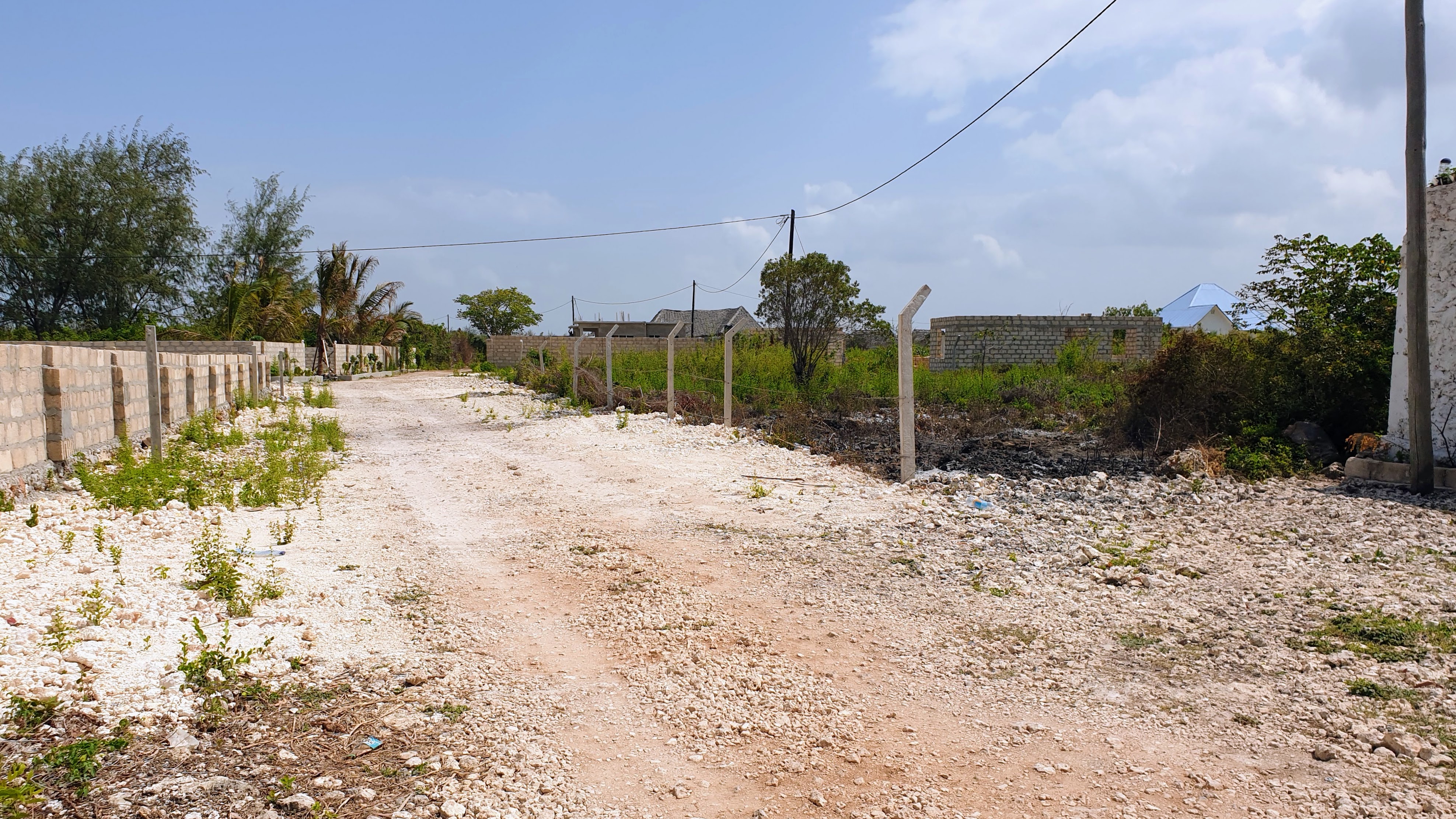
I walked the 1.3km rather than trying to navigate the local bus. I’m sure it could have been an option, but the walk was interesting because it gave me a chance to see more of the area that isn’t curated for tourists. Maluum cave is set back a bit from the main road, so the last bit of the walk took me through undeveloped lots on back roads through fields alternately overgrown and filled with construction debris. Like so many things in Africa, the outsides tend to look somewhere between “plain”, “run down”, and “oh god oh god we’re all gonna die”, but the insides can be quite luxurious.

I was greeted at the gate by some young men in Masai garb and checked in at the registration desk. There was a big group that arrived at the same time I did, and I was disappointed when I realized that we’d be sharing the pool because they were very loud and energetic and I was riding the quiet forest & beach bum vibe of the last few days. Thankfully, they were also running late on whatever tour they were doing, so they basically got into the water long enough to take some selfies and then trundled back out leaving me in the pristine natural beauty all by myself.

I didn’t have it to myself for long, but I saw a purple crab, several little fish, and had a short staring contest with a hornbill. Unfortunately, the waterproof case I’ve been using since 2017 finally died that day, so I was only able to take photos while out of the water. The next group that came through shared my calm vibes and I had gotten some time to commune with the nature on my own, so I was happy to share and enjoy the company until the staff signaled my reserved time was up.

They have a restaurant on site as well, so I headed over there for dinner and to air dry before changing back into my street clothes for the return walk. I had green banana curry for the first time. I have had dishes made with green plantains (a banana cousin) which cook a lot like potatoes, but I had never thought of using actual bananas while green. It was delicious and the banana flavor was not at all overwhelming. The weather had cooled somewhat by the time I left, and I had a leisurely walk back to my hostel for my final night in Paje. Here are some cows I passed on the way.

Aside: Due to the current situation in Dakar (where I’m living), I’m adding a little note to let you all know I’m safe. I plan on writing a full post on experiencing this historic unrest in West Africa’s most stable democracy first hand, which I’ll likely publish after my triumphant return to America in August. Until then, I am in a quieter neighborhood with no strategic targets. I have food, water, electricity and a working VPN. If you’re curious about what’s going on, you may have trouble finding details in English, but there’s a lot French resources available and Google Translate is good enough. I recommend searching terms like “manifestation” (French for protest or demonstration), Sonko (the political candidate at the center of the controversy), and of course the popular hashtag “Free Senegal”.

Finally Writing About Ireland

I have published something like 6 posts that are distinctly NOT about Ireland since I got back this past summer. Usually that would be because I was hard at work chronicling my adventures and polishing each post into a sparkly gem, but this time… it’s not. This post is going to be the start of the Ireland Chronicles, however, I’m going to take some time at the beginning to talk about a personal issue, so for those who are just here for the tourism, please feel free to skip down to the second segment. 


Why Aren’t You Writing About Ireland Yet?

It’s starting to feel like I can’t go traveling with anyone really important to me. I’ve now had two close relationships disintegrate after a trip, while the travels I take with friends who are less close have been great. I don’t define “relationship” as only romantic or sexual, by the way. I happen to think that any degree of association can be a relationship (work relationship, teacher-student relationship, my favorite barista relationship, etc). In this case I am talking about people with whom I felt a long term and deep emotionally intimate connection.

In reality, those close relationships were never actually healthy, and the constant close exposure of travelling together simply put them under a microscope until it was impossible to deny the core problems. As I learn about healthy relationships and boundaries, I find that it’s easy to spot the red flags in a new person, but almost impossible to drag myself out of denial with a person I’m significantly attached to. When you’re so used to something being a certain way, even if that way is awful, it just seems normal, and the abnormal situation of long international trip can cast it into sharp relief.

KUrN1Ee
In this case, I think I was most of the way out of the fog of denial before we actually embarked, but the plans had been made and the money spent, and I genuinely hoped that a nice, low stress holiday would reduce the big problems that I was still blaming on things like job and life stress. The only thing that could have made that more sarcastically apt is if we’d gone to Egypt instead of Ireland and I could really make some d’Nile jokes. I suppose I’ll have to settle for Blarney jokes instead.

I know in my heart of hearts that a single vacation cannot ruin or fix any relationship, it can only blow the truth up to billboard sized letters. However painful the experience was, I’m glad it happened because I think it’s better in the long run to identify unhealthy relationships so that we can either work to make them healthy or if that’s impossible to walk away. However, it makes it hard to write about a holiday when the memories are either good memories tainted by loss or just plain old bad memories. It’s like that movie, Inside Out, when Sadness touches all the memories and they turn blue and sad forever.

img_1063

When I wrote about the Philippines I did my best to simply leave out any and all references to the person I was with, treating it like a blank space in the narrative and jumping around the timeline to avoid describing the personal details of arguments and emotional clashes. I think it helped, too. The memories of that relationship are still painful, but now I can look at the experiences I had in the Philippines and remember the joy I took from them, happily recommend the island, and even think positively about going again someday.

I’m going to try to take the same approach with Ireland, yet at the same time, I don’t want to paint this in some kind of idyllic holiday life. Those who read this blog often know that I don’t like fake-positive online life, but I struggle to balance my need to be honest about the challenges I face with my desire to share only the best and most delightful experiences. I’ve been putting off writing about Ireland explicitly because I don’t want to think about the hurtful parts, and yet I think it’s vital to my gratitude practice and to my remembering self that I take the time to tease out the good parts and keep them alive.

So here’s the disclaimer: I’m cutting out all the personal negative experiences, I’ll only be including things that could happen to any traveler or group based on regular travel challenges. It could result in a choppy or unbalanced story, but that’s just how it has to be. My life is far from perfect, but I’m trying my best to be better.

Without any further ado… Irish Road Trip

20190805_121453.jpg

Renting a Car

I enjoy road trips when I’m getting out of a city. I love public transit and happily take buses and trains on most of my excursions, but I had some lovely experiences driving in the US, and later in Germany, France, New Zealand and Sweden. When I choose to get a car it’s because I want more freedom to go to places that are off the beaten track, way outside the city, or just generally hard to get to. Ireland is no exception.

When I was planning my trip, a friend of mine told me that he and his wife had done an Irish road trip about 20 years ago, before there was any kind of highway system at all. Although there is a large intercity highway system today, most of the things we wanted to see in the countryside were still on the old roads (more on that later).

In case you’re curious about renting a car, we used EuropeCar. I looked at a few local rental places, but it seems that there are a fair number of hidden fees with those places that can add up and be frustrating and expensive. By opting for a larger company, we got a real price quote up front and the process of picking up the car was much smoother. I was initially irritated that they were trying to up-sell us the “full coverage” insurance (quite expensive) at the pick up. I was extremely tired from running around Paris all day and a delayed flight into Dublin, so all I wanted was to get to our hotel. When we were standing there it felt like a scam sell, and I was very dubious.

The regular minimum insurance covers any scratches or dings that are less than a 2 Euro coin size (it’s a law) so the car companies can’t charge tourists for tiny chips, dings and scratches that occur in the normal course of driving. It also covers a minimum amount of liability in case you damage someone else’s car or property, or have to go to a hospital. There was a high deductible, but to me, it seemed worth it not to pay a few hundred more in insurance. However, since I wasn’t the one paying, we got the full coverage, and after I saw the driving conditions in the countryside, I was very glad that we did. To sum up, if you want to drive anywhere other than the cities and highways, get the extra insurance. If you want to stay in the cities and highways… ride the bus.

Driving in Ireland

The first thing to mention here is that driving in Ireland is done on the left side of the road, and that the driver’s seat is on the right side of the car… completely backwards from the US where I learned to drive. Lucky me, this wasn’t going to be my first time driving left as I’d had a chance to learn in New Zealand some three years previously. Nonetheless, I still spent a good portion of the first few days just reciting “left side, left side, left side” under my breath the whole time.

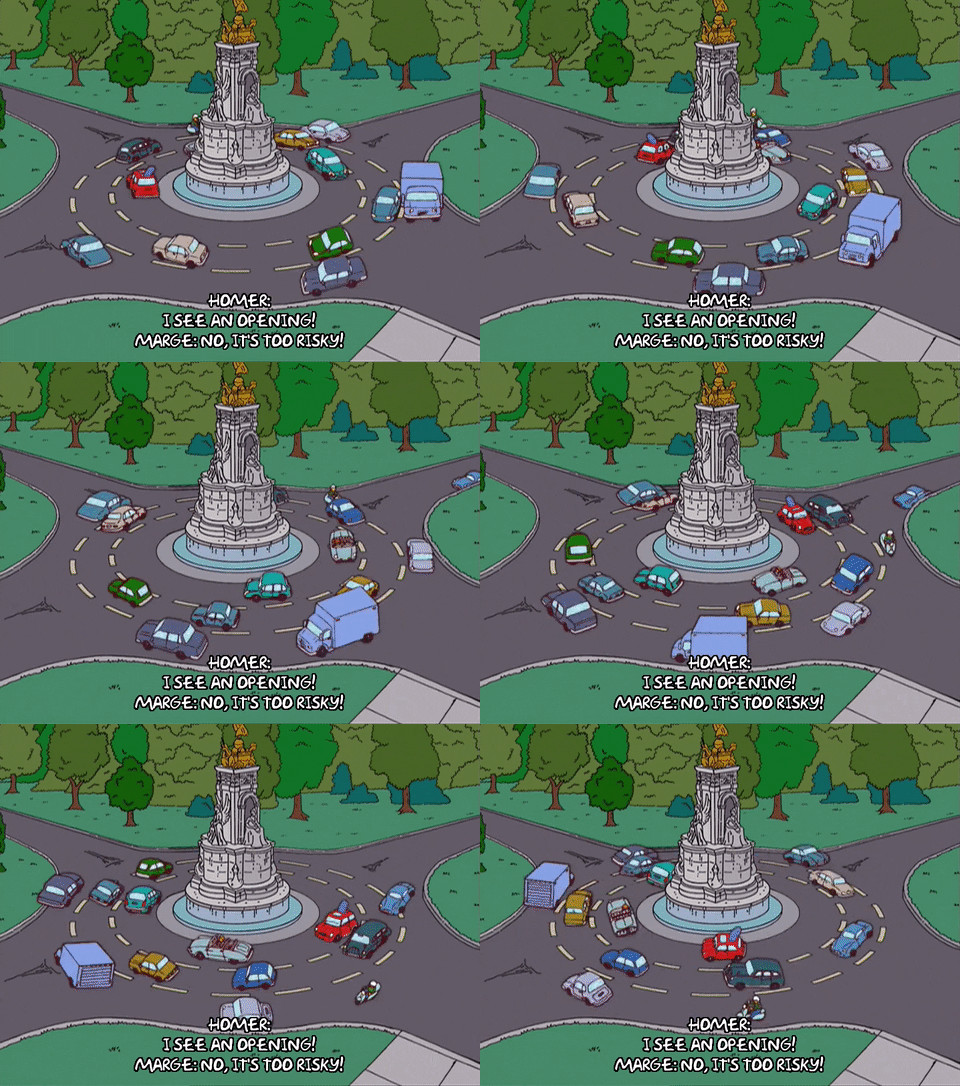
You also need to know how to use a roundabout, which is a complex system of yielding and merging that is supposed to be safer and more efficient than traffic lights. Basically, anyone already on the roundabout has right of way over anyone trying to join it. Interestingly, some of the busiest roundabouts at major highway interchanges also included traffic lights because otherwise no one would ever get on.

giphy.gif

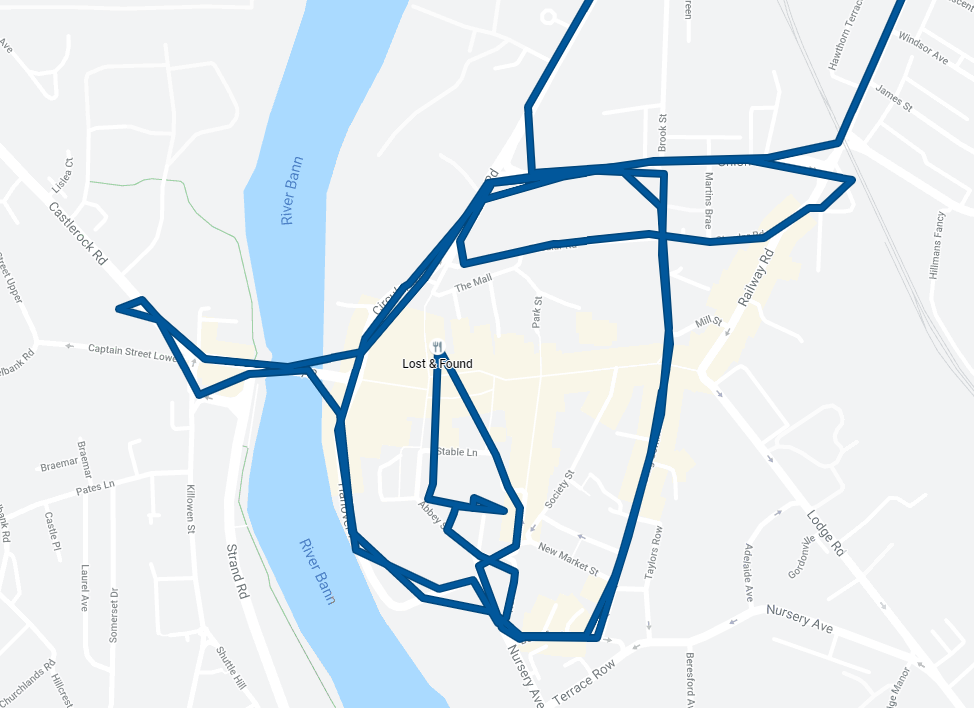
The road signs are pretty good, written in both English and Irish, and the streets often have painted arrows to help you remember your lane, and also let you know which lane to be in if you want to turn or go straight. There were a few times that the signs an Google Maps did not agree and I got a bit tangled up, but it never took more than a few minutes to sort out.  Except Coleraine (pronounced call-rain) in Northern Ireland, which is a hellhole of one way roads and inaccessible streets. My Google travel history looks pretty linear everywhere else, but in Coleraine it looks like a Gordian knot. Don’t get sucked in, drive around.

coleraine driving map.png

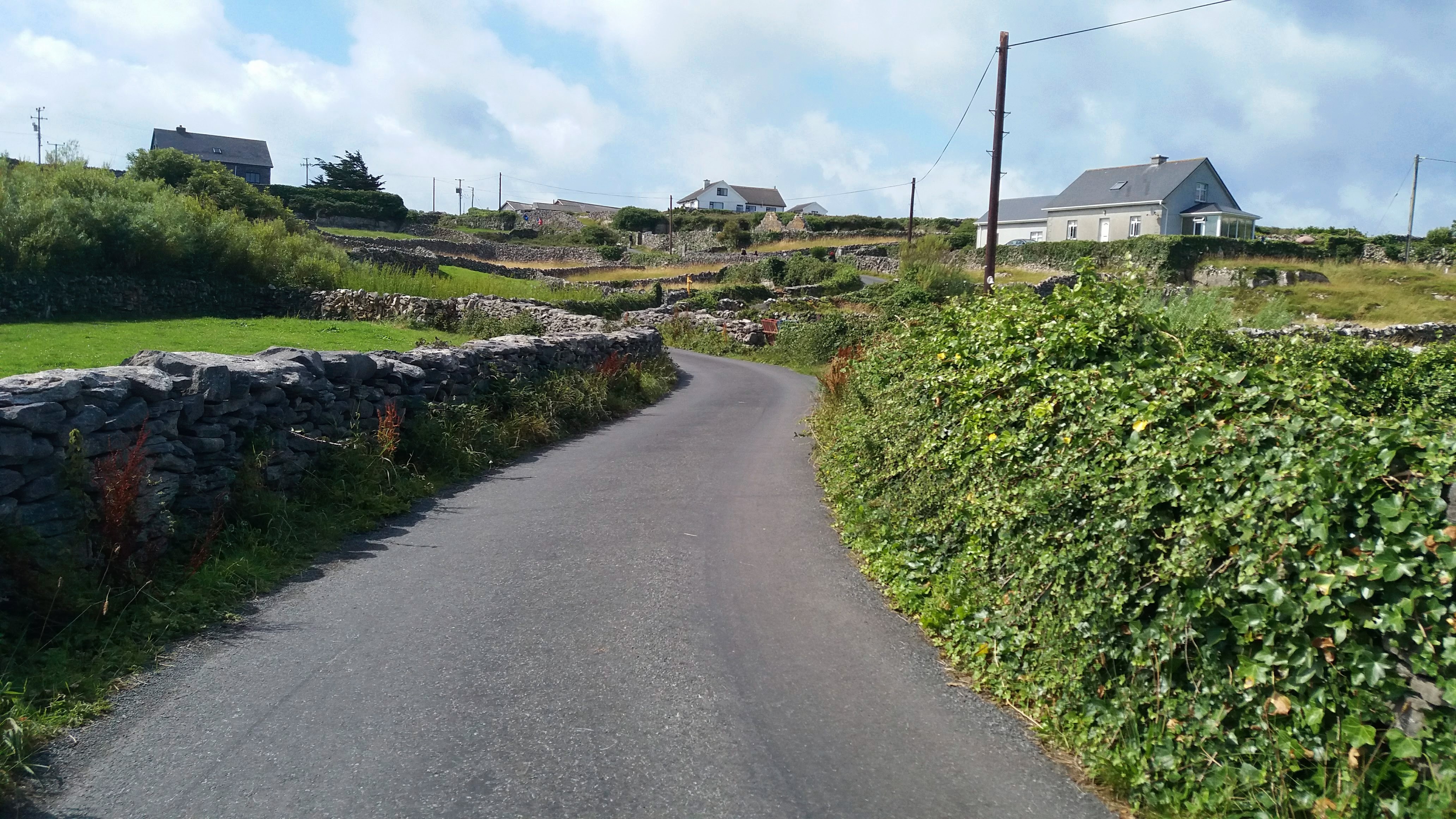
There’s only one more very important note about driving in Ireland which is that outside the cities and arterial highways, the roads are typically only one car wide, but accommodate two way traffic. Even in the villages with two lane roads, there are so many cars parked along the roadside that traffic is reduced to a single lane’s width. In a lot of places, they are also lined closely with thick hedges, deep ditches, or stone walls meaning you have zero shoulder room. Two way traffic includes other normal sized cars, tour buses, farm equipment, and livestock.

20190802_175544

On the one hand, it can be a relief driving these roads because there’s no need to worry about left-side or right side. On the other hand, when you meet oncoming traffic, your knuckles immediately whiten on the steering wheel as you try to figure out how not to have a head on collision.

The good news is that the locals are very used to this. There are a fair number of turn outs on the most narrow roads, and often there is *just* enough room for two cars to pass on the single lane if we’re both willing to rub up against the shrubbery. Once I realized that the vast majority of other drivers were polite, careful, and familiar with the process, I did relax a little bit. As intimidating as these roads can be, it’s worth it to drive them because a lot of little hidden gems can only be accessed this way.

Public Transit in Cities

While we were in Dublin, we were actually able to simply walk everywhere we wanted to go by getting a room next to Trinity College. The main tourist district is quite tightly packed and walk-able, but if you want to go a little further or it’s just too rainy, there’s a great system of buses and trams. However, paying for these modes of transit are unnecessarily complicated. Fares change based on where and when you board and exit, so you can easily end up paying the maximum if you don’t know how to navigate the system.

The easiest way around this is to get a LEAP card. There’s a few ways to do this, but the simplest is to walk into nearly any convenience store and buy one. They cost about 5 Euro and are re-loadable. Fares are automatically calculated if you tap in AND tap out, plus you get a fare discount for using the card instead of cash. I wasn’t able to get the reloading app to work for me, but it’s very easy to reload at any number of grocery shops and convenience stores.

There is a tourist LEAP, but I’d shy away from that one because of the limitations. They are technically unlimited travel, but they only apply to city transit (and a few airport options). Generally, visitors to Ireland want to see the countryside or travel to more than one city, and the LEAP doesn’t cover that. The LEAP is good for most major cities (NOT Derry or Belfast as that is a different country), so I think the top-up card is the way to go.

Please note that the LUAS tram system is a bit unique. There is a post at the tram stop OUTSIDE the tram where you need to tap your LEAP card BOTH before you get on and AFTER you get off. If you don’t tap when you leave, you’ll be charged the maximum fare! I was a bit thrown off by the tapping posts being at the stops rather than inside the tram, but it did make boarding more efficient. I used this in Dublin.

download
I used buses in Galway. With a bus you need to tell the driver what stop you plan to get off BEFORE you tap your LEAP card. The driver will program your fare and then you can hold your card to the reader. It takes much longer than the tram, but the drivers are generally pretty nice about it. Just make sure you use Google Maps or similar to know the name of your stop before you board. Again, failure to do so means a much larger fee.

Traveling Outside the Cities: Public Bus and Tour Bus

If you do want to travel to another city, there are great and affordable inter-city bus options. I used CityLink. You get a slight discount for booking online. The drivers don’t generally require a printed ticket, so you can book online from your phone or hostel no problem. You can also buy tickets at the bus stations in each city.

Finally, another great way to see Ireland without a car is to join tour buses that leave from the major cities and head out to the countryside. I personally did this twice: once from Dublin to the Wicklow mountains, and once from Galway to Kylemore Abbey.

20190815_114817.jpg

I shopped around using Viator to compare deals and I found that a LOT of agencies overcharge or misrepresent their tours. Read the details carefully. One of my day trips from Galway was to go out to Inishbofin. I did find a “tour” but it was nothing more than the public bus (CityLink) and the public ferry. They wanted to charge three-four times the cost of those tickets and didn’t even offer a guide to help you find the bus/ferry!

Long story short, if you can use the public transit to get someplace, do it. If there is no public transit, then make sure you pick a reputable tour company with plenty of positive reviews for the tour you are interested in. You can find the links for the tours I went on here:  Kylemore Abbey with Galway Tour CompanyWicklow Mountains with Gray Line Dublin.

If you do choose to join one of these tours, please be aware that not all the buses offer all the amenities. WiFi, charging ports and the like are hit or miss, but the seats are comfy and the drivers are very entertaining. I would recommend bringing lots of snacks or even a pack lunch as the timing doesn’t always allow you to eat when you’re hungry or both eat and sight see. They also have deals with some random tiny towns that they stop in for lunch. There’s usually only one place to eat, so it can get crowded or expensive.

Planning the Route

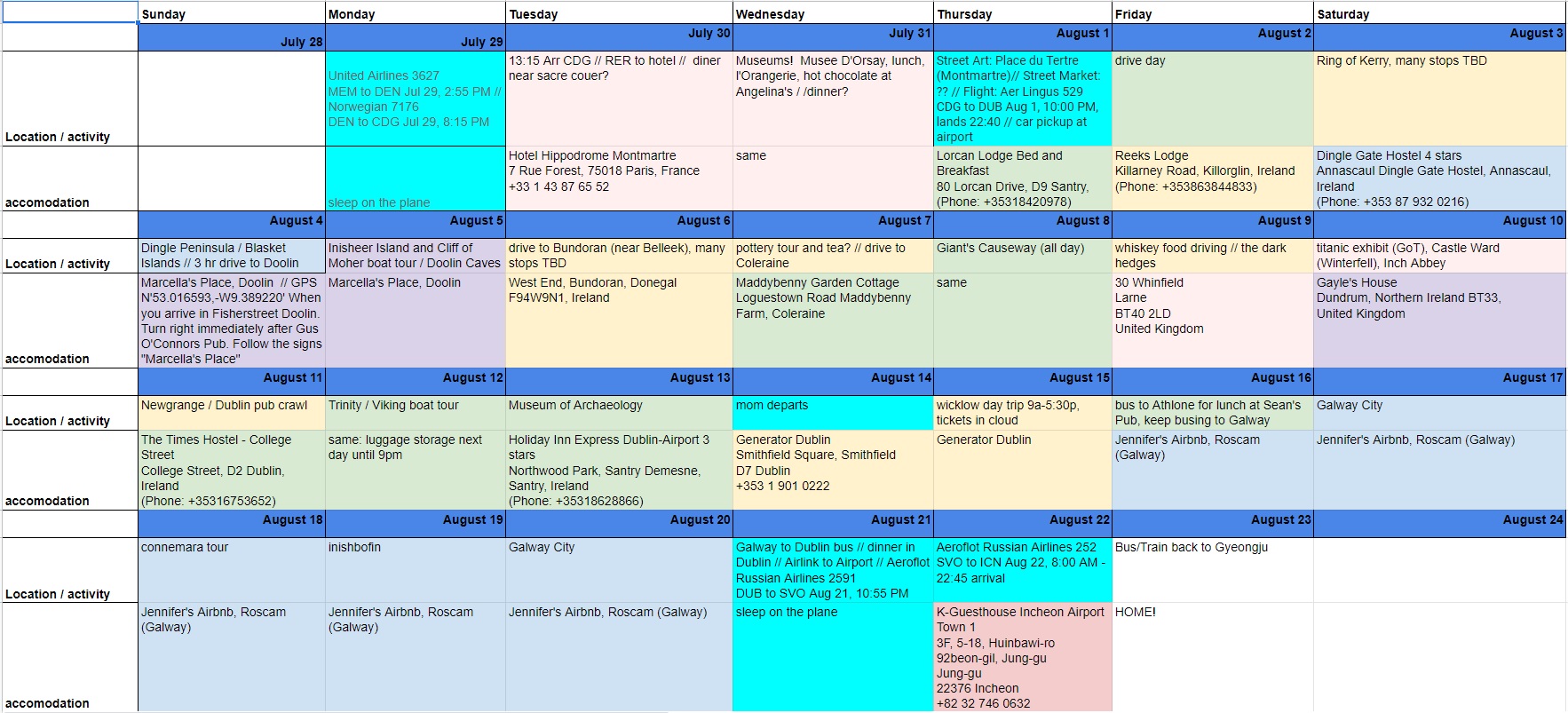
We had decided on a basic road trip itinerary before arriving. I think it’s important on any time sensitive vacation to schedule a certain amount of things. I like to schedule where I’ll sleep, as well as breakfast and dinner (lunch can be on the fly unless there’s a special reason to schedule it). I like to schedule one or two things in a day and also leave myself room to change, rearrange, add or subtract. The schedule for Ireland was unusually tight because my travel companion had a very long bucket list and while I might go back one day, it’s unlikely they will, so I tried hard to accommodate them. Even with a tight schedule, I don’t like to buy tickets in advance unless they’re likely to sell out so that I have the freedom to change things around as needed.

calendar

Our schedule was also based on not doing more than about 4 hours of car time a day. It’s a holiday after all, there’s no point in spending all day driving. As a consequence, there were a couple places we visited just because we needed to stop. No regrets, though, even the small out of the way places were awesome. Our final road map looked like this:

ireland map

Finally, the end of the trip we spent in Dublin, so we returned the car and used the excellent buses or just walked from our very central hostel next to Trinity College.

After 16 crazy busy days, my travel companion returned home, and I had a much more slow paced week spent between Dublin and Galway where I relied on coach bus tours and public transit to enjoy myself.


EXPANDED 3 WEEK ITINERARY

For those who either want a sneak preview or need some ideas to plan your own Irish holiday. You could use this in all or part:
two week drive -day 1-14
one week drive: South = day 2-6+12&13 or North = 11-7 (backwards) + 12&13
one week Dublin/Gallway no-car experience – 12, 13, 15, 16/17 combo, 18, 19, 20/21 combo

Day 1:
arrived very late at Dublin airport, picked up car, stayed in a hotel near the airport

Day 2:
Irish National Stud
Leap Castle (haunted?)
Sol y Sombra Tapas, Killarney

Day 3:
Kerry Ring
(ancient stone forts, sheep, waterfalls, chocolate, and prehistoric fossils)

Day 4:
Fungie the Dingle Dolphin & the cliffs of Star Wars

Day 5:
Inis Oir (of the Aran Islands)
Doolin Cave
Traditional Music House

Day 6:
Lough Key: castle in a lake + treetop walk
Seaweed Baths @ Enniscrone

Day 7:
Belleek Pottery
Derry: Bog Murals, Guild Hall, Peace Bridge
Downhill Demesne

Day 8:
Giant’s Causeway
Carrick-a-Rede Bridge
Dunluce Castle

Day 9:
Bushmills Distillery Tour
The Dark Hedges
Glenarm Gardens
Glenariff Waterfall

Day 10: Game of Thrones Day
Belfast TEC: GoT Exhibit
Castle Ward (aka Winterfell)
Inch Abbey

Day 11:
Newgrange
return car to Dublin Airport
Pub Crawl in Temple Bar
This is the day we were supposed to go to Newgrange, but had a “zero damage” accident with a German family in the parking lot and ended up doing police and insurance reports instead, then had to leave to get the car back to Dublin on time.

Day 12:
Viking Splash Tour
Dublin Walking Tour
The walking tour was cancelled last minute, but we were so tired that neither of us actually minded and we spent the afternoon resting.

Day 13:
Trinity College Library & the Book of Kells
The Museum of Archaeology
The Museum of Natural History, aka “The Dead Zoo”

Day 14:
End of two week version, companion departed from Dublin airport
As the person doing the 3 week version, I took this day to rest and do laundry.

From this point, the schedule is FAR more relaxed… and I really needed it after so much fast paced adventuring. I also did the final week on public transit or tour groups.

Day 15:
Wicklow Mountains and Glendalough (GrayLine)

Day 16:
Bus to Galway
Honestly, you could do more, but I was enjoying the slow pace life.

Day 17:
Downtown Galway + unexpected Pride march

Day 18:
Kylemore Abbey (Galway Tour Group)

Day 19:
Inishbofin Island (public transit)

Day 20:
More downtown Galway… really good Irish food.

Day 21:
Bus back to Dublin airport and fly home.

Using Public Transit in Europe

I am completely spoiled by Asian transit. In Korea, my transit pass is linked to my bank card and so I just tap to get on any bus/subway/train in any city in the whole country. Tourists can buy a transit card from any convenience store that will work the same way, and also let you buy things at most convenience stores like pre-paid debit cards. I kept my transit card from Japan and used it again 3 years later with no problems. Again, they work on all the transit country-wide. I knew that visiting 8 countries in Europe would mean I’d have to navigate multiple public transit systems, but I had no idea how complex they would actually be.

This post is part rant, and part hopefully useful information for future travelers who encounter the same obstacles I did.


Paris, France:

Paris has a huge subway system, and tickets are priced by zone. It’s a good idea to look at the map and decide what zones you actually need before you buy. Buying tickets one trip at a time is the most expensive way. You can also buy a ticket book for a slight discount, which is what I did my first visit that only lasted 2 days. This summer, I was in Paris for 6 days, and wanted a better option, and one that would include buses, not only the metro.

Related image

In the end, I bought a week long transit pass for cheaper than the 5 day tourist pass. When I asked about it the teller told me there’s no benefit to the tourist pass, that it’s basically there to bilk tourists, and I should stick to the cheaper option. Most cities have some version of the tourist card which includes “unlimited transit” and a few free attractions or discounts, however every single one I checked into was not worth it. In order to actually save money, a person would have to be running around like crazy and do 4+ activities a day!

You can see there’s a spot for a photo there, so it’s a good idea to have one ready when you buy your card. The lady who was working when I bought mine said I could add the photo later, but advised me to carry my receipt with me in case the metro authority asked to see my card and to prove it was not stolen. No need to get a fancy passport photo made, however, you can make a photocopy of your passport or other ID and use that.


Belgium:

In Brussels I got a Mobib Card with ten trips which is cheaper than buying your each trip one at a time. I was able to buy it easily in the subway station nearest to my arrival spot. The tickets are per trip, regardless of distance, and that if you have to go above ground and pass back out of the ticket scanning devices, or use a tram, there’s no transfers. Most of the Metro stations have a way you can connect underground, but be sure you get out on the correct side of the train car, since in some cases one platform leads OUT and the other leads to connecting tracks, while at other stops, it’s all the same.

Related image

It is also worth noting that the doors on the subway cars have to be manually activated. You have to tug the handle or it doesn’t open. I was a little panicked the first time thinking I couldn’t get on, but then I saw someone else open a door and followed suit. When in doubt, watch the locals.

The only downside is that the Mobib Card is exclusively for Brussels, and I needed to figure out transit again and again when I went out to nearby cities like Ghent and Antwerp.

In Ghent I could not find the tram for a while I thought about just taking a taxi from the train station to my boat but I did eventually find it, then realized I had no idea how to use it and no way to look that information up online since the SIM I bought in Paris wasn’t working in Belgium.

I managed to get change from a convenience store and buy a tram ticket at a machine near the stop, but I couldn’t find instructions on how to use it. I got on the tram with my ticket but didn’t see any place to use it so I just sat down. Of course I was doing it wrong but no one challenged me or corrected me. I’m sure if I didn’t look like a middle aged white tourist it could have gone differently. Although I did see a lot of barrier hoping in France….

In retrospect, I think the paper tickets have RF chips in them that you tap just like a plastic transit card. *shrug, they got my money anyway.

At the Ghent train station returning to Brussels, I got confused because it looked like nothing was going back to the “Midi station” in Brussels. It turns out that there are just too many languages in Brussels. Midi is the name I had seen in Brussels, but Zuid is another name for the same thing!!!

20180708_185808

Overall, I think the transit issues in Ghent would have been avoided if I’d had mobile data. I did wonder how people navigated these transit options before smart phones, but I also think the technology of the trans, trams and metros has upgraded from paying cash and paper tickets to having RF chips in tickets dispensed by a machine and read by another machine. It’s great automation until you don’t know how to use it.

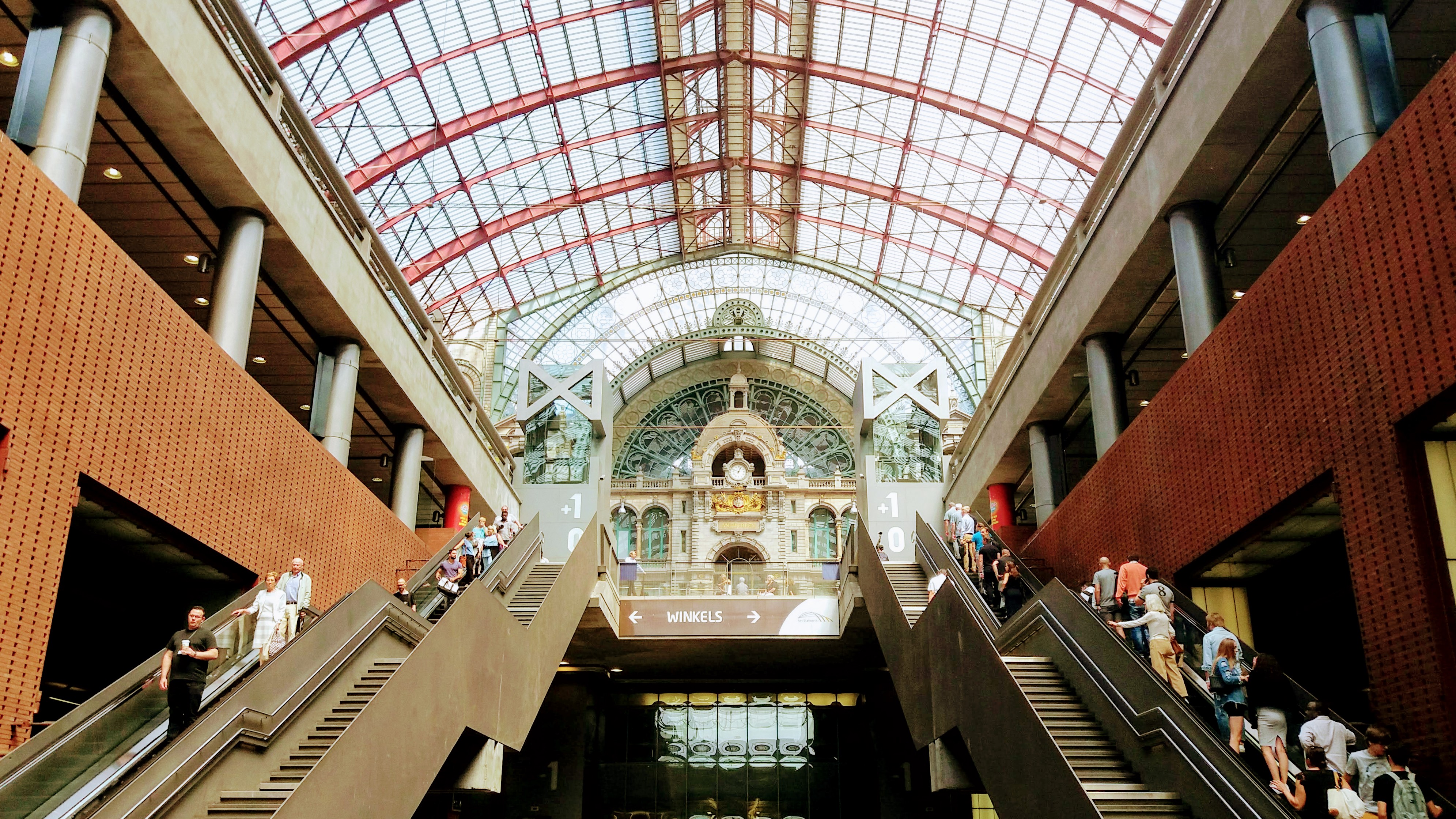
In Antwerp I decided to walk. The places I wanted to see were all within 30 minutes walking of the main train station and I wasn’t in a hurry. As a result, I have no idea how the transit inside the city works. On my out, the trains were running late but the kind conductor lady helped me hop off and change to a faster train at one of the stops. The tickets are somewhat flexible as to which trains you use to get to your destination.20180712_124849


The Netherlands:

First, in Maastricht, the bus company that runs the bus between Lanaken and Maastricht is the Belgian company De Lijn, and I was able to buy a ticket at the Maastricht main station. The front of the buses had a space to insert the ticket and a date/time/remaining balance was printed on it each time. I think I ended up with about 0.60€ left unused on the ticket at the end of the week, but it was much easier than trying to buy a ticket every time.

Image result for De Lijn ticket

I needed a different transit card (the OV Card) to get around the city of Maastricht, but at least I was able to use that transit pass to buy my passage into Aachen. Once I figured out the basic system it was not too bad, and the people in the Maastricht station were quite helpful in getting me the best prices when I was getting my cards set up on the first day.

The only complaint is that because Lanaken and Maastricht are smaller towns, the buses do not run often and there is no metro at all. This requires more careful planning to get to and from places, to get back to my room at night, etc. It also requires more walking since bus stops are fewer and farther between than in big cities.

Later, in Den Haag

I need to preface this by saying Den Haag was the single WORST transit system I encountered in Europe. I was not a huge fan of Maastricht because the infrequent bus schedule, and that was not an issue in Den Haag, but what turned my brain completely inside out was the pay structure and it’s deep deep bias against foreigners. In the Netherlands, you can use the OV Card everywhere, so I was able to use the same card from Maastricht, which I thought would be a convenience…. ohhhhhh no.

When you ride in Den Haag, you have to tap in and out every time because the price of your trip is based on distance traveled; however, sometimes it double tapped or didn’t tap at all so I suddenly found myself completely out of credit on my OV card with no way to get more!

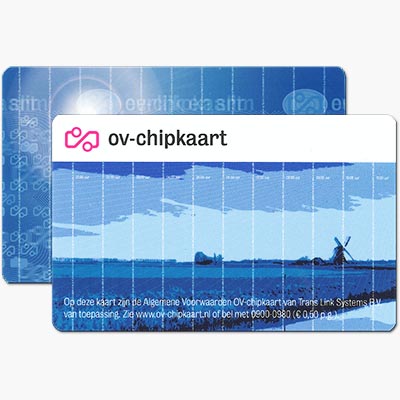
Image result for ov chipkaart

There are almost no recharging kiosks for OV in Den Haag either. I found one in the grocery store near my Airbnb, but it wouldn’t take my credit card and the cashier didn’t seem to care much. She eventually just stopped trying to even speak English which was only annoying because everyone else there had been like “of course we speak flawless English!” So, it seemed a little implausible she is the only one who doesn’t…

I tried to use the OV website to find kiosks in my area, but the website map wasn’t working… of course.

I tried to go out anyway, thinking I’d just buy a ticket on the bus but they don’t take cash and a 1hr ticket is 3.50€! I’d end up paying 7€ to go out and get back? I left the bus with sticker shock and stood around cursing the entire transit system that had robbed my card and left me with no way to top up and charged exorbitant fees to get to a top up place. Finally I decided to take the tram back to the train station and sort it out. Then the ticket box on the tram refused to take my debit card! How is a person supposed to pay for this????

I asked a ticket monitor about it because just at that moment I was feeling too honest to steal a ride. She directed me to the app where I bought a ticket then told me I didn’t need to ride all the way to the station I could just stop at Centrum and use the machine there. Great! Except when I got off to use it, it was out of order. I waited for the next tram and got on as my e-ticket was good for an hour, then realized it was going the wrong way, got off and waited again to go the other way. The only good news is they run every 10 minutes instead of 30 like in Maastricht.

I finally got to the train station and put more money on the card. I looked at my transactions history and realized that one point I was charged 4€ for a trip. If you tap in and don’t properly tap out, it’s 4€ no matter how far you go. That’s right, it costs more to mess up your transit card than to just buy the flat ticket. Gouge much?

Image result for ov chipkaart kiosk

My tram ride back from the station? .90€! It cost me 3.50€ to go using the app, and 0.90€ to go using the card. It’s worth using the OV Card, it’s just hard to use correctly. Eventually, I was able to go online to the OV website and submit a request for a refund of the over-charges and it was granted, although I still had to get to the train station kiosk to actually claim the credit.

I specifically say it’s biased against foreigners because most people who live there have their OV linked to their bank account directly, and can easily contest overcharges or incorrect charges at their leisure without worrying about not being able to pay for a trip. Meanwhile, visitors who front load the cards can still contest overcharges, but have no recourse for getting to a charging kiosk if a mistake has drained our account.

Returning from Amsterdam

The OV card isn’t evil in and of itself. I had very little issue using it in Maastricht and Amsterdam. It was nice to be able to move from city to city without having to invest in yet more transit passes (glares at Belgium and France).

However, the vaunted European train system turned out to be a massive disappointment. I know I’m kinda old, but I remember when the dream was “get a Eurail pass and back pack around Europe for your gap year”. My parents had good things to say about the trains. The trains are 2-3x the cost of a bus in most places there. I expected the trains to be GOOD. It was not true.

I hopped on my train back to Den Haag thinking I’d had a wonderful if over-budget day and then about halfway back the train just stopped.

There was a problem with some other train stuck on the tracks (I heard because of the heat) and we sat there for about 90 minutes. The main problem with this is that I only had a small bottle of water, enough for the anticipated one hour journey but not longer after a long day in extreme heat (it was averaging 35-37C that week), and several alcohol drinks (wine with the cheese tasting, Bols distillery tour, and beer with dinner!). I even thought about buying a larger bottle in the train station and thought “no I’m ok, it’s not far.” FML.

There was a toilet in the train but no potable water. I tried to distract myself with Netflix, but I was getting insanely thirsty. We finally moved backwards to Harlem and I was told to ride to Leiden and transfer there to another train. My ticket would cover all my transfers to get me back to Den Haag, but nothing would make up for the extra hours added to what should have been a short and direct trip. At least I got to watch a beautiful sunset from the unmoving train?

20180724_210859

When we got to Harlem, my first priority was water and I even willing to buy some but by 10:30 at night, most places weren’t open (Europe closes at 8pm) and the one I went to wanted 2€ for a tiny bottle!!! I pulled up my reusable and asked about tap water. It’s safe to drink from the tap in Europe. The sales clerk looked at me like I had suggested eating his grandmother and said “it’s not free” with the most contempt I have ever heard in regards to being asked for water.


A Little Rant About Water

20180705_121804Ok, a business pays fees to have water, but there is no way customers are going to drink a tenth of what you use operating a food stand. Washing a single load of dishes is more water than all your customers could drink if you gave them each a cup. Water is basically free in a drinking capacity, and even if you wanted to charge me for using your tap water, 20-30¢ would way more than cover my water bottle and not be actual extortion. In a record setting heat wave. While the whole country is having train delays.

I know I was raised in the US where the first thing a waitress gives you is water and it’s bottomless and always free, but I’ve traveled a lot and never encountered such water stinginess as exists in Europe. I’ve also lived in places where the tap water is not safe and never had trouble buying drinking water at very reasonable prices, and many businesses still give away clean drinking water and public water fountains are available in parks and public spaces.

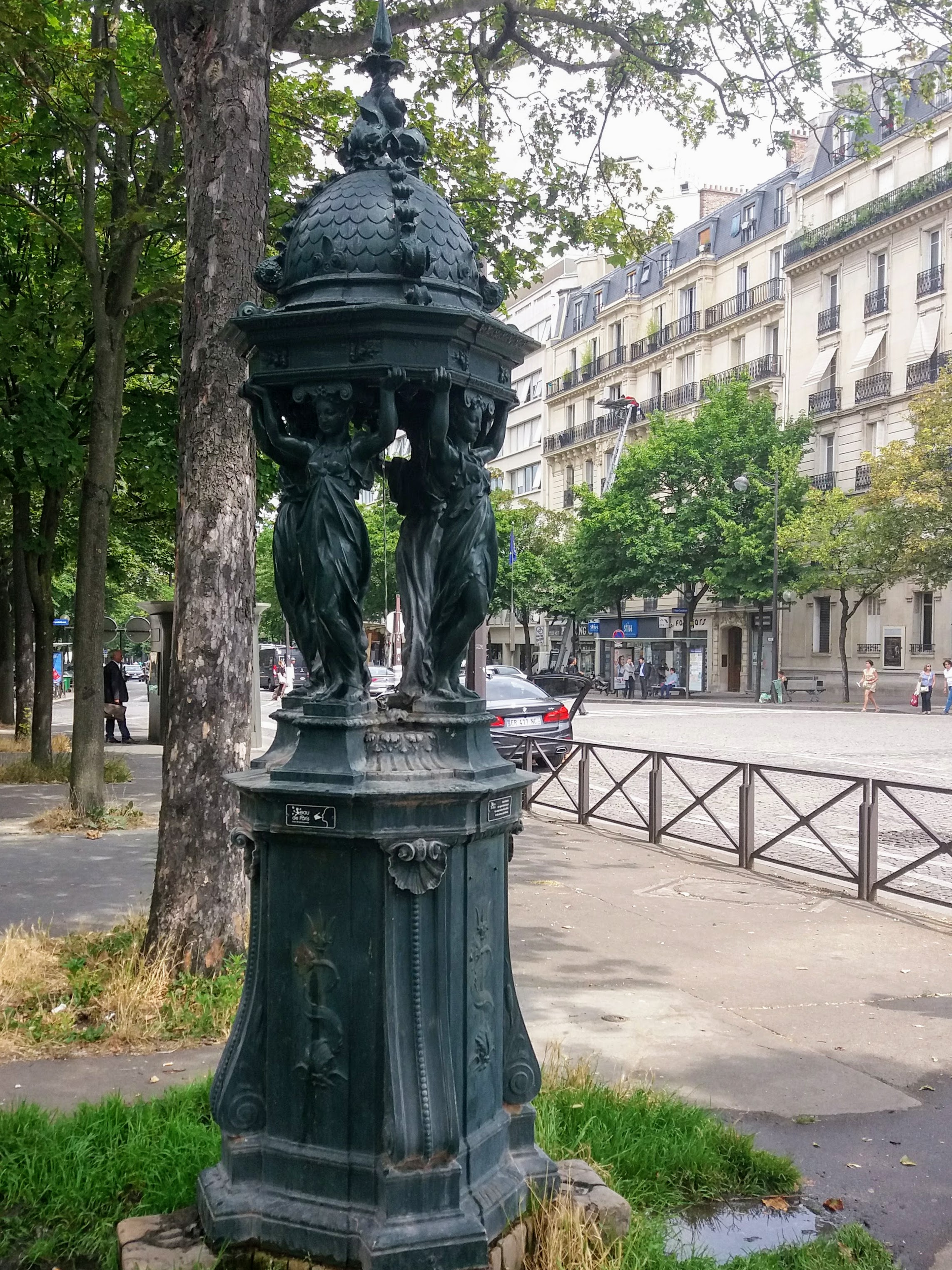
I thought France was stingy with the water but at least you could get it if you asked and in France and Belgium I was able to find some public drinking water (the photo above is a public drinking fountain in Paris). The rest of the time I filled my bottle in bathroom sinks… the bathrooms are very clean because there are no free bathrooms.

I just don’t understand the water hoarding going on here. I don’t think it would be hard to install cheap water stations like the paid public toilets to let people refill their own bottles and reduce plastic waste. If you must make people pay for water then keep it affordable. Besides, free water in tourist areas makes people stay longer. In the end the EU is calling for clean drinking water to be a human right, but F.U. if you’re travelling in a heat wave and get stuck when the infrastructure breaks!

End Rant.


Hamburg,  Germany:

I had been using Flix Bus to get between my main cities up to this point, and it’s about as advertised. It’s a cheap bus. There is usually a bathroom, and sometimes WiFi. It’s nothing to write home about, but it’s ok. Additionally, it’s often less than half the cost of the trains. When it came to getting in and out of Germany, however, the costs were suddenly inverted and the train became the cheaper option by half. Germany + trains? That has to be efficient and on time right? Oh, stereotypes, you fail me again. The trains are expensive, overcrowded and often late. Take a bus.

The train ride on DB Bahn from Den Haag was long. It took three trains and I always had to be aware of my stop because there are lots and no one will tell you where to get off. There is no WiFi on the trains in Germany. And outside the main cities I didn’t get good reception either. There was some air-con on the trains but only between stops, so it would get hot again while people got on and off. By the time I got to Hamburg 7.5 hours later I was soaked in sweat and tired. 

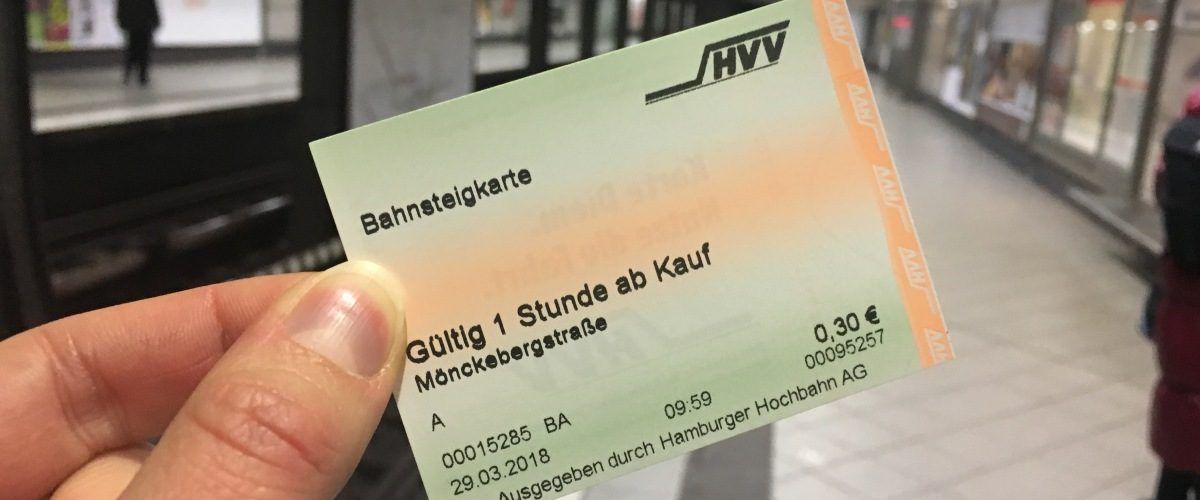
The good news is HVV (the transit authority in Hamburg) is great! Although the website is total gibberish, I went to their office in the station as soon as my train arrived, and the kind woman behind the counter helped me figure out what zones the places I wanted to go were in and helped me to save money on the week long transit pass. It was a tremendous relief to have unlimited transit and not have to worry about tapping in and out and possibly running out of credit due to a computer error!

Related image

In fact, there’s no RF readers or tapping in and out at all. The HVV transit pass is just piece of paper in a plastic sleeve that you can show to the bus driver or ticket checker and it’s all good. 

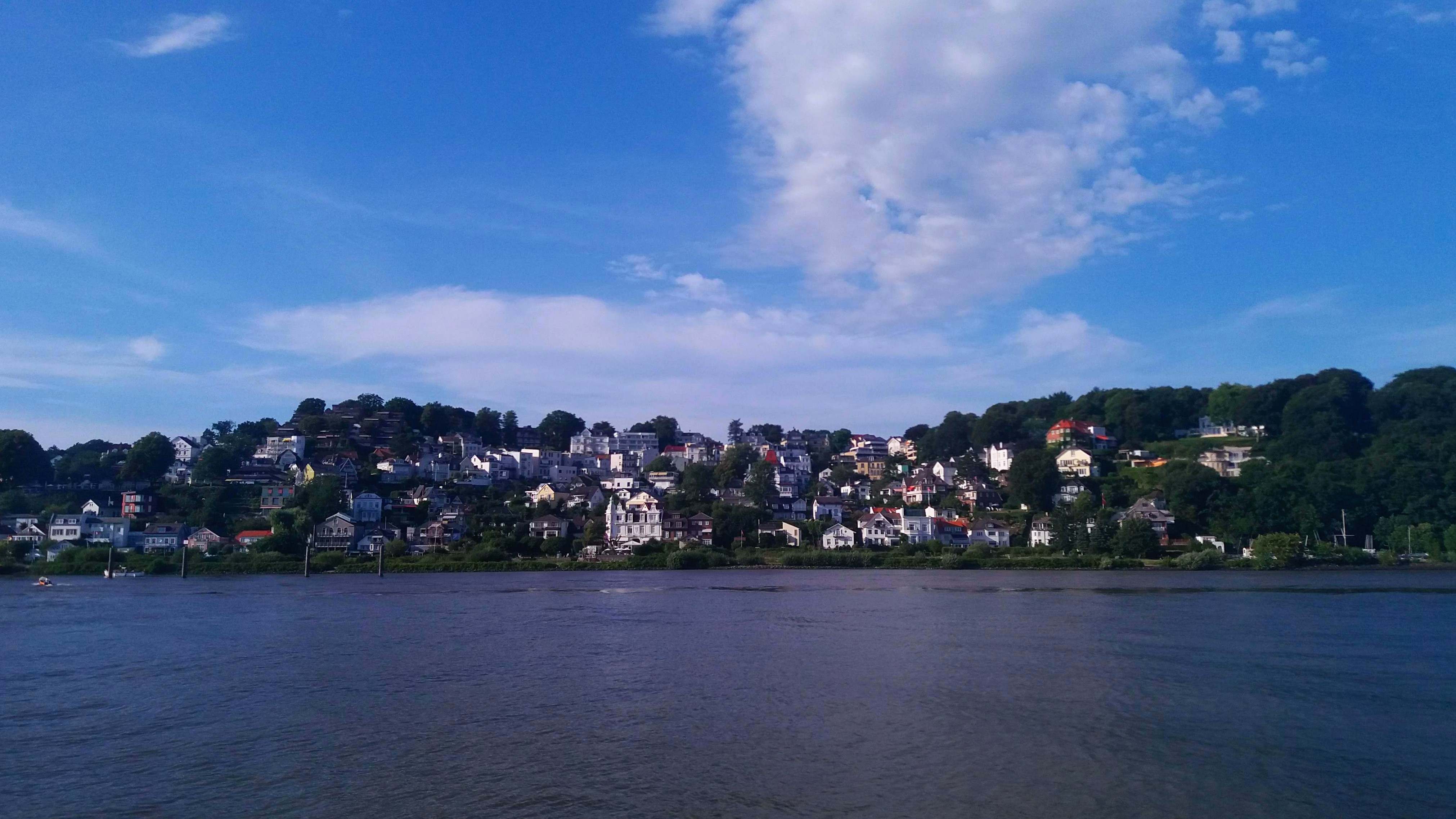
However! The one time I went outside my pass’s zone, I did have to buy a single use ticket. It was supposed to be cheaper this way… it turned out to be a royal pain. I still don’t know the correct way to buy a single use ticket across multiple zones. I thought I got the correct multi zone pass to head out to Blankenese, I got on the first leg ok, but the bus driver at Blankenese refused to let me on, saying I had purchased the ticket in the wrong zone. I don’t know if he was just being a jerk or what, because otherwise it seems I’d have to buy one ticket to get from downtown to Blankenese and then ANOTHER to get around Blankenese. I ended up walking to the beach.

On the way back from Blankenese, I decided to take the ferry, which was an excellent choice. It’s recommended to use the public transit ferry as a cheap tour of the Hamburg harbor and they’re not wrong. At 10.80€, it was certainly more expensive than using land transit, but much cheaper than a cruise up the Elbe with all the same wonderful views.

20180801_182801

Leaving Germany, the last train

The original train I booked with DB Bahn was a single train from Hamburg to Copenhagen on Saturday, but the heat wave in Germany was KILLING ME, so I changed to a Friday ticket instead and left a day early. The new train route had two transfers, each giving me less than 10 minutes to change trains. A situation I would have thought could only be offered if the trains were reasonably on time. Silly me!

My first train was 10 minutes late in arriving, but that was ok because my second train was 15 minutes late departing, so I did at least get on it. However, so did EVERYONE ELSE. I’ve seen less crowded trains in China. Oh, and the platform wasn’t clearly marked so, even though I was standing under the sign for my train, my train actually pulled up at a totally different part of the platform and we only realized it when the hordes of people started running past us to get to it.

Hamburg-railway-station hg

The first several cars were so full that I couldn’t even get in the door. I mean, seats all full, aisles all full, stairs all full, entryway all full, full. I finally found one car I could squeeze into and found myself standing on the stairs (with all my luggage) compressed by bodies. There was an option to buy a reserved seat on the website, but I thought it was just for if you wanted to be sure you and your group had seats together or if you wanted to be sure to get one of the ones with tables. I didn’t realize they oversold the trains by so much that it was the equivalent of the Beijing subway. If you find yourself forced to take a train in Europe, pay the extra 4$ to get a reserved seat or else be prepared to stand.

As the tiny stops went by, and people got on and off, I was shuffled off the stairs and into an actual compartment where a very kind man getting off at the next stop gave me his seat and I was able to rest at last. By about halfway, most of the standing people were gone or seated, but it was still ridiculous.

That train was, of course, also late to my second connection, and I missed my connecting train altogether. The conductor gave us instructions on where to find connecting trains to various destinations and I stepped out onto the platform to wait for the last train of the day. It was going to be about 20 minutes later than my first scheduled train, but I didn’t think that was too bad.

I met a young American lady, just graduated from college and off for her summer in Europe with her Eurail Pass and we got to chatting in the station. When we boarded the next train it seemed that too would be standing room only, and two bicycles blocked off 4 folding seats entirely.  Luckily, as the train filled up, and started moving, a kind lady pointed out that there were two empty seats after all and we rushed over to grab them gratefully.


Copenhagen, Denmark:

The train took 90 minutes longer to arrive than the one I was supposed to be on, and instead of arriving in Copenhagen around 10pm, it was almost midnight. I expected the train to let us out into a train station where I could find shops, an ATM, and ticket machines for the public transit system. Instead, the train let us off basically on the street. I had no idea which building was likely to contain the train station/atm/ticket machine so I began to cast about for any ticket machine at all.

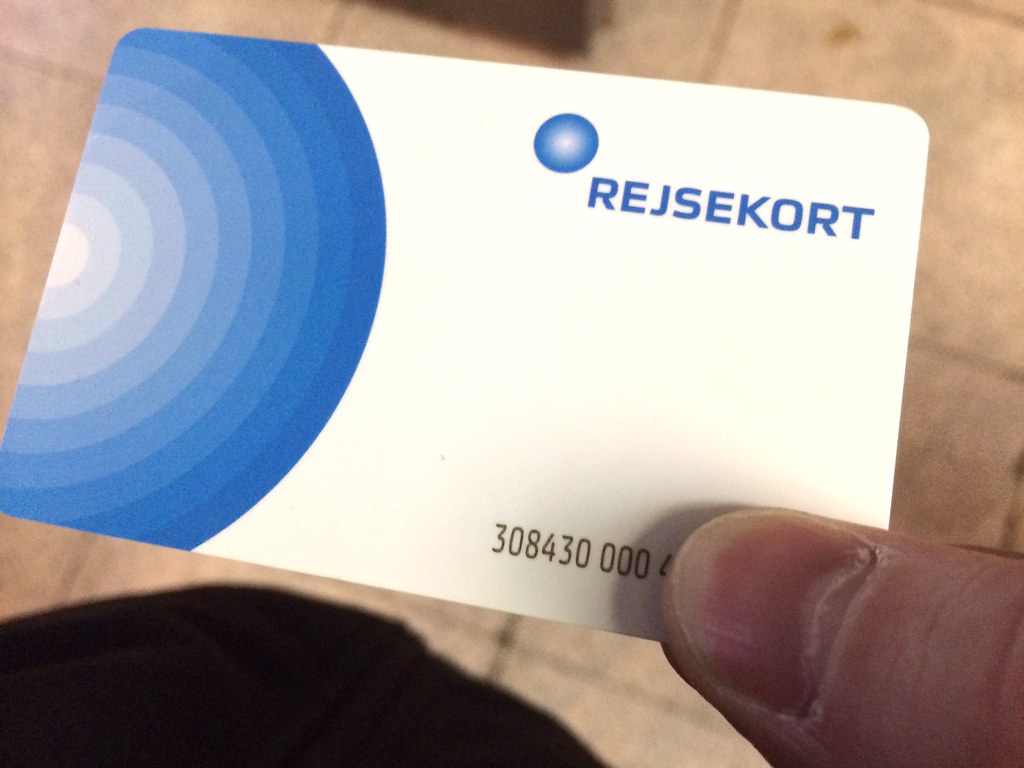
Image result for Rejsekort

I found one at the bus stop but as far as I could tell, the only option I could do with a credit card was to buy the Rejsekort transit card. For this you must pay for the card (80kr), then pay a minimum of 100 danish krone as a balance. So it cost me about 24 euro to get a transit card. But it was midnight and I was exhausted so I just bought it and got on the bus. Being extra sure to tap out as I exited and see the fare, I was pleased to note that even the fairly long journey out to the diplomatic quarter was about 12 kr and figured I’d be able to use that 100kr for a while yet (foreshadowing!)

The Rejsekort transit card worked similarly to the Netherlands OV Card in that each trip required a tap in and out and money was deducted from the card. However! There are two types of cards, registered and unregistered. Guess what? Of course since I bought mine from a machine at midnight it was unregistered which meant I had to maintain a minimum balance of 70kr in order to USE the card. Please remember that the trip between our Airbnb and the main train terminal is only 12kr, so that’s a little more than 5 trips in and out of town that I have to load up and NEVER USE. I was not amused.


Gothenburg, Sweden:

The local transit company here is Västtrafik. The transit in Gothenburg is good, but Google Maps has the wrong names for almost everything, so it says “get on the 10 going to abc-Swedish name” but none of the bus stops match that name on the sign. You can’t just guess by which side of the street it’s on because they use bays to remove the transit from the flow of traffic (very cool idea) so the stops are all together on an island in the middle of the roads. They have stop letters, so Google could just say take the 10 from Bay A but no. I blame Google for this failure, not the city of Gothenburg. 

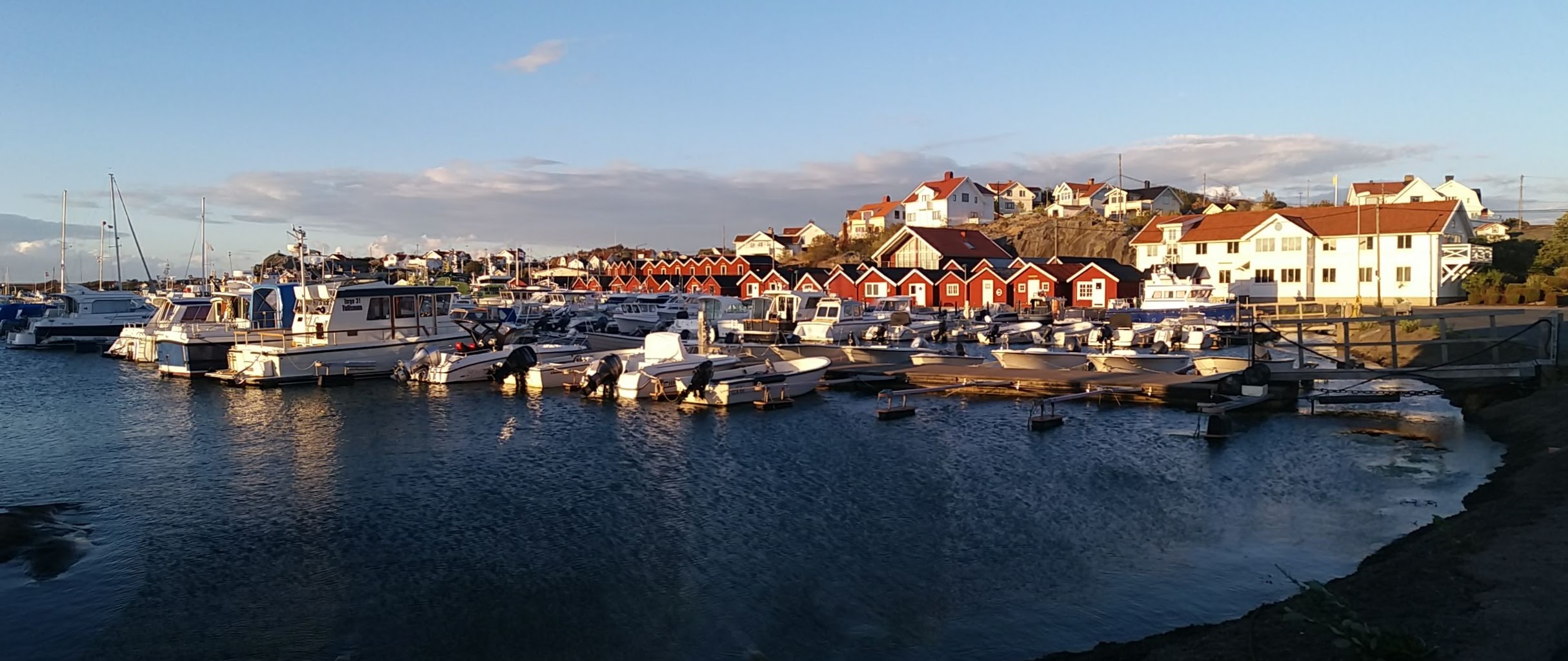
Most of my time in Sweden was in a rental car, but for the time I spent in Gothenburg before getting my car, I was able to use the public transit easily enough by purchasing a three day pass which included unlimited use of buses, trams, and ferries. This is especially worthwhile since the archipelago near Gothenburg are PHENOMENAL.

20180810_201933

Driving in Sweden was great. The roads are in good condition and the signs are very easy to follow. It is likely going to rank in my top 5 all time road trips. 10/10 would do again.

Even with the car, when I was in Stockholm, I opted to leave the rental at the hotel parking lot and take the bus around the city. In a surprising turn of absolute convenience, I downloaded the transit app on my phone and used that to buy my tickets for the day. I’m sure there are longer term options, but I was happy to just get the single use tickets since I was only using it for two trips and it was drastically cheaper than paying for parking.


Olso and Nesodden, Norway:

I was only in Norway because I was flying out of Oslo. My Airbnb was on Nesodden, one of the fjords a ferry ride away from Oslo. A single trip transit ticket is only good for an hour, but would take more than that to reach my Airbnb from the bus station where I arrived. Do I really have to buy two tickets for this? Turns out… no.

20180820_172938

I took the local bus to the ferry terminal, but the buses on the fjord considered anyone getting OFF a ferry to be transferring and did not require an additional ticket. Whew. The ferry tickets were only mildly confusing, and with minor investigative skills I was able to navigate the ticket kiosk at the ferry terminal.

Once the bus dropped me off at the stop closest to my Airbnb, I was truly worried however since it was very rural, with no signs of any ticket machines near the bus stop. I had no Norwegian cash on me and was not walking distance from anything. I tried to use the transit app for Oslo, but it refused to accept my Korean bank card OR my American credit card (which was a much bigger surprise). Unlike the ultra convenient Stockholm app, the Oslo app would only accept payment from a limited number of EU countries.

In the end, I just went to the bus stop when it was time to leave and explained my situation to the driver. Of course he had a solution, and I was able to get to the ferry terminal, then from the Oslo side of the ferry, I was able to walk to the nearest train station that would take me to the airport…. where I promptly bought the wrong ticket.

Bus Terminal in Oslo, Norway (Oslo bussterminal) tickets (billettautomater) for Ruter nettbuss Bus4You IMG 6050

I’m still not sure I completely understand what happened. I went to a ticket kiosk and bought a ticket to the airport, then followed the signs and got on the train. There is no place to have the tickets checked on the way to getting on the train. Once I left the train at the airport, our tickets were checked on the way out. The ticket checker told me I had bought the wrong ticket, and that I’d bought the city public transit ticket, but gotten onto a private company express train (not clearly marked, and don’t check tickets on the way IN?). The money I’d spent went to the city transit authority (Ruter) and there was no way for the private train company to get it. I tried to offer to fix my mistake, but it seems there’s no way to fix it on the back end and she waved me on through exhorting me to pay more attention to the trains in future.

I would never have hopped on the wrong train intentionally, but it wouldn’t hurt if they had some kind of a barrier to scan tickets on the way in?


Moscow, Russia:

Ironically, as in counter to expectations, Moscow had the best running and least expensive public transit. I was only in Moscow for 20 hours, and I got a 24 hour unlimited pass for less than the cost of a single trip ticket in any European city. The ladies at the ticket counter spoke enough English for me to easily get the one I wanted.

I had a little trouble finding my first Metro station (I should have got a SIM card so my Map would work better) but once I realized what to look for in a Metro entrance, getting around Moscow was a breeze. The stations are so well labeled and the metro maps are clear (if you know how to read a metro map). Plus, Moscow is famous for it’s beautifully decorated stations. Even when I got lost because I read the stops wrong there were helpful people to turn me around and help me find my way.

20180821_145452

I also used the airport express train here which was crowded, but reasonably priced and running on time with no surprises. I guess there are some things communism does well?


I have come to realize that I’m a novelist, not a blogger. I think other people would have made each country a separate blog post in order to spread out the words, and get more posts out there. At 5200+ words, I gave some serious thought into dividing this post up into bite size chunks… but tbh, I’m not that thrilled to be writing about transit, and I’m mainly including it because these were hard won lessons that I hope can spare at least one other human my trials and tribulations. I also think it helps sometimes to see that the adventure life is not always one of joy and excitement, and that we must also contend with learning basic life skills over and over in each new place we visit.

Back in the USSR? This time with a visa!

I am falling right behind on my goal of 1 blog post a week. In a desperate effort to get moving, I went and found the most complete draft on file, also the only one I wrote AFTER vacation instead of quick notes on a bus this summer. Maybe there’s a reason Dostoevsky and Tolstoy wrote such long novels. I was also inspired toward verbosity by my brief visit to mother Russia and I have had to split up the story into 2 parts. In part one: explore the bureaucracy of communism, the truth behind the soviet stereotypes, and an encounter at the Metropol Hotel.


Airports Are Ugly

I have flown through the Moscow SVO airport before. It’s not especially exciting, but their primary state run airline is dirt cheap so I find myself having layovers lasting on average 3-4 hours there. This time I had a 20 hour layover on the return flight. I can’t imagine many airports I would willingly spend 20 hours inside. As Douglas Adams once famously wrote, “There is a reason why no language on earth has ever produced the phrase ‘as pretty as an airport’.” Since the first time I read this I have had the singular experience to be in some of the best and worst airports in the world, and I can say with certainty that the Moscow International Airport is not a place to linger.

There are few places you can sleep inside the airport, like hourly rental sleeping pods, or even the airport’s very own hotel (the one Snowden hid out in). I looked into these and discovered that the prices are almost as much as the plane tickets. Even if you’re willing to camp out on the crowded and uncomfortable airport seats, there is no way to get WiFi unless you have a Russian phone number, so be prepared to be both uncomfortable and bored. In order to take advantage of any less expensive hotel (or WiFi) option, you have leave the airport, but unless you are from a very narrow list of close Russian allied countries, you can’t leave the airport without a visa. And you can’t get a visa at the door, you have to apply for and pay for that visa well in advance of your arrival.

You Need a Visa To Get In

Tourist visas to Russia require a letter of invitation. These are usually arranged by tour guides which seems like a giant scam, but that’s a whole other rant. Transit visas can bypass the letter requirement if you have proof of your ongoing flight. The transit visa can be used for up to 3 days if you’re flying and 10 if you are travelling by train.

Thus, my trip to Moscow actually started in June with the Russian Consulate in Busan, South Korea. Since they weren’t open on my day off, I got up very early in the morning on a Friday and bused into Busan to file my paperwork. I was able to fill out and download the application online and print it at my office, however the application took several hours to fill out because in addition to all the normal information, they wanted the exact dates of all my international travel for the last 10 years. They also wanted complete information on all my secondary education, and on my parents, and to know if I had any education whatsoever about nuclear weapons (I do!). I felt like I was filling out a background check for the CIA.

I nervously handed over the painstakingly researched application form and paid the 100$ fee, hoping that nothing would disqualify me from going and returned to my home to wait a week for the results. I shouldn’t have been worried. Communism loves bureaucracy and to make people jump the hoops and I have become an expert form filler. A week later I made the trek back to the consulate and my passport was returned to me with a shiny new 1 day visa inside. I booked a hostel and an airport shuttle and more or less forgot about it for 2 months.

Midnight Arrival

When I landed in Moscow, it was just after midnight and amid a flood of Chinese tourists, but it didn’t actually take all that long to go through customs and immigration. Since I was technically on a layover with a connecting flight, I had checked one bag through and was only carrying my day pack and a basic change of clothes with me. My visa was scrutinized intensely. This guy busted out a jeweler’s lens to stare at it in minute detail. Eventually, finding nothing wrong, they allowed me to pass out of the international terminal and onto Russian soil.

There is an oddity about the Moscow airport in that the WiFi requires you to give a phone number where they will send you a code to log on. It’s “free WiFi” but you can’t access it if you don’t have a Russian phone number. It’s frustrated me every time I’ve flown through, and I’ve never been able to get it to work. Really, it’s free if you’re Russian, but it’s a taunting WiFi dream to international travelers. Knowing this, while still in Norway, I had downloaded the offline version of the Moscow map in Google maps (which is a lie), and the Russian language on Google translate (which I never actually used) as well as information about my hostel, just in case.

I got some money changed to Rubles, and I found my driver. If my flight had landed during the day, I might have tried out the public transit, but at midnight thirty I was happy to see a man holding a sign with my name on it and ready to take me directly to the hostel, even if the ride did cost more than the room. It was a long and empty ride through Moscow. I’m not sure if it was just the late hour but the roads were empty. And they were huge! City roads, with business and sidewalks, not like highways, just roads that were 10 lanes across, 5 lanes in each direction. I stared at them wondering how people crossed the roads on foot and even more if these behemoths aided in the flow of traffic. Do enough people in Moscow own cars for this to be actually useful or is it just for show?

Hostile Hostel?

Checking into the hostel was another long rigmarole of paperwork: fill this out, sign this, make a copy of my passport and visa, etc. I chose a cheapish hostel thinking since I only was going to get maybe 6 hours of sleep, I didn’t need much but I also carefully selected one that was highly rated with plenty of good reviews and a location that would make it easy to get to Red Square in the morning.

One day… the lesson is going to stick. When travelling in less affluent countries: spend the money on a private room! The hostel bed was around 10$ and a private room would have been about 30$. It’s a big difference and at the time I was thinking about every little penny because I wanted to keep my budget down and Moscow was already costing me 100$ just for stepping out of the airport. I had spent a single night in Paris in a dorm and slept pretty well, but that was Paris.

Gallery image of this property

The hostel itself did not live up to my expectations based on ratings and photos. Looking back I can see those are real photos, but they were clearly taken when the interiors were brand new or at least recently deep cleaned. In reality the place was much more dark, dank, cramped and dirty than the photos represent. Even by the light of day. Now, I’m not saying it was a shithole… it did meet my minimum standards of clean and the staff were very polite in a cold sort of way, but I did not rest well.

Like many hostels in Europe, I was expected to make my own bed. The staff do not consider it their responsibility to put sheets on the bed, nor to remove them. I struggled with this as it was almost 1am and I had a top bunk and everyone else was asleep, so I couldn’t turn on the light. Also, the bedroom door seemed to have no lock at all. The bathrooms were very tiny and when you’re sharing a single bathroom with all the other women in a large hostel, that’s a challenge.  One of my roomies snored so loudly that it made my bed actually vibrate. I could feel her snores. I put in earplugs, headphones, and squashed pillows, blankets and towels around my ears to no avail. When I got up to get dressed, there was no place private to do so.

The hostel included WiFi, which did work well, yay, and a free “breakfast”. In the morning I discovered this meant a choice of two sugar cereals, luke-warm milk, watery coffee, and packets of what I really think were yogurt powder. I couldn’t read the Russian labels and I didn’t try to eat it, but they were packets filled with what felt like a powder with pictures of bowls of yogurt and fruit on the front. And somehow this breakfast is rated 7.7 on Booking.com. In fairness, that is the lowest internal rating and every other criteria is rated 8.4 or higher. I don’t know what your life has to be like for this to be a 7.7/10 breakfast, but I never want to live it.
Gallery image of this property

Just, please, if you see me talking about booking a hostel dorm in a developing country or a current/previous communist country STOP ME. I’m not trying to be a snob, but sleeping properly is so important to my well-being and my ability to enjoy waking activities and I just can’t sleep properly in those conditions. I envy the people who can.

Metro Mishaps

Despite these setbacks and the severe lack of sleep, I was still determined to make the most of my day in Moscow. I had a detailed and timed itinerary that I hoped would allow me to see everything I wanted to before it was time to go back to the airport. The first thing I discovered is that the Google Map of Moscow isn’t great, and the offline function doesn’t really do anything. Here’s a pretty building I found while searching for the metro.

20180821_091840It took me ages to find the Metro station that was meant to be a 5 minute walk from my hostel in part because Google, and in other part because the Metro stations in Moscow don’t have any helpful signs with pictures or symbols to identify them. Maybe they say the name of the station on the outside, but I was looking for a big “M” or an icon of a subway train which has been a constant in every other metro system I’ve used. This is actually the logo for the Moscow metro and it was not on any of the buildings or any signs nearby.Image result for moscow metro

When I finally realized that the big square beige building was the metro station, I had walked past it at least 7 times because I thought it was a government building like a post office or police station. It was much easier every other time because at least they all look the same. Of course I didn’t take a picture at the time, and now looking at stock photos of the building I see that it clearly has a big red M on top and a sign out front, so I can’t explain why it eluded me so. I blame sleep deprivation.

Once I found the entrance, I was happy to learn that the metro system itself is actually very easy to use, and cheap too. Rather than go through the hassle of buying a ticket for every trip, I just bought a 24hr pass for about 3$ US. That’s a whole day pass for less than the cost of a single trip in most EU countries, by the way, and goes a long way to explaining the powdered yogurt situation.

On top of its ease of use and affordability, the Moscow metro is famous for it’s unique and beautiful (on the inside) metro stations . At some point in the soviet era, it was a gift to the people to make each public transit station a work of public art. No one could visit them all in one day, but I tried to get some pictures inside the ones I did use. They are very very Soviet, but amazing works of art nonetheless.

Red Square Obscured

When I emerged from the station at Red Square I was instantly lost. I had expected the world’s largest public square to be visible from the metro station that shared it’s name, silly me. I adopted the time honored method of picking a direction and watching where my GPS dot went on the map. The first landmarks I ran across were actually the Metropol Hotel and the Statue of Marx. I recognized them from my plans as places I had intended to go later in the day, but it did help orient me to find Red Square and St. Basil’s Cathedral which was the top of my list for the day.

20180821_100129Sadly, I still don’t know what Red Square looks like, since there were about a million white tents set up and a large area blocked off and converted into a stadium for an upcoming festival. I walked slowly and perused the kiosks selling a narrow but colorful array of Russian souvenirs. I didn’t stop to buy, however because it looked mostly mass produced.

I also walked past the line to Lenin’s tomb, where he is preserved and laid out in a rather grotesque honorarium. Entrance to the monument is free, but there is no way to reserve an entry time, so people queue for hours for a chance to gawk at the dead body. I told myself it would be interesting if the line was short enough, but by the time I arrived around 10am, it was already all the way down the block and didn’t seem to be moving very fast.

20180821_095746

Tourist Stuff

St. Basil’s did not disappoint. It was crowded as heck, but it is a fun building. Everyone has seen at least one picture of the iconic colorful onion turrets and it was definitely a treat to see it in person. I wandered around trying to find the best angle for a photo, but since large swaths of the surrounding area were blocked off for the upcoming festival, it was a little challenging.

20180821_101349It’s possible to go inside for a fee, but online reviews all agreed that the cool part is on the outside. Bonus, there was a marching band practicing in the temporary stadium field nearby, so I got to watch a little bit of counter-marching through the fence and experience some serious cognitive dissonance as they played the 1812 Overture (for non-Americans, that’s because it’s a staple of our own Independence Day celebrations).

20180821_103628

Checking the clock, I realized it was time to head over to the gardens and try to find the entrance to the Kremlin. Only, because the entire breadth of Red Square was fenced off with a giant temporary stadium and lots of souvenir booths, I couldn’t follow my pre-planned route and Google maps was turning out to be f*ing useless. Once more I adopted the “pick a direction and walk” method, which resulted in me walking nearly all the way around the Kremlin, which is not a small building. In the middle of my walk, the sky went from a bit overcast to “wrath of Neptune”.

I always have my travel umbrella but it would not have withstood the torrential downpour that issued forth from the skies. Lucky me, at that precise moment, I happened to be passing under the only cover for several blocks in either direction, a bit of scaffolding along one corner of the Kremlin’s outer wall. Even standing under the scaffold with my back to the wall, I could feel the spray from the force of the rain around me. I sat there as other pedestrians scurried to the shelter and wondered if my plans to explore outdoors would be totally rained out, and what I could possibly do instead with no working internet. But before I could even really start to work it out, the rain slowed to a drizzle and I felt confident in resuming my walk armed with my little umbrella.

When I did reach the entrance, I found another huge line for the people who already had tickets, and I continued on through the gardens in search of the ticket office.

What’s With All These Lines?

I know there is a stereotype about lines in Russia. Or at least there was when I grew up in the cold war in America. We were told about how people had to just stand in long lines for hours to get bread, or sometimes not even knowing what was being passed out at the head of the line or if there would still be any by the time you got to the front of the line. They were communism horror stories told to show us how terrible the USSR was and how great America and capitalism were by contrast. I know it was propaganda, but I’m not sure it was untrue. I had already seen the huge line for Lenin’s tomb, but I knew that was a free event, and no way to buy tickets in advance.

Looking at the line to buy tickets to stand in the line to get in at the Kremiln was just insane. I freely admit that I ignored my note to myself in my calendar to book those tickets online in advance. Everything else in Europe I booked before I even left Korea, but Russia only takes reservations for the Kremlin 2 weeks in advance. While I was in Sweden. I made a note to do it, and I saw the note, and I ignored the note. My own fault. However, looking at the lines, I am not sure I would have made it through the “advance ticket line” even with enough time to really see anything.

I am a bit sad I didn’t get to see the Kremlin and especially the museum with the historical art and artifacts of pre-communist Russia. However, if I do make it back to Moscow, I will dedicate a whole day to the Kremiln alone, knowing what I know now.

20180821_112822_000-ANIMATION

Fun With Costumes

Instead of sulking about it, I decided to move on and see what other fun things I could find. I was not disappointed. Shortly past the ticket office, the scenery livens up and I found some more public gardens, statues, fountains, and a quite charming pair of street entertainers dressed up in “historical” costumes and posing with tourists for tips. They made me smile and so I probably gave them more money than I should have, even though it was less than they asked for.

Continuing on I managed to find a slightly more accurate historical costume depiction where it seemed like a professional group was showing off the history of Russia and perhaps it’s trade partners with booths showing different herbs and spices, old astronomical tools and charts, paints and dyes, and other medieval type crafts and pursuits. It was all in Russian, though, so I wasn’t able to glean much from the informative talks the costumed historians were giving to the other folks in the park.

20180821_114933

Thwarted at Every Turn

After a quick gander at the statue of Karl Marx and the Bolshoi ballet because I was standing right there,

 
I headed up to the Metropol Hotel to see what I could find in the way of a fancy lunch. I had found a few places on line that seemed to indicate there was a high tea available, and while the website of the hotel still had it displayed in some places, the actual “high tea” page was not working. Still, I had seen the restaurant menu and knew it would be ok even if I just had lunch.

20180821_094706

The very first thing I saw was a bunch of construction and a sign saying the restaurant was CLOSED for repairs and upgrades. My optimism and adventurousness was wearing thin at the edges around now. So far, all of the things I’d set out to do with my very limited time in Moscow had either been harder than expected or totally impossible. I was also VERY hungry since the last meal I ate was a deli sandwich I got in Oslo the night before. I am not counting the bowl of sugar coated flakes at the hostel as a “meal”.

Clinging to the very last shreds of my “lets have a good time anyway” thoughts, I found the main entrance to the hotel to see if they were serving anything anywhere because I really didn’t know what else to do or where else I could go for a much needed lunch.

Although the staff at the hotel bar had no idea what tea ceremony I was talking about, (even though it’s on their website!) they were happy to seat me at a comfy chair in the lobby and bring me a menu. I ordered a “Stranger in Moscow” to drink, and salmon blinis for lunch.

The WiFi Is a Lie

When I went to explore the WiFi options, I discovered that the special nature of the Moscow airport WiFi was actually the rule of thumb for all Russian WiFi. I asked the staff if there was any way to log on, but without a room number or Russian phone number it was impossible. They didn’t even have a guest account available for customers of the bar or restaurant.

The more places I went, the more I realized this is just the way it works. Even Starbucks, a place famous for it’s free WiFi was inaccessible to anyone without a Russian phone number. So, if someone tells you not to bother with a SIM card because there’s plenty of free WiFi, well, they are both right and wrong. The WiFi is free, but you can’t use it without that SIM + Russian phone number. If I had known, I would have made the SIM a higher priority since it seems they are not too hard to find, but by the time I realized that WiFi was going to be impossible, I was more than halfway through my day and had no way to look up where to buy a SIM!

This obstacle was suddenly one straw too many in a morning full of them and I slowly began to leak from the eyes. I try really hard not to sink into despair or self pity when things don’t go my way on a trip, but everyone has a wall, and it gets closer with things like lack of sleep and low blood sugar, both of which I was suffering from at the time. It’s likely that I would have recovered after a some food and a rest, but that day I didn’t have to do it alone. A very kind fellow solo-female traveler sitting one chair over asked if I was ok and invited me to join her. She let me vent a little about my morning and then we quickly moved on to talking about our travels and experiences.

Lunch is Saved!

It did so much to lift my spirits and we chatted all through a leisurely lunch. The blinis were nice, a little sweeter than I was expecting for a seafood pairing, but not really much different from crepes.. maybe a little more oily? but not unpleasantly so. Out of curiosity I looked up the difference, and it’s yeast. Blinis have it, crepes don’t. The smoked salmon was delicious, and even though I had eaten lots of it in Sweden, I don’t think I’ll ever get tired of it. Plus it was served with sour cream and salmon caviar so there was a nice blend of textures and flavors.20180821_122655

The Stranger in Moscow was a vodka drink made with Campari, ginger, and blackberry syrup. The presentation was stunning. The drink was quite different from the cocktails I have had before. It was more bitter than sweet which is usually a good thing for me and I attribute that to a healthy portion of the Campari, but there was a slight “cough syrup” aftertaste that I associate with Jagermeister or almost any cherry liquor. My best guess is that the type of blackberry syrup they used carried that flavor, which many people find appealing in drinks. It was also served with a tiny bowl of dark chocolate chips which made an excellent compliment to the drink. Quite a unique cocktail experience overall.

20180821_122240

My lunch companion told me about the book “Gentleman in Moscow” which is set in the Metropol Hotel and I am now on the wait list to check that out of the library. In case you’re curious, a standard room at the Metropol runs close to 150$ US/night, but my drink and lunch were a much more reasonable yet still high for Russia $27 US together. I still wish I could have found that tea ceremony, but I am happy with the experience I had, especially with company to make it better.


Here’s a little slideshow with more photos from the first half of my day in Moscow. Please pardon the lack of music. I’ve been using YouTube Editor, and recently it’s decided to delete everything good and useful from it’s online service and I haven’t found a replacement yet. Stay tuned for part 2 where I go “off the beaten path”.

Letters From China (First Month 2007)

As September 2007 continued I began to find my feet in China, getting the swing of things in the classroom and learning to navigate Beijing on my own. These letters include my trips into town, my adventures in coffee, my first bout of homesickness (maybe ever), and some glimpses into the lives of my Chinese students.


Sep 13, 2007 at 10:08pm

Sooo, today was kinda interesting. It started off with early morning downpours, and me having no umbrella. By the time I got to class I was totally soaked. Not too bad tho, it cleaned out the air a bit and cooled down a lot.

The power went out this afternoon.

And… drumroll please… I found a place that serves COFFEE here in Yanjiao! It took me a while to get across that I just wanted black coffee, since it was like a dessert shop and they did mochas and cappuccinos and the like, but in the end, I did get a real cup of coffee… not great, but real. I still intend to try to get some beans in the city so I can make my own, but it is nice to know there’s somewhere I can go nearby.

Sep 14, 2007 at 7:34pm

I’m sitting here grading homework, and I want to share what one of my students wrote. The assignment was to describe a person.

“When I am happy, I like a person who is of medium build, a little chubby. I think she is very optimistic, stoic and conservative. She likes reading, listening to music and so on. Sometimes she would write a very good passage.

But when I am sad, very sad, I begin to hate her. I think she is very pessimistic, stingy and grumpy. She always does something wrong which made a lot of person even her friends misunderstood her and dislike her.

I eagerly hope she can do everything carefully and become excellent. Because that person is me.”

The English is a little rough, but I think the message is amazing, so I had to share.

Sep 15, 2007 at 11:25pm

Today I finally felt well enough to do some exploring. We decided to go into Beijing. The bus ride takes about 40 minutes, but its reasonably comfortable, and really cheap, about 5 yuan¹ as opposed to say a taxi which would cost over 100. This lets us out at Dawanglu. There we discovered a Super Walmart center and a guy in a penguin suit.

After Walmart, where I was able to find actual coffee, though its very finely ground and a little acidic for my tastes (I may however have over-brewed it, due to its completely wrong grind for a french press, and since I have a whole bunch, I’ll keep trying to get the timing right), we got on the subway (3 yuan) http://www.urbanrail.net/as/beij/beijing.htm and went on the red line (see the link for a map²) from Dawanglu to Xidan where we found a huge mall and some interesting architecture.

100_0051

This mall looks a little like an American mall, but of course there’s lots of room for bargaining. We also found a Starbucks where I was able to purchase the aforementioned french press. We didn’t stay long because one of the guys was looking for a winter coat and we didn’t see many clothing stores there, but I want to go back and explore more… one of the nicest things about it was that no one was trying to sell me stuff actively, and later I’ll explain why that’s so nice³.

We then took the subway back to Yong’anli and the infamous Silk Market. The silk market is a huge multistory shopping complex made up of hundreds of stalls selling goods.

silk market 053

Its a heavy bargaining experience. Erwin found a jacket he liked and argued the price from 2300 to 450 (300usd to 60). While this market has plenty of nice stuff for cheap if you argue well, the sales girls are really grabby, literally, they kept grabbing my arm to stop me and try to drag me to look at their stuff. Not all were like this, but enough that it got on my nerves. I’m sure I’ll go shopping there myself when I need winter things, but its really a high impact shopping experience.

We stopped at a cafe to refresh ourselves before the long trek home. Kevin had a sort of duh experience today. His water supply† at home ran out like 2 days ago and for whatever reason a new jug never arrived, so he basically stopped drinking water, and of course today, he got pretty sick… he’s fine now, and its probably just as well we had to come home early, cause I am totally wiped out. In the end, we took the subway back to Dawanglu, then the bus back home. So I shall leave this post with the final picture from the window of our bus.

100_0052

¹ Chinese currency has a lot of names… I was not consistent in how I called it because the Chinese themselves are not. RMB, Yuan, and Kuai (remember back then it was 7.5 RMB to 1USD)

² That link doesn’t work. Try this one. TheBeijing subway has gotten SO much bigger since then. There were 4 active lines and they were building the 5th for the Olympics… today there are 15. But you can still see the red line on the map.

³ I did not ever explain that. In China (and oh so many places in the developing world) visiting (white) people are assumed to be richy richersons and someone always has a hand out or is trying to sell you something useless and overpriced. Often a simple “no thanks” in the local language is enough, but I’ve had people on the street grab my bags or even my arm before trying to get me to buy. It was very overwhelming before I learned how to deal with it.

†Do not drink the tap water. 

Sep 16, 2007 at 10:56pm

To paraphrase Rob, I finally hit the wall. It really hit me where I am and how long I’m going to be here, and the fact that I sat in my apartment today and couldn’t talk to any of you because you were all gone, just made it that much harder. Don’t get me wrong, I know it was Saturday night and all, but I went out to Beijing yesterday instead of chatting with ppl, and I’ve been kind of scarce on contact this last week anyway, and I keep looking at this board hoping someone will have put up something while I was asleep or away, and its happening less and less…

I realise you’re all going on with your lives and that I’m not as much a part of them as I was 3 weeks ago, and there’s a definite tendency for “out of sight out of mind” but when I was talking to you all, at least someone, every day, I wasn’t lonely, and I felt like I could DO this. But today, for the first time, I began to wonder if I really can.

So, I guess I’m just asking that you try not to let me be out of mind, just because I’m out of sight. I don’t think I can do this without your help, all of you. I’m gonna try to shift the Beijing outings to Sundays (your Saturdays), to make it easier. Google Talk has a free voice talk function that all you need is a cheap mic to use, and I can’t tell you how much it helps to hear your voices.

I’ve never really been “homesick” before, because having moved so much as a kid, I never really felt like I had a home, and when I left Memphis, I was only leaving a few people behind, and I could always just call them if I missed them. But I’m homesick now, for Seattle, and while I can’t be there, and you can’t be here, if we can meet out in Cyberspace its not as bad.

P.S. Its not really the city I’m homesick for, but the people who made it a home, the ability to walk down the street to hang out at Belinda’s or drive over the water to Toni’s or just hang out and shoot the breeze after game. The closest I can get to that here is talking online, and that I need more than coffee or pine scent or home-cooking. I think its important for me to be ok with the accommodations, food and entertainment that China has to offer, because trying to make my life here like Seattle not only defeats the purpose of being here, but just highlights the differences and reminds me how hard it is to bring that here. Things are just things, but people are irreplaceable.

Post by Ross on Sep 19, 2007 at 7:09am

Weeeeee’re off to see the Chairman, the most respectable Chairman of OZ!

We hear he has some wonderful Chi, if ever some Chi there waaaas!

If ever oh ever a respectable worker there was, the Chairman of OZ is one because. Because, because, because, because, becaaaaause!

Because of the glorious wealth and respect in common effort to the workers he does!(doo da da da dum da doom, da!)¹

¹Nearly everything here is something I wrote, but I just couldn’t leave this creative comment out.

Sep 19, 2007 at 6:11pm

As part of teaching conversational English, I give the kids¹ little activities to do. Today was a talk show, the topic of which was “teens and their parents”. While several of the skits were standard fare: “dad won’t let me date”, “mom treats me like a child” etc. One group had a fantastically Jerry Springer-like show.

It started out with the “mother” bursting into tears (real ham acting sobs) and relating the deep tragedy of her husband disappearing from their life when her daughter was only 6 and their mother/daughter relationship is now suffering.

The “daughter” then breaks in to tell her side, the relationship isn’t bad because the father left, its bad because she is a lesbian and her mother refuses to let her marry the woman she loves!

It further develops that, although she has become a lesbian because of her deep distrust and hatred for men (causing the male “host” to back up a bit), she truly loves the woman she is with.

The only un-Springer-like action is that after the psychologist has told the mother that her daughter’s sexual preference is a result of a combination of genetics and environment, and she must support her daughter (nice and liberal), the mother and daughter make up in another flood of hamitup tears.

The skit was funny and socially relevant and very creative. It really is amazing to watch these young people grow and change.

¹ “kids” = university students, ages 18-22

Sep 21, 2007 at 1:27pm

With my cold finally gone (well mostly) and the beautiful weather, I finally got off my butt and took some pictures of the campus. Be warned, there are a lot of them¹.

We begin our virtual tour today with an aerial view of campus in order to give you a big picture from which to put the details in perspective. I went to the ninth floor of a teaching building in the middle of campus and took pics starting from the south, moving west, north,  and east.

This slideshow requires JavaScript.

Now you have the 180 aerial tour, lets move onto the ground. From the south view, you can see the zigzag looking bushes, the red potted flowers and the cactus garden.

21 cactus garden.jpg

Next, we’ll take a look inside the class building from which I took the pics. First is the view of the building from the south, standing on the same road bordered by the zigzag bushes, then some classrooms and the stairwell.

100_0135.jpg

…a public toilet and some chalkboard art.

Next we shall move to the north, and see the basketball courts, the fantastic concrete pingpong tables and some more chalkboard art.

Now to the east, a sight not easily visible in the tall view because of trees, but nice nonetheless: A fountain (not currently flowing) and some student dorms.

38 fountain.jpg

And as we move to the southeast, we find a lovey garden path and gazeebo.

44 gazeebo.jpg

Interesting architecture, well sort of, I have no idea what this smokestack thing is for, but hey, its a feature.

56 flower and chimney.jpg

The main south gate into campus (the one I come in thru every day).

70 main south gate.jpg

this garden is near my apt. on south campus

100_0139.jpg

Now for the entertaining bits. I’ve mentioned to a few people the amazingly big and architecturally inclined spiders here, and while I can’t get a web to show up on my camera, I thought these pics might give you some idea of what I’m talking about. The spiders themselves are about 2 inches (including legs) and the webs are usually 3-4 feet in diameter. The webs are not as patterned as say an orb spider, but they tend to be three dimensional, being a few inches deep in addition to the many feet wide. Thankfully, there are enough regular cleaning staff that no webs ever wind up on the paths, but they can be seen from the road. The pictures below are of a spider perched in his web (not one dangling in midair). You can just see the edges of the trees he has built his web between, and these are TREES not bushes, the whole thing was about 8 feet in the air. The thumbnails do not do it justice, since the spider is a little black dot, so I suggest to those who really want the full effect to go get the full size pics.

73 freaky spider 3.jpgAnd last but not least, the army kids. Some of you may be aware that military participation is mandatory in China. So all the freshmen, rather than starting their classes, are participating in military training, which seems to consist mostly of learning how to march in formation. They have been shouting outside the classrooms all week, and I often have to yell to be heard over them in class. I took some pictures of their drilling practices, and tonight I’m going to some kind of show which is being held in the football field (apparently that they’ve been preparing for, hence the yelling), that thing that looks like a bunch of colored squared on the north west corner of campus is actually a football field that they’ve covered with a plastic tarp and chairs. Ladies and Gentlemen, I give you, the People’s Army…

Peace out!

¹ So many more pictures. If you want to see more, check out the album on Facebook (where picture storage is free).

Sep 28, 2007 at 2:40pm

I’m a little behind in posts this week, but I finally got the pics off my camera, so here we go. I moved my weekly exploration outing to Sunday (rather than Sat) to better coincide with chatting and game times in Seattle.

After my last trip into Beijing being so hectic, I was planning a nice relaxing day of browsing through one of the quieter shopping centers, however, this did not turn out to be the case. Adam, the anime fanboy foreign teacher here, heard of my planned outing and asked to come along. I agreed and expressed my desires for a quiet shopping trip, alas, it was not to be. After only a few minutes at the shopping center I scouted out last time (the one under the big glass cone in the previous pics), Adam wanted to show me a nearby center he’d been to before… OK… so we hit the streets. Where I saw some interesting signs, and a few examples of native wildlife.

This slideshow requires JavaScript.

When we finally found his shopping center, he decided he was hungry, and asked if I’d rather go to MacDonald’s or KFC. Grrr. After waiting for him to get American junk food, I finally found a street vendor and got some REALLY tasty squid in a sauce that tasted a bit like bbq and cocktail sauce mixed together, and some grilled mutton with what tasted like cumin and cinnamon for spices.

We went into the shopping center. I found a nice Tiffany knock off chain for the pendant Miriam gave me (BTW I get compliments on that pendant, and one of the other teachers wants to know if that company has a website). I captured an interesting example of Chinese fashion, and spent a lot of time waiting around the geek area of the mall while Adam perused the entire anime toys/keepsakes collection.

Finally nearing the end of my energy and my patience, we sojourned to Starbucks and had a short break before getting back on the subway to head to a bar where one of Adam’s “friends” was DJing. The bar is called Club Obiwan, and I didn’t get any pics of the interior, cause I was tired and grumpy when we showed up, in no small part because the directions were vague and we got a little lost looking for it. But it turned out to be a really neat place, most of the clientele were ex-pats, westerners living in Beijing. I had a Mojito which was very refreshing and had a basil undertone to it, and there was free BBQ. The theme of the evening being reggae; it was not Chinese bbq. I think it was supposed to be Jamaican, but it was very mild, and oh so tasty. The music was also very nice, being that breed of reggae that is more chill out than rock out. Here is the view from the rooftop dining area.

100_0150

We totally cheated and took a taxi back to the bus stop, but it was worth it not to have to face the subway at the end of such a long day.

On Tuesday, all the teachers had to go back into Beijing to file for our residence permits, which ordinarily would not bear a place in a post, but on the way home we passed a mule drawn cart, and I had to share.

100_0155.jpg


Reflections?

I can see how much my approach to photos and descriptions has changed in 10 years. Clearly, I used to rely on the photos to tell the story, only explaining enough for context. These days I find I really enjoy describing what I see, as so often my experiences simply can’t be captured on camera, but are a blend of all the senses and of my feelings. Subsequently, I write much longer posts, but then the photos can support my story rather than the other way around.

I can also see how what I look for first in a new country hasn’t changed too much: coffee, a good place to shop for the necessities, and the best places to get local food. I haven’t focused as much on my school here in Korea, but I think that has more to do with the fact that it’s not ok to put other people’s children online without permission and I’m teaching actual kids instead of young adult “kids”. But, if it’s something you’d like to hear about, I could certainly work on a school/work post for Korea, too.

Finally, I’ve become much more self conscious about taking photos of people, no matter what age. I suspect that living in Saudi and travelling in the Middle East made me this way, since there is is at best rude and at worst illegal to take or post pictures with faces in them without permission. I don’t know if that’s something I want to change or not, yet, but it’s interesting to think about. As always, thanks for reading! 🙂

Letters from China (Getting Settled 2007)

I arrived in China about a week before the job started because I wanted time to get settled into my apartment and do things like find the grocery store. Barring a summer camp gig 2 years previous, this was my first real job abroad and although I didn’t pack quite as many unnecessary things in my luggage, I was still far from being the veteran hit the ground running traveler that I am today. After discovering my LiveJournal account was blocked by the Great Firewall of China, my friends help me set up a message board where I could write home with the harrowing tales of my life in China. The footnotes are a recent addition for the republication.


Aug 29, 2007 at 11:40am

I braved the streets. Well, the alleys anyway. I thought I was going to be on my own, but I ran into the only other teacher who’s arrived. He’s totally American, but is of Taiwanese descent, so he gets treated pretty bad here. Everyone expects him to speak Chinese fluently, and he can’t. But we wandered down to the local supermarket, which is situated in a “walk street” where no cars are allowed, nestled among the shops and vendors, including the Famous California Noodle King. Don’t ask, cause I have no idea.

100_0045

I found a vendor selling some kind of melon¹ on a stick which turned out to taste like cantaloupe while looking nothing like it. So I had a tasty fresh fruit breakfast. (for about 13 cents)

The supermarket is 3 stories tall, but the third story was a separate store, a bit more like a department store, with shoes and clothes and stuff.

I picked up a variety of goods, some trash bags and cleaning stuff, some dried and frozen food, some really fascinating chocolate (Dove orange and hazelnut), but as of yet no Icy Mint Sprite²… tho I have not given up hope. This fantastic trip cost about 10$.

I’m sure I’ll be going back soonish, as I figure out what I need, but its not far away, about 2 blocks, and its a good excuse to get out. I got to see the other teacher’s schedule (tho I haven’t gotten mine yet) and it looks like we really do have fairly light loads. I’ll let you all know when I have a schedule what it is.

TTFN

¹It’s the Asian Melon. No really, that’s it’s name. They have it in Korea, too.

²Icy Mint Sprite was a beverage I discovered on my first visit to China in 2005 that tasted like non-alcoholic mojitos. I have never found it again.

Aug 29, 2007 at 8:11pm

We went into actual Beijing today. I live in a subcity (like a suburb, but more urban) called Yanjiao (pronounced yen-jaow). We took the bus to the main terminal, a 5 kuai trip (less than 1$)¹ and about 30-40 minutes. Then we took the subway a little further. The subway is actually fairly nice, and it goes both in a line through and a circle around the heart of Beijing. (A 3 kuai trip, less than 50c). We came out under a shopping mall, and when we went out onto the street it was apparently a main shopping drag, and full of shops for everything. I took some notes on how to get there, and I should be able to get back on my own. Even if I don’t want to go back to the same shopping center, there is a stop for Tienanmen, that might be nice to explore, and of course, once downtown, I can also take taxis around if I really need to. I won’t get paid till mid September, so I probably won’t do much shopping beyond basic needs till then, but its still nice to know how to get around.

The only other teacher here yet is rather nice, but totally out of place. I mentioned before that he’s Chinese descent, but American raised. He’s also an I.T. guy and apparently doesn’t really like exploring. He said he’s going to look at this year like a year in prison, and use it to keep a perspective on how great life in America really is. I find this a little depressing, since I look at this whole thing as a great adventure, but it does really put some perspective on this for me to know that so few ppl really want adventure.

Still, he’s a sci-fi geek and a Joss Whedon fan, and he wants to work for the feds too², so at least we have stuff to talk about. I hope some of the other teachers will want to explore more, since I prefer to explore in company… not that I won’t go off on my own if there’s none available, but its nice not to have to.

Finding ppl online at all hours has also been really nice. It means I have a little piece of home whenever I need it, and it makes me feel like i’m not so far away. I hope you all won’t get tired of talking, IMing, posting etc.

loves, Me

¹The Chinese currency is the Renminbi (RMB), also called the Yuan, and colloquially called “kuai”. At the time I was living there, 1USD was about 7.5RMB (kuai). 

²I had this strange notion that I would take my degree in International Studies and work for the US government to uphold democracy, international security, and diplomatic relations. Still, dodged a bullet there, eh?

Aug 30, 2007 at 12:54pm

I met my TA this morning, who had the dubious task of explaining my schedule and responsibilites to me. At least she spoke pretty good English.

The schedule is bizarre all by itself. To start, it is a 20 week semester. Simple enough. The 5th week is a holiday week. OK. All the class times AFTER the holiday move half an hour earlier….uh huh. SOME of my classes don’t start until after the holiday; some end on the 15, 17 or 19th weeks. I have a paper schedule, but I’m thinking of redoing it all so I can understand it.

Monday I’m teaching 2 classes until after the holiday, then 3. one from 1005-1150, another from 230-415 and the third, although written from 430-615 is presumably from 4-545 since that will not start until after the holiday, when the other classes change to 925-1120 and 2-345…I think.

Tuesday its just 2 classes back to back in the morning, from 8am-1150, with the same loverly time shift.

Wed is only one class from 230-415

Thurs theres one at 8 and another at 430, 2 hrs each

Fri just one at 8am

Now, the fun starts:

I have 5 CLASSES, and only 3 COURSES

Course 1 has classes a, b, and c, each of which meet only once a week, and while they will all have different students, they all use the same book and lesson plan.

Courses 2 and 3 have only one class but they meet 2x a week.

There’s also the late starting class, but I’m not sure what that is yet, since I’ve been told they’ll explain it later.

100_0094

Then there is the PAPERWORK:

For each class meeting I have an attendance sheet, which the class monitor will write each students name in Chinese and English according to a numerical assignment, and I will track attendance and homework (a combined 30% of the grade I might add)

There is also the course schedule which has a sort of overview of the entire semester’s lesson plan for each class, meaning I have to fill out 5, and they need 4 copies of each.

Then there are the “preface to the lesson” forms which must be filled out for every single class meeting and stapled to my lesson notes.

There are also forms for the final assessment (70% of the grade) but my TA took mercy on me and said we could go over them later in the semester.

I’ll be getting some electric copies of these forms which I shall endeavor to transmit to you all so you can share my pain.

Oh!, and I have to give a lecture in the 9th week, 2 hrs, and i’m thinking of giving it on RPing and the Sci-fi fantasy community, since I can’t think of anything else I can talk about for 2 hrs without getting in trouble here.

Note: I am so jealous of past me’s schedule…12-15 hours a week of teaching time? To put it in perspective, in KSA I taught 27.5 hours of class a week, in Japan I taught 35 hours of class a week, and in Korea I teach 22 hours of class a week. In case you’re curious, never take a job with more than 25, aim for less than 20.

Aug 31, 2007 at 8:01pm

By request, I shall talk about all the interesting food I have experienced so far.

My first meal here was Tuesday’s lunch in the restaurant adjoining the hotel here on campus, where we were taken by the coordinator. It was a buffet and I could not begin to name the dishes, but they were all tasty. My favorite appeared to be eggplant and some kind of root vegetable (I won’t swear to potato). I think I could have eaten a mountain of it.

The next day I went to the store and got the melon onna stick spoken about in earlier posts. From the store, food-wise, I got some chocolate (of course) but of an unusual flavor: orange and hazelnut, which turned out to be bits of candied orange and bits of hazelnuts in Dove milk chocolate (its the most popular chocolate brand here, and comes in MANY more flavors than Dove makes in America). I bought some black rice crackers that I became fond of the last time I was here. They are light and crispy with a little bit of sugar frosting on top. I also got some oatmeal, because, as boring as it is, its good for upset tummies. I experimented a little by picking out a bag from the frozen food section. It had a picture of (raw) meat on skewers on the front, as well as of cows in a meadow, though I’m reasonably sure from the characters that its actually sheep, I keep meaning to look it up but haven’t¹. (more on this later, as I didn’t actually eat it on Wed). I discovered that there was a fresh soy product center in the store and bought some marinated tofu and fresh soy milk, which tastes nothing like the soy milk in the states, but it nonetheless tasty. The marinated tofu was ok, but a little bland, marinated tofu usually has more taste. And lastly I bought some apples, which were reminiscent of fuji or braeburns, crisp, fresh and lightly sweet.

Thursday I went back to the store in quest of more supplies (not wanting to carry too much all at once, I’m taking my time), but found that the store was not yet open, so I partook of some rice dumplings from a nearby vendor. These are sticky rice squished around a filling of some kind and wrapped in bamboo leaves then boiled or steamed. Not knowing the difference between the two types she offered, I got one of each (at a kuai a pop). One was definitely filled with red bean paste, a kind of sweet mush of a distinctive yet mild flavor, and the other I could not identify… it was fruit of some kind, reminiscent of dates², but very strong in flavor with an almost caramelized (almost burnt sugar) aftertaste. I think it would have been better if there were less of it, but I found it too strong.

For lunch I decided to cook up some of those mystery meats, and it turned out they were cooked and spiced and only needed heating up. Once warm, they revealed a mostly tender meat with a few bits of stringiness, but in small chunks so not unpleasant, very moist and spiced predominantly with garlic and cumin (again lending credence to the sheep theory as cumin and mutton are a common combination). They were quite surprisingly tasty.

Later in the evening, past the midday HOT, I returned to the store, got more chocolate (surprise) and experimented more. I found a packet of cookie/cake things with English ingredients which revealed it to be made of mung bean and pea flours with floral essences and a bit of sugar. They are very dry, but not crispy, they’re soft, almost powdery, and go very well with tea (hot or iced) and I’d bet coffee as well. I found some rice cookies with chocolate filling, and I am a bit underwhelmed. They are crispy, but a little oily and the chocolate is barely tasteable. I will not be buying those again. I broke down and got some Nescafe, at least until I get back into Beijing downtown to a Starbucks for some ground coffee and a machine of some kind. I will not discuss Nescafe.

I got some more mystery meat skewers (same kind as before, its good to have something at home I know I can eat³), some fried tofu puffs which were nice, but need a sauce of some kind, which I will look for next time. I also got a coffee cola (not Coke Black but something else) but I haven’t opened it yet, so I don’t know how it tastes. And finally, fantastic peaches (omg). The fruit here is so fresh and so good. They were that perfect peach texture, not too hard, but not mushy, lightly sweet with a thin skin that was only lightly tart and not at all bitter. Juicy enough to make you slurp, but not so juicy you need a napkin. Perfect.

On the way out, I stopped to buy a roasted chicken from another street vendor and I think he teased me about not going to KFC next door, but I couldn’t really tell… regardless, the chicken was fantastic! A light sweet and spicy sauce had been used in the roasting and coated the chicken with its baked on goodness. It was a little small by American standards, but soooo much better and not injected or anything, just chicken. The meat, even the white, was quite moist and tender, and lead me to think I will risk more KFC jokes to get more†.

Today (Friday) I quested out to a restaurant on my own for dinner. (Currently all my ventures have told me that I have forgotten a lot about Chinese language, and really need practice, so I’ve been reticent to dine alone). Not being cognizant enough to try to decipher the menu, I ordered xi hong shi chao ji dan (that egg and tomato dish‡). It was a little saltier in the egg than I would have liked, and used green onions instead of cilantro, changing rather seriously the overall taste of the dish. I don’t know as of yet if this is regional or merely restaurant specific, but I’m sure i’ll find out eventually. There was easily 2 servings on my plate (no rice) and the meal was still less than 1$….ah I love the economy of food here.

So I think that’s it on food for now, hope you food fans enjoyed the descriptions, I’m sure there will be more to follow.

¹ I studied Mandarin Chinese in university for two years and a bit, but hadn’t had any classes during my final year, so I was a bit rusty.

² These are jujubes, also known as Asian dates, or Chinese dates. Hence the date flavor.

³ I was gluten and dairy free when I moved to China and didn’t discover my ability to tolerate the wheat and milk there for several months.

† The best chicken, the Chicken of Tasty. It is still spoken about with awe and reverence. I went there once a week at least the entire time I lived there, and it became a point of pride for the owner that the American girl liked his food better than KFC.

‡ Probably still my favorite Chinese food. It’s made of eggs and tomatoes stir-fried in garlic, ginger, cilantro and probably some soy sauce. I ate it as often as possible and miss it like crazy.

Sep 10, 2007 at 6:12pm

Sorry I haven’t posted in a while, I’ve been sick, as many of you know. I think (knock on wood) its getting better.

In any case, my first week of school was ok. My students are reasonably bright, but pretty shy. The textbooks are fairly easy to use. The schedule is not to stressful, as most days I only have one class and never more than 2 in a a day¹.

The three classes I’m teaching are:

1) a basic Sophomore required English conversation class, we start out by discussing vocabulary and new concepts and move into listening and speaking exercises. I think they’re having fun.

2) a Junior level advanced conversation class, that I’m still trying to wrap my brain around how to teach because the book is strangely organized. Last week I tried to teach blind, having not gotten the book in advance and borrowing one of the student’s books to teach from. I hope it gets better.

3) a reading comprehension class, which was a little tough last week because I don’t think the students really prepared, but I told them they had to read ahead and look up new words on their own if they didn’t know them in order to be prepared to discuss the readings in class. We’ll see.

As for the rest of my life last week, well, sickness ate a lot of it. I’ve been a couch potato. Watched “Heroes” and started “Lost”, omg what a messed up island… there’s a pretty reliable source of cheap but bad dvds around here.

I met more of the other teachers.

70b kevin and a guard

Kevin (right) is from Wisconsin. He arrived last Sat. with no Chinese money or language skills, and not even an ATM card to get Chinese money. Poor guy. So I bought him dinner, and we’ve been hanging out, usually having at least one meal a day together, cause its nice to have company, and he has at least a passing chance of knowing what he’s about to eat if I order. He’s a bit of a frat boy type, beer, pizza, ultimate Frisbee, but he was never in a frat, and was also a drama nerd occasionally. He’s super excited to be here and he’s pretty good company.

Adam (not pictured) is also from Wisconsin, tho they didn’t know each other. He’s an anime geek and brought like 400 dvds with him, cause he’s afraid he won’t be able to get anime here… or at least not in English. He talks more than anyone I’ve ever met (including me), even I had trouble getting a word in edgeways. He says he studied Chinese, but I’ve never heard him speak it, he either points to what he wants on the menu or lets me order. He’s also a really picky eater, but I guess that’s his loss. He seems like he means well tho, I mean, he’s not an asshole, he just lacks some social polish, but hey, we all know how gamer/anime geeks can be about that. I’m hoping some of its nervousness about being here and meeting new ppl and will wear off soon.

Erwin (not pictured) came out of his hole to have diner with us yesterday and was actually smiling. (this was the guy who was all depressed about being here, and said he was comparing this year to a year in prison, so yay for smiling). I think maybe his initial yicks are wearing off.

Not much excitement, mostly resting, teaching and going to dinner with the other teachers. I hope that my cold will be gone soon, I really want to go exploring more, and I just don’t have the energy for it right now.

We’re going into Beijing on Wed. I have to get a medical exam, and I’m going to try to open a bank account², but I won’t have time to explore, cause I’ve got class Wed afternoon. I suppose that the upside is that if I’m late that day it won’t be my fault since the department scheduled the Dr. appt. Oh, and don’t panic, its a routine exam required by the gov’t to make sure i’m not going to infect the country. I’m not THAT sick…

my love and hugs, k

¹ So. Jealous.

² I never did open a bank account in China. It turned out to be nearly impossible for a foreigner to do so, since we had to undergo a waiting period and keep the equivalent of 500 USD in the account at all times. That was nearly a whole month’s salary, and I sent half my salary back to the US every month to pay bills, so I could never save enough to open the account.


It’s almost painful for me to leave these letters minimally edited (some punctuation and spelling got fixed). I know I was writing causally to friends but it’s not unlike reading high school poetry… really? I wrote that? I took a lot of pictures in the early days, but didn’t actually post them until later. Sorry for the wall of text.

Reflections? I really miss university teaching, and am glad I’ve decided to go back to that next school year! I miss having English speaking co-workers. EPIK teachers in Korea are fairly isolated. We can make friends and attend group events outside of work, but it’s hit or miss if we have anyone in the same neighborhood, and we’ll never have someone at the same school. I miss real Chinese food so much. The Korean idea of Chinese food is limited to sweet and sour pork and a noodle dish I’ve actually only encountered in Korea called Jajangmyeon (they insist it is Chinese food). Taiwan is seriously looking good for the next country.