Northern Ireland is stunning. I was incredibly lucky to have very nice weather on the days we were exploring the country and the coast, but I can’t imagine it is any less stunning when it’s cloudy and ominous than when it’s sunny and blue and you can see Scotland from the cliffs. This isn’t only wild, untamed scenery. It includes some ruins which have begun to merge with the landscape and some cultivated gardens that show the lovely flowers to their best advantage. In the tradition of saving the best for last, you have to wait till the end to see the Giant’s Causeway.
In Between
There are places in Ireland that everyone wants to go to, me too, but driving from one of those to the next could mean endless hours of highways OR it could mean tiny back roads and mini stop offs to lesser known, but still beautiful sights. Guess which one I chose? Here are a few of the in between places that were added to the itinerary purely because we wanted somewhere to stop between points A and B.
Grianan of Aileach
I almost forgot about this stop. For shame. It was a bit of an afterthought on the day we visited as well. On the road between the Belleek Pottery factory and the city of Derry, we drove up a little side road to find this ring fort. The view from the top is breathtaking, and it’s just my type of mountain top that you can drive up and park on top! There were not too many other people out, but there was a small cafe style food truck hoping to sell some refreshments. There’s no toilet facilities however, so we declined.
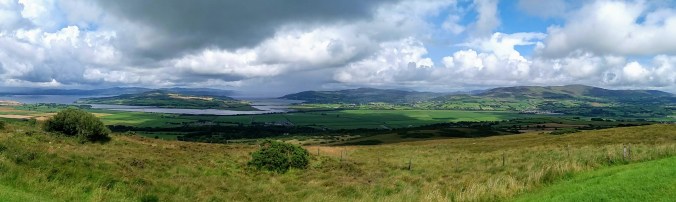
The fort was built in the late 700s-early 800s, raided by Vikings in the early 900s, and finally destroyed around 1100. The restoration project started in 1870 and is protected and maintained by the Office of Public Works today. It’s one of many tiny little treasures that make driving a much more appealing option to bus tours. We only spent about 15 minutes at the fort, just long enough to gasp at the view and enjoy the archaeology.

Glenarm & Glenarife
These two stops were along the west coast of Northern Ireland, after we finished the Causeway and before we arrived in Belfast. Glenarm is a beautiful castle estate (not a ruin) with cultivated walled gardens. Genarife is a beautiful forest hike with a waterfall.
Glenarm Castle is related to Dunluce Castle, a ruin located on the Causeway Coast which I’ll get to that later in the post. The story goes that in 1639 as the McDonnell family were waiting for dinner one evening at Dunluce, the kitchen – along with kitchen staff – fell into the sea. After that, the family commissioned a new castle to be built on their land at Glenarm which was finally completed some 80 years later. Viscount and Viscountess Dunluce and their family still live there today. Tours are offered of the public portions of the castle, usually between 12-4pm (although the website gives a lot of COVID closure warnings these days).
While I’m sure the inside of the castle is stunning, we were much more interested in the walled garden on our visit and so I can’t tell you anything else about the home. The garden is well worth the visit, however. It is one of Ireland’s oldest walled gardens and it is impeccably maintained. There are dozens and dozens of beautiful examples of flowers, fruits and vegetables, a lovely miniature maze, a small “mountain”, and multiple lovely statues placed throughout.
The afternoon we visited was quite gray and rainy. We were forced to wear our outer shoe rain booties and carry around umbrellas, but I personally think that raindrops on flowers make for beautiful scenery (and photos) so I wasn’t too upset.
Sidenote: We lost MS Video Maker, then YouTube Video Editor and now Google Photos has decided to make the photo slide shows vertical for some unholy reason, I had to go find a quick and dirty way to make a slideshow. I’m sorry that the quality is a little rough. If one of the hip people could clue me in on what we’re all using these days, I’d really appreciate it.
Glenarife was a bit of a back track for us on the road trip, but we had made the decision to go there second so we could have dinner at the restaurant inside the park. I plan to write a separate post about the food in Ireland, but I want to stress that planning meals on any vacation is really important, but especially on a road trip through the countryside. If you’re staying in a city, it can be easy to just head down any major street and walk into any restaurant that looks interesting. If you’re driving (or busing) around, then taking time to find where there are restaurants and WHEN THEY ARE OPEN can save you a lot of heartache and petrol station snack meals.
There is not a lot in the way of eateries on this particular stretch of the Irish coastline, so when I found the Laragh Lodge attached to a waterfall I was excited to get two birds with one parking lot, so to speak. We arrived at the Lodge around dinner time and were quite surprised to find the place very full. They had a wedding party in. Thankfully, there was a dining room off to the side for the general public, so we could still eat there. Because the day was drawing to a close, we decided to go on our waterfall walk before dinner. Same gray rainy day, still, but the raindrops had mostly stopped.
The trail leads a over a little creek which looked like it was made of Guinness, and up a slight hill. It’s a short walk from the parking lot to the falls. There are longer hikes around the enormous forest park for those who want to spend more time in the great outdoors. I personally was there for the waterfall and the food.
When you look up the Glenarife falls online or go to their website, you see pictures of a pretty little fall with usually 2-3 streams down the broad rock face. When I was there, it had been raining. A lot. No cute trickle of water, not even a stout fall, no — that day, the torrent could be used to power a whole hydroelectric station. Waterfalls release negative ions, which reduce depression and stimulate the brain and body. I know sounds kind of like pseudo-science bunk, but it’s been tested I swear! #waterfallinlove
One Day on the Causeway Coast
The Giant’s Causeway may be the most popular thing on the north coast, but it’s far from the only one. We spent an entire day from dawn to dusk travelling the Causeway Road, visiting both it’s famous and less well known attractions. Technically the Coastal Route extends from Derry to Belfast and would therefore include my stops at Downhill Demesne, Bushmills, and Glenarm, but I am focusing on those parts most immediately surrounding the Giant’s Causeway itself.
Carrick a Rede
The rope bride of Carrick a Rede is often included on a tour of the Giant’s Causeway. After my initial research about things like parking and ticket times, we decided that the best way to do the bridge was very first thing in the morning. There is a parking lot near (1km) from the bridge access, but it’s small and fills up fast. Alternate parking is, of course, farther away. In addition, you must buy tickets in advance and reserve a ticket time. If you miss your window, then you don’t get to go. The bridge can only accommodate so many people at once, so the staff on site work hard to make sure everyone can have a good and safe experience. Weather is also important. As you may have seen in my Aran Islands post, the Irish weather on the coast is extremely fickle, and tourists aren’t able to enter the bridge if the weather makes conditions unsafe.
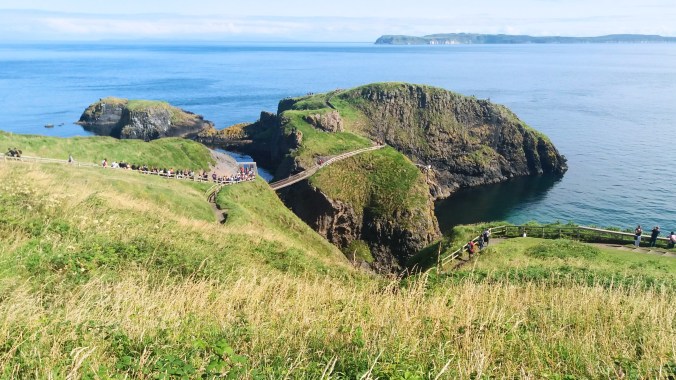
I was so happy that our weather was clear and blue. We showed up to the parking lot with plenty of time to walk. We had no trouble parking since we were in the first group. There was a little confusion at the ticket booth, a little bottle neck where we all clustered together waiting for them to let us in already! The other advantage to early morning tickets is that the tour buses almost never show up that early, so those of us who had made this effort really wanted to get the jump.
Finally, our e-tickets were scanned and we started the hike from the gate to the bridge. It’s not a hard hike, but there is an upward incline and many stairs. The great news is that the whole path walks along the cliffs and so you spend the hike up with the view to your left, and the hike down with the view to your right. Almost all the photos I took were on the way back down since we were in a hurry going up.
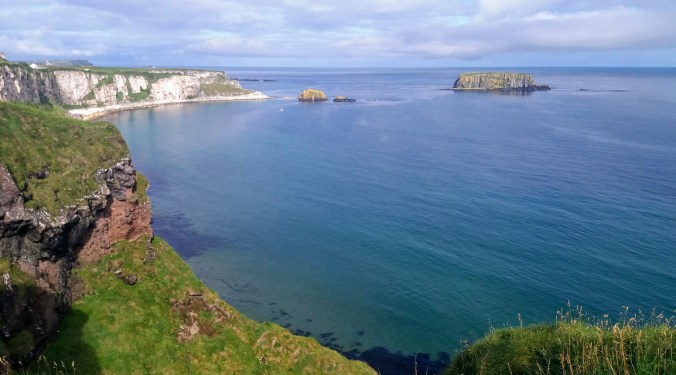
The bridge was built by salmon fishermen way back in the day because the little volcanic island had much better fishing than the mainland. The bridge today is purely a tourist attraction, but you can see the remains of the small fishing “village” on the island after you cross. There is a gate at the point where the trail meets the bridge manned by park staff who ensure that the safety measures are followed and to help people who may be nervous. The narrow (one person wide) rope and plank bridge is 100 ft above the sea and sways and wobbles as you walk on it. It is recommended that you and your travel buddies take pictures with the camera holder on solid ground while the other poses on the bridge. There’s no time for perfect Instagram poses, though, because while the staff will let you take a couple snaps, they urge everyone to keep going. Being so narrow, the bridge cannot accommodate cross traffic, and so a small group goes to the island, then when the bridge is clear a small group returns.


I could have spent the whole day on the beautiful little island. It was just such perfect weather and the grass was soft and fresh. I took a small infinity of photos of the sea and the sky, as well as the little flowers and volcanic rocks. It was only with great reluctance that I finally left to get to the next stops on the day’s itinerary.


I found a slightly alternate route back that took me up a little farther and gave some spectacular views down onto the path and island, and I positively delighted in the tiny flowers and busy bees along the cliff-side path on the way back down.
Dunseverick Castle & Falls
Along the Causeway Road are a large number of small sights. The rope bridge and the Giant’s Causeway are the main stops on every tourist bus tour, and in order to avoid those crowds, we decided to spend the prime tourism hours going to the smaller locales. The first one of these as we drove westward was Dunseverick Castle and Falls. What? Castle ruins and waterfalls? in one place? Twist my arm.
Dunseverick has been a seat of power in Ireland from the 400s! It was a ring fort for a bit, and supposedly visited by St. Patrick himself. Invaded by Vikings, and contested by clans, it was owned by the O’Cahan (anglicized as McCain or O’Kane) family until it was destroyed by CROMWELL (ugh, that guy again) in 1642. All that remains of the castle is the ruins of the gate lodge.
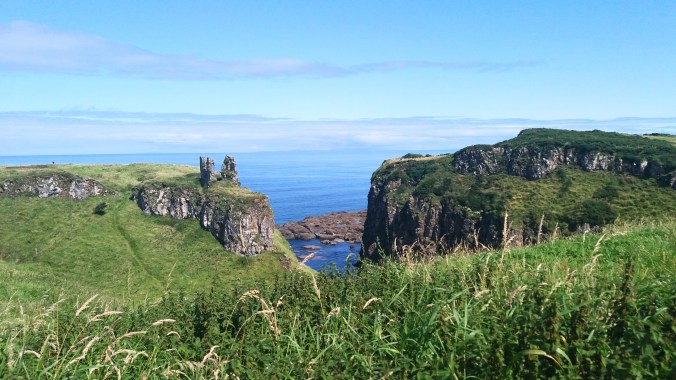
There’s a long walking trail that also runs alongside the cliffs which some people choose to hike, and you can access the ruins this way. I was not particularly interested in the route from parking spot to ruin, but the falls looked decently close, so I hopped a stile and headed off through the nettles to find a waterfall. It’s not as bad as it sounds. Stiles are meant to be hopped, they’re just ways to step over fences that humans can do but animals can’t. Also, nettles only hurt you if you grab them (which I didn’t) or fall on them (which I did, ouch).
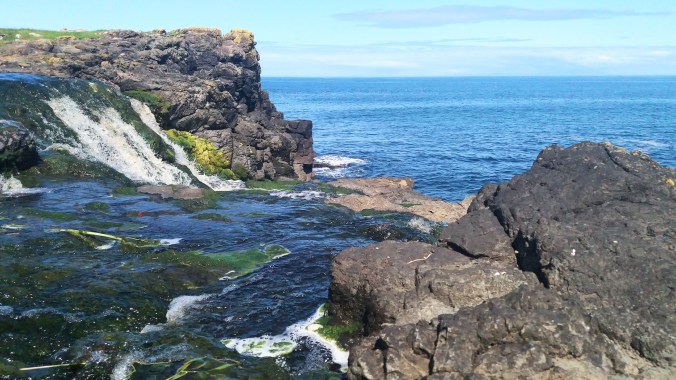
Nonetheless, the day persisted in being superb and I found the low and wide falls amid the dark brown and black volcanic rock. I don’t think I’ve ever seen falls along the seaside, so while they were a bit short, they made up for that by being unique.
Bushfoot Beach
There are a few “beaches” along the coast as well, but not especially the kind you think of for sandcastles or bathing. We looked for Runkerry Beach, but I wasn’t able to figure out how to get the car there. Bushfoot Beach was adjacent to a golf club so we parked there and meandered down to have a look. It was small, and cute, with a nice bench to sit on and rest. Locals were out walking dogs along the path, and there was a river that came down and flowed into the sea right where we were. It wasn’t a highlight, but it was a beautiful and quiet place to have a little rest before the next stop.

Dunluce Castle
Sound familiar? Yeah! This is the same Dunluce castle that dropped it’s kitchen and staff into the sea, prompting the McDonnells to move to Glenarm. The McDonnells are not actually Irish, they’re Scottish originally.

In case it wasn’t abundantly clear by now, I am an absolute sucker for ruins. Literally, if I could take a vacation that was made of waterfalls and ruins with a few good restaurants, I would be in heaven. I try to look up the history and learn things about the ruins I visit. They often have fascinating secrets or at least interesting stories. In the case of Dunluce, the kitchen staff falling into the sea might be the most interesting thing that ever happened to it until it was used by Led Zeplin as album art.
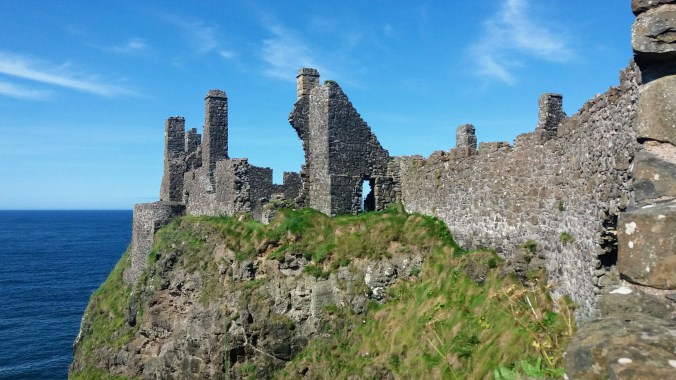
There were some very informative signs on site, showing artist renditions of what the house and grounds may have looked like when it was alive, and there’s a very dry Wikipedia article about the Earls and the invasions. I could recite that for you, but why? A far more amusing resource is this Belfast Telegraph article. Otherwise, please enjoy the photos!
Giants Causeway
This is what we’re here for right? If you’ve come all the way to the tippy top of Northern Ireland you are here for THIS and everything else is pretty much frosting and sprinkles. Don’t get me wrong, everything else was wonderful, and I’m extremely grateful that I had the chance to drive myself around to the variety of stops. If you can’t rent a car or don’t want to drive on the left, there are tour buses that go to Carrick-a-Rede, Dunluce, and the Giant’s Causeway in a day, but after having done a driving tour and a bus tour (later) I have to say that driving in Ireland is (mostly) very easy and pleasant and having the freedom is well worth it.
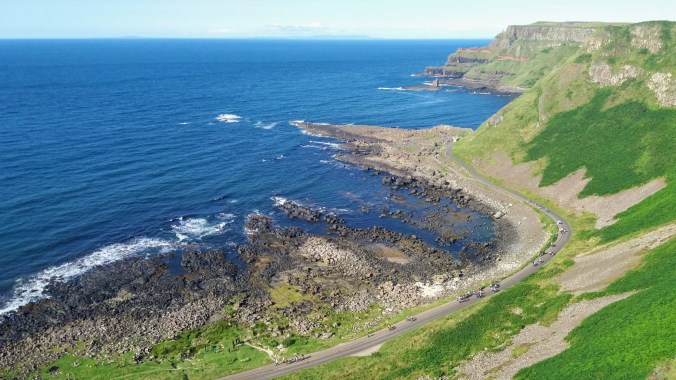
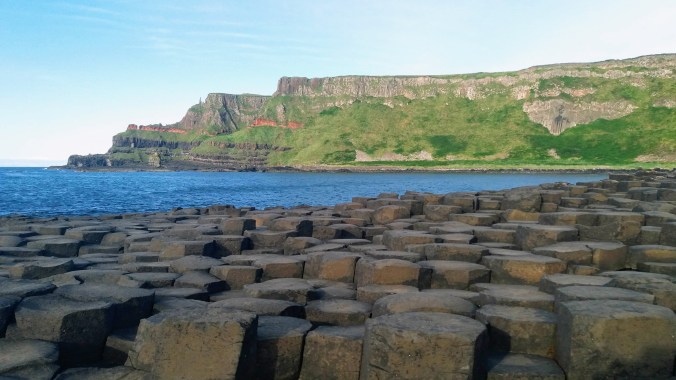
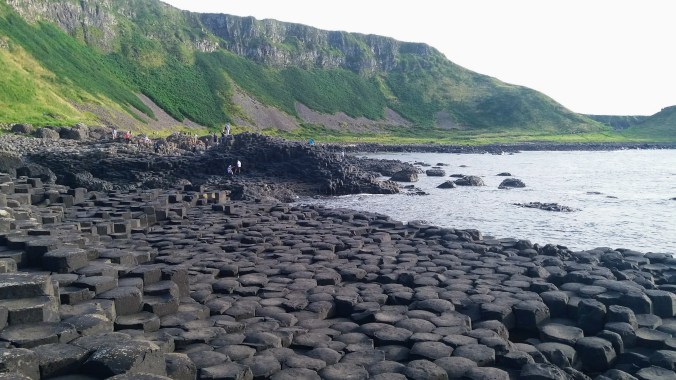
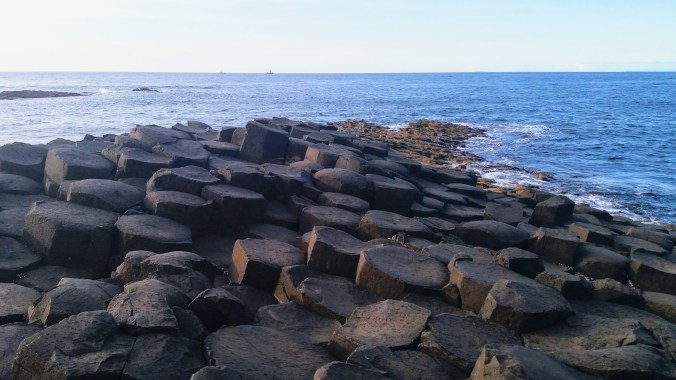
The Giant’s Causeway is a totally unique geographical formation of honeycomb-like stones reaching from the base of high grassy cliffs out into the sea. These formations are called basalt columns, and are made by lava cooling. As a not-geologist, I can’t really understand, let alone explain why some lava makes pumice, and some makes lava tubes, and some makes these cool hexagonal shapes, but I trust that there are geologists who can. The short and easy version is that something in the molecular makeup of basalt causes it to form cracks in these shapes when it cools rapidly. Probably why these formations are almost always found near water.

Although the Giant’s Causeway is by far the most famous, there are many other examples of basalt columns around the world, so you can still see them even if you don’t make it here. I was most fascinated to see there’s one here in Korea, on Jeju Island, that looks like a tiny version of the one in Ireland. It’s not a popular tourist attraction yet, so my tour didn’t go there when I visited Jeju several years ago. I’ll look for it if I ever go back.
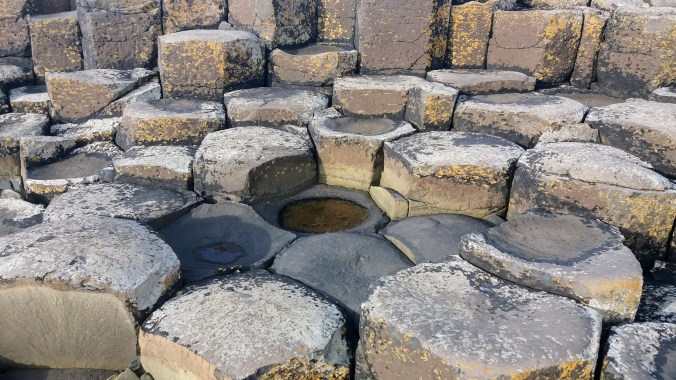
Today we understand the science behind these fascinating formations, but when humans first came into the area, they incorporated the stones into the mythology of Ireland. I talked briefly about the pre-history mythology in my Two Irelands post. The beginning of Ireland was fraught with many races of monsters, giants, gods, and fairies, each one supplanted by the next. The 5th race was the Tuatha Dé Danann (from which almost all modern fairies seem to be descended), and the 6th and final were the humans. The stories of Finn McCool (Fionn mac Cumhaill) seem to be set toward the beginning of the humans arrival into Ireland since he fights with giants and at least one of the Tuatha Dé Danann.
The myth, like all myths, is tricky, and not every source agrees on the details. Most of us are more familiar with the Arthurian legends, and as anyone who has tried to sort out the details knows, it’s not possible. So, I’m presenting a vague and “best guess” version of Finn McCool here.

He was born into if not actual royalty, then the next best thing. His father’s clan was said to be descendants of the Fir Bolg (the 4th race) and his mother was recorded as a granddaughter of the Tuatha Dé Danann. Finn himself became the leader of the Fianna, a kind of warrior band, and had all kinds of fantastic feats attributed to him. You can’t go anywhere in Ireland without finding some piece of local Finn legend. According to the most popular stories, he (like Arthur) is not dead, but merely sleeping in a secret cave and will return in Ireland’s greatest hour of need.
When it comes to the Giant’s Causeway, there are still a few versions of the tale, but the most common involves a Giant named Benadonner. Benadonner was a fierce Scottish warrior and a giant (one of the races previously driven from Ireland). One day Finn challenged him to a fight, but the giant didn’t want to cross from Scotland and made excuses about the sea as an obstacle.
Finn then built a bridge between Ireland and Scotland. This is one of the closest points between Ireland and Scotland, only about 28 miles to the nearest Scottish peninsula. When the bridge was complete, Finn sent a message to Benadonner that he had no more excuses, so come along and fight me!
 However, when Finn saw Benadonner crossing, he realized the giant was much bigger than he previously thought. He fled the coast, retreating into his home. His wife Sadhbh (omg Gaelic, amirite?, that’s probably pronounced “Saive”, maybe?) heard what he’d done and quickly dressed her husband up as a baby.
When Benadonner came to find him, he saw the disguised Finn alone in the house and thought to himself, “If this is the infant, what must the father be like?”, and quickly fled back to Scotland, tearing up the bridge in his haste, leaving only the remnants at either end: The Giant’s Causeway in Ireland, and Fingal’s Cave on the Scottish Isle of Staffa, named for Finn himself. (Although the nearest point is only 28 miles from the Causeway in Ireland, Fingal’s Cave is 82.5 miles as the giant flees).
Whether you are drawn to the science or the more whimsical heroic tale, there’s no doubt that the natural beauty of the Causeway is breathtaking. We scheduled 4 hours for it and that was barely enough. It’s a hard choice to make as far as what to see in a single day. If I had it to do over, I might have scheduled one day for just the Causeway, and a second day for all the other stops. We planned to arrive around 3pm so that we would be walking in about the time that most of the tour buses were walking out.
I found some shuttle bus information online, but it turned out not to be as accurate as I’d hoped and in the end, we decided that paying for parking at the visitors center was going to be better for us convenience-wise than trying to take the shuttle bus from Bushmills, and honestly only slightly more expensive. If you happen to have a National Trust membership or possibly even a tourist pass, you can get steep discounts on things like the shuttles, the parking and the entry tickets (many are free included), and I also looked into buying that, but since only Northern Ireland is run by the UK National Trust, we just weren’t going to go to enough places to make pass worthwhile. If I were to plan a trip that included even one more day in the UK, I think it would have been.

The parking lot is enormous and the walkways funnel tourists to the Visitor’s Center. You don’t have to go there. The outdoor parts of the park are FREE (after you pay for parking or the shuttle bus) and the visitor’s center is like 13£. I opted to spend my time and money seeing the sights in person, but I can see if you perhaps had bad weather, the visitor’s center might be appealing.
Another travel blogger advised me to take the red trail from the Visitor’s Center to the Causeway. There is a main road (paved wide road) that goes very directly. People who are in a hurry may use this, and there is another shuttle bus that runs between the Causeway and the Visitor’s center which I think is very nice for those with limited walking ability. However, the red trail leads up along the cliff tops before descending to the sea, and it has some really stunning views. It’s much easier to walk it going down than going up, so starting on the red trail and then using the wide seaside road to return seemed the way to go.


The main trail starts by going through a tunnel near the visitor’s center, while the red trail starts before the tunnel and off to one side. There are signs. It is marked as a more demanding route, but that is only in comparison to the smooth wide paved main path. It’s about a mile (UK, back to imperial not metric!) and there are maybe 100 stairs going down. I thought we could take the shuttle bus back up, but that stops running when the visitor’s center closes at 4pm, so if you are mobility limited, make sure you plan your visit earlier in the day that I did.
The red trail is not for those afraid of heights. It goes along the edge and has some harrowing narrow paths and steep steps on the climb down. I thoroughly enjoyed the walk which included yet more stunning cliff-side views, a million tiny flowers and the little bugs that live in them (one of my favorite subject for photography), and a chance to see the organ pipes formation and the giant’s boot on the way down (something those who take the main path would have to climb up to see).


It was charming to see the tourists delighting in hopping from rock to rock like a childhood game of hopscotch. I climbed as far out to the edge as I could, marveling at the geometrical patterns and the tiny lichens and barnacles living there.


Finally, as dusk loomed, we headed back up the road, enjoying the tide pools and sunset over the water. There’s no doubt in my mind that the Giant’s Causeway is the jewel in the crown of Northern Ireland’s natural beauty and I’m grateful that I was able to experience it on such a beautiful day.


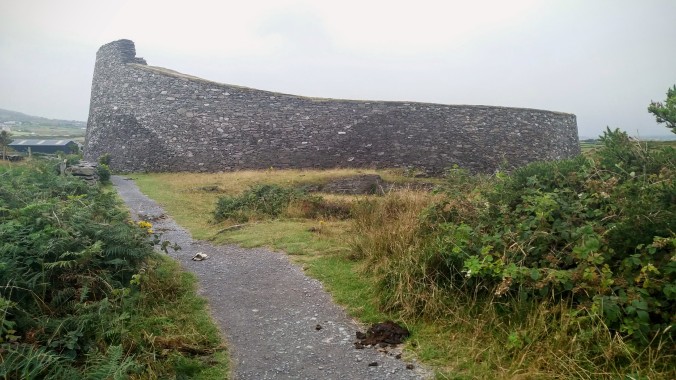
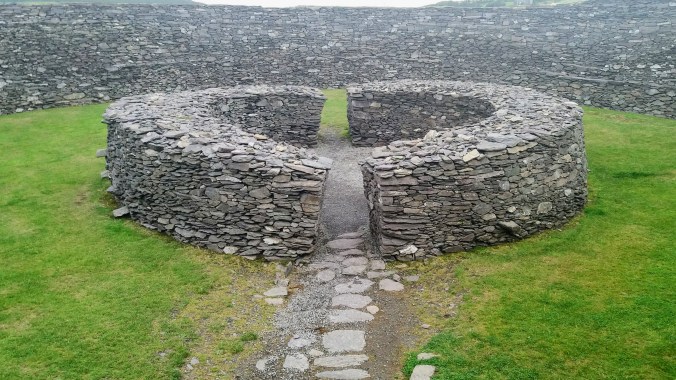
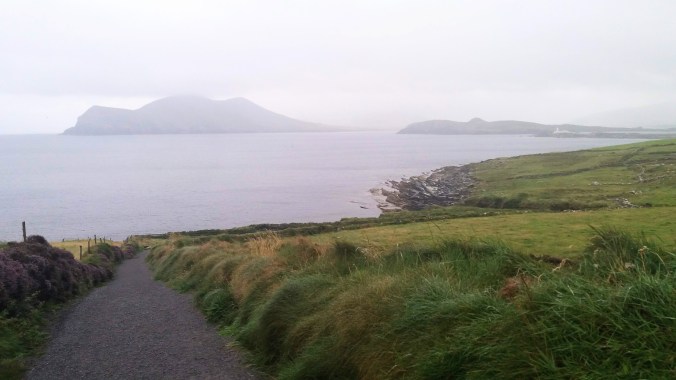
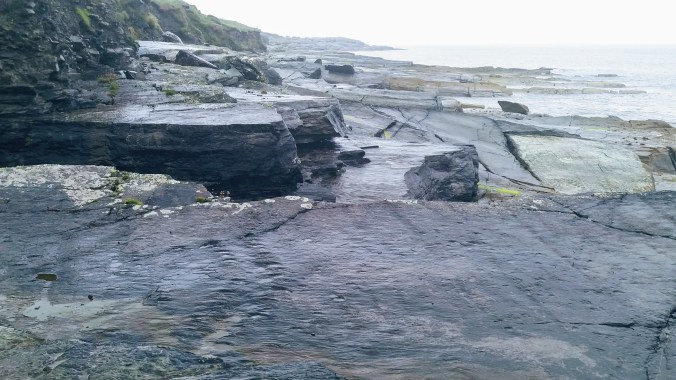
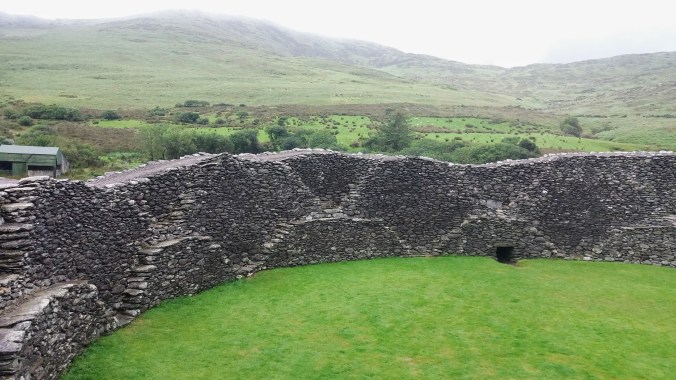
 Even before 2017, it was a popular attraction that required lots of booking ahead. Then the Last Jedi came out, and suddenly the whole world knew about Skellig Michael as the beautiful and remote island where Rey finds the reclusive Jedi Master, Luke Skywalker. Those sweeping staircases and round stone huts weren’t inventions for the film, those are the actual ruins. Thanks to the Creative Commons I have photos to show you.







 Gallivantrix