So Long and Thanks for All the Thieboudienne

This is not a “fun” story of joyous tourism exploits and happy expat life. I had a lot of fun in Zanzibar, and I even had quite a few memorable good times in Senegal, even if most of them never made it into the blog. However, living and traveling in both places, I confronted some things that were hard to see, hear, think about, and know. I am personally both deeply pained and extremely grateful to have been smacked so far out of my comfort zone that it took me most of the year to process through denial, anger, sadness, and bargaining to reach a place of fragile acceptance. I travel to experience and learn, not just to have a good time. Though it is difficult, these aspects of a globetrotting life are just as treasured as my fun memories because they help me to understand the complex world we are all a part of in and to be a more compassionate human being to those around me.

The Stone Town Slave Museum 

Just as every historical tour in Europe has a section about WW2, every historical tour in Africa has a section about the slave trade. Zanzibar was the center of the East African slave trade, where slavers from the interior brought their captives by forced marches overland and a short boat trip to the slave market in Stone Town. The city where I live (Dakar, Senegal) has a similar historical site on Gorée Island, which is the center of the West African slave trade, and has a similar legacy of gathering slaves from the interior in one place to board on ships. Slaves went not only to the new world to work sugar, tobacco, and cotton plantations, but also to the Arabic world. These sites which commemorate the worst of humanity are not fun tourist attractions, but they are worth visiting because they instill a sense of reality that no amount of textbooks and documentary films can convey. You are standing where the people stood, both the boot and the neck. The blood is soaked into the earth and stones.

In the case of the Zanzibari slave trade, there existed a type of slavery before the growth of new world plantations exploded demand for free labor. Intertribal slavery between African (and indeed First Nations people in many parts of the world) was not uncommon, but it was a much smaller part of the economy. Prisoners of war were taken as slaves and although some were treated badly, some were integrated into the new tribe over a period of years. No version of slavery is “nice”, but I think it’s relevant to acknowledge how different slavery was in Africa before the foreigners got involved. Not only my guide, but a few other locals I spoke to there tried to excuse the West saying we wouldn’t have bought slaves if Africans weren’t selling them, and this is a level of internalized shame that I’m not ok with.

The increased demand for millions more slaves to serve in the Arabic peninsula and the new world colonies changed the entire dynamic of slavery and the economy of many places in Africa. The slaves that had previously been taken as prisoners of tribal skirmishes weren’t enough to meet the export demand and so a new industry emerged: to wage wars for the sole purpose of taking slaves. Government leaders also captured and sold their own people when they couldn’t get enough from “enemy” tribes. Slaves were forced on long marches with little to no food or water, and those who fell sick were left to die.

By contrast, the free people in Zanzibar prospered by collecting fees from the inland slavers as well as the foreign traders for every slave sold in their markets. When the West abolished slavery, the leaders in Zanzibar didn’t want to stop because it was too lucrative, even without the Euro-American market! The modern attitudes of hakuna matata and pole pole (no worries, and take it slow) on the island are likely a direct result of the fact that for centuries the islanders had to do very little work for the passive income of slave taxes to make them comfortable. Although they no longer sell anyone directly into slavery, the local governments in many places in Africa continue to exploit their own people in extreme ways in order to preserve the legacy of easy money their ancestors had in the slave trade days.

The slave museum in Stone Town tells not only of the horrors of slavery, but also of Livingstone’s mission of abolition. While some in the West may see Livingstone as an embodiment of the “white man’s burden”, many in Africa still praise his abolitionist efforts. Although it was the British government and navy that did most of the work of stamping out the slave trade, Livingstone’s published accounts of the atrocities of the slave trade in Africa helped spread discontent with the continuation of the practice. In American education, the end of slavery is often taught as something that just happened one day upon the signing of the Emancipation Declaration. Few white Americans know the history of the holiday Juneteenth (June 19th) celebrating the day the last group of confederate forces in Texas were finally uprooted, freeing the remaining slaves almost 2 1/2 years later. Even fewer know that the last slaves weren’t actually freed until 6 months after that with the 13th amendment. Almost no one I talk to knows that the 13th amendment didn’t end slavery for all – it’s still legal as a form of punishment for criminals in the United States.

The museum in Stone Town makes no bones about the lengthy process of eliminating slavery and the challenges newly freed slaves faced with no homes, no money, no family ties, and nowhere to go. Even after the Sultan finally caved to the pressure to stop the practice of selling slaves, he didn’t banish the owning of slaves for some time after. The women were the last to be freed because owners tried to claim them as wives rather than slaves, and the difference wasn’t easy to spot. Freed slaves were taken to “apprentice” at plantations where their lives were little different from they had been before; the only difference being their backbreaking labor was rewarded with meager wages and their food and housing came at a price. Freed children were sent to Christian missionary schools which molded them into “good” colonial citizens and converts. Slowly, the freed slaves were able to use their meager wages to move away from the plantations and missions, some to uncultivated land and others to the city for urban work. The legacy of the slave trade is long lasting for Africans everywhere, and museums like this help us understand not only our history, but our present — and hopefully help us to shape a better future.

The abolishment of slavery in the 19th century only made slavery illegal, yet it still continues to this day. Slavery exists in every country of the world and has dramatically increased in the 21st century. There are more slaves today than were seized during the entire African slave trade. While some countries have larger numbers than others, it is an issue that affects all of us.

Modern day slavery is defined as a relationship in which one person is controlled and exploited by another, usually by the use or threat of violence, for the purpose of profit, sex, servitude or the thrill of domination-deprived of free will, restricted in movement and paid nothing beyond subsistence. A slave may be kidnapped, captured, tricked or born into slavery.

Modern slavery is a hidden crime The International Labor Organization (ILO) estimates the illicit profits of forced labor to be $US150 billion a year. From the Thai fisherman trawling fishmeal, to the Congolese boy mining diamonds, from the Uzbeki child picking cotton, to the Indian girl stitching footballs, from the women who sew dresses, to the cocoa pod pickers, their forced labor is what we consume. Modern slavery is big business.

TYPES OF MODERN DAY SLAVERY

BONDED LABOUR
Workers who have received or are tricked into taking a loan and are unable to leave until their debt is repaid. Often times, children of bonded laborers must continue to work off the debts, leading to generations of enslaved families. It is the most common type of slavery today.

FORCED LABOUR
Any work or services which people are forced to do against their will under the threat of some form of punishment. Almost all slavery practices, including trafficking in people and bonded labor, contain some element of forced labor.

CHILD SLAVERY
Children who are used by others for profit. For example in forced marriage, prostitution pornography begging petty theft, drug tracing, labour, armed fighting or wives’ for soldiers. Usually, child slavery is accompanied with violence, abuse and threats.

EARLY AND FORCED MARRIAGE
Women and girls entering marriage without choice, forced to live a life of servitude often accompanied by physical violence and with no realistic choice of leaving the marriage.

DESCENT-BASED SLAVERY
The legal ownership of a person by another person or state, including the legal right to buy and sell them as any common object.

Products made by modern day slaves flow into the global supply chain and eventually into our homes leaving most of us unaware of our contribution in supporting it.

From the Slave Museum, Stone Town Zanzibar

A Talk With A Zanzibari Guide

My guide around Stone Town was a young man of mixed Arab and Swahili heritage (his mother is Arabic and his father Swahili) and I think had a unique perspective on Zanzibari culture as a result of living with one foot in two worlds while belonging to neither. When we reached the church at the slave museum, we sat down for a break from all the walking in 33C/UV11 weather and he opened up to me about his life. As with any personal account, I know that it’s his perspective and opinion, and not an objective truth, but I found it to be a fascinating conversation, and I’d like to share some of what he told me.

What he described to me was a life of codependency. I know Americans are extremely independent, and I’ve seen how extended family structures can bind young people in other countries often making them feel like they have no choice in what they study or who they marry. Yet what my guide explained to me of the family networks here, it is not only impossible to survive outside of one, the parents (especially fathers) can be very harsh, and abuse is normal. He shared his opinion that children need to have things explained to them because just hitting them makes them live in fear, so I hope that when he has his own children he will practice this. His parents are less bound by their own families. Both families disapproved of the mixed marriage, so they had to go it more independently. He feels very lucky to not be bound by the familial codependence he sees his peers trapped in.

Women have little freedom. He said most men have 2 wives (though they are allowed up to 4) because the first wife will be who his parents want him to marry, and the second will be who he wants to marry, which seems critically unfair to everyone involved. Women are encouraged to stay at home. Though young girls here are in school, many don’t pursue a degree after high school or have any desire to work outside the home. Parents pressure young women to prepare for marriage and think men will not want a woman who works (or possibly that a woman who earns her own money will put up with less BS from a husband?) My guide told me that many young women watch romantic dramas from around the world and get the impression that marriage will be a better life than getting a job, and are later very disappointed that it’s not true. My guide said hopes to find a wife who wants to work, not because they need more money, but because she wants something for herself.

Men are also trapped into a life decided by others. They must go into the career their fathers choose, marry the woman their parents select, and spend their salary to support their own parents, their wives’ parents, their wives, and their children, meaning a single salary supports up to 7 adults and possibly more than 7 children. Zanzibar is even more economically challenging because people from the mainland come over and do jobs for dirt cheap (140$ a month!). Mainlanders can send home 20$ and it goes a long way to support the family living there, while families that live in Zanzibar need 350$ or more a month just to scrape by. A gift of 100$ from a hardworking son may be seen as a trifle on the island but a fortune on the mainland.

Despite the fact that tourists are paying 100$/night for a hotel room, 100$+/ day on tours and god knows how much on food and trinkets, the average salary for the workers here is around 250-300$/month USD. Where is all this money going? The government takes big cuts in the form of double income taxes (Tanzania and Zanzibar each have taxes that islanders must pay while mainlanders only pay Tanzanian taxes), and licensing fees for anyone who wants to sell, make, display, tour, drive, etc. I saw an actual paddy wagon loaded up with unlicensed street vendors on their way to jail, and my guide said they’ll be right back on the street selling souvenirs as soon as they can. Once the government takes their cut, the owners take the rest, and the owners are mostly foreigners. Several guides throughout my stay told me with bitterness edging their voices about the new development on one of the small islands that was bought up by Indians. Locals never get enough money to invest in property or larger businesses which is a big part of what keeps them trapped in the codependent and often abusive family structures for survival their whole lives.

It reminded me also of a conversation I had with an aid worker who had recently returned from the Congo. The warlords there keep everyone in a state of fear and violence and poverty while reaping the rewards of the mining operations. The mining work gets priority even over subsistence farming, leaving the population without enough food to live on. Many African countries are rich in resources, minerals, fertile land, skilled labor, and yet so often it is mismanaged to benefit only a few while leaving the rest to struggle for less than scraps. There should be enough to go around; the scarcity is artificial. The greed is real.

Final Thoughts in Dakar

As I prepare this post, I am 4 days from leaving Senegal to return to the US. Although I would prefer to end my journey on a high note, I feel that would be disingenuous. Living, working, and traveling in sub-Saharan Africa has been one of the most challenging experience of my life so far, but as such, one that will have a large and lasting impact. In addition to the quality of life challenges, it has been an unending revelation of my own biases and privilege, which is a hard pill to swallow. My friends and family, in a well meaning attempt to offer comfort when I’m so obviously discomforted, have used phrases like “living nightmare” to describe the conditions here while saying they simply can’t imagine how anyone could live this way, and telling me how brave and resilient I am. But. These words are not comforting. I am a guest in a place that may be objectively lower on the international quality of life index (yes that’s a real thing), but millions of people still call it home.

People in Africa are struggling with the legacy of colonial war and exploitation that still colors the culture, language, economy, and even religion today. There is no doubt that centuries of foreign rule and resource theft has left deep wounds and little with which to heal them. However, the human spirit is indominable. The people born into this reality are aware of what they don’t have because one thing they do have is enough TV and internet to see the literal and metaphorical greener grass of the northern hemisphere. Yet, every day, they get up and live.

They collect water from a centralized source when the infrastructure fails. They wash clothes in buckets on the front stoop because washing machines are an expensive luxury. There are orphans begging in the streets who will become adults selling peanuts and candy on the roadside. Families struggle to pay high fees for substandard services offered by corrupt politicians and businesses resulting in unreliable electricity, water, and healthcare in even the most developed and cosmopolitan cities. Schools cram 100 students into a room with 20 desks where they learn without computers or enough books. The government of the most stable democracy in the region violates the human rights of its citizens when they complain too much.

But also. They cook delicious food which they share with friends and family when they celebrate holidays, marriages and births. They create music and art in any available space. They stay out late partying and take naps in the heat of the day. Christians and Muslims exchange gifts of food across faiths on their respective high holy days. People gather at public screenings to cheer wildly for their favorite football (soccer) teams and set up casual matches in any open lot or field. They love their children and help their neighbors. They march and protest for better conditions while carrying their national flags because they have national pride and believe their country is capable of more. They open salons on every street and work out in the evenings along the corniche because they take pride in their appearance and wellbeing. They splash in the ocean and laugh with the sheer joy of it. They bring color to the dry and dusty land with bright fabric prints and billowing swathes of bougainvillea that climb every wall and patio.

It is not a tribute to the bravery or resilience of visitors who temporarily partake in a life which so different from the one we were raised to. It is not a fairy tale of the “noble savage” that lets us imagine some kind of mythical innate goodness and moral superiority of the people who have less, and are making the best of it. It is not a whipping post for white guilt where we come to cry and wring our hands about the horrors of the past in order to feel better when we shop fair trade and have someone tell us how good we are for not being racists. It’s just people. The traumas of life affect everyone: individuals, societies, generations. I want to be able to acknowledge the past and honor the pain of another without turning it into inspiration porn or a hairshirt self-flagellation. What do you see when you look at someone who is living a life that you imagine would break you? What are you living with that might break someone else?

In Wolof, the greeting expression often translated as How are you? is “Nanga def?”, but it literally means Where are you?. In English, we have to answer that question with an adjective of value: fine, ok, great, not good, etc. In Wolof, you answer, “Mangi fi.” I am here. I am here.
Zanzibar: Stone Town

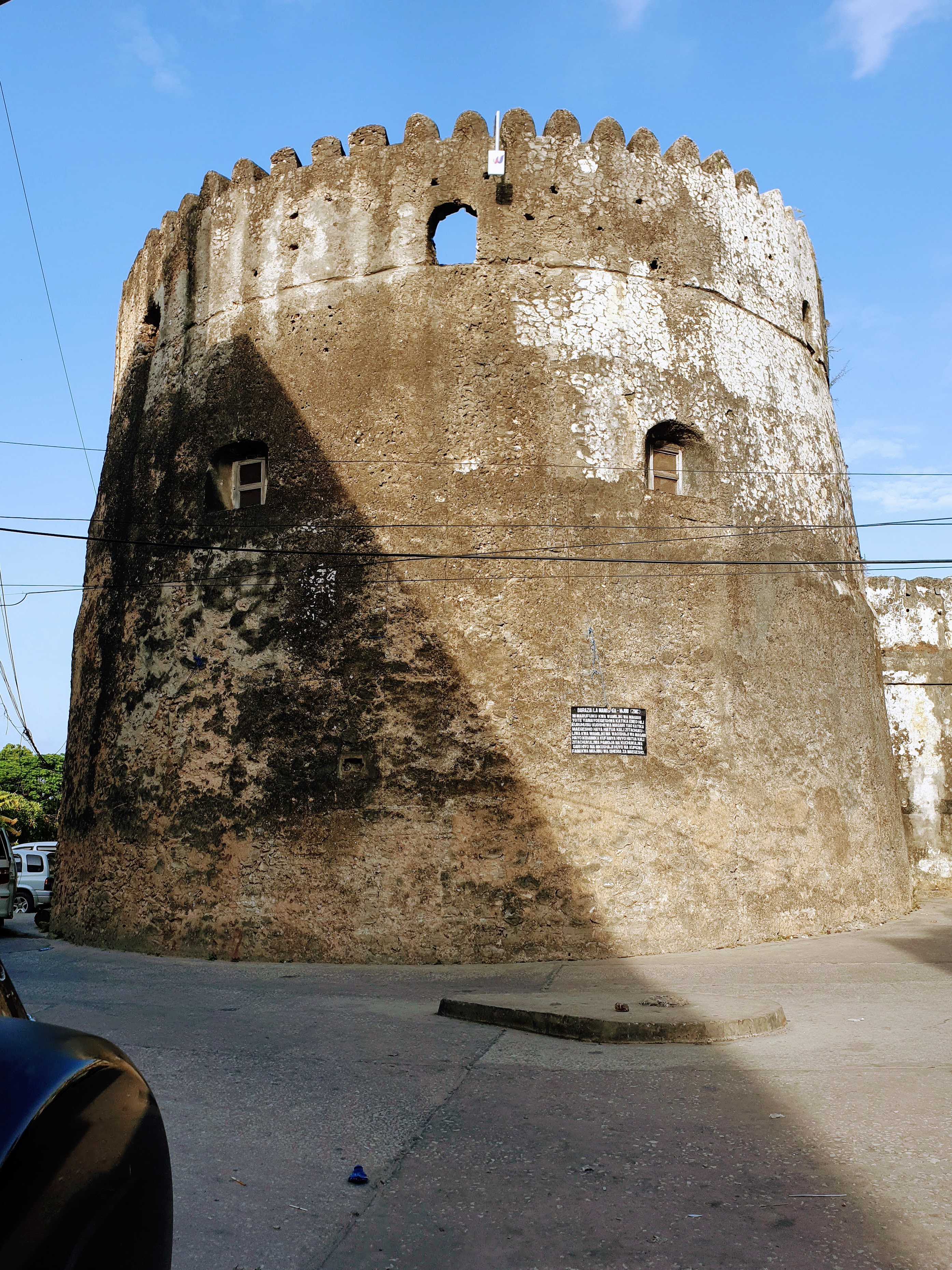
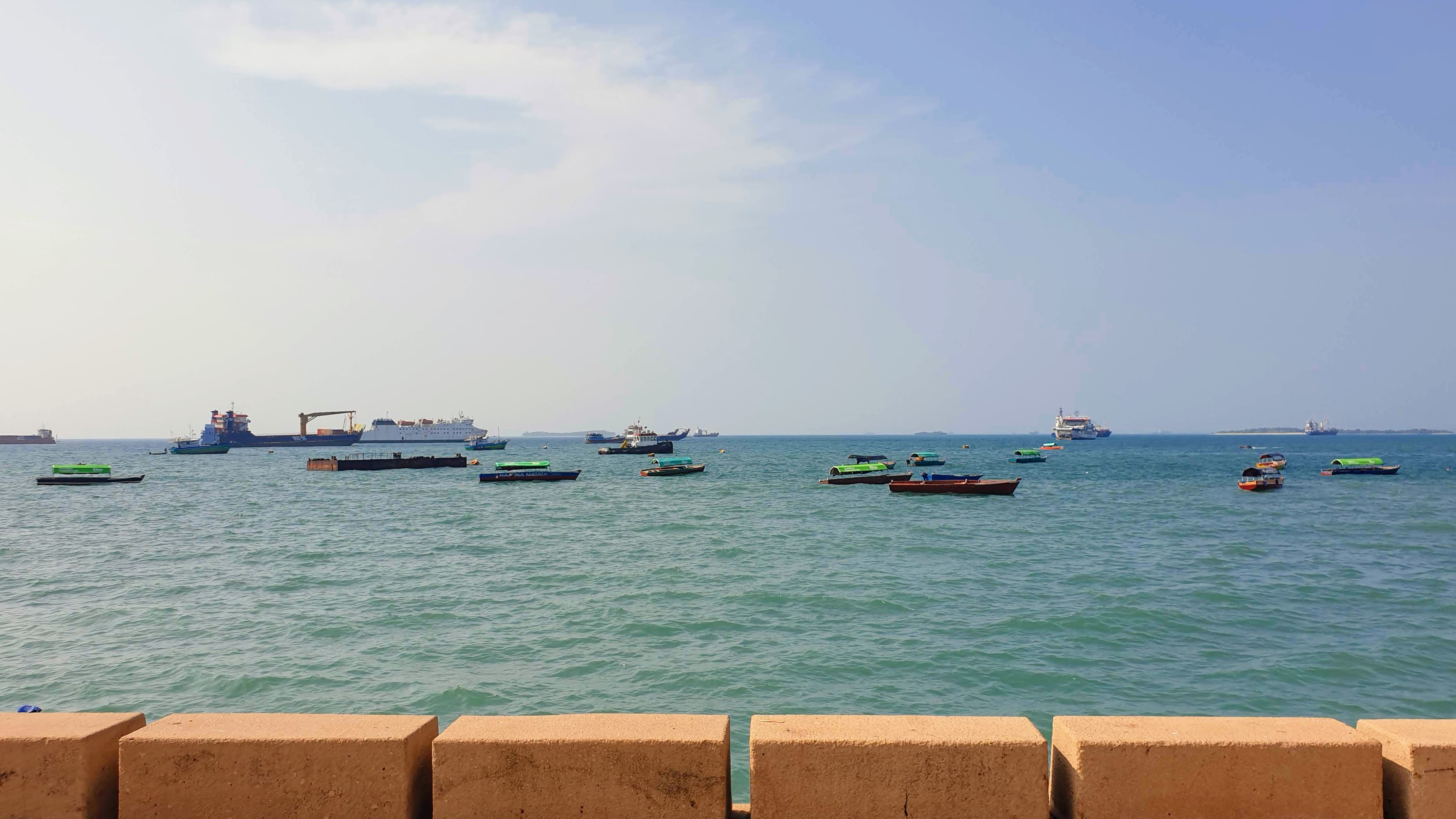
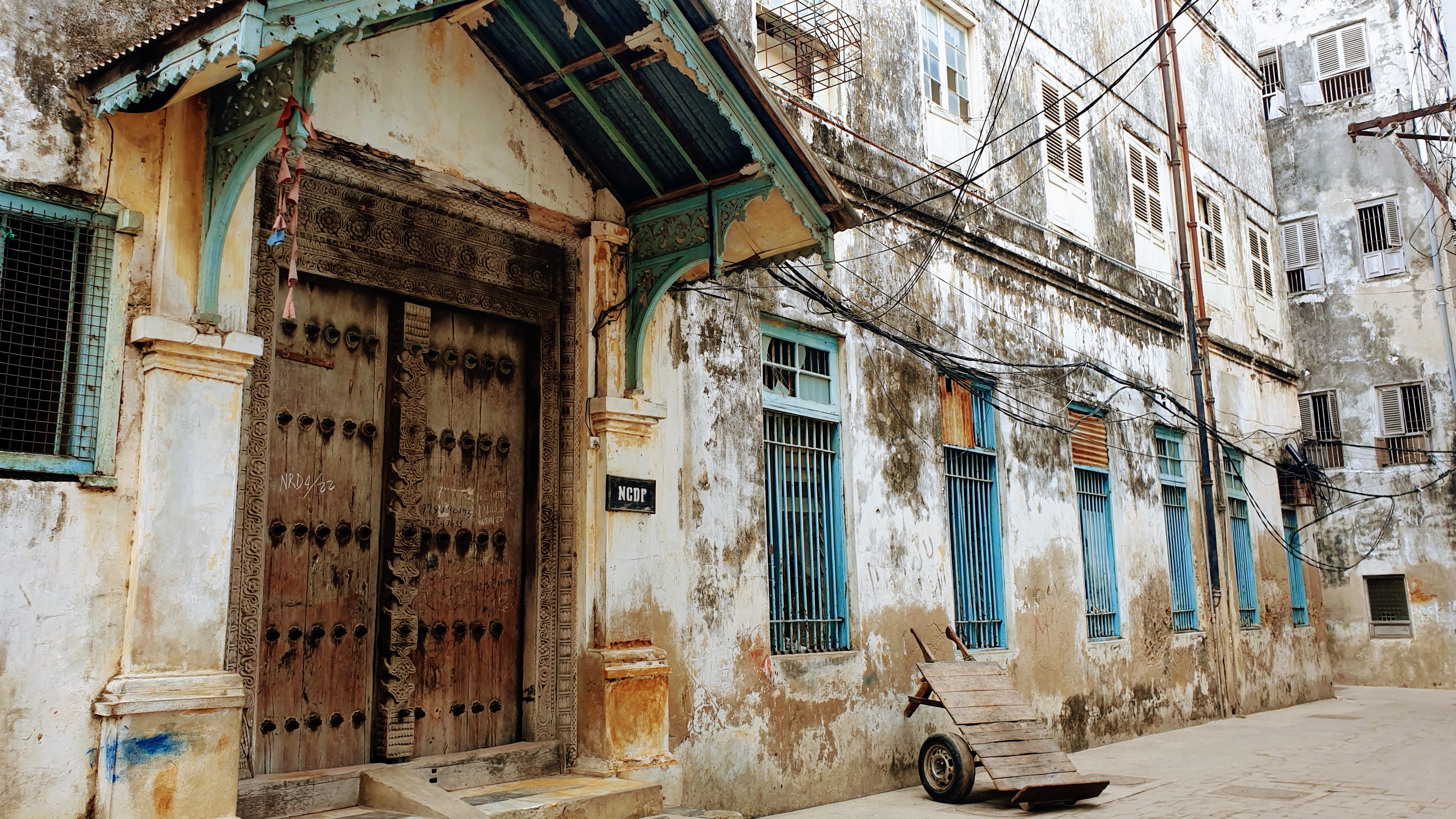
Stone Town is an architectural love child of Indian, Arabic and Swahili cultures. The narrow maze-like streets car-free (though not cart-free) and stuffed from end to end with life. “Get lost in Stone Town” is another top 10 Zanzibar activity. The whole neighborhood is less than 2km2, bordered by the sea on the west, the Darajani Market on the east, and some fairly uninspiring highways on the north and south. GPS sort of works, but because the streets are so close together and none of them are clearly labeled (or possibly even named) you can only get a general idea of where your destination is. You will get lost trying to get there.

A Brief Historical Context

Zanzibar is an interesting and unique geographical gateway between central Africa and the Arabic and Indian cultures. The trade winds carried ships from India and Arabia then trapped ships on the islands for about 6 months at a time before they were able to sail back. Unlike many other trade centers, where the sailors and foreign merchants were in and out of port in days or weeks, the Indian and Arab merchants who came to the islands of Zanzibar were obligated by the wind to stay for half a year at a time, and so they often married local women, built homes, and had families. Though there is archaeological evidence that the island of Zanzibar was involved in trade with other mainland African cultures, the intercontinental trade seems to have started around the 9th century. There was about 600 years of cultural mixing between the Indian, Arabic, and Swahili people that had ups and downs of who was in charge and who was converting who and who was selling who into slavery, but this is the brief history, so we fast forward to roughly 1500 when Portugal hit the scene.

The 1490s are a bit famous for that trip Columbus took, but he was far from the only European out to find wealth in “unexplored” parts of the world. Vasco de Gama was the first European to reach India by sea, a trade route that required stops along the eastern African coast. Portugal was one of the big European colonial powers and they had their fingers in pretty much every exploited continent. Zanzibar was not only a good resting stop en route to Calcutta, but a source of rare spices and human slaves from the African mainland, which were the big moneymakers in those days. The Portuguese ran Zanzibar for about 200 years, until the late 1690s when the Omani Sultanate took it (possibly at the request of the local Swahili people who thought an Arabic overlord would be better than a European one). Somewhere between 1830-40, the Sultan of Oman moved the capital city from Muscat to Stone Town, and when he died in 1856, he split the empire between his two sons, giving Zanzibar to one and Oman to the other. In a move that surprises no one, they fought about it, but then in a shocking twist, they allowed the will to be arbitrated by the British general protector of India. The Age of Empires remains confusing.

Zanzibar continued as a separate Sultanate until the British decided that actually, slavery was morally reprehensible after all, and that everyone should stop now that they had decided to stop. This didn’t happen all at once, but from about 1822-1873 the British put increasing economic and military pressure on the Sultanate to stop trading in slaves, including trade embargos and the raiding of slave ships. Freetown in Sierra Leone was created to rehome the slaves who were liberated by the British during this time. By 1890, Germany and Britain decided between them that Zanzibar would be a “protectorate” of Britain (which is like colony lite). Finally, in 1963, around the time Britain was being forced to give up on the whole Empire idea, Zanzibar got full independence as a constitutional monarchy. They promptly had a revolution to oust the royals in favor of a representative government, and one year later, merged with the mainland country of Tanganyika to form the modern nation of Tanzania. Despite this unification, Zanzibar remains a separate autonomous region (like Hong Kong and China) with it’s own flag, president and taxes.

First Impressions

My first week in Zanzibar, I decided to stay at a hostel in the heart of Stone Town since it seems to be where a lot of the action on the island is. My ride from the airport (a comedy of errors) tried to just leave me in a random parking lot with a random guy. It felt very sketchy, but I have since learned this is pretty normal and that Stone Town is actually very safe for tourists. In Stone Town, “lost” is a relative term. The streets are close and narrow, but there’s a fair amount of order. There’s the main arterial market streets which are loaded with shops, there are the quiet side streets where locals hang laundry and kids play after school, and there’s the waterfront. You’re only really going to get “lost” in the quiet side streets, and even then only for a few blocks until you’re spit back out to one of the main areas or reach the edge.

I was initially overwhelmed by the number of people talking to me. Unlike Senegal where French is the colonial language, English is the colonial language in Tanzania, and they love greeting tourists with spatterings of friendly Swahili as well. The shopkeepers call out as you pass by, inviting you to look, asking where you’re from, and generally being friendly. Of course they want to sell things, but they don’t physically invade your space and they don’t get mean or angry when you say “no thanks”, they just say “hakuna matata, maybe next time”. There are free range sales people who are arranging tours and excursions and they’ll just walk with you and chat. I got some advice about what to avoid doing and eating while in town, and although I never ended up booking with any of the street tour guides, I quickly came to not mind their chatty presence in my walks through Stone Town the rest of the week.

A Guided Tour

I opted for an Airbnb Experience, again hoping that a more personalized touch would be better than a company tour. It seems like Airbnb in Zanzibar is really just a front for businesses. This may also be related to the rules about tourism and taxi licensing. My spice tour guide explained that it takes a couple years minimum to get the licensing to drive tourists around. Walking tour operators don’t have that concern, but they still have to be able to produce papers if they’re questioned by authorities while leading a group of tourists around. The result is that Airbnb isn’t random locals sharing their culture for a small fee, it’s actual real businesses, and you just have to hope they’re not shady. Reading the reviews helps, but as I learned with my Blue Safari trip is not a guarantee. Thankfully, my Stone Town tour was a win. The other person/people who had booked it never showed up, so I had a totally private tour. The friendly guide was happy to adjust the pace, the amount of time spent at each place, and even the places we went to my personal tastes. He also relaxed and opened up a lot more about the details of life in Zanzibar and Tanzania.

The entirety of Stone Town is a UNESCO Heritage site, and there are a couple buildings in particular (like the House of Wonders) that have their own special status. As a result, everything is always under restorative construction, all the time. UNESCO standards require that repairs must be done in the original work methods with the original construction materials in order to receive funding. This is great in lots of parts of the world, and keeps ancient cultural heritage styles of art and construction alive in places where the local economy might have driven them to extinction. However, in Zanzibar, the original construction was often quick and cheap, and the regular monsoons erode the limestone and coral structures. Walls made of old coral are constantly being replaced and the House of Wonders has been closed for more of the last decade than it’s been open.

In addition to the issue of materials and labor, the currency exchange and corruption are eating away at restoration efforts. The UNESCO funds are issued in Euro but the materials and labor must be purchased in Tanzanian Shillings, so exchange rates affect budgets and cost estimations. In addition, the government officials skim way more than what most countries would consider acceptable graft. My guide expressed a tolerance for “reasonable government corruption” by saying that out of a 20million Euro repair budget, the officials can take up to 2million, but should leave 18 for the work. This 10% skim was his idea of good corruption, but he clarified that in reality the take is much much higher, meaning that most of the UNESCO money goes to lining bureaucratic pockets rather than actually restoring the historical heritage sites.

Doors, Windows, & Walls

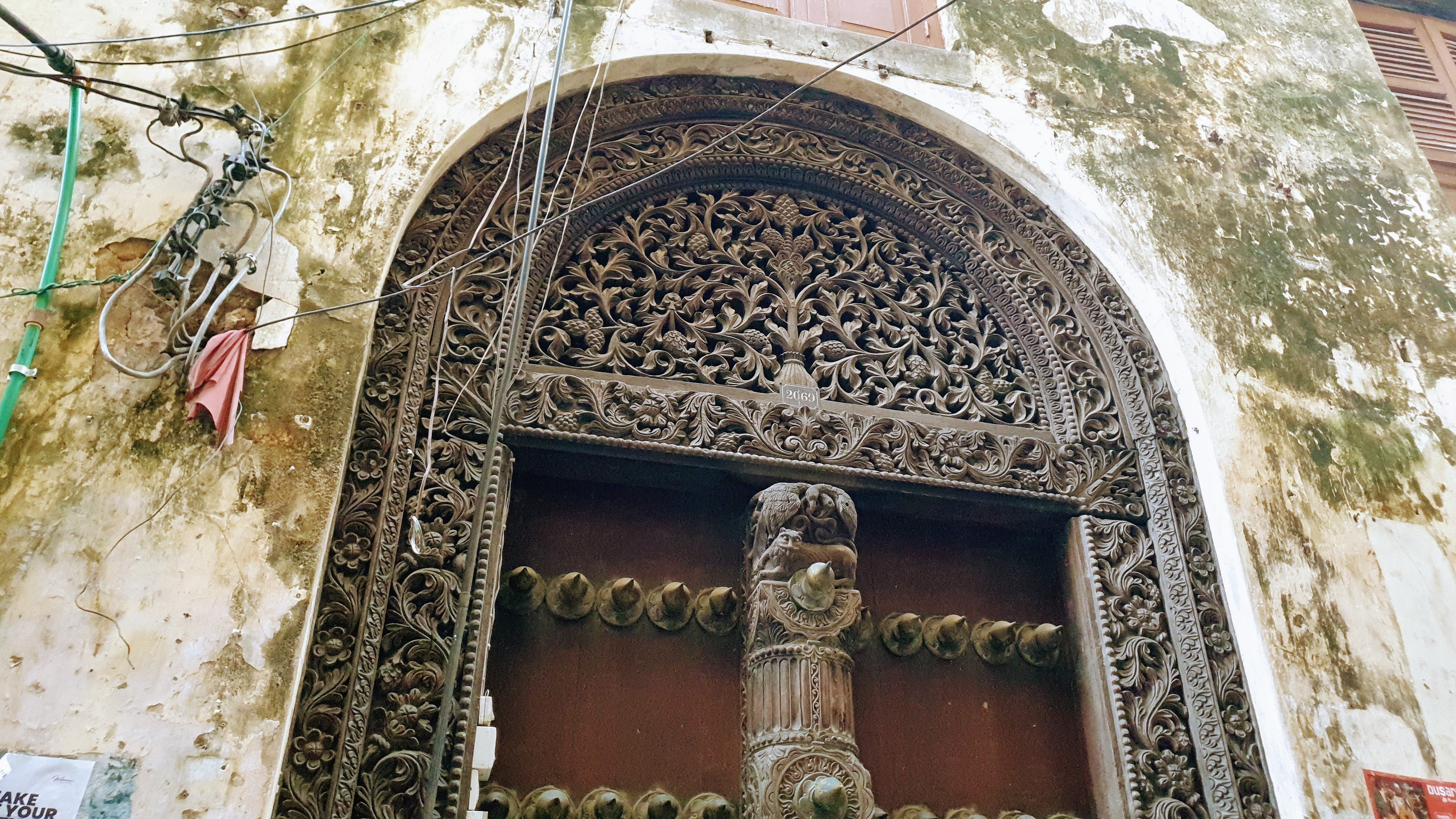
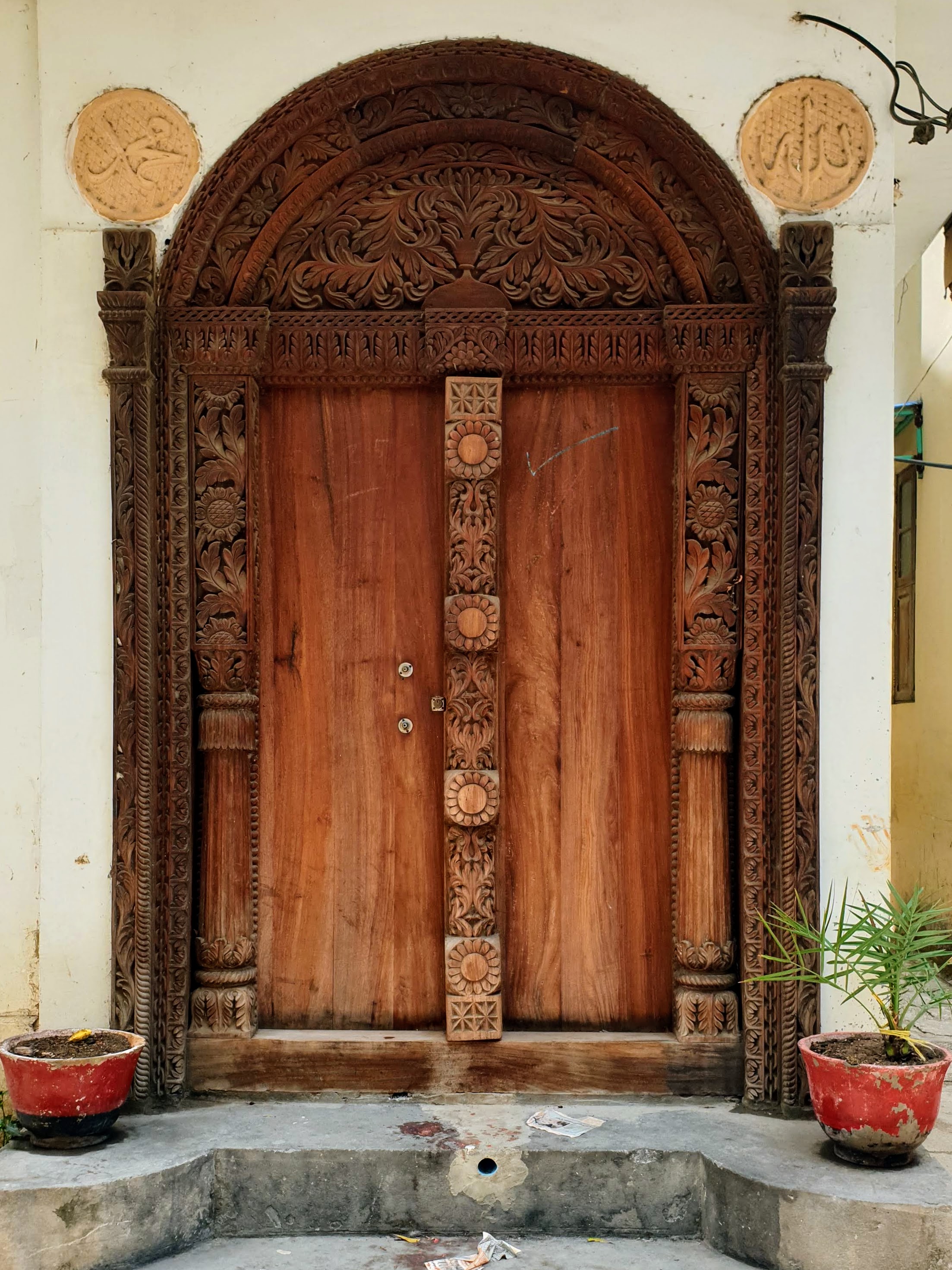
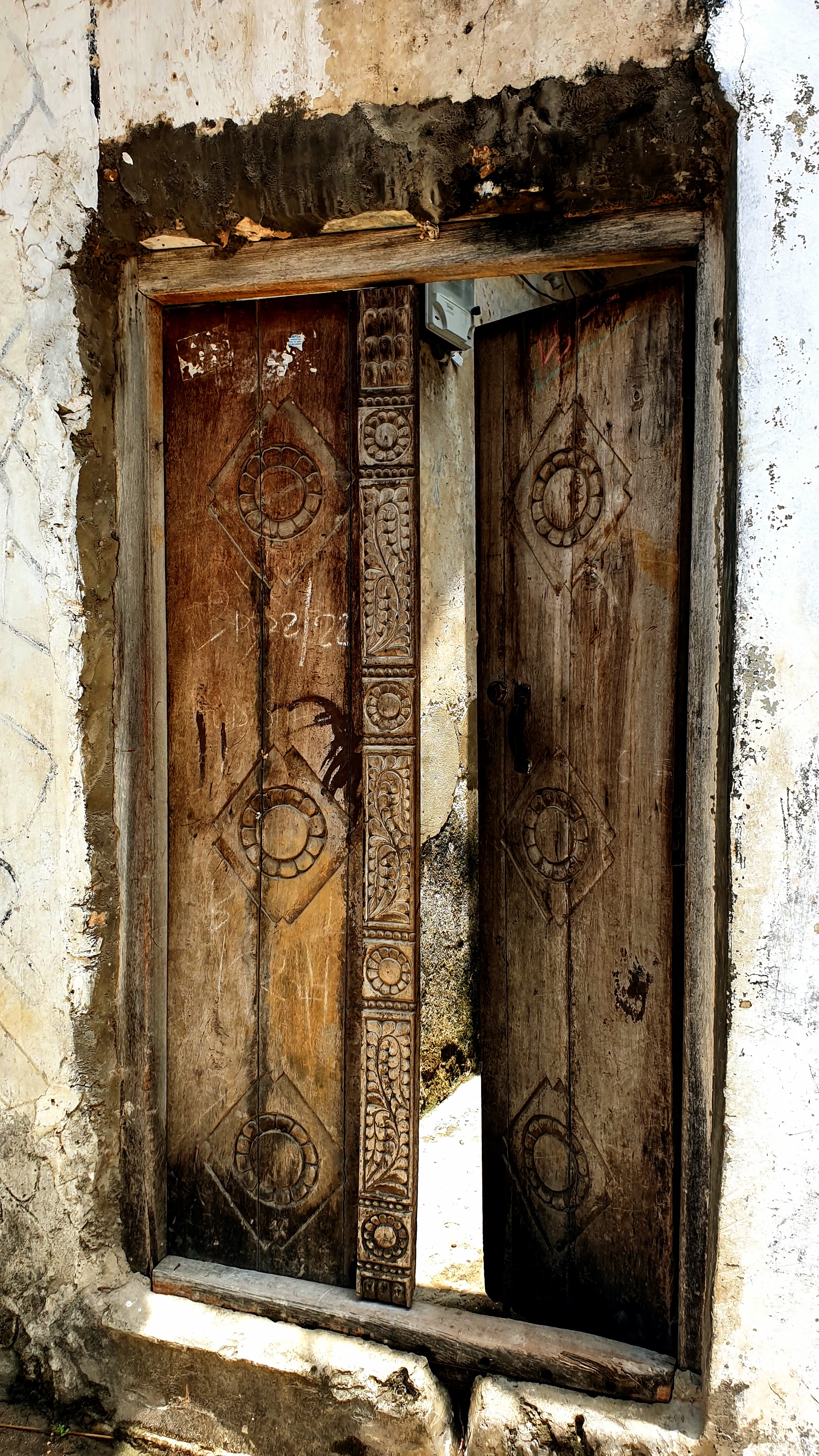
The Zanzibari Doors are one of the most famous and easiest things to see on your own while wandering around. Each one is hand carved and unique. They seem to have been a Swahili tradition that was adopted and embellished by the Indian and Arab traders. Most of the accounts of Zanzibari doors I found online seem to have been written by people like myself, visitors who went on the tour, so I’m not sure how historically accurate the information is in details. There’s a serious lack of accessible written history of African cultures. Almost all written records were made by colonizers and traders, and those were generally taken away to live in the basement of libraries and archives in the home countries of those colonizers and traders where they remain in dusty obscurity to this day until a few scholars (also likely not from Africa for economic reasons) decide to sort through them for a PhD dissertation which is itself read only by their peers and advisors, never reaching the general public. Is there a dissertation somewhere on the details of the symbolism of Zanzibari Doors? Possibly? But I can’t find it.

The main differences that everyone knows about are: the Indian style doors which may have round arches and usually have brass spikes, originally used in the Punjab as elephant deterrents, later evolved to a status symbol. The Arabic style doors may have a peaked arch or be square topped, and generally also have some stylized Arabic script, protective prayers from the Quran, engraved on the lintel. The Swahili designs include vines, fish, flowers, and later coffee beans and cloves. My guide told me that pineapples and grapes were a later addition, somewhere around the 1850s, which tracks as 1856 being the year that Zanzibar became a separate Sultanate from Oman.

Though everyone used the doors to signify wealth, each culture had different decorative values otherwise. Arab Muslims were (and in many parts of the world still are) not into external displays of wealth on the home. Exteriors of Arab built homes in Zanzibar are very plain. Windows and balconies are built to protect those inside from the eyes of passersby, and there were even covered bridges between homes to allow the secluded women and children to visit one another without stepping into the public view. The Indians, in contrast, loved to be seen. The exteriors of Indian built homes have flourishes and colors, windows and balconies allow the homeowners to show off their wealth and fashion to the public without going outside.

Modern day buildings and newer doors often incorporate traits from all three main cultural influences for both aesthetic and blended heritage reasons. Architecture isn’t the only thing that blends in Zanzibar. Although Islam is an import from the Arabian peninsula, Zanzibar is currently majority Muslim (while mainland Tanzania seems to be majority Christian). However, the cultural blending of Zanzibari history means that in addition to all the major branches of Islam being represented, Zanzibar also hosts Hindu and Jain temples (of Indian descent) as well as a variety of Christian churches including Catholic, Anglican, Lutheran, Adventist, and Pentecostal. I enjoy this photo op of the mosque and cathedral sharing the skyline.

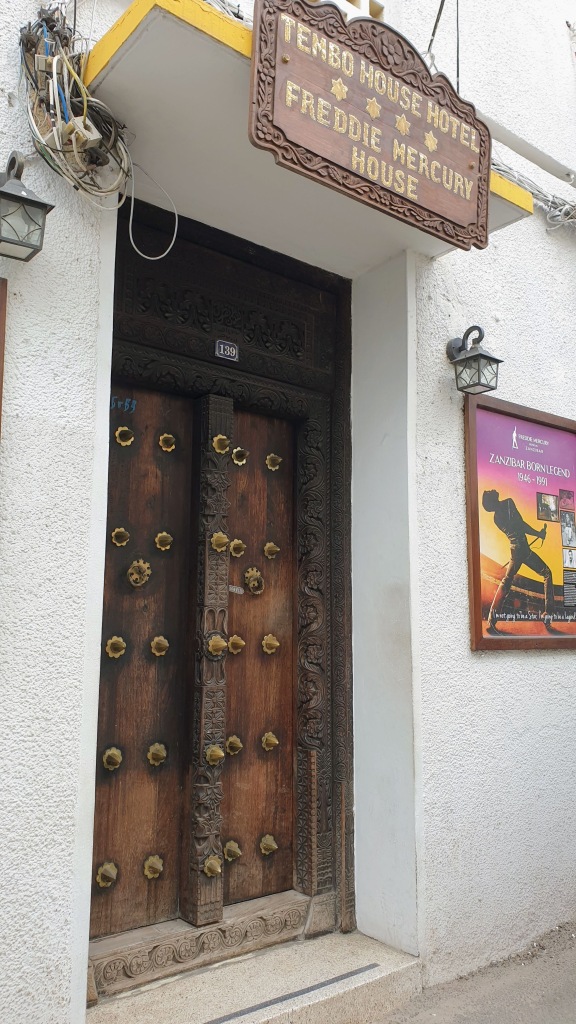
The Freddie Mercury Museum

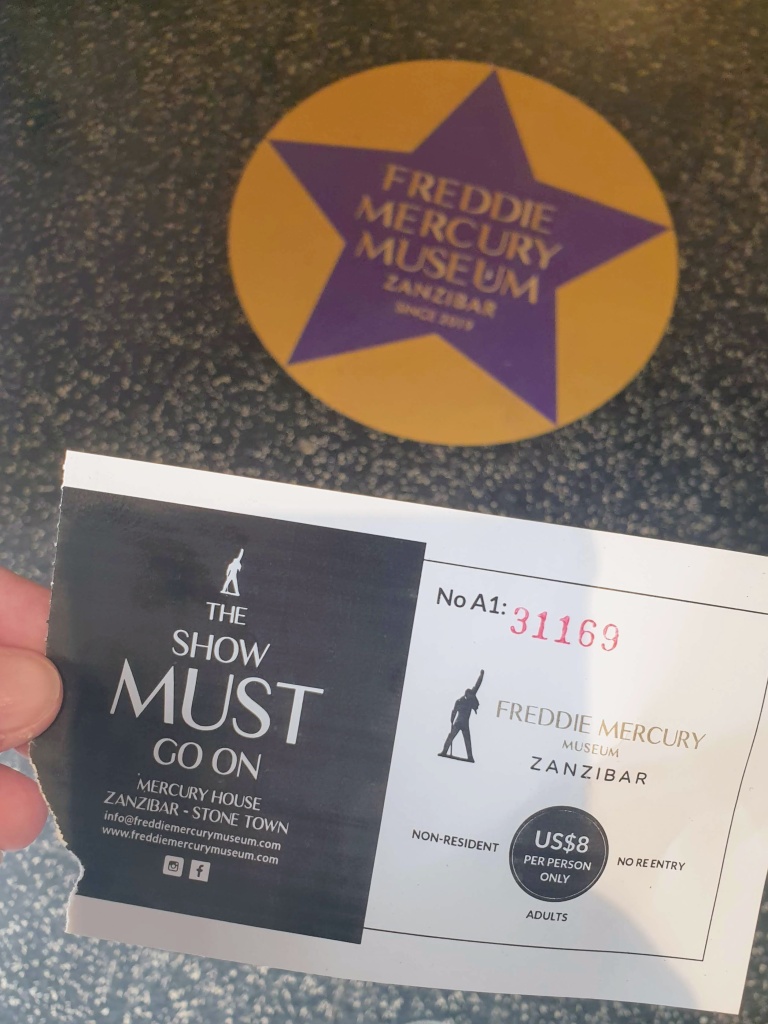
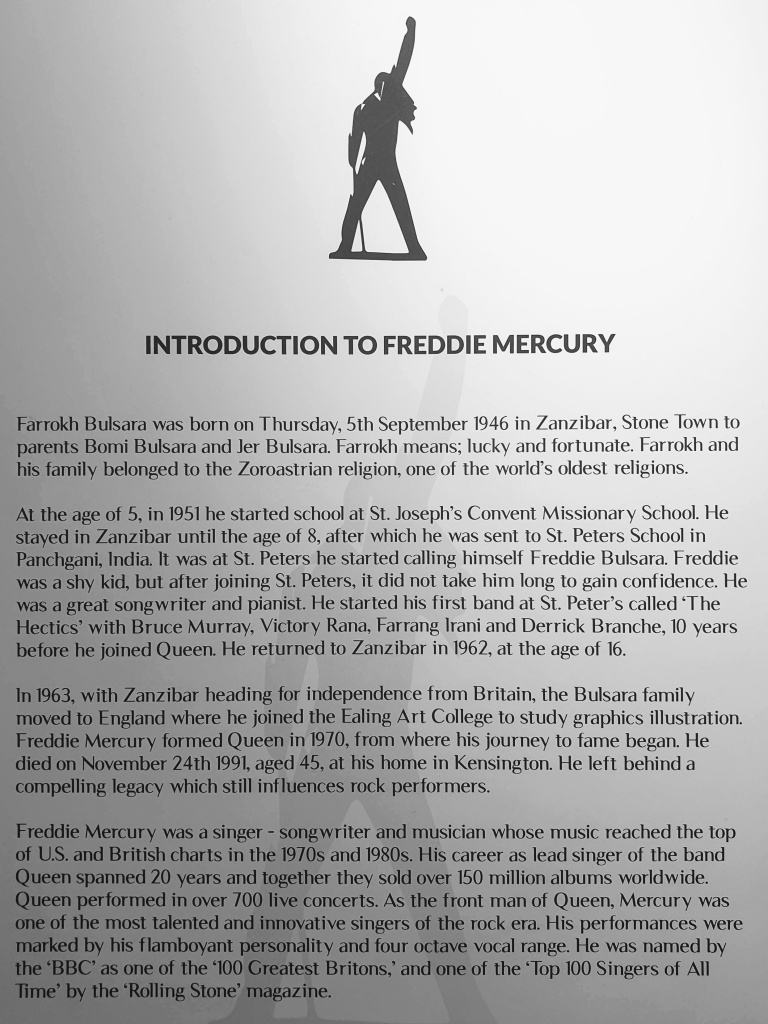
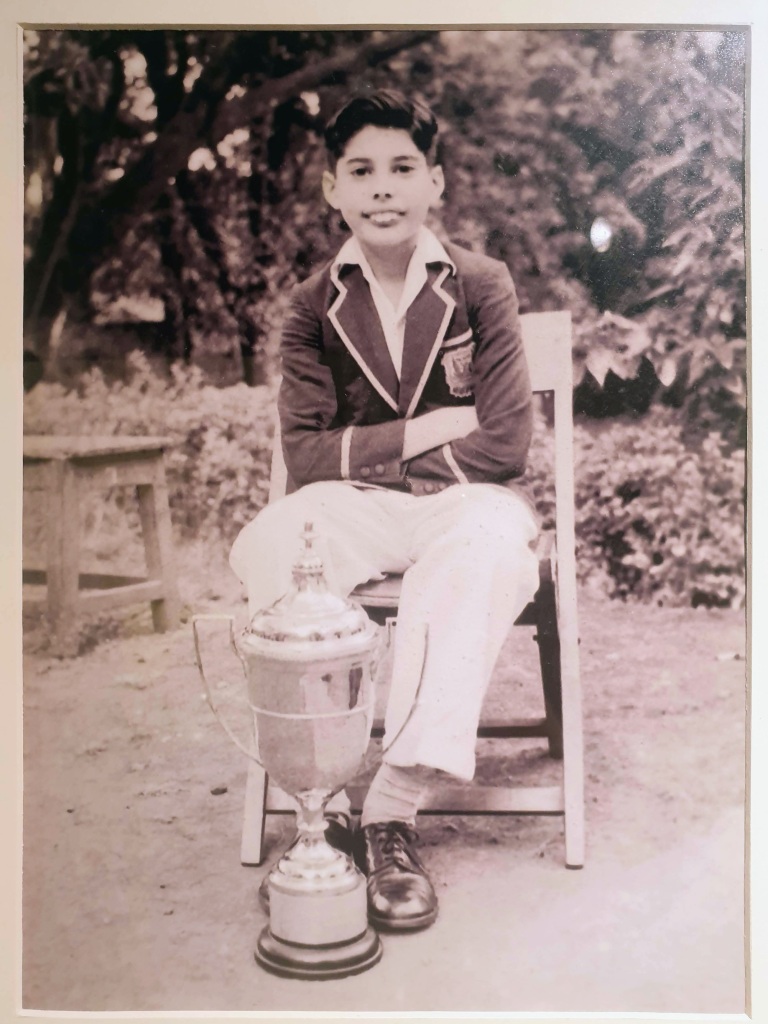
The tour stops out front of the the Freddie Mercury Museum. This is one of the big hot-spots of Stone Town. They are really excited to have a globally famous rock star trace his origin to their town. Freddie was born in Stone Town to Persi-Indian parents. He didn’t actually live there much, since he was in India as a small child, then England for boarding school, but Stone Town claims his birthright. This tiny little museum costs 8$US to enter and takes 15-45 minutes to view depending on how much you want to read and how slow a reader you are. The displays are mostly childhood and family photos as well as album covers. They have an impressive collection of lyric notes, which is kind of cool. There is also a tiny side room that has his famous Wembley concert jackets (the yellow as well as the white with red buckles). I have no idea if anything in the museum is authentic since replicas of these items are pretty easy to get online.

The museum is not what you’d call impressive. I’m biased because I lived with the Seattle EMP (now Mo-Pop) for decades, but even diehard Queen fans would likely feel underwhelmed. Nevertheless, I am happy I spent my money there and I hope more people do because Tanzania is still a place where being queer is illegal, punishable with fines and prison time (up to a life sentence). Freddie is a queer icon. As a bisexual man, his sexuality is often subject to erasure. In the West people tend to forget that he was BI and not GAY, ignoring his relationships with women. In the museum in Zanzibar, there is no mention of his relationships with men, and his relationship with Mary Austin is the only romantic reference. Despite this erasure, I think their pride in Freddie can act as a wedge to allow a discussion of LGBTQ+ rights to take place in Zanzibar and eventually on the mainland, so they can have my tourist money.

“[Queen is] just a name…It had a lot of visual potential and was open to all sorts of interpretations. I was certainly aware of the gay connotations, but that was just one facet of it.”

“I’m as gay as a daffodil, my dear!”

-Freddie Mercury

Zanzibar: the No-Plan (Working) Holiday

My sojourn in Africa has been challenging to say the least, so when it was announced that our annual mid-year professional development conference would be held on the tropical paradise island of Zanzibar, I was hyped to get a chance to travel. Since the school was on break, I was able to get two extra weeks before the conference to spend being a frivolous tourist. Anyone who knows me, or has been reading this blog, also knows that travel for me is a well planned affair with color-coded spreadsheets and back up plans. Africa scoffs at my plans.

One of my regular pre-holiday activities is online research, reading websites like TripAdvisor but also smaller blogs like my own to see what people enjoy and why. There seems to be a lot out there about Zanzibar, and I quickly assembled a wish list of things to do and see, but the more I tried to find out details of quality, transportation, dates, and costs, the more it became apparent there was no easy way to turn my wish list into a plan.

The Wishlist

NORTH: Nungwi Beach

  • Baraka Natural Aquarium, swim with sea turtles
  • Zanzibar Horse Club, swim with horses
  • Mnemba Island – snorkeling, diving, swim with dolphins

SOUTH:

  • Kizimkazi, swim with dolphins
  • Menai Bay, swim with dolphins

EAST: Paje Beach

  • Jozani Forest + Butterfly Center
  • Cuza Cave at Jambiani village*
  • The Rock restaurant

WEST: Stone Town

  • Nakupenda Sankbank
  • Prison Island/Changuu Island- giant tortoises
  • Safari Blue*
  • Spice Farm tour
  • Cheetah’s Rock
  • Forodhani Night Market
  • Anglican Cathedral
  • Freddie Mercury House
  • Zanzibar Doors
  • House of Wonders
  • a rooftop restaurant in Stone Town
  • Sultan’s Palace
  • Old dispensary

The Nope-List:

Swimming with Sea Turtles: The Baraka Natural Aquarium has a lot of reviews which indicate the turtles are not well cared for, and that swimmers are not really monitored, resulting in injuries to both animals and humans. It was further suggested that although the area may have started as a way to encourage fishermen to bring turtles caught in nets by offering a financial incentive, it has turned into a reason for fisherment to hunt and capture sea turtles for the reward. If all that isn’t enough to turn you off, these are not free wild turtles, they are stuck in the enclosed lagoon and have no way to get away from the humans when they need a break. To me, this was both unsafe and exploitative, so I crossed it off the list.

Swimming with Dolphins: I really enjoyed being able to do this in New Zealand, and meeting Fungie in Ireland, but one of the main reasons I was able to enjoy it was the environmental responsibility. Much like with the turtles, the tour guides and boat operators in Zanzibar are more interested in money than in environmental preservation, and there are reports all over the internet of boats with loud motors aggressively following pods of dolphins which can disrupt their feeding cycles and endanger any young present. In addition, there’s no regulations on the tourists behavior, so they enter the water in droves. Although the dolphins can arguably outswim these boats if they want to get away, it’s damaging to their feeding, breeding, and childrearing cycles to be chased around. And if for some reason you don’t care about that (yes, I’m judging), then beware that most tours don’t go out early enough in the day to actually see the dolphins during their most active time, so you may end up disappointed. Dolphins are magical, but they are more magical when they are treated with dignity and respect, so I crossed this off too.

Swimming with Horses: This sounded like such a cool activity, riding bareback through the surf of Zanzibar’s most picturesque beach on a beautiful horse, what could be better? An end to fat-phobia, that’s what. The Zanzibar Horse Club has a very strict weight limit for riders which I do not meet. I am a big proponent of treating the animals well, but I’ve gone horse-riding many times and often seen dudes bigger than me riding as well, so I was confused. Has new animal welfare information come to light that horses (which used to carry knights in full armor weighing in excess of 180kg) cannot manage 95kg tourists? No, nothing like that, although there are some good mathematical formulas to help people know what size of horse they should be riding based on weight. I could understand needing to know the weight of each rider to make sure the horses were a good match, but with a hard weight limit, it seems like the Horse Club simply doesn’t want to do the work of accommodating heavier clients and just picked the weight limit that their smallest horses are safe at. I’m torn between being happy they won’t overload their animals and being mad that they won’t do the extra math to let me ride on one that’s big enough for my size. Either way, it was no-go for me.

The House of Wonders: this building looks like it could be really cool, but it’s been closed for reconstruction more than it’s been open over the last many years. One of the big problems is that UNESCO sites must be restored using the materials and techniques they were originally built with and this house wasn’t built well the first time. Another issue is that most of the money for restoration comes in Euros, but the shifting exchange rates mean the purchasing power for materials and labor is a moving target. There’s nothing wrong with it other than the fact that you just can’t view it, so don’t bother including it in any plans.

Go With the Flow

With these things in mind, I decided against the northern area and booked hotels in Stone Town, Paje, and Menai Bay. I didn’t make any other reservations in advance because the online ticket prices are astronomical for solo travelers and every blog I read said there were better prices to be had upon arrival since lots of tours are happy to pick up an extra one person if they have room on the boat/bus. This advice was borne out on my first evening in town when I was approached by at least half a dozen guides who were very friendly and only slightly pushy. I was invited to schedule a snorkeling trip , a trip to Prison Island, and a sunset cruise while being advised that it’s cheaper to schedule with the boat operators directly because the hotels just charge extra for arranging the boat ride anyway.

There was only one place on my list that I ended really feeling like I missed out on because of lack of advance scheduling – Cheetah’s Rock. This place may be one of the only true animal sanctuaries on the island, and they are very protective of their charges which mainly consist of rescues. There is a strict limit of the number of visitors daily and visitors are monitored carefully by guides for everyone’s safety. They even have an otter swim experience which is booked out months in advance due to the extreme limits placed on the activity for the otter’s health. I could have gotten in for the regular animal visit, but I didn’t have the kind of clothes they wanted visitors to wear (again, safety of animals and humans in mind) and I wasn’t really in a place to take out all my piercings (a requirement since many of the animals love shiny things). I really appreciate the limits in place there and respect what they are trying to do. It was my own fault for giving up on advance planning for this trip before I discovered this one.

There were some other things from my wish list I didn’t get around to, but I’m not terribly upset to have missed, and there were two things I did that I wish someone had told me not to, but for the most part, I managed to have a nice time in Zanzibar by following the local advice of “Pole Pole” and “Hakuna Matata” – take it slowly and no worries!

The Zanzibar Series: coming soon!

Spice Tour & Swahili Cooking Class

On A Boat: Safari Blue vs One Ocean Dive

Stone Town: History, Culture, & Architecture

Paje: Beach Bum & Maalum Cave Pool

Jozani Forest: Monkeys, Mangroves & Butterflies

Menai Bay: Tides & Sunsets

Zanzibar: The Darker Side