Back in the USSR? This time with a visa!

I am falling right behind on my goal of 1 blog post a week. In a desperate effort to get moving, I went and found the most complete draft on file, also the only one I wrote AFTER vacation instead of quick notes on a bus this summer. Maybe there’s a reason Dostoevsky and Tolstoy wrote such long novels. I was also inspired toward verbosity by my brief visit to mother Russia and I have had to split up the story into 2 parts. In part one: explore the bureaucracy of communism, the truth behind the soviet stereotypes, and an encounter at the Metropol Hotel.


Airports Are Ugly

I have flown through the Moscow SVO airport before. It’s not especially exciting, but their primary state run airline is dirt cheap so I find myself having layovers lasting on average 3-4 hours there. This time I had a 20 hour layover on the return flight. I can’t imagine many airports I would willingly spend 20 hours inside. As Douglas Adams once famously wrote, “There is a reason why no language on earth has ever produced the phrase ‘as pretty as an airport’.” Since the first time I read this I have had the singular experience to be in some of the best and worst airports in the world, and I can say with certainty that the Moscow International Airport is not a place to linger.

There are few places you can sleep inside the airport, like hourly rental sleeping pods, or even the airport’s very own hotel (the one Snowden hid out in). I looked into these and discovered that the prices are almost as much as the plane tickets. Even if you’re willing to camp out on the crowded and uncomfortable airport seats, there is no way to get WiFi unless you have a Russian phone number, so be prepared to be both uncomfortable and bored. In order to take advantage of any less expensive hotel (or WiFi) option, you have leave the airport, but unless you are from a very narrow list of close Russian allied countries, you can’t leave the airport without a visa. And you can’t get a visa at the door, you have to apply for and pay for that visa well in advance of your arrival.

You Need a Visa To Get In

Tourist visas to Russia require a letter of invitation. These are usually arranged by tour guides which seems like a giant scam, but that’s a whole other rant. Transit visas can bypass the letter requirement if you have proof of your ongoing flight. The transit visa can be used for up to 3 days if you’re flying and 10 if you are travelling by train.

Thus, my trip to Moscow actually started in June with the Russian Consulate in Busan, South Korea. Since they weren’t open on my day off, I got up very early in the morning on a Friday and bused into Busan to file my paperwork. I was able to fill out and download the application online and print it at my office, however the application took several hours to fill out because in addition to all the normal information, they wanted the exact dates of all my international travel for the last 10 years. They also wanted complete information on all my secondary education, and on my parents, and to know if I had any education whatsoever about nuclear weapons (I do!). I felt like I was filling out a background check for the CIA.

I nervously handed over the painstakingly researched application form and paid the 100$ fee, hoping that nothing would disqualify me from going and returned to my home to wait a week for the results. I shouldn’t have been worried. Communism loves bureaucracy and to make people jump the hoops and I have become an expert form filler. A week later I made the trek back to the consulate and my passport was returned to me with a shiny new 1 day visa inside. I booked a hostel and an airport shuttle and more or less forgot about it for 2 months.

Midnight Arrival

When I landed in Moscow, it was just after midnight and amid a flood of Chinese tourists, but it didn’t actually take all that long to go through customs and immigration. Since I was technically on a layover with a connecting flight, I had checked one bag through and was only carrying my day pack and a basic change of clothes with me. My visa was scrutinized intensely. This guy busted out a jeweler’s lens to stare at it in minute detail. Eventually, finding nothing wrong, they allowed me to pass out of the international terminal and onto Russian soil.

There is an oddity about the Moscow airport in that the WiFi requires you to give a phone number where they will send you a code to log on. It’s “free WiFi” but you can’t access it if you don’t have a Russian phone number. It’s frustrated me every time I’ve flown through, and I’ve never been able to get it to work. Really, it’s free if you’re Russian, but it’s a taunting WiFi dream to international travelers. Knowing this, while still in Norway, I had downloaded the offline version of the Moscow map in Google maps (which is a lie), and the Russian language on Google translate (which I never actually used) as well as information about my hostel, just in case.

I got some money changed to Rubles, and I found my driver. If my flight had landed during the day, I might have tried out the public transit, but at midnight thirty I was happy to see a man holding a sign with my name on it and ready to take me directly to the hostel, even if the ride did cost more than the room. It was a long and empty ride through Moscow. I’m not sure if it was just the late hour but the roads were empty. And they were huge! City roads, with business and sidewalks, not like highways, just roads that were 10 lanes across, 5 lanes in each direction. I stared at them wondering how people crossed the roads on foot and even more if these behemoths aided in the flow of traffic. Do enough people in Moscow own cars for this to be actually useful or is it just for show?

Hostile Hostel?

Checking into the hostel was another long rigmarole of paperwork: fill this out, sign this, make a copy of my passport and visa, etc. I chose a cheapish hostel thinking since I only was going to get maybe 6 hours of sleep, I didn’t need much but I also carefully selected one that was highly rated with plenty of good reviews and a location that would make it easy to get to Red Square in the morning.

One day… the lesson is going to stick. When travelling in less affluent countries: spend the money on a private room! The hostel bed was around 10$ and a private room would have been about 30$. It’s a big difference and at the time I was thinking about every little penny because I wanted to keep my budget down and Moscow was already costing me 100$ just for stepping out of the airport. I had spent a single night in Paris in a dorm and slept pretty well, but that was Paris.

Gallery image of this property

The hostel itself did not live up to my expectations based on ratings and photos. Looking back I can see those are real photos, but they were clearly taken when the interiors were brand new or at least recently deep cleaned. In reality the place was much more dark, dank, cramped and dirty than the photos represent. Even by the light of day. Now, I’m not saying it was a shithole… it did meet my minimum standards of clean and the staff were very polite in a cold sort of way, but I did not rest well.

Like many hostels in Europe, I was expected to make my own bed. The staff do not consider it their responsibility to put sheets on the bed, nor to remove them. I struggled with this as it was almost 1am and I had a top bunk and everyone else was asleep, so I couldn’t turn on the light. Also, the bedroom door seemed to have no lock at all. The bathrooms were very tiny and when you’re sharing a single bathroom with all the other women in a large hostel, that’s a challenge.  One of my roomies snored so loudly that it made my bed actually vibrate. I could feel her snores. I put in earplugs, headphones, and squashed pillows, blankets and towels around my ears to no avail. When I got up to get dressed, there was no place private to do so.

The hostel included WiFi, which did work well, yay, and a free “breakfast”. In the morning I discovered this meant a choice of two sugar cereals, luke-warm milk, watery coffee, and packets of what I really think were yogurt powder. I couldn’t read the Russian labels and I didn’t try to eat it, but they were packets filled with what felt like a powder with pictures of bowls of yogurt and fruit on the front. And somehow this breakfast is rated 7.7 on Booking.com. In fairness, that is the lowest internal rating and every other criteria is rated 8.4 or higher. I don’t know what your life has to be like for this to be a 7.7/10 breakfast, but I never want to live it.
Gallery image of this property

Just, please, if you see me talking about booking a hostel dorm in a developing country or a current/previous communist country STOP ME. I’m not trying to be a snob, but sleeping properly is so important to my well-being and my ability to enjoy waking activities and I just can’t sleep properly in those conditions. I envy the people who can.

Metro Mishaps

Despite these setbacks and the severe lack of sleep, I was still determined to make the most of my day in Moscow. I had a detailed and timed itinerary that I hoped would allow me to see everything I wanted to before it was time to go back to the airport. The first thing I discovered is that the Google Map of Moscow isn’t great, and the offline function doesn’t really do anything. Here’s a pretty building I found while searching for the metro.

20180821_091840It took me ages to find the Metro station that was meant to be a 5 minute walk from my hostel in part because Google, and in other part because the Metro stations in Moscow don’t have any helpful signs with pictures or symbols to identify them. Maybe they say the name of the station on the outside, but I was looking for a big “M” or an icon of a subway train which has been a constant in every other metro system I’ve used. This is actually the logo for the Moscow metro and it was not on any of the buildings or any signs nearby.Image result for moscow metro

When I finally realized that the big square beige building was the metro station, I had walked past it at least 7 times because I thought it was a government building like a post office or police station. It was much easier every other time because at least they all look the same. Of course I didn’t take a picture at the time, and now looking at stock photos of the building I see that it clearly has a big red M on top and a sign out front, so I can’t explain why it eluded me so. I blame sleep deprivation.

Once I found the entrance, I was happy to learn that the metro system itself is actually very easy to use, and cheap too. Rather than go through the hassle of buying a ticket for every trip, I just bought a 24hr pass for about 3$ US. That’s a whole day pass for less than the cost of a single trip in most EU countries, by the way, and goes a long way to explaining the powdered yogurt situation.

On top of its ease of use and affordability, the Moscow metro is famous for it’s unique and beautiful (on the inside) metro stations . At some point in the soviet era, it was a gift to the people to make each public transit station a work of public art. No one could visit them all in one day, but I tried to get some pictures inside the ones I did use. They are very very Soviet, but amazing works of art nonetheless.

Red Square Obscured

When I emerged from the station at Red Square I was instantly lost. I had expected the world’s largest public square to be visible from the metro station that shared it’s name, silly me. I adopted the time honored method of picking a direction and watching where my GPS dot went on the map. The first landmarks I ran across were actually the Metropol Hotel and the Statue of Marx. I recognized them from my plans as places I had intended to go later in the day, but it did help orient me to find Red Square and St. Basil’s Cathedral which was the top of my list for the day.

20180821_100129Sadly, I still don’t know what Red Square looks like, since there were about a million white tents set up and a large area blocked off and converted into a stadium for an upcoming festival. I walked slowly and perused the kiosks selling a narrow but colorful array of Russian souvenirs. I didn’t stop to buy, however because it looked mostly mass produced.

I also walked past the line to Lenin’s tomb, where he is preserved and laid out in a rather grotesque honorarium. Entrance to the monument is free, but there is no way to reserve an entry time, so people queue for hours for a chance to gawk at the dead body. I told myself it would be interesting if the line was short enough, but by the time I arrived around 10am, it was already all the way down the block and didn’t seem to be moving very fast.
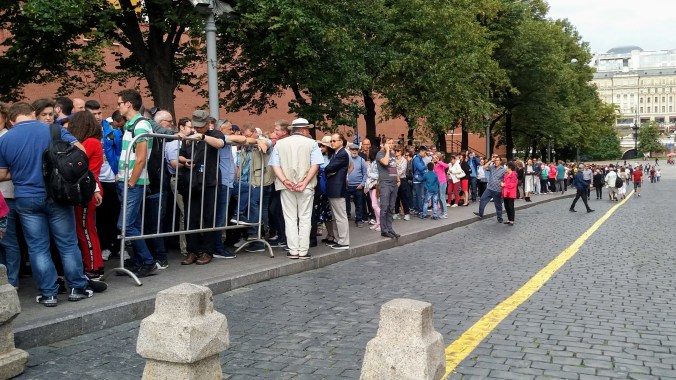
20180821_095746

Tourist Stuff

St. Basil’s did not disappoint. It was crowded as heck, but it is a fun building. Everyone has seen at least one picture of the iconic colorful onion turrets and it was definitely a treat to see it in person. I wandered around trying to find the best angle for a photo, but since large swaths of the surrounding area were blocked off for the upcoming festival, it was a little challenging.

20180821_101349It’s possible to go inside for a fee, but online reviews all agreed that the cool part is on the outside. Bonus, there was a marching band practicing in the temporary stadium field nearby, so I got to watch a little bit of counter-marching through the fence and experience some serious cognitive dissonance as they played the 1812 Overture (for non-Americans, that’s because it’s a staple of our own Independence Day celebrations).

20180821_103628

Checking the clock, I realized it was time to head over to the gardens and try to find the entrance to the Kremlin. Only, because the entire breadth of Red Square was fenced off with a giant temporary stadium and lots of souvenir booths, I couldn’t follow my pre-planned route and Google maps was turning out to be f*ing useless. Once more I adopted the “pick a direction and walk” method, which resulted in me walking nearly all the way around the Kremlin, which is not a small building. In the middle of my walk, the sky went from a bit overcast to “wrath of Neptune”.

I always have my travel umbrella but it would not have withstood the torrential downpour that issued forth from the skies. Lucky me, at that precise moment, I happened to be passing under the only cover for several blocks in either direction, a bit of scaffolding along one corner of the Kremlin’s outer wall. Even standing under the scaffold with my back to the wall, I could feel the spray from the force of the rain around me. I sat there as other pedestrians scurried to the shelter and wondered if my plans to explore outdoors would be totally rained out, and what I could possibly do instead with no working internet. But before I could even really start to work it out, the rain slowed to a drizzle and I felt confident in resuming my walk armed with my little umbrella.

When I did reach the entrance, I found another huge line for the people who already had tickets, and I continued on through the gardens in search of the ticket office.

What’s With All These Lines?

I know there is a stereotype about lines in Russia. Or at least there was when I grew up in the cold war in America. We were told about how people had to just stand in long lines for hours to get bread, or sometimes not even knowing what was being passed out at the head of the line or if there would still be any by the time you got to the front of the line. They were communism horror stories told to show us how terrible the USSR was and how great America and capitalism were by contrast. I know it was propaganda, but I’m not sure it was untrue. I had already seen the huge line for Lenin’s tomb, but I knew that was a free event, and no way to buy tickets in advance.

Looking at the line to buy tickets to stand in the line to get in at the Kremiln was just insane. I freely admit that I ignored my note to myself in my calendar to book those tickets online in advance. Everything else in Europe I booked before I even left Korea, but Russia only takes reservations for the Kremlin 2 weeks in advance. While I was in Sweden. I made a note to do it, and I saw the note, and I ignored the note. My own fault. However, looking at the lines, I am not sure I would have made it through the “advance ticket line” even with enough time to really see anything.

I am a bit sad I didn’t get to see the Kremlin and especially the museum with the historical art and artifacts of pre-communist Russia. However, if I do make it back to Moscow, I will dedicate a whole day to the Kremiln alone, knowing what I know now.

20180821_112822_000-ANIMATION

Fun With Costumes

Instead of sulking about it, I decided to move on and see what other fun things I could find. I was not disappointed. Shortly past the ticket office, the scenery livens up and I found some more public gardens, statues, fountains, and a quite charming pair of street entertainers dressed up in “historical” costumes and posing with tourists for tips. They made me smile and so I probably gave them more money than I should have, even though it was less than they asked for.

Continuing on I managed to find a slightly more accurate historical costume depiction where it seemed like a professional group was showing off the history of Russia and perhaps it’s trade partners with booths showing different herbs and spices, old astronomical tools and charts, paints and dyes, and other medieval type crafts and pursuits. It was all in Russian, though, so I wasn’t able to glean much from the informative talks the costumed historians were giving to the other folks in the park.
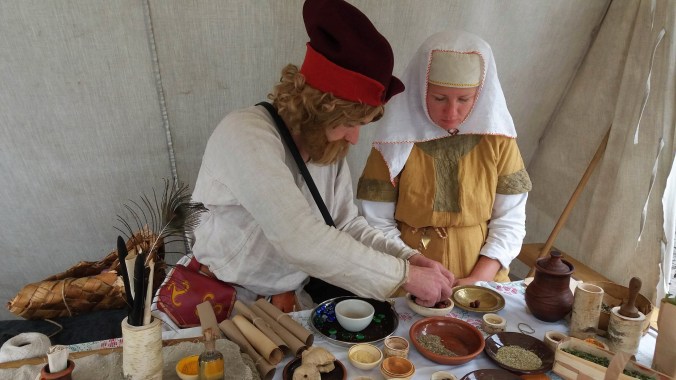
20180821_114933

Thwarted at Every Turn

After a quick gander at the statue of Karl Marx and the Bolshoi ballet because I was standing right there,

 
I headed up to the Metropol Hotel to see what I could find in the way of a fancy lunch. I had found a few places on line that seemed to indicate there was a high tea available, and while the website of the hotel still had it displayed in some places, the actual “high tea” page was not working. Still, I had seen the restaurant menu and knew it would be ok even if I just had lunch.

20180821_094706

The very first thing I saw was a bunch of construction and a sign saying the restaurant was CLOSED for repairs and upgrades. My optimism and adventurousness was wearing thin at the edges around now. So far, all of the things I’d set out to do with my very limited time in Moscow had either been harder than expected or totally impossible. I was also VERY hungry since the last meal I ate was a deli sandwich I got in Oslo the night before. I am not counting the bowl of sugar coated flakes at the hostel as a “meal”.

Clinging to the very last shreds of my “lets have a good time anyway” thoughts, I found the main entrance to the hotel to see if they were serving anything anywhere because I really didn’t know what else to do or where else I could go for a much needed lunch.

Although the staff at the hotel bar had no idea what tea ceremony I was talking about, (even though it’s on their website!) they were happy to seat me at a comfy chair in the lobby and bring me a menu. I ordered a “Stranger in Moscow” to drink, and salmon blinis for lunch.

The WiFi Is a Lie

When I went to explore the WiFi options, I discovered that the special nature of the Moscow airport WiFi was actually the rule of thumb for all Russian WiFi. I asked the staff if there was any way to log on, but without a room number or Russian phone number it was impossible. They didn’t even have a guest account available for customers of the bar or restaurant.

The more places I went, the more I realized this is just the way it works. Even Starbucks, a place famous for it’s free WiFi was inaccessible to anyone without a Russian phone number. So, if someone tells you not to bother with a SIM card because there’s plenty of free WiFi, well, they are both right and wrong. The WiFi is free, but you can’t use it without that SIM + Russian phone number. If I had known, I would have made the SIM a higher priority since it seems they are not too hard to find, but by the time I realized that WiFi was going to be impossible, I was more than halfway through my day and had no way to look up where to buy a SIM!

This obstacle was suddenly one straw too many in a morning full of them and I slowly began to leak from the eyes. I try really hard not to sink into despair or self pity when things don’t go my way on a trip, but everyone has a wall, and it gets closer with things like lack of sleep and low blood sugar, both of which I was suffering from at the time. It’s likely that I would have recovered after a some food and a rest, but that day I didn’t have to do it alone. A very kind fellow solo-female traveler sitting one chair over asked if I was ok and invited me to join her. She let me vent a little about my morning and then we quickly moved on to talking about our travels and experiences.

Lunch is Saved!

It did so much to lift my spirits and we chatted all through a leisurely lunch. The blinis were nice, a little sweeter than I was expecting for a seafood pairing, but not really much different from crepes.. maybe a little more oily? but not unpleasantly so. Out of curiosity I looked up the difference, and it’s yeast. Blinis have it, crepes don’t. The smoked salmon was delicious, and even though I had eaten lots of it in Sweden, I don’t think I’ll ever get tired of it. Plus it was served with sour cream and salmon caviar so there was a nice blend of textures and flavors.20180821_122655
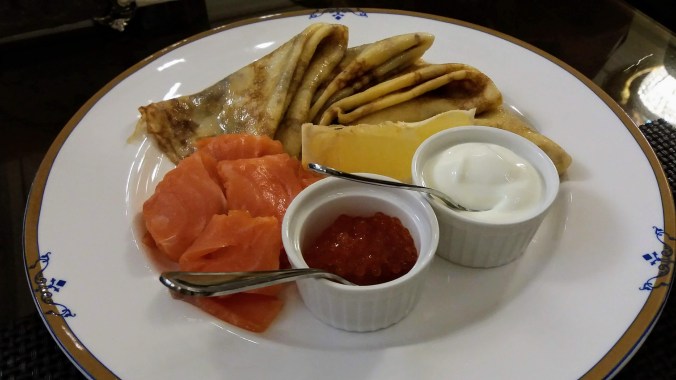
The Stranger in Moscow was a vodka drink made with Campari, ginger, and blackberry syrup. The presentation was stunning. The drink was quite different from the cocktails I have had before. It was more bitter than sweet which is usually a good thing for me and I attribute that to a healthy portion of the Campari, but there was a slight “cough syrup” aftertaste that I associate with Jagermeister or almost any cherry liquor. My best guess is that the type of blackberry syrup they used carried that flavor, which many people find appealing in drinks. It was also served with a tiny bowl of dark chocolate chips which made an excellent compliment to the drink. Quite a unique cocktail experience overall.

20180821_122240

My lunch companion told me about the book “Gentleman in Moscow” which is set in the Metropol Hotel and I am now on the wait list to check that out of the library. In case you’re curious, a standard room at the Metropol runs close to 150$ US/night, but my drink and lunch were a much more reasonable yet still high for Russia $27 US together. I still wish I could have found that tea ceremony, but I am happy with the experience I had, especially with company to make it better.


Here’s a little slideshow with more photos from the first half of my day in Moscow. Please pardon the lack of music. I’ve been using YouTube Editor, and recently it’s decided to delete everything good and useful from it’s online service and I haven’t found a replacement yet. Stay tuned for part 2 where I go “off the beaten path”.

Nagoya Castle: Now with 10% more Ninja!

If there is one famous place that exemplifies Nagoya, it is the sprawling grounds of the reconstructed Nagoya Castle. I couldn’t possibly visit Japan’s fourth largest city without spending some time at it’s most famous historical monument! I was hoping to get a sunny day and take some sweeping landscape photos of this majestic structure, but the weather was not on my side. Even without the sun, Nagoya Castle was beautiful, fun and educational to visit. Plus, there were Ninjas!


I woke up Tuesday to the sodden realization that the weather forecast had changed again, and the rain was not going to stop until I was back in Korea. It wasn’t as bad as Monday, however, mostly cloud cover and the occasional sprinkle. I had forgotten my umbrella at the katsu restaurant the night before, but I wasn’t worried since umbrellas are for sale in every subway station and convenience store (right next to a huge steaming pile of foreshadowing).

Golden Bus or Subway?

I looked into the possibility of doing the Golden Tour Bus day pass. The Me-Guru is a kind of hop on hop off bus that runs around the most popular places in Nagoya. You can get a Me-Guru day pass for 500 yen which is great if you are planning to hit up several tourist hot spots in one day. Unfortunately for me, there wasn’t a stop anywhere near my friend’s house, so I was going to have to take the subway at least 2 times (out and back) making the 500 yen ticket less attractive to me. If the Me-Guru isn’t getting you where you want to go, you can also get a city day pass for subways for 740 yen, or subway bus combo for 850 yen.

Nagoya Subway ticket machines

Photo Credit: Nagoya Station.com

The main attraction of the Me-Guru Golden Bus is that it drops you very close to tourist attractions that might otherwise be a hefty walk from the nearest regular bus or subway stop. Atsuta Jingu is very central and easy to access, but the Nagoya Castle and Tokugawa Gardens are rather out of the way. Lucky for me, the Me-Guru bus also offers single ride tickets for 210 yen which you can buy on the bus just like any other city bus. I would recommend the Me-Guru day pass if you happen to be staying anywhere near one of the bus’s stops, however I opted to take the subway (270 yen trip) to Nagoya Castle, then the Me-Guru to Tokugawa (210 yen), and finally the subway again (270 yen) back to my ersatz home base for a grand total of 750 yen.

I mention all this because it’s acutely important to figure out transit in Japan before you go unless you are made of money and time. Since most of us aren’t… Data plans and mobile WiFi hot spots are expensive and not really necessary given the proliferation of free WiFi, but it does mean you can’t to a Google search any time anywhere, you have to find the WiFi first. I like to research my routes over breakfast and take screenshots of the map and directions to reference later when I’m out of WiFi range. So, Tuesday morning, while I was enjoying my “morning service” again, I pulled up a million maps to see where I would go and how far I would have to walk/wait between each one. The public transit options between the Castle and the garden are dreadful. Hence the one stop Me-Guru ride.

screenshot_20180619-191133

If you don’t plan ahead, you may not know where the next bus stop/subway station you need is (it might not be the one you came out of or the closest one may not go where you want to go). You could find yourself walking farther than you want, which doesn’t sound like much, but we tracked our walking on Sunday and got almost 10 km in one day of aimless tourist meandering. It adds up fast, and while I don’t mind walking for health or enjoyment, I don’t want to waste vacation time and energy walking extra to the bus stop when I could be using it to walk through something cool! Plus, if you suddenly find yourself knackered from unexpected heat, humidity, and ridiculous amounts of walking (this happens to me at least once per vacation), taking a taxi back to your hotel in Japan could cost 50-100$, that’s US dollars, folks. Taxis are EXPENSIVE in Japan. Ubers are not better.

Let Them Eat Gold

From the nearest subway station, the walk into the Castle compound is down a little restaurant corridor that sells everything from Nagoya specialties to the Castle’s very own gold plated ice cream. Yes, gold plated ice cream. It’s not actually very expensive, and it’s highly Instagramable, but I couldn’t bring myself to buy one as I have recently been complaining about the out-of-touch rich people in America eating gold plated tacos while children can’t get fed in school… soooooooo…. no gold ice cream for me.

The ice cream isn’t trying to be Richie Rich, it’s actually meant to imitate the golden tiger-fish that is the symbol of the castle. During my post vacation research phase, I got curious about how they could afford to sell these golden ice creams for 6-9$ a pop, and I discovered that you can buy edible gold sheets for surprisingly cheap. One seller on Amazon is selling 10 sheets for 7$. The gold taco I was upset about? 25,000$… US….At 0.70 per sheet, it may be silly to eat a golden ice cream cone, but it’s not actually Louis XVI levels of decadence and class warfare. Eat the rich.

Fire Bombing Damage

Nagoya Castle is the number one tourist stop in Nagoya and it’s not even finished! Almost everything you see there was destroyed by Americans in WW2 during the fire bombings. A fact the informative signs will not let you forget since everything you read will tell you how the original was destroyed and whether what you’re looking at is a transplant or a reconstruction.

20180508_133330

Traveling around Asia, you inevitably see signs like this because nearly every temple, castle and historical site has been sacked during one war or another. In China and Korea, you find things that were destroyed by the Japanese. In Japan, you find things that were destroyed by the Americans.

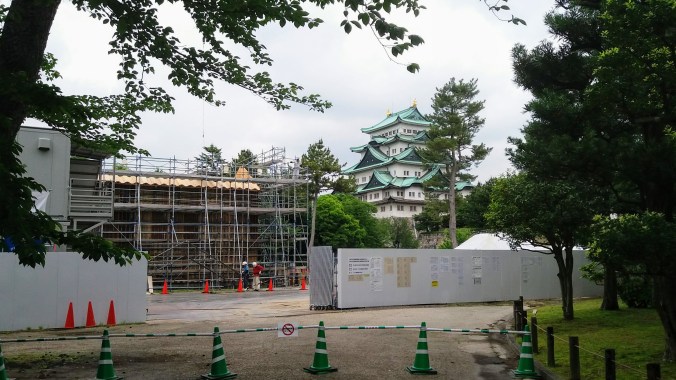
The castle and grounds were still heavily under construction during my visit, but I’m told with some degree of excitement by the locals that the reconstruction should be finished this (2018) summer.

20180508_132446

Hommaru Palace

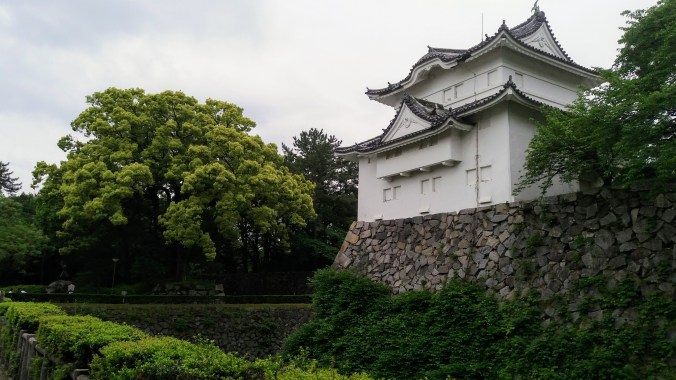
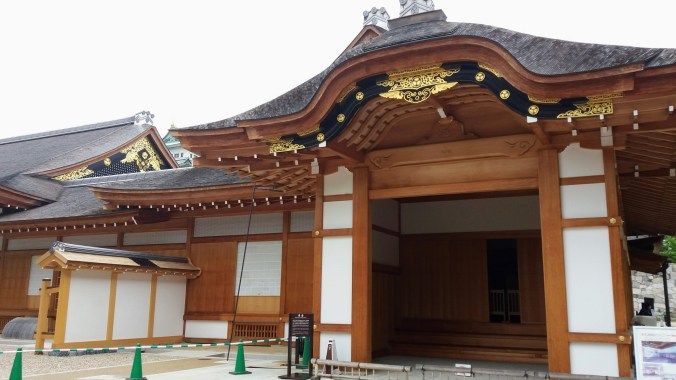
The first sight that greeted me walking in the gate was the tower of Hommaru Palace. The tower is done in a similar style to the main castle, but is much smaller. Once you get around the corner and over the moat, there is a beautiful brand new palace. According to the literature I was given to take home, the Nagoya Castle was declared a National Treasure back in 1930, but sadly destroyed in the 1945 air raids… ok they don’t call out America by name, but we all know. The palace compound has been undergoing reconstruction on and off since 1959, but the Hommaru palace reconstruction only started in 2009!20180508_134013

I am not an architecture buff, but I do enjoy a beautiful building. I especially appreciate that Nagoyans decided to use all traditional materials and craft techniques to remake the structure. It doesn’t just look like the original, it preserves the artistry and history of Japanese culture — not only the woodwork, but also the fittings, metalwork, and paintings. There was an intense research project designed to microscopically and chemically analyze the original scraps that survived the fire bombing (have we mentioned that recently, because Nagoya Castle does not want you to forget) so that the paintings could be replicated as authentically as possible.

Despite the chronic reminders of our history of conflict, the restoration process is fairly interesting. If you want to see more details, they’ve got a lovely website.

As I approached the palace proper, there was a group of Japanese businessmen having a chat in front of a very photogenic area. However, my faith in Japanese politeness was rewarded. As soon as one noticed me holding my camera (phone) nearby, they gestured to the others to move out of the way and we all smiled and bowed to each other before I went on to take the photo. So much politeness!

20180508_120144

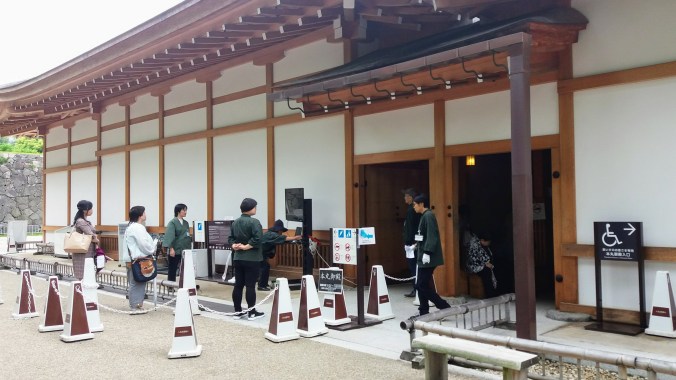
Following the path, I noticed an area where a few other visitors were lining up and entering the building so I paused to check it out. The staff were sooooo excited to share with me. They showed me a little video of how to tour the building correctly (no touching, no flash photos, etc) and explained the character in costume stopping all the bad behavior on screen was the father of the famous king who had ruled from this palace and a famous general.

20180508_123652

I was asked to wear my backpack on my front to avoid bumping anything, and all of us were asked to remove our shoes before going inside. Slippers were available, of course, and there were free shoe lockers as well. For an extra 100yen, an audio tour of the palace was availble in several languages. I thought about getting the English one, but it was taking the staff 10+ minutes to set up the couple at the front of the line, and I wasn’t second in line. I decided to risk moving on less informed.

The palace itself is bright and open. Although the day was cloudy, the inside of the palace somehow still managed to feel sunny with the warm wood halls, paper windows, and gold accents. Drifting sock footed through the hallways, I felt a sense of what visiting the royal palace might be like. Everything was hushed and clean. The halls were made of the same pale wood on all 4 sides creating an effect of being inside a tree. Every few meters, the interior hall wall would open up into an opulent room. The 3 visible walls inside each room were covered with the ornate and painstaking replicas of the Edo period paintings.

In practice, each of the rooms would have had a specific ceremonially significant purpose. A room for receiving guests of a certain social standing or another. A room for dining, one for tea, one for drinking sake and listening to music. One room had a fire pit built gracefully into the floor and a hidden vent in the ceiling to carry the smoke of roasting meat and fish up and out. The low wooden bars are just to keep people from walking into it, not an actual part of the function. Indoor fire pit is now added to my list of things I want in my imaginary dream house of the future.

20180508_123034

The palace doesn’t take long to explore and it’s included in the park entry fee. I highly recommend a walk through. On my way out, I ran into the very helpful staffer again. It turns out she had lived in America a while ago and was happy to practice English with me (although I don’t think she really needed “practice”) She told me some more about the restoration process and said I really needed to come back after the construction was complete to see it at it’s best. It made me happy that the people working there take so much pride and interest in the history and culture of the site. Enthusiasm is highly contagious and just talking with her made me more excited to be there.

Surprise! Ninjas!

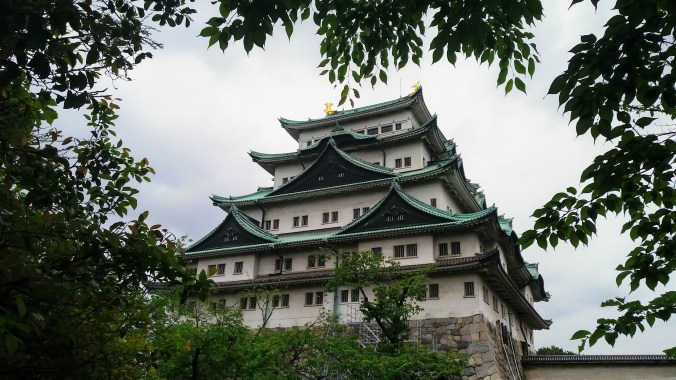
Just after leaving Hommaru, the path turns a slight corner and suddenly there’s the first real view of the Castle proper. This was the real moment I was sad about the weather. Nagoya Castle is elevated, and huge, so any photo will have plenty of sky in the background. My cloudy, rainy day resulted in a very plain light gray sky instead of a fluffy cloud filled azure backdrop. Is it cheating to use filters?

Did I mention there are ambulatory ninja on the castle grounds? It’s part of a cultural and historical show. According to the ninja website, two words I never thought I would string together in a non-hyperbolic fashion, there are performances every weekend, but weekdays are listed as “hospitality”, a kind of meet and greet.  I was there on a Tuesday, so I only met the two posing for photos and promoting their future shows.

20180508_124042

No Nagoya Castle for Me

Sadly, the castle was closed for the finishing touches of construction, so I couldn’t go inside, but I’ve heard there’s an excellent view from the top. Looking at other people’s photos online, it seems the decoration style is very similar to that of Hommaru palace. The only truly distinctive thing I missed out on seems to be the huge Shachihoko (the tiger fish) that you can sit on and pose with, and the tall geometric stairwell. Next time.

nagoyajo_20160113_e

photo credit: Matcha Magazine

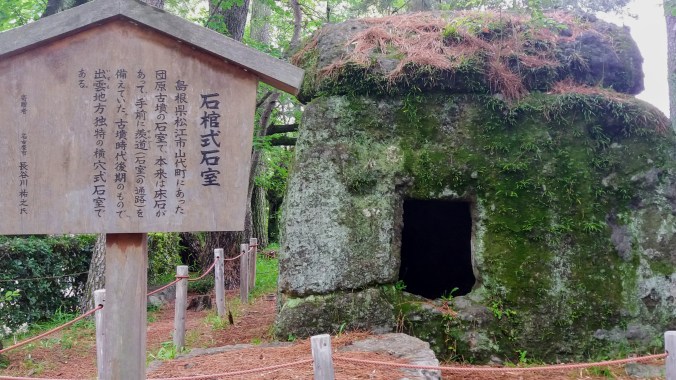
Since the castle proper and some of the other areas were closed off for construction, I was encouraged to wander a little off the beaten path. In addition to stopping for teeny tiny flowers which earned me some very strange looks. (Why is she looking at the grass when the castle is right there?) I also wandered off into a little forest grove filled with large, semi-flat stones. It was not cordoned off, but also not really connected to the main walkway either. After some assistance from the Google oracle, it seems I discovered a stone tomb of unique historical properties.

20180508_125002

I’m still unclear if it’s an original or a replica given the whole bombing debacle, and I don’t know why it was over there all by itself in an extremely unmaintained state in the middle of what were otherwise meticulously maintained grounds. The only informative sign was in Japanese and it mostly focused on the description of the architectural style, geography and time period with no mention as to its context near the castle. Still, it was pretty, and from inside the trees, I got some fun new perspective angles on the castle itself that don’t look identical to every other tourist shot on the web, so yay!

20180508_130642

A large chunk of the grounds were completely blocked off during my visit. I found a few more interesting goodies like ancient gates and the working tea house where you can stop and have a traditional cup of matcha green tea and a sweet. Of course the souvenir shop would never be closed for construction, but I found the gardens to be a bit lackluster, as though they had not been tended to yet this year, so even though they were not blocked off, they weren’t exactly visitor ready.

Samurai and Shachihoko

20180508_131428On my way back toward the main gates, I happened to run into the Samurai. Ninjas AND Samurai. It’s like cosplay meets museum, so very Japanese. Much like the ninja, the Samurai pace the palace grounds daily for photo ops and perform shows on weekends and holidays. My desire to avoid weekend/holiday crowds may have backfired here, but the guys I met were pretty cool nonetheless.
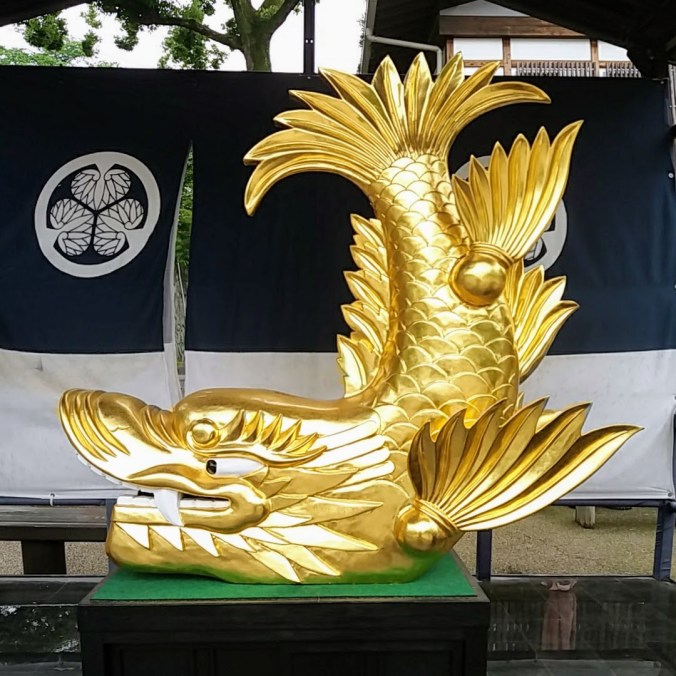
The last important sight before my path led me outward was the Shachihoko – the fish tiger. What’s up with that? Well, it’s a mythological creature that is half fish (specifically a carp) and half tiger. The Japanese characters that make up the name of the creature is also a combination of “fish” and “tiger”. 鯱 (shachi) = 魚 (sakana, fish)+ 虎 (tora, tiger) Some argue that the fish is really an orca because “shachi” also translates as “orca” in Japanese.  I love language.

It’s often put on temples and palaces to ward off fires, but in Nagoya it has become the special symbol of Nagoya Castle due to the two large golden Shachihoko on the roof. Most of the souvenirs, or omiyage, of the castle involve this magical creature in some way, and of course, so does the golden ice cream.

20180508_132024


I do hope that I’ll have the opportunity to return to Nagoya again after the construction is complete. I would not only enjoy seeing the inside of the Castle proper, I suspect I would greatly enjoy the gardens and side buildings that were inaccessible during my visit. What little I could see through the scaffolding looked intriguing. Plus, next time I won’t feel guilty about trying that glittery frozen treat now that I know more about the edible gold market.

Due to the weather, there is no accompanying photo album to this trip, but I hope you’re enjoying the Instagram photos in the mean time. As always, thanks for reading ❤

Oh, and the umbrella foreshadowing? I’m afraid you’ll have to read the next post to find out about that adventure. 🙂

Royal Decree Holiday: A Day in Cairo (Part 2)

I’m sitting here almost completely packed and waiting to go to the airport to leave Saudi and start the next chapter of my adventures. I have 5 more hours to kill before I can go to the airport, where I will wait some more, before flying to my connecting airport and wait 5 more hours for my flight out of the Kingdom. So as a semi-productive use of all that time, I’m going to try to finish up the last stories from my time in the Middle East. So here’s the final chapter in the Royal Decree Holiday Series (March 19-27, 2015).


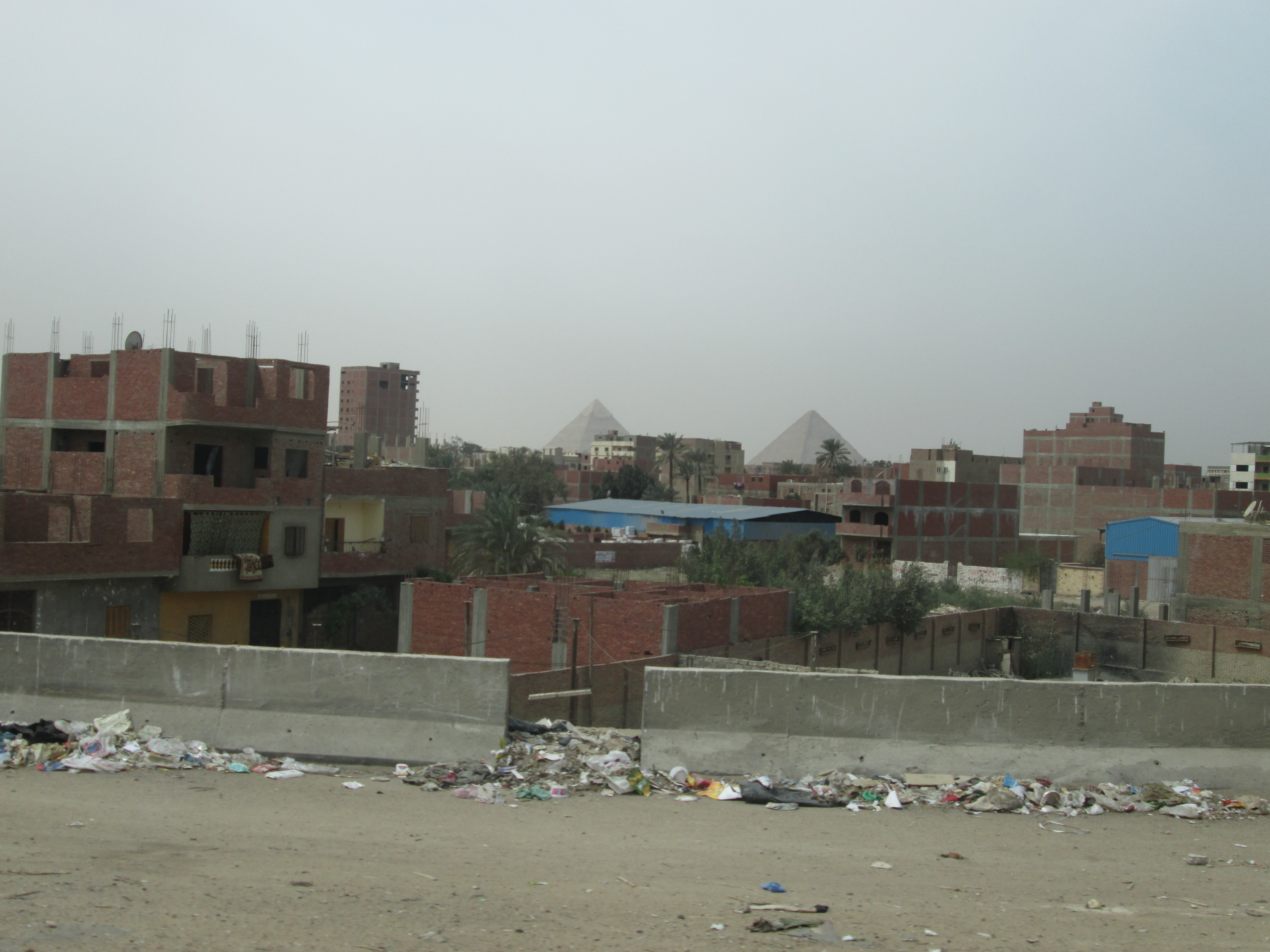
After our Nile river cruise and a buffet lunch it was time to head off toward the main attraction, the Great Pyramids at Giza! We had to drive quite a ways through the city and it was disparaging to see the half built state of the buildings. Our guide told us that the buildings were mostly left unfinished and people moved into them anyway. The government tried to smooth over the unrest caused by this condition by providing free or cheap satellite tv to the residents, but it backfired because they ended up seeing much more of the world that way, and it only served to highlight their situation.

Unsurprisingly, the tour took us to a shop. It’s not unusual for tours to take groups to the shops of their friends and family. I found out that for Arabs this is actually an anticipated part of the tour, and they are sad when it is left out, whereas Westerners tend to get a little annoyed and feel like they are being scammed. I didn’t mind this one because it was also quite instructional. It was a papyrus art store, and they had really cool little demonstration booths that showed us how traditional papyrus paper is made from the papyrus plant. The plant is naturally fibrous, so they slice it into long strips (the size they want the finished scroll to be), soak them for ages (the longer the soak, the darker the paper will be), then weave them together and press them for more ages.

The whole thing takes a couple of weeks. The sugars in the plant act like a glue and bind all the fibers together while they are pressed. When it comes out, it has a clear and visible texture showing the woven strips of papyrus. And, as it turns out, you can wash papyrus paper once it’s all finished and it won’t disintegrate like tree paper. Pretty cool. I was also totally suckered in and bought a family tree and had them write the names of my mother, my sister and her two little kids into the cartouches in hieroglyphs. I don’t often souvenir for myself, but I did promise to be the crazy aunt who travels all over the world and brings back cool stuff.

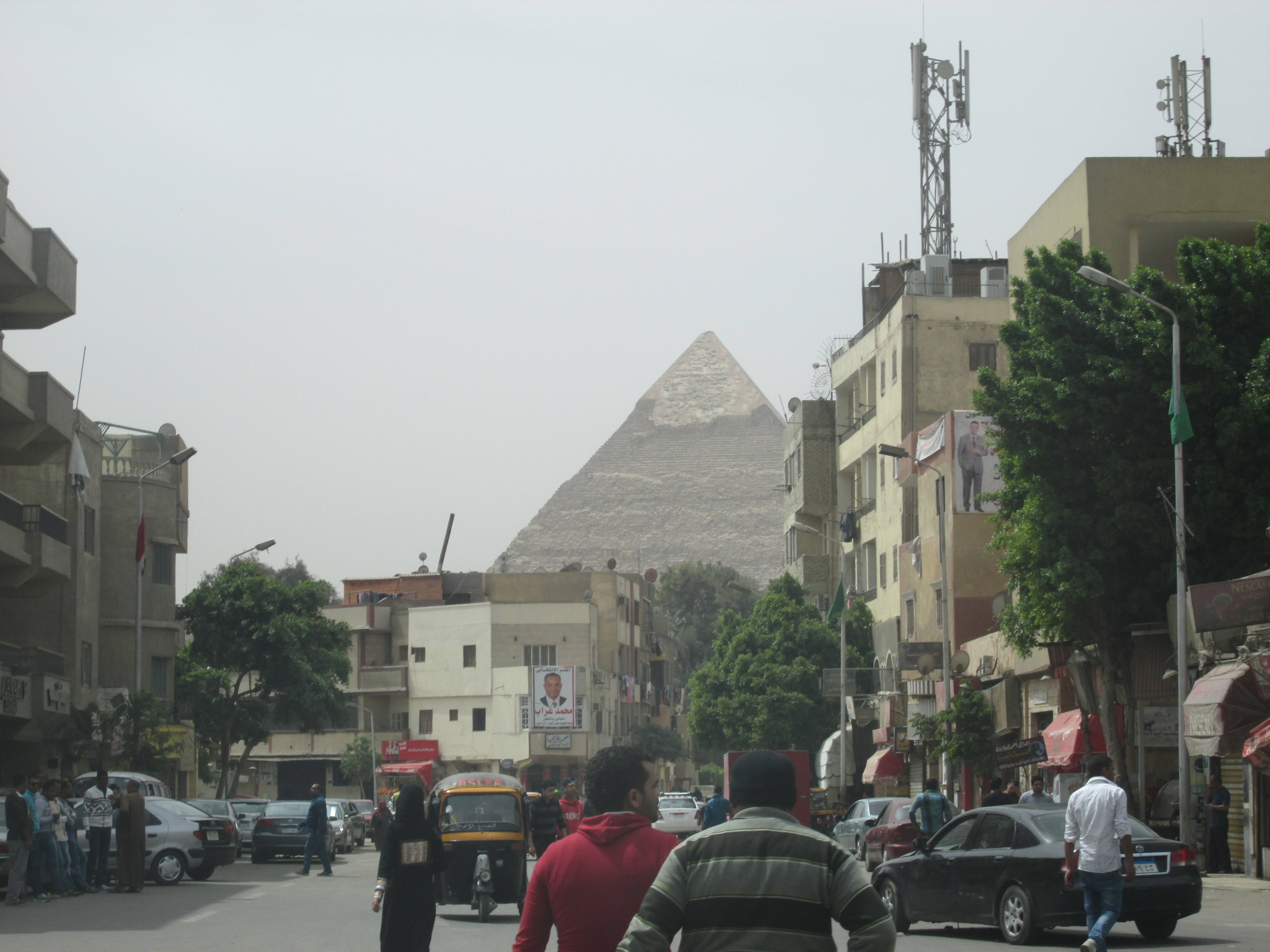
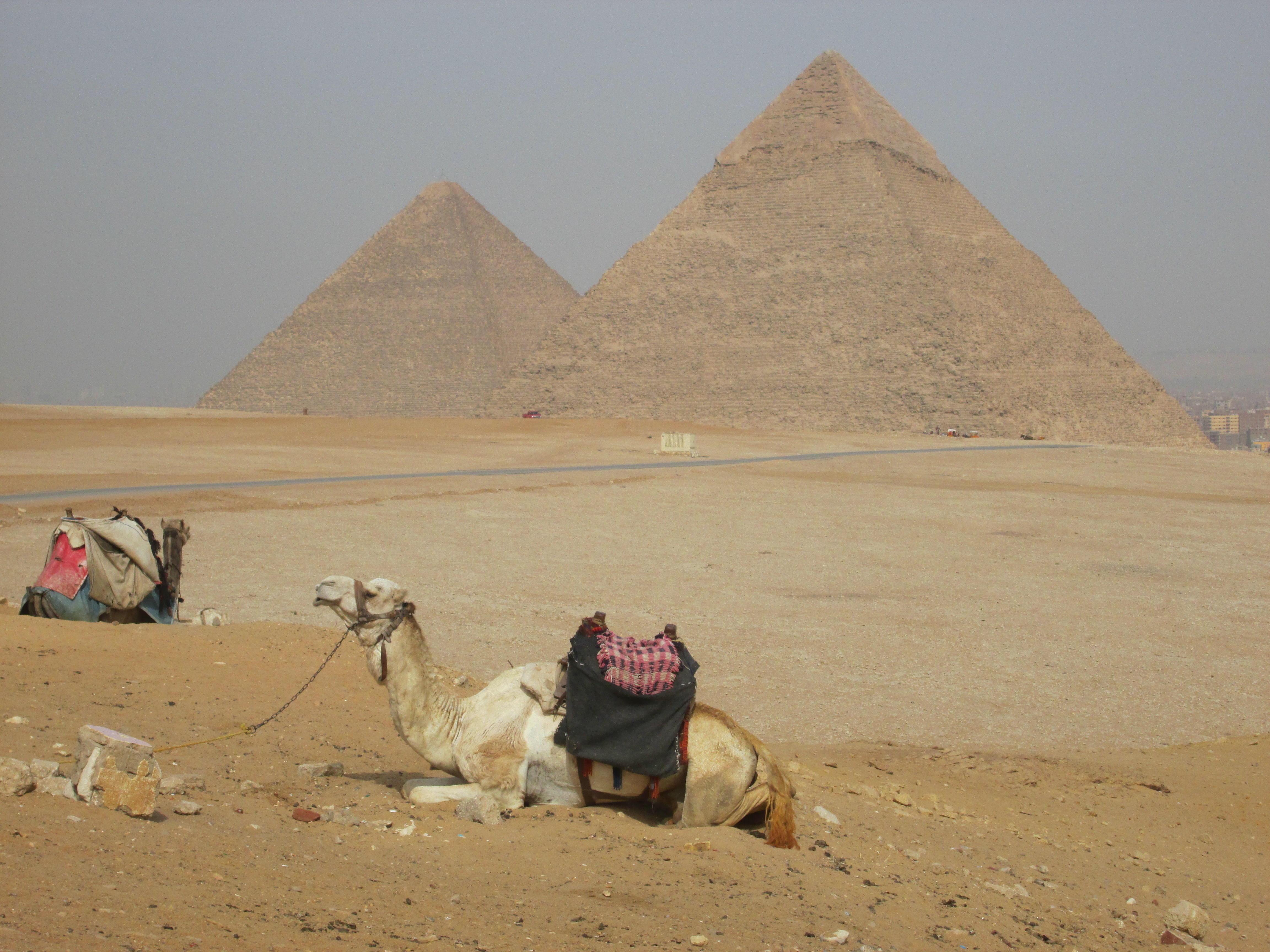
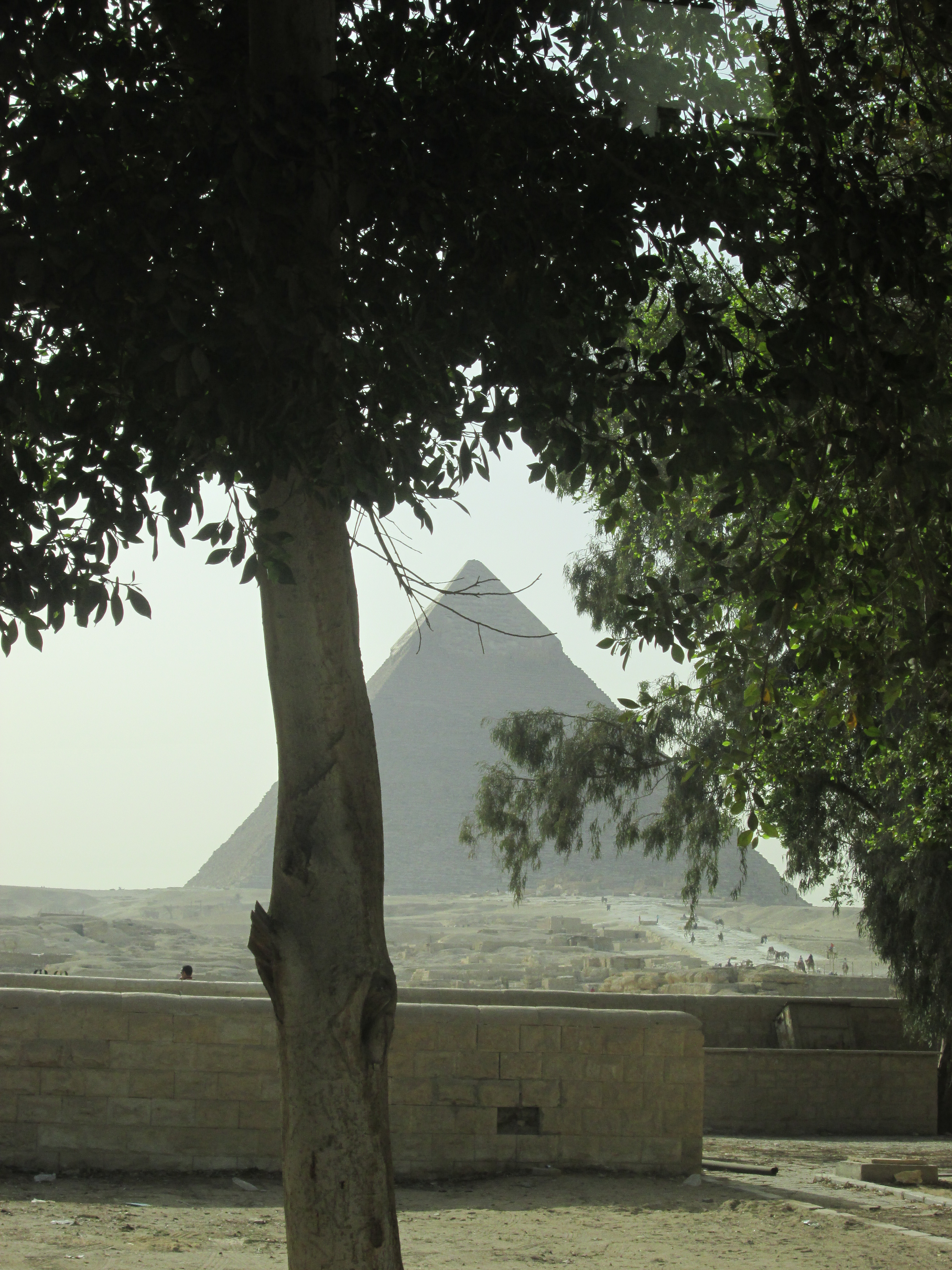
IMG_1838Shortly after we left the shop, the guide pointed out to us that we could see the tops of the pyramids in the distance, which was really surreal. All the movies and photos make it look like they are in the middle of nowhere in the desert, but they’re really right on the edge of the city. Cairo is actually only on the east side of the Nile, so the city we were in now was technically Giza, once reserved only for the dead, the western side of the Nile started accommodating living residents when the population in Cairo became too dense. Our first glimpses of the pyramids were still quite far away and the amount of driving we still had to go gave some slight indication of the massive scale.

IMG_1848The closer we got, the larger the structures loomed and the worse the neighborhoods got. Garbage on the streets, shacks and shanty buildings, increasingly run down cars and also more horses or mule drawn carts. Our guide told us that there were almost no new cars in Egypt because of the high taxes on new imported cars (and there are no Egyptian car companies). Since petrol is really cheap in the region, most people see no benefit in buying newer, more fuel efficient cars and just drive their old gas guzzlers until even duct tape can’t hold them together anymore.

The pyramids themselves are of course a massive tourist attraction, but to be honest, I had expected to see more people. It wasn’t like we had them all to ourselves, but I don’t think there were more than a few dozen tourists out there. In fact, there may have been more locals in the form of tour guides, security guards, and trinket sellers than there were tourists. We had to pass through some security, a standard bag scanner and metal detector, and then we were in the park. Our guide did a good job of making sure we always had plenty of time to take pictures at all the best picture spots. And he took some silly pictures for us, using perspective to make it look like a person was touching the tip of the pyramid with their outstretched finger. These photo ops only get more ridiculous as we go on.

IMG_1861I think for a while, my brain was just rejecting the idea that it was real. All the experiential data I ever had with the pyramids was in 2d representation, after all. It’s a very strange feeling when your brain takes something so familiar and has to rewrite the entire thing. I really did try to listen to the guide, but most of what he was saying was stuff I already knew from decades of documentary watching. Instead I kept staring at the pyramid next to us, watching people climbing on the lower blocks and boggling at how easy it is too completely loose perspective without something for scale. I mean, we know the blocks are big, but since all the blocks are big and the backdrop is a desert (the city was behind us) it’s hard to keep in mind just how big, and then you see a person who is standing next to a block that is as tall as they are.

I know it sounds trite, but it really makes you marvel at the people who built it. I mean, the Great Wall is also a marvelous feat of engineering, but at least the stone blocks that make it up could be moved by a small team of men at most. It’s a lot of labor, but it’s labor that makes sense. It’s that stunning difference between knowing a fact from a book or tv, and feeling that idea for yourself. I will never get tired of that.

20150326_140731

We climbed over the front of the large pyramid for a while, taking pictures and feeling the stones, examining the well known spaces between which a piece of paper cannot fit and just generally feeling giddy (nope, that wasn’t just me) then we piled back in the van to drive around to a viewing platform where we could see them a little better. This was a pretty surreal view, because from this place, we could see the grouping of pyramids but with the city as the backdrop instead of the desert. I met an au pair there from Spain who was with the family she worked for on holiday in Sharm. Her boss had given her the day off to come to Cairo and she was near tears with the excitement of actually being at the pyramids.

We took more pictures, and she and I talked about what the pyramids meant to us. I really can’t say enough how different being there is from seeing it, even in IMAX. It’s like waking up from a really cool dream to find out that it’s real after all. It was so nice to find another person who felt the same way about it. Sometimes I think travelers can get inured to the wonders, or simply go to places to check them off a list. Lists can be great, but not if they’re the only reason you’re going. There are things that, when you see them, they will change you if you let them. Your world gets bigger and more amazing than it was before, and even if you forget sometimes, the memory can remind you that amazing stuff is out there, and you can see it.

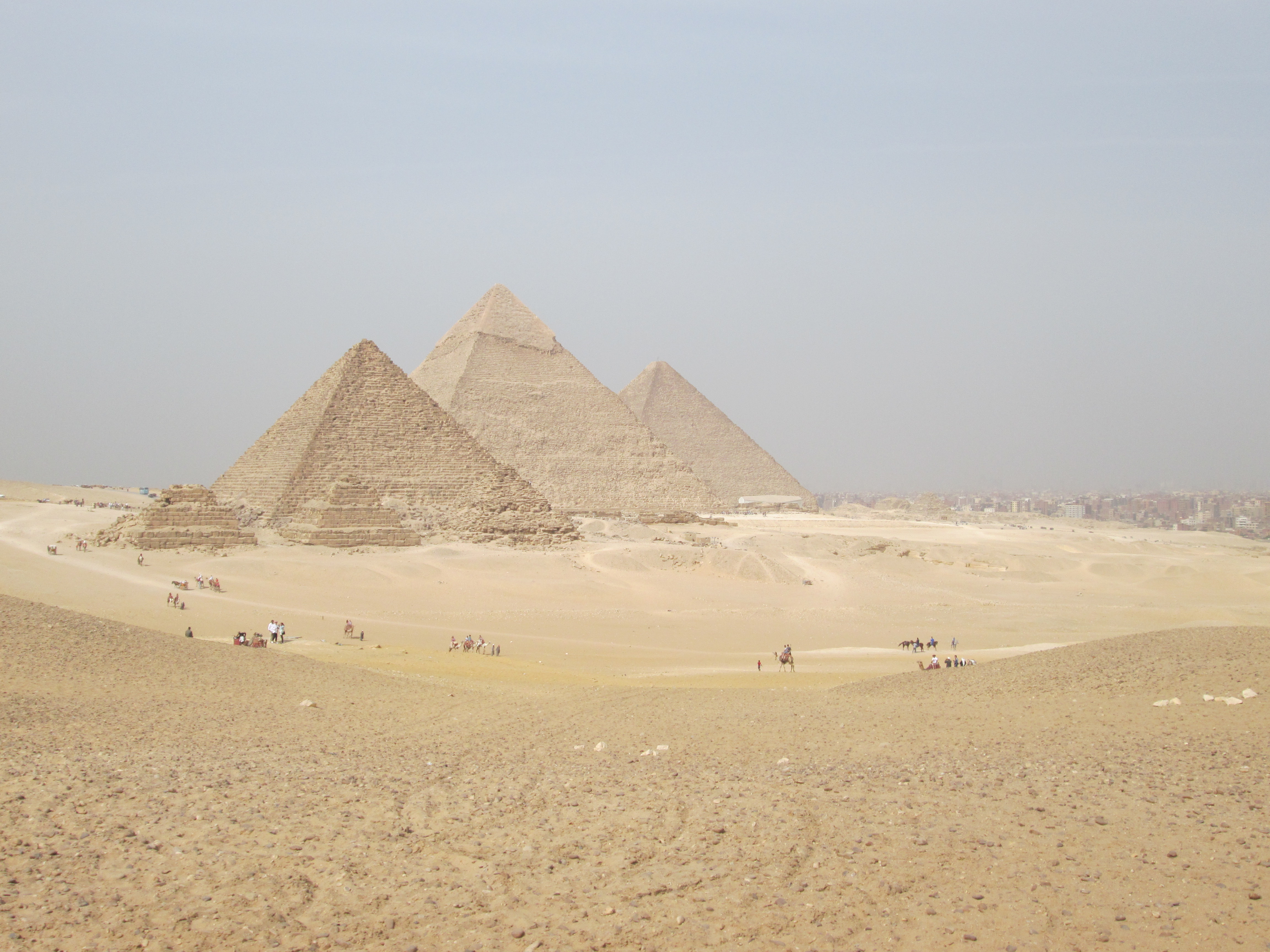
From the viewing platform, we had a choice. We could pay a little extra to take a camel ride or horse-drawn carriage ride all the way out and around to the “classic” view of the 9 pyramids against the desert backdrop, or we could stay with the van and head to the next stop. I think there are places that spending the extra money is a scam, and I almost always think a camel ride is a scam (maybe I just don’t like camels), however if you find yourself in this position to choose… do it.

IMG_1876I opted for the horse-drawn carriage ride, and got one with a little shade cover, which was nice because the afternoon sun was coming on strong and we were starting to feel the heat. The driver was very courteous and the horse was a little flatulent, but it was a side excursion so very well worth taking. This post is so challenging because I continued to find myself at a complete loss for words, my mind (so rarely quiet) stilled into complete shock by the spectacle in front of me. You’ve seen the pictures before, and I’m sure as you look at mine, they don’t seem that different (perhaps even slightly inferior) to others you have seen. I don’t know to relay the feeling, because nothing anyone said to me before conveyed it.

IMG_1884Plus, out there on the little path through the desert, the tourists and the city and the poverty and the centuries sort of faded away. I couldn’t hear them, and all I could see were the occasional camel and rider shape in the distance. It was a really great way to get some time to myself with the pyramids. The driver stopped several times, some were clearly planned and other times he just noticed I was taking pictures and stopped to make it easier for me. IMG_1905He also took a wide variety of pictures of me in front of the pyramids in increasingly silly poses, most of which will never ever be shown to anyone over the age of 5. The guide had suggested a reasonable tip for this service, and since I felt like he did a good service (and I have intense privilege-guilt) I acquiesced to the extra money above the ride fare.

20150326_144719

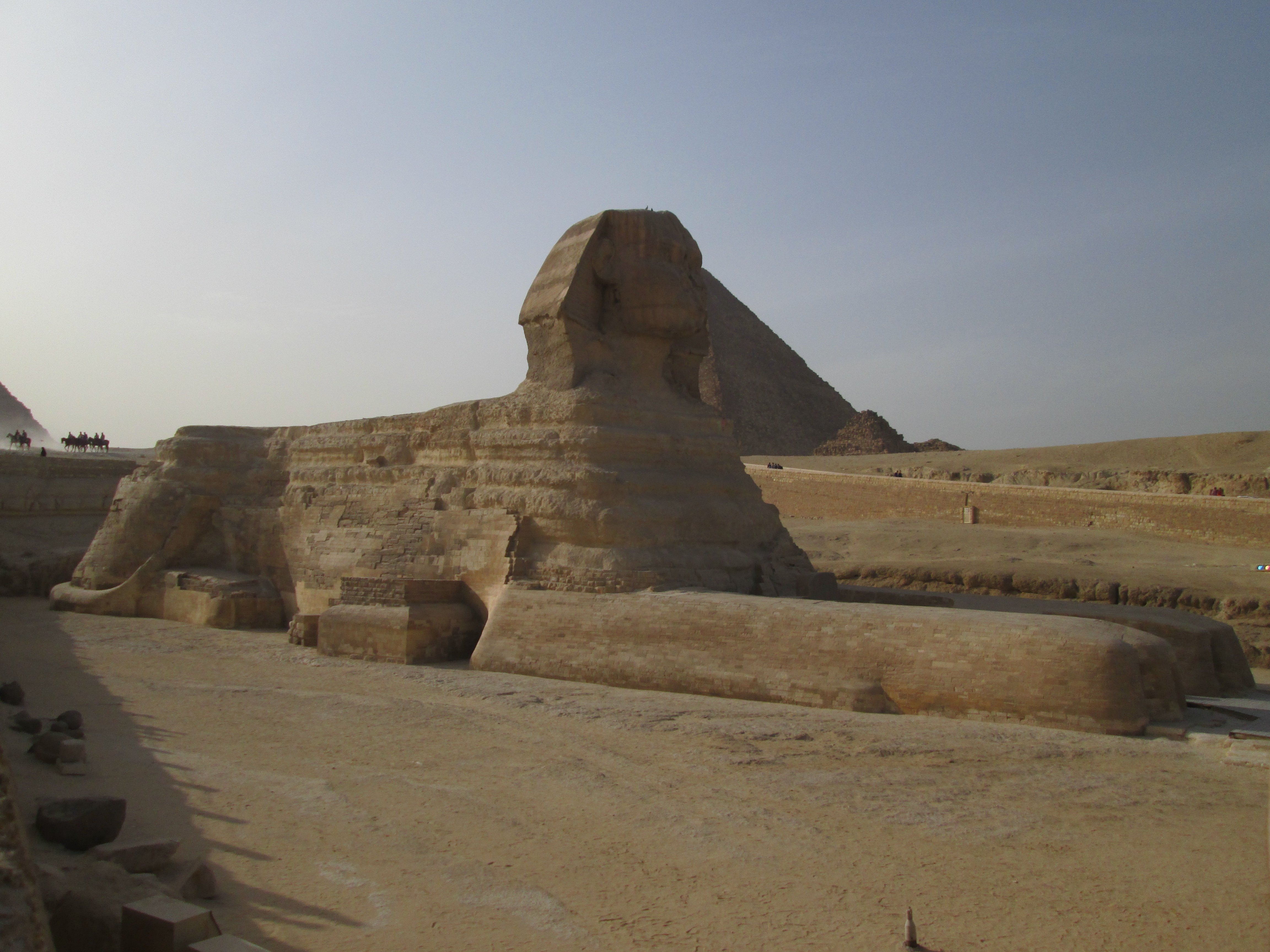
As we rode back toward the pyramids, the views continued to shift and change, and although the afternoon is the hottest part of the day, the bright sun and deep blue sky made for some wonderful photos. IMG_1913We finally reunited with the tour group. While we were waiting for everyone to get back, the guide pointed out a small mound of rock between us and the city skyline. That, he told us, is the Sphinx. As my perspective shifted, I realized I was indeed looking at the back of the Sphinx’s head,IMG_1933 it’s body hidden by the high walls of the pit that it lies in, it’s face looking out over the city. It was so small compared to the mammoth buildings next to us. Even the smaller three pyramids in the complex made the nearby Sphinx look tiny.

IMG_1936Once everyone was assembled, we headed over to one of the smaller pyramids where we would be allowed to climb down into the burial chamber itself. Inside a pyramid! Entrance into a small pyramid was included in the ticket price (which was part of my tour package). A person could go inside the Great Pyramid for an extra cost. Our guide suggested that we try the small one first to see what we thought. He pointed out that the chambers were not terribly different, and that we would be better off with the free version. Considering the not very hidden extra fees for the river boat and the horse carriage, I was a little surprised that he wasn’t pimping the Great Pyramid more, but it also made me less inclined to go.

There were several tour groups gathered at the entrance to the small pyramid we were allowed to enter. They were supposed to be regulating the number of people who would go down at a time, but that didn’t always work out. The majority of my group went down, but I was told to wait because there were too many inside. Some came back rather quickly, deciding the steeply slanting climb down in the narrow passage was just too claustrophobic. When I got my chance, I was surprised at how warm it was. I thought that the thick stone would protect the interior from the heat, but there were also a lot of people. There was a small landing at the bottom of the main passage and then another downward slant at a 90 degree angle to the small chamber. The passages were too narrow for people to pass one another, so we clustered together on the landing waiting for the last of the people coming down from the outside, so that those in the chamber below could get out.

I did say there weren’t too many tourists, but this confined space was too much for more than a dozen people at a time, and everyone wanted to see. There was a guide or guard in the chamber, but he was having a hard time regulating people. To be honest, I’m really glad no one panicked because it is a little unnerving to be under tons and tons of rock with a press of bodies and no way out. I finally got into the chamber. There were some ziggurat style “stairs” in one corner, perhaps used as shelving, and there was clearly the carved out pit where the sarcophagus would have lain. These were the two preferred photo-op spots,  and some tourists and I traded cameras so we could take pictures for one another and avoid handing our camera off to the native.

It was very strange. I think I would have liked to see it alone, to get a sense of the space. It was smaller than I pictured burial chambers being, particularly in comparison with the size of the building that housed it. Climbing down into the sarcophagus pit was fascinating. I’ve always loved graveyards, crypts and mausoleums, and although the stone has been brushed by probably millions of hands since it was carved for it’s only resident, if anything that added to the experience, knowing how many people across time and geography had shared this moment with me. A moment preserved where no sun or rain or wind could carry it away.

At some point the room started becoming far too full, and we were running out of safe places to stand. I had become completely cut off from the rest of my group, but I also knew that our guide had been counting heads every time we got on the van and that he wouldn’t leave without me. It took some wrangling and eventually some yelling between guides in Arabic to get the downward flow of tourists to stop and let me back up to the top where my guide was having a heated argument with another guide that sounded roughly like, “see I told you I still had someone down there you idiot”. He was clearly upset with the other guide for not waiting for our whole group to get out before theirs went in, but not upset with me at all.

IMG_1957Our time at the pyramids was finished and it was time to head next door to the Sphinx. We piled back in the van and drove through some more shanty-shack neighborhoods and pulled into the tourist parking area for the Sphinx park. We used our ticket stubs from the Pyramid park to gain entrance and headed toward the great lion-man past a gauntlet of trinket sellers. However bad I may have felt about the Egyptian economy, almost nothing gets me to stop for cheap trinkets, which is sadly what they all had on offer. I was definitely pleased with my art purchase from earlier, and I gotta say, if you need a souvenir from Cairo, go find a nice shop or two and leave the gew-gaws behind with a firm but polite “La, shukran”.

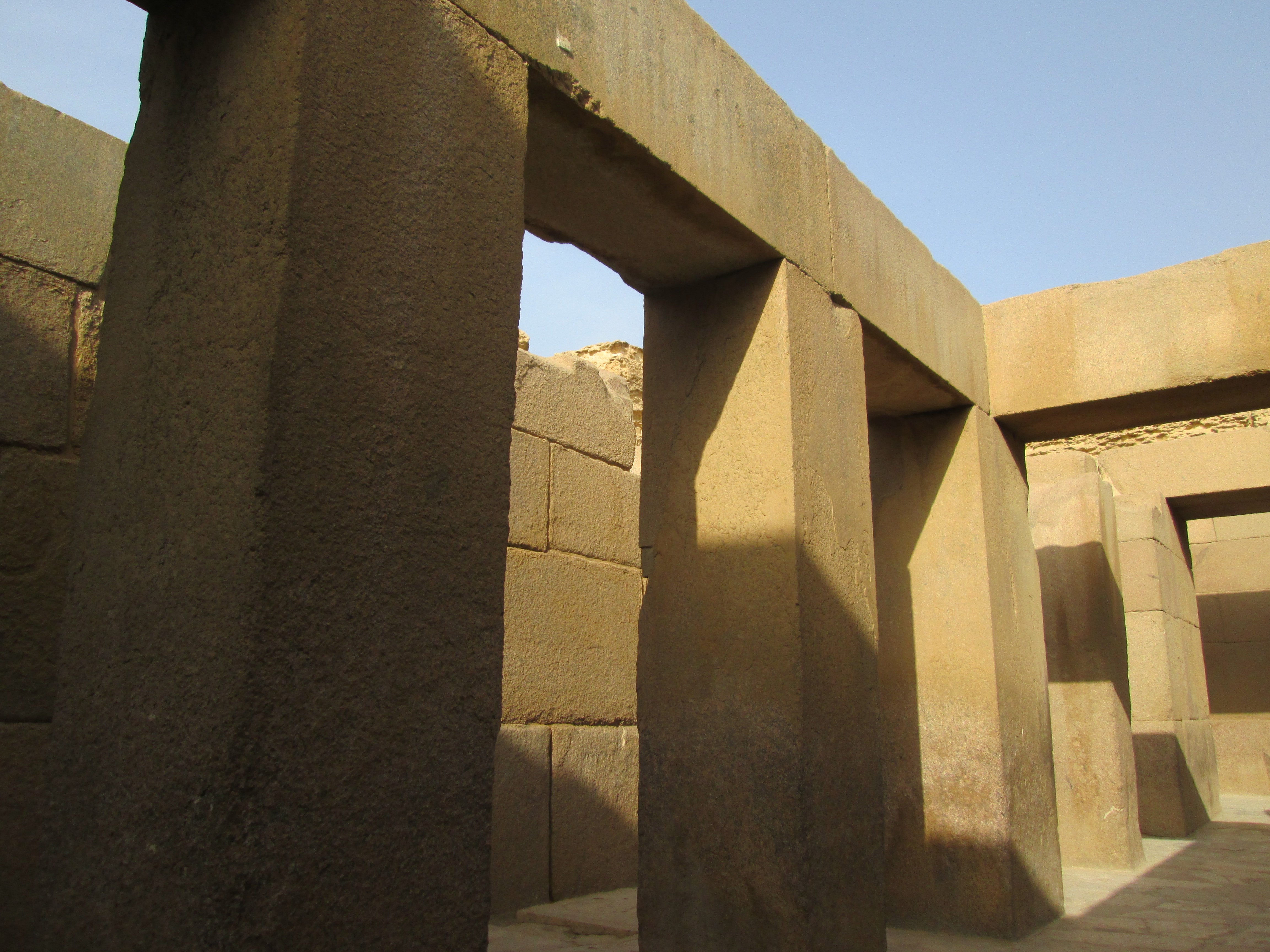
IMG_1961First we entered the temple where we saw the fine stonework that assembled the walls, floors and pillars. Stones here are carved in very irregular shapes, not regular blocks like bricks or legoes, and not even different sized blocks, but really 3D jigsaw style shapes. Each one had to have been carved as part of a larger plan so that they would still fit together so neatly that the proverbial paper could not come between them. Modern engineers and architects think that this kind of assembly gave the structure more stability over time, making it resistant to natural disasters such as floods, high winds or earthquakes.

IMG_1965In many ways, standing the the pillared hallways of the temple was just as thrilling as being inside a pyramid. I know there are a few manmade things on earth that are older than this place, but not many, and none as sophisticated. Somebody needs to shrink the fMRI to a portable size, because I really want to know what the brain is doing differently when we see an image of a thing vs when we see the thing. Our guide did some more historical explaining and warned us once again about the scammers lurking around before setting us loose at the Sphinx viewing area.

IMG_1966This were a lot of tourists, or at least it felt like it. The Sphinx is made of much more fragile rock than the pyramids, and has worn away and been rebuilt many many times since it’s original construction. As a result, tourists are not allowed to climb on the Sphinx the way we are on the pyramids. There is a wall and fence to keep people out of the pit where the Sphinx was dug out. Nonetheless, there was a tiny little corner where, if you stood on the very edge and leaned into the fence, you could get a spectacular shot of the statue that was totally bereft of people. IMG_1983As I made my way along the railing, admiring the work of the flank and paws, a local noticed me trying to take some selfies (because Sphinx selfie, you’d do it too) and more or less took my camera out of my hand to take pictures for me. I did try to stop this from happening, but eventually gave up arguing and let him take the photos, which were the most ridiculous by far, including me punching the sphinx, me kissing the sphinx and the sphinx kissing my bum. No, you cannot see them.

About this time, I decided that it was getting out of hand and took my camera back. This was an argument with some force, because he wanted paying for taking these pictures that I had not requested. I finally got the camera back, simply by refusing to let go. When he asked for money, I gave him the only Egyptian currency I had on me (having left most of my money back on the tour van where it was safe), a whopping 5 Egyptian Pounds (less than 2$). He was also not happy about this and asked for dollars or British Pounds (being used to tourists, the British Pound is widely sought after in Egypt), but I explained that I had no such currency, and that this was all the money I had on me, and perhaps he should be more cautious about taking pictures for people that didn’t ask him to. He left in bad grace and I returned to happily walking up and down the length of the viewing area, dodging children and other people’s photo-ops. I did get my selfie after all, as well as some very nice pictures and a giant amazing memory.

IMG_1980With some reluctance, we said farewell to the ancient mysteries and wended our way back to the tour bus. The Sphinx had certainly been worth the efforts of fighting the crowds, but it was a little disappointing not to be able to explore it more after having so much freedom at the pyramids, ah preservation. The tour was over, but we still had a little time before we had to go to the airport, and so we were escorted to another small shop. This was actually somewhat of a relief, because they were pleased to let us use their restroom and wash some of the dust off before we were all seated for the sales pitch.

The young man attending us was from a Bedouin family that made their business in trading perfume oils. They mostly supplied the fragrance oils to major brand perfumeries (and some off brand too, I’m sure), but were selling the oils directly in their shop. I have no idea if they were really supplying Chanel or Jean Patou with the base flower oils for their perfume or not. I do know that a lot of those oils do come from Egypt, so it’s possible, and it was air conditioned, so I didn’t mind too much.

They offered us a choice of coffee or tea, and some of the other folks were hesitant to accept, believing it was a ruse to put them under obligation to buy. He tried to explain the Bedouin tradition and assure them, but even still, I had to whisper to a few that it really was ok to accept the tea.

Once the drinks were passed around and we had exchanged some pleasantries, he began to tell us more about the oils. There were many scents that were individual flowers or spices, and others that were blends. He sampled out several of them and showed us how to use the oil in small drops instead of spraying as normal perfume. At the end of the presentation he asked us what our favorite perfumes were to see if they had a match. At first I couldn’t think of anything because I don’t wear perfume very often, but then I remembered my mother’s tiny little bottle of Shiseido that I had loved as a little girl. He had to go research the name since it isn’t one of the top brands anymore, but he finally came back with a product they called Isis (the goddess not the terrorists), and while I can’t tell you if it was a match, I did really like it, so I bought a small bottle for about 25$, and I can tell it’s going to last me a really long time because I’ve been using it most days since then and the level has hardly gone down at all. So, all in all, another good choice for a shopping stop.

Finally we headed back to the airport where we clustered together and talked about the day, comparing notes and feelings, talking about where we had been and where we were going. It was quite late by the time I got back to the hotel in Sharm, and I only had time for a few hours of rest before I had to catch my ride back to the ferry at Taba that would take me across the Red Sea.

Although I only spent one day in Cairo, it was a spectacularly amazing trip. I hope to go back again someday, to spend more time in the museum and perhaps see some other parts of the city, but whatever happens, I will cherish the memories of the day my childhood dreams came true.

Spring Break 2015 Vol. 2: A Morning in Madain Saleh

I spent a whole day in transit to get to a city only 3 hours by car away from the one I live in. Why go through so much trouble and pain just to see some old ruins? Because Saudi Arabia is closed to tourists.

Madain Saleh may have been inhabited as early as the 3rd millennium BC, but very little is yet known about the people or the civilizations that predated the Nabateans (who we know all about by studying Petra in Jordan) because it’s only been in the past few years that archaeologists have been allowed to enter and excavate the site. In fact, the French archaeologist Dr. Laila Nehme was there at the same time I was. I didn’t meet her, but I did have in interesting run in with the French cultural attache who had come up from Riyadh to check on her that day (more on that later).

So, as a pure achievement junkie, I could not imagine coming so close to such an amazing piece of history and missing out! The only other time that I could have gone would have been in the summer heat after the semester ended, so I took two days of my precious vacation, and spent one of them simply travelling so that I could walk these grounds.

As it turned out, my adventure was way more than I’d bargained for, but in a good way. Read about it here and see all the photos on facebook!


Arriving on one of only two inbound flights for the week on Friday evening, my guide picked me up at the airport. You have to have a guide to see Madain Saleh. (disclaimer: Lot’s of Westerners don’t, because all rules in Saudi are malleable, but it’s a safer option than travelling all that way and possibly getting turned aside or lost). Particularly since I cannot drive in Saudi, a good guide was important to me. I searched a long time to find one, since tourism isn’t yet a big deal and locals who want to go to Madain Saleh just drive themselves!

Mr. Fayez

After emailing everyone on the official tourist guide website, and scouring Trip Advisor, I found Mr. Fayez. Who, by the way, is awesome and I’ll be happy to send you his contact info if you need a guide.

Mr. Fayez spoke very proficient English and had not only agreed to be my guide to Madain Saleh, he also arranged all my transport, the necessary permits to visit the sites, and helped me with meals! He even sent me a message shortly before my vacation began to verify our plans, a true rarity in Saudi where everything is “Inshallah”.

Knowing I was a single lady travelling alone, he brought his niece and nephews with him when he picked me up at the airport (at night). This may sound odd, but its actually very courteous. It is a protection both of his reputation and of mine to ensure not only that nothing untoward happens, but that no one will talk bad or spread rumors. We drove around a bit and I got a sneak preview of the amazing rock formations that surround the town of Al Ula. He told me that the hotel had a restaurant but that it was very expensive and offered to take me to another restaurant that was much more reasonable.

Of course, he’s friends with the restaurant owner, this kind of thing is standard in lots of places with local guides, but it really was a better price and very good food with such generous portions that I ate the remainder for breakfast the next day. Sadly, the restaurant owner says he’s tired of running it because kids come by and tag the walls with paint all the time, so he’s selling the space to a traditional kabsa restaurant.

During our time talking, I also discovered that Mr. Fayez is 37 and planning to get married in just a few weeks. His bride is only 20, but this age gap is fairly common, since men have to finish their education, get a job and save up money before they can get married, while women only have to be legally old enough. He told us that his young bride really didn’t know anything about running a home, she didn’t even know how to make tea yet! To me, this is just another example of how the oil wealth has really changed the younger generations in Saudi, making them dependent on servants to do anything that resembles “manual labor” including simple household tasks like cooking or sewing a button.

IMG_1059Mr. Fayez is one of many tour guides in Al Ula, but he is the only one who makes guiding tourists his full time job. All the other guides have “day jobs” (which doesn’t amount to much real work for Saudis) and take tourists around on the weekends. He said that the reason he charges less than the others (and he does) is so that he can attract more customers, but that the other guides give him a hard time because he is making their prices seem too high (which they are). It made me happy to be supporting a Saudi who wanted to make a success of his own business and work hard to achieve his goals. I feel like that’s a rare quality in the Kingdom nowadays, so I may be shamelessly plugging for him as a great choice if you visit Madain Saleh.

While we waited for Isha prayers to end so we could pick up the food, Mr. Fayez took me by one of the towns public parks. It was a beautifully grassy area just alongside one of the prodigious rock formations with a nice walking path, and a playground for children. On a Friday evening, many families were out enjoying the mild weather, and it was really neat to be able to see the community. In many ways it reminded me of the Corniche in Jeddah. When I told Mr. Fayez this he laughed and said except there is no sea.

Al Ula is a very small town. I’m not actually sure why it has an airport except for the UNESCO fame. Some blogs I read said that there were smaller hotels or hostels around, but they were single men and had more options. As a woman (single or not) the only real option was one of the towns two hotels. Yes, two. I chose the Al Ula Arac Resort because it was only slightly more expensive and a lot nicer looking. And as with so many things in Saudi, looks are all. I’ll be doing a separate post on all the accommodations of my trip, so for now I’ll just leave it at that.

We were scheduled to set out at 9am, joined by a man from the UK who had also booked Mr. Fayez for a tour. My day trip companion was Indradeb (you may notice the name is a teeny bit Hindu), and he arrived decked out with a large professional looking camera and a loaded backpack.

On the drive out, Mr. Fayez explained to me that we would start the day with Madain Saleh, since it closed fairly early, the we would see the Ottoman Train Station, Elephant Rock, the Dadan ruins, Old Town and finish with a sunset view from an overlook rock. Quite a full itinerary, but traffic was minimal and Mr. Fayez had made all the arrangements so everything went smoothly.

He also told us the origin of the name “Madain Saleh” which means Saleh’s Town. Although I have found that this story is fairly well known by Muslims, I cannot speak to the Quranic veracity of this version of the story, I can only relate it as it was told to me.

The Story of Saleh and the Camel

It comes from an Islamic belief that the Prophet Saleh (PBUH) entreated the people to follow a single god, Allah. The people ridiculed him and treated him very poorly, demanding proof of Allah’s power. Finally, Saleh prayed to Allah to send a miracle to convince the people. Allah turned a giant stone into a pregnant camel (also giant) who then gave birth to her calf.

Allah instructed Saleh that the people should alternate days in using water for themselves and for this camel. Drinking one day, and watering the camel the next, but that they could then drink the milk of the camel.

The giant camel came and went from the town as she pleased, seen by the people only when she came to get water and give milk. They were instructed not to follow her when she left.

But people being human, some of them were still not satisfied with the miracle, and desired to kill the camel. So they followed it into the mountains one day, and killed it while the calf escaped. Allah was so displeased with them that he sent a plague. On the first day their faces all turned yellow, on the second day red, and on the third day they turned black and died.

Only the people who believed Saleh (PBUH) and left the town with him were spared.

The Prophet Muhammad (PBUH) tells his followers this story when they camp at a site somewhere one the road between Tabuk and Madina, and makes them leave the place because it is cursed. Many Muslims today believe that Madain Saleh is that place, although there is still room for question as we await further archaeological discoveries.

As a consequence, some Muslims avoid the historical site, believing it to be the cursed place told of by the Prophet.

Madain Saleh

This is known to be the southern capitol of the Nabatean civilization which Petra is the main capitol of. Everyone knows Petra from Indiana Jones, and I was planning to visit it next, but was excited to see the contrast between the two.

The actual town of Madain Saleh is still underground, yet to be excavated fully, and is not open to the public, so we contented ourselves with the necropolis and temple.

The rocks around Al Ula are tall jutting mountain sized boulders, leftover from when the whole area was under water. In fact, I could see clear signs of water erosion on the rocks that the tombs were carved into. It made the tombs stand out even more, since they were smooth and flat in contrast to the pocked, uneven stone they had been carved from.

The tombs range in age and size. The size depended mainly on the wealth of those to be buried within. Mr. Fayez told us that the builders would start at the top and carve the facade, then excavate the inside of the tombs. We saw several that had been only partly finished and this method was obvious.

Also, unlike many historical sites, there was nothing preventing us from walking right inside the tombs where we could see the tool marks left by the Nabateans over 2,000 years ago. There were niches in the walls that had been carved out for single bodies, and deeper pits that had been designed to hold several bodies together.

The front of the tombs were decorated almost without variation by two pillars, a peaked triangular shape connecting them, and five stepped ziggurat shapes carved above that. Some had urns above the pillars, there were also many eagles as central adornments. A five petal flower was also quite popular. Mr. Fayez explained that five was a sacred number, and that the steps on the ziggurats represented the steps ascending to the gods or descending to the netherworld.

We also saw one tomb that had two small sphinxes guarding it above its pillars, indicating some influence of the Egyptian culture.

The grounds that cover Madain Saleh are quite large, and while we walked around many areas, we also drove between several. The temple area was quite astounding. A narrow passage between two high rocks led past a deeply carved gathering place for worship. Mr. Fayez showed us how the people had used the rocks to funnel the rain water into cisterns to be used in holy rituals.

We passed through the high rocks (a walk that echoed the long passage at Petra leading to the Treasury) looking at the small niches and carvings along the way, small spaces to place statues or offerings. We also climbed one of the tall rocks within, affording us a spectacular view of the whole area.

I’d cast off my hijab in the morning, deciding that I didn’t really need it if we were isolated from the crowds, but I was still wearing my abaya this whole time. Climbing around on the rocks in a flowing black dress is not easy. We ran into some tourists (who turned out to be from the Swedish Embassy in Riyadh) on their way back down from the view point, and I noticed the younger woman had doffed her abaya too. We had all done as much on our trip to the Edge of the World, and it was getting quite warm with the shinning sun and climbing, so I took the opportunity to shed mine and tie it around my waist, promising Mr. Fayez that I would put it back on if we ran in to anyone Saudi.

After admiring the view and posing for a few more pictures we moved on to some of the more “quintessential” spots in Madain Saleh, the ones you’ll see if you search Google Images. It didn’t seem to matter how many of the tombs I saw, I didn’t get tired of them. They shared general characteristics but were all unique. Here there were two serpents, or two lions, once a scowling face. Some had become two-storied in an effort to use more of the rock’s interior space. Some of the tomb faces in this area were pockmarked with bullet holes, reminders of Saudi’s bloody unification.

In a daze I drifted in and out of the ancient monuments, feeling an intimacy with the past that we so rarely experience in the modern era. Finally we arrived at the crown jewel, the Unique Palace. It stands alone in a single huge rock, taking up nearly the entirety of one face. It is the only tomb in Madain Saleh to have four pillars, and despite its opulence, it was never completed. Only the facade was carved, and no one was ever buried inside.

The ground around it was a striking shade of yellow, in stark contrast to the rich red sand all around. There were steps leading up to the door that Mr. Fayez said had just been added yesterday. Further evidence that the site is changing as Saudi attempts to build interest in tourism.

We also visited a couple of excavated wells. Apparently the land around Madain Saleh still has a lot of natural water. And the red sand is rich for agriculture. In fact, we saw a few wood and mud remenants of houses that had been modern Saudis living in the area until only a decade or two ago. The government had paid them to move, and torn out all the farmland to return the Heritage Site to it’s natural state.

The Ottoman Train Station

On our way out of Madain Saleh, we stopped at the train station, now defunct, where there was a restroom and small mosque. Duhr prayer call had passed while we were taking in the tombs and Mr. Fayez needed to pray. I was amazed that even out among the ruins we could still hear the Athan although only faintly.

Sand is pervasive. The sand out here isn’t like beach sand. It can range from the larger gritty crystals down to a fine talc-like powder. My shoes and socks were full of sand from my hours in the ruins, so I took some time in the bathroom to try to shake them out. On the way out, I got caught up talking to a man from Africa, because I can’t go anywhere in Saudi without men trying to talk to me and get my number, but Mr. Fayez returned from prayer and rescued me from further awkwardness.

The train station looks exceptionally British. Indradep remarked on the similarities to train stations in London. I suppose by the 1900’s the remains of the Ottoman Empire had been highly affected by British colonialism. We stood around with some other tourists, taking pictures and being generally amused at the contrast between the ancient sites behind us and this nearly modern train.

It reminded me of the old West tourist sites in California, carefully preserved or even replicated relics of that were less than a century old. The date on the trains wheels was 1914.

Elephant Rock

Ok, it really looks like an elephant. That’s kind of all, but it was a short side trip, and I can’t imagine ever getting tired of the amazing rock formations around Al Ula. It’s especially stunning to see sand dunes drifting right up to the bottom of these rocks. The whole landscape looks like it’s barely changed since it was under water 50 million years ago.

I think at this point we finally stopped for lunch. Mr. Fayez had brought along juice and some snacks, which was very thoughtful, but it was a lot of trekking, even with the car. We went back to his friend’s restaurant and had a quick sit down lunch of kebab, grilled meat, green salad, humus and pita, then back in the car again to try to stay on schedule!

To be continued in Spring Break 2015 Vol. 3.

Don’t forget to check out all the photos on facebook!