One of the best things about travel is getting to learn new things, and on this trip I got to aquire a brand new skill I hope will serve me well in my future adventures. Despite the dangeous sounding urban ledgends and my own father’s brush with severe injury at the hands (wheels?) of this contraption, I decided it was time to learn to ride. Not only was learning far easier than I imagined, the freedom it brought to my holiday was irreplacable. Suddenly moving from place to place was not a chore or lost time, but an opportunity to connect with the natural wonders around me.
Why a Motorbike?
 Regular readers may remember, and anyone who’s been to SE Asia will know, transit in these countries is primarily done via motorbike (moped, scooter). Those who have not been, let me briefly clarify. I am not talking about a full on motorcycle Harley Davidson style, and I think sometimes westerners (especially Americans) are confused about the differences. Many countries have laws defining the these and what kind of license you need for each, and in every case the motorcycle is more demanding, difficult to drive and dangerous. I don’t think the Philippines has or at least doesn’t enforce any such laws, as I saw vehicles that looked like both on the road all the time. The best part about the scooter for me was automatic transmission, and a floorboard, so you are able to sit more naturally.
After my very frustrating experiences with Thai public transit and private tours, I really wanted to give the whole bike thing a try, and Bohol with it’s slow farm life and tiny barrios seemed like a perfect chance. If you can drive and ride a bicycle, learning an automatic motorbike (scooter) is a breeze. Plus, then I could free myself from haggling with tuk tuk drivers or being chained to tour group schedules.
I had read online that most hotels/hostels will help you rent a motorbike and had verified that with Becca at Imagine Bohol before my trip. Once I was settled in my room, I asked her if we could get the motorbikes that evening. She called Lloyd and James to bring us the bikes and give us a quick lesson in scooter driving and Philippine road safety.
Driver’s Ed.
 First they taught us how to turn the bikes on and off, where the break and gas were, how to control the kickstand, the bike lock, and all the things you do while sitting still. Then they had us hop on behind, one each, so they could show us the controls in motion. James walked me through a step by step of every control and dial and button on the bike, then we pulled over and it was my turn to drive. Not realizing we we’re going to be out on the road, I’d left my sandals in the room, and James lent me his flip flops so that my bare feet would not be scraped on the asphalt, and off we went. At first I was a little nervous, but mostly I was excited. The roads we practiced on were nearly empty, and soon I learned to keep the bike on the far right, and how to make turns, how to control my speed and how to park. We drove around Alona and passed by Alona beach to see where the main parking lot was.
By the time we finished practicing it was nearly dark, but I felt much more confident on the bike. We made sure we both had helmets to use, and went over the bike condition before paying for the rentals and taking their numbers just in case of problems. I had read that the average rental rate in Bohol was 400-600php/day. James and Lloyd charged us a mere 350. We felt like it was a great deal, and it turned out that we had no problems with the bikes, or with returning them (I read stories of renters accusing riders of extra damage to get more money, not an issue we had with these gentlemen).
GPS via Headset
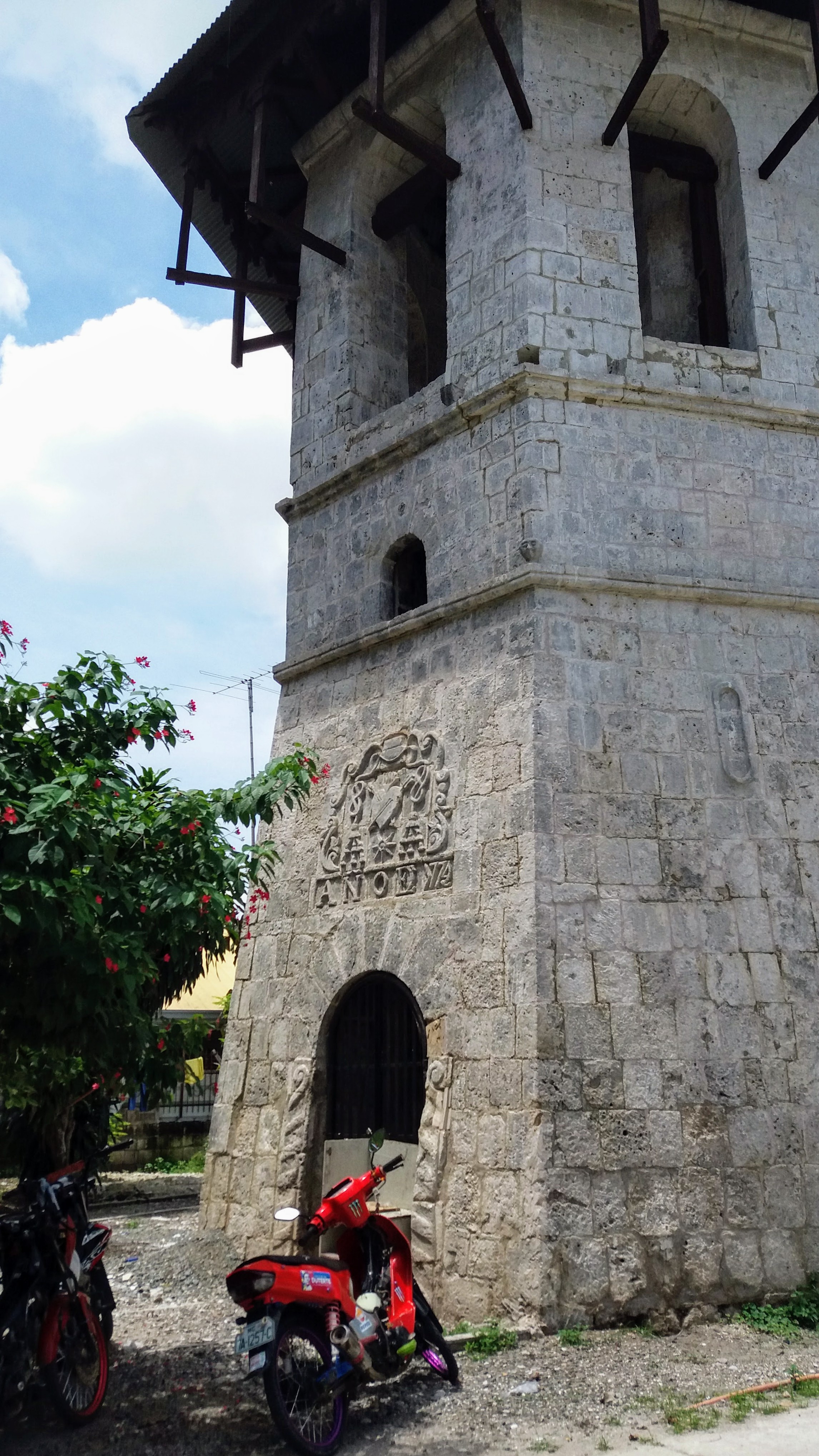 The longest drive I had was to the Chocolate Hills. Our hotel was on the southernmost end of Panglao, and it was about a 30 minute drive just to get to the bridge that connected us to Bohol, plus another 2 hours after that to get to the hills in the center of the larger island. I think in a car it may have been a little faster, but we were content to drive 40-50km/hr on our bikes and that added some time to the trip estimate. I also had to stop sometimes to check the map. Even with Google Maps playing through my headphones, I couldn’t SEE the app while riding the bike, so if I needed to check something, I had to pull off the road and fish the phone out of my pocket to have a look. Of course, I also just stopped sometimes to look at things.
The Unsheltered Drive
Even though the weather was hot hot hot and oh so humid, riding the bike was very comfortable. At 40 kph you get a very nice breeze that feels cool and refreshing and you get a great view of the countryside as you ride through. Of course I had a few issues getting adjusted. I got smacked in the forehead by a large insect that then flew behind my sunglasses. If you think having a spider or a bee in your car is freaktown, let me assure you that having an unknown buzzing bug next to your eye inside your glasses is much worse. Luckily I didn’t crash, and the bug flew from one eye to the other before escaping the lenses and being whisked away by the wind.
The reason such an insect encounter was possible was because my helmet had no visor. This wasn’t an issue most of the time, but if I was planning to do more driving at night or in the rain, I would invest in a visor or some kind of driving goggles. For sunshiney day time, my sunglasses protected my eyes from everything other than that one very confused bug. Most of the natives don’t wear helmets or eye protection and it just mystifies me. I did forget to put my helmet on once when I was very tired and just focused on getting back to the room, but any other time I thought about it, all I could imagine was my mother flipping out if I splattered my brains on the highway.
Animal Crossing
Aside from the insects, other living creatures that hindered my driving by meandering onto the road, blocking my parking, or jumping out in front of me include: chickens, dogs, cows, goats, water buffalo, and tourists. Dogs were easily the most common, but they did a very good job of watching traffic, watching humans, and responding to beeps. The closest thing to an accident I had was one very confused dog who zigged into traffic instead of out. While stopping in a hurry, I put my feet out for balance, and my big toe got mildly scraped on the street.
Goats were usually not in the road. Cows and water buffalo were large enough that they expected to have right of way. The only near incident was having a calf come over to see if I had any food while I was trying to get out of a tight parking spot. The chickens, somewhat unexpectedly, never crossed the road.
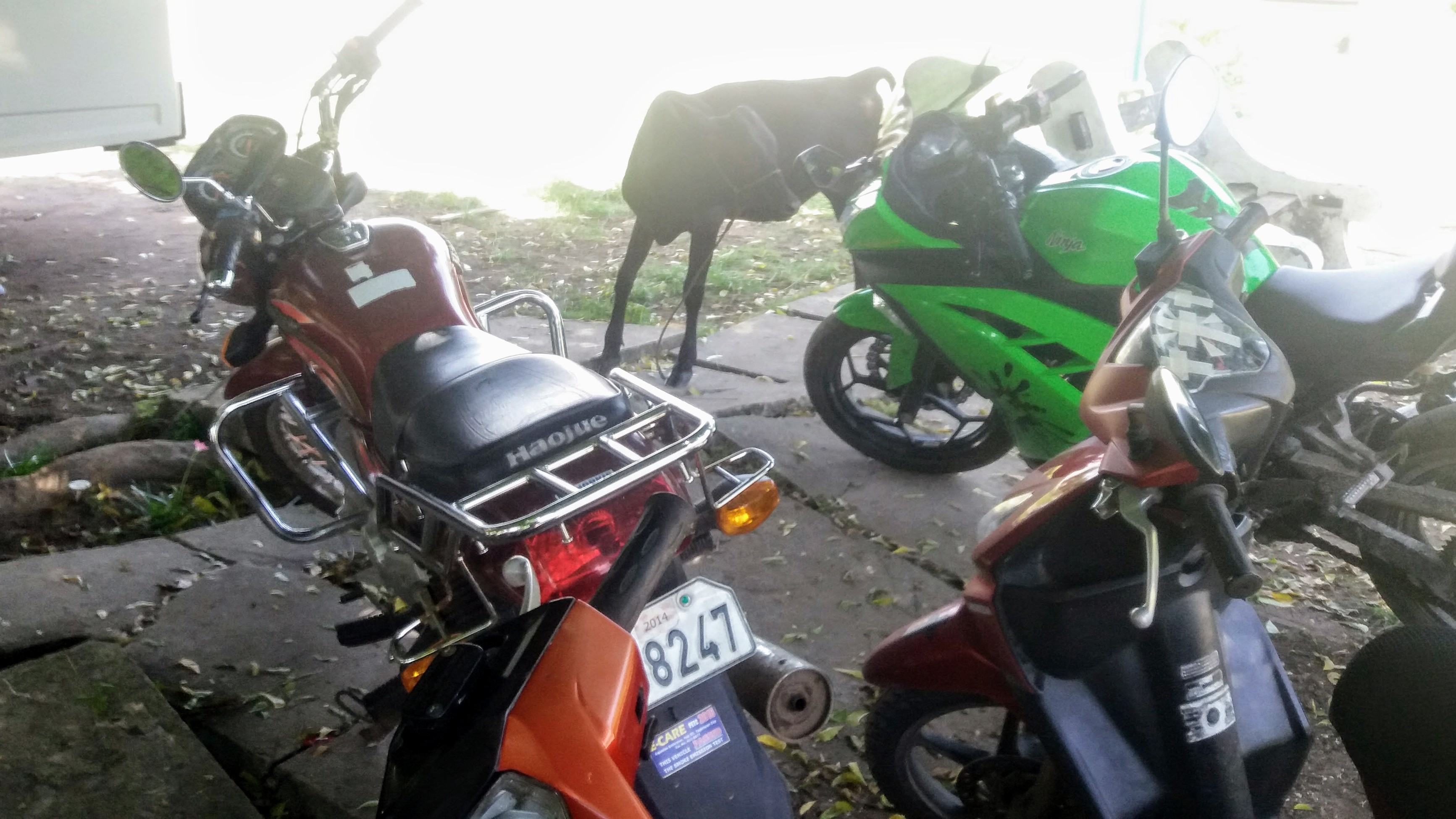
Except for the dogs who roamed free, the animals were usually tethered with some kind of long string so that their owners could leave them to graze a reasonably large area without being in fear of having them wander off while no one was looking.
There is little to no traffic on Panglao except the 1-2km stretch next to Alona where all the bars, international restaurants, and tourist traps are situated. Every evening when we came back to the hotel, we had to drive through this and I dreaded it every time. However insane the other drivers were, the locals were generally safe drivers and my helmet tagged me as a foreigner to watch out for. Some had installed strobe lights or other party lights which made driving behind them a pain, but the worst by far were the tourists on foot. Whether drunk, lost, or simply staring at their phones, these people did very little watching of the traffic around them, and on at least one occasion a young man stepped out into the street right in front of my bike!
Passing and Turning
I drove up some intense twisting mountain roads. On the straighter roads, cars, bikes, trucks and buses just passed whenever they felt like it. Often they drove on the wrong side of the road to get around one another and generally everyone is ok with this. However, in the mountains, the narrow roads and tight turns made this impossible. Combined with the fact that I just didn’t feel safe driving fast on hairpin turns on a scooter I’d learned to drive two days previously, I soon wound up with a line of traffic behind me. Doubly unfortunate, for long stretches the shoulder was nonexistent, the road dropping off sharply into drainage ditches or mountainside. I pulled over when I could, but it was more than a little nerve-wracking. I recalled similar drives in NZ with my rental car on the narrow winding roads while the locals and shipping trucks drove in silent annoyance behind me and reminded myself that it was better to be safe than to drive too fast and crash. Then again, I may be putting too much American in it. Road rage is a major thing in the US, and honking is a real sign of aggression. In the Philippines it seemed that a little ‘bip’ on the horn was more often just a friendly, “hey, I’m here” for awareness and safety and not a “get out of the way!” honk.

Women Drivers
Many Filipinos were surprised to see us on bikes at all, partially because we were foreign, but mostly because we were women. I saw only a small number of women driving motor bikes the whole time I was there. Mostly they were passengers riding behind a man. Sometimes whole families would pile on a single scooter. One taxi driver told us that not too many women drive there, although there isn’t any kind of legal restriction like in KSA. Our hotel hostess told us she had tried to learn before but had been too scared. Independence of transportation is so important for women’s equality, I hope that the younger generation will buck the trend. This is not to say that Filipina women are trapped at home, there were plenty of jeepneys and tricycles for hire, but there’s no substitute for independence.
Road Signs on a Long Drive
It was a nearly excruciating drive from the Chocolate Hills back to Panglao. As much as I adore the wondrous sensation of riding through the lush green countryside with the wind on my face, after so many hours my butt on that seat began to express a level of misery I think only marathon cyclists can relate to. As dusk approached, the drive became a contest between a desire to get back to the smaller island before dark and a need to stop every 20 minutes to move our legs. I tried to distract myself with reading the signs on the side of the road. The best was “Caution: vertical curve ahead”… put your best guess in the comments.
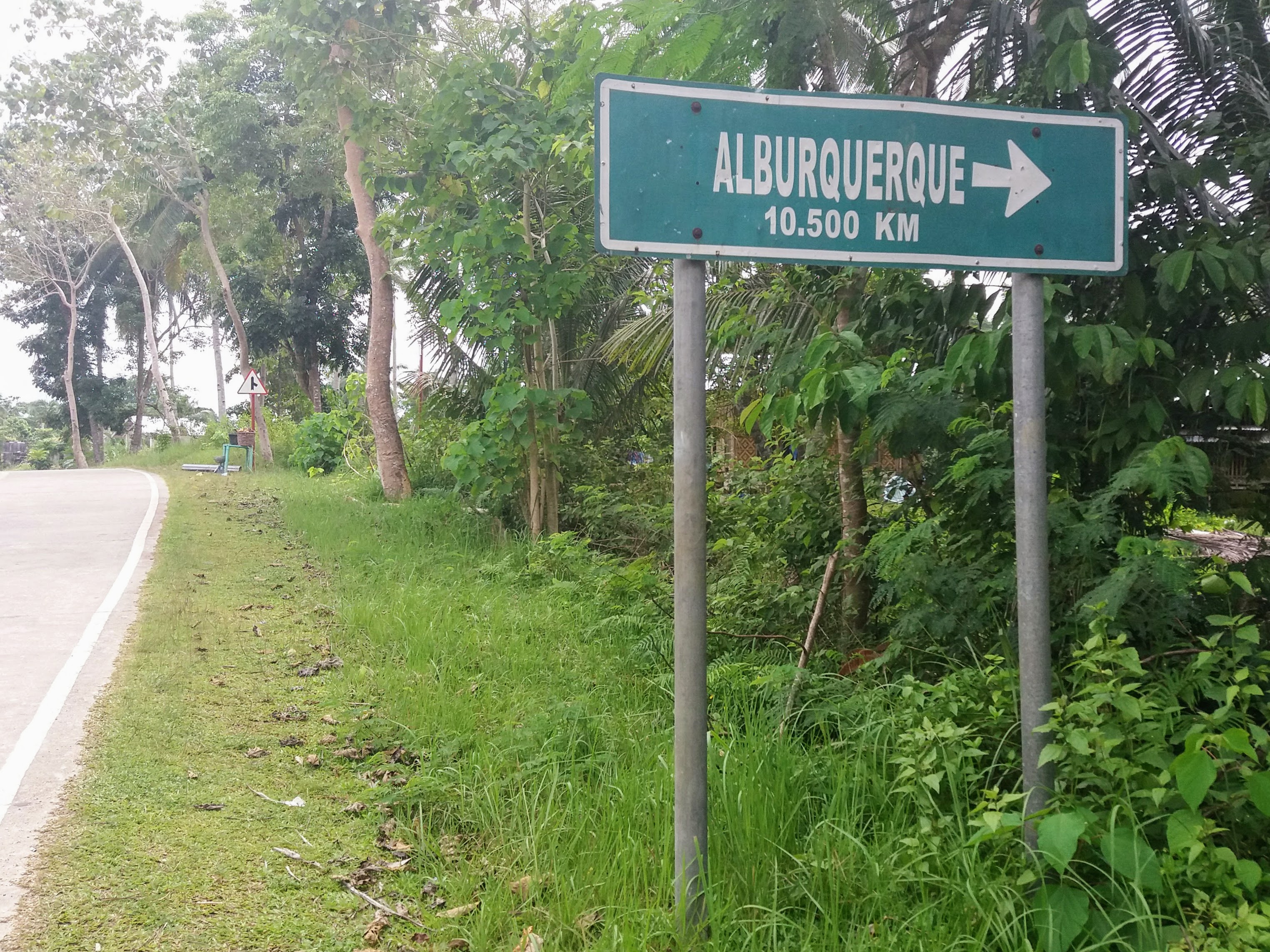
Although I didn’t get a shot of the first amusing sign, on my last day while I was pausing to check my GPS, I spotted this sign to Albuquerque, and all I could think “I knew I shoulda taken that left turn…”
The Sunset Burn
Around sunset, a whole new peril was added to the joyful dangers of scooter driving. At dusk, the Filipinos burn everything. Seriously, I have no idea. It smelled wonderful, like campfire wood-smoke, so I don’t think it was garbage burning (an actual recourse for the very poor in Manila. read here and here). Some might have been cooking, but it also seemed like some people just made brush-fires on the side of the road. I guess farming has more leftover plant matter than they know what to do with? The upshot was that the road was not merely pleasantly reminiscent of summer campgrounds, but actually choked with smoke and ash, making it hard to see and hard to breathe. An hour or two later it was gone, and it happened every night that I was out on a road at dusk.

If I return to do that again I’ll invest in a cloth mask for breathing and some kind of goggles since my sunglasses were more a hazard at dusk than the smoke for my vision. If we weren’t so nervous about driving in the dark, I think we might have been better off stopping for dinner and driving again after the burning time passed.
Photo Ops
I rode through rice fields, palm jungles, and tiny villages where dogs and chickens meandered freely and residents laid the recently harvested rice on plastic sheets on the side of the road to dry. I had no confidence at all to try to take photos while driving (although I saw Filipinos on their phones while driving motorbikes, I’m still convinced that’s a really bad idea) so there aren’t many photos of this part of the trip. On later drives through Bohol, I did stop a couple times and take pictures, but I always feel a little strange taking pictures of people just living their lives, like kind of super-white-national-geographic-exploitive. I don’t know how to get across that I want to share their lives, not make them out to be exotic zoo creatures, so I just don’t take photos more often than not. I mean, how would you feel if a tourist drove through your neighborhood and took pictures of you mowing your lawn or hanging your laundry?

Friday (day 6) was chosen for the second long drive day onto the big(ger) island of Bohol to catch the other Tarsier Sanctuary and a lunch cruise along the Loboc river. The drive wasn’t far, but I passed through yet more of the iconic Bohol scenery and finally succumbed to stopping for photos when I saw another car stopped on the side of the road and a white man taking pictures of workers harvesting the rice fields. I still felt awkward, but at least I was blending in to other tourists being weird? Oh, who am I kidding, I’m a lone white woman on a motorbike in the middle of farm country, there’s no blending in.

Stick in the Mud
My last full day, I went on back roads in search of hidden waterfalls, which I found and enjoyed and will share in another post. However, since it had rained heavily the night before, I found these unpaved rural streets to be made mostly of mud. On the worst of these roads, I had the only other near accident experience of the trip. While driving in, once or twice I hit a mud puddle and slid around a bit, but I was going slow and making progress … until I wasn’t. I managed to drive right into a deep and long patch of mud that claimed the bikes tires and stopped me flat. Putting my feet down, I sank in the mud past my ankles, and I worked hard to get the bike unstuck. I wasn’t able to move it on my own and decided to give it just a little gas to get the wheel moving, but this resulted in the rear wheel going sideways out from under me, and dropping me and the front end into the bushes on the side of the road. Since I wasn’t moving at the time, the only damage I sustained was some minor bruising where the bike fell on my leg.
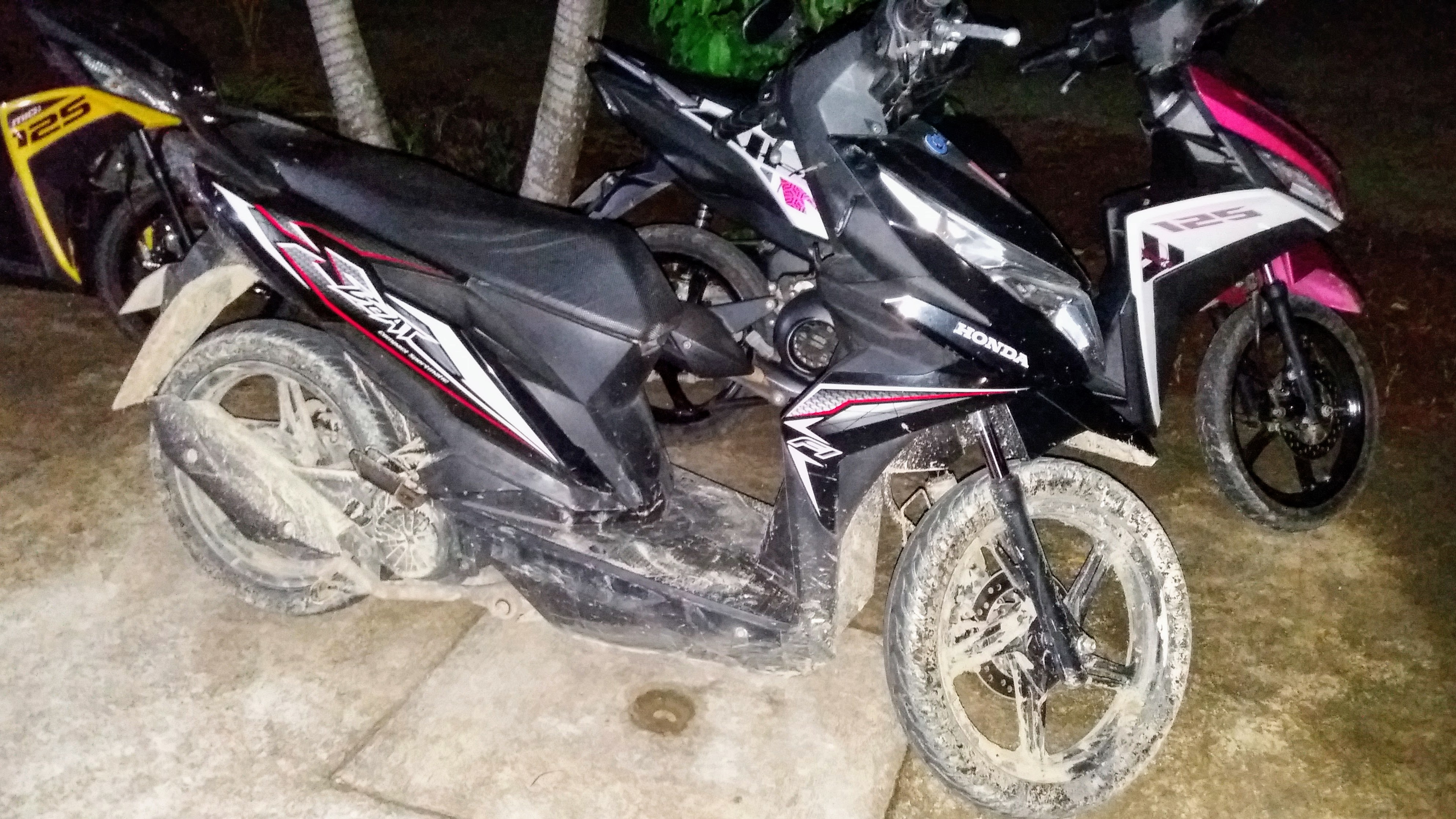
On the way back out, I decided to simply turn off the bike and walk around the mud patches. This was a great plan until I got to one that was bigger than the road. I couldn’t even imagine how I’d thought driving through it on the way in was a clever idea. I only managed to get back out because some very kind young people walked ahead of me and found the most solid ground through the morass that would take the bike’s weight without sinking. The result of this mudtastic adventure is that when I returned the bike to Jesse the next morning it looked like this, but Jesse wasn’t upset.
In Conclusion
Despite a few minor inconveniences, I still think renting motorbikes was the single best decision I made regarding this holiday. Not only did I get to see so much more of the countryside that I would from a tour bus, but I had the freedom to set my own schedule and persue my own adventures, which became more and more adventurous as I became a more confident driver. Although I have only a few photos of the road, my memories of driving through the stunning scenery with the wind caressing my skin and the fresh air filling my lungs are some of my favorite of the whole trip.
Today is American Thanksgiving. It’s a little strange to realize you have a holiday that’s only celebrated in one country on earth. Last year I went over to the Naval Base with some friends for a traditional meal, but this year I sadly had a dentist appointment. Aside from that, it’s becoming increasingly obvious that Thanksgiving is a holiday with questionable origins. The Korean kids liken it to Chuseok, which is a holiday for honoring family and ancestors, but American kids are taught a fairytale about the Pilgrims and Indians. In an attempt to find balance and gratitude, this year I’m going to have a traditional Korean feast with a friend and think about what I’m thankful for, including the fact that we can learn to treat each other better than our ancestors did.








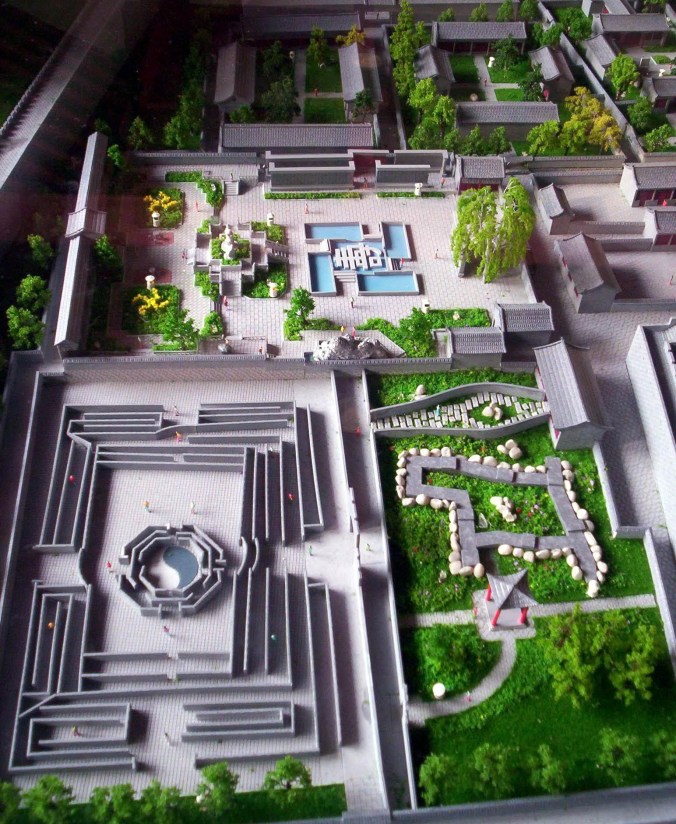 Lastly is the Longevity Garden, which you can see in the second layout model above. It has a nice waterfall, and a reflecting pool in the shape of what may appear to be a swastika, but it really a sacred symbol of Buddhism. And while I’ve seen this figure in a statue before, I’m still not sure who it is, other than it seems to be someone important in Buddhist history.

 As I got out of the taxi, I walked past a peacock that had either escaped, or was deliberately placed at the entrance for effect. The bird seemed unperturbed by the traffic. Even though I was a little early, the courtyard was packed full of tour groups and I had trouble pushing my way through to an info counter just to find out where to go. I stood in a long line as we all had our tickets scanned and everyone streamed into the Night Safari like the opening bell at Disney.
 I had missed the first fire show at the opening, but since it happened every hour until 9pm, I wasn’t too worried. I headed instead for the animal show at the advice of one of the zoo staff. This was just as well because the lines for the tram were insane. Being a lone traveler is sometimes advantageous, like when trying to find a seat in a crowded theater. I wedged myself in between two families in a fairly good spot and sat down to watch what I fervently hoped would not be an exploitative performing animal show. I was not disappointed. The “show” was largely animals being brought forward while the main announcer talked about the species being shown. There was humor and a few animal tricks, but these involved a large cat leaping, a raccoon going through a “garbage can”, and an otter doing some recycling (which may be one of the cutest things I’ve ever seen). The last one led into a great discussion of what happens when urbanization encroaches on
  animals habitat and on what we as humans can do to help better preserve the environment. I know some people might think it’s a little preachy, but I was personally gratified to see the zoo using it’s platform of animal entertainment to help educate visitors on conservation and preservation.
 ake in the fire show. Although the zoo website makes it seem as though this is some kind of traditional tribal fire dance, in reality it is a modern dance with a totally made up tribal sounding name. It was still fun and pretty, just not particularly traditional or historically accurate.


 Gallivantrix