Despite the detour, this is still mainly a travel blog, so without further ado, I bring you a sunny day in April exploring Paris. The romantic ideal of Paris in the spring is perhaps more marketed to lovers, but having been to Paris both in spring and in summer, I can say I have a definite preference. The weather is better, the crowds are fewer, and if you go early enough in the spring, you get cherry blossoms! (For those looking for tips and advice, specific details about transportation and accommodation are at the end).
When I decided that I would spend a couple months in France, I knew I didn’t want to have Paris as my home base for a few reasons. The top being “oh my god it’s expensive”. The next being “it’s full of tourists”, and the last and perhaps most important: I wanted to see other parts of France. Nonetheless, every international flight into France lands in Paris, so although I would start classes in Tours on April 15th, the best price to fly was April 11th (several hundred dollars cheaper than the 12-14th). I decided that I’d rather spend the money in Paris, so I booked a dorm and planned a laid back day of viewing the gardens and eating delicious food.
Breakfast
Refreshed from my flight by a good night’s sleep, I headed into the city center to my favorite breakfast place in Paris: Angelina’s. I have gone to Angelina’s every time I’ve visited Paris for their amazing hot chocolate, even in the worst summer heat wave. For people who have only had packet hot chocolate, I can’t express my sympathies deeply enough. Some of you have been lucky enough to have real hot chocolate made from milk and chocolate (not a powder) and you begin to know the heights to which this beverage can soar. Those of us who have been graced by the chocolat chaud at Angelina’s know the celestial chocolate experience.


The last time I was in Paris in 2019, I made breakfast reservations because we had tickets to the museum and I wanted to make sure we were not rushed to finish eating. It turned out we didn’t need the reservations since most tables were still empty when we arrived. This year, Angelina’s website says they are no longer accepting reservations, and when I arrived, I discovered the otherwise totally empty sidewalk to be teeming with a crowd in line at my favorite breakfast spot. I queued up while I looked on my phone to see if there was some explanation. I was informed by my neighbors in line that the restaurant had recently become TikTok famous, which is why they themselves where there.
I’m never sure how to feel when a restaurant gets influencer famous. Many restaurants have actually been destroyed by fame induced crowds flocking in numbers that their small scale production process simply could not handle. Others have had to reduce the quality of their once famous dishes in order to keep up with the demand. I stood in line thinking that there must be another restaurant in Paris that had really good hot chocolate, and maybe it was time for me to try a new thing, when the line started moving. It only took perhaps 15-20 minutes before I was at my own table. The wait was considerably shorter than I would have expected at a restaurant in Paris. It may be that foreigners are accustomed to eating quickly, and tourists who had made Angelina’s a stop on an otherwise full day of activities were eager to get on.

I was fully prepared to order my breakfast in French (knowing I didn’t need to), and the server was very kind about it. Then I realized that about half the patrons in the dining room were Asian, and were all using English to communicate with the staff. I told my Korean students over and over again that English was the key to world travel, but it strange to see it in action here in Paris after struggling though my bad French on previous visits. Stereotypes about the Parisians persist, yet I have never known them to be anything but kind. It’s possible they appreciate the attempt to speak French more from native English speakers because of the stereotypes about English speakers being monolingual, but they seemed quite content to speak English with me and with every other tourist around.
When my order arrived, I was delighted to discover that despite the newfound TikTok fame, the quality of Angelina’s hot chocolate had not diminished in any way, and that the French cultural value of never rushing a diner at the end of a meal was still going strong. Regardless of the line at the door, everyone seated was fully welcome to spend as long as they liked savoring the thick chocolatey goodness and rich pastries. Bliss!

Jardin des Tuileries
An online search for cherry blossoms in Paris revealed that the largest grove of cherry trees was about 90 minutes on transit from my hostel, and after viewing the blossoms at some of Asia’s biggest collections, I doubted at the mere volume of trees would be a top draw for me in France. Instead, I opted for closer gardens with fewer trees where I could have a lovely stroll with less time in the Metro. My first stop was Jardin des Tuileries, right across the street from Angelina’s.
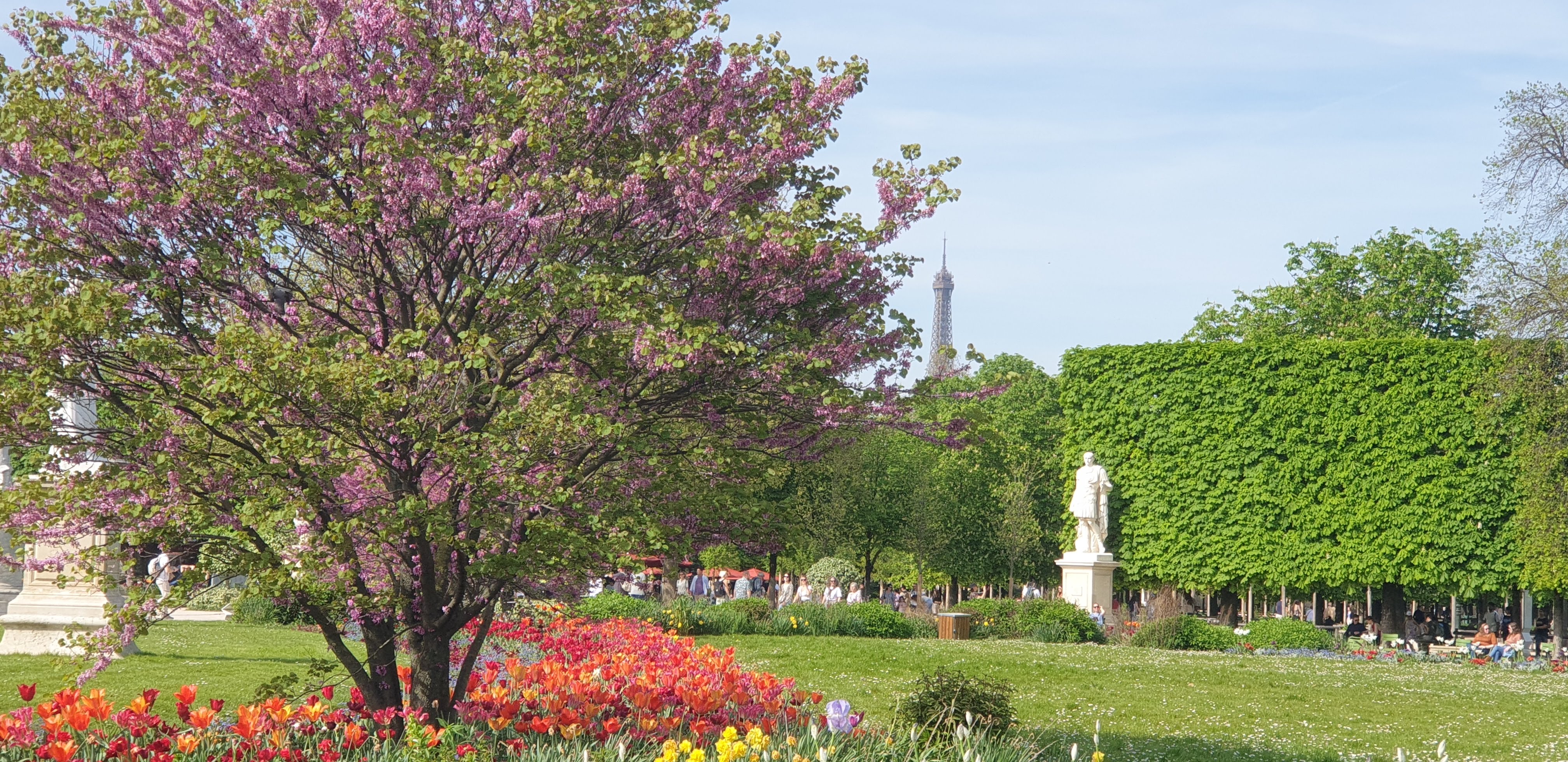
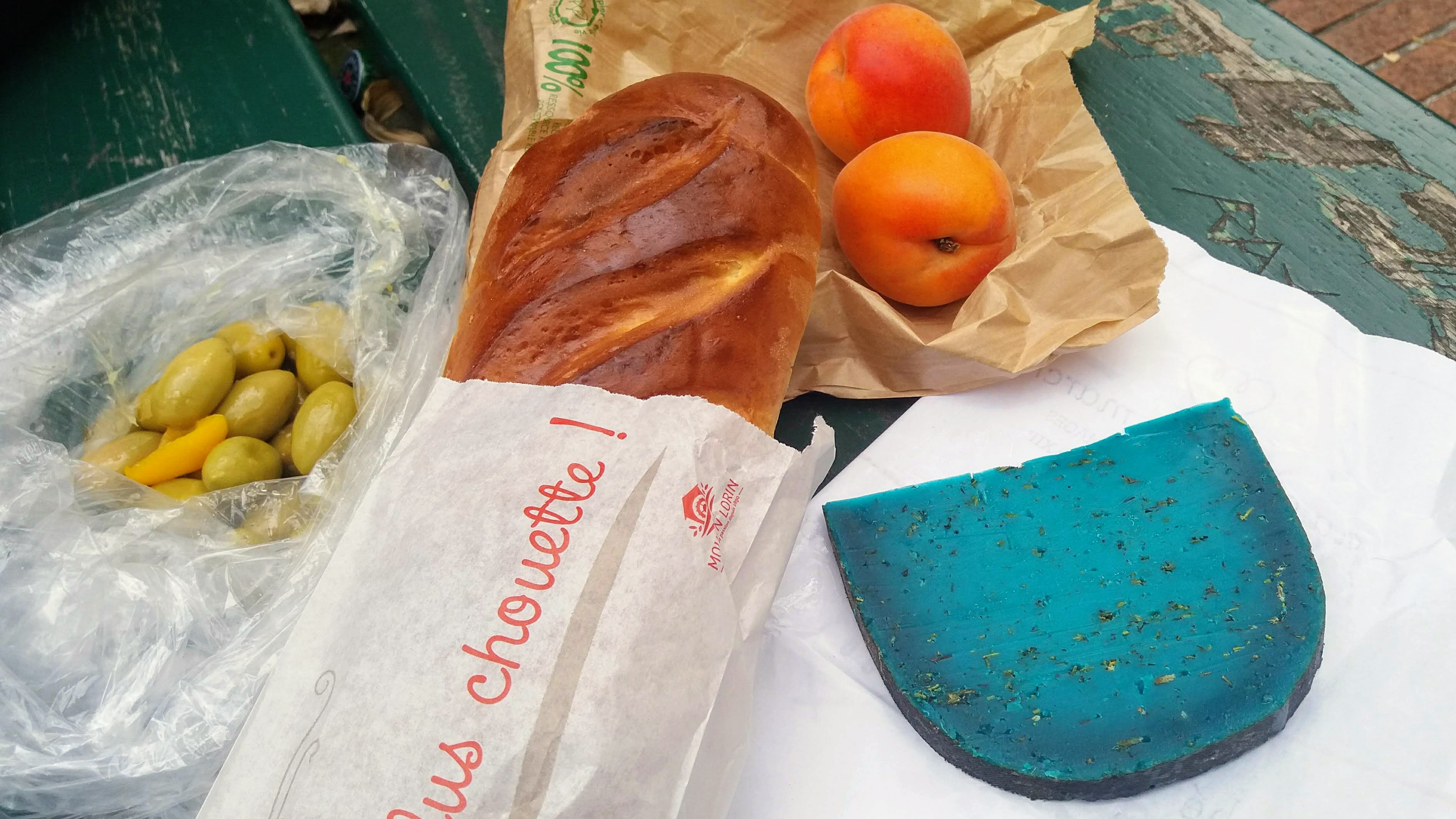
I like to come to this garden when I’m in Paris no matter what else I’m doing. My first time in Paris (2015), I ended up in Tuileries purely by accident, and ate a glorious sandwich next to a fountain with a view of the Eiffel Tower. It’s a memory that sticks in my mind because I felt in that moment that I had “made it”, that all my repeated struggles towards my dream of global travel and daydream freedom had landed me in this garden, with the best sandwich I’d ever eaten, basking in the sun and watching the Eiffel tower in the distance. I like to come and visit the park and relieve that memory whenever possible.

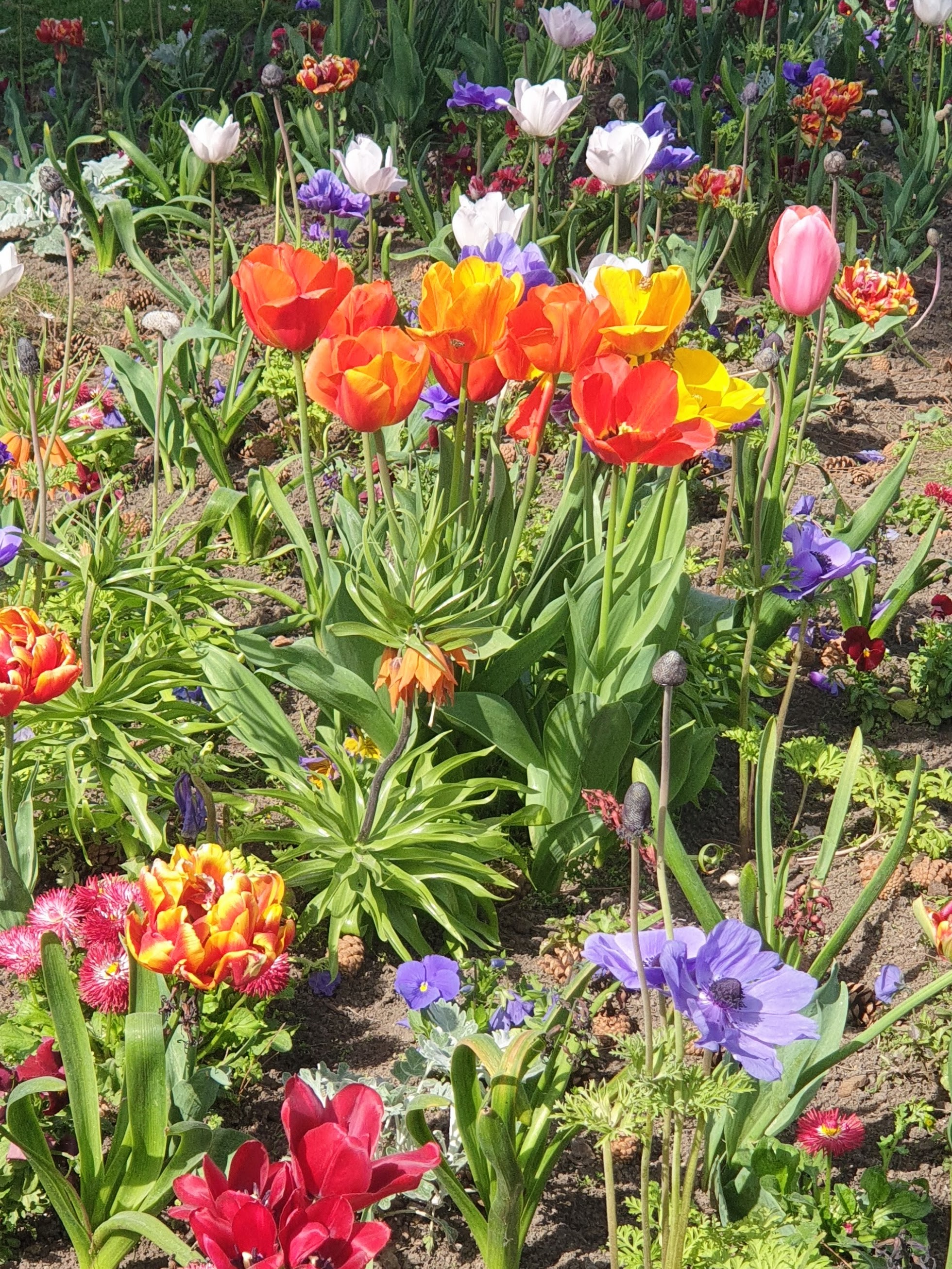


There were plenty of people, both locals and tourists, enjoying the unseasonably warm sunny spring day in the park. I ambled around and taking photos of the pink blossomed trees, stopping occasionally to take photos for groups who were struggling to use the timer on their phones or get everyone into one selfie. My feet were still swollen from the flight and my back hurt, but none of that could impact the growing sense of ease and contentment I experienced just discovering that I had once again “made it”. I survived the COVID induced lockdowns, I took my years of isolation and I packed them up in a box in the closet and I once again embraced travel for joy.
Jardin des Plantes
The next garden I visited was the Jardin des Plantes, a botanical garden that I had not been to before. It also houses a small zoo, and some indoor exhibits, but I was there for cherry blossoms! Priorities.


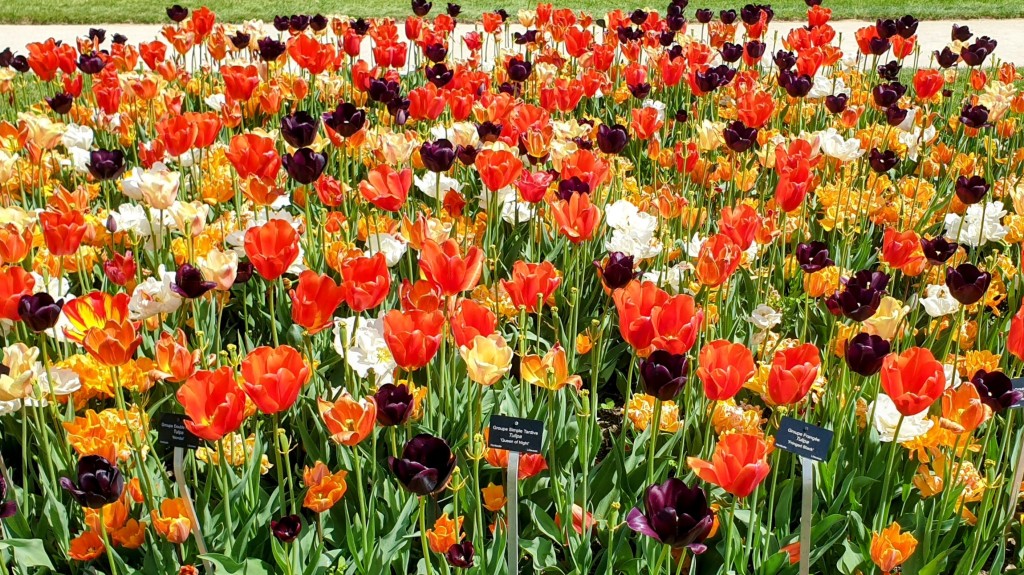

When I found the area where the park’s cherry trees grow, I was initially disappointed. It seemed that all the “white” (very pale pink) trees had finished blooming the week before I arrived. There were four darker pink blossomed trees of prodigious size, but they too seemed to be at season’s end. Thankfully, that was an illusion. These enormous trees look full of fading blossoms from a distance, but once you step under the sprawling canopy, you have entered the bower of a magical fairy land. Queen Titania herself might set up a divan there and feel entirely appropriately decorated.


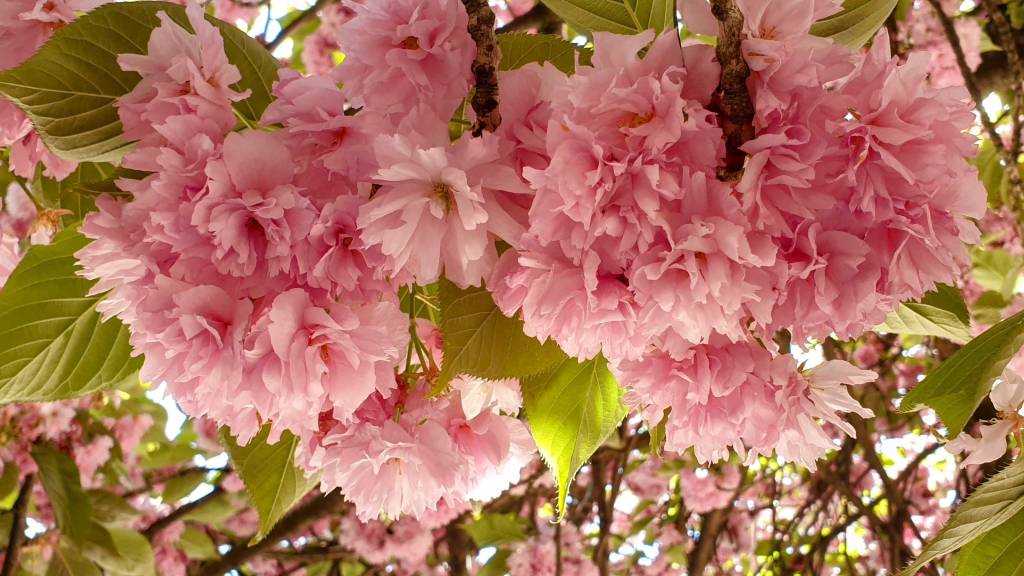


It was like stepping into a snow globe of pink petals. The branches swept from high above all the way down to the ground, cutting off the view of the outside world. Fallen petals covered the ground as well, resulting in a 360° sphere of pink. I lost track of how much time I spent under just one tree, discovering new delights at every angle I looked or aimed my camera. When the spring breeze came by and the petals fluttered around us like pink snow, everyone stopped their photo posing and gasped in awe.


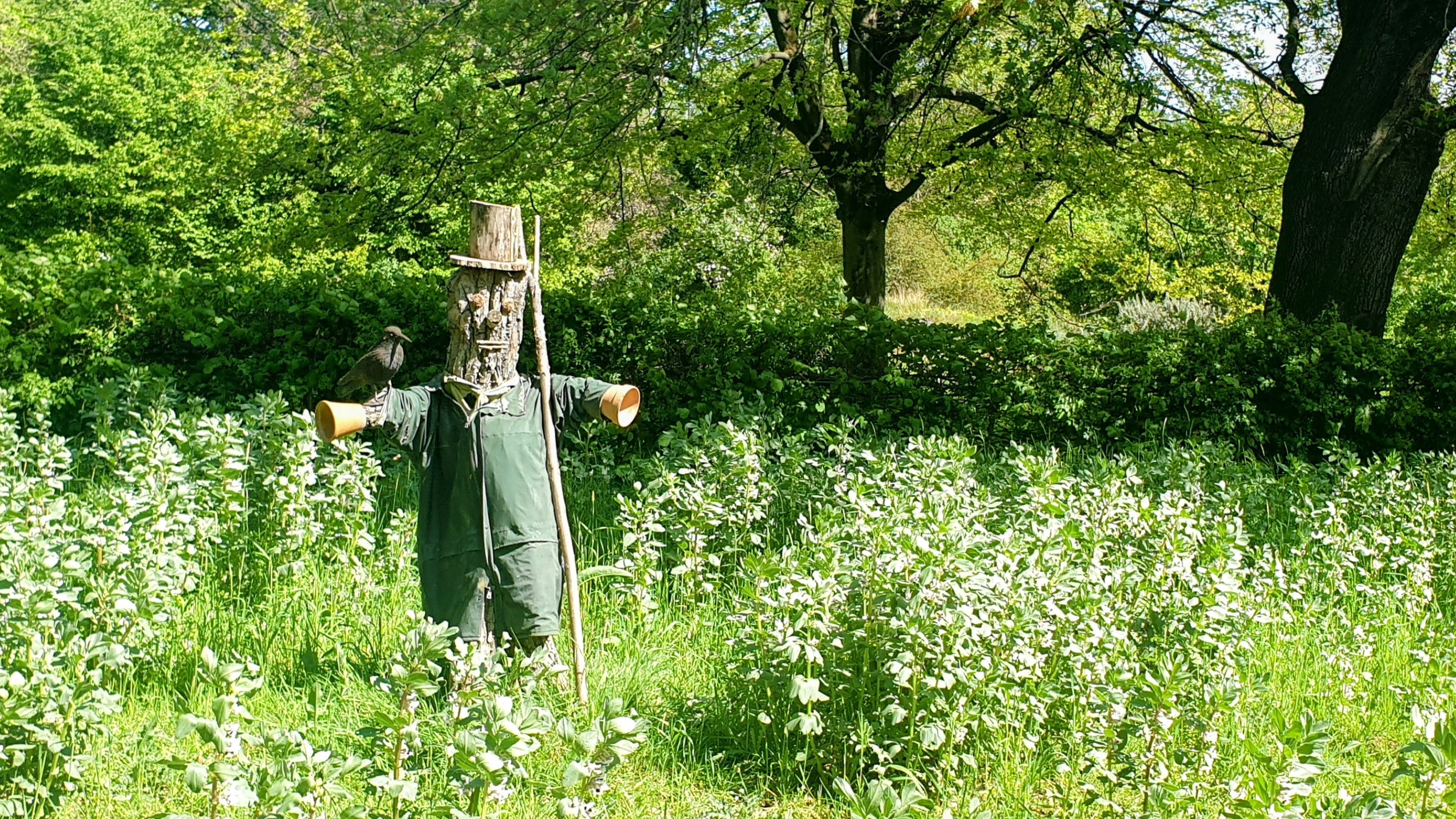
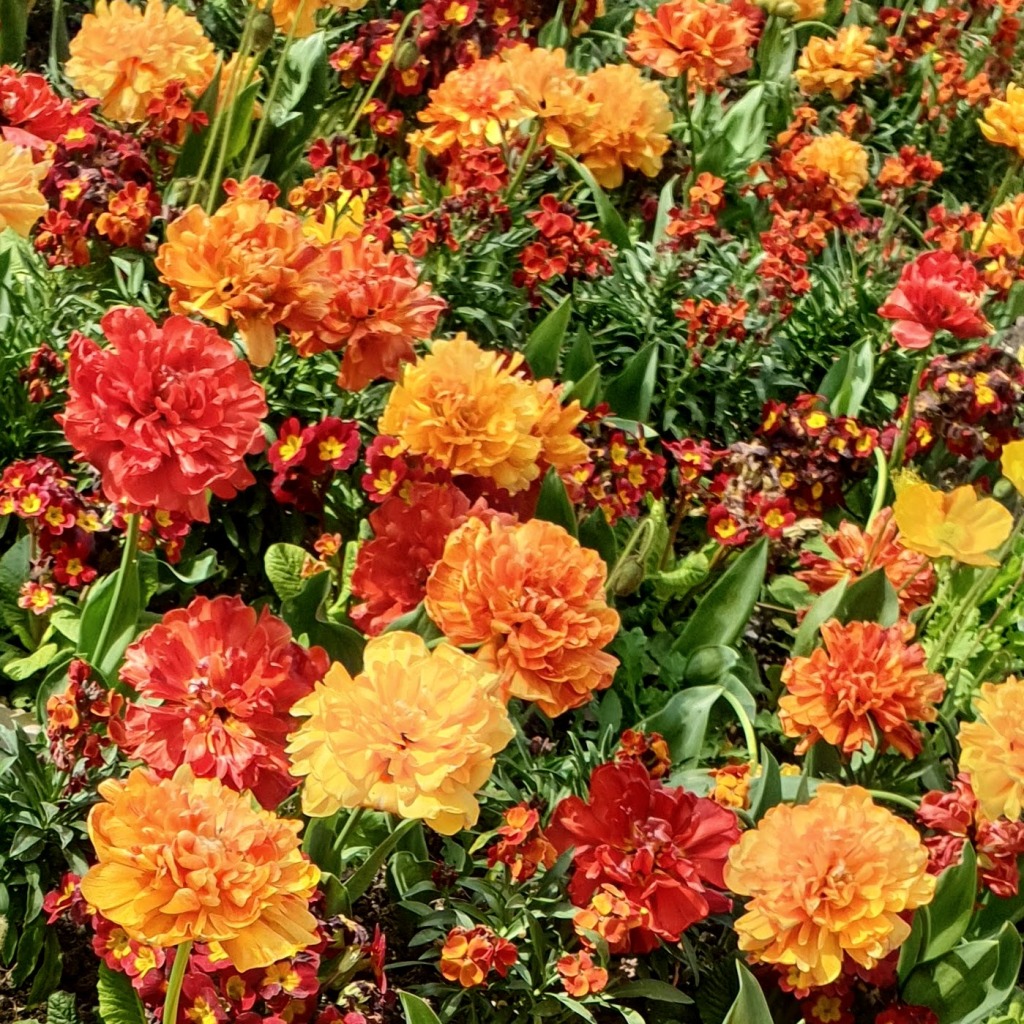
I visited the other three cherry trees and then branched (haha) outward to look at other plants and flowers. In early spring, there aren’t as many blooming, but I found some other pink trees, some purple irises and a garden with enormous blooms I do not know the name of.
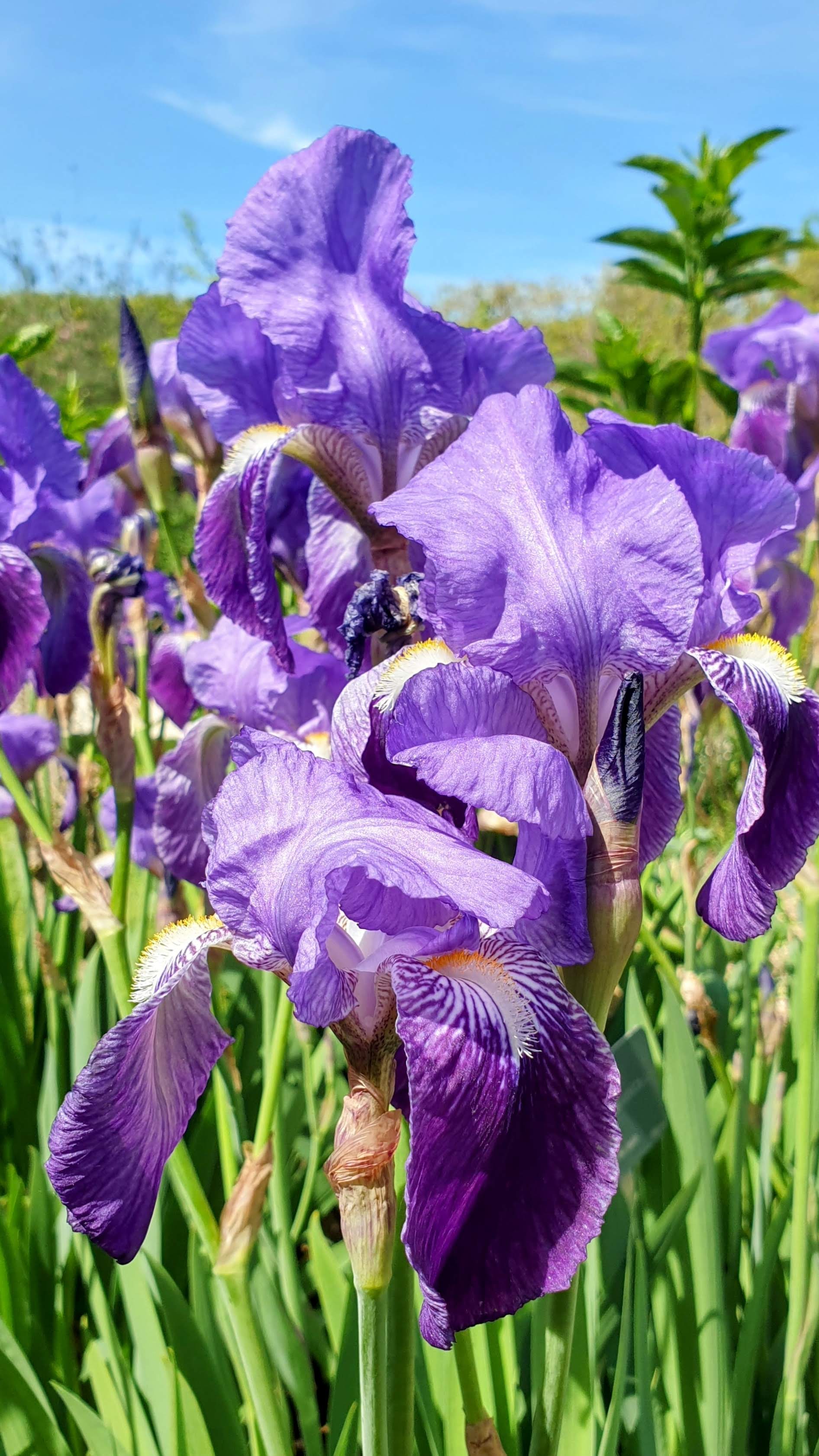


Un Pause
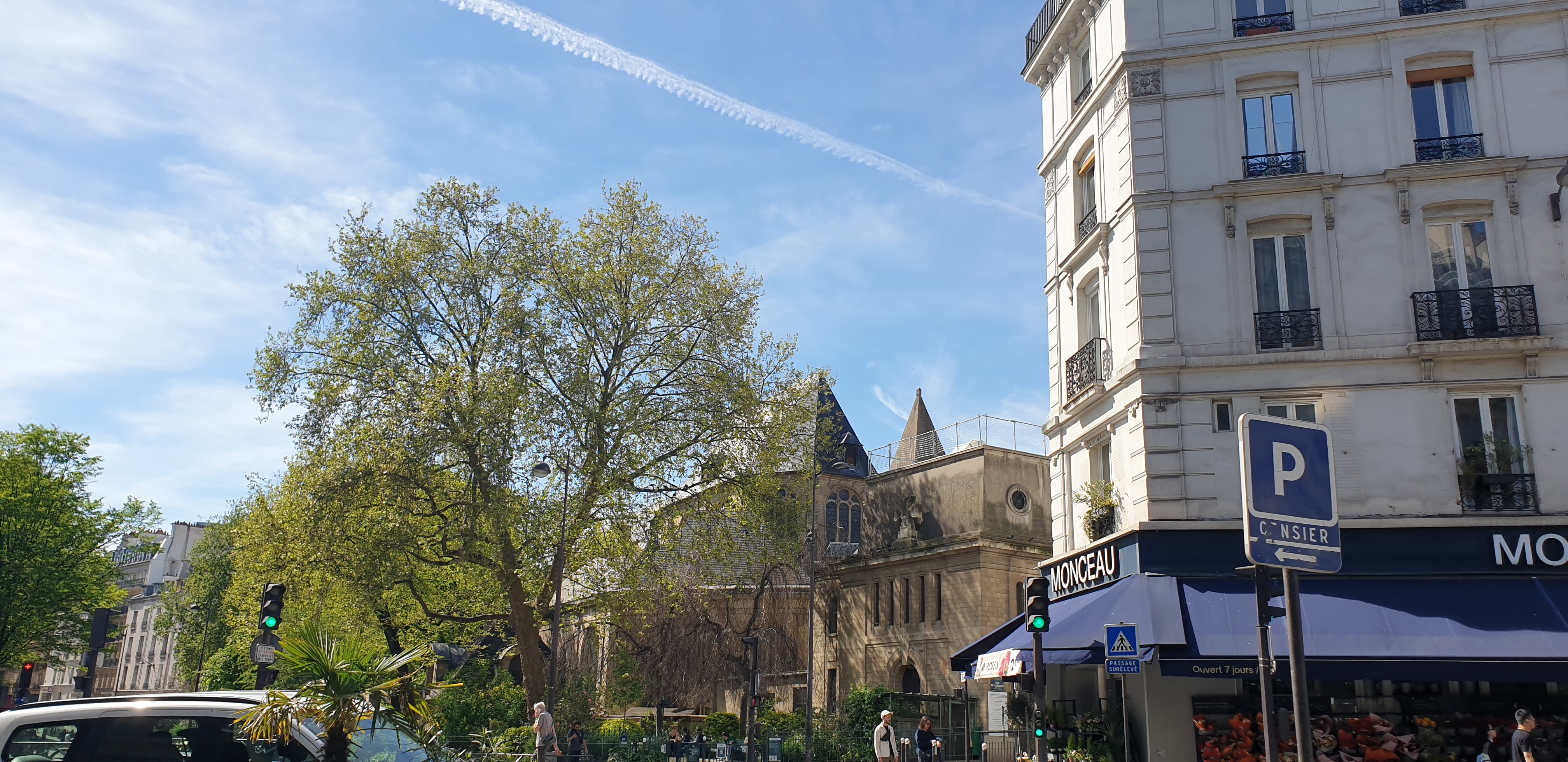
Still jetlagged and walking for hours, I decided to stop at a sidewalk cafe. I couldn’t find any coffee places with seating near the gardens, but I did find a little bistro from which I ordered a delightful craft cocktail. As I sat in the shade of the awning with my drink and watched the daily life of Paris around me, a quote from Anthony Bourdain came to my mind:
“Most of us are lucky to see Paris once in a lifetime. Make the most of it by doing as little as possible. Walk a little, get lost a bit, eat, catch a breakfast buzz, have a nap…Eat again. Lounge around drinking coffee. Maybe read a book. Drink some wine, walk around a bit more, eat, repeat. See? It’s easy.”
― Anthony Bourdain, World Travel: An Irreverent Guide
However much I wish it had not taken me 4 visits to Paris to learn this, I don’t think anyone could have convinced me on my first trip that I shouldn’t be running around trying to see the Arc de Triomphe, the Eiffel Tower, the art museums, the catacombs, the cemeteries, Montmartre, and every other cool thing in Paris. The tourists I talked to in line at Angelina’s and whose photos I helped take in the garden were just as eager to squeeze in as many sights as possible. I can’t blame them, but I’m very grateful that I finally reached a point where I can just enjoy sitting at a sidewalk table with a drink.

Jardin du Luxembourg
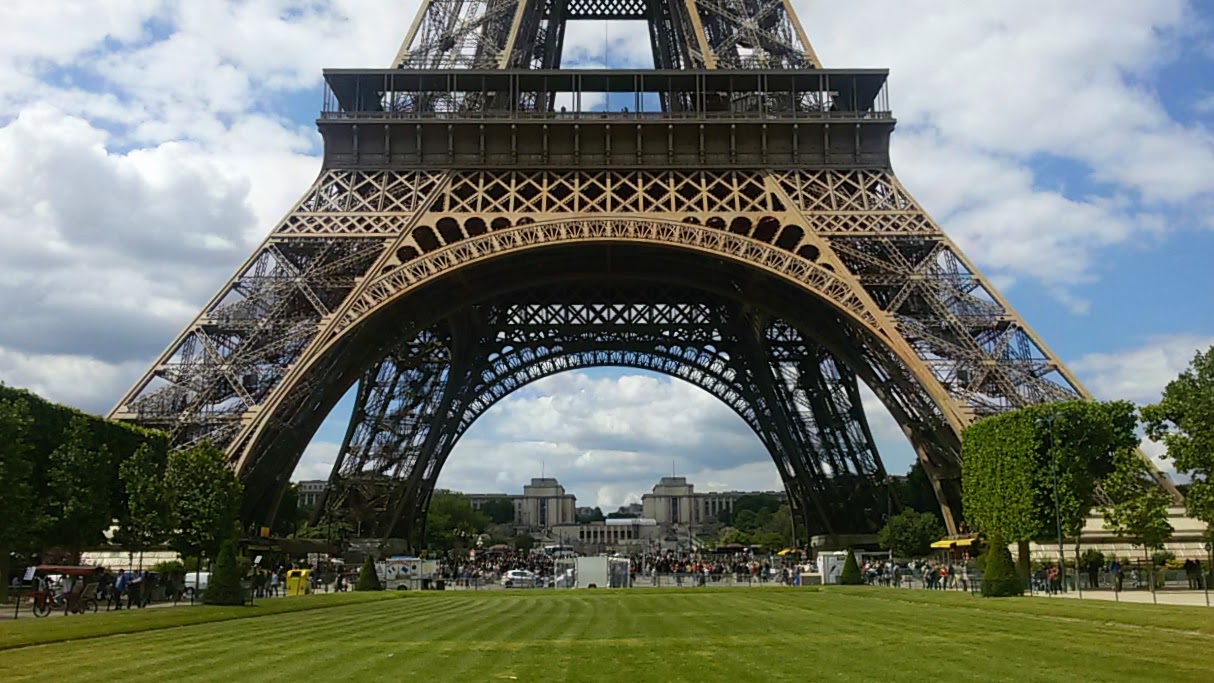
My last stop on the way back to my hotel, Jardin du Luxembourg, was also a garden that I had not previously visited. I found it to be much more like a park than a garden with plenty of places to walk and sit and play sports, but fewer flowerbeds or decorative trees. Most of the gardens in Paris have lawns (tapis vert, or green carpets) that are cultivated to within an inch of their lives that no one is permitted to walk or sit on (thank you, Louis XIV). It creates a beautiful landscape, but leaves one yearning to run barefoot in the grass. Luxembourg had many sweeping no-touch lawns, but added a sitting lawn! (There is another good sitting lawn just in front of the Eiffel Tower). Large blocks of soft dark green grass just for lounging around or having picnics on.



Given the beautiful weather that day, all the parks were full, but it was not hard to find a spot to plop down and enjoy the cool green lawn. I watched the people and the pigeons. Every pigeon I had seen all day seemed to be unusually plump and healthy. I’ve seen pictures and videos of show pigeons, but street pigeons are so often sickly and deformed that it’s become a trope, people calling them “rats with wings” or “cooing plague pits”. And yet an animal is only as healthy as it’s ecosystem. If pigeons in New York are malnourished, diseased, and deformed, it is not a result of the natural state of pigeons, but rather a reflection of the life they are forced to live. It really made me think about how much healthier Paris must be as an ecosystem than the vast majority of other dense urban cities I’ve visited. It also gave me a new appreciation for the presence of squab in French cuisine.


La Fin
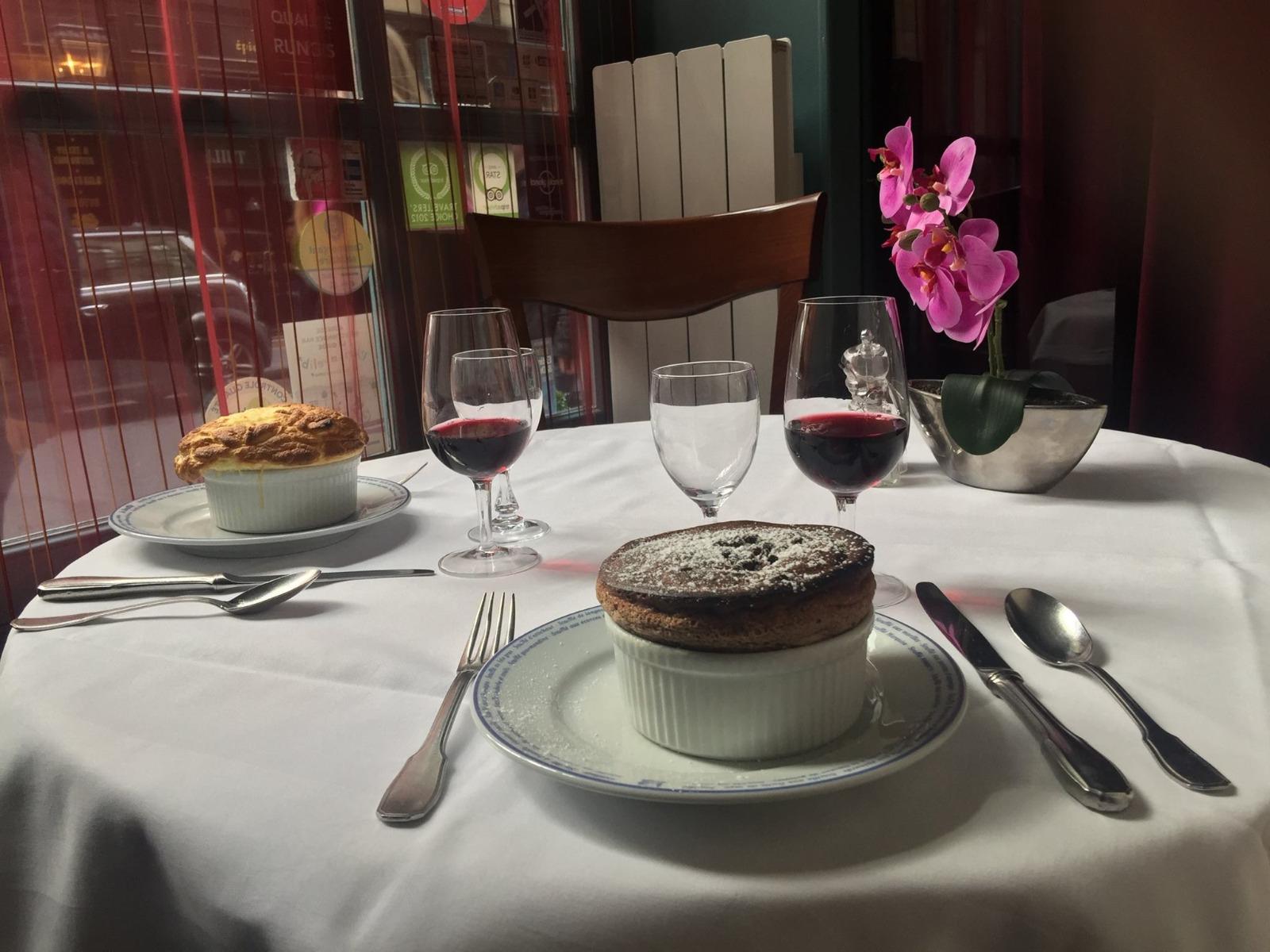
As the day drew to a close, I realized I had made no plans for dinner, and that the combination of Saturday plus glorious weather meant more people than usual would be going out to eat. From my seat in the grass, I searched online for nearby options and snagged a last minute reservation at a restaurant across the street. Once more, the staff were very friendly and happy to speak in English (where does the stereotype of rude Parisians come from?) I ordered the daily special of duck confit, with a bière picon (a beer mixed with picon, a sweet orange liquor, not available in the US, I’m afraid), and for dessert, a chocolate cake and coffee with bailey’s and Chantilly. I may have gone a little overboard, but it was delightful to sit on the indoor balcony and look out the restaurant’s giant picture window at the garden across the road while dining on top notch food and drink. Not an everyday occurrence, and I think a worthwhile treat to end my day in Paris.
The next day, I repacked my bags and caught the bus to Tours, the small city in the Loire Valley that was to become my home and my school for the next 5 weeks. Stay tuned for more on life in the Loire!
Planes, Trains, & Hotels
If you are interested in the practical side of this trip, this Post Script is for you. Here I have attempted to include some useful information and links about airfare, public transit, and accomodation.
When searching for airfare, I was lucky enough to find an off brand company that didn’t suck called French Bee. Their cheapest package is very similar to Spirit or Ryan (no luggage, no meals, etc.), but the price difference for the upgrade to a more inclusive fare was only about 40$. I ended up with a normal international luggage allowance, an inflight meal, the ability to choose my seats, and the no-fee change policy.
The Paris public transit system is good, but confusing to outsiders. I have an old Navigo card which was still valid and could be topped up, but my research revealed there is now an app which allows you to buy tickets online and scan your phone via RF/NFC rather than having to carry a card and top it up at ticket kiosks. The app for local Paris transit is My Navigo Tickets, and the intercity train system is Bonjour RATP. It is a big improvement since my previous visit. The Navigo app also offers a good trip planner, showing the best transit routes to get from where you are to where you want to be. Sadly, after you find your route, and press the “buy ticket” button, it just takes you to the general ticket page with no indication of what you need for the journey you have planned.
Why does this matter? Paris has 5 zones, and transit tickets are sold in groups of zones. The more zones, the higher the price. I want there to be a way to easily see what zone you and your destination are in, but I haven’t found it. The last time I was in Paris, I just talked to the ticket seller about the places we wanted to go, and she knew what zones I needed. In general, if you’re sticking to the city center, 1-2 is enough, but there are some high demand tourist spots in zone 3. And if you’re staying further out to save on hotels, you may even be in 4-5. Transit to and from the airports and Disney Paris have their own special rates.

Additionally, passes are available by day, week, or month, but the week is Saturday to Sunday, no matter when you purchase it (not 7 days from the day of purchase). Is your head spinning yet? Do you suddenly want a taxi? Well, just remember the taxi rates from the airport are 50$+, but the bus rate is about 12$. Taxis in the city traffic can be difficult to catch, drivers may not speak English, and they may rely on your poor knowledge of fees and laws to overcharge you (this happens everywhere, it’s not unique to Paris). Transit trips cost about 2€ each or a day pass of unlimited rides for about 8€. I like the unlimited rides because I never have to worry about transfers or having to take extra transit if I get lost (which happens at least once a trip).
On to hotels! Paris is definitely one of the top most expensive places to spend a night. Before COVID, my usual travel budget was 100$ a day split 30/30/30 (hotel/food/entertainment) with a small extra cushion. Even then, I couldn’t find a room in Paris for 30$, I couldn’t find a bed in a dorm for 30$! There are a few youth hostels where, if you happen to be a young man, you can bunk down in a 12-16 bed dorm with other young men for around 35$ a night. If you would like a female-only dorm, be prepared for the pink-tax. All-girls dorms cost on average 10$ more than the male or mixed dorms. I stayed in a mixed dorm in Paris once, and it was fine. I was safe. No one was skeezy or anything. But, the older I get the harder it is for me to spend time in dorms. I find I need a private space to decompress at the end of a long day.
In post-COVID inflation-land, room prices in Paris seem to have risen (although to their credit, not as much as US based inflation). The best deal I found was a bed in an all-girls dorm for 50$ a night. (are there cheaper? Yes, but then you start getting issues with cleanliness, quality, safety, and distance from the transit stations). Hotels and hostels are getting better at tricking the algorithms to promote their place in search engines and reservation websites. It’s important to read real reviews (good and bad), see what people liked and didn’t (it might be things that don’t matter to you), and look at a good map to see not just how far the hotel is from a landmark or transit station, but also, how you can get there.
It can take hours of searching to find a good price, a good location, and a good quality, but the time you spend in advance is worth it not to have unexpected unpleasant surprises after you arrive. My decision to take a dorm bed at the Eklo also related to factors like the photos of the dorm rooms, the reviews by other guests, and the closeness of the bus stop. I knew it would be hard to be really comfortable in a dorm, but I was willing to take it for just two nights.
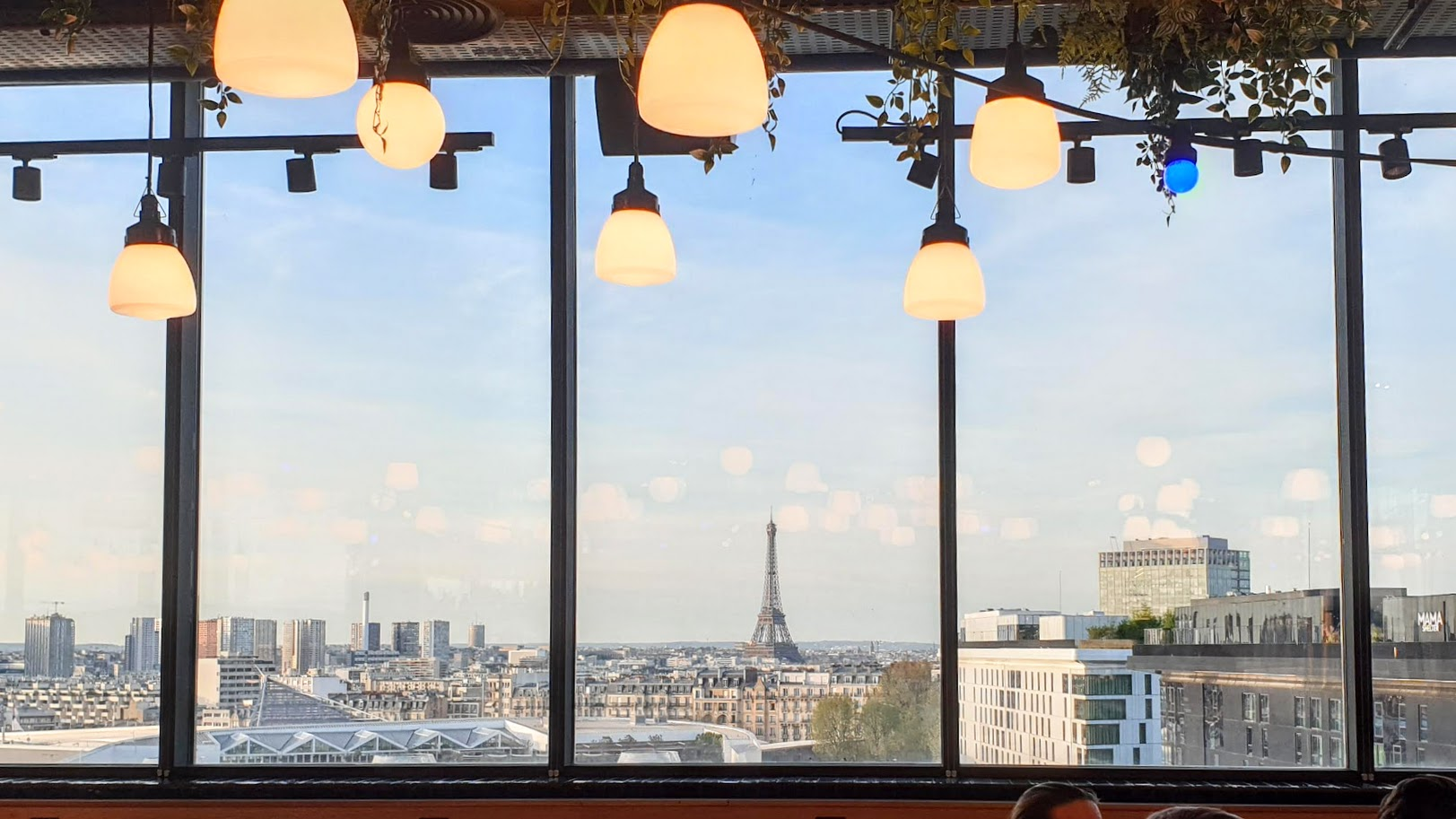
I ended up eating at the rooftop restaurant for dinner the night I arrived. I am always skeptical of eating in a place so clearly designed to cater to tourists. High end hotels have amazing restaurants, but hostels tend to focus on alcohol and cheap food. The Eklo partners with a small chain restaurant called French Kiss which had a good looking website, and I was too worn out from the flight to go anywhere else. The view was stunning, and the food surpassed my expectations for hostel restaurant fare, and the staff were all friendly and quite fluent in English.







 Gallivantrix