The Aran Islands are another quintessential Irish bucket list. There are three, and you can take a boat out to any of them. If you are travelling via tour bus, then the most likely path is from Galway through Rossaveal, but we had a car and decided to go out of Doolin. Doolin itself is spoken of with a kind of reverential awe by those who visit regularly and now I know why. If you are lucky enough to plan your trip to the islands from Doolin instead of Galway, make sure you plan time for some trad music in the evening.
Inis Oírr
We chose to go to Inis Oírr (pronounced roughly “inis sheer”), the closest and smallest of the islands. It seemed like a nice way to see them without being overloaded with tour groups which all go to Inis Mann or Inis Mor. When I was planning the day, I looked at a map of all the things to do and see, mostly ruins but you know I am a sucker for ruins, and I figured I could just rent a bike and ride around to see it all.
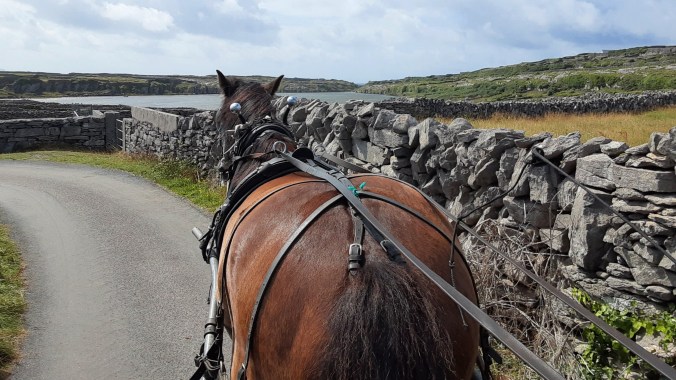
It’s also possible to get into the carriage and ride around, but I like to go at my own pace, and the island was neither large nor described as very hilly, so a bike seemed great. I was looking forward to seeing the ruins of the O’Brien castle, the sunken graveyard, and the wrecked battleship. In addition, I was planning to hunt down some Aran knitted wool products because, well, they’re famous. So much I did not know…
On the day of our ferry tickets, we made it to the parking lot and drove aimlessly looking for a spot for longer than planned. It was with some relief that we made it with a few minutes to spare, or so I thought. I was informed at the ticket office that our ferry had already left! Of course, like every ticketed event, they advised us to arrive 10-15 minutes early and the parking dilemma set us back from that goal, but we were still at least 5 minutes early. I couldn’t believe that they would just leave!
I began to protest and ask about refunds since they left before the scheduled time, and they agreed to put us on another boat. The longer I watched the docks, the more it became obvious that there was almost no order to the ferries at all. It seems like a few boats make the trip, and a few companies sell tickets, but they are not connected. Both going out and returning, we were just put on whatever boat was most convenient and the staff collected a variety of colorful tickets. I suspect that they then use those to collect their passenger fees from the ticket selling companies later. It’s confusing and disorienting and more than a little frustrating, but I guess it works.
It was such a lovely day with clear skies and bright sunshine that my companion wanted to sit on the deck instead of in the covered portion of the boat. There is something to be said for this, as one is much less likely to get seasick on deck, however, one is also much less likely to stay dry. We were hardly out of the harbor when the wind picked up and the waves began to splash in, covering the floor.
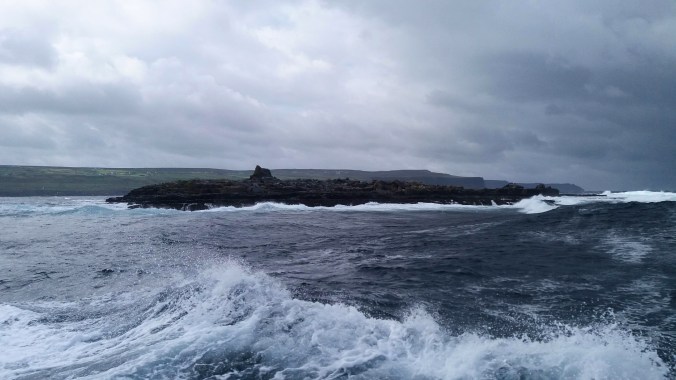
I pulled my shoes up to try and keep dry as the water swirled around. We were not allowed to move once the boat was in motion due to the extreme bouncing, so I was stuck. Then the waves began to come over the side. Small splashes at first, but soon large drenching waves. It began to rain. Sudden hard sheeting buckets of rain combined with waves splashing us in all directions. I did not have any waterproof clothing on whatsoever because the day was so lovely when we were on land. By the time we arrived to the island 30+ minutes later, I was entirely soaked: socks, underwear, everything.
This extreme damper on my mood was not tempered by the fact that the rain had once more evaporated as we pulled into the island harbor and beautiful sunny blue skies prevailed. If anything, it made me even more grumpy. If I’d just sat inside on the boat, I’d have gone from sunny dry land to sunny dry land. Instead I got soaked to the bone with no change of clothes ahead for hours. I declined the carriage and the bike rental shop and immediately set off in the opposite direction of all the other ferry passengers, hoping to find a quiet and empty place to soothe my emotional distress and dry my wet socks.
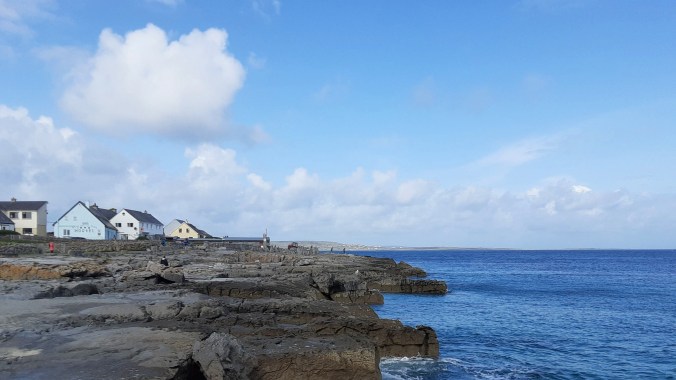
I did find a quiet section of beach with no humans around and I traded out my layers of clothing, alternately wearing and sun/wind drying. I managed to go from totally soaking to slightly damp over the course of about an hour. I listened to some music and watched the ocean. I let go of my expectations and my plans, and was finally able/willing to head back toward the cluster of buildings and see what there was to see nearby. I didn’t really have the time or energy to bike around to all the sights, so I just walked. I got to see some of the homes, quaint little cottages all divided by stone walls. I found a sweater shop. I learned a lot more about Aran Knit.
The Aran knitting patterns are unique, especially when combined with a rougher, less treated (more waterproof) type of wool. They were made by fishermen’s wives to stave off the rain, seawater, and cold winds that I had gotten only a tiny taste of on my boat ride over. (I got drenched on a “sunny” day, imagine what it was like for the fishermen?) The tradition is maybe 100-150 years old, and the sheep aren’t from the Aran islands (anymore, not enough sheep). There’s a strong mythology about the types of stitch and patterns in the knit, but it’s mostly from a single source, which always makes me skeptical.
Whether or not the patterns link to certain clans or whether the original ladies who knitted them ascribed the mythological meaning to bring health, wealth and such to the wearer we can’t be sure. What is sure is that the distinctive patterns are unique and in high demand. Such high demand that there’s now factories churning out machine made versions of the traditional fisherman’s wear. You can order them online, you can buy them in any city in Ireland. I doubt any casual observer will know the difference. The machine made sweaters are lovely and affordable. I didn’t want one.

I perused the shop’s offerings, observing tags and occasionally asking questions. The hand knitted sweaters were truly lovely, but they started around 100€ each. I thought a lot about how often I’d wear a really thick wool sweater in my life. It would be great for the 20 minutes I’m outside each day in the depths of winter, but then it would be too hot to wear inside. Plus, I’m already quite fluffy, and bulky clothes are not flattering on my figure. I looked longingly at the scarves, because I love scarves, but I also have too many already and am trying to figure out which ones to leave behind on my next major move. Finally, I settled on a hat. It is hard to keep my head warm in the cold winter winds and they’re meant to be taken off inside, plus don’t take up so much room in the luggage.
I chose a hand knitted hat in a lovely moss green with several different classic Aran stitches. The gentleman at the counter and I chatted for a while about the changes in Ireland and on the island specifically in his lifetime. He told me when he was younger, everyone went down to the lighthouse to watch the football (soccer) game on the only television on the whole island, and now they had stuff like WiFi! His wife was part of the group of ladies that knitted the in house goods, but he wasn’t sure if she had knitted the hat I chose or one of the other ladies had. The wool itself was from the Connemara area because there just weren’t enough sheep on the Aran Islands themselves to support the knitting, it being more a fishing (and lately tourism) economy than a sheep based one.
I actually wore the hat a lot during the rest of my trip in Ireland and it was a welcome addition to a wardrobe that was packed for a more summery climate than I ended up with.

With my souvenir goal achieved, I continued to explore and came across a small meadow behind some abandoned buildings. Down among the grass and weeds was a zoo of tiny life. Little black winged and red spotted moths, fuzzy bumble bees, stripey caterpillars, and beautiful butterflies. I had a wonderful time crawling around on the ground and taking pictures.


The line for the ferries back was almost as chaotic as the ferries out, but I had more faith that we wouldn’t be left behind. The weather was getting squally again, and the ships captains were having chats about the best way to get back. They started out asking all the people subject to seasickness to get into certain boats which were less likely to be as impacted by the waves and which would take the most direct route back to Doolin. Our reservations included a trip past the Cliffs of Moher and would be about twice as long as the direct route.

Sadly, by the time we all bundled onto the boats, the captains had decreed the weather was too bad to go to the cliffs. I made sure to get a seat inside for the ride back, turned on my music and had a little nap. I have been known to get seasick when I’m below decks, but this ship was fairly wide and had big picture windows. It was not a real question of being wet and cold vs being a little nauseous.
Once more, I learned that no matter what the weather looks like on land, it is not related to the weather even 5 minutes out to sea and that whatever plans you make in Ireland that involve the ocean are subject to drastic change and cancellation without warning. I think the boat trips were worth it, and I’m glad I went to the island, even if it meant getting soaked, but if you only have a couple days in Ireland, maybe stick to mainland activities to avoid disappointment.

Doolin Cave
When putting together the day plan, we had a few hours in the late afternoon free and the cave looked like a good “all weather” option. I booked the tickets for pretty much everything we did ahead of time online because summer is the high season in Ireland and popular sites sell out fast. Even though I wasn’t feeling great after my very wet morning, it seemed like a waste not to use the tickets that were already paid for, so we headed to the cave.
 The cave is famous because it has the longest freestanding (or free hanging I suppose) stalactite in Europe. It is quite impressive. Tours go down in groups with hard hats and a guide. There’s a LOT of stairs, a fairly short walk, and a very dramatic presentation where you walk into the main cavern in the dark (flashlights pointed at the ground) so that when the lights come on, you get a stunning view of the star stalactite. Originally, there was meant to be a garden walk involved in this as well, but the rainy weather which had prevented us from seeing the Cliffs had caught up to the mainland and it was positively pouring down. On top of that, the cafe was closed by the time we came back up. I think the stalactite was stunning, but overall, I wish we’d been able to enjoy the other things at the location.
Doolin Music House
Whatever hardships the day threw at us, the evening plans made up for it all. I was able to change into dry clothes, which helped a lot, and our nighttime plans were for some trad music in a local house. I’d reached out to Christy and Sheila via email and arranged for a space in their house show. Trad (traditional) Irish music is a big draw both for locals and tourists in Ireland and while a lot of it is available in pubs, those can be loud and crowded – a challenge to anyone who’s feeling overwhelmed at the end of a long, hard, rainy day of touristing.
The idea of sitting in a nice quiet living room and listening to music and stories was far more appealing than the pub. Sheila welcomed us in and invited us to sit by the fire which was burning local peat and smelled amazing. Peat is harvested from the bogs of Ireland. It’s dead and decaying organic matter that’s been pressed into turf. It’s dug up in chunks and dried in the sun, then used for fuel. Ireland doesn’t have a lot of trees, which is why so much is build of stone and why the people burn peat for fire. Even with new gas and electric heating systems being installed around the island, a lot of folks still use peat in their fireplaces and stoves. I also had the chance to see some of the harvesting and drying in process when we drove through peat bogs later on.
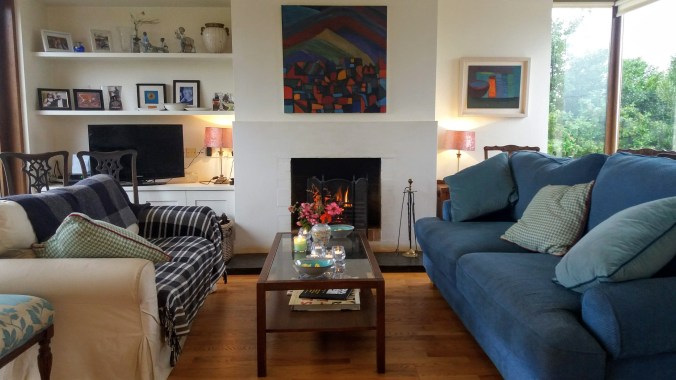
When we first came in, we entered Sheila’s painting studio where she creates and displays her artwork. In the living room, however, the walls are covered with charcoal sketches of some of Ireland’s most influential trad musicians of yore. Sheila brought us some wine and other guests filtered in. It was mostly people over 50, I may have been the youngest in the room, but they were lively and talkative (I think the Irish might be the only people who talk as much as the Americans). We were served a light meal of local salmon and local cheeses with fresh bread and we just ate and chatted for a while. It was very relaxing, like a dinner party at a friend’s house.

When we had all finished eating, Kristy and James came out with a fiddle and an armload of flutes. James stuck to his fiddle the whole night and only very rarely spoke. Kristy was every inch the Irish story spinner and played a variety of flutes and even the spoons at one point. Between songs, Kristy would tell us all stories about the music and about growing up in Ireland. Although he never said his age directly, I gather he must at least be in his 70s if not older. He’s been performing professionally for more than 40 years, but the stories he told about his childhood experiences lead me to believe he’s been playing much much longer.
I did not have the kind of memory capacity in my phone to record all those wonderful stories, but I was charmed by tales of the older way of life that had still been common when he was a boy. How all the men worked hard physical labor jobs, and almost no one had any money, but it barely mattered because they could go round to each others homes at night and play music and dance. He told us the history of the instruments and how the music grew up as something more to accompany dancers than as it’s own art. Dancers were the percussion and the main entertainment. A musician who couldn’t follow the dancer’s beat wouldn’t soon be invited to play again.
Sheila and her friend came out to show a small demonstration of the dancing, so focused on the movement of the feet and the stillness of the body. The whole world has seen Riverdance by now, the famous show that came from this traditional dance style. It has been heavily adapted to appeal to a broader audience with more movement and flash, but the original style is very subtle and very challenging to master.
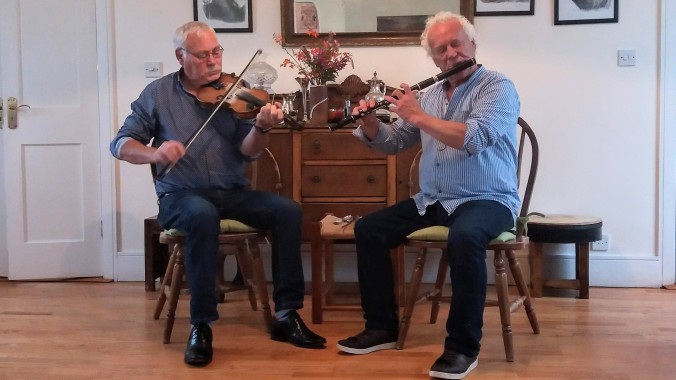
We listened to music and stories totally captivated. It is one of my best memories of the entire trip. My Airbnb host, Marcella, lives just up the road, and of course has known Sheila for years and was stunned to find they were asking so “high” a price as 25€ per person for the experience. I found it to be totally reasonable for such a wonderful evening. No public show could have compared to the warmth and personal touches of being in their home, and yet they were impeccable hosts with regard to our comfort and keeping our wine glasses full. Plus, while they may just be the neighbors to Marcella, Kristy is a world renowned and award winning musician with a lifetime of amazing stories to share.
Every night is different because different musicians and dancers show up to accompany Kristy. Plus, although the night I was there, none of us were brave enough, Kristy did say he likes it to feel more like a group event than a performance, and anyone is welcome to sing, play or dance as they like.
The main website is very classy, and doesn’t properly give the impression of the impish charm that Christy exudes. I took a single video for my own memories and to share with you all, but if you want to see more, their Facebook Page has a much wider selection than the primary website.






 Gallivantrix