Memorial Day Weekend: Korea Edition

Yes I’ve been radio silent almost a year. Maybe I’ll write about why someday, but the important thing is, I’m ok and I’m slowly starting some new adventures. Thanks for being here always!

In Korea, Memorial Day (현충일) is June 6th, a week later than my American friends and family celebrate the memory of our soldiers with lavish summer backyard barbeques, overt displays of patriotism, and caring about disabled vets for a few days out of the year. I’ve never really noticed any block party style celebrations of Memorial Day in Korea, as it seems to be a more solemn day, but of course, everyone loves a three day weekend, so I expect there will be lots of people going out and enjoying the beautiful weather we are having. There are also official memorial ceremonies at military graveyards and Korean War Memorial sites. But why after 6+ years of living in Korea am I just now choosing to write a Memorial Day post?

(UN Memorial Cemetery in Busan, Gallivantrix 2016)

Connected to my last several posts and my year long absence from the blog, I have recently been digging into my own family history. I’ve always known that my paternal grandfather was an ace pilot, and that his general age range put him as “probably served in Korea?” but I never had any facts. My grandfather died when my father was only 10, and as a result, my father has shared fairly limited information about him with me. Since Korean Memorial Day is all about those who fought and died for the Republic of Korea, that means that the vast majority of the focus is on the Korean War (1950-53), so I’m going to tell you about my grandfather, Captain Kenneth D. Chandler.

My grandfather was actually born in Canada, which came as a surprise to me, in 1923. Then his family lived in Arizona and southern California, answering some questions about my father’s family diaspora. Even though they moved around with the military, and I know they were stationed in Hawaii in 1948, because my dad was born there, it seems my grandfather never stopped loving the American southwest. My grandmother lived in Arizona until she died and my dad took me on trips all over the southwest on our family vacations.

I knew that his family was Mormon (LDS) and that he had left the church because when I was driving across America with my father to move to Seattle, we stopped in Salt Lake and found his name in the big Mormon Book of Families (not actually what they call the book). I remember feeling that it was very strange, since he had chosen to leave, and yet the church insisted on praying him into heaven after his death. I suppose that’s kinder than praying his soul into hell, but still kind of creepy. On more than one occasion, the LDS Chandlers have sent me mail. They still track out family tree, but since I have no kids, and I’m my father’s only child, there’s really nothing left here for them to track.

On October 25, 1942, my grandparents were married. Kenneth was 19, and Rose was 16. I can only assume they rushed an early wedding so that Kenneth could could go to war and Rose would not be left with nothing if he died because my grandfather’s military career also began in 1942. I haven’t yet found details of his military record for WWII, but I do know that he was a fighter pilot and flew in Europe. When he returned alive, he and Rose had three children (1946 uncle B, 1948 dad, 1950 aunt M) two of whom I have never met. I’m told that he was a fairly distant father, which is a bit sad, but hardly surprising given that something in his childhood caused him to cut ties with the church and by implication the rest of his family, and that fact that he likely already suffered some form of PTSD by the time his first child was born, and definitely by the time he returned to his family after the Korean War. (I did say I was doing this research for generational trauma healing purposes, right?)

I had already known he was an ace pilot in the Air Force, because my father’s own air force career (not a pilot) was inspired by his father’s. The Air Force family way of life was a pretty big deal in both my homes growing up, as my step-father was also Air Force. I went to air shows, and military parades, and there’s really nothing quite like the 4th of July on a military base. I also had the benefit of travelling widely as a child, and getting early exposure to different cultures and value systems. Although I decided the military was not for me, I think it had a strong impact on who I am as a person, both in my globetrotting tendencies and in many of my morals and ethics. It’s hard to imagine nowadays, but I was instilled with the ideals as a kid, and that sort of thing stays with you.

I had further suspected that my grandfather fought in the Korean war, but had no details. The internet, however, provides a near endless resource of information and human connection. Koreanwar.org is a website that connects survivors, veterans, and civilian aides from the war. When I searched for my grandfather’s name, I found a message from 2006, practically next door to where I was living that year. Yun-Kuk (Ted) Kim wrote:

City and State: Edmunds WA
Service or Relationship: friend of a veteran
Comments: Captain Kenneth D. Chandler shot down a MIG-15 in North Korea in December 1951 over Cho-do area. His aircraft, however, was disabled by a MIG’s debree [sic] ingested into his F-86’s engine, knocking it out. He bailed out over the off-shore island of Cho-do. I was stationed there with a US Air Force combat intelligence unit as an interpreter. I happened to be on the beach that day, supervising unloading of a US Navy landing craft. When I saw a Sabre pilot bail out over the Cho-do Bay, I and another Korean airman rowed out into the bay in a row-boat and waited for him. When Capt. Chandler (probably) fell into the water, we grabbed him and pulled him into the boat. We rowed him to a waiting US Navey [sic] helicopter and delivered him to safety and home. I am looking for Capt. Chandler if he is the one I rescued and if he is still alive. (He should be between 85 to 90 years old now.) Appreciate any help. Ted Kim, Edmonds, WA.

Entry 57095 May 10, 2006
https://www.koreanwar.org

Fam, I was shook, and strangely involuntary tears came to my eyes as I read the words of this man who had pulled my grandfather from the sea. It’s not quite as time travellery as that my father would not be born without him, since my father was 3 years old when this happened. Nonetheless, to see that there was a Korean man who touched my family so closely had lived so near to me (I was in Seattle at the time, and regularly drove in and out of Edmonds which is a part of the greater metropolitan area), and that here I am now in Korea looking at his words. I wish I could visit Cho-do bay, but sadly it’s north of the 38. Also, sadly, there’s no email for Ted (김윤국), and I can’t extend to him my multigenerational thanks. Luckily(?) someone replied to Ted later that year to let him know about Captain Chandler’s death.

Thanks to the extra research of a friend after reading this post the first time, I now know that he flew alongside Colonel Dayton Ragland, the only African American to shoot down a MiG-15 in the Korean War. On November 18, just a few weeks before he was pulled from the sea, my grandfather and then Lieutenant Ragland strafed an airfield destroying at least 4 MiGs and damaging 4 more. Although at the time, the destroyed MiGs were all credited to Captain Chandler, I suspect that’s not entirely accurate. Ten days later Ragland shot down the MiG that earned him his only credited shot, and was himself shot down and taken prisoner. Ragland’s story is infinitely amazing, if you want to read more, check out this twitter thread by @hankenstein.

A handful of years ago, when I was visiting my father, he showed me a shadow box he had made of his and my grandfather’s side by side military careers and told me the story of when my grandfather won the Bendix Trophy race.
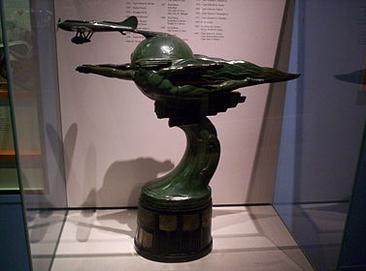
The Air and Space Museum in D.C. claims that they have the original trophy on display, but my dad says that’s not true, because during the year that it was in his house (1957), my age 9 dad-to-be broke it. One side of the propeller was broken off, and my grandmother had it brazed back together leaving a small bump.

When my then-adult dad had a chance to visit the museum, there was no trace of the damage and repair, so he reasoned it can’t really be the original. A few more tidbits about the race I learned later in my own research: He broke the race’s speed record that day, the previous record was 666 mph, and he flew 679 mph. He was also a wingman to Chuck Yeager in the movie “Jet Pilot” where he flew the plane of the plane of the Russian character Lieutenant Anna Marladovna (Janet Leigh). I don’t know if the two men were friends, but they certainly were colleagues and comrades in arms.

Captain Chandler and 1st Lieutenant Frank Latora, both of the 343d Fighter Group, were killed when their Lockheed T-33A Shooting Star jet trainer crashed 12 miles (19 kilometers) north east of Parker, Colorado, while on a ground-controlled approach to Lowry Air Force Base on the night of Friday, 28 March 1958. Captain Chandler’s remains are buried at Rose Hills Memorial Park, Whittier, California.

Bryan R. Swopes, 2018 http://www.thisdayinaviation.com

My grandmother held on to the Bendix trophy for the next 2 years. She refused to surrender it until there was another winner. There was no official race in 58, 59, or 60, and so no winner was named. I suppose it was a piece of her husband that she didn’t want to relinquish after his death, and she was so determined about it that the race authorities threatened both to remove Captain Chandler from the official record and to put my grandmother in jail before she finally gave up the trophy. Even though she turned it over, the trophy never lived with another family, as it was retired before the next official race in 1961.

My grandfather died tragically at the age of only 33. My dad says he never really got to know his father, who tended to show more interest in the eldest son. Perhaps if he had lived a little longer he would have shepherded his middle child into adulthood, or perhaps he would merely have contributed a different legacy to our family’s generational trauma, but regardless there is no denying that Captain Chandler would certainly have been proud of Colonel Chandler, and I hope of Professor Chandler as well.

This Memorial Day, I remember Captain Kenneth D. Chandler: WWII & Korean War veteran, ace pilot, Bendix Race winner & record setter, and my grandfather. May your memory be a blessing.

Captain Kenneth D. Chandler, with the Bendix Trophy. (Jet Pilot Overseas)

Nazi History from Inside Germany

Everywhere I went last summer had been impacted by WWII, but I mostly avoided war memorials so my encounters were more side-notes like, “people hid in these caves”, or “the Allies / Nazis used this tower / bombed this building”, or “here’s where we smuggled Jews out”, but everyone else had the by-line “we were invaded, it’s not like we wanted the Nazis here”. Since the Nazis originated in Germany, you can imagine the story isn’t quite the same, and yet Germany is (rightfully) not proud of it’s role in the war. I always take photos of the signs in museums to help me write later, but in this case, I’ll be quoting those signs rather than summarizing them because I feel like the way that the Germans handled the history is much more significant to this post than the history itself. You can read about the events of WWII on Wikipedia, but you can’t hear the voice of Hamburg unless you go there.


Church Days
It started out like many other historical museums of ruins, the various buildings and rebuildings of the church over 900 years. There was some information about the reformation and the change from Catholicism to Lutheranism… normal church history stuff accompanied by some statues, stained glass, and other relics from the history of the building.

The history of St. Nikolai began in 1195 when Count Adolf donated to the cathedral a plot of land on which a chapel was to be built. This chapel was dedicated to St. Nicholas, the patron saint of seamen and merchants.

Over the following centuries St. Nikolai gradually grew to become one of Hamburg’s largest parishes. Growth of the parish as well as natural disasters called for the constant enlargement of the building. In 1527 the change brought about by the Reformation movement made itself felt as well. Johann Zegenhagen became the first Lutheran Senior Minister.

St Nikolai was destroyed in the Great Fire of Hamburg on 5 May 1842. It was only four years later that the cornerstone was laid for the new neo-Gothic church designed by British architect George Gilbert Scott. The spire, finished in 1874, is still the fifth highest sacred building in the world.


Propaganda Machine!

Since the days of the Hanseatic League, Hamburg has played a major role in German politics and economy. Because of its importance for trade and industry, the Hanseatic city was given the title of a Führerstadt (Fuhrer City) in the 1930s. Adolf Hitler personally was strongly involved in Hamburg’s urban development plans. A large part of the population sympathized with Hamburg’s role as the new Reich’s ‘gateway to the world’.
Hamburg’s population had been prepared for a possible air war at an early stage. The construction of air-raid shelters and ARP training were meant to boost confidence in the system. A wide range of propaganda measures aimed at strengthening the Volksgemeinschaft (national community). 

Hamburg’s citizens were meant to cope with the challenges of aerial warfare in a ‘soldierly’ manner. Propaganda Minister Goebbels even hoped for a positive effect on the coherence of the community. The air war, he said, could tear down class barriers and create the true Germany.

*ARP stands for “Air Raid Protection”

Air War: Entertainment for Young and Old

Right from the beginning, the Nazi regime had pretended that civil air defense was perfectly normal. A board game called Luftschutz tut not! (Air raid precautions are essential!) introduced entire families to the everyday life of air war. Entertainment and war was not a contradiction in terms.

The Fascination of Bomb Craters

Given the initially ‘successful’ German campaigns, war seemed to be a long way off. Early air raids on Hamburg were considered a rarity. Bomb craters and destroyed houses became popular sites for outings that people could then talk about.


Increased Air Bombings Used by Nazis to Further De-Humanize Jews/Minorities

The history preceding the events of summer 1943 began no later than on 1 September 1939 when Germany invaded Poland. The decision of the Allies to area-bomb the city of Hamburg was also a response to earlier German air raids. The massive destruction of Warsaw, Rotterdam, and Coventry by German bombers fleets was paid back to the German “home front” in the shape of a firestorm.

The Nazi regime had begun long before 1943 to prepare the population for bombing. The systematic exclusion from the air-raid shelters of specific categories of people again demonstrated the regime’s contempt for humanity.

The relatively successful operations of German forces represented a massive challenge to the Allies. Political and military developments led to a fundamental change in strategy. After targeted raids had been made against Hamburg’s industry, Operation Gomorrah was intended to break down support for the Nazi regime from the German population. In the city on the Elbe the Allies’ area-wide airstrikes exacted the highest toll of casualties so far in the bombing war.

As the bombing increased leading up to 1943, it only fueled the Nazi desire to punish the Jews and other “unwanteds” living in Hamburg.

As in all parts of Nazi society, Jews and other marginalized minorities were excluded from official ARP. At most, they were permitted to seek refuge in self-made makeshift shelters.

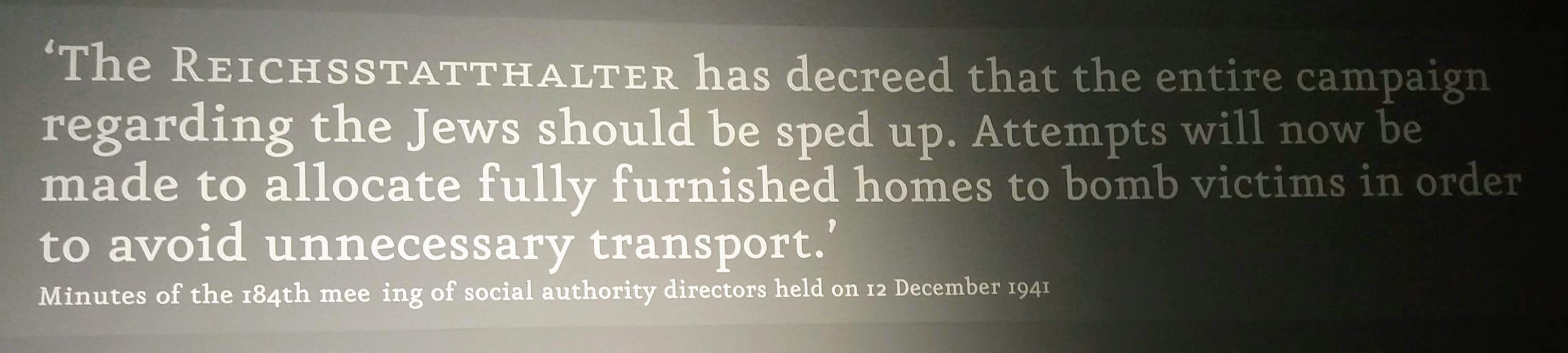
As the war advanced, discrimination and exclusion intensified. In the wake of the first major air raids on Hamburg the Gauleiter, Karl Kaufmann, turned to Hitler asking for help. He intended to deport Jews to benefit those who had been bombed out.

With Hitler’s approval, thousands of Jews were deported. Their homes and part of their possessions were distributed among bombed-out ‘Aryans’.

Some citizens applied specifically for such homes and quite knowingly benefited from the deportation of the Jews without showing the slightest trace of a sense of guilt or wrongdoing.

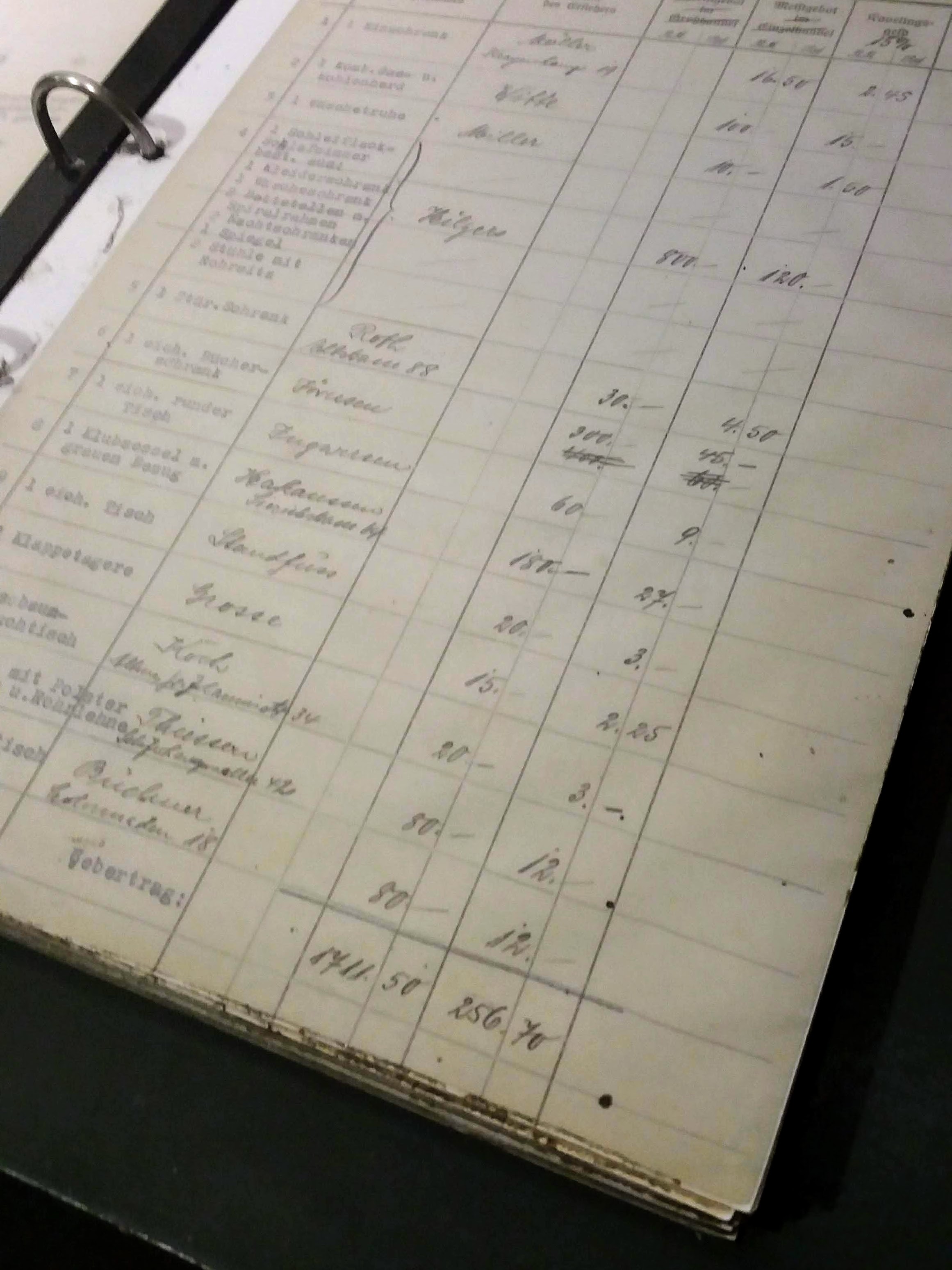
On display were the actual records of items that had been taken from imprisoned and deported Jews and auctioned off to loyal ‘Aryan’ citizens.

The Story of the Ledermann Family

The preserved letters of Anita Ledermann, a Jewess, shed light on her life and that of her family during the air war. All in all, 72 letters to her friend Gunnar Schweer, and his family were preserved. She reported about the increasing oppression by the Gestapo, her experiences during and after the bombing, her futile attempts to leave the country, and finally her farewell before being deported to the concentration camp in Theresienstadt.

Anita and her parents were later killed in Auschwitz. Only her sister survived as a forced labourer in Saxony. Auction files document that Hamburg citizens acquired the abandoned possessions of the Ledermanns at a bargain price.


Operation Gomorrah

Attack on Hamburg

Operation Gomorrah began on the night of 24/24 July 1943. Over the next ten days, British and US bomber fleets destroyed a large part of Hamburg. About 34,000 people lost their lives.
This catastrophic event made a deep impression on the population. Nevertheless, each individual experience offered a unique and very different perspective. Both the pilots carrying out orders and the population seeking refuge in – sometimes only makeshift – air-raid shelters were scared to death.

During those days and nights Hamburg was permanently on alert. With their suitcases packed, citizens waited for the next air-raid warning. Only a few of them found places in the shelters that were thought to be safe. Jews and foreigners and forced labourers were automatically refused entry. Many of them searched in vain for shelter in the burning city.

Those persecuted by the regime feared for their lives, but at the same time hoped for liberation.

The City of Hamburg also used prisoners of the Nuengamme concentration camp for clearance work. In constant mortal danger and under dreadful conditions, they were forced to clear rubble, retrieve bodies and look for unexploded ordnance. The people of Hamburg could see them and occasionally came into contact with them.

Recovering bodies not only caused extreme psychological stress, but was also highly dangerous because parts of buildings came crashing down. Some boroughs in the east of the city had to be declared restricted zones because the danger of an epidemic loomed.

Stories of what was going on in Hamburg, oppression and exploitation, evidence of such things which actually made me cry because the stories are so personal. This person was taken away and their home and goods were redistributed to “good party members” whose homes were lost to air raids.

The propaganda. The division of classes. The way that those not deemed worthy were denied safety. I was struggling. This was the reason I didn’t want to go to an actual war memorial. If this little underground museum is so full of pain, what is it like at the ruins of Dachau?

And then I watched a film about the Firestorm in 1943 that destroyed 90% of the city including the church I came to see. It was insanely graphic and personal. Nonetheless, I had trouble feeling sad for the people who suffered and died as these were the people who had been complicit in the cruelty and deaths of those featured in the first section of the museum.

True they were mostly civilians, but they happily benefited from the system of oppression and tyranny. This isn’t the same video I watched. The one in the museum had a narration telling us of the horrible suffering of those caught in the fire who burned or suffocated while trapped in collapsing buildings; however it was the most similar visually, if you feel the need to look.

There was a section that was more or less neutral with photos of places around Hamburg before, during, and after the war and reconstruction. Normally I cringe to see the aftermath of bombing yet when the photos showed Nazi structures being destroyed and rebuilt it didn’t feel like destruction so much as it felt like the surgical removal of a cancer.


In War, Everyone Suffers
Finally the last section was about Germans who escaped the Firestorm and fled the city. They were almost all children at the time of the war, and they again told deeply personal stories.

A Ticket to Get Away

My husband had given me those Atikah cigarettes and so I said to my sister, ‘You know, we’ll take these; who knows, they might come in handy.’ Barmbek was still intact at the time, so we got through all right. Everywhere there were treks that also wanted to get out of Hamburg. We walked through this bombed city, by no means could we ride our bicycles, because the streets were so utterly destroyed, and sometimes the houses were still burning. Above all this there hovered a terribly undefinable stench. It was the smell of corpses. I don’t know what dead bodies smell like, but that was how I had imagined it. 

Then at some point we were on an outward road near the Berliner Tor. Everywhere there were crowds of people with all sorts of wheels to which everything was attached that they wanted to save and take along. We also waved at people. But nobody wanted to take the bikes as well. But after all, they were worth a fortune. How could one have got hold of a new bike later on? All of a sudden we had this idea about the cigarettes: We’ll hold up the cigarettes and everybody prepared to take us on board will get cigarettes. It didn’t take long and someone stopped and we said first of all, ‘But you’ll also have to take the bikes.’ ‘Yes. That’s all right. Where are you heading for?’ ‘Lüneburg.’ ‘Okay, get up then.’ They got their cigarettes and we were permitted on to teh vehicle. At eleven at night we arrived at the market square in Lüneburg. We were tired to death and absolutely knackered.”

–Inga Bonn, born 1920

Inga would have been 19 when Germany invaded Poland, and 23 when this story took place.

The First Step into a New Life

“There we were, left with nothing. We had absolutely nothing. The first saucepan that my father bought after we had been bombed out, well, I still take great care of it even today. It is a small old iron saucepan, and every year on Christmas I use it to render goose drippings. My daughter has told me ten times already, ‘I would have chucked it out long since.’ ‘Nah’, I say, ‘it means a lot to me.’ This was the first new item than my father got. That was in 1943. My father died in January 1944. He was gone.”

–Eva Kralle, born 1931

Eva would have been only 8 when Germany invaded Poland, and only 12 when the city of Hamburg was destroyed.

Barefooted Through the Phosphorus

“We walked through cellars. Until then we didn’t know what the world outside looked like. Then we climbed out somewhere. Whether it was a window or a door, I don’t remember. In the morning at eight, a storm, a firestorm. And the sky was red and black, no daylight. And the storm. We put blankets over our heads so nothing was peeking out. Us girls one after the other and the lieutenant always in front. Then the houses crashed down, those to the left and right. There were only ruins left. Well, we had to scramble over rubble, over tram rails that had already bent. Then I lost my shoes and I walked on in my bare feet.

For hours we walked on to the Dammtor. I had been burnt by phosphorus, because I was barefoot, you know. On arrival I was immediately seen to. There was a paramedic there and she said, ‘You have phosphorus burns.’ Do you think I could remember that it was painful? I can’t remember at all. Then she bandaged my feet and asked me if I had any shoes. ‘I have straw shoes’, she said. ‘I can give you those, then you have at least something for your feet.’

—Esther Angel, born 1925

Esther was 14 when Germany invaded Poland, and 18 when Operation Gomorrah destroyed her home.

My Brother

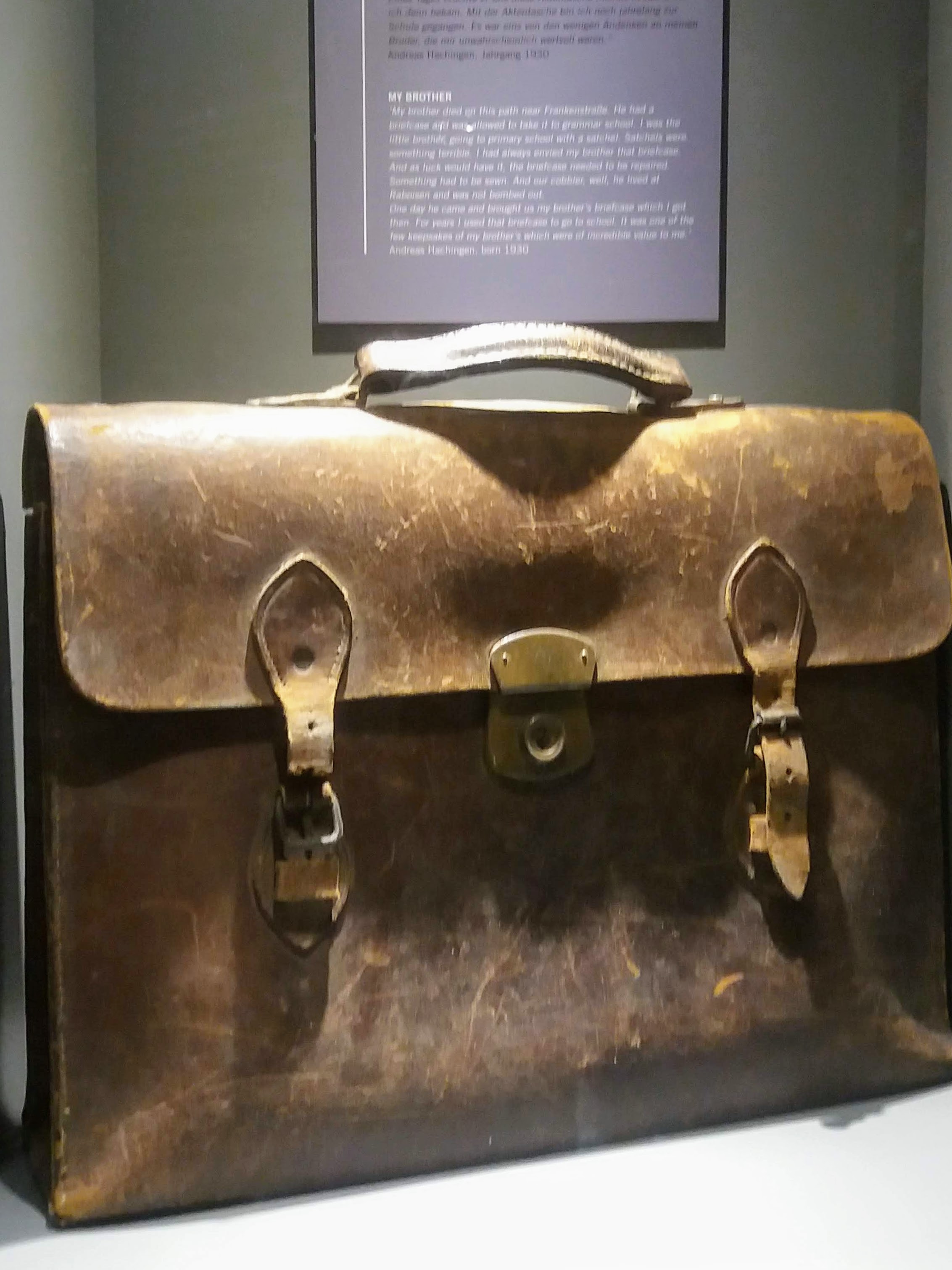
“My brother died on this path near Frankenstaβe. He had a briefcase and was allowed to take it to grammar school. I was the little brother, going to primary school with a satchel. Satchels were something terrible. I had always envied my brother that briefcase. And as luck would have it, the briefcase needed to be repaired. Something had to be sewn. And our cobbler, well, he lived at Raboisen and was not bombed out.

One day he came and brought us my brother’s briefcase which I got then. For years I used that briefcase to go to school. It was one of the few keepsakes of my brother’s which were of incredible value to me.”

—Andreas Hachingen, born 1930

Andreas was 9 at the invasion of Poland and only 13 when he lost his brother in the bombing of Hamburg.
I realized that however much I might hold the adults complicit, children can’t be held to the same standard. It makes you ask where is the line, when does someone become old enough to own the fact that part of their culture is hatred and murder?


What is the Right Way to Remember?
The language used for the displays is deeply personal and vivid but also very matter of fact. “This is what we did. This is what was done to us. Draw your own conclusions.” It’s very emotional. It’s also very different from every other country even Japan who tend to want to forget their own role in bringing the air raids to their shores. Or America’s memorials about slavery which tend to be “oh, yes we did horrible things but we figured it out and got better” (not 100% true).

At the museum of St. Nikolai, it feels like, “this horrible thing happened here and we want to remember it happened because we did horrible things first”. There is controversy on how to honor those who died.

The Hamburg firestorm literally burned its way into people’s memory. Only a few days after the bombings, the Nazi Gauleiter denounced the ‘Anglo-American bombing terror’.
After the end of the war this crude propaganda was replaced by complex and divergent memories. Each decade chose its own way of remembering. Often specific interests governed the format and contents of commemoration.

After the end of the war the anniversaries were observed on a highly regular basis. Many different memorial sites were created, ranging from a modest clay tablet on a new building to artist-designed monuments. At Ohlsdorf cemetery there is a mass grave of bomb victims. This is where in 1952 Gerhard Marcks’ memorial was inaugurated.

On the 60th anniversary of the Hamburg firestorm Jörg Friedrich’s book “Der Brand” (the Fire) triggered a heated debate on the air war. Many people were wrestling to find a proper way to navigate through the culture of remembrance. Some even declared the bombing war a ‘taboo’ topic.

In fact, the bombing in general and the Hamburg firestorm in particular have never been a taboo issue. Furthermore, the debate on the right form of commemoration is as old as the bombings themselves.

The commemorations are not only for the victims of the Nazis, but the ordinary citizens of Hamburg who likely felt themselves “not involved in politics”. If only the children, at least some who died here were innocent, and all who died here had loved ones. Yet the firebomb was not a random act of aggression. There were not “very fine people on both sides”. German invasion and aggression had to be stopped. However horrific the Firestorm was, we still see it as justified because it was used to stop the spread of Nazis.

I can’t tell you what to think any more than the museum seeks to. I can only encourage you to explore history, to seek truth and perspective, and to never grow so complacent that you think it can’t happen again if we forget.

The Ordeal was created by the Hamburg artist Edith Breckwoldt for the memorial site of Sandbostel, Lower Saxony. Sandbostel is the place where until 1945 one of the Nazi’s biggest prisoner camps was located. More than 50,000 people from many countries met their death here. The sculpture’s pedestal is built from the original stones of the prisoners’ barracks which were collected by pupils of Sandbostel on the ground of the camp. Sandbostel was also the final station for about 10,000 prisoners from the Neuengamme concentration camp in Hamburg.

Nagoya Castle: Now with 10% more Ninja!

If there is one famous place that exemplifies Nagoya, it is the sprawling grounds of the reconstructed Nagoya Castle. I couldn’t possibly visit Japan’s fourth largest city without spending some time at it’s most famous historical monument! I was hoping to get a sunny day and take some sweeping landscape photos of this majestic structure, but the weather was not on my side. Even without the sun, Nagoya Castle was beautiful, fun and educational to visit. Plus, there were Ninjas!


I woke up Tuesday to the sodden realization that the weather forecast had changed again, and the rain was not going to stop until I was back in Korea. It wasn’t as bad as Monday, however, mostly cloud cover and the occasional sprinkle. I had forgotten my umbrella at the katsu restaurant the night before, but I wasn’t worried since umbrellas are for sale in every subway station and convenience store (right next to a huge steaming pile of foreshadowing).

Golden Bus or Subway?

I looked into the possibility of doing the Golden Tour Bus day pass. The Me-Guru is a kind of hop on hop off bus that runs around the most popular places in Nagoya. You can get a Me-Guru day pass for 500 yen which is great if you are planning to hit up several tourist hot spots in one day. Unfortunately for me, there wasn’t a stop anywhere near my friend’s house, so I was going to have to take the subway at least 2 times (out and back) making the 500 yen ticket less attractive to me. If the Me-Guru isn’t getting you where you want to go, you can also get a city day pass for subways for 740 yen, or subway bus combo for 850 yen.

Nagoya Subway ticket machines

Photo Credit: Nagoya Station.com

The main attraction of the Me-Guru Golden Bus is that it drops you very close to tourist attractions that might otherwise be a hefty walk from the nearest regular bus or subway stop. Atsuta Jingu is very central and easy to access, but the Nagoya Castle and Tokugawa Gardens are rather out of the way. Lucky for me, the Me-Guru bus also offers single ride tickets for 210 yen which you can buy on the bus just like any other city bus. I would recommend the Me-Guru day pass if you happen to be staying anywhere near one of the bus’s stops, however I opted to take the subway (270 yen trip) to Nagoya Castle, then the Me-Guru to Tokugawa (210 yen), and finally the subway again (270 yen) back to my ersatz home base for a grand total of 750 yen.

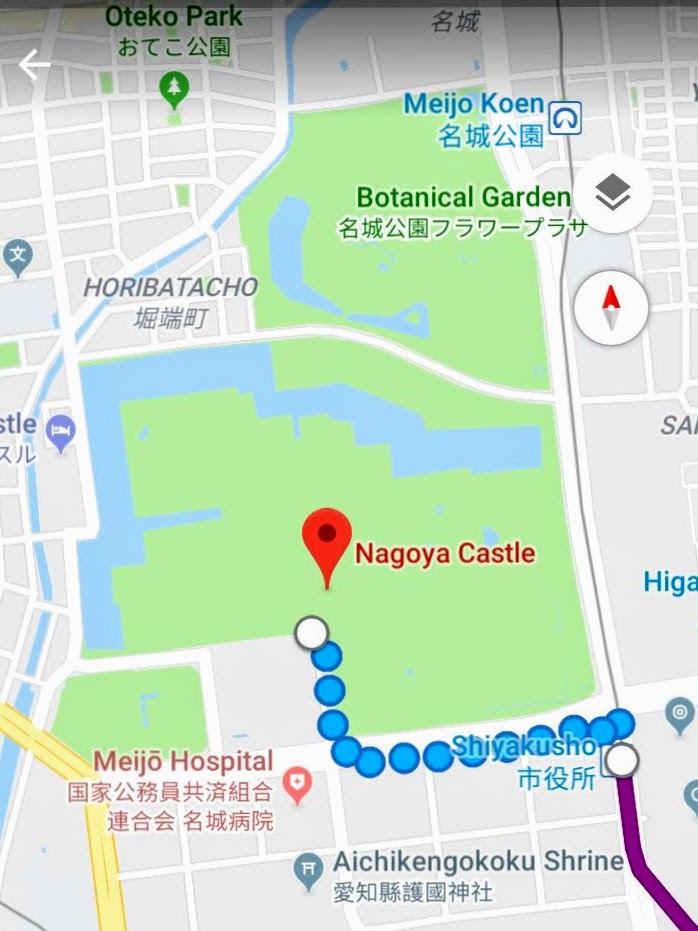
I mention all this because it’s acutely important to figure out transit in Japan before you go unless you are made of money and time. Since most of us aren’t… Data plans and mobile WiFi hot spots are expensive and not really necessary given the proliferation of free WiFi, but it does mean you can’t to a Google search any time anywhere, you have to find the WiFi first. I like to research my routes over breakfast and take screenshots of the map and directions to reference later when I’m out of WiFi range. So, Tuesday morning, while I was enjoying my “morning service” again, I pulled up a million maps to see where I would go and how far I would have to walk/wait between each one. The public transit options between the Castle and the garden are dreadful. Hence the one stop Me-Guru ride.

screenshot_20180619-191133

If you don’t plan ahead, you may not know where the next bus stop/subway station you need is (it might not be the one you came out of or the closest one may not go where you want to go). You could find yourself walking farther than you want, which doesn’t sound like much, but we tracked our walking on Sunday and got almost 10 km in one day of aimless tourist meandering. It adds up fast, and while I don’t mind walking for health or enjoyment, I don’t want to waste vacation time and energy walking extra to the bus stop when I could be using it to walk through something cool! Plus, if you suddenly find yourself knackered from unexpected heat, humidity, and ridiculous amounts of walking (this happens to me at least once per vacation), taking a taxi back to your hotel in Japan could cost 50-100$, that’s US dollars, folks. Taxis are EXPENSIVE in Japan. Ubers are not better.

Let Them Eat Gold

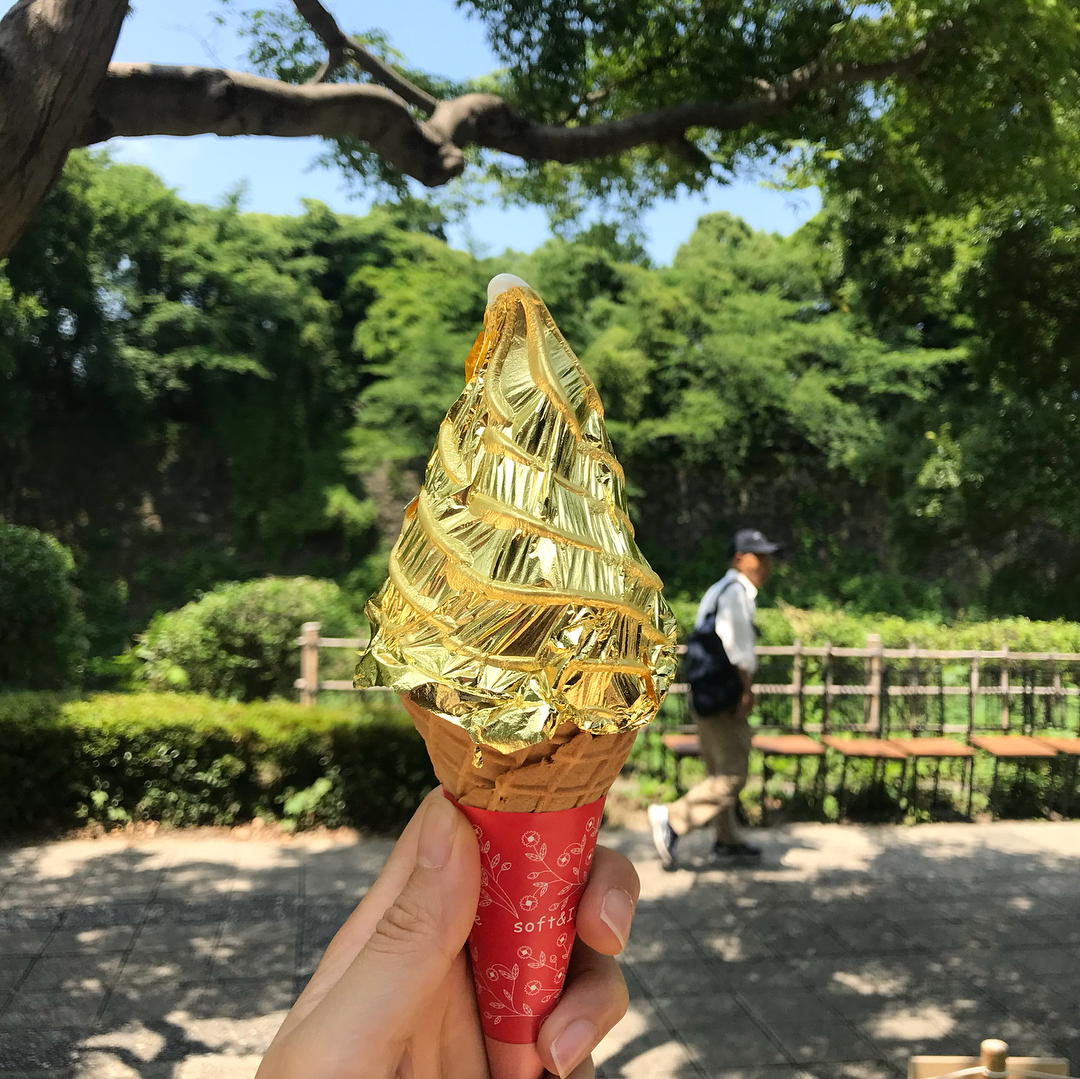
From the nearest subway station, the walk into the Castle compound is down a little restaurant corridor that sells everything from Nagoya specialties to the Castle’s very own gold plated ice cream. Yes, gold plated ice cream. It’s not actually very expensive, and it’s highly Instagramable, but I couldn’t bring myself to buy one as I have recently been complaining about the out-of-touch rich people in America eating gold plated tacos while children can’t get fed in school… soooooooo…. no gold ice cream for me.

The ice cream isn’t trying to be Richie Rich, it’s actually meant to imitate the golden tiger-fish that is the symbol of the castle. During my post vacation research phase, I got curious about how they could afford to sell these golden ice creams for 6-9$ a pop, and I discovered that you can buy edible gold sheets for surprisingly cheap. One seller on Amazon is selling 10 sheets for 7$. The gold taco I was upset about? 25,000$… US….At 0.70 per sheet, it may be silly to eat a golden ice cream cone, but it’s not actually Louis XVI levels of decadence and class warfare. Eat the rich.

Fire Bombing Damage

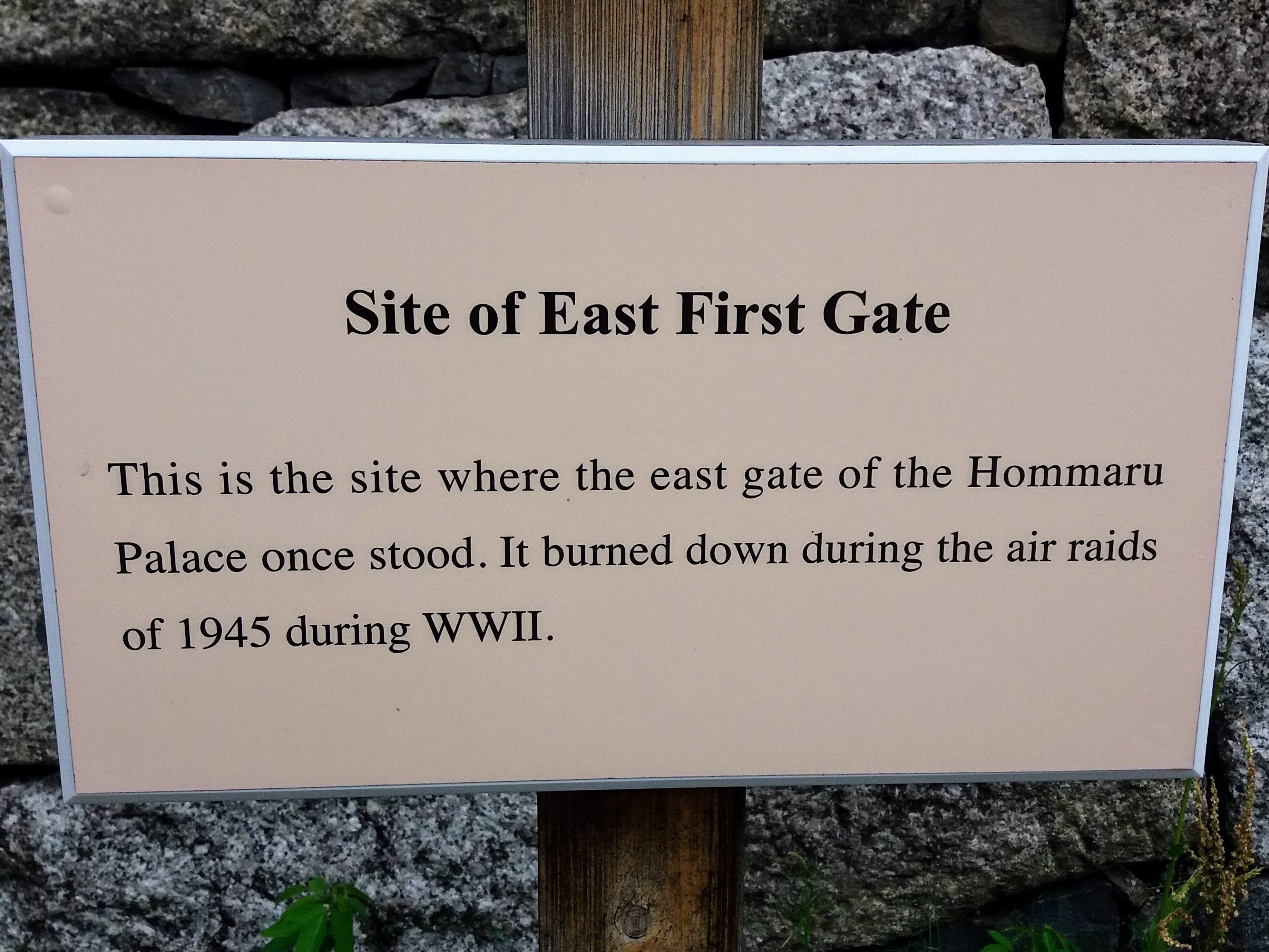
Nagoya Castle is the number one tourist stop in Nagoya and it’s not even finished! Almost everything you see there was destroyed by Americans in WW2 during the fire bombings. A fact the informative signs will not let you forget since everything you read will tell you how the original was destroyed and whether what you’re looking at is a transplant or a reconstruction.

20180508_133330

Traveling around Asia, you inevitably see signs like this because nearly every temple, castle and historical site has been sacked during one war or another. In China and Korea, you find things that were destroyed by the Japanese. In Japan, you find things that were destroyed by the Americans.

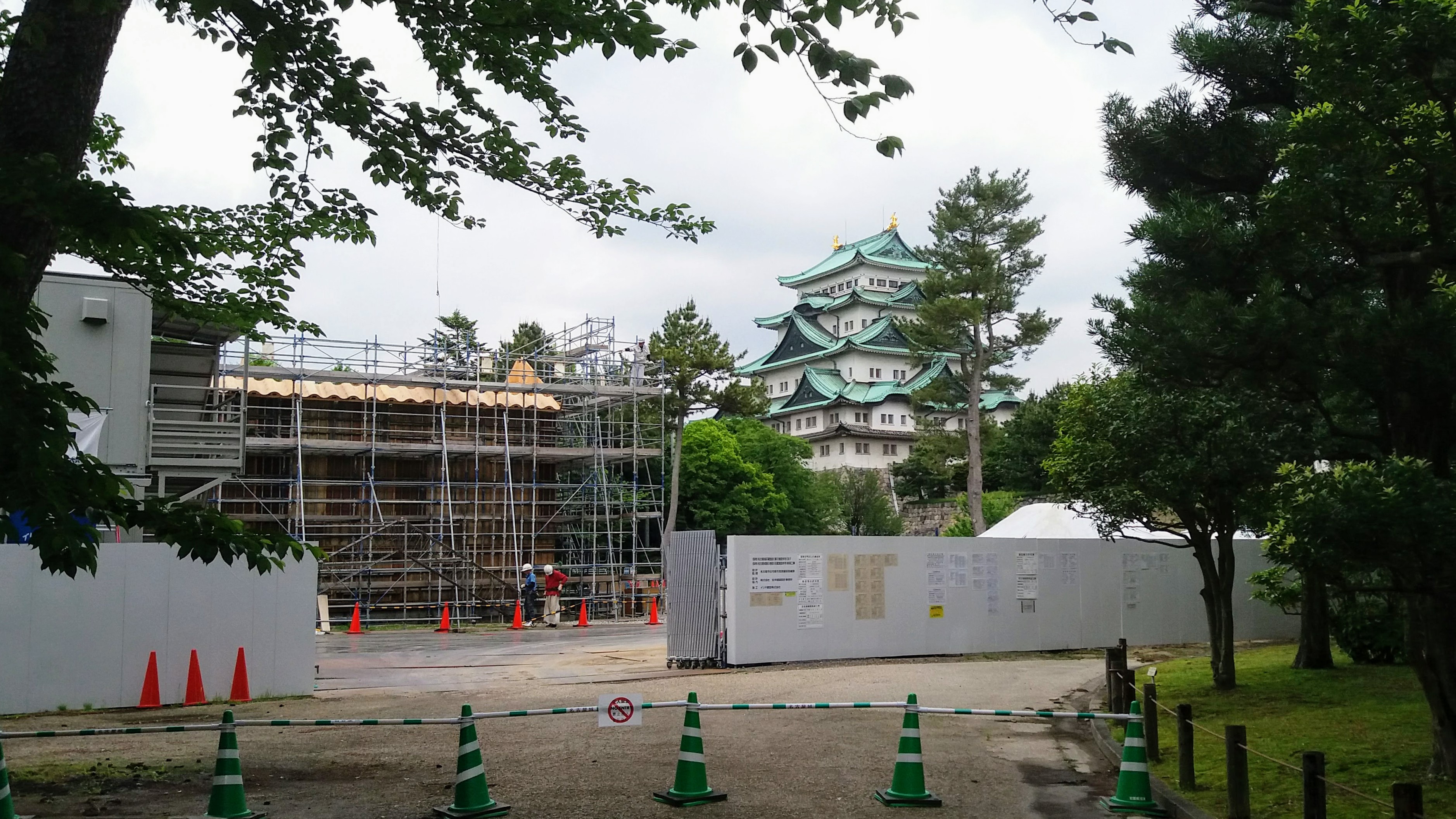
The castle and grounds were still heavily under construction during my visit, but I’m told with some degree of excitement by the locals that the reconstruction should be finished this (2018) summer.

20180508_132446

Hommaru Palace

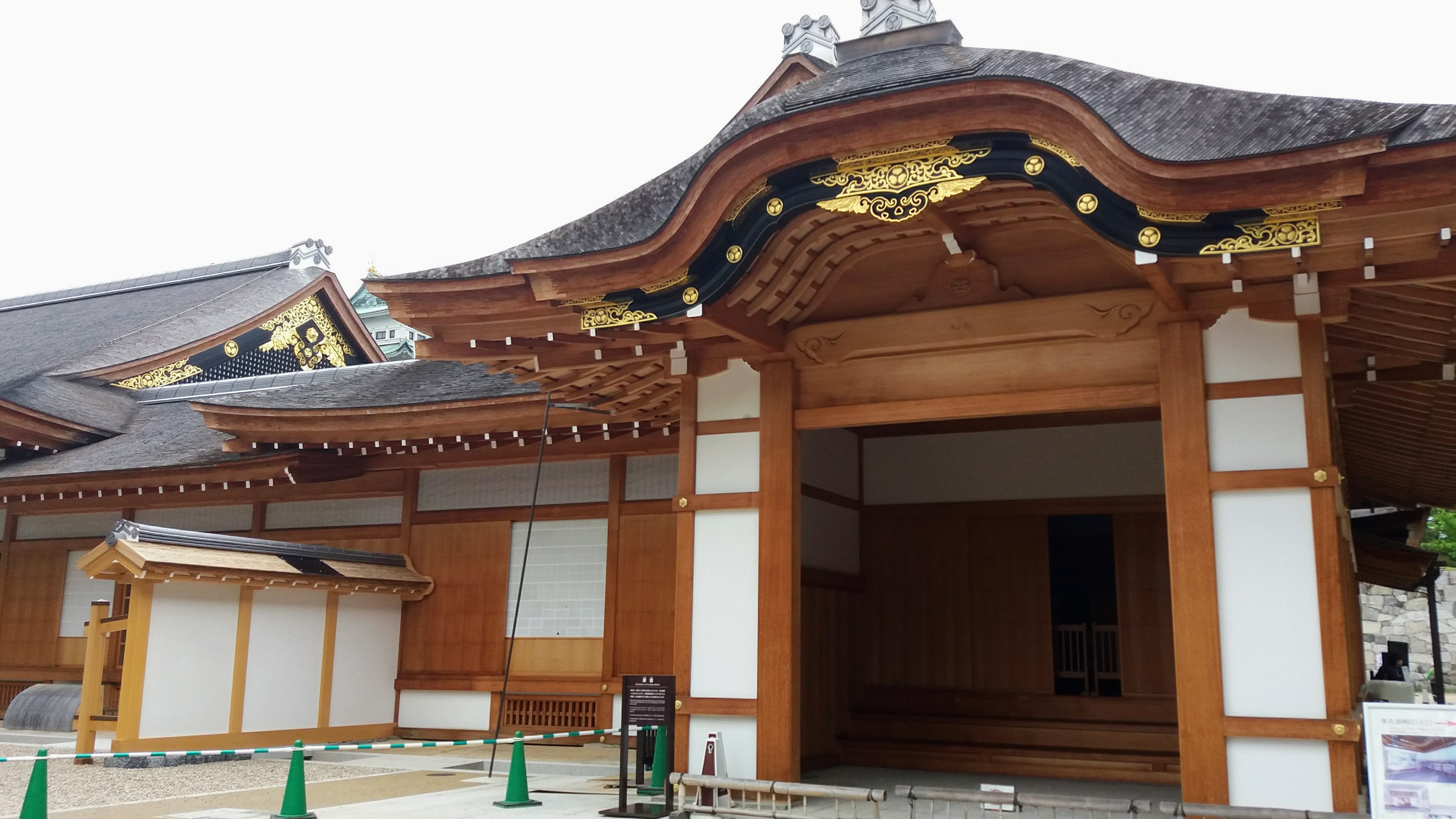
The first sight that greeted me walking in the gate was the tower of Hommaru Palace. The tower is done in a similar style to the main castle, but is much smaller. Once you get around the corner and over the moat, there is a beautiful brand new palace. According to the literature I was given to take home, the Nagoya Castle was declared a National Treasure back in 1930, but sadly destroyed in the 1945 air raids… ok they don’t call out America by name, but we all know. The palace compound has been undergoing reconstruction on and off since 1959, but the Hommaru palace reconstruction only started in 2009!20180508_134013

I am not an architecture buff, but I do enjoy a beautiful building. I especially appreciate that Nagoyans decided to use all traditional materials and craft techniques to remake the structure. It doesn’t just look like the original, it preserves the artistry and history of Japanese culture — not only the woodwork, but also the fittings, metalwork, and paintings. There was an intense research project designed to microscopically and chemically analyze the original scraps that survived the fire bombing (have we mentioned that recently, because Nagoya Castle does not want you to forget) so that the paintings could be replicated as authentically as possible.

Despite the chronic reminders of our history of conflict, the restoration process is fairly interesting. If you want to see more details, they’ve got a lovely website.

As I approached the palace proper, there was a group of Japanese businessmen having a chat in front of a very photogenic area. However, my faith in Japanese politeness was rewarded. As soon as one noticed me holding my camera (phone) nearby, they gestured to the others to move out of the way and we all smiled and bowed to each other before I went on to take the photo. So much politeness!

20180508_120144

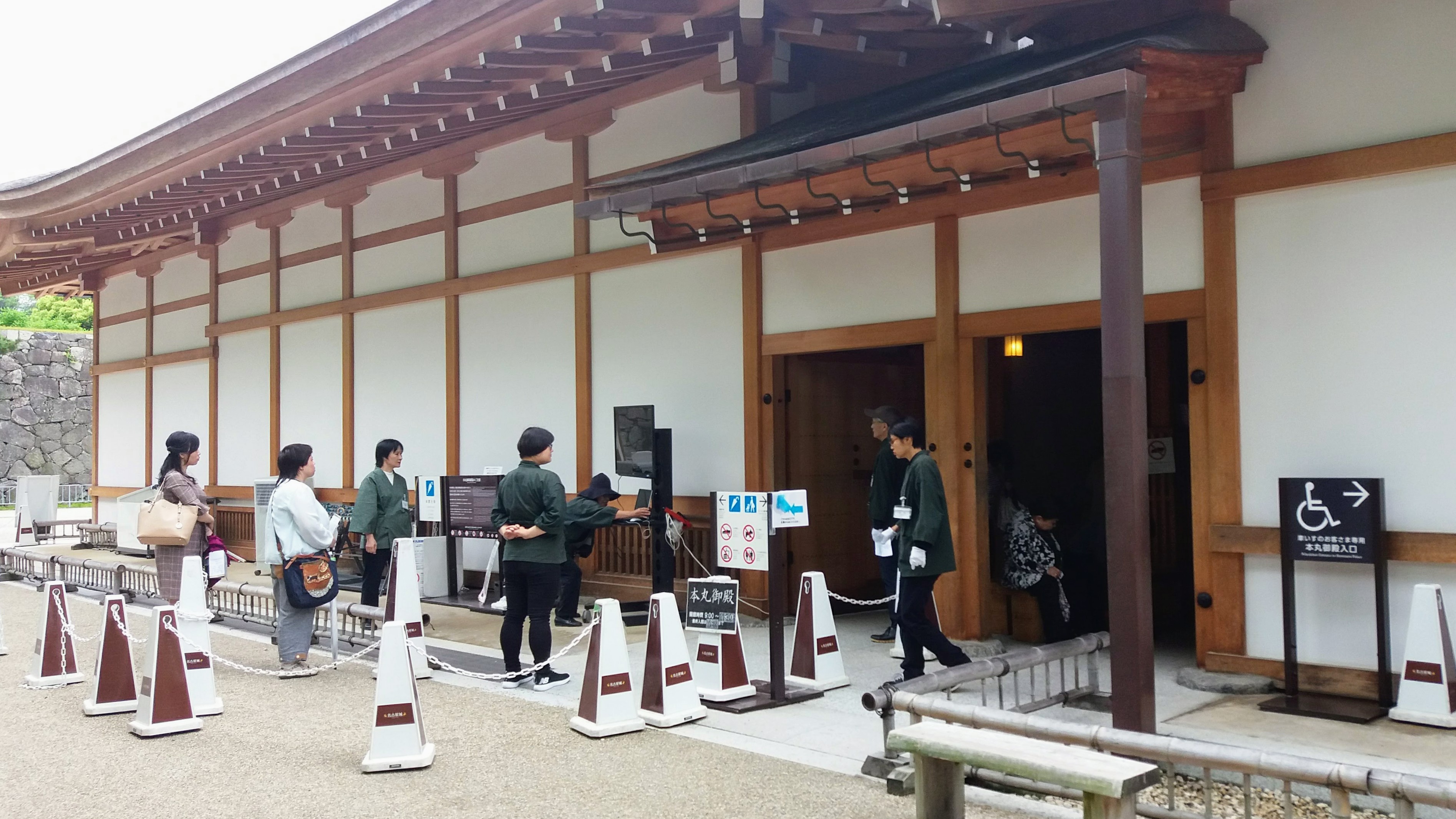
Following the path, I noticed an area where a few other visitors were lining up and entering the building so I paused to check it out. The staff were sooooo excited to share with me. They showed me a little video of how to tour the building correctly (no touching, no flash photos, etc) and explained the character in costume stopping all the bad behavior on screen was the father of the famous king who had ruled from this palace and a famous general.

20180508_123652

I was asked to wear my backpack on my front to avoid bumping anything, and all of us were asked to remove our shoes before going inside. Slippers were available, of course, and there were free shoe lockers as well. For an extra 100yen, an audio tour of the palace was availble in several languages. I thought about getting the English one, but it was taking the staff 10+ minutes to set up the couple at the front of the line, and I wasn’t second in line. I decided to risk moving on less informed.

The palace itself is bright and open. Although the day was cloudy, the inside of the palace somehow still managed to feel sunny with the warm wood halls, paper windows, and gold accents. Drifting sock footed through the hallways, I felt a sense of what visiting the royal palace might be like. Everything was hushed and clean. The halls were made of the same pale wood on all 4 sides creating an effect of being inside a tree. Every few meters, the interior hall wall would open up into an opulent room. The 3 visible walls inside each room were covered with the ornate and painstaking replicas of the Edo period paintings.

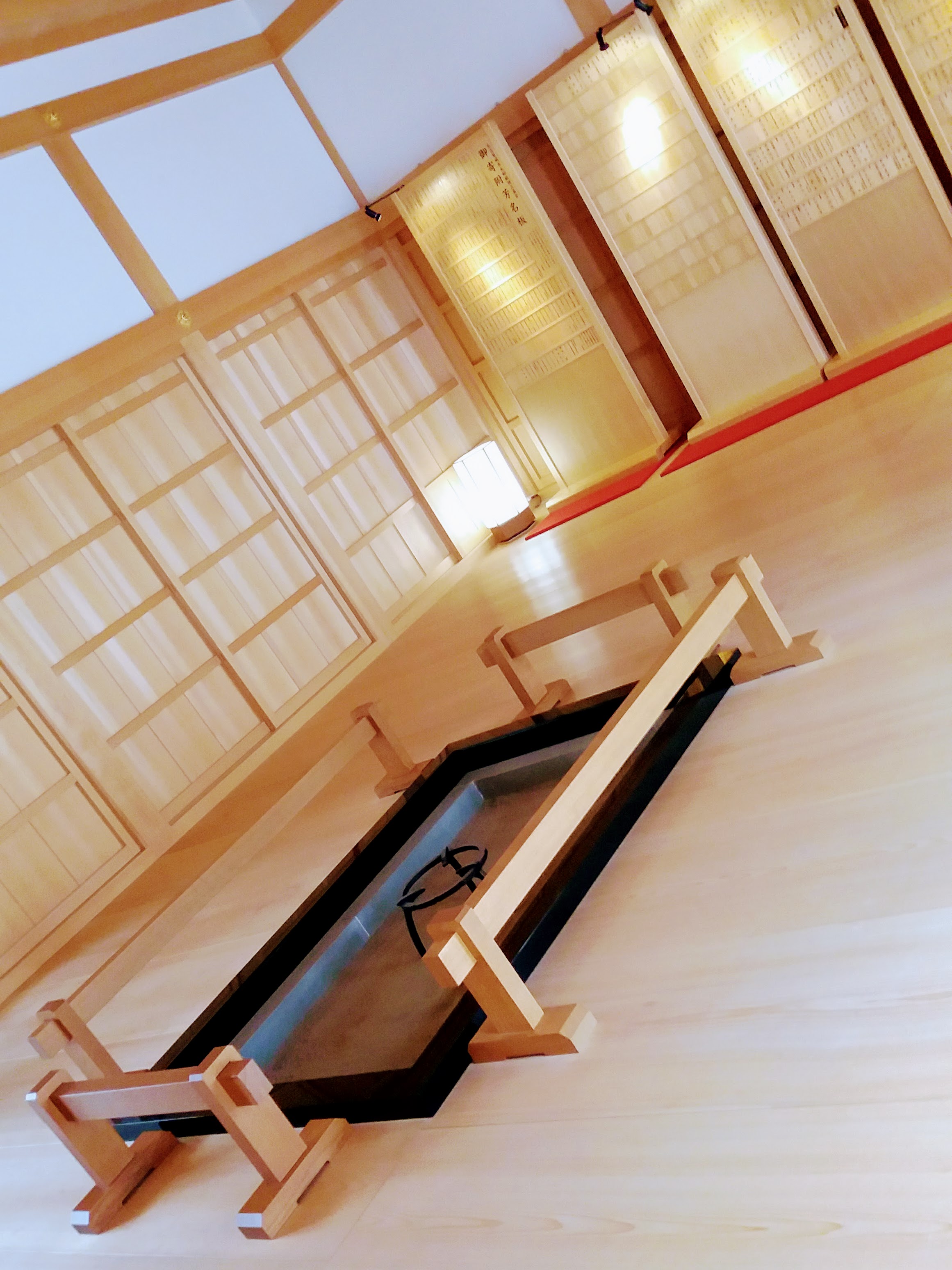
In practice, each of the rooms would have had a specific ceremonially significant purpose. A room for receiving guests of a certain social standing or another. A room for dining, one for tea, one for drinking sake and listening to music. One room had a fire pit built gracefully into the floor and a hidden vent in the ceiling to carry the smoke of roasting meat and fish up and out. The low wooden bars are just to keep people from walking into it, not an actual part of the function. Indoor fire pit is now added to my list of things I want in my imaginary dream house of the future.

20180508_123034

The palace doesn’t take long to explore and it’s included in the park entry fee. I highly recommend a walk through. On my way out, I ran into the very helpful staffer again. It turns out she had lived in America a while ago and was happy to practice English with me (although I don’t think she really needed “practice”) She told me some more about the restoration process and said I really needed to come back after the construction was complete to see it at it’s best. It made me happy that the people working there take so much pride and interest in the history and culture of the site. Enthusiasm is highly contagious and just talking with her made me more excited to be there.

Surprise! Ninjas!

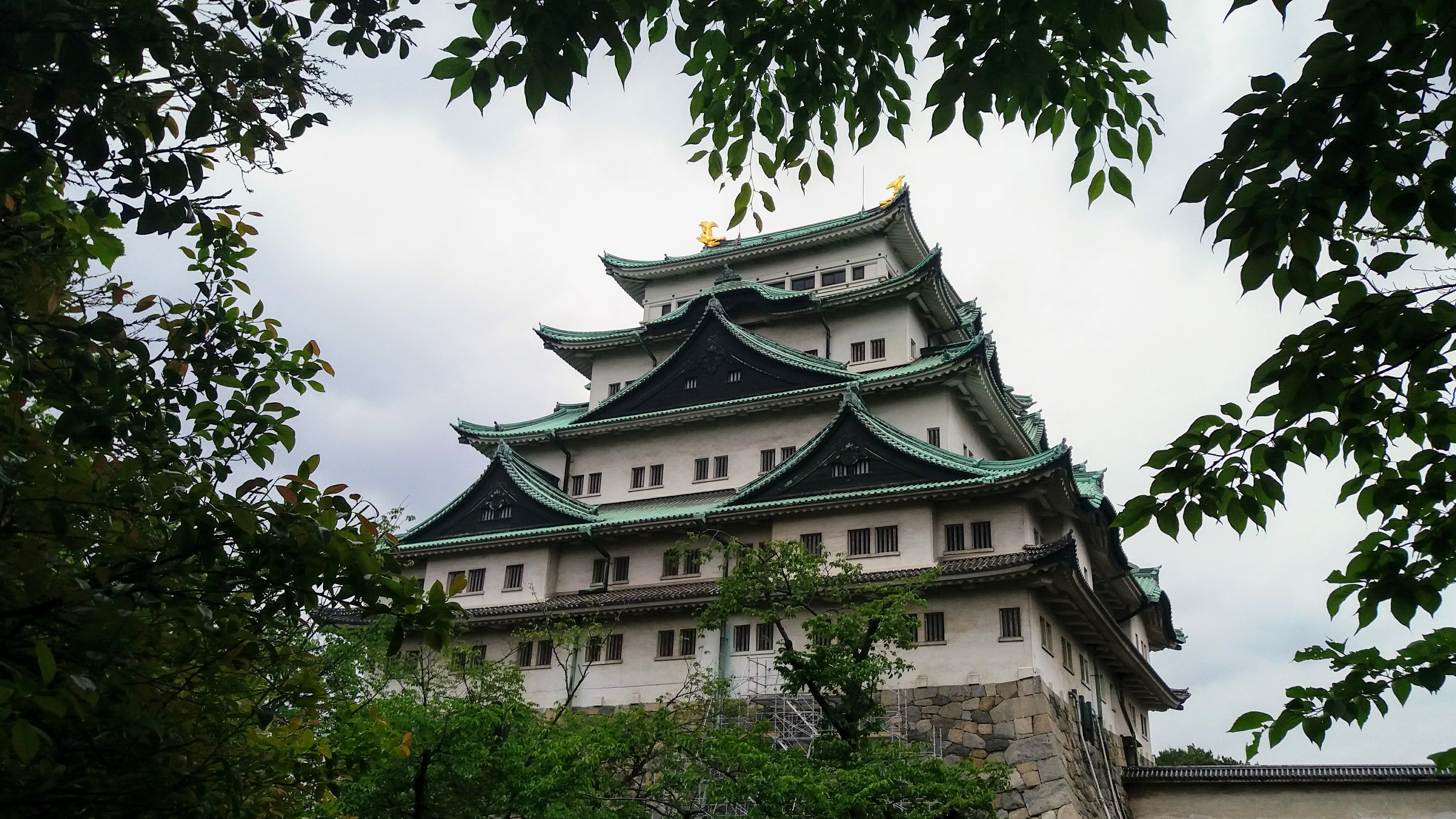
Just after leaving Hommaru, the path turns a slight corner and suddenly there’s the first real view of the Castle proper. This was the real moment I was sad about the weather. Nagoya Castle is elevated, and huge, so any photo will have plenty of sky in the background. My cloudy, rainy day resulted in a very plain light gray sky instead of a fluffy cloud filled azure backdrop. Is it cheating to use filters?

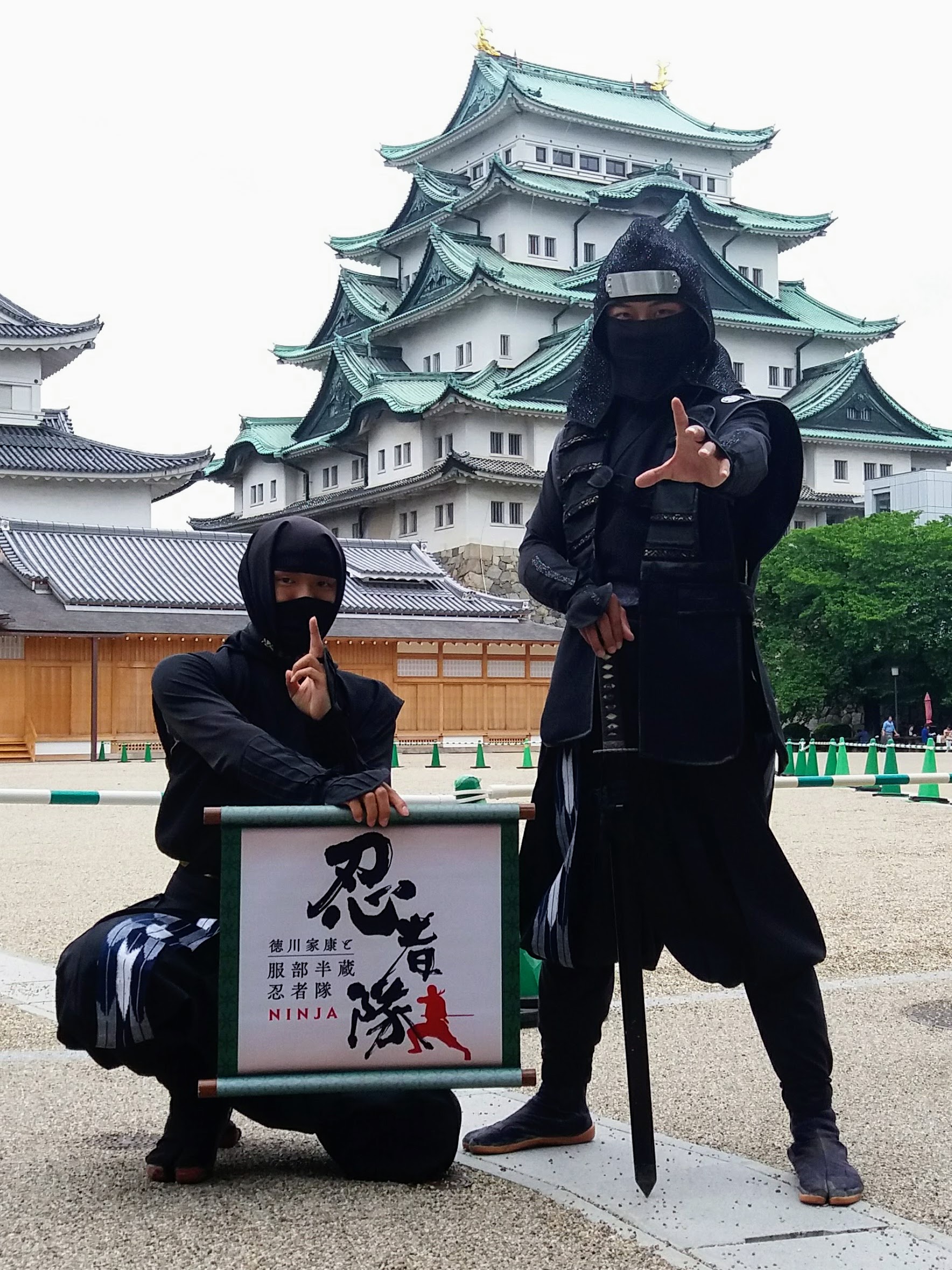
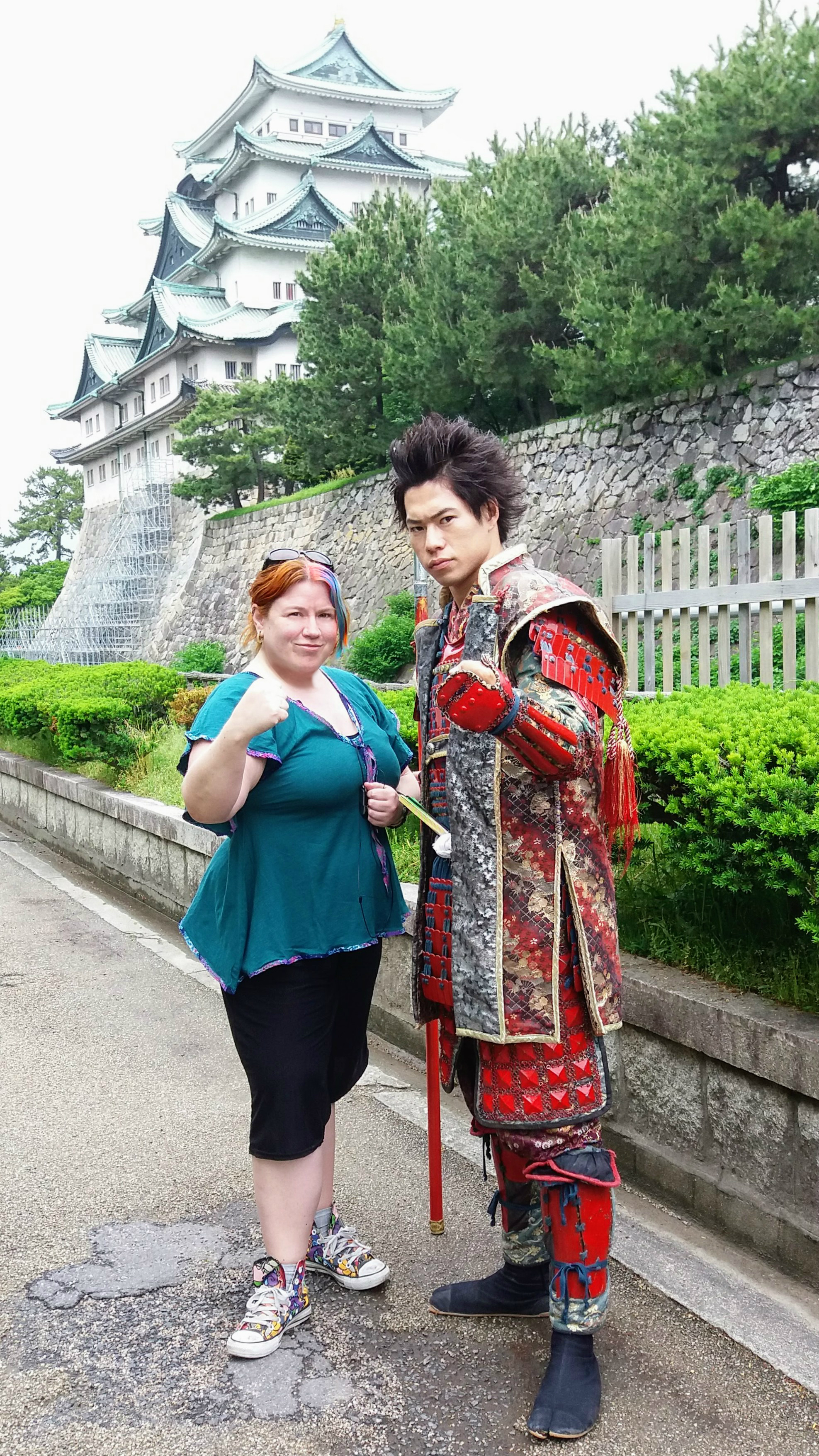
Did I mention there are ambulatory ninja on the castle grounds? It’s part of a cultural and historical show. According to the ninja website, two words I never thought I would string together in a non-hyperbolic fashion, there are performances every weekend, but weekdays are listed as “hospitality”, a kind of meet and greet.  I was there on a Tuesday, so I only met the two posing for photos and promoting their future shows.

20180508_124042

No Nagoya Castle for Me

Sadly, the castle was closed for the finishing touches of construction, so I couldn’t go inside, but I’ve heard there’s an excellent view from the top. Looking at other people’s photos online, it seems the decoration style is very similar to that of Hommaru palace. The only truly distinctive thing I missed out on seems to be the huge Shachihoko (the tiger fish) that you can sit on and pose with, and the tall geometric stairwell. Next time.

nagoyajo_20160113_e

photo credit: Matcha Magazine

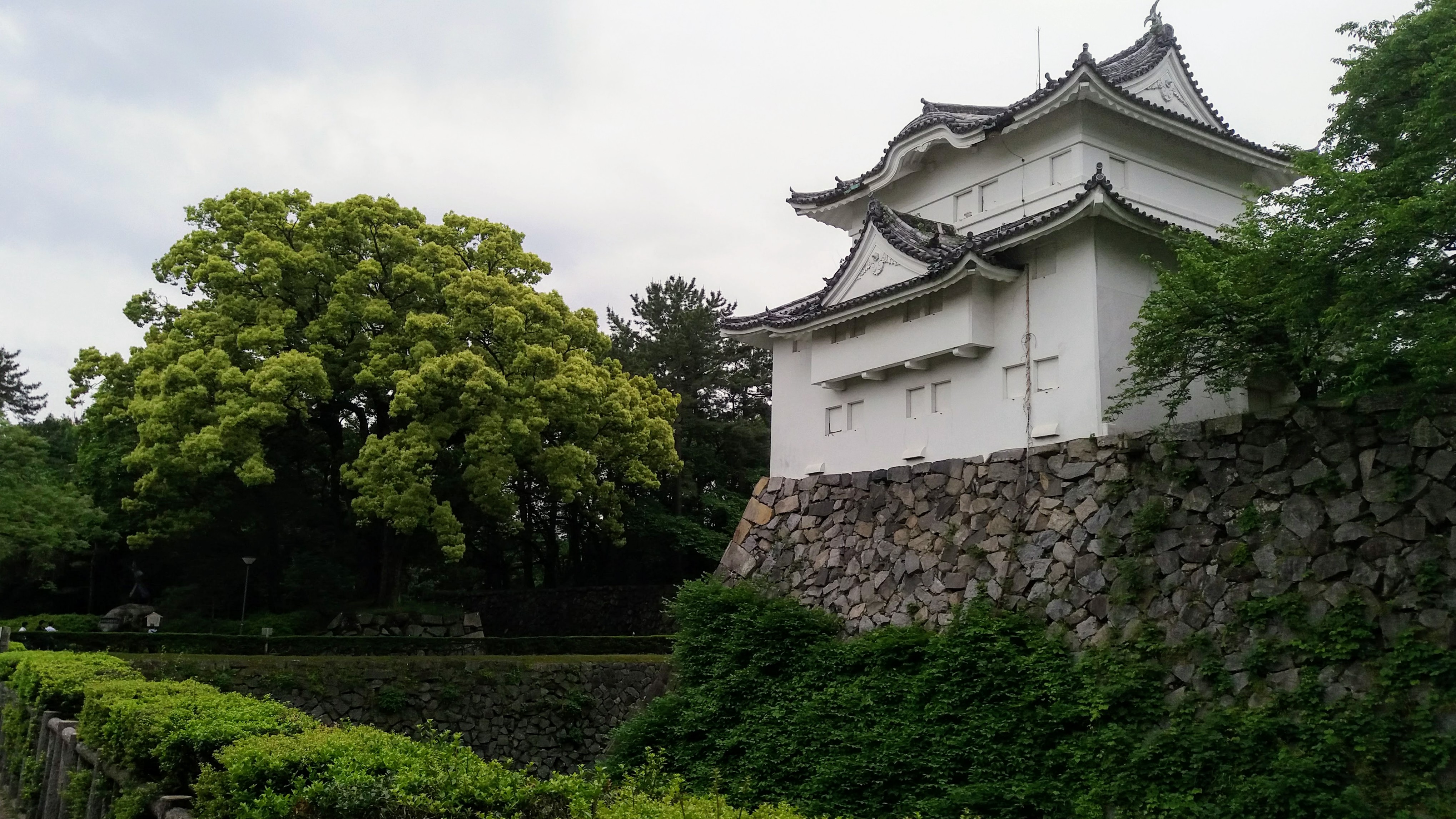
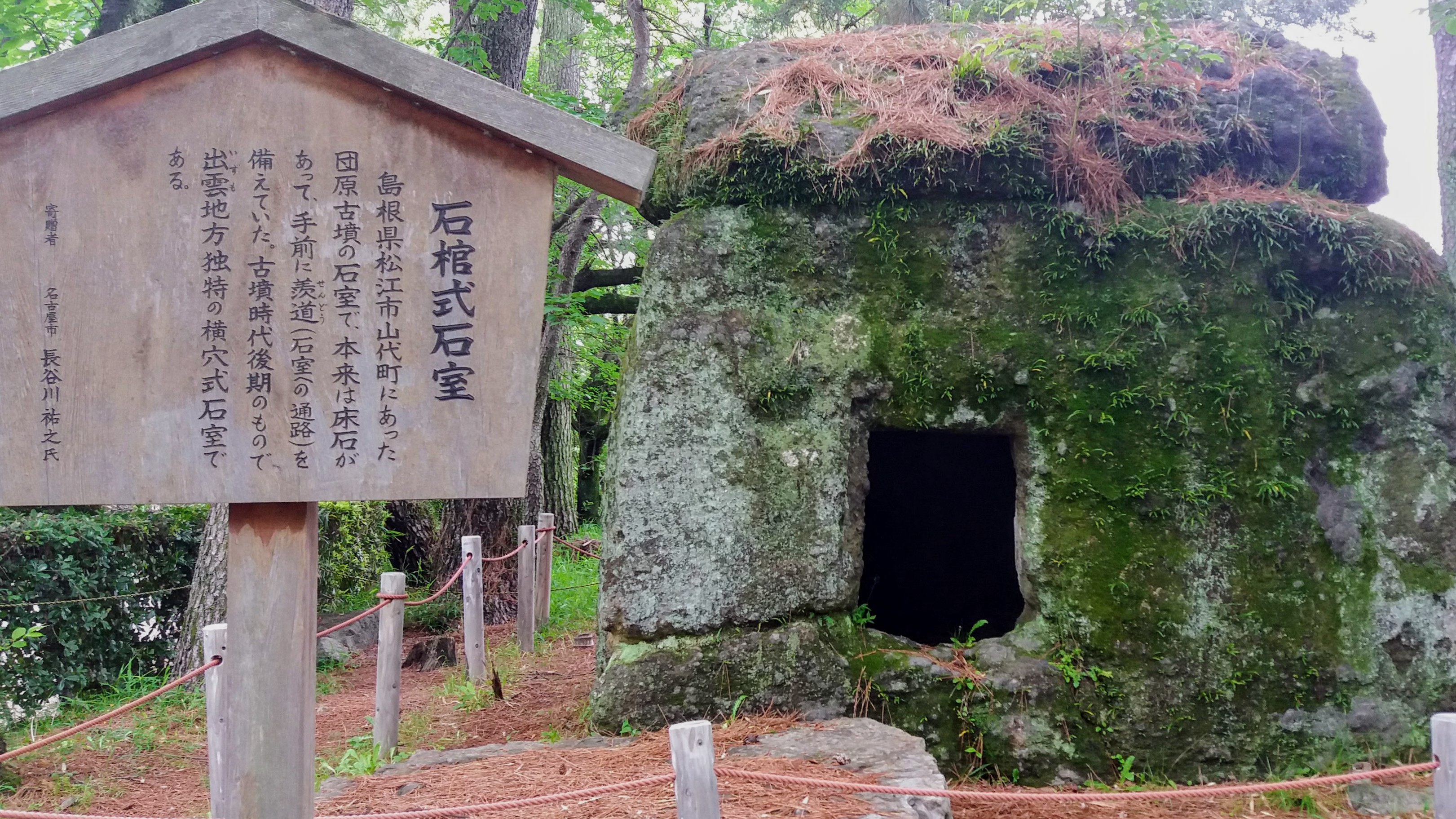
Since the castle proper and some of the other areas were closed off for construction, I was encouraged to wander a little off the beaten path. In addition to stopping for teeny tiny flowers which earned me some very strange looks. (Why is she looking at the grass when the castle is right there?) I also wandered off into a little forest grove filled with large, semi-flat stones. It was not cordoned off, but also not really connected to the main walkway either. After some assistance from the Google oracle, it seems I discovered a stone tomb of unique historical properties.

20180508_125002

I’m still unclear if it’s an original or a replica given the whole bombing debacle, and I don’t know why it was over there all by itself in an extremely unmaintained state in the middle of what were otherwise meticulously maintained grounds. The only informative sign was in Japanese and it mostly focused on the description of the architectural style, geography and time period with no mention as to its context near the castle. Still, it was pretty, and from inside the trees, I got some fun new perspective angles on the castle itself that don’t look identical to every other tourist shot on the web, so yay!

20180508_130642

A large chunk of the grounds were completely blocked off during my visit. I found a few more interesting goodies like ancient gates and the working tea house where you can stop and have a traditional cup of matcha green tea and a sweet. Of course the souvenir shop would never be closed for construction, but I found the gardens to be a bit lackluster, as though they had not been tended to yet this year, so even though they were not blocked off, they weren’t exactly visitor ready.

Samurai and Shachihoko

20180508_131428On my way back toward the main gates, I happened to run into the Samurai. Ninjas AND Samurai. It’s like cosplay meets museum, so very Japanese. Much like the ninja, the Samurai pace the palace grounds daily for photo ops and perform shows on weekends and holidays. My desire to avoid weekend/holiday crowds may have backfired here, but the guys I met were pretty cool nonetheless.
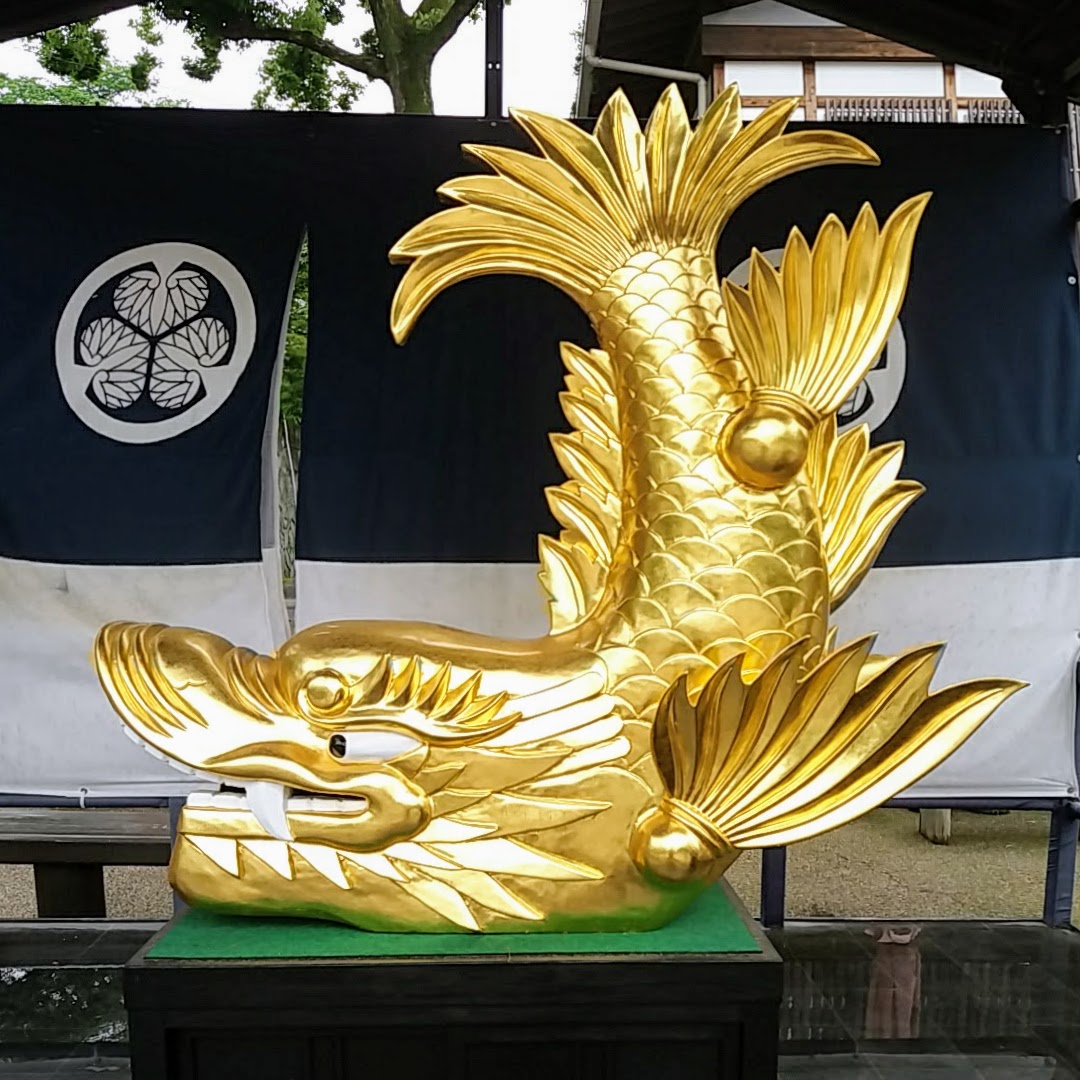
The last important sight before my path led me outward was the Shachihoko – the fish tiger. What’s up with that? Well, it’s a mythological creature that is half fish (specifically a carp) and half tiger. The Japanese characters that make up the name of the creature is also a combination of “fish” and “tiger”. 鯱 (shachi) = 魚 (sakana, fish)+ 虎 (tora, tiger) Some argue that the fish is really an orca because “shachi” also translates as “orca” in Japanese.  I love language.

It’s often put on temples and palaces to ward off fires, but in Nagoya it has become the special symbol of Nagoya Castle due to the two large golden Shachihoko on the roof. Most of the souvenirs, or omiyage, of the castle involve this magical creature in some way, and of course, so does the golden ice cream.

20180508_132024


I do hope that I’ll have the opportunity to return to Nagoya again after the construction is complete. I would not only enjoy seeing the inside of the Castle proper, I suspect I would greatly enjoy the gardens and side buildings that were inaccessible during my visit. What little I could see through the scaffolding looked intriguing. Plus, next time I won’t feel guilty about trying that glittery frozen treat now that I know more about the edible gold market.

Due to the weather, there is no accompanying photo album to this trip, but I hope you’re enjoying the Instagram photos in the mean time. As always, thanks for reading ❤

Oh, and the umbrella foreshadowing? I’m afraid you’ll have to read the next post to find out about that adventure. 🙂