Just two weeks after returning from the southern hemisphere and still trying frantically to write all my adventures in New Zealand, I had the opportunity to visit one of my South Korea bucket list destinations: Jeju Island. Even though October is nearly over as I publish this, the story itself takes place back in early September. Korea is just so darn full of adventure that I often don’t have the time to sit down to write, polish, and publish between each one. Don’t be jealous, just come to Korea for your next holiday and enjoy it all for yourself!
Chuseok 추석
Chuseok is a Korean holiday. Some people say it is like Thanksgiving, and I thought that seemed inaccurate. I always thought Thanksgiving arose in the US out of our near starvation in the New World because we couldn’t grow anything there. The Natives saved our butts and we later repaid them by nearly wiping them all out and confining the survivors to the worst land in the continent. Then I read the Wikipedia article and learned about the strange Puritan fasting holidays, Guy Fawkes, and Martin Frobisher. Let’s just say we’re better off removing the comparison between Chuseok and Thanksgiving altogether.
 It is a harvest festival, however, so there’s lots food around. It’s also a time when Korean families honor their ancestors and clean the graves. For weeks before Chuseok, the stores were filled with gift boxes. Common items were apples, fish and SPAM. I saw boxes of 9 apples sell for 130,000 krw (that’s $113 US) and one box of fish for 1,500,000 krw (just over $1,300 US)! I asked my co-teachers why these boxes were so expensive and they told me that it was important to offer the very best of the harvest to the ancestors during the ritual. In addition, certain foods, like the special fish, were not common anymore but could not be replaced or substituted if one wanted to perform the ritual correctly. It seemed exploitative to me, but at least it made some sense. What about the expensive boxes of SPAM?
  They told me that’s the normal price for SPAM, it was just in gift boxes this time of year. This led to a whole side discussion about the cultural dissemination of SPAM, it’s various levels of value from trailer trash food on up to gift box delicacy, the etymology of the current spam email concept, and my discovery that South Korea out consumes everyone else except the US in SPAM purchasing (which is staggering considering the population difference). And if you’re not singing the Monty Python SPAM song in your head by now, it’s only because you’ve never seen it.
Getting There
Needless to say, this very important holiday entails several days off work. Since I and most of the other expats here have no family or ancestors in Korea, we are free to take this time to travel and relax. With 5 days out of the classroom, it seemed like the perfect chance to explore Jeju. All summer long, any time I mentioned I was going to Jeju for Chuseok, Korean people would go wide eyed with worry and ask, as though inquiring the health of a sick pet, “did you make all your bookings yet?”. In this way, and perhaps this way alone, it is like Thanksgiving: the dreaded Travel Blackout. Lucky for me, Enjoy Korea made all their arrangements well in advance, and I snatched up the last two seats on the Busan bus way back in June. The price tag seemed unbeatable. The trip included all our transportation, not just to and from Jeju, but around the island to various sightseeing highlights, our accommodation (breakfast buffet included), and the entrance fee to the various attractions we were scheduled to see for around $370USD.
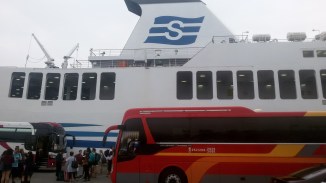 The only real hitch was that we were taking the ferry from Mokpo instead of a plane. This meant a 4+ hour bus ride and a 4+ hour ferry ride, plus all the time in the ferry terminal on either end… we had close to 12 hours from when we left Busan at 3am Wednesday morning to when we arrived at the hotel in Jeju Wednesday afternoon. I dozed on the bus and slept better on the ferry where we could actually lay down. After checking in, the tour bus drove us up to nearby Hyupjae beach. I’m not sure if everything was closed because it was Chuseok or because it was 4 in the afternoon, but we were greeted with lots of interesting looking restaurants that were shuttered and dark. Finally we found a Tonkatsu place where I confused the heck out of the staff by ordering in Korean instead of English. We had a little view of the sea from our table and the food was tasty enough for me, since I hadn’t eaten anything but cookies and a latte all day.
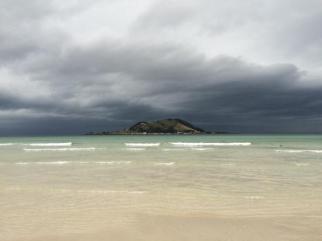 After we ate, we headed down to the water to frolic! The weather was gray, but warm. At first the water seemed chilly, but as I waded in further, I quickly adjusted. This beach was wide and shallow. We walked out for ages from the shore but the water didn’t even come to our hips. There were some Koreans playing in the water as well, but it seemed that only the Westerners wore swimsuits, everyone else went in the water in clothes. I’ve seen this at the beaches in Busan as well, and I’m still not sure what the cultural aversion to swimwear in the ocean is.
When we noticed all the expats leaving the beach, we came inland and rushed back to the buses. It became obvious we were the only ones to have taken a dip and our bus driver gave us an enthusiastic double thumbs up when he saw us come in dripping with our towels wrapped around us and our bare feet caked with sand.
After a quick rinse off in the room, we got down to the poolside in time for a beautifully colored sunset. We finished off our first night in Jeju with a pitcher and some nice conversation by the pool before collapsing into actual beds (instead of the floor mats I had anticipated).
Waterfalls with a Side of Disappointment
Breakfast was served starting at 7:30 each morning for 2 hours. I was fearing/expecting a sad continential breakfast of weak coffee and dry pastries, but it turned out to be a long buffet table with Korean and Western foods both hot and cold. The coffee was still weak, but there was a tiny cafe in the lobby, so I figured I could buy a cup after eating. I got in line for the coffee well before bus departure time, but sadly, never made it to the front, so my very full day of waterfalls and museums would have to be done sans caffeine.
 Our first stop that day was Cheonjiyeon where we would walk through the woods and see the most beautiful waterfall on Jeju. Heavens help me, I’m writing the segment about waterfalls from New Zealand elsewhere at this moment and it’s just not a fair comparison. One must take one’s waterfalls each as special and unique without trying to measure any one up. My decision to visit Jeju in September was motivated by the Chuseok special, but also by the idea that September temperatures should be back in the tolerable range. Two small problems with that. One, this was the hottest summer anyone remembers in Korea for a long while, temperatures in Busan regularly went over 30 and reached 35 several days while I was away in the wintery southern hemisphere. This is compared to the highs in previous weather data being something like 28. Second, I failed entirely to account for exactly how much worse humidity makes everything. Weather that says 24 on the thermometer, suddenly feels like 29. Everything in your body swells with fluid retention and it seriously feels like someone’s sucked all the oxygen out of the air. For a while, I was worried this was just me. I knew from my recent trip to New Zealand that I wasn’t just “out of shape”, and that my exhaustion and fatigue in Korea had to be something else. During this holiday, I heard from many other expats (several in as good or better shape than me) how tired they were, how hard the hikes were and other physical complaints. The combination of heat, humidity and low pressure (typhoons a comin’) made many of us feel uncharacteristically bad.
When we arrived at the park, we had limited information on what there was to see along the trails, and I didn’t want to miss this “best waterfall”. We decided to walk straight to the farthest point and then work our way back in so we didn’t end up far away from the parking lot without time to get back to the bus. We chose this because the maps made it look like there was only one access to the parking lot, at the main entrance… this turns out not to be true.. I also failed in doing my pre-research because I was just relying on the tour group to fill me in on what I needed to know. Ooops.
The retrospective research shows that there are 3 “stages” of this waterfall at three points along the river. The first is not usually falling unless there is heavy rain. It is also not clearly marked, but it IS a beautiful blue pool that is seriously worth spending some time at. We walked past it thinking we’d come back, but only had a few minutes when we did return. Path onward to the second waterfall is beautiful. There are many unique trees which have informative signs in Korean and English in case you’re into botany. There are some slopes and stairs, but they aren’t onerous. The second waterfall is the most visible. The viewing platform is in a good place and it’s not too hard to slip past the ropes and onto the rocks for a photo op or even to dip your toes in the water. Sadly, we didn’t have time for these things either and only managed to snap a few pictures around the one white guy who decided to go swimming and be in everyone’s vacation photos that day.
 On the way to the 3rd waterfall is a BRIDGE. I use all caps because this thing is massive. It’s beautiful and very much worth going to see, waiting in the line for the photo op spot, and schlepping across. Because of our go-far-first plan, we got to the bridge while it was still largely unoccupied and the line for the best photo spot was short. There were some people setting up vending stands and what seemed like a camp site nearby. There was also another short path to the parking lot.(facepalm) From here, hikers can go across the bridge or continue straight toward waterfall 3. The bridge arches high above the river below, offering some stunning views even in the misty weather. In a small courtyard on the other side is a wishing fountain with 5 animals, each representing a blessing. You stand in front of the one you wish to recieve blessings from and throw your coin. If it lands in the jar in the middle, you get your wish. There was also a pagoda and a viewing platform that provided a long distance view of the falls.


Feeling a bit rushed, we didn’t have time to explore the other trails that led away from this side of the bridge and headed back to the waterfall 3 trail. This trail is all stairs. I’m not unwilling to hike some stairs. I’ve done some stair-a-thons in my time, but never in such soul-sucking humidity. You know how when you get the flu, just getting from your bedroom to the kitchen to make a cup of tea seems like a Hurculean task? It’s like that, but without the other flu symptoms and sauna levels of sweat. I think if I’d gone in the spring or fall these stairs would not have phased me, but being limited on time and trying to hike in the late summer weather made this the most unpleasant section of the walk. Nevertheless, I persevered because I love waterfalls. The final set of stairs passed under an arch of vines and flowers and I was just starting to feel like it was all worth it when we emerged onto the viewing platform.
I keep saying viewing platform. This is because Koreans don’t like getting involved with their nature too close. While in New Zealand I had been able to climb all over the waterfalls that were right off the main roads, and even in WA I was able to climb off the path and explore the falls that were hiking distance from the road, here in Korea the waterfalls are for looking only. Not in a Niagara Falls, you could die if you get caught in this water kind of way either. These waterfalls and pools were not a safety hazard by NZ or US waterfall standards, so it was more than a little disappointing when we trudged down all those stairs (knowing we would have to climb them again) to get to a viewing platform from which the waterfall was not wholly visible. 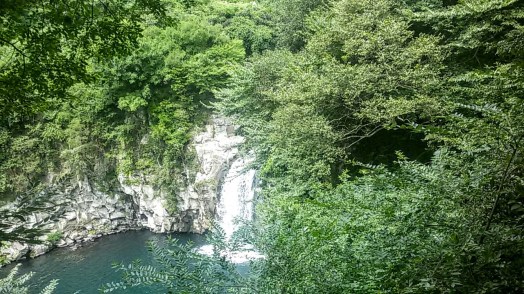 The best view of the falls was obscured by the trees and vines growing around us and was from quite a great distance. I felt cheated. I think it may have been a beautiful waterfall, but the fact that we weren’t able to find out after so many stairs just felt like a bad con. And unlike waterfall 2 which was relatively easy to hop the fence and get closer to, this platform was high above the pool with a very steep and overgrown hillside, making navigation any closer dangerous and difficult.
On top of this, we were running out of time so we felt like we had to push back up all the stairs as quickly as possible. We made it back to the trailhead for waterfall two and decided to go for it. The walk down to the platform was much shorter and easier than three had been and when we arrived on the platform, we breathed a sigh of relief to see a truly stunning waterfall. There was a dude-bro swimming in the pool. I don’t really blame him, the day was hot and the water looked cool and inviting. If we’d had time, I might have gone down to at least wade in the pool with my shoes and socks off. The only real problem was that everyone (Koreans and expats alike) who was following the rules was stuck taking our postcard photos with this guy in them, and again (I won’t say it enough) we were pressed for time so we couldn’t just wait around for him to get out. I ended up snapping a couple picks when he went behind a large rock.

I don’t feel like I had this kind of problem in NZ even when lots of people were around because we could all move around the falls at will and get different angles as needed. Maybe I’d feel different if I’d gone in summer and the water was full of people, I can’t say for sure. I also have to admit, I’m not the strongest advocate for always following rules just because they are rules, but there is an issue of courtesy when someplace is popular and crowded. If you need to go illicit swimming, come back on a day or during a time when there aren’t so many people hoping to take nice pictures.
We had a breif debate about whether it would be faster to go to the parking lot via the direction of falls 1 or the bridge, but we hadn’t seen falls 1 so we scurried back up the path we’d first come down. With less than 10 minutes before our scheduled bus departure, I only went partway down the path to the pool. The falls were not falling, but the pool itself was a stunning deep clear blue and it seemed that unlike the other stops, there was very little barrier to visitors walking right up to the waters edge, and maybe even swimming legally. I saw some signs warning that swimming could cause a heart attack, but there wasn’t much English on how or why.. Perhaps it was in reference to the water being cold enough to cause a cold-shock response, at least that’s the best explaination my Korean friends have for it. Either way, a warning about the consequences of swimming seems more promising than a “no swimming” sign. My heart was once more crushed by our lack of time and the poor representation of the map provided resulting in only the briefest of glimpses of this serene azure expanse.
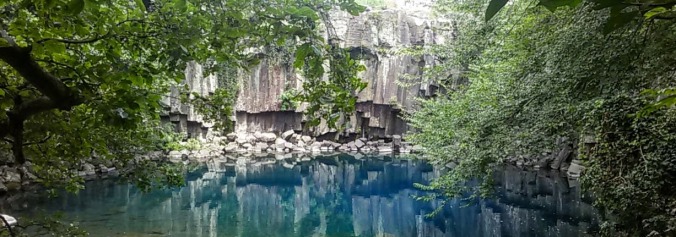
In summary, I recommend visiting this place, but leave at least half your day to do it. Bring swim gear or at least wading gear and comfortable walking shoes. Spend your time at falls 1 & 2 and the bridge, but really don’t bother with 3 unless you just feel like extra stairs that day. I personally plan to go back to Jeju at some point while I’m living here in better weather and I will be returning to Cheonjiyeon to follow my own advice.
Museums: Believe It or Not
Our next stop was Jungmun Beach. This is a famous surfing beach and also has many museums just inland. I’ve been trying to find a comprehensive list of the museums on Jeju, but it’s not so easy. Despite the fact that these unique niche museums are a cornerstone of Jeju tourism, there isn’t a comprehensive list or a map (in English) showing where they are in relation to one another and other main points of interest. Maybe some day, someone will offer to pay me to make one, but it’s just too much research to do for free. Our tour group told us about 4 near Jungmun: Chocolate Land, the Teddy Bear Museum, Ripley’s Believe It or Not, and “an African Safari themed museum”. I saw one about K-Pop while there, but I didn’t go in, so I have no idea what it was like. We thought about taking a taxi to the Hello Kitty Island museum or to the Mini Land which is full of tiny scale models of famous architecture from around the world, but my old enemy TIME kept getting in the way.
 We went first to Chocolate Land because, well, chocolate. For some reason there was a giant statue of the Incredible Hulk outside. I don’t know what I was expecting, maybe giant chocolate sculptures or the world’s biggest M&M, possibly a history of chocolate exhibit, or a making of chocolate section. What the ‘museum’ turned out to be was a room (just one) sparsely populated with display cases showing off packaged candy from various countries. Even this could have been cool if they’d said something about it, why is the Arabian chocolate this way and the British chocolate this way… I tried the Kazakhstan chocolate my friend brought me from her visit home after all and was fascinated to learn the pride that the country takes in it’s national brand. But no, these cases just held boxes of chocolates. Some cases made an attempt at silly displays, like a taxidermied chicken with Cadbury eggs or a Nativity Scene made with chocolate coins, but it was incredibly grandma’s yardsale chincy.
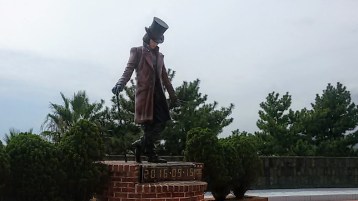 Half the room was filled with what seemed like Christmas themed facades that were, I assume, photo ops as well as a cafe where one could get some coffee, soft drinks, ice cream or candy and relax from the arduous walk through the musem. There was a chocolate making “class”, where for 12,000W you could pour some melted chocolate into molds. Outside there was a statue of Willy Wonka, but the Depp version, not the Wilder one. The final room was divided between more odd displays that seemed to have even less to do with chocolate than the ones before and the gift shop where one could redeem the 3000W entrance ticket toward the price of a sovenier. It turns out Jeju chocolate is quite tasty. They make it in fruit flavors that are unique to the island like Hallabang, Jeju Mandarin and Jeju cactus. The same boxes of chocolates are on sale all over, so it was basically like getting a 3000W discount on some chocolate I would have bought anyway for walking through a weird display room.
 We bypassed the Teddy Bear Museum and headed next to Ripley’s. I watched the show as a kid and it might be one of the reasons I love travel and weird stuff and also fact checking. I think I went to a Ripley’s museum in California eons ago, but it still seemed like a fun thing to do. It was a much better museum than Chocolate Land. It was stuffed full of interesting things to see and informative blurbs about each item. The walls contained copies of the Ripley’s newsprint in 4 languages. Where original artifacts were unavailable, models and photographs were supplied. Perhaps my favorite thing was outside.
 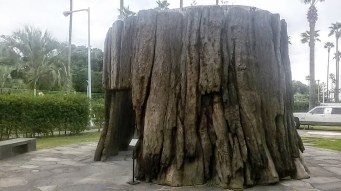 The trunk of a California redwood had been taken apart, transported and reassembled there so that the Koreans could see the stunning size of the redwood trees and experience walking inside the hollow trunk. It struck me that this was as close as most of them would ever get to a redwood and reminded me that museums aren’t just for history, but for the exchange of personal experiences. The most ridiculous thing there was the map of all the places in the world that Ripley had travelled. The map was covered in numbered blue dots with a key below. As we started to try to identify some of the places in the US, we realized that the geography was woefully inaccurate since Siam, Yugoslavia and Burma were all listed as being in the continental 48. Yugo-Slavia [sic] is in Florida.


Roaches and Riptide: the Beach is Closed
After lunch we finally headed down to the beach. There were plenty more types of entertainment on the waterfront including (sadly) a dolphin show, and more happily some boat tours, diving experiences and submarine rides. Unfortunately, either because of the weather (stormy) or the holiday, everything looked non-operational. As we made our way closer to the water, more and more attractions and restaurants were obviously closed, but we were there for the water and sand, so that wasn’t too discouraging. The waves were coming in heavily and it was obvious from a distance that we were dealing with riptide conditions and would not be able to swim safely. We decided to go down to the beach anyway and dabble our toes in the surf. There was a sign on the way down the hill that advised us the beach had closed at the end of August. I know our beaches in Busan technically “close” for much of the year also, but it usually just means don’t go too far out.  On our way past the beach restrooms we reached a point where the floor and walls seemed to move and I realized with horror that the whole path and retaining walls were COVERED in cockroaches. Horror movie levels of roaches. I am not afraid of most bugs. I can be startled by unexpected bug and I have a healthy respect for things that can hurt me, but there is something deeply lizard brain *ACK* about realizing that a good portion of your surrounding landscape is made of bugs. Fortunately, they didn’t want anything to do with us and moved clear of the path as we approached.
The beach wasn’t clean, and not just from the flotsam of a high wind, there was a lot of litter and broken beach furniture. The cliffs surrounding the cove were nice and I could imagine if it were cared for, the beach would have been quite pretty, but between the cockroaches and the garbage I was seriously confused as to why our tour group had chosen this location for “chilling at the beach all day”. We found a leaning canopy to hide our bags under so they didn’t get rained on and headed down to the water.
The ocean is a good remedy for a lot of things and as I watched the stupendous waves breaking just beyond the shore, and felt the salty foam on my toes I just wasn’t worried about the state of the beach anymore. There was plenty of seaweed catching on our legs and the powerful tide buried our feet in the sand it dragged back in.

At one point an especially large wave knocked me over, which while a little scary, was probably a good thing because having my center of gravity lower and more in contact with the ground prevented the current from pulling me out to sea. I know better than to go far into a rip tide, and most of the waves didn’t come even to my knees, this one was just that big. I heard later from some of the group who had hit the beach earlier that a couple of guys had gone out too far and gotten stuck and had to be rescued by the surfers. My own fall had resulted in a swimsuit full of sand, but it was impossible to rinse it out in the ocean, since each wave just carried more swirling sand. As the tide got higher, it became obvious that the path up to the road could wind up underwater soon, so we gathered our things and headed back.
The public bathrooms had showers, but since the beach was “closed” the doors to the shower rooms were locked and we had to walk sand covered all the way back up the hill to the parking lot restroom where we found a cold water only place to rinse off. It took me a loooong time to get all the sand off, but finally I got clean and mostly dry. We found the only open restaurant which was serving an overpriced buffet style dinner. Finally around 9pm the bus came to take us all back to the hotel. Our best intentions were to enjoy a couple beers at the pool, but by the time we got back, the walking, the heat and the ‘swimming’ had all caught up with us and we crashed out right away.
It does look like I’m complaining a lot here. Not every adventure is perfect or amazing. It was a challenging day and not part of a typical island getaway vacation, there were parts of the day where I was upset, disappointed and even angry, but I had a good friend with me and we were able to help each other remember to take a deep breath, release our expectations and enjoy what was in front of us. I didn’t do any research going into this trip so I didn’t know what was available at each tour stop beyond what our guides told us. I was prepared for rainy weather. I understand a bunch of people got so put out by the rain they went back earlier in the afternoon. Certainly the chocolate museum and the beach weren’t what I might have expected but I don’t feel like it was a waste of time to have seen them. Even the swarm of cockroaches makes a cool story, after all.
Enjoy the remaining photos on my Facebook page and stay tuned for Part II where things stay rainy but looking up gets better. Plus, the kinkiest theme park in Korea and my first Jimjilbang experience.
 Back to New Zealand. It’s like time travel, or at very least like one of those novels that writes chapters from all different perspectives or storylines. You can see my trail through the north island here, starting in Auckland and then looping around Northland before swinging wide to the East and Coromandel Peninsula. Also, I’m afraid that the night-time stories don’t have accompanying pictures as I have not yet acquired a camera that actually shoots well in the dark. Think of it as imagination exercise.
 My breakfast spot was nearby a public restroom and shower as well as a totally different path down to the water. When the hours lengthened enough to head to the beach, I wandered over to the changing rooms and got kitted out with my suit, sunscreen and shade hat. The clear sky of the night before had carried over into the morning and I didn’t want to get sunburnt while soaking up my hot spring. The beach was also quite full of people. I was even more glad in that moment that I’d had the chance to spend a few hours the night before in silence and solitude. I love people and I had a great time chatting with the other bathers that morning, but I am grateful it was not my only experience of the beach.


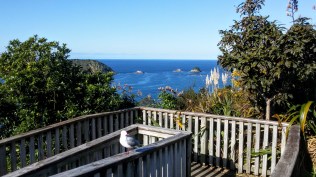 Although Cathedral Cove car park is a mere 10 minutes up the road from Hot Water Beach, there is a further 45 minute hike (according to the sign) to the cove itself. The cove is not accessible except by taking this walk or by kayaking in from another point. It is famous more for it’s breathtaking beauty than for any particular historical importance, although it was used in the filming of
  The timed signposts for trails in NZ were a bit frustrating to me because there was absolutely no way to know how fast one should walk to achieve this time. I’m perfectly capable of walking quickly, but I like taking my time on a forest walk and I can better judge my time if I know the length of the walk instead of the average hiker’s time. Average flat ground speed might be 5kmph, but of course rough terrain can change that too. Waipoua said about 40 minutes for the walk out to Te Mata Ngahere and back (very smooth trail), but I took about 2 hours because of all my stopping and looking. Waipu said 1.5 hrs for a 2km trail (very steep), and I took a little over 3 hours exploring things and watching the wildlife. So when Cathedral Cove said 45 minutes one way, I was skeptical. However, even with my frequent stops I still did manage to
 make it in about 50 minutes, so well done on those sign makers.
 of the hole is the actual cove named Cathedral, but since I had left Hot Water Beach as the tide was coming in, I was loath to wade through the waves to reach the other cove, not knowing how fiercely the water level would be rising or how wet I would get trying to come back. Remember, it’s winter in August and I already knew just how cold that ocean was.
 The sun was also low in the afternoon sky when I arrived, casting the coves into shadow. There is no doubt that this beautiful area is well worth a visit, but next time I’ll be sure to come down in the early morning when sunlight fills the beaches. As a result of my slightly off timing, I’m afraid my photographs are mostly in silhouette, but they do capture a bit of the majestic quality of this coastline. In addition to the star of the show, the cove also has some beautiful rock formations and a small waterfall.
 These long shadows and deep silhouettes told me it was time to hit the trail back unless I wanted to be hiking in the dark. In summer, I might have lingered anyway to play in the warmer water and to dry off in the summer night air on the walk back, but the temperatures dropped rapidly after dark on my visit and I’d already had one moonlight walk through the bush the night before.
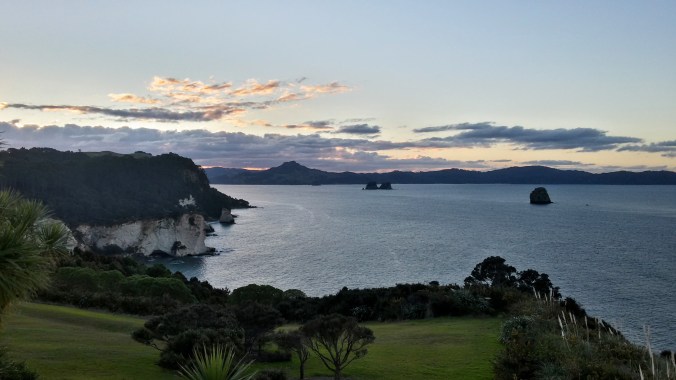 I met up with another traveler on the path back and we pointed out great spots to pause and take pictures of the sunset to each other, arriving back at the car park just in time to see the last rays dip below the mountain ranges to the West. As we were about to part ways and get back into our cars to warm up, she pointed to a tiny white sliver on the ocean in the Eastern sky. “What is that? Is that the moon?”, she asked. I was entirely incredulous. There was no way. It reminded me a bit of a snow-capped mountain far in the distance and the blue and pink ribboned sky was hazy, distorting the details. As we watched, however, the shape grew and it became obvious that she had been right.
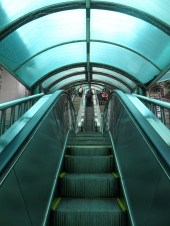 This park in the Nampo neighborhood is up on a bit of a mountain, but there’s no need to climb up exhausting stairs because there’s an outdoor escalator installed to let you ride up in comfort! When we got to the top, we were already blown away by the great views of the city below and we hadn’t even gotten to the highest points yet. As we passed by the stage area, it was clear that a performance was about to get underway. There were plenty of people dressed in the standard white garb trimmed with bright colors and fun hats and the parents hadn’t gotten to see any traditional dances, so we pulled up a seat. I have since found out that cultural performances happen here every Saturday at 3pm between March and November.
  The MC for the day was excited to see so many foreigners (not just us) in the audience and brought out a poor young Korean lady who was nervous and not particularly fluent to try and translate for us. Representatives from each visiting country in the audience were invited to come up on the stage and play a traditional Korean game of trying to toss a stick through one of 5 rings attached to a jar. My friend’s mom went up and they let her stand extra close because she was over 60 and she brought us honor by scoring the center ring! We didn’t sit for the whole performance, but it was a kind of musical story. From what I could follow, some performers arrived at a lord’s house and were invited in to party, but there were some rascals around who may have been trying to steal away or marry off the lord’s daughter? The language barrier was a bit of an obstacle to the plot, but it was fun to watch and clap along with.
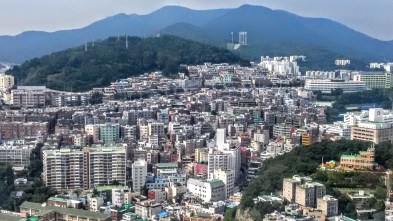 We snuck out during a lull and headed to the main attraction of the Park, Busan Tower. The tower stands 118m high, but it’s also on a mountain so, it seems to be rather higher than that when you look down. For 5,000won you can get a ticket to ride up to the top of the tower where you can enjoy a stunning 360 degree view of Busan. There are helpful decals on the windows that identify major landmarks and there;s a little cafe where you can enjoy a snack with your view.

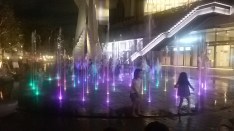 Sky Tree (left) where the small fountain lights are coordinated with the tower lights high above. These shows are fun, awesome, wonderful, and sparkly, so when my friend told me he wanted to take his parents down to Busan’s own choreographed fountain show, I was all in favor.
 There are some permanent concrete bleacher type seats along one side, but the rest of the area around the fountain had been filled up with plastic chairs to accommodate the higher number of spectators on the warm weekend nights. We arrived early and laid claim to seats in the front row, hoping that we wouldn’t have to worry about the crowd standing in front of us when the show started. Refreshingly, the Korean audience stayed in their seats during the show and we had a first class view. In both China and Dubai, the spectators jostled for the best standing spots and to get my video, I had to start standing in my spot almost 30 minutes before the show started to get an unobstructed view.
  This is 2,519 sq m fountain is listed as the largest fountain in the world by Guinness. I suppose that the show at Dubai is not considered a single fountain and is therefore only the largest fountain
 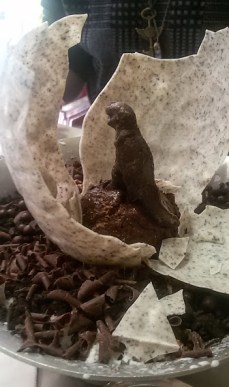 I’m not a food blogger, but sometimes food is just too good not to write about. I’ve done some basic coverage of these things elsewhere, but it doesn’t get old. Dala 100% Chocolate is this tiny hole in the wall chocolate cafe in my neighborhood in Seomyeon. The first time I went there, I had to try their signature dish, the dinosaur egg. This was an amazing concoction of shaved milk ice topped with crushed chocolate cookies and chocolate shavings with a giant egg made of cookies and cream candy. When smashed with the provided hammer, the egg reveals a scoop of truly decadent chocolate ice cream and a tiny chocolate dinosaur. If that’s not enough chocolate, you can pour chocolate sauce over it too. It takes at least two people to eat this dessert. Since that time, we’ve also tried the chocolate pizza (nutella spread, banana slices and toasted marshmallows for toppings, scoop of vanilla ice cream and chocolate sauce again), and for the two separate parental visits this summer, I also managed to try the fruit fondue (kiwi, grape, orange, grapefruit and banana… turns out grapefruit in chocolate is awesome), the “special brownie” (molten chocolate inside!), and the chocolate churros (churros you dip in chocolate). Let us not forget the milkshakes, which come in a variety of chocolate compliment flavors and can be made white, milk or dark. I don’t just love this place for it’s chocolate, but because it’s good chocolate. It’s not too sweet and they do a good balance of flavors in each dish so you don’t get tired (as if that were possible) of a single chocolate flavor. I think we’re about halfway through the menu now, and if the weather keeps cooling off, I’ll get to try their hot drinks soon!
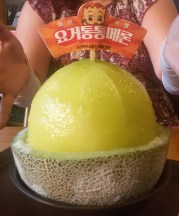 The melon special was not just using frozen milk, but frozen yogurt… and not the kind you’re thinking. Imagine you mix some yogurt with milk or water until it’s all liquidy, then freeze it solid, then shave it off into teeny tiny snowflakes. Ok. Now, take a honeydew melon (the green ones) and cut it in half. Hollow it out and freeze the shell. That frozen melon rind is now our bowl, filled with the snowflake texture frozen yogurt and topped with some cubes of what I can only describe as cheesecake filling.
  Now, over the whole thing, put the melon you removed from the rind, the hemisphere of melon, all of it. The dish was served with a big plastic knife so we could cut up the melon for ourselves. It was the perfect combination of sweet, tart and creamy to refresh us in the summer heat.
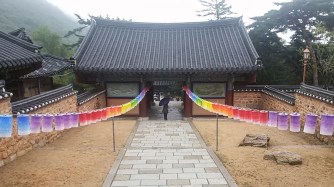 When we arrived, a very nice older Korean lady offered to explain a little bit about the main gate to us in English and we got to hear a little history of the naming of the temple and the unique four pillar style that makes this era of architecture distinctive. As we ascended the stairs and passed through several gates decorated with bright lanterns and beautiful paintings we moved through a hall of fearsome statues and finally emerged into the main courtyard. The temple was originally built about 1,300 years ago, but was destroyed during a Japanese invasion in 1592 and later rebuilt in 1713, but a few stone remnants and one stone pagoda left from the original still stand in the wide open square. The temple is dedicated to the practice of Seon Buddhism, which is the Korean descendant of Chan Buddhism the same way Zen in Japan is.


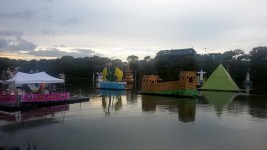 Also called the Jinju Namgang Yudeong Festival, it is held in honor of the fallen during the seiges by Japanese soldiers in the Imjin War in 1592-3 (the same time frame the orginal Beomeosa Temple was destroyed). During the war, lanterns were used as military signals, a means of communicating with reserve forces, and as a way to keep in touch with family members outside of Jinjuseong Fortress. Even after the war, people continued the tradition of floating lanterns down the river to pay tribute to the brave souls that had been lost during battle. Today, the festival is far more than a few lanterns on the river and instead is a whole palisade of life size and larger than life lanterns floating on the river and filling the riverside park where the fortress once stood.
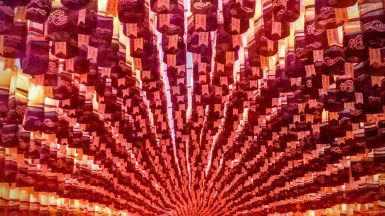 When we entered the display area, we were given arm stamps so we could come and go as many times as we liked, then we began our stroll down the riverside. The water was covered in giant lanterns in shapes of mythical animals and heroes as well as famous landmarks like Stonehenge, the leaning tower of Pisa, and the Statue of Liberty. There were floating restaurants, boat rides, and yet more tents offering delicious snacks.There were giant tunnels of red lanterns where couples walked hand in hand in the twilight.
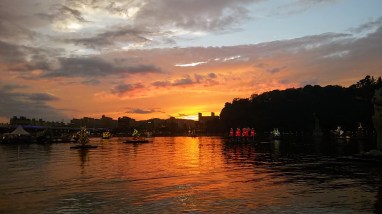 Two floating bridges at either end of the display allowed visitors to pass from side to side without returning to the street level. The day had been rainy, but as the rain dried up, the sunset lit the clouds in shades of brilliant gold and scarlet.We crossed the river and ascended into the wooded area to be greeted with the most amazing forest of light. Unlike the


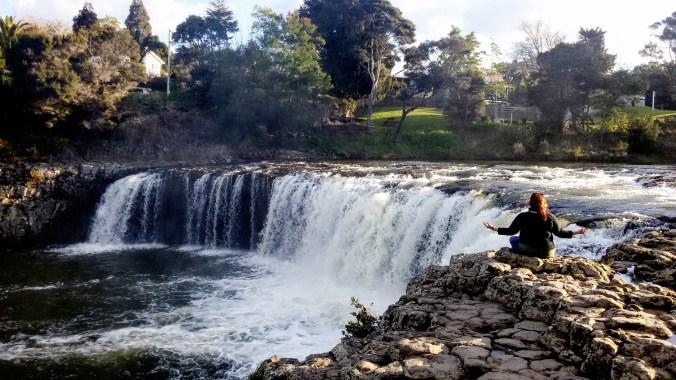 Waterfalls are a rare occurrence in my life but I treasure them. I ended up climbing out on the rocks to get close and then just sitting and breathing it in. There’s some kind of chemistry that happens to air that’s churned in a waterfall and it makes us feel better, happier (negative ions, no really, look it up). There was a trail along the river, but I’d had a full day of


 The park service in New Zealand hasn’t really mastered the loop trail and this was no exception. The trail led up to a single point and returned along the exact same route. It was marked by the occasional tiny orange triangle nailed to a tree and for a while I felt like an intrepid explorer in Middle Earth. The forest was deep and green and dotted around with huge rocks that looked like nothing so much as Bilbo’s trolls turned to stone and broken down. I even found one that looked like a giant stone foot! Other places the rocks became less like the remains of curving carved statues and more like the square blocks of a fallen castle or fort, like the ruins of Cair Paravel. Of course, all the rocks are natural formations from glaciers, but it was fun to imagine. This part of the hike is the easiest and quite possibly the lovliest. If you’re here for a short visit, I’d say it’s worth it to walk as far as the bridge, at least.
 Beyond the bridge the landscape changed. The rocks all but vanished and the type of plants completely altered. Now instead of lush green trees there were scraggly gray thorn bushes taller than me that were growing their first bright yellow spring flowers. This let out into another forest, but much more jungle/rainforest in theme than the boulder-filled fantasy below. There was a stretch of farmland too, which I thought may have heralded the end of the trail as it led onto a nice little grassy terrace with a view all the way to the ocean, and a little wooden bench to sit and rest. This bench would be my second recommendation for turning around if you’re getting tired.
  The view is nearly as good here as it is at the top, so unless you’re an achievement junkie like me and just need to say you got there, it’s a fine place to end the hike.
  I came across a goat on the path with her baby. They were both snowy white and I stopped to watch them for a while before they crashed off into the undergrowth. I hadn’t seen any goat farms around, just sheep and cows so I wondered if she belonged to someone or if her ancestors had escaped captivity, and now she and her kin roamed the park lands wild. After much muddy trudging, I emerged into daylight again only to be greeted with a fence and a businesslike sign advising me that I had reached the end of the trail and should now turn around. No monument, no viewing platform, just this electric fence and sign. The sign informs visitors that they are welcome to admire the view from the property line, but to be cautious as the fence is live. Ok then. It was a nice view, but there was not much room to move around and nowhere to rest, so I soon headed back down the hilly mountainside to find the bench I’d left behind.

 Gallivantrix