Chocolate & Lanterns in Seomyeon

Busan is a vibrant city with so much to do. Even on regular weekends it’s easy to go out and find adventure. In the last weekend of April, I set off on a Saturday exploration in a quest for the best chocolate dessert cafe and the local Buddhist temple’s Lantern Festival. I was fortunate to have an adventure buddy for the day to share the experience with, because while I’m happy to travel alone, it’s always better to share with a friend.


Dala 100% Chocolate

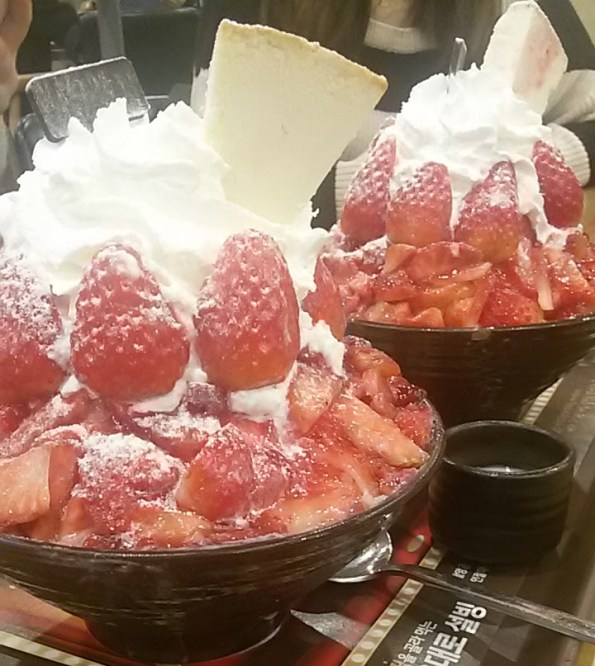
Back in the getting to know you stage of my relationship with my co-teacher, we discovered our mutual love of chocolate and she told me the tale of this place. Korea is fraught with dessert cafes. Honestly, there’s at least one on every city block and they serve decadent huge desserts that are definitely meant to be shared, but are still on the XXL size. Despite this, the Korean people are mostly healthy weight to slender as a people. I have no idea what the secret is. Anyway, we’d already done the beautiful strawberry cheesecake sulbing, and then she told me about this chocolate place near my apartment that she had been to with her mother. Unfortunately she couldn’t remember the name! So when I saw a post on FB that showed a giant chocolate dinosaur egg and also linked to the cafe that served it, I quickly realized that was the place.

My next dilemma was to find someone to go with, because I knew there was no way I could possibly go there alone without either feeling like a total pig or wasting half a dessert. I finally convinced my new Busan Bestie and Korea travel companion to accompany me. Truth be told, it didn’t take much convincing as it turns out he likes chocolate just as much as me.

We walked around the neighborhood and managed to wander through a street vendor fair on the way as well where lots of local vendors were selling handmade jewelry and art. Just one more reason to love Busan! One of my favorite things about shopping is supporting local businesses and it’s really great to live in a community that fosters events for them. I’d been to the foreigner’s market, but this one was all Koreans.
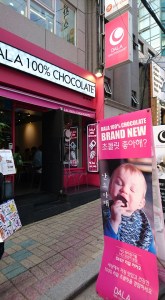
12961680_10209615823939095_1335060540656672463_nWhen we found the shop, it was a small space tucked in between yet more small boutique style eateries, but we were saving our appetite for chocolate! We stood outside for a moment admiring the menu and realizing that we would have to come back several times to sample all the amazing goodies on offer. Our timing was also great as we didn’t have to wait at all for a table.

We decided to order some iced chocolate drinks, which turned out to be more like milkshakes. My companion got a choco waffle ball and I got a mocha. We had a choice of white, milk or dark chocolate and happily paid the extra 1$ for dark. Then we ordered the infamous dinosaur egg! We were handed a pager and headed for a table to await our order.

edited_1461993235285The drinks arrived first, giant frosty metal cups with straws and chocolate spoons! My mocha was a perfect blend of coffee and chocolate, and not at all too sweet like mochas can often be. The choco waffle ball came with tiny little chocolate dipped balls of waffle batter sprinkled on top and was likewise a luscious bitter-sweet. Plus, the napkins were printed with the Korean Sign Language alphabet! Too cute! We gushed over the deliciousness for a while, taking some obligatory food photos and then the main event arrived.20160430_134544
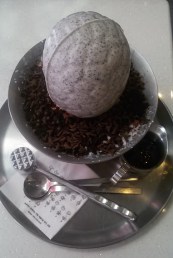
The dino egg was nestled in a metal bucket (there is no other word for something that big). The bucket itself was filled with the delicious shaved milk ice then topped with chocolate cookie crumbs and chocolate shavings to create the “dirt” of the dino nest. The kit came with a metal hammer and a small pitcher of chocolate sauce. When I went to crack the egg with the hammer, I misjudged the strength of my blow and accidentally flung a shard of shell to the floor. The shell was made of white chocolate mixed with chocolate cookie crumbs and inside was a scoop of the most rich and decadent chocolate ice cream topped with a tiny chocolate dinosaur!20160430_134641

We drizzled the chocolate sauce into the mix and dug in. I’m not going to say it was the absolute best dessert ever, because in my life I’ve been lucky to experience some very top notch desserts, but this one definitely makes the awesome list. Not only was the presentation super cute, but the flavor was outstanding. Mixing and matching the milk ice, the cookies and chocolate, the chocolate ice cream and chocolate sauce provided a different palette in nearly every bite, so I never got used to the flavor. One of the things about flavor is that only the first few bites of a new flavor can trigger the best happiness reaction from your taste buds and limbic system, so a huge piece of chocolate cake (for example) is not actually as good at the end as it is at the beginning. But this dish changed flavor so often we couldn’t get used to it and every bite was as joyful as the first! Plus, we could mix and match with sips of our bittersweet milkshakes.

In retrospect, we probably could have split a single milkshake. It took us about 90 minutes to get to the bottom of the bowl, by which time we were left with a creamy cold soup that we decided to divvy up into the remainder of our shakes to drink. Heaven! It made our already delicious chocolate drinks even creamier. There was a Korean couple who came in slightly after us and managed to devour their egg in far less time. I have no idea where they put it.

With our tummies full and our mouths happy, we headed back into the street to find our way to the afternoon adventure that would hopefully help us walk off some of the decadence we’d just spent the last 2 hours stuffing our faces with. After a longer linger at the street festival, we made our way to the bus stop that would lead us to the Samgwangsa Temple for the Buddha’s Birthday party.

Samgwangsa Temple Lantern Festival

I’m becoming convinced that FB groups may be the best way to learn about stuff to do in a city. I’ve now made a habit of joining them where I live, but I’m starting to think it could be a good idea for a month or two preceding an international vacation so you can hear from the expats who live there what’s going on. While randomly scrolling through my feed, I see someone has asked if the lanterns are up at Samgwangsa, and someone else replied that they were. This wasn’t even an ad, these people obviously knew something I didn’t. I promptly headed over to my other favorite internet resource, Google. Here I learned that the Samgwangsa Temple in Busan is one that is dedicated in the main to the Bodhisattva Guan Yin, known as 관음 or 관세음 in Korean, she is the Bodhisattva of Compassion or Mercy and is very popular in Mahayana Buddhism. The temple itself was only constructed in 1983. There aren’t too many ancient buildings in Korea because so much of the country was destroyed during the war. However, the architecture mimics the classical Chinese style and it’s quite pretty as well as being an active place of worship.

* Despite the fact that I studied Buddhism at grad school (and personally find a lot to identify with in Theravadan Buddhism), I was rather aghast to discover that my education was sadly lacking in Korean schools of Buddhism. I’d read plenty about India, China and Japan, but I couldn’t remember anything about Korea. I went on a short online quest and found that there isn’t that much consumer ready info out there, so if anyone knows some good research material on Buddhism in Korea, please let me know.

The Buddhist calendar is lunar, so the holidays move around in comparison with our solar calendar, and the Buddha’s birthday falls on May 14th this year. Rather the same way that Christmas is celebrated for some weeks before December 25th in many places, Buddha’s birthday is marked with several weeks of lantern festivals in Korea. Samgwangsa is far from the only one, not even the only one in Busan, but online pictures promised a level of lantern frivolity that I simply could not pass up. We knew we wanted to be out of town the first weekend in May because of the long weekend, and that the weekend of the 14th was likely to be over-crowded, so we decided to go right away to make sure we got to see the lanterns in peace.

20160430_170926After our chocolate overdose, we took the bus out to Mt. Baekyangsan. This sounds like it should be a long way away, but Busan is not just surrounded by mountains, it’s closely set about with them and even occasionally interrupted by them, so in reality it was only about 15-20 minutes from our chocolate place in downtown Seomyeon. That’s less than half the time it takes me to get to the beach. We had to walk a bit on some winding roads, and it was stunning to see how much the culture changed in such a short bus ride from the city center to it’s edge. Things went from being tall, modern skyscrapers with brand name shops and English ads to being small tile roofed buildings and local shopkeepers selling traditional clothes and foods. The path to the temple was clearly marked, and soon we began to see lanterns leading the way as well.

20160430_171326Much like the temples in China, there was a large, odd shaped rock set out front with the name of the temple in Chinese characters (白楊山三光寺 – bai yang shan san guang si, which roughly translated as “poplar mountain heavenly Temple” and you can clearly see the “san guang si” became the Korean “sam gwang sa”). There was also a long stairwell with a numerically significant 108 steps. The stairs were lined with lanterns, flowers and statues of various sages famous in the history of the sect, although please don’t ask me to identify them because it can be more complicated than spot the Catholic Saint. We got our first glimpses of the lantern coated buildings from the stairs and began to get giddy at the thought of being surrounded by so many beautiful colored lights!
20160430_173248

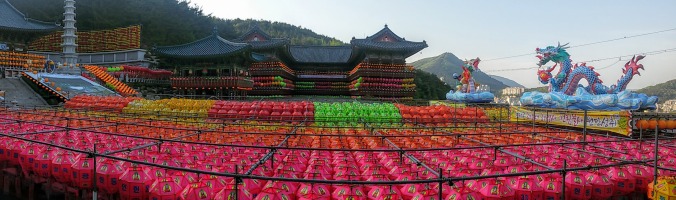
The Samgwangsa Temple did not stint in it’s celebrations. Everywhere a lantern could be hung it was. We walked into open air halls that dripped lanterns from the ceiling. The sides of buildings were lined with lanterns. The air between buildings had strings of lanterns. The pathway from the top of the mountain back down to the main temple was covered in lanterns to resemble the scales of some mighty serpent switch-backing down the hillside. Every lantern was numbered and many already had prayer papers attached to them in little weatherproof plastic baggies. In the plaza underneath the largest contiguous spread of lanterns, there were tables set up all around to let visitors donate in order to add their prayer papers to a lantern somewhere in the Temple.

20160430_172917We traipsed around the temple grounds in awe, randomly bursting into the final song from “Tangled”. At one point we accidentally wandered into the nun’s living quarters, although it wasn’t closed off it was still a bit embarrassing to find them just cooking dinner. There was a sign for the bathroom, which I’d seen before I realized where we were, and they were kind enough to show us to the facilities.

We circled around the standing pagoda and then found the entrance to the main hall of worship. I’ve had the good fortune to be inside some truly stunning temples, and this one was doing it’s best to compete, despite it’s youth. I don’t have any pictures from the inside out of respect, but the walls and ceiling were covered in carved and painted figures, dragons, birds, Bodhisattva’s and sages. The detail was incredible and we sat for a while on the provided cushions in appreciation and meditation. The altars beneath the figures were laden with fruit, flowers and rice, and the back wall was stacked with sacks and sacks of donated rice for the residents. On our way back outside, I finally realized what seemed to be missing from the temple – incense! Every other Buddhist temple I can think of was constantly burning fragrant offerings in giant censors set out for the pilgrims to use, filling the air with sandalwood and other earthy spices. This temple had none. I’d seen one of the giant burners, but there was no incense in it and no fragrance in the air.

20160430_182057

We walked around the terraces and balconies taking pictures of the opposing hillside where more strings and patterns of lanterns had been set up in a star shape and the “Buddhist Cross” (no its not a swastika, I promise). We bought some souvenirs at the temple gift shop and gawped at the giant lanterns of dragons and zodiac animals. In need of a snack, we headed off to one side where some vendors had set up near some picnic tables and bought something random on a stick after being reassured that it was “mashisoyo” (delicious). It was. It was some kind of seafood concoction with mustard and ketchup which should have ruined it, but somehow did not. My companion also bought a souvenir lotus lantern to carry around once the sun set.

It didn’t take much to fill our bellies, and we headed up the last peak to see the white lanterns and the top of the winding pathway. From this vantage point we watched the sun set over the temple and the city spreading out below us. It was such a magical blending of the natural and the urban, the sacred and the secular. Busan is an amazing place.

20160430_172033

Once the sun was down, we began the second half of our exploration, the lanterns by night. We walked down the belly of the dragon as we descended the mountain back into the main temple complex. Our walk was accompanied by some traditional music that the monks and nuns were performing in front of the main temple room and we were serenaded with chanting and drumming that echoed through the mountains around us.20160430_195457

Once we descended into the main complex again, we found everything we’d seen before renewed by lantern and LED lights. Giant holy symbols lit up the plaza, prayer candles adorned the pagoda base, a wall of lanterns surrounded the pagoda along the mountainside and every single one of the lanterns we’d passed before now glowed. The pure white lanterns created the brightness of daylight for anyone underneath them, and the other colors just made us feel like we were floating inside a rainbow. We retraced our steps, dancing and singing and taking more selfies than is really healthy for anyone. We made it back down to the zodiac and dragon lanterns which I have only ever seen the like of at the Dubai Global Village Lantern display, and that’s *Dubai* where everything is huge and over the top.20160430_205646_Richtone(HDR)

Finally, we headed back to the area where we’d gotten our snacks so we could see the beautifully lighted mountain path. We were too tired to walk all the way up, but the view of the temple complex from the other side was amazing. I’ve never been able to visit a temple during a festival like this before and here was one practically in my own backyard! I talked to some of the expats who’ve been here longer and they seemed rather blasé about going again since they’d been last year. I can only say I hope that I never get tired of seeing such colorful splendor. I don’t have the best night camera capability, but please check out the full album on my Facebook page to see the glorificence.


Stay tuned for the Long Weekend adventures to Namhae Island and Taean Tulip Festival! Korea is so full of amazing stuff and yet I feel like  it gets very little press or tourism from the West in comparison with Japan. I hope my stories shine some light on the goodies this country has to offer and maybe encourage some of you to get out and see some of them. As always, thanks for reading and enjoy the pictures! 🙂
Bureaucrazy in Korea: Banks & Healthcare

I’ve been having a lot of great adventures here in Korea, but I’ve also had to deal with some more mundane aspects of living in a new country. When I first arrived here, I got the flu rather badly and had to learn about the healthcare system much faster than I expected. Also, I had to open a Korean bank account and learn the details of online banking. One of these is awesome and the other is overly cumbersome. Can you guess? Sorry there aren’t any beautiful pictures in this one, but I hope you’ll enjoy it anyway.


Korean Banking

I was generally advised to wait until my ARC (alien registration card) arrived to open a bank account, but due to my illness, we got a late start on the ARC process and so my school’s accounting office was a bit desperate for me to open an account before my first payday. So my co-teacher and I headed out one afternoon after classes to do just that. I did some research on Korean banks and found that the Korean Exchange Bank was reviewed well for it’s service to foreigners, especially international money transfers, so I opted to open my account there. Recently, KEB merged with Hana Bank, so we went to a Hana branch to do the actual opening. I was able to open the account using my passport and US social security number, but it was going to be a somewhat limited account, and we would have to return to update the paperwork once the ARC was complete.

I thought at the time that it went smoothly. Although the bank clerks didn’t speak English, I was there with my co-teacher who helpfully translated and patiently got all my questions answered. I had to sign a thick pile of paperwork, on every page, sometimes twice. I deposited a small amount of cash just to open the account, and we were even able to make my bank card act as my public transport card as well. This was a clever option so I don’t have to worry about refilling my T-Money card, and the month’s bus/subway bill gets withdrawn on a scheduled day. We also filled out the paperwork for internet banking and international transfers, so I thought I was golden!

Nope.

I left the account alone for a while, since there wasn’t much money in it anyway, and then on payday, I tried to log on to see if my deposit had gone through ok, and that’s when the trouble started. Internet security in Korea is intense. First, I tried to look up the KEB website and log in using the username and password we’d created at the bank for the express purpose of online banking. This was an abject failure. After several attempts, with the bank telling me that my user name didn’t exist, I finally asked my co-teacher to call the bank and ask what was going on. We discovered that the merger isn’t actually complete yet, and so I had to go to the Hana Bank website instead. Ok.

Next problem. I usually use Chrome as my browser, and have avoided IE since there was an alternate browser to choose from. However, when I opened the Hana Bank website in Chrome, I was informed that I could only access the website from Internet Explorer. So I lauch IE and try again. Then I’m informed that I must install special security software on my computer to access the website. Ok. Three separate pieces of security software, all of the instructions for which are in Korean. This is one of the reasons I like Chrome, because it has a translate option for websites which is (while not perfect) a really huge help in navigating foreign language sites. Fortunately, I have Google Translate on my phone, so I was able to use the photo option to take a picture of my monitor and translate the messages. Finally, I got all the software installed, managed to log in and see my bank balance. It turned out the deposit hadn’t shown up by the time we left school for the day (a Friday), so I went through the whole process again later that night from my home computer. Saw the money had arrived and decided to pay my entry fee for Holi Hai via internet transfer.

Nope.

I hit the transfer button, went through the process of entering all the information: my account number, my pin number, the name of the receiving bank, and the receiving account number, the amount of money, then I was asked to verify via phone or certificate. I still didn’t have my Korean phone number when we opened the bank account, so my co-teacher used hers to fill out the forms. But I was at home and couldn’t just walk into the next office to ask for her help. It was Friday, the fee was due the next day, and we wouldn’t be back at school together until Monday, so I texted her to ask for help.

After a whole lot of back and forth, including her calling the hosts of Holi Hai because she thought they were Korean (nope, Indian) and that I might be having trouble communicating with them about the due date, we discovered that it was effectively not possible for me to do the transfer myself, so she agreed to send them the money herself and let me bring her cash the next day. I do love my co-teacher.

I spent a chunk of that weekend trying to figure out the certification process, because it seemed to indicate that once a computer (or other device) was registered with the bank, then the phone verification step would not be necessary. Several frustrating hours and more translation work later, I discovered that the certificate also would require phone verification, and so I gave up until Monday. I brought my laptop into the office because I didn’t want the school computer being the only one I could do my banking from, and managed to get online with my phone’s mobile hotspot (since my school has restricted internet access). My co-teacher and I painstakingly went through the website so I could show her the steps I had taken, but something had changed! My weekend of research was useless and we had to try to figure it out all over again.

Usually, Koreans use their national ID, and foreigners use their ARC ID for secure identification. I opened the bank account with my passport and US national ID, so when the website asked for my national ID number, I tried both of those with no success. We finally called the bank and got someone to explain what my temporary ID was (according to them), but they also told us that if I created this security certificate with that ID, then I would have to do it all over again when we changed the bank account to my ARC ID. So we decided to wait.

The next day, we headed over to a local government office that would print out a temporary paper that would have my real ARC number on it so we could give that to the bank, and we made plans to go to the bank later in the week where we could both change my account to my ARC number and figure out the certificate issue.

On the very day we were to go to the bank, my actual ARC card arrived at the school, so at least we never had to find out if the temporary certificate would have worked. We trundled over to the nearest Hana branch with my laptop in tow because we weren’t going to leave the bank without the certificate complete. We got the ID number changed with little trouble, and then asked more questions about the online certificate before we sat down in the waiting area to make it work. In order to apply for the certificate, I still had to go through the rigmarole of entering my account number, my pin number, the set of numbers requested from my security card –

*oh I forgot to mention this part. When I got my bank account, I was given a card full of numbers: two long numbers along the top and rows and rows of four digit numbers filling the card. Whenever you do anything online, you have to enter the numbers from the card that are requested, so it’s not just a pin code or password that you can memorize, you have to pull out the card and squint at the tiny numbers to find the one being asked for.

AND the phone verification (which at least was easier to do since my co-teacher was sitting next to me. Unlike other SMS verifications that text a code you enter on a website, this one actually voice (computer recording) called her phone (remember it’s the number linked to my account at this point) and requested we enter a number from the website into the phone.

The certificate had to be downloaded onto my computer and also requested yet another password (distinct from my password to log onto the website, or my pin number) which, I was informed, were I to forget, would necessitate physically returning to a branch to get a new one. Did I mention banks are only open during school hours, so I’m taking PTO from my vacation to get this stuff done?

Certificate complete, we then decided to test it by paying one of my bills online. In the US, when you want to pay a bill online, you can go to the company’s website and log in, see your bill, then pay it by credit card or by your bank account. The point is, you go to the company website. (Sure, banks have bill pay options online, I’ve never set mine up because it’s a hassle to enter all the data). I’m not saying our way is better (non-sarcastic), but you do take certain things for granted when they are all you’ve ever known. Even when I paid my phone bill in Saudi, I did it with the phone company, not with my bank. Korea is a bit different. The bill shows a bank name and account number where you transfer your payment to.

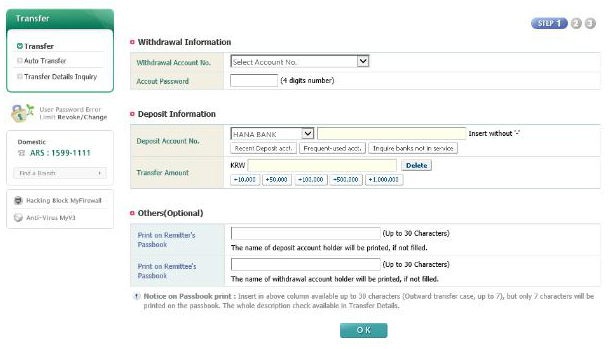
This took us a little tinkering because my co-teacher has all her bills set on auto-pay and hadn’t actually paid a bill by transfer in many years and I’d never done it this way at all. The first screen you come to when you select the transfer option has you enter your account number, your pin number, the bank and account number you’re transferring to, and the amount of money plus a brief description.

bank info prtscn

I had no idea how to indicate to the company which bill I was paying since my name isn’t actually on the internet, gas or utility bills that were set up before I ever arrived. I tried entering the customer information in the description field, and I hit “OK”. I was shown a summary of the transfer including my banking information and the name of the account I was sending to (which is nice so you can catch it if you mistyped the long account number). Then if that’s all in order, you enter the selected numbers from your security card:

bank card verf prtscn

hit “run transfer” again and have to enter —

bnk cert page prtscn

your certificate password! Bearing in mind, we’ve already gone through all this trouble just to register my computer as safe to do bank stuff on, but every time I do a transfer (read “pay a bill”) I have to go through three passwords (log on password, pin number, and certificate password) and a security card number dance to prove I’m really really really really me.

Once we did the transfers, I noticed that the description field had not worked as I expected and the customer account information was not showing up to the recipient. How are they supposed to know what bill the money is for? Tomorrow. The next day, we called around to the places I’d paid bills to and had the hardest time finding a real person to speak to (some things are truly international?). One place told us they’d simply matched the amount to the bill and figured it out. The internet company however said they couldn’t look up the account without the national ID number of the person who opened it. We didn’t even know who opened this account, it’s just been with the apartment for as long as anyone remembered. In the end, we were told, we could read the MAC address off the router as ID, so I took a photo when I got home and we called once more the next day. The good news is, companies here issue unique transfer account numbers. So the bank account number that’s on my bill is *just for me*, and that’s how they know what bill it is.

After more than a week of hair pulling, I finally figured out the process for online bill paying. I still haven’t tried the international transfer option because I want to send the maximum transfer when I do to get the most for my transfer fee. Nor have I been able to change the phone number linked to my own Korean one (still linked to my co-teacher’s). I’ll let you know how that goes in a couple more weeks/months.

Another really important point here: I did not do this alone. I had a cheerful, friendly, bilingual Korean person with me most of the way. I can’t even imagine trying to do this by myself. I’d probably be trying to pay my bills in person or by ATM (apparently that’s an option) and sending money home by Western Union. I bought my co-teacher a chocolate cake.

I’m all in favor of security for banking, and internet security in general, but Korea takes it to a whole new potentially tinfoil hat level of paranoia. My US bank account asks me security questions if I log in from a new computer, which is nice. But I CAN log in from a different computer, which is also nice, especially when I had to do things like log in from a public computer at a hostel in China to transfer money on the fly. I don’t think that would even be possible with my Korean bank.

On top of that, the internet security isn’t just for banking. I finally figured out how to order food for delivery online. Yogiyo is a really popular website, but they required me to register my phone and authenticate it with an SMS to place an order. I went to the Papa John’s website and tried to register, and only after half an hour of futzing with the security protocols, installing another security program, and trying to legally verify my real name did I give up and place my order as a “guest”. Why do they need to legally verify my name for a pizza? On the plus side, I’ll never have to worry about someone ordering a pizza and claiming to be me.

Korean Healthcare

The EPIK Orientation was ground zero for a very virulent flu minidemic. Later I found out some 40% of the new teachers missed part or all of their first week of teaching due to this outbreak. I got to my new apartment on a Friday evening, feeling tired from the long week, but otherwise ok. I bought some necessities from the local grocery and some soup from a restaurant and settled in to enjoy my weekend. A few hours later, I wasn’t feeling so great. I started coughing and having some breathing distress. I was suddenly gripped by fear that the pollution in my new home was worse than I expected, that I might experience the smog-induced nightmare of China all over again and be unable to stay here and be healthy. The next day was worse. I’d developed a fever and many flu symptoms, which was actually a relief because it meant my breathing trouble wasn’t caused by smog. I was hoping that it was just a short cold and I’d be at least slightly functional by the time I was expected at work on Monday, but alas, it was not to be. I texted my co-teacher (who at the time I had met just briefly on my ride from the orientation to my apartment) and told her I was feeling very ill. I didn’t want to be sick for my first day of work, but it was bad.

I finally managed to get the point across, and we started talking about doctor options. She tried to tell me about a place I could walk to or take the subway to, but this was my first weekend in my new place and I’d had zero time to learn the location of anything before falling ill. And even now that I know where the hospital is in relation to me, there was NO way I could have made it there in my condition at the time. She finally agreed to come pick me up and take me to the hospital. It turned out her husband and son had just recovered from the flu, so she was more sympathetic than I had feared. We got to the ER and checked in. Yep, ER, emergency room. It was after 8pm on a Sunday night so that was all we had, but my coughing/ breathing trouble had become too severe for me to wait any longer.

There was perhaps one person ahead of us in line to check in, so that was done quite quickly, and we were ushered into a large area where I was questioned and examined politely and professionally. We talked about my history of asthma, and about my other symptoms. They took a swab to test for influenza, then set me up in a cot with an IV for fluids (I don’t doubt I was dehydrated by this time) while we waited for the results. Being tested for the flu was a new one on me. In the US, healthcare is so expensive and doctors are so overburdened that it’s just not done. I might have expected a nebulizer treatment for my breathing, and I probably would have been sent home and told to rest and take some Tylenol for the fever, maybe a prescription cough syrup to help me sleep.

The test came back positive for influenza A, a more severe and less common strain that is highly contagious. I was ordered 5 days “quarantine” (basically don’t go anywhere unless you absolutely have to, and wear a face mask if you do) and given a prescription for anti-viral medication as well as a cocktail of vitamins and decongestants. We went out to pay for the visit, but my ARC was not in yet (or even applied for) so I wasn’t in the national Health Insurance registry and had to pay out of pocket. It was about 80$. That was it. For an ER visit. Blew my mind. We walked around the corner to the pharmacy, me coughing all the way, forcing my co-teacher to slow her normal pace to one that wouldn’t destroy me. The medication too, I paid for out of pocket and it was something like 10-12$ for all of it.

After my week of medication and bed rest, I was feeling much better. No more fever or aches, but my cough was lingering on fiercely. I showed up to work the second Monday, and we made arrangements to go to a doctor during regular hours to avoid the ER expense. My co-teacher was delighted to learn the English word “pulmonologist”, because here you don’t need to see a general practitioner to be referred to a specialist if you already know what kind of specialist you need. I couldn’t breathe, so we clearly needed a pulmonologist. You can’t actually make an appointment. It’s first come first serve, but that day we didn’t wait long, maybe 15 minutes, before we got in to see the doctor.

This kind of lingering breathing distress after a serious bout of flu is not unknown to me and that flu had been a doozy. I explained my history (with help translating) to the doctor and he listened attentively. He asked his own questions about my symptoms, and seemed ill at ease with some of my answers. When I asked why, he told me that it didn’t really fit with a “typical” diagnosis. So, I got even more into my history and explained the issues in more detail. This is also totally new to me, since US doctors just want you in and out as fast as possible and hardly ever want to listen to a patient’s own information about their illness or history except for short yes or no answers to specific questions. This doctor had done the specific questions, but when my answers didn’t fit, he kept looking for more information! He did insist on an x-ray just to be sure there wasn’t another problem (which I’m ok with, although it was clear as I expected) and then we talked about medicine.

Now, if this was new, I’d want to take the doctor’s word. But I spent years dealing with this after my return from China. Years of doctors who didn’t believe me or insisted it was something else, or kept giving me medicine that didn’t work or had bad side effects. And although I did eventually get one who listened and helped, it was an uphill battle. So, when it comes to my breathing, I know what works and what doesn’t. He wanted to give me a type of medicine that was awful for me in the past. I was on it for 2 years, and I hate it. I countered with a different option (which, to be honest I also hate but at least it’s over faster, and has always kicked the breathing problem in the butt before). We talked about risks and side effects, when had I last used the medication, how often I’d used it at what dose. Eventually he was satisfied that I understood what I was asking for and prescribed the medication. The visit and prescription out of pocket cost was less than 30$ total, which is what I could expect for a co-pay (what you pay after insurance) in the US (if my prescription was generic).

So– no appointment, short wait times, respectful doctor who both listened to me about my symptoms, history and preferences, and cross checked me to make sure he wasn’t just giving me whatever I asked for without sufficient knowledge, comfortable, professional, dignified, and cheap. Wow.

At a follow up appointment a week later, we had a longer wait. The nurse at the check in desk explained that Saturdays and Mondays were the busiest days. We waited for about an hour that day. My co-teacher was beside herself with the long wait, and I tried to explain that in the US, you can have an appointment to see a doctor made well ahead of time and still have to wait an hour or more in the waiting room before getting in. She was aghast.

The doctor clearly remembered me (although foreigners might stand out a little) and we were able to pick up our discussion easily, and decided to continue another round of treatment. We both agreed that this would be the last of this medication, as it’s meant to be a short term fix, so if this didn’t kick my cough, we would change tactics. At the final follow up, my cough was much improved but not gone. Although he seemed to think it might be normal activity induced asthma, he believed me when I told him I hadn’t had that as a regular symptom in years. We talked again about the original medication he had suggested, and I told him, no I had a different option in mind instead. His face clouded up with concern, but when I showed him the picture of what I was asking for on my phone, he recognized it at once, relaxed and immediately agreed. He gave me a month’s supply and said to come back if it wasn’t better at the end.

Compared to the US and Saudi (the other countries I’ve seen doctors in) the health care I received here was amazing. I have argued with so many doctors in the US who refuse to listen to me talk about my own body and health. I’m not suggesting they should blindly take my word, but to have a doctor listen and critically analyze my self reports was so awesome. I felt like a human being who was heard, respected and cared for in contrast to the US where I’m often made to feel like I’m being a nuisance or a silly girl who is making it up or someone whose health problems would all be solved by losing some weight. And believe me, I’m not the only one. The internet is full of stories of people who have seriously bad experiences with US doctors because they are poor, or women, or people of color, or possibly anyone that isn’t a medical cadaver.

About a week ago, my health insurance card arrived and we finally got some answers about reimbursement. My contract stipulates that I’m covered from the last day of orientation, so even my first ER visit should have been included in that coverage. We didn’t have the insurance card or national ID number at the time, so I paid in full and wanted to know how to go about getting the portion that should have been covered by insurance back. I was sort of committed to the idea that it wouldn’t really happen (getting money out of an insurance company in the States is like blood from a stone), and the bills weren’t that bad, so I knew it would be ok either way, but I decided to try. It turned out to be so easy.

All we had to do was go down to the hospital and pharmacy where the original purchases were made and show them my insurance card. The hospital took the credit card I’d used to pay with and refunded all the charges, then billed the new lower amount instead. The pharmacy simply handed me about 50$ in cash so they didn’t have to go through the paperwork process of reversing bank charges. It was done on the same day we asked for it, and it took less than an hour for both locations together.

The Korean health insurance system is a public service. All Korean citizens are automatically a part of it, and foreign residents are covered once we’re registered with our employer or immigration. But even without it, the health costs are low and the health care is good and speedy. The next time someone tries to tell you universal health care can’t work without insanely high taxes, poor quality care or long waiting lists, point them at Korea and ask them what part of this system is a problem for them.


So there it is, banking and healthcare, two systems required for long term existence in any country broken down in Korea. Although the banking system is far more cumbersome and complex than I personally feel it needs to be, I should point out that the customer care was really good and the fee structure is quite reasonable. I’ve had no problems with the bank itself or anything there other than simply navigating the obstacle course of security protocols. It’s really amazing when you remember this country was razed to the ground by war in the early 1950s and then look around at everything they’ve built since, not just in terms of skyscrapers or subway systems, but the social infrastructure that provides for it’s citizens and guests. I’m really grateful to have the opportunity to live in this uniquely fast paced country, modern that hasn’t yet lost it’s sense of social responsibility to the siren call of greed.

Holi Hai & Beyond: April Adventures in Busan

Korea certainly keeps me busier than just about any other place. Before now, I intended to have one good adventure a month and be able to spend some time doing more local adjusting as well as reflecting on my most recent adventure and planning my next one. Since recovering from my arrival flu, I feel like I’ve been in a non-stop adventure here, catching only a day here or there for the more mundane purposes of laundry and catching up on my shows. Since the Jinhae festival, I’ve attended the Holi Hai Festival, visited the long cherry tree lined walk in Busan, tried Korean style raw fish for the first time, gone on a super windy sailing adventure, witnessed a (rare) Korean bar fight, tried out the norebang, visited the Busan Canola Flower Festival, and done some mini-car racing. I keep meaning to sit down and write, but most of the time, everything else seems more fun. Finally, here I am on a lazy Saturday afternoon hiding from the late spring chill and rain, in a desperate bid to record some of the adventures of my last two weeks.


Holi Hai (April 3)

holi-flyer2016-logoIn India, the Hindu people ring in the spring with a festival known as Holi. It is often called the festival of love or the festival of colors. The main activity is throwing colored powders at each other until we all look like crazy rainbows. There is a huge mythological background involving gods/goddesses and heroes, and it seems like various regions within India each attribute some slightly different details to the history, but you can Wikipedia it if you want to know more about that part as I did for myself before attending. I’m here to talk about how a bunch of foreigners from more than 20 different countries (Indian and other) celebrated Holi here in Busan.

20160403_105807A group of Indian expats organized the event to take place at Haeundae beach. They set up a stage, a DJ, and tents where we could collect our colors, store our bags, and enjoy some delicious samosas. They started setting up at 9am, but since it takes me about an hour to get to the beach from my place, I opted to join a little later on. It was supposed to rain that day, so we had a lot of clouds in the sky, but when I showed up the beach was still dry. To abide by the Indian tradition, we were all asked to wear white to the event, and most people complied. In India, everyone would be wearing all white versions of their traditional styles, but we had to make do with what we could find here. Some girls were wearing white sundresses, and lots of guys (ok and me too) were wearing cheap white men’s undershirts.

We all lined up to sign in and receive our color packets, and several folks found some liquid paint that we used to paint pretty and colorful designs on each other’s faces. This turned out to be almost entirely pointless once the festivities started in earnest. I ran into a bunch of people from Orientation, including some of the girls that had been sent to Daegu instead of Busan. It was really nice to see everyone and to realize that even if I go to a big foreigner’s event on my own, I won’t stay that way for long.

The organizers moved up the first color throw a little just to make sure that we got one in before the rain hit, so we all gathered up in the sand near the stage and proceeded to dance like crazy people to the Bollywood beats until the countdown began. 20160403_121555_2When the announcer reached one, everyone threw handfuls of powder up in the air, creating a sandalwood scented rainbow haze above us that settled down on our hair and shoulders. After a few minutes of ecstatic throwing of colors, people got down to the more serious dancing. It seemed another major part of the ritual involved hand painting people with paint or powder as you wish them a Happy Holi, so my face and shoulders quickly started to acquire more colors. All of the revelers were very respectful of body space, so the most popular targets for strangers were cheeks and arms/shoulders to avoid any uncomfortableness.

20160403_131021I went through two such countdowns while staying in the core of the dancing area, I didn’t have my powder yet for the first one, so I made sure to be in the middle for the second one. Then I started wandering around the rest beach area to see what else people were up to. Some folks had built a sandcastle and decorated it with colors. Some had decided to take a dip in the ocean, causing their colors to take on the gentle fading effect of watercolor paintings. Lots of people had broken out bottles of beer and soju, and everyone was getting more and more colorful, happy, friendly and generally frenetic.

Religious rituals like this (and secular ones too, as it turns out) where people bond over a common experience, dance, drink or imbibe other substances (not at this one, but often throughout history and around the world), and generally lose themselves in the crowd and the experience have been a really major part of human culture for basically as long as we can tell. More recently, scientists have taken a look at some of the effects of crowds on our emotional state to explain what happens at political rallies and sporting events. The point is, participating in something like this isn’t just about what one person feels, it becomes more than that, and you feel like a part of something bigger and more amazing than just yourself or a collection of individuals. I’m not saying it’s a “religious experience” per se, but I think that the feelings celebrations like this engender help to bind a community together and could easily be a part of what keeps followers devotional.

20160403_125153I hadn’t actually had anything to drink at all at this point, but the atmosphere of excitement and the music combined to make me feel like I was floating through some kind of happy dream land. I met tons of new people, in addition to running into familiar faces, and I got more and more colorful as the afternoon wore on. Some folks had found the face paint and started making paint splatters and dribbles on one another, while others coated their hands and left hand-prints on their fellow revelers. Even as those hand-prints started drifting away from just shoulders and upper backs, I noticed that consent was always obtained. Lots of people of both genders turned up with hand-prints on butts and breasts, but every time I saw someone touch or get touched it was with respect, consent and Happy Holi. This was even more amazing, since such a party with free flowing booze and an excuse to touch people would have likely ended up with a good deal more unwanted groping in other places. And who knows, maybe someone here did experience that, but I tend to be aware of such things, so at least I can say the overall mood was of respect and not abuse.
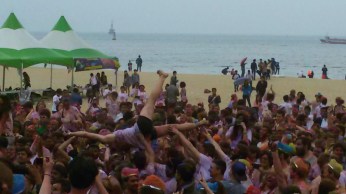
20160403_140043People started conga lines, crowd surfing, or just lifting and tossing each other up in the air. I headed up to the grass line above and behind the stage to try to get some pictures of the crowd and hopefully to see the countdown color throw from outside, now that I’d seen and participated from in on the inside. While up on the sidewalk area, I noticed a fair number of locals out for a Sunday stroll who gave us a wide range of interesting looks from curious to downright horrified. Some stopped to take pictures, and I was even asked to pose a couple times. Plus, although we were several hours into the event, it had not rained even a little bit.

20160403_140103

Pictures taken, I headed back down into the crowd to dance again. I got handed some more powder by a late-coming young reveler who’d gotten too many extra bags and I taught him how to toss and hand apply the colors before we parted ways. I ran into more friends. I took photos of and for others. It seemed that photobombing had become a favorite hobby of the festival. Any time anyone took a candid photo, this was barely noticed, but if a group was seen to be posing, they instantly attracted a huge number of extras who did everything from pop up in the back row to throw themselves into the air in front of the group. Again, this behavior was taken in good fun by everyone I saw, and even when a group wanted a photo-bomber free photo, they simply asked the bombers to wait their turn, and they did.

20160403_132116After the last countdown, we gradually started winding down. The music didn’t stop, but the announcers asked everyone to help clean up the beach, which had become littered with empty plastic bottles and empty color packets. At the risk of sounding like a jaded broken record, pretty much everyone still there at this time did as they were asked and began gathering the rubbish in to large piles where it could be picked up by staff more easily. I’m not sure when I stopped believing that masses of young partying people could be polite and respectful, but I am really glad to have been so pleasantly proven wrong. The event coordinators must have had a ton of food leftover, or they just brought extra because they were also giving away free delicious Indian food at the end of the event as well.

13016718_10101394817956241_1276198467_oSome of my new friends and I lingered around the beach for a while, and it eventually did begin to rain and get colder, so we headed back inland to the Wolfhound, an infamous Irish Pub where we proceeded to drink some very large pitchers of ale and dance to some of the best top 40 hits from the 80s and 90s. I headed home only slightly after dark, and despite my best efforts (not drinking any booze while on the beach and going home at a reasonable hour) I still woke up the next day with a magnificent hangover. Inhaling lots of powdered colors, forgetting to drink enough water, and not eating enough did me in and I got a chance to try my very first Korean hangover cure (sold at convenience stores everywhere). And, although I washed everything else, my Holi shirt now hangs on my wall as souvenir art of the wonderful day.
20160409_112422

Cherry Blossom Road & Hoe Restaurant (April 6)

Just as I was starting to recover from my weekend revelries, the school announced that the teachers would go on Wednesday after school to the nearby cherry blossom road, a famous walkway that is lined on both sides with cherries, creating a tunnel of blossoms. Due to the rains on Sunday, the blossoms were somewhat faded, but it was an incredible sight, nonetheless. What I didn’t know in advance, however, was that our fitness minded Principal had decided we would walk from the school, along the road to a restaurant several kilometers away. As it turns out, repetition even of beautiful things can get a little dull after about 2km. I believe it would have been a great way to spend an afternoon with some friends if we’d had more opportunities to stop and rest, take more photos, or even stop when we reached the end of the blooms, but it was a little rough to take at such a brisk pace carrying all my school bags (since we weren’t returning to the school that day).

The last part of our walk left the trees almost entirely behind and became increasingly industrial, and we finally paused for a rest in a small park that was still mostly brown. But our efforts were finally rewarded when we arrived at the restaurant where I got my first taste of the Korean style raw fish dish called “Hoe”. Hoe is similar to Japanese sashimi, raw fish served with sauces, but no rice. Like all big Korean meals, it also came with a huge number of side dishes that included a raw fish and vegetable salad, some cooked whole fish, candied sweet potatoes that were almost like my favorite Chinese treat basidigua, egg dishes, roasted corn, and of course kimchi. The hoe itself was quite different from sashimi. Sashimi is served in slices that are rectangular, similar to the slices you see atop rice for sushi, but hoe was cut in long thin strips that looked more like noodles. We dipped them in the sauces or mixed and matched them with the other sides, especially the white kimchi. It was quite a unique experience, and I enjoyed the meal immensely.

Sunday Sailing (April 10)

20160410_142318

I must either be the wimpiest adventurer or the most adventurous wimp because the exertion of these three events left me wiped out and I spent the next few days resting up to get my strength back so I could properly enjoy the sailing trip I’d booked a couple weeks earlier. Fortunately, the sailors weren’t morning people, so I didn’t have to start my Sunday too early either. I discovered early on in my stay here that Google Maps doesn’t work that well in Korea, thus quickly installed and learned how to use the Korean map app called Naver Maps, which allows me to choose a wide array of bus and subway routes to get anywhere as long as I know the Korean name for the place I want to go, which turns out to be good language practice too.

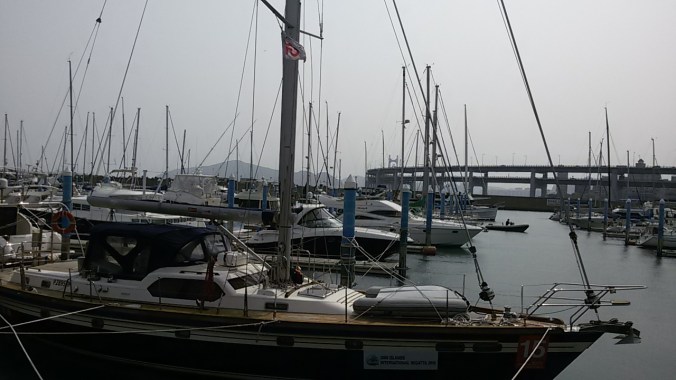
20160410_145643Armed with Naver, I headed down to the marina at Gwangalli to meet up with the sailing group. It was a good mix of the more experienced sailors (the crew) and first time sailors. Everyone was friendly and happy to be there, and once the whole group arrived, we got a short safety lecture and headed to the slip where our boat awaited. We were in for a great sailing day with clear skies and winds up to 17 knots. There were some issues getting the sails up, so we motored around the bay and under the bridge, getting some fantastic views before we finally got under way.
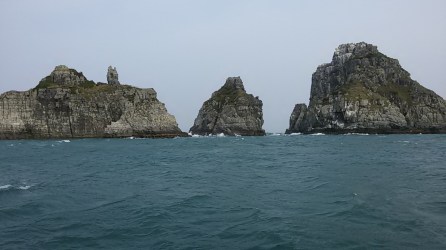
Our crew were kind and skilled, and also quite adventurous. They took advantage of the winds to treat us to a roller-coaster style ride, tipping the boat nearly 90 degrees to the side. The passengers clung to the side of the boat high up in the air, and we all got splashed regularly by the waves. 20160410_155906We sailed out past the small islands nearby before tacking for our return trip. Because of the strong winds, it was important for us to sit on the side of the boat that would be in the air, and we all had to change sides before the tack, while avoiding the boom. I let some of the first time sailors go ahead of me, figuring they would have a more difficult time, but this meant I was still on the port side when the boat tacked, and I got half dunked when the boat tipped up the other way before I could clamber up into the middle.The trip out had left most of us soaked, and several people started shivering in the high winds. We brought out some blankets from the hold, but in the end a some had to go below decks to get warm. I was chilly, but wasn’t about to miss a minute of the great weather and views.
I didn’t get very many pictures that day, because I could only bring out my camera when we were calm enough for me not to worry about holding on with both hands, or dropping it in the water. The few I did get were quite nice, and I had an absolute blast. I talked to some of the crew, and it turns out they go almost every week. They even do night cruises in the summer. I have to admit, I got colder than I would have liked that day, so I’m really looking forward to going out with them when the weather is warmer and a dunking is more refreshing than bracing. It took several days for my shoes to dry out, and I think next time I might have to learn how to use the dryer function on my washing machine. One crew member told me that in the summer, they often sail out and take a swim before returning, so I definitely see this as a repeat activity!

Out on the Town (April 12)

The following Wednesday was election day in Korea, and the schools would be closed. Take a brief moment to appreciate the fact that government employees get the day off to vote, even though early voting is available here. However, since we expats can’t vote here, it just meant a free day off, so I made some plans to go out Tuesday night with some of my newly acquired friends. Because I get up at 6:30am to work, I don’t get to go out much during the week, and this was a perfect opportunity to sample Busan nightlife. A bunch of people were getting together for a birthday party, and even though I didn’t know the birthday boy, I was invited to come along anyway.

I started out by heading over to a friend’s house about an hour away from mine. I’ve noticed that although my neighborhood is quite awesome itself, because it’s basically in the middle of Busan, it takes me 45min to an hour to get most places I want to go. We hung out at his place for a while, chatting, drinking, watching YouTube videos and singing Disney songs. I don’t know about other people, but this is one of my top ideas of a good time. Then, we got some burgers for dinner and then headed out to the bar to meet up with the group.

When we came up to the front of the bar, I was surprised to see several faces I recognized from the sailing trip, and we quickly reconnected. Inside, I saw more people I’d met at Holi and even one I’d met at orientation. Busan may be a big city, but the expat community seems to be pretty tight. After my experience of isolation in Saudi, it’s a huge relief to live in a place that not only has so many activities, but also has a friendly community of people I’m likely to run into again even without planning to. Inside the bar, however, it quickly became apparent that something was amiss.

I may have oversold this slightly as a bar fight. There wasn’t any physical violence. What there was was a Korean girl who was very drunk and very belligerent. I missed the beginning, but apparently she’d beaten on the bathroom door when one of the expat girls was in it, then burst out with a spate of anti-foreigner epithets, threw a bunch of stuff around in the bathroom when she finally got in, and generally yelled at everyone in a massively hostile way. Even though many of the expats there were long time regulars of the bar, it was still culturally difficult for the staff to treat her too harshly. Eventually I guess she called the police and we all headed out to avoid further confrontation. I’ve been reassured by basically everyone (foreigner and Korean alike) that this is really rare behavior here, and even the long time foreign residents seemed shocked.

Having lost the bar, we decided instead to head over to a local norebang joint. Norebang is the Korean word for Karaoke, and it’s set up very similar to the Japanese style where you get a room for you and your friends and pay an hourly rate to sing. The norebang we went to was significantly cheaper than the karaoke bar I went to in Japan, but also not quite as nice. No phone to order your food and drinks to your room, no soft drinks dispensers and no soft serve ice cream. You’re not supposed to bring in outside liquor, but they also don’t check to closely or make a big deal about it if an employee happens to see some in your room, so we had quite a bit to go around, and settled into some crazy singing fun. Norebang rooms also come with multiple microphones, and you just enter songs you want using the remote panel, so there’s no real rotation or solo singing the way there is in America. Most of the time, this is really not an issue, everyone just shares and has a good time singing and dancing, but every so often you get a mic hog (usually too drunk to notice). I do my darndest not to hold on to a mic for more than 2 songs in a row so I’m never that person.

Since we all had the next day off, we stayed out until about 3am. Private room style karaoke/norebang has the distinct advantage over the public American style in that you’re with people you choose, and everyone is more relaxed and comfortable, so it feels more like a house party than a public spectacle and time just flies. The subways and buses had all stopped running by this time, so I also got my first ride in a Korean taxi. Fortunately, I live really close to a landmark hotel, so it’s very easy to give directions and it’s a short walk to my apartment from there. I was pleasantly surprised at the taxi rates too. Even though I was clear at the end of the subway line, it still only cost about 10$ to get home. Not something I want to do daily, but it’s good to know if I stay out past subway time, it’s not going to cost me an arm and leg.

Canola Flower Festival & Mini-car Racing (April 15)

20160415_172454

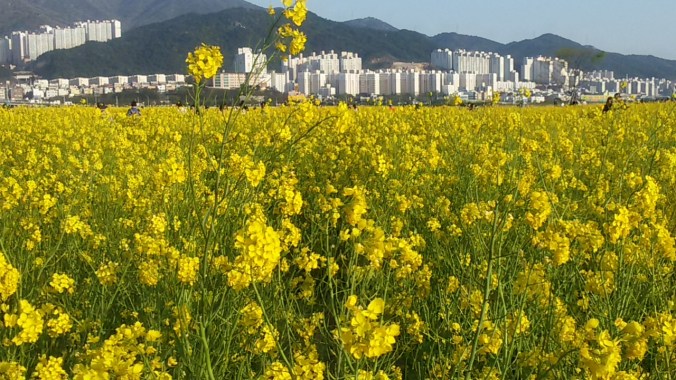
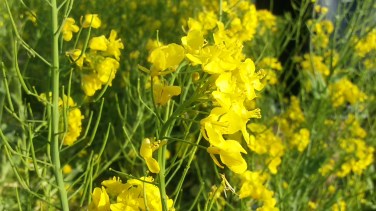
The Nakdonggang Yuchae Festival is held near the Nakdong river in a huge field of canola flowers. These bright yellow blossoms used to be called by the unfortunate name of “rape flower” due to some cross linguistic issues. The Latin name for the plant is brassica rapa, so you can see how that happened in some non-English speaking countries. It is also the source of canola oil, and now more often called the canola flower once people figured out why English speakers were looking so horrified. Interestingly, the brassica rapa family also has lots of edible plants which is why you sometimes see ‘rape leaves’ on Chinese menus. It’s also the root of the name Rapunzel, who was named after the plant her mother so craved from the witch’s garden (non-Disney).

20160415_172337The girl I met on the bus back from Jinhae invited me to come with her to the festival and we decided to meet up Friday after work and head over. It was a long and winding subway ride, but we arrived with plenty of late afternoon sunshine to enjoy the flowers. The plants grow about 1-1.5 meters and there were little trails through the fields where visitors could walk among them, often chest high in yellow. Busan is a beautiful city, surrounded by mountains where it isn’t bordered by water, and as we crested the hill and the fields came into view, my breath was taken away by the expanse of brilliant yellow, bounded by the low mountains and a bright blue sky above.

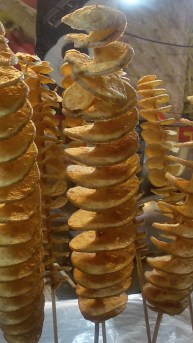
D20160415_172111uring the weekends, and possibly earlier in the day, the festival has a variety of events and booths, but by the time we got there at 5pm on a Friday, there were only a few food vendors left. I didn’t mind this too much, since my primary goal was to see the flowers anyway. The fair food on offer wasn’t as interesting as what I encountered in Jinhae, but there were still some spiral potatoes and a tremendous amount of kebab vendors, as well as the sculpted candy floss. After a brief survey of the vendors, we headed into the flowers and were soon immersed in a fairy world. It reminded me of a sort of reverse horror scene. You know the movies where people are lost in a field of crops until the monster leaps out at them. But instead of monochrome crops by night, we were amidst the brightly colored blooms in glorious sunshine, and I felt that instead of a monster, we should expect a unicorn to leap out at us.

We sang songs to one another as we strolled around and paused often to take pictures. There were plenty of areas of interest to break up the sea of yellow including stone cairns, gazebos, a horse-riding area, platforms for posing, small irrigation ditches, giant pinwheels, and larger paths. We stayed until the last bit of the sun dipped below the mountain line, leaving the sky a beautiful orange and slowly draining the glow from the flowers around us.

20160415_171921

I’d also been invited to a mini-car racing night with some of the folks I’d met at Holi/Sailing/Norebang. I had expressed that I’d already planned to do the festival with Jinju, but would be happy to join afterward if I could invite her along (I hate ditching people I’ve made plans with). They said sure, so after the sunset, we got back into the subway maze to make our way across town again. I had suggested we pick up some dinner on the way, and only once we were looking at restaurants did it become clear to me that she didn’t realize we weren’t doing “Korean style”, by which I don’t mean Korean food, but the fact that often if one person brings food, they should expect to bring enough for everyone and share. I had to explain that as Westerners (mostly US and Canada) we were very comfortable with a more fend-for-yourself style and that if anyone else had wanted us to pick up something for them, they would ask and would pay us back when we arrived. I could tell she was skeptical of this change in etiquette, but once we arrived and the others all backed me up, she got comfortable enough to enjoy her dinner (bacon and tomato pasta, yum!).

13009731_10153334479315989_253832677_oKorean apartments are tiny little studios, comfortable for one, cozy for two and not actually terribly well suited for a party. On top of this, our host had set up his racing track which took up nearly the entire floor in the sitting area. We had to carefully step around and between the loops of the track to move across the room and there were only 6 of us. We watched the guys race while we ate, and then we got a crash course in how to use the track. It was a little like Hot Wheels on steroids. The cars were about three times the size of the Hot Wheels, and the track was equally sized up, which is why it took up the whole floor. In addition, it was linked into a video game system that measured our laps as well as our “fuel” so we had to not only drive the mini-cars, but pull into a pit stop when our fuel was running low or risk losing the race by running out and getting stranded.

Once Jinju and I learned the basics, we tried for a 6 car race, but ended up with too many wrecks, and settled into 4. I don’t even know how many years it’s been since I raced toy cars, but it was just as fun as it was when I was a kid, only this time we were also drinking beers and complaining about politics. I still think Mario Cart is the best drinking and driving option, because we crashed those mini cars too many times and may have damaged a wing mirror, but we made it through a 100 lap race and I came in a respectable second place behind our host.


As you can see, Busan is treating me very well. I’ve also done some more totally practical things like finally getting my medical reimbursements and setting up my Korean phone, and of course teaching adorable munchkins! I know I’m still in the “honeymoon” phase of life in a new country, but so far I honestly feel like this is a place I’ll be content and even happy to call home for quite some time. There’s always something to do, the locals are helpful and kind, and the community of expats is fun and friendly. I’ll do my best to keep blogging because I genuinely enjoy writing about my experiences, not just to share them with you all, but as a record of my experiences I hope to enjoy in my dotage many years from now. As always, thanks for reading and don’t forget to check out all the rest of the pictures on my Facebook page!

Jinhae Cherry Blossom Festival

The first weekend in April was a crazy amazing busy awesome one. It turned out that April 1st was our school’s birthday, and so the school was closed for the day, granting us a 3 day weekend. On top of that, the cherry blossoms had started to bloom that week, promising a flower-filled weekend. In researching top blossom viewing spots near me, I learned about the Jinhae Festival, hailed as the largest cherry blossom festival in all of Korea. It lasts 10 days, takes up several city blocks, and ends with a military parade and fireworks show. Then on Sunday, the Indian (yeah, from India) expat populace would be celebrating the spring festival of colors, Holi, and I had a ticket for that as well. It’s taken me a week to write this, and I’m only just now starting to recover some energy from the blast(s) I treated myself to last weekend. Here we go.


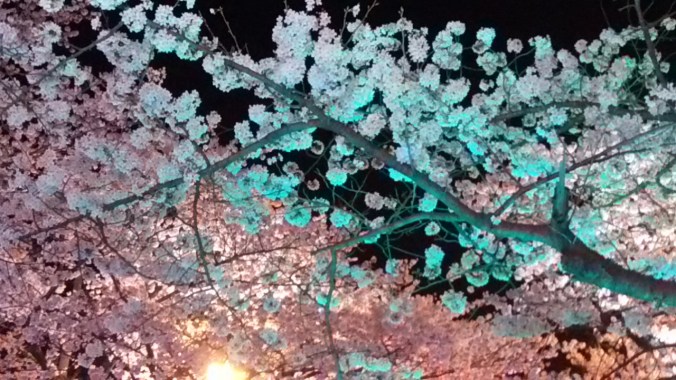
It recently came to my attention that there are Westerners who do not know or understand this obsession with cherry blossom viewing. It actually confounded me a little, because I can’t remember a time in my life when I didn’t think that the magical snow and lace blooms were anything other than an event to be anticipated and cherished, but then again, I got to live in Japan as a kid, and in (or at least very near in one case) two of the very few cities in the US that boast large populations of blossoming cherries for public view. 890400420circles202620squares-lI’m also spoiled rotten by the UW campus quad which boasts 40 old and giant cherries that put on a spectacular show for the students every spring. It seems, however, that large portions of the Western population have simply never experienced the joy of standing in a huge grove of cherry trees in full bloom as the wind teases the frail petals loose and swirls them through the air around you. I am sad for these people because as beautiful as the paintings and photographs are, they cannot do the experience justice. So please, find your nearest cherry blossom viewing spot and GO.
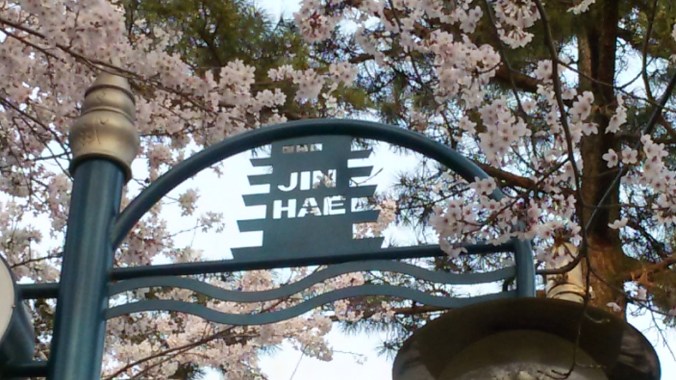
The city of Jinhae has the largest cherry blossom festival in Korea, which probably makes it one of the biggest in the world (Japan wins). It is also purported to have more than 340,000 cherry trees. I told my Korean co-teacher that I was thinking of going, and she strongly recommended it, even though there would big crowds and long lines for the buses. That said, while I have experienced the joy that is the spring blooming of the cherries in several places and have always had my breath taken away, I had yet to experience anything close to Jinhae.

20160401_180612

Jinhae is about an hour away from Busan by bus, and the tickets are less than $5 one way. I showed up at the intercity bus terminal around 9:30 am to purchase my ticket and immediately noticed a long queue and began to worry. Then, as I stood in line to buy the ticket, I heard person after person requesting a ticket to Jinhae. Bear in mind, this is 9:30am on a Friday morning. My school was closed for it’s birthday, but it wasn’t a city wide holiday. Most people should have been at work at this time. Or so I thought. Turns out, a whole bunch of other people had the same thought. The line was doubled back on itself when I joined it, and by the time I got to the front a little more than an hour later, it had turned into five rows. Disneyland has nothing on the bus to Jinhae for lines.

FB_IMG_1459471581383

While in line, I met a nice young man named Lucas who was vacationing in Korea from Singapore (where he had moved from Malaysia, yay international people!). Lucas started chatting with me to pass the time in line, and we enjoyed each other’s company enough that we decided to sit together on the bus ride as well. Those of you who read my blog regularly know that I’m exceptionally fond of meeting new people whenever I travel, so it made me quite happy to have a fun companion 20160401_121251for the day. As the bus drew nearer to Jinhae, our windows became filled with blossoms, as the roadside and mountains were simply covered in the blooming trees. And once we arrived, I began to get an understanding of what 340,000 cherry trees might actually look like. Every street we walked on was lined by trees, planted every 3-4 meters on both sides. No matter where we turned, we were walking under a blossom bower. The main festival stage isn’t a far walk from the bus terminal and soon we were greeted with streets closed to traffic and covered with tents offering traditional fair foods and souvenirs. Lucky me, my companion was just as interested in sampling all the unique foods as I was. The first thing we were greeted with was a whole pig roasting on a spit, and we resolved to try that for sure, but he had ice cream on his mind first, so we kept looking.

20160401_121910Following the sound of some flute music, we turned a corner and were greeted by a most unexpected sight. Two men in what seemed to be traditional Native American dress. Lucas had no idea what they were dressed as, and I had to try to explain while being totally bewildered myself as to why Koreans would kit out in feathered headdresses.  I’ve since done a little research and it could be one (or a mix) of two things: 1) Korea really enjoys using other cultures’ stereotypes in pop-culture and they aren’t always sensitive about it, and/or 2) they were actually trying to honor the culture because Native Americans did help to defend Korea during the Korean War and have gone largely unappreciated for it. Either way, it was quite a shock for me to see these costumes at a cherry blossom festival, and further on I noticed that the souvenirs in that area consisted of a lot of dream catchers and other stereotypical Native American tribal art and jewelry (although in a real hodgepodge of tribal styles).
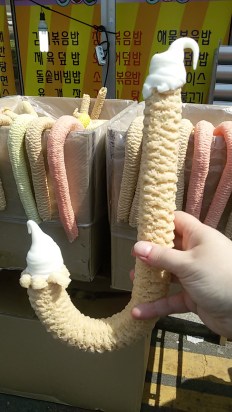
One of the main attractions in Jinhae is the small stream or canal called Yeojwacheon that runs through the city and is much more densely crowded with cherry trees, think every 1-2 meters instead of 3-4). Not only is the canal a beautiful walk, but there are several famous bridges including the “Romance Bridge” which was made popular as the meeting place of the two leading characters in the TV Drama “Romance”. 20160401_124307As we made our way toward the stream, we finally found our ice cream vendor. I’d done some reading on the Jinhae experience before I went, so I had a few things to look out for and this was one of them. This odd confection is a “J” shaped corn crisp shell that’s filled to both brims with soft serve vanilla ice cream. The flavor is about what you’d expect, although the cone was a serious improvement on the standard American cake cone, it’s also a far cry from those waffle cones I got in Prague. But the experience is the thing, and as soon as he spotted the vendor, Lucas swept down and bought us two. The man at the booth was having fun clowning around, pretending to drop the ice cream, and in the end, he turned both cones upside down to form a heart with the two of them for us. Korean culture is big on dating and romance, and he had no way to know Lucas and I had only just met a few hours ago, but it was cute and we took it in good humor.

Ice cream confections in hand, we continued on and soon came to the first of many bridges that spanned the stream. It was crowded to be sure, but Korean’s (like most Asians) are good about taking turns at photo-op spots, so it didn’t take long for us to be able to get up to the railing of the bridge for a few good photos. Then we continued on, looking for the decorations that our internet research had promised. The first decorated section we came across was lined with artificial white roses, and real yellow flowers tucked in among the fresh green spring grasses. It was pretty enough, but following this was possibly my favorite section: the beautiful red umbrellas. I don’t know if it was the contrast of the red umbrellas with the green grass and pale pink blossoms, or if it was the whimsical notion that the umbrellas stood guard against the “rain” of falling petals, but this section just struck me as especially magical among all of the decorations I saw.

The third section contained cut out silhouettes of people in various poses under paper lantern stars, and the final section contained rows of bicycles that I predicted would be luminescent once the sun set. After the decorated sections ended, there were some stairs leading down to the stream bed itself where people could stand in or near the water to pose with the stunning backdrop. We went down too, of course. As whimsical as the blossoms had been from above, suddenly being cut off from the crowds, with only a handful of other people nearby, and looking up up up at the trees blocking the sky… well, to avoid overusing some of my fairy-tale adjectives here, it was bibbity boppity boo, and probably as far as supercalifragilistic.

20160401_131038

After returning to the surface, we dodged back and forth between the wooden planked walkway that lined the stream and the street that was in turn lined with more booths of food and souvenirs, some high arches set with tiny lights for the night time, and of course, more cherry trees. 20160401_132852.jpgAfter a little bit, Lucas became enamored with the grapefruit drinks we had seen other tourists enjoying, so we found a vendor and ordered two of those. We watched, fascinated as the vendor cut a neat hole in the top of the fruit, then held it up to a machine which quickly reduced the insides to pulpy juice. Finally, he popped in a straw, and set the sticky globe into a plastic drink top to keep our hands clean. Ah, fair food. I love grapefruit juice, but nowhere else do I know anyone who would say, “sure, let’s drink that right out of the peel!”. I felt 5 and it was awesome.

We decided to tough it out and walk all the way to the end of the stream to see where the festival “ended” (at least in this direction). We stopped a lot for pictures and to look at the booths, but it was still a serious trek. Our diligence was rewarded, however, because when we came to the end, we found a lovely park that had shady wooded walks and a small lake. Even though the park wasn’t solely dedicated to cherry blossoms the way that the stream was, it was still a very worthwhile walk around the lake that ended up yielding my second favorite photo of the whole day. Cherry blossoms alone are beautiful. Cherry blossoms with mountains and lakes are magniflorious. 20160401_141325On our way back through the streets alongside the stream, we were lucky enough to get caught in a strong gust of wind that tugged thousands of petals loose from the trees above us, covering us in pink, soft snow. Everyone there burst into surprised and happy cheers and gasps as we felt the warm wind and watched the whirlwind of flowers in awe.
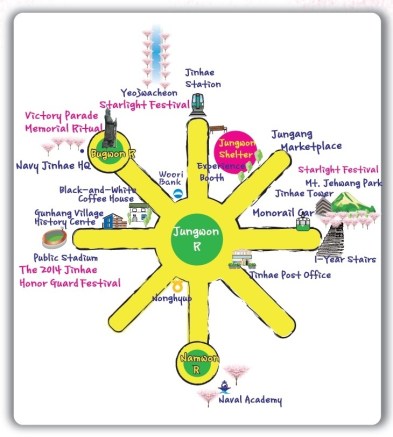
jinhae-festival-map1By this point we were starting to sense the layout of the festival (plus we’d seen a map) which had the central stage at it’s hub in the largest roundabout in town. Streets came off the roundabout like bicycle spokes, each one lined with blossoms and tents, and each one leading to a different destination for viewing and exploring. Out of the 8 possible directions, we probably only went in 4-5 and I missed out on at least half of the festival’s activities and sites even though I spent nearly 9 hours there that day. Taking a look at our options, we headed back toward the center of the festival to try to find the mountain observatory.

Jehwangsan Mountain overlooks the whole city, and is topped by a pagoda style observation tower, giving visitors extra elevation. It was one of the things on my to-do list, but when we arrived, the line for the tram was very long, and the climb is a daunting 365 stairs. I like physical activity, but I’m not the best athlete. I’ve done huge stairs before, Great Wall, Petra Monastery, etc. However, this was only one of many activities we wanted to do, and the smog alert was in the orange that day. Chances are, climbing (at least for me) would have taken just as long as standing in the line, and I would have felt worse afterward. Lucas wanted to catch a bus back by 4, so instead we opted to go find lunch.

20160401_121818You may remember that upon arriving, one of the first foods of interest we saw was this whole roasting pig? Well, that was what we wanted for lunch. Thus we hiked back towards the center of the festival, scanning the booths around us for that telltale swine-flesh until we found one. Neither Lucas nor I had any real amount of Korean language ability, but pointing works well enough, and it turns out “Barbecue” sounds the same in Korean as it does in English. Lucas tried to order some soup to go with it, but through the hilarity of charades and cultural differences, we actually ended up with a bowl of local rice wine instead. Yes, a bowl. It turns out that dongdongju is served this way traditionally and is a common fair drink alongside the barbecue, so our server can certainly be forgiven for assuming we wanted the popular choice.
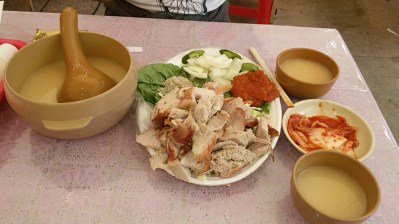
20160401_153024Despite it’s somewhat dubious opacity, the wine was tasty and refreshing after our long walk. And when the single dish of barbecue showed up, suddenly my erstwhile companion understood why I hadn’t ordered a second dish myself. The heaping pile of pig had been cut into chopstick friendly cubes and was served alongside a piquant chili sauce, some tiny brined shrimp, sliced onions, mixed salt and pepper, and green hot peppers (and of course there was kimchi). We were free to mix and mingle the flavors as we pleased from there, and I quite enjoyed the experience. Even the brined shrimp went well with the pork, much to my surprise. We chatted, ate and drank for almost an hour but were unable to finish either the pork or the wine between just the two of us.
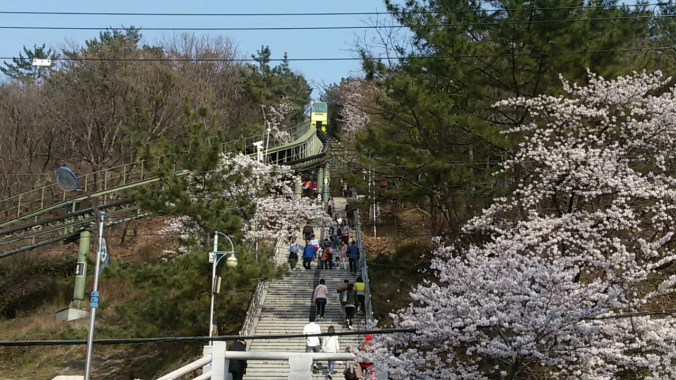
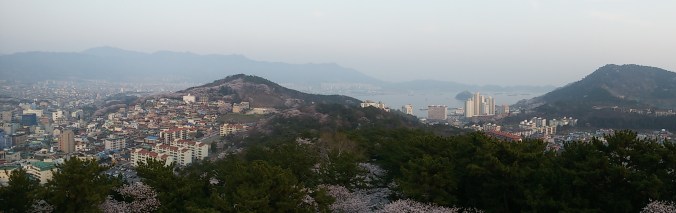
After the meal, Lucas had to head back to the bus station. W said our farewells and I set off into the maze of the fair to see what else there was to do. I still wanted to go up the mountain, but the food, wine and walking had made me more than a little tired. I knew I wanted to stay until after dark to see the lanterns, so I headed over to a local cafe for a little pick me up and a soft seat. The first time I came over to Asia as an adult, I was deeply saddened by the lack of coffee options. Nescafe or similar instant coffee was and still is popular in most Asian countries. In some cases, it’s even preferred to the real beans. Fortunately, for reasons that probably stem from colonialism, Korea has taken a strong love to the French pastry/cafe idea and it is now common to find small coffee shops all over the place offering an array of espresso based drinks and flaky pastries. I was still too full from lunch for a pastry, but an iced latte and a seat by the open window looking out on the cherry blossom filled road was quite welcome.

20160401_161758

Once the food coma and wine haze were chased away, I decided to head out to see what the line at the mountain looked like now. I had about an hour until sunset and the night light shows and wanted to get in a little more viewing if I could. There was still a long line for the tram up the mountain, but it was much shorter than when we’d looked before lunch, so I joined in. It turns out one of the small advantages of being a single traveler in Korea is that, because many of them go in large groups, there is often a single space left on any form of conveyance that no one else will take because they don’t want to split up. As a result, I was shuffled forward in line to fill the gap, and got to the top in time to walk around and climb up the pagoda to watch the sun set over the city from the very top. The view was truly stunning, despite the smoggy haze in the air, and I realized that some of the surrounding mountains were blanketed in groves of blooming cherries too. Watching the mountains, trees, city and water from the sky, it left me in no doubt that I get to live in a stunningly beautiful place this year.

20160401_182359

The sun itself looked like nothing so much as the Japanese flag, a red orb in a white/pink sky. The haze was strong enough that I could look straight at it even without sunglasses. Unfortunately, I don’t own pro-grade camera equipment, and alsas my pictures don’t even come close to doing it justice. Once the last sliver of red dipped behind the mountains, I made my way back down to ground level and struck out once again toward the stream to see the display lit up.

20160401_183243

It did not disappoint. The festival had become even more crowded since I went up the mountain, and I had to jink and dodge along the roads to try to make decent time from one landmark to the other. The last bus was set to leave at 9:30 and I knew that there was going to be another long line. I had to try my best to get back to the bus station by 8pm. But even standing at the crosswalk looking at the blossoms lit up by the street lights, I knew I’d made the right decision in staying. I’ve done night viewing before, because the UW campus isn’t closed off after dark and I was able to take walks around the quad with the orange lamps reflecting off of the blossoms and the dark city sky above. But here, I was treated to a whole range of colored lights and the night sky of Jinhae had far less light pollution than Seattle, so it was a good black velvety night dark rather than the orange-grey color of big city night skies.

As I passed by the train station, I noticed that some of the trees I had overlooked by day were now glowing with 20160401_192130LED cherry blossoms in shifting colors. Despite my rush to see the real flowers, I took a quick detour to watch the light show. When I got to the road by the stream I was overwhelmed by the number of people. During the day, I had to wait my turn to get up onto the bridges for photos, but now the bridges were so crammed that even people trying to get away from the railings to make way for the next visitors had to push their way physically through the crowd. It wasn’t a lack of politeness, just the sheer volume of humans in such a tiny space made it impossible to get out of someone’s way without pushing into another person. At one point someone backed into me and leaned on me, and only realized I wasn’t the railing when I moved. They were, of course, apologetic, but that’s how crowded it was!
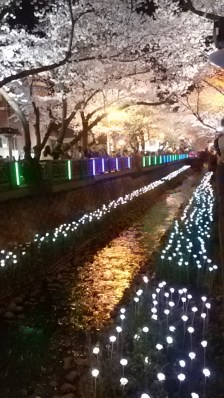
I could more easily access the railing on the sides of the stream, and it was well worth doing just that. However, I knew from my daytime exploration how different the view from the center of those bridges was from the sides, so I valiantly squeezed my way through the crowds to have my turn. Despite the fact that my phone does not sport the best night camera, most of my bridge pictures turned out well, and only one area did my camera get jostled to the point that I had only side views in the end.

20160401_195507The area of the yellow flowers and fake white roses was first. Although we’d spotted the roses were fakes, I had thought at the time it was just about making a pretty pattern, which is harder to do with living flowers. Now at night I realized that each false flower was connected to a hidden wire because they glowed magnificently, casting a pure white light up on the blossoms above them.

Next, my favorite one, the red umbrellas, revealed small lights under each of the umbrellas making them glow as brightly as they had in the sunshine. The umbrellas were followed by the stars and silhouettes, which may have taken over first place for the night version if for no other reason than the stars were more color shifting soft LEDs and caused the blossoms above them to go through a rainbow of reflected colors, creating dazzling combinations and effects. Finally came the bicycles, which were more or less what I expected: tube lighting in a variety of colors, reflecting up into the trees.

I didn’t go any further down the stream since there hadn’t been anything in the daytime that looked like it would be a night display past the bicycles. I had spotted a night light walking area on the map, but it was simply too far away for me to get to without missing my bus and being stranded in Jinhae with no hotel reservation, so I headed back toward the bus terminal, admiring the lighted arches and glowing blossoms on my way.

20160401_194304.jpg

Once I was back in the tented area, I started questing for my last fair food goal, the spiral potato. 20160401_201741This was another tempting snack I’d read about online and decided I wanted to try. Plus, it had been 4 hours since lunch and I knew I had a few more hours of standing in line and bus riding before I would be back in Busan.  It was time to grab a snack anyway. On my way through the stalls, I came across these clear glass-like treats. They were served with a kind of powder that stuck to them, and many Koreans seemed quite taken with them. I decided to pass because I have an aversion to all things gelatin (there is no room for Jell-o), and the Asian desert culture is heavy on foods that have a gelatinous, jellyfish kind of texture. Which is not to say that I don’t have love for other Asian desserts. I enjoy the glutinous rice and sweet red bean paste concoctions. You can see from the picture this stuff looks like it could go either way: gelatinous or glutinous, and in a situation where I had more time, I might 20160401_200327have given it a shot just to find out, but as it was already after 8pm and I was not yet near the bus station, I had to forgo the mystery in favor of a more well known potato based snack. This turned out to be dusted with cheese powder and was a lot like eating very thick cut, fresh potato chips, yum!

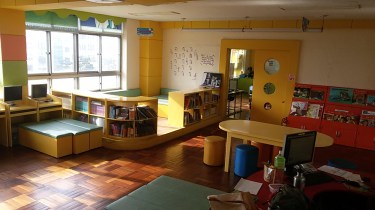
When I arrived at the small bus terminal, I was greeted with another Disneylandesque line that took a little over an hour to get to the top of. The buses normally run every 15-20 minutes, but during the festival, they were running as fast as they could get them loaded. Once again, I got to bump up in line because I was a lone traveler and could fill the single empty seat on the bus. As it turned out, I ended up sitting next to another friendly lone explorer. Jinju introduced herself, and I learned she was from Kazakhstan, although ethnically Korean. She’d been living in Korea for years, but still had some trouble due to the confusion of her appearance versus her cultural upbringing. We chatted on the long bus ride back to Busan, and on the subway as well, since she lives near me. I love making new travel friends, and hopefully we’ll get to hang out again soon.

By the time I got home, it was well after 11pm. I was so sore and tired, even rolling over in bed seemed like too much effort. However, as I’ve watched the cherry blossoms in Busan fall to the rain in the last week, I can’t help but be grateful that I had the chance to go to the festival at it’s very peak. Although the parade and fireworks shows were set to take place in the second weekend, I can tell that the blooms were definitely on display for only the first few days. By the time I was heading home from work on Friday just one week later, the cherry trees were sporting only a few last flowers and the green leaves were filling in all the gaps.


I spent Saturday at home, recovering and doing my regular weekly chores, plus assembling my photos from the amazing journey to Jinhae. It was tempting to go out to see some more cherry blossoms in Busan, but I had booked a spot at the Holi Hai festival for Sunday and I really wanted to make sure that I had enough energy to enjoy it. So, please enjoy the rest of the pictures, and stay tuned for the next installment of the crazy busy amazing weekend where I tell the story of Holi on the Beach. As always, thanks for reading! 🙂

Settling In: My First Week of School

UPDATE: Something happened to the pictures the first time I published, I’m assuming something to do with using my work computer instead of my personal one? Anyway, it should be all fixed now. Thanks for your patience and enjoy!


Despite the best efforts of the flu, I managed to both make it to and survive my first week of elementary school teaching in Korea. The week was less than normal for several reasons, but it gives me a pretty good idea of what I’ve gotten myself into, and it appears to be good news.


First, let me explain a little about Korean education as I was led to expect it from EPIK orientation and online research:

Typical Korean Students

Korean kids study from about 9 am to about 11 pm (later for the high-schoolers). They start with public school, then do after school programs, private English schools, and subject tutors before going home to do more hours of homework. I think this speech was given to me a half a dozen times at orientation as a way of helping us understand what our students go through, and to give us some sympathy for them in our classes. English class is often the only “fun” class they will have all day (even the little kids), and kids will often end up falling asleep in your class because they were up past midnight studying. Also, your class is only one of 3-4 places they study English.

Next, let me explain a little about my school:

I guess recently the Korean government decided to pour some foreigner money into the lower income schools around the cities, so I work in a neighborhood that one of the locals described as a “slum”. OK, Korean slums aren’t really as bad as say American ones, there aren’t any metal detectors and no cops are roaming the hallways,

Not actually one of mine, but…

but the kids are from economically disadvantaged homes and often receive little to no positive attention from their parents, let alone the costly private after school programs. In the first week, I’ve already encountered several special needs children, and heard horror stories of abusive parents. Social services isn’t really a thing here yet, so kids aren’t protected unless the home life is Jim Jones levels of bad. As such, my kids don’t have a lot of advantages that I was led to believe Korean students have. They don’t have a very high English level and my class is most likely the only place they will get to study English (or possibly get positive feedback).

20160317_160151.jpg

My “office” / English resource room.

Do not mistake this for a horrible situation, however.We may not have the best facilities, but we have computers, TVs, and about a million English books. Our main textbooks come with lots of cut out activities and interactive DVD-Roms. And my “office” is the English play room/ library which is full of stories and even a short row of student accessible computers. On top of that, the kids aren’t little hellions of bad attitude or behavioral problems. Most of them are really cheerful, well behaved, respectful and pretty happy to see me. I don’t know if they’re happy to see their other teachers as well, but I get lots of greetings and big smiles in the hallways and the classroom.

20160316_075209In the morning, I wake up before 7 am to get ready. My neighborhood is still quiet then, and when I step out onto the cold spring sidewalk, everything except the 24hr stores are closed up tight. Because I live in a pretty ritzy neighborhood, I have a bit of a bus ride to school, but it’s a nice time to wake up and see what’s in the city through the windows.

20160316_081753Because it’s still so early, the bus isn’t too crowded and I can usually get a seat.
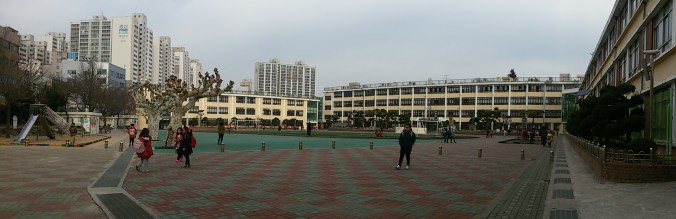
Walking from the bus stop to the school is really peaceful. There are a million tiny shops selling fruit, sweets, snacks, and various household goods, but it’s still too early, so the little alleyways are silent. When I round the corner and my school comes in sight, I suddenly become a superstar. Kids recognize me and are happy to say hello or practice the most recent English phrase they learned in class. They call my name from across the street and run up to get high fives. It really is a great way to start the day.
20160316_082107My first week was actually the second week of school because I spent the first week in quarantine, so you can imagine the kids were surprised to see me after their first week with no native English speaker. There were lots of curious glances and furtive shy peeking in the window. Some brave students even came up to ask what day I would be in their class. Monday wasn’t especially a typical day, but I made it through my classes with minimal technical difficulties, and learned that there are three other teachers I’ll be spending most of my time with. The other two English teachers, who I will refer to as co-teacher 1 and co-teacher 2, as well as a music teacher that is in our hallway. They’re all really sweet ladies, and did their best to make me feel included, sitting with me at lunch and chatting with me in the hallways or after class.

MONDAY

I had to go back to the doctor on Monday after class, which is the boring part. Then I found out that we were having our first teacher’s dinner that night. EPIK orienters advised us to get in on any teacher activities to make our stay easier, but this one sounded like fun anyway. Apparently, every month, the teachers pay into a pot fund and then once in a while we all go out for a great dinner. 20160307_170141This one was our year start dinner, and we went to a traditional Korean barbecue place. Every 4 people shared a table with it’s own grill and assortment of banchan (반찬 : the side dishes served at every Korean meal). It was the duty of the youngest at the table to cook, which is our music teacher, so she set to grilling the pork belly (Samgyeopsal 삼겹살) which we ate with the various spices, sauces and side dishes to change the flavor of every bite.

I was mostly watching and following along, but it was delicious. We ate two plates full and then the waiters came by to ask us what we wanted for dinner! In Korea, after the plate of meat is all cooked and shared, people order some soup or a noodle dish to finish off. I was stuffed, but the ladies ordered a single bowl of a cold noodle soup, which I tried a bite of because they told me that most foreigners don’t like that kind of soup… so of course I had to try. It actually wasn’t bad. The noodles were a little chewy, but the flavor was nice. I think if I hadn’t been so full of pork belly I might have eaten more.

My Korean co-teachers don’t drink much, so we toasted with cider. It’s not what you think. In the west, cider is made from apples, either a spiced apple juice or a hard (alcoholic) apple juice. In Korea (and Japan), cider is a clear, carbonated, sweet, non-alcoholic beverage. I have no idea why it’s called cider. Think Sprite/7Up. It was my first real day out after the flu, and I’d already had a long day at school, and the doctor, and dinner, but it was soooo good. Then they asked if I wanted to go get some dessert afterward. Imagine how sick I have to be to turn down dessert. I wasn’t that sick.

They started describing this kind of frozen dessert,

snow-cone-cup

American Sno-Kone

but didn’t know the English name. After a while, I realized they were talking about shaved ice. Now, Americans (49 states anyway) don’t know from shaved ice. We have this thing called a sno-cone, which is small chips of ice covered bright colored sugary artificial flavored syrup. Hawaiians know a little better. They actually shave the ice instead of chipping it, resulting in a fluffy, fresh snow texture. Some of them even use real fruit in the syrups! I also had the chance to eat some Japanese shaved ice last summer in Yokohama.

yokohama ice

Japanese shaved ice

It was really good… compared to the only thing I’d ever known, which was of course the American sno-cone. When I tried to describe these to the Koreans however, they got looks of disbelief mixed with pity. I even showed them some pictures on my phone to get the point across. They smiled a little knowingly at one another and said that Korean shaved ice was really the best.

I’m used to most people thinking their own culture is the best at xyz, so I take it with a grain of salt. But then they started showing me pictures on their phones, and one told me about the seasonal strawberry flavor that had strawberries, whipped cream and cheesecake! WHAT! So, yeah, we’re going to get dessert.

We walked a long way, it might have been faster to take the bus or subway, but it happened to be a warm night while we had an early taste of spring, so I didn’t mind too much. Heck, if not for the lingering cough, it would have been idyllic. Finally, we arrived.

We picked up another teacher on the way, so there were five of us, and  co-teacher 1 offered to treat us all, so she headed up to the counter to order.I can’t even. Just look at it. It’s better than it looks. And it looks amazing, right?

20160307_191911

Korean shaved milk ice

So, instead of shaved water ice, this is made with shaved milk ice. Making it way more creamy than a mere shaved ice. The bowl is filled with this fluffy frozen milk, then topped with fresh berries, cream and a slice of cheesecake! It’s served with a little dish of sweet condensed milk in case it’s not sweet and creamy enough for you. The five of us shared 2 of these monstrous creations. I’m an addict, but I can’t go alone. Even if I did manage to finish a whole one, I’d feel guilty for days.

We had some great conversation too as we learned more and more about each other. I’d answered a lot of questions about myself in class for the students, but not all of them were as … honest? as possible. I mean, I didn’t lie, but when asked my favorite food/video game/tv show/book, I tried to answer things that I really do like, but that would be more familiar to them than my actual favorites. Good thing for me I like Harry Potter and the Avengers. But, at dessert, with just the teachers, we started talking about other things, and it turns out that  co-teacher 1 and I are both avid Whovians. I’m pretty psyched about that.

They’ve sort of decided I’m the font of all things English, which I don’t mind, but they did ask a lot of questions. The music teacher told me a story about how when she was travelling in Japan, she met an Englishman who, dressed in many layers in the warm weather, she figured must have been uncomfortable, so she told him he looked hot. Apparently this caused his face and ears to turn red, much to her surprise. I had to explain the other meaning of the word hot, and a few social context norms as to why this man would be so embarrassed to have a pretty young Korean woman tell him he was hot. This led to a comparison of our favorite stars, and it turns out we had a lot of overlap in our tastes in men too. I really can’t remember the last time I had so much fun with “girl talk”. Or teaching anyone to say “Cumberbatch”.

“Hot” in any language.

Co-teacher 2 seems constantly surprised that I’m not a more stereotypical American. She was surprised that I could read Korean (and wanted to learn more), surprised I could use chopsticks at dinner, and surprised I was comfortable sharing a common dish while eating. I guess those aren’t normal American traits, but it was strange to run across someone with such strongly ingrained stereotypes of us. I tried to reassure her that she wasn’t necessarily wrong, that of course many Americans do live up to those ideas, but that I’d been fortunate enough to have lots of international experiences, and a group of friends at home who are way more comfortable with things like affection between platonic friends and sharing stuff like food, drinks, clothes or whatever.

TO FRIDAY

The rest of the week was me introducing myself to the students class after class, and having lunches with the other teachers, and hanging out after classes finishing our lesson plans or just drinking coffee and sharing snacks. One day, we took off early again to get me registered with the immigration office and start my Korean bank account. It was a lot of walking around down by the waterfront, so I got to see and explore another part of town and the weather was cool and sunny, so it was a good day for it. When we finished our errands, co-teacher 1 and I went over to Starbucks to celebrate and had so much fun sharing stories that we didn’t even realize how much time had passed and she had to run off quickly to pick up her son.

Thursday was an evaluation day for the students. In Korean schools, there are two kinds of teachers/classes: homeroom and subject. In elementary school, the students spend most of their day with the homeroom teacher who covers most things like Korean, Math, Science, PE, etc. The subject teachers are English, Music and Ethics (as far as I can tell). The homeroom teachers actually look down a little on subject teachers, which in turn frustrates the subject teachers who feel like they work just as hard (if not harder) because they have such a narrow focus. Anyway, evaluation day meant that there would be no subject classes, so we had nothing to do and spent the whole morning in one empty classroom, making a huge mess with our combined piles of drinks and snacks. There’s a lot of “desk-warming” time for Guest English Teachers, but it looks like sometimes at least, I’ll get to spend it having fun with the other subject teachers and not just stuck at my desk alone.

Friday is my shortest class day, because we only have 3 classes, and we can finish our planning early. However, there’s no early leaving, so I hung out on my computer until 4:30 playing games and chatting with friends on Facebook. I’m really hoping to start using this time more constructively, like studying my Korean or (as I am doing now) working on this blog. But it was my first week, so I gave myself some permission to slack.

WTF DUDE?

Then, on my way out, the kookiest thing happened to me. I decided to buy a pizza from the local shop on my way home (that’s not the kooky part), but as I was walking toward the shop, a young man approached me to say hello. Now, I’m a little bit used to being a minor celebrity when I’m abroad. Really, unless you’re in a high tourist area, the chances are there aren’t a lot of white folks (or whatever the non-native ethnicity happens to be). Europe was nice, because as long as I kept my mouth shut, no one could spot me out by sight. But in the Middle East and Asia, I kind of stand out with my glowing white skin (this is not a brag, btw, I’d love some melanin to protect me from the sun’s harsh rays, it’s just not in the genes). As such, it does not freak me out when random people come up and get very curious or friendly. I watch out for signs of scams or aggression, but most of the time, it’s really just honest curiosity and a chance to see if that English they learned in school really works.

So, when this guy came up to me to say hello, I was friendly back. I know in a way I represent my country when I’m out, so I try to be a good example. Plus, I’m actually a pretty friendly person and probably talk to strangers more than is strictly good for me. He asked my name, and also my age, but I’d been warned that asking someone’s age at first meeting is normal in Korea because they use age as part of the system of address (how you speak to someone older/younger than you changes). He also introduced himself and his own age. His English was shaky, but I try to be encouraging (I am a teacher, it’s a good habit). I thought that might be the end of it, since the light changed and I could cross the street, but he followed along, continuing to try to communicate. I thought maybe he lived or worked nearby and wanted to be friends, OK. We took a selfie together and I gave him my public Facebook page (not personal), then said goodbye and went into the pizza shop.

Still not the kooky part. So far this has been a pretty normal cultural exchange, and I felt safe and happy. I order my pizza (a sweet potato pizza, which I have been told is a popular Korean variant and a must-try for all visitors, with a “gold” crust, I’ll come back to the pizza later), and am told it will take about 10 minutes to cook. Then the guy spots me through the window and waves me back out into the street.

This is where it gets weird.

He then confesses his love.

And asks if we can be a couple. “Couple” sounds like “cup-oo-roo”, but I know what he’s saying anyway.

A thing you may or may not know, depending on your own gender and nationality, but girls hate having to turn dudes down. It’s awkward and can be scary. Often when a guy is rejected, he can become hostile, insulting us or even attacking us. It’s not a joke, it’s not an overstatement. It happens all the time. I’ve seen the police called on guys in my own regular hangout places because they got hostile that some girl wouldn’t kiss them. I’ve had plenty of dudes call me all manner of unpleasant things. So most of us learn the delicate art of the gentle turn down/de-escalation. This usually involves flattery, humor, and the inevitable presence of another man in the girl’s life. I often had to pretend to be married in the Middle East just to get away from amorous dudes. Not fun. And it’s even harder when you’re facing a language barrier. Plus, this was my first time dealing with this in Korea (every culture is different), and the whole conversation had started as normal.

I was flummoxed, but tried to stay light, smiling at his compliments and saying no, no, I’m too old for you. (10 year age difference). But he kept insisting! “I love you”, “Couple”. He took off my glasses and held them away from me. I’m pretty blind, and while I have extras in my apartment, I don’t like being unable to see well. He was trying to tell me how pretty my face was without glasses, and that I shouldn’t wear them. Which is a line I don’t think I’ve heard since the early 90’s. I like my hipster argyle frames, I own contacts too, but it’s a choice… my choice. I retrieved my glasses and put them back on. I was still trying to keep it light. I’m not really sure if that was the right choice, but I was nervous about making a scene in a neighborhood that my co-teachers had described as a “slum”, and I started thinking back to the lecture on sexual assault that the US Embassy rep had given us at orientation. I didn’t really want to believe this young man was violent, he just seemed desperate, but desperation can be scary too.

This went on for what felt like an eternity, back and forth. He also took my phone at one point and added himself to my private Facebook contact list (I have removed him, now, of course), and tried to get my Kakao Talk and phone numbers as well. He kept touching me, taking off my glasses and stroking my hair and face. And I kept pulling away, and saying no as politely as I could. I never let myself get angry. Looking back, I know that was a learned response to avoid conflict with males at all costs, but that upsets me too, because how the heck am I supposed to say no if a nice no doesn’t work and a firm no is attacked? Ugh. Consent issues.

I finally fled back into the pizza shop, which is how I know it wasn’t actually as long as it felt, because my pizza wasn’t even ready. When I went back out and started heading to the bus stop, he caught up with me again to give me a little can of lemonade he’d clearly just purchased in the shop nearby. I tried to decline, but he tucked it into my bag anyway. In the end, he got a kind of cold fish hug, but took the opportunity to smell my hair. Leaving me totally creepified.

I spent the whole way home looking like a crazy person, muttering to myself and going over and over the experience trying to figure out where it went from normal to nuts and what I could have done differently. Even then, it took talking to three different girl-friends online about it to calm down enough to enjoy my pizza.

THE POTATO PIZZA

Most countries have imported the pizza over time. It doesn’t always look like what we think of pizza as in America. Sometimes the crust is a totally different texture, sometimes the sauce is sweet or spicy, or not made of tomatoes at all. The toppings can be anything, literally. In China, I saw pizza that used mayonnaise instead of cheese because they’d only seen pictures and didn’t know what it was. So, when I came to Korea, and my instructors told us about the sweet potato pizza, I was very curious. I really like sweet potatoes. And pizza. So this seemed like a match made in heaven.

20160311_175843My pizza was cold by the time I got home, but my apartment has a microwave, so that was ok. It turns out that sweet potato pizza is one of the ones without tomato sauce. The box declared proudly that the crust was made from organic flour (kind of surprised that’s a thing here) and Korean rice. There are small diced vegetables like onions, green peppers and roasted corn, as well as some kind of sausage reminiscent of Italian. Then, placed like a crowning jewel on each slice, is a single chunk of roasted sweet potato (or possibly yam), and the whole thing was covered in mozzarella cheese. The “gold” crust turned out to be a satellite rim of mashed sweet potatoes, topped with cheddar cheese that had toasted in the oven. Not really like anything I’d have described as “pizza”, but quite delicious nonetheless.
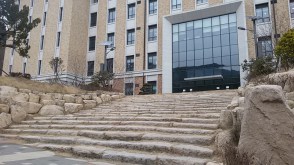
SATURDAY NIGHT

Finally, on Saturday, a large group of EPIK teachers organized a March Birthday party. It just so happened they chose to meet right in my neighborhood, so even though I was still recovering from the flu, I decided I could go out for an hour or two. We met just outside the subway station to gather everyone from all parts of Busan together, then marched off in seach of our destination. With a group as large as 30-40 people, it can be hard to find a place, but apparently Korea has these kind of “bar cafeteria” things, where you pull up a table (or group of tables), then you walk around the area getting your food and drink from various stands around the large room, a little like fair booths. One booth has the booze, another has grilled meat, another stir fry, etc. When you pick up your goodies, you tell them your table number and they log it into the computer. Then, at the end of the night, you pay for what you got.

When we arrived, the escalators didn’t go all the way up, and there wasn’t any stairwell access, so we had to take the single elevator up in small groups. I ended up being the first one to arrive, and the host asked how many people we would have. I have learned enough Korean to count, so I told him 30. I’m sure he must have thought I was not speaking Korean correctly, because he asked again with some serious disbelief. After all, I was standing there alone. I kept affirming my estimation, and several more hosts were gathered together until they found one who spoke English and he checked the number again. Yep, that many, really. They put together about 10 tables for us and showed me to the area, taught me about our table pager that would track our orders and buzz when food was ready to be picked up, and finally more of the group started to arrive, preventing me from looking like a serious fool.

It was strange but nice seeing familiar faces, even if we’d only met for a week in orientation. We tried so many flavors of soju and tried to find a local beer that wasn’t totally awful. I tried a dish of kimchi fried rice topped with mozzarella cheese which turned out to be MUCH tastier than it sounded, and I even met some new people to connect with on Facebook and here in Busan. Of course, I want to hang out with my new Korean friends too, but it’s nice to know that there are lots of events where I can catch up with expats and stop speaking ESL or broken Korean for a few hours at a time.


That about wraps up my first week of school. As I write this, it’s the one month anniversary of my most recent departure from the US. It’s really hard to believe I’ve already been gone a month, what with Orientation and the Quarantine, the first two weeks were barely real, and this is the first week I’ve started to feel like I’m adapting to my new life here. The good news is, my health is improving and the weather is getting nicer every day. I really like my job, and my co-workers, and my students, so I walk home every day with a silly grin on my face while I try to decide what new delicious food to try for dinner that night. As always, thanks for reading and don’t forget to check out more photos and daily updates on the Facebook page! 🙂

Arriving in Korea: The EPIK Orientation

I’ve been here about two weeks now, and I’m finally sitting down to write about the experience. Sorry it’s been delayed, but I have had some crazy times followed by some serious flu. I debated heavily about publishing it, since the flu is slowing me down and it’s not the story I had hoped for when I arrived. As it is, I still haven’t had time to explore my neighborhood, or even make it to my first day of school yet. Nevertheless, when I put off writing about Europe due to illness the posts never got made, so here goes – my first week on the ground with EPIK.


I want to forewarn readers at this point, that my experience at EPIK orientation was full of ups and downs. I’m not going to try to pull any punches over the downs, but I also don’t want to give the impression that there weren’t enough ups. These people took on a very daunting task of training a couple hundred new arrivals in a very short amount of time (one day less than planned as it turned out), and I really appreciate everything they did to try to prepare us all for life in Korea and for our new jobs in Korean schools. They were dealing with some restrictions not of their choosing, so I think most of my downs would have been mitigated if not altogether eliminated had they been able to have a full schedule and do the classes/lectures in the normal order instead of totally backwards.

BUSAN AIRPORT PICKUP

EPIK (English Program in Korea) hires all the k-12 public school foreign teachers in Korea these days, and they run a week long orientation for all the newly arrived teachers in three big batches. I was in the Busan batch and our meeting point was in the Busan airport on Friday, from whence we could check in and take a shuttle bus up to Busan Foreign Studies University where we would all spend the next week learning to be EPIK teachers.

I ran into a large number of EPIK teachers at the layover in Taiwan where we began to share our histories and reasons for coming to Korea, as well as our hopes and concerns for the year to come. It was novel to come into a situation surrounded by other teachers in similar circumstances rather than on my own. It made us excited to get there and helped wipe out some of the travel fatigue. Once we arrived in Busan, we were able to keep each other company through customs, money changing and immigration, all of which are mind-numbingly boring, so it was pleasant to have company.

The EPIK staff had set up at the arrivals area of the airport with friendly volunteers holding big EPIK flags to signal us, and a reasonably well organized process of getting everyone registered and assigned to a shuttle bus. We still had to wait around the terminal for about 90 minutes before we were allowed to leave, but it was a fair trade for having the whole thing planned for us.

BUSAN UNIVERSITY OF FOREIGN STUDIES

20160219_163854The week long orientation was to be held at BUFS campus, which is beautifully nestled in the mountains of Busan, and a good deal colder than the rest of the city. In order to stave off sleep until bed-time, I decided to take a quick walk around the campus to explore. In February, most of the trees were dormant and brown, but I can imagine how beautiful the campus probably is during the other three seasons. It is entirely surrounded by trees with a little stream running through it and trails running up into the mountainside.

Our arrival day was largely uneventful, with nothing planned aside from dinner, but the public WiFi was entirely unable to keep up with the demand from the 200+ new teachers trying to contact their friends and family back home. My over-preparedness came through in a pinch, and I was able to get internet in my room, help my roomie with power adapters, and get a number of people access to the internet who otherwise might have had some pretty worried parents.

Dinner was a fun combination of familiar and new foods, including what would turn out to be the ubiquitous (and delicious) kimchi. All in all, I felt a warm positive glow about my arrival by the time I went to bed on that first night. And then we got down to business.

CLIMBING, CLASSES & CURFEWS OH MY

The schedule for the orientation was packed. At first glance, it seemed mild, with 90 minute meal breaks and 30 minute breaks between classes, but as it turned out, these were mostly an illusion since the classes ended at (or after) the meal time started, the lines at the cafeteria and the convenience shops were always insane, we had to be in class 20 minutes before classes started to sign in (every class), and even the lines to fill a water bottle could last 15 minutes. To top it off, our dorm and the cafeteria was at the bottom of a steep hill, and all our classrooms/lecture halls were at the top, meaning that we had to climb up and down every meal break.

20160221_085036I admit, I’m not in great shape, but freezing cold air combined with physical exertion is hard for anyone, and especially triggering for asthma. After the first full day, I went out of my way to find the less steep options, but that first set of stairs was pretty insane, and then it turned out the elevators were turned off for the weekend! By the time I got to the lecture hall, I felt like I should be lighting some incense at an altar, because the only other times I’ve climbed that many stairs has been to get to a temple.
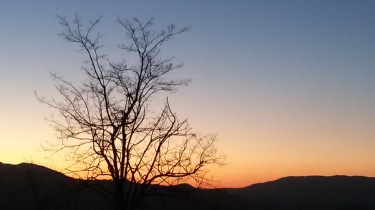
The orientation program also imposed a curfew, which wasn’t so bad in and of itself, since they were simply trying to get folks inside by 11pm and in their rooms by midnight (and not up all night drinking in town). I didn’t think much of it, but it turned out only to be the tip of the iceberg of how we were corralled during the week. This may be the only downside that I do hold EPIK accountable for, since I can’t really see how it would not have been within their control. We were treated to ever increasing degrees like elementary school students without any ability to be self responsible. Our “free time” and “breaks” became overseen with greater restrictions as the week wore on, with limits placed on where we could go and when we needed to sign in.

The signing in for classes and lectures made sense, because they had to prove to the Offices of Education that we had completed a certain number of hours of training, but events that really should have been optional (like networking, and the field trip) weren’t. Eventually there was a point where some teachers had to choose between, eating dinner, or getting their luggage prepared for the next day’s departure because there simply wasn’t time to do both.

MEDICAL EXAMS

20160221_063840We had to forgo breakfast and rise at the crack of dawn to get our medical exams done. Well, my group did anyway. My roomie was in the second group who got to sleep in. Not the very best organization, since we then ended up sitting in the bleachers for almost 2 hours waiting our turn, but once we got into the ersatz medical check up facility, things went fairly smoothly with each test having its own station around the gym and a huge medical staff processing our vitals and taking notes. Other than a little sleep deprivation, it wasn’t too bad, and I did get a chance to rest in my room before lunch and a full afternoon of welcoming lectures.
LECTURES

20160220_141948Ok, enough complaining, cool stuff for a minute. The first few days were full of auditorium style lectures and presentations, most of which were actually quite lovely and entertaining. There was a fun dance performance of traditional percussion dancing, a demonstration of filial piety with the new year honoring of parents, and there were several speakers who shared great stories and experiences of their time in Korea and working with EPIK. The best part for me (maybe right after the hat ribbon dance) was that many of these stories involved how they had helped previous EPIK teachers overcome obstacles and misunderstandings. In all my previous ESL experiences, I’ve had little to no support in my job and even less for cultural issues beyond work. It made me feel profoundly supported to hear what these staffers were willing to do for me based on what they had done for others before me.

I found out later on that the lectures are usually the second part of orientation, and I have to say they would have been much better placed there as far as both helping us to complete our mandatory lesson plan demonstrations and to provide some levity in the later days when we really needed it.

FIELD TRIP

20160223_111403This was also mostly a positive experience, although the kindergarten treatment was a tad intense. Our first stop was the famous Haeundae Beach park. There is a reason I hate tour groups and I think this day hit on all of them. We were made to stand in line by bus assignment and follow our leader with a flag. We progressed at a set pace from one gathering point to another, often being rushed past photo ops or up steep hills just to wait around in lines again at another gathering point.

The really crazy part was that they had given us a schedule on the buses that indicated we would be able to walk from the bus to the 1st meeting point on our own as long as we got there by the target time, and again to the 2nd meeting point. However, we simply weren’t allowed. On the second part of the walk, we were walking up and down wooden stairs along the rocky seaside. There were lots of spots to step off and admire a view, it was stunning and the weather was perfect, and just as I was settling into enjoying the outing, I was tapped gently by one of the staff who told me we needed to hurry. I checked the time and said (as politely as I could) that I thought we had almost an hour before the second meeting point. I was told that time was to be spent on the beach and had four staffers grudgingly walking behind me the whole rest of the way, giving me the stink-eye any time I stopped to take a picture.

Hilariously(?) the others who had arrived at the beach before me were mostly just milling around anyway, and they didn’t actually go on to the beach until moments before I caught up. I missed so much. I know they didn’t want to loose anybody, but it struck me as tragic that they couldn’t trust us to get to the tour bus on time, yet in a few days they would turn us loose in large foreign cities where we would have to navigate the public transportation alone.

img_20160223_122149Despite the nannying, the beach truly was wonderful. I’m looking forward to going back on a day when I can be my own time-minder. As it was, I did get a chance to doff my shoes and socks and play tag with the waves. All the locals must have thought we were insane for playing in the water in February, but it was definitely the highlight of the day for me.
After lunch, we were taken to a UN Memorial Graveyard for the troops who fell during the Korean War. I got the impression from many of our lectures that the Koreans are intensely proud (and rightly so) of their amazing recovery following the near total destruction of their country during this war. I’m sure that played a part in choosing the cemetery as our second destination for the field trip. I was told by a caretaker that the best time to visit is really in the summer when the azaleas and roses are in bloom, so I may try to go back then to see the flowers.

20160223_145955Possibly the most astonishing thing that I saw on this visit, however, was the memorial wall, a near replica of the one in Washington D.C. for the Vietnam War. More than half the wall was covered by American names. Considering most of my interaction with the Korean War was watching M*A*S*H, it was sobering to see the impact of the conflict in terms of numbers fallen per participating country.
BUCKLING DOWN

Our lives were mandated and scheduled from 7am to 9pm every day. There was no down time, no quiet time. I complained a bit about this the day before the field trip and most people were still optimistic and energetic, but by the day after the beach practically everyone I spoke to was complaining about being totally “peopled out”. Don’t get me wrong. Everyone I met there was great, interesting, friendly, polite, fun to talk to, helpful and lots of other positive adjectives. I did not have one single negative personal interaction. But as it turns out, most Westerners just can’t deal with 14 hours of non-stop people then coming back to a dorm room with a roomie. I found myself hiding in the bathroom sometimes because the stalls were the only really private place on campus.

As soon as the field trip ended, the fun was over and it was time for serious training. That very night we were required to attend a networking event after diner, but rather than an opportunity to mix with other teachers, exchange information, and learn about each other, the Americans were all chivied off into a separate room to hear a lecture from our embassy about how to register online and how to avoid being sexually assaulted. The rest of the nationalities were made to watch some kind of movie followed by a quiz (or so I was told).

Groups and topics for our “final presentation” had been assigned and our first of two meeting times to work on the project had passed before we were ever even exposed to the class on lesson planning. Again, I’m told that it’s normally the other way around, and that would have been hugely better. Somehow three people were expected to find time in this wall to wall schedule to write a lesson plan… with little to no internet access. Heck, even with my own mobile hot-spot, somehow the lesson plan I wrote in Google Docs didn’t upload fully and so my teammates weren’t able to access it until the next class meetup when they took pictures of my screen to have copies.

All of us had a series of 8 classes that were designed to teach us things like lesson planning, co-teaching, Korean school levels, classroom techniques and other things about the job. Of course this meant the poor instructors had to present their class 4 times a day for two days. And, they’d all just come from another orientation where they’d done the same thing before flying to us. The upshot is that our instructors were just as tired as we were, and often didn’t have a full picture of the information we’d been given already, so there was a lot of overlap and contradiction.

Saudi Arabia prepared me well for things like shifting expectations and technology that only sometimes worked, so for me, this wasn’t an especially challenging part of the orientation, but there were definitely some others who were struggling with the lack of resources, time, internet and clear instructions.

SURVIVAL KOREAN

In addition to all our other lectures and classes, we had survival Korean in the evenings after dinner. I rather expected this to focus on the same material that the online orientation had covered, giving us time to practice how we would be expected to introduce ourselves at school, or the names of relevant places at and around the school, and maybe some basic stuff like how to buy food or take a bus. Not so much.

First, they gave us a placement test that was insanely difficult and not actually scaled to a predominantly beginner audience. The test was so inaccurate that they had to re-plan all the classes in  the wake of the results. I wound up in level 2, which I assumed was simply because I had more than zero knowledge. Yet, when we showed up to class, the instructor had prepared Hangul handouts to teach us how to read Korean and was surprised to discover we all knew how. Her entire first lesson was a wash, since everything she’d planned we mostly knew. I don’t blame her at all, I’m sure she wasn’t given a great picture of what to expect, but it was frustrating for us to basically waste a 90 minute lesson.

The second lesson was better organized and more on target with our ability, but it mainly involved us learning how to order several types of coffee and how to ask the waiter/waitress for their name and phone number if we thought they were cute. I’m sure there are people who want to learn how to pick up hotties in Korean, but honestly, it is not ‘survival’.

By the third (and final) lesson we were on to things like money and taking the bus or subway, which were definitely more useful. It became obvious that our instructor was actually quite capable and had just been thrown into a tough situation, but it made the other 2 classes seem even more wasted when I saw how much we could have learned in that time. Right now, for example, I really want to know how to order food delivery because I’m told Korea is the delivery culture of the planet, but I can’t seem to work it out on my own just yet. I also want to know how to pay my utility bill that showed up in my mailbox this week. “Survival” clearly means some different things to different people.

THE FINAL DAY

By the last day of orientation, it was like the final stretch of an endurance marathon. Everyone was tired, stressed, and a good chunk were starting to be sick as well. I blame my current flu/quarantine state on the fact that orientation staff refused to let the plague bearers stay away from the rest of us. One of my new friends had a fever and spent 2 days in our class before they finally let her go see a doctor on the final day.

Breakfast had been cut short so we could get an earlier start on our lesson plan presentations, and for some reason they had done away with the second line, resulting in an incredibly long wait. I managed to eat in time, but there were people just sitting down with food as I was heading off to the classroom.

The final decision on our presentations was that we would somehow present a full 45 minute lesson in 10 minutes without using any technology, or “student” interaction. This is possibly the strangest request I had ever heard in presenting demo lesson plans, but what could we do?

After the first group went, the instructor started giving feedback that made it clear he did not know what our assignment was, so I may have taken it upon myself to bring it up. I was highly relieved to hear him say that it was basically an impossible situation. We managed to make it through the ordeal intact, but that wasn’t the end of the day by a long shot.

Next we had the farewell lunch buffet. Similar to the welcoming diner, it was held in a nicer dining room with a more elegant selection of food, but there was no time to relax and enjoy because we had to rush rush to the closing ceremonies! Which were actually pretty cool. The staff had been taking pictures and videos all week and they made a cute little show of the experience, and we had some nice retrospectives of everything we’d learned. On the whole, it helped me (at least) to remember the people who had worked so hard to make it happen, to provide us with tools we would need to face the coming year. It made it easier to overlook the downsides and appreciate the effort that had been put forward for us all.

The group going to Daegu had to leave right away, and although I wasn’t scheduled to leave for another 2 hours after the close of events, I still had to rush back to my dorm room to finalize my packing, label my luggage, and haul it all downstairs as soon as possible so I could turn in my room key on time. Earlier I mentioned that in the end some folks had to choose between food, sleep and packing, because there really was no free time and meals the last couple days got even shorter than normal. I’d only done part of my packing the night before because I thought I had 2 hours to deal with it, but even that turned out not to be accurate information.

Finally, the last group wheeled our luggage across campus to the pick up area where each teacher was collected by individual car. There were probably 50-60 people still waiting in the cold when my co-teacher arrived with her husband to collect me.

LAST FRIDAY NIGHT

My co-teacher turned out to be a rather adorable young woman whose English name is Misha. She can’t drive, so her husband drove her to meet me and take me to my new home. They both speak excellent English, which is somewhat of a relief because I heard from some other teachers that their co-teachers were not so easy to communicate with. They found the apartment with little enough trouble, and I enjoyed chatting with Misha in the car on the drive over.  They did an excellent job of making me feel welcome and helping me learn what I needed to know about the apartment, including the contact info for the last teacher to live here in case I needed to ask her anything.

img_20160303_094214I thanked them muchly and bid them goodnight. I did a little exploring of the kitchen, then headed out to pick up some basic supplies. The neighborhood is a tangled maze, like a hutong but with much taller buildings and a lot of neon. I found a grocery store and a convenience store nearby, then wandered a lot farther looking for some kind of restaurant before settling on some to-go soup from the only place that looked reasonably priced.

I also discovered the previous teacher had left me some booze in the refrigerator and thought I could settle into a nice weekend, recovering from my hectic week and preparing for my first day. This plan would have been great if it weren’t for the fact that I wound up with a high fever in the middle of the night and a subsequent week of illness and quarantine.

WHAT’S NEXT?

As it is, I’m not sure I’ve recovered from anything, orientation or the flu, but I’m really ready to stop being sick in bed. This Monday, I start work a week late and I imagine I’ll be playing catch up for a little while. I’ll try to post some pics of my neighborhood and school as I get to explore, but until then, I hope you enjoy the full Orietnation album on my facebook page and as always, thanks for reading! 🙂

Bureaucrazy: The Korean Edition part 2 – EPIK Style

Welcome back to part 2 of the craziness. I know these stories aren’t filled with beauty and joy, but I think it’s a valuable reflection of what kind of work goes into the lifestyle. It helps me (and others) to appreciate that it isn’t just luck or privilege that allows me to do my thing, but hours of hard work, lots of determination and not a small amount frustration. In the end it only makes the prize sweeter. So join me as we explore the realities of the job hunt in South Korea.


EPIK

As I began to apply to university positions, it became clear to me that these were really competitive and difficult to obtain unicorn jobs, which I might technically be qualified for but would also be at a massive disadvantage because I wasn’t already in Korea with a visa in hand. Apparently the catch-22 of needing experience to get the job you need to get the experience is not limited to the US. So I decided I needed a solid backup plan. After all the work I was doing for this Korean visa, it would be a real shame if it all went to waste simply because I overreached in my job applications. Don’t get me wrong, I’m was still holding out hope as many schools said they would be conducting interviews in late Nov-early Dec, but I like back up plans.

I did some research about non-university teaching jobs and quickly decided I didn’t want to work at a hogwan (private language school), but could be open to teaching at a public school where I would have a Korean co-teacher and at least theoretically better hours and treatment than at many hogwans. I found the three main government sponsored public school programs: EPIK, GEPIK, and SMOE. At one time, these were all separate, but now it seems they’ve been blurred together due to funding issues, so filling the EPIK paperwork seems to be the only thing you can do.

not to be confused with the K-pop band Epik High

I had my intake interview (which mostly felt like, “are you not a total idiot?”) and then received a packet detailing what documents I needed to mail to them in Korea in order to move on to the next step of actually being offered a job. I guess they don’t want to make offers to people who don’t have the paperwork, but I admit it made me nervous to think of sending all the paperwork I worked so hard to get while I was secretly hoping to get a call back from one of the universities. In retrospect, I shouldn’t have worried. It took another month after my interview acceptance to the time I finally got all my documents to send to them, and I’m starting to feel pretty committed to the idea that I’ll be an EPIK teacher instead of a university professor next year.

EPIK Application Form

This form is 8 pages long (not counting the 5 page lesson plan you are meant to attach to the end). It asks for your complete academic records including the names and dates of your elementary and middle schools. (I’m an Air Force brat, it’s not just one school.) It includes several essays, explicit details about any piercings and tattoos, 5 years of residency history and even more of job history. I once applied for a job with the US government that required the SF-86 background form. This wasn’t quite as detailed, but it was a near thing. I sent this form in as an email attachment prior to my intake interview, and then part of the interview process was reviewing the form in painstaking detail to correct any formatting or informational mistakes I had made in filling it out the first time so that I could redo it before printing the hard copy to mail to Korea with all the other documents.

This lesson plan was pretty intense too. When I did my TESOL certification classes, we had to write long elaborate lesson plans basically to demonstrate a grasp of the material we were learning, how to organize a lesson, how to manage time, how to actually teach the material, etc. At no point since then have I been asked to write anything so long as 2 pages for a 45-50 minute class. That’s not a lesson plan, it’s a script. The 5 pages of lesson plan that is part of the EPIK application is ostensibly meant to be 2 pages of actual plan and 3 pages of materials. I don’t have any lesson plans that long from actual teaching jobs, so I broke out the one I used for TESOL and revamped it to fit the EPIK format provided in the application file.

We talked about my lesson plan in the interview, which was fine. It’s actually really easy for me to talk about teaching or classroom management now. They asked me to find one flaw in my lesson plan, which seemed a little odd, cause I’m thinking If I thought it was flawed, I would have fixed it before I sent it to you. But fortunately the interviewer had asked a question about a game I used being problematic for a larger class, sooo I just kind of re-worded his critique and suggested some solutions. Later on, in the email review process where I sent in several more versions of the application to make sure it was perfect before shipping, he told me that my lesson plan was too short because it didn’t fill a full two pages and the ideal lesson plan should really be 2.5-3 pages.

I suppose if you’re reading this blog you’re probably thinking something like, “please, Kaine, we know you can generate pages and pages of text, don’t tell me you can’t bs a 3 page lesson plan”. Of course I can. But my ideal lesson plan looks more like this:

There was just a point where I realized that less than 5% of this application process was about whether or not I was actually qualified to do the job and the other 95% was about my ability to follow precise instructions to meet government mandated requirements. There was no way for me to add more material to the lesson plan without going over the allotted time, so I just had to resort to using the longest most descriptive sentences possible to bring my total length up to about 2.25 pages. Hoop jumped.

Original Letters of Recommendation & Original Proof of Teaching Experience

So, my historical understanding of letters of recommendation is that you request them from employers on your way out for your files. You have a copy in your personal files, and you can show it, make a copy, etc to potential employers down the road. They are not meant to be single use items. People hate writing these things, and it’s kind of insane to expect a teacher, pastor, boss, or other person in authority to write them over and over. Yet EPIK is very specific that the letters must be in their format, and signed in INK (no color printed scanned copies of signatures, INK). So I had to get two brand new letters of recommendation, because the ones I have on file are not in the magical format, and they are electronic copies only.

I hate having to ask for these things. It’s always awkward. It takes up the time and energy of the people involved, many of whom do not have experience writing such kinds of letters and end up stalling because they don’t know what to write. In the past, I have written letters and simply asked the people to sign them. I did this because teachers have asked me to do it that way to save them time and to make sure that the letter has what I want in it. I hate even more having to ask for them on a deadline, or in a specific format, because then I feel like I’m asking for a really difficult favor, which I basically am. Thankfully, I am in a situation where two people are willing to print and sign new copies of the letters they just wrote for me should I need more than one original, but what it basically comes down to is that any time someone wants an original letter of recommendation, expect to have to inconvenience someone in a position of authority over you.

The original employment verification letters may be even more ridiculous, since those are pretty much just form letters given by an employer. I’m honestly don’t know what the obsession with getting your only copies of these letters is. Do they just expect your employers to print and sign letters of recommendation and proof of employment in batches, or is it’s just supposed to be really obnoxious to weed out those who lack grit and determination. Also, while the universities required the proof of employment with exact dates on it, the EPIK program wants them to say “full academic year” if the dates are less than 12 full months. Even though school years in nearly every place on earth are 9-10 months long. So, you may remember how kind and cooperative the school in China was to send me that verification letter in the exact format I asked for back when I was only applying for university jobs? Well, not being able/willing to infer that September to June  is a full academic year, EPIK needs new letters!

As you might conclude from the previous installation, there is no freaking way I’ll be getting this from the school in Saudi. Even if I could convince them to issue a 3rd letter, they won’t mail me an original, because you know, e-copies are good enough for “most” employers. But the school in China lived up to their original niceness and mailed me yet another letter which included the phrase “full academic year” just for EPIK. The good(ish) news is that this only impacts my pay grade, not my employability. None of my other experience will count towards the 2 years for the level 1 pay grade (my summer jobs can’t count because only whole years count, not cumulative ones) and this means I get bumped to a level 2+ pay grade, which is a difference of 200,000 won per month (170$US) so I’m not super happy about the situation, but it isn’t the end of the world.

SMOE

Also known as the “Seoul Metropolitan Office of Education”. This is one of the three programs to hire teachers for public schools through the government. EPIK is “English Program in Korea”, and handles basically everything that isn’t Seoul. There used to be one for the greater Seoul area called GEPIK, but it seems to have vanished. I tried to apply for GEPIK at the same time I applied for EPIK but the “official” GEPIK website routed me to a recruiter for the application page. I couldn’t find a SMOE website at all. Now I know why. Only after you’re accepted by EPIK can you fill out the SMOE attachments, addendum and contract to add yourself to the Seoul list of schools possible teaching pool.

Since I was already filing a huge number of papers, it seemed reasonable to go ahead and print out another ream of paper and initial every page… twice, and thereby be considered for jobs in the Seoul area as well as the rest of Korea.

PICTURES

Another ingredient of the international job recipe that is often discounted: photos of yourself. Pretty much every overseas job wants you to send digital photos of yourself as part of the application process since they will not get to meet you face to face before hiring you. Skype has really helped with the visual aspect of overseas interviewing, but it’s new and everyone still wants to see your picture first. Plus, a lot of government documentation will require “passport style” photos to be attached to official forms. When I was going through the Saudi application process, I spent way too much money getting passport photos from a local drug store at 10$ per 2 photos. A long time ago this made more sense because they had to take your photo against a plain white background and it had to be aligned correctly, then developed and cut to size. Now, you can take your own passport selfie against any white wall and crop it to passport regs in your phone. So why are they still charging me 10$ to take a digital picture?

For Applications

This is going to change from country to country, and sometimes even from job to job within a country. Some places want to see you posing in business dress, others want to see you in a more natural habitat, engaging in your hobbies or out with your friends. Most of them want the photos to be less than three months old. I try to keep a pretty up to date stock of fun photos (no NSFW photos) so that I can provide some shots of me being a fun loving, outdoorsy, go-getter, but the professional shots really confounded me. Korea specifically seems a little schizophrenic about what they want, because I was told professional attire, but BIG smile.I have a hard time working up a fake smile, so my business pose tends to be a small smile, polite and friendly, but not “hey I’m having a great time in this suit!”. The picture I sent to EPIK the first time wasn’t “smiley” enough. However, it’s still easier to do this yourself or with a friend. You don’t even need Photoshop anymore to touch up your imperfect selfies because Pixlr offers most PS features for free online. I was able to remove my facial piercings (easier to Photoshop them out than to take them out for a photo, I’ll remove them for real before I fly out), change the background to a better shade of white, and brighten up the colors all pretty quickly. It’s also great for removing zits.

For Passport Style

To make things more fun, each country could have a different standard size or ratio for passport style photos.America is 2”x 2” square, but Japan and Korea use a rectangular aspect ratio (and cm). So a standard “passport photo” from your local drugstore is not only expensive, it might be the wrong size. When I realized I needed a million passport photos for Saudi, I decided to make my own sort of contact sheet by putting the photos into an A4/letter sized document and just having them printed off on photo stock paper. It was certainly cheaper, but thanks to the internet there’s an even better way.

Here I have one piece of good news for the international paperwork questor. There are about a dozen websites that will take the photo you upload and help you re-size and crop it to fit the passport size for the country you select. You don’t even have to know the sizing (though I like to double check) you just select your country of choice and upload your photo. Here’s the cool part: they turn it into an American standard 4×6 print (or 4R other places) with however many correctly sized photos will fit. Then you simply send this file to a photo printing place and they print you off a copy for less than 1$ (I actually got 4 copies for less than 1$, I placed the order online and the photos were finished and waiting for me in less than an hour). If  you have access, you can even print it out on a home photo printer. This one small breath of fresh air, of ease, convenience and inexpense deserves a standing freaking ovation.

The Final List

I was really surprised at how quickly the apostilles arrived once they were sent off for, and found myself waiting with increasing anxiety on the final document: the second letter from my former employer in China. I passed a couple of weeks by checking and rechecking the checklist, going over my documents with a fine tooth comb to ensure that I had not missed anything, emailing my EPIK liason with re-edits of the application for approval, making copies, learning how to use the scan function on the office copy machine to send myself digital copies, and hunting down “passport photos”. In the end, I had everything ready to go and waiting in a neat little file folder but still the letter had not arrived. To make matters more frustrating, it was coming on time for another couch hop (ok spare bedroom hop) which would take me about 90 minutes of driving away from the address the letter was coming to.

One day after I’d moved across town, I got a text from the former roomie letting me know that the letter from China had arrived. Not being willing to wait another 5-6 days until the next time I had planned to visit their house, I drove up in the middle of the night (after I get off work, plus less traffic) to retrieve the letter. I was so excited to finally have everything together I actually couldn’t get to sleep until I’d gone over the checklist one more time and put everything together for the great mailing. The instruction packet sent to my by EPIK on how to assemble my documents is 15 pages long, by the way. Here’s the final list:

  1. completed and signed application + 5 page lesson plan + passport size photo (notice how they just slip three things into one item on the list? sneaky.)
  2. scan or copy of the passport : the instructions say they prefer color copies but will accept black and white if it’s legible. I’m kind of wondering since they have a color scan already, why they can’t just print it if my copies aren’t good enough?
  3. criminal background check with apostille attached: it’s really important to make sure the apostille doesn’t come loose while you’re making copies of this document too.
  4. I’m really happy to have avoided this one, which is only for UK and Australians, but original birth certificate with apostille. I’m pretty sure my original is long lost, but I have this crazy credit card looking one that they were experimenting switching to the year I was born. No one knows what the heck it even is.
  5. copy of degrees with apostilleand if you don’t remember what was involved with this headache, check out “part 1“.
  6. sealed transcripts: please write “transcript” in pencil on the envelope… 
  7. original letters of recommendationmust be on official letterhead and have INK signatures.
  8. smoking sworn declaration & tattoo/piercing sworn declaration
  9. copy of TESOL certificate with proof that it’s at least 100 hours and proof of how many hours are in class vs online
  10. original proof of teaching experience: that letter I had to ask for from China twice, and will now never see again. also please write “PTE” in pencil on the envelope. So much for giving those stamps to my niece.
  11. Seoul attachment form,
  12. SMOE Addendum,
  13. SMOE contractyes, you have to sign a contract pre-accepting a job with SMOE in order to be considered for a job with SMOE

The next day, once the letter had been scanned and copied dutifully, I checked the checklist and every piece of paper again before sliding it all into a thick manila folder and heading over to FedEx… where I paid nearly 100$ to ship this brick of paper to Korea. I’m really happy to be there, but man I don’t know why we couldn’t just do this electronically for free. I tried to remember how much it cost me to ship my documents to Saudi and eventually realized I never did, I only sent them to a US based visa specialist, so got the far cheaper domestic overland shipping costs.

The Takeaway Lessons

Last year I recommended to myself and my readers:

Do your own research:I’d like to add to that – research should include phone calls and/or emails with a person who will oversee whatever it is or who has undergone the process before. Cursory internet/website research is often incomplete, outdated or just plain wrong. So are untrained cogs.

Have patience: Yeah. That’s really reinforced. I spent three months just gathering the documents I needed to get hired, and I haven’t even started the visa process yet.

Hold on to the story: Last year I thought that was so I could look back while I was having wild adventures and laugh at the red tape blooper reel. I still think keeping the story is important, but now I’m looking at it more as a learning opportunity. The paperwork isn’t going away. Re-reading my Bureaucracy stories from Saudi really put some things in perspective for me about my current trials.

This year, in addition to adding a few caveats to last year’s lessons, I can say I’ve learned the following:

Be as tremendously specific as possible when requesting documents: It’s better to over document, send extra letters, attach extra instructions, assume that the people who will receive your request  are going to do the bare minimum asked of them, or look for a way to avoid doing it altogether. I don’t think this is really true of most people, but it’s like those direction writing exercises we used to do in school, assume you’re writing instructions to an alien and be really really specific.

Leave yourself enough time to do it twice: It turns out I had to do several things twice, part of that was improper research and part of it was lack of super specific requests, but I’m sure there’s something else I haven’t accounted for that will make me need to do something twice again next time.

Look carefully at who or what is causing your frustrations and setbacks: Re-reading my posts from pre-Saudi paperwork made me realize how much of my hair-pulling and head-desking was the result of the company that hired me providing incomplete, contradictory or erroneous information on how to proceed. It turned out that my whole working experience with them was just as frustrating, so maybe I should have been clued in before I ever got on a plane that it wasn’t going to get better. Meanwhile, this time around much of the frustration has been caused by domestic institutions and not at all by my potential employer. I won’t know for a while yet if this is a reliable correlation, but it seems worth paying attention to.

It’s ok to say “no”:

As an international adventurer, I’m usually all about the power of “yes” but over the last year I had some intensely disappointing situations that I ended up having to leave in less than ideal ways. Of course we want to maintain an open mind about travel and adventure to make the most of the time and opportunities. It is important not to wait for everything to be perfect or the ideal situation because we might end up waiting forever. But it can be dangerous to jump into situations that seem too much less than ideal. Looking back on my blogs, I can’t believe I didn’t see what a bad idea that Saudi company was. The job in Japan seemed great until I showed up. My reluctance to say “no” once I realized how disparate the reality was from what I was promised led to a great deal of frustration, heartache and eventually to my premature departure from the country because I didn’t have enough time to search for another visa sponsor. This time, I decided firmly that I was simply not interested in working for another private language school. It would have been easy as pie to get hired by a hogwan, I had recruiters banging down my inbox with private school opportunities, but I said “no”. Only time will tell if I made the right decision, but so far I feel better about it.

and last but not least…

It’s worth it!: No matter how frustrating the preparation work is, or how many potholes or pitfalls I’ve met along the way, I wouldn’t give up the last year of experiences for anything and I’m really excited for the next year, too.

Why I’m Not An English Babysitter

I am dedicated to tolerance, understanding and bringing good things to the internet, so I don’t normally bring my soapbox with me to this blog. There are plenty of issues around the world that make me seethe to myself or to my friends over a few beers, but generally I don’t think I’m going to change the world with a blog post, so that’s where it stops. However, since becoming a person who identifies as a teacher, I’ve come to notice this really insidious problem.

Disclaimer: This is in no way disrespecting the babysitters, kindergarten teachers, au pairs and other caregivers/educators of the young. YOU GUYS ARE AWESOME.  This is a rant about something that I perceive as a problem in our global education and childcare ideals. 


In my whole life I’ve never wanted kids. Never. I hear this is a really controversial topic right now, like all over Twitter, because people like to trash women who don’t use their ovaries as being selfish or not fulfilling their life’s purpose. Well, &$*#! ’em. We have 7 billion people on earth, we really don’t need the product of my ovaries to survive as a species.

It’s not that I hate children. My sister has two, and I love them to bitty pieces. I lived with some friends and their new baby for over a year and I really enjoyed watching her grow. When my friends bring their kids to events I might have an epic pillow fight or a crazy treasure hunt. People tell me all the time how good I am with kids. Still doesn’t make me want one of my own, and it doesn’t mean I want to spend my whole day with them. Mine or someone else’s.

I’m a teacher, so I want to help others. I enjoy working with young people to help them reach their dreams. For me, part of what makes this so rewarding is that the students have dreams to pursue, and another part is that they can share their lives and culture with me too. It’s almost impossible for me to do this with small kids (under 8 is the traditional definition of early childhood, by the way). I’m not really sure how much of that is me and how much is them, but it doesn’t really matter since I’m not burning to start a pre-school career. What matters is that asking, “what color is it?” twenty times in a row and getting super excited over every answer is not as fulfilling a lesson for me as it is for the 4 year olds (or this woman).

Am I doing it wrong? Probably, I’m not trained in early childhood education!

I have done some reading about childhood neurological development so while I am no expert I do know that it takes quite some time for the brain to fully develop. There’s a good chance it’s not done till the mid-20s, and it’s certainly not done at 4-5. I’ve also met some people who have gone to school for early childhood education, like MAs and PhDs school. One of my biggest pet peeves about my own education is when people assume that because they read a book or watched a documentary or took an intro level class in undergrad that they know as much (or more) about my field than I do. Or even worse, that if I can’t compress my years of intense study and research into a 15 minute conversation that just proves I’m a) elitist, or b) wrong.

Because of this, I don’t presume that a little bit of on the job training makes me remotely qualified to teach early childhood education. I’m pretty sure if we could learn it in a few hours people wouldn’t be getting MAs and PhDs in it. Oh, and lets not forget all the non-education related parts of dealing with children including behavior, communication, discipline and health (I’m not really up for cleaning up snot or any other bodily fluid). And yet, schools and parents seem to think that they can throw their kids in with any old native English speaker and *poof* education will happen!

Job after job that advertises for “teachers” but actually wants English babysitters are flooding career websites. And you know what, there’s nothing wrong with wanting your teeny toddler exposed to a second language early on. Lots of clever folks with degrees and research studies think that’s a great way to help them become bilingual. But I promise you, a couple hours a week of singing ABC and counting to 10 is NOT creating a bilingual genius in your kid. These “schools” are scamming parents and teachers alike and it’s got to stop.

First of all: teachers, early childhood educators, babysitters, and au pair/nannies are all different things. Teachers study techniques for classroom management, lesson planning, student evaluation, etc. that are based in a classroom environment of 20-30 students studying a subject with specific learning goals. Those techniques don’t work under a certain age.

Enter early childhood educators. These folks are working on specific learning goals in a less than full classroom structure combining regular play activities and learning goals. There’s all kinds of literature about learning through play, what kind of cognitive development to expect from the different ages (hint: it changes a lot more between a 2 and 4 year old than it does between a 12 and 14 year old), whether or not to favor constructivist or experiential learning, and how insanely important this stage of learning/ development is for a child’s success in life. It pretty much looks nothing like teaching the 8+ crowd.

Babysitters are short term childcare. You want to go to a movie tonight, call the sitter and they can make sure your kids get fed, brush their teeth and go to bed on time. Nannies/au pair are full time childcare, they may live with you or just be around every day for a few hours between school and bedtime, and while they might help older kids with homework from time to time, their main function is the overall well-being of the kids: to feed, bathe, discipline and entertain, not to teach them.

Is there overlap in these jobs? Of course. But that Venn diagram is four distinct circles with slivers of overlap, not one mushy blob. We are all doing ourselves and the children a huge disservice by seeing these positions as interchangeable. I guess, given the total lack of respect that both educators and childcare professionals get in the US that I shouldn’t be surprised by this trend elsewhere, but I can’t help it, I’m mad about it.

I’ll say this again: I’m not raising teachers above childcare professionals. I think they are both challenging, rewarding and important occupations. But I also think that they are totally different. Let’s look at some metaphors.

Airplanes

Essential to modern society. Someone needs to design the airplane, someone needs to build the airplane and someone needs to fly the airplane. There’s plenty of overlap in these jobs because they all have to know a bunch more about airplanes than you or me, but if you really think about this, you’ll realize how ridiculous it is to put an engineer in the cockpit solely on the basis that he designs planes, therefore he should know how to fly one.

But, Kaine, kids aren’t airplanes. No, they’re much more complicated, they just happen to be easier to make (and maybe slightly less expensive).

Healthcare

The healthcare system is pretty important to the functioning of society. If you go into a hospital, you expect that your examination and diagnosis will be done by a doctor. They’re kind of jerks most of the time, brusque and in a hurry, but they’re stuffed full of training and experience. Then a nurse, much nicer and with more time for you will come by and help us make sense of the diagnosis, treatments etc. A pharmacist will help you manage your medications, dosage and interactions. You may need a caregiver who can assist with administering those meds and keeping you clean and fed while you are too sick to do it all yourself. Caregivers may visit your home or you may live in a care facility that is not a hospital. All these positions are valuable, and all require years of medical training and they all deal with sick people, but in very different contexts. Part of it is training and part of it is temperament. Caregivers shouldn’t be making medical diagnoses due to lack of training, and while cardiac surgeons might know how to be in-home caregivers, they’d probably suck at it because they don’t want to be there, they want to be in the OR.

I could go on and on. I see this in IT all the time. People think that if you can do one thing with technology you should be able to do everything with technology. So they end up compressing incredibly different jobs further and further down in an attempt to pay the smallest number of people the least amount of money for the most work. And I can almost understand that attitude when it comes to your website, but your children?


Parents,

There’s no doubt that having more money means you can provide your kid more opportunities, but you still have to make smart decisions about where to spend it. So stop enabling scamming “English Schools” by throwing money at them to have teachers with no early childhood education training babysit your (under 8) kids in English and call it “learning”. Decide what you want and make sure that’s what you’re buying. Do you really want your kid to learn a second language? Then get enrolled in a school that has trained early childhood educators or hire an au pair who will help your kid learn naturally by constant daily interaction. Just want your kid out of your hair for a couple hours a day? Hire a babysitter or a daycare service. The only reason to send your kids to a school without properly trained teachers is to brag about it at book club. Stop.

Schools,

Advertise for the skills you really need. If you want to be an early childhood education school, then hire ECE trained/certified teachers. Don’t put up an ad for teachers and then describe the job as singing and dancing with 2-5 year olds all day. If you’d just be honest about what you want your staff to do, you’ll find qualified staff. I know folks who love working with kids but would never think to apply for your job because they don’t identify as “teachers”. I’ve met more than a few au pairs, many of whom see it as a great way to travel. They don’t want to “teach” either. And as a teacher, I don’t want to babysit. The only reason to call a babysitter a “teacher” is so you can pretend your daycare is a school. Stop.

Educators and Childcare professionals,

You are probably the most important group to take a stand here. All the jobs I’ve talked about are important, but different. Sure, there’s a lot of overlap, but there’s no reason for you to do work that you a) aren’t trained to do or b) didn’t sign up for.  Parents and employers try turn you into something you are not, and you let them. Stop.

Be proud of the role you have chosen in raising the next generation. You trained for it, you’re good at it and you enjoy it. (cause God knows we don’t do it for the money) Help yourself and the kids in your care out by reminding everyone you aren’t an interchangeable cog but a specific part of the growth and development of a future adult.

Bureaucrazy: The Korean Edition (part 1)

Ladies and Gentlemen, I’m sorry it’s been so long since I’ve had an update here. I really wanted to do fun and exciting adventure stuff in Seattle while I was “home”, but it turns out that finding an overseas job and filing paperwork is a huge time sink. I have been spending some fun times with my friends here, and I have some trips planned to visit family soon, but really it’s been mostly working and spending all my free time on the paperwork/job hunt or on really mundane stuff like groceries and laundry. Thankfully, I looked back on my posts from last year about paperwork and realized that I totally learned some valuable lessons that have helped me navigate the waters this time around.

I have come to terms with the fact that I’m going to be a wizard level expert at international red tape by the time I am done with this phase of my life. As rewarding as travelling around the world can be, it seems that it’s always going to be expensive. It just so happens in my case, the expense is time, sanity and maybe gray hair and only a little bit of money. Eh, I guess until I’m independently wealthy, I have to pay the red tape price for pursuing my dreams. So, welcome to Bureaucrazy, the ongoing cycle of dull boring (frantic, insane) paperwork that I must complete in pursuit of my life of wonderment and adventure.


Every international traveler knows the joy of passports and visas, and most ESL teachers have a similar list of things that are required for basically every overseas ESL Job ever:

  • CV/Resume
  • Cover Letter
  • Copies of Diplomas/Transcripts
  • TESOL Certificate
  • Letters of Recommendation
  • Recent Photo
  • Copy of Passport page

These things aren’t hard, and I have so many versions of cover letters (it’s really best to be as personalized as possible when writing these) and updates of CVs that I can do them in my sleep. I generally try to take a new photo about once every year or two, but otherwise, once you have these things, you think you’re set. I have copies in my cloud and on a USB I carry with me everywhere so I can do job hunting any time I have a few minutes at a computer.

There were some additional things I thought I needed specifically for South Korea:

  • FBI Criminal Background Check (Apostilled)
  • Apostilled copies of Diplomas
  • Official Transcripts

After the Saudi debacle, I really didn’t think this was going to be any harder or more frustrating a process. I did some cursory research on the CBC and Apostille process and realized that it took forever, but shouldn’t actually be hard (ha-ha). So I determined to start the paperwork process in September (even though the hiring season is Oct-Dec and the school year starts in March). I am so glad I did.

The FBI

It’s not really surprising that we need a criminal records check to get a job. I had to get one from City of Seattle for my Saudi gig, after all. But Korea is not satisfied with a mere city, county or state level criminal records check, oh no. They need the Federal Bureau of Investigation to be in on this. MIB, Moulder and Scully, Quantaco. So, I head over to the FBI website to find out what the process for criminal background check actually is.

  1. Fingerprints on specific government form
  2. FBI CBC application form
  3. money
  4. time
  5. oh and don’t forget to explicitly specify that you’re going to get this apostilled so that they put a seal and signature on it.

So, starting with number 1, I look up places to get fingerprints done and decide to head to our city PD downtown office. I had a very nice and smooth experience. I was the only person around that day and the lady was very nice to me (her daughter also travels overseas a lot). So I left feeling pretty positive about the whole start to this paperwork process. I completed and printed the application form and wrote a sticky note with the reminder to stamp and seal the final document for apostille use, then stuck the whole thing in a big envelope and dropped it in the mail. (I may mention, as foreshadowing, that this is the only time in this process I have not used tracked mail. Never underestimate the importance of tracking numbers.)

Then I decided that I would wait the 6-8 weeks to get my CBC back and send all my documents that needed apostille off to the State Department at once. Convenient, right? Wrong!

A month later, I still hadn’t seen the FBI charge appear on my credit card and was starting to get worried. So I called the info line and was told that they don’t even *open* the applications until they’ve had them for 8-9 weeks. That’s right, ladies and gentlemen, the FBI’s already insanely backed up process that is supposed to take 6-8 weeks TOTAL, is now so clogged that it takes them longer than that just to open the envelope. Then another 4-5 weeks to process the request. At this point I don’t even have a means of verifying that they have received my request, because my dumb butt thought that seeing the credit card charge would be enough of a clue and didn’t bother tracking the envelope. (Did I mention the importance of tracking numbers?)

Meanwhile, even though main hiring season is Oct-Dec, I popped online to Dave’s ESL where all the ESL jobs live and noticed that there were some jobs posting early for the March start. I’m not a big procrastinator, so I started applying, of course, and learned that *some* jobs wanted applicants to already have their apostilled documents in hand (or scanned versions of them to include in the application). Which was even more confusing, since the documents are only good for 3-6 months after they are obtained (I still can’t get a straight answer on this timeline). So, I’m starting to freak out a little because on this new extended timeline, I’m not going to have my apostilled background check in time for application season. So, I start researching approved FBI Channellers.

These are a handful of companies that have some strange in-road to the FBI process and can get your CBC in 5-7 DAYS, with all the bells and whistles for apostille. After exchanging a few emails with the company to make sure they really mean it, and I’m not just reading wishful thinking into their website, I’ve been assured that their company is not subject to whatever new policies are causing the 13 week wait time for everyone else, and that all their CBCs are apostille ready, I decide to shell out the 85$ for expedited service nearly 6 weeks after my original submission to the FBI (and still 3-4 weeks before they’ll open it). But this meant another round of fingerprinting and application forms, too.

I moved habitation in the meantime, so I was hoping to go to a police department closer to the house I was staying in, and then to the local post office to send off this new round of application materials, but as it turns out, you can’t get your fingerprints taken at most police stations without an appointment and proof that you live in their jurisdiction. Since I’m basically couch surfing while I’m back in the States, I don’t have proof of living where I’m staying like a driver’s license, bank statement or utility bill, so there was simply no way for me to get my own fingerprints taken except to go to the large municipal police department in downtown Seattle. Round 2 fingerprinting took a little longer because there were more people in line, but still a pretty positive experience (way to go Seattle PD, well done). I take my new fingerprint cards and my application to the Channeller, and go to the post office to mail them registered style so I never have to fear a lack of package arrival again.

About 8 days later, I got a UPS letter with my CBC in it and a letter helpfully telling me I could pay their partner service another huge fee for expedited apostille service. The State Department really seemed to think it only takes a week or two to apostille a document, so I took my chances and spent the roughly 20$ to send the paperwork to the State Department myself instead of the nearly 200$ that the “expidited” service wanted to charge. In the meantime, my card still hasn’t been billed by the FBI and I may or may not receive another CBC sometime … ever.

It’s been pointed out to me by one of my Seattle hippie socialist friends that this processes is incredibly corrupt, since it basically entails a private company using its connections with a federal agency to bypass the public applicants and get served first, then charge an arm and a leg to the public for piggybacking on this privilege. Twice. Yay capitalism.

The Apostille

Moving on to the apostille process (and no, I still don’t know how we’re supposed to say this word. I got a French, Spanish and American version and every office seems to say it differently). When it looked like my CBC was going to be super delayed, I decided to get a jump on the diploma apostilles so that I could show the schools I was applying to that I was doing my best to meet the requirements. Further research led me to discover that the United States Department of State doesn’t apostille diplomas. In fact, local documents have to be apostilled locally. So, actually, only my FBI CBC is going to the US Department of State, but my diplomas need to go to the state level State Department offices. Of course, I make this more complicated by having gotten my BA and MA in two different states. You thought we were one country over here? Oh no. I’ve seen easier transitions between countries in the EuroZone than between certain states in America.

Washington (state not D.C.)

A note to non-US residents: It’s still fascinating to me how many people outside the US don’t realize that Washington state and Washington D.C. are not the same place, and are in fact on opposite sides of the country. D.C. sits on the Potomac which feeds into the Atlantic, it’s close to New York. Washington State is all the way in the far northwest, near Canada and the Pacific.

So, starting local and working outward, I hopped on the Washington Secretary of State website to see what the apostille process was. Although the website is not terribly easy to navigate, I found the apostille process itself to be fairly simple: a notarized copy of the diploma, a printed out application form, and a check. No problemo. Fill in and print out the form, write the check and take my original diploma off to get a new notarized copy made.

Since I had this done last year for the Saudi experience, I decided to go to the same notary as before. But when I asked for a notarized copy I was informed rather rudely that it was illegal to make notarized copies of diplomas, and that they would not do so. I expressed surprise and dismay since they had notarized a copy for me last year. He told me someone must have made a mistake. I pulled out the copy (which I wasn’t using for the apostille because it had Saudi stamps all over it in addition to the notary stamp) and asked him if that was his seal/signature. It was, and at this point he became pretty hostile. I tried to ask what the procedure was, how I could get it done. I tried to show him where on the Secretary of State’s website it said that originals were not accepted for apostille, only notarized copies, but he was downright mean at this point. So we had to leave.

I say we. Fortunately, I was running errands with a friend that day to help keep me sane in traffic. She’s an avid reader of my blog/follower of my travels and occasionally gets to see the barest glimpse of the bureaucracy wars (like that time she got up at 4am to help me call airlines and bring this bunny home from China). Also like this time where we were basically stuck between two people in positions of relative authority telling us totally contradictory information. So, sitting in the car and fuming slightly, I decided that the best option was to call the Secretary of State’s office and find out what the heck was going on.

After three tries, I finally got to the lovely and helpful lady who deals with all the apostille stuff. Really, really good idea. She informed me that apparently in the state of Washington, notaries public aren’t trained in how to do their jobs. These are people who collect fees from the public in order to act as legal witnesses to all kinds of things, and they don’t get trained before they are certified. Go Washington, well done. She told me the name of the Washington State law that I needed to direct the next notary to, where they could find the short forms in this law, and which of the short forms needed to be attached to the copy of my diploma in order for it to be a legitimate notarized copy. She also confessed that whenever improperly notarized copies come to her, she fines the notary, which probably explains why Mr. Grumpy refused to do his job, since he also refused to learn how to do it and so got fined for doing it wrong.

Next, Google gives us a list of nearby notaries. We call one and ask specifically if she knows how to do “true and correct” copies and she says, yes. We go, we stand in line, we get to the front and she has no idea what short forms we are talking about. Thankfully, before we can be turned away, my friend whips out her phone where she’d taken all the notes from our helpful friend in the apostille office and shows this notary where to go. Despite being totally out of her comfort zone, this lady was way more gracious than Mr. Grumpy. She got on her computer, found the page in question, was able to print out the short forms and cut out the one we needed for the copy. And she did it all with good grace. See what happens when we’re nice to each other? I get properly notarized copies and she avoids getting fined by the Secretary of State’s office.

Tennessee

My Bachelor’s Degree apostille is a little more complicated. I went to the University of Memphis for my BA, and so I have to get the apostille from the Tennessee Secretary of State. So, on to their website for the rules. Not only do the copies have to be notarized by a Tennessee licensed notary, it then has to be stamped by the county clerk’s office of whichever county clerk licensed the notary then it can be sent to the Secretary of State for the apostille.

My American readers will have a good understanding of how far away from Seattle Memphis actually is. When I fly over to visit my mother there, it’s a good solid day of flying, like 7-9 hours. For the non-Americans, think about how far from your home country you can get in 7-9 hours of flying and know that isn’t even all the way across America, only about 2/3. So there is no way for me to do this in person. I couldn’t imagine that there was not a way for people living outside the state to achieve this, so I waited until the next business day and called the office to ask what methods existed for people who no longer resided in Tennessee. I was told to find someone who was willing to run around and get the stamps/signatures for me. Because Tennessee is trapped in the mid 1970s and knows nothing of the information age.

Fortunately my mother lives and works in Memphis, and she saw my plight on Facebook and offered to get involved (although she may regret that offer now). So, I printed out the forms, cut the check, and wrote a very long email of very specific instructions, then shipped my diploma to my mom. She managed to get notarized copies (she told me they wrote “true and correct copy” on it, and all I could do was hope that Tennessee doesn’t have a short forms law that their notaries don’t know how to use either). I included a list of all the county clerks offices in her county in the email, and advised her to call ahead before going (because websites are so reliable). She did call ahead, and asked all the right questions, and got directed to an office where she waited for an HOUR just to be told that no the only place that they certify notary signatures is the downtown office. When she called to tell me, I just said, “Welcome to my world.”

She finally made it to the downtown office where she was indeed able to secure the certification, and the Tennessee state apostille arrived in good shape a little more than a week later.

United States

As for the federal apostille, that was another adventure. Once the email alert telling me that my CBC was en route showed up, I started the detailed research on the US State Department website. I downloaded the form and started filling it out. Small forms should not be so complicated, but it turns out that most government forms require additional pages of instructions translating the boxes on the form so that you know what to actually fill in. Just as I’m finishing the form and quintuple checking the instructions to make sure that I haven’t missed anything, I see a little line that says that “you must submit a new cover letter for each request. Failure to do so will result in your case being rejected and your documents returned.” WHAT? I check again, maybe this form is a cover letter? No, the paragraph where this line is written mentions the form by alphanumeric designation specifically. I check the website again which has a list of all the things to include with your mailed in request and there is NO mention of a cover letter. Yet clearly, failure to include one has dire consequences. So, I wrote the most basic “to whom” cover letter expressing my desire to have my document apostilled and not rejected and hoped that was good enough.

In addition to the CBC itself and the application form and the money, the US Secretary of State also wants a self-addressed stamped envelope. These aren’t difficult, although they’ve become increasingly rare because most companies want to be able to track their packages and so simply ask clients to include a return shipping fee (or just raise the fee to account for return shipping cost). It’s been a long time since I had to include an SASE. But it’s not just this, the application form wants to know the shipping carrier and tracking number of the SASE that is inside the envelope that the application form is also inside. I think the poor little guy at the post office hates me.

I wrote myself sticky notes of instructions for this process over the weekend, and then headed into the post office on Monday. I began by picking out flat rate trackable envelopes and filling out address stickers. When I got to the front of the queue, I started out by requesting first the money order I needed to include, then explaining that I needed to know the tracking number for the envelope that would go INSIDE the one I was sending. Then I had to fill in the tracking number on the application form before it could go into the big envelope. Then I had to pay for everything before I could get the money order, so he took the final destination address slip and started logging it into the computer to generate a tracking number and of course a price tag.

He told me that I had written the address incorrectly. I told him I’d copied it exactly off of the US State Department website. He went to a supervisor who told him to get me to re-write the address. I showed him the website.  I still had to rewrite the address. It needs to be pointed out that it wasn’t incorrect information that caused this, but merely which line of the address the information went on. I had written 4 lines of text (as it was on the website) and the USPS decided they needed 5 lines of text. Riiiiight. Let’s hear it once more for the federal government! Finally, I had the package paid for and managed to assemble all the necessary bits (CBC, application form with SASE tracking number, SASE, and the mysterious cover letter) into the envelope and of to the east coast.

Transcripts

This should not be hard. Universities send these out all the time. I needed them to get into grad school. I needed them to get hired in Saudi. But yet for some reason (possibly because the Korean government actually cares about the substance and not merely the form?) this year’s quest for transcripts was unusually dismal. Each school of course has it’s own procedures, and since I’m in town with the UW, I decided I could always run down to the registrar’s office for a quick copy if things got down to the wire, so I would tackle the UM first.

I went on to the website to discover that only e-transcripts can be requested via the online request form, and e-transcripts can’t be official. OK. So I print out and mail off the form requesting my official transcripts, 3 copies just in case (I’m told I need 2, but since it’s all the way across the country I order a spare). When they arrive, they are in an improperly sealed envelope with “return service requested” on the outside instead of “official transcript enclosed” which is what it should say. After a few emails back and forth with the office of transcripts, I discover that I should have added the fact that I needed the transcripts to be signed and sealed (instead of merely requesting “official” transcripts) even though there is no place for this on the form and no indication in the instructions on the website. At least they don’t charge for copies? And eventually she agreed to send me what I needed without me having to submit another request form. Small favors.

The UW accepts online requests, but also charges 9$ per copy so I just ordered 2. They both arrived in the same envelope… For those of you who have never had to deal with multiples of official transcripts, they are invalid after the envelope is opened. So if you have to send an official transcript to multiple places (which you do for going to teach in South Korea) you need them in separate sealed envelopes. I have no idea why the universities (which require official transcripts for admission, transfer and job applications themselves) don’t get it when they issue transcripts. So I also ended up having to email the transcript office here and explain the situation, asking with fervent hope if they would please send me a second official transcript since I had paid the 9$ for it as well as the online “convenience fee” (you know for the privilege of paying for something on the internet). Fortunately, she was very accommodating and agreed to send out a second copy as well.

Letters of Employment Verification

Some of you will have noticed that this isn’t in the list. This is because it wasn’t something I thought I would need, but rather something I discovered in the process of applying for jobs. Basically every single school I applied for wanted these letters from previous employers simply stating that I had in fact worked there and from what day/month/year to what day/month/year. I have not ever encountered such a thing before. I have always been in a situation where someone either took my word for what was on my resume or simply called the company to verify my employment with HR. As such, it had simply not occurred to me to get these letters on my way out of previous jobs. I had tried to get one leaving Saudi, because my boss suggested it, but the company (not surprisingly if you’ve read anything else about my exit process) did not deliver.

So, this meant I had to go back and ask. Since the universities seemed focused on other university jobs, at least that meant I didn’t need to go get letters for my summer teaching gigs. First order of business was to dig up the email for the English department at a school I taught at back in 2007 over in China. I can’t say I expected anything to come of it, but I was pleasantly surprised at how well it went. They responded quite quickly and mailed me a letter exactly in the format I had asked. Wow, awesome.

Then I reached out to the school I had just left in Saudi. It took them two weeks to get back to me since everyone was on vacation when I emailed. My request bounced from person to person in the company, until getting to someone who was willing to talk and then needed all my information again because they couldn’t be bothered to read the original email I sent(?). I had long since determined that my decision to leave this company was correct and justified, but this experience only further solidified it. After several more weeks of confusion, I got a PDF file of a letter that did not include the information I’d asked for, but did include an advertisement for the program that went on for 2 paragraphs.

I wrote back, waited more, got tossed to more different people and eventually told that it was not their policy to use specific dates (because most employers don’t need it), nor to mail copies once a teacher had left. I explain that South Korean universities ALL want exact dates, and also that I did ask for a copy before I left but hadn’t been given one. Then I was told they would make an exception and rewrite the letter, but only mail it to me if I would pay the shipping costs. (BTW, they have a branch office in America, so I have no idea still why the US office couldn’t have slapped a letter in an envelope and sent it for $0.49, but hey! mail it from Saudi, it’s better I’m sure).

I say fine, ok, but can you please also mention that we were teaching in the university, to which they explain no, despite our physical location in a university teaching university students in a program that granted a certificate to the students who had just graduated from the university,  that because I was in the ONLY branch of their program that is like that, because they are contracted with the Department of Labor and not the Department of Education they would not write such a thing in the letter. Fine, ok. Then I don’t hear from them for another two weeks because the country director is out of town. Eventually, after many more emails pleading for my letter with exact dates, they sent me a new pdf. I’m never getting a paper copy. I’m not saying I won’t ever work in Saudi again, but I have some strong feelings about who it won’t be for if I do.

Stay tuned for the next exciting installment of Bureaucrazy: The Korean Edition where we’ll learn about EPIK teaching options and follow up on more surprise paperwork!

Reflections on Paris, Friday the 13th

This is not a political blog, I am not a journalist. Generally, when I write here it is to share my beautiful adventures and to reflect on the things I am learning while exploring the world. Sometimes, however, things happen that aren’t beautiful and that make me question the things that I learn. So while it isn’t the normal tone, I’m going to take a page and talk about the terror attacks.

When I was in grad school, I studied religious terrorism. I nearly wrote a thesis paper on it, but events conspired and I ended up writing about a cult instead. I haven’t pursued a career in anti-terrorism or international relations, or any of the things I studied in school really, but I’m still completely fascinated with the field and keep up with a lot more international news than is probably healthy for me. So when I got in my car and turned on NPR and heard the BBC reporters explaining the unfolding events of Friday 13th in Paris, I was immediately aware of the depth of what I was hearing, even if I had not fully processed the information. I knew it was going to be big, like 9/11 had been for Americans big.

20150521_090755Then I watched the internet and saw the outpouring of emotions: support for Paris, hatred of Daesh (ISIS), fear of and for immigrants fleeing Syria, anger from Muslims around the Middle East at the West’s ability to ignore violence until it happened to white people, remonstrations and blame in many directions, and fortunately a good deal of “love the whole world” sentiments as well. I started trying to pick apart these views and feelings, as well as understand my own. I changed my Facebook pictures to shots I’d taken this spring when I was in Paris, but I couldn’t bring myself to use the flag filter after seeing so much pain from those in Lebanon.

I’m not proposing that I have any answers. In fact, one of the things that I learned in grad school was that research raises more questions than it provides answers. So I’m going to talk about some things, and share some ideas, and ask some questions. I hope you’ll think about it too.

The Silk Ring Theory

Shortly before this all happened, I ran across an article on my Facebook feed titled  “How Not to Say the Wrong Thing”. 
It explained this issue we have with our reactions to someone in pain, and how we can focus too much on our own pain and forget how to be supportive. The Silk Ring Theory introduces a set of concentric circles with the person most affected in the center ring, and each progressive ring containing the people less directly impacted.
In the case of the Paris attacks, then, those who were injured, or lost loved ones, or even were just at ground zero are in the center circle. Their friends, families, etc who were not there but are still closely connected in the next. Parisians, then French people and so on…As an American who once visited Paris, I’m pretty far out in the rings. The theory also instructs with the motto “care in, dump out” meaning that anything you say to someone in a smaller circle needs to be comforting, and you can only dump selfish or negative feelings outward. Hence the huge outpouring of comfort towards the French people who are ALL in a smaller circle than we Americans is totally appropriate.

But lets look at where we are dumping. Who do we see as being in a larger circle than us? Is it Muslims? Is it immigrants? Is it just anyone who has less historical or personal connection with France? So, if it’s your neighbor who has never been to France, or Australia because they didn’t trade freedom statues back in the day, it’s correct to say they are in a larger circle and you can dump some of your fear and uncomforty feelings their way. But, when it comes to the people of the Middle East, immigrant or not, we have to consider another circle: the circle of Daesh terrorism.

It’s clear that in the Paris attacks, Parisians are right at the center of that circle, however, the reign of Daesh terror is much larger than France and has been going on in the Middle East for arguably more than a decade. The people who have been killed, enslaved, raped, mutilated, murdered and displaced by Daesh are the center of this other circle of tragedy. And for them, the French people and the American people are equally far out in the rings. So, it’s also understandable that they should be frustrated when they see us offering so much “comfort in” toward France while they get ignored or worse, “dumped out” at.

So what do we do when we have two groups of people at the center of their own circles of tragedy who also exist as outer rings for each other? I don’t know. But, we can try to remember what the tragedy is, and who is at the center, and where the people we’re comforting or dumping on are in relation to us before we speak.

The Bandwagon

So, I learned the term Daesh  while I was living in Saudi Arabia. My friends and students taught it to me because it was important to them not to give the radical group any legitimate creedence. The first “S” in ISIS and ISIL stands for the English word “state” and, they argue, it gives too much legitimacy to a rouge group to call them a “state”. The Arabic “al-Dawla al-Islamiya fi al-Iraq wa al-Sham” could be argued to translate as “state” or “country” (I’m by no means fluent), but the acronym has also come to mean “a bigot who imposes his view on others” and the group themselves hate it to little bitty pieces. I mean, don’t you think Westboro or KKK would be upset if we started calling them “asshole bigots” instead of using the names they chose for themselves. Bring it.

But when I came back to the US and tried to use the term, or even to explain it to other people, I was pretty universally met with dismissal or curious amusement at best. I changed no one’s vocabulary. It became awkward for me to use the term because no one knew what it meant and I was seen as “showing off” my knowledge or linguistic skills or international travel. The French president and our own VP had both made statements in the news urging people to start using the term and they were ignored too, so at least I can’t take it too personally.

Now everyone is using it. It’s all over facebook and my co-workers are self correcting, “ISIS, wait no, now it’s Daesh” like it’s suddenly changed. I sound bitter, I know. I’m trying really hard to be grateful that more people are becoming aware of this issue and the importance of words giving or taking legitimacy, but I really wish that people could be persuaded to give a damn without first world tragedy being plastered all over every form of media. No one cared when it was Iraq, Syria, Lebanon, etc. But Paris, OMG. It’s like al-Qaeda again, no one cared until New York.

fb paris flag copy

So, there it is really. Use the bandwagon if it helps us make the world better, but ask yourself why you’re riding it now and where were you when John Kerry and I were trying to get you to say “Daesh” instead of “ISIS”, or why you’re changing your Facebook picture to a French flag right now. I’m not blaming, it’s not like I was on the front lines either. I don’t know if I would have learned about it before you if I hadn’t take the trip to Saudi, but I know the answer to these questions for myself. I needed a personal connection. I needed to see and meet the people who were most affected by these terrorists (it’s not New Yorkers, btw). Not everyone can take a trip to the Middle East, but I bet most of you know someone from there or at least see them around. Maybe take the time to listen to them, hear what they have to say and how they feel about Daesh and the situation in their homeland. Personal connections go a long way to making things real and important.

Why Is Paris More Important?

Which brings me to my next point. Why the heck we’re exploding about Paris after ignoring Iraq, Syria, and most recently Lebanon? My personal connection to the people of the Middle East made me more aware of the contrast. I got to see posts on my facebook from people still living there, connections I made and didn’t want to give up. It was really wrecking to see them so hurt and angry. Some people were simply gently reminding us not to forget about them, but others were angry at the media and at us for ignoring them, and a few even said that France got what it deserved for the way it had been acting. These people weren’t Daesh sympathizers, they hate Daesh, but they were angry at the West too for so many things that it was hard for them not to see the attacks as a kind of retribution or at very least a “now you know what it feels like”.

I wanted this to be more than just “white people” or “rich people” because while I know our culture does over focus on the rich/white, it was hard for me to think that this huge reaction was only from this. Then one of my former Professors from the UW, Zev Handel, put a post up on his wall explaining it in more detail. He starts off by saying what I think we all know and agree with, that all human life matters and should matter equally. The lives of Parisians are not worth more than the lives of Lebanese. But,

“The attack in France is different. Its implications for our lives are vast. First, unlike the attacks in Beirut, it signifies a very real and increased danger for those of us who live in major American cities. The desire and ability of ISIS (or whoever it turns out is behind the Paris attacks) to pursue its political agenda by instigating mass casualties outside of the Middle East means that what happened in Paris could quite easily happen in New York, or DC, or Los Angeles, or Chicago, or Seattle. It’s not surprising that many Americans experienced a more visceral shock from Paris than from Beirut (or from South Sudan or from Iraq or from all the other places in the world that are constantly convulsed by violence).

Second, this event is going to reshape our lives in ways that the Beirut attack never could have. It will change the tenor and possibly the outcome of the presidential election. It will change our military posture and could quite conceivably mean that many more people we know and love will go off to fight wars on foreign soil. It will have immediate and palpable effects on our experiences at airports and public venues. And so on.”

This brings me back around to the idea of personal connections. In the case for compassion, it’s about meeting the people who are impacted, but in the case of taking action, responding to fear or danger, it’s about feeling that impact in our own lives. Most people don’t have a personal connection to the Middle East so it was hard for them to get excited or riled up about the violence that’s happening there. However, we are more familiar with Paris and even if we love making fun of the French, there’s a sort of “nobody picks on my sister but me” feeling to the American responses. And of course, we feel the personal impact on something as simple as increased airport security for our upcoming holiday travel plans.

Paris isn’t more important. But humans have a natural tendency to focus on what affects them most. Instead of focusing on why swathes of humanity only seem to care when it hits close to home (or worse, blaming them for not doing enough) perhaps we can look for ways to help show people how groups like Daesh affect them before they blow up another stadium full of people? How can we make more connections?

The Blame Game

So, in all of this there is tons of blame flying around (I may be guilty of some blamey thoughts myself, too). I mentioned before that some Arabs were blaming the French for their own attack, others blame the West at large for not doing more, plenty blame each other. For their part westerners are blaming all Muslims, the Quran, the refugees and each other, and of course both Bush and Obama.

Brené Brown has some neat insights on blame and why it sucks,  but generally I think most of you know that blame is hurtful and counterproductive. We get caught up in the gray area between trying to understand why something happened and absolving ourselves of responsibility. It’s useful to understand the history behind an event, what led up to it, what contributes to it. As Brené points out, it is our natural tendency to leap to blame as fast as possible.

I’m lucky in that I live in a place where people are generally liberal and tolerant, so I don’t really see a lot of backlash against Muslims or refugees where I am right now. But I see that there are people in my country signing petitions to keep them out, or send them away. I mostly see people expressing concern for immigrants and refugees, but I recognize that the concern stems from responses to threats made by those to are afraid and don’t understand. I’ve lost track of how many different memes I’ve seen trying to explain or metaphor the total lack of relationship between Daesh and the majority of Islam. I’m not sure what’s going to get through to the people who are too afraid to listen, but I recommend Reza Aslan’s work, especially the interview that has gone viral in the wake of the attacks explaining once again how there is no such thing as “Muslim countries” as a single identity.


Just as blame is a response to fear and anger, so can be the urge to retaliation. I’m seeing a lot of people out there calling for a fight. France itself initiated several strikes in the days following the Paris attacks. But the reality is that unstructured violence, fear, blame, anger, and misunderstanding are tools for Daesh just as much as AKs and bomb vests. Will the militaries of the world need to take action to eliminate this threat? Most certainly, for they don’t seem the types to give in to logic, compassion or diplomacy. But we should look at these military actions as necessary structured violence, not a triumphant act to be enjoyed or reveled in. And for those of us who are not in the active military service we should remember that our best tools to combat terror are understanding, compassion, and personal connection. If you really want to fight Daesh, do so. But if you don’t want to join the military to do it, try fighting a different way: befriend a Muslim, help a refugee, learn the truth instead of spreading the rumors, invite an Imam to speak at your Church.

I don’t have all the answers. I don’t think anyone does, which is why I go looking far and wide for ideas and insights. I hope that I’ve given you some things to think about, some questions to ask, some ideas to share and maybe even some constructive actions to take.