Even though I visited Malaysia in the depths of winter, the tropical country is always warm and the bright colors of blooming flowers, flitting butterflies and singing birds can be seen year round. How fitting that now in the springtime while the rest of the northern hemisphere comes back to life, I can finally post about some of the most beautiful colors in KL. So quick, before the next flower festival here in Busan whisks me away – more Malaysia!
Kuala Lumpur is a big city, but it’s starting to feel like every big city has the same basic blueprint:
- that one architectural marvel (often a skyscraper because things like the Sphinx, the Eiffel Tower or the Statue of Liberty are not clone-able)
- the zoo and/or aquarium
- the shopping district
- the museum(s)
A city has to work to make their version unique, and the more unique things it has, the more people are likely to visit. In the case of KL, that one building is actually two: the Petronas Towers (spoiler alert, I didn’t go). Shopping districts like Bukit Bintang draw tourists in droves, but I was backpacking so, shopping was out of the question, and the heat was giving my tummy the upsets so I couldn’t even go enjoy the famous Malay cuisine. I do love museums, however on short trips I tend to go only if the weather is horrible (like when we got rained off the beach in Jeju) or if the museum is highly unique (I am seriously planning a trip to the Ramen Museum in Yokohama). That left animal attractions, and I was in luck because KL does have some unique ways to interact with nature’s critters.
KL Butterfly Park
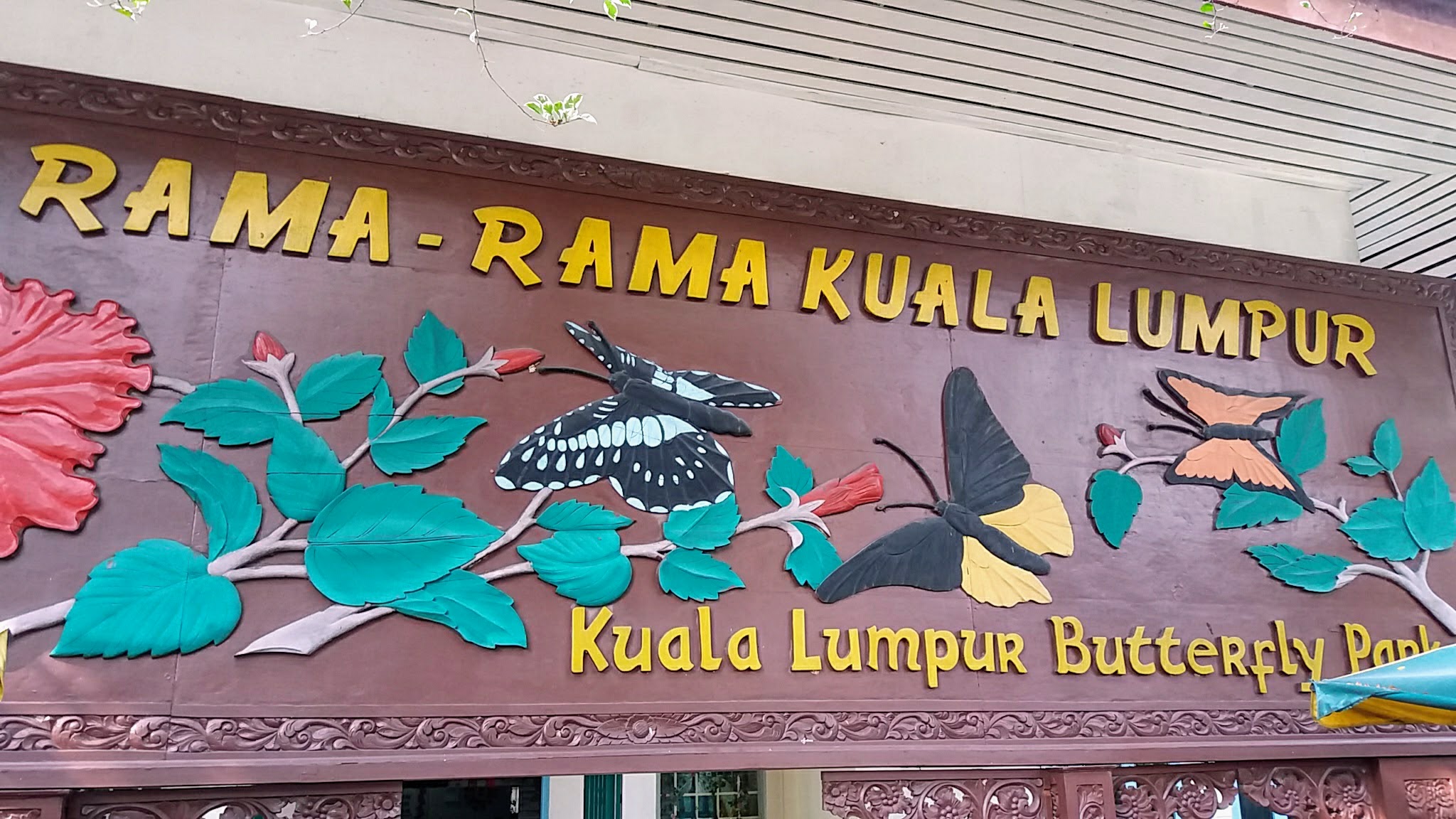
Who doesn’t love butterflies? I don’t have a butterfly tattoo or anything, but I do go all fairy-land wistful when I see them awkwardly flitting through the flowers, and getting to walk around a garden filled with hundreds of them flitting about is always a treat. The KL Butterfly park likes to toot its own horn and claims to be one of the (if not the) best in the world. I think that’s taking it a bit too far. I’m not even sure it’s the best in Malaysia (which seems to have a butterfly park in nearly every city). It is however worth a visit if you’re in KL and love butterflies.

Once past the ticket booth, I walked through a little air lock into an outdoor garden that was covered on all sides by a fine mesh net to keep the butterflies inside. The garden itself was packed full of plants and had a miniature stream, pond and fountain. Although the garden is not very large, there are many tiny walkways crisscrossing within, and it took me an hour to wander all the paths. Because the butterflies are so small, there is a different butterfly opportunity around every leaf and petal. It was impossible to get pictures of the hordes of butterflies in the air, but because the path is so close to the plants, there are countless opportunities to get personal  for some of the best butterfly pictures that will ever grace your album. Not just butterflies, but beautiful dragonflies, crickets and caterpillars too! One thirsty flier even landed on me for a while to sip up the moisture on my skin.
There was a series of aquarium tanks along a few paths, for what I’m not entirely sure. Many were empty and others seemed to be growing fish that might go in the pond later? Once I left the garden and returned to the blissful indoor air conditioning, I got to spend some time in a little museum of sorts that displayed a few more unique Malaysian insects as well as a massive dead butterfly collection on the walls.
I took the opportunity of the little gift shop to soak up some more AC and a popsicle because however much I might enjoy being among the flutter-byes, the Malaysian heat + humidity is rough for those of us unaccustomed. When I felt sufficiently rested, I headed off to the next stop for the day.
The Bird Park

KL has a large green space called the Lake Gardens where several parks, gardens, museums and temples reside. I thought it would be a good place to spend a half day, but I seriously underestimated the effect of the heat. I keep talking about the weather, but it’s because of how knocked down I felt after even just a little time outside. In this case, I had a brief walk over to the bird park entrance since there’s no bus service inside the large Lake Gardens that I could find, and it was too close to take a taxi.
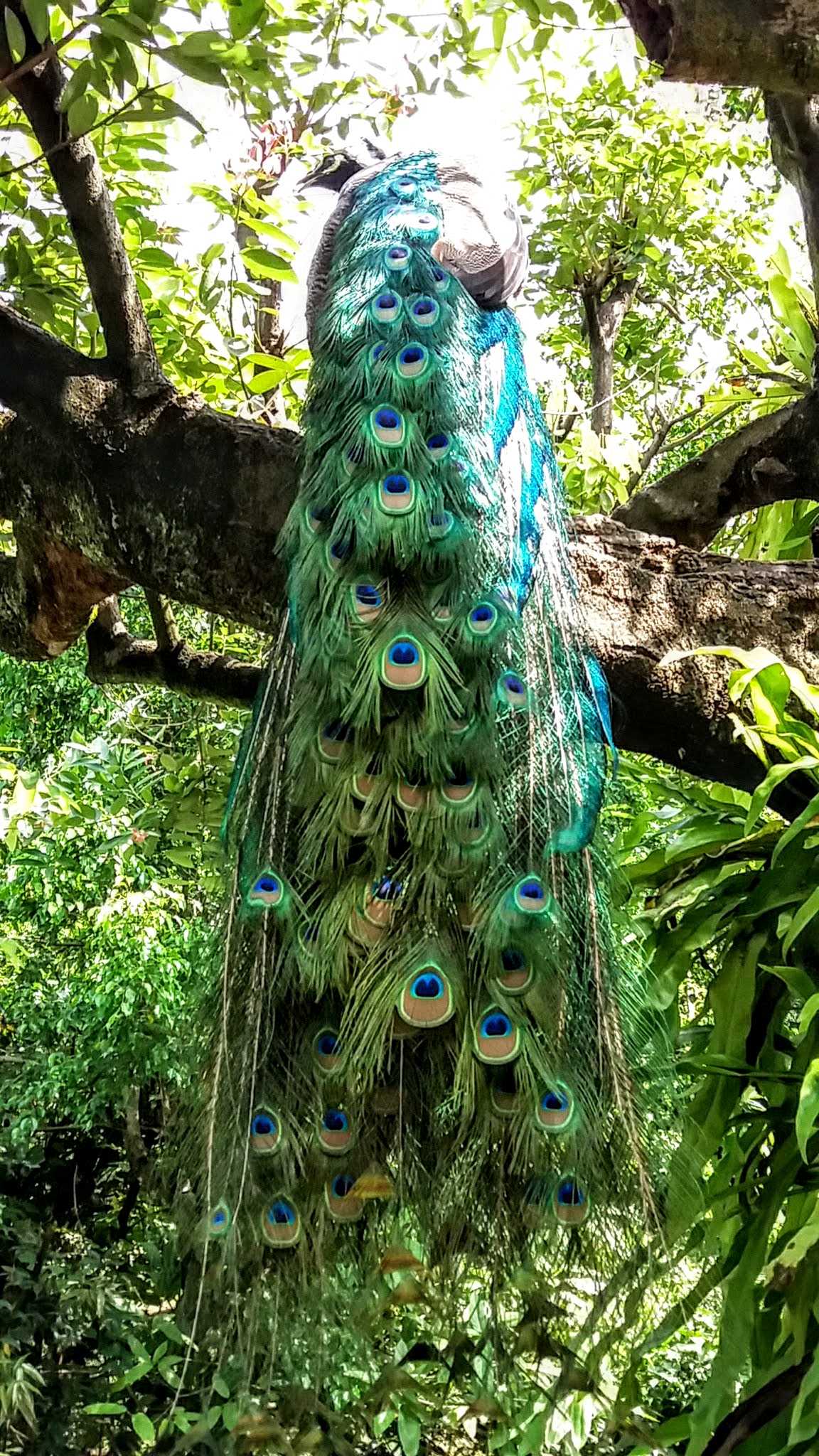 The KL Bird Park is hailed as the “World’s Largest Free-flight Walk-in Aviary” according to their own website. It might be totally based on landmass. That place was HUGE. The openness did allow more airflow than the butterfly park which helped, and there were plenty of shady places to sit down and rest. The whole area is enclosed in netting to keep the birds in. The website boasts a few hundred bird species, but I felt like I only saw a few dozen. There were peacocks everywhere. More peacocks than the gardens of Xanadu. Peacocks on the sidewalk, peacocks in the grass, peacocks walking, peacocks standing, peacocks sleeping, and peacocks perching in trees (in case you forgot they could fly too). Most of the birds that were free to roam were wading birds, long legged and somewhere on the spectrum between stork and seagull. I guess it’s easier to keep birds that prefer walking. The birds were also attracted to the snack areas and waited patiently for food to be dropped or abandoned despite the many feeding stations I passed along the way that were stocked with healthy options for them.
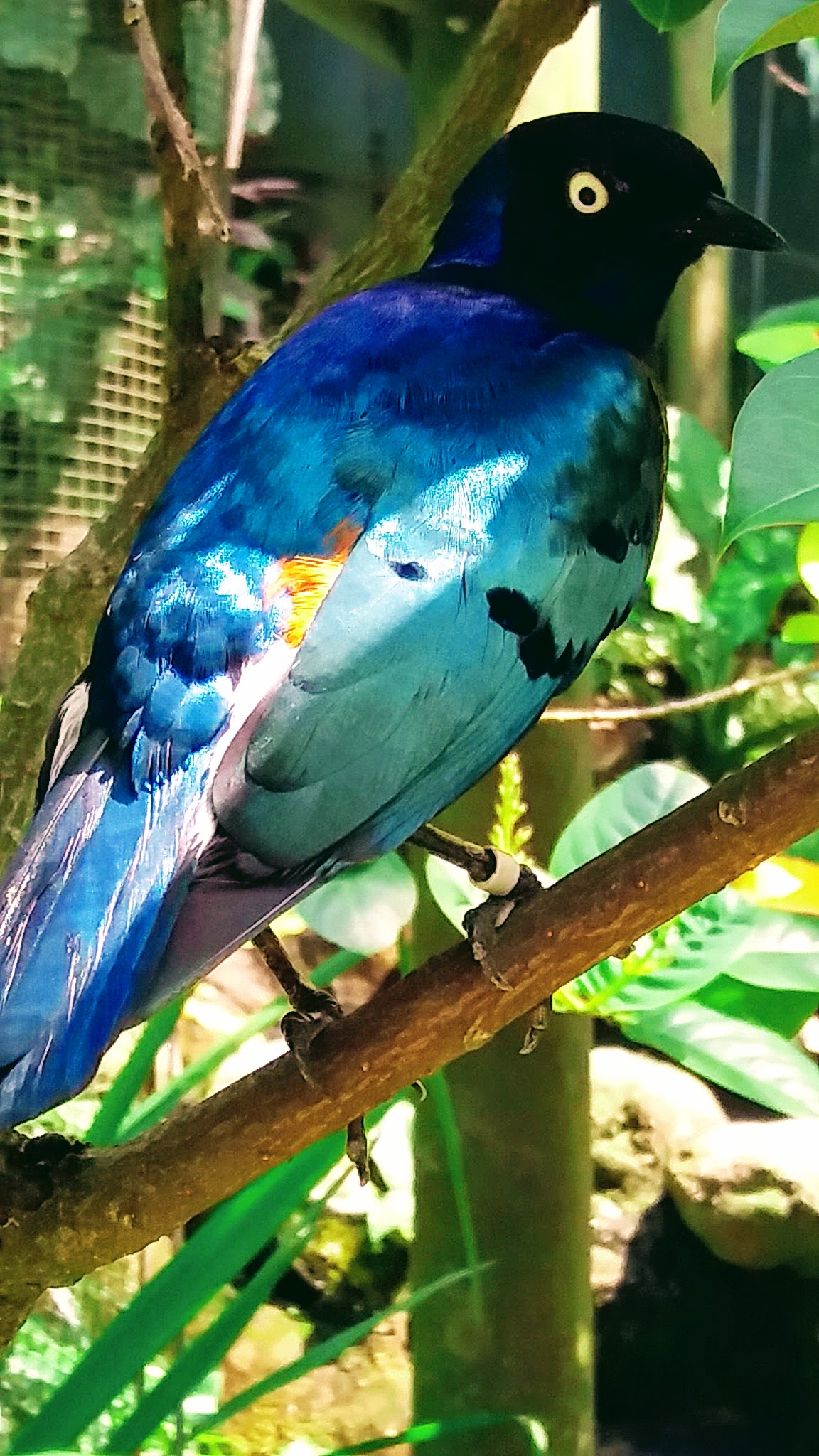 Smaller fliers were in enclosures, many were in aviaries that people couldn’t enter (so more like a zoo), but some were in spaces we could walk through. I caught a snap of pretty blue I-don’t-know-what in one such small garden, and I had a fun time in the parrot enclosure as well. I was given some seeds which attracted several bright and friendly birds over, and I got to help some kids learn how to hold the seeds and attract the birds to their hands. Shout out to Canth? and Tara for helping me learn how to handle larger birds without fear or getting my fingers bitten off.
Travel Buddies
It was while I was helping a third group of Chinese tourists pose with the parrots that I met my interesting Companion of the Day (™). I’m usually the one that gets the “feeling” I should talk to someone, but this time it was reversed. We ended up talking in the parrot house for a while because we were headed in opposite directions, but soon decided chatting was more interesting than the bird show, so we headed back toward the main entrance and the AC of the gift shop. I am still not convinced this wasn’t some weird younger clone creature, because we had exactly the same obscure academic interests (this never happens to me) and had so much fun being big huge NERDS that we shared an Uber back to Chinatown, then got lunch, then walked around, then got coffee and before I knew it the cafe was closing down. “Did you really spend half a vacation day talking school stuff?”, I hear you cry. “Yes!”, I resound. Adventures aren’t just about the places or the things, they’re about the people, too, and people adventurers are fun.
Public Transportation: aka Buses, Trains, and Taxis OH MY!
I checked the train schedule before heading to the station and noticed that the next train was a little after 7pm. I had meant to leave KL earlier, but considered my afternoon well spent, and set off to find the intercity ticket counter (which despite being in the same train station, was nowhere near the city train counter where I’d bought my tickets to Batu). I had to ask directions several times and somehow I ended up on the platform with no ticket and had to get an employee to escort me through the gate and around the barrier to get to the ticket office! (The train station is all one big building inside, but the two ticket counters are on opposite sides of the complex and accessible from unconnected doors on totally different streets) I went to buy a ticket and was told the next available spot was at 11:30pm! Ack! This totally contradicted all the information I found online and left me in a tight spot.

picture of the station, courtesy of Wikipedia
Of course, I could have bought my ticket the day before. I should have bought my ticket the day before, but since I didn’t know what time I’d be finished in the parks, and the multiple websites and blogs seemed to think it was no big deal, I thought I could be flexible. *Sigh* So I asked about buses and got directed vaguely to some nearby office. (nearly everywhere I went in Malaysia people spoke excellent English, but for some reason, not at the KL train station. go figure.) I finally found the bus office and was told the last bus left already (again, in contradiction to all the data I found online before going). These oh-so-helpful bus websites can only be used for booking 24 hrs in advance, so were of no use to me in my moment of crisis.
I asked where these later leaving buses advertised online could possibly be found and was told I had to go all the way back to the bus terminal I’d arrived at from Singapore. Not only was that heartachingly far away, but it was also in the opposite direction from where I wanted to go. More Google-fu turned up the name of another bus station so I went back inside to ask about it and was told, “No that one doesn’t have buses to Ipoh, but I guess you could go to Hentian Duta.” Great! Thanks! I will totally refrain from asking why you couldn’t have told me that 20 minutes ago when I first asked about other buses to Ipoh. So by this time it’s major rush hour traffic and I summon an Uber that takes another 30 minutes to arrive because the Uber app’s GPS put my location on the wrong side of the street and traffic was moving about one car length every 2 minutes.
The driver was a sweet old gentleman though. He was retired and enjoyed driving to earn some spending money. He told me about his kids and some of the other travelers he’d met while driving. We commiserated about traffic and chatted about urban development in different countries. It was a pleasant drive. I hopped out at the bus station just in time to be greeted by some frantic ticket sellers who asked where I was going then rushed me around to buy another non-specific ticket-like piece of paper and shuffle me onto a bus that was leaving in only a few moments. In addition to making me nervous because the ticket I was handed was not accurate, the bus I got on was not labeled, and the people who’d “helped” me had the frantic and rushing air of con-artists, I also didn’t get a chance to use the restroom or get any food (the noodles at lunch were the last thing I’d eaten and it was 7:30 already).

photo courtesy of KL airport website
Thankfully, it all worked out. I was on the right bus, and my ticket (however strangely written) was acceptable. I hadn’t yet gotten used to the way Malaysia does buses, and the dudes who sold me the ticket weren’t on the make, they were just in a rush to fill as many seats as possible before the bus took off. This doesn’t make me less inclined to triple check everything when I buy a ticket to somewhere, but it does make me feel better about Malaysia to know that it’s not teeming with grifters taking advantage of lost tourists (yet).
Flashbacks
 My paranoia about getting the right tickets stems from a trip to China in 2012. I was with two friends who had no experience in the Chinese culture or language, so I was 100% responsible for getting us around. While we were in Zhengzhou with plans to visit the Shaolin Temple, we decided to buy our tickets to Beijing the night before. Unfortunately, the Zhengzhou train station and bus station are quite near each other and not clearly labeled. I do know the words in Chinese for both bus and train, so this was not a simple linguistic error. The signs were just not clear, saying things like “station” and “tickets” without any addendum as to what kind. While I was trying to figure out the right place to go, one of my companions was growing impatient, leading to a rushed decision. I went to a ticket office and asked for overnight (sleeper car) tickets to Beijing and was sold 3 tickets.
It wasn’t until the next morning when we were boarding our bus to Shaolin that I realized we’d bought overnight bus tickets. These weren’t cheap either. Unlike a Malaysian bus ticket where I could have swallowed the 7-8$ if the barkers had been scamming me, the tickets across China were closer to 60-70$. I was frantically using my dictionary to try to find the Chinese word for “refund” when an astonishingly helpful high school student appeared and asked us in impeccable English if we needed help. Jesse (her English name) had been told by her teachers to always look for tourists in trouble as a great way to practice her English. Lucky us! In the end, Jesse managed to negotiate a refund for us, saving the day, but it left me with a solid lesson to always double check the tickets before you buy!
Getting There Is Half the Battle
Thus it was with much relief and not a little hunger that I settled into my seat on the bus to Ipoh. A lot of people I met, when informed of my travel plans, asked me why I wanted to go to Ipoh, exuding the confident belief that there was nothing there worth seeing. This sentiment came more often from Malaysians than from foreigners, and I get the impression it’s a little like asking a visitor to the US, why do you want to go to Kentucky? As visitors we have the benefit of not knowing the local assumptions. As a person who likes a little adventure, I was interested in getting off the beaten backpacker track. I recently read an article about how well trodden the backpacker trail is in SE Asia, and how easily we can find ourselves treading the same trail from one backpacker hostel to the next creating a little micro-climate of expat comfort. Since I don’t live in the US anymore, I may value my expat comfort zones a little more, but I also want to step off the track and see what else is there. I usually consider it an important part of any adventure to go to a place where I won’t see any other people like me.
 With this in mind, Ipoh isn’t really that far off the track. And, mostly for economy, I did stay in a backpacker’s hostel (it was 4$ a night). I had another grand adventure with Uber at the Ipoh bus station. After watching the driver’s little car icon wander around the wrong part of the bus station for around 15 minutes, he had the audacity to claim that he picked me up! I had no way to find him or contact him because Uber still insists on linking all communications to your home country cell number (not great for tourist sims), so I cancelled and took a taxi. I probably paid 2x as much as I should have, but I was just too tired and hungry to care.
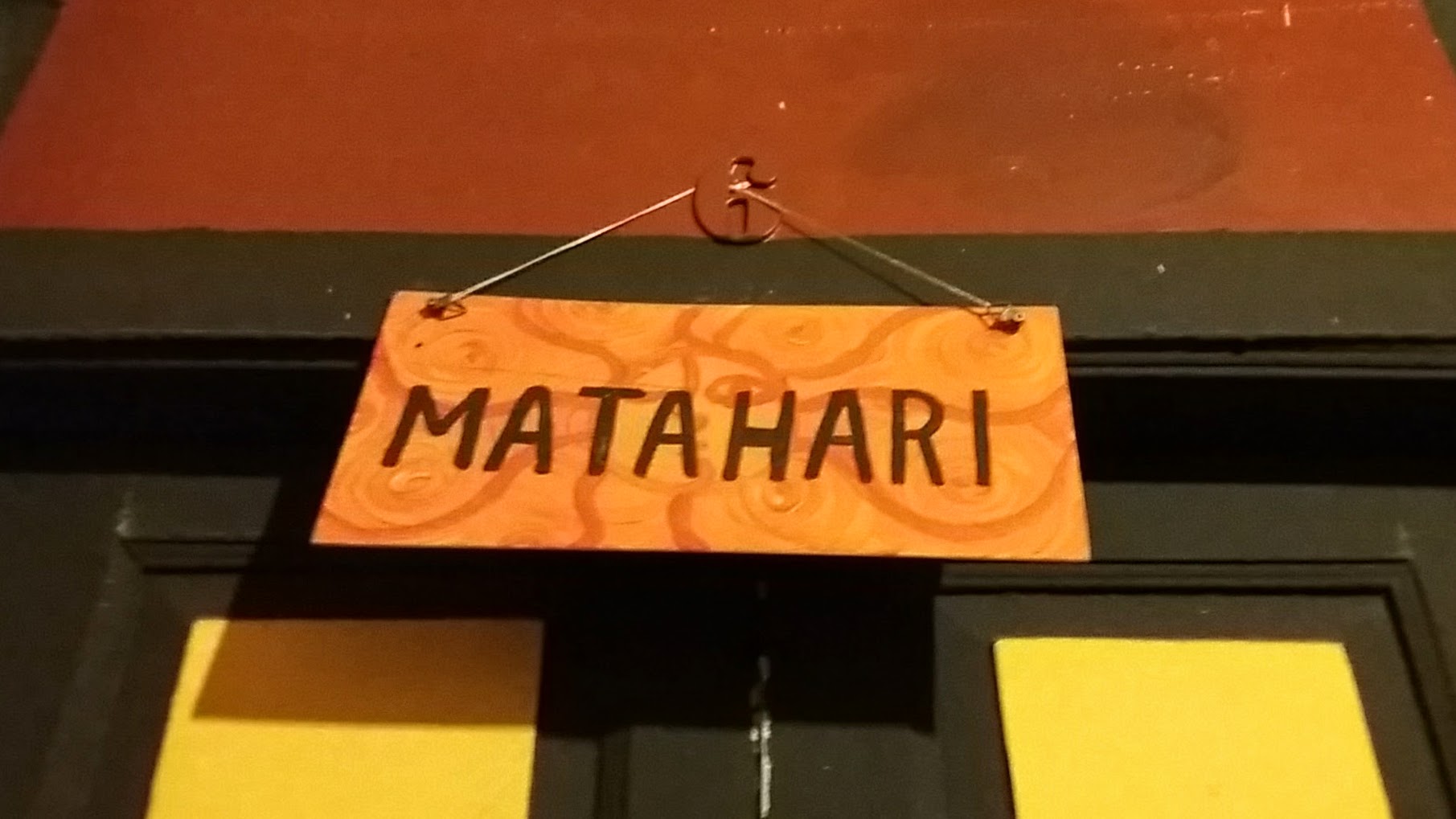 I got to the hostel close to 11pm and was greeted by the amazing friendly staff there who hooked me up with my room key and showed me around. Even though the chef was gone, I was able to get a bowl of something native that I was told translates to “hot and sour”. It was a kind of stew, that was indeed both tart and spicy. And I got a bucket of fresh mango juice. Fresh juice in SE Asia means that they took some fruit and squeezed it when you ordered. It’s magical. The accommodations were reflective of the price point, and while laying on the worrisomely unstable bed, I spotted a rat running around the top of the walls, but the people were truly warm and welcoming, so it’s mostly a good memory. I’m not sure what it says about my life that I ended up sleeping in the “Matahari” suite.
That’s all for KL. Stay tuned for the next installment in which I explore the small, neglected town of Ipoh and it’s strange plethora of temple caves. Drop me a line and let me know how this new photo montage video thing is working out. Should I keep it up or just stick to FB albums? Speaking of FB albums, don’t forget to check out the rest of the photos over there. As always, thanks for reading! 🙂
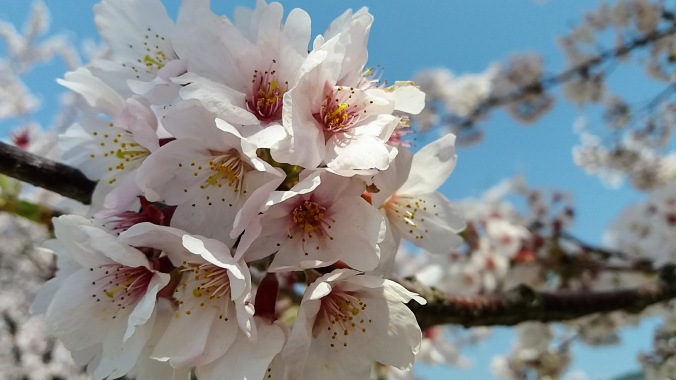
 My school is the first exposure I get to the flowers in spring since I pass by a stately line of a dozen or so trees every morning on my way in. I watched with growing anticipation in late March as the buds swelled on the branches and finally burst onto the scene on the particularly gray and chilly afternoon of March 27th.


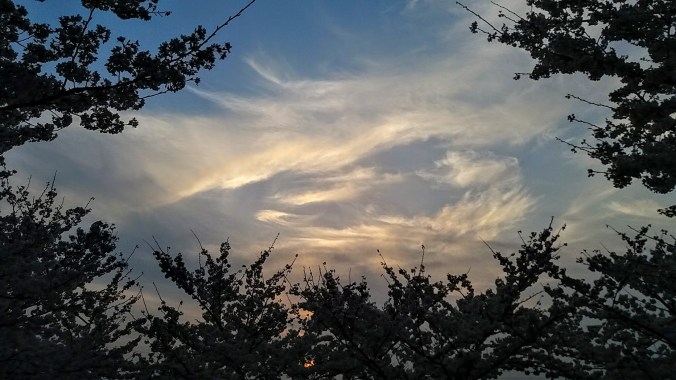
 glorious afternoon in the park.
 Food bonus: Last year I got to try the Starbucks Cherry Blossom Frapuccino, but this year I tried the McD’s cherry blossom soda and the Hoegaarden Cherry Blossom beer. I’m still not sure what cherry blossoms are supposed to taste like, but it’s fun to try all the seasonal attempts to capture such an ephemeral experience in flavor.
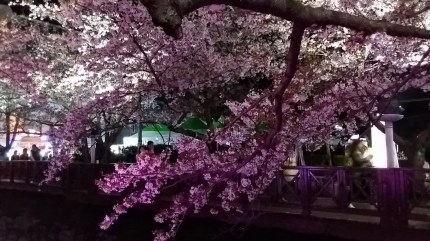 Jinhae is the country’s largest cherry blossom festival. I went
  We left on Friday April 7th. Knowing that the storms might have wrecked the blossoms, we still wanted to go to see the lights, shows, and food. It’s not a long bus ride from Busan and we found
  We were too late to get a seat in the stands, but we watched from the sidelines and enjoyed the music. I had spotted a group of dancers wearing the distinctive hat of my favorite style of Korean traditional dancing. I fell in love with the spinning ribbon hats the first time I watched them
  Next, we headed off for dinner, where I got a repeat of my delicious meal from last year’s festival- whole pig BBQ and dong dong ju (delicious local boozy drink). Once our bellies were full, we moved on to our evening goal of night-time light displays along the river. Along the way, we found more amazing treats: fresh strawberry “latte” (made with homemade strawberry syrup and fresh strawberries in milk, it is what strawberry Nesquick becomes
  when it dies and goes to heaven), and “cherry blossom” fried ice cream. I think it was really vanilla ice cream, but it was shaped like a cherry blossom. When I ordered it, the man took one out of the freezer behind him and dropped it into the hot oil. A minute or so later I had the crispy desert in my hand. The outside was crunchy and a little bit salty, providing a wonderful compliment to the sweet, creamy ice cream inside.
 The most famous part of Jinhae is the narrow “river” that runs through town and is lined with cherry trees the same way the path at Samlak is. Mind you, just about every street in Jinhae is lined with cherry trees, and the mountains around it are dotted with fluffy pink clusters of them, but the river is famous for the density of the trees and the stunning beauty of the blossoms over the water. Plus the decorations. Last year my favorite were the




 The turtle ships were famous for their ability to deflect the arrows and flaming arrows shot by the Japanese that so easily destroyed wooden boats. The shell of the “turtle” is a spiked metal carapace at a gentle sloping angle that was fireproof and arrow shedding. Yi’s
  Guests were invited aboard to explore the ship. Inside it was warm, golden wood. The main deck, which would have been open to the sky on a regular ship, was well lit by a series of cannon ports and arrow slits that allowed the crew to point weapons out while minimizing exposure. There were two small state rooms on the main floor as well, but the captain’s quarters were clearly utilitarian and not anything like the luxury we see in replicas of British ships. The head (toilet) was a series of holes at the aft (back) which opened over the sea for swift disposal.
 Through narrow openings in the deck floor we could see below to the crew quarters and galley. There was a ladder leading up to a small space storage above. Decorative spears and battle drums were dotted around the deck. Cannons pointed outward and oars the length of 2 grown men or more were shipped in racks along the ceiling.
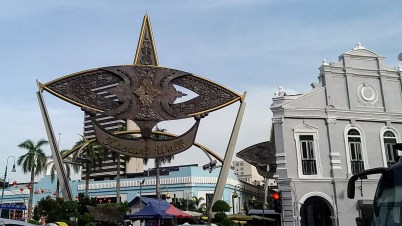 The morning after my late night and less than welcoming arrival, I woke up early, scarfed down my leftover convenience store sweet buns and took off to find the train station that would lead me to the Batu Caves. In recent years, the Malaysian government has added a train stop at this popular tourist attraction, and now it’s much easier to get to. The train itself was a new experience. When you purchase a ticket, you are given a plastic token with an RF chip inside. When entering the platform, you hold the token up to a pad to be read and it opens the gate, but hold on to that chip! When you disembark, you need to feed the chip into a slot to pass through the exit gate.
 I met a tour group on the train platform and we chatted during the train ride. I hung around with them and their guide to hear a few of the explanations offered about the caves. The guide rushed us past the dozens of sales stalls (saving us from souvenir swindles), gave a brief presentation under the statue of Hanuman (the Monkey King) and landed us in the main square at the base of the stairs and the giant golden statue of Murugan (a god of war, made of concrete and painted gold colored). There was a tremendous flock of pigeons in the main square and it seemed to be a major tourist attraction to stand in the flock and have them hop onto your hand to get some food. Occasionally construction in the background caused a loud boom that set all the birds a flutter, which was surprisingly pretty.


 After a few obligatory photos with the tour group and the giant statue, we began the climb. The stairwell is not insanely long, a mere 272 steps. They were so popular as a form of exercise that the government had to ban fitness use of the staircase to keep it clear for tourists and worshipers. With my kryptonite-like response to humid heat, the staircase became a long haul obstacle, but there were plenty of interesting things to stop and look at on the way up, like the expanding view of the courtyard and city below, the rock formations on the cliffs along side, and of course the hordes of monkeys roaming freely through the grounds. Given that the monkeys are wild, I was totally happy to keep my distance, but they were not shy and enjoyed coming right up to tourists or even forcing a showdown over who got to use the hand rails. At one point there were two monkeys perched on twin posts on either side of me and I managed to get a cute double monkey selfie, checking off a bonus square in the Batu Caves tourist bingo.
 When I finally got to the top, I was greeted with a large cave mouth opening that led to an even larger cavern. The entrance of the cave had small buildings installed for souvenirs and police. Once all the way inside, I could see that although this huge open space was graced with a few decorative statues around the edges, it was largely left in its natural state. The cave mouth was wide and there was a natural sky light further on, so the cavern was well lit. There were a few artificial lights in strategic places and an area of worship off to the left. Finally, there was another short staircase leading through to the open area beyond. At the top of those stairs was the rearmost chamber of the cavern, another broad space; however, the roof had long since fallen in and the walls soared up into open air, creating a round room with no roof.


 As I exited the temple section to descend the stairs again, I detoured off to the right to investigate a “dark cave”. The Malaysian government has taken this side section of limestone cave and created a conservation space. The limestone quarries and careless unregulated tourism of the recent past had wiped out a lot of the cave ecosystems. Efforts to restore the guano based ecosystem of living limestone caves are now underway in many parts of Malaysia and this cave was for both preservation and education.
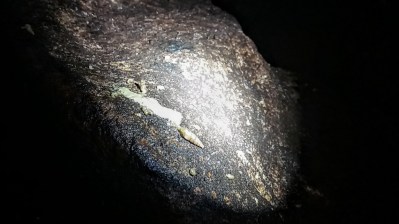 Nearly everything that lives in the cave is so tiny you wouldn’t even notice it if no one stopped to show you. When we see nature documentaries, there’s often nothing for scale, so it’s easy to imagine the animals as being similarly sized to their daylight counterparts. When our guide showed us a picture of the little white snail that lives on the rocks, I imagined a tiny snail, but not nearly as tiny as the ones we found! The biggest of the snails was about the size of a grain of rice, but there were smaller ones dotted around.


 As I descended back to ground level, I passed still more monkeys, several sets of mother and baby wandered around, and some tourists were feeding them peanuts (despite the do not feed signs). I noticed that the dominant males were very protective of their snacking rights and would drive off the mothers aggressively. Of course, no trip to a monkey colony would be complete without a little fornication. I happened to be standing right next to a female when a male walked up, took her butt in both hands and peered at it closely, then proceeded to mount her, much to the shock and amusement of tourists from 6-7 different countries. No, I did not take monkey porn pics.
 Farther on, beneath the looming statue of Hanuman we passed at the beginnging, was the Ramayana Cave. This attraction was much more highly reviewed and was only 5 ringgits to enter, so I decided to give it a shot. There is a stream inside the mountain that comes out and is used as part of a beautiful fountain depicting the chariot of Rama and Sita. If you’re not familiar with the


 but the main floor had a few shops and restaurants. I pulled into the first one I saw and confessed my massive ignorance of Malaysian cuisine, asking the staff for a recommendation. Moments later I had a heaping plate of some kind of fried rice dish that was smokey and pleasantly but not overwhelmingly spicy. Sometimes you just gotta walk on the road that looks more interesting.
 The hallway with the rooms was brushing my shoulders on either side as I walked through and was not wide enough to open the room doors all the way. It was also painted red and gave me a very eerie Twin Peaks vibe. The room was dirty, a soaking wet bath mat on the floor by the door and some kind of horrible mildew meets sewage smell coming from god knows where. I dropped my bags and went back out to the street to find food, but the street stalls were only selling fried things of a questionable nature and I couldn’t see any restaurants nearby. The midnight streets were dark, crowded and very dirty and also had rats scuttling around in the rubbish. I finally just got some yogurt and bread from the convenience store and went upstairs to sleep.
 After an incredibly full first day in Singapore, I had a much lighter day of temple viewing planned before I hopped on the bus to Kuala Lumpur in the afternoon. It’s never hard to wake up in a dorm hostel, since everyone else is waking up, too. After packing up and enjoying another cup of teh tarik, I headed out to catch the sights. The night before, I’d run across a giant rooster in the street (in anticipation of the impending lunar new year holiday), so I did a quick rerouting to pass back by in the light of day. Chinatown was already putting on a decorative show two weeks before the holiday; I can only imagine how crazy it was on the actual holiday weekend.
  In addition to the stunning decorations, I passed by a street artist sitting in the shade of an overpass and working on the beginning of a painting of the festivities. He was kind enough to let me take a photo and we wished each other a happy new year in parting.
 After breakfast, I headed into the temple. I generally don’t wear short shorts, and while I go wear sleeveless in heat sometimes, since my plan for the day was temples, I was dressed appropriately. However, for the tourists who weren’t, a staff of firm but polite people arranged for them to wear long skirts or shoulder wraps from a shared bin. Once past the main entrance, I walked into a smaller room where two monks were performing a blessing on a couple donating to the temple in a red envelope (traditional for money gifting at the new year). As I watched, I realized people around me were taking photos and video and I was surprised. I looked around for any signs about cameras, but there were none. It seemed that the temple allowed visitors to take pictures. It felt very strange taking pictures in a temple, and in the end I could only take a few before my sense of unease overcame me.
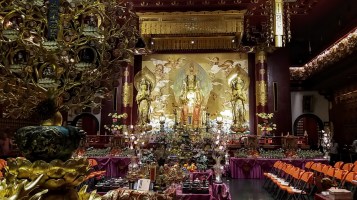 The main hall on the ground floor was an ode to opulence. I’m used to Buddhist temples being ornate. Wood and stone carvings with intricate detail are common (though never boring). Paintings or works in colorful semi-precious stones, and even the occasional gold paint or gilt covering to add some shine. The point is, that I’m used to temples being about effort and time and skill, rather than about blatant displays of wealth. In fact, a common art form is the sand mandala, which is made over weeks or months of painstaking hand work, then wiped out to represent the impermanence of reality. I don’t have an issue with beauty in a temple, I go to temples in part because they are beautiful, but something about this temple and it’s over the top gold, it’s donation jars every few feet, and it’s designated VIP seating for supplicants just did not sit well with me.
 I found the elevator and went all the way to the roof to see the orchid garden. That at least was in keeping with temple life as I think of it. Although orchids are rare in the world, they are common in Singapore and the difficulty of their cultivation reflects the work that monks and nuns put in as part of their practice. Below the gardens, the top floor contained the relic for which the temple is named, a fragment of the Buddha’s tooth. It was also the only room in the building where shoes and cameras were prohibited. There were dedicated meditation mats along the windows where a few people were sitting in silent contemplation, and there was another large gold display.
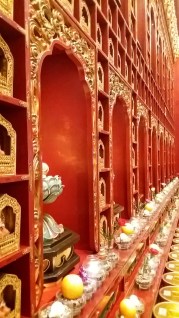 I’ve seen American “mega-churches” that have gold plated elevators and preachers with 5 cars and 3 houses and a minimum annual income requirement for membership. These also disgust me and I often wondered how any Christian could justify that kind of obvious money-grubbing and wealth favoring within their doctrine. This was the first time I’d ever seen a Buddhist “mega-temple”, and it was awful. It made me feel ashamed to be associated with the faith. It made me want to run around to tourists and exclaim “that’s not what Buddhism is about!”. It made me want to drag out some scripture and ask the people praying there if they’d even read it. And for just a moment, it made me think about Terry Pratchett’s Yen Buddhists, whose main theological argument is that:
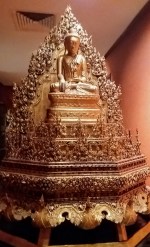 I headed down to the third floor to see the museum, which was a worthwhile collection. It was a nice museum of Buddhist art and man-made relics that included a sort of “intro to the Buddha” story on signs around the displays. Like the rooftop garden, it felt far more authentic and enjoyable. The relics were primarily stone, clay, bronze or wooden and had clearly been the result of effort and craftsmanship. Although the extraordinary focus on Guan Yin and the Maitreya was a little overwhelming, it did point to the fact that the temple’s own branch of Buddhism was a salvific form that relies on Bodhisattvas and future Buddha’s to save the world, rather than on the practice of self cultivation for individual enlightenment.
 The second floor had a nice place to rest, which I desperately needed. Adjusting to the heat and extra walking was taking a toll. It was such a great contrast to my energy level in New Zealand where the weather was cool. Just minimum exertion in a hot humid climate seems to drain me like a marathon! After a rest and a look through the last floor of displays, I made my way back to the ground floor, once more shaking my head at the ostentation, this time walking past the VIP seats they were filled with supplicants who had paid I’m not sure what to get past the velvet ropes. All in all, I’m still glad I went to see it, because I learned something about the corrupting properties of money. All temples ask for donations to help feed the monastic population, pay the basic bills, and to provide services to the community. Money is, in this world, unavoidable. However, when a house of faith relies on wealth or doles out blessings for cash or claims that the donation of great wealth is a higher holy act than living a good life, that’s corruption.
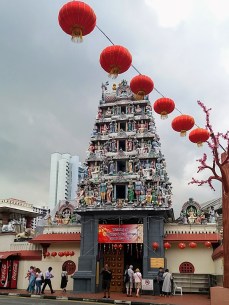 After the Buddhist temple, I took the short walk two streets over to see the oldest Hindu temple in Singapore: Sri Mariamman. This humble wooden structure was not a display of wealth, but was still anything but plain. Wooden carvings covered every inch of the outer facade and were brightly painted besides. Anyone was welcome to enter, leaving their shoes behind on racks on the sidewalk. There were saris for anyone who felt inadequately dressed, and while we were free to wander around the grounds barefoot, the main areas of worship were cordoned off, not for a fee, but for the faithful. I am not a Hindu, so I contented myself with observing from behind the lines. The interior of the temple is a large courtyard with smaller buildings, each one dedicated to a different divinity. There are over 330 million gods in the umbrella of Hindu faith, and while only a couple dozen are among the most popular, it can
  be hard for a layperson to know which altar is for who. I found 10 names of deities for this temple on it’s
 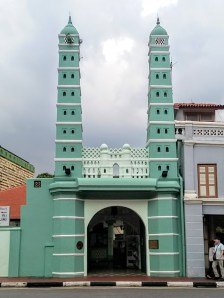 couple city blocks, I had passed 3 major religious buildings, and I knew from the map that a Christian church was not far off. Curious, I looked around the map for a synagogue and found one a little over 3km away, and it was neighbored with another church, Hindu temple, and Buddhist temple. It seemed that it wasn’t hard to find a spot in Singapore where at least 4 out of the 5 major world religions shared a small space and yet no one was getting blown up, shot or even harassed on the street! While I’m sure that Singapore’s strict legal code has something to do with the lack of violence, I like to think that pluralism in the culture helps everyone to get along. People of other faiths or cultures seem less scary when they are our neighbors and not “those others”.
 As I got out of the taxi, I walked past a peacock that had either escaped, or was deliberately placed at the entrance for effect. The bird seemed unperturbed by the traffic. Even though I was a little early, the courtyard was packed full of tour groups and I had trouble pushing my way through to an info counter just to find out where to go. I stood in a long line as we all had our tickets scanned and everyone streamed into the Night Safari like the opening bell at Disney.
 I had missed the first fire show at the opening, but since it happened every hour until 9pm, I wasn’t too worried. I headed instead for the animal show at the advice of one of the zoo staff. This was just as well because the lines for the tram were insane. Being a lone traveler is sometimes advantageous, like when trying to find a seat in a crowded theater. I wedged myself in between two families in a fairly good spot and sat down to watch what I fervently hoped would not be an exploitative performing animal show. I was not disappointed. The “show” was largely animals being brought forward while the main announcer talked about the species being shown. There was humor and a few animal tricks, but these involved a large cat leaping, a raccoon going through a “garbage can”, and an otter doing some recycling (which may be one of the cutest things I’ve ever seen). The last one led into a great discussion of what happens when urbanization encroaches on
  animals habitat and on what we as humans can do to help better preserve the environment. I know some people might think it’s a little preachy, but I was personally gratified to see the zoo using it’s platform of animal entertainment to help educate visitors on conservation and preservation.
 ake in the fire show. Although the zoo website makes it seem as though this is some kind of traditional tribal fire dance, in reality it is a modern dance with a totally made up tribal sounding name. It was still fun and pretty, just not particularly traditional or historically accurate.


 Shortly after parting ways with the helpful Nigerian, I walked past what appeared to be a large open air food court. There was a roof and fans circulating air, but the entryways were wide open. There were dozens of food stalls from different nationalities, and tables to sit at between them. I went to one stall to get a fried oyster omelette and another for an iced coffee, then sat down to enjoy them. The omelette was a bit odd. In addition to eggs, vegetables and oysters, it turns out this dish is cooked with a variable amount of tapioca, potato, and/or rice starch. This just goes to prove I should have read more about the food before going, because the gooey texture combined with the heavy oil meant that I only ate about ¼ of the dish before I couldn’t eat any more. The coffee, on the other hand, was intense and amazing. I didn’t know it at the time, but Malaysian style coffee is different from other coffees around the world. I’ll explain more when I get to Ipoh, but for now, suffice it to say I was pleasantly surprised.
 After breakfast, I passed by all the tall financial buildings and came to the Marina. This beautiful stretch of waterfront goes on for ages with a wide and clean walking path. I came across a shopping mall on my way and decided to head inside for the AC and maybe a restroom. The Nigerian man I’d met advised me that if I ever felt too hot in Singapore, I could just walk inside any building to get some cold air. The mall was nearly empty, which is not surprising for a weekday morning, and I managed to find a 7-11 to get a cheap sim card (less than half of the airport prices). I also got called in to have a sample at two separate skin care shops. The first was a supernaturally charming young man who probably got nearly every woman he met to spend too much money on his skin care products. We chatted and tried out the product and eventually I had to demure from purchase, but he was gracious about it and said he’d had fun talking with me. The second shop was a Malaysian woman who was wonderful and gracious and kind until it became clear to her that I had really meant it when I said I wasn’t buying anything, and then she turned rather sour. Both shops products were in the hundreds of dollars range. It was somewhere around here that Singapore started to remind me of Dubai.
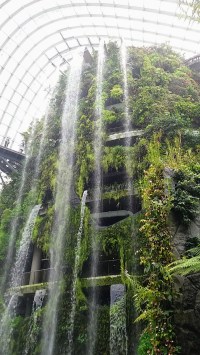 I walked more dockside paths and came across a science museum, more flowers than you can sneeze at, and finally some signs pointing to the garden path that was lined with sculpture, topiary and colorful blossoms. Although the Super Trees were my main goal, by the time I arrived at the park’s center, I was hot and tired. I noticed a cool breeze coming from the doors of one particular building and resolved to go inside that. The building was one of the two indoor gardens, this one called Cloud Forest (the other was closed for renovations). It was a massive greenhouse designed to house the ecosystem of a cloud forest, and so not only had pathways winding through beautiful flowers at ground level, it had a miniature mountain in the center that one could ascend and walk around via a series of skywalks that simulated viewing the forest from cloud level and treetop level.
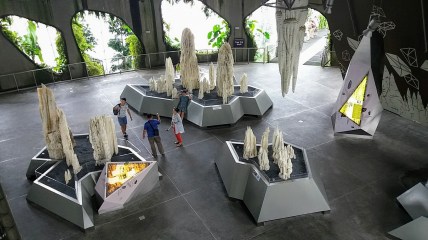
 The time of clouding was approaching by then, and although the main path did not lead back upward, it wasn’t crowded, so I hopped into the elevator and rode back to the top. I get the impression that in more crowded times, the elevators might be more strictly regulated for the disabled, and the paths through the greenhouse lead firmly one way, but it wasn’t crowded and no one seemed to care if we went the opposite direction. Shortly after 2pm, the skywalk began to issue forth a mist as I set out for my second walk on the sky bridge and was able to enjoy the altogether different view as the fog enshrouded the walkway and the mountainside below.
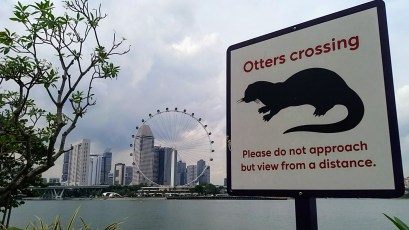 Nonetheless, the entire area of the marina is beautiful to walk through. I spotted some otter crossing signs, which are apparently no joke. The environmental reconstruction along the marina has enabled the local otter population to bounce back and they are often seen on the shores near the walking paths in the evenings. Sadly, I didn’t get to see any that day.
 After lunch, I decided i should go find the super trees. It was getting on in the afternoon, and I still had to get across town to the Night Safari for my 7:15 ticket. Although the tall and unique structures can be seen from nearly anywhere in the park, it took a little effort to find the right walking paths to get to them. There are two groves of supertrees, the smaller has only three, which at the time were undergoing a pre-lunar new year makeover.
 Eventually, I found the main grove and purchased my ticket for the sky walk. This is a little walkway that is accessed through an elevator in the “trunk” of the trees and lets you walk around the super trees at a good height to both admire them and the overall view of the gardens below. I had a nice walk and an even better view as well as some pleasant conversation with another traveler. No matter how nice the view is, I think my favorite part of traveling is meeting cool people.
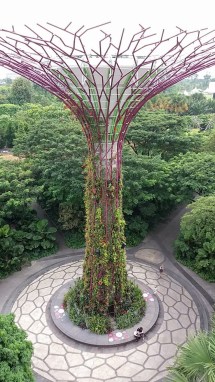 The super trees aren’t really trees. They’re man-made structures that sort of look like giant alien trees. They run on solar power and support a large amount of plant and animal life. Plus they light up at night, which is pretty. The super trees are urban art, but more than that, they are a way of combining city and nature and of providing a space for the plants and animals that would otherwise have been disrupted, or even endangered by the urbanization of their homes to have a place. The super tree grove helps to act as a greenspace, cooling and cleaning the air naturally, as well as collecting solar energy and rainwater that are used in running the indoor gardens. It’s basically a big experiment to see if a city can be a modern urban environment AND maintain a natural ecosystem in an economically sustainable way. I hope it catches on. More cities should have giant trees, beautiful flowers, and river otters.
 costumes (paper dolls), and make their superhero names using a handy 5 point chart I made up of titles, colors, powers, animals, and gender endings. I took pictures of them and added superpower effects, and made a video of them singing and introducing their superhero alter-egos (which I unfortunately cannot share with you because of my teacher confidentiality agreement). It was fun, it was all in English, and I only had to call the Korean teacher once when some boys decided to draw penises on their superhero paper dolls(*sigh). On the last day we made chocolate cake in paper cups in the microwave and had balloon races. Overall, it was a good start to the new year.
 The second half of January was my 2 week winter vacation. I decided to go to the Malay Peninsula and do a whirlwind tour of Singapore, Malaysia, and Thailand (but only the peninsular parts). I’m working my way through writing, editing and adding photos to the whole 12 day adventure which will go out to the blog and FB page soon, so I won’t try to summarize it here. Suffice it to say that the vacation may have foreshadowed more ominous things, since it too started out with so much promise and enjoyment, yet ended in a total emotional breakdown of epic proportions.
 nd an inlay in two different teeth, and that the root canal would take 4-5 visits to the dentist to complete. Thus began my endless dentist torment.
 year, that meant that most of my friend pool were other first years. I had thought they were going to stick around, but events conspired in such a way that meant I spent the end of February going to/throwing farewell events and helping my friend pack/get rid of stuff.
 I had barely an opportunity to say hello to the new teacher at my main school and none at all to visit the second school. Despite the fact that classes would commence March 2, the new teachers avoided talking with me about lessons, or goals, or expectations. I began to get anxious, and reminded myself that newly arrived EPIK teachers wouldn’t meet their co-teachers until the new school year began, but I also had to wonder how many fresh off the boat foreign teachers would be paired with inexperienced Korean teachers. Was I getting extra newbies because of my experience or was it really random?
 Then at long last, a much anticipated event which I had spotted back in January finally arrived. A glorious yoga retreat at a spa resort in the mountains! What could be a better way to ease my stress and restore my resilience than such a wondrous weekend. The day before the retreat, I woke up with a cold… sore throat, stuffed sinuses, whole 9 yards. With little sleep and much mucus, I arose early Saturday and set off anyway, hoping that some meditation and spa therapy would at least help a little. And it might have, had not absolutely everything been a crazy misrepresentation, mistake, flake, or flat out disappointment. I haven’t even decided if I want to blog about this trip because it was so awful, I can’t find a way to spin it for the “life lesson” or “silver lining” even though that was the name of the organization that presented the event.
 Did I mention that during all this time, my tooth, the one that I’m getting this infernally long root canal done on, is in pain? The dentist has twice left me in pain for over a week with no medication, leaving me to struggle on through life with a dull throbbing ache in my left lower jaw and the total inability to chew anything on that side. Even now that the root canal is supposedly “over” (4 sessions later) and the process to install a crown can begin (minimum 3 sessions), my tooth hurts day and night and I have to wait to find out if it will be treated or not until my next appointment. But hey, my hair dye arrived, and it’s a smash hit.
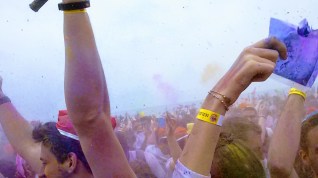 And Holi Hai is coming, which is the Indian festival of colors where we all dance around and throw colored powder and paint on our white clothes while rocking out to Boli-rock or Indo-pop on the beach. I did it last year and it was awesome, so I was really excited to go again this year. And yet somehow, people are trying to ruin that too. Two factions of the local Indian expat community have started a turf war over the holiday and who gets to throw the party. They’re trashing each other on social media and trying to drag all of us as well as the local Korean government into their feud. I’m still planning to go, but I will have an escape plan in case they start physically fighting over the microphone or DJ station. I don’t know what they were trying to do, but all they’ve really succeeded in doing is demonstrating their total lack of Holi spirit. Festival of love, guys.
 Green tea looks like very well kept English hedge,.
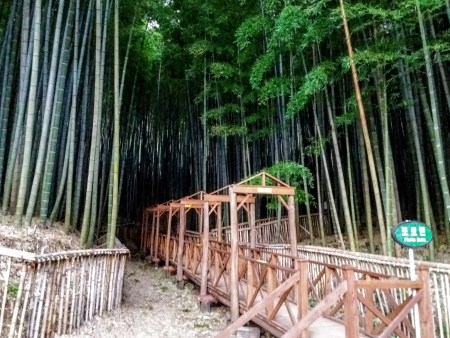 On our way back to the main entrance we took a quick side detour to the bamboo forest. After a short walk through some more evergreens, we emerged into an open space facing a dark and mysterious bamboo forest. The sun was low and the shadows were long so we couldn’t see far into the mass of stalks. Once we entered, it was as though a twilight had encompassed us, the lush leaves cutting out nearly all the late afternoon sunlight. The birds went bananas, screaming like jabber jays, making us feel as though we were in an arena from the Hunger Games or at very least in an ominous Korean horror movie. I wasn’t sure if we should expect kung fu masters or monsters. (click for more pictures of Boseong
  We left the tea fields behind and headed back down to the main parking lot that would lead to the lights. There were plenty of stalls with a wide variety of food (green tea added and regular) so my allergic friend was able to find something tasty, too. The light show wasn’t quite as spectacular as
  dragons and hatching out of giant glowing eggs along the way. Like most lantern displays here, everything was meant to be posed with and interacted with, so it was easy to walk up to any set and play around. It’s a small and childlike pleasure, but after so long in the US being forced to stay behind the railing, it is fun to get a little more hands on. On the way back down, we took the tunnel of lights, pausing every time the colors shifted to take more pictures and pose in the rainbow glows.
 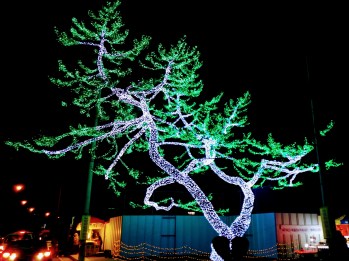 Our third and final location was near the beach where another tunnel of lights and light decorations had been put up. One large tree had been colored in white and green to make it look like it still had leaves. There were reindeer and Christmas trees, but also a giant chicken floating just off shore. I’m not sure why a chicken, but I saw another similar giant chicken in the sea back in Busan the next day.
 The next Saturday was Christmas Eve, and we decided we needed to do a blending of American and Korean activities. We spent the afternoon inside making eggnog and gingerbread houses. I have never made eggnog before. I thought about it a lot, especially when I wasn’t doing dairy. I thought there had to be a better tasting nog than Silknog. But somehow, I never got around to it. This year, although I seem to have no health issues with milk here, there was a complete absence of nog… everywhere… Koreans either have never heard of it, or they are all in the hate eggnog camp.
 based on past non-dairy culinary experiments, I’d say if you’re a dairy free nog fan go with unsweetened almond milk and coconut milk– the stuff in the can that is dense and creamy, not the stuff that is a regular milk sub.– Use 2c almond milk to 1 c coconut milk, otherwise just follow Alton’s instructions. If you’re a vegan who wants
  While we imbibed our culinary delight, we worked on assembling a gingerbread house. Every month here in Busan there is a
  In addition to our delightful wine, I enjoyed pumpkin soup, a goat cheese/bacon/honey pastry for entree, a superbly well cooked slice of salmon with a light lemon flavor and a unique mushroom risotto which had been made into a breaded patty and lightly fried, and finally a chocolate pear cake that tasted more like it was a ganache or very dense ice cream rather than a cake, too decadent! Nothing will compare to the food in France, but Le Jardin made an admirable effort and gave us all a taste of Western flavors with just a hint of haute cuisine that was perfect for a holiday feast.
 Toward one end of the festival, I found an old man with a traditional candy game called ppopgi. It’s a simple candy made from sugar and baking soda, but a shape is pressed into the candy. Kids (and a few adults) can use a little pin to try to break the candy around the shape without shattering the brittle sugar. If they succeed, they win a prize (often more candy). The vendor was using a tiny copper pot to melt sugar over an open flame, adeptly pouring out the steaming satiny brown concoction, pressing it flat onto a popsicle stick and letting his fares choose their shape before pressing a cookie cutter down on the hot surface. I noticed that while adults had to be perfect to win, the little kids were often awarded a prize for a good effort.
 A mere week later, the New Year celebrations were upon us. I had done some research and found that here in Busan there is a bell ringing ceremony in Yongdusan Park at the large bell at the foot of the Busan Tower. It’s a big event with musical performers and guest speakers that is televised much the way that the New York Time’s Square ball drop is. Yongdusan park is nowhere near as big as Time’s Square, and the majority of people don’t ascend the multiple flights of stairs until 11pm. Knowing we had plenty of time, we spent the day reveling in some seasonal sulbing, a screening of Rogue One, and a totally accidental Japanese dinner.
  Nonetheless, it was a wonderful day and at 5 minutes before 11, we found ourselves in a long line of people patiently trudging up the stairs to the peak of Yongdu Mountain. Normally, this pathway has a series of escalators going up so that anyone can access the park, but tonight the escalator had been closed down and reserved as a dedicated emergency access stairwell. When we arrived at the top, we saw many TV vans and we shuffled with the crowd into the standing space behind the VIP seating. To my surprise, through crowd motion, we soon found ourselves close enough to the bell to get a decent view of the proceedings, and there was a jumbo-tron screen off to one side that allowed us to view the performances.


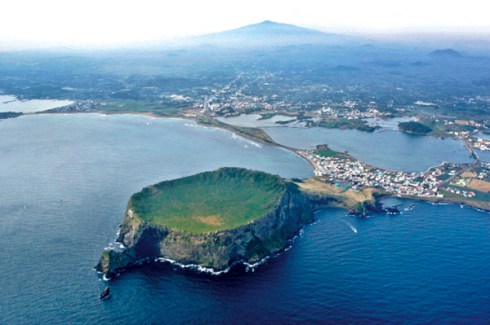 The weather was once more gray and drizzly, hot and humid, but with some sleep, breakfast and coffee behind us, we were enthusiastic to hit the road. I had done a bit of research on the crater that morning because of how the walk around the waterfalls turned out. I found some bloggers who claimed it was a 20 min walk if you just went straight up and about 40 minutes if you were a slow hiker. (it still took me about 45 that day). I felt better prepared for the hike ahead, but then we arrived late due to heavy traffic.



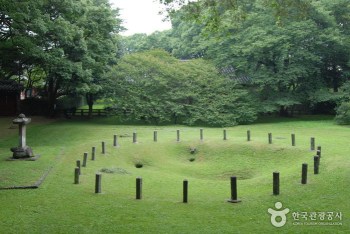 According to the legend told at the temple, the first inhabitants of Jeju Island were three demi-gods who came to earth in a great flash of light and energy, and emerged from three holes in the ground. The temple is built on the site of these three holes, and no matter how much it rains, the holes never fill up with water. The demi-gods were named Go (
 After watching an informative film about the history and mythology of the shrine and the island, we wandered through the paths in the quiet woods. There are almost 1000 trees in Samseolhyeong. The other buildings included the museum where dioramas of the myth were displayed along with some of the original writings and ceremonial clothing from the earliest rituals performed starting in 1562. Additional alters, shrines, dormitories and halls were added over the years, but most were destroyed during Japanese occupation. Although the site of teh three holes is the same, the modern temple complex was rebuilt here in 1970. The walk through the trees was a refreshing break from the hot and humid weather. We admired many bangsatap (small stone towers built for luck) and more than a few dol hareubang (the stone grandfather statues that are the iconic image of Jeju).


 There were 3 special rooms along one wall of the second floor: the red clay room, the amythest room, and the gardenia room. The rooms had little doorways and were quiet and dark inside. Places where people sat on mats or lay with their heads on wooden blocks to relax or nap while enjoying the atmosphere. The red clay room was warm, but not quite sauna warm. The walls were red clay and it resembled the inside of a clay oven. I don’t think I could have stayed for long in the heat anyway, but we were driven out by one man’s snores before that. The gardenia room was a truly sauna level of hot. There was a stong floral (presumably gardenia) smell in the air, but the heat was too oppressive. My bare feet singed on the floor as I hopped to a reed mat for protection. There were many women sitting on the mats but the air was too hard for me to breath for long and I hopped back out without even sitting down.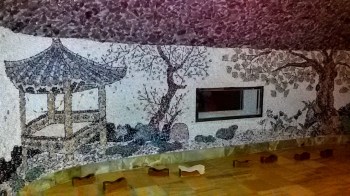
 Gallivantrix