A Head Trip (Therapy Books Cont. 2021)

I had a plan to go through my books in order of reading, and that plan has, like so many before it, fallen totally apart. I am working on writing up thoughts and reflections on everything I read in 2020, but I’m still reading, and it seemed really easy to just write up the books as I finished them rather than to go back and remember. Plus, going back and remembering made me feel like reading those books again. Which I’m also doing, in between the new ones. So, to heck with linear time. I’m just going to put these posts out as I am able and try to put some temporal context in the beginning, like those movies that jump back and forth from “now” to some past which will maybe explain how we got here.

The Tao of Fully Feeling, Pete Walker

After re-reading CPTSD Thriving to Surviving, I realized I have a deep appreciation for this author. The Tao of Fully Feeling is a much earlier book by him, and he mentions it a few times in CPTSD, mostly in terms of what he felt he has learned since then, and things he wishes he could have included. I feel like reading them “backwards” was a good choice because I got to read Tao with the author’s hindsight in mind.

There are obvious similar themes dealing with childhood trauma and it’s effect on us as adults, but this book focuses on one main message: feel your feelings! This resonates with me because Brené Brown’s TED talk on vulnerability was a huge turning point for me in 2012 when I had been pummeled into a terrible life condition by an abusive relationship and ravaging illness back to back from 2004-10. I had started to physically recover in 2010/11 and by 2012 I was done wallowing in pain and decided to do something about it. Learning how to regain access to my genuine emotions was a huge step because we cannot, as Brené says, numb selectively, and if we want to feel genuine love, joy, wonder and other positive things, we must also allow ourselves to feel anger, sorrow, pain and other less pleasant feelings.

Things I particularly liked about the book include the myriad ways he gives examples of what kind of damaging behavior he is talking about, the way he is open about his own experiences without suggesting any need to compare experiences (it’s not the Pain Olympics, after all), and the absolute validation to go ahead and BE MAD. Grieving the loss of love, the death of a fantasy of parental security, the loss of who we might have been if we were not treated this way, the pain, the injustice… feeling all of that is important. He talks about how to feel and express the emotions of anger, sadness, grief, etc in healthy and cathartic ways, and advises on how to avoid expressing those emotions in ways that could harm ourselves or those around us.

Forgiveness

Walker approaches this concept from the goal of processing trauma, healing enough to curtail the damaging behaviors it causes in us, and learning to forgive. That last part is a little tricky. Walker himself was urged to forgive his abusive parents before he was ready, and it caused more problems than it fixed. He advocates against “false forgiveness”, and includes in that when we delude ourselves into wanting to “forgive and forget” in order to move on without doing the work. He says we have fully feel our anger, sadness, and blame impulses in order to process them. Suppressing the pain of past actions just means that pain stays around and sneaks out of us in messy and unexpected ways. He also stresses that forgiveness doesn’t mean we start talking to people who hurt us. Finally, he underscores the importance of forgiving ourselves. Many adult children of abuse, emotional distance, or neglect have internalized blaming ourselves for what happened to us. A critical part of recovery, Walker states, is forgiving our past selves for assuming and perpetuating that self-blame.

Generational Trauma & Empathizing With Your Parents

This is also the only book I’ve read so far that addresses the parents themselves as something more than merely the deliverers of trauma. He talks about discovering his parent’s own history of childhood abuse, and further, his grandparents’ painful youth. The generational trauma that goes back untold centuries can cause us to suffer for the abuse our great great grandparents suppressed and repeated. He acknowledges that we can have empathy for our parent’s extenuating circumstances (they were badly abused, they didn’t have any positive parenting examples, they did the best with what they had, but were pretty damaged themselves) while still being angry and sad that we were mistreated. Feelings aren’t simple and we can and should welcome ambivalence into our lives when it’s called for. There’s even a small section of the book directed at such parents who were both the victims and perpetrators of abuse/neglect on how they can work on healing themselves and on helping their adult children. The book ends with a helpful if not comprehensive list of things we can say to our children (inner children or the next generation) at different developmental stages to help them grow up feeling seen, heard, and loved with a strong sense of self-worth and curiosity.

The “Good Parent” Fantasy

My personal ah-hah moment in this book was realizing how it was possible for me not to see what my mother was doing for SO LONG. Walker explains that because children are so fully dependent on parents not only for physical security, but for emotional connection, self-esteem, and intellectual development, that young children simply can’t accept that their parents are unloving or cruel (intention on the part of the parent is pretty irrelevant at this stage of child development). As a result, young children develop intense defense mechanisms to simply not see or not remember when a parent acts in a toxic manner. Most children with early trauma have massive memory blocks that can last from birth to 12 years old. Although many start developing memories as early as 5, the memories are heavily redacted by the brain’s own internal self-guard. In my case, my father was scapegoated for leaving (took me 20+ years to learn that my mom gave him a pretty good reason for that), and my step parents were not … kind. It was easy for me as a child to revile 3/4 of the parental figures in my life, but then I turned all my need for parental connection and love onto my mother, who was oh so narcissistically happy to have it. Even when I knew things were bad between us, I assumed it was my fault and although I didn’t give up on being independent or moving out, I did seek to regain a loving connection with her after I’d been an adult for a while. I don’t think it was until I saw her repeating her behavior towards my sister’s children that I really broke through those decades of denial. When I did recognize my mother’s abusive and toxic behavior, I tried instantly to shift my ‘good parent’ fantasy over to my dad, which didn’t work because … well, he isn’t. He may not be as bad as my mom wanted me to believe, but that doesn’t erase the very real damage he did.

When Is Confrontation Helpful or Harmful?

I spent most of my life thinking that I had to confront my father (or anyone else who hurt me) in order to express my pain and move on, and Walker helped me to realize that is not only unnecessary but potentially harmful. Yes, a person (parent or otherwise) who is continuing to act toxically in the present needs to be addressed. We shouldn’t ignore it, and as Schulman suggests in Conflict is Not Abuse, we also should not simply cut people out of our lives for bad (non-abuse) behavior, but we might need to give them limits to protect ourselves if they are unwilling or unable to stop the harm.

Tao of Feeling helped me to understand that part of the reason I struggle so hard to have any kind of adult relationship with my father is that every single time we are together, I’m in a state of emotional flashback and hypervigilance. I want to have an adult relationship, but I can’t help but clench every muscle in my gut when I see his name in my inbox. I’ve learned in the last year or two that I need to take my time with those emails, get mad/sad, yell/cry, etc. then sit down to respond after a few days when the emotional flashback is subsiding. I know that identifying this is a good step, but as of this moment, I’m still not exactly sure what to do with it. I’ve done a little verbal or written ventilating since starting my recovery work, but I need to do more. Verbal ventilating, as Walker defines it, is a process of giving our past traumatic experiences and feelings words. It’s a huge part of healing because most traumatic memory and pain exists in a non-verbal part of the brain, and transferring it into words gives us the power to process it in to the past. This is the root of my feeling that I had to confront someone to “work it out”. A confrontation would force me to put it into words, which is the actual healing tool. The other person does not need to be there. As much as I need to say it, my father doesn’t need to hear it. Yes, he needs to understand there was hurtful behavior if we are ever to move on together, but he will not be served by listening to or reading an unexpurgated recollection of our time together the way I will be helped by saying or writing it.

If another person’s behavior is causing harm in the present (recent past, likely to happen again if not addressed) then you need to address it with the other person, but if our own emotional flashbacks are causing us to have disproportionate emotional responses, we have to address within ourselves. This is no place more difficult than with parents. A parent’s past abuse or neglect is the source of the trauma, the original cause of the painful emotions, while a parent’s mere existence in the present can be a trigger which causes an emotional flashback to that trauma they caused before. It’s almost impossible to untangle. For example, when my friend acts like my mom and triggers a flashback, I can (now) realize what’s going on, tell her I need a time out to handle my flashback, then when it’s passed, I can talk with her about what the trigger was and whether it’s something that she needs to take any action about. However, when I see an email from my dad, or some FB memory of my mom’s emotional manipulation, I can get triggered into a flashback in a snap just by seeing their names. How do we deal with that? Walker says I need to get it all out by fully feeling; remembering enough of the painful history to rail against it in full expression of bodily rage, and total surrender to open grief. It doesn’t sound fun, but it does sound better than squashing all my feelings because I can’t confront them directly.

The Boy Who Was Raised as a Dog, Bruce Duncan Perry

I was very skeptical when this book popped into my inbox. I didn’t actually remember placing the library hold, so clearly, I’d been waiting for it for a long time. The title also made me worried that I was about to read a non-stop trauma-rama of abused child case studies. However, it turns out that it is much more a ‘Neuroscience for Non-science Majors’ kind of book. Dr. Perry is an accomplished scholar, doctor, and researcher who spent most of his career on the cutting edge of childhood trauma research and treatment. The book does include several case studies, some of which are pretty much guaranteed to make you loose faith in humanity, at least temporarily, but it isn’t a voyeuristic inspiration-porn thing. There’s just enough details to give you the basic idea, then there’s a lot of discussion of therapy sessions, research, and basic neuroscience.

Neuroscience for Dummies

I’ve personally been fascinated by neurology and neuropsychology since I learned about it mumblemumble years ago. I enjoyed reading books by Sam Harris, watching every TED Talk on the function of the brain, perusing studies performed with the wonderful fMRI, which wasn’t even invented until 1990 and certainly not widely available for random research for a while after that. Plus lab research takes TIME, so the late 2000s to early 2010s was kind of an explosion of neuroscience research into the public sphere. I often wish I had been born just a little later, so that I could have found out about it before I went to college. I’ve also had some very financially irresponsible thoughts about going back to school just for this, but … money.

In general, if you need a good intro to the science of neurology with a focus on child development and trauma, he does a great job of explaining a very complex topic in easy to follow and engaging ways. I share his hope that by understanding what is happening inside our brains and the brains of those around us, we may learn to be more compassionate with ourselves and others when we are not able to instantly achieve best behavior through willpower alone. I think that is also a big reason I tend to talk about mental illness and trauma in terms of brain function so much. When we think of this as a physical function, like a diabetes, asthma, or myopia, then we can recognize that no amount of wishing or positive thinking will make it just disappear. (yes, positive thinking plays a very important role in healing, but it’s not The Secret). We need to learn to live with it, how to accommodate it and treat it, but also recognize that it isn’t going anywhere, and it isn’t a moral failing or lack of willpower.

The Evolution of Trauma Science

The other part of the book I enjoyed was the historical perspective. It is a bit painful to realize that I’m talking about events that happened in my own lifetime as “historical”, but in the last 40 years, there’s just been so much growth in research, understanding, and treatment of childhood trauma (and adult trauma for that matter) that I can’t really think of it as anything besides a historically important development. He talks about the things that even well regarded doctors believed in the 80s, how very very wrong they were, and some of the absolutely terrifuckingfying things that “professionals” advised parents do to “treat” /problematic/ children. (No amount of punctuation is going to express my combination horror-disgust about this.)

He walks us through the neurological renaissance of the 90s and the way that understanding the physical function and development of the brain changed the way we understand behavioral problems and mental illness. The book was published in 2007, so there have been even more developments since then, but the big re-think definitely started in the 90s, and it gives me a lot of hope for the people who are parenting now and have access to this kind of information that my parents just didn’t have. Maybe, just maybe, if we understand these new discoveries and the long term damage that trauma does (even when it happens on the watch of or at the hands of well-meaning and generally caring parents) then we can stop the cycle of generational trauma and start raising whole and emotionally healthy human beings.

There were several cases and studies referred to by Perry where physical symptoms provided the first clue to doctors that there was a bigger problem. I don’t mean “mysterious bruises”, but issues of sleep, appetite, weight gain or loss, resting heartrate, and so forth. There were also discussions of how often children were being misdiagnosed with behavioral or learning issues even when the trauma was a known factor. Trauma from abuse, neglect, or other traumatic events in a child’s life was often totally disregarded because the pervasive attitude of the day was “kids are resilient, they’ll be fine” or “they’re just doing that to get attention”. This argument is still used today to downplay things like the traumatic impact of school shootings, ICE camps, catholic priests, and anything else that’s too inconvenient to stop doing because it primarily affects children.

Expert Validation

Part of the reason I think case studies and personal anecdotes are important in the field of trauma psychology is the same reason group therapy works. We need to see our own experiences reflected in others to feel valid. Every time an expert in this field says something that resonates with me, I feel a little more validated and a little less broken. I had another “omg that’s my mom” moment while reading this book. On it’s own, the fact that multiple authors have described my mother’s toxic behaviors is kind of stunning. It reveals the fact that she isn’t even very original in her crappy behavior. Perry says, “people like [that] have a pathological need to be seen as nurturers and caregivers”. I had been trying to find a way to verbalize this aspect of her narcissism for a while. A lot of narcissistic people want to be seen as attractive, smart, better than you in every way that matters, but my mom’s narcissistic ideal is to be seen as the most wonderful caring nurturer in the world. It was so liberating to see this renown psychiatrist go, ‘yeah, that’s a thing that happens fairly often, usually in healthcare workers who were also abused or neglected as kids’ (check and check). Knowing that my mother’s specific type of narcissistic abuse is common doesn’t fix it, but it does help me feel more grounded in my own experience – less gaslight and more electric bulb, if you know what I mean.

The Boy Who Was Raised as a Dog

Spoilers. For those of you reading and thinking, “ok, but what about that boy in the title? What kind of shitty parents did he have?” I will relieve you of your mystery. The case was an infant (Justin) whose parents were unable to keep him at home, but rather than go in to foster, he was left with a relative (Arthur) who had zero childrearing experience, but did breed and raise dogs. “Left to his own devices, Arthur made care-giving decisions that fit his understanding of childrearing. He’d never had children of his own and had been a loner for most of his life. He was very limited himself, probably with mild mental retardation [sic]. He raised Justin as he raised his other animals—giving him food, shelter, discipline and episodic direct compassion. Arthur wasn’t intentionally cruel: he’d take both Justin and the dogs out of their cages daily for regular play and affection. But he didn’t understand that Justin “acted like an animal” because he’d been treated as one—and so when the boy “didn’t obey,” back into the cage he went. Most of the time, Justin was simply neglected.”

This is terrifying, but it isn’t evil in the way that many stories of extreme childhood abuse can be. The man didn’t hate or resent the child, he simply didn’t know what to do, and in addition had his own cognitive challenges which made him unable to process this new task. It is a good (if extreme) example of how a damaged/ignorant yet caring parent can fuck up royally.

The absolutely most terrifying part of this story isn’t that Justin was left with a mentally challenged man who treated him like a dog. (yeah, that’s not the worst part) The worst part is that the DOCTORS WHO SAW JUSTIN DECIDED HE WAS JUST RETARDED. Arthur didn’t try to hide anything. He took the boy to doctors when he realized that Justin wasn’t developing into a human child. The doctors who saw Justin in his first few years of life actually did some very intense testing including chromosome analysis and brain scans searching for the cause of his developmental delay and just NEVER ASKED about the boy’s home conditions. They told Arthur that the child was permanently brain damaged from an unknown birth defect and would never be able to care for himself. They straight UP abandoned this child because they did not want to look for trauma. This happened in the 1990s. If not for Dr. Perry’s intervention (1995), Justin would still be trapped in the life of a dog, unable to speak, or connect with fellow humans. You can read the full excerpt on Oprah’s website, but honestly, I’d recommend just reading the whole book.

Adventure Time: Distant Lands

This is not a book, and it’s not labelled as therapy (although I am of the opinion that the creators know what they are doing). Adventure Time is (ostensibly) a children’s cartoon set in the far future of Earth, now called Ooo, where mutants made of candy, ice, fire, and slime rule the many kingdoms. Our hero Finn is the only human, and he is 11 when the series starts. But I am not writing about Finn’s adventure. After 10 seasons of watching Finn cope with puberty and adulthood, the series came to a close, but the world of Ooo was not finished. A few longer episodes were released under the title “Distant Lands”, a nod to the theme song, and cover what is happening with a few of the supporting cast outside of the main series. Maybe you can watch it as a stand alone, but I don’t feel like it would make any sense, and I know it would not have the same emotional impact.

Why am I talking about a cartoon here?

I have noticed a trend in newer cartoons toward addressing actual emotional issues children experience rather than the things adults think are happening. I don’t really understand this disconnect. I can only assume that most adults forget or more likely suppress the memories of their own childhood, because I can’t understand why else they have no idea how complex the inner world of children really is. Not to sound like an old biddy, but “when I was a kid”, most of our cartoons were meaningless advertising for toys, cereal, or anti-drug campaigns that did no good whatsoever. Going back further, cartoons were full of casual racism and violence along with some war propaganda. I love some classic Warner Bros, but dang. And, I think it’s totally fine for cartoons to be meaningless entertainment. Not everything has to be a PSA or a life lesson. (NevergonnastopbeingmadatSpongebobforpromotingbullyingtho) Ahem.

But it IS nice to see kids content that actually deals with emotions and childhood issues in a genuine and healthy while still being fun and entertaining way. I’m pretty blown away by the reboot of MLP compared to the original. Same for the new She-ra. Big fan. There’s a growing number of these sort of “art house” cartoons that help children navigate the language of emotions and interpersonal conflicts. I mentioned Steven Universe in my last post, and I’ll talk about it again because it’s been a part of my healing journey. Today, I’m talking about Adventure Time.

Distant Lands episode 2 “Obsidian”. Spoilers ahead.

Marcelene spent her whole life feeling like a monster, acting out, being angry, feeling unlovable. Her father was a demon king, so I guess she was sort of half monster, but that’s not really what this is about. For Marcelene it was a thousand years of teen anxt, shitty abusive relationships, trying and failing to have an adult relationship with her estranged father, and deeply self destructive behavior before she found love and learned that being a half demon vampire queen doesn’t make her a monster because that’s not what “monster” means.

In “Obsidian” we learn that she feels this way because her mother sent her away as a child after her (demon king) father abandoned them. As a child, she used her demon powers to defeat a mutant wolf threatening her mom, then shortly after, her mom lied to her about some stuff and sent her away. Child Marcelene didn’t know why her mother would do that, so her child brain made it her own fault. “Mom is scared of me and ran away because I’m a monster.” A thousand years later, she learns the truth: her mom was sick, dying, and not only couldn’t care for her daughter in the hellscape of postapocalytic Earth/Ooo, but also didn’t want her daughter to see her that way.

The problem is: It doesn’t matter why parents push us away- illness, stress, survival, 3 jobs, personal emotional issues, divorce, any number of reasons that are very legit and do not involve a lack of love on the parents’ part and are frequently things they either can’t control or don’t know how to start to change. It doesn’t matter because the child will always find a story that makes it their own fault.

Mom and/dad can’t be sick/weak/crazy or I could die (literally small children can’t survive without adults), so I must be the problem. I must deserve this. I am broken. I am a monster.

Somehow, reading this in multiple books had not had the deep emotional impact that seeing one of my favorite characters experience it would have. It hasn’t been a thousand years for me but it feels that way. It has been a lifetime of anxiety, shitty abusive relationships, failed connection with an estranged father, deeply self destructive behavior and a thorough feeling of being a monster who is unworthy of love. I cried and cried and screamed and raged, and then cried some more. (Remember, Pete Walker says we need to do that.) I’m angry that I have felt this way as long as I can remember and I’m just now finding books and shows to help me understand it. I am angry for myself, but I am so hopeful that the existence of cartoons like this means we are starting to teach people how to see it and talk about it before a lifetime goes by. Our inner child needs to heal just as much as our adult self. Maybe these cartoons are a good companion to books and therapy as a way to reach that part of us. I couldn’t connect the child in me to the words I was reading in the books (and there’s good neuroscience about why), but seeing young Marcelene on the screen, hearing her sing about being an unlovable monster, it reached deep down to my past child self and brought those feelings home. After I cried it out, I was able to use the words from my books to connect my present adult thoughts with my past childhood feelings, and that’s healing.


Thank you for reading and for coming along with me on a very different type of travel. I know that this blog started as travel and adventure, but not all journeys are geographical. I look forward to the day we can visit each other’s nations again freely and safely, but until then, the internet remains to connect us all, and we must tend to ourselves and each other during this time of global trauma. Be kind, be gentle, persist.

A Trip Inside: Where I Went in 2020 (1/?)

TW: sexual assault, abuse. There are NO graphic details, but I don’t want to take anyone by surprise. I hope that those of you who are able will take the time to read this, and those of you who feel you are not will get help with your own trauma soonest. You deserve to heal, too.

In early 2018 I experienced a(nother) sexual assault. I talked about it to some friends, and I pushed it away so I could start my new job. I thought I was going to be ok. Then, in late 2018 and into 2019 I began to experience panic attacks. I didn’t recognize them as panic attacks at first. They didn’t present like the typical media depiction of a panic attack. I didn’t even see it as a pattern until the third one. When I started to try to understand what was happening to me, I discovered the role of the amygdala in panic attacks including it’s tendency to shut down the prefrontal cortex (the part of your brain where all your thinking lives). I began to understand that I was experiencing an amygdala hijacking of my brain. I tried a few things to help like grounding and meditation exercises, but what I really needed to do was find out what was causing (and triggering) my panic attacks.

I thought seriously about the events that preceded each one and I discovered that it was happening in response to a feeling of having my clearly stated boundaries ignored and trespassed or of feeling trapped in a painful situation with no escape or relief. I thought more about where this was coming from. Where was it rooted? Triggers are events that involuntarily force us to relive past traumatic events, they aren’t the cause of the feeling, merely the catalyst. I realized that I hadn’t properly dealt with the trauma of my assault. Then in working toward a healing process, I uncovered a larger pile of unprocessed trauma relating to previous assaults and an abusive relationship. Although I had spent some time on each of these, I had never finished processing them, and they still had hooks deep in my subconscious, controlling my involuntary fear response and amygdala hijacking.

In 2019, while trying to work through some ongoing conflict with my mother, her behavior induced another panic attack. In the months that followed, I realized (with much pain) that she was unwilling to take any ownership of her role in our conflict and I imposed a cessation of communication with terms. In simpler language: Because she was unable and unwilling to even try to find a mutual solution, I had to stop talking to her until such a time that she would be willing to engage in healing work. As of this post, she has declined to make the effort. I’m not going to go through all the horrible things. You can think I’m a “bad daughter” or that she is a “bad mother”, but reality is rarely that cut and dry. In the present, I can see that we are two hurt people who (without understanding) sometimes have allowed and still allow our pain to cause us to hurt others. The nature of our relationship has changed from parent – dependent child to parent – adult child, which could allow us to examine, understand, and heal if we both work at it. I am working on that in myself, but I can no longer engage with her until she is willing to do the same. I also have to accept that day may never come, and that I have no control over it.

The upshot/side effect of all this is that I was working hard to understand myself, the origin of my trauma and how it was impacting my quality of life and treatment of others by the end of 2019. The advent of Covid-19 and it’s isolating effects have given me a lot of time to read and think. Along the way I have come to understand that it was not only the traumas of assault and abuse I experienced as an adult that were hanging around my neck, but also those of my childhood. I’ve learned a lot about trauma: causes and responses, PTSD/CPTSD, conflict, abuse, toxic behavior, misplaced blame, blame vs responsibility, shame vs understanding, and hopefully … healing. I am by no means finished, but this has been the journey of my last year, and as this is the place I share my travels, I thought I’d write this one too.

I’d like to share a list of the books that have helped me so far, along with a short description of the main ideas each one brought to me. I highly recommend and and all of these book to everyone because even if you yourself are lucky enough to have no trauma, I guarantee you that someone you love is carrying their past around in painful ways, and understanding them may help you both.

(caveat, I read A LOT, and my brain operates on an “absorb information until critical mass causes transmutation of thought” principle, so some of the things that I’ve been thinking/working on are a result of all the things I’ve read, including the 2019 long list of history books, any number of random TED Talks, and the ongoing sci-fi fantasy background reads. I can’t possibly include them all, so this list is very focused on books which I think of as “breakthrough books”)

Educated, Tara Westover

I did not seek this book for help with my trauma. It was recommended by a friend, and since I’m a teacher, I thought that it was about … education. It turns out to be autobiography of a young woman who was raised in a closed off, survivalist minded, fanatically religious family and her process of waking up to what was happening to her. There’s a lot of baggage that gets shoved onto this. When you read the synopsis or reviews you see a lot of focus on the physical abuse (present but not a dominant theme), or on the nature of the religion itself (Mormonism, but also going to Brigham Young University is what helps her), or the “crazy” things her parents believe. A lot of people react with “how could she not know?” and shut it down, preferring to believe that she is lying or exaggerating or anything other than the idea that an intelligent, well loved, and compassionate person might be unable to recognize abuse when they are stewing in it.

When I read it, I was also curious how she could not know, but instead of dismissing that possibility I tried to actually understand the answer. I knew already going into this book that I had been unable to recognize my “bad” relationship as real abuse until a couple years after I was out, some legal battles, and some therapy. I experienced a lot of shame about it, but I’ve come to realize that it’s actually terrifyingly common for intelligent educated people to become trapped in abusive situations. In Tara’s case, it wasn’t the few instances of physical abuse from her brother, or the content of her father’s beliefs that were the real problem. It was the gaslighting, the control, the neglect and the failure to protect.

I was told my whole life what “abuse” looked like and I had been wrong about it in a romantic relationship. Reading Tara’s experience, I knew that the details that happened to us were different, but I began to realize the feelings we had were eerily similar and maybe I needed to take a good hard look at my upbringing. The fact that I was several months into not speaking to my own mother, and many years into an uncomfortable estrangement with my father at the time this book compelled me to have this thought is just more evidence and how good we humans can be at justifying, ignoring, or minimizing the damage caused to us by those we love and who are supposed to love us.

I was unprepared to think about my parents in terms of “abuse”, but I was willing to explore the idea that they had unintentionally damaged me due to their own psychological issues. I was (am) still suffering pretty hard from a pile of trauma related symptoms, and the only way to get at those is to find the roots. I wanted to start trying to understand what had happened to me and how it was affecting my adult life, and I wanted to find some tools to help me communicate with my parents and finally get a healthy, meaningful, and fulfilling adult relationship with one or both of them. This seemed like a good book for that.

The book itself doesn’t focus on what is or isn’t “abuse” which I think was helpful for me where I was. Instead it talks about behaviors that can cause painful feelings and lasting behavioral problems, how to recognize them, how to heal from them, and even how to cope if you are stuck in a situation where you can’t avoid or reconcile with the parent(s) in question. It very much confirmed for me that many of the feelings and thoughts I have that I find damaging are directly connected to my parent’s behavior.

People get hung up on the idea that if you had your needs met, and weren’t being beaten or regularly shouted at/called names, or (worst case) sexually abused as a child, then you are FINE and STOP WHINING. Of course those thing are terrible, and the children who experience them most likely have varying degrees of lasting trauma, and they have very valid feelings of anger. I felt a lot of conflict about coming from a middle class family that provided for me, even above and beyond my basic needs in terms of food, shelter, education, healthcare, and opportunities for creative and intellectual outlet, yet still feeling like there was something wrong, something so bad that it was a dark painful secret I could never talk about, never tell anyone I was hurt from.

This book gave me permission for the first time to acknowledge that what happened was NOT OK. That I (and every child) deserved better. That my feelings were valid, and that my trauma was real. That there are things which happen when a child is totally dependent upon one or two adults for everything in life that do not fit the current social understanding of abuse, and yet do comparable lasting damage which can even be measured with an MRI, or even worse damage because the survivors don’t feel like they can ever get support for their experiences and feelings or even be able to acknowledge the root cause of their pain in later life.

There’s a lot of useful stuff in this book, but one more thing that really dinged for me was the idea of the Healing Fantasy. Dr. Gibson gives some advice on how to interact with such parents after we become adults, and most of it is “avoid/minimize contact”. I really did not want to hear that. I wanted to find a solution. I wanted to fix my relationship with my mother. I missed her and desperately wanted to restore a loving relationship. I needed to know what I could do or say to reach her, to help her, to make things better, and Lindsay told me that I had to let that go.

She told me about the Healing Fantasy: “In addition, [some adult children of emotionally immature parents] are secretly convinced that more self-sacrifice and emotional work will eventually transform their unsatisfying relationships. So the greater the difficulties, the more they try. If this seems illogical, remember that these healing fantasies are based on a child’s ideas about how to make things better. … Their healing fantasy always involves the idea ‘It’s up to me to fix this’. What they can’t see is that they’ve taken on a job nobody has ever pulled off: changing people who aren’t seeking to change themselves.”

There was a lot more on the Healing Fantasy, but this was dead on ME, and the book really made me own the fact that I cannot be responsible for healing my mother, or my father for that matter, because they both insist they do not need to change in any way. I cried a lot. I went through a very real grieving process, I had dreams about my mother the way I have done in the past when someone I love has died, but instead of nice conversations and happy times, these were dreams of my mother behaving as she always has, as I now recognized as unacceptable and damaging, and me standing up to it over and over until I wrenched myself awake as if from a nightmare. I suppose it was. I am pretty sure I’ve gone through all the stages of grief about this multiple times (the acceptance doesn’t reliably stick either). It’s slowly getting better, and I couldn’t have started the rest of my healing journey without the “ah hah” moment offered by this book.

Definition of CPTSD as paraphrased from the book:
a more severe form of PTSD, different from PTSD in 5 main features: emotional flashbacks, toxic shame, self abandonment, a vicious inner critic, and social anxiety.

I stopped writing and went back to read this again because it’s just that good. The main things that I got from this book the first time around were the “four Fs” and “emotional flashbacks”. The second time through felt like a deeper layer, a more nuanced understanding. The basic ideas were no longer a shock, I wasn’t fighting against certain healing concepts anymore the way I had been last year. I don’t know if I’ll reread it every year, but I think it should probably go in a not more than 5 year rotation.

The Four Fs are an expansion on the “fight/flight” premise. All humans (and really most animals) have a response to fear or attack known as “fight/flight”, but more extensive study reveals there are 2 more options: freeze and fawn. Most people are familiar with freeze as “a deer in the headlights”, and fawn is when the being feeling in danger sucks up to a bigger stronger threat to placate it or gain protection, perhaps an example in nature can be seen in dogs who grovel to bigger dogs or their owners when they are being scolded. These 4 Fs can manifest in a LOT of ways in humans that are not super obvious, like fight doesn’t have to mean yelling, screaming, punching walls (although it can). It also manifests as narcissism, passive aggression, and controlling manipulation. Flight may look like perfectionism, workaholism, or OCD. Freeze can be lethargy, daydreaming, reading/playing videogames, or even dissociation. Finally, fawn can look like caretaking, people pleasing, co-dependency, or never expressing one’s own opinions/needs. There’s a longer explanation on his website:
http://pete-walker.com/fourFs_TraumaTypologyComplexPTSD.htm

Walker says that every traumatized person is likely to have one dominant trauma response trait, and one secondary. We can all end up using any of the four depending on the situation, and there are HEALTHY manifestations of all 4 as well, but the book focuses on how they manifest in unhealthy ways and cause us lifelong mental and emotional health issues. I personally recognized the freeze behavior in myself in another “get out of my mind’ moment. The author self identifies as a flight type and I wasn’t really feeling any connection to what he was saying. Then he started describing freezers, and I was like, excuse me but you don’t have to call me out like that! It’s still hard, but now I can see what has been happening to me for so long, I can start to make sense of it and to notice it when it happens in the present. My dissociative episodes were incredibly strong when I was a child and teen, to the point that I drifted well away from reality, even having hallucinations and fantastical delusions. I was petrified of going to a doctor because I knew in my very bones that my mother would use any diagnosis to control me forever, and I’d never be free. The farther away from her I got, the more grounded in reality I became, but I’m still missing huge chunks of my memory both from my time in her home, and my time in my abusive relationship because my “freeze” nature caused me to simply check out from as much as I possibly could.

The other huge lighting bolt moment of this book was the revelation of the emotional flashback. Just like soldiers with PTSD have flashbacks to the war, CPTSD sufferers can also have flashbacks. However, where PTSD flashbacks tend to incorporate a visual element (sufferers report being able to see/smell/hear as though they were back in the moment of trauma), CPTSD emotional flashbacks do not have any context. They’re all emotion, no visual cue. It can be impossible to identify what is happening because you simply start to feel a strong and terrible emotion. We often end up linking it to whatever or whoever is triggering that flashback, but it’s not the case. A trigger causes a flashback, causes a (C)PTSD sufferer to relive a past trauma. It happens in the “experiencing” part of the brain instead of the “remembering” part of the brain, so it feels like it is happening right now. So when we feel a strong negative emotion, it can be very easy to say that it was caused by whatever just happened in the present. But the present action is merely the trigger.

I’ve found that some of my triggers are things that will never be “ok” behavior, like “don’t violate my consent”. Someone who ignores my “no” and keeps going is never in the right, but my flashback will cause me to have a disproportionate emotional response that may result in a laundry list of symptoms and could take days to resolve. Other triggers are behaviors that are genuinely innocent in most people but were at one point weaponized against me by an abuser. These are much harder because the person in the present didn’t do anything wrong, but I’m suddenly having a full amygdala hijacking. The thing is, realizing that my feelings, my fear, anger, suicidal ideation, and my inner & outer critic were all results of an emotional flashback and NOT based on real present dangers or attacks was mind-blowing.

In addition, Walker provides a very helpful 13 step list on how to handle an emotional flashback when you realize you’re in one: http://pete-walker.com/13StepsManageFlashbacks.htm

I can’t recommend this book enough. The author is deeply compassionate in his explanations. He offers vulnerability of his own experience, as well as case studies, and references from other psychiatrists whose work focuses on trauma and recovery. There is so much more here like understanding how emotional neglect causes CPTSD, how CPTSD causes us to minimize or deny our own damage if it wasn’t “as bad as” some others, how anger and crying can be used for good, and how we can manage day to day the long process of coping and healing with an appendix full of tool kits.

Please stay tuned for part 2 and more excellent books.

If you are feeling upset, anxious, or find yourself retreating into a trauma response or emotional flashback, please follow Pete Walker’s 13 steps, practice a 5-4-3-2-1 grounding activity, a parasympathetic breathing activity, or other soothing action such as a hot shower, a hug from a trusted person, or a few episodes of your favorite feel good cartoon. Mine is Steven Universe.

A Pandemic Check-In

My title slate says “Teacher, Seeker, Traveler and Adventurer At Large”, but for the last 14 months or so, I feel like I’m only about half of that, maybe Teacher and Seeker at Small”? I haven’t written since October. I managed the entire horrible, cold, wet, lonely winter and have emerged on the other side slightly… better? Still in Korea, still teaching online, still not really able to look at travel without becoming some combination of depressed and enraged, but other things happened.

Also, WordPress changed literally everything about how to use their website and tools so I had to relearn the fine art of writing a blog, and this has delayed my posting by at least 2 months (the time I realized it was all new to now when I finally had the spoons to figure out how to make it dance to my tune). If the formatting is weird, blame the developers for “fixing” “features” that were in no way broken before. *sigh

General Updates:

The intermittent fasting is still going. Down 7 kg now, so I’m feeling pretty good about that. I let it go a few times during the holidays because we actually had a small but lovely (American) Thanksgiving, Christmas, and New Years dinners with my D&D group, which has since unfortunately dissolved like most “responsible adult” gaming groups. No hard feelings, just terrible schedules.

I got to celebrate a lot of holidays in 2020 that I don’t usually get to over here in Korea. American holidays are a bit thin on the ground and expats are usually engaged in travel any time we can. 2020 saw us all stuck in Korea, but also mostly safe with a population that followed mask and distancing recommendations and a very low daily case count. I made it out to view the pink grass (very Instagram thing), but I also got to go to an amusement park for Halloween and dress up, and enjoy the decorations with a friend.

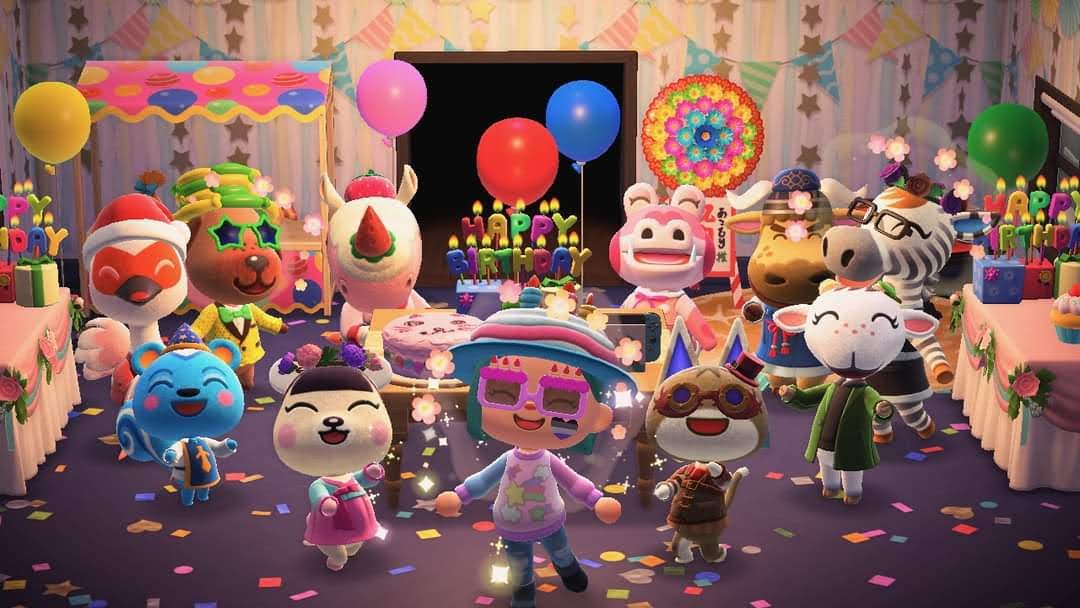
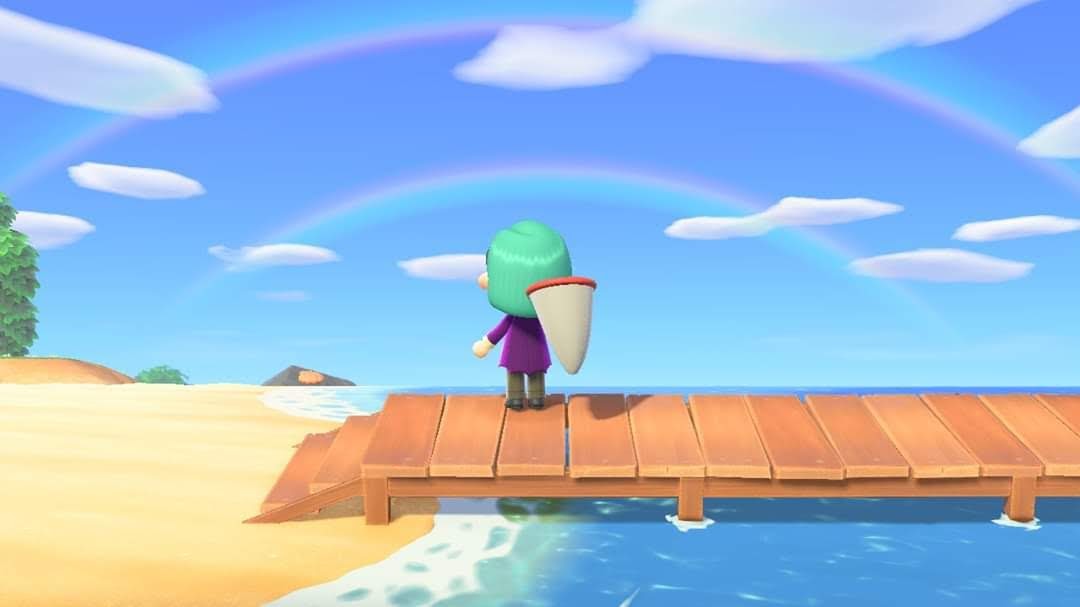
My December birthday plans were totally ruined by a spike in cases and increased restrictions here, but my ACNH islanders threw me a nice party anyway, and when it was safe to go out again, I celebrated with a ridiculous steak at Outback. Giant slabs of beef are an American way of life I may never be able to fully surrender. The spring saw us low enough again for me to feel safe doing some cherry blossom viewing even though the festivals were still cancelled.

I *moved*. I got a much much nicer apartment a little closer to the university (not that we go there). It’s in a new building, it has 2 whole rooms (I was living in a Korean “one room” before), a balcony, and view which includes the mountains and the sky (not just other buildings!). It caused an almost immediate improvement in my mental health after I got settled in. I’m sleeping better, I have a desk to work from instead of my laptop in bed, I have a kitchen counter so I can more easily prepare and cook food (also, not that I do that often, but I *can*).

I also invested in an Oculus which is my new work-out buddy (Synth Riders). I won’t say that I exercise as much as I want to, but it’s much more than it has been for several years, and it’s fun. It doesn’t feel like work or drudge, so that’s a plus. I replaced my soil bound, root rotted plants with a couple of sky plants. My theory being that if there’s no dirt/no roots they can’t die of overwatering or root rot. So far, they are still green. I think that’s a good indicator that they are doing ok.

I’ve noticed a whole different set of issues teaching online this semester. Now that everyone is “used to it”, we’re all also “burnt out on it”. Students have cultivated an attitude that an online class can be done at the same time as another task, so they log in from trains, buses, work, the doctor’s office… I don’t even know. I wish beyond wishing that our university would allow us to use an asynchronous learning style, but the administration has cultivated an attitude that online class is not in any way different from a classroom, and does not need any accommodation or change. In addition, many students are suffering from increased social anxiety, resulting in less participation, less engagement, and less effort. Knowing their lack of effort is a result of anxiety or executive dysfunction doesn’t really help. I can feel sorry for them instead of being mad at them, but they’ll still get that bad grade. I myself am 100% burnt out on teaching this way, which is really bad because I’m unlikely to see the inside of a classroom for another 8-12 months.

Vaccine

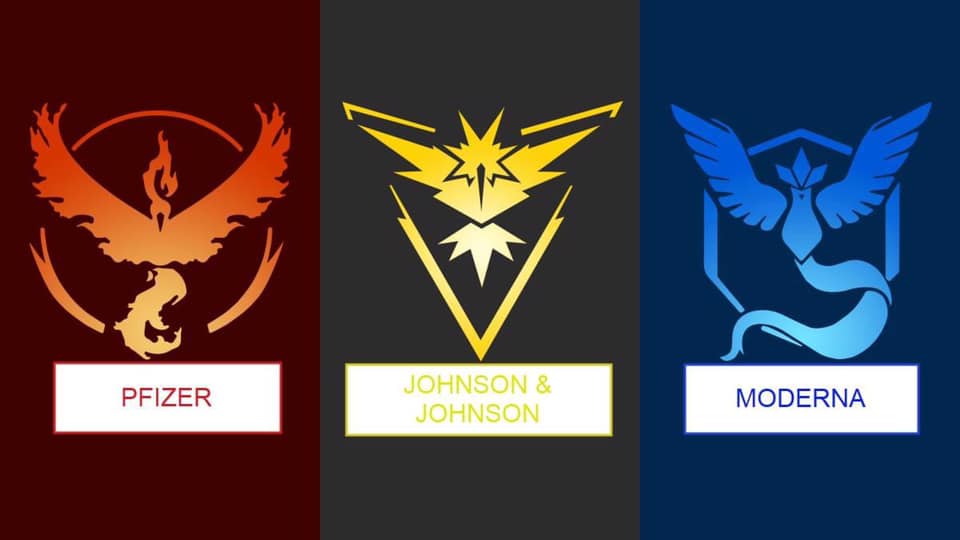
I’m so happy these exist, and that my loved ones are getting theirs. I don’t care what gang you’re for as long as you’re pro-vax. Get that Fauci-Ouchi! I’m also insanely jelly that I am not able to play, uh, join… Much like Pokémon Go, I have to watch all my US friends enjoy it before I can even get a whiff.

For reasons that are still unclear, Korea is “going slow” in vaccine distribution. Are they afraid of side effects? Are they worried they can’t manage the distribution? Are they unable to physically get the vaccines they say they have bought? I really don’t know, but they are aiming for herd immunity by NOVEMBER. Healthy adults will not be in line for a vaccine until August/September, so I’ll be trapped here for the summer. Again. And we’ll be online in the fall semester. Again.

Books & Healing

Last time I was on here, I mentioned some books I was reading and how I was working on my mental health & past trauma. Reading my “memories” on Facebook, and using my healing toolboxes, I’ve come to realize just how much these books and my work have had an effect on me.

A series of truly unfortunate events from 2018-2019 crashed me pretty hard into some of the worst panic attacks of my life, and an unexpected but highly necessary parentectomy. The advent of Covid-19 in 2020 and it’s isolating effects have given me a lot of time to read and think. Along the way I have come to understand that it was not only the traumas of assault and abuse I experienced as an adult that were hanging around my neck, but also those of my childhood. I’ve learned a lot about trauma: causes and responses, PTSD/CPTSD, conflict, abuse, toxic behavior, misplaced blame, blame vs responsibility, shame vs understanding, and hopefully … healing. I am by no means finished, but this has been the journey of my last year, and as this is the place I share my travels, I thought I’d write this one too.

I’d like to share a list of the books that have helped me so far, along with a short description of the main ideas each one brought to me, so the next few posts will all come with trigger warnings, but I hope you’ll share them with me. I want to tell you about the books and what they helped me understand about myself in the hope that it can help you, or give you tools to help yourself or a loved one.

Coming Soon: A Trip Inside – self examination, trauma & healing. I can’t travel the earth, but I took a journey nonetheless. I hope you’ll join me, and that you are doing your best to be kind to yourself and others during this second year of pandemic life.

Who can even, right now?

I am finally free of the oppressive summer humidity that is South Korea as the cooler (and shorter) fall days are sweeping in. It’s definitely having an impact on my mood and body, but is it enough to counteract the pandemic-dystopia blues…. meh… probably not.

2020, eh? What a wild ride. No matter what corner of the earth you are in, you have not escaped, and in many ways, Americans in particular are experiencing a heretofore unknown to us level of total failure at all things. I will not barrage you with tales of woe from what once was the bright shining beacon of freedom, hope, democracy, and economic prosperity (you can read the news if you don’t know but want to), suffice it to say that most of us who have the dubious honor of bearing citizenship of that country are going totally bonkers in a way that previously was only known outside it’s borders and it’s civics textbooks.

As an American living and working abroad, I’m in an even weirder position, since 90% of the people I love most in the world are stuck in the nightmare of soaring Covid infection, crumbling democracy, rampant police brutality, massive climate damage, spiking unemployment, and some of the most bizarre conspiracy theories* of the last 1000 years. While I have the pleasure of living and working in South Korea which is handling the pandemic very well, balancing our freedoms with our safety, while keeping the economy from collapsing into a black hole. I even get to work from home. Sure, I hate online teaching with the fire of a thousand suns, but I’m safe from germ-infested students.

*note: those links are just top google search results to make it easy on you, but feel free to search for more if you are somehow oblivious to the horrorshow that is this American life in 2020.

I am personally safe, healthy, and financially stable while all those I love stuck stateside are in freefall. I have lost one friend (yeah, metaphor for he died, not that we parted ways) this year, and another is struggling with what may be permanent disability due to a Covid infection in the spring. Friends are loosing jobs, healthcare, homes, and those who are stable are terrified it will all go away if they do get sick, but they can’t avoid crowds and maskless idiots all the time.

What have I been doing?

Since I last wrote about my pandemic teacher life in Korea, I am still doing intermittent fasting (it sucks less, but I’ve only lost like 3 kilos), all my plants died, my D&D game is still going, but my players jumped into the Abyss for no reason, I managed only one single outing during the hot weather (it was NOT a fancy hotel, but it did result in adorable birbs), and I managed a few Ireland posts before all my steam diffused into the broader steamy air of the oppressively hot Korean summer and my world shrank to one highly airconditioned bed and a Netflix hookup.

I’ve also been reading books about trauma recovery and Vladimir Putin, which may seem like an odd combination until you look at the politics of it all. I thought really strongly about doing a book review of any one of the books by Massha Gessen that I’ve read, but I just don’t know if I have the soul within me to recap her already devastating recounting of the transition of Russia from USSR to almost democracy to Putin autocracy. Read them, though, or do the audiobook thing.

And if you’re interested in the work I’ve been doing on trauma, you can check out these books:

I’ve had no good days. There have been ok days, bad days, and HORRIBLE days. Horrible days involve involuntary non-stop crying, panic/anxiety attacks, suicidal ideation, and total isolation. Bad days, I can get through the bare minimum of “eat/hydrate/teach” and then have to sink into dissociative distractions like video games, binge watching Netflix, or reading pop-YA fiction to keep it from becoming a horrible day. Ok days I might actually experience fleeting moments of “that’s nice” before the ennui sets back in. And from what I understand, this is pretty much the new normal for almost everybody I know.

I’ve been writing long Facebook treatises on loneliness, social isolation, the dangers of unverified memes and bandwagon political movements. They go into the void and are never heard from again. There is only a wall of depression, fear, fatigue and “other responsibilities” separating us all from our loved ones near and far. I have never felt so alone in the 6+ years I’ve lived abroad as I do this year, and everyone else posting into the void says they feel lonelier than ever, too, trapped behind social distancing and quarantine measures.

Are you there, Internet? It’s me, Kaine.

The point I’m making here (badly) is that I logged into my own website for the first time in almost two months today and realized that I felt like a complete SLUG for not having written more during this unprecedented period of free time. After all, I can’t GO anywhere or DO anything. I’m basically primed to be my artistic best, right?

Wrong.

I hope by now this is not the first article you have read about why we can’t (and shouldn’t) be holding ourselves to the same standards of productivity we do when we are stable and healthy, but we can’t. I bought a huge box of art and craft supplies over the summer and it’s still sitting there, only having been opened long enough to check the contents matched the order. I DID get my e-reader after several months of trying (why Korea, why) and I have been reading a LOT, not only the above books, but a tidal wave of bubble gum fantasy and sci-fi to aid in my voracious search for dissociation aids. After all, if I don’t have to think about the terrible things, they can’t hurt me, right? right??? (again, no). I have written exactly nothing, created … well, does designing my Animal Crossing island count as an artistic endeavor? And now I found myself with a little extra time after doing my teacher job, and not feeling totally exhausted/overwhelmed, and open my blog to realize the gaping hole in my narrative ability.

Will I write more? Eventually, yes. I am writing today, though not a story of globe trotting. The writing may change to reflect the world I’m living in now, because it’s hard to get excited about travel when it feels like my favorite most wonderful toy that just got yanked away by some mustache twirling cartoon villain. Perhaps avoiding thinking of my past adventures keeps me from being sad about my current and future adventures that have been cancelled. Perhaps another day, thinking about my past adventures will be a happy memory again. I expect it will go back and forth a few dozen times before the pandemic is under control enough for my hobby to resume.

Maybe the next time I log in, I’ll be willing to write another post about Ireland or Spain. Who knows. Until then, thank you everyone! Remember to wear your mask, wash your hands, smash the patriarchy, and support Black Lives Matter!

It’s ok to not be ok.

The World is Temporarily Closed

Hi!

Welcome to July. We’re officially halfway through 2020 and wow it has been a trip! Like, the kind where your shoe gets stuck in a crack in the pavement and you end up taking a face-plant on the sidewalk… into a pile of dog poo.

wtf

I know that I have readers from every corner of the planet and it never ceases to amaze me. I don’t think there are too many corners of the planet who are feeling unaffected by Covid-19. The last time I wrote, I was still trying to wrap my head around the crazy new world and the terrible drama of online classes. Most people still thought it would “be over soon” and “go back to normal” and I have to say I got a lot of stink-eye for saying it might last up to 2 years.

Now, every country that isn’t America has pretty much buckled in for the long haul. We’ve done a pretty good job of getting it under control, but we all know that any return to “normal” (defined here as pre-covid life) will see an instant uptick in cases. We know masks are required and we have fashionable ones. We know that bars and nightclubs are hotbeds of infection and we either close them, limit them, track everyone who goes or all three. Everyone (again, except the US) is talking about how to live life amid the restrictions of social distancing, and while it won’t be easy, it’s doable.

If you are not in America you are very lucky, but may also be unaware of just how insane it is there. The growing case numbers, the filling ICUs, the absurd hospital bills, the stunning array of symptoms and worst of all – the huge number of inconsiderate idiots who still think it’s a) just like the flu, b) a hoax, c) only going to kill people they don’t like, so that’s ok.

ES9GT5hU8AAI6bd

On top of the horrific handling of Covid19, there’s also still an unacceptable level of state sponsored violence. As an American expat, I’m in the unenviable position of being personally safe (thank you South Korea) while worrying about almost every person that I love and watching my entire country change into a tire fire like that moment in an optical illusion when it changes from a duck to a horse, but instead it’s changing from a first world democracy into a failed totalitarian state. It’s stressful.

I have had a LOT of emotions this year so far. On a personal level, I decided to start my reading list for dealing with trauma (PTSD/CPTSD) which is a necessary step in my healing process, but it is painful af. My future went from having a reasonable plan for my financial stability and mental well-being to being … ok, I have to admit, I’m still financially stable as long as this University keeps us foreign teachers, but there’s a pile of stuff that makes long term teaching options almost impossible without being able to pursue my PhD or, you know, move countries. I am still worried that I may end up back in a country where healthcare = bankruptcy without any real retirement plan but that’s like 20 years in the future and who knows what the world will look like then, really?

Eventually, I figured out how to cobble together lesson plans that would work in my university’s limited online platform and cried to myself every time I read an article about innovative online teaching from universities that gave the professors more freedom in how to operate. I do actually understand why the Korean universities are being restrictive. There’s some politics and some history of corruption and no one wants Covid-19 to turn into the moment universities return to that corruption, so we all have to dot our i’s and cross our t’s or… however that works in Hangul (우리의 점을 찍고 우리의 점을 넘어?)

The spring was fraught with pits of despair and peaks of anxiety. I wanted to photograph beautiful spring flowers and maybe go to the beach or write in this blog, but no. My brain was on fire and all my executive function was absorbed in the herculean tasks of teaching my classes, brushing my teeth, washing my hair, doing laundry, and feeding myself something other than ice cream and red bean buns. Thankfully, Animal Crossing doesn’t require any executive brain functionality.

FB_IMG_1591001356083

What Did I Actually Do?

Once I got a grip on the online class format, and the basics of catching critters for Blathers, I did experience some restlessness. Lucky for me, Korea calmed way down by April and it was basically safe to go out (as long as you wear a mask, wash your hands a lot, and avoid crowds).

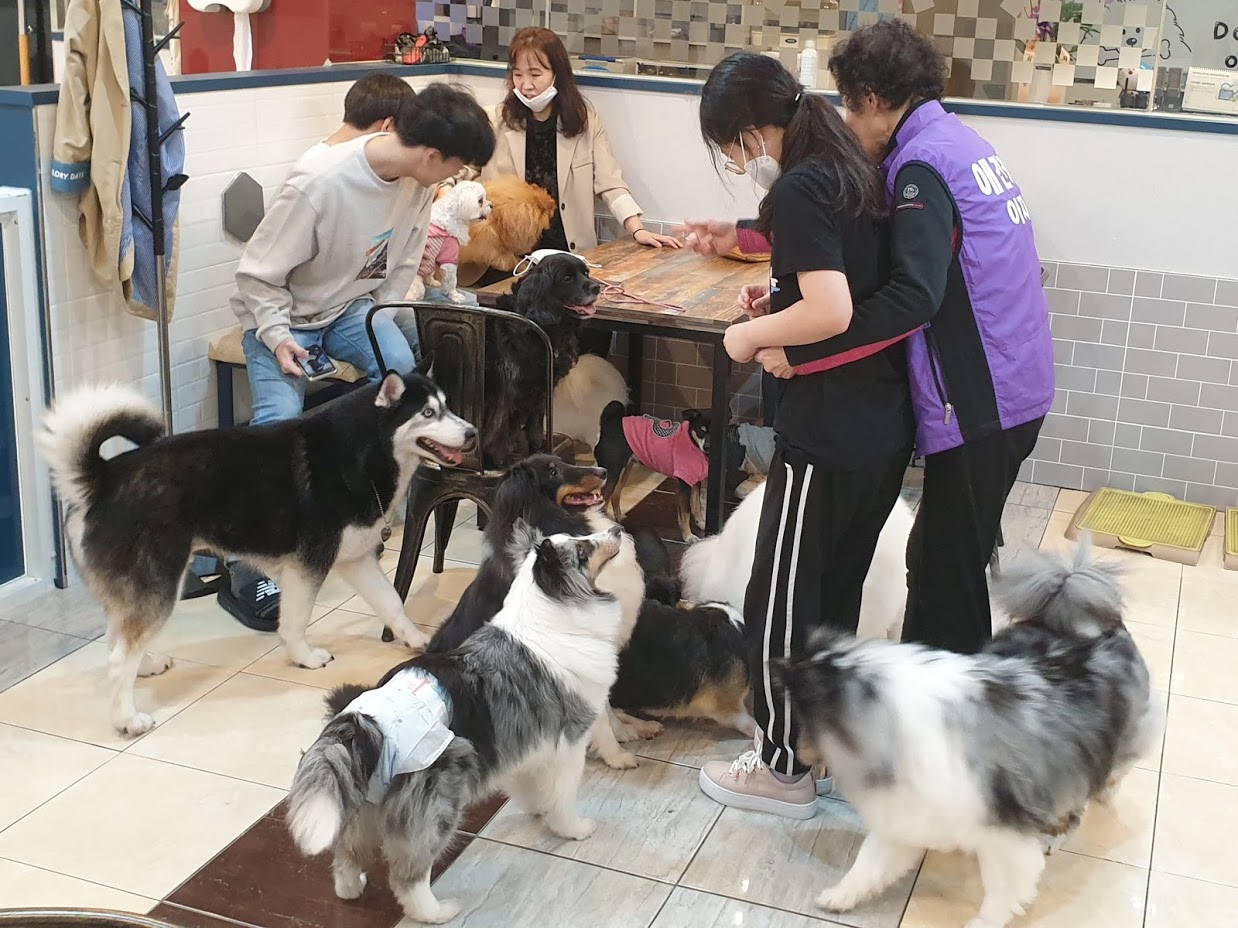
I went to a dog cafe in Busan, hoping that some fluffy puppers would cheer me up, but the ajuma “running” the dog room wouldn’t leave anyone alone and kept winding the dogs up to bark and do tricks and pose for photos. The doggos were pretty, but the acoustics were not good for borking and we had to leave well before our time was up.

20200502_185909

I also made it out to the Belated Buddha’s Birthday lantern festival at Samgwangsa, which I do enjoy. It was definitely the least crowded I’ve ever seen it, even though we were there on a Saturday night. Everyone was masked and trying to stay distant. In addition, it seemed the lanterns had been raised up quite a bit to be well out of reach and provide more air circulation in the covered areas.

download

My uni also decorated for the holiday even though we couldn’t have any festivals. Westerners who were sad about Easter being “cancelled” because of Covid have a slight idea what Asia felt like loosing both the Lunar New Year celebrations and Buddha’s Birthday to it.

20200414_121331

In the absence of the ubiquitous spring festivals celebrating cherry blossoms, lanterns, and the general end of cold weather, I was able to participate in a couple virtual movements.K-pop fans brought a lot of attention to the BLM movement and Koreans got curious. There was a small but vibrant movement to join in the global protests and I was able to give my students some Korean language info as well as participate in the Instagram rally.

IMG_20200609_184124_932

For the first time ever, Seoul Pride was cancelled not because of angry, violent churchy types but because all large public gatherings were called off. There was a big scare surrounding Covid19 spreading in Seoul in particular at some gay clubs. There are no anti-discrimination laws here (yet) so contact tracing Covid19 leading to public outing (loss of family and job probably forever) was a huge issue. Although the government is looking at anti-discrimination legislation for the first time in 14 years now, they are still terrified of the loud minority of hate-mongers who are just convinced ANY laws against ANY kind of discrimination will lead to Korea turning 100% gay. The “good” news is that at least they made very solid efforts to protect people from being outed when coming in for Covid testing and provided a Bush-era AIDS testing policy of not asking where they thought they might be exposed. Anyway, the LGBTQIA organizers made a virtual Pride parade where everyone could create an avatar and “march” online. Cute.

Screenshot_20200624-121939_Facebook

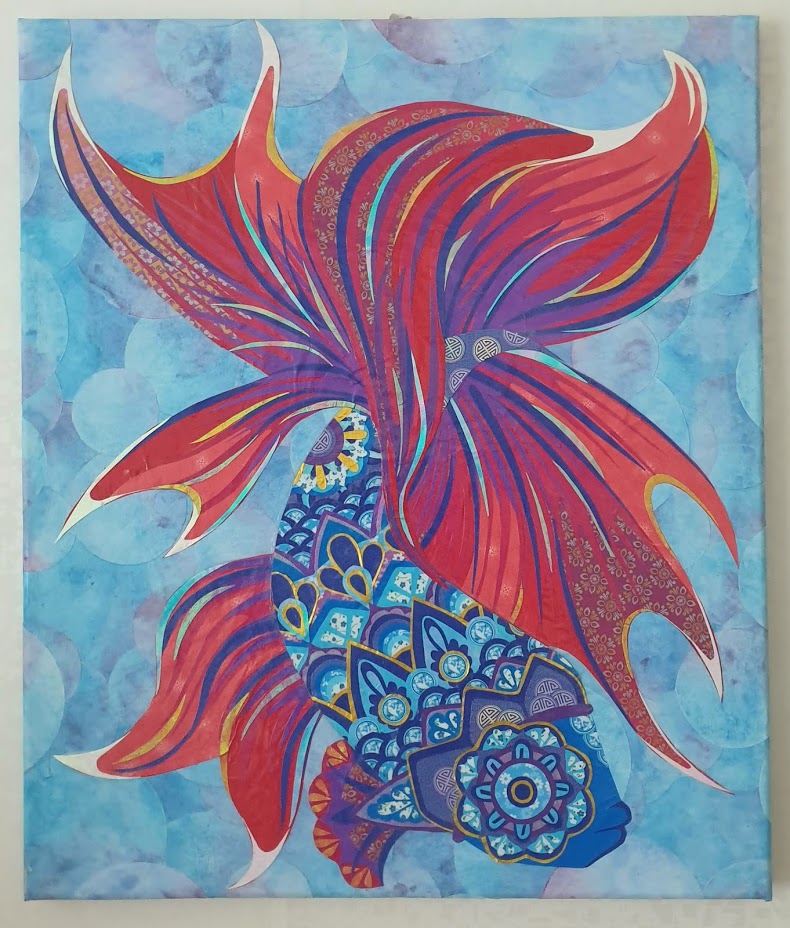
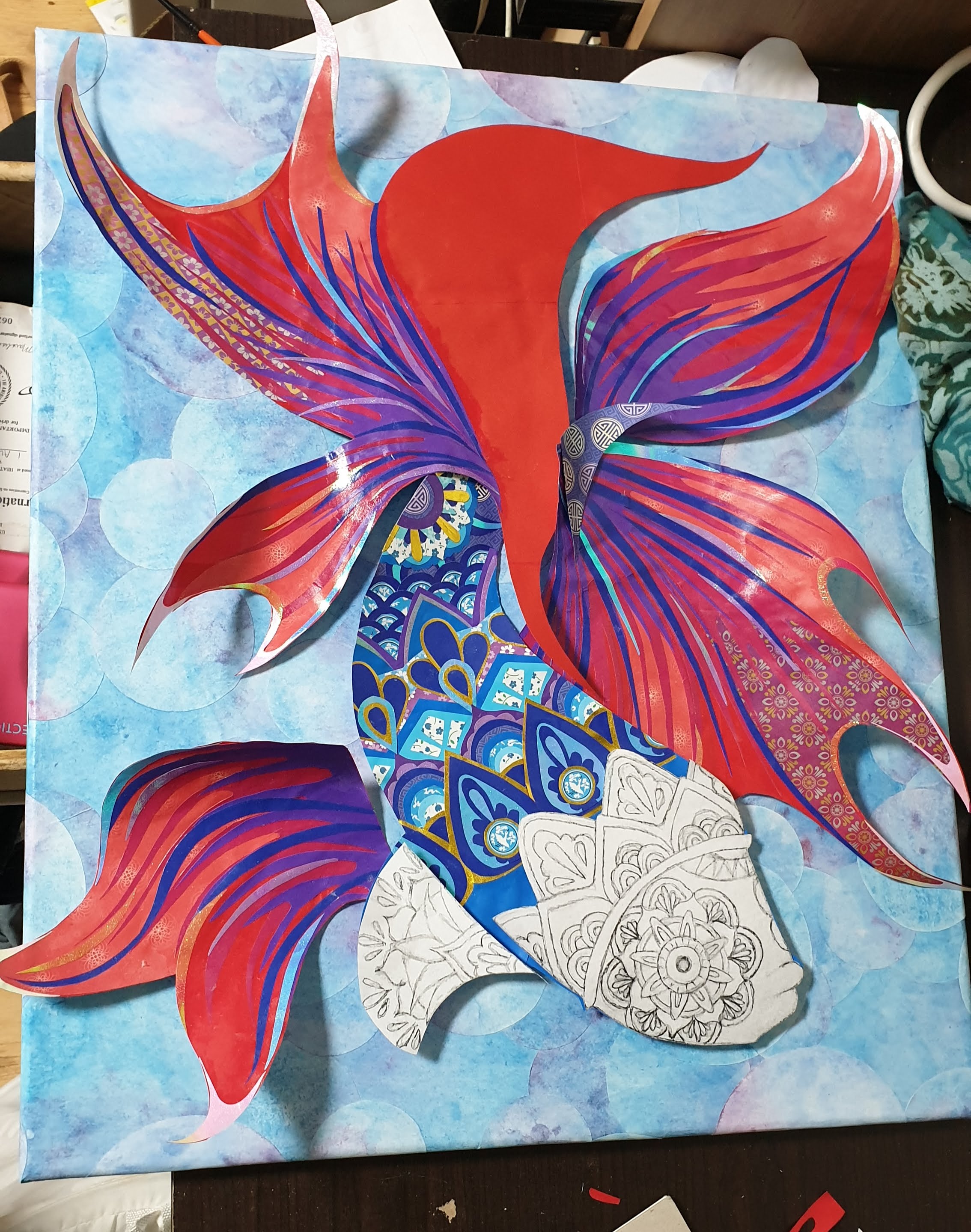
I shared my partial art project in my last check in, and sometime this spring I finished it. I’m very pleased with how that came out. It is made entirely of paper and glue. Tiny, tiny bits of paper glued in layers to create “scales” and patterns. There’s not a lot of wrapping paper here, which is what I’d really like to use for this style, so I use origami paper instead which severely limits the size, color, and pattern available. I would love to start a third piece in this style, but I’m having some creators block. Suggestions welcome.

20200427_122500

I also got the chance to make a cheap DIY pinhole viewer for the solar eclipse. Lucky for me, the afternoon sun comes right into my window so I didn’t even have to go outside for that one. Yes, I just poked pinholes in a sheet of paper in the shape of a heart.

What About The Summer?

For a while, I held out some false hope that I might be able to do some travel this summer, maybe go to Alaska (it’s America, they can’t actually ban me) to see some glaciers and forests. Maybe get my sister to bring the kids up (family reunion!). It seemed like it might just be doable. In May, people were sort of kind of like, let’s try to be sane. But that pipe dream fell apart as we realized that Alaska was requiring 2 week quarantines even for visitors from other states.

I still tried to tell myself it might be worth it to go there or someplace like New Zealand even if I had to stay in my hotel for the first two weeks because at least I’d get to do something and not be trapped in the sweltering humid heat of Korean summer, but alas. First my uni sent out letters advising faculty not to leave Korea except for emergency reasons. Then, the Immigration office sent out letters saying that multiple re-entry was cancelled, and anyone wanting to leave and re-enter Korea would have to apply for special permission AND get a health check from a designated health center within 48 hours of returning, and if it wasn’t good enough, might be denied re-entry upon arrival.

So, here I am. I’ll be spending my summer in Korea. All of it. No travel for the traveler.

1_GZH-v41sFKALHXVigUs3yA

I’m still weaving in and out of a sort of ennui based depression, but it is much better than it was in March/April/May which was punctuated by random bouts of uncontrollable sobbing, catastrophizing anxiety, and ice cream for dinner.

I’ve started an intermittent fasting plan (16:8) in an attempt to NOT stress eat anymore. I think everyone practicing social distancing is struggling with diet and exercise in conjunction with a huge lifestyle change (not going out) and a huge dose of STRESS HORMONES. I myself gained about 4 kilos since my check up last December and would like to get rid of that before it gets any worse.

I am trying to grow plants, which I never do because I often leave my apartment for weeks at a time. I named the first two plants too soon. My mint plant had a near death experience after coming home with me, but pulled through and was rugged but making it. My balsam plant was grown from seed and was being a primadonna about sun/heat/water ratios for a while. I named them Brutus and Pixie: the rugged war scarred elder and the young naive cutie pie. It seemed right at the time. I think I may have killed Brutus for good. He caught something that turned all his leaves black. I washed and treated the roots, disinfected the pot and replanted with new dirt, but it’s not looking good. Pixie is flourishing and the little pink cup sprouted a single tiny lavender seed which is giving a very commendable if miniature effort.

I’m running a D&D campaign, which is astonishing. I was an avid gamer (tabletop and LARP, not console/PC) for 20-25 years of my life, but I haven’t played anything since 2014, and I haven’t played D&D since maybe high school and I have NEVER played with the new 5e rules so I’m really hoping I don’t accidentally kill the whole party with the first boss fight. It is good to have some real human socialization, though. Since our little town is pretty much Covid-free, we are meeting in person to have game sessions. Wild.

I might check myself into a fancy hotel on the beach for a couple days, just to feel like I’m on vacation. I hear the water parks are almost empty, too. I can’t do much in Korea due to the unbelievable heat which tries to melt my skin, cook my brain, and turn my joints into overfull sausages all at once. The beaches here are usually packed solid every summer (I have never even wanted to go) and now require reservations to enter the beach (no one is really sure how that’s going to go since there aren’t fences or gates…) in an attempt to keep the social distancing alive. I still don’t want to sit on the beach, but I think I could get behind a rooftop pool with an ocean view.

I’m going to attempt to resume writing. I still have a LOT of material from my travels in 2019 since I’ve done literally nothing with my Jordan/Egypt trips, or my Spain trip, and am less than halfway through the Ireland trip stories. Plus, I still have like 2 volumes of Chinese Fairy Tales that got dropped when my life turned upside-down.

I can’t guarantee a schedule or that I won’t sometimes interject with more of my own personal 2020 life struggles, but I’m hoping that maybe some new travel stories will help me to remember there are still great things out there and help you feel a little less cabin fever while you work on that self-isolation and social distancing.

Thank you everyone! Remember to wear your mask, wash your hands, smash the patriarchy, and support Black Lives Matter!

IMG_20200606_134409_163

Life a Little Upside-down

Hi everyone.

This is half letter, half rant, half diary entry. Yes, that’s 1.5 posts. I know. Don’t worry, it’s not THAT long.

All my posts through February and March were pre-written and scheduled in January. I haven’t written anything new since I found out there was such a thing as Covid-19.

All my great plans to be posting about Ireland and Spain while breezing through my Spring Semester classes that I’d worked SO HARD to prep into good shape last year specifically so they would be a breeze and leave me tons of free time to write and work on my PhD application are…. fucked.

As far as I can tell, everyone in the world is to a greater or lesser degree similarly fucked. I thought for a long time about what I could say here and every time I thought I knew, something changed.

Outside of China, it hit Korea hardest early on. When it started in Daegu I was still in Spain, and I figured I’d deal with it when my holidays were over. Then I got to the airport in Paris to discover that not only had my flight been cancelled but no one bothered to tell me or put me on a different flight. I had a pretty good idea that it was changed because Air France announced the cancelling of all flights through China, but when I checked the flight matrix, it looked like my flight was just changed to a direct flight – Paris to Seoul.

I thought about telling you about the 9 hour airport drama of getting on a new flight, but it seems trivial now that people are delayed days without news, or even completely blocked from returning home.

images (4)
Then I got here (Korea) and I stayed in my apartment for 14 days. Quarantine wasn’t mandatory yet, but my University asked us not to come to the campus for 14 days, and the weather was bitterly cold, no good for going out, plus all my plans to visit other cities seemed unwise as our case count climbed higher and higher every day. Public schools and universities were all delaying the start of the school year (normally March 1 in Korea).

I read constantly. Trying to understand this new and strange thing. I thought at first it might be like SARS or MERS and I held of on writing anything because I wanted to see what the resolution would be. By the time my 14 days was over, it was painfully obvious the resolution was a long long way off. However, I still couldn’t write here because by then I had permission to return to campus and the school had finally decided on an online class platform.

A week of total insanity where we all tried to figure out what this was, how to use it, being horribly frustrated with everything. The school trying to tell us all “it’s only for 2 weeks” and I kept trying to convince everyone it would be at least the whole spring semester and possibly longer.

3t7xwq
I thought about regaling you all with the horrors of teaching with a language barrier in a platform designed for meetings (not training sessions or classrooms) and totally inadequate technology, but by now there are hundreds of such tales from teachers of every level around the world. The Korean public k-12 schools will start their online classes this week and then there will be even more stories out there.

I got sick for about a week. It was only a little sick. I had a horrible non-stop headache and horrible sore throat that I thought were the result of the new online class format. I got a little cough, and a lot of fatigue, and I learned how to teach class from my bed in my pajamas. I don’t have a desk in my apartment. I’m feeling much better now. I don’t think it was Covid, but I didn’t ask to be tested, I just self quarantined until I was symptom free for over 72 hours. I tried to buy a thermometer, but I can’t get one, so I have no idea if I had a fever.

25925030-8108527-image-a-30_1584094852687

And now I’m allowed back on campus. I have energy again. I am more informed. I feel like an amateur epidemiologist. I’ve done a 4 week intensive online crash course. I thought, “I should write something.”, but I still don’t know what say.

Korea is doing better, but in many ways only because so many Western countries are doing SO MUCH WORSE. I hate the way the President and PM and schools and everyone in charge has been handing out information one/two weeks at a time. The understanding from the WHO and top scientists that this is a long-term project, that a flat curve lasts longer than a tall curve, has been public for what feels like AGES and yet in Korea, they keep acting like it will all be over any minute now. Just another week …. maybe two. Then when the time is up, they say it again.

ES8jq21XgAEkOQl
While everyone in the West is still worried about mass graves seen from space or ice-rink morgues, I’m worried about idiots who can’t go one spring without looking at cherry blossoms ruining all the hard work we did in March and starting a second wave.

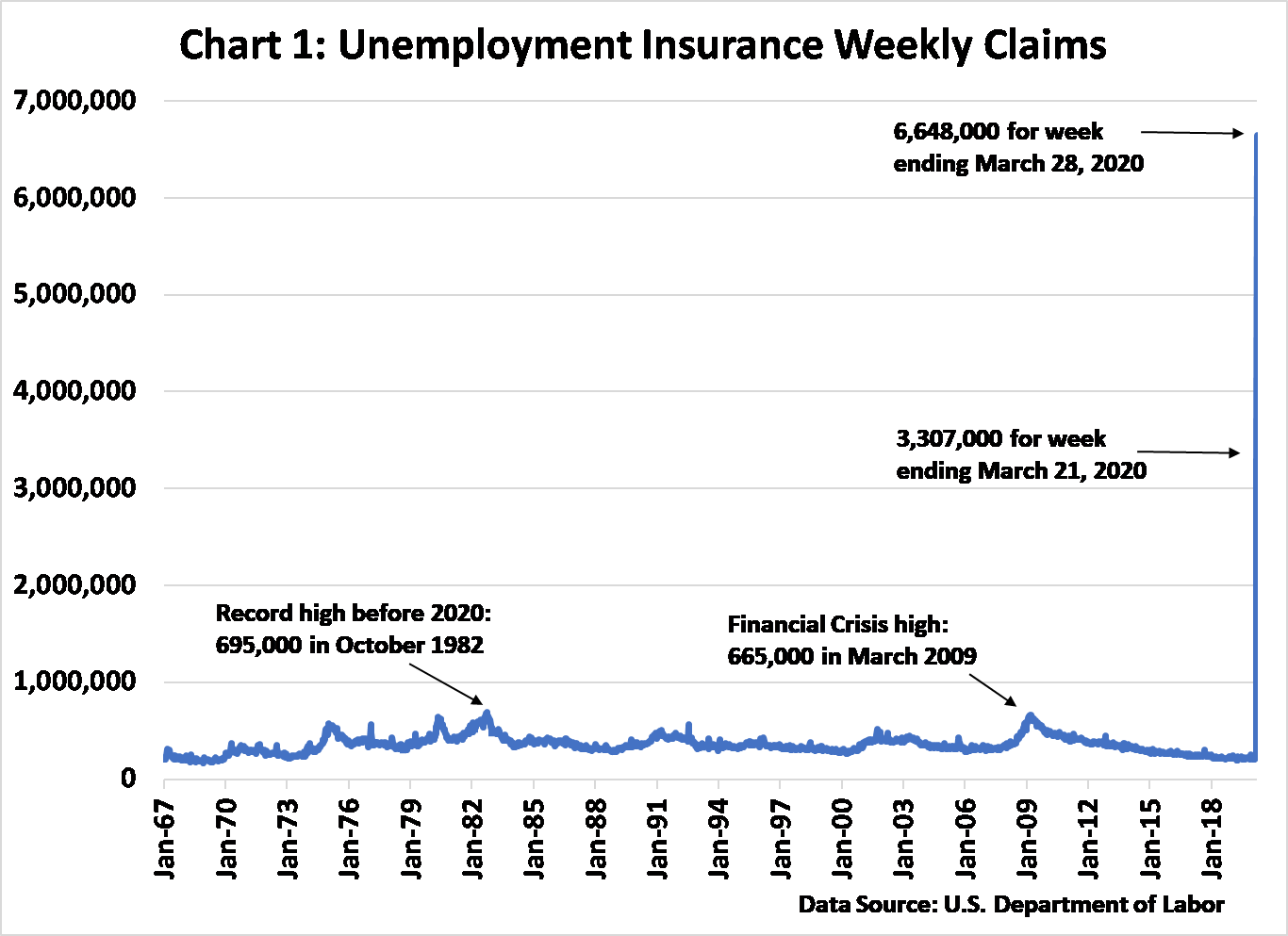
Actually, I’m worried about a lot of things. Mostly my family in America where it appears that life is well and truly fucked. My parents, my sister, and her two kids live over there. I’ve heard so many stories from drive up veterinarian offices (they don’t want people to come in, but still want to treat urgent pet health care issues) to race arguments about whether black people can catch it (spoiler, they can, but that’s not stopping people on Twitter spreading lies). It’s a patchwork mess, and everyone I know who is in a different county or city, let alone state, is experiencing something else. Schools are cancelling the remainder of the school year, so many people are out of work that the unemployment graph actually broke. Many of my friends are either part of that spike or stuck in “essential” jobs that put their health at risk every day, and since most of them also have underlying health conditions, I’m basically expecting people I love to die before this ends, and those who survive to be financially crippled for years if not forever.

1_0

I am very full of emotions.

I distract myself with school and mindless TV as much as I can because if I think too hard about what is going on in the world, I cry.  Like, now.

I’m reassured by a multitude of therapists and psychiatrists that this is normal. That what we are experiencing is so big and so terrible that our poor little brains are just totally unequipped to handle it. The amygdala is in overdrive trying to decide what fear response to use for this unseen threat – fight? flight? freeze? WHAT? cycling us through an endless, relentless roller-coaster of emotions that we may not even recognize as related to the pandemic if we don’t listen carefully to ourselves. Grief is present. Grief for lost opportunities, lost jobs, futures… that’s a real thing. Anticipatory grief is a real thing too. Mostly people go through that when a loved one has a terminal illness. I’m grieving the loss of my life plan and I have some anticipatory grief because I am pretty sure I’ll loose someone I love and almost 100% sure I will lose someone I know. Then there’s depression, anxiety, dissociation, mania. There’s also a collective trauma being built that we will all own the aftereffects of for the rest of our lives. You don’t heal from grief and trauma, you just learn to let it take less space and cause less pain gradually over time, and we are nowhere near the part of this where we can even START to do that.

I’m trying hard to let myself feel my feelings, but also not to let them drown me, and not to forget to be grateful for good things, not forget to enjoy things even while I worry and fear and hurt. It’s hard.

My job is something I can focus on. I work to remake lesson plans into the ill-equipped web format I’ve been ordered to use. I read a lot of advice from other educators online. I spend a lot of time trying to remember my students are so young and so ill-equipped to handle what is happening in their lives right now that I have to be calm, and gracious, and forgiving and encouraging, but I feel like I’m not getting enough of that for myself.

I think my friends/family are trying, but we’re all so scared and unsure that no one can really be “the adult” who listens and supports and comforts. I don’t want a therapist for this (yet), I just want someone to listen to me rant and then tell me comforting things. It’s not easy. No one is unaffected by this. The ring theory does not work when everyone is in the same ring!

ringtheory1I also started an art project before my winter holidays, another paper sea creature. It’s incredibly intricate and I spend at least one day a week happily cutting tiny pieces of paper and checking colors and patterns until I’m happy with one. It’s coming along nicely. Some people paint, draw, or use coloring books. Some people are cooking, or making music, or writing, or making videos, or holding virtual karaoke rooms. Art helps.

20200405_202246

Another thing I can focus on is my hobby of travel and photography. I can’t travel right now, but I can dream about it and remember it. I started an Instagram challenge to post a landscape photo every day from a different place in alphabetical order. I call it the #alphabetlandscapechallenge and it’s really excessive, but I needed something complex and detailed to focus on.

I met a lady from Malaysia on Insta the other day and we talked about travel plans for like an hour. At the end she said she felt guilty for dreaming about travel while so many people in the world were worried about COVID, their health and employment.

Someone, somewhere is always suffering in the world. Even before COVID there were people in fear of their health, dying for want of medicine, unable to feed their children, unable to find a job or working for slave wages. I believe it is important never to forget these things, but also to not let them destroy us. I don’t usually go in for quoting religions of any kind, but even Jesus agrees with me on this one, guys.

Now more than ever we need beautiful, creative things. We need dreams of what will come after that are better than what came before. So, maybe that’s what I want to say.

If you take anything away from this rambling letter, then take these 3 things:

Everyone is in this together.
It’s ok to not be ok.
It’s important to keep dreaming.

Now, #staythefuckhome and #flattenthecurve.

x25uvp9or8n41

Vincent and Me

I know I said I was going to tell you about Ireland, but… We passed through Paris for a few days on the way because CDG is in the middle of everything and I love Paris. Another visit to the Musee d’Orsay got me thinking about the impressionists I love, especially Van Gogh. So, this post isn’t about Ireland OR Paris, it’s about my experience at the Van Gogh Museum in Amsterdam.


In the summer of 2018, I passed through Amsterdam for a single day. You can read about the rest of the day here, but this post is dedicated 100% to the Van Gogh Museum.  It was such an inspiring and emotional experience for me that I paused to take notes about my thoughts and feelings as I was walking through the collection. Usually, I write reflections afterward, but my mind was racing with insights and inspirations so fast, I was afraid I might forget. I mentioned in my essay about the Musee d’Orsay how connected I feel to Vincent, but it wasn’t until I toured this museum in Amsterdam that I really understood the depth of my feelings.

20180724_130842

I didn’t include this in my original stories about that summer because I wanted to watch the movie “Loving Vincent” before I finished writing it. I finally got that chance when it turned up on Netflix for a short run earlier this year. The movie was beautifully hand painted in Van Gogh’s signature style, but I was surprised to find it’s almost entirely about his death rather than his life. The point of view character is charged with delivering a letter and gets caught up in the mysterious circumstances of Vincent’s supposed suicide.

I’ve always loved Van Gogh, and it seems everything I learned about him at that museum only made me love him more.

The Museum

The museum is so crowded. I had the very earliest time slot available and I still felt hemmed in by bodies. I went backwards from his death on the third floor to his youth on the ground level. I’m glad I started at the top because after 3 hours of wandering the displays, I felt all itchy skinned at having to deal with mountains of bodies, mostly focused on their audio tours, and many trying to take photos even though it’s not allowed except at special photo-op areas. Even then, the museum took my photo for me, and sent it later by email.

untitled-drawing-e1568968960873.jpg

That was a big contrast over the d’Orsay. There everyone queued up to snap photos of famous painting (yeah, me too), while in Amsterdam, people are just clumped around, usually plugged into headphones and oblivious to the presence of other visitors. I’m not sure which is better/worse. I think it would just generally be better if it were less crowded. It’s hard to get time with a painting when being jostled and stepped around. I’m glad everyone wants to experience the art but it feels like it looses something to my “oh my God get the humans off me” response. I can’t even imagine how it is during “peak” times.

I’ll talk about the main displays in a moment, but one little fun mention is the tactile sunflowers near the gift shop. Art museums are not usually targeted to the blind or visually impaired, but someone had created  a reproduction of the famous sunflower painting that can be touched. Along with touch, the senses of sound in the form of violin music with amplified sounds of the flower growing, blooming and dying (listen below), and the sense of smell with some sunflowers in a box. Interestingly, it was not only the smell of the flower but the smell of the painting as well. It’s not a part of Vincent’s art, but I thought it was an amazing way to experience art in a new way.

On to Vincent — backwards.

He died July 29, 1890, two days after receiving a bullet wound to the torso, possibly self inflicted.

Auvers-sur-Oise (May–July 1890)

 The works at the end of his life were frenzied like he knew his time was almost out of time, and he had to get as many paintings done as possible. He finished 75 paintings in 70 days, many of which are his most famous works: like Wheat Fields with Crows in Amsterdam, or Church at Auvers in Paris. There is impatience in the brush strokes and they looked massively different from a few feet away and across the room.

1280px-Vincent_van_Gogh_(1853-1890)_-_Wheat_Field_with_Crows_(1890).jpg

The way he is attracted to the colors of night, the intense deep blue of the sky on days it gets so blue it becomes dark. The blue and pale gold of all his wheat fields that is a color scheme I would live inside if I could. He did scores of these kind of blue and gold themed paintings during his last days, but it wasn’t the first time he hit on the intensity of those countryside colors.

Saint-Rémy (May 1889 – May 1890)

Although Starry Night and Almond Blossoms were both made during this time, the paintings on display for this part of his life are drab compared to his other colors. Almost painfully dominated by brown and dark green with pale skies. He was in pain and unable to escape.

Part of the display in the museum here are audio recordings of some of his letters. We could pick up an ear piece and listen. I was entranced. Listening to his letters I could hear my own thoughts, yearning for something best called “religion”. He says that he doesn’t go to church, but he goes outside at night to look at the stars and the sky that is cobalt blue. He muses about color, that all things appear colorless when looked at too closely (sand, water, air), but that doesn’t make it true. He talks about his friends: that the bonds of friendship are one of the best things in life even if we resent those bonds in our times of depression.

I don’t know the best way to explain it other than to say his words resonated with me on a very deep level. I think we all struggle to be understood in some way and in a moment when you realize someone you admire and respect understands the way you think and feel, what’s more, understood it long before you were born… I suppose it could make someone feel less special or unique, but for me it’s like finding a friend across not just space, but also time.

Arles (1888–89)

This is where Vincent painted the famous Sunflowers, and where many people feel he truly found his voice as an artist, taking what he’d learned and finally becoming free. Van Gogh’s treasured friendships also started here where he sought an artists commune and cultivated a joyful and supportive relationship with several painters. They frequently sent letters, sketches, and even paintings to one another the way that we sent Snapchats and Memes across social media today. There is a painting by Gauguin of Vincent painting sunflowers. It is an imagination since Gauguin was not present when the sunflower paintings were made, but it reminded me of the “taking a picture of someone taking a picture” fashion in modern photography. It seems friends play the same games with images whenever they can.

1356px-Paul_Gauguin_-_Vincent_van_Gogh_painting_sunflowers_-_Google_Art_Project

Vincent asked Paul Gauguin and Émile Bernard to each send him a portrait of the other. Instead, they sent self portraits but had a portrait of the other hanging on a wall as part of the background.  It’s such a wonderful and lighthearted sense of humor. Sadly, Gauguin was such an arrogant ass that he never granted his true friendship, and instead left Vincent always chasing after his affection and respect, contributing to his anxiety and depression, and to his eventual mental breakdown, self-mutilation, and hospitalization. I don’t like Gauguin for a lot of reasons, this is really just one more.

On the other hand, Paul Signac, a neo-impresionist I only recently discovered in 2018 and one who has rocketed to the top of my all time favorite paintings list, visited Vincent in the hospital twice while Gauguin was busy avoiding him, so that’s nice to know.

Paris (1886–1888)

Moving to Paris was the best thing he could have ever done. Watching him develop his color palette reminded me of the first time I realized I was allowed to paint whatever colors I wanted. I didn’t have to make it realistic. It was so freeing and I finally started to like some of my paintings. Looking at his early bright-color works they all have an awkward, exploring feeling which is quite different from the bold and confident colors later.

He used a grid for perspective, which was a thing I struggled with, and he spent years doing just drawings because he wanted to focus on shapes and poses. He didn’t only consider them sketches but full works of art which he signed. I did very much the same thing. He also had a brief but torrid love affair with Japanese culture in 1887, and that was the first foreign culture I was drawn to before I really went full globe trotter. I have never been able to afford as much paint and canvas as I want, and the advent of digital photography and graphic design gave me a much cheaper way to pursue my artistic inclinations.909px-Vincent_van_Gogh_-_Bloeiende_pruimenboomgaard-_naar_Hiroshige_-_Google_Art_Project

While many of his artist friends preferred to paint from imagination, Vincent  preferred to paint from life. I wonder what he would have thought of color photography. It’s a way to capture a scene, a moment of light and color. Modern digital effects even allow us to manipulate the colors and light of a captured image. You can make a blue sky bluer, or over-saturate the colors of a cafe at night… I think he might have enjoyed it?

The Netherlands (1881-1885)

At the outset of his artistic career, he was trying to create a look that was popular at the time and that he genuinely admired, that of artists like Jean-François Millet and Jules Breton. Millet and Breton (left) were famous for dark and drab paintings of peasant life. They were very stark and brutal depictions of what life was like for poor and hard working, technically lovely, but emotionally ugly. Of course, art historians refer to this style of painting as revealing “the beauty and idyllic vision of rural existence”. I think that’s only true if you’ve never been poor. VanGogh (right) was determined to be like them.

He did an enormous body of work sketching local peasants and farm workers, the centerpiece of which is The Potato Eaters (below). It’s all done in the same color palette and mood as Millet and Breton, but the faces look almost cartoonish in his effort to capture feelings over accuracy.

1013px-Van-willem-vincent-gogh-die-kartoffelesser-03850

Seeing his still life of fruit in all brown tones, I was shocked to see it was Van Gogh and not Millet’s or Breton. 

966px-Van_Gogh_-_Stillleben_mit_Apfelkorb2

Just looking at the church in Nunes (left) next to the church in Auvers (right), you can see the change and growth. Yes, I promise, they’re both Van Gogh, but from drastically different stages of his artistic development.

I don’t know if he liked it, but it’s definitely a period of drab and dark colors maybe the landscape was more drab or maybe it was the influence of being near his father. He stayed enamored of Millet (left) for most of the rest of his life, and recreated many of those idyllic, pastoral scenes in his own brightly colored impressionistic style (right).

Life Before Painting (1853-1881)

It’s said that his mother never recovered from the loss of her firstborn child and that her relationship with Vincent was strained, but he was also recorded as being a “serious, quiet and thoughtful” child. His father was a minister, and two of his uncles were art dealers. He tried both careers with little success. His father was constantly disappointed in his inability to make it as an adult. Perhaps it was his time as an art dealer that made him try his hand at creating art, and why he spent so much time and effort trying to replicate the style and subject of the famous and successful artists of the time.

Reflections

Going backwards was an interesting choice. I realize that I, like most people, love best his works from 1888-1890. It seems like such a brief time span, but he practiced art for less than 10 years before he died. It is astonishing the amount of work he produced. When people say “practice” this is really what they mean. On the other hand, he was constantly trying to improve, so the fact that he clearly did is a testament to his devotion to self cultivation.

20180706_124406

Watching him evolve was a rushing, intimate roller-coaster of creativity and self-expression under difficult circumstances. He didn’t have formal art training, but taught himself by studying others. He experienced enormous frustration that his attempts to imitate the respected artists he was familiar with failed. Eventually, he found a community of like minded people and permission to explore color and shape on his own in Paris. It was the beginning of finding his own true self, and yet it destroyed his mind to the point that he landed in the hospital more than once. And yet, that Parisian community is what would sustain him in the form of letters, art exchanges, and the oh-so-important stability that even distant friends can offer. 

There’s a misconception that great artists are never appreciated in their own time, but that’s simply untrue. Most famous artists throughout history were superstars of their own day, like Hollywood actors and TV stars today. That Vincent never gained any recognition or respect until after his death was likely a contributing factor to his suffering in life.

Did he kill himself? Maybe. I know that the episode of Dr. Who where Amy and the Doctor visit Vincent is one of my favorite. That it helped me process the suicide of my own dear friend to realize that we can do everything right to be supportive and yet mental illness can still take someone away as surely as cancer. “Loving Vincent” made me question his death all over as suspicious information came to light regarding the gun, the wound, and the strange behavior of the people in Auvers. Officially, his death is still ruled a suicide, but his life remains a brilliant and sad mystery in many ways. According to his brother who was there at the end, Vincent’s last words were: “The sadness will last forever”

In some ways I’m glad I did not read about his life when I was younger. If I’d discovered all our similarities at the age of 20 I might have developed a complex. I might have worked less hard to get help and spent more time glorifying what was happening to me. Instead, when I learned that we shared a diagnosis, I was content just to know there was someone else with my brain trouble.

821px-Van_Gogh_-_Selbstbildnis_mit_verbundenem_Ohr

I remember when things were very bad thinking that if cutting my ear off would make it stop, I would gladly do so, but Vincent had already proven it wouldn’t work. I could understand the feelings that drove him to see the world in colors and swirls, that drove him mad enough to drink and self-harm, that landed him in an asylum and eventually dead. I understood the sentiment, but I didn’t know anything else about him beyond a few paintings and his suicide. Back then, I looked only at his art and at the very most well known facts about his life and felt a connection.

Now that I’ve learned more details, from his family life, to his progress through art, to his views on the universe and human relationships? I’m blown away by it.

I’m not trying to say I’m channeling van Gogh, but I’ve always felt a kinship with him. I didn’t move to Paris and join an artist commune, so I don’t have a tiny fraction of his nearly 1,000 finished works. I probably never will, because I was able to manage my state of mind better, whether from support of my community or improved medical care, who can say. The end result is that I got it under control and now I not only have a lot more responsibilities than Vincent did, I have also avoided multi-year stretches of confinement under a doctor’s care. Despite this divergence, I can say that trying to be “normal”, “acceptable”, or “popular” in his own lifetime was something he desperately wanted and could never achieve is a feeling I know all too well.

20180726_144651.jpg


You can see photos of the complete works of Vincent Van Gogh on this wiki.

You can explore the collection at the Van Gogh Museum in Amsteram here.

Expat life: When “Home” Is a Holiday

Settling into school life and hoping for the summer to end as quickly as possible. I’m enjoying the new group of students and happy to see some of my best kids from the spring back in my class for part 2. I’m also working up the steam to start my next major research project which will hopefully be the key to the next big chapter of my story. Until then, I’ll continue on with the story of my July in America. As promised, this one’s all marshmallow.


Originally I was going to try and squeeze all my US stories into a single post, but I thought people might get “wall of text” fatigue. It’s true that the “worst things” post was a bit longer, but this one has better pictures ;P

The Best

Despite the months of stressful bureaucracy and anxiety inducing news stories, once I actually arrived in Seattle I had a pleasantly surprisingly nice time. I managed to avoid all the Nazi rallies, mass shootings, bad weather, or other catastrophes. I stayed with my friends who I traveled in Europe with last summer, and who were kind enough to also lend me a spare car. In an all too brief 16 days, I was able to reconnect with some of the best people in my life. Words cannot express how grateful I am.

In regards to headline news problems, I think in large part, I was just lucky (with a small dose of white privilege). It turns out that I just happened to miss the Nazi rallies and mass shootings which happened either right before I arrived or right after I left… it’s like having good weather or something, which I also had because thankfully the west coast was not on fire this year… tho it appears the southern hemisphere is instead?

My last visit to Seattle was only 9 days. I was sick from root canal and kikuchi, and working on emptying my storage unit in a way that would make Marie Kondo proud. I was not in a good space physically or mentally. Despite these hurdles, 2017 helped me to realize I didn’t need to be afraid of returning to Seattle, that the people who hurt me there couldn’t reach me anymore.

This trip (2019), I only had two real “errands” and so was able to take more time to really devote to spending with friends. Sometimes I forget just how important that really is. I live my life at the end of a very long line that ties me to Seattle and gives me stability. I was starting to feel my anchor line fray and now it’s repaired with all the love. I wasn’t lost or breaking, but perhaps dragging a bit. Now I feel stronger and more buoyant, ready to face another year or two of expat challenges out here at the end of my kite string.

Moments and Memories

I got to be in the US for July 4th for the first time in 5 years. I had a beautiful brunch cooked by friends, visited a local backyard party in the afternoon, got to see some friends. The fireworks show I went to was put on by some friends way up in the Snoqualmie mountains and was highly enjoyable. Plus, I got to geek out with people about my ideas and research in a new and exciting way. 

20190704_220929_000-ANIMATION

I got a lovely camping trip near Mt. Baker with some gourmet s’mores and just enough rain to remind me where I was but not enough to ruin the night. My friend brought her boys along and they spent the evening picking huckleberries and later we taught them how to be “dragons” using their breath to keep the fire going strong. ❤ PNW 

I got to visit my friend’s new farm, see all her beautiful and delicious plants, snuggle with the baby bunnies and chase the baby chickens around with a camera. It never occurred to me to use peacocks as guard animals, but it turns out they’re way better than dogs at watching the skies for raptors like eagles or hawks, which in the PNW are a bigger threat than coyotes or wolves.20190708_175710

I got to sit in a living room in my PJs and trade silly YouTube videos and teaching anecdotes. That may sound mundane but when you’ve spent several years socializing exclusively in bars and cafes it’s a huge relief to just chill with ppl with whom you have mutual caring.

I got to eat all the foods I miss: Mexican, Ethiopian, Seattle-style Pho, large American style chunks of beef. At the mexican restaurant we told the waiter I hadn’t had any good mexican food for years because there were NO MEXICANS where I lived… he was so deeply perplexed, unable to imagine a place Mexicans had not yet migrated to until I explained it was Korea. I also got homemade goodies.20190703_094405.jpg

I got to have a whole weekend of the best sunny sailing days and bbq nights in my memory. A couple years back, some very good friends of mine (really amazing people, too) finally fulfilled their dream of selling their house and moving on to a boat. I didn’t realize it, but apparently it had been over a year since they took their home out for a sail before my visit, and as he says it, unless  you go sailing, it’s really just a very small and inconvenient house.

The weather was amazing, calm and sunny (ok, maybe not as windy as we’d like for a sail, but excellent for relaxing). We puttered around the Puget Sound and watched the other boats and abundant wildlife like harbor seals, porpoises and even a couple humpback whales. In the evening back at the dock, we grilled up steaks and burgers with fresh summer corn and talked and laughed well into the darkening hours. I had two days with two different groups because so many people wanted to come along we couldn’t fit them all one one sail. I got to meet some kids, and I got to introduce some of my favorite ppl to each other for the first time. The whole weekend felt like one amazing gift.20190713_143906.jpg

Finally, I got to karaoke it up with my fav singers and watch friends on the outs make up. Way long ago, we had a standing Tuesday night Karaoke event which has since fallen by the wayside except when I come to town. My flight left Seattle on Wednesday afternoon, so that last Tuesday I was in town, we brought back the tradition. Not everyone could come, so we had an earlier event the week before which was much smaller, but allowed 2 ppl I love to talk for the first time since a messy online fight and to make up!66668387_10219151571557527_1426599298904096768_n (1)

At a karaoke night we sing our fav songs from back in the day, and do silly duets, and generally have a great time. Even when it’s not as dramatic as a friendship restored, I love watching ppl who haven’t seen each other in months or years come together again and catch up because they’re both coming to see me. Most of all, I love that our last song is a group sing of Bohemian Rhapsody. It was the “choir” song in general, but some time in the last 5 years it has become the “farewell Kaine song” and it feels like nothing so much as an arcane Bacchanalian ritual as ALL my friends in the bar get up on a tiny stage and circle around me to sing this 6 minute absurdist mini-operatic aria to/with me. It’s actually a palpable feeling of love and support I find stunning. 

I know that none of the people I visited with live that way all the time any more than I do. I felt a little like the Doctor whirling into town for a wild adventure, and at the same time I felt like I was living in one of those quintessential “last summer before everyone goes to college” Hollywood movies where the days are an endless succession of ever more wonderful and heartwarming experiences. We’ve all returned to our daily grind lives, but for two beautiful weeks it was really a golden summer.20190714_203512_2

In Dixie Land

From Seattle, I went on to Memphis to visit with family. To be honest that was much less a “one last summer” movie and much more a “home for the holidays” movie but in July instead of December. That might sound cute, but take a minute to actually think about those movies… Ironically, I had actually suggested we do a Christmas in July event because I miss the heck out of my traditional American holiday foods, but in the truest spirit of “home for the holiday” movie tropes, it was planned for and never executed.

Comedic family drama aside, I did have plenty of good experiences:

My sister and I FINALLY got the tattoo I designed for us when her daughter was born (in 2011). We wanted to get it at the same time rather than doing it in separate cities, and it’s taken all this time for us to be in the same place with the time, the money, and the health (apparently you can’t get a tattoo while nursing) to finally get it done! And with all that, her tattoo artist is also her daughter’s uncle (there’s some by-marriage of her father’s sibling in there somewhere, I’m honestly not quite sure how he’s her uncle and I’m her aunt, but we are not related at all).

I gave the niblings all their accumulated gifts and my niece was very gracious about all of them, but my nephew who is a bit younger and still lacking in social graces was unimpressed by all but the car shaped pencil case. I mean, he always said thank you, but there was a clear difference in his level of enthusiasm once we got to the car shaped gift.

I got to dye my niece’s hair! Super exciting bonding experience there, as you know I love the crazy color in my hair. She wanted purple, and because she’s still a bit young, her mom and I decided on an ombre so that we wouldn’t be putting any of the chemicals near her face. She was a real trouper about sitting still (although playing the new She-Ra on my tablet probably helped), and all the showers she had to have, but in the end she was very happy with it. I later heard her teaching her brother how to be Bo to her She-Ra… wait till they find out who She-Ra’s real brother is…

20190721_145646.jpgI also had a chance to catch up with the girl that saved me from my own misguided desire to be “preppy” in high-school. She could not have been more grunge/alternative if she’d walked out of a Nirvana album. We were thrust together as locker partners by happenstance and eventually I got some JNKOs and flannel and we became great friends. We lost touch after the birth of her first kid, but found each other on Facebook last year and she took the opportunity to drive me all over backwoods Mississippi where I got to enjoy the woods, wash up in a ground pump (icy cold fresh water!), eat at a diner that was stuck in 1956 (prices too, I think) and learn all about what she’s been up to in the decades we were out of touch.

58444027_2288975364456513_4244888406825369600_n

*Internet life disclaimer: yeah, this post is dedicated to all the nice and good experiences, but that doesn’t mean it’s always sunshine and roses. Never compare your real life to someone’s online life… even your own.


Over the next few months I am going to be working on posting all about my trip to both Irelands. Given that I’m going to also be working on teaching and researching, I’m not sure how much time I’ll really have for writing. To keep you entertained, however, I plan to be releasing a series of Chinese folk tales I translated several years ago. I once intended to make them into bilingual children’s book with short language lessons, but it’s been close to a decade and I don’t think it’s happening, so you might as well enjoy the fruit of my efforts in the form of traditional Chinese stories in easy to read English.

Why I’ll Never Really Be a Blogger

I have come to the realization recently that I am not now, nor am I ever likely to be “a blogger”. Despite the fact that I have been writing in this format for over 5 years, I still feel more like a BBC television series than a social media trend-setter.

According to this study, most bloggers write less than 1000 words per post and get the best results when they publish multiple times a day. There’s a lot more involving  writing times (usually short), research work (usually minimal), editing (rare), and marketing strategies (very common), all of which points to the fact that my style is the direct opposite of what everyone in the blog-o-shpere is doing these days.

DCIM100MEDIA

Scuba diving with some Bedouin dudes in Aqaba, Jordan. 2015.

I am not going against the pack because I dislike modern social media trends, or short form articles. I read lots of content like that and enjoy it. However, when it comes to my own blog, it’s not about what I want to read, it’s about what I want to create.

Word Count

I like to write long winding narratives. My average post is 3,500-4000 words. I rarely write less than 1,500 and try to cap myself around 5,000. I recently read an article about the way that the rise of quality cell phone cameras has led more people to live through their photos than through their bodies. I love photography, and you can pry my Instagram from my cold dead hands, but I always take some time to put the phone away and be present in a moment. By writing a longer story, I can include these physical sensations that are often forgotten and certainly not visible in a photo.

IMG_1905

First visit to the Great Pyramids. 2015

I could theoretically turn one 5,000 word article into 5 1,000 word posts? I already break my stories up into “chapters” to prevent a text overload. I feel like making them too short would destroy the flow. Somewhere my high school creative writing teacher just got the chills. Since I pretty much never get feedback about the article length or frequency from my hypothetical readers, it’s just up to me to decide where to start and end a single post to get the best narrative arc.

Hours Per Article

Writing long narratives also takes more time and mental energy. Those 1k word max bloggers spend an average of 3.6 hours per post. I need to be in a head space where I can put myself back in time and recall all those feelings. I’ve noticed that when I jot off a post too quickly it tends to feel shallow later on. I have a full time job, and a host of mental plates to keep spinning, so I can’t actually write every day, no matter how much I’d like to.
20160821_135942

Pretending to be a hobbit in New Zealand. 2016

On top of writing, I take time to edit my words and my photos. I re-read and revise. I choose the best photos to fit the story. It can take a solid week of working 2-3 hours each day to get one post ready to publish. The math tracks, because 5x 3.6 is 18. I may have a similar words/hour rate, but since my articles are all so much longer my hours/article is really high.

Frequency

I feel like there’s a perception that social media content creators are obligated to produce and produce and produce. If you don’t put something out regularly, people will forget you. We waited 2 years for the last season of Game of Thrones. We are still waiting for the last book. When I said I felt more like a BBC television show, I was thinking of shows like Sherlock, Luther, or Dr Who: shows that often only release 5-10 episodes a year.

20180508_131428

Hanging out with some ninjas at Nagoya Castle, Japan. 2018

I’ve published an average of 44 posts a year for the last 5 years, which is a very respectable number! The problem is, I am terrible at managing the release of content. When I’m on a roll, I publish as often as once a week, but when I’m busy or traveling I might not publish for months at a time.

Despite the fact that the statistics say that those who publish most get the “best results” (measured in clicks = money), most bloggers (60+%) fall into the range of 2-6 / week to 3-4/ month. A mere 15% fall into the “irregular” publishing schedule, which is more my speed.

Marketing

I like having an audience, but this is really something I do for myself. People often ask me why I don’t monetize and I’ve looked into it. The amount of work required to cultivate and maintain a following, pursue ads or influencer opportunities is a LOT. It only looks easy because of the “grass is greener” mentality. Additionally, I find that having to do something almost instantly sucks the joy out of it. I think part of the reason I’ve sustained this for 5 years is that it still brings me much more joy than stress.

20180812_164523

Napping in Sweden. Summer 2018

On top of the work (whether you do it yourself or pay a social media manager to do it for you), there’s the comments section. I honestly do not know how public personalities do it. Every time I think “gee it would be nice to have more followers”, I see some horrible re-tweet of trolls and sub-Reddit forum dwellers destroying some poor woman for existing in a way that isn’t instantly sexually submissive and pleasing. As an opinionated, fat feminist, I feel like I would not go unscathed.

I made a Facebook post about the absurd new laws in Alabama and allowed some friends to share it. Within a day, I had some rando I don’t know in any way telling me that I must like ripping arms off babies. I blocked him. I don’t feel any need whatsoever to engage with that kind of rhetoric on my personal page, but I wonder how I would deal with it if I were more well known? I don’t think I really want to find out.

What’s My Point?

As I am embarking on another summer travel sesh, I realized that I haven’t finished writing last summer or even begun to write last winter’s adventures which covered Taiwan, Jordan, Egypt and Malaysia.

I’m far far behind in academic writing as well, since I’m trying desperately to embark on the next stage of my so-called career which involves trying to wrangle myself a PhD.

In fact, I have so much writing I want to do that I’m thinking of taking the majority of my next winter break to pull a Hemingway: go to a hotel in some other town and write for a month. Maybe then I’ll catch up with myself?

20190123_162037

Second visit to the Monastery, Petra, Jordan. January 2019

As if this weren’t enough, I have a deep sense of social anxiety that constantly tells me no one likes me, no one cares, no one reads this, I don’t matter. On the internet, follows, likes and comments are the way that people get validation. I rarely look at my statistics because I have a hard time not comparing myself to more popular online presences. I have a friend (IRL friend) who gets 75-200 likes on practically everything she posts on her personal Facebook account. My most liked post had like 14. I don’t want to get that in my art-space too. It’s one of the reasons I love Instagram so much: nature photographers are really a supportive community and it feels good.

Sometimes I just have to tell myself I’m not doing it for the likes, I’m doing it for me and anyone who wants to come along for the ride is more than welcome, but not required.

That’s a policy I try to apply to more than just this blog, but sometimes it bears repeating.

So, that’s me: the irregularly publishing, long-form article writing, Gallivantrix.

See you when I see you.

Bcard1


This is the forerunner of another long-ish dry spell interspersed with some of my iconic travel selfies. Usually I post photos of the places I’m talking about, but since I’m talking about myself, why not?

I’ll be visiting America this summer, which makes me very uneasy. I’ve been thinking more and more of writing about moral philosophy in addition to my travel stories but I think I’ll wait until I’m safely in and out of the Border Patrol jurisdiction. I have to show up in person to renew my driving license (not again for 12 years after this) which is what I use to prove I can vote so it’s kind of important. Additionally, my mother is finally semi-retired so after a visit with her and my niblings, we’re heading over to Ireland for a couple weeks.

Naturally, I won’t be able to write or publish while I’m on the road, and probably not for the first few weeks I’m back in Korea starting the new semester with yet another class I’ve never taught before and have to make materials for. So, no new articles until the fall. However, I’ll do my best to update the Instagram regularly with views and fun times in Seattle, Memphis, Paris, and Ireland.

Enjoy the summer!

Get By With a Little Help From My Friends

I know I publish in a maddeningly irregular schedule. The reality is, this blog is my hobby and not my job, not even a part time one. I actually spend money to run this sucker and I’ve been able to do that for 5 years while never asking for anything from the readers except possibly some likes and subscriptions which are really only for the serotonin boost because I do zero monetizing here.

I have some deeply mixed feelings about the ability and tendency to monetize every possible aspect of our lives, but that’s not what this blog post is about. This is the first time in 5 years I’m going to ask for money, but it’s not for me…


They say that 40% of America is just one missed paycheck from disaster. That rises to 60% for even a small health crisis. I had a medical disaster in 2008 that I’ve alluded to here from time to time, and it made me understand just how quickly a smart, driven, well-educated and experienced person can go from a reasonably good life to being homeless and unemployed. It’s terrifying. One day I’ll actually write that whole story, but I’m still not ready.

The only reason I made it through is because of my family: chosen and bio. People who let me crash, people who let me use their homes to sleep, bathe, cook, and eat in. People who loaned me money or just bought things for me when I needed it: medicine, clothes, food, gas. People who kept helping me for years, even after I got a job and wasn’t in “crisis” mode because they understood that it can take years to fully recover from a fall like that.

One of those people is my chosen-sister, Carla Jones.

20151216_180348_LLS

We met as teenagers back in Tennessee and when I moved to Seattle, she was only a couple years behind me. She slept on my couch for more than a month when she landed, even though she had a job within a week (a job she still has 14 years later) because she didn’t have enough money to pay first and last month’s rent until she got a couple paychecks under her belt. It was a tight fit. I hadn’t yet broken up with my abusive boyfriend (because I was still in that brain fog of denial and guilt), and the three of us were trying to live in a one bedroom apartment while he was trying to turn me against her to retain his control (which I now know is a common abuser tactic, yay). Seeing the way he treated her was probably the biggest catalyst for me to finally escape.

Several years later, when I was recovering from my health crash I needed to move again. I had been living in the attic of an insanely kind and generous family with a new baby and although I had found a job again, I was still not making enough money to rent my own place. I’d been “paying” about 300$ a month to the household I was living in, but I promise that’s a fraction of what any room in a house in Seattle will actually go for. Really, look it up. There’s people renting a couch in the living room to sleep on for 500-600$. It’s crazy.

They were being incredibly nice about the whole thing, and had not given me any kind of eviction notice, just a request that I move on so they could better use the space for their own family. Reasonable! Meanwhile, Carla’s living situation had become untenable. She was living in a rundown basement apartment with a slumlord of an owner who refused to fix anything including the leaks that were contributing to the masses of mold, and an ex-con, ex-roommate who refused to get their stuff out of the apartment.

We decided to pool our resources and move in together. I didn’t have much in the way of money, I was making thousands less than her, but I did have good credit (thanks dad), and the tenacity to spend 3 months searching every apartment for rent in Seattle to find The One. In the end, I found us a space with 2 bedrooms, 2 bathrooms, a dishwasher, a disposal, a fireplace, and a balcony! For only 950$ a month!  My problem? I didn’t HAVE half of rent, plus half of internet, water, garbage, electric, etc… I had taken a shitty phone job expressly because it paid 100% of my health insurance premiums and I was still hella sick.

Despite the fact that Carla also has a chronic illness, she was in a much better position. Her job was unionized, and she couldn’t lose it for being sick. She had a home office, so she could crawl from the bed to the chair on bad-but-not-too-bad days. She had disability insurance that would pay out if she had to miss too much work. She agreed to take the larger bedroom with the en suite bath and to pay the lion’s share of the rent and shared bills.

I honestly have no idea how much money this saved me during the time that we lived together, but I know that I would never have been able to achieve my current dreams without her support. When I left in 2014 to move to Saudi Arabia, she let me pack my things into the front closet, and to leave my furniture, books, tv, art, etc all around the shared space. It saved me the cost of a storage unit at a time when I was sure I’d be returning to Seattle to live again.

On top of the financial help, Carla has been a steadfast emotional support to me since we met. She accepts all my weirdness and all my illness without batting an eye. In many ways, that’s worth even more because there’s no way to measure love.

I could tell you more about Carla’s life, about her childhood poverty, how she lost her mother because of doctors who were too biased against women and poor people to find the cancer until it was too late, about her lifelong battle with extreme migraines and trying to navigate the same biased healthcare system that killed her mother, how she struggles daily to be understood as a person with an invisible illness.

I could tell you how she loves tacos and crazy socks and weird hats and dressing up like a zombie. She is one of the kindest and most generous people you’ll ever meet. She’ll give whatever she has to help others, even when she probably shouldn’t. She’ll feed anyone that comes in the door, and loves to make Christmas stockings full of shiny dollar store junk because everyone should have a full stocking Christmas morning.

She cooks the most amazing food, and I could tell you about every magical birthday cake she ever baked that made me feel loved and special. How one year, while I was deep in a My Little Pony obsession, she figured out how to make the MMMM cake (Marzipan Mascarpone Meringue Madness) because she saw how happy it made me.

I could tell you about her for thousands of words, and hundreds of pages because she is that much a part of my story. For more than two decades she’s been there for everything, and now she needs more help than I can give.

She’s having another flare up that’s causing her to miss a lot of work. She’s not going to get fired, but she could get evicted because landlords don’t wait for disability insurance to pay out. While she’s sick, she doesn’t get a regular paycheck, and the disability insurance is taking an unusually long time to come through. She’s burned through her savings and although I’ve been able to take some of the pressure off by paying a few other bills, there’s just more than I can do alone, however much I might want to.

Today I’m asking in the true American crowd-fund-your-illness tradition, but not for myself: for Carla. If you like my blog (which is free), think of donating to this fund as a way to say thank you to me by helping someone I love. If you have a friend or relative with a chronic illness, and you know what this is like, spare a couple dollars. Every little bit helps. Click the link or button to open a link to the Just Giving page for Carla:

download

I hope that you and your loved ones never have to experience these things, but if you do, then I hope there is a world of kind strangers out there willing to lend a hand, too.

Thank you everyone!

283338_1029369291415_4319378_n