They Say You Can Never Go Home

“When I’m talking and someone else is listening, I am invariably left with the uneasy suspicion that I’ve made myself quite tiresome. If one is really bursting with things to say and has no one to say them to, perhaps the only recourse is to go forth and accomplish earth-shattering deeds, so that when the time comes for an autobiography, one need no longer be concerned that no one will take any notice. This is a childish fantasy, of course, of which I have been disabused as I have slowly come to realize that I have scant hope of becoming a celebrated public figure worthy of a best-selling autobiography. Better, then, to write a little about myself and let off some steam, so that I don’t become an insufferable chatterbox when I get old.”

Written on Water by Eileen Chang,  Chinese-born American essayist, novelist, and screenwriter
— written in Japanese occupied Shanghai and first published in 1944.

My last post was more than 8 months ago as I left Senegal to return to the US. I always seem to have a hard time writing when I’m in the US because it doesn’t feel like “travel” or “adventure” to me the way being in other countries does. When I return to Seattle, I focus on enjoying my time with friends and family, having quiet daily experiences of shared meals or parallel play, and even when blog-worthy things do happen, the stories feature people who trust me not to share their private lives online. So, I end up not writing at all.

When I made my plans to return to America in 2023 I told myself and others that I would stay for at least 6 months and not more than 12. I looked forward to it. I felt that I had been away for so long that a quick pass wasn’t going to cut it. I wanted to “water my roots”. I wanted to bask in the everyday mundanities of my friends’ lives, to see the seasons change, to celebrate the holidays of my childhood. Being a long term expat means never giving up on the idea that our country of birth is our true home, while also never quite being as comfortable there as once were.

I wanted to work in the US, not only for income, but also to give my days structure. COVID era Korea and the schedule nightmare of Senegal left me for years in a state of temporal blur where days ran together and there never seemed to be a good enough reason to do anything. During my sojourn in the US, I neither wanted nor needed to work full time. My goal was to soak up my community, not to sink into a daily grind. A part time job would keep me from decimating my savings, and give me a regular routine, but leave me with plenty of free time to enjoy being home.

In reality, I accepted a full-time position teaching an English immersion course for immigrants and refugees. The position came with a lot of challenges, but possibly more rewards. Being back in a physical classroom with a regular schedule and the ability to form a relationship with my students was so good. Learning the bureaucracy of the WA state college system… less so. (drawing of me teaching courtesy of a student’s daughter. I was wearing a floral patterned mask, not speaking with a mouthful of marbles, lol)

Meanwhile, when it came to housing, I knew I didn’t want to rent my own apartment since that would mean committing to a full year lease, and likely cost 1500$+ a month. Therefore, I arranged to move into the spare bedroom of a former roommate. After just 3 months of living together, it became clear that whatever had changed for us since our last cohabitation made a reprise totally impossible. I moved in with some other friends of mine who agreed to let me stay at least through my current work commitments. (pic of the backyard below) That beautiful home with a healthy family and 2 bright and loving kids was an absolute balm to my soul after the back to back combo of the pandemic isolation and the Senegal experience.

Nonetheless, it was always destined to be a short term solution, and I had to start seriously considering my options: renew my contract at this reasonably good job and work on finding a place of my own in the USA or bounce?

Reverse Culture Shock

Coming back to a life in the USA isn’t as simple as it sounds, and however much I may love my home and my community, there is no going backward when it comes to the march of time which wreaks changes in both society and personal growth. When you travel, you leave your familiar surroundings and go to a place where you are shaped by different forces and grow into a new version of yourself. While you are gone, the place you left behind also continues to evolve, shaped by local and world events, so when you return, you no longer fit. It is uncomfortable, and often more unnerving than the experience of not fitting in with a foreign culture. Abroad, you know you are the alien, but at home a part of your brain is constantly telling you that you are SUPPPOSED to fit here. It’s a dysmorphia of the whole sense of self.
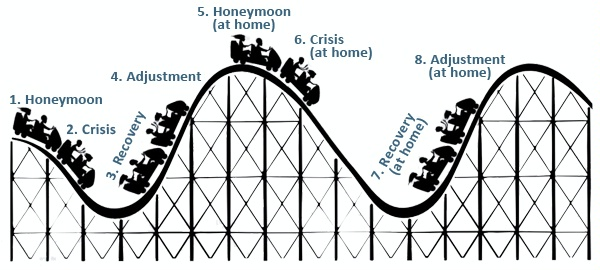
But Kaine, you’ve been back to America since you left in 2014, you saw the changes as they happened! Yes and no. I saw America during my vacations the same way any tourist might see a country they visit for only a few weeks. I focused on excursions and experiences, the only real difference was that I made excursions of visiting friends and family rather than visiting tourist attractions. I planned sailing days and camping trips and cookouts. I went to house parties and dragged people out to karaoke nights. I didn’t pay a lot of attention to the cost of groceries or what was happening in politics. For those few weeks at a time, America wasn’t my “home” it was my holiday, and it wasn’t until I was back in my home abroad that I returned to viewing the US economy and politics through the lens of the internet.

This is an excellent article about the experiences of long term expats returning home, and honestly reading it made me feel both seen and called out.

“Americans often develop new attitudes, values and perceptions as a result of their travels. These can often cause stress on reentry.

  • I see America through a sharper lens, both its strengths and weaknesses. I no longer take this country for granted and I really resent unbalanced criticism by Americans who haven’t experienced the rest of the world.
  • I see the validity of at least one other culture. That makes me realize that the American way is not always “right” or “best.” I am impatient with people who criticize other countries and blindly accept everything American causing them to never question anything.
  • I have an unclear concept of home now.
  • I place more value on relationships than other Americans seem to. People here are too busy for one another.
  • Everyone in America is always so stressed and frantic. They never relax. I feel like I can’t relate to others

The Economy

It’s normal to become critical during the second phase of culture shock. I’ve published about these effects before, and the article above is great for explaining how it manifests in reverse culture shock. Nonetheless, even while I was still in the first (honeymoon) phase during August & September, I started feeling the negative impact of some big changes in the US.

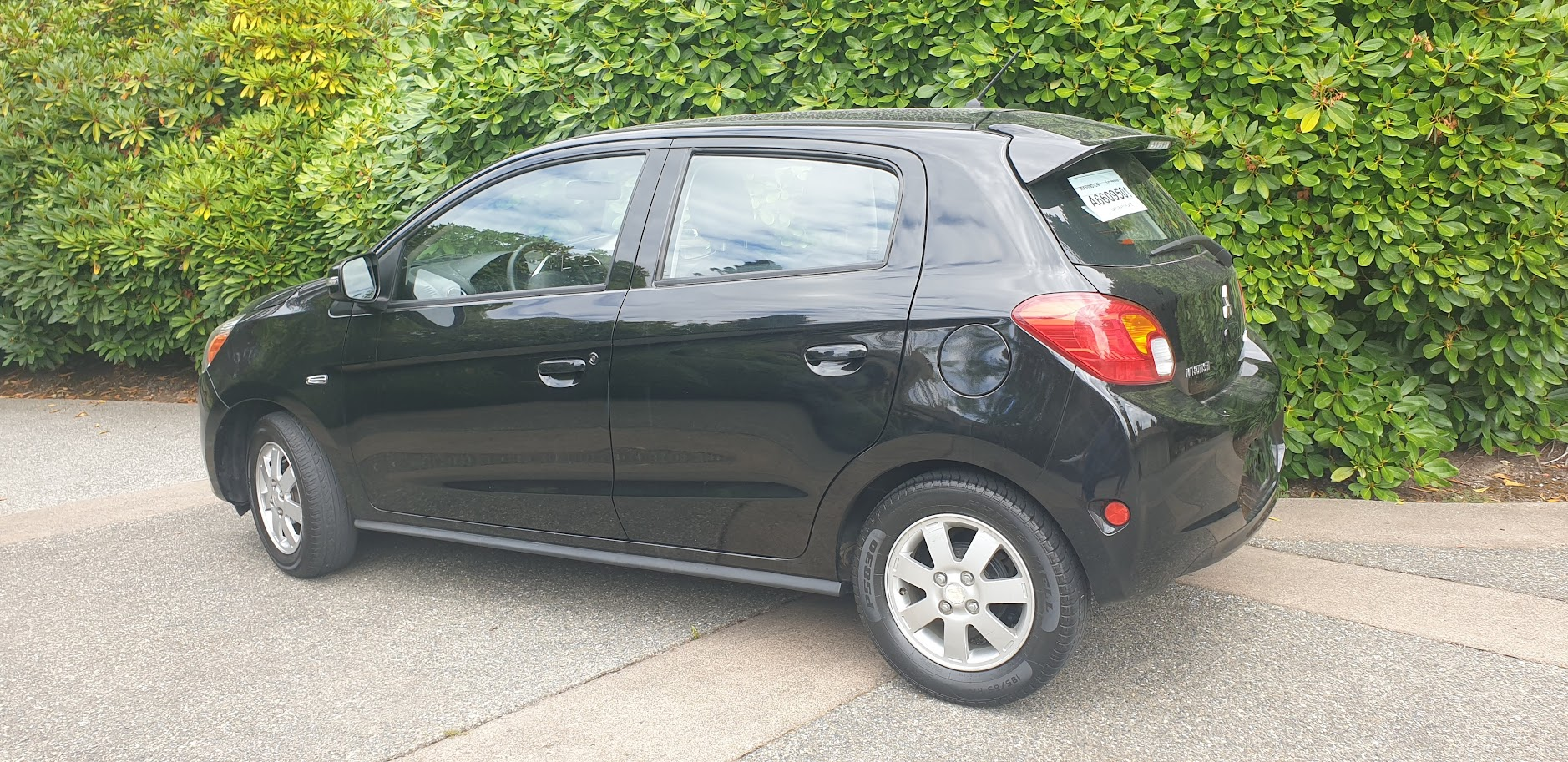
I needed a car because it’s almost impossible to navigate American cities via public transit, but I was absolutely shocked at the prices, even on used cars! In 2015 when I was in the US for a few months doing the paperwork for my Korean work visa, I bought a car for $1,750, drove it while I was in country, then sold it for the purchase price when I left. In late 2023, I couldn’t find a used car for less than about 7k$, and those were very sketchy.

My plan to buy a clunker for under 3k and sell it on to a poor college student went up in smoke. I ended up buying a used car from a dealership and hoping that the good gas mileage makes up for the loss in sticker price when I sell it back.
Then there are the grocery stores. I can’t say exactly why, but sometime after I moved to Korea in 2016, American grocery stores became increasingly overwhelming. I can’t even say it’s the size, because I have successfully gone to large box stores like Home Plus and Carrefour in other countries and not felt the pressure that American stores give me. I remember walking into a Safeway in 2019 and just staring at the wall of ice cream for a full 5 minutes, totally flummoxed by the array of nearly identical products. 

When WA grocery stores became liquor sellers (2012), they had to figure out how to add new products without removing existing ones. The eventual solution was that many stores made the aisles smaller so they could incorporate more shelf space in the same square footage. The aisles got narrower, but stores didn’t replace their shopping carts with smaller versions. By 2023, the sensory overwhelm had gone from merely being too many choices and no way to choose, to a feeling of being totally lost and crowded in by impatient and frustrated shoppers in narrow aisles with giant carts which made passing an Olympic sport.

The products and packaging were unfamiliar, I struggled to assess healthy and frugal choices. Products that I did know had somehow doubled in price, overtaking average inflation at light-speed. In 2008, a person could buy a whole roasted chicken for $5, eat it for several meals AND make soup. An organic bird would be $7-9. Now the conventional chickens are $10+ and the organic/farm raised $12-18. In the end, I found that the only store which didn’t make me want to run away screaming was Trader Joe’s, and I did 99% of my shopping there.

Not only grocery stores, but the nature of in-person shopping had changed across the board. In-store service and options had become extremely limited. Once 24 hour shops had become practically European in their hours, and stores were chronically understocked and underserviced. Several times when I popped into a shop to pick up a small item or to look for something I could touch, measure, handle, or try on before buying, I was told plainly by the clerk that it was out of stock and I should look on Amazon.

Eating out was another huge sticker shock. My favorite Seattle staple food is pho (the Vietnamese noodle soup). At my graduation lunch in 2007, we could get a big filling bowl of rich meaty pho for about $5. Now a bowl of pho is $12-15. I went to a couple of what I would call mid-range independent (not chain) restaurants and dropped $80-100 on a single meal (after taxes and tip). Many places I lived and visited abroad, you could get a high-end meal out for between $25-40 (inclusive of taxes and service).

mahalie from International District, Seattle, Washington, CC BY-SA 2.0 https://creativecommons.org/licenses/by-sa/2.0, via Wikimedia Commons

The Food

Food remained a contentious issue for me the whole time I was in the US. In the past, I have had food intolerances which contributed to chronic inflammation, pain and fatigue. I stopped eating dairy and wheat back in the early 2000s and it made a huge difference. Starting in 2008, I experimented with eating wheat and dairy in other countries as compared to in the US. Country after country, as long as I avoided imported US foods, I could eat what I liked and feel fine. However, in the US, it seemed my body only tolerated organic wheat & dairy products, and conventional ones still resulted in inflammation (a general flu-like bleh feeling all over). I thought as long as I managed my bread and milk, food in the US would be easy enough. My body laughs at me when I think like this.

It has been widely discussed that the quality of food in the US is very different from that of other countries. There are hundreds of articles about pesticides, hormones, preservatives, and processing chemicals out there you can read, and I’m not going to recap that here other than to say it is a well documented issue that food in the USA is problematic and contributing to many health problems for her citizens. (pic below, my first and only experience with Chicago deep-dish pizza)

After a couple of weeks of eating novelty junk treats and processed frozen meals, my body protested loud and clear. I had to be pickier and pickier about what I would eat and eventually, food that was too sugary or over-processed simply stopped tasting like food. I remember taking a slice of a cake that looked so delightful, then on my first mouthful wondering how it tasted so awful. The cake was sugary and vaguely spongy, while the frosting tasted like it was actually made of melted plastic. The people around me seemed to enjoy it. I visited a friend’s house where they made a meal I would have made myself 10 years ago and been happy with. I took a small amount to be polite, but again, my body made sure I knew that what I was eating had only a passing resemblance to food. 

Not only did I feel constantly disgusted by the majority of US food, I felt bad about complaining or even abstaining when others around me were eating, enjoying, and offering to share. Sharing food is one of the most fundamental social bonding activities humans can engage in, and my friends, many of whom are still in financial struggles, wanted to share their food with me. How could I tell them that my body didn’t think what they were eating was food? (pic below, a Thanksgiving “turkey” made of Baskin Robbins ice cream and frosting, just one example of the absurd food-options that abound in the USA)

And, despite my caution around eating, and reintroducing an exercise regimen, I GAINED weight in the US. It is my belief that the food itself was the bigger part of the problem, but I also tend to overindulge in sugar when I am stressed, a condition that pervades the life of any American trying to achieve work-life balance. I don’t know what it would really take for me to be food-healthy in the US long term, but I expect it would require a LOT more work and money than would be required to eat a basically healthy diet almost anywhere else.

The People

I had to confront the feeling of failing to fit not just in the larger cultural sense, but also among my own friend/chosen family community. I changed and grew, and so did they. Most of them for the better, thankfully, but in all cases they weren’t quite sure where to put me in their lives when I was in town for months rather than weeks. When I was only available for 12 days, it made sense for people to rearrange their schedules for a unique event, so vacations were filled with revelry and reunion. However, I feared that living there would make my presence mundane, banal, and that my friends would think there would be time later, so they wouldn’t make time now. Thankfully, that fear did not come to pass. Although some people I saw only once or not at all during the 8 month stay, many others made time for me or invited me to planned events at least once a week. I treasure my community.

“General Challenges

  • People at home aren’t as interested in hearing about your foreign experience as you are in telling them about it . 
  • You aren’t as interested in hearing about what has happened at home as they are in telling you about it. 
  • You miss the tight-knit foreign affairs community you were a part of.

I have learned over the years that people stuck in one country (especially Americans) have strong feelings about listening to my adventures. Some of them love it, they see me as their own personal documentary, and it’s delightful. Others are busy comparing their lives to mine and dislike hearing about what I’m doing abroad. I try to respect everyone’s wishes in this, but it can be hard since 95% of the last 10 years of my life has been abroad and I can’t tell stories about my life experiences without involving travel.

Whichever way it goes, it’s massively different from talking to other expats. I had almost forgotten how much I loved swapping stories among the expat community when I ran into another long-term expat at a party in early April. I realized that it was the first time since coming back to the US that I felt comfortable talking about my life abroad for more than a few minutes or in any detail.
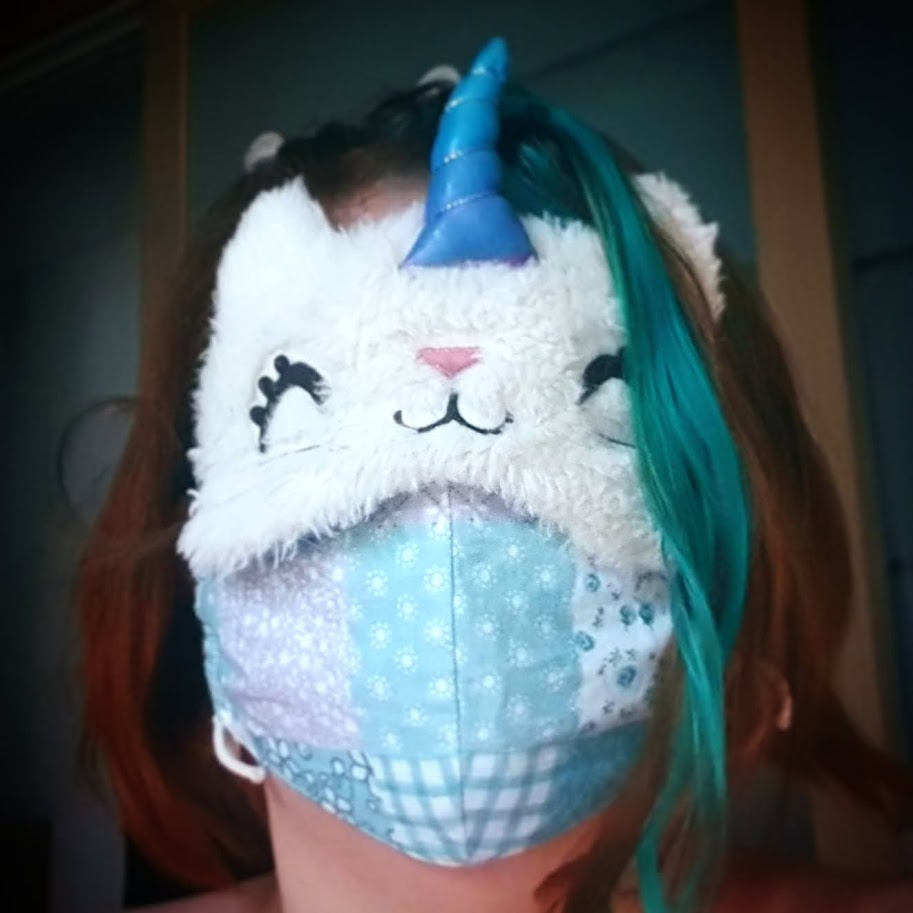
It felt like I was holding my breath around my friends and family. I talked about my American experiences with them all the time, shopping, work, things happening at the home I lived in or with other friends’ lives, but I minimized my expat-self, trying to fit into the shape that was left for me. I don’t think my friends consciously asked me to do this, and many would be shocked or saddened to learn that I had been suppressing a part of myself for their comfort. I know they love me and I chose to change the way I interacted with them to make them comfortable because I love them. Call it masking, call it code switching — choosing to focus on a different part of my life and activities when I’m with different people is normal. However, it has made me realize that I can’t live with ONLY this kind of interaction. I need the expat community too, which makes long term residence in the US challenging.

The other difference I noticed in people was more general, society at large. I don’t mean the blatantly obvious “us vs them” divide in America that you cannot help but see if you follow any news at all, but a quieter and less politically motivated change. The shared trauma of COVID changed everyone in some way. I cannot speak for the whole country, but in and around Seattle, people were more closed off, less trusting, less willing to be open.

It’s part of my mental health journey to notice nice things and to make the world around me better than I found it, so I trained myself in the habit of talking to strangers, offering compliments and help whenever I can. I made a game of my daily commute to see how many drivers I could be nice to each day as a way of fending off road rage. (strangely, the commute was one aspect of American life that didn’t bother me) Yet I found that often my overtures of friendliness toward strangers elicited a mixture of confusion and even suspicion before giving way to acceptance and relief.

I am far from the first or only person to notice this trend. A simple Google search will reveal many think pieces searching for reasons why Americans are becoming less social and more isolated, most stressing the dangers for our collective mental and physical health.

My friends who had regularly exchanged hosting dinner and game nights had stopped during lock-down and never re-started. The feeling I got was that the inertia of staying home was so strong that going out required a more special occasion than “dinner and board games”. I also tried for a little while to make some new friends or even (gasp) date. I met people who seemed nice, who I was happy to spend time with and get to know, but they had no ambition to do anything different in their lives. They wanted a new friend or a partner who would fit seamlessly into their existing lifestyles without necessitating a change of habits or hobbies.

People know they crave connections, but seem unwilling or unable to sacrifice even the tiniest bit of safety and comfort for the privilege. People who have been isolated for long periods of time can absolutely suffer increased social anxiety. When I floated this theory past an expat friend of mine who has been back in the US about 18 months longer than me, she said it wasn’t exactly social anxiety, but that everyone felt “tight”, and I understood exactly what she meant. I sympathize with how difficult and uncomfortable they must feel, but it’s both sad and horrible to see.

The American Dream?

Americans are also feeling a lot of financial anxiety. Almost all my coworkers were working overtime, some as much as double time (two full time class loads!) and felt completely unable to stop, either from the weight of their financial obligations (high cost of living) or from a fear that setting any boundaries for work-life balance would cost their job. I had coworkers who were astonished (and envious) that I simply didn’t read work emails outside the office. Others who fretted and stressed that their quarterly contracts might not be renewed despite the massive teacher shortage and high demand. The insecurity was so strong that even though everyone I talked to had noticed certain problems, no one wanted to speak up about them. (Did I? Yes, but it was neither easy nor consequence free. Still glad I did it.)

It was also hard for me to reconcile the gulf between online calls for social justice with the fear people experienced of getting personally involved. Having watched the struggle for civil rights and equity in the US take place almost entirely online for years, it had seemed to me like more people were getting involved, but after living in the US for a few months, I am concerned that the involvement is performative. People can safely speak out online and issue company memos to make themselves feel involved (or if you’re more pessimistic, to make themselves look better to others), yet when it comes to real practical solutions for enacting these policies, no one seems to want to take action. The college that claimed the top ranking for social justice, equity, and accommodation in the region had completely failed its non-English speaking students in this regard and when it was pointed out, they simply changed the subject. Only one person in the whole administration ever actually admitted to me they were failing in that area, and they still didn’t know what can be done about it.

To me, the fear of getting involved in social issues seems like an extension of the same fear that is preventing people from forming deeper social connections, and that fear feels to me like the fear of a child who has skinned a knee falling off their bicycle and doesn’t want to ever ride again. “No, no, walking or being driven is safe and comfortable, the bike is too risky, too painful, I don’t really need it anyway.” Yet, we tell our children to get back on the bike because we know that the better part of life isn’t about falling, it’s about getting back up, and that while it may not be strictly necessary for a safe and comfortable life, the joy of riding a bike with the wind in your hair, and the feeling of freedom it brings is worth the risk of a skinned knee.
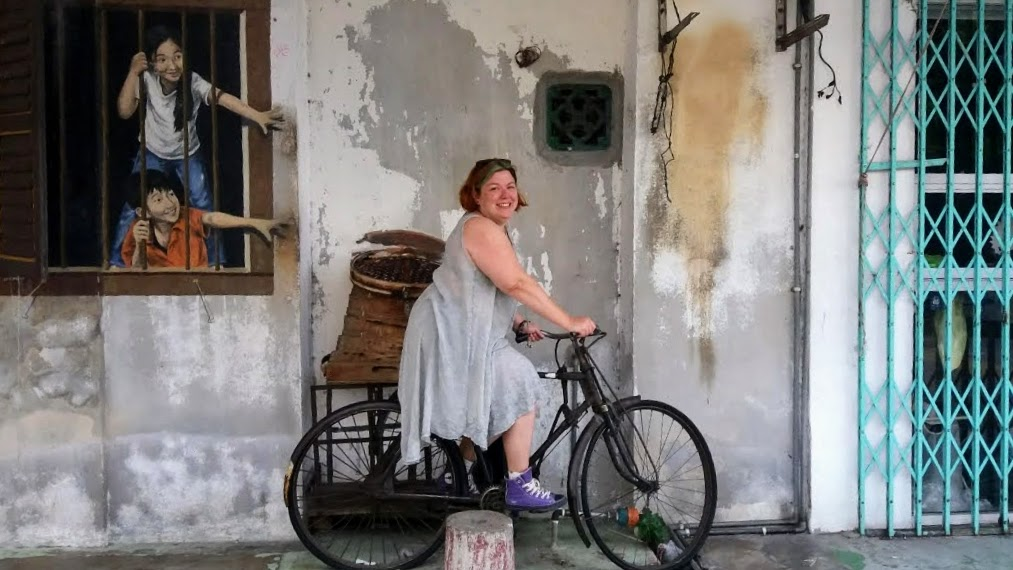
Get Back on the Bike

The decision for to strike out again was unexpectedly difficult. My emotional and mental state had become a mélange of post-Covid insecurity, second-hand PTSD, and of course – reverse culture shock induced depression.

My “secondary trauma” (also called second-hand trauma and compassion fatigue) came close on the heels of all the work I did to process my own primary trauma. Secondary trauma is what happens when you are repeatedly exposed to other people’s primary trauma. It’s usually care providers like doctors and psychiatrists who treat trauma sufferers that get this, but it turns out aid workers in developing countries and teachers of students fleeing violence are 100% exposed to secondary trauma. Oh look, it’s me.

This combo meant that my overall resilience was lower, my anxiety was higher, I was less able to focus on new ideas, got tired more easily, had brain fog, and difficulty generating enthusiasm. Even after I decided that what I needed was to travel for joy (rather than work), I had trouble feeling excited or engaging in research and planning. This was especially devastating since prior to COVID, one of my favorite activities was researching and planning my global vacations. (the color coded spreadsheets brought me joy!)

One of my friends also pointed out that I was likely reluctant to make plans to leave because I was in a safe and comfortable place. There simply wasn’t anything uncomfortable (enough) for me to run away from anymore. What a wild notion. I’ve known for several years (thanks therapy) that when I started this journey I was running away from who I was in the US at least as much as I was running toward adventures and experiences in other countries. On this visit, armed with the new tools of my COVID-isolation induced therapy work, I was better able to be a person that I liked while in America. And due to quirks of fate, I found myself living in a home that had the kind of “good enough” parenting and comfortable easy love that I dreamed of having in my own childhood home. Who would want to give that up?

Yet as I cast my gaze across the sea once more, the idea of going to France for the spring took root in my brain. The lack of enthusiasm and general feelings of ennui made implementing any sort of plan quite challenging. I dragged my feet on making any decisions or booking anything for so long. People would ask me if I was excited to go to France, and I would lie and say “yes”, while inside I had a nightmare vision that I would do all this work and spend all this money and somehow arrive in France but be just as unenthusiastic as I was in Seattle. It was an act of faith on my part that I would do the minimum needed to embark, and that my sense of adventure would catch up to me at some point. And now, here I am in Tours, in the Loire Valley, taking French lessons and eating at a boulangerie every day. 

Although it took weeks (maybe months?) for me to imagine and enact my plan, it only took a few days after my arrival for the fog to lift and my enthusiasm to come rushing back, but I don’t think it was the change of scenery (or quality of food) alone that performed this seeming miracle. Every single person I have met and interacted with in this historical French city has been open, kind, generous, and trusting with me. At first, I too was surprised, suspicious and even resistant, but when I let myself relax into it, I found that I could take joy even in the simple act of ordering lunch.

I may not be able to change the economy or the political landscape of my country, but I do have the power to change myself. I can decide to take risks and to be open to new experiences, even when I don’t feel like it. My favorite part of all my adventures has always been the people, and yet the people I love most are suffering in isolation. Perhaps the way forward is to put in some work towards rebuilding openness, connection, and wonder, and trust that the absence of an instant reward is not indicative of failure. Thanks to a combination of the support of my chosen family, my willingness to work toward a goal in the absence of enthusiasm, and the relentless kindness of a whole bunch of strangers, I’m finally feeling less “tight” and more excited for the future. I hope you can, too.

Aventure en France, me voici!

Book & Author Review: Gretchen L. Schmelzer

This started as just another book review, but it got into Dr. Schmelzer’s blog along the way, so now I’m writing a whole post about her and her stuff. I do want to make it clear that I have tremendous respect for her and the work she is doing. I found the book immensely helpful, and while I do have some criticisms on her body of work, this is not an attack or indictment. As a result of exploring my conflicting feelings about possibly her two most famous publications, I have found myself subscribing to her blog because it’s well written and thoughtful: bite sized pieces of the advice she gives in her book in a timely manner relating to what is going on in the world around us. I just… can’t go to the “parents corner” ever again.

Journey Through Trauma: A Trail Guide to the 5-Phase Cycle of Healing Repeated Trauma

This book is designed to be a trail guide to the path of healing from long term trauma. That is also a little misleading since you have to walk the trail about a million times before you “finish” because, as the author points out repeatedly, the healing journey is not linear with a clear beginning, middle, and end, but rather like a progressive spiral. Imagine going up a mountain. You don’t just start at the bottom and go straight up. You either do switchbacks or walk a gentler sloping path around the mountain, getting a little higher up each time. The path of healing is like that. You feel like you’ve been here before, and you’ve seen this view, but you’re a little closer to the top every time you round the bend.

She also stresses that it’s impossible to walk this trail without a guide – a real human guide, not a book or map. She compares it to going up Everest, which is not a thing you do alone. Pretty much every book I’ve read repeats at some level the need to get professional guidance on a trauma healing journey. Even the ones that aren’t peddling therapy have still pointed out the absolute impossibility of fully healing from relational trauma without forming new bonds with other humans. I’m blocked pretty hardcore in this the same way all trauma survivors are (by my own fear and distrust, the worry that the other humans will hate “real me” or leave just when I’m starting to feel connected, etc), but I’m also blocked by Covid and living in this small town in Korea, which I also can’t change because of Covid. It’s getting really frustrating that not only is this pandemic taking away so many good things in my life, now it’s becoming a major obstacle to my healing.

Schmelzer reminds us of the need for a trained trauma therapist repeatedly and gives some very compelling arguments about it. I’ve been resisting finding a therapist since the fiasco in 2020 where I got 2 in a row that were not only unhelpful, but actively triggering me into worse and worse feeling states while offering zero support or recognition of that. Turns out, CPTSD is not a thing you can go to any ol’ therapist about. You really need someone trained in it, and who has done significant work on themselves in therapy as well. Armed by several of these books with a wish/check list of what I need in a therapist, I could look for one that will be what I need. Yet, I still have fear, I still have the “everyone lets me down always so I must do it myself” inner voice to get past, so when I went online just to look at options, I had a tiny baby anxiety attack and had to close the internet and go do other things. This takes work, but I’m slowly coming to terms with the fact that it’s work I need to do with someone. My intake video appointment is now scheduled for early October.

I appreciate this book’s map of the healing process because it really is a good guide to the stages we need to go through over and over as we spiral up the mountain. I also enjoyed the detailed but simplified explanations of how the brain processes memory in regular events, one time traumas, and recurring traumas. However, these fade into the background next to my own big ah hah moment from this author:

The 3 Phases of Experiencing Trauma

She makes it clear that she is speaking of long-term trauma or repeated trauma, as opposed to a single traumatic event. It’s important to understand how these are different for several reasons, but mostly because it informs our healing journey. A single traumatic event like a car accident, a robbery or rape, or even a natural disaster like a hurricane can and will trigger the brain’s defense and panic mode (go go gadget amygdala!) which causes things like adrenaline and cortisol to flood the body, it changes the way the brain functions, bypassing the prefrontal cortex and going straight to action. It also changes the way that memory works, recording in HiDef everything that is happening and storing it in a special place in the brain. That’s part of why PTSD flashbacks can be so vivid. However, in the case of long term or repeated trauma, the brain simply can’t keep pumping out emergency responses day in and day out, so it shuts down certain functions. This impacts our emotions, reactions, memory, and many other things. It is part of the reason why CPTSD flashbacks tend to be only emotions without any visual/audio context because the memory storage function of the brain changed during that recurring trauma.

In long term, recurring trauma, you have three things to look at:

  1. What happened to you? – what was the actual trauma? This can be hard to answer in the beginning because protective measures in your brain are keeping you from looking at it head on. You may not even be able to put it into words because the speech and language center of the brain is actually CUT OFF from where the traumatic memory is stored.
  2. What did you do to protect yourself? – this may be conscious or unconscious actions. Unconscious actions are things your brain does on its own like emotionally numbing, dissociating, forgetting, and rerouting memory and thought connections. Conscious actions may be easier to remember because you probably came up with those in a less dissociative moment. We gotta see both.
  3. What didn’t happen? – not in the “well it could have been worse” sense, that platitude can die in a fire. In the sense of what did you miss out on? What developmental milestones, what life growth milestones? What were you unable to do, see, or grow from because you were trapped in trauma? And oh, wow, is this a doozy.

Don’t Live in the Past, But Do Visit There

I, like many of you, was taught by family and society at large that dwelling on the past is unhealthy and undesirable. “Just move on. Just get over it. You can’t change the past, so stop dwelling!” But if we don’t spend some reasonable amount of time “dwelling” then we can’t understand what happened to us and we will never heal from it. Shoving aside past trauma simply because the traumatic event is over is NOT HEALTHY. People will fight you about it because they a) don’t want to confront their own pain, so watching you do it makes them uncomfortable, or b) don’t want to take responsibility for traumatizing you or others, so listening to you work through it makes them feel shame and guilt, followed quickly by rage and blame.

Just… like…don’t talk to those people about your journey, but also, don’t let them stop you from taking it.

So here I am reading these three phases and going, “wait. what?” and revisiting all the little “if only” and “what if it had been different” thoughts I’ve ever shoved to the side because “you can’t change the past” and it was like a revelation to finally feel like I’m allowed to make space for those feelings. Yeah, no one wants to live in the past. That’s not the point of this activity. We suppressed, denied, and cut out the painful and traumatic parts of our lives in order to survive them as they were happening. Once the trauma is over, and we no longer need those survival tactics, we have to fully experience the things we locked away so that we can put them in the past where they belong.

COVID19 Is a Traumatic Event

In applying this to the Covid pandemic, which is a global scale recurring traumatic event, it made a lot of things fall into place for me. Like, why did we all go from panic to burnout so fast? Because the brain shuts down a bunch of cognitive functions when it can’t sustain ongoing trauma. We just did that collectively as a planet. The book has some examples of this kind of widespread, community trauma response in countries where there’s been war, intense civil unrest, dangerous political upheaval, or national natural disasters which destroyed large parts of the country. We have examples of how large populations experience trauma. This is just the first time in recent memory that we’ve had trauma on a global scale to contend with.

We can see phase 1 in the news every day: what is happening to us? A global pandemic, restrictions, closures, economic hardship, and of course illness and death. Most of us are at least marginally aware of phase 2: what we are doing to protect ourselves. I’m part of the Animal Crossing horde, and pretty much everyone in there knows that our intense obsession with the gameplay is a coping strategy for pandemic stress. Other people got really into sourdough. We’re all either numbing or dissociating to some extent whether we know it right now or not. However, we are all intensely aware of phase 3: what we’re missing out on. It’s easy to see the missed holiday gatherings, missed campus activities, missed vacations, weddings, graduations, and other milestones. I think in some way because it’s so obvious to think about what we are missing out on during this trauma, that it made it easier for me to understand how this is a part of all long term trauma.

Attachment Disorders

I had read a bit about attachment in a few other places, but almost everything that is published focuses on children. Which makes sense because attachment is a thing that happens (or doesn’t) to developing children. However, time keeps on ticking, and those children grow up, so what happens to adults who had attachment disorders as children. Again, there’s a little stuff on this, but mostly in terms of criminal or violent behavior. We do love a good “true crime”. This was the first book I found that had any real discussion of what attachment disorder might mean to me as a non-criminal, yet still affected adult. I honestly don’t think I could summarize it or explain it better than the original text, so brace for heavy quoting:

“And now, before every parent reading this section fears that they have ruined their child, what is really important to understand about attachment and healthy relationships is that it isn’t about getting it right all the time. It isn’t about being the perfect parent…In fact, powerful research shows that both parents who have secure relationships with their children and parents who have insecure relationships with their children get it wrong about the same amount of time (roughly 50 percent)…Getting it wrong is actually just part of what it means to be in a normal relationship. So what distinguishes a secure relationship [is] your ability to go in for repair. Parents who have a secure relationship with their children keep trying something else in the interaction until they get it right enough. Or they apologize for getting it wrong. Or they get it wrong and inquire. And this constant state of “try something — get it wrong — repair” is how we human beings teach each other how to be in a relationship with each other.”

This was a fairly large revelation to me, because I felt frequently that none of my parental figures (bio or step) were willing to do ANY repair work, or try anything different. If their way didn’t work, then clearly I was the problem. Why couldn’t I just figure it out/ get it/ do it/ stop whatever they didn’t like, etc. And it’s pretty shocking if you think about it, because this kind of behavior isn’t even close to what most of us think of when we think of abuse or even neglect. She goes on to explain the three main types of insecure attachment: anxious (preoccupied), avoidant (dismissive), and disorganized (fearful-avoidant). To help survivors in the journey toward recovery, Shmelzer says, “It’s helpful to think about each of the insecure attachment styles as a solution to a problem. Each of these attachment styles was the best solution that you could come up with to cope with poor, inconsistent, neglectful, or abusive caregiving.” Again, I think it’s relevant to note that “poor” and “inconsistent” are listed alongside “neglectful” and “abusive” because insecure attachment doesn’t only come from abuse.

Anxious (preoccupied) Attachment

“If you are anxiously attached, you decided to use a strategy of managing inconsistent caregiving by becoming hypervigilant – and anxious. You want to believe in relationships and you pay close attention to relationships, but you don’t believe in their reliability. Children who employ this strategy look clingy or fearful – never wanting to let go, for fear they will never be able to grab hold again. If you are an adult who employs this strategy you may find yourself assuming that no matter what you do, you will be abandoned by the people you love, or that the relationship is too fragile to handle your problems.”

I thought about this one. I do this sometimes. When I have in the past found a person that I thought had some special unique ability to care for me, I could be clingy, but I always hated it. I hated the way it made me feel, like why should I have to beg or struggle so hard just to be loved? A part of me knew that wasn’t right, and far more often than not, if a person wanted me to put on a show for their attention, I turned into this next attachment style pretty fast.

Avoidant (Dismissive) Attachment

“If you are a person with a dismissive attachment style, you settled on the opposite strategy – you decided that it was too hard or painful to try to rely on unreliable caregivers and chose to simply ‘not need’ anyone, seeing any of the normal proximity seeking as a weakness; you work instead to protect yourself through self-sufficiency. You often look pretty solid on the outside, but feel disconnected on the inside. Others may feel like they can never get close to you.”

I spent a not inconsiderable amount of time living in this style, too, but it felt like a cycle: I’d get lonely or optimistic and I’d start trusting and investing in a person (or people) and then they would leave, let me down, betray me, ask too much, give to little… in other words: be human… and I would withdraw, turn tough and self sufficient and disconnected. But then I’d get lonely again… It reminds me a LOT about the story of the Wise Turtle, which was one of my favorite books as a child. I may have even convinced myself that alternating between these two unhealthy coping mechanisms was somehow “wise”, but it turns out there’s another name for not being able to attach to an attachment style:

Disorganized (Fearful-Avoidant) Attachment

“[T]he last category of insecure attachment is called “disorganized” in childhood and “fearful-avoidant” in adulthood – and tends to be the result of the most abusive or neglectful parenting. In many ways it’s an attachment style where neither of the strategies of the other two, anxious or dismissive, worked well enough – neither getting close nor staying away was consistently successful – and so you may find yourself alternating between them in what one of my psychiatrist colleagues once described as a “closeness-distance” problem. As a fearful-avoidant person you can find no safe distance. Often the solution is a false self. You create a persona that looks good on the outside, but you believe that if anyone knew the “real you” on the inside, they would leave you, which forces you to work desperately hard to make the outside look good, which means that you have to hide your problems rather than seek help. And because you believe that this false self is a fraud, it’s hard to let anyone get very close for fear of being found out.

I really hate being called out like that.

This is a big step for me in my continuing journey to recognize that not everything that traumatizes us is violent or abusive. I know a lot of adults who suffer from a variety of mental and emotional issues that are almost certainly linked to insecure attachment who refuse to investigate the possibility because they don’t want to think of their parents as “bad”, or of themselves as “abused”. I argue that we don’t always have to choose between ourselves and our parents. Some parents are abusive, or so toxic that it’s just impossible to keep our own mental/emotional balance around them, but many parents tried their best, and are still trying. Recognizing what happened in the past isn’t the same as “blaming”, but we need to understand because we can’t heal if we don’t know what happened.

The Five Steps of the Healing Journey

Schmelzer breaks down the healing cycle (remember, you have to walk it many times) into 5 stages: Preparation, Unintegration, Identification, Integration, and Consolidation. Preparation is getting to a safe and healthy “basecamp”. Unintegration is taking all the broken pieces out of the box. She deliberately uses the grammatically incorrect “un” instead of “dis” because she wants to stress that it is an organized falling apart, a kind of “controlled fall” rather than an uncontrolled collapse. Identification is the time when we put words to everything, a repeated theme in many trauma healing books. Integration is taking the now named parts and putting them back inside us hopefully in the past where they belong. Consolidation is living with your new self for a while before you start the next cycle. Stages 2-4 are the most vital to have real, trained and skilled help with, and you don’t try to do everything in one go.

It’s clear reading this book that almost everything I’ve done in the last year and a half has been “preparation”. I’ve had a couple very tiny “training hikes” as it were by going through all 5 phases with one small part of my trauma, but the big work is still out there ahead of me. I toyed with feeling down about this, like, “man, I’ve been working on this for 18 months and I’ve not even got past stage 2?” BUT. Schmelzer compares a healing journey to climbing Mt. Everest, and it does actually take 12-18 months to prepare for Everest, and it involves training and practice hikes. It’s important to prepare well. AND. I am actually still experiencing trauma… the same trauma as everyone else on the planet, Covid! Schmelzer points out that we can’t heal from trauma while we are experiencing it, and although my past traumas are finished, I’m still having ongoing defense mechanisms to protect me mentally and emotionally from the trauma of the pandemic, so can I even move forward on any of it from here? I don’t know, part of why I need to findtalk to a trained therapist so I can ask. I don’t really have a happy ending for this book review. It helped me see somethings, but mostly what I see is a lot more work. Good, necessary, and ultimately rewarding work, but wow that mountain is really tall.

More From Gretchen L. Schmelzer

I loved the heck out of the book. I really feel like it helped me to frame my thinking and my healing journey. I especially respected the rhythm of her prose because she would introduce a key piece of information, and then return to it multiple times throughout the book, which is how our memory works to retain information. I enjoyed it so much, I perused the acknowledgements at the back to see where her influences were. She mentioned the viral success of an open letter she had published in a blog, and out of curiosity, I went to go read it. I do NOT recommend that you do, and I will not be linking it here.

“The Letter Your Teenager Can’t Write’ may be designed to help struggling parents of willful teens, but it is a HUGE trigger for the teens (or once teens) of trauma-inducing parents. I cried for a good long while after reading it. It felt like a complete betrayal of everything she wrote in the book. To see her console clingy and overbearing parents to “hold on to the rope” and fight with their teens “for love” made me want to vomit. This is not hyperbole, I had a visceral physical reaction in my guts to reading it.

Further reflection enabled me to understand that when she said “hold on to the rope”, she meant the belay rope. In the book, she talks about mountain climbing a lot as the core metaphor for trauma recovery. A belay rope is the rope that secures a climber if they fall while fucking around on the cliff face. Schmelzer relates this to her own experiences of learning top rope climbing, which requires a human partner at the top to help secure and control the belay line. It’s a lovely little metaphor for how we must learn to trust and depend on other humans that may or may not be totally ruined by the very real knowledge that there are automatic belay line techniques which do not require a human partner at all, but hey, we’re trying to maintain a metaphor here, let’s not get tangled up in reality. The point is, that in the book, Schmelzer explains what the belay rope stands for, but in “The Letter”, she does NOT. It’s just a rope, that parents have to hold on to while their children flail around on the other end of, fighting to be free.

I recognize that in her mind, the image of the (belay) rope is one of trust and safety, but that is not at ALL what it made me feel. I feel rope nets holding me down, chains shackling me, and sticky globs of giant spiderweb clinging to my skin. The rope is NOT a comforting image to me. It didn’t bother me in the book because she was so careful to talk about it in terms of mountain climbing gear that I didn’t even notice. When I realized that all my mental and emotional images of “the rope” of relational attachment are GROSS and ensnaring, enslaving things, I had to have another look at the section on attachment theory, and now I feel like I am going to need to spend some time focused on that. The visceral stomach churning, gagging, skin crawling feeling is definitely my body telling me a thing.

Follow-up:

I wrote to Dr. Schmelzer about The Letter (after I did the calm down and reflect thing) and shared some of my feelings and perceptions, and she actually wrote back. I’m not going to put the whole thing here, but some key phrases that I think helped me to understand more:

“The Letter” is not only for parents of teens, but “for anyone to understand why they may need to pull away or feel angry at the people who are helping them.”, ” for people who have experienced trauma what I describe is more what you may experience with a therapist than with the parent who raised you”

This is a good way for me to look at it, but I can’t help but wish there were some intro or postscript to the letter itself that expressed as much. I recognize that I do pull away from help, and I’m very aware that my sister may at any moment pull away from me if my helping becomes too uncomfortable. I just don’t know that I’ll ever agree that “fight me” is the right way to help. The Letter focuses a lot more on the fight than on the willingness to continue to love and support in the aftermath of the fight, and that doesn’t seem like the correct balance to me.

“Parents who think they are always right and make themselves a victim or a martyr would find validation anywhere they looked or dismiss the information if it doesn’t validate their view…That they could use or twist my words is a given, that is what they do, and I have no control over that.”

This is a thing I also understand. We can’t stop narcissists from living in their own little world. That “healing fantasy” was addressed for me early on in this reading process with “Adult Children of Emotionally Immature Parents”. There’s no way to write anything that will fix this problem, but we can and should put some effort into making sure that our words are not easy to misuse. It’s hard to place “The Letter” in context the way it is written and presented on the website, and it feels a little bit like a cop out to say “I can’t control how people take my words” when you literally can choose to just write a short disclaimer, or context clue at any time.

Finally, This kid. This 15 year old kid who wants love and comfort, to be seen and heard, and found the letter and went, “this is not what your teenager would write if they could”. This one teen comment in a sea of relieved and self congratulatory adults. Is fighting with your teen inevitable? Meh, probably, all people fight in personal relationships sometimes, but I think a lot of the typical teen/parent struggle is on the parents. I know if my niblings wanted to do crazy drugs and drinking binges the answer would be “no”, but I like to think that we could talk about what’s going on that makes them want to, and why moderation in consumption is important. A teen with strong self worth and a good attachment shouldn’t have the impulse to dive into self destructive and pain avoidance behaviors. Experiment and test boundaries sure, but If you raised them right, you should be able to have a conversation and not a fight.

Fight me.

In Conclusion

A Journey Through Trauma is likely to stay one of my top 5 trauma healing books. I’m not going to agree with everyone about everything and that is totally normal. Being triggered by her attempts to address an important and difficult issue does not negate all of the positive things I said about her book, her insight, and her writing style. I highly recommend the book to anyone struggling with trauma, and I plan to add it to my re-read pile. Additionally, I’ve subscribed to the blog and hope that reading her regular reminders of the healing journey will be a useful tool. On the other hand, I’m pretty confident I’ll always feel at least slightly uncomfortable if not positively outraged every time I see or think about “The Letter”, and that’s ok, too. The path to healing is not “one size fits all”, and we are never under any obligation to follow advice that is not helpful.

Thank you Gretchen for all your hard work.


Thank you for reading and continuing with me on this exploration. It’s summer “vacation” for me, which means no classes, but for the second year in a row, no travel either. Outside the US, vaccines are scarce, and restrictions are common. I’m pretty safe, and my uni has started the process of registering the profs for our shots, but I stare into the abyss a lot. These days my goals include: sleep a healthy amount (not less than 7, not more than 11 hours), eat healthy food (fruits, veg, low fat proteins, whole grains, not more than 1 dessert serving/day), move the body (30 min minimum on the VR dance game or similar activity), socialize (at least one day a week, leave the house and interact with humans). These are tiny, tiny goals compared to some of the literal and metaphorical mountains I have climbed in my life, but they are what will keep me at my “basecamp” until the skies clear. Even the Black Death only lasted 4 years, so while my hopes for a resumption of normal life by 2022 may be a little unrealistic, I know there must be a light at the end of this tunnel for all of us. Persevere.

A Head Trip (Therapy Books Cont. 2021)

I had a plan to go through my books in order of reading, and that plan has, like so many before it, fallen totally apart. I am working on writing up thoughts and reflections on everything I read in 2020, but I’m still reading, and it seemed really easy to just write up the books as I finished them rather than to go back and remember. Plus, going back and remembering made me feel like reading those books again. Which I’m also doing, in between the new ones. So, to heck with linear time. I’m just going to put these posts out as I am able and try to put some temporal context in the beginning, like those movies that jump back and forth from “now” to some past which will maybe explain how we got here.

The Tao of Fully Feeling, Pete Walker

After re-reading CPTSD Thriving to Surviving, I realized I have a deep appreciation for this author. The Tao of Fully Feeling is a much earlier book by him, and he mentions it a few times in CPTSD, mostly in terms of what he felt he has learned since then, and things he wishes he could have included. I feel like reading them “backwards” was a good choice because I got to read Tao with the author’s hindsight in mind.

There are obvious similar themes dealing with childhood trauma and it’s effect on us as adults, but this book focuses on one main message: feel your feelings! This resonates with me because Brené Brown’s TED talk on vulnerability was a huge turning point for me in 2012 when I had been pummeled into a terrible life condition by an abusive relationship and ravaging illness back to back from 2004-10. I had started to physically recover in 2010/11 and by 2012 I was done wallowing in pain and decided to do something about it. Learning how to regain access to my genuine emotions was a huge step because we cannot, as Brené says, numb selectively, and if we want to feel genuine love, joy, wonder and other positive things, we must also allow ourselves to feel anger, sorrow, pain and other less pleasant feelings.

Things I particularly liked about the book include the myriad ways he gives examples of what kind of damaging behavior he is talking about, the way he is open about his own experiences without suggesting any need to compare experiences (it’s not the Pain Olympics, after all), and the absolute validation to go ahead and BE MAD. Grieving the loss of love, the death of a fantasy of parental security, the loss of who we might have been if we were not treated this way, the pain, the injustice… feeling all of that is important. He talks about how to feel and express the emotions of anger, sadness, grief, etc in healthy and cathartic ways, and advises on how to avoid expressing those emotions in ways that could harm ourselves or those around us.

Forgiveness

Walker approaches this concept from the goal of processing trauma, healing enough to curtail the damaging behaviors it causes in us, and learning to forgive. That last part is a little tricky. Walker himself was urged to forgive his abusive parents before he was ready, and it caused more problems than it fixed. He advocates against “false forgiveness”, and includes in that when we delude ourselves into wanting to “forgive and forget” in order to move on without doing the work. He says we have fully feel our anger, sadness, and blame impulses in order to process them. Suppressing the pain of past actions just means that pain stays around and sneaks out of us in messy and unexpected ways. He also stresses that forgiveness doesn’t mean we start talking to people who hurt us. Finally, he underscores the importance of forgiving ourselves. Many adult children of abuse, emotional distance, or neglect have internalized blaming ourselves for what happened to us. A critical part of recovery, Walker states, is forgiving our past selves for assuming and perpetuating that self-blame.

Generational Trauma & Empathizing With Your Parents

This is also the only book I’ve read so far that addresses the parents themselves as something more than merely the deliverers of trauma. He talks about discovering his parent’s own history of childhood abuse, and further, his grandparents’ painful youth. The generational trauma that goes back untold centuries can cause us to suffer for the abuse our great great grandparents suppressed and repeated. He acknowledges that we can have empathy for our parent’s extenuating circumstances (they were badly abused, they didn’t have any positive parenting examples, they did the best with what they had, but were pretty damaged themselves) while still being angry and sad that we were mistreated. Feelings aren’t simple and we can and should welcome ambivalence into our lives when it’s called for. There’s even a small section of the book directed at such parents who were both the victims and perpetrators of abuse/neglect on how they can work on healing themselves and on helping their adult children. The book ends with a helpful if not comprehensive list of things we can say to our children (inner children or the next generation) at different developmental stages to help them grow up feeling seen, heard, and loved with a strong sense of self-worth and curiosity.

The “Good Parent” Fantasy

My personal ah-hah moment in this book was realizing how it was possible for me not to see what my mother was doing for SO LONG. Walker explains that because children are so fully dependent on parents not only for physical security, but for emotional connection, self-esteem, and intellectual development, that young children simply can’t accept that their parents are unloving or cruel (intention on the part of the parent is pretty irrelevant at this stage of child development). As a result, young children develop intense defense mechanisms to simply not see or not remember when a parent acts in a toxic manner. Most children with early trauma have massive memory blocks that can last from birth to 12 years old. Although many start developing memories as early as 5, the memories are heavily redacted by the brain’s own internal self-guard. In my case, my father was scapegoated for leaving (took me 20+ years to learn that my mom gave him a pretty good reason for that), and my step parents were not … kind. It was easy for me as a child to revile 3/4 of the parental figures in my life, but then I turned all my need for parental connection and love onto my mother, who was oh so narcissistically happy to have it. Even when I knew things were bad between us, I assumed it was my fault and although I didn’t give up on being independent or moving out, I did seek to regain a loving connection with her after I’d been an adult for a while. I don’t think it was until I saw her repeating her behavior towards my sister’s children that I really broke through those decades of denial. When I did recognize my mother’s abusive and toxic behavior, I tried instantly to shift my ‘good parent’ fantasy over to my dad, which didn’t work because … well, he isn’t. He may not be as bad as my mom wanted me to believe, but that doesn’t erase the very real damage he did.

When Is Confrontation Helpful or Harmful?

I spent most of my life thinking that I had to confront my father (or anyone else who hurt me) in order to express my pain and move on, and Walker helped me to realize that is not only unnecessary but potentially harmful. Yes, a person (parent or otherwise) who is continuing to act toxically in the present needs to be addressed. We shouldn’t ignore it, and as Schulman suggests in Conflict is Not Abuse, we also should not simply cut people out of our lives for bad (non-abuse) behavior, but we might need to give them limits to protect ourselves if they are unwilling or unable to stop the harm.

Tao of Feeling helped me to understand that part of the reason I struggle so hard to have any kind of adult relationship with my father is that every single time we are together, I’m in a state of emotional flashback and hypervigilance. I want to have an adult relationship, but I can’t help but clench every muscle in my gut when I see his name in my inbox. I’ve learned in the last year or two that I need to take my time with those emails, get mad/sad, yell/cry, etc. then sit down to respond after a few days when the emotional flashback is subsiding. I know that identifying this is a good step, but as of this moment, I’m still not exactly sure what to do with it. I’ve done a little verbal or written ventilating since starting my recovery work, but I need to do more. Verbal ventilating, as Walker defines it, is a process of giving our past traumatic experiences and feelings words. It’s a huge part of healing because most traumatic memory and pain exists in a non-verbal part of the brain, and transferring it into words gives us the power to process it in to the past. This is the root of my feeling that I had to confront someone to “work it out”. A confrontation would force me to put it into words, which is the actual healing tool. The other person does not need to be there. As much as I need to say it, my father doesn’t need to hear it. Yes, he needs to understand there was hurtful behavior if we are ever to move on together, but he will not be served by listening to or reading an unexpurgated recollection of our time together the way I will be helped by saying or writing it.

If another person’s behavior is causing harm in the present (recent past, likely to happen again if not addressed) then you need to address it with the other person, but if our own emotional flashbacks are causing us to have disproportionate emotional responses, we have to address within ourselves. This is no place more difficult than with parents. A parent’s past abuse or neglect is the source of the trauma, the original cause of the painful emotions, while a parent’s mere existence in the present can be a trigger which causes an emotional flashback to that trauma they caused before. It’s almost impossible to untangle. For example, when my friend acts like my mom and triggers a flashback, I can (now) realize what’s going on, tell her I need a time out to handle my flashback, then when it’s passed, I can talk with her about what the trigger was and whether it’s something that she needs to take any action about. However, when I see an email from my dad, or some FB memory of my mom’s emotional manipulation, I can get triggered into a flashback in a snap just by seeing their names. How do we deal with that? Walker says I need to get it all out by fully feeling; remembering enough of the painful history to rail against it in full expression of bodily rage, and total surrender to open grief. It doesn’t sound fun, but it does sound better than squashing all my feelings because I can’t confront them directly.

The Boy Who Was Raised as a Dog, Bruce Duncan Perry

I was very skeptical when this book popped into my inbox. I didn’t actually remember placing the library hold, so clearly, I’d been waiting for it for a long time. The title also made me worried that I was about to read a non-stop trauma-rama of abused child case studies. However, it turns out that it is much more a ‘Neuroscience for Non-science Majors’ kind of book. Dr. Perry is an accomplished scholar, doctor, and researcher who spent most of his career on the cutting edge of childhood trauma research and treatment. The book does include several case studies, some of which are pretty much guaranteed to make you loose faith in humanity, at least temporarily, but it isn’t a voyeuristic inspiration-porn thing. There’s just enough details to give you the basic idea, then there’s a lot of discussion of therapy sessions, research, and basic neuroscience.

Neuroscience for Dummies

I’ve personally been fascinated by neurology and neuropsychology since I learned about it mumblemumble years ago. I enjoyed reading books by Sam Harris, watching every TED Talk on the function of the brain, perusing studies performed with the wonderful fMRI, which wasn’t even invented until 1990 and certainly not widely available for random research for a while after that. Plus lab research takes TIME, so the late 2000s to early 2010s was kind of an explosion of neuroscience research into the public sphere. I often wish I had been born just a little later, so that I could have found out about it before I went to college. I’ve also had some very financially irresponsible thoughts about going back to school just for this, but … money.

In general, if you need a good intro to the science of neurology with a focus on child development and trauma, he does a great job of explaining a very complex topic in easy to follow and engaging ways. I share his hope that by understanding what is happening inside our brains and the brains of those around us, we may learn to be more compassionate with ourselves and others when we are not able to instantly achieve best behavior through willpower alone. I think that is also a big reason I tend to talk about mental illness and trauma in terms of brain function so much. When we think of this as a physical function, like a diabetes, asthma, or myopia, then we can recognize that no amount of wishing or positive thinking will make it just disappear. (yes, positive thinking plays a very important role in healing, but it’s not The Secret). We need to learn to live with it, how to accommodate it and treat it, but also recognize that it isn’t going anywhere, and it isn’t a moral failing or lack of willpower.

The Evolution of Trauma Science

The other part of the book I enjoyed was the historical perspective. It is a bit painful to realize that I’m talking about events that happened in my own lifetime as “historical”, but in the last 40 years, there’s just been so much growth in research, understanding, and treatment of childhood trauma (and adult trauma for that matter) that I can’t really think of it as anything besides a historically important development. He talks about the things that even well regarded doctors believed in the 80s, how very very wrong they were, and some of the absolutely terrifuckingfying things that “professionals” advised parents do to “treat” /problematic/ children. (No amount of punctuation is going to express my combination horror-disgust about this.)

He walks us through the neurological renaissance of the 90s and the way that understanding the physical function and development of the brain changed the way we understand behavioral problems and mental illness. The book was published in 2007, so there have been even more developments since then, but the big re-think definitely started in the 90s, and it gives me a lot of hope for the people who are parenting now and have access to this kind of information that my parents just didn’t have. Maybe, just maybe, if we understand these new discoveries and the long term damage that trauma does (even when it happens on the watch of or at the hands of well-meaning and generally caring parents) then we can stop the cycle of generational trauma and start raising whole and emotionally healthy human beings.

There were several cases and studies referred to by Perry where physical symptoms provided the first clue to doctors that there was a bigger problem. I don’t mean “mysterious bruises”, but issues of sleep, appetite, weight gain or loss, resting heartrate, and so forth. There were also discussions of how often children were being misdiagnosed with behavioral or learning issues even when the trauma was a known factor. Trauma from abuse, neglect, or other traumatic events in a child’s life was often totally disregarded because the pervasive attitude of the day was “kids are resilient, they’ll be fine” or “they’re just doing that to get attention”. This argument is still used today to downplay things like the traumatic impact of school shootings, ICE camps, catholic priests, and anything else that’s too inconvenient to stop doing because it primarily affects children.

Expert Validation

Part of the reason I think case studies and personal anecdotes are important in the field of trauma psychology is the same reason group therapy works. We need to see our own experiences reflected in others to feel valid. Every time an expert in this field says something that resonates with me, I feel a little more validated and a little less broken. I had another “omg that’s my mom” moment while reading this book. On it’s own, the fact that multiple authors have described my mother’s toxic behaviors is kind of stunning. It reveals the fact that she isn’t even very original in her crappy behavior. Perry says, “people like [that] have a pathological need to be seen as nurturers and caregivers”. I had been trying to find a way to verbalize this aspect of her narcissism for a while. A lot of narcissistic people want to be seen as attractive, smart, better than you in every way that matters, but my mom’s narcissistic ideal is to be seen as the most wonderful caring nurturer in the world. It was so liberating to see this renown psychiatrist go, ‘yeah, that’s a thing that happens fairly often, usually in healthcare workers who were also abused or neglected as kids’ (check and check). Knowing that my mother’s specific type of narcissistic abuse is common doesn’t fix it, but it does help me feel more grounded in my own experience – less gaslight and more electric bulb, if you know what I mean.

The Boy Who Was Raised as a Dog

Spoilers. For those of you reading and thinking, “ok, but what about that boy in the title? What kind of shitty parents did he have?” I will relieve you of your mystery. The case was an infant (Justin) whose parents were unable to keep him at home, but rather than go in to foster, he was left with a relative (Arthur) who had zero childrearing experience, but did breed and raise dogs. “Left to his own devices, Arthur made care-giving decisions that fit his understanding of childrearing. He’d never had children of his own and had been a loner for most of his life. He was very limited himself, probably with mild mental retardation [sic]. He raised Justin as he raised his other animals—giving him food, shelter, discipline and episodic direct compassion. Arthur wasn’t intentionally cruel: he’d take both Justin and the dogs out of their cages daily for regular play and affection. But he didn’t understand that Justin “acted like an animal” because he’d been treated as one—and so when the boy “didn’t obey,” back into the cage he went. Most of the time, Justin was simply neglected.”

This is terrifying, but it isn’t evil in the way that many stories of extreme childhood abuse can be. The man didn’t hate or resent the child, he simply didn’t know what to do, and in addition had his own cognitive challenges which made him unable to process this new task. It is a good (if extreme) example of how a damaged/ignorant yet caring parent can fuck up royally.

The absolutely most terrifying part of this story isn’t that Justin was left with a mentally challenged man who treated him like a dog. (yeah, that’s not the worst part) The worst part is that the DOCTORS WHO SAW JUSTIN DECIDED HE WAS JUST RETARDED. Arthur didn’t try to hide anything. He took the boy to doctors when he realized that Justin wasn’t developing into a human child. The doctors who saw Justin in his first few years of life actually did some very intense testing including chromosome analysis and brain scans searching for the cause of his developmental delay and just NEVER ASKED about the boy’s home conditions. They told Arthur that the child was permanently brain damaged from an unknown birth defect and would never be able to care for himself. They straight UP abandoned this child because they did not want to look for trauma. This happened in the 1990s. If not for Dr. Perry’s intervention (1995), Justin would still be trapped in the life of a dog, unable to speak, or connect with fellow humans. You can read the full excerpt on Oprah’s website, but honestly, I’d recommend just reading the whole book.

Adventure Time: Distant Lands

This is not a book, and it’s not labelled as therapy (although I am of the opinion that the creators know what they are doing). Adventure Time is (ostensibly) a children’s cartoon set in the far future of Earth, now called Ooo, where mutants made of candy, ice, fire, and slime rule the many kingdoms. Our hero Finn is the only human, and he is 11 when the series starts. But I am not writing about Finn’s adventure. After 10 seasons of watching Finn cope with puberty and adulthood, the series came to a close, but the world of Ooo was not finished. A few longer episodes were released under the title “Distant Lands”, a nod to the theme song, and cover what is happening with a few of the supporting cast outside of the main series. Maybe you can watch it as a stand alone, but I don’t feel like it would make any sense, and I know it would not have the same emotional impact.

Why am I talking about a cartoon here?

I have noticed a trend in newer cartoons toward addressing actual emotional issues children experience rather than the things adults think are happening. I don’t really understand this disconnect. I can only assume that most adults forget or more likely suppress the memories of their own childhood, because I can’t understand why else they have no idea how complex the inner world of children really is. Not to sound like an old biddy, but “when I was a kid”, most of our cartoons were meaningless advertising for toys, cereal, or anti-drug campaigns that did no good whatsoever. Going back further, cartoons were full of casual racism and violence along with some war propaganda. I love some classic Warner Bros, but dang. And, I think it’s totally fine for cartoons to be meaningless entertainment. Not everything has to be a PSA or a life lesson. (NevergonnastopbeingmadatSpongebobforpromotingbullyingtho) Ahem.

But it IS nice to see kids content that actually deals with emotions and childhood issues in a genuine and healthy while still being fun and entertaining way. I’m pretty blown away by the reboot of MLP compared to the original. Same for the new She-ra. Big fan. There’s a growing number of these sort of “art house” cartoons that help children navigate the language of emotions and interpersonal conflicts. I mentioned Steven Universe in my last post, and I’ll talk about it again because it’s been a part of my healing journey. Today, I’m talking about Adventure Time.

Distant Lands episode 2 “Obsidian”. Spoilers ahead.

Marcelene spent her whole life feeling like a monster, acting out, being angry, feeling unlovable. Her father was a demon king, so I guess she was sort of half monster, but that’s not really what this is about. For Marcelene it was a thousand years of teen anxt, shitty abusive relationships, trying and failing to have an adult relationship with her estranged father, and deeply self destructive behavior before she found love and learned that being a half demon vampire queen doesn’t make her a monster because that’s not what “monster” means.

In “Obsidian” we learn that she feels this way because her mother sent her away as a child after her (demon king) father abandoned them. As a child, she used her demon powers to defeat a mutant wolf threatening her mom, then shortly after, her mom lied to her about some stuff and sent her away. Child Marcelene didn’t know why her mother would do that, so her child brain made it her own fault. “Mom is scared of me and ran away because I’m a monster.” A thousand years later, she learns the truth: her mom was sick, dying, and not only couldn’t care for her daughter in the hellscape of postapocalytic Earth/Ooo, but also didn’t want her daughter to see her that way.

The problem is: It doesn’t matter why parents push us away- illness, stress, survival, 3 jobs, personal emotional issues, divorce, any number of reasons that are very legit and do not involve a lack of love on the parents’ part and are frequently things they either can’t control or don’t know how to start to change. It doesn’t matter because the child will always find a story that makes it their own fault.

Mom and/dad can’t be sick/weak/crazy or I could die (literally small children can’t survive without adults), so I must be the problem. I must deserve this. I am broken. I am a monster.

Somehow, reading this in multiple books had not had the deep emotional impact that seeing one of my favorite characters experience it would have. It hasn’t been a thousand years for me but it feels that way. It has been a lifetime of anxiety, shitty abusive relationships, failed connection with an estranged father, deeply self destructive behavior and a thorough feeling of being a monster who is unworthy of love. I cried and cried and screamed and raged, and then cried some more. (Remember, Pete Walker says we need to do that.) I’m angry that I have felt this way as long as I can remember and I’m just now finding books and shows to help me understand it. I am angry for myself, but I am so hopeful that the existence of cartoons like this means we are starting to teach people how to see it and talk about it before a lifetime goes by. Our inner child needs to heal just as much as our adult self. Maybe these cartoons are a good companion to books and therapy as a way to reach that part of us. I couldn’t connect the child in me to the words I was reading in the books (and there’s good neuroscience about why), but seeing young Marcelene on the screen, hearing her sing about being an unlovable monster, it reached deep down to my past child self and brought those feelings home. After I cried it out, I was able to use the words from my books to connect my present adult thoughts with my past childhood feelings, and that’s healing.


Thank you for reading and for coming along with me on a very different type of travel. I know that this blog started as travel and adventure, but not all journeys are geographical. I look forward to the day we can visit each other’s nations again freely and safely, but until then, the internet remains to connect us all, and we must tend to ourselves and each other during this time of global trauma. Be kind, be gentle, persist.

Why I’ll Never Really Be a Blogger

I have come to the realization recently that I am not now, nor am I ever likely to be “a blogger”. Despite the fact that I have been writing in this format for over 5 years, I still feel more like a BBC television series than a social media trend-setter.

According to this study, most bloggers write less than 1000 words per post and get the best results when they publish multiple times a day. There’s a lot more involving  writing times (usually short), research work (usually minimal), editing (rare), and marketing strategies (very common), all of which points to the fact that my style is the direct opposite of what everyone in the blog-o-shpere is doing these days.

DCIM100MEDIA

Scuba diving with some Bedouin dudes in Aqaba, Jordan. 2015.

I am not going against the pack because I dislike modern social media trends, or short form articles. I read lots of content like that and enjoy it. However, when it comes to my own blog, it’s not about what I want to read, it’s about what I want to create.

Word Count

I like to write long winding narratives. My average post is 3,500-4000 words. I rarely write less than 1,500 and try to cap myself around 5,000. I recently read an article about the way that the rise of quality cell phone cameras has led more people to live through their photos than through their bodies. I love photography, and you can pry my Instagram from my cold dead hands, but I always take some time to put the phone away and be present in a moment. By writing a longer story, I can include these physical sensations that are often forgotten and certainly not visible in a photo.

IMG_1905

First visit to the Great Pyramids. 2015

I could theoretically turn one 5,000 word article into 5 1,000 word posts? I already break my stories up into “chapters” to prevent a text overload. I feel like making them too short would destroy the flow. Somewhere my high school creative writing teacher just got the chills. Since I pretty much never get feedback about the article length or frequency from my hypothetical readers, it’s just up to me to decide where to start and end a single post to get the best narrative arc.

Hours Per Article

Writing long narratives also takes more time and mental energy. Those 1k word max bloggers spend an average of 3.6 hours per post. I need to be in a head space where I can put myself back in time and recall all those feelings. I’ve noticed that when I jot off a post too quickly it tends to feel shallow later on. I have a full time job, and a host of mental plates to keep spinning, so I can’t actually write every day, no matter how much I’d like to.

20160821_135942

Pretending to be a hobbit in New Zealand. 2016

On top of writing, I take time to edit my words and my photos. I re-read and revise. I choose the best photos to fit the story. It can take a solid week of working 2-3 hours each day to get one post ready to publish. The math tracks, because 5x 3.6 is 18. I may have a similar words/hour rate, but since my articles are all so much longer my hours/article is really high.

Frequency

I feel like there’s a perception that social media content creators are obligated to produce and produce and produce. If you don’t put something out regularly, people will forget you. We waited 2 years for the last season of Game of Thrones. We are still waiting for the last book. When I said I felt more like a BBC television show, I was thinking of shows like Sherlock, Luther, or Dr Who: shows that often only release 5-10 episodes a year.

20180508_131428

Hanging out with some ninjas at Nagoya Castle, Japan. 2018

I’ve published an average of 44 posts a year for the last 5 years, which is a very respectable number! The problem is, I am terrible at managing the release of content. When I’m on a roll, I publish as often as once a week, but when I’m busy or traveling I might not publish for months at a time.

Despite the fact that the statistics say that those who publish most get the “best results” (measured in clicks = money), most bloggers (60+%) fall into the range of 2-6 / week to 3-4/ month. A mere 15% fall into the “irregular” publishing schedule, which is more my speed.

Marketing

I like having an audience, but this is really something I do for myself. People often ask me why I don’t monetize and I’ve looked into it. The amount of work required to cultivate and maintain a following, pursue ads or influencer opportunities is a LOT. It only looks easy because of the “grass is greener” mentality. Additionally, I find that having to do something almost instantly sucks the joy out of it. I think part of the reason I’ve sustained this for 5 years is that it still brings me much more joy than stress.

20180812_164523

Napping in Sweden. Summer 2018

On top of the work (whether you do it yourself or pay a social media manager to do it for you), there’s the comments section. I honestly do not know how public personalities do it. Every time I think “gee it would be nice to have more followers”, I see some horrible re-tweet of trolls and sub-Reddit forum dwellers destroying some poor woman for existing in a way that isn’t instantly sexually submissive and pleasing. As an opinionated, fat feminist, I feel like I would not go unscathed.

I made a Facebook post about the absurd new laws in Alabama and allowed some friends to share it. Within a day, I had some rando I don’t know in any way telling me that I must like ripping arms off babies. I blocked him. I don’t feel any need whatsoever to engage with that kind of rhetoric on my personal page, but I wonder how I would deal with it if I were more well known? I don’t think I really want to find out.

What’s My Point?

As I am embarking on another summer travel sesh, I realized that I haven’t finished writing last summer or even begun to write last winter’s adventures which covered Taiwan, Jordan, Egypt and Malaysia.

I’m far far behind in academic writing as well, since I’m trying desperately to embark on the next stage of my so-called career which involves trying to wrangle myself a PhD.

In fact, I have so much writing I want to do that I’m thinking of taking the majority of my next winter break to pull a Hemingway: go to a hotel in some other town and write for a month. Maybe then I’ll catch up with myself?

20190123_162037

Second visit to the Monastery, Petra, Jordan. January 2019

As if this weren’t enough, I have a deep sense of social anxiety that constantly tells me no one likes me, no one cares, no one reads this, I don’t matter. On the internet, follows, likes and comments are the way that people get validation. I rarely look at my statistics because I have a hard time not comparing myself to more popular online presences. I have a friend (IRL friend) who gets 75-200 likes on practically everything she posts on her personal Facebook account. My most liked post had like 14. I don’t want to get that in my art-space too. It’s one of the reasons I love Instagram so much: nature photographers are really a supportive community and it feels good.

Sometimes I just have to tell myself I’m not doing it for the likes, I’m doing it for me and anyone who wants to come along for the ride is more than welcome, but not required.

That’s a policy I try to apply to more than just this blog, but sometimes it bears repeating.

So, that’s me: the irregularly publishing, long-form article writing, Gallivantrix.

See you when I see you.

Bcard1


This is the forerunner of another long-ish dry spell interspersed with some of my iconic travel selfies. Usually I post photos of the places I’m talking about, but since I’m talking about myself, why not?

I’ll be visiting America this summer, which makes me very uneasy. I’ve been thinking more and more of writing about moral philosophy in addition to my travel stories but I think I’ll wait until I’m safely in and out of the Border Patrol jurisdiction. I have to show up in person to renew my driving license (not again for 12 years after this) which is what I use to prove I can vote so it’s kind of important. Additionally, my mother is finally semi-retired so after a visit with her and my niblings, we’re heading over to Ireland for a couple weeks.

Naturally, I won’t be able to write or publish while I’m on the road, and probably not for the first few weeks I’m back in Korea starting the new semester with yet another class I’ve never taught before and have to make materials for. So, no new articles until the fall. However, I’ll do my best to update the Instagram regularly with views and fun times in Seattle, Memphis, Paris, and Ireland.

Enjoy the summer!

Finally Fixed

I am pleased to announce that I’ve finally reached the end of my half-year photo goof error-correction process!

I do try to paint a picture with my words whenever I tell a story, however, if you want to go back and see the actual pictures, the following posts are finally fixed.


Speelklok Museum: the museum of mechanical music in Utrecht

Chocolate!: The Belgian Chocolate experience… I drooled so much fixing this one.

Paris Fairground Museum: although only about half the photos are mine, it’s hard to really imagine the beauty of the place without photos.

Carolus Thermen Spa: Pretty much all the beautiful photos are from the spa’s own website, since I couldn’t take pictures inside, but it IS stunning to look at.


I am so sorry about all the broken links and missed photos. I hope you’ll take a minute to go and see (especially the ones I took myself!). Thanks for understanding, and now hopefully I can get back to work moving forward again.

Pictures, please!

This has been a bit embarrassing, but it seems that everything I published from about July 2018 until January of 2019 was filled with non-functioning photo links. Sadly, when I’m logged in and editing, the pictures all look normal to me, and even more sadly, it seems that many readers thought the error was a glitch in their phone/computer. I’m slowly working my way through the repair job, but it’s a slog. I’m only one person, and I have a real job on top of my hobbies, so the time per week I get to spend on this blog is a little bit limited.

The thing is… I LOVE my photos and I want you to love them too. So, please take a moment to go back and have a glance at the now working photos in these previously published stories.

The posts that have been repaired so far are From October 23rd, 2018 to January 25, 2019:

If you can only see ONE, please go back and look at Art in Paris. I took so many photos of the beautiful works there, and really they are stunning works of art that I would love to share with you.

Others include:

  • Moscow 1 & Moscow 2
  • The small Belgian town of Ghent with the ruins of the Abbey and beautiful canals.
  • The bohemian town of Utrecht in the Netherlands with the underground museum & theramin musicians.
  • The EU Transit
  • Finally a post about my own artwork that up until recently left out the artwork (you can see it now!)

I’m about halfway through, so I’ll do another update when it’s all done. THANKS!!!!

Travel & Invisible Disability

I am not a “normal, healthy person”. I have been diagnosed with a wide variety of “low grade” / “high functioning” disabilities. One was actually considered severe enough to get me financial aid and accommodation for my BA studies, but only accommodation by the time I got to MA because the state of Washington didn’t have enough money to give to priority 2 disabilities. Priority 2 or “high functioning” are considered to be people who are strongly impacted by a disability, but still able to care for themselves without outside help like an in-home nurse or expensive medical equipment, and mostly still able to participate in socially economically valued work with only moderate limitations or accommodations. They’re often also called “invisible disabilities” because … “You don’t look sick!”.

I don’t feel the need to list my diagnoses, or defend my illness. That’s between me and my doctor. If you want to learn more about invisible disabilities and how you can be a better friend/boss/family member to people who have them, please read more on the youdontlooksick website. This post is about what it’s like for me personally to travel abroad with an invisible illness and how I deal with it physically and emotionally.


The Background:

Just living my life I try to spend at least one day a week doing nothing, or as close to nothing as possible. I might do laundry or take a shower, or wash some dishes. And somewhere, there’s a “more disabled” quotes because I hate comparing disability or trauma because wtf that shit is relative not absolute, person who is like wow laundry! Laundry isn’t nothing; that’s like 4 spoons, are you kidding??

Image result for spoon theory meme

*Follow this link to read about Spoon Theory in relation to Invisible Disability
If I go more than two weeks without this rest day I get pretty messed up. Again if you can’t imagine, think of how you feel if you miss two nights of sleep in a row. You can still go to work, but it sucks a lot and everything is harder.

Think of my body like a very fuel inefficient car. I get 12-15 miles to the gallon. Average is 25-30, and very fit people are like Priuses… in a lot of ways. You can’t turn a lemon into a Prius with diet and exercise. Even when I’m putting a lot of time and energy into my body, it isn’t going to do much better than about 20-25. So if I spend a lot of time, money, and effort I might be able to reach the low end of average? And then have no time money or energy to do anything else… yeah, I’ve tried it before, special diet, measuring all the food, exercising every day, and it helped me get in better shape, I could do more exercise, I could hike a bit better, I thought “wow this is so much improvement for me” until I went on a short hike with some very physically average people (not athletic types) and was left in the dust…

People say “you can do it if you’re determined enough”, but when you have a disability that limits your metaphorical mpg or spoons, it can take more energy to get to the healthy food and exercise than you get back by doing it. It stops being worth it. If you’re tempted to say “but…” or offer some advice, please, please, go look at the You Don’t Look Sick website first.
Image result for spoon theory meme

In nearly every vacation/travel in my life before the summer of 2018, the trips were so short that even if I pushed myself to the limit of my ability, I could rest when I got home. This summer, I was on the road for 7 weeks and I learned the hard way that is too long of a time for me to “push through”.


The Buildup:

Paris:

Unable to keep up with my friend and her family, I wonder if there’s something wrong with me. I often struggle to keep up and I tend to think it’s because the people I meet on travels are a bit younger and more athletic, but I’m finding I really need more rest stops than the average bear my age and older.

It wasn’t until I was seated at dinner and realized I was struggling to mentally focus on what the kids were saying that I realized how tired I actually was. I don’t know how much is jet lag, how much is the weather, and how much is just my ever decreasing number of spoons.

I think once I’m free to sit and pause for rest and refreshment at my own pace it will be better? I don’t mean to complain (except about the heat) I’m having fun. I’m just worried about spoons.


Belgium:

(after returning from Sunday in Ghent) My feet reached a point of pain that is found only in uncensored fairy tales. I remember in the original little mermaid she felt like every step was walking on knives. Ursula had nothing on this OG witch. We’re talking Bruce Willis at the end of Die Hard levels of foot pain. I honestly expected blood when I took off my socks.

Image result for die hard foot pain
I have a known medical issue in the left one and usually wear a compression bandage when I’ll be walking a lot. I think the right foot was forming a blister under a callous.
My back was almost entirely unwilling to bend. I really puff up and stiffen in the heat, and the more I stand and walk the worse it gets. I’m not trying to be a whiny baby, I went anyway. But it’s not a thing I can push through forever.

I ditched all my Monday plans. You can’t enjoy things if you’re too tired or in to much pain. Instead I woke up around 8 and made myself a Brie sandwich for breakfast and ate the rest of the chocolate (I’m in Belgium, for heaven’s sake) then passed out again until after noon.

Tuesday in Brussels: The high temperature today was only 16C. It was such a relief. I am in denial about how badly the heat affects me. But every time it cools off, I have so much more energy. This is not to say I was filled with energy today, but I went from feeling like the walking dead to merely slightly sore.

I’m having an early evening, more rest maybe another hot bath later on. I feel like such a broken human that I can’t keep going without so much rest. I don’t know why. I know I need to rest when I’m at home. I usually have at least one “do nothing day” a week to keep myself going. Yeah, that’s life with my invisible disability. It’s so hard to do that on holiday, though, I feel like I’m missing out or not talking full advantage and I just have to keep thinking of that night in Thailand when I hit the wall so hard I crashed. I am not giving up on adventure life just because I don’t have perfect health, I’m going to keep living to my fullest, even if that isn’t someone else’s fullest or even younger me’s fullest. I’m going to do self care and be ok with resting and watching cartoons on vacation so that I can really enjoy when I do go out to do things.


The Netherlands:

(Airbnb in Lanaken, Belgium. Nearest “city” Maastricht, Netherlands.)
It turns out misophonia sound triggers are a real thing for me. I had them in Saudi but was so emotionally wrecked there from other problems that they weren’t a huge change from my daily state of mind.

Related image
It happened to me in Korea this year where a produce truck came and parked near my house and just left his loudspeaker going. I went from annoyed to panicking, my heart rate soared and I couldn’t think. I tried closing all the windows but the sound was too loud. It isn’t just volume, I listen to rock and roll super loud and love it. It’s about not being able to escape. The sound is an invading force, it’s attacking me and the flight/fight/freeze response in my Amygdala is triggered. This one is especially “fun” because it could be related to any one of my diagnoses, since it can be a symptom of several, but I’m not really interested in fighting through more doctors to find out since every visit to a doctor is a fight to be believed and treated. The cost/benefit of seeking help is a thing we have to consider very carefully when we have limited energy to invest.

Anyway, here I am in my Airbnb making coffee and reading Facebook, and the church bells start. Normally, church bells ding for the hour and then stop, but this day they don’t stop and suddenly I feel it starting. I jam my fingers in my ears and start humming to try and drown out the sound and every time I check it’s still going. Not even a tune, just ding ding ding ding ding ding ding ding ding ding ding ding ding ding ding ding ding ding ding ding ding ding ding…

Then I’m just standing in the kitchen fingers in my ears trying to do parasympathetic breathing to bring my amygdala under control and I realize that I’m in terrible fear of becoming too broken to function.


The Breakthrough!

This is why the obstacles are hitting me so hard emotionally, of course heat and culture shock are contributing factors but this has been so much harder than previous challenges emotionally and I couldn’t figure it out.

It has been like peeling an onion to get inside this thing. Yes it’s too hot, yes there’s culture shock, and the nature of the obstacles themselves, the bathroom is too far away from the bedroom, the transit is unreasonably difficult, and the conservative old white colonialism-is-great attitude in the Netherlands was seriously harshing my groove especially compared with the vibrant multiculturalism of Paris and Brussels. And finally today I got to what I really hope is the gooey center of this Gobstopper of ick, the fear of being too broken to function, fed by all the above issues.

But this is it. I’m afraid there will come a point when I can’t manage. When my dream, which I just got a hold of these past few years, will slip away as my body and mind betray me and I sink back into a life of mere survival. I did that for so long: find the only job that you can manage with your existing disabilities, lie about them so you don’t get fired, spend 90% of your free time resting and hope your friends and family don’t give up on you.

Image result for brain fog meme


The Resolution

“What can I control” is one of my lessons from Saudi. Life is full of crap you can’t control, expat life maybe more so. KSA life? Woah. The point is to survive in that kind of mess you need to focus on the things you can control to maintain balance against the things you can’t.

In my case, that means a lot more “me time”. I was worried going into this summer that I wouldn’t get that. Even slow days involve a lot of variables and people I can’t control. I’m staying in other people’s homes. Even with a private room, there are elements I can’t control.

Image result for saving spoons
Everyone understands how much it sucks to get sick on holiday, to feel like you lose precious vacation hours to illness but also most people think you should just push through if you can. I find I don’t enjoy things as much if I’m feeling like crap. I do what I can to prevent getting to the point I can’t do things, and sometimes that means spending hours resting when I don’t feel sick yet.

I’d love to be normal bodied. I’d love to be able to just go and do. I’m not saying disabled people don’t have worth or can’t enjoy life, but I don’t know anyone who wouldn’t rather have full functionality. It doesn’t benefit me to spend so much of my life resting except that it allows me to live the other parts more enjoyably.

I remember how devastating it was when I was told I was going to be sick forever and the long list of things I couldn’t do. I was so relieved when that turned out not to be as bad as the doctors told me, and I’ve been trying so hard to accommodate myself, but as I get older, my symptoms are getting worse.

Every year my body’s response to the heat it getting harder to bear. It went from ‘getting slightly swollen feet and needing more rest’ to ‘watermelon feet that stay swollen all summer and not being able to be outside for more than an hour before I just start shutting down’. If you don’t have a disability, you might not realize what ‘shutting down’ looks like. Watch a tired toddler. Or imagine how you feel after a very intense weekend of high activity and low sleep. Yeah, it can take ableds 16+ hours to get as tired as I get in 1-2 hours of high heat.

I tried to keep up with a faster walking woman I met at the brewery and got lunch with and had to quit because aside from the fact that I was feeling like I was at the gym instead of on holiday, I got a blister after just 15 minutes of walking at her pace. Yes, part of that is being “out of shape” but if it had been cooler weather I could have done better, I know because I do better with physical activity under 18°C. No hot yoga for me.

What is the worst that could happen? I think Thailand showed that. I ended up so thrashed I couldn’t do anything. Instead I have to try and make sure I’ve got the spoons to do the things I was most interested in or already paid for and I let go of the rest if conditions aren’t right. I’ll still do and see more than I would if I didn’t go at all.


The Aftermath

By Hamburg I came to terms with the fact that it is ok to just relax on the sofa with the windows open and enjoy the breeze from my bed. I gave myself permission to be comfortable without feeling guilty for “wasting opportunity”. I don’t have to go someplace less comfortable, that requires more clothes or money just because I’m in another country.

By Copenhagen the weather had returned to temperatures that were no longer destroying me and I found that I had the energy to get up at or before 9am and keep going until midnight or later for several days in a row. Even with better weather, after about 4 days of this I really wanted a rest day, but my friend felt very left behind because had to return to the Airbnb to long into work every afternoon/evening, so decided to push through to spend one more day with her. It wasn’t ideal for my health, but it wasn’t a catastrophe either. I was able to take my rest day when I arrived in Sweden.

Sweden was the best environment for my body and mind. The weather was great – cool and lightly rainy (some heavier rain, but I was lucky to always be inside or driving for it). My pain was mostly gone and my energy was way up. If it weren’t for the record of notes I kept in earlier parts of the summer I might have thought my memory was playing tricks on me in regards to how bad I’d actually felt before. How can a body go from being so inoperable to being mostly fine from something as simple the weather? I still don’t know, but it’s becoming increasingly obvious that I need to do my best to avoid high temperatures, and to accept that my limitations apply to long term travel, not just when I’m at home. It turns out napping on vacation can be pretty cool, too.

Winter Vacation 2019

Happy New Year! I’m so excited to start my new year off with a lovely holiday adventure. Thanks once more to my fancy Korean University Job™, I get a nice long break from the students lasting from about Christmas until March 1st. While I did have some fiddly bits of professorial paperwork that keep me at my desk for part of that time, there’s no unending deskwarming like I was subjected to at that EPIK job.  I’ve scrimped and saved on rent, food and local expat parties in order to treat myself to another 6 weeks on the road!


Jan 10- 19: Taiwan – I won’t get to see the Chinese New Year here, but I’m hoping to see some beautiful temples, museums, mountains, street food, and above all, the winter migration home of the Purple Crow Butterflies!!!! (pictured below) I’ll be in Taipei, Taichung, and Kaohsiung. I’m brushing up on my Mandarin in DuoLingo!

20190116_105234

Jan 20-28: Jordan – I’m meeting up with a friend who teaches in Japan to tour my old Middle East stomping grounds again. Last time I went, I didn’t get to see everything in Petra, and almost nothing else at all. This time, we’re spending a full three days in Petra to see everything, plus a day and night at a Dead Sea resort to take in the mud, and a couple days of wandering around Amman (below) to see the ruins and the markets.

Jan 29 – Feb 11: Egypt – In a complete turn around from my normal travel patterns, my friend and I booked a 13 day almost all-inclusive tour (a few meals are not covered). I actually found one that is in line with my desired budget and it will be a relief not to have to think about transport or scheduling while I’m there. I’m brushing up on my Arabic, too, but Egyptian Arabic is nothing like what I learned, so having a guide around will come in handy. We’re supposed to get to see Cairo, Luxor, Aswan, Alexandria, and Sharm el-Sheik. We’ll even be taking a 5-star Nile River cruise for a few of those days. Considering how limited my time was last time I was in Egypt, I’m really excited!!!

20150326_144719

Feb 12-22: Malaysia – specifically, Penang. I’ve booked an Airbnb in one place for the whole time. I was only there one day last time I passed through but it seemed like the kind of town I’d enjoy for longer. I’m staying in Georgetown where I can wander around to see the street art, shopping streets, and amazing food, but I may rent a scooter and head off on a mini road trip around the small island. Plus, my host says that the Lunar New year celebrations last 2 weeks or more, so even though the official day is Feb 5, there should still be lots of decorations and events while I’m there.

20170123_074814


While I won’t be on the blog during my vacation time, I’ve written a lot more posts about last summer and set them up to auto-publish during January, February and March by which time I hope to have some new stories from the winter adventure for you. If you want to get a real-time experience of my travels, you’ll need to hop over to the Instagram or the Facebook page where I will do my best to post something cool every day. Thanks for following ❤

Using Public Transit in Europe

I am completely spoiled by Asian transit. In Korea, my transit pass is linked to my bank card and so I just tap to get on any bus/subway/train in any city in the whole country. Tourists can buy a transit card from any convenience store that will work the same way, and also let you buy things at most convenience stores like pre-paid debit cards. I kept my transit card from Japan and used it again 3 years later with no problems. Again, they work on all the transit country-wide. I knew that visiting 8 countries in Europe would mean I’d have to navigate multiple public transit systems, but I had no idea how complex they would actually be.

This post is part rant, and part hopefully useful information for future travelers who encounter the same obstacles I did.


Paris, France:

Paris has a huge subway system, and tickets are priced by zone. It’s a good idea to look at the map and decide what zones you actually need before you buy. Buying tickets one trip at a time is the most expensive way. You can also buy a ticket book for a slight discount, which is what I did my first visit that only lasted 2 days. This summer, I was in Paris for 6 days, and wanted a better option, and one that would include buses, not only the metro.

Related image

In the end, I bought a week long transit pass for cheaper than the 5 day tourist pass. When I asked about it the teller told me there’s no benefit to the tourist pass, that it’s basically there to bilk tourists, and I should stick to the cheaper option. Most cities have some version of the tourist card which includes “unlimited transit” and a few free attractions or discounts, however every single one I checked into was not worth it. In order to actually save money, a person would have to be running around like crazy and do 4+ activities a day!

You can see there’s a spot for a photo there, so it’s a good idea to have one ready when you buy your card. The lady who was working when I bought mine said I could add the photo later, but advised me to carry my receipt with me in case the metro authority asked to see my card and to prove it was not stolen. No need to get a fancy passport photo made, however, you can make a photocopy of your passport or other ID and use that.


Belgium:

In Brussels I got a Mobib Card with ten trips which is cheaper than buying your each trip one at a time. I was able to buy it easily in the subway station nearest to my arrival spot. The tickets are per trip, regardless of distance, and that if you have to go above ground and pass back out of the ticket scanning devices, or use a tram, there’s no transfers. Most of the Metro stations have a way you can connect underground, but be sure you get out on the correct side of the train car, since in some cases one platform leads OUT and the other leads to connecting tracks, while at other stops, it’s all the same.

Related image

It is also worth noting that the doors on the subway cars have to be manually activated. You have to tug the handle or it doesn’t open. I was a little panicked the first time thinking I couldn’t get on, but then I saw someone else open a door and followed suit. When in doubt, watch the locals.

The only downside is that the Mobib Card is exclusively for Brussels, and I needed to figure out transit again and again when I went out to nearby cities like Ghent and Antwerp.

In Ghent I could not find the tram for a while I thought about just taking a taxi from the train station to my boat but I did eventually find it, then realized I had no idea how to use it and no way to look that information up online since the SIM I bought in Paris wasn’t working in Belgium.

I managed to get change from a convenience store and buy a tram ticket at a machine near the stop, but I couldn’t find instructions on how to use it. I got on the tram with my ticket but didn’t see any place to use it so I just sat down. Of course I was doing it wrong but no one challenged me or corrected me. I’m sure if I didn’t look like a middle aged white tourist it could have gone differently. Although I did see a lot of barrier hoping in France….

In retrospect, I think the paper tickets have RF chips in them that you tap just like a plastic transit card. *shrug, they got my money anyway.

At the Ghent train station returning to Brussels, I got confused because it looked like nothing was going back to the “Midi station” in Brussels. It turns out that there are just too many languages in Brussels. Midi is the name I had seen in Brussels, but Zuid is another name for the same thing!!!

20180708_185808

Overall, I think the transit issues in Ghent would have been avoided if I’d had mobile data. I did wonder how people navigated these transit options before smart phones, but I also think the technology of the trans, trams and metros has upgraded from paying cash and paper tickets to having RF chips in tickets dispensed by a machine and read by another machine. It’s great automation until you don’t know how to use it.

In Antwerp I decided to walk. The places I wanted to see were all within 30 minutes walking of the main train station and I wasn’t in a hurry. As a result, I have no idea how the transit inside the city works. On my out, the trains were running late but the kind conductor lady helped me hop off and change to a faster train at one of the stops. The tickets are somewhat flexible as to which trains you use to get to your destination.20180712_124849


The Netherlands:

First, in Maastricht, the bus company that runs the bus between Lanaken and Maastricht is the Belgian company De Lijn, and I was able to buy a ticket at the Maastricht main station. The front of the buses had a space to insert the ticket and a date/time/remaining balance was printed on it each time. I think I ended up with about 0.60€ left unused on the ticket at the end of the week, but it was much easier than trying to buy a ticket every time.

Image result for De Lijn ticket

I needed a different transit card (the OV Card) to get around the city of Maastricht, but at least I was able to use that transit pass to buy my passage into Aachen. Once I figured out the basic system it was not too bad, and the people in the Maastricht station were quite helpful in getting me the best prices when I was getting my cards set up on the first day.

The only complaint is that because Lanaken and Maastricht are smaller towns, the buses do not run often and there is no metro at all. This requires more careful planning to get to and from places, to get back to my room at night, etc. It also requires more walking since bus stops are fewer and farther between than in big cities.

Later, in Den Haag

I need to preface this by saying Den Haag was the single WORST transit system I encountered in Europe. I was not a huge fan of Maastricht because the infrequent bus schedule, and that was not an issue in Den Haag, but what turned my brain completely inside out was the pay structure and it’s deep deep bias against foreigners. In the Netherlands, you can use the OV Card everywhere, so I was able to use the same card from Maastricht, which I thought would be a convenience…. ohhhhhh no.

When you ride in Den Haag, you have to tap in and out every time because the price of your trip is based on distance traveled; however, sometimes it double tapped or didn’t tap at all so I suddenly found myself completely out of credit on my OV card with no way to get more!

Image result for ov chipkaart

There are almost no recharging kiosks for OV in Den Haag either. I found one in the grocery store near my Airbnb, but it wouldn’t take my credit card and the cashier didn’t seem to care much. She eventually just stopped trying to even speak English which was only annoying because everyone else there had been like “of course we speak flawless English!” So, it seemed a little implausible she is the only one who doesn’t…

I tried to use the OV website to find kiosks in my area, but the website map wasn’t working… of course.

I tried to go out anyway, thinking I’d just buy a ticket on the bus but they don’t take cash and a 1hr ticket is 3.50€! I’d end up paying 7€ to go out and get back? I left the bus with sticker shock and stood around cursing the entire transit system that had robbed my card and left me with no way to top up and charged exorbitant fees to get to a top up place. Finally I decided to take the tram back to the train station and sort it out. Then the ticket box on the tram refused to take my debit card! How is a person supposed to pay for this????

I asked a ticket monitor about it because just at that moment I was feeling too honest to steal a ride. She directed me to the app where I bought a ticket then told me I didn’t need to ride all the way to the station I could just stop at Centrum and use the machine there. Great! Except when I got off to use it, it was out of order. I waited for the next tram and got on as my e-ticket was good for an hour, then realized it was going the wrong way, got off and waited again to go the other way. The only good news is they run every 10 minutes instead of 30 like in Maastricht.

I finally got to the train station and put more money on the card. I looked at my transactions history and realized that one point I was charged 4€ for a trip. If you tap in and don’t properly tap out, it’s 4€ no matter how far you go. That’s right, it costs more to mess up your transit card than to just buy the flat ticket. Gouge much?

Image result for ov chipkaart kiosk

My tram ride back from the station? .90€! It cost me 3.50€ to go using the app, and 0.90€ to go using the card. It’s worth using the OV Card, it’s just hard to use correctly. Eventually, I was able to go online to the OV website and submit a request for a refund of the over-charges and it was granted, although I still had to get to the train station kiosk to actually claim the credit.

I specifically say it’s biased against foreigners because most people who live there have their OV linked to their bank account directly, and can easily contest overcharges or incorrect charges at their leisure without worrying about not being able to pay for a trip. Meanwhile, visitors who front load the cards can still contest overcharges, but have no recourse for getting to a charging kiosk if a mistake has drained our account.

Returning from Amsterdam

The OV card isn’t evil in and of itself. I had very little issue using it in Maastricht and Amsterdam. It was nice to be able to move from city to city without having to invest in yet more transit passes (glares at Belgium and France).

However, the vaunted European train system turned out to be a massive disappointment. I know I’m kinda old, but I remember when the dream was “get a Eurail pass and back pack around Europe for your gap year”. My parents had good things to say about the trains. The trains are 2-3x the cost of a bus in most places there. I expected the trains to be GOOD. It was not true.

I hopped on my train back to Den Haag thinking I’d had a wonderful if over-budget day and then about halfway back the train just stopped.

There was a problem with some other train stuck on the tracks (I heard because of the heat) and we sat there for about 90 minutes. The main problem with this is that I only had a small bottle of water, enough for the anticipated one hour journey but not longer after a long day in extreme heat (it was averaging 35-37C that week), and several alcohol drinks (wine with the cheese tasting, Bols distillery tour, and beer with dinner!). I even thought about buying a larger bottle in the train station and thought “no I’m ok, it’s not far.” FML.

There was a toilet in the train but no potable water. I tried to distract myself with Netflix, but I was getting insanely thirsty. We finally moved backwards to Harlem and I was told to ride to Leiden and transfer there to another train. My ticket would cover all my transfers to get me back to Den Haag, but nothing would make up for the extra hours added to what should have been a short and direct trip. At least I got to watch a beautiful sunset from the unmoving train?

20180724_210859

When we got to Harlem, my first priority was water and I even willing to buy some but by 10:30 at night, most places weren’t open (Europe closes at 8pm) and the one I went to wanted 2€ for a tiny bottle!!! I pulled up my reusable and asked about tap water. It’s safe to drink from the tap in Europe. The sales clerk looked at me like I had suggested eating his grandmother and said “it’s not free” with the most contempt I have ever heard in regards to being asked for water.


A Little Rant About Water

20180705_121804Ok, a business pays fees to have water, but there is no way customers are going to drink a tenth of what you use operating a food stand. Washing a single load of dishes is more water than all your customers could drink if you gave them each a cup. Water is basically free in a drinking capacity, and even if you wanted to charge me for using your tap water, 20-30¢ would way more than cover my water bottle and not be actual extortion. In a record setting heat wave. While the whole country is having train delays.
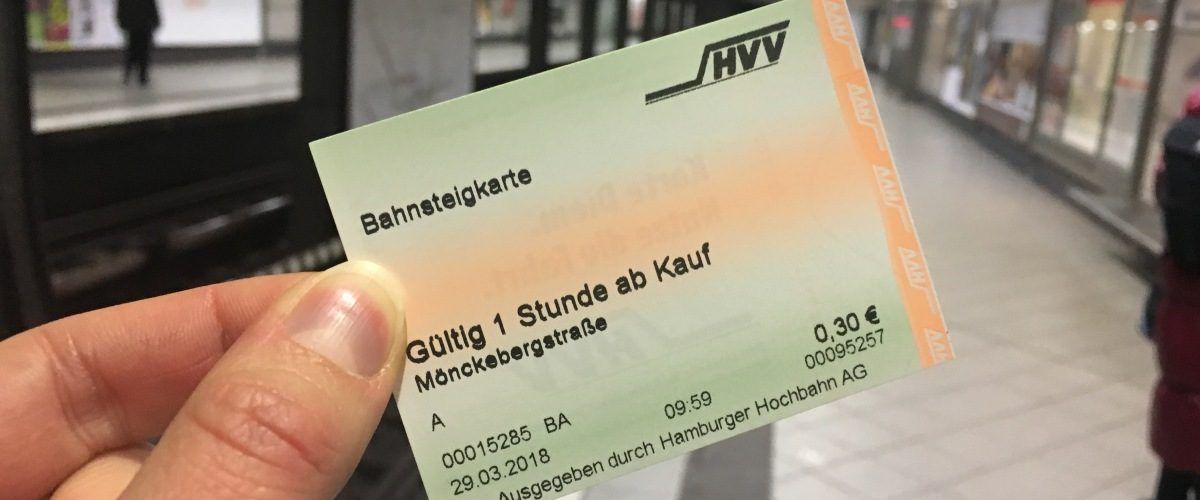
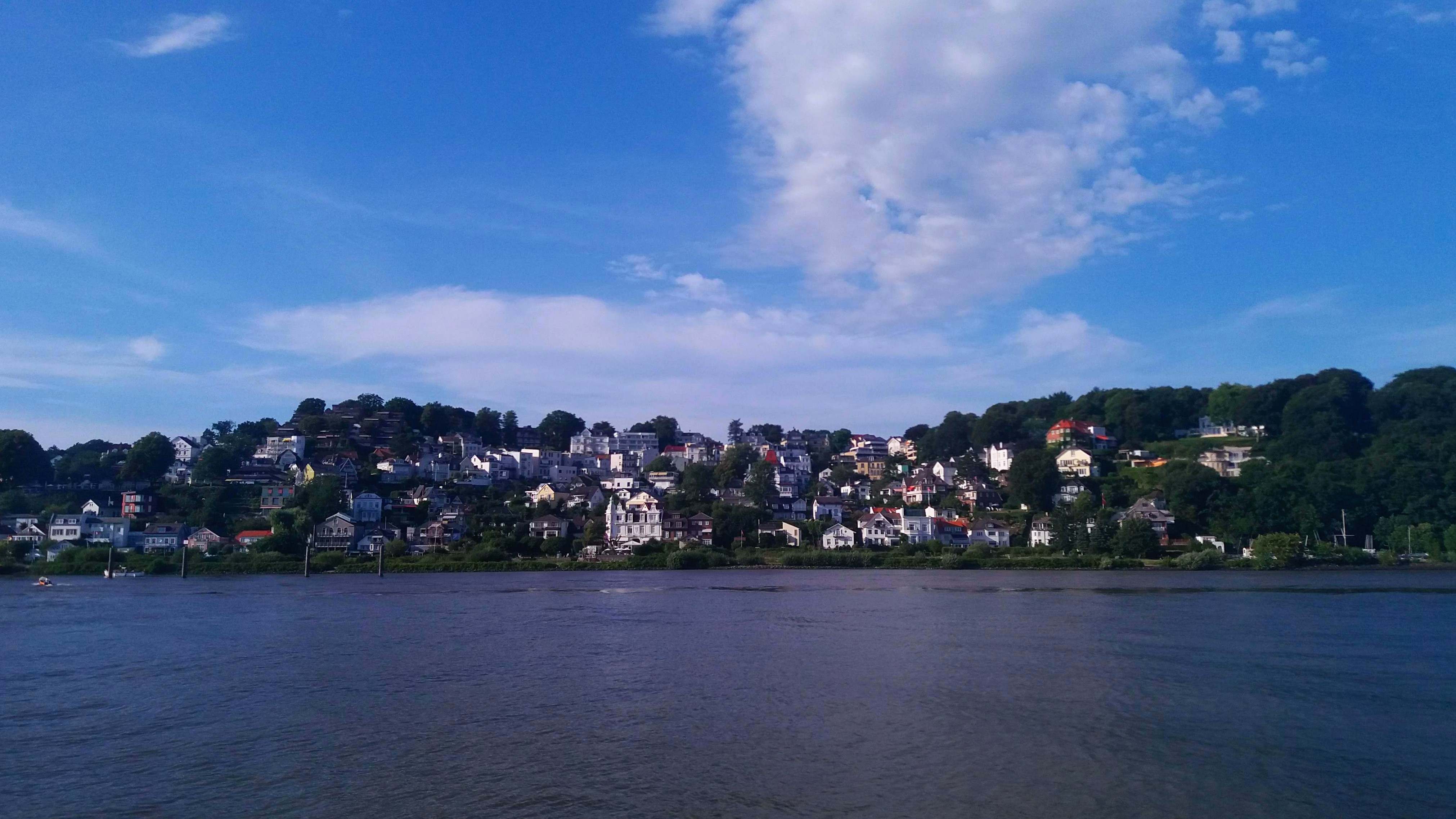
I know I was raised in the US where the first thing a waitress gives you is water and it’s bottomless and always free, but I’ve traveled a lot and never encountered such water stinginess as exists in Europe. I’ve also lived in places where the tap water is not safe and never had trouble buying drinking water at very reasonable prices, and many businesses still give away clean drinking water and public water fountains are available in parks and public spaces.

I thought France was stingy with the water but at least you could get it if you asked and in France and Belgium I was able to find some public drinking water (the photo above is a public drinking fountain in Paris). The rest of the time I filled my bottle in bathroom sinks… the bathrooms are very clean because there are no free bathrooms.

I just don’t understand the water hoarding going on here. I don’t think it would be hard to install cheap water stations like the paid public toilets to let people refill their own bottles and reduce plastic waste. If you must make people pay for water then keep it affordable. Besides, free water in tourist areas makes people stay longer. In the end the EU is calling for clean drinking water to be a human right, but F.U. if you’re travelling in a heat wave and get stuck when the infrastructure breaks!

End Rant.


Hamburg,  Germany:

I had been using Flix Bus to get between my main cities up to this point, and it’s about as advertised. It’s a cheap bus. There is usually a bathroom, and sometimes WiFi. It’s nothing to write home about, but it’s ok. Additionally, it’s often less than half the cost of the trains. When it came to getting in and out of Germany, however, the costs were suddenly inverted and the train became the cheaper option by half. Germany + trains? That has to be efficient and on time right? Oh, stereotypes, you fail me again. The trains are expensive, overcrowded and often late. Take a bus.

The train ride on DB Bahn from Den Haag was long. It took three trains and I always had to be aware of my stop because there are lots and no one will tell you where to get off. There is no WiFi on the trains in Germany. And outside the main cities I didn’t get good reception either. There was some air-con on the trains but only between stops, so it would get hot again while people got on and off. By the time I got to Hamburg 7.5 hours later I was soaked in sweat and tired. 

The good news is HVV (the transit authority in Hamburg) is great! Although the website is total gibberish, I went to their office in the station as soon as my train arrived, and the kind woman behind the counter helped me figure out what zones the places I wanted to go were in and helped me to save money on the week long transit pass. It was a tremendous relief to have unlimited transit and not have to worry about tapping in and out and possibly running out of credit due to a computer error!

Related image

In fact, there’s no RF readers or tapping in and out at all. The HVV transit pass is just piece of paper in a plastic sleeve that you can show to the bus driver or ticket checker and it’s all good. 

However! The one time I went outside my pass’s zone, I did have to buy a single use ticket. It was supposed to be cheaper this way… it turned out to be a royal pain. I still don’t know the correct way to buy a single use ticket across multiple zones. I thought I got the correct multi zone pass to head out to Blankenese, I got on the first leg ok, but the bus driver at Blankenese refused to let me on, saying I had purchased the ticket in the wrong zone. I don’t know if he was just being a jerk or what, because otherwise it seems I’d have to buy one ticket to get from downtown to Blankenese and then ANOTHER to get around Blankenese. I ended up walking to the beach.

On the way back from Blankenese, I decided to take the ferry, which was an excellent choice. It’s recommended to use the public transit ferry as a cheap tour of the Hamburg harbor and they’re not wrong. At 10.80€, it was certainly more expensive than using land transit, but much cheaper than a cruise up the Elbe with all the same wonderful views.

20180801_182801

Leaving Germany, the last train

The original train I booked with DB Bahn was a single train from Hamburg to Copenhagen on Saturday, but the heat wave in Germany was KILLING ME, so I changed to a Friday ticket instead and left a day early. The new train route had two transfers, each giving me less than 10 minutes to change trains. A situation I would have thought could only be offered if the trains were reasonably on time. Silly me!

My first train was 10 minutes late in arriving, but that was ok because my second train was 15 minutes late departing, so I did at least get on it. However, so did EVERYONE ELSE. I’ve seen less crowded trains in China. Oh, and the platform wasn’t clearly marked so, even though I was standing under the sign for my train, my train actually pulled up at a totally different part of the platform and we only realized it when the hordes of people started running past us to get to it.

Hamburg-railway-station hg

The first several cars were so full that I couldn’t even get in the door. I mean, seats all full, aisles all full, stairs all full, entryway all full, full. I finally found one car I could squeeze into and found myself standing on the stairs (with all my luggage) compressed by bodies. There was an option to buy a reserved seat on the website, but I thought it was just for if you wanted to be sure you and your group had seats together or if you wanted to be sure to get one of the ones with tables. I didn’t realize they oversold the trains by so much that it was the equivalent of the Beijing subway. If you find yourself forced to take a train in Europe, pay the extra 4$ to get a reserved seat or else be prepared to stand.

As the tiny stops went by, and people got on and off, I was shuffled off the stairs and into an actual compartment where a very kind man getting off at the next stop gave me his seat and I was able to rest at last. By about halfway, most of the standing people were gone or seated, but it was still ridiculous.

That train was, of course, also late to my second connection, and I missed my connecting train altogether. The conductor gave us instructions on where to find connecting trains to various destinations and I stepped out onto the platform to wait for the last train of the day. It was going to be about 20 minutes later than my first scheduled train, but I didn’t think that was too bad.

I met a young American lady, just graduated from college and off for her summer in Europe with her Eurail Pass and we got to chatting in the station. When we boarded the next train it seemed that too would be standing room only, and two bicycles blocked off 4 folding seats entirely.  Luckily, as the train filled up, and started moving, a kind lady pointed out that there were two empty seats after all and we rushed over to grab them gratefully.


Copenhagen, Denmark:

The train took 90 minutes longer to arrive than the one I was supposed to be on, and instead of arriving in Copenhagen around 10pm, it was almost midnight. I expected the train to let us out into a train station where I could find shops, an ATM, and ticket machines for the public transit system. Instead, the train let us off basically on the street. I had no idea which building was likely to contain the train station/atm/ticket machine so I began to cast about for any ticket machine at all.

Image result for Rejsekort

I found one at the bus stop but as far as I could tell, the only option I could do with a credit card was to buy the Rejsekort transit card. For this you must pay for the card (80kr), then pay a minimum of 100 danish krone as a balance. So it cost me about 24 euro to get a transit card. But it was midnight and I was exhausted so I just bought it and got on the bus. Being extra sure to tap out as I exited and see the fare, I was pleased to note that even the fairly long journey out to the diplomatic quarter was about 12 kr and figured I’d be able to use that 100kr for a while yet (foreshadowing!)

The Rejsekort transit card worked similarly to the Netherlands OV Card in that each trip required a tap in and out and money was deducted from the card. However! There are two types of cards, registered and unregistered. Guess what? Of course since I bought mine from a machine at midnight it was unregistered which meant I had to maintain a minimum balance of 70kr in order to USE the card. Please remember that the trip between our Airbnb and the main train terminal is only 12kr, so that’s a little more than 5 trips in and out of town that I have to load up and NEVER USE. I was not amused.


Gothenburg, Sweden:

The local transit company here is Västtrafik. The transit in Gothenburg is good, but Google Maps has the wrong names for almost everything, so it says “get on the 10 going to abc-Swedish name” but none of the bus stops match that name on the sign. You can’t just guess by which side of the street it’s on because they use bays to remove the transit from the flow of traffic (very cool idea) so the stops are all together on an island in the middle of the roads. They have stop letters, so Google could just say take the 10 from Bay A but no. I blame Google for this failure, not the city of Gothenburg. 

Most of my time in Sweden was in a rental car, but for the time I spent in Gothenburg before getting my car, I was able to use the public transit easily enough by purchasing a three day pass which included unlimited use of buses, trams, and ferries. This is especially worthwhile since the archipelago near Gothenburg are PHENOMENAL.

20180810_201933

Driving in Sweden was great. The roads are in good condition and the signs are very easy to follow. It is likely going to rank in my top 5 all time road trips. 10/10 would do again.

Even with the car, when I was in Stockholm, I opted to leave the rental at the hotel parking lot and take the bus around the city. In a surprising turn of absolute convenience, I downloaded the transit app on my phone and used that to buy my tickets for the day. I’m sure there are longer term options, but I was happy to just get the single use tickets since I was only using it for two trips and it was drastically cheaper than paying for parking.


Olso and Nesodden, Norway:

I was only in Norway because I was flying out of Oslo. My Airbnb was on Nesodden, one of the fjords a ferry ride away from Oslo. A single trip transit ticket is only good for an hour, but would take more than that to reach my Airbnb from the bus station where I arrived. Do I really have to buy two tickets for this? Turns out… no.

20180820_172938

I took the local bus to the ferry terminal, but the buses on the fjord considered anyone getting OFF a ferry to be transferring and did not require an additional ticket. Whew. The ferry tickets were only mildly confusing, and with minor investigative skills I was able to navigate the ticket kiosk at the ferry terminal.

Once the bus dropped me off at the stop closest to my Airbnb, I was truly worried however since it was very rural, with no signs of any ticket machines near the bus stop. I had no Norwegian cash on me and was not walking distance from anything. I tried to use the transit app for Oslo, but it refused to accept my Korean bank card OR my American credit card (which was a much bigger surprise). Unlike the ultra convenient Stockholm app, the Oslo app would only accept payment from a limited number of EU countries.

In the end, I just went to the bus stop when it was time to leave and explained my situation to the driver. Of course he had a solution, and I was able to get to the ferry terminal, then from the Oslo side of the ferry, I was able to walk to the nearest train station that would take me to the airport…. where I promptly bought the wrong ticket.

Bus Terminal in Oslo, Norway (Oslo bussterminal) tickets (billettautomater) for Ruter nettbuss Bus4You IMG 6050

I’m still not sure I completely understand what happened. I went to a ticket kiosk and bought a ticket to the airport, then followed the signs and got on the train. There is no place to have the tickets checked on the way to getting on the train. Once I left the train at the airport, our tickets were checked on the way out. The ticket checker told me I had bought the wrong ticket, and that I’d bought the city public transit ticket, but gotten onto a private company express train (not clearly marked, and don’t check tickets on the way IN?). The money I’d spent went to the city transit authority (Ruter) and there was no way for the private train company to get it. I tried to offer to fix my mistake, but it seems there’s no way to fix it on the back end and she waved me on through exhorting me to pay more attention to the trains in future.

I would never have hopped on the wrong train intentionally, but it wouldn’t hurt if they had some kind of a barrier to scan tickets on the way in?


Moscow, Russia:

Ironically, as in counter to expectations, Moscow had the best running and least expensive public transit. I was only in Moscow for 20 hours, and I got a 24 hour unlimited pass for less than the cost of a single trip ticket in any European city. The ladies at the ticket counter spoke enough English for me to easily get the one I wanted.

I had a little trouble finding my first Metro station (I should have got a SIM card so my Map would work better) but once I realized what to look for in a Metro entrance, getting around Moscow was a breeze. The stations are so well labeled and the metro maps are clear (if you know how to read a metro map). Plus, Moscow is famous for it’s beautifully decorated stations. Even when I got lost because I read the stops wrong there were helpful people to turn me around and help me find my way.

20180821_145452

I also used the airport express train here which was crowded, but reasonably priced and running on time with no surprises. I guess there are some things communism does well?


I have come to realize that I’m a novelist, not a blogger. I think other people would have made each country a separate blog post in order to spread out the words, and get more posts out there. At 5200+ words, I gave some serious thought into dividing this post up into bite size chunks… but tbh, I’m not that thrilled to be writing about transit, and I’m mainly including it because these were hard won lessons that I hope can spare at least one other human my trials and tribulations. I also think it helps sometimes to see that the adventure life is not always one of joy and excitement, and that we must also contend with learning basic life skills over and over in each new place we visit.

Down Keyboard, Up Brush

I am not keeping up with the blog recently. Apologies. Realistically, I’ve gone dark for longer before. That whole 5 months I lived in Seattle between Japan and Korea I wrote maybe one post, but I also didn’t have much to write about back then. Now I have 33 drafts sitting waiting for me to work on them, and yet when I open them I just sigh. I did not do a good job taking notes on my summer holidays. I don’t have 4 hours of  enforced desk warming at work every day anymore. I have these lovely three day weekends and I can’t bring myself to spend even one of them writing in here. Nanowri-no-mo. The writers block is strong.

Writer's Block by Pyre-Vulpimorph

I’ve been working on my winter travel plans, which involves reading a lot of other people’s travel blogs. I see a lot of blogs that will do an entire 10-12 day trip in a single post of no more than 2,500 words. It is a great way to summarize a trip and pass on the most vital information to future travelers, so I’m not dissing those folks at all. In many ways I envy them, because my task would no doubt be easier were I to adopt a similar approach. I might even have more fans since “in depth” reading requires an attention span that is not popular in the world of click and scroll. Which, I’m also not dissing. I love scrolling thru my FB feed as much as the next person. However, when it comes to my own content, I want to be able to tell a story. I like telling stories.

It does not help that this semester’s schedule has been a little extra brain taxing, leaving me with less mental spoon-power at the end of each teaching day to sit down and organize a blog post. Three more weeks! I’m staying at this job, don’t worry. I worked way to hard to get it to leave, but I am looking forward to having a chance to get a new schedule for spring semester.

Art History

The good news (for me anyway) is that I haven’t merely crawled into a cave to binge watch Netflix (although I have done some of that as well… like maybe the entire Star Trek catalogue except for Enterprise causethatonesucksfiteme). I have finally reopened my artistic cabinet. Before moving to Saudi Arabia (and thus before starting this blog) I went through a few art binges in my life. In high school and undergrad I was massively prolific. Reams and reams of sketch pads filled, art given as gifts to everyone I knew, and even occasionally sold to strangers for profit!

0013.jpg


Then I stopped. For years.

After finishing my MA and getting back from China, I finally picked up the brush again. It helped that I had some peers to do art with. Going over to a friend’s house to paint and drink tea (or wine) is a lot of fun, and it took the pressure off me to PRODUCE. I finished paintings that had been half done for years. I started new ones. I updated older artwork from my high school days to reflect my new style. I was feeling it.

Then I moved, and all the art went into storage. Saudi was… well, you can read the blogs, but I did my last real piece of art there when I made the life size paper Christmas tree to adorn my hotel room. I made every piece of that from paper and foam because Christmas decorations are forbidden in Saudi. That was in 2014. Since then I’ve had art supplies laying around. At least a sketch pad and pencil. People who knew I liked to make art would give me things as gifts and slowly I accrued watercolors, acrylics, brushes and canvas and they just sat on a shelf.20141206_183852


Returning from Europe this August, all my Korea friends were finally gone. Those who didn’t leave in February (the end of the school year) left over the summer. I knew I had to make myself get out and be social in order to avoid the cave-dwelling-Netflix-binge fate. Public “foreigner” events are the best way to go since we all show up expecting to mix and mingle, but I live over an hour away from the two nearest cities with decent expat populations and I knew I needed more than just “socialize” as a motive to travel so far. So I joined some art classes.

clone tag: 2275714863150458950

Specifically, watercolor. These are much more social than educational, but I did end up learning some new techniques as well as just getting a chance to chat with people. The first one I went to in Busan and everyone pretty much split as soon as it was over. The second one was in Daegu where I ended up spending several hours after the class hanging out and chatting. So far, no lasting friendships have been formed, but I had a good time regardless.

Art Spark

I also triggered my art spark. During the last couple of months I’ve delved much more into making art than into doing photography or writing. As a result, my Instagram and Blog are feeling a little neglected. The first piece I started was a simple mandala pattern on acrylic. I spent about an hour looking at mandalas on Google Image search and then sat down to draw my own. Once the pencil sketch was done, I transferred it over to a canvas by carefully measuring over and over. It’s much easier to make a mandala in a computer where you can just copy and paste for symmetry. I also used a black marker to show the main lines. I basically created an adult coloring book page on a canvas and then started using acrylic paint to “color” it.

I wish I could say I was finished, but it turns out that coloring in acrylic isn’t as fun as coloring with pencils, crayons or markers. I also struggled with color. I repainted part of the outer ring twice, and the middle ring 3 times. I have since taken a digital version into Pixlr and experimented with color schemes for the middle ring. At least now I know what I want to paint there… One day, I might even do it.

One day when I was tired of meticulously painting inside the lines, I decided to pick up the sketch pad again. I liked the idea of the mandala, of the adult coloring book style, and decided to try to make a mandala animal pattern. Back to Google Image search. I scrolled through a few hundred designs before realizing my favorites were the jellyfish. I have no idea why. Not wanting to copy the poor unattributed artist whose work I was seeing plastered all over cheap t-shirts, Etsy pages and Pinterest boards, I decided to make my own!

I stuck the Star Trek on auto-play and went to work on my sketch-pad. A while later I had the finished design. Most people will recognize it’s extreme similarity to the adult coloring book fad. That is totally on purpose. However, when it came time for me to imagine how to colorize my drawing, I didn’t like the idea of repeating my mandala with acrylic paint experience. Visualizing a few mediums while I lay in bed cradling my chronic insomnia, I hit upon the idea of using colored paper to bring my creation to life!20181105_215322

The next day I found a local art store which was overrun with paints and painter supplies as well as the standard Korean “stationary store” supplies like colored pens, and poster board paper. I was never able to find things like wrapping paper, brown paper lunch bags, construction paper, tissue paper or any of the other staple craft supplies I grew up with in America, let alone any of the new craft supplies that my niblings get to play with. Maybe in Seoul there is a shop that has them, but not here. The only patterned and colored paper I could find was for origami. I bought a half a dozen different design packs and a decent sized canvas. There was also no such thing as decoupage glue or mod-podge, so I got plain white glue and made my own by mixing it with water. Old school.

I didn’t want my bright colored jellyfish alone on a white canvas, though. What do do for a background? Paint it blue with acrylics? No… I really wanted a watercolor effect, but I didn’t have confidence in my ability to do it, especially not on a canvas. I decided to make the watercolor on paper and decoupage the background as well as the foreground.

Paper-cut Redux

I cut circles in various sizes, hoping to evoke a “bubble” feeling. I then spent hours (more Trek bingeing) painting them in pale shades of blue and green.

20181111_202236It was worth it. When I finally was ready to create the background, I placed the different sized circles around the canvas. I painted them in layers, mixing a little white paint into my glue/water mix so that the bottom layers would fade a little compared to the top layers and give it some depth. Originally, I thought there would be distinct bubbles against a white background. In the end, the whole canvas was covered and it reminded me of Monet. I tell you, I loved that background so much I almost didn’t want to put anything on it. I will definitely be using that technique again.

For the jelly itself, I started off by cutting the pattern from plain white printer paper (abundant at my office). I used the canvas to make sure the pieces fit and I had to make some changes from the original drawing to accommodate the new size and materials.20181111_202246

When I had the tentacles and body shape done, I used post-it note paper to measure and cut the patterns on the body. It was much better than plain paper because I could make sure they stayed in place while I added other shapes. I had to change the size of the heart shapes because the first attempt was too small. Being able to stick them to the body let me clearly see how the shapes would look glued down.20181112_161715

Finally I was ready to cut the colored origami paper. Sort of. First I had to decide which pieces got which colors and patterns. I had a limited amount, no more than two sheets of each type and remember origami paper isn’t exactly big, so for larger chunks, I had to line up the two sheets along their pattern to make it seem, well, seamless. I also had to balance the colors and shapes in my head.

20181119_164501When I made my final color decisions, the last of the cutting was ahead of me. I had to trace the white paper stencils onto the origami paper and faithfully cut each shape and each layer. The tentacles were actually fairly easy, but the accents on the body were the most challenging. Here again the sticky paper came in handy since I could just stick my stencil to the colored paper rather than try to hold it down. I also enjoyed using the designs on the paper like using the pink circles on dark green to make the circle centers, or using those same patterns on the purple to accent the hearts. Not only cutting the shapes I needed, but cutting them around the patterns.

20181119_194723

In the end, the gluing required more patience than I could have imagined! I had to be very gentle with the wet paper. It wasn’t just gluing pieces down, but using the watered down glue like a paper mache. The paper would be wet and tear easily. However, if I didn’t soak the paper evenly, it would pucker and wrinkle badly in response to the areas touched by glue. I added only one or two pieces at a time and had to wait (more Star Trek) for them to dry at least most of the way before applying the next.

20181125_172820

Damp pieces were adjustable, but only a little. If I hadn’t planned and checked everything while it was dry, I don’t think I could have assembled it wet. It was a whole new experience. I’ve done paper mache and decoupage but never to create a 2d art of my own design, and on a canvas no less. It took me 3 weeks of working on it in my spare time.img_20181126_215130_406

And that’s why I haven’t been writing…