It was with deep sadness that I had to forgo the museums on my first trip to Paris. I didn’t know enough about buying advance tickets, and since I only had one day in the city on that trip, I wanted to make the most of it with free and quick events. This time, I put three museums on my must-do list. You’ve already read about the Arts Forains, but my other two museum forays were more typical. Not the Louvre, but the less well known and therefore less crowded Musée d’Orsay and L’Orangerie. I managed to get a discount buying a combo ticket and WOW was it ever worth it!
I was using City Mapper to find my way around Paris and the route from my Airbnb to the museum didn’t involve the nearest metro station, but rather a bus stop across the river. It’s a beautiful walk through the gardens and over the bridge. Although it is not the famous lock bridge, the sides are still lined with padlocks in many colors and street vendors hang out selling more locks as well as balloons and ice cream.

My first impression on entering the Musée d’Orsay was that even the building was a work of art. The central arena looks like a beautiful baroque train station, and there are many floors and side rooms filled with some of the most amazing art you’ll ever see.

During my visit, there was a temporary exhibit of Baltic artists. I slid from these rooms into halls and halls of displayed paintings. The main floor is covered in white marble and bronze statues. I saw more Rodin than I ever thought I would and realized that other than his famous sculpture of “The Thinker” and the larger work from which it derives, “The Gates of Hell” (below), I don’t actually care for his work. I also can’t find any reasonable discussion of why he felt the need to use fig leaves this late into the modern art movement.

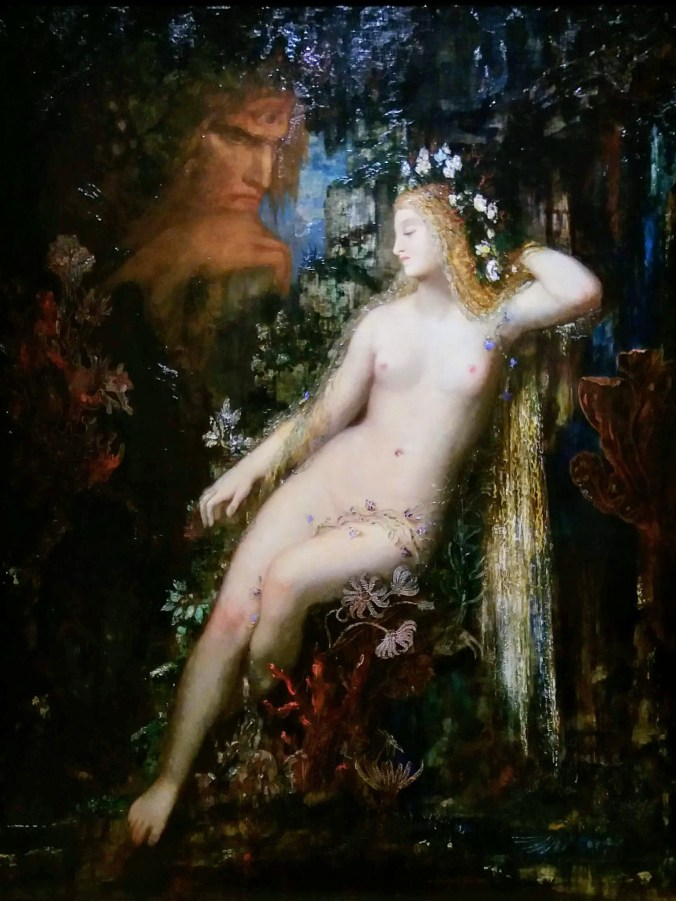
I discovered some artists I didn’t even know about like Gustave Moreau who’s painting Galatée (below) completely captivated me.
Many of the classical artists in the ground floor created stunning details to the point where one could spend a long time finding each hidden treasure. Room sized paintings with dozens of people had near photo realism on each face. Getting up close to these just unfolded more and more details to delight the eye. I got lost in Paul Chenavard’s Divine Tragedy (below) for a long while. It’s 4m high and 5 across (13x16ft more or less) and is chock full of tiny little details and insane imagery. Apparently people hated it when it came out, but I loved it. Reading more about the symbolism just made me love it more.

I was so entranced by the main floor that I almost forgot the reason I came, to see the impressionists!
My First Impression?
I went on a quest following the signs and found Renoir (not pictured) and Monet (below) then stumbled across the museum restaurant. It wasn’t yet time for a snack, so I paused just long enough to take a photo from the back side of the clock before moving on.

Finally, I found it. Impressionism and neo-impressionism. I love impressionism. I knew I thought fondly of Monet, but somehow I forgot how much I really enjoy it. Books and online photos cannot live up to seeing these beautiful works in person.
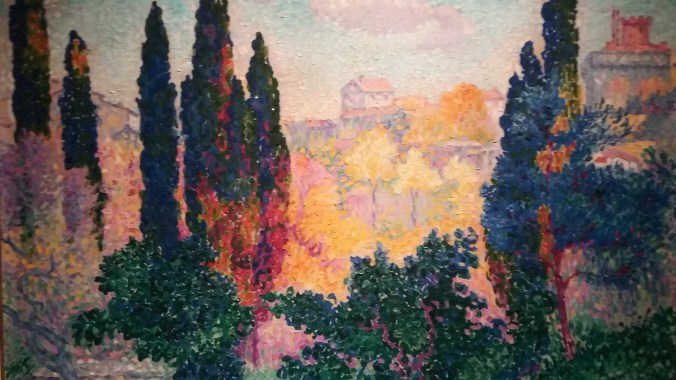
Neo-impressionism was a real delight as well. While the paintings on the first floor captured even the tiniest details in the smallest focus, impressionist paintings just become meaningless blobs of color the closer you get, and it’s only when you step away there is a picture. The picture is made in your mind as a way to make sense of these random dots. Not only do I love the colors and the movement implied by the direction of the bush strokes, but I love the idea that these images only exist in my brain and not in the canvas.
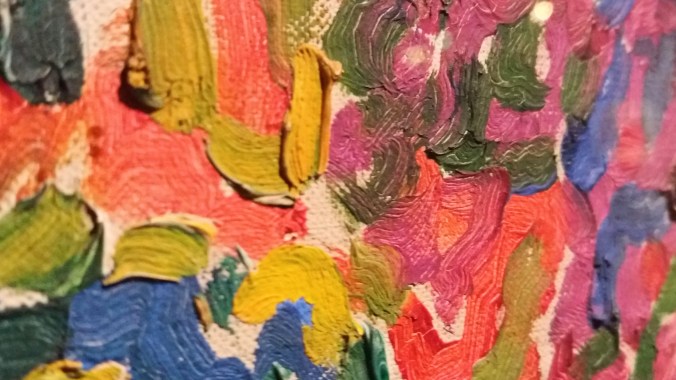
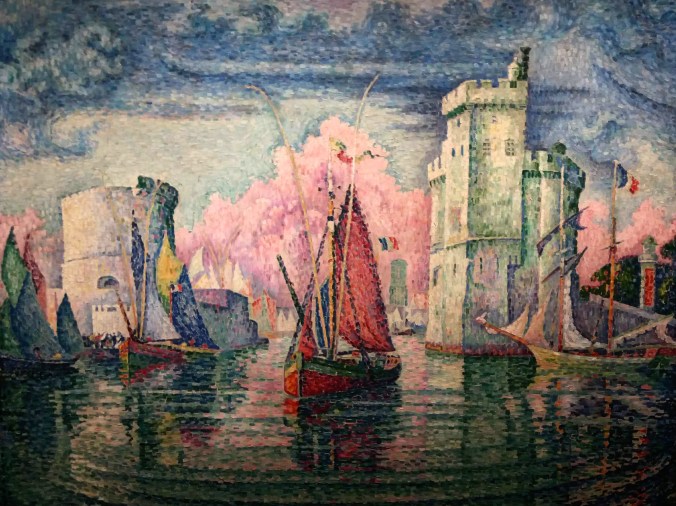
I took pictures mainly of things that stood out to me at the time or that I want to read more about later. I think I found some new favorite artists too: Georges Seurat, Henri-Edmond Cross (above 2), and Paul Signac (below) were all featured but Signac stole my heart! I actually returned to these paintings for a second look before leaving for the day. I spent a tremendous amount of time with them, changing my perspective by moving closer and farther and side to side. The texture of the paint alone is captivating, but the effect of the whole is pure magic.
Chat Noir
Still searching for van Gogh I stumbled into a display about the Chat Noir Theater. I am sure you, like I, have seen the Chat Noir poster on t-shirts, hip bags and other products without realizing where it came from. The Cabaret was quite eccentric, filled with art works and strange objects of interest. Musicians like Debussy and Satie would come and play the piano sometimes. The main attraction, however, was the shadow theater.

Cut out figures made first from cardboard and later from zinc were back-lit to create silhouettes. The host would tell the story as the figures moved on set, often improvising commentary to include current political and social witticisms. The mechanism for the productions became extremely complex over time, and the Cabaret was famous for these elaborate, and above all entertaining shadow plays. The museum tells the whole story of the art form and displays some of the more interesting figures used in the performances.
Vincent at Last
 I finally found my way to the van Gogh. I have loved him since I first saw his distinctive style, and came to love him more when I learned we shared a bit of atypical neurology. I planned on going to his museum in Amsterdam, but I couldn’t pass up the chance to see his works in Paris, too.
Seeing the van Gogh up close was amazing. The paintings are roped off, but they are not hidden behind glass and the “stand behind this line” marker is less than a foot from the painting. It’s possible to stand at the edge and see the detail of texture and brush stroke. I felt only slightly bad doing so as everyone wanted to take pictures of the whole painting and being up close put me in the way. The museum rope was much closer that the camera ideal range and so while I tried not to walk in front of anyone about to shoot, I was not about to give up my chance to see the details so people could take photos that look the same as any print. Yes of course I took photos too, but I also took up close detail photos.


I don’t know if other people feel the way about the color blue that Vincent and I do. I can’t get enough of his blue blue skies, most especially when combined with the golden hay of a late summer field. One that particularly struck me was a simple painting of farmer’s napping called “La Meridienne” (below).

The blue and gold are so stunning that the simplicity of the subject matter is almost irrelevant. I looked it up when I got home and discovered that van Gogh copied it from a pastel work by Jean Francis Millet (below). It’s obvious that it is an homage, but the difference in the style is amazing.

Van Gogh created it while he was in the asylum. He often copied artists he admired while he was learning to paint (although in the beginning he tried to copy their style as well). While incarcerated he went through another phase of copying, but more frequently by adding his own unique colors and brush style. I think he copied more from Millet than any other artist.
Polychromatic Rainbow
Another seasonal exhibit at the museum was a display on polychromatic statues. While most statues from history have come to us as plain white marble or unadorned bronze castings (this turns out to be wrong, but the perception remains), there was a brief but vibrant period in three dimensional art to include more color. By the 18th and 19th centuries, the high-brow art scholars all considered color in statues to be very low-brow. Imagine how you feel about cheap porcelain dolls mass produced and badly painted being displayed as art? They felt that way about any statue or sculpture that did not maintain monochromatic purity. Of course color in sculpture existed, but it was just crass popular entertainment for the uncultured lower classes.


Then in the 19th century, some artists got the notion to challenge this rigid class system and began to explore the world of polychromatic statues with renewed fervor. The two styles were natural, made by combining natural materials of different colors such as colored stones or differently hued metals, and artificial, made by painting or lacquering the finished product. The results were absolutely amazing. I was possibly more entranced by these rooms than anything else in the museum.
While the painted statues were beautifully executed, I was more interested in the natural style. The amount of effort and planning it must have taken to combine various types of stones, and then blend those with cast metals! Artists had to collaborate to make such works as very few could work the stones and metal with equal skill.


I was struck by the fact that this was also the only place in the museum I encountered African faces. Some incredible works in the polychrome display were of a man from Sudan (not pictured) and a woman from Algeria (above). They were depicted in poses of joy and power with clothing styles that reflected wealth.
Two of my favorite pieces include a miniature of a woman at her embroidery frame which used stained glass as the tapestry she was creating:


And a larger than life statue of a woman that combined a wide range of colored stones including a richly marbled agate to make the pattern of her dress, as well as lapis lazuli and malachite to make her belt.


As the movement of mixed media and 3-D color persisted, it moved away from a mimic of classical and renaissance styles and began to explore symbolism.

Ceramics became more popular, allowing for colorful glazes. There was even a brief flirtation with incorporating this polychromatic art into building exteriors in the form of architectural ceramics.


Finally, the display drew to a close with the most dramatic end result of the movement by setting Degas’ “Little Dancer Aged Fourteen” and Hans Bellmer’s “The Doll”. Both incorporate materials in an unusual and even extreme way. Degas statue is primarily bronze, but includes real horse hair, a real corset, wax coated ballet shoes, and a cotton skirt. At the time it was considered to be quite the edge of the envelope in terms of modern art.


While the dancer is no longer unsettling to modern viewers, I think “The Doll” will always be creepy. It’s also mixed media: wood, papier mâché, real socks, shoes and hair. Degas was an impressionist, but Bellmer was firmly surrealist, and his disturbingly erotic imagery was an act of defiance against the Nazis in 1931 Berlin when he created this work.
Lunch
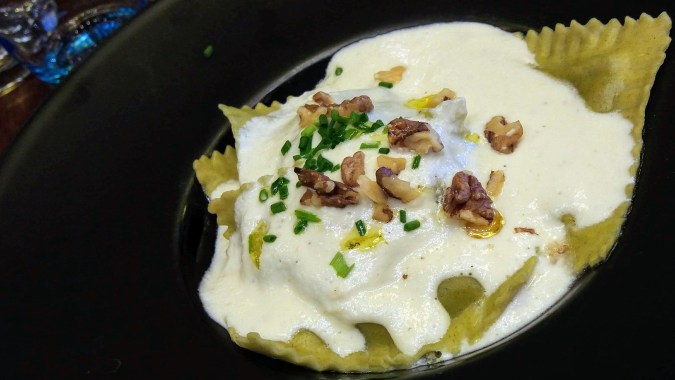
After three or four hours of museum, I was both tired and hungry. Art may be a feast for the eyes but it does not fill the stomach. There aren’t a lot of lunch choices near the museum so I decided to go ahead and try the 5th floor restaurant. It is a bit pricey as expected for a tourist attraction eatery, but the food was excellent, living up to the standard of French cuisine I cherish. I had a ricotta and spinach ravioli with Gorgonzola sauce, walnuts and chives. Heavenly. Plus a glass of my favorite French wine: viognier, and a lovely cafe creme for afters. Like most French food, I thought the portion looked small when it arrived, but it turned out to be quite generous and incredibly rich. I think the meal was about 24€, so not bank breaking, but definitely a luxury.
I got distracted on the way back down from the restaurant, checked in on Signac again as well as discovering a whole set of rooms I missed on my first trip through which had yet more paintings of enormous size as well as some furniture on display for it’s elegant design. I stared rather longingly at the beds on display, and didn’t leave until 3:30 I spent a total of five and half hours in the museum and no more than one hour at the restaurant. I still didn’t see everything on display.

Lilies at L’Orangierie
The heat wave that gripped Europe during the summer was in full force by the time I stepped outside, and the simple walk from d’Orsay to l’Orangerie was a far more hot and sweaty affair than I would have hoped. Even with the climate control needed to protect the paintings, the museums were struggling to keep up with the combination of extreme summer weather and high season crowds. Nonetheless, it was a pleasant relief to step inside once more.

L’Orangerie is famous for being the permanent home of Monet’s “Water Lilies”, a series of paintings that I have enjoyed as long as I can remember. It’s one of my mother’s favorites and we’ve had small versions around, or I’ve had replicas pointed out to me whenever we passed one by for my whole life. They are beautiful, but I did not understand the true scale of the work until I stepped into the first of the two viewing rooms that afternoon.
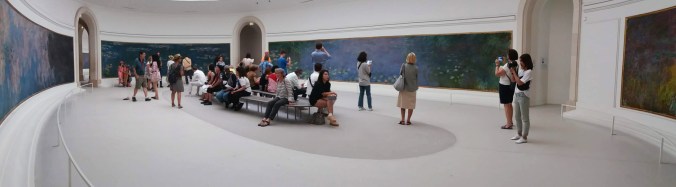
The Water Lilies are huge! Two giant rooms of huge panels. It’s like drowning in Monet. The panels look a bit like the backdrop for a play in community theater where you just want to suggest a like pond and Willow trees in the moonlight but don’t care about details. I know Monet was making some statements about the nature of realism and symbolism in art, but … it still reminds me of a theater set.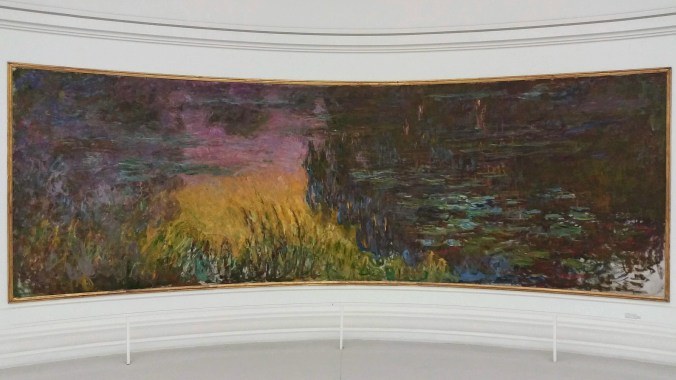
I did the stereotypical museum thing and just sat with the art. In part, I was grateful for a rest after all the walking I’d done that day, but mostly, I just wanted to bask. There is no way photos or even films can capture the feeling of raw art, especially when it’s that big. The rooms were packed with people, some sitting as I was to take in the art, some taking photos and selfies, some just taking a break.
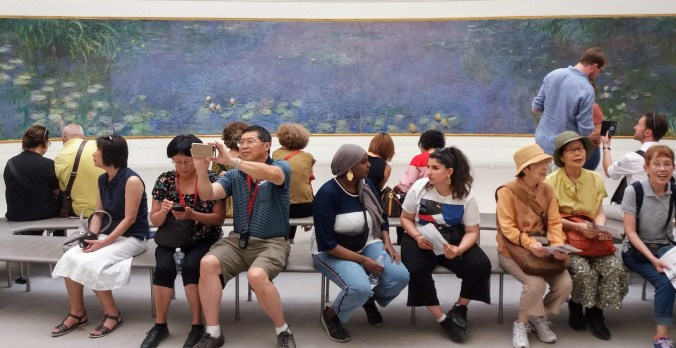
It’s easy to be judgy when we see people at famous landmarks or museums just sitting on the phone, but I can tell you that it can be overwhelming. Sometimes it’s nice to just narrow your focus back to a screen or a page. I also used my phone to take notes about my experiences and feelings, and to share those feelings with my friends on Facebook or Instagram. I don’t feel like having the phone detracted from my experience at the museum. Sure, I could have used a notebook for notes, a regular camera for photos, and a book to decompress, and a music player, and… you get the idea?
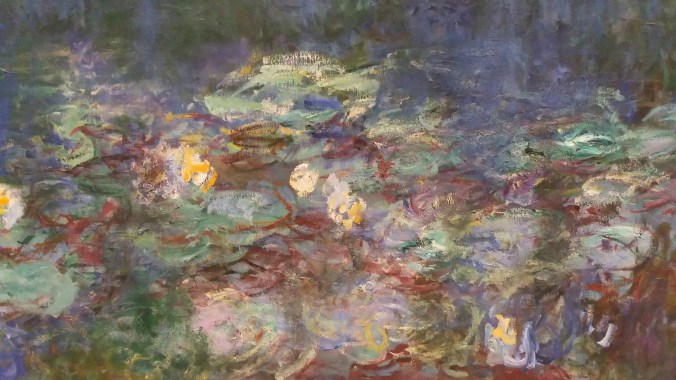
When the sheer amazing wonder shock started to fade a little, I got up and began to examine the canvases up close. Like all impressionism, the closer you get, the less it looks like anything but blobs of color. It’s still fascinating to me to see the texture and shapes at work and watch the optical illusion as you move from the close to the far and the blobs resolve into the magical dance of light on water and floating flowers.


More than Monet
Although the Water Lilies are the star of the museum, they are not it’s only occupants, and after a good long while, I headed on to the other rooms where I encountered a plethora of abstract art. I respect art, even the art I don’t understand because I think it’s all part of the process of learning and exploring what it means to be a sentient, self aware being in an infinite universe. I don’t like abstract art.

Abstract impressionism is no exception. I love impressionism and neo-impressionism and just hours before I had that love reaffirmed in the d’Orsay. L’Orangerie hosted the next stage of abstract impressionism. While impressionism seeks to deconstruct the notion of reality by using color and shapes to suggest forms, abstraction casts aside all pretense of shapes or images in favor of “feelings”. It just does not speak to me. Impressionism is an illusion. It looks like a familiar or real image, but is actually nothing. Abstract… is actually nothing and looks like nothing. I can stare at a Mark Rothko (above) or a Jackson Pollock (below) all day and not “feel” anything, but one glance at Paul Signac will steal my heart.

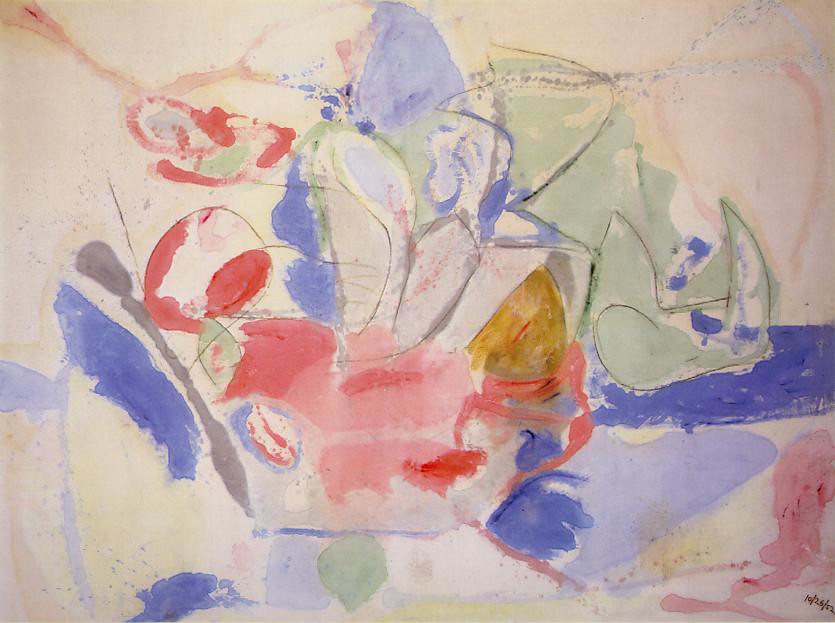
The good news is, this was a temporary exhibition at the museum, and it’s already gone. The non-Monet portion of the building changes. I lucked out at d’Orsay with a temporary exhibition I found enchanting, so I can’t be too upset the summer show at l’Orangerie was not to my taste. I did look around and read several of the informative panels, and I found one of the rare women artists of the time was featured, Helen Frankenthaler (below). I read about how influential she was on the art movement and wanted so much to like her work, but abstract expressionism still makes no sense to me… even knowing that’s kind of the point.
Closing Up
I was trying to time my departure to get a few minutes in the Monet rooms right before closing time, hoping to get a few wide shots that weren’t full of sweaty tourists, but I discovered that they take closing time very very seriously. A good 15 minutes before the end of business, the museum security started shooing everyone out of the rooms, and would not let me into the second Monet room at all! I could have easily taken photos and been out in 5, but I was barred from entering. I am glad that I spent a goodly amount of time in each room before I went to the abstract exhibit, or I would have been very sad indeed. As it was, I only missed out on photo ops and I’ve already noted photos cannot do it justice. Be warned, however, the museum starts booting people out 15 minutes before “closing” so if you haven’t seen it all, or like me you want that last photo, get in a little earlier than you think is necessary.

The Best Hot Chocolate
Angelina’s isn’t a museum, but they are artists. Chocolate artists. I wasn’t sure about the idea of drinking hot chocolate in the summer, but I read so much about this little cafe, and it was close to the museum, so I decided to stop in on my way out to the metro. I had a hard time deciding because the reviews for everything were so good, but in the end, my chocoholic side won out. It was so entirely worth it. Probably the most expensive hot cocoa I’ve ever had, but it was rich, thick, delicious, choco-gasm inducing and very generous. I could have shared this pot with another person. I could not have had a whole pot and any kind of dessert without exploding.


No mere “cocoa”, this beverage is mostly melted chocolate with milk and cream and more whipped cream on the side, you know, in case it isn’t creamy enough. It pours more like syrup than milk. I sat in the shade and welcome air conditioning sipping my chocolate bliss, mixing cup after cup with various amounts of cream for effect. Despite the fact that I hadn’t eaten since lunch, I left Angelina’s full and happy.
The weather in Korea is turning cool. It’s even gotten below freezing a few nights this week! It’s almost hard to remember hating the hot weather so much when I’m curling up with my heated mattress pad and fluffy blankie. The hot chocolate here isn’t a patch on Angelina’s but my memories will keep me warm. I hope you enjoyed this foray into the art world with me. For those who can’t make it to the museums, a little walk thru tour. For those who have never thought of going before, I hope I’ve given you cause to reconsider. As always, thanks for reading!

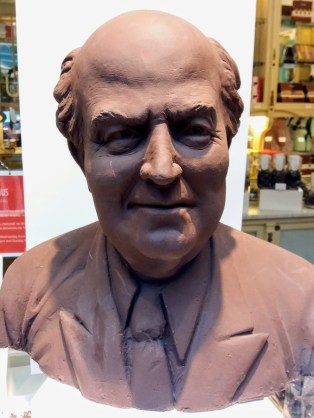
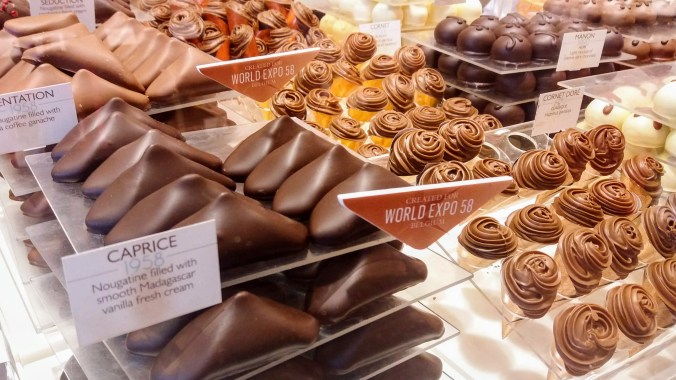


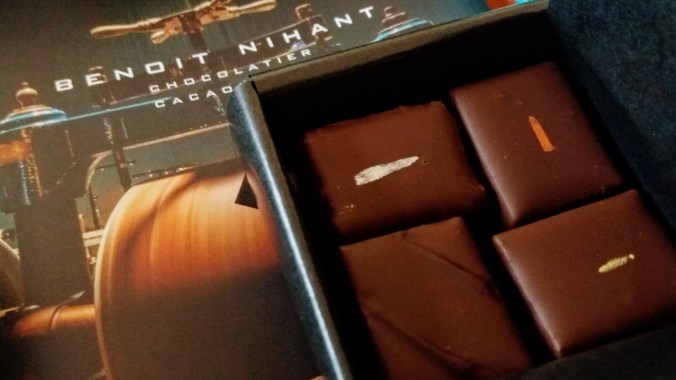
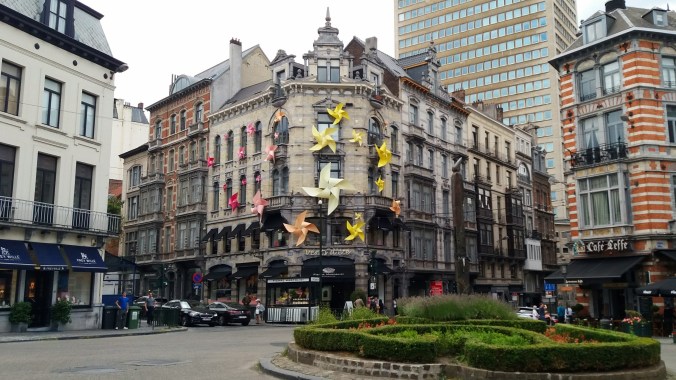 While I was interrogating the staff about their chocolate it became apparent they were only selling boxes (8 piece minimum). When I asked about the possibility of only buying a few pieces, I was sent upstairs to a little dining area. Although their chocolates focus mainly on single origin, bean to bar flavors, they do have a signature dessert line called the “Desir” which comes in a variety of flavors from white to dark chocolate and passing through a range of fruit and nut compliments.
 Desir Noisette: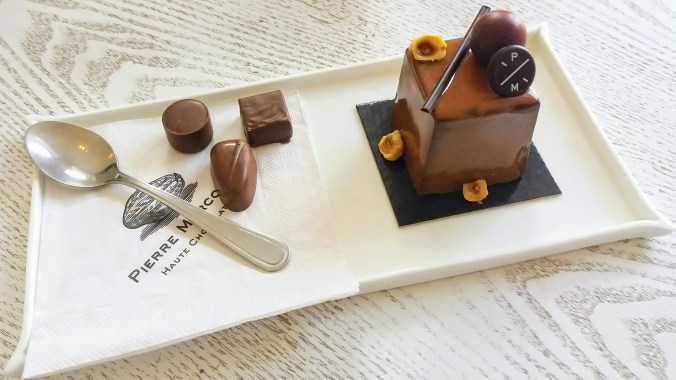
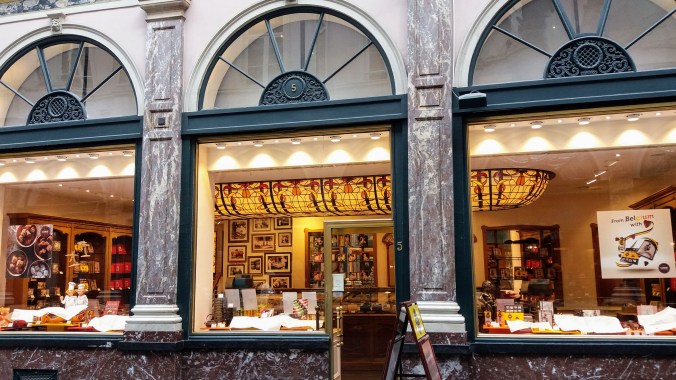
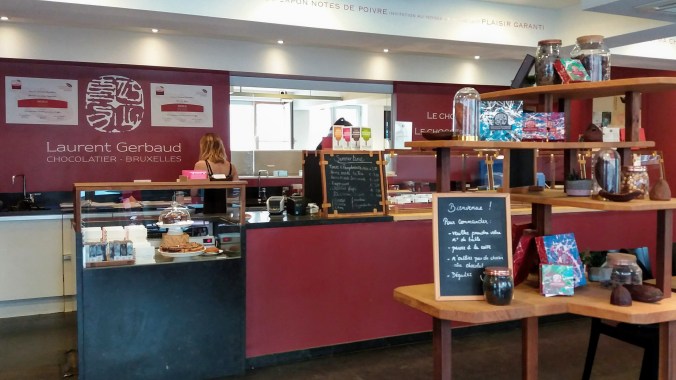 This shop is a little far out of the way but it is 100% worth the detour. It is a beans to bar production which means they actually make the chocolate from scratch. Most places buy chocolate from a bulk supplier and then add their own flavors. A few more places in Belgium are moving away from the couverture and into the beans to bar. My top 3 picks in Belgium are all bean to bar makers. Laurent Gerbaud is one of them.
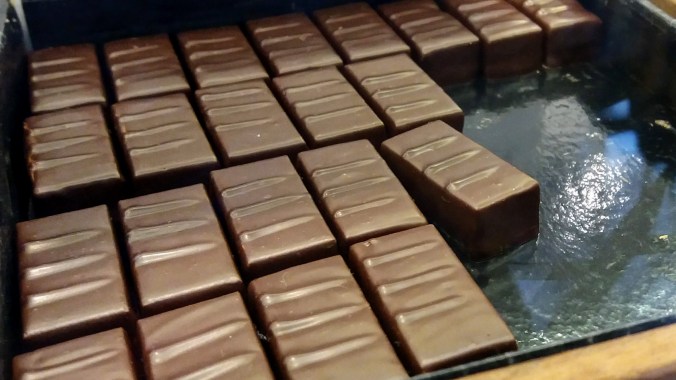 Black Olive Ganache: This award winning flavor was given to me as a sample. I probably wouldn’t have bought it just to find out, but they were excited to show off. It’s not as bad as it sounds. The filling evoked raisin and anise notes as my brain tried to reconcile chocolate and olive. I did have some cognitive dissonance as my palate refused to accept the blend. The second bite was smoother. Since I’m not really a fan of anise or raisin it wasn’t a winner for me, but neither did I feel the need to brush my teeth afterward. It went a long way toward showing me the skill of the makers.
 Pistachio Marzipan: So sweet! Even with the dark exterior. The almond flavor was ok, but the pistachio was not noticeable.
  Manon Sucre Vanilla: This shop is famous for inventing this particular confection, although other shops make and sell it now, too. It is so so so sweet. Nougat creme and nuts in white chocolate. It’s like someone took divinity and added white chocolate and whipped cream. Not… bad? Just so much sugar! I think the filling would have been great as a contrast to a dark, bitter exterior but only vanilla and coffee were on offer.
 Another “historical” stop.
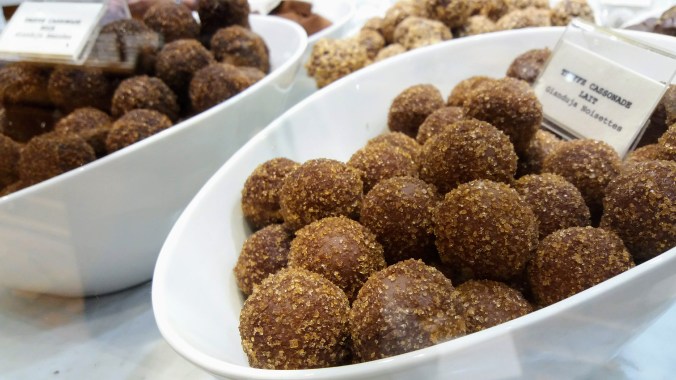
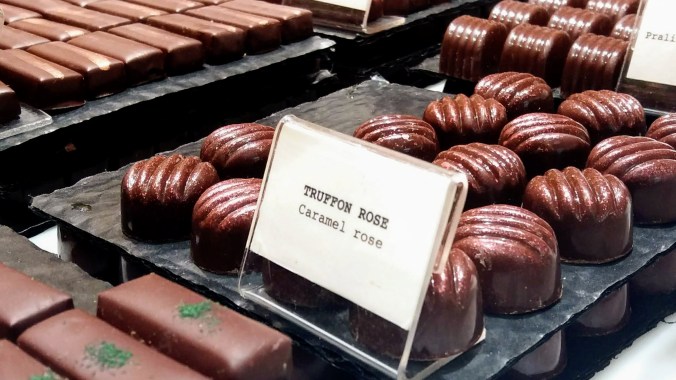




 Chocolate is one of my favorite things on Earth, however it is an industry rife with slavery and abuse. Cocoa only grows in a few places on the planet and those are almost exclusively in 3rd world, developing nations in Central & South America, as well as Africa. Cheap chocolate companies use child labor, forced labor, and under paid labor, putting vulnerable people at risk and taking advantage of the economic disparity between developed and developing nations.
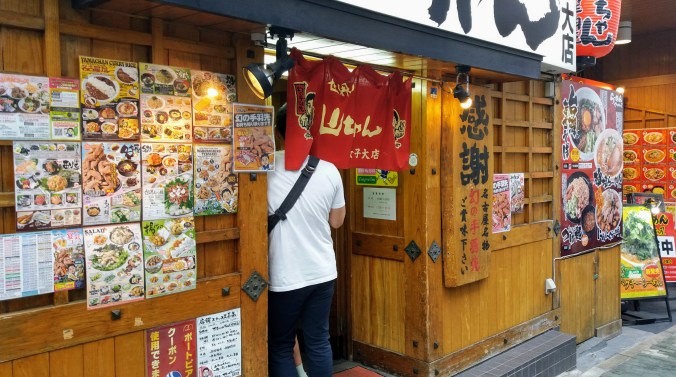 Our first famous food sight was Yamachan, a chicken joint that is usually so popular that wait times can be over an hour. Yamachan is famous for chicken wings. Initially, I was very skeptical since I get plenty of chicken in Korea, but when we arrived we were sufficiently early as to be able to get a table. We had to take the smoking section, but it was still clear air when we were seated.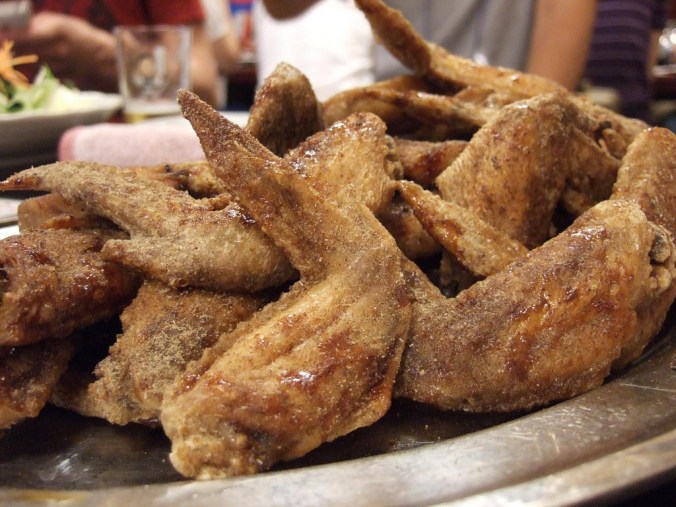
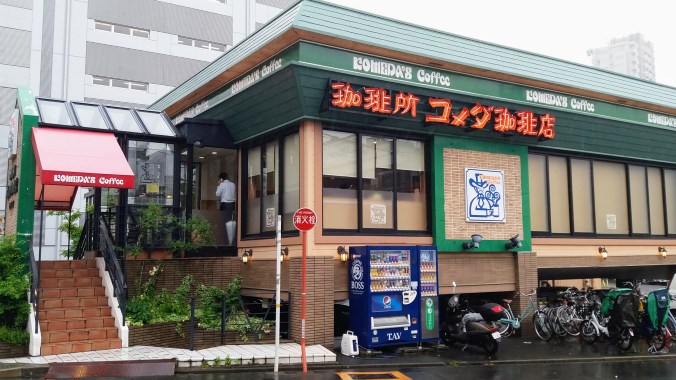 Amid the many things that I found to try while in Nagoya is the “morning service”. Many of the cafes around town have begun to offer a light breakfast (egg and toast or ogura toast) for free (“service” in Japanese) with any order of coffee. Sunday morning my friend and I headed over to Komeda Coffee. This cute little coffee shop is a chain restaurant famous for it’s special morning service of thick, fluffy, buttery toast and red bean paste, also known locally as “ogura toast”. While lots of places in east Asia love sweet red bean paste in pastry (I eat it in Korea all the time), Nagoya got famous for ogura toast by adding… wait for it… margarine! The sweet thick red bean spread with creamy salty margarine creates a unique Nagoya flavor that should definitely be on your “to eat” list. Plus, their coffee is pretty good.


 Even in normal restaurants, eel is one of the more expensive dishes. I tend to avoid buying it here in Korea because it’s often not prepared well. Nonetheless, it is one of my all time favorite Japanese foods. The “plain” hitsumabushi still had plenty of flavor. Of course the smokey, fishy unique flavor of the eel itself, but also a lighter version of the sauce it’s cooked with, as well as the vinegar in the rice. It had so much of what I look for in a good meal, I instantly knew the price was well worth it.
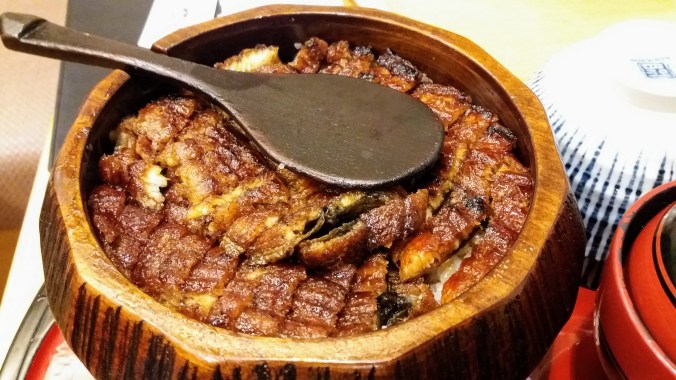 The second ¼ of the dish is meant to be served with the dry fixings provided in the little side box. In our case, we were given small slices of spring onions, thinly shredded nori (seaweed), and what very well may have been fresh wasabi. Most wasabi in the world is fake, sadly, it’s just green horseradish. Now, I love horseradish too, so that doesn’t usually bother me. I’ve learned a little about fresh wasabi from watching cooking shows and documentaries, but I’ve never had any. When I looked at this wasabi, I noticed the texture was very different from what I’m used to. Instead of a smooth paste, it had little shredded bits of plant matter.
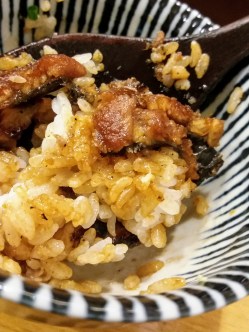 Round 3 we were instructed to replicate round 2 and then add broth. I don’t really know how to describe the flavor of the broth. It was also a little smoky, a little umami. I suspected there were some dried shitake involved in the flavor as well as some konbu dashi. It was nice, but for my taste it didn’t really add to the flavors the way that the spices alone had. Additionally, it drastically changed the texture of the dish, turning crispy eel and rice into a wetter soup. It was still delicious, and I’m glad that I was able to try all the different styles of eating hitsumabushi, but I was grateful for that final ¼ serving where we were instructed to return to whichever of the first three we had liked best and do it again!






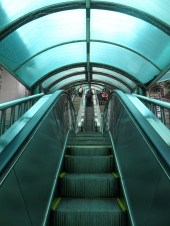 This park in the Nampo neighborhood is up on a bit of a mountain, but there’s no need to climb up exhausting stairs because there’s an outdoor escalator installed to let you ride up in comfort! When we got to the top, we were already blown away by the great views of the city below and we hadn’t even gotten to the highest points yet. As we passed by the stage area, it was clear that a performance was about to get underway. There were plenty of people dressed in the standard white garb trimmed with bright colors and fun hats and the parents hadn’t gotten to see any traditional dances, so we pulled up a seat. I have since found out that cultural performances happen here every Saturday at 3pm between March and November.
  The MC for the day was excited to see so many foreigners (not just us) in the audience and brought out a poor young Korean lady who was nervous and not particularly fluent to try and translate for us. Representatives from each visiting country in the audience were invited to come up on the stage and play a traditional Korean game of trying to toss a stick through one of 5 rings attached to a jar. My friend’s mom went up and they let her stand extra close because she was over 60 and she brought us honor by scoring the center ring! We didn’t sit for the whole performance, but it was a kind of musical story. From what I could follow, some performers arrived at a lord’s house and were invited in to party, but there were some rascals around who may have been trying to steal away or marry off the lord’s daughter? The language barrier was a bit of an obstacle to the plot, but it was fun to watch and clap along with.
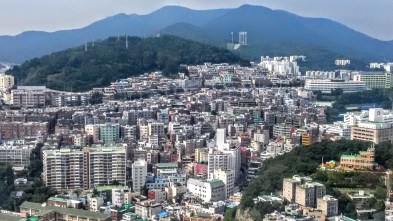 We snuck out during a lull and headed to the main attraction of the Park, Busan Tower. The tower stands 118m high, but it’s also on a mountain so, it seems to be rather higher than that when you look down. For 5,000won you can get a ticket to ride up to the top of the tower where you can enjoy a stunning 360 degree view of Busan. There are helpful decals on the windows that identify major landmarks and there;s a little cafe where you can enjoy a snack with your view.

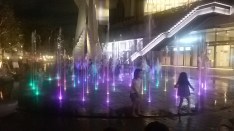 Sky Tree (left) where the small fountain lights are coordinated with the tower lights high above. These shows are fun, awesome, wonderful, and sparkly, so when my friend told me he wanted to take his parents down to Busan’s own choreographed fountain show, I was all in favor.
 There are some permanent concrete bleacher type seats along one side, but the rest of the area around the fountain had been filled up with plastic chairs to accommodate the higher number of spectators on the warm weekend nights. We arrived early and laid claim to seats in the front row, hoping that we wouldn’t have to worry about the crowd standing in front of us when the show started. Refreshingly, the Korean audience stayed in their seats during the show and we had a first class view. In both China and Dubai, the spectators jostled for the best standing spots and to get my video, I had to start standing in my spot almost 30 minutes before the show started to get an unobstructed view.
  This is 2,519 sq m fountain is listed as the largest fountain in the world by Guinness. I suppose that the show at Dubai is not considered a single fountain and is therefore only the largest fountain
 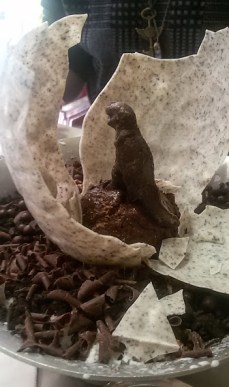 I’m not a food blogger, but sometimes food is just too good not to write about. I’ve done some basic coverage of these things elsewhere, but it doesn’t get old. Dala 100% Chocolate is this tiny hole in the wall chocolate cafe in my neighborhood in Seomyeon. The first time I went there, I had to try their signature dish, the dinosaur egg. This was an amazing concoction of shaved milk ice topped with crushed chocolate cookies and chocolate shavings with a giant egg made of cookies and cream candy. When smashed with the provided hammer, the egg reveals a scoop of truly decadent chocolate ice cream and a tiny chocolate dinosaur. If that’s not enough chocolate, you can pour chocolate sauce over it too. It takes at least two people to eat this dessert. Since that time, we’ve also tried the chocolate pizza (nutella spread, banana slices and toasted marshmallows for toppings, scoop of vanilla ice cream and chocolate sauce again), and for the two separate parental visits this summer, I also managed to try the fruit fondue (kiwi, grape, orange, grapefruit and banana… turns out grapefruit in chocolate is awesome), the “special brownie” (molten chocolate inside!), and the chocolate churros (churros you dip in chocolate). Let us not forget the milkshakes, which come in a variety of chocolate compliment flavors and can be made white, milk or dark. I don’t just love this place for it’s chocolate, but because it’s good chocolate. It’s not too sweet and they do a good balance of flavors in each dish so you don’t get tired (as if that were possible) of a single chocolate flavor. I think we’re about halfway through the menu now, and if the weather keeps cooling off, I’ll get to try their hot drinks soon!
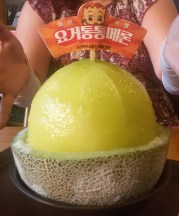 The melon special was not just using frozen milk, but frozen yogurt… and not the kind you’re thinking. Imagine you mix some yogurt with milk or water until it’s all liquidy, then freeze it solid, then shave it off into teeny tiny snowflakes. Ok. Now, take a honeydew melon (the green ones) and cut it in half. Hollow it out and freeze the shell. That frozen melon rind is now our bowl, filled with the snowflake texture frozen yogurt and topped with some cubes of what I can only describe as cheesecake filling.
  Now, over the whole thing, put the melon you removed from the rind, the hemisphere of melon, all of it. The dish was served with a big plastic knife so we could cut up the melon for ourselves. It was the perfect combination of sweet, tart and creamy to refresh us in the summer heat.
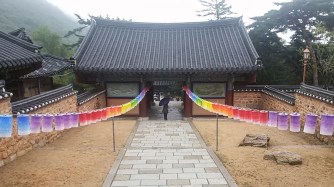 When we arrived, a very nice older Korean lady offered to explain a little bit about the main gate to us in English and we got to hear a little history of the naming of the temple and the unique four pillar style that makes this era of architecture distinctive. As we ascended the stairs and passed through several gates decorated with bright lanterns and beautiful paintings we moved through a hall of fearsome statues and finally emerged into the main courtyard. The temple was originally built about 1,300 years ago, but was destroyed during a Japanese invasion in 1592 and later rebuilt in 1713, but a few stone remnants and one stone pagoda left from the original still stand in the wide open square. The temple is dedicated to the practice of Seon Buddhism, which is the Korean descendant of Chan Buddhism the same way Zen in Japan is.


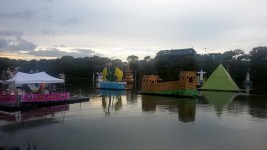 Also called the Jinju Namgang Yudeong Festival, it is held in honor of the fallen during the seiges by Japanese soldiers in the Imjin War in 1592-3 (the same time frame the orginal Beomeosa Temple was destroyed). During the war, lanterns were used as military signals, a means of communicating with reserve forces, and as a way to keep in touch with family members outside of Jinjuseong Fortress. Even after the war, people continued the tradition of floating lanterns down the river to pay tribute to the brave souls that had been lost during battle. Today, the festival is far more than a few lanterns on the river and instead is a whole palisade of life size and larger than life lanterns floating on the river and filling the riverside park where the fortress once stood.
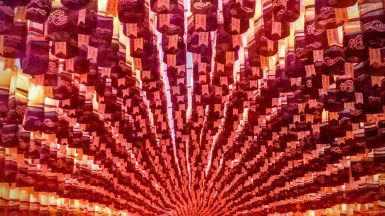 When we entered the display area, we were given arm stamps so we could come and go as many times as we liked, then we began our stroll down the riverside. The water was covered in giant lanterns in shapes of mythical animals and heroes as well as famous landmarks like Stonehenge, the leaning tower of Pisa, and the Statue of Liberty. There were floating restaurants, boat rides, and yet more tents offering delicious snacks.There were giant tunnels of red lanterns where couples walked hand in hand in the twilight.
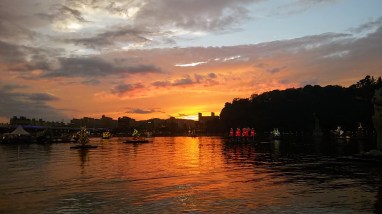 Two floating bridges at either end of the display allowed visitors to pass from side to side without returning to the street level. The day had been rainy, but as the rain dried up, the sunset lit the clouds in shades of brilliant gold and scarlet.We crossed the river and ascended into the wooded area to be greeted with the most amazing forest of light. Unlike the


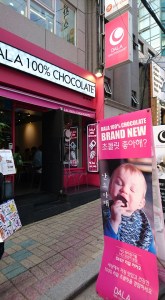 When we found the shop, it was a small space tucked in between yet more small boutique style eateries, but we were saving our appetite for chocolate! We stood outside for a moment admiring the menu and realizing that we would have to come back several times to sample all the amazing goodies on offer. Our timing was also great as we didn’t have to wait at all for a table.
 The drinks arrived first, giant frosty metal cups with straws and chocolate spoons! My mocha was a perfect blend of coffee and chocolate, and not at all too sweet like mochas can often be. The choco waffle ball came with tiny little chocolate dipped balls of waffle batter sprinkled on top and was likewise a luscious bitter-sweet. Plus, the napkins were printed with the Korean Sign Language alphabet! Too cute! We gushed over the deliciousness for a while, taking some obligatory food photos and then the main event arrived.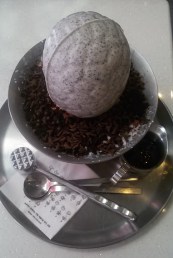


 Much like the temples in China, there was a large, odd shaped rock set out front with the name of the temple in Chinese characters (白楊山三光寺 – bai yang shan san guang si, which roughly translated as “poplar mountain heavenly Temple” and you can clearly see the “san guang si” became the Korean “sam gwang sa”). There was also a long stairwell with a numerically significant 108 steps. The stairs were lined with lanterns, flowers and statues of various sages famous in the history of the sect, although please don’t ask me to identify them because it can be more complicated than spot the Catholic Saint. We got our first glimpses of the lantern coated buildings from the stairs and began to get giddy at the thought of being surrounded by so many beautiful colored lights!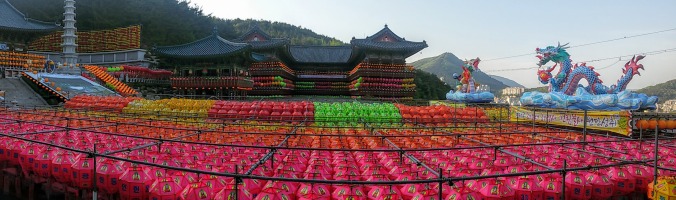
 We traipsed around the temple grounds in awe, randomly bursting into the


 Gallivantrix