Going into Northern Ireland I was not really sure what to expect. When I was growing up, the North was known for it’s hard life and angry militant (terrorist?) political movements: The Troubles. There are three great reasons to visit the North: the stunning natural beauty, the unique and historical culture, and Game of Thrones. That last one seems a lot less important after the series finale aired disappointing literally every fan, but dragons are always cool. Today’s post focuses on the culture and more recent history. I wrote a much more detailed account of the two Irelands what seems like an eon ago (before the Plague), and while I prefer to focus on my experiences while traveling, sometimes those experiences include some painful history and deep thinking.
Belleek Pottery

The first stop on my road trip after crossing the unimposing border (marked mainly by the sudden change from Euros to Pounds at the petrol stations) was the Belleek Pottery factory. I didn’t know anything about Belleek Pottery. I know we had some in the house growing up, but I guess it went with my stepfather when he did.
Founded in 1857, it is the oldest pottery factory in Ireland (either of them), and was initially started because of the availability of special mineral ingredients locally. Eventually, it became more common to source materials from Cornwall or Norway, but the unique Belleek style has continued to make the pottery famous and sought after.
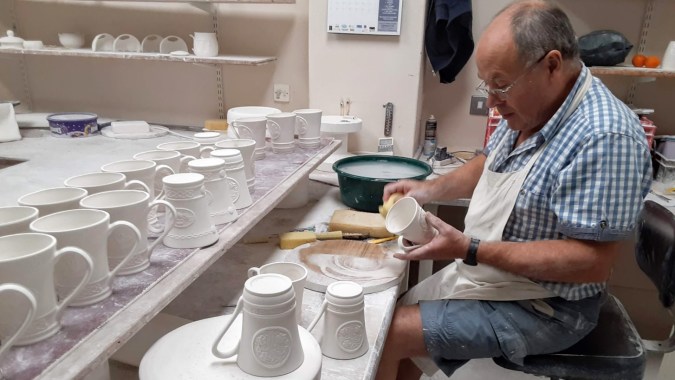
The factory was in holiday mode during our tour so there were only a few employees on site. Perhaps this made for an emptier experience, but I thought it was nice to be able to focus on a single work table or look closely at the pottery without being rushed or in someone’s way. Our tour guide walked us through the process of making the beautiful and unique ceramics from the artistic conceptualization to the making of molds and refining of pieces. We had the chance to see workers attaching separate pieces and refining the details from the mold by hand. We were also offered the chance to break the rejects, since the factory will never allow “seconds” or flawed pieces out into the world.

However lovely the molded pieces are, they are as nothing compared to the beautiful hand crafted flowers and lacy woven baskets that represent iconic Belleek. We had the chance to see some of the craftspeople at work on these fine details. The flowers and detailed add ons are simply stunning tiny craftsmanship, but the weaving was simply the most unique. The clay used for the basket strands is blended in such a way to make it slightly elastic and so less likely to break when manipulated over and over. Don’t try this with your regular clay in pottery class, kids.


The painting center was no less beautiful. Each finished piece is painted by hand to give a unique finish to every piece and to make sure that the little green shamrocks are just right. At the end of our tour we were let out into a small museum showcasing the evolution of Belleek styles over the years. The special pieces showed even more detail in the handmade flowers, but my absolute favorite was a pearl glaze that was only in fashion for a few brief years.


I doubt I would have chosen to tour Belleek on my own, but nonetheless, I did enjoy the trip. Non-solo trips can be a mix of “well, I wouldn’t have picked that myself, but cool”, and “yes, please!” kinds of stops. While Belleek was the former, Bushmills was definitely the later.
Bushmills
Bushmills has been in my family and house for as long as I can recall. It was my grandmother’s whisky of choice and hers was the immigrant family with some deep dies to the Irish diaspora culture in America. She passed when I was 17. It was a very sudden turn from being old and chronically ill, but lively – to hospitalized, comatose and gone. I know, morbid, but it was about a week of me sleeping on the hospital room floor and then it was over. Her children (my mom, aunt and uncles) and I shared out the remains of her last bottle of Bushmills while we told stories about our memories of her. Bushmills holds a place in my heart as well as my tastebuds.
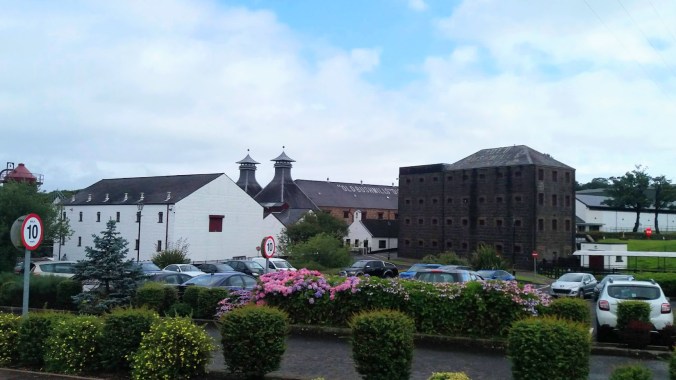
There is no photography allowed inside the distillery to protect their trade secrets, but we had a fun tour that took us from mash to cask. It was very interesting to me to do this after my lovely brewery tours in Belgium since the basic process to start both beer and whisky is very similar. The malting, mashing, and fermenting is more or less the same (a great deal more similar than to wine-making), the shiny and hot copper stills is where spirits take a hard (pun intended) left turn from beer.
The still room in Bushmills felt like walking into a sauna. The entire room was warmed and steamed as the low alcohol “wash” is heated and pressurized into boiling at about 78C (much less than the boiling point of water). This causes the alcohol to evaporate where it is caught in the tubes and condensed back into liquid form in a new reservoir while the water remains in liquid state below.
Amid the giant copper contraptions was a small and extremely climate controlled glass walled room where a further refinement process took place in small batches under intense supervision. Neither the large copper nor the smaller stills can be left unattended, so a highly trained employee has to spend hours a day in that hot and sweaty room just to make sure that the resultant distilled spirits are correctly balanced and purified.
The main method of distillation is well known and basic still kits can be assembled fairly easily (that’s where moonshine comes from after all), but each of the worlds best distilleries has a few proprietary methods and Bushmills is no exception. The tour guide did an excellent job answering all my questions about the science without giving away any trade secrets.
(The photo is an old copper still on display in the tasting room.)

After the stills, it’s still not whiskey. The magic that turns white lighting into that dark amber ambrosia is cask ageing. This might be my favorite part of any alcohol tour (ok, except for the tasting) when we get to enter the cool and dark rooms filled floor to ceiling with dark barrels and simply redolent with the luxurious smells. Our guide explained the different types of casks used to flavor and age the whisky and showed us examples of the changes in color and volume over time. Not only does the wood of the cask color and flavor the alcohol, but the alcohol leaks out through the porous wood over the years. This loss is referred to as the Angel’s Share (I guess Irish Angels like a wee dram, too) and in areas like Ireland accounts to 2-3% loss per year. A 50 gallon barrel can be reduced to less than 15 gallons in a 25 year age! Those heavy price tags are not only taking into account the amount of time the whisky must be stored before sold, but also the sheer volume of alcohol lost to the angels.

However, the longer it ages, the more the sharp and harsh flavors of the distilled moonshine soften and the more of the flavors of the wood become absorbed. Mostly 10-12 years is enough to get a good mellow flavor for the non-aficionado. Less if you’re planning to mix it with (shudder) coke. In addition, some of what evaporates is yet more water and the finished product of maturation can be between 115-150 proof. But wait, Kaine, I’ve had Bushmills and it’s only 80 proof, what gives? Well, the factory puts some lovely fresh Irish spring water (honestly I don’t know where the water comes from, but it sounds nice?) into the mix before bottling to create a consistent and ideal proofing. This is for two reasons: product consistency is super important to a brand, so they do need to be sure that all bottles are the same. Second, and to my mind more importantly, you simply cannot enjoy the taste of the whisky at 150 proof! Even 100 proof is pushing it.
The great debate about whether you should add water to your whisky is almost hilarious in this context, knowing that the distillery did it for you. However, 80 proof is simply their best guess where most people would be able to enjoy the flavors ideally, so if you wanna add a little water to enhance your own flavor experience, go for it. Bushmills itself served a small pitcher of water along side the whisky in the tasting room for just that purpose, so obviously they don’t mind.

I really enjoyed the 12 year distillery reserve (lower right, sky blue label), a unique flavor profile and of course not sold anywhere but the distillery… literally, not even in the duty free shops. I heavily debated buying a bottle but there were no small sizes and I knew that without the duty free sealed bags, I’d have to try and lug it in the checked bag, not to mention lugging it around the rest of my Ireland trip (not even half over yet), and the fact that if you want to bring more than 1L of booze over borders you have to figure out how to pay them taxes (not a huge burden, but …). A smaller bottle would have meant easier packing or just enjoying it in Ireland, but alas. I did end up with a bottle of the fantastic Dingle Peninsula Gin from the duty free, which almost makes up for this loss.
Derry
Also known as Londonderry, it is the second largest city in Northern Ireland and home of The Troubles. I am going to have to get political/historical again because almost all of the major landmarks in Derry are related to the Troubles in some way or another.

The first big one we came upon was the Peace Bridge: a beautiful bridge that eases pedestrian traffic and makes for a lovely riverside view. It’s easy to think of the clashes in Ireland as being in the distant past, but they are not. The Peace Bridge was only built in 2011 and it’s construction was an attempt to ease communication and interaction between the unionists (stay in the UK) ‘Waterside’ on the east bank and the nationalists (join Southern Ireland) ‘Cityside’ on the west bank.

Mere steps from the riverside is the Guildhall. This is an iconic work of architecture built originally in 1890 to be a ceremonial government house / town hall. It’s been destroyed a couple times in fires or bombings, but the restoration project of 2012 has been very successful. To be honest, I thought it was a restructured church given it’s beautiful stained glass windows and enormous pipe organ, but I’m told it’s intention has always been secular in nature. There were several memorials inside dedicated to those who fought (and died) during various stages of revolution against the British occupation. Since at the moment of writing this, the unionists still outnumber the nationalists, that occupation is ongoing, and while the conflict hardly ever results in whole historic buildings being bombed these days, it is far from over.


However, even if you aren’t interested in Irish history or politics, the Guildhall is worth a visit for the exquisite stained glass in every available window.
Bogside Murals
From the Guildhall, we headed over to the Bogside neighborhood to see the murals. Bogside is … perhaps more politically relevant in 2020 (as I write this) than it was when I visited a year ago. The global Black Lives Matter protests against police brutality have highlighted clashes between state sponsored police and citizens who are tired of being treated as less than.

I gave my own detailed account of the IRA in the Two Irelands post before, and then as now, I ask people to remember that any comparisons between the Troubles in Ireland and the BLM protests in America should only be examined as “shitty police state problems” and NOT used as a way to compare white (Irish) struggles to black (African American) struggles. Just. Don’t.
For those less familiar with American culture, it is a common white supremacist tactic to argue that white Irish immigrants in America had it just as bad or worse than black slaves (lol). Lots of really well meaning white people get caught up in this because at first blush it sounds very reasonable. It isn’t. (You can find more details here,here, and here as a starting place.)
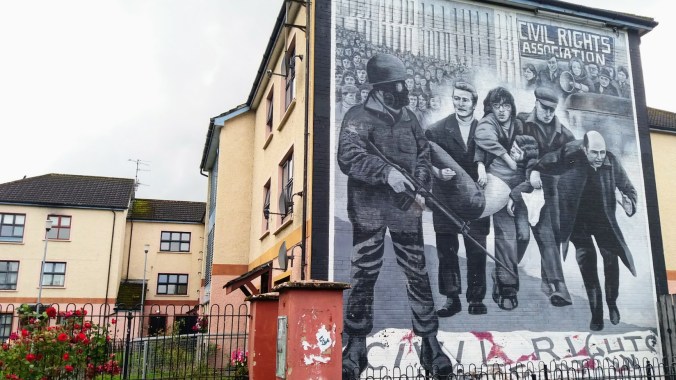
In this case, the discriminated against minority were the Catholics who had all manner of extremely bigoted laws passed to keep them down including limiting their employment, education, marriage and property access. It was only marginally a religious issue, as the lines of unionist and nationalist were also generally drawn along church lines. The nationalist Catholics were understandably pissed about it. When protest marches were banned, some marched anyway and were brutally attacked by the police. This was in 1968 so the actions of the police were filmed and shown on television, prompting demonstrations of solidarity at the Guildhall and elsewhere.
As the civil unrest went on, off duty police officers in plain clothes attacked protesters who were involved in marches or demonstrations. Uniformed on duty officers refused to protect the protesters from the assault. By January of 1969, police were breaking into protesters homes to assault them and the residents of Bogside erected barricades to keep the police out, declaring a “Free Derry”.

Enter “The Apprentice Boys”. I cannot make this stuff up. No, they aren’t an obviously white nationalist group like the Proud Boys, but… come on. They are a Protestant fraternal (men only -read: patriarchal) order, however, and at the time in 1969, they enjoyed keeping those dirty Catholics “in their place”. Something something shoe fits.
The annual Apprentice Boys parade in August 1969 came so close to Free Derry that a fight erupted. Guess which side the police took. The police effectively dismantled the barricades, letting the Apprentice Boys into the neighborhood and leading the Catholic residents of Bogside to include the police in their targets.

A three day riot ensued. The neighborhood was flooded with tear gas and well over 1,000 residents were injured in some way. Police from neighboring areas were brought in, but due to a severe lack of training, they only made it worse. On the third day, the British Army came in and basically separated the three sides: Apprentice Boys (Protestant), Bogside residents (Catholic) and police (Protestant) — while allowing the Bogside residents to maintain their barricades (probably the only reason it worked).


Free Derry was maintained for three years by armed IRA soldiers patrolling to keep British soldiers and Irish police out. This was not a time of peace, but of intensified armed conflict between the British state and the IRA. Free Derry was eventually dismantled after the massacre of Bloody Sunday where 14 people (13 outright and one later from injuries) were shot down by British soldiers during a protest march against the practice of imprisonment without trial. The soldiers were exonerated on the basis that they claimed to be shooting at armed targets.
If I took out the names and dates, these details could be from any number of American cities in 2020. I will not apologize for the comparison, or for getting political in my blog. We are repeating historical mistakes by continuing to find those among us to “other” and diminish based on pseudo-science and hate-fueled religious arguments. Derry may be a lovely place to have a holiday now, covered with boutique shopping and delectable cafe eateries and pubs, but 50 years ago it was a bloodbath as those who strove for equal rights were murdered by those who valued the status quo.


Do I like the bombings, the riots, the violence employed by the IRA? No… but I understand it – why it happened and why it was necessary to achieve equality under the law. What you would do if your country made it so you and your family always have less, are always be behind or under someone “preferred”, and allowed to be beaten or murdered without consequence after decades of peaceful protests and political marches were systematically ignored or criminalized?
I hope that America listens to BLM before it gets any worse because the result of these kinds of clashes are decades of pain and destruction. There is no question that the history being remembered here is one of state sponsored oppression and violence. You cannot visit and be unaffected by the striking contrast between the now peaceful streets and the murals dedicated to the fallen.
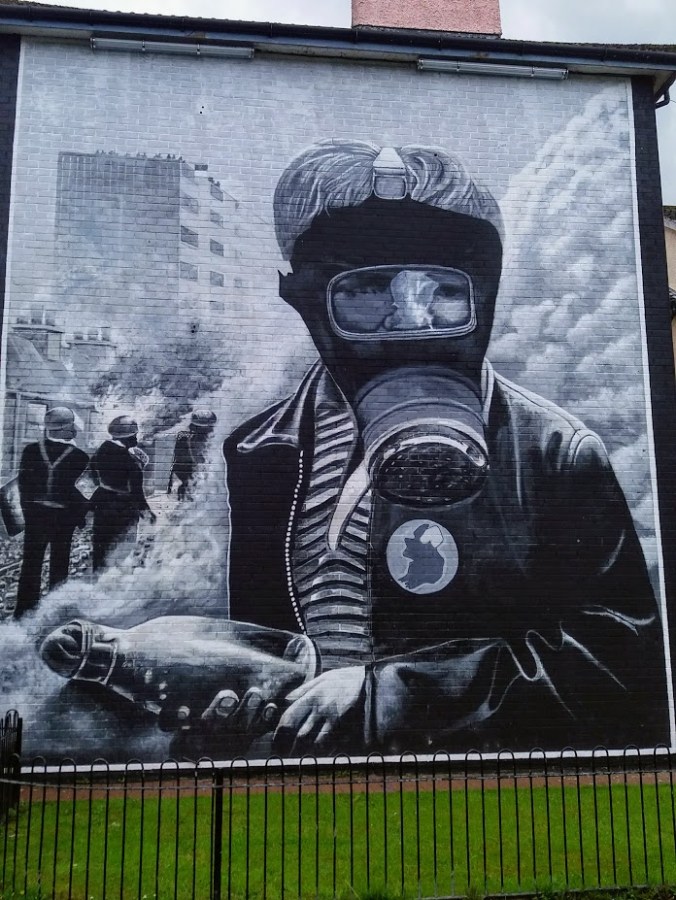
History kept alive in the neighborhoods affected serves to remind us what we are capable of as a species, best and worst. If you travel the world and you skip the hard parts, you’re missing out on a magical opportunity to open your mind and grow your heart. Thanks for coming with me. Stay safe, wear a mask, wash your hands, destroy systemic forms of oppression and end police brutality.

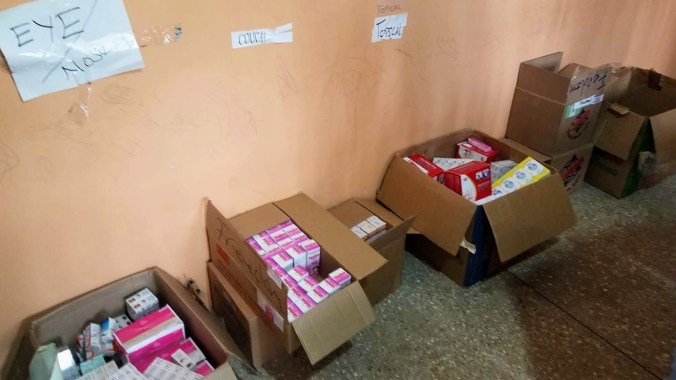


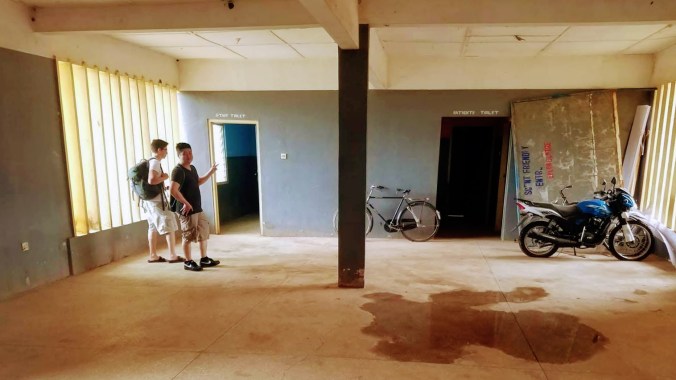

 We are working to help the villages develop systems for chronic disease management, such as having a monthly day where a doctor visits from the regional center to provide care for people with chronic conditions. If we can get funding toward it, this could become a celebratory day with a meal provided to encourage people to attend. Hopefully some of these changes will help people stay healthier.
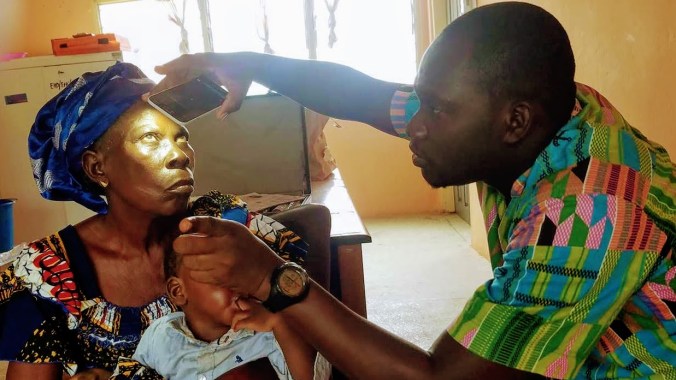
 We moved to another village called Otuam. Their health facility was much smaller and patients had to wait outside under tents to be seen. I worked with Dr. Cornelius, testing for malaria and checking blood sugar. In Ghana, Malaria is seen more as a nuisance than a life-threatening sickness. It’s similar to the way people in America relate to the flu. The flu occasionally kills people in the US, but most of us expect to get it at some point. Since we were already on malaria prophylaxis (vaccine), I followed their lead and have been mostly skipping insect repellent. Amazingly I haven’t gotten a single bite all week.


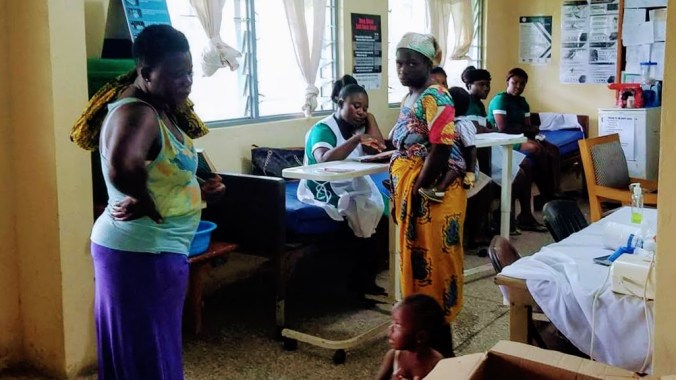 This hospital is rare and unique in Ghana. It has a special team to manage chronic conditions like diabetes and hypertension. We spent some time talking to their director and making plans to work together over the next year to bring their amazing work to more communities. We are also going to try to get them additional funding for important equipment they need, such as the ability to test HbA1c levels (a diabetes blood sugar test). We were able to tour the hospital and were overjoyed to find that, unlike the rural village clinics, they kept medical records and charts on their patients. I’m excited to see teams in Ghana working to initiate chronic condition management and hope other hospitals are inspired by their work.
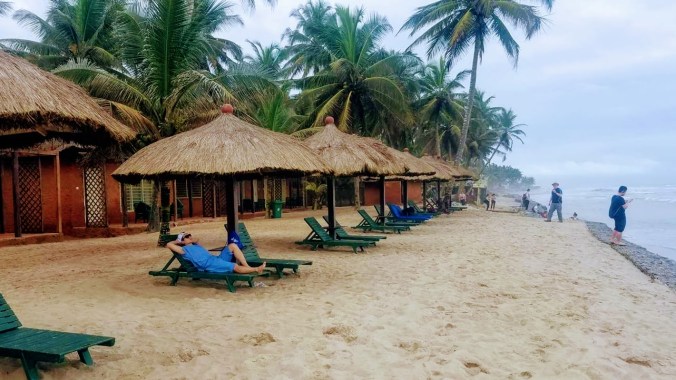 On the way home from the hospital we took some time to relax at one of the local beaches. It was incredibly beautiful, but parts were covered in litter and we were told the water wasn’t clean enough to swim in. It was nice to listen to the sound of the waves and rest in a place with a cool breeze. Such a lovely day.


 Cape Coast Castle was a trade fortress that was converted for use to house and break the spirit of slaves before they were loaded onto boats. Our visit began wandering around the open air area and looking at the canons over the sea, then into a museum detailing the history of the castle and its role in the slave trade. When I was about halfway through the museum our guide collected us for a tour of the dungeons where the people who were to be slaves were imprisoned.
 To give us a glimpse of the fear they must have felt, he had us initially descend in complete darkness, only turning on lights once we had reached the stone wall on the other side of the male dungeon. He explained that this small underground space held up to a thousand men for months at a time. They were forced into complete darkness where they had to live in their own filth and excrement, packed against their brothers. The floor we were standing on was false, built on top of the human waste that had accumulated there.
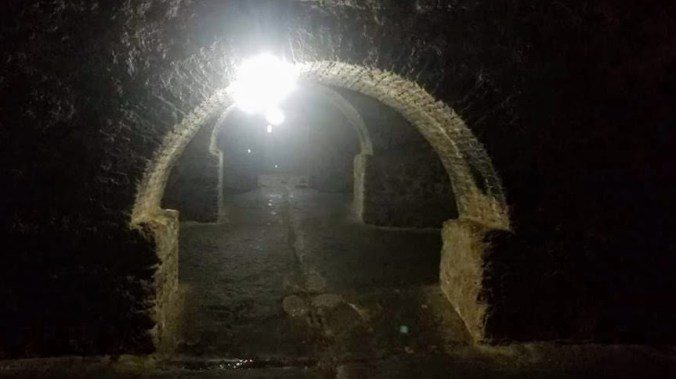 To add insult, directly above the slave dungeons where people endlessly suffered was a Christian church. Our guide described the thought process that many slaves went through when they decided to convert to Christianity. To a person experiencing such agony, it would seem like your God had abandoned you or was weak, yet those who followed the Christian faith were clean and happy, prospering above. It must have appeared to many that the Christan god was stronger or better to his worshippers.
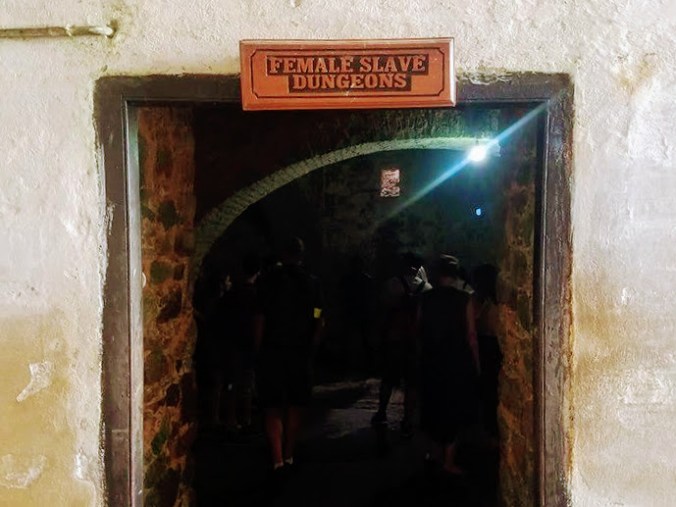 The women’s cells were similar to the men’s, except that their door was regularly opened so they could be grabbed and raped at will. Sometimes they were bathed before this occurred, and other times drunk soldiers would not even afford them that decency. Women who resisted were beaten or put into a hotter cell where they were locked without food and water and often died if their spirits weren’t quickly broken. Our guide shut us into the boiling confinement cell for about 30 seconds, which was enough to have some of us panicking.

 We were left with a plea to remember that slavery is not gone from this world. People are still taken against their will and forced into terrible suffering and servitude. He asked us to see, to take a stand, and to remember.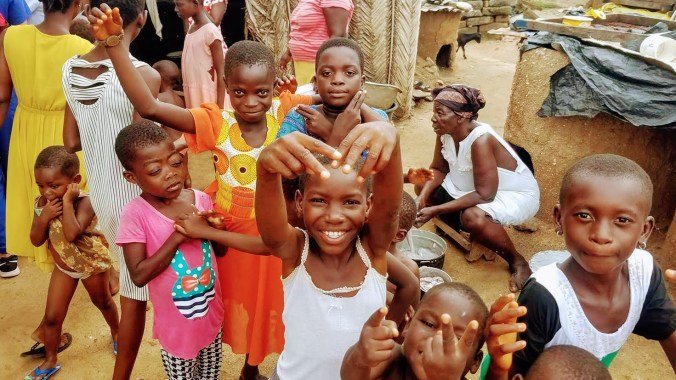
 In the weeks leading up to the event, Facebook groups circulated ads, support, rumors and questions as it became murky as to whether the festival’s organizers were in fact granted the required permits to host vendors, performers and the ever important march through the crowded streets of Haeundae. There was some fear that the vendors would be denied a permit and a rallying cry for them to show up anyway and risk arrest for the cause. (Thankfully, that didn’t seem to be necessary).
 We passed booths promoting awareness, selling pride pins, flags, t-shirts, art and books. We bought a few small things, more to support the vendors than anything else. One booth was just for birth control awareness, which is a major issue in Korea since it is still very stigmatized and difficult for women to use it regularly without facing harsh judgement from friends, family and even medical professionals.
 While the booth selection was not as big as the Seoul event, the protesters weren’t as bad as their Seoul counterparts. There were far fewer of them, and they didn’t have any giant trailers with loudspeakers or competing musical performances. Most of them simply held their signs quietly. A few shouted slogans, but the only one shouted at me was “Jesus is love” which is not bad as protest slogans go… I mean, really it’s the same reason why enlightened Christians think marriage equality is right… love is love, man.
 When the sign wavers got too close, the police gently moved them back. There was no force or violence, but the police would form a blockade and firmly move the problem folks back out of range. One man was so transported by his prayer, he knelt as close to the event as he could get, clutching his sign and praying feverishly, eyes screwed shut and knuckles white.
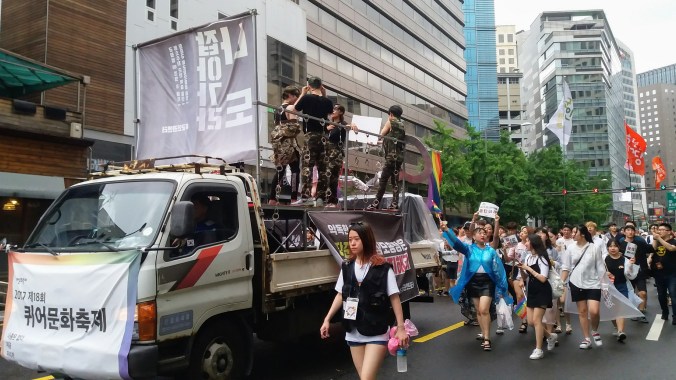
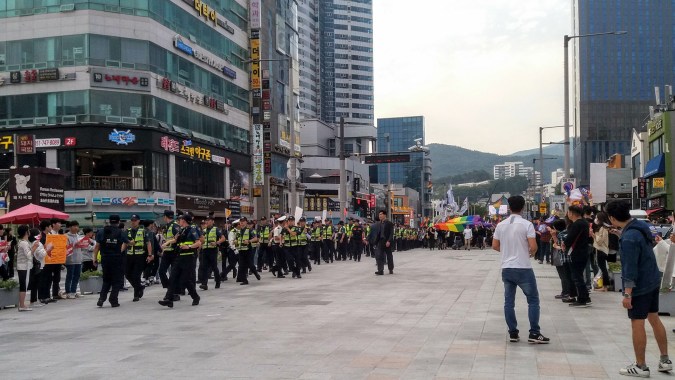 Frantically trying to IM another friend in the parade to figure out which way to go, we walked up and down the street lined with protesters holding signs about sin and Jesus and homosexuals out out out. When the marchers finally arrived, we found ourselves on the wrong side of the police line! We stood among the protesters who waved their fists and signs and chanted their message of opposition. From this vantage point we saw the giant rainbow flag at the head of the procession and we cheered as loud as we could to drown the voices of those around us and support the marchers we had been unable to join in time.
 As the parade moved closer to us, the police moved the line of protesters further and further back to prevent clashes. We pointed somewhat frantically at our own rainbow pins and flags as we asked the officers if we could cross the line and join the group inside. Finally, realizing we were not a threat, they let us through and we joined the group of hundreds (possibly thousands) dancing and singing along to the K-Pop blaring from the backs of the trucks that had lead them on the brief march around the block.
 I’m not sure what the actual parade route was, but I know it must have been short for it was scheduled to start at 4, and was more or less over by 4:30. By 4:45 everyone had dissipated and the plaza was being swiftly converted for whatever event had reserved the space for the evening hours. I also cannot report on the turn out at this time, as there has not been any English language media follow-up reporting on the numbers of attendees, counter-protesters, or police. If I get some information later, I’ll update it here.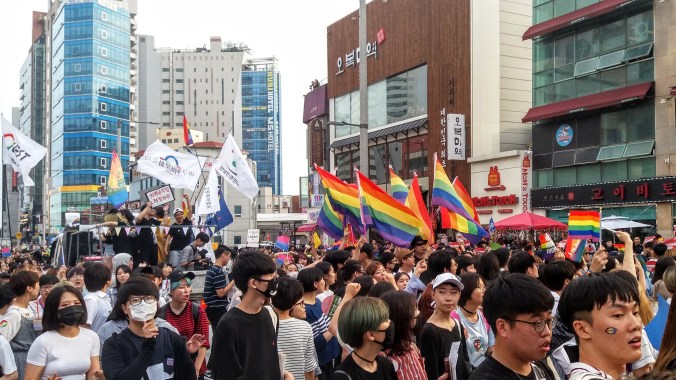


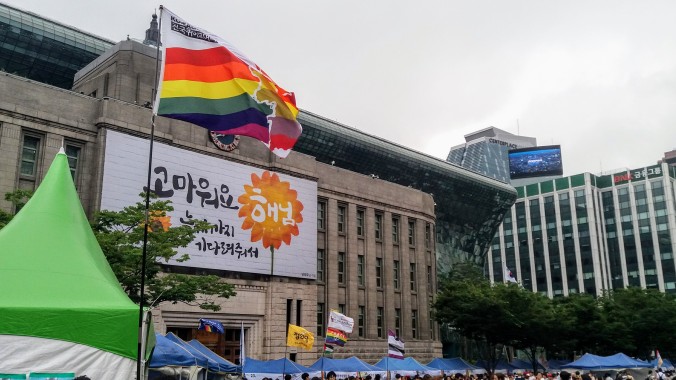 I wasn’t sure I was going to make it this year. Some people weren’t sure there was even going to be a Pride this year. Of course, every single year since the first festival/march in Seoul in 2000 the conservative religious zealots have tried to stop the Korean Queen Culture Festival (KQCF aka Pride) from happening. They try to file legal objections. They try to file use of space applications for the same day. They throw temper tantrums and accuse foreigners of bringing homosexuality and AIDS into Korea (because there would of course never be any gay Koreans if we hadn’t infected them!). This year, the issue was with the grass.
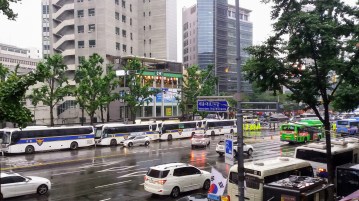 We woke up in our slightly fancy downtown hotel, lounged around, had a leisurely breakfast and finally headed over to the plaza a little after the 11am start time. We passed rows and rows of police buses parked along the side streets. Last year, I came up from the subway and the first sight that greeted me was a veritable army of uniformed officers lining the street and crosswalk. This year, we walked in from another direction and saw a little of the behind the scenes police preparation as well as walking through some of the protesters who were stationed next to the festival exit and a subway station. I knew what to expect going in from last year, but my friend said that walking past all the police and protesters made her feel anxious about the day. The reported police presence was about 6,000 officers.

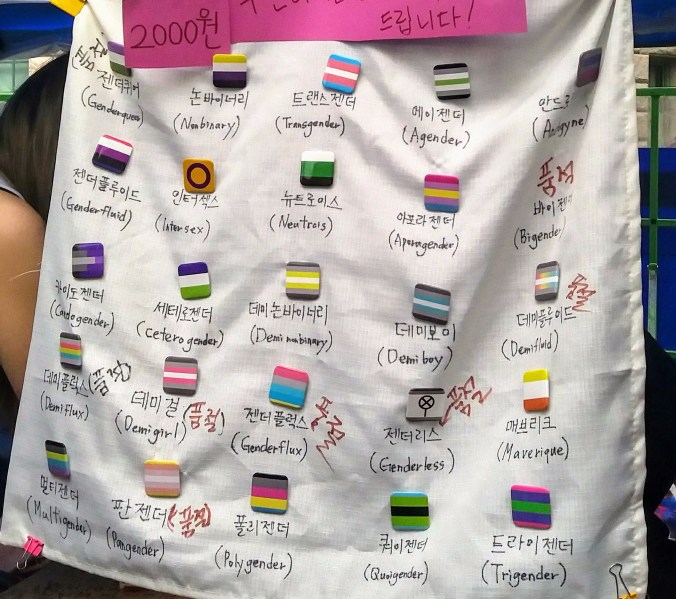
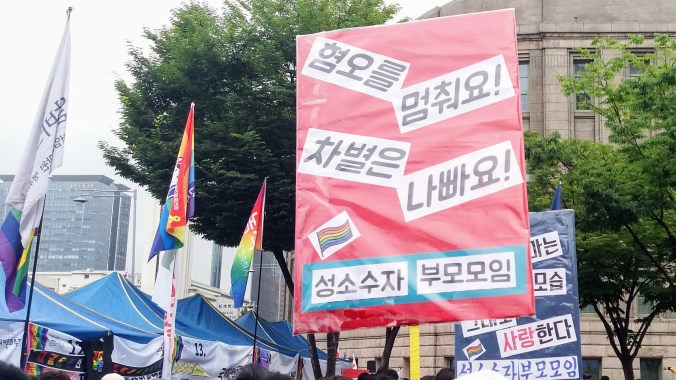


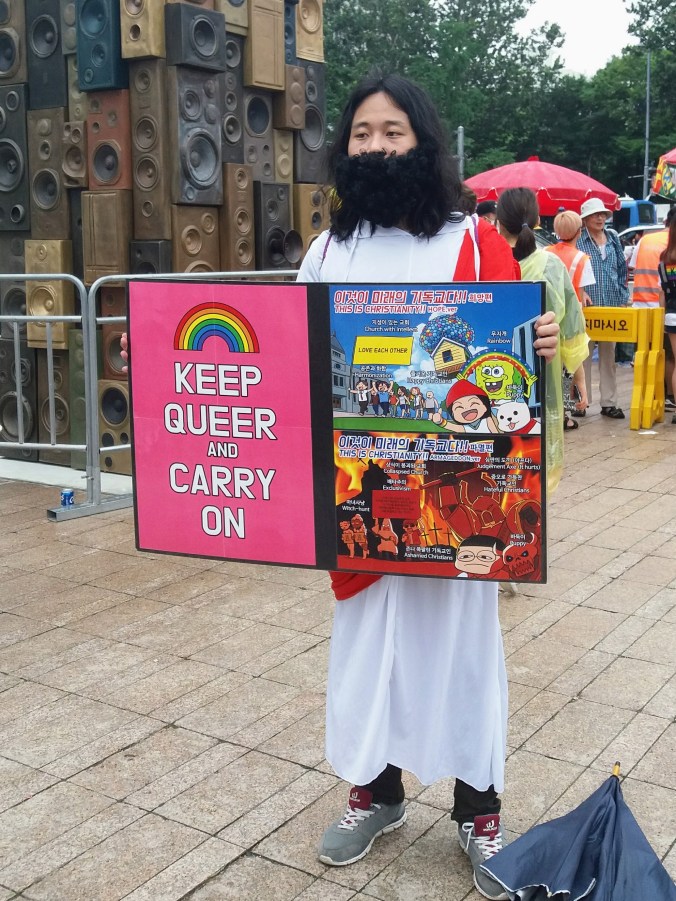 The protesters outside are entirely Christian, but there are plenty of Korean Christian churches that came inside too, eager to point out their own perspective on the Bible and love (hint: it’s about inclusion, acceptance, and more love!). One group had even made a pamphlet that deconstructed the most common biblical arguments against homosexuality and explained the verses in historical context. But mostly they just wanted to show that the church can be accepting too. There was more than one Jesus costume at the event as well, and while the one making the rounds in the media seems to be a white guy (*sigh), I found this Korean one first. His sign is surprisingly excellent when you look closely at the comparison of Christianity hope.ver and armageddon.ver.


 There was also spiritual representation from the Buddhists! I accepted a pamphlet from one nun, which after some time spent translating seems to give the following basic message: while Buddhism condemns sex in general as being one of the things that ties you to the material world (monks and nuns are supposed to refrain entirely, but lay people are expected to do it in moderation, like alcohol consumption or meat eating) that there is no specific teaching about who you have have sex with or what type of sex you have (they listed 3 choices: vaginal, anal, and oral). The takeaway for me was that Buddhists should not condemn queer sex because of it’s queerness. One should regard all types of sex equally (while still bearing in mind things like adultery and unchecked lust are bad for everyone, too). If you’re going to accept that regular folks get into loving relationships and have sex while straight, you have to accept the same for all other flavors too. This was the first year a representation from any Buddhist temple came to the festival. It was glorious.

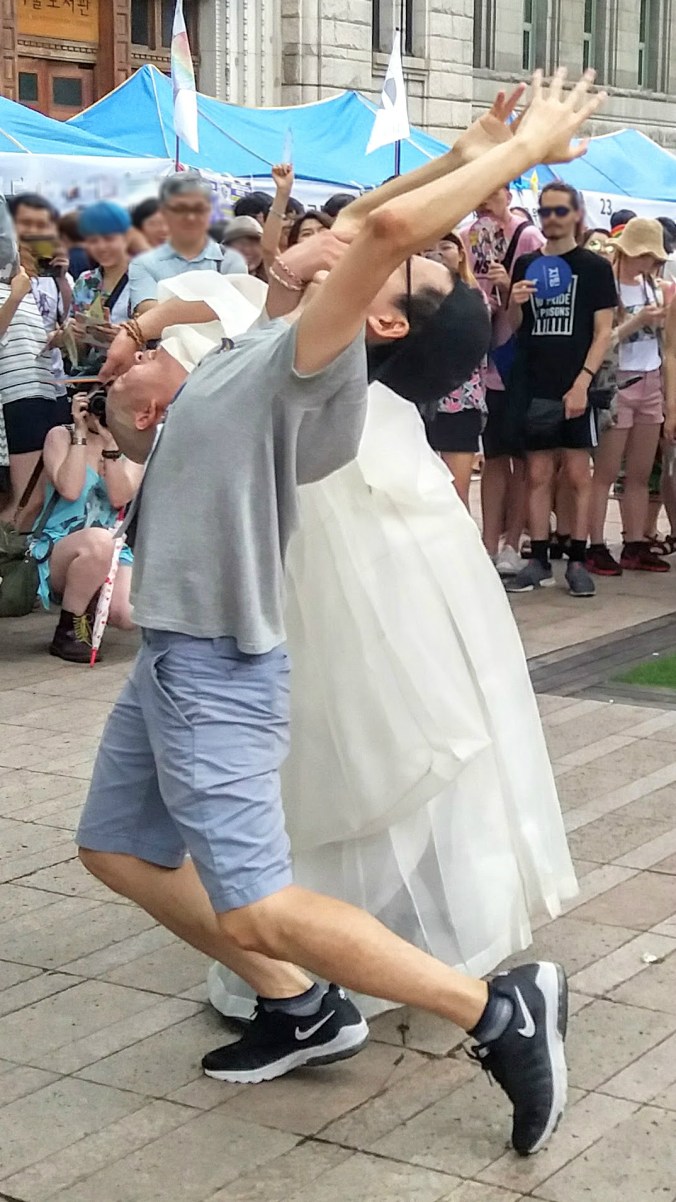
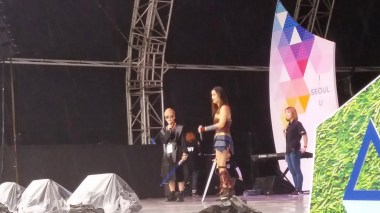 Later on, we spotted Wonder Woman and a jedi (maybe young Aniken?) facing off on the stage, but I only made it close enough for a couple pictures at the end. I’m still not sure what they were doing, because that’s a serious genre clash. Once I was up near the stage, surrounded by people with much nicer cameras than mine, I got lumped in with the more official press (since our press badges weren’t different) and was ushered right up to the edge of a small clearing where I got a front row seat to watch the LGBTQIA traditional Korean drum performance. This is the classic drum and cymbal parade that accompanies every event and festival in Korea and it’s great to see the traditional cultural arts merging into the new cultural milieu.

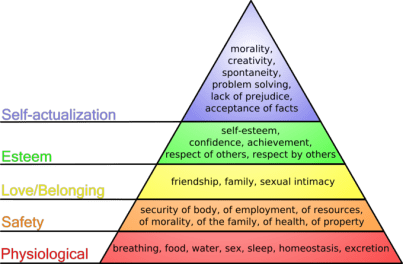 Love and belonging are the third tier of Maslow’s hierarchy, only overshadowed by the need for food and safety and integral to achieving esteem and self-actualization. They are NOT OPTIONAL for humans.
 America is fascinated, hypnotized, enslaved to the idea that every issue has two and only two sides which are so opposed to one another that any form of compromise or middle ground is simply unthinkable. I don’t mean uncomfortable to think about, I mean, people’s brains are actually incapable of thinking the thought. Thought rejected. This is known as the “
 Even in this way, Americans are dichotomous. You love it
  And while we’re at it, a side note on false equivalencies. , such as this lovely comparison of Obama to Hitler. Both were in favor of a policy, therefore they are the same? No. Obama =/= Hitler.
  We need to stop buying into A or B. We need to ask “why” about everything over
 In America, when someone says something insulting (about your faith, your lifestyle, your weight, appearance, gender, orientation, skin color, etc) the result is all too often “You’re an adult, suck it up”. The expectation is that adults should just be able to deal with being insulted or having their feelings hurt (even though arguably many of these insults are signs of bigotry and oppression and not just about hurt feelings).


 America is overly negative. I definitely feel like America is turning (has turned?) into one big crab bucket. People tell me all the time “every place has problems” as a way of minimizing the problems in America or somehow trying to equate them with problems in other places. People tell me all the time, “not everyone can just leave” as a way of reasoning out why they can’t.
 Gallivantrix