Zanzibar: Stone Town

Stone Town is an architectural love child of Indian, Arabic and Swahili cultures. The narrow maze-like streets car-free (though not cart-free) and stuffed from end to end with life. “Get lost in Stone Town” is another top 10 Zanzibar activity. The whole neighborhood is less than 2km2, bordered by the sea on the west, the Darajani Market on the east, and some fairly uninspiring highways on the north and south. GPS sort of works, but because the streets are so close together and none of them are clearly labeled (or possibly even named) you can only get a general idea of where your destination is. You will get lost trying to get there.

A Brief Historical Context

Zanzibar is an interesting and unique geographical gateway between central Africa and the Arabic and Indian cultures. The trade winds carried ships from India and Arabia then trapped ships on the islands for about 6 months at a time before they were able to sail back. Unlike many other trade centers, where the sailors and foreign merchants were in and out of port in days or weeks, the Indian and Arab merchants who came to the islands of Zanzibar were obligated by the wind to stay for half a year at a time, and so they often married local women, built homes, and had families. Though there is archaeological evidence that the island of Zanzibar was involved in trade with other mainland African cultures, the intercontinental trade seems to have started around the 9th century. There was about 600 years of cultural mixing between the Indian, Arabic, and Swahili people that had ups and downs of who was in charge and who was converting who and who was selling who into slavery, but this is the brief history, so we fast forward to roughly 1500 when Portugal hit the scene.

The 1490s are a bit famous for that trip Columbus took, but he was far from the only European out to find wealth in “unexplored” parts of the world. Vasco de Gama was the first European to reach India by sea, a trade route that required stops along the eastern African coast. Portugal was one of the big European colonial powers and they had their fingers in pretty much every exploited continent. Zanzibar was not only a good resting stop en route to Calcutta, but a source of rare spices and human slaves from the African mainland, which were the big moneymakers in those days. The Portuguese ran Zanzibar for about 200 years, until the late 1690s when the Omani Sultanate took it (possibly at the request of the local Swahili people who thought an Arabic overlord would be better than a European one). Somewhere between 1830-40, the Sultan of Oman moved the capital city from Muscat to Stone Town, and when he died in 1856, he split the empire between his two sons, giving Zanzibar to one and Oman to the other. In a move that surprises no one, they fought about it, but then in a shocking twist, they allowed the will to be arbitrated by the British general protector of India. The Age of Empires remains confusing.

Zanzibar continued as a separate Sultanate until the British decided that actually, slavery was morally reprehensible after all, and that everyone should stop now that they had decided to stop. This didn’t happen all at once, but from about 1822-1873 the British put increasing economic and military pressure on the Sultanate to stop trading in slaves, including trade embargos and the raiding of slave ships. Freetown in Sierra Leone was created to rehome the slaves who were liberated by the British during this time. By 1890, Germany and Britain decided between them that Zanzibar would be a “protectorate” of Britain (which is like colony lite). Finally, in 1963, around the time Britain was being forced to give up on the whole Empire idea, Zanzibar got full independence as a constitutional monarchy. They promptly had a revolution to oust the royals in favor of a representative government, and one year later, merged with the mainland country of Tanganyika to form the modern nation of Tanzania. Despite this unification, Zanzibar remains a separate autonomous region (like Hong Kong and China) with it’s own flag, president and taxes.

First Impressions

My first week in Zanzibar, I decided to stay at a hostel in the heart of Stone Town since it seems to be where a lot of the action on the island is. My ride from the airport (a comedy of errors) tried to just leave me in a random parking lot with a random guy. It felt very sketchy, but I have since learned this is pretty normal and that Stone Town is actually very safe for tourists. In Stone Town, “lost” is a relative term. The streets are close and narrow, but there’s a fair amount of order. There’s the main arterial market streets which are loaded with shops, there are the quiet side streets where locals hang laundry and kids play after school, and there’s the waterfront. You’re only really going to get “lost” in the quiet side streets, and even then only for a few blocks until you’re spit back out to one of the main areas or reach the edge.
I was initially overwhelmed by the number of people talking to me. Unlike Senegal where French is the colonial language, English is the colonial language in Tanzania, and they love greeting tourists with spatterings of friendly Swahili as well. The shopkeepers call out as you pass by, inviting you to look, asking where you’re from, and generally being friendly. Of course they want to sell things, but they don’t physically invade your space and they don’t get mean or angry when you say “no thanks”, they just say “hakuna matata, maybe next time”. There are free range sales people who are arranging tours and excursions and they’ll just walk with you and chat. I got some advice about what to avoid doing and eating while in town, and although I never ended up booking with any of the street tour guides, I quickly came to not mind their chatty presence in my walks through Stone Town the rest of the week.

A Guided Tour

I opted for an Airbnb Experience, again hoping that a more personalized touch would be better than a company tour. It seems like Airbnb in Zanzibar is really just a front for businesses. This may also be related to the rules about tourism and taxi licensing. My spice tour guide explained that it takes a couple years minimum to get the licensing to drive tourists around. Walking tour operators don’t have that concern, but they still have to be able to produce papers if they’re questioned by authorities while leading a group of tourists around. The result is that Airbnb isn’t random locals sharing their culture for a small fee, it’s actual real businesses, and you just have to hope they’re not shady. Reading the reviews helps, but as I learned with my Blue Safari trip is not a guarantee. Thankfully, my Stone Town tour was a win. The other person/people who had booked it never showed up, so I had a totally private tour. The friendly guide was happy to adjust the pace, the amount of time spent at each place, and even the places we went to my personal tastes. He also relaxed and opened up a lot more about the details of life in Zanzibar and Tanzania.
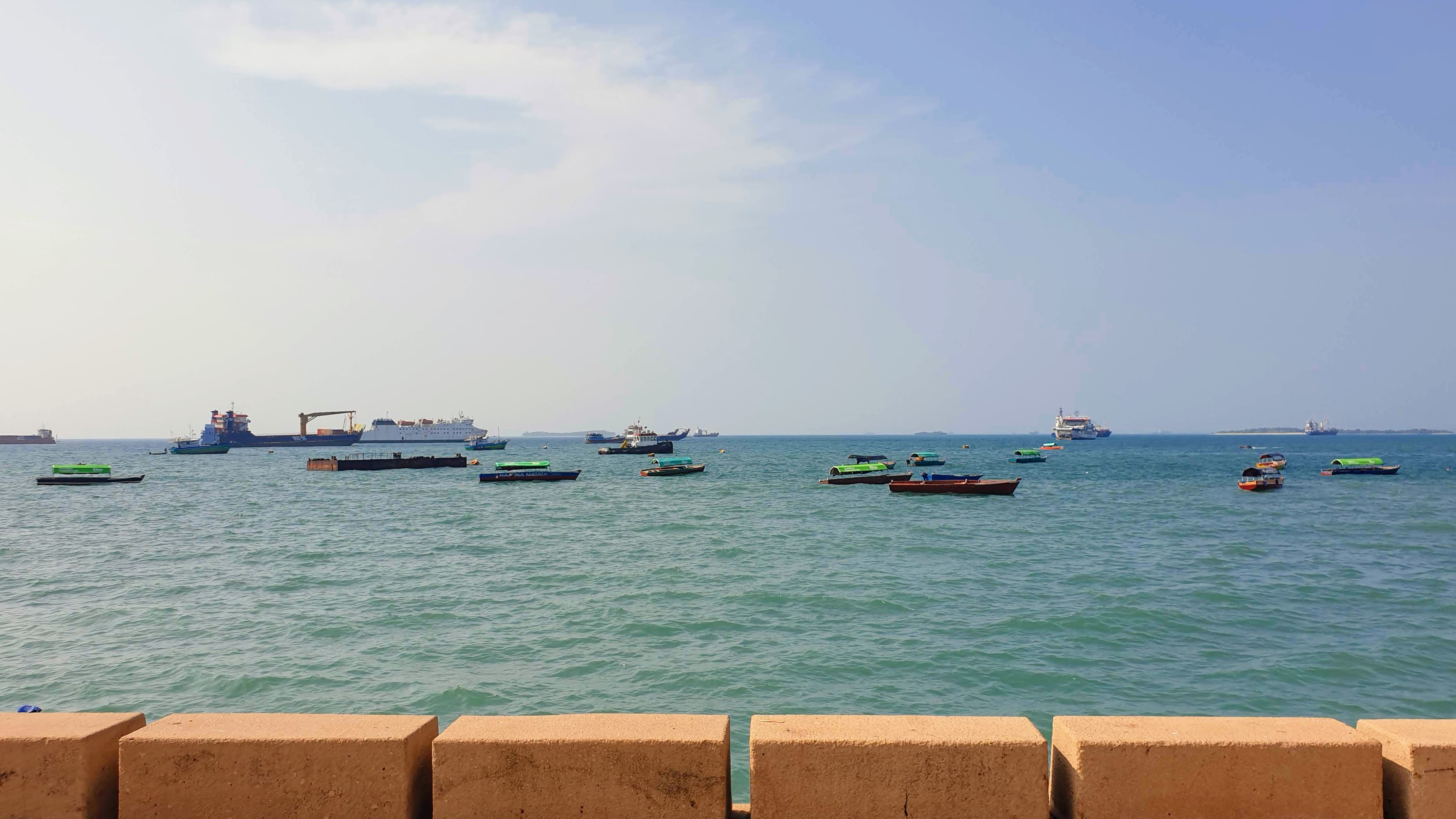
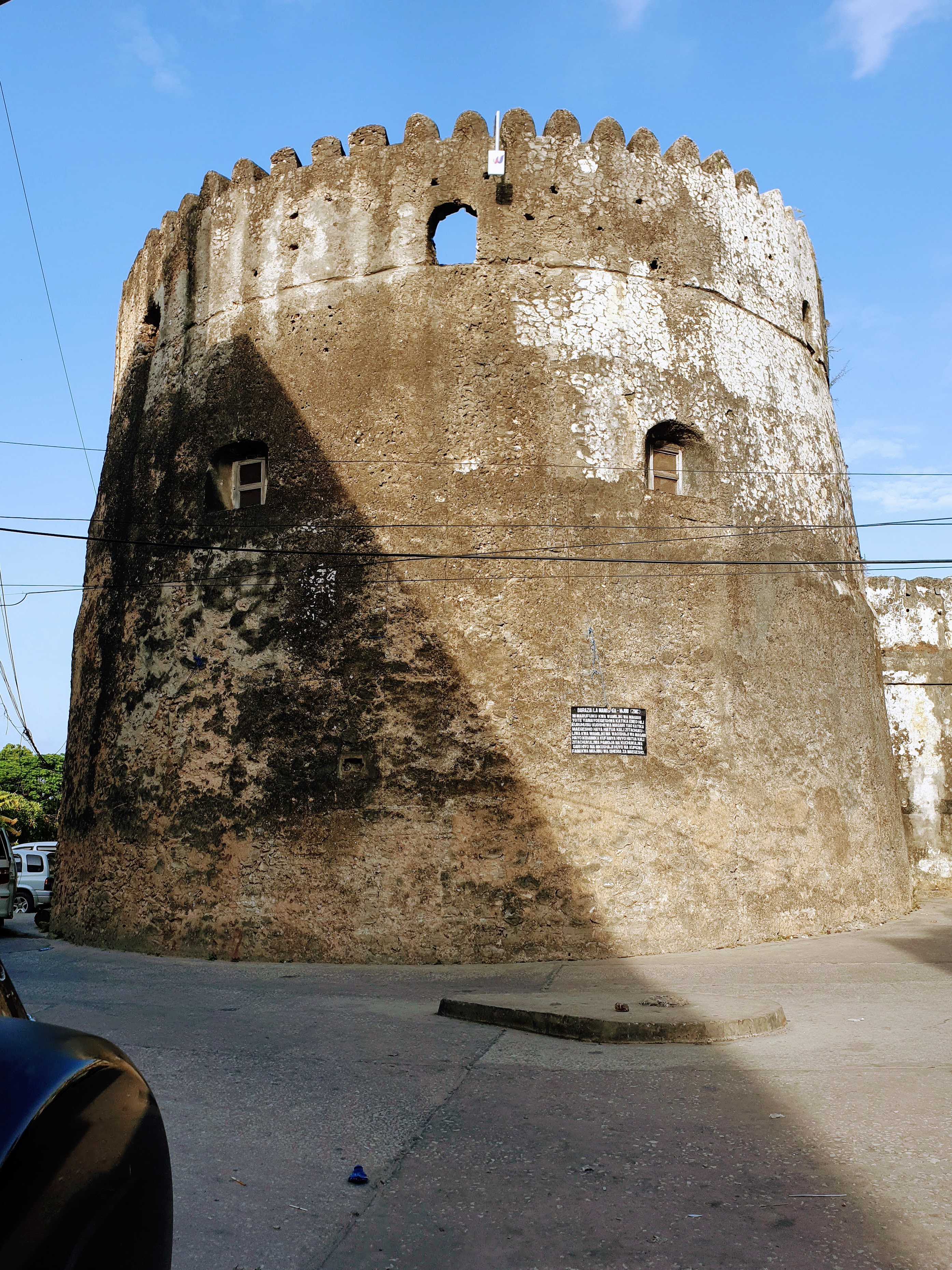
The entirety of Stone Town is a UNESCO Heritage site, and there are a couple buildings in particular (like the House of Wonders) that have their own special status. As a result, everything is always under restorative construction, all the time. UNESCO standards require that repairs must be done in the original work methods with the original construction materials in order to receive funding. This is great in lots of parts of the world, and keeps ancient cultural heritage styles of art and construction alive in places where the local economy might have driven them to extinction. However, in Zanzibar, the original construction was often quick and cheap, and the regular monsoons erode the limestone and coral structures. Walls made of old coral are constantly being replaced and the House of Wonders has been closed for more of the last decade than it’s been open.

In addition to the issue of materials and labor, the currency exchange and corruption are eating away at restoration efforts. The UNESCO funds are issued in Euro but the materials and labor must be purchased in Tanzanian Shillings, so exchange rates affect budgets and cost estimations. In addition, the government officials skim way more than what most countries would consider acceptable graft. My guide expressed a tolerance for “reasonable government corruption” by saying that out of a 20million Euro repair budget, the officials can take up to 2million, but should leave 18 for the work. This 10% skim was his idea of good corruption, but he clarified that in reality the take is much much higher, meaning that most of the UNESCO money goes to lining bureaucratic pockets rather than actually restoring the historical heritage sites.

Doors, Windows, & Walls

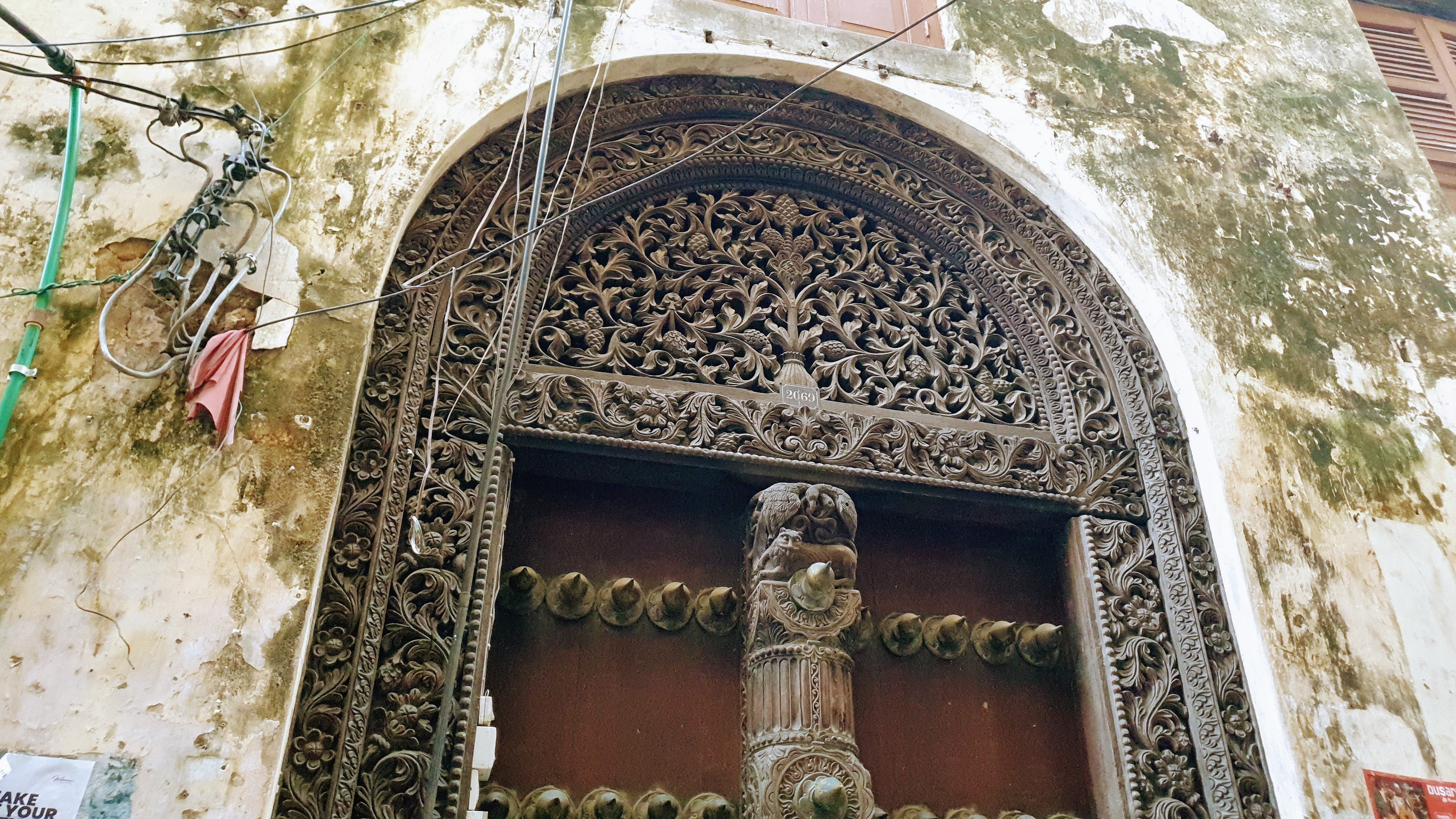
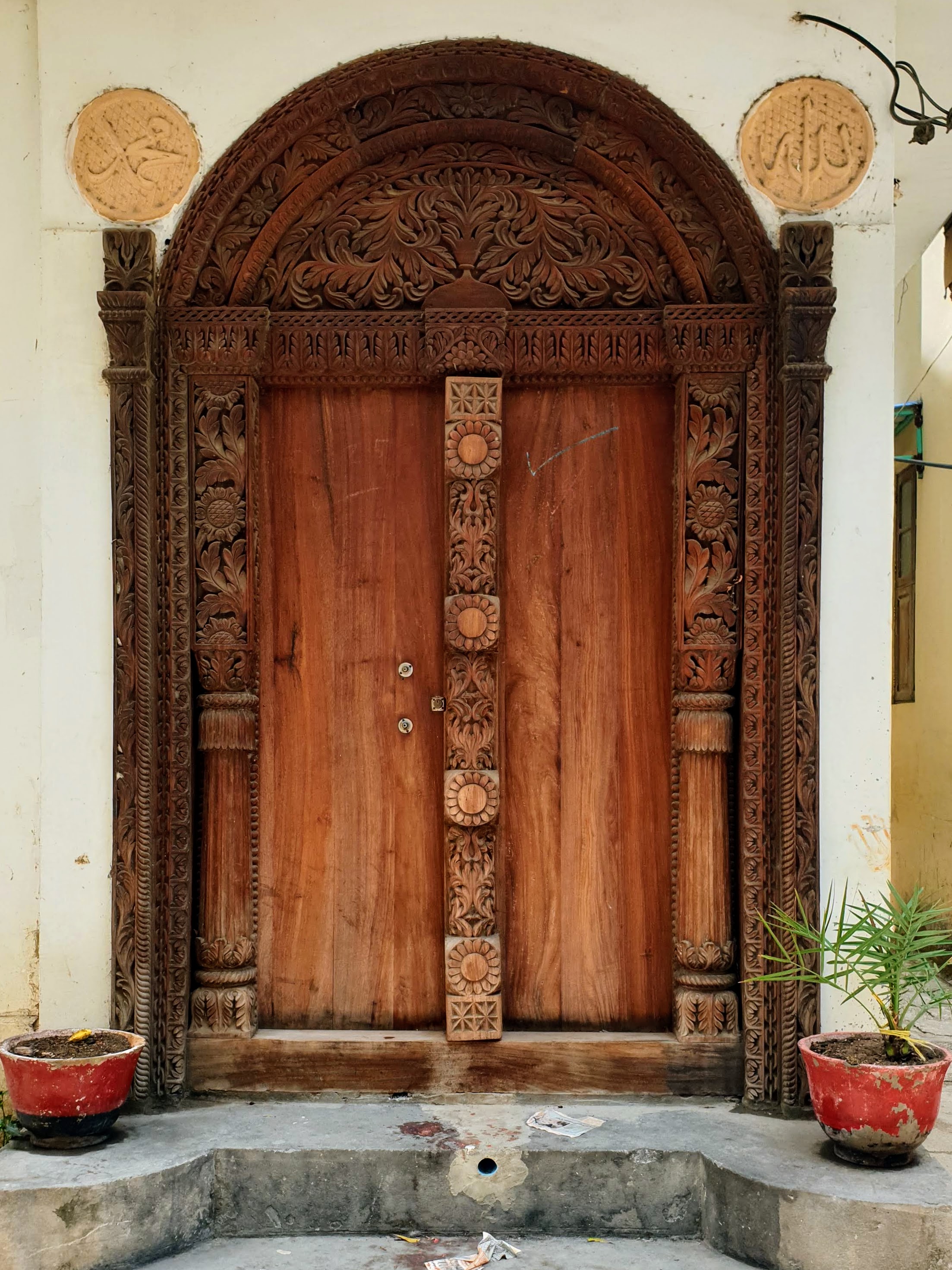
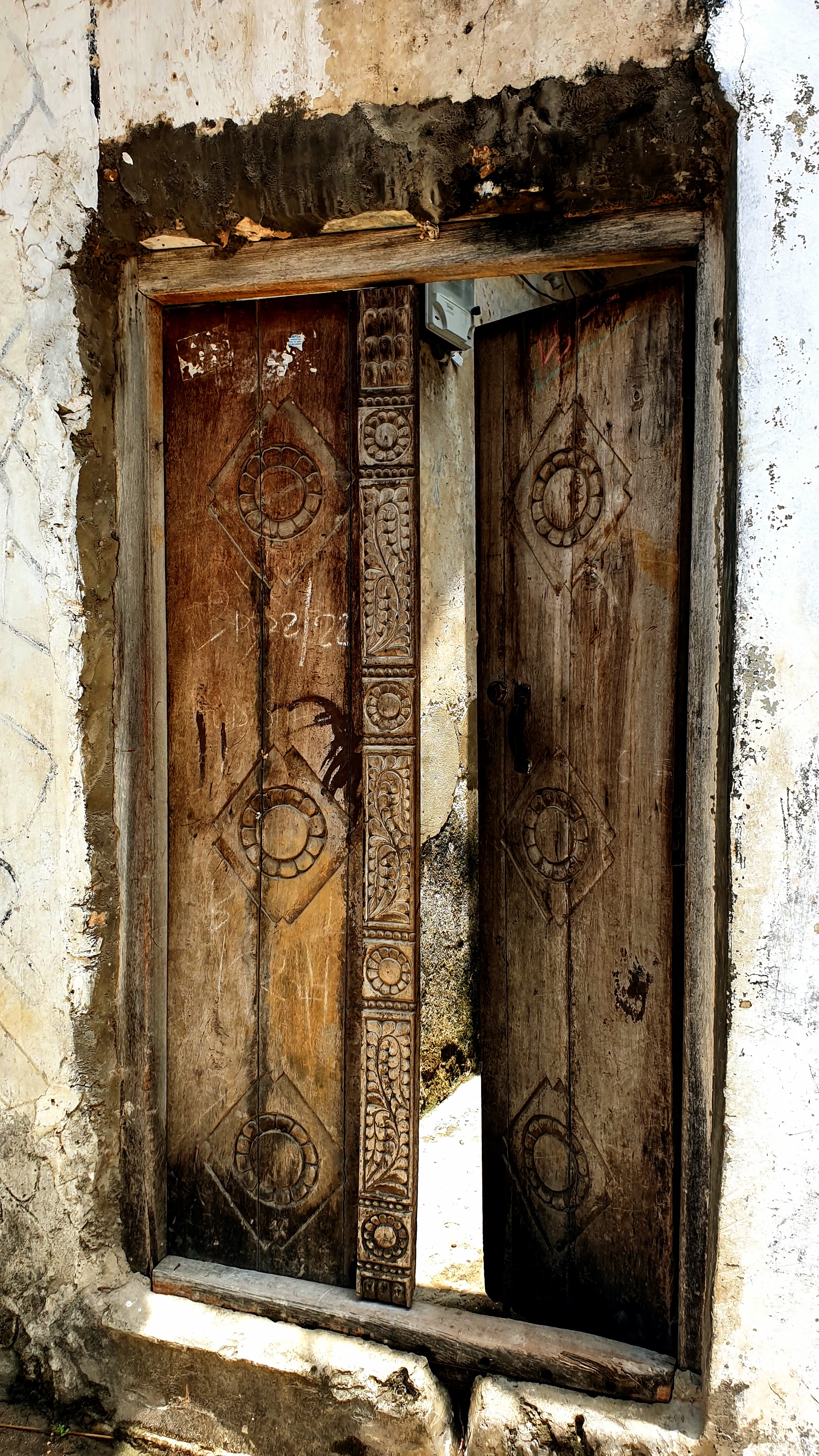
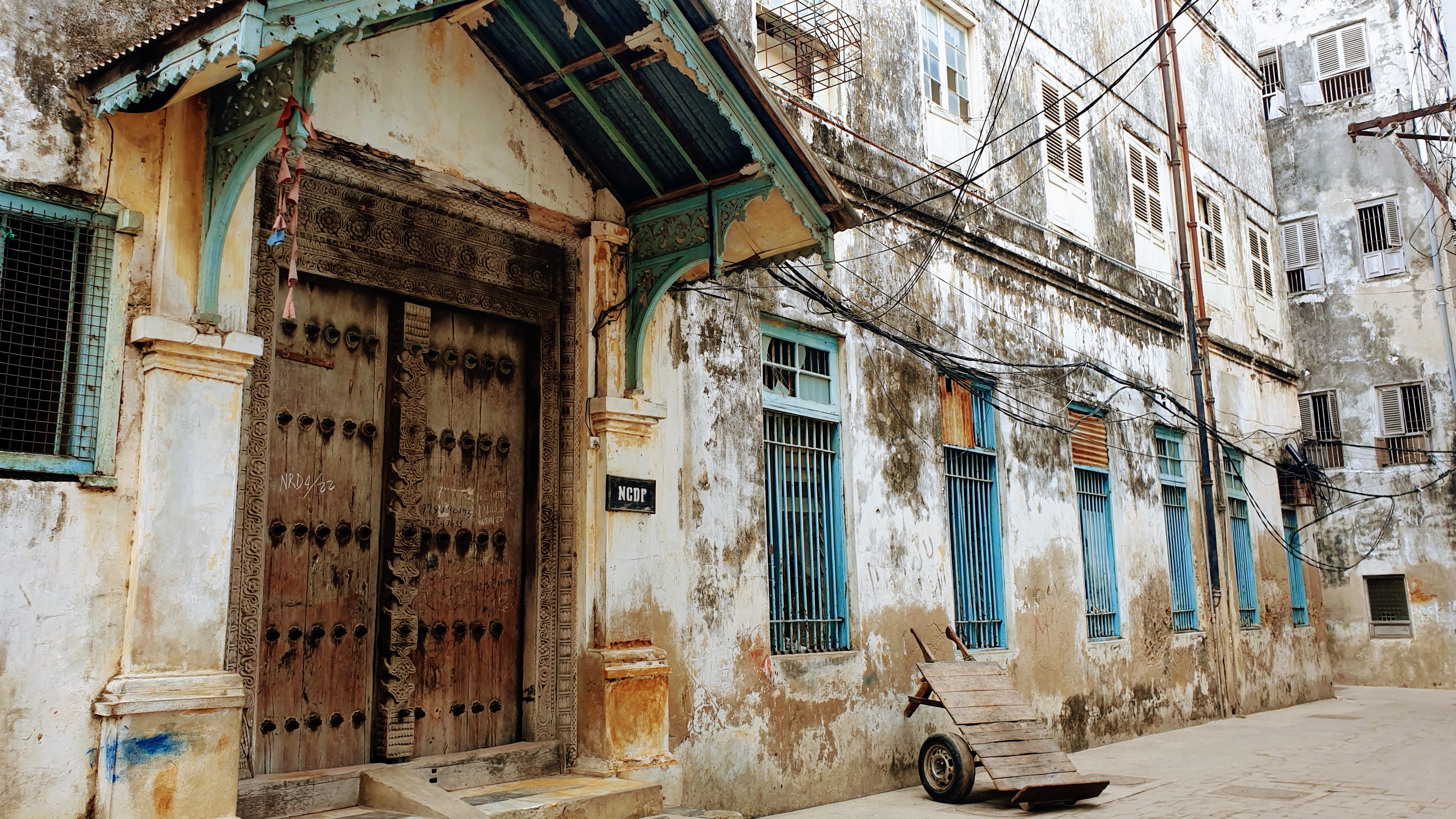
The Zanzibari Doors are one of the most famous and easiest things to see on your own while wandering around. Each one is hand carved and unique. They seem to have been a Swahili tradition that was adopted and embellished by the Indian and Arab traders. Most of the accounts of Zanzibari doors I found online seem to have been written by people like myself, visitors who went on the tour, so I’m not sure how historically accurate the information is in details. There’s a serious lack of accessible written history of African cultures. Almost all written records were made by colonizers and traders, and those were generally taken away to live in the basement of libraries and archives in the home countries of those colonizers and traders where they remain in dusty obscurity to this day until a few scholars (also likely not from Africa for economic reasons) decide to sort through them for a PhD dissertation which is itself read only by their peers and advisors, never reaching the general public. Is there a dissertation somewhere on the details of the symbolism of Zanzibari Doors? Possibly? But I can’t find it.

The main differences that everyone knows about are: the Indian style doors which may have round arches and usually have brass spikes, originally used in the Punjab as elephant deterrents, later evolved to a status symbol. The Arabic style doors may have a peaked arch or be square topped, and generally also have some stylized Arabic script, protective prayers from the Quran, engraved on the lintel. The Swahili designs include vines, fish, flowers, and later coffee beans and cloves. My guide told me that pineapples and grapes were a later addition, somewhere around the 1850s, which tracks as 1856 being the year that Zanzibar became a separate Sultanate from Oman.

Though everyone used the doors to signify wealth, each culture had different decorative values otherwise. Arab Muslims were (and in many parts of the world still are) not into external displays of wealth on the home. Exteriors of Arab built homes in Zanzibar are very plain. Windows and balconies are built to protect those inside from the eyes of passersby, and there were even covered bridges between homes to allow the secluded women and children to visit one another without stepping into the public view. The Indians, in contrast, loved to be seen. The exteriors of Indian built homes have flourishes and colors, windows and balconies allow the homeowners to show off their wealth and fashion to the public without going outside.

Modern day buildings and newer doors often incorporate traits from all three main cultural influences for both aesthetic and blended heritage reasons. Architecture isn’t the only thing that blends in Zanzibar. Although Islam is an import from the Arabian peninsula, Zanzibar is currently majority Muslim (while mainland Tanzania seems to be majority Christian). However, the cultural blending of Zanzibari history means that in addition to all the major branches of Islam being represented, Zanzibar also hosts Hindu and Jain temples (of Indian descent) as well as a variety of Christian churches including Catholic, Anglican, Lutheran, Adventist, and Pentecostal. I enjoy this photo op of the mosque and cathedral sharing the skyline.

The Freddie Mercury Museum

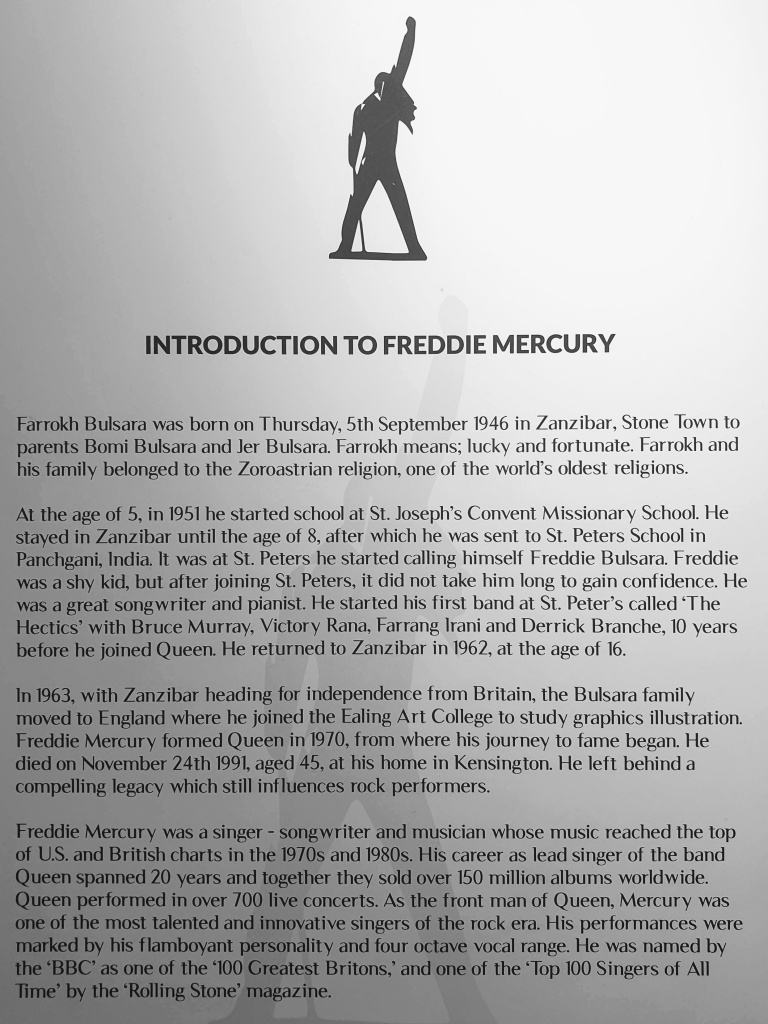
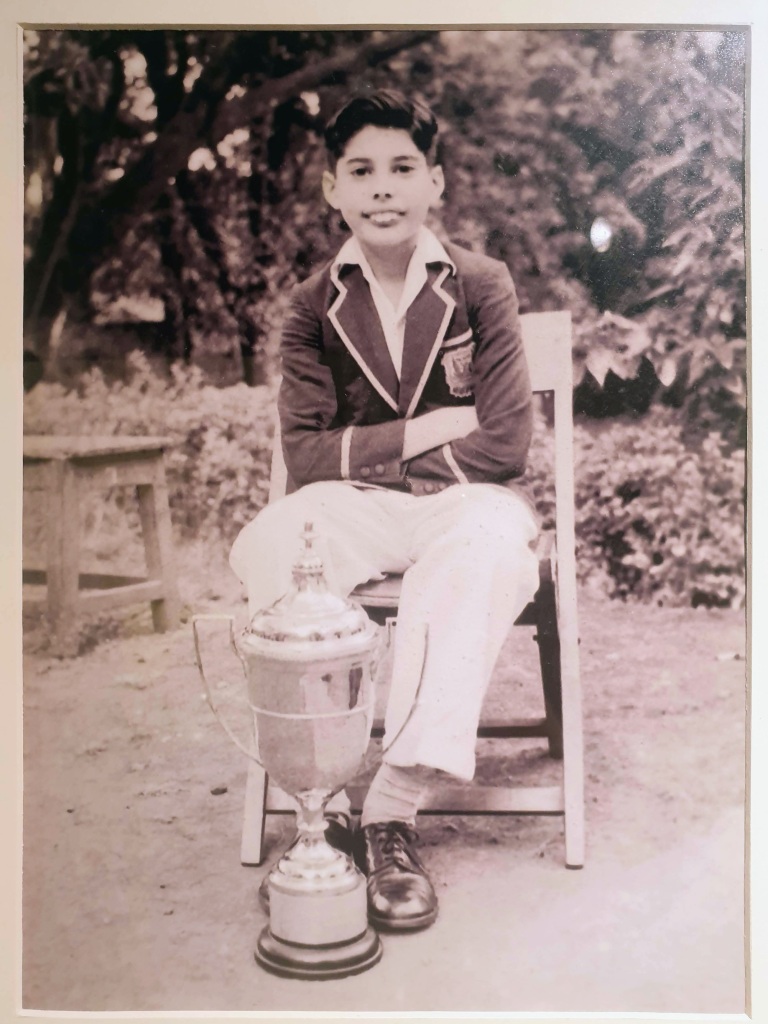
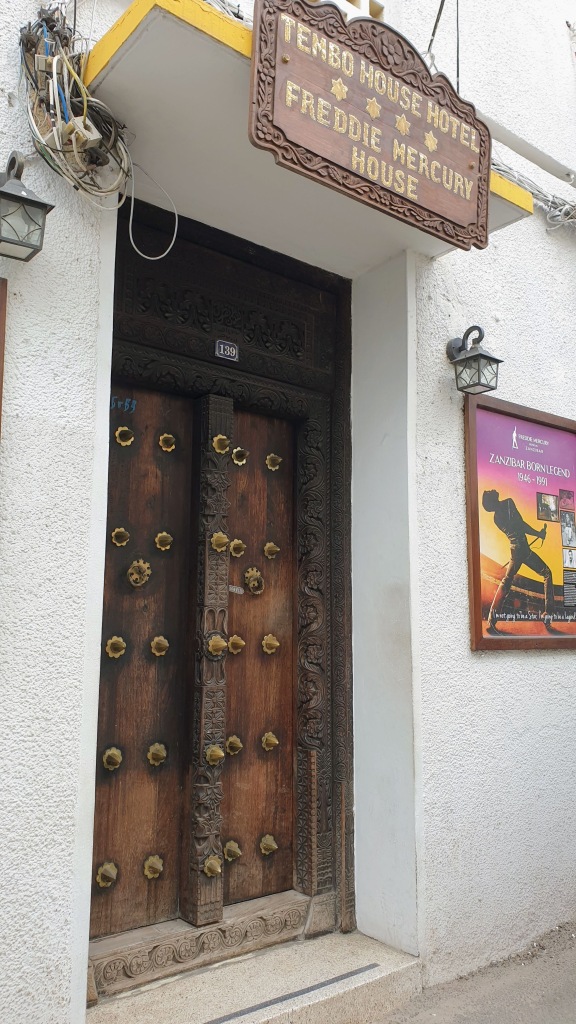
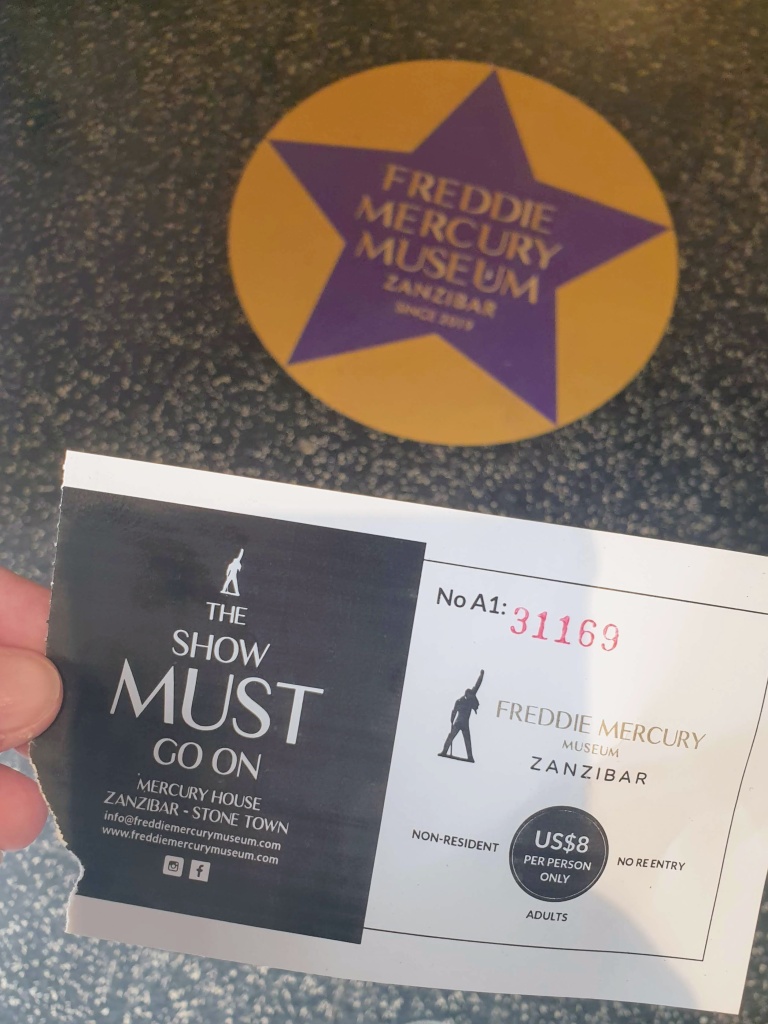
The tour stops out front of the the Freddie Mercury Museum. This is one of the big hot-spots of Stone Town. They are really excited to have a globally famous rock star trace his origin to their town. Freddie was born in Stone Town to Persi-Indian parents. He didn’t actually live there much, since he was in India as a small child, then England for boarding school, but Stone Town claims his birthright. This tiny little museum costs 8$US to enter and takes 15-45 minutes to view depending on how much you want to read and how slow a reader you are. The displays are mostly childhood and family photos as well as album covers. They have an impressive collection of lyric notes, which is kind of cool. There is also a tiny side room that has his famous Wembley concert jackets (the yellow as well as the white with red buckles). I have no idea if anything in the museum is authentic since replicas of these items are pretty easy to get online.

The museum is not what you’d call impressive. I’m biased because I lived with the Seattle EMP (now Mo-Pop) for decades, but even diehard Queen fans would likely feel underwhelmed. Nevertheless, I am happy I spent my money there and I hope more people do because Tanzania is still a place where being queer is illegal, punishable with fines and prison time (up to a life sentence). Freddie is a queer icon. As a bisexual man, his sexuality is often subject to erasure. In the West people tend to forget that he was BI and not GAY, ignoring his relationships with women. In the museum in Zanzibar, there is no mention of his relationships with men, and his relationship with Mary Austin is the only romantic reference. Despite this erasure, I think their pride in Freddie can act as a wedge to allow a discussion of LGBTQ+ rights to take place in Zanzibar and eventually on the mainland, so they can have my tourist money.
“[Queen is] just a name…It had a lot of visual potential and was open to all sorts of interpretations. I was certainly aware of the gay connotations, but that was just one facet of it.”

“I’m as gay as a daffodil, my dear!”

-Freddie Mercury

Miniatures

I have always loved tiny versions of regular things. As a child, I was most fascinated by toys like my tiny working blender where I could make about 2 oz of chocolate milk at a time, my tiny Barbie spoon which I would use to make a dish of ice cream last longer, and a series of miniature fuzzy animals. Living in Japan in 3rd grade may have been the most ridiculous overexposure to the cute and the tiny since I was easily able to get tiny art supplies, tiny erasers shaped like tiny food, and tiny key chains shaped like tiny everything. As an adult, I have stopped acquiring stuff so much, but I cannot help but squee at the sight of well reproduced miniatures. Thus, when I found out that Europe has a proliferation of miniature theme parks, I was captivated. After careful consideration, I chose to visit 3: The Mini-Europe in Brussels, The Madurodam in Den Haag, and the Miniature Wonderland in Hamburg. I was not disappointed.


Mini-Europe, Brussels

The weather this summer was insanely hot, and the northern Europeans are simply not prepared. It cut into my outdoor activities severely, and I almost didn’t make it to this park. Lucky me, there was a single cloudy and cool day during my week in Brussels. It doesn’t make the best photos, but overcast skies certainly make a happier me.

The park is right next to the Atomium a huge statue constructed for the 1958 World’s Fair. I honestly believe that nearly every strange structure in a city can be attributed to this cause, not the least Seattle’s own Space Needle and the Eiffel Tower in Paris. You can go inside. I did not.

20180710_153928

General admission is not too expensive at 15.5€ and it’s so full of amazing things that I felt it well worth the cost. I recommend bringing snacks and drinks since the on-site Cafe is overpriced.

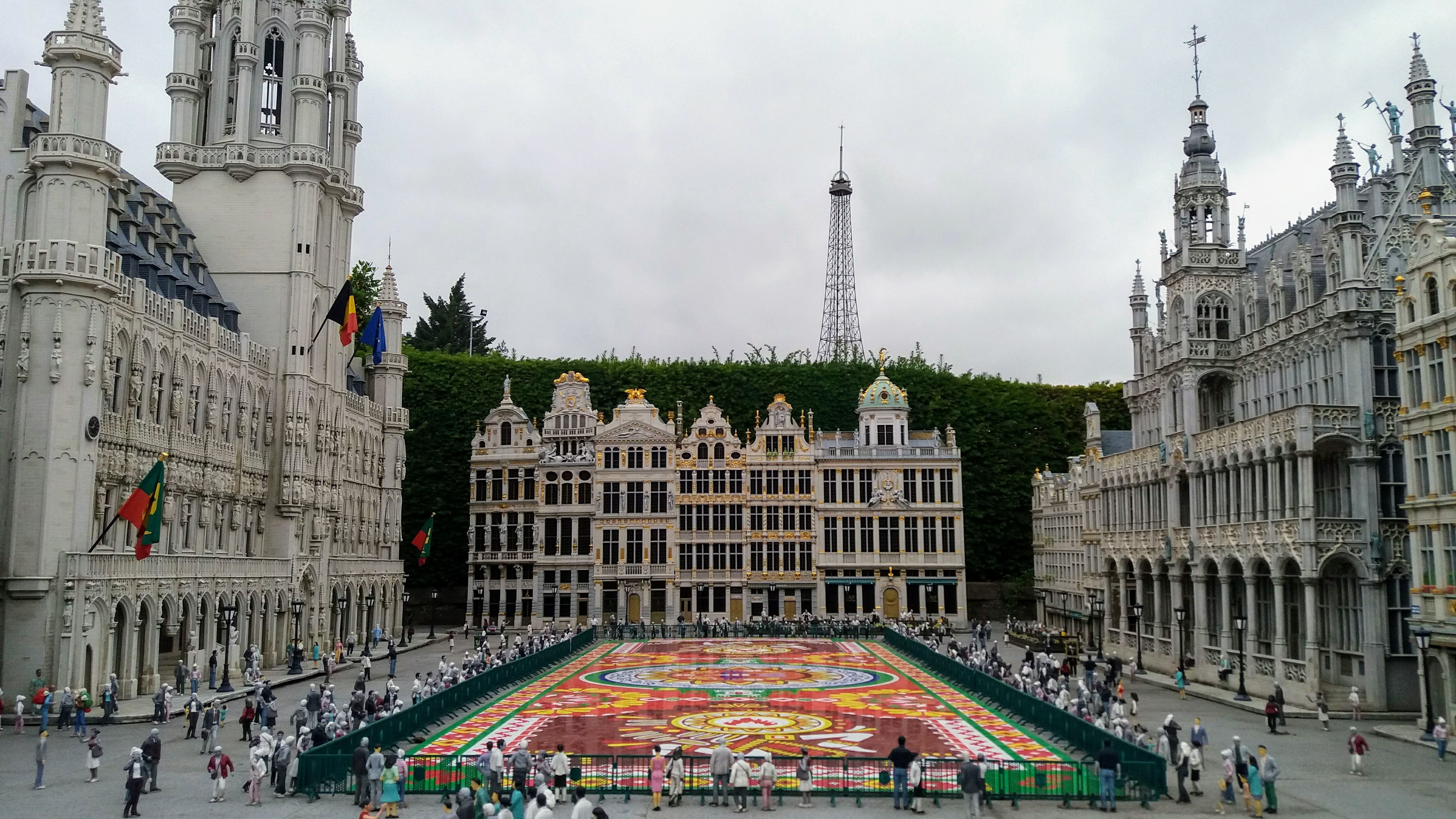
Once inside, there is a winding path through a whirlwind tour of Europe. It is seriously all of Europe. The most famous buildings and historical sights of each country (at least as decided by the Belgians). It’s enormous.

While ogling the array of tiny architectural marvels from a distance, I came across a series of informative signs at the front. They were… interesting. Among other things it gave credit to UK for modern democracy (as an American my response is, “um excuse me?”) and also represented rampant European colonialism as “the spirit of adventure”. I know each culture teaches history in their own way, but… I suppose if the history can’t be accurate, at least the architecture is pretty spot on. (top: mini Brussels, bottom: real Brussels)20180710_14411620180711_111548

Some vignettes were reproductions of old villages, but most were modern familiar and famous sights. At the starting point for each nation, there was a button to push that played what I’m fairly sure were the national anthems. Some exhibits were also animated, many activated by another button. As you can imagine, kids raced along to be the first to push each button.

Because they’re miniature and placed on the ground, most exhibits are at eye level or below. I took some bird’s eye photos, but my favorites are the ones where I was able to get level with the model ground, as though I were standing inside. I used the selfie stick a lot to get better angles, and wished I had a better zoom since many of the amazing details were hard to capture. The three I loved most were Galileo testing his ideas at Pisa, Don Quixote and Sancho in la Mancha, and a tiny blue TARDIS in London.

I was blown away by the level of detail, the cathedrals especially. It’s hard for me to say how accurate they all are. I found the models of places I’ve been before to be a bit lackluster, while I found the ones I haven’t seen in person to be amazing. I visited several of these cities after Brussels, so you can see for yourself how they stack up. (top: mini Copenhagen, bottom: real Copenhagen) 

copenhagen

More than anything, it reminded me of the “bigatures” that were used in the LOTR movies. These models were often gigantic, the size of a sofa or even a car, yet because the originals are multi-story, towering masterpieces, it still counts as “miniature”. (left: mini Maastricht, right: real Maastricht)

Maastrict.jpg

It took me hours to navigate the entire park, and I am ashamed to admit there were one or two countries in the mini-EU I hadn’t heard of before. Overall, it was an amazing visual experience, and a fun photography day since I got to do a lot with experimental angles and effects. I took hundreds of photos, but here are the 50 I think are best.


Madurodam, Den Haag

20180725_182624.jpg

The Madurodam is far more focused than the Mini_EU. It is exclusively about the Netherlands, while Mini-EU covers all of Europe.  The attempt at being interactive was really more of a pain than an enhancement. Mini-Europe had a plethora of buttons that played music or activated moving parts. Most of the animations at Madurodam were coin operated so cost extra, and the informative audio clips, while free, required you to scan a card to hear it and see the educational video. I was constantly having to rearrange my camera and sunbrella (umbrella for sun) to dig the card out of my pocket. 

Despite this inconvenience, I did enjoy the miniatures. The quality of the constructions was high, and I liked the fact that there were more scenes of neighborhoods or city blocks rather than just a single monument in isolation. It’s hard for me to speak to the accuracy, and I didn’t recognize as many landmark buildings, since my travels in Holland were somewhat limited. Photography was if anything more fun since I was able to get much closer to the buildings and there were more interesting and active scenes, rather than stark and empty buildings (although both styles have an appeal). The one building I did get to see for real was the Dom Tower at Utrecht (left: mini, right: real life).Utrecht Dom Tower.jpg

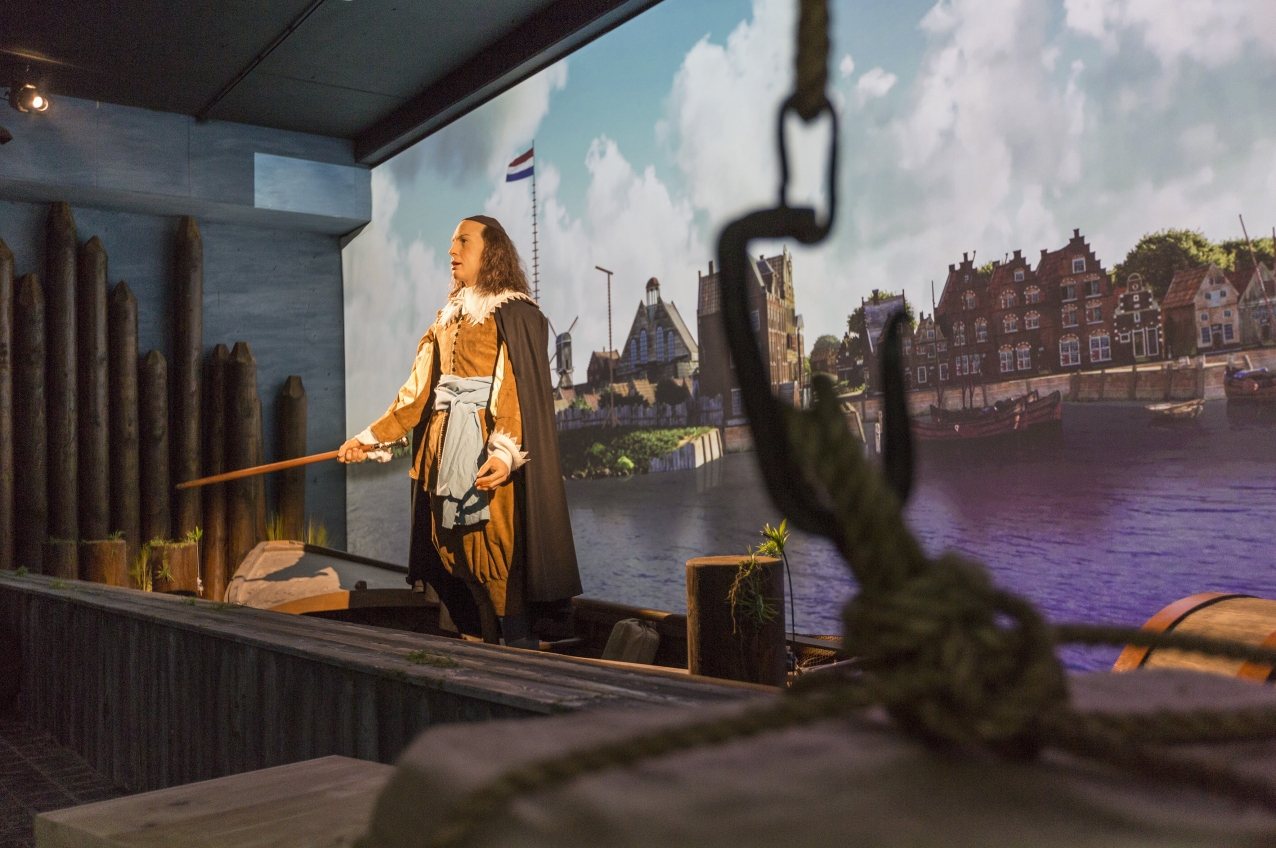
One thing that Madurodam had that Mini-EU lacked were the shows. There were several locations where one could go into a small theater and watch a kind of puppet/animation show about some aspect of Dutch history. The shows reminded me of 80’s Disney animatronic entertainment, and some used puffs of air or sprinkles of water to create realism. 

One was about the namesake Maduro, one about the rebellion against the Spanish with William of Orange, and one about the founding of New Amsterdam. The performances were lovely, and I’m grateful that they were all available in English as well as Dutch, but the content left me feeling very uneasy.

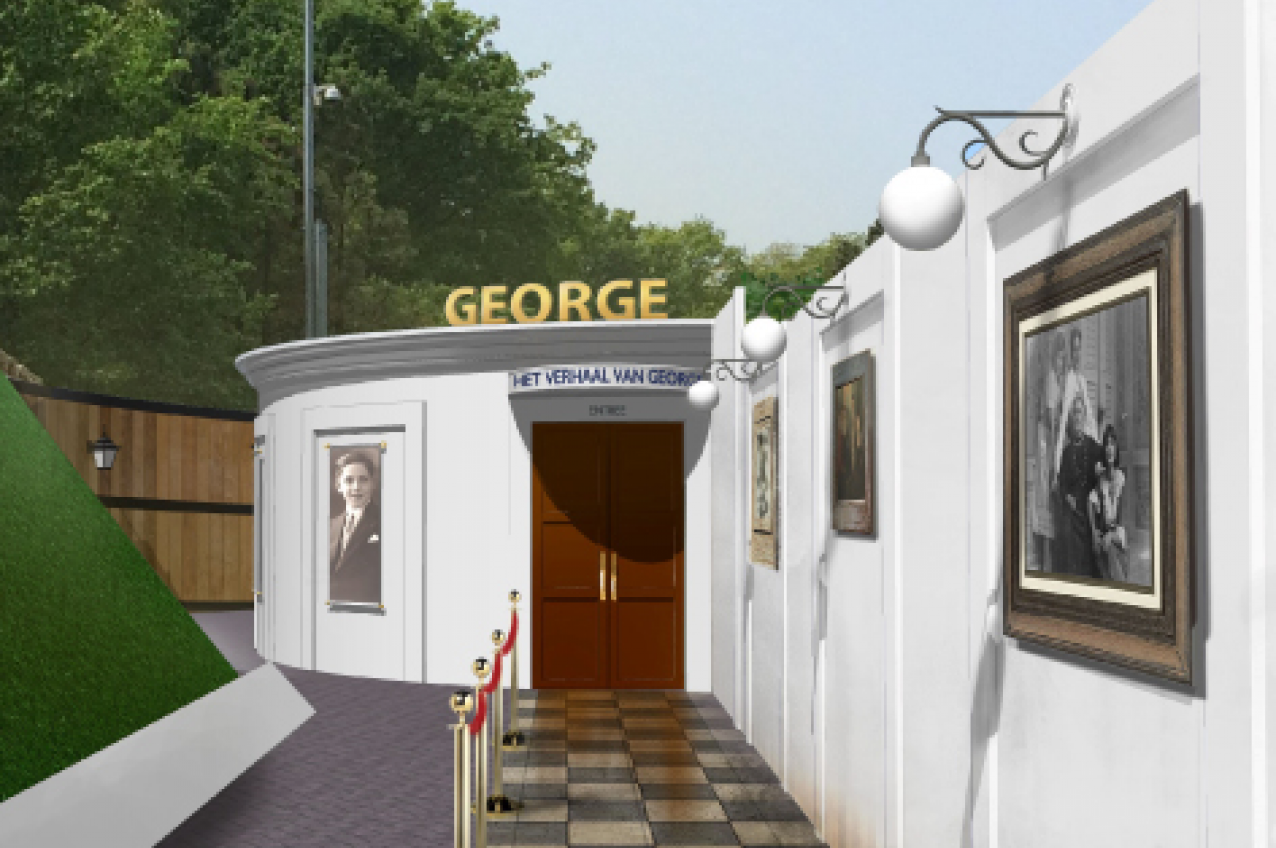
George Maduro was a military officer who fought in WWII and eventually died in Dachau. His parents donated the money to start the park as a living memorial to their son. I’m quite sure that the video of his heroics is hyperbolic, but it is the one I mind the least, since it is after all a monument to his memory. Nonetheless, it does seem he was an extraordinary young man, who became a leader at a young age, escaped a German prison, became part of the resistance smuggling Allied troops through Spain, and finally perished in a concentration camp. The presentation was a panoramic movie screen that used a combination of actors in historical dress, photos of historical events, and shadow animation to give a sense of the battles and prison experiences of Maduro’s life.

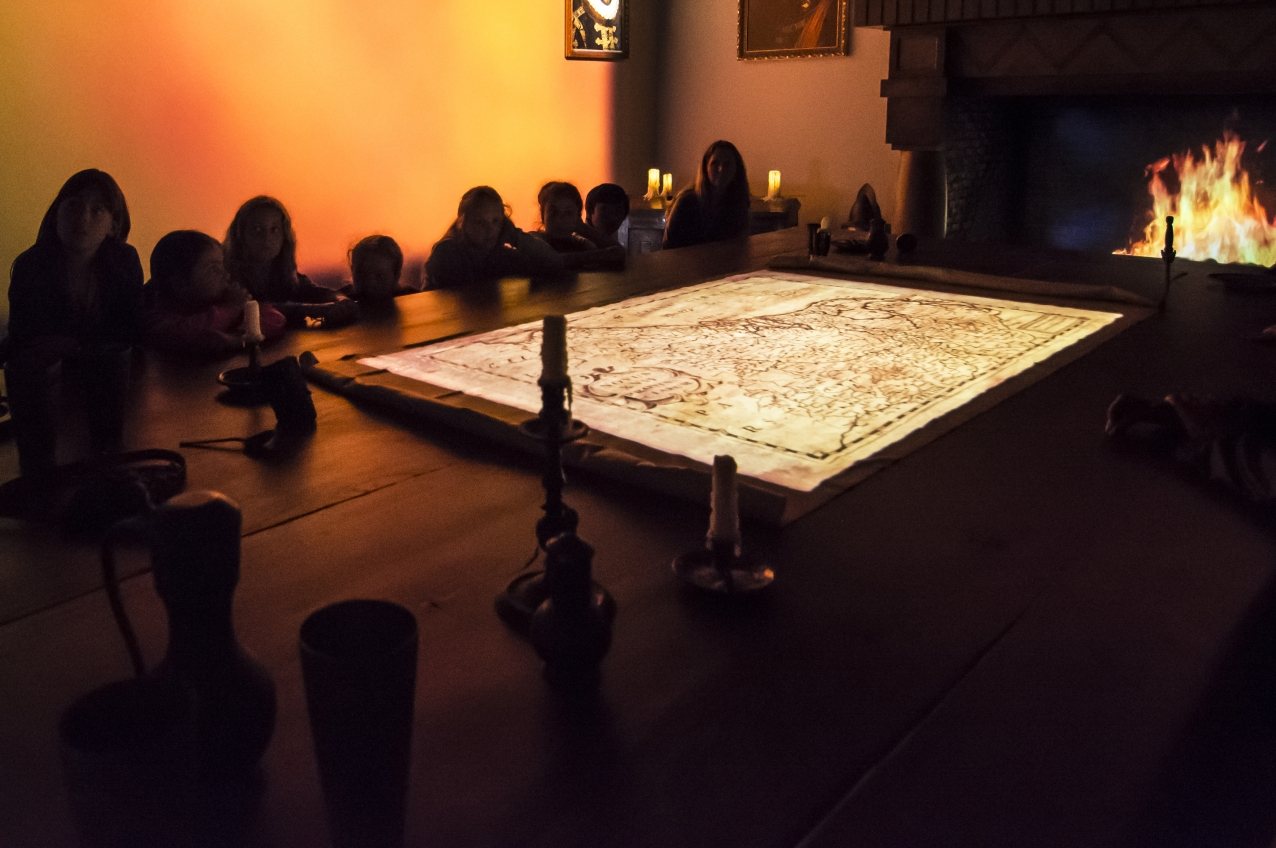
The Rebellion against the Spanish was part of the 80 Years War, or the War of Dutch Independence. It was a combination of religious rebellion (Catholic vs Protestant) and of course the tangled web of European nobility and the right to rule (collect taxes). The Dutch were tired of being controlled by the Catholic Spanish, and William of Orange provided a central figure to rally around. The presentation was captivating. We entered a war room of the mid 1500, decorated with all appropriate trimmings. We sat at a large table and the video projected a revolutionary leader apprising us of the dire situation, and of the need to go to war for Prince William. We were made in large part to feel like active participants in the planning of the rebellion.

The last performance I visited was the most elaborate. We started off by going in a dark ship’s hold. The space was decorated with ship’s stores and some animals and it swayed slightly to represent the waves at sea. A ship’s captain narrated the journey of the Dutch pilgrims to the Americas, including a small storm with special effects. When the “ride” was over, we emerged into the harbor of New Amsterdam where we stood on the quayside and watched the invasion of the British. Well before the American war for Independence, this battle was fought between the Dutch and English for control of the colony, and the port city later named New York, after the English won. We were encouraged to take up “firelighters” to ignite the cannons before us and try to sink the English ships. Very fun and interactive, but sadly historically inaccurate and loaded down with propaganda.

I didn’t have the best cultural connection with the Dutch. While I found the individual Dutch people I met to be courteous and friendly, the culture as a whole felt to me like one of wealth and entitlement. Madurodam was far from the only place I encountered these attitudes while there. Basically every Dutch written info blurb or tour guide about this country did this at least a little, but the shows at Madurodam were best at putting them in a clear and succinct way that helped me identify my unease.

They’re rich and proud of it, but more they know they got rich with the Dutch East India trading Co. and rampant colonialism and they’re proud of that. Like ‘we are so awesome cause we built better ships than those horrible English and we got billions of euros of equivalent wealth by exploiting “unexplored” regions of the world’. Oh and ‘we invented democracy a 200 years before America when we fought a revolution against the Spanish (for King William) and we are responsible for everything good about New York, which was completely devoid of people (Indigenous People don’t count, right?) when we arrived to build it’.

20180725_181809.jpg

I did not know anyone was still bragging about colonial wealth. A lot of people (mostly white and Western) benefit from it, but most of us at least try to acknowledge it was a horrible atrocity. They seriously brag about it here all the time. At Madurodom, it was laid on so thick I felt like I was drowning in it. Holland and I are not destined to be friends until this country gets woke about it’s role in global wealth inequality and gets rid of the saying, “God made Earth, but the Dutch made the Netherlands.”

The miniatures were of excellent quality, and it was a cute park. Despite the colonial superiority complex, I still took a million pictures, which I have winnowed down to the top 50 in this video.


Miniature Wonderland, Hamburg

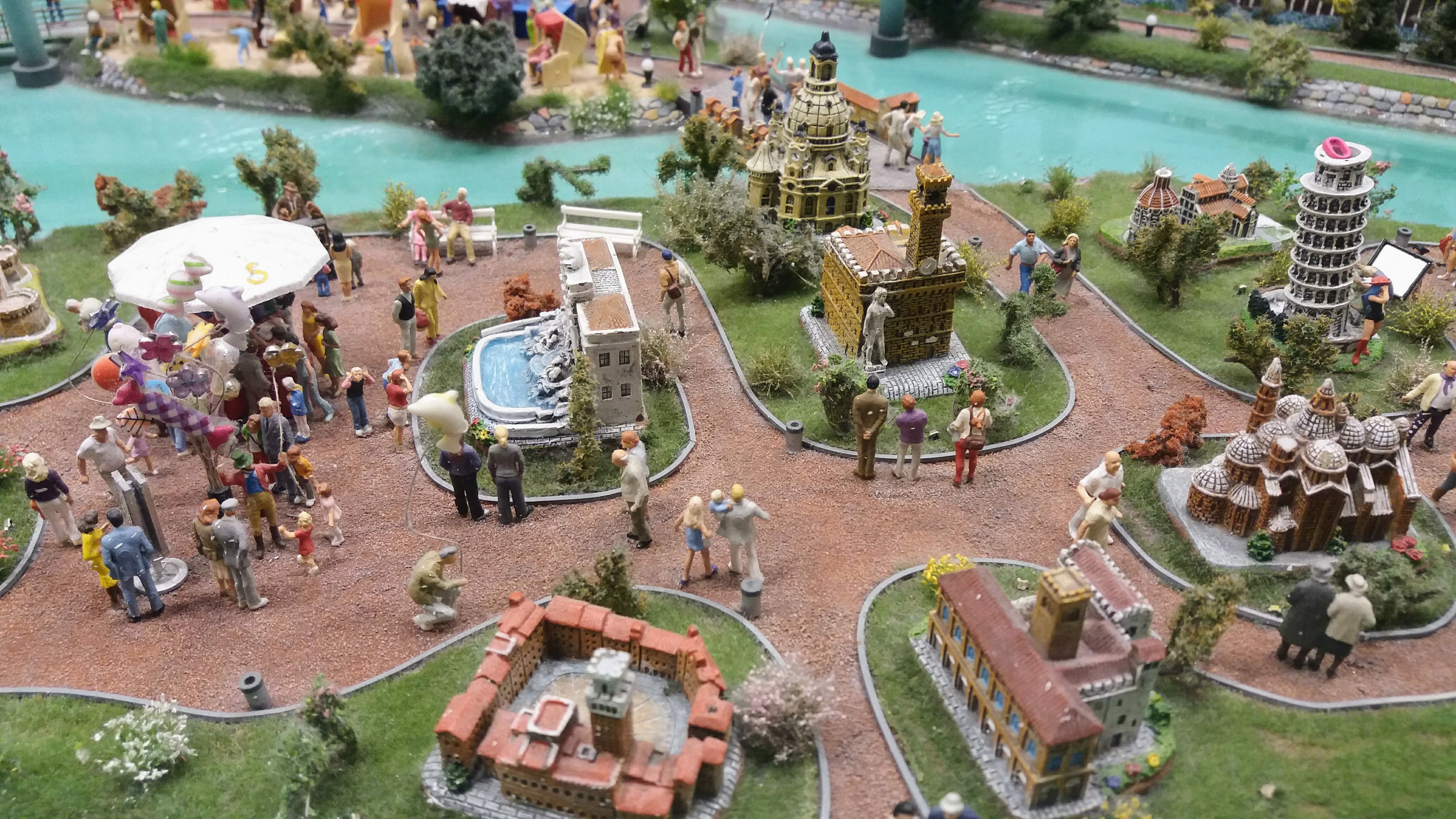
The miniature museum was astonishing. It is completely different from the other two miniature parks. Both Mini-EU and Madurodom were outdoor parks that focused on reproducing famous architecture in miniature with great detail. Miniature Wonderland is an indoor attraction (climate control!), and focuses on the tradition of model trains. If someone had told me “model trains” I would not have gone, and I would have missed out. I don’t know what most people think of when they hear “model trains” but I think of the train, the tracks and maybe some engineering specs with a side note of mini-landscapes. At Miniature Wonderland, the landscapes the trains travel through are far and away the stars of the show. The trains are fun, but in many ways, merely an added detail. Although, I did see the Hogwarts Express pass by once, and that was a nice touch. I took so many more pictures here than at the other two parks I couldn’t actually narrow it down to 50 photos, so there are 2 videos. Here’s the first one.

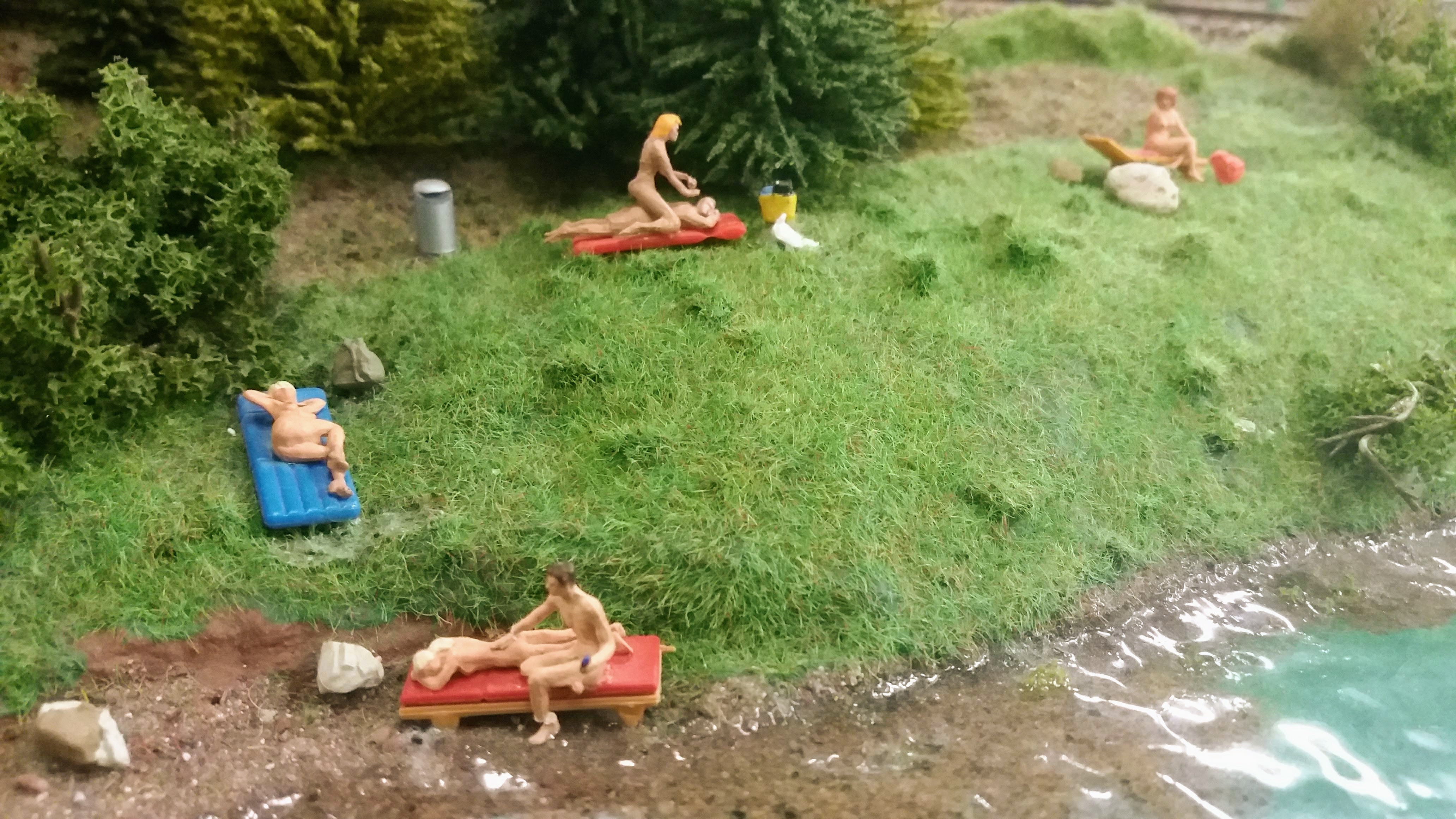
Famous places were replicated, but in the style of a model train set, rather than a single building. As a consequence, there were many reproductions of famous landscapes, as well as cities, and towns. There was so much detail not only in the buildings but in the humans! There were thousands and thousands of tiny miniature humans engaging in every activity imaginable. There were passengers in the trains and people inside the buildings. I even found some nude bathers in a secluded lakeside retreat!

20180730_221230

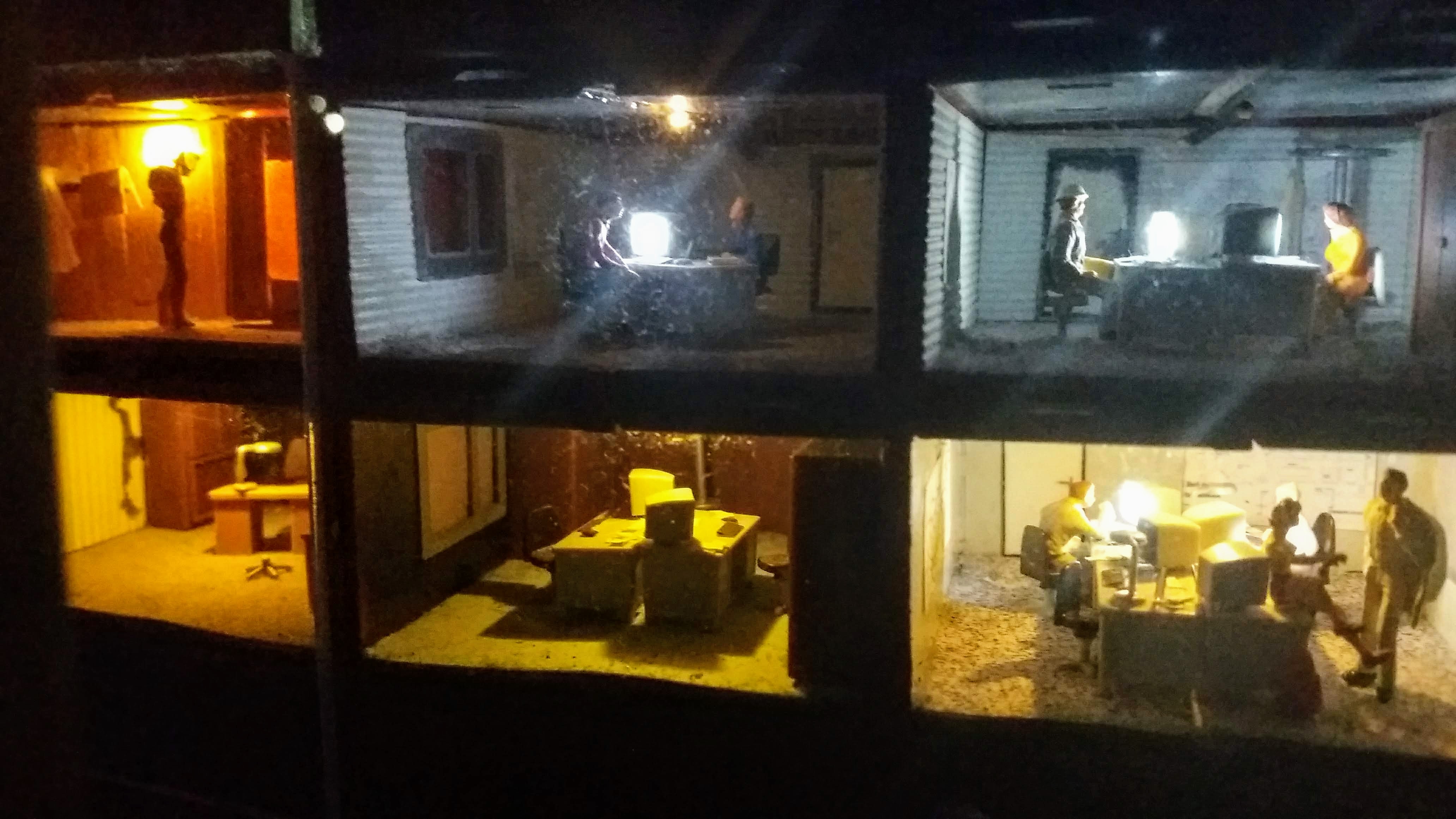
In addition, everything moved and lit up, not only one or two attractions, but nearly everything. Every building and car had working lights. Of course the trains moved, but also ski lifts, and airplanes, and dolphins in the sea! Some were button activated, others on a timer. It was enchanting. Moreover, the lights would change from day to night and different things would be visible. At night, all the buildings lit up and you could see the delicate window dressings, or be a peeping tom and see what people were doing inside. During the day, the landscapes and building exteriors were on display, while the insides of buildings were dark and hidden. 

20180730_224833.jpg

The museum spans two floors in a large warehouse building near the water. Although there is a gift shop, and a restaurant, most of that space is dedicated to the models. There’s also a central control area where several employees monitor the trains movements and other activities around the scenes.

20180730_215103.jpg

My only complaint is that many of the viewing areas were cul-de-sac, so once you got in to see the point of interest, you were sort of trapped fighting the tide to get back out. Mini-EU had a single path with easy to follow arrows that kept the flow of people moving and avoided clumps or jams. The Wonderland was much harder to move around.

A local woman visiting with her husband noticed I was on my own and took it upon herself to point out the curious and interesting details around the various sets. She would run off and then come back to show me something else, and before she left she made sure that I wouldn’t pass by the Lindtt Chocolate factory which gave out actual pieces of chocolate!

I watched Mt. Vesuvius explode and pour lava made of light down onto a tiny replica of ancient Pompeii.

And we all flocked to the airport whenever a plane was ready for landing or departure.

There was even a miniature miniature park!

20180730_232742

Tickets are sold for an entry time, and you can stay as long as you like afterward (until closing). Early morning and late night tickets are cheaper, and I got a deal on a combo harbor boat tour. I enjoyed the boat trip, but seriously underestimated the amount of time I would want to spend inside the miniature display, and while I was shuffling out as the exhibits were being shut down for the night I felt I had still seen less than half of the stunning hidden delights tucked away in the extraordinary displays. Here’s 50 more of my top photos from the second half of the displays.

Malay Peninsula 9: Clothes shopping in Georgetown

Here in Korea, Spring chugs along into summer. The mornings I stand outside overseeing the kids recite their daily English are still a little bit chilly, but by the time I leave school at 4, it’s hot enough to want a shower and an ice cream at home. The festivals of May are coming fast and furious, and just today, the whole 6th grade went away on a field trip, leaving me with some unexpected free time to power through another story from winter break.

The next major destination of interest on this trip is actually Koh Lipe in Thailand, but it would take me two more days in two more cities to get there. In researching my travel path, I came to realize that Penang and Langkawi are places that used to be awesome hidden gems, but have gone mainstream tourist in the last few years. This story is less about Malaysia and more about clothes, but sometimes that’s where the adventure takes you, especially when it ruins a pair of pants and requires an emergency replacement.


By Train and Ferry

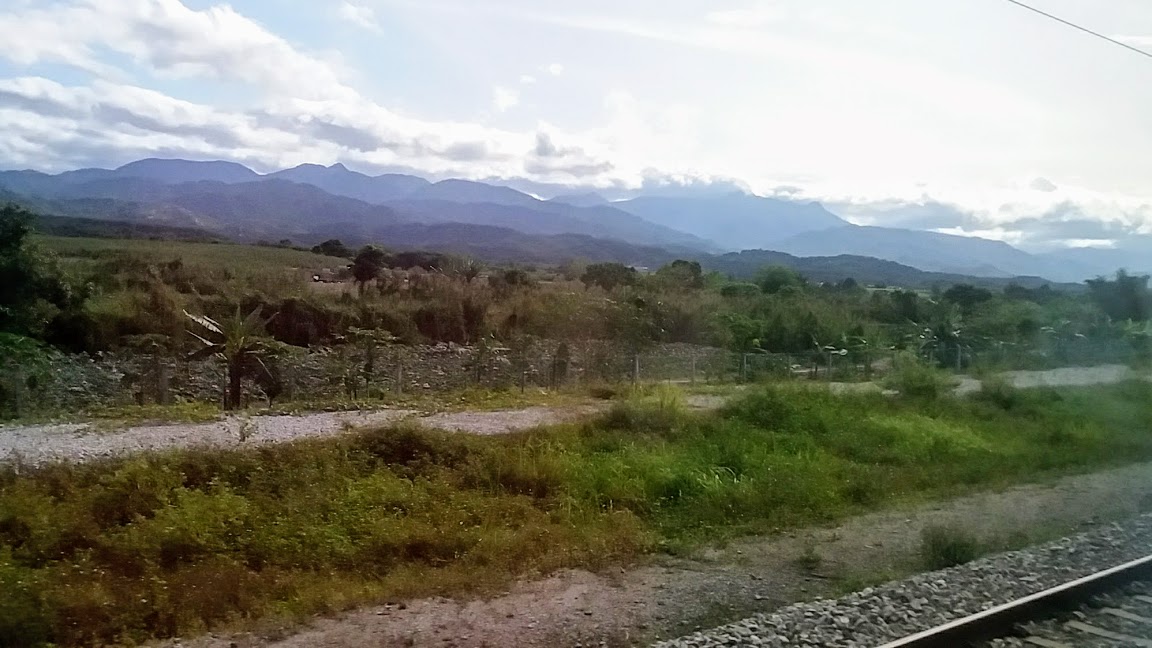
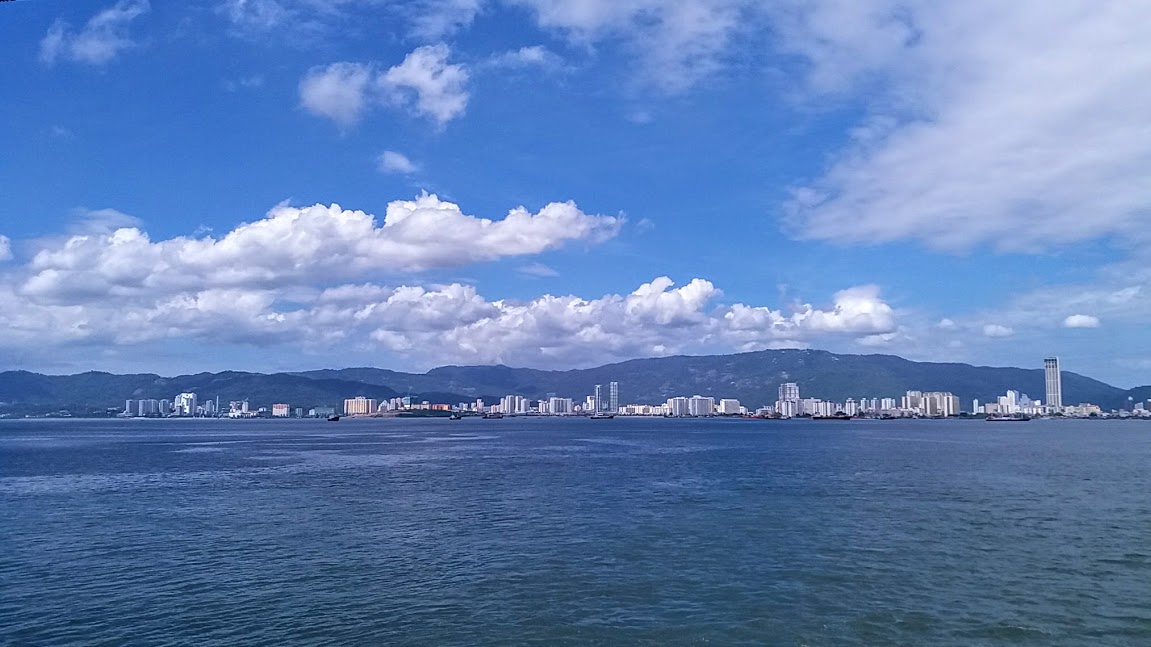
20170122_100830The train from Ipoh to Butterworth was a delightful piece of transportation, and in retrospect, the last clean and comfortable transit option I would get on this trip. The train was spacious, sparkly clean and climate controlled with a nice view of the Malaysian countryside out the window. The train station in Butterworth is easy walking distance from the ferry terminal and bus station allowing me to take a quick detour and buy my bus ticket to Kuala Perlis. (there were only two running each day so I didn’t want to miss the morning bus!)  Then I headed over to the ferry terminal to catch the quick boat over to the island of Penang. The ferry ride was brief yet delightful, with beautiful views of the cities and a cooling breeze.
20170122_115937

From the ferry terminal I was able to hop on the free cat bus toward downtown Georgetown. I know that “cat” stands for “central area transit” but I could not help but be amused at the similarity to the famous Miyazaki character from My Neighbor Totoro. No, the Georgetown bus didn’t have a furry face or eight legs, but I liked the idea that I was riding in the cat bus anyway. The free bus has stops all around the central area and is a great way to see the sights. In my case, a great way to get closer to my hotel.

Who Colonized this Architecture?

I was staying in a UNESCO world heritage neighborhood, and my little hotel was doing it’s best to live up to the standard. The whole place was dripping with charm and atmosphere. The architecture and decor was some strange clash of China and New Orleans. I’m not sure how else to describe it, because I haven’t been to many places that have the unique New Orleans architectural style which I always understood to be a French influence, yet here in Georgetown, which was a British colony, I found that the styles were far less colonial British and far more colonial French. I’m not an architectural expert, and you shouldn’t take my word for it. All I can say is that having been to Beijing and New Orleans, Georgetown felt like the all time city mash up between the two.

Expat Life

After I got checked in, I took all the clothes I wasn’t wearing down the street to a laundromat where the machines dispensed their own detergent. One of my 2 pairs of pants had acquired some holes in an indelicate place and I needed a replacement. While my laundry was spinning away, I wandered across the street to engage a group of expats who looked like they may have been in town for a while and asked about the best places to find cheap pants replacements.

I shouldn’t have been surprised to be directed to the mall and the international brands like H&M or the Gap. It shouldn’t shock me that more than half the expat community just wants to live surrounded by familiar brands and western styles, but it does. With the exception of being unable to find a thing in my size (bras anyone?), I like to buy clothes that the locals are wearing for two reasons: one, it is more likely that they know what is suitable to the climate they live in; two, I’m less likely to stand out as the obvious newbie/target. There’s some bonus material about local economies and new experiences in there, too.

One guy finally realized I wasn’t impressed with western mall options and told me where the local clothes markets were to be found. I spent the rest of my laundry cycle chatting with an older French lady who had rented out her property back in Europe and lived in Malaysia working under the table for the hostel she stayed at because it was cheaper and easier than trying to deal with paying all the bills in Europe at her age. Note to self: Malaysia as potential retirement country?

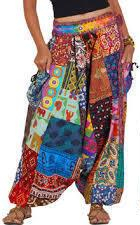
alibaba-trousers-tie-dye-baggie-genie-boho-gypsy-harem-pants-250x250Laundry complete, I set off on a walking self-tour of the cheap clothes district. I am not normally a fan of shopping, but I have decided that if I am ever going back there, I need to do it with an extra suitcase. So many beautiful clothes, many inspired by Indian fashions, glorious batik fabrics and wildly reasonable prices compared to what similar fashions cost in the US. Skirts, shirts and dresses abounded, but pants were a little challenging. Free size is really a misnomer because it only applies to a size range from about 6-12 (US). the most popular pants seemed to be the Ali Baba style which are big billowy and flowy, but cinch around the ankle, looking not unlike the pants Aladdin wears.

Thigh Gap Deficit

6f7b01dbcf9276354fa90051f5095091

art: GarbageHumans on Etsy

Why not just get a flowy dress/skirt/alibaba pants? Well, if any of you have thighs that touch, you may have some idea of the horrible phenomenon known as “chub rub”. The unfortunate and unflattering name notwithstanding, it’s not just about chub. I know lots of svelte people whose thighs touch because thigh gap beauty standards are insane! (no shade on naturally skinny folk, this is about people trying to achieve beauty standards that are not natural to their body type). So, in hot / humid weather, the chafe is real. Imagine getting a blister on your inner thighs. Ouch! I wear biker shorts under skirts or dresses and it helps a lot with the rubbing, but I only had one pair with me and I needed another chafe free article of clothing for the rest of my journey.

Coloring Outside the Runway

Pants in my size came in 2 types. Black, coarse, thick fabric (wtf it’s 30 degrees and 90% humidity out here?) or clown pants. I wish I was joking. I know that as an American my sensibilities of color are drab in comparison with everyplace other than England. Our puritan ancestors despised joy and now we’ve culturally accepted the idea that bright colors are somehow gauche or low-class (hello systemic racism?) because we associate them with the heathens and the brown people. This disdain of bright colors is something I’ve been observing in myself and others since I first started traveling. Buying hair clips in China was challenging because I didn’t want the super bright sparkly ones, I wanted the earth toned ones. Watching people cringe in Hindu temples because they see the brightly painted statues as gaudy while the Hindus see the colors as a celebration of their faith. And now in Malaysia trying to buy a pair of pants that I might ever wear again.

il_340x270.1198176956_mcqn.jpg

photo: TheHaremLoft on Etsy

Bright colors, elephant print batiks (really, I know the elephant is popular in SE Asia, but don’t put elephants on plus size clothes, it’s just rude), and even patchwork patterns of jangling colors and prints. I might have worn them there, because the locals did and because they wouldn’t stand out like a sore thumb, but the chances of me wearing them in Korea the next summer were slim to none. I have begun to learn to appreciate the bright colors and patterns in art and even in clothes on other people, but I still can’t put them on myself. I think because of my weight I was subconsciously trained to try to occupy less space, and almost certainly because of my gender I was taught not to stand out. I’m working on it, but I wasn’t ready for elephant pants just yet.

The Mystery of Viscose

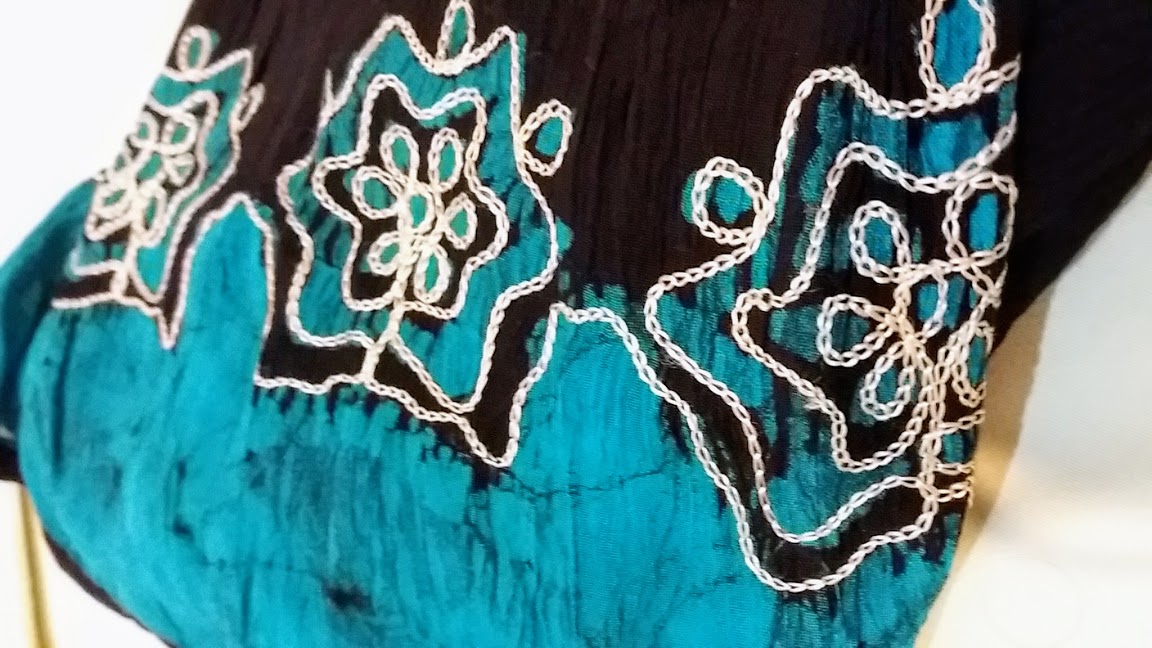
20170122_182655Eventually, I found some black pants that were a lightweight material and had a beautiful blue pattern around the cuffs. They were about 7$US, so I wasn’t overly concerned with the durability and I was delighted with the way they fit. Of course they were from India (I’m starting to believe all my favorite clothes are), but unfortunately, they are made of a material called “viscose”. I did not know what this meant at the time. I had never heard the word and I was so desperate for pants at this point, I didn’t really care. But later, while laying in the AC of my hotel room, I looked up the word and discovered the world’s most temperamental fabric.
Viscose is made from plant fibers or cellulose, making it a uniquely natural synthetic fiber. It has some ties to artificial silk and to rayon, but is ever so much more delicate. Many laundry blogs (yes those exist) indicated that although there are tricks to washing most “dry clean only” clothes, viscose is so sensitive to water that it can loose it’s shape or shrink dramatically if it gets wet, and it can tear to shreds if it is squeezed or wrung out while wet because of how the water impacts it’s delicate plant based fibers. On the other hand. I have rayon clothes I wash all the time, and I’ve had bamboo sheets that went in the washer and dryer, and because of the way the bamboo is processed, it’s viscose too. My cheap, imported-from-one-developing -nation-to-another pants did not come with washing instructions, just the 100% viscose tag. I have no idea how to clean them without utterly destroying them because even dry cleaning is an adventure when you aren’t fluent in the dry cleaner’s language. I hope I can get them to last the summer at least, fingers crossed.

Wrap It Up

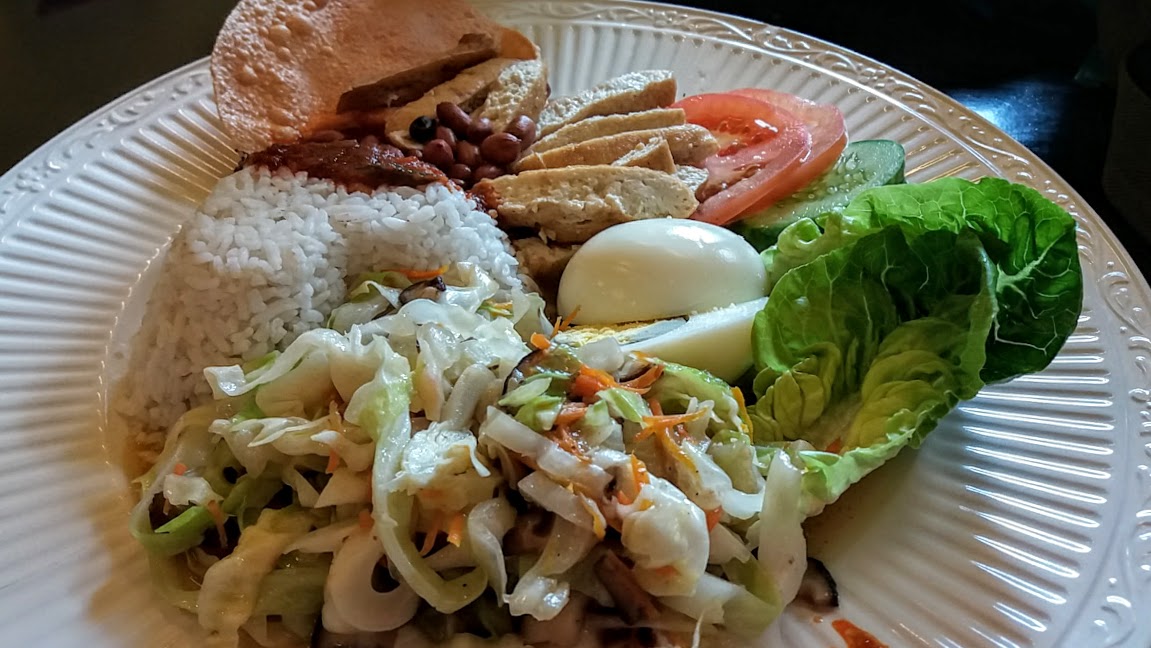
20170122_172744I tried to find some local-ish dinner food, but my travel weariness led me in the end to a little boutique restaurant near my hotel that was more expensive but also vastly more comfortable. Amid the offers of western sandwiches and pasta, I found a lone offering of the national dish: nasi lemak. Omnomnom.

I also managed to pick up a beautiful blue batik sarong which was one of two things I actually planned to buy on this trip. After I got cleaned up and I watched a few YouTube videos on how to wear a sarong, I went 20170122_182721out for a beer in my new tropical get up. I got the impression that Georgetown is so popular among backpackers and expats for a combination of it’s strong western influence and plethora of cheap bars. (many places have a regular “ladies night” menu which are totally free or insanely cheap) I wasn’t particularly sad to leave it after only a short time, but I can see how it would be a refreshing break if I were on a multi-month trek of SE Asia, and I’d definitely love to go back for more clothes when I’m not backpacking.


We’re about halfway through the stories of the Malay Peninsula adventures. For those wondering how I keep the memories so fresh months after the experience, I cheat. I wrote everything down as soon as I got back in one giant GoogleDoc, and it’s just a matter of edit and polish for each chapter afterward. There’s no photo album for this post, but I hope you’ll check out the Facebook, Instagram, and/or Twitter pages for regular updates and photos on adventures as they happen. Thanks for reading! ❤