Northern Ireland: Game of Thrones

Regardless of your feelings about the series finale, one cannot argue that Game of Thrones failed to leave a lasting mark on the collective TV viewing audience around the world. Even if you are not a Game of Thrones fan, I think you can still enjoy the photos and descriptions here since I’m telling my story, not JRR Martin’s. I enjoyed the books a lot (wish he’d finish!) and I like most of the TV show as well, even many parts that diverged greatly from the books. However, this is not a blog about a TV show, it is about Ireland: the museum exhibit in Belfast, and the outdoor landmarks which would are enjoyable on their own, minus the CGI and regardless of their attachment to the show.


Game of Thrones Touring Exhibition: Belfast

At the time I was in Ireland, the GoT Touring Exhibition was in the TEC in Belfast. I understand that it was in Belfast from April – September of 2019. I was told that there will be some part of the exhibit which will permanently stay in Belfast due to it size, but as I write this, there’s zero information on the TEC website because it’s all closed due to Covid-19. Additionally, the exhibition’s tour schedule is currently suspended for the same reason. I’d love to be able to tell you where to go to see it, but I can’t.

Warning: there are SPOILERS. If for some reason you are living under a rock and haven’t seen season 8 (or already had it spoiled for you) and still want to experience that… uh, experience, then maybe just look at the pictures or skip to the outdoor part of the GoT sightseeing.

I booked tickets well in advance because I was warned it might be sold out and we were on a bit of a schedule. There’s plenty of parking at the TEC and a place to get a cup of coffee and a snack in the lobby. It was such a relief to have an indoor activity on a rainy day. I got there before opening because I wanted to be in the door before the crowds arrived. There weren’t actually that many people there, but I’m still glad I went early because it was filling up by the time we left about 3 hours later.

The exhibit hall was enormous. It was divided into smaller rooms by theme and there was a suggested path to follow. There was a plethora of information about every item on display as well as knowledgeable staff everywhere, most of whom had worked on the show when it was being filmed and had personal on set anecdotes to share about the actors or scenes. Generally all of them were happy to have had the experience which made it nice to have the staff share fandom and enthusiasm.

Photos were allowed everywhere, but flash photography was forbidden and the lighting was very low, so most of my photos did not turn out terribly well, I’m afraid. Honestly, you can see wide shots of the costumes and props in the show, so the impressive part of the exhibit is being able to look at the close up details involved in the dresses, jewelry, weapons and other props that are never seen on screen, or shown for only fractions of a second. There are so many more things in the exhibit than I can show here, in part because no one wants to see that many photos and the rest because so many of my photos turned out blurry or dark or both.


The display starts by introducing the houses of Westeros and their relationships and fealty with a dazzling array of flowcharts accompanied by a variety of common or popular character costumes for the main houses.


It moves next into an area that replicates the Stark family crypt at Winterfell. I was told by the guide for this portion that these statues would not be moving on with the exhibition tour since they were too large and fragile. The room was dark and the statues lit moodily as though by torch light. It was a fun effect to walk through, but a frustrating one to photograph.


The third module gets into the further houses such as those of Dorne and the Iron Islands as well as Stannis Baratheon’s unholy union with Melisandre.

The fourth section is arguably the best. It’s a room full of dragon skulls, the very same ones Tyrion finds while under the palace in Kings Landing that belonged to the Targaryans of days past. I have rarely been so sad about low lighting, but it did make the skulls feel a little creepy and alive, and lived experience is always better than a photo. The skulls are seriously dinosaur sized. The smallest one could probably bite me in half, and the largest could swallow me whole. Standing up. Without opening it’s jaw all the way. So incredibly cool.


Following the dragon skulls were all things Mother of Dragons. Daenerys’ most iconic costumes and jewelry as well as models of the dragon eggs and baby dragons.


There’s an interactive display of the temple of the Faceless Men. Arya trained there, learning deep ancient secrets of how to assassinate people and then NEVER USED THEM. *sigh The display is still cool. You can pose for a photo and have your face digitally added to the wall of faces.


Next up is the Wall where John Snow joins the Night Watch to protect the realms against the coming of the Night King and his horde of walking dead that kill all the Dothraki and then… shatter?… when Arya stabs him, not using her Girl Has No Name skills in any way… ugh. Look at the shiny costumes!


The final display is the Iron Throne in King’s Landing with some of the later season costumes arrayed around it. In addition to all the beautiful set pieces and costumes, there are several interactive stations where you can pose with Arya’s sword Needle, John’s sword Longclaw, the Wall (a cute trick with mirrors to make it look like you’re holding on to a rope for dear life), and the Iron Throne itself. You can walk both forward and backward through the display, so I was able to double back and have a closer look at a few things. All in all, a lovely experience combining museum quality displays and fantastical world building.


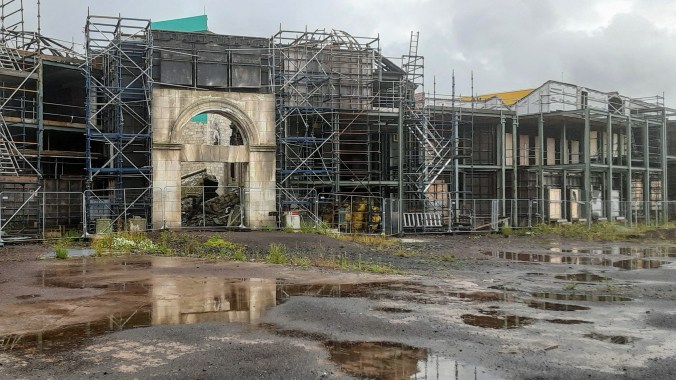
On the way out, one of the staff told us to keep an eye out in the parking lot for the King’s Landing set. He implied that one day it might be open to the public as part of a permanent exhibit, but not yet. I tried to find any information about it online, but again, since tourism is closed, there’s no telling if or when the full size set that was used to film the burning of King’s Landing in season 8 will ever be a public attraction or not.
20190810_131838

The Film Locations

A large number of the stunning landscapes of the show are part of Northern Ireland. There are scads of websites dedicated to helping people find and enjoy GoT filming locations. Many of the locations are empty fields where this or that battle was filmed, while others had significant CGI added in post production. There are specialized tours where you can play dress up and act out scenes from the show. There’s even a very expensive opportunity to spend some time with the actual animals who played the Stark children’s direwolves.

*The photos that follow are a mix of screenshots from Game of Thrones and my own photos of the locations I visited for comparison and contrast.*

Dark Hedges

This was probably the shortest stop and yet the most beautiful. The Dark Hedges were a popular site in Northern Ireland even before the show. They also have the honor of being one of the only locations that was not CGI enhanced and are therefore quite recognizable as the King’s Road in seasons 1 and 2, as well as the place where Arya Stark escaped from King’s Landing.

game-of-thrones-dark-hedges

From the outside, the dark hedges just look like a little stand of trees in between two large fields. The short stretch of road runs through a private farm, and although the patient farmer has to put up with tourists on the public road, he also seems to have a good sense of humor about the situation. Busloads of tourists come through both on Game of Thrones themed tours and on regular tours of the area because it’s famous for more than just it’s show appearance. As a result, parking is scarce. There was supposedly a parking lot some distance away, but everyone simply parked on the side of the road that ran perpendicular to the hedges. There’s not supposed to be any cars on the hedge road itself, but of course there are always people who think the rules don’t apply to them.


It’s a short stop for most tours, so if photography is your goal, you might want to go on your own. I only spent about 30 minutes there and took a lot of photos which I was eventually able to parlay into a version that makes it look totally empty! Yay, photoshop? Otherwise, it’s very easy to see how true to life this set is between the show and the reality.

20190809_140954 (1)

Downhill Demesne & Mussenden Temple

Here is the filming location of Dragonstone in Season 2. Downhill Strand is the place where the seven gods of Westeros were sacrificed by Lady Melisandre. Dragonstone was the ancestral home of House Targaryen and current stronghold of the Stannis Baratheon. The scene in question is filmed at night on the beach below, so there’s no real way to see it in the show. Nonetheless, it seems that the tourism board has installed statues of the seven on the beach for eager fans to see. I didn’t make it down to the beach, but rather came through the Downhill Demesne gardens and grounds. If you want to see the beach, I think the A2 road goes there pretty directly.

maxresdefault

We entered via Bishop’s Gate and enjoyed the gardens with a variety of flowering bushes and trees, water features and stonework. Following the trail, we came upon an open area where the ruins of the old manor stood. Finally, walking all the way to the cliff edge, I found Mussenden Temple. Contrary to it’s name, it was never a temple, merely modeled after one. It was in fact a library. It is possible to enter the “temple” during the day, but by the time we arrived it was locked up for the night.

Dunluce (again)

I did not actually realize it at the time, since it didn’t show up on my initial searches for GoT locations, but Dunluce Castle was also Pyke Castle of House Grayjoy on the Iron Islands. I had to look it up and it turns out this is one of the locations that was extreme CGI. I would say more that Dunluce was the inspiration rather than the location, but hey, you gotta start somewhere. I wrote more about Dunluce in my description of the Causeway Route.

Castle Ward

This was one of the places I was most looking forward to seeing, and turned into the greatest disappointment. It’s advertised as “the real life Winterfell” and while it was technically the place where Winterfell was filmed… CGI.

In all fairness, one of the reasons I did not enjoy the stop was that we were experiencing some of the hardest and most vicious rain of the entire trip that day. Ireland kind of always rains. For some reason, I thought that was like Seattle rain which is really just heavy mist and no native Seattlite owns an umbrella (at least not for rain). I had a travel umbrella and I had rain booties to keep my shoes dry and I thought that would be enough. Mostly it was. There was one terrible soaking I got while on a ferry, but other than that, I’d been mostly dry or at least only merely damp.

20190810_143551

Not so this day. The rain was opaque. It was as though the sky was trying to be the sea. In addition, the signage for where to go and park in the sprawling acreage of Castle Ward is not clear. I followed the signs for Winterfell and wound up in a very small parking lot which in retrospect might have been staff parking, but we were so lost by then that I just gave up and parked anyway. (Now I know we should have parked at the Shore Parking Lot, but it was not obvious in any way when we drove in that day) It turned out to still be a long walk from the trail head to the actual “Winterfell” area, and on a beautiful day, or even a merely drizzly day it probably would have been a lovely walk through the National Trust. It’s still very pretty, but it was harder to appreciate while wet.

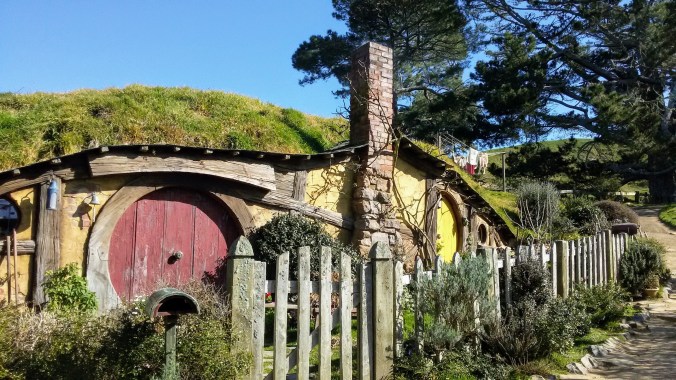
Another reason I think I was disappointed is that I’ve been to Hobbiton in New Zealand. There are plenty of LOTR locations you can visit there that are just unchanged landscape and like Northern Ireland, they are beautiful and worth seeing, just… not like the movies. Hobbiton, on the other hand, was purpose built (twice) for the LOTR and Hobbit movies. Although the farmer who owned the land originally didn’t want permanent structures, after seeing the huge influx of tourism money, he decided to keep them after all.
20160821_141728

Thus, walking around Hobbiton, you feel like you are THERE. I knew that most of the locations I visited for GoT were not altered for the show or for tourism, but Winterfell was so highly advertised as this great experience, like being in Winterfell, stepping into the show, that I imagined it would be at least a little like Hobbiton, and give me a sense of being at the Stark family home.

20190810_151536

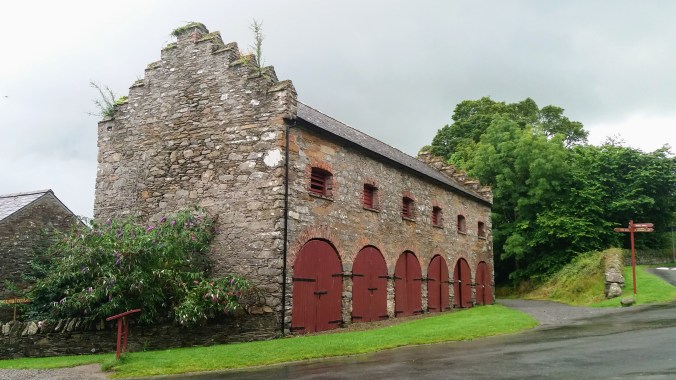
When I finally arrived at “Winterfell” I felt very let down. It looked like a reconstructed historical village, the kind that kids take school field trips to see. I expect that it was meant to be a replica of the original Castle Ward. It wasn’t ugly or anything, it just wasn’t at all like Winterfell.
20190810_151843

There are a ton of pay to play style activities at the Winterfell center. You can take an archery class, an axe throwing class, rent a bicycle and tour the park while wearing a cape and a special GoT messenger bag that purportedly takes you to 20 different filming locations within the grounds, most of which are “this tree” or “that field”. I don’t want to diminish from anyone who enjoys this kind of experience. If that is your jam, rock on. For me, a place has to be cool for more than just being the canvas on which CGI was painted. In addition, I was traveling with an older person who simply wasn’t up for lots of hikes or bikes.

20190810_151656 (1)

I wanted to simply see the grounds and enjoy the castle. The thing is… it’s not really there. The closest you come is one short tower and part of a wall that kind of look like Winterfell if you squint. In the courtyard there were a dozen or so cars and a huge tent, which made getting decent photos of the type that are shown on the website nearly impossible. This is the closest angle of any building that I found to resemble the castle on the show (show: top, reality: bottom). The resemblance is there, but the feel was lacking.

9aed55f2b0383a745b545fbe1483b26920190810_150944

In addition to the experience selling shops, there was a small art gallery and a gift shop. I spent a long time hiding in the replica ruins of an old mill waiting for another torrent to pass long enough to walk again. The rain was so extensive that the ground was almost entirely underwater.

20190810_151926

It just goes to show that managing expectations is extremely important. I think I would have been able to overlook the disappointment of either the weather or the failure to be anything like Winterfell, but I wasn’t able to overcome them both and I left feeling profoundly damp in shoes and spirits.

Inch Abbey

Thankfully, that day I had one more GoT location to visit, and it was the ruins of an old abby, which it’s almost impossible for me to feel let down by. The scene is where Robb Stark’s bannermen rallied to their leader after taking victory (and Jaime Lannister prisoner) at the Battle of the Whispering Wood. While Winterfell had made the cut onto my list because of my (mistaken) belief that it would be a grand immersive experience, Inch Abbey made the list just for being old ruins.

unnamed (3)
The first traces of a sacred building on this site go all the way back to 800 C.E., although it is thought that the monestary of Inis Cumhscraigh (as it was called at the time) was mainly earth and wood, so little of it remains today. The beautiful stonework remains that makes this site stand out were not built until 1180-88. It remained an active catholic monastery until 1542 when Henry the Eighth left the Catholic church because he wanted a divorce and then forced everyone under his rule to become Church of England.

The rain had eased back significantly, and one of the local tour bus drivers even offered us spare ponchos as his passengers were offloading. The tour group was rather amusing, and seemed to be having an absolute blast. They were equipped with cloaks and replica swords which appeared to be blunt steel, not plastic or wood. The tour guide, like many of those working on GoT tourist sites, had been an extra on the show and enjoyed telling stories from being on set.

20190810_164651

They all gathered together and, at the guide’s prompting, everyone bent the knee to one lady, swords aloft and shouted “the queen in the north!”, echoing the original scene in which Robb was named such for the first time, but with a nod to the fact that Sansa (at that time) had taken up her brother’s title. I didn’t reach the group in time to catch that pose, but I did happen to get another that shows off their costumes and props. Once the group photos were over, they had a few minutes to go and take individual poses around the ruins before being herded back onto the bus.

20190810_164717

At one point the guide expressed a thought that had not occured to me as a fan, and I want to share that as well. I think a lot of fans were disappointed by the final battle of Winterfell because it was SO DARK (among other things, so many other things). The guide for the group that was at Inch Abbey that day had been an extra in the final battle and talked about the extreme conditions that the cast and crew worked in: not sleeping, being wet and cold all the time, running up and down over and over again until they were just physically wrecked. It was something he put a lot of work into and it was really hard for him to turn around and face the criticism online.


I still think the shows writers, producers, and cinematographers FAILED in every way for that scene, but I now I also think about all the people who didn’t have any creative control, or any idea what the final product would look like who were just excited to work on such a popular and groundbreaking show. In addition, the tragedy that is season 8 has not stopped most fans from continuing to love the series, the characters, and the world of Westeros. We complain a lot online, but I think it’s important to use fan voices to say thanks as well. So, thanks to all the cast and crew who worked their asses off and had no control over what happened in the scripting and editing process.


The group didn’t stay long, and soon we had the ruins to ourselves and I was able to tramp around with impunity, my umbrella enough to keep the now light rain off. The ruins themselves are stunning, and I think that the rain brought out the beautiful contrast of the stones and the grass that would not have been as strong on a sunny day. The stones themselves are fascinating as you can see the remnants of interior structures long since crumbled and it was exactly the kind of film location I had been hoping to see combining real life beauty with my fandom.

20190810_171334


Inch Abbey was the final stop on both my Game of Thrones self-tour, and the Northern Ireland portion of the road trip. We tried to go to Newgrange on the way back to Dublin, but there was a series of unfortunate events involving Germans and cars (why is it always Germans I have car problems with?) that only Lemony Snicket could possibly narrate which prevented us from doing so. I did learn that you have to go there and put your name on the wait list in person. You can’t make reservations ahead of time and you can’t go without signing up… so. This seems like an event that it might be easier to do with a tour group than on your own. Maybe next time? Meanwhile, I hope you enjoyed my sojourn through Northern Ireland, and I hope you’ll continue to join me as the story takes me back into the south.


Myths & Tales from China 06

The Kingdom of the Sea

When westerners imagine life under the sea, it’s mostly human people with some fish attributes like fins or gills, but in many parts of Asia, the kingdoms under the waves are filled with sentient and often extremely large versions of familiar sea creatures — and dragons. Here are 3 stories about the Sea Kingdom, ruled, not by a merman King Triton or a humanoid sea god like Poseidon, but by a Great Dragon King who rules all life in the sea from his crystal palace.


Dragon King of the Boiling Sea

A long, long time ago, on the southwest side of Zhou Shan (a city in Zhejiang made soley of islands) there was a small island. On this island, under the ground, was buried a great deal of bright yellow gold, so the people all called it Jin Cang Dao or “Hidden Gold Island”. Some time later, the ever greedy and never satisfied Dragon King of the Eastern Sea learned of this news. In order to claim all of Jin Cang Island for himself, the Dragon King amassed large quantities of Dragon Princes and Dragon Grandsons and Shrimp Soldiers and Crab Generals, and launched himself at Jin Cang Island: rising tide after rising tide, breaking wave after breaking wave, a fierce torrent that overtook the sky. The trees on Jin Cang Island fell and the houses collapsed; it was an extremely miserable sight.

1_150723204148_1.jpg

On the east side of Jin Cang Island was Fang Hua Shan or “Flower Spinning Mountain”, at the top of the mountain lived the Flower Spinning Sprite. She saw the Dragon King of the Eastern Sea causing trouble for no reason at all, devastating the common people, and she felt entirely angry. She picked up her magic broom and lightly swept towards the sea surface. The water that was coming up the mountain then retreated back down with a crash. The survivors on Jin Cang Island one after another ran to Mt. Fang Hua to take refuge. The Flower Spinning Sprite changed her shape in a single shake of her body, she became a white haired, ash grey hundred year old granny, and said to everyone, “If you want to save Jin Cang, follow my lead and spin the flowers into thread. Weave the spun flowers into fishing nets and go down to the sea and defeat the Dragon King!” Everyone heard the old granny’s words: men and women, old and young, all together set about the task, united in the common effort of spinning flowers and weaving nets. They spun and they weaved, they were wholly occupied for seven times seven or forty-nine days, they wove nine times nine or eighty-one pounds of golden threaded fishing nets.

0fe18f759fd04f1cb95ef12eff227b93

They finished weaving the fishing nets, but who would they send to the sea to fight the Dragon King? Everyone bickered back and forth, talking about it continuously. Just then, a small chubby boy appeared suddenly out of the crowd, he smacked his chest and said, “I will go!” His fellow villagers looked and saw it was little Hai Sheng and could not help but laugh. How could a seven or eight year old child fight the Dragon King? The old granny, however, smiled and said, “Go to the sea and fight the Dragon King, there is nobility in having courage, so let little Hai Sheng go!” So saying, she took up a suit of golden threaded clothes and bade Hai Sheng to put them on. Next she passed on to Hai Sheng the secret trick to fighting the Dragon King.

Hai SHeng put on the golden threaded clothes, and his whole body immediately felt a burst of soft tickles. In accordance with the spell the granny imparted to him, he said “big”, and all at once he grew tall in height. Suddenly he became a powerful, large, inexhaustible giant. His fellow villagers stared with their eyes wide and mouths open. Hai Sheng picked up the golden threaded fishing nets and took large strides down Mt. Fang Hua, then with a plop sound, jumped into the sea.

512x512bb

It’s strange to say, but wherever Hai Sheng went, the tidal waters and sea waves in that place made way for him. In actuality, the golden threaded clothes Hai Sheng was wearing were water repelling treasure clothes made by the Flower Spinning Sprite just for him. Hai Sheng took out the golden threaded nets and cast them into the sea. He said, “big”, the net flew toward the ocean in such a way that it hid the sky and covered the earth. In a short time, he started to collect the first net. He had captured Gou Manjing, the treasure guardian general for the Dragon King of the Eastern Sea. As long as he had captured Gou Manjing, he would be able to get the Sea Boiling Pot; then he would have no fear that the Dragon King would not return Jin Cang Island. Hai Sheng was extremely happy, and ordered Gou Manjing to hand over the Sea Boiling Pot at once!

Gou Manjing started to struggle while still in the net. Hai Sheng shouted, “small”, and the golden threaded net instantly started to shrink. Gou Manjing was choked to within an inch of his life. He had no choice but to stop and lead Hai Sheng to the Hundred Treasure Hall of the Eastern Sea Dragon Palace to take the Sea Boiling Pot.

As soon as he had retrieved the Sea Boiling Pot, Hai Sheng then, in accordance with the Flower Spinning Spite’s instructions, set up the pot at the sea side, scooped out one ladle of Eastern Sea water, poured it into the pot, burned a roaring pile of dry firewood, and pili-pala it started to boil. Boil! BOIL! Several incense sticks burned in the time that passed; the water of the sea gave off steam. The Dragon King openly and honestly appeared on the water’s surface, behind him followed a group of hot and panting shrimp soldiers and crab generals repeatedly bowing and kowtowing and earnestly calling for their lives to be spared.

images (2)

“Ebb the tide and rest the waves, return Jin Cang to me, otherwise I will boil the Dragon King soft!” Hai Sheng said. The Dragon King hastily gave a command for the tide to retreat by three feet, and the waves to subside by thirty feet. Jin Cang Island was at last once more protruding from the sea. 

Who could have guessed, as soon as Hai Sheng picked up the pot in both hands and doused the fire, the Dragon King once again immediately rose the tide and beat the waves. One wave swept up the Sea Boiling Pot and it disappeared without a trace. “What to do?” Hai Sheng anxiously stamped his foot. The stomp was no small thing, and suddenly all the gold buried under the earth was completely brought out by Hai Sheng’s stomp, and flew one piece after another, down to the sea shallows, dropped onto the beach, and in the blink of an eye built a sparkling golden sea bank. No matter how the tide rushed forth or the waves churned over, Jin Cang stood, majestic and towering. From then on, the Dragon King does not dare come to cause trouble, the people live in peace and work happily, and Jin Cang Island, or “Hidden Gold Island” became known as Jin Tang Island, the Island of the Golden Embankment.


LongNu (Dragon Maid) Visits Guan Yin

According to legend, there is a pair of young innocents standing in attendance at Bodhisattva Guan Yin’s side. The boy is named Shan Cai (which means ‘cherish wealth’) and the girl is named Long Nu (which means ‘dragon maiden’).

0a0f983190ba4673aa696a278ba3cb97.jpeg 

Originally, Long Nu was the daughter of the Dragon King of the Eastern Sea. She was clever and bright, and the Dragon King doted on her very much.  One day, Long Nu heard that the fishing village by the seaside was having a Boat Lantern Festival, and loudly demanded to go and see the bustling scene. But the Dragon King shook his head and said, “That is no place for a Dragon Princess to go!”

Long Nu thought to herself, “You won’t let me go, I must go!” She waited with difficulty until midnight, then took advantage of the Dragon King not paying attention, and stealthily slipped out of the Crystal Palace. She transformed into a maiden from a fishing family, and entered the fishing village. The main street was unusually bustling. There were all kinds of fish lanterns in numbers beyond counting: there were Yellow Croaker Fish Lanterns, Octopus Lanterns, Squid Lanterns, and Shark Lanterns; along with Lobster Lanterns, Crab Lanterns, Scallop Lanterns and Conch Lanterns… Long Nu stared east, gazed west, and then broke into the crowd without thinking.

IMG_1645.JPG

At that moment, suddenly a half cup of cold tea spilled down from a loft above, and splashed impartially on Long Nu’s head. Long Nu was so scared her face went white. For in actuality, whenever she transformed into a human, if she came into contact with water then she would quickly change back into her original shape. She was afraid that changing back into her dragon shape in the middle of the crowd would cause trouble, so she ran with all her might back to the seaside, she barely made it to the beach when she transformed into a large fish. She lay on the beach completely unable to move. 

Along the beach there came two fishing lads, one lean and one plump. They saw this bright and lustrous large fish and all at once they stared distractedly. The plump boy said, “What a fish! How did it get up on the beach?” The lean boy, moving the fin to and fro, said, “Let’s take it!  We can carry it on our shoulders up to the road to sell, it will fetch a good price.” So saying, the two boys carried the big fish on their shoulders up to the road to sell it.

Meanwhile, Bodhisattva Guan Yin was sitting in meditation in the Black Bamboo Forest. She saw what had just taken place, and acting without thinking from her merciful heart, she quickly called the boy Shan Cai to go and buy the large fish and release it into the sea. Shan Cai stood upon a lotus flower and flew down from high in the clouds.

The two boys carried the fish to the main street, all the people watching the lanterns all at once gathered around, pointing and talking, however no one dared to buy the big fish. An old man said, “Boy, this fish is too big, you ought to cut it up and sell the pieces.” The plump boy though this was sound reasoning. He borrowed a hatchet, raised it high and was just about to chop. Suddenly, a small child shouted out, “Quickly, look! The big fish is crying.” The plump boy paused the hatchet and looked. The big fish was indeed crying two streams of sparkling translucent tears. At that point, a young Buddhist monk came over and blocked them, saying, “Don’t strike! Don’t strike! I will buy this fish.” Everyone who heard this roared with laughter. “Young Monk, why would you buy the fish? Maybe you’ll start eating meat again and leave the monastic life!” The young monk’s face went red, he explained nervously, “I would buy this fish in order to save its life.” So saying, he took out a silver piece and handed it to the lean boy, and had them carry the fish back to the shore and release it in the sea.

As soon as it touched the water, the fish made a big splash and swam far far away, after that it turned around and nodded to the young monk, only then did it swiftly dive into the water and vanish. What’s more, when the young Dragon Princess wasn’t seen at the Dragon Palace, everyone was thrown into confusion. The Dragon King angrily puffed his mustache and opened his eyes wide. After daybreak, the young Dragon Princess finally returned, not until then was the Dragon King’s mind at rest. However, in order to teach her a lesson, the Dragon King expelled her from the Crystal Palace. 

Long Nu was broken-hearted. Weeping endlessly she arrived at the Lotus Flower Sea; the sound of her weeping reached the Black Bamboo Forest. Bodhisattva Guan Yin heard this and knew that Long Nu had come. She instructed Shan Cai to meet Long Nu and bring her in. Shan Cai appeared before Long Nu and smiling asked, “Little Sister Long Nu, do you not remember me?” Long Nu recognized him as the young monk who had saved her and she could not help but turn her tears to laughter. She went forward and was about to bow to him. Shan Cai drew her to a halt and said, “It was Bodhisattva Guan Yin who told me to go and rescue you!”  Long Nu lifted her head to look and saw Bodhisattva Guan Yin seated on a lotus flower platform so she bowed and paid her respect. Guan Yin liked Long Nu a lot, so she kept her by her side. From that point on, Long Nu and Shan Cai lived like brother and sister in a cliff cave near to Chao Yin Cavern. That cliff cave was later called “Shan Cai Long Nu Cave”.

Long Nu served as a maid to Bodhisattva Guan Yin, but the Dragon King regretted his actions, and called for Long Nu to return to the Dragon Palace. But Long Nu was unwilling to return to the Crystal Palace that imprisoned her.

**There aren’t many pictures of this myth, although it was made into a TV drama in Taiwan, the screen shot quality is abysmal. However, Long Nu and Shan Cai are regular characters in an insanely adorable web comic called “Inhuman” about how all the old magical beings are getting along in modern China. I haven’t found a good translation, but the art alone is worth a look.

This one is from a school field trip. Shan Cai asks Long Nu what’s wrong, and she’s feeling really motion sick from the bus ride and can’t help but throw up. However, because she is a princess of the sea, she fills the bus with seawater and animals, so when they get off the bus all the human students are wet and angry, but Shan Cai says “now we have enough to make seafood hot pot!”


Ne Zha Disturbs the Sea

Once upon a time, at Chen Tang Guan there was a military officer named Li Jing (historical figure 570-649 CE). When his wife conceived her third child, he was conceived for three years and six months and still hadn’t been born. Once day, very late at night, Mrs. Li felt a burst of pain in her belly, and unexpectedly gave birth to a ball of flesh. Li Jing belived it to be some kind of evil spirit, he took out his double-edged sword and cut the ball of flesh. The ball of flesh split open and out hopped a small child. As soon as the child was out, he ran all over the place. Li Jing was very happy and gave him the name Ne Zha.

Early in the morning the next day, a Daoist came requesting to see Li Jing, he wanted to take Ne Zha as an apprentice. He was the Golden Light Cave Sage Tai Yi. He gifted Ne Zha with two treasured objects: one was the circlet Qian Kun Quan (Universal Ring), and the other was the silk cloth Hun Tian Ling (Sky Budding Sash). Li Jing happily agreed.

images

In no time at all, Ne Zha was seven years old. He was very active and energetic. One summer afternoon, the weather was especially hot, Ne Zha ran down to the riverbank and used the Hun Tian Ling dipped in water to bathe, and as he washed he also played. The Hun Tian Ling is an amazing treasure, when it was immersed in the water, all the water in the river shone red. This river was the Nine Bend River that feeds into the Eastern Sea, and as Ne Zha shook the Hun Tian Ling in the river, the Dragon Palace in the Eastern Sea began to sway. The Dragon King got a surprise and quickly called the spirit that patrolled the sea, Ye Cha to go and look. Ye Cha drilled out of the water’s surface to see one small child holding a length of red silk in the middle of bathing, and then called out, “Hey, small fry, what sort of strange thing are you using, the Dragon King’s Crystal Palace was disturbed when everything started to shake?”

214-1Q102145250

Ne Zha raised his head to look and saw ferocious looking (green faced, fierce toothed) monster, then said, “What kind of monster are you? Do you not want to cause harm or not?” Ye Cha heard that and became angry, he raised up his axe and swung it towards Ne Zha.  Ne Zha dodged out of the way, and fetched Qian Kun Quan and threw it at Ye Cha. There was a noise — deng, and Ye Cha’s head was broken and he died on the spot.

v2-c08b1db04077ea3e377c86d8199b11ef_1200x500

Ne Zha saw that Qian Kun Quan was dirty, so he sat down on a stone to wash it. The Crystal Palace was unable to withstand the vibration of these two Treasures and nearly collapsed from shaking. At that time, the shrimp soldiers came to report, “Ye Cha was killed by a child!”. The Dragon King heard this and became enraged, he was just about to dispatch the troops, when the third crown prince Ao Bing Zhan stood up and said, “King Father, allow me to go and capture this small child.” and thus saying, he dispatched the shrimp soldiers and crab generals and rode the great beast Bi Shui Shou. They arrived at Nine Bend River, Ao Bing Zhan called to Ne Zha, “Where are you, you Little Goblin, you dared to go so far as to kill Ye Cha, watch out that I don’t kill you!”

“I am not a Goblin I am the son of the Chen Tang Guan army commander Li Jing, Ne Zha!” Without waiting for Ne Zha to finish speaking, Ao Bing hefted his pike and ferociously began to stab. This time Ne Zha was really angry! Ne Zha flung the silk cloth Hun Tian Ling at Ao Bing, wrapped it around Ao Bing, then gently tugged, pulling him off the beast Bi Shui Shou. Ne Zha stepped on his neck, lifted the circlet Qian Kun Quan, and tapped him lightly on the head, and his true form was revealed, he was actually a small golden dragon.  Ne Zha pulled out the dragon’s tendons, wrapped it around his waist and joyfully returned home.

images (1)

The Dragon King of the Eastern Sea heard that his third son had been killed by Ne Zha, in less than (the time of) one breath, he invited the Dragon Kings of the other three Seas to gather together in Chen Tang Guan, drop a huge rain, and prepare/intend to flood the place. Ne Zha didn’t want to involve his parents and the whole village of regular people, so he calmly picked up a double edged sword and cut his own throat. Not until that did the Dragon Kings free Chen Tang Guan.

8936f96d52265bdcc492c555042ef535

Ne Zha’s soul left his flesh body, and slowly, flutteringly it floated down to Golden Light Cave, and met his Master Sage Tai Yi. Sage Tai Yi plucked several lotus roots from within the lotus pond, arranged them in the shape of a human, and slowly said, “Ne Zha, Lotus Flower Reincarnation!” Ne Zha’s soul leaned over the lotus roots, and before long, the lotus flower slowly blossomed. A small child stretched and stood up and was exactly the same as the original Ne Zha. Ne Zha knelt at Sage Tai Yi’s feet, and spoke sincerely, “Thank you Master, you have given me a second life, from now on I won’t wantonly fight with people anymore.” Sage Tai Yi smiled and nodded. He took out two Wind and Fire Wheels and a Fire Point Spear, and gave them to Ne Zha. Ne Zha then remained with Sage Tai Yi and followed his teachings.

hqdefault (2)

Later, when Ne Zha came down the mountain, he became the officer who would lead ahead of all the troops of arms master Jiangzi Ya under King Wu (historical figure 1046-1043), beheading goblins and driving out devils, establishing outstanding military service. He also performed many great deeds for the common people, and so the people all loved him.

**This is such a beloved story in China that it has been made into a popular animated movie which is where all these images come from. It’s in Chinese, but now you know the story you can watch the video if you like:

The Ruins in Ghent

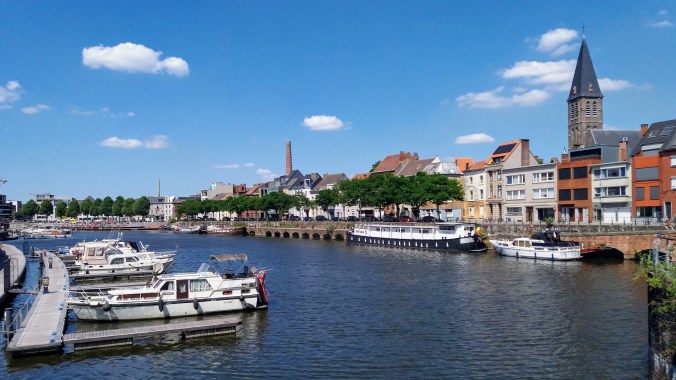
Although I only stayed overnight in a handful of cities last summer, I often made day trips to nearby smaller, quainter European towns along the way. While travelling in Belgium, everyone says “go to Bruges, go to Bruges” and I thought about it, but that damn heat wave… Instead, I went to a similar quaint, canal-ridden, castle-bearing, sleepy little sidewalk-cafe-having town called Ghent. There I had one of the most stunning photographic opportunities and most memorable experiences of the whole trip.


I prioritized Ghent over Bruges for my small town detour for one main reason: the ruins of the Abbey of Sint Bavo. As I learn more about the history and development of churches and cathedrals in Europe, I’ve come to realize that there are not that many styles. About 7 (I’m not counting Revival and Modern, fite me). And of those 7, I’d say that 3 are the most common and distinct in the places I visited: Romanesque, Gothic, and Baroque. They’re stunning! High arches and flying buttresses, lots of fiddly bits on the architecture and beautiful decorations. However, churches within the same style are not overly unique unless you are an architectural scholar. I have now seen nearly a dozen Gothic style cathedrals, and I would be hard pressed to tell them apart without other landmarks.

Am I jaded? I don’t think so, because I do still think they’re stunning, I just don’t feel the need to prioritize another Gothic or Romanesque cathedral. I’ll go and admire one if I’m going to be in the neighborhood, but I don’t put it on my “to-do” list anymore. I might still go see a few more Baroque ones before I’m tired of that style, and I’m quite looking forward to seeing more Byzantine. What I do love is finding the cathedrals (or other historical landmarks) that are unique in some way, that bear the mark of history, of a life lived.

The Abbey of St. Bavo promised to be just that. Ruins left unrestored yet maintained, and only open to the public a few hours a week to prevent them from being damaged further. I was fascinated and determined to go. I found the opening hours and even emailed the caretakers to be sure I didn’t need a reservation, and then set about making sure I would be in Ghent on a day I could go inside.

This turned out to be a Sunday, which meant Ghent was even sleepier than normal. I’ve been living in Asia so long that I forgot about Sunday as an off day in the West. Although, to be perfectly honest, I think that western Europe closes down even more than America on Sundays. Live and learn.

20180708_183040

I looked into transit options (oh how I gnash my teeth at the transit of EU countries, but that’s another post) and found a “hop on hop off” boat! I’ve done hop on hop off buses before, but this would combine my desire to take a canal tour with my need to get around town. For the moment, lets just skip the challenges involved with getting from my Airbnb in Brussels to the main boat jetty in Ghent. Wave your magic wand, and there we are. The last bus of the series let me off directly in front of Gravensteen Castle where my day of “quaint European town” began.

Gravensteen Castle

I studied the boat tour schedule. It only had 6 stops and it was an hour between boats so I wanted to be sure I knew where to go and when to be back to get on for the next leg of my journey. I wanted to start at the castle, hoping to explore it before the boat even started running that morning. For those of you who imagine European castles as these lonely stone fortresses in the middle of rolling green hills and woodland, let me disillusion you. The Lord’s Castle was the center of town. Back in the feudal days, serfs worked the land around a castle, but the markets would be held within the castle’s courtyard. Also during times of war or bad weather, people would move in bringing families and livestock with them to be safe behind the walls while Vikings or whoever attacked.

20180708_183104

In some cases, those castles and farms were left empty for long enough that you get the Disney picturesque castle in the middle of nature. For many places, the castle continued to function as the center of town as the town got bigger and bigger around it, eventually turning into a modern city. In Ghent, it’s a giant fuck off castle in the middle of everything. You can’t actually get far enough away for even a proper photo because it’s so surrounded by traffic and other buildings. It dramatically changes the atmosphere of the public square to have a giant castle overseeing the open air restaurants and sidewalk cafes, though.

Canal Boat Bus

I checked into the boat bus and grabbed some coffee. I also topped up my water bottle at a decorative public drinking fountain. I saw these in several places during the summer. They look like a small artistic fountain, similar to what you might put in your back garden at home if you’re feeling fancy, but they dispense potable water (they have signs, don’t drink out of fountains without signs). Additionally, there is usually a little bowl at the bottom so dogs out for a walk can get a drink, too. It’s a wonderful way to provide a public service of free drinking water (not common enough in Europe if you ask me) while still beautifying the park or public street.

20180708_105047

The canals in Ghent are truly beautiful and the hop on/off tour goes father through the canal infrastructure than than most of the other boat tours on offer. Our driver was young and friendly and spoke English well. Perhaps because it was Sunday there were not many other tourists, so we chatted about Game of Thrones and Harry Potter as well as the city itself.

20180708_110618

I skipped several of the stops because I was still worn out from Paris and the heat wave, but I chose 3 to get off and have a look around. My sightseeing was somewhat hindered by the massive stages being constructed all along the main street and public squares. My guide informed me that the following week would host a huge festival in town. I’m not actually sad I missed it, since I never had enough energy that trip for crowds, so it worked out for the best.

Saints, Dragons and Devils!

I visited St. Peter’s cathedral, which was very predictable and yet still pretty. There was a woman with two children sitting just inside the door and begging. She was not the first begging immigrant/refugee I saw during my travels by any means. I tried to give when I could, although I still struggle with giving money. I’ve read a number of ethics debates about this topic and still can’t decide, so I gave them the food I had in my bag that I’d been planning to eat for lunch.  

20180708_120330

Having given away my picnic, I went in search of another snack, but nearly everything in Ghent was closed on Sunday afternoon.  I was attracted by a nearby sign advertising waffles, waffles I never found. Instead, I ran into an art installation of dragon skeletons which was far more interesting. While I was taking photos, someone came by and asked me if they were real and almost didn’t believe me when I said “no, they’re dragons”, until he read the small informative sign. They were part of a display for a children’s museum. 

 
Continuing through the inner courtyard, I emerged behind the cathedral at the abbey where I found the orchards and vineyards and a less obscured view of the buildings.

20180708_124129

From the boat I got a good view of the castle of Gerald the Devil. I was initially disappointed that I didn’t get to go inside, but it turns out that nowadays the building is not actually interesting on the inside. Gerald himself was nicknamed “the devil” (Duivelsteen in Belgian) because of his dark complexion and hair color. He didn’t do anything remotely devilish to earn the moniker. Additionally, while the building has an interesting history ranging from a meeting place for knights to an insane asylum, it was most recently used to house the national archives. According to Wikipedia, it’s not even good at doing that, and has been on the market since 2010. Cool name, though.

20180708_133604

Lunch Stop, the Soda that Yodels

I got off the boat again at the stop nearest St Bavo’s and immediately set about finding lunch. This was a bit extra challenging since I was also suffering from mobile data issues that day (another post is forthcoming). I can usually get Google Maps to work just on GPS, you can’t plan a route, but you can usually see where you are but suddenly I had no map at all! No where in my plan did I account for this. You can say what you like about guidebooks or paper maps, but suddenly having my GPS not work is no different than loosing your map or guide book unexpectedly.

20180708_152115

I had given away my picnic lunch already, and I should have just gone into a Carrefour to replace it for a similarly low cost meal, but I was freaking out about my map, since I needed it to find St. Bavo’s, and I really wanted to sit somewhere cool and comfortable after so much walking in the hot sun.

I found a burger place called Jack’s. I splurged on the set and got fries and a drink and tried a drink I’ve never heard of before. It was described as “an herbal drink” and the best way I can describe it is as an herbal infused sparkling lemonade. I have since researched the drink Almdudler and learned that it is the national soft drink of Austria, that it is named after yodeling in the alpine pasture, and that it no more has a description of it’s flavor than Dr. Pepper. Seriously, try and explain what that tastes like to someone who’s never had it. Anyway, I liked it more than Dr. Pepper.

The burger and fries were huge and the cashier gave me some extra sauce because I couldn’t make up my mind about the flavor. I did start learning to love mayo on fries while in Belgium, but I think that’s because their mayo was so much better than Hellman’s. It took me a long time to finish eating, and I wrapped half the fries up for later.

I drastically overspent on lunch, since a good deli sandwich and a drink can be had from any grocery store around for close to 5€. It’s another lesson in planning. I did get to use the WiFi and the restroom, which are otherwise pay-to-use in most public places in Europe. (oh how I missed the free public restrooms in every subway station in Korea)

Sint Bavo’s Abbey

My map came back to life in the restaurant’s WiFi and I was able to plot the route from Jack’s to St. Bavo’s before leaving.  When I crossed the last bridge (canal towns have a lot of bridges), I could see what I was pretty sure was the right place but no visible way in. It looked to be completely surrounded by a fence. I walked clear around the perimeter in search of the entrance. Tragically, I went the wrong way and went nearly all the way around before finding it. On the way out later, it was obvious that if I’d headed straight to the square white building, I would have found the gap in the fence right away. You know, in case you end up going some day.

20180708_172320

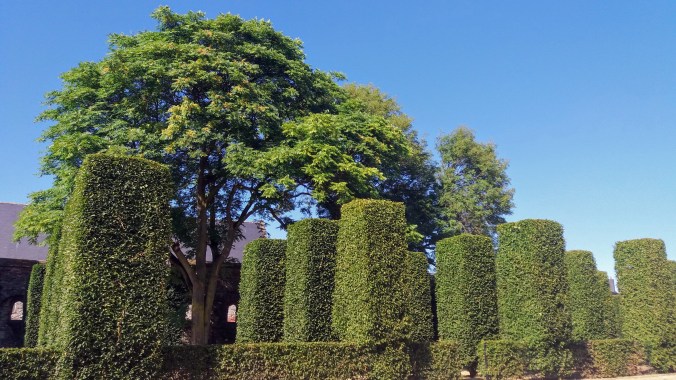
At first I was surrounded by a maze of tall rectangular trees. Completely befuddled I took a few pictures in hope of solving the mystery later (spoilers, I did). In many of my travels, I don’t worry too much if I don’t know what something is at the moment I encounter it. I just try to take enough reference pictures amid my artistic ones to do more research later. Research is how I make the holiday last longer. I visited this abbey in July, and here it is the end of November while I do the last of my research about it.

20180708_172204

The ruins themselves were everything I hoped and more. Inside the walls of the Abbey was a rambling network of crumbling walls and once-rooms bring reclaimed by nature. I forgot my physical discomfort almost at once and began to take photo after photo, pausing between sets to admire the details of centuries old carvings and stonework.

I walked through courtyards and down hallways and found spiders and snails and bumble bees in the flowers, and the wild berries. I found where stone carvings had fallen from walls or been pried from floors and were laid side by side on display. There were beautiful corridors with arched ceilings, rooms that had lost their ceilings and now we’re indistinguishable from courtyards.

20180708_161440

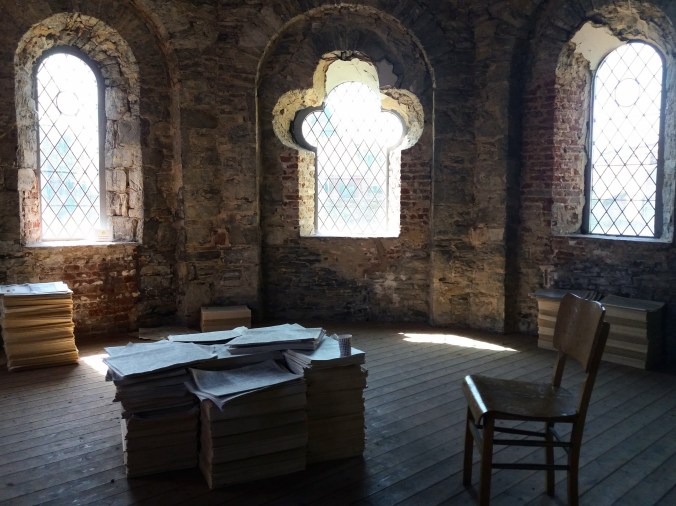
There was a Roman style bath area with a secret winding staircase up the short tower where the remains of an art installation collected dust. Someone had done a project through social media about communication online and all the responses were published in newspaper form. Perhaps once they were there for visitors to take away, but the layers of dust and cobwebs told me it had been a while since anyone had looked at them. 

20180708_160141

About halfway around the space, I met up with a table of volunteers who had informative booklets in many languages. One helpful lady explained a little about the places I’d seen and then showed on the map where I would go from there. I thanked her very much and took the booklet off to a bench in the shade to look through it and to take pictures of the articles for reference.

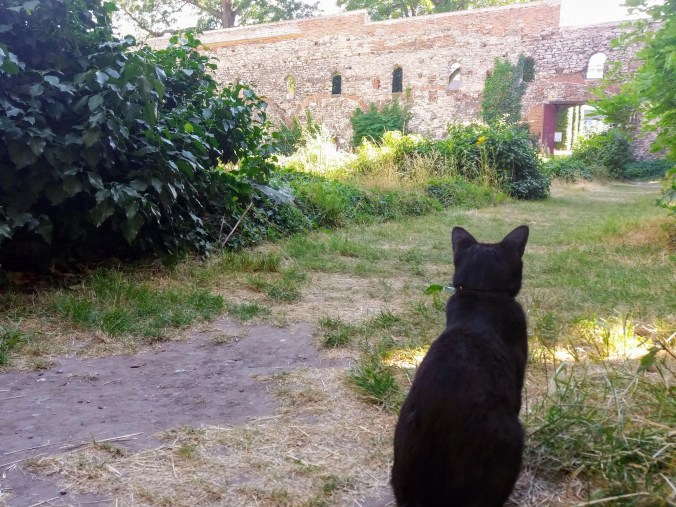
I didn’t read the whole thing at the time but I did discover the purpose of the tree maze out front was to outline walls of the original church, now long gone. While reading the history of the abbey, I was approached by a black cat who very desperately wanted to be friends. Sadly I’m allergic and had to decline the offer for pets, but I took pictures instead.

20180708_163329

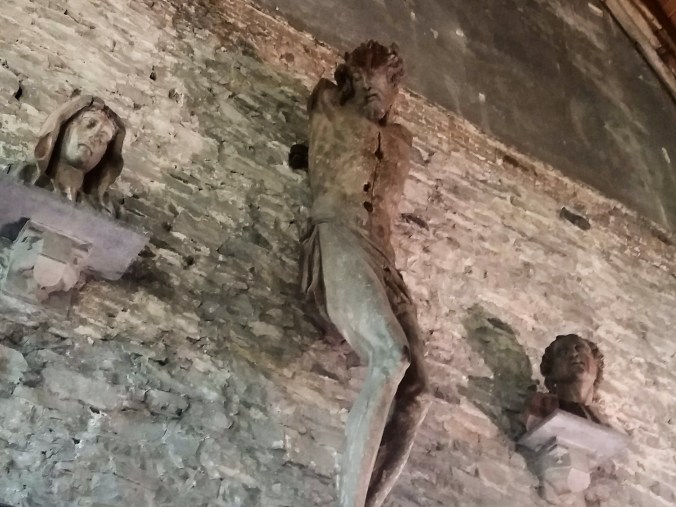
When I finished skimming and recording the brochure information, I headed up a far less secret stairwell and went inside a space that had retained all its walls and ceiling. I was greeted by a huge and looming partial crucifix. The cross and arms were gone, leaving only the faded wooden head and body of the suffering Jesus gazing down the stairs at those who entered.

20180708_164233

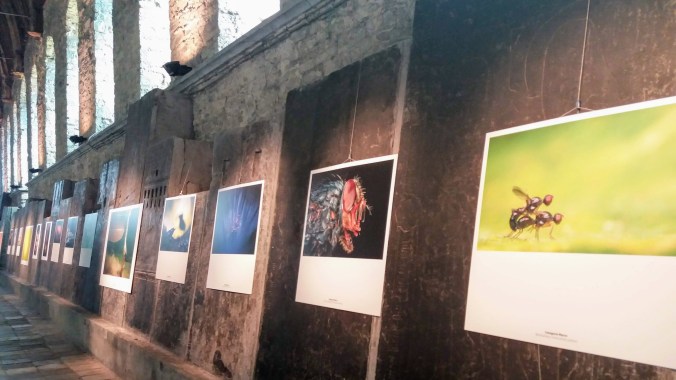
Monastic chanting was piped through a hidden sound system, giving an appropriately medieval and gloomy air to the dark and gutted room. The walls were lined with rescued stone carvings of saints and martyrs, but rather than being the main display, they served as the walls upon which a modern photography exhibit was mounted. It was a strange contrast to see the brightly colored photos against the dark and crumbling remains of the abbey’s old artwork, all topped off with the eerie and Gothic music.

20180708_164211

Moving back into the sunlight I continued to be awed by the variety of spaces. Wild grapes growing along one wall, pieces of statues littering the grass or reassembled in part and mounted wherever space allowed. I wandered until my feet couldn’t take it, then I sat until I could walk again. Even with many other visitors it was overwhelmingly peaceful and stunningly beautiful. Only when I felt like I’d explored every possible inch did I out to catch the last boat back to the town center and my train back to Brussels.

I took so many beautiful pictures that afternoon, please enjoy the video slideshow.

A Short History Even Shorter

The binder I was given had a map of the grounds, and 8 typed pages of information. About half of that was a detailed description of the rooms, including architectural style, building materials, and original use. I am not an architect, I couldn’t actually follow most of this part without my eyes glazing over. The second part was more interesting to me, since it encompassed a brief history of the abbey. I am not going to try to replicate the same level of detail here. If you REALLY need to know, comment, and I’ll post the photos of the pages I took, but for everyone else, here’s the very short ‘short history’.

7th century: Missionaries showed up to convert people. They built an abbey with the backing of the Merovingians. A rich nobleman became a monk and went off to live as a hermit, taking the name Bavo. After his death, his remains were transferred to the abbey which subsequently bears his name.

9th century: Vikings! Not yet converted Nordic types were still raiding the land, and loved to raid churches cause people donated like mad, and also decorated with lots of silver, gold and other valuable things. Way to put your money far away from the soldiers, guys. Vikings burned it all down. Twice.

10-12th century: The Roman Empire finds Ghent is on it’s side of the river and offers Imperial protection at last (meanwhile poor St. Peters which I visited earlier that day was left on the French side!) Under the shining eye of Rome, the abbey was not only safe, but experienced a period of growth, getting lots of beautiful Romanesque architecture which makes up the majority of the stone ruins seen today.

16th century: Charles V is rude. He pulled off a bunch of shenanigans to embarrass and shame the locals of Ghent, culminating in the ordered destruction of the abbey, and the use of it’s building materials to create a military citadel. The citadel was completed in 1545, but was destroyed in 1577 by the Calvinists, then rebuilt again in 1584 by the Spanish. It underwent nearly constant de- and re-construction until it was finally abolished in the mid 19th century.

19th-20th century: Conservationists had to fight against industrialists for the space. There’s a whole sordid affair over the meat merchants’ iron grip on Ghent during the 19th century and they managed to claim the abbey land for an abattoir at the height of their power. After much cajoling by conservationists, the abbey ruins were given to the city of Ghent on the condition a museum was established on the site in 1887. In 1936 the ruins were made a historical monument by Royal Decree; however, the abattoir remained in operation until 1989.

Now: The Neighbors of the Abbey formed in 2007 as a volunteer group to upkeep the museum and to organize visits for tour groups and solo travelers like myself.