Finally, a new post about travel! I went to Japan at the beginning of May for a 5 day weekend and while I got rained on for most of it, I still had a great time. Nagoya isn’t exactly on the top of everyone’s Japanese travel itinerary, but I have a friend working there and it was nice to combine some travel goodness with some friend hang outs. Eventually, I’ll be writing about Nagoya Castle, Tokugawa Gardens, the awesome regional foods of Nagoya, and a few other gems, but for now I give you the epitome of “forest bathing” at this old and venerable Shinto Shrine.
I only got one sunny day on my holiday and this was not it. This was a special shame because I had actually planned my more touristy activities for Monday and Tuesday to avoid the holiday/weekend crowds. I swear I checked the forecast before this plan, and it was just supposed to lightly rain one of the days.
Thinking this, I picked some indoor activities for Monday, the light rain day, and planned to split Tuesday, the partly cloudy day, between the two main outdoor attractions I was interested in. However Monday is also the day all the indoor activities like the aquarium, planetarium, and science museum are closed! I could not be less interested in car and train museums, so I decided to brave the rain and head to the forest anyway.
A Little Bit About Shinto Shrines
Generally in Japan, anything called a “shrine” is Shinto, while a “temple”
  is Buddhist. The map icons help to distinguish, and no, that’s not a Nazi swastika, it’s a traditional Buddhist symbol that is much much older than Hitler. The Shinto tales of kami (kind of like gods and spirits) are every bit as long and sordid as the Greek or Egyptian myths and involve lots of improbable births, sibling marriages, and explanations for how the world got so messed up. I do not know the whole thing as well as I know Greek gods because I wasn’t raised on a steady diet of Kojiki myths, but they show up regularly in Japanese pop culture and anime and unlike the Greek pantheon, they are still relevant and widely worshiped inside Japan to this day.
There are three sacred objects in Japan: a sword, a mirror and a jewel. The sword is enshrined here at Atsuta Jingu. It belonged to Yamato Takeru in life and was enshrined along with some of his other belongings upon his death. The main god of the shrine, Atsuta, is the god of this sword.
Atsuta Jinju is said to be about 2000 years old. In addition to housing the sacred sword, it honors 5 major deities including Amaterasu (the sun godess), Susano-o (god of the sea and storms), YamatoTakeru (12th Emporer of Japan whose death inspired the shrine), Takeinadane-no-Mikoto and Miyasuhime-no-Mikoto (the first parents of the native people of Nagoya).
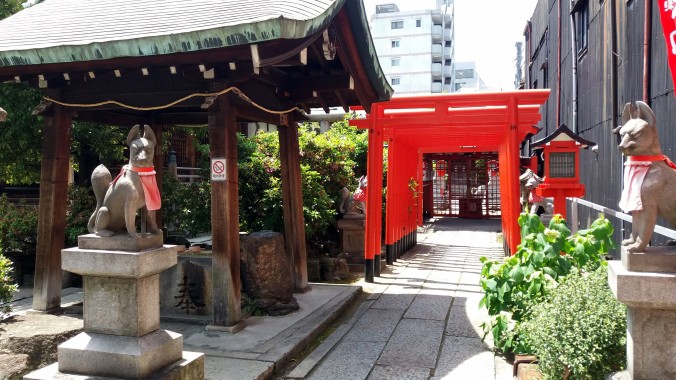
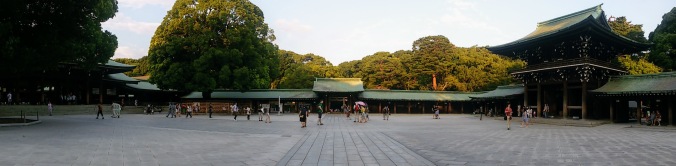
Large, old Shinto shrines are quite different from their small cousins. I ran across a smaller shrine in Osu (above) that was about the size of a house. There are dozens tucked in wherever a sacred spot can be located. The city sort of swallows them up. Larger shrines like Meiji Jingu in Tokyo (below) and Atsuta Jingu in Nagoya are located in sacred forests. The fact that Shinto is an active faith in Japan means that these forests have been preserved and protected throughout history and urban development. Now, some of the largest cities in the world have these crazy old growth forests right inside.
I can’t really get into a full explanation of Shinto mythology and practice here because like every aspect of human culture it is huge and complex, but I hope this gives a little insight into the significance and history of the Atsuta Jingu shrine.
Into the Woods
Going inside, each gate is marked by a gigantic toori gate, usually left natural wood brown and decorated with shide (the zigzag folded paper) and sometimes fresh cut branches. The gates are enormous, and yet in photos they don’t look large beside the trees because the trees are even bigger. People bow to the forest both upon entering and leaving. It’s not just a park in the city, it is a truly sacred space.
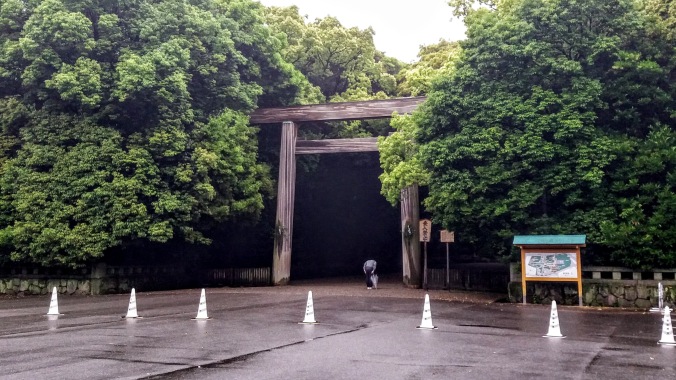
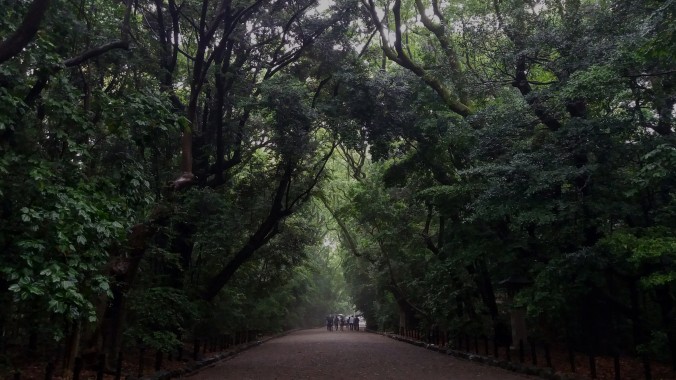
Walking into one of these gates on a sunny day is somewhat daunting because the bright sunlight and city noises are suddenly absent and you find yourself mystically transported to a world of green-gold half light and birdsong. Going through the gates on a gray and rainy day felt far more sinister as the path ahead of me was swallowed in near darkness. Mists clung to the trees and the birds were silent from the rain except for the occasional cawing of huge black crows. Super spooky and it gave me a real appreciation for the origin of some of those Japanese horror stories.
Museum of Treasures
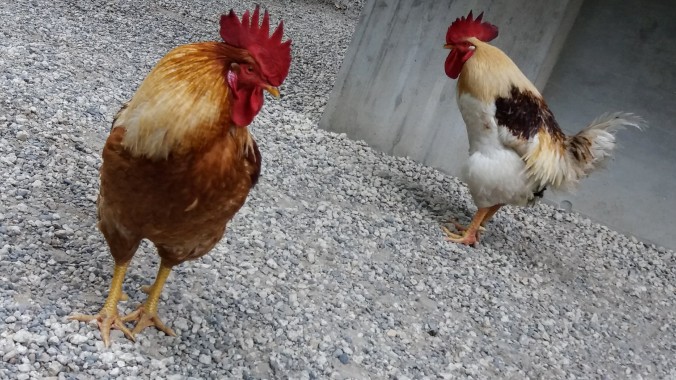
Once inside the forest, my eyes adjusting to the low light level, and my lungs filling with the most amazing air, I began to feel better at once. The museum is near the main gate, so I decided to go there first. I found a couple of chickens hiding in the lee of the building to stay dry. They had become superstars to the other guests, city dwellers who hardly ever see farm birds in any other context than a restaurant menu. I don’t know if it was more fun to watch the birds or watch the people react to them.
On display in the museum’s main room is what I can only assume is a replica of the sacred sword said to be enshrined there. It’s loooong. Like taller than Shaq. When I first saw it, I didn’t yet know the myth and history of the shrine, but I assumed that it must have belonged to a god simply by it’s proportions. There is also a small gift shop, and a public restroom and snack machine. Upstairs looked like a library. The museum proper is 3$ to enter and since the shrine is otherwise free (donation based), I didn’t have any problem contributing. I’m a little sad they didn’t have any English, but I enjoyed looking at the relics nonetheless.

My absolute favorite was an elaborate painting that depicted the history of Japan from the creation of the world by the gods through modern day. It was done as a spiral pathway that started with creation, followed the early emperors of Japan and the sacred sword being passed down until it was finally enshrined, and then further important events in the shrine’s history. I couldn’t really read the guide, but I know enough about early Japanese creation myths (presentations in Japanese class paid off eventually?) to have recognized the pictures in the center an extrapolated outward.
I was hoping to find an image or print somewhere to share, but it’s not in the brochure or on the website, which also says the relics on display are changed out monthly. It was easily the most distinctive thing in the museum. I enjoy the old ceremonial clothing, dishware and weaponry as well, but it didn’t stand out to me as unique the way that painting did.
Ookusu: Big Tree
Once finished with the museum, I headed back into the woods with my trusty travel umbrella. Different areas of the forest are further divided with more toori gates and the first one I encountered leaving the museum led me to the ookusu. It literally translates to “big camphor tree” and these big old trees are often centerpieces at shrines in Japan. Totoro lives in a camphor tree, after all. The sign next to this one says it’s over 1000 years old. Near the tree there is a chōzubachi (ritual purification water pool) and a decorative wall of empty sake barrels. Sake is used in offerings and rituals, and the empty barrels are turned into art to adorn the shrine. Usually the sake is donated to the shrine and the displaying of the empty barrels is similar to many other types of prayer where notes or paper decorations are displayed. Instead of buying a prayer paper to write on, these breweries donate sake.

I look back at my photos now and realize there is just no way to show the context of the size of the forest in Atsuta because everything is built to god scale and you walk around feeling a little bit like a child in a grown up world the whole time. Maybe that’s intentional? Probably. It reminds me of my photos of the redwoods where all the trees are so big that they all look normal next to each other. I’m not saying that this ookusu is as big as a sequoia, but it’s still a big tree. I was holding my phone up at arms’ length and I’m still shooting up at the rope marker.

The Honmyu
My next stop was the main shrine itself, called honmyu. Here I found several buildings surrounding a gravel courtyard. Photos of Atsuta taken here almost make it look like it’s open air rather than deep forested. It is a working shrine, so the main hall for services was lit, but closed to the public. I was pleased to be able to have a peek through the windows nonetheless. One building was a performance hall although it was empty the day I was there. I suspect that at least one of the other buildings was housing for the shrine maidens and priests.
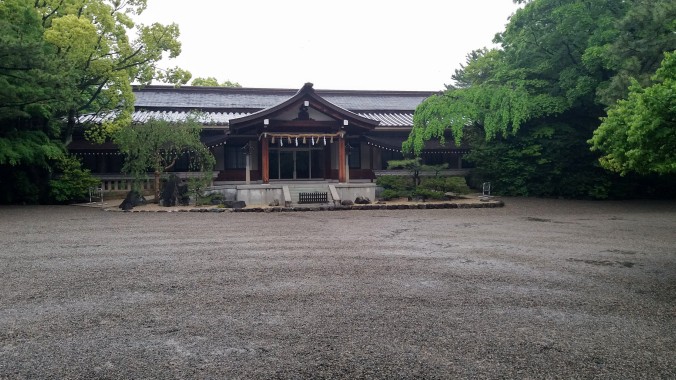
One building was a place to donate in exchange for a variety of charms or blessings. Lucky charms are a big part of Shinto and Japanese culture in general. There were small charms for almost everything. Additionally, there were prayer papers and wooden ornaments that individual prayers could be written on and hung around the shrine. I also saw arrows. I know that miko (shrine maidens) are famous for archery because (guilty look) the anime I watch shows them using bow and arrow to slay evil spirits. These demon breaking arrows are used to dispel evil and ward off bad luck. Absolutely nothing is in English, so I did my best to try and read the labels, but in the end I had to ask. I think I mixed up my pronunciation but the miko I asked seemed to figure it out quickly and I found a white swan for happiness. I don’t know if charms work, but I was happy to have the chance to visit the beautiful forest and that seems like a good reason to donate. Plus, whenever I hear the tiny bells jingle, I get a happy memory. Working already.


The main part of the shrine, where I believe the sacred relics to be enshrined, is not accessible to the public. We could walk up to a gate and get a lovely view of the beautiful buildings, but can go no further. Like many palaces, it’s a series of buildings and courtyards.
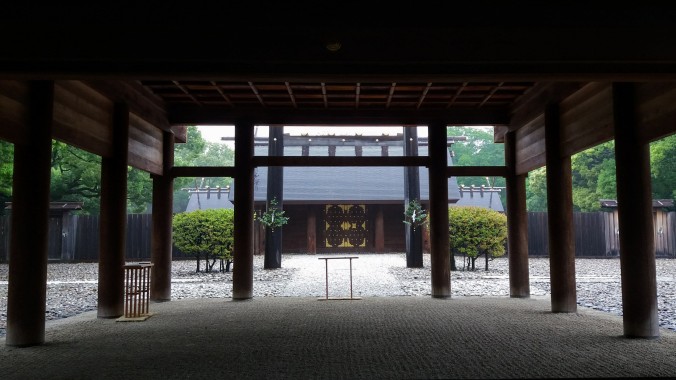
The design is simple, natural and elegant made only of dark wood and a minimum of metal ornamentation. Unlike smaller shrines which are decked out in red and gold, the forest shrine was almost in camouflage to blend in to the trees around it. Despite the heavy rain that day, and the fact that it was mid-afternoon on a Monday, the forest still had a large number of visitors, and not only tourists, but locals who had come by to offer prayers and donations. Many people approached the shrine to drop coins and a formal bow.
Spirit Houses: Jinja Shrines
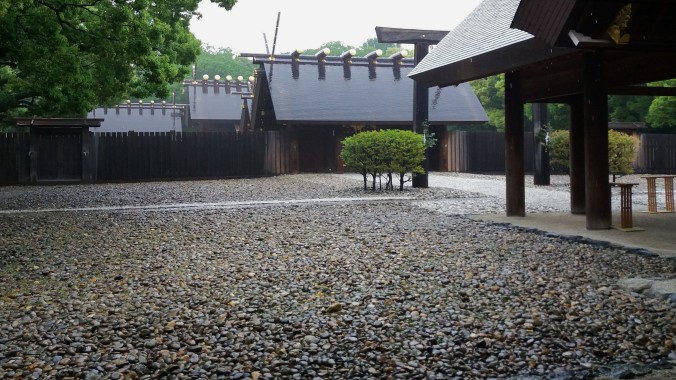
In addition to the main shrine, the jingu, there are a number of smaller shrines or jinja around the forest. For some reason I thought these were usually open with an interior display of statues and gifts, but I have since gone back through my photos of other shrines and I was mistaken. All kami houses are shut up tight. These smaller shrines are also a kind of spirit house where the smaller local kami can dwell. Big global or national Kami like the goddess of the sun may have shrines all over Japan, but local kami may only have a few shrines… sometimes just one. People may pray to a specific kami because of it’s history, or because of a local or family connection.

On the next leg of my walk I stepped off the main path to get a closer look at some of these jinja shrines. They were plain wooden tiny houses on stilts and I couldn’t make much sense of the simple signs adorning each one, so I just decided to enjoy the path when suddenly I noticed I could see my breath! I know the spring has been cooler than usual this year, but it was in the high 20s that day and for most of the day I had felt warm and a little sticky, now suddenly my breath was clouding up in front of me. I tried again, because I like to replicate results. And it happened again. I backed up down the path and it stopped happening. I moved forward, it happened again. I put a hand next to the shrine I was getting foggy breath in front of and I swear it felt colder. Just to be sure it wasn’t an effect of the shade or the wood, I tried the shrine next to it and didn’t feel any difference in the warm air on the path and that next to the shrine. I am not saying it was haunted, but … you know every time there’s a haunting in a movie the temperature suddenly drops and the characters can see their breath, so…


I did take a picture of the name of that shrine to check later, but all I can really find is that it seems to be related to water offerings. Maybe that’s why it gets excited in the rain?
Paper Cranes
After a delicious and filling lunch (which you can read more about in the food post) I felt well equipped to explore the rest of the grounds. I checked a few maps to try and guess which paths I hadn’t walked down yet. All the signs were Japanese only, and referenced the proper name of each building in the compound, so I wasn’t exactly sure what I’d been to and what I’d missed without the map reference.


As I wandered down another wide road, shrouded in tall dark trees, Nagoya’s oldest stone bridge and megalithic 8m high, 400 year-old stone lanterns (said to be one of the three most significant in all Japan), I found a few more of the jinja shrines along the way. Most of them were brown and unadorned, but a few had splashes of color.
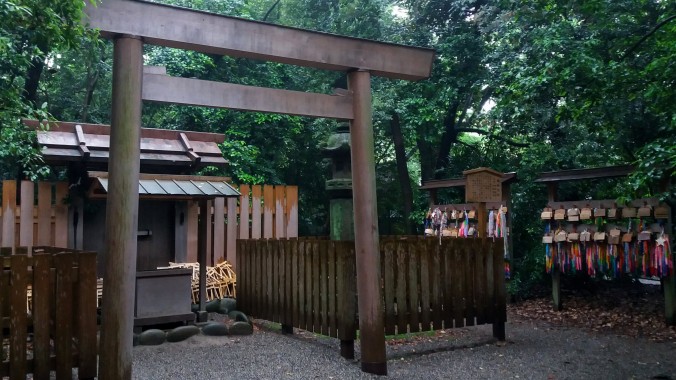 At first I didn’t know what they were. I only saw the bright colors from a distance and was drawn closer with curiosity. As I examined the strings of color, it became clear that these were chains of paper cranes folded and strung together in a way that most Westerners are familiar with from the story of Sadako and the 1,000 paper cranes.
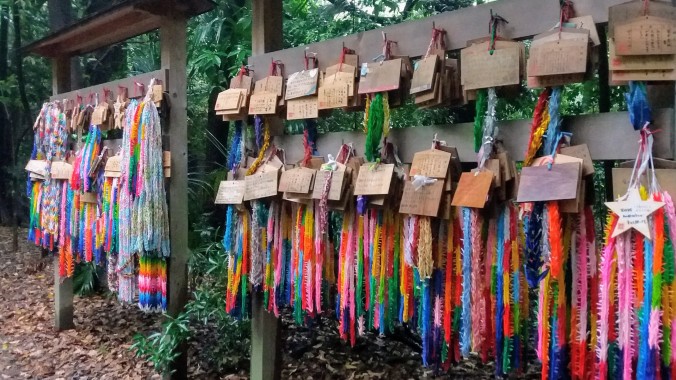
It was so stunning to me to see string after string of brightly patterned paper, neatly and identically folded into shape. The rain had soaked them thoroughly but the paper held together well and the water made the colors pop even more. This one smaller shrine received more attention than any but the largest center shrine, so naturally I was very curious. It’s called Kusu no mae Shrine and is described on the website as “god of amnesty” The sign goes on to mention both Izanami and Izanagi, who created the world and gave birth to the islands of Japan. The website says: “It is commonly called “God of Koyasu” or “Ogunsama”, it cures various diseases” courtesy of Chrome’s auto translate.


A Whole Other Shrine, What?
I was perfectly content playing “find the shrine” in the forest. It was beautiful, the trees kept most of the rain off, and it smelled absolutely amazing to breathe the air there. Thinking I’d almost walked every trail there was to walk, I suddenly turned the corner into a whole ‘nother shrine complex! The same courtyard surrounded by multiple buildings. A slightly smaller charms/gifts shop with similar items. And a nearly identical unapproachable series of dark wooden buildings with delicate gold trim. I thought at first I might have wandered around to the back side of the same area I’d seen before, but the map confirms it is a totally different shrine called Kamichikama.

Trying to discover the meaning of this led me on a wild Google chase that resulted in me visiting the actual Japanese website for the Atsuta Jingu shrine. Previously I’d only been reading the made for English speaking tourists site. The native one is WAY bigger. It’s tricky to translate religious stuff and ceremonial language, but I found the map with building names and basic function (so much better than the English one) and Kamichikama is a Bodhisattva of wisdom. I can’t find his name anywhere but Trip Advisor in reference to this particular place when I search it in English, but Shinto has a LOT of local deities and honored persons, so it could be that he only exists at this one place and that is not weird.

I poked around the Japanese version of the website after discovering the insane difference in the level of details. Google translate is not great, but it does give me a little more information than … nothing… I am not going to try to translate the whole site and detail every little shrine I found, but if you’re curious, the information is out there. There are a LOT of shrines inside this forest and they are all devoted to a specific kami or sometimes historical event that is remembered. People regularly come to them to pray and make offerings. Some people seemed to treat it a little like a wishing well, while others had deeper reverence. The practice of Shinto may have changed over the centuries in Japan, but it is definitely alive, well, and a major part of the everyday lives of the Japanese people.

Sadly, the low lighting and high humidity played merry heck with my camera and there are not enough good shots of the shrine to be worthy of a solo Facebook album, but I will put together a trip compilation album before the end of the series. Speaking of which… I’m not actually finished writing the rough draft of whole this trip yet… still. At my last school, I had 1-2 hours when I was stuck at my desk with nothing to do but write, but here I have to carve out time because there is no “desk warming”. It’s so tempting to just leave the office behind and go for a walk or take a nap. Plus, I’ve spent a lot of my spare computer hours nailing down plans for the summer holiday European trip which is going to be so awesome. I’ll do my best to get the rest of the Nagoya stories out before the end of the semester? As always, thanks for reading!






 She took up a nearby lamp and shone it into the depths so that I could see the water below.



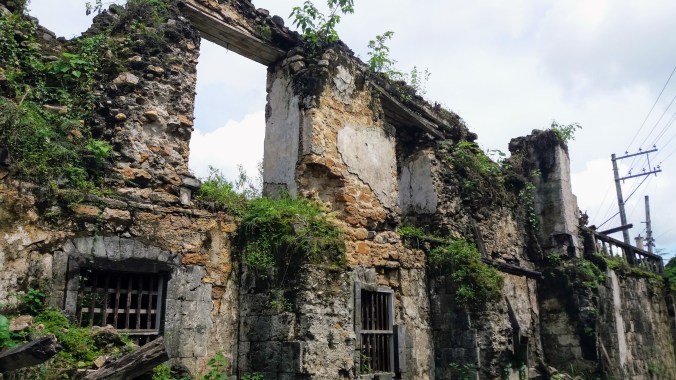

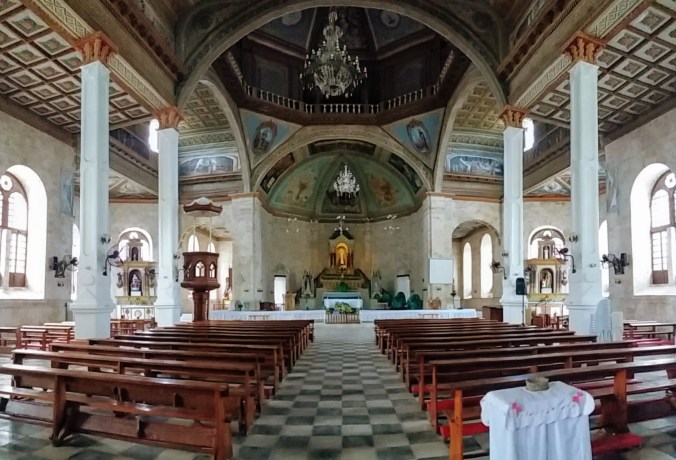
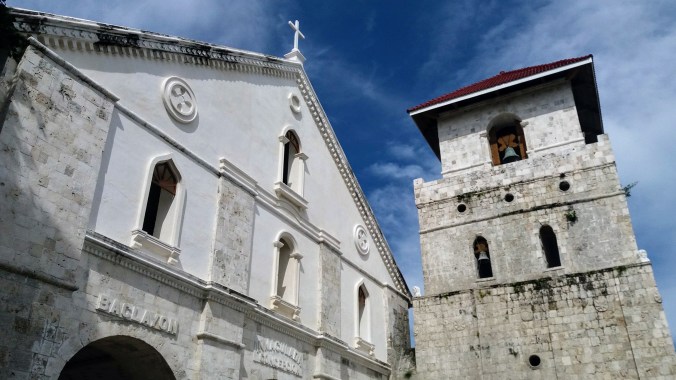 There is very little sign of damage on the exterior. This is not because the damage was minimal, but because the effort has been great. There was a before and after photo out front as well, showing what the damage looked like just after the quake and it’s much closer to what Loboc Church still looks like. I wandered around the exterior taking more photos and found several more blocks with that organic sea-life look that I now know to be coral stone. It seemed that the sanctuary proper was still under construction, but it is scheduled to re-open this year.






 Skipping ahead to the first century CE, we get what is known as the Three Kingdoms Period. The three kingdoms were Goguryeo (purple) controlled huge swaths of the north including what is now North Korea and parts of China (it is also where we get the English word “Korea” from, since their word for their own country is hanguk) The south was divided between Baekje (yellow) on the west, and Silla (blue) on the east. Except, there were more than three. The Gaya confederacy wedged it’s way between Baekje and Silla for almost 500 years. And let’s not forget
  Between it’s mythic founding 42 CE and it’s surrender to Silla in 562 CE, the Gaya confederate existed in the south central area of the Korean peninsula, just barely missing Busan (where I live) but keeping it’s capital in the nearby Gimhae (where our airport lives). They did some fishing and agriculture, but were most famous for their ironwork. It was a rough confederation of 6-12 different Gayas. When they Japanese invaded Korea in 1910, they claimed that Gaya had been a Japanese military outpost from 300-710 to justify their “return”, but no scholars take this claim seriously today.
 As we entered the park, the first statue was of a giant golden egg with 5 smaller eggs around it’s base. I was taking pictures of absolutely everything, hoping to figure it out later, so I snapped a shot and kept walking with the group. My co-teacher saw me take the picture and told me that the egg was there because the founding king of Gaya was hatched from an egg that fell from the sky. She also referred to this as “history” although I’m hopeful the last part was just a linguistics flub and that no one here seriously thinks that kings really hatched from sky eggs in the good old days. I could not figure out how to ask this without sounding rude, tho, so I let it go.
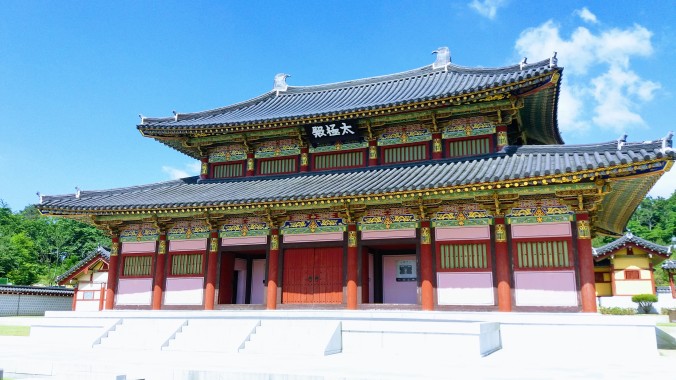 We made our way deeper into the park heading directly for the palace. It’s a replica palace. Very little archaeological evidence of Gaya has been found, although the tomb of Suro (first king of Gaya) is maintained in Gimhae as well. The palace grounds are reminiscent of Chinese palace architecture with familiar canted roofs and wide open courtyards between buildings. The colors and designs are quite unique to Korea, being less the scarlet and gold of China and more earth toned versions of dusty rose, pink, taupe yellow and pea green.


 One room had a huge map along a wall showing the queen’s “romance road of Asia”, paths from India to Korea picked out in red and blue. Another sign seemed to imply that the queen had brought Buddhism into Korea, however that is highly unlikely. I suppose she may have brought hers to Gaya (assuming that she was actually Indian) but the northern Kingdom of Goguryeo got it from their Chinese neighbors. I question her Indian origin story because the myth (written originally in the Samguk Yusa in the 13th century, it’s a kind of history/mythology mashup of the Three Kingdoms period) refers to her as being from Ayuta, a “distant kingdom across the sea”, but the name doesn’t correspond to the name of any country or city from that time period in India or any other country.
 We took our time around the palace complex, letting the kids run off some of their excitement after the long bus ride. There were plenty of historical things of interest, but no teachers tried to make the kids focus on learning, nor was there a guided tour where kids were shuffled from one room to another while someone explained things. They did separate out the grades so that no one building became too full, but on the whole, the kids were on their own to enjoy the space.
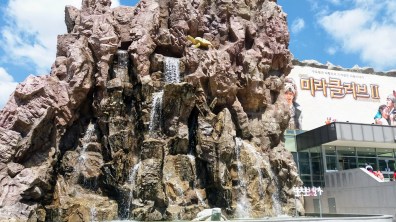 After a while, we headed out of the palace complex and back toward the main entrance to the theater. Turtle imagery was everywhere. A large mountain with an artificial waterfall towered over the theater building. A gray stone turtle lurked in the pond below and another golden one perched precariously on an outcropping halfway up the mountain! I asked about the turtles, but my co-teacher didn’t know (don’t worry, there’s an answer later).
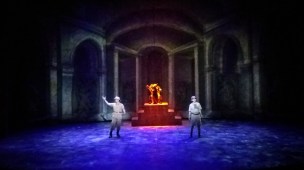 The story began with two archaeologists stumbling onto a large cache of relics from the Gaya period. Their song explained with some lament how little was known of Gaya before this discovery. Then a cave in knocked our archaeologists unconscious and a hazy dream fantasy of the mythstory of King Suro began in earnest. Dancers dressed as the zodiac animals performed intricate dances on stage as some kind of high priest or shaman character sang of the strife, war and drought in the land, praying to the heavens for deliverance which arrived in the form of 6 eggs. (although all 6 eggs hatched out kings, 5 of them were elsewhere being kings of other parts of Gaya, so aren’t in this story)
 The glowing egg hatched to reveal the full grown form of Suro who is proclaimed king on the spot and is expected to wield the power to heal the land. Yay! But it’s not easy being king. The drought continues and his people begin to resent him for not living up to the promise of his celestial birth.
 Meanwhile in Ayuta (India?), the princess Heo has a dream that her destined love is in a land far away, and that she must set sail to reach him and fulfill her destiny (lots of destiny). The dancers costumes were reminiscent of saris and there were certainly hints of Indian Bollywood style music and dance moves that were obviously meant to place the princess and her handmaidens in India.
 But OH! The villain! Satal, a god of war and a gleefully over the top villain dressed in a skull mask and rough furs and accompanied by evil temptresses dressed in black and red gauzy costumes came on to sing his number about how he would defeat Suro and become the king of Gaya, keeping the kingdom forever in a state of greed, hate, and famine. His musical style was that of classic hard rock and the stage was lit by enormous flames as he and his minions sang and danced.
 The princess’s ship is caught in a deadly storm and she is washed ashore in the wreck. It seems the moon itself has saved her just in time to be found by king Suro and they sing a touching love duet in the style of popular Korean ballads. But their happiness cannot last. Satal and his minions kidnap the princess and beat Suro nearly to death in battle. He wants to give up. He didn’t expect this to be so difficult. Where are the heavenly powers he’s supposed to have, after all? But his loyal servant reminds him of the plight of his people and the love of his princess and his resolve is bolstered.
 During a rallying all cast dance number, new armor is forged for the king, turning him from a dandy to a warrior. He is told he can receive the remainder of his heavenly powers upon the mountaintop and so newly armored he ascends to greet the powers of heaven, represented on stage as a white dragon flying around Suro to strengthen him. However Suro fights, Satal holds his own and the soaring duet of hero and villain waxes lyrical about the evils of greed, selfishness and divisiveness being defeated by the power of love. In the end, it is not the armor or the power of heaven that gives Suro the strength to defeat Satal, it is the love of Heo, her voice joining the song to call back to their duet and the fact that their love was made in heaven.
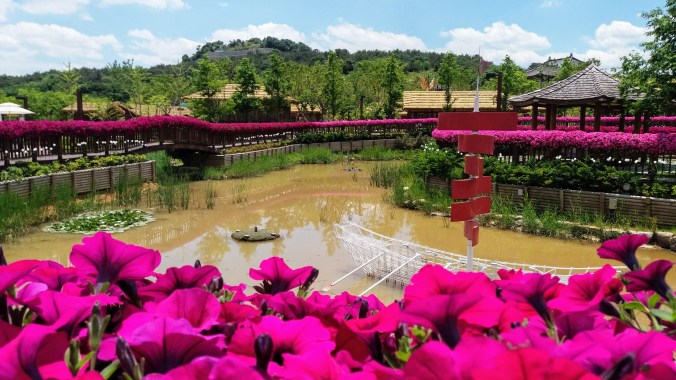 After the musical, we escorted the kids back over to the palace where they unpacked tiny picnic blankets and box lunches under the watchful eye of the staff while we enjoyed the cool, fresh mountain air. When the kids were all done eating, they were turned loose in the playground section of the park while the grownups had a lazy lunch of fried chicken next to the lake surrounded by heaps of purple pansies.
 On our way out of the park, I spotted a turtle garden with empty shells that kids could climb in and around, as well as a happy, smiling gray stone turtle overlooking the scene. The sign near the stone turtle informed us that the mountain where King Suro’s egg landed and hatched looked so much like a laying turtle that it was named Gujibong (gu meaning “turtle” in Korean). Which explained the mystery of why there were so many turtles around the park.

 Gallivantrix