Taiwan part 2: In addition to beautiful natural scenery and a wide variety of temples, I meandered around some of the more famous urban settings such as the “old streets”, night markets, subway stations, urban parks, and street art. Winding through every Taiwanese experience is the food, unique and delicious. I often forget to eat while out doing tourist activities, but here the food IS the tourist activity, so come hungry!
City Scenes
Taipei
Shifen Old Street 十分老街
I went here as part of a day tour which also included the Geo-park, the waterfall, and the other famous old street, Jiufen. Old streets are very heavily curated quaint “old timey” feeling places that are actually tourist traps, but they’re fun tourist traps, with good food and excellent instagram photo-ops, so very worth going to. There’s nothing wrong with enjoying inauthentic-yet-fun attractions.


Shifen is famous for it’s train-tracks and the lanterns. It’s one of the only places you can send off a flying lantern, and probably the only place you can do it while standing on working railroad tracks. It’s a very small place, you won’t spend a day there, but it’s fun to walk around and see the small shops, specialty local foods, and of course, the lanterns.
Jiufen Old Street 九份老街
My views this day were severely inhibited by a very dense fog. This is advertised as the place that inspired the art of Spirited Away, but my guide told me that Miyazaki said he’s never been here. When I followed up later, what I found was this interview he gave (sorry, it is NOT in English) where he says he bases the scenes of his movies on his own surroundings in Japan, not in Taiwan.

Jiufen does bear a striking resemblance to the city scenes in Spirited Away, but it is purely coincidence. I actually find it very sad that the Taiwanese tourism industry is promoting this untruth to attract visitors because Jiufen is amazing in it’s own right both because it is beautiful, and because of all the amazing food. People who go only because of it’s nonexistent connection to the movie come away disappointed instead of just enjoying Jiufen for what it is.


If you’re in Taipei, it’s certainly worth the visit. We took a city bus to the top of the road and walked back down to the tour bus parking lot. It’s about 200 stairs and only one way, so you won’t see different sites walking both up and down. I have a lot more to say about Jiufen in the “Foodie Dreams” section of this post below.
Taichung
Xinshe Castle 新社莊園古堡
This is a fantasy resort designed to look like a European fairy tale. It’s a little piece of Europe for those who can’t visit. When you think about it, it’s not that different from a Western country having an Oriental garden with little Tang Dynasty style buildings and pagoda gazebos. Sometimes you forget that other people are watching us while we’re watching them. I probably wouldn’t have gone on my own, but I was invited along with an ESL teacher who was also on holiday from Korea that I met in my hostel. She used to live in Taiwan and spoke quite highly of the garden and grounds. She was most excited about the swarms of fish in the pond that practically shove one another out of the water to get at the fish pellets tourists drop for them.
Most tourists go there to take pictures. Asian cultures really enjoy posing in photos, so much that there are often lines to stand next to famous landmarks or views. People will respect the line, but if you only want a photo of the view with no people it can be a real challenge. Since it was winter, there weren’t too many people in the park and I got a lot of photos, but I still had to wait strategically to get the best views free from posers.
Houli Forest Park 后里森林園區-天上掉下了一顆種子
After Xinshe we went to a flower garden which was less flowers and more interesting visuals including a really immersive video of pollen and a giant globe light show. I’m still not sure we went to the “right” place, because while everything on the internet says “go to the Houli Flower Farm”, what they actually mean (and show pictures of) is the Zhongshe Flower Market, which is in Houli, and probably very pretty, but reported as very small.
I on the other hand ended up in the Houli Forest Park which doesn’t turn up if you search in English (you can copy paste my Chinese above, or use the link). We had to park a ways out and there were shuttle buses into the park. If you take transit to the Houli Station, it’s less than 1km to walk from the station to the park.
The Houli Forest Park is gigantic with displays of flowers and garden styles from around the world. It’s got a bit of United Nations through plants thing going on. There weren’t too many flowers because it was winter, but the garden displays were still fun and interesting. After dark, the large sphere puts on a lights and music show that is visually hypnotizing.

Kaohsiung
Dome of Light 光之穹頂 at Formosa Boulevard Station 美麗島站
This is the world’s largest public art installation made from individual pieces of colored glass. It also just happens to be in a subway station in Kaohsiung. There’s no reason not to see this stunning work of art if you are in the city.
Pier2 Art Center 駁二藝術特區
I heard about the amazing street art of Pier2 and set aside a full afternoon to visit. I was pretty disappointed at first because, although I found what was clearly a very artsy area, it was much more artist work space than art on display. I enjoyed everything I saw, but I couldn’t understand where all the photos on Google Image search of Pier2 were hiding.
Only after a bubble tea break did I finally figure it out! All the signs point you to the right (if you’re facing the water). However, if you go left, away from all the “pier 2” signs and across the street and around the corner– there are all the warehouses filled with cute artist shops and restaurants!! Along with more murals, crazy street art, and giant art installations. The local street signs and maps of the area were very confusing, but it was worth it in the end.
Food
Before going to Taiwan, I asked people what they recommended I eat. I scoured the internet for recommendations of “must try” foods, and while I did find things that people ate, there wasn’t any kind of definitive “Taiwanese Food” list. Now that I’ve been, I realize that this is because you can go anywhere and eat anything and it’s going to be awesome. There are just too many wonderful variations and local/seasonal limited editions that it’s impossible to compose a full list, but if you are looking for some definitive items: bubble tea (boba), pineapple cake, beef noodles, pork rice, and dumplings. Here’s what I ate, and I can recommend all of it, but if you can’t find it, don’t worry because you can’t miss out on delicious dishes as long as you eat at any non-franchise place.
Taipei
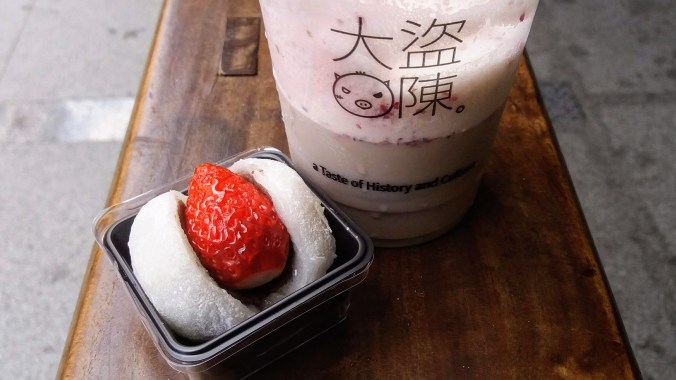
Theif Chen Tea House 大盜陳茶飲 (the name is only in Chinese on Google Maps)
On the day I got my SIM card, I was just wandering around the neighborhood, and happened to spot a sign in the window for smoked oolong rose milk tea. Milk tea and boba (bubble tea) are absolute must haves in Taiwan, and there are lots of chances. The flavors are the fun part. This was made with smoked oolong and rose syrup and it was entirely dreamy! Smoky and dark, floral and sweet, creamy and cold.

Lin’s Wagashi Confectionery 滋養製菓
Just down the street I spotted a confectionery shop with fresh strawberry red bean rice cake. A traditional mochi style rice cake with sweet red bean paste, a combination I already love, with the added bonus of a fresh ripe strawberry. Heaven!
Food Stalls near Taipei Station: not on a map
There are things like semi-permanent food trucks, but not all the way to “night market” status. Walk up, buy some food, walk away, zero seating. My Google Maps history says I got out at exit M5 and headed toward my hostel (We Come Hostel), so somewhere in that area there are amazing dumplings. I got pork and cabbage, good alone but awesome with the spicy sauce ($1.25), and the winner of savory food that day was the pork bun. I thought it was a little plain at first because my first bite was bun and juices, but the meat filling was amazing, tender, and a little lemongrass flavored (.50¢).

Literally any convenience store:
It’s not only local food stands and tea houses that have food adventures. I got a ginger Twix at the corner store. It’s basically a Twix with a gingersnap core. I do enjoy trying local variants of global brands. If you pop in for a bottle of water, take a look around and see if there’s something unique on the shelves.

Shifen Old Street
While reading about the Shifen Old Street, I discovered a recommended local delicacy of chicken wings stuffed with fried rice. There is one small shop which takes the bones out of chicken wings and stuffs them with fried rice. It’s absurd and delicious. Walk all the way up (it’s not far) and look for this cart.


Jiufen Old Street
This is a foodie bonanza. Other than the night markets, this was the greatest concentration of interesting foods in one place. I didn’t even have time to sample most of it because I couldn’t eat enough! Of what I did get to try, the winners were pineapple cake and peanut ice cream. Pineapple cake is another super famous Taiwan treat. I did not understand what the big deal about the pineapple cake was until I ate some. I had an idea of western style pineapple upside-down cake, which is a bit like a fruitcake and not a thing I’m very into. The Taiwanese pineapple cake is nothing like this. It looks like a very plain beige square, but holds a taste explosion. The middle is a perfect pineapple compote and the outside is a crumbly rich butter cookie.


The peanut ice cream (above) is actually pineapple and taro ice cream with shavings from a huge block of candied peanut wrapped burrito style. It’s a wonderful mix of sweet, salty, fruit, and creamy. I also tried an award winning nougat cookie. The coffee flavor was rich and well balanced with sweet, salty, and bitter. I understand why it won awards. The most interesting was a kind of thin pork jerky (paper thin) spiced with cinnamon and wrapped in seaweed. I would have never thought, but nori and cinnamon go well together. I mostly ate samples because a lot of the goodies were only sold in large gift boxes, but I’m glad I got to try so many things! Taiwan food is epic!
At the Underground Mall at Taipei Station
Somehow I was still hungry after all that food in Jiufen, so I got some beef noodles and onion pancake for dinner when we got back. The beef noodles are another famous item, and you can find them just about anywhere. It’s nothing different from what you’d expect, beef broth, noodles, beef and spices… it’s just… yummy.

Taichung
Yizhong Street Night Market 一中街夜市
I chose a less famous and more local night market at the advice of my hostel, and ate so much food! I had fried squid for dinner and candied fruit for dessert. This type of candied fruit was something I first had in China and love love love. I was only sad they didn’t have the tart haw fruit version, but strawberries are a good substitute. While exploring, I kept seeing signs for black sugar bubble tea, turns out “black sugar” is basically molasses. The tapioca pearls are cooked in the molasses mixture and then mixed into the milk tea. SO GOOD!


Across the street from No. 65, Zhongxing Street, Dongshi District Taichung City
While I was hanging out with another ESL teacher and her local buddy, he drove us to a small hole in the wall restaurant. Google Maps doesn’t have the place I went, but in street view, I can see it’s across from No.65. Look for the teal awning, not the red sign. It’s a Kejia restaurant (Kejia are a local minority people) and I ate so many delicious vegetables.


The Uptowner 雙城美式餐廳
The ESL teacher I met on my trip invited me out to brunch at a local American influenced place. I got these beautiful Florentine Bennys, perfectly poached eggs, and delicious sauces with spinach and tomato added. I know it seems strange to go to Taiwan to eat American, but remember I don’t get this kind of food in Korea.

Miyahara Ice Cream 宮原眼科
While I was looking online for famous food spots in Taichung, the Miyahara Ice Cream factory came up. It’s a top of the line gourmet ice cream and chocolate place that is in the old remains of a Japanese ophthalmologist’s building. Today it has a magical atmosphere that reminds visitors of Hogwarts. The building alone is worth a visit, but since you’re there, be sure to eat the ice cream too. They do sell single cones and cups out front (no seating), but if you come in, you can get one of the amazing 4 scoop sundaes as I decided to do in place of a normal dinner that night.


The 4 flavors I chose were 44% chocolate (light and creamy), 80% chocolate (dark and smokey), black tea and green tea. When they bring your ice cream to the table, they wheel out a toppings cart and you can choose 5. I went for cheesecake, pineapple cake, fruit candy, butterfly and bear cookies. While I was eating, the staff brought by a bonus raspberry flavor fluffy cheesecake dream to taste, so I ended up with 6 toppings. The ice cream was a bit gelato-like, very smooth, and dense, creamy not icy. The flavors were strong but balanced, and there was so much variety in my sundae I never got tired of combining different ice creams and toppings together. Taiwan really is foodie heaven!
Kaohsiung
Liuhe Night Market/Liuhe Tourist Night Market 六合夜市/六合觀光夜市
The night markets are the best place to get dinner if you’re willing to forgo seating (and it’s worth it to eat standing) At this one, I got baked scallop for an appetizer, Aboriginal style wild boar ribs for the main dish, and Chinese style candied sweet potato for dessert (also one of my favorites from China). It was so much fun to see all the foods on offer and to talk with the vendors. There’s less tourism in Kaohsiung, so they were more excited to have a visitor try their food.


Bonnie Sugar 駁二店 (at Pier2)
Another great example of serendipity. I was just feeling a little hungry after hours of walking and taking photos, so I popped into a cafe in the art area. I was rewarded with an amazing fresh fruit tart that the Parisians would be proud of and a carafe of fancy tea with fruit ice cubes. Too posh!


Near the FlyInn Hostel
Kaohsiung is much more industrial than either of the other two cities and there was very little to eat near my hostel, so I ended up with some strange food choices including whatever this chicken thing is and a random place where the old lady called her son out to help me because my dictionary won’t work on the menu. I really don’t know what it was… mystery dinner!


Just goes to show that no matter where you choose – the 5 star Yelp reviewed restaurant or the soup shop down the alley, you’re going to find Taiwan a gastronomic delight.
If you want to end your view of my Taiwan travel here on a high note, I certainly don’t blame you, but I continue to post stories of my physical/mental/emotional limitations during my travels because I want people with invisible limitations or chronic illnesses to know they aren’t alone and that your limits don’t have to stop you from seeing the world.
Invisible Illness & Love of Travel
In Taipei, a day of temples and a full day tour wiped me out in the warm weather. Far from being “warm winter”, the unusually hot weather and high humidity (25c + 85% humidity is unseasonable) combined with hours of walking and hiking. By the third day I had to cancel additional sightseeing because the body said no.
In Taichung, I met some fun people to spend the day with, another teacher who in lives Korea and her local friend. The local friend had a car and offered to drive us around and we had a lot of fun taking photos and being silly tourists together, but at some point I ran out of spoons and had no idea how to explain or adapt with these friendly strangers.
Trying to explain a few of my limitations and the accommodations I’ve made for myself (not expecting anyone to do for me, just the way I’ve come to manage my issues) I got a lot of push back from the girl who invited me along. Don’t get me wrong, it was 90% a good day but it was so hard to get her to understand why I was in pain and tired at the end and why I wasn’t going to be up for more the following day. She’s 13 years younger than me and basically said everything in the “you don’t look sick” playbook. I love meeting people and making new friends, I know I had more fun and more experiences with them than I would have alone, I just hate that I have to push myself beyond my limits just to be the slowest one in a group.
In Kaohsiung, going to Maolin and Foguang Shan on the same day was a lot. I got on the road at 7am, hiked all over a mountain for several hours, navigated the bus system on my own when Google turned out be a liar, hiked more at a mountain monastery (so. many. stairs.) and navigated back to town without relying on Google which is frankly crap about Taiwan public transit info. It was a 13+ hr day, and about 5-6 hrs spent hiking the hills and stairs.
By the end, I was tired, and my feet hurt like hell, but my legs were fine. It’s not a matter of being weak or out of shape because the parts of my body complaining (feet, ankles, lower back, hands) aren’t the muscles used to climb. I slept hard and long, and while not fully recovered the next day, I mentally/emotionally felt better than I did after the tour group day in Taipei or the day in Taichung with the other teacher and her friend.
It seems I just handle the challenges better when I’m on my own time table rather than trying to keep up with others. Being on my own still isn’t 100% guaranteed to be “at my pace” because sometimes I still have to hurry to catch a bus or something, but it definitely has less negative impact on my well-being. It makes me a little sad to think I’m just going to have to turn down invitations hang out with fellow travelers on the move, I love meeting people, and I get lonely quite often, but knowing I can achieve my travel goals if I’m patient with myself is something that can help me out while I’m on the road.
That was my reflection at the end of the Taiwan trip a year ago. I still think it’s very much true. Even just walking to dinner with friends from the office, I struggle to keep up. In Ireland, I could see that some terrains I pulled ahead and in others my travel companion did. I had one good “hiking” day in Korea last fall, but mostly because we all agreed to go super slow and stop often for photos and the weather was awesome. Here in Spain as I write this I can tell that some days I have more or less brain fog, or that my ankles or knees are more or less able to handle the stairs. It’s not fun, but I can handle my body and brain most of the time, even the bad times. The hardest part is the isolation I feel when I get left behind because other people can’t. I ask if you have a friend or relative who is fine one day, but can’t do anything the next, don’t make a fuss. If they are a little bit slow, just slow down, too, but don’t say anything about it. It means more than you can imagine to be included without being made to feel like a burden.


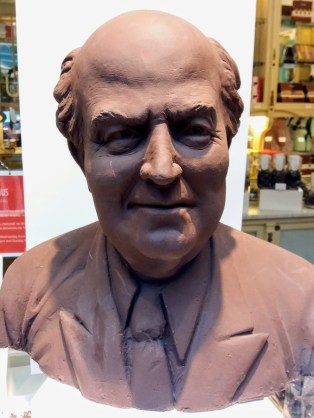
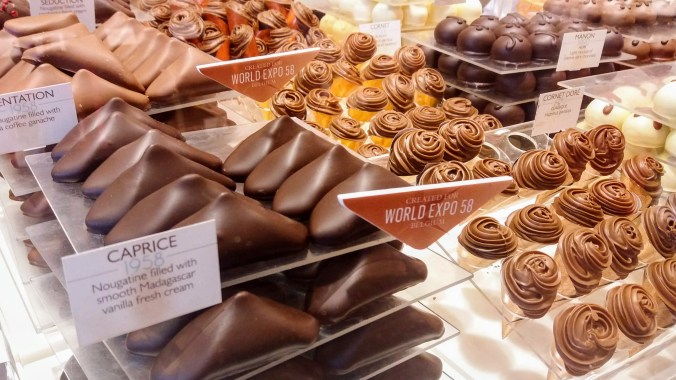


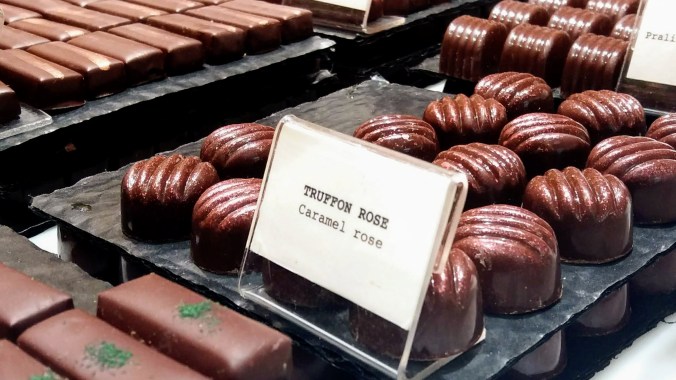
 While I was interrogating the staff about their chocolate it became apparent they were only selling boxes (8 piece minimum). When I asked about the possibility of only buying a few pieces, I was sent upstairs to a little dining area. Although their chocolates focus mainly on single origin, bean to bar flavors, they do have a signature dessert line called the “Desir” which comes in a variety of flavors from white to dark chocolate and passing through a range of fruit and nut compliments.
 Desir Noisette: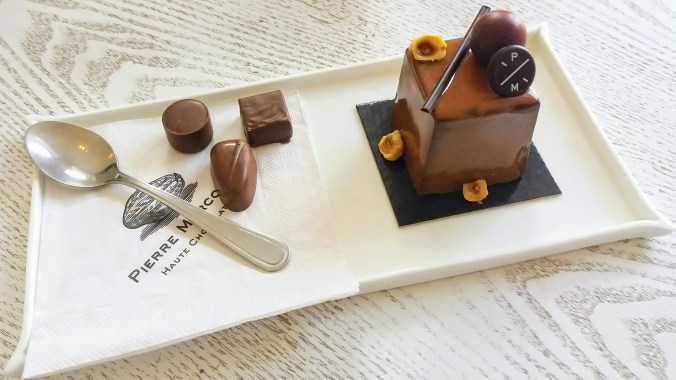
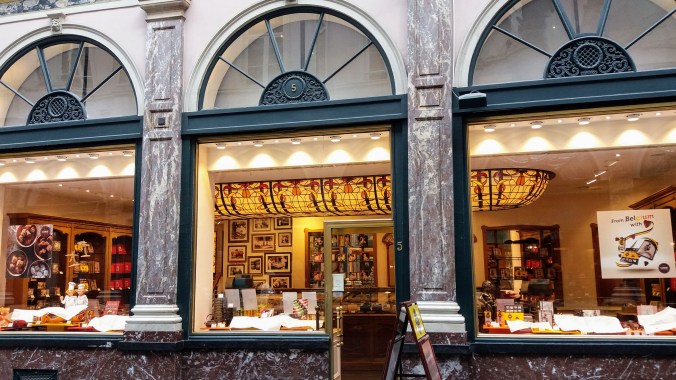
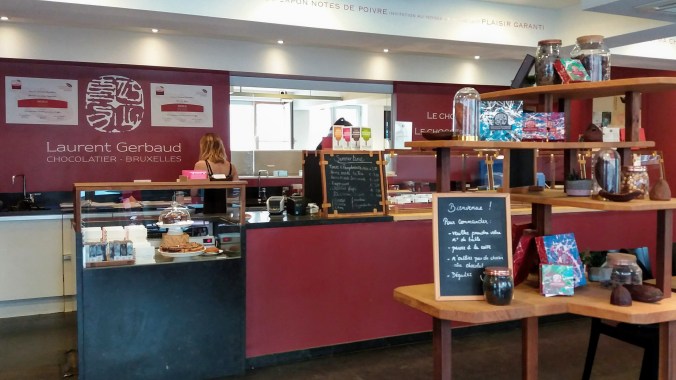 This shop is a little far out of the way but it is 100% worth the detour. It is a beans to bar production which means they actually make the chocolate from scratch. Most places buy chocolate from a bulk supplier and then add their own flavors. A few more places in Belgium are moving away from the couverture and into the beans to bar. My top 3 picks in Belgium are all bean to bar makers. Laurent Gerbaud is one of them.
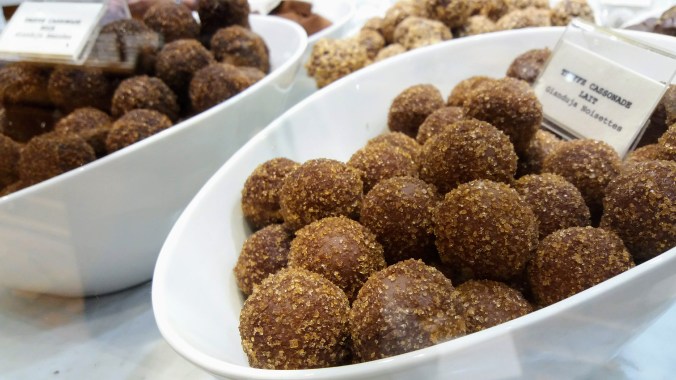
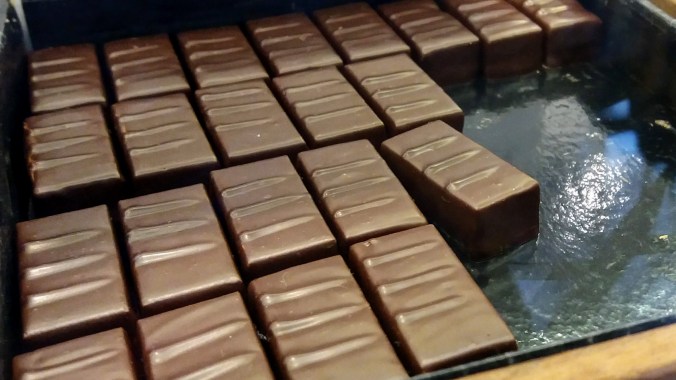 Black Olive Ganache: This award winning flavor was given to me as a sample. I probably wouldn’t have bought it just to find out, but they were excited to show off. It’s not as bad as it sounds. The filling evoked raisin and anise notes as my brain tried to reconcile chocolate and olive. I did have some cognitive dissonance as my palate refused to accept the blend. The second bite was smoother. Since I’m not really a fan of anise or raisin it wasn’t a winner for me, but neither did I feel the need to brush my teeth afterward. It went a long way toward showing me the skill of the makers.
 Pistachio Marzipan: So sweet! Even with the dark exterior. The almond flavor was ok, but the pistachio was not noticeable.
  Manon Sucre Vanilla: This shop is famous for inventing this particular confection, although other shops make and sell it now, too. It is so so so sweet. Nougat creme and nuts in white chocolate. It’s like someone took divinity and added white chocolate and whipped cream. Not… bad? Just so much sugar! I think the filling would have been great as a contrast to a dark, bitter exterior but only vanilla and coffee were on offer.
 Another “historical” stop.


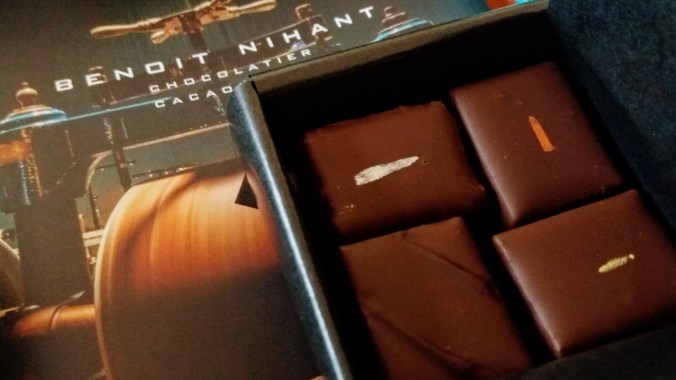


 Chocolate is one of my favorite things on Earth, however it is an industry rife with slavery and abuse. Cocoa only grows in a few places on the planet and those are almost exclusively in 3rd world, developing nations in Central & South America, as well as Africa. Cheap chocolate companies use child labor, forced labor, and under paid labor, putting vulnerable people at risk and taking advantage of the economic disparity between developed and developing nations.


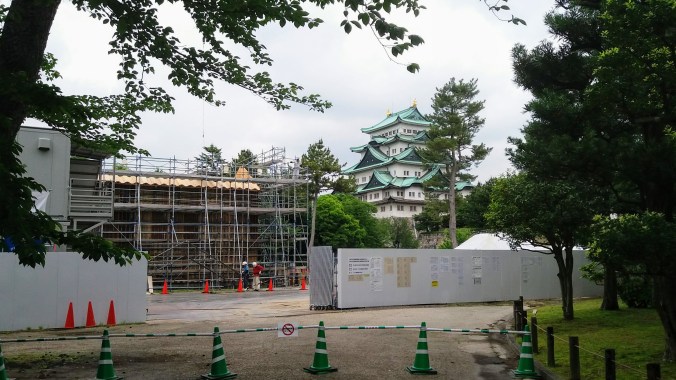
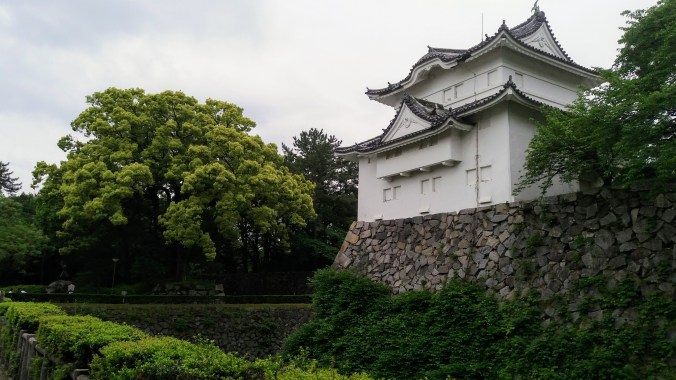


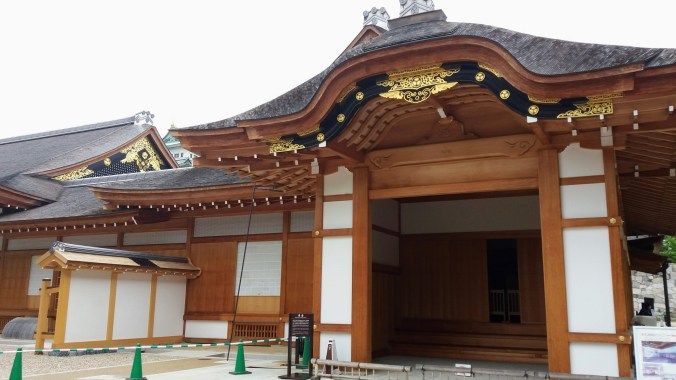
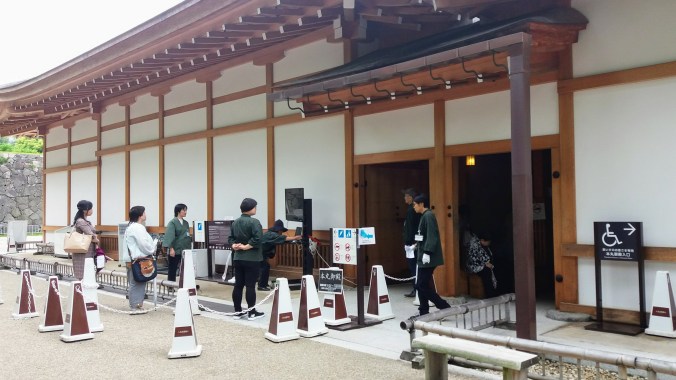


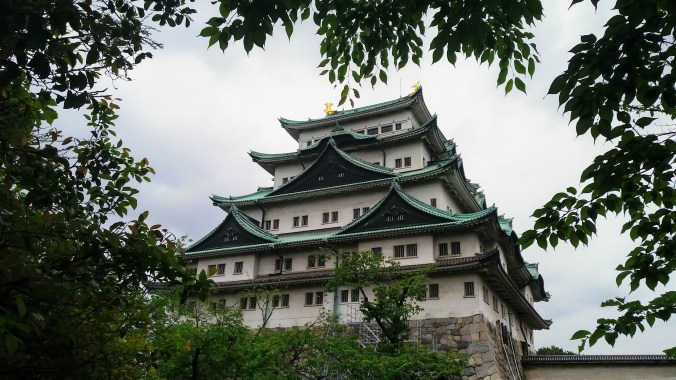
 On my way back toward the main gates, I happened to run into the Samurai. Ninjas AND Samurai. It’s like cosplay meets museum, so very Japanese. Much like the ninja, the Samurai pace the palace grounds daily for photo ops and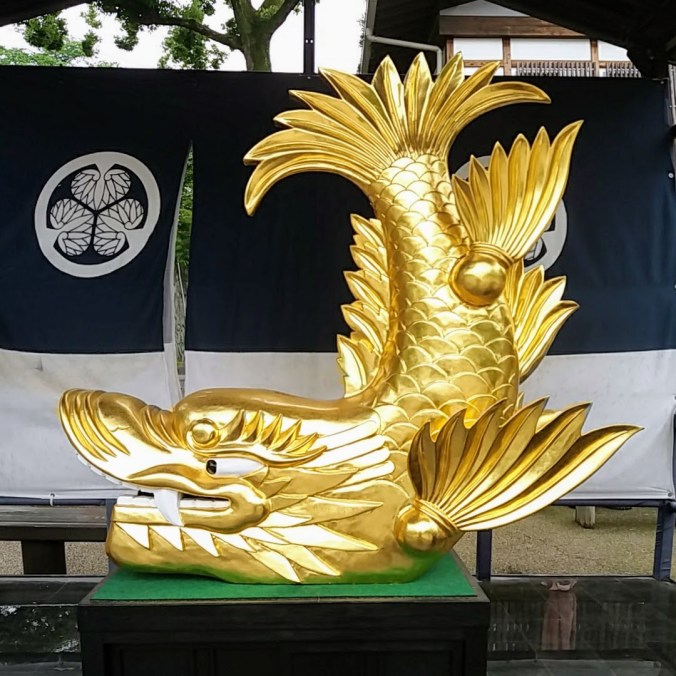
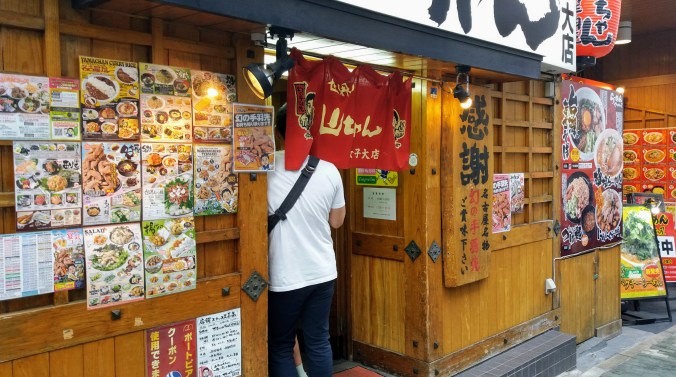 Our first famous food sight was Yamachan, a chicken joint that is usually so popular that wait times can be over an hour. Yamachan is famous for chicken wings. Initially, I was very skeptical since I get plenty of chicken in Korea, but when we arrived we were sufficiently early as to be able to get a table. We had to take the smoking section, but it was still clear air when we were seated.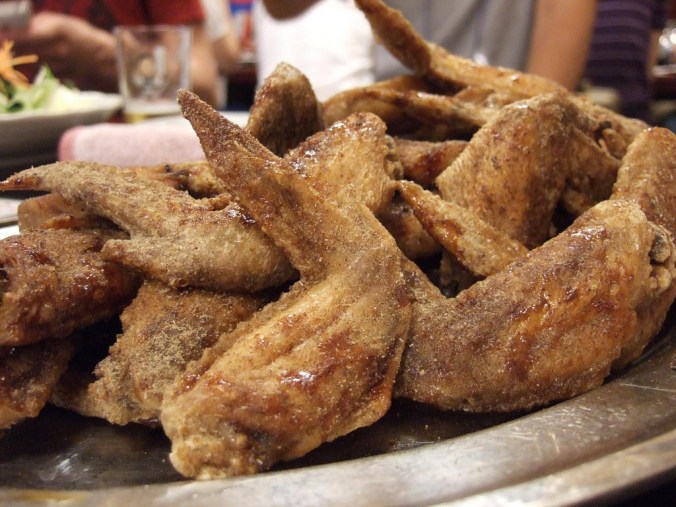
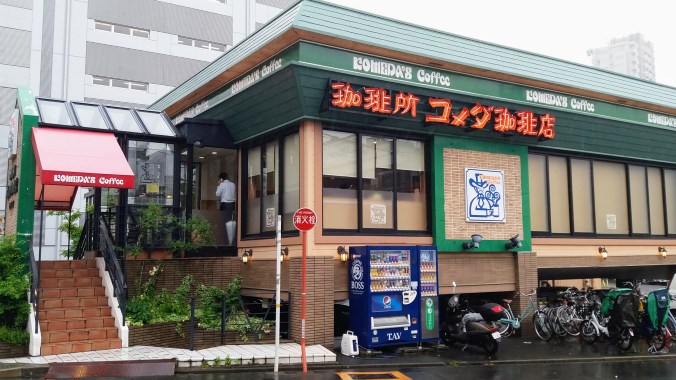 Amid the many things that I found to try while in Nagoya is the “morning service”. Many of the cafes around town have begun to offer a light breakfast (egg and toast or ogura toast) for free (“service” in Japanese) with any order of coffee. Sunday morning my friend and I headed over to Komeda Coffee. This cute little coffee shop is a chain restaurant famous for it’s special morning service of thick, fluffy, buttery toast and red bean paste, also known locally as “ogura toast”. While lots of places in east Asia love sweet red bean paste in pastry (I eat it in Korea all the time), Nagoya got famous for ogura toast by adding… wait for it… margarine! The sweet thick red bean spread with creamy salty margarine creates a unique Nagoya flavor that should definitely be on your “to eat” list. Plus, their coffee is pretty good.


 Even in normal restaurants, eel is one of the more expensive dishes. I tend to avoid buying it here in Korea because it’s often not prepared well. Nonetheless, it is one of my all time favorite Japanese foods. The “plain” hitsumabushi still had plenty of flavor. Of course the smokey, fishy unique flavor of the eel itself, but also a lighter version of the sauce it’s cooked with, as well as the vinegar in the rice. It had so much of what I look for in a good meal, I instantly knew the price was well worth it.
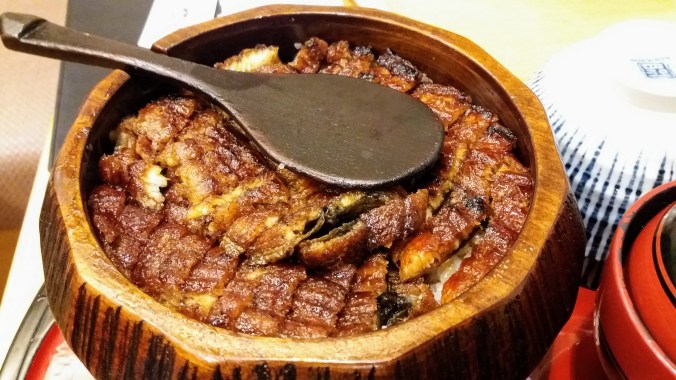 The second ¼ of the dish is meant to be served with the dry fixings provided in the little side box. In our case, we were given small slices of spring onions, thinly shredded nori (seaweed), and what very well may have been fresh wasabi. Most wasabi in the world is fake, sadly, it’s just green horseradish. Now, I love horseradish too, so that doesn’t usually bother me. I’ve learned a little about fresh wasabi from watching cooking shows and documentaries, but I’ve never had any. When I looked at this wasabi, I noticed the texture was very different from what I’m used to. Instead of a smooth paste, it had little shredded bits of plant matter.
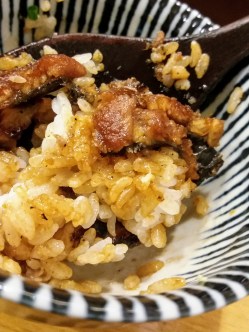 Round 3 we were instructed to replicate round 2 and then add broth. I don’t really know how to describe the flavor of the broth. It was also a little smoky, a little umami. I suspected there were some dried shitake involved in the flavor as well as some konbu dashi. It was nice, but for my taste it didn’t really add to the flavors the way that the spices alone had. Additionally, it drastically changed the texture of the dish, turning crispy eel and rice into a wetter soup. It was still delicious, and I’m glad that I was able to try all the different styles of eating hitsumabushi, but I was grateful for that final ¼ serving where we were instructed to return to whichever of the first three we had liked best and do it again!


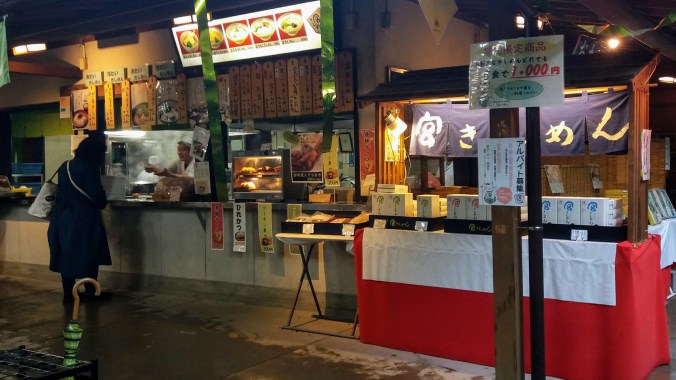


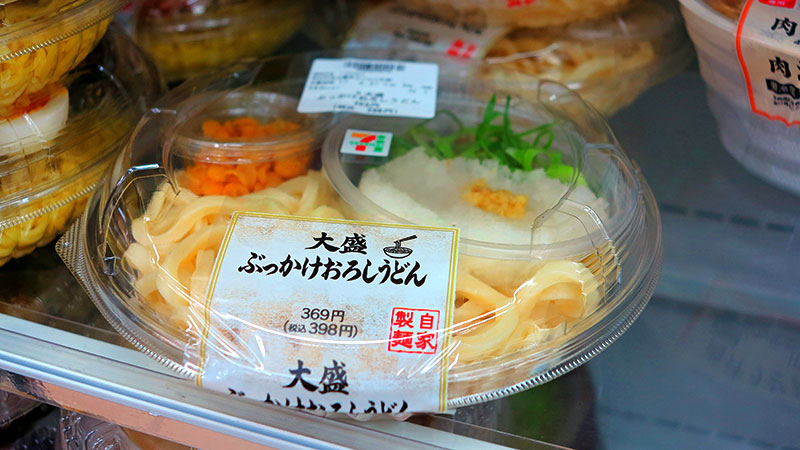


 The last two years of living in Korea has been cherry blossom heaven. I had amazing experiences at the nation’s biggest cherry blossom festival in Jinhae both years (
 Starbucks Cherry Blossom Frappuccino: This one is available in several countries. It’s a seasonal milkshake style beverage. I like that it wasn’t too sweet. I don’t feel like it tastes especially floral, but it’s pink and festive and fun, so why not?
 Cherry Blossom Soda: GS25 is a major convenience store brand here in Korea and they also have their own line of drinks and snacks. In the spring, they offer a couple of cans decked out in cherry blossom art. The pink can is a bright pink bubbly soda pop that wins hands down for the most floral flavor. It reminded me of drinking sweetened rose or orange blossom drinks in the middle east. I don’t know if it’s made from real cherry blossoms or if they use a more common flower to get the flavor, but it’s legit. My only complaint was that it was so insanely sweet I had to dilute it. I wanted to mix it with gin, but I haven’t found a local supply since moving here. I tried it with water, but that didn’t work well. Finally, I mixed it with milk, Italian soda style, and that was delicious.
 Cherry Blossom Grape Juice: The green can was actually my favorite drink of the season. Instead of a soda, it’s green grape juice with the same intensely floral flavor as the soda. It doesn’t have the crazy pink dye, or the bubbles. It’s a bit less sweet, and it has some tasty fruit jelly bits in the bottom. It was still strong, but I diluted it with just water and it was perfect. I’m thinking of buying a bunch to stash for the summer.


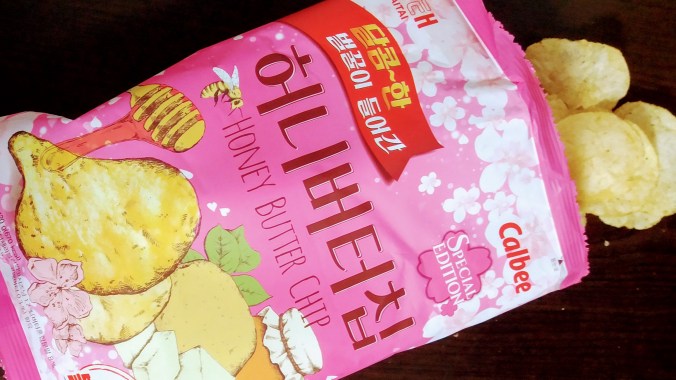
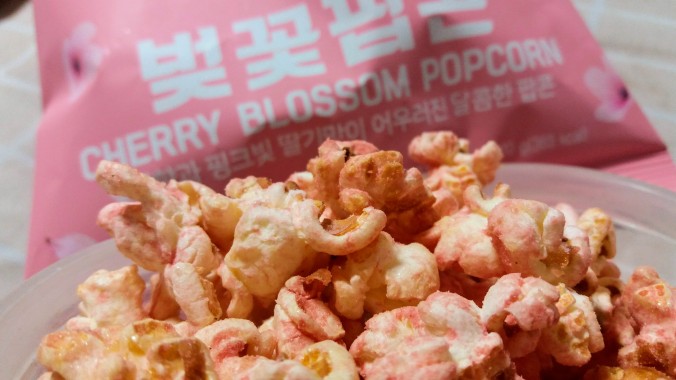 Cherry blossom popcorn: GS25 is a chain of local 24 hour convenience stores. The same brand that created my favorite floral soda and juice, as a matter of fact, and they didn’t stop at drinks. Amid the food offerings was a light pink bag of cherry blossom popcorn. This was my first find of the season this year and I wasn’t sure what to make of it. When I opened the bag, I was hit by a powerful and pleasant perfume making it clear that this was not merely pink popcorn, but genuinely floral. It was sweet and tart, with a base coat of kettle corn and a top note of something like Smarties. I didn’t realize at the time, but I suspect it was made with actual cherry blossoms. More later.




 I went to the Alona Market on the first day.


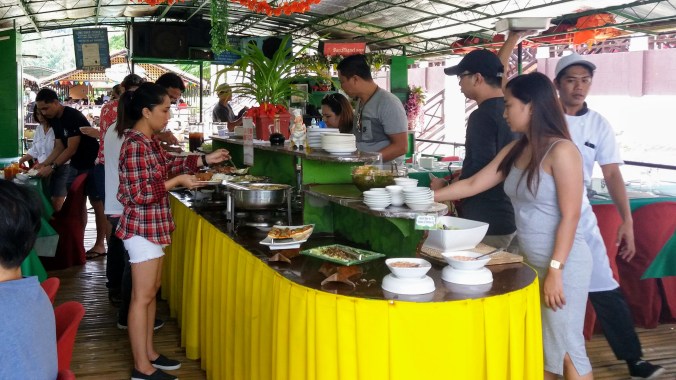 It was not the best meal I had on the trip, but everything was good and it’s a buffet so you can eat as much as you like, as long as you don’t leave food on your plate (they charge 50p for leftovers to discourage food waste).
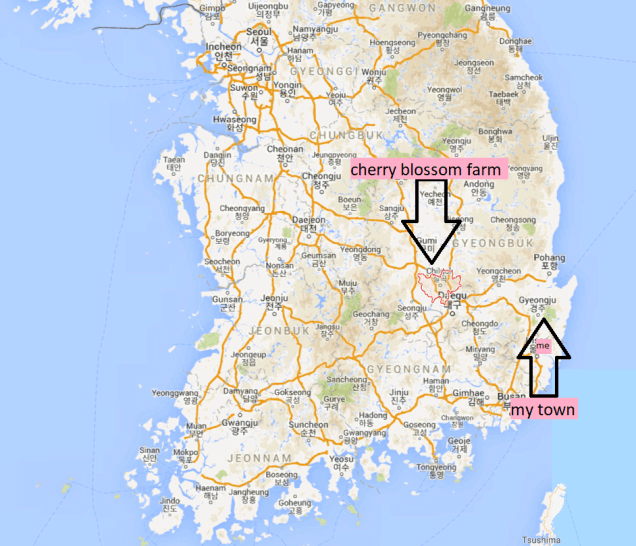
 We set off from Busan (blue dot) in the morning to drive all the way across the southern end of the Korean peninsula to Jindo (red dot). Although Korea is small compared to, say, the US, it was still almost 5 hours of driving with the occasional pit stop. (By the way, in case you’re curious, you can see Daegu on this map as well). Fortunately, I went with a tour group (my stand by
  The Jindo festival had at least one feature I’ve never seen before: a traditional Korean wrestling ring. A pile of sand was placed in a large circle where two contestants could wrestle in the traditional style.
  Even more bizarrely, after the color throwing was over, the festival organizers gave each participant a “toga” to wear. The togas were long white robes with red sashes that could have evoked a Roman senate or Jesus. Considering we were about to “part the seas” it was hard not to see it with Judeo-Christian overtones, but the rather drunk person I asked about it just said “toga party!” The entire thing seemed like the festival organizers were trying to find a way to appeal to the expat crowd. I’m glad they had fun, but I would have preferred some more traditional activities, like someone to teach us about collecting clams and seaweed the way the locals were doing as the tide went out. It’s hard to go do local culture festivals when the locals are busy trying to white-wash everything for cash.
 Finally, the real “reason for the season” was upon us and we muddled our way down the road to the rainbow steps beneath the watchful eye of the grandmother and the tiger. We paused at a bench to don our thigh high rubber boots and got some advice from the locals on how to attach the rubber garters through belt loops to hold up the boots, or failing that, to wrap them tight around our thighs and snap them in place. Thus clad in bright orange and yellow wellies, we made our way down the steps and into the shallow tide pools to wait for the tide to recede.
 If you look at the area on Google Maps you will simply see the beach and the islands, but on Korea’s own Naver Maps, there is a thin line connecting the rainbow steps to the island of Modo. Although this path is only usable twice a year (at most), the Korean map makers consider it important enough to draw in.
 The history of tidal prediction starts with Kepler (total nobody) in 1609 to theorize that the moon’s gravity caused the ocean tides. He was followed by other such no-ones as Galileo and Newton. It was in 1776 that the first big complex equations came from a man called Laplace. Harmonic analysis was added in the 1860s and polished off by 1921 in the form that Navies all over the world still use today. Although the math hasn’t changed in almost a hundred years, computers make the math easier and the information more widespread so now instead of just ships in harbor– surfers, beachcombers, and clam hunters can
  On a more mystical note, the local legend of the tigers explains why there’s a statue of a grandmother and a tiger overlooking the sea. Long long ago, the villagers who lived on Jindo were plagued by man-eating tigers. The whole village packed up and sailed over to the neighboring island of Modo to escape the threat, but one woman was left behind. The woman was Grandmother Bbyong, and she prayed to the Dragon King, the god of the sea, to help her. Finally the Dragon King came to her in a dream and told her he would build a rainbow brigde across the sea for her. The next day when Bbyong went down to the sea, the waters parted to let her cross and her family came out from Modo to meet her. This also explains the rainbow stairs that lead down to the landbridge, but not why her family couldn’t have just sailed back for her in the first place.
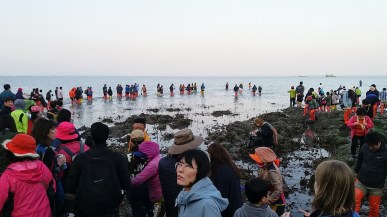 While math can now easily tell us the time of the lowest tides, it does not yet advance to tell us what the actual lowest level of the water will be. Not that it couldn’t, but there are more variables involved, so it’s not a thing now. While we can say with certainty, the lowest tide of the year on this beach will occur at 18:38 on April 29 (or whatever), we can’t say for sure if that will expose the land bridge or simply be lower than every other tide around it.
 We tromped along the path, watching parasailers overhead and rainbow colored lanterns being released in to the air from the beach behind us. It was clear the path was quite narrow because going too far from the group to one side or the other to get a picture resulted in a severe deepening of water level. At the time, my friends and I theorized it might be man-made, or at least man-maintained, however, I have since then found that the build up of rock and sand in this twisty line is a natural result of the currents around the islands.
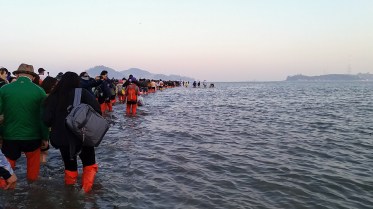 Before long the golden light of the sunset combined with the swish-swishing of hundreds of feet through water to create a trance-like state. I could not judge how far the island was, nor tell which way the path twisted. The rocks below us rose and fell, bringing the waves treacherously close to the top of my boots and then back down to barely splash over my toes. The whole path is nearly 3km long. I suspect a determined person could make it out to the island and back in the hour or so the path is clear to walk, but I wasn’t racing, and soon we were greeted by the sounds of Korean drums and the distant flags waving as the procession from Modo came out to greet us.
 The walk outward had been slow, trepedatious, as though we were nervous the land could drop away at any moment, but the trip back was much more celebratory as well as much more damp. The parade of drum bangers, cymbal crashers, gong ringers and flag bearers danced merrily in their traditional garb, urging us all back to the larger island of Jindo. Our pace quickened and our legs swung to the rhythm causing much larger splashes. Waves came in from both sides of the path making us nervous, but excited. The water finally breached the top of my boots and sent an icy chill down my shins, but I found I did not mind.
 Before heading to the fields, we walked up a long road past the area of the light festival where a few wire frames from reindeer and dragons could still be seen. The road up the hill was painted with fun perspective illustrations of a stream, complete with little camera icons to show the best places to stand to see the visual effect. Optical illusions are fun.
 At the top of the hill, far beyond the little pagoda that had marked the highest point of the lights, we finally came upon the green tea museum where we were treated to a special showing of the Korean green tea ceremony (complete with English translation by our awesome guide). The ceremony involves a process of several containers: a water pot, a cooling bowl, a tea pot, and the drinking cup. The hot water pot is filled with boiling water, which is then poured into the bowl, and from the bowl into the tea pot and finally into the cups. The instruments are warmed up in this way. Then more boiling water is poured into the cooling bowl. Tea leaves are scooped into the warm but empty tea pot and the ideal temperature water is poured from the bowl over the leaves. While the tea steeps, each cup is emptied of it’s hot water into another bowl on the floor and wiped dry on the outside. The tea is then poured into the pre-warmed cups by pouring only a half a portion into each and the other half in reverse order on the way back. The tea is then served, 4 cups to the guest and one to the host.
 The hostess tried to tell us a bit about green tea, red tea and black tea but her translated explainations seemed off to me, since she said it had to do with the age of the leaf when it was picked from the plant. I don’t know if this was her or the translation, but the real story follows: In any country with Chinese roots in it’s culture and language, the three colors of tea are a bit different in meaning that in the West. Red tea is not Rooibos, in fact all three come from the same plant. And it’s not the age of the leaf at picking that determines the difference, but rather the post picking, pre-drying process. (although especially young and tender tea leaves are sometimes referred to as “monkey picked” and do make a delightful tea).
 After we conducted our own tea ceremonies, I drifted lazily back down the hill, examining the spring flowers and the grounds that had been lit up beautifully last December. When I finally got back to the tea fields, I took off on the same route I’d walked before and was happily greeted by many blooming apple trees and a small army of busy bees who were so focused on the brief blossoms that they paid no mind to all the humans fussing around. In fact, I think it was the only time I’ve seen Koreans in the presence of a bee not totally freaking out. I guess the selfie with the tree is worth it.
 In addition to the blooming fruit trees, there were cascades of purple flowers covering the rocks wherever tea was not growing. It made the whole place feel like a still frame of a rushing river in shades of pink, purple and green. Besides the tourists, there were also tea pickers at work. Each ajuma looking lady had her sun guards on, gloves and a mesh basket to place the leaves. They were not picking the bushes bare, but selecting only some growth. It seemed to me to be the newer, brighter green leaves that they were after, but I couldn’t tell for sure. In the age of automation it was strange to see people picking by hand. I know that it’s still the way for many crops in the world, but sometimes it gets driven home that there’s a human on the other end of my tea or strawberries or carrots, and then I’m carried off by sociological musings on how we came to value people who sit at desks manipulating imaginary money so much more than people who make our food.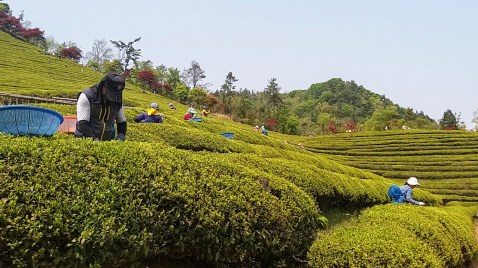

 Gallivantrix
