Yes I’ve been radio silent almost a year. Maybe I’ll write about why someday, but the important thing is, I’m ok and I’m slowly starting some new adventures. Thanks for being here always!
In Korea, Memorial Day (현충일) is June 6th, a week later than my American friends and family celebrate the memory of our soldiers with lavish summer backyard barbeques, overt displays of patriotism, and caring about disabled vets for a few days out of the year. I’ve never really noticed any block party style celebrations of Memorial Day in Korea, as it seems to be a more solemn day, but of course, everyone loves a three day weekend, so I expect there will be lots of people going out and enjoying the beautiful weather we are having. There are also official memorial ceremonies at military graveyards and Korean War Memorial sites. But why after 6+ years of living in Korea am I just now choosing to write a Memorial Day post?

Connected to my last several posts and my year long absence from the blog, I have recently been digging into my own family history. I’ve always known that my paternal grandfather was an ace pilot, and that his general age range put him as “probably served in Korea?” but I never had any facts. My grandfather died when my father was only 10, and as a result, my father has shared fairly limited information about him with me. Since Korean Memorial Day is all about those who fought and died for the Republic of Korea, that means that the vast majority of the focus is on the Korean War (1950-53), so I’m going to tell you about my grandfather, Captain Kenneth D. Chandler.
My grandfather was actually born in Canada, which came as a surprise to me, in 1923. Then his family lived in Arizona and southern California, answering some questions about my father’s family diaspora. Even though they moved around with the military, and I know they were stationed in Hawaii in 1948, because my dad was born there, it seems my grandfather never stopped loving the American southwest. My grandmother lived in Arizona until she died and my dad took me on trips all over the southwest on our family vacations.
I knew that his family was Mormon (LDS) and that he had left the church because when I was driving across America with my father to move to Seattle, we stopped in Salt Lake and found his name in the big Mormon Book of Families (not actually what they call the book). I remember feeling that it was very strange, since he had chosen to leave, and yet the church insisted on praying him into heaven after his death. I suppose that’s kinder than praying his soul into hell, but still kind of creepy. On more than one occasion, the LDS Chandlers have sent me mail. They still track out family tree, but since I have no kids, and I’m my father’s only child, there’s really nothing left here for them to track.
On October 25, 1942, my grandparents were married. Kenneth was 19, and Rose was 16. I can only assume they rushed an early wedding so that Kenneth could could go to war and Rose would not be left with nothing if he died because my grandfather’s military career also began in 1942. I haven’t yet found details of his military record for WWII, but I do know that he was a fighter pilot and flew in Europe. When he returned alive, he and Rose had three children (1946 uncle B, 1948 dad, 1950 aunt M) two of whom I have never met. I’m told that he was a fairly distant father, which is a bit sad, but hardly surprising given that something in his childhood caused him to cut ties with the church and by implication the rest of his family, and that fact that he likely already suffered some form of PTSD by the time his first child was born, and definitely by the time he returned to his family after the Korean War. (I did say I was doing this research for generational trauma healing purposes, right?)
I had already known he was an ace pilot in the Air Force, because my father’s own air force career (not a pilot) was inspired by his father’s. The Air Force family way of life was a pretty big deal in both my homes growing up, as my step-father was also Air Force. I went to air shows, and military parades, and there’s really nothing quite like the 4th of July on a military base. I also had the benefit of travelling widely as a child, and getting early exposure to different cultures and value systems. Although I decided the military was not for me, I think it had a strong impact on who I am as a person, both in my globetrotting tendencies and in many of my morals and ethics. It’s hard to imagine nowadays, but I was instilled with the ideals as a kid, and that sort of thing stays with you.
I had further suspected that my grandfather fought in the Korean war, but had no details. The internet, however, provides a near endless resource of information and human connection. Koreanwar.org is a website that connects survivors, veterans, and civilian aides from the war. When I searched for my grandfather’s name, I found a message from 2006, practically next door to where I was living that year. Yun-Kuk (Ted) Kim wrote:
City and State: Edmunds WA
Entry 57095 May 10, 2006
Service or Relationship: friend of a veteran
Comments: Captain Kenneth D. Chandler shot down a MIG-15 in North Korea in December 1951 over Cho-do area. His aircraft, however, was disabled by a MIG’s debree [sic] ingested into his F-86’s engine, knocking it out. He bailed out over the off-shore island of Cho-do. I was stationed there with a US Air Force combat intelligence unit as an interpreter. I happened to be on the beach that day, supervising unloading of a US Navy landing craft. When I saw a Sabre pilot bail out over the Cho-do Bay, I and another Korean airman rowed out into the bay in a row-boat and waited for him. When Capt. Chandler (probably) fell into the water, we grabbed him and pulled him into the boat. We rowed him to a waiting US Navey [sic] helicopter and delivered him to safety and home. I am looking for Capt. Chandler if he is the one I rescued and if he is still alive. (He should be between 85 to 90 years old now.) Appreciate any help. Ted Kim, Edmonds, WA.
https://www.koreanwar.org
Fam, I was shook, and strangely involuntary tears came to my eyes as I read the words of this man who had pulled my grandfather from the sea. It’s not quite as time travellery as that my father would not be born without him, since my father was 3 years old when this happened. Nonetheless, to see that there was a Korean man who touched my family so closely had lived so near to me (I was in Seattle at the time, and regularly drove in and out of Edmonds which is a part of the greater metropolitan area), and that here I am now in Korea looking at his words. I wish I could visit Cho-do bay, but sadly it’s north of the 38. Also, sadly, there’s no email for Ted (김윤국), and I can’t extend to him my multigenerational thanks. Luckily(?) someone replied to Ted later that year to let him know about Captain Chandler’s death.

Thanks to the extra research of a friend after reading this post the first time, I now know that he flew alongside Colonel Dayton Ragland, the only African American to shoot down a MiG-15 in the Korean War. On November 18, just a few weeks before he was pulled from the sea, my grandfather and then Lieutenant Ragland strafed an airfield destroying at least 4 MiGs and damaging 4 more. Although at the time, the destroyed MiGs were all credited to Captain Chandler, I suspect that’s not entirely accurate. Ten days later Ragland shot down the MiG that earned him his only credited shot, and was himself shot down and taken prisoner. Ragland’s story is infinitely amazing, if you want to read more, check out this twitter thread by @hankenstein.
A handful of years ago, when I was visiting my father, he showed me a shadow box he had made of his and my grandfather’s side by side military careers and told me the story of when my grandfather won the Bendix Trophy race.
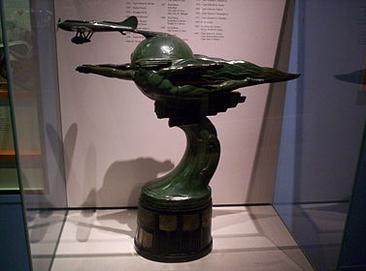
The Air and Space Museum in D.C. claims that they have the original trophy on display, but my dad says that’s not true, because during the year that it was in his house (1957), my age 9 dad-to-be broke it. One side of the propeller was broken off, and my grandmother had it brazed back together leaving a small bump.
When my then-adult dad had a chance to visit the museum, there was no trace of the damage and repair, so he reasoned it can’t really be the original. A few more tidbits about the race I learned later in my own research: He broke the race’s speed record that day, the previous record was 666 mph, and he flew 679 mph. He was also a wingman to Chuck Yeager in the movie “Jet Pilot” where he flew the plane of the plane of the Russian character Lieutenant Anna Marladovna (Janet Leigh). I don’t know if the two men were friends, but they certainly were colleagues and comrades in arms.
Captain Chandler and 1st Lieutenant Frank Latora, both of the 343d Fighter Group, were killed when their Lockheed T-33A Shooting Star jet trainer crashed 12 miles (19 kilometers) north east of Parker, Colorado, while on a ground-controlled approach to Lowry Air Force Base on the night of Friday, 28 March 1958. Captain Chandler’s remains are buried at Rose Hills Memorial Park, Whittier, California.
Bryan R. Swopes, 2018 http://www.thisdayinaviation.com
My grandmother held on to the Bendix trophy for the next 2 years. She refused to surrender it until there was another winner. There was no official race in 58, 59, or 60, and so no winner was named. I suppose it was a piece of her husband that she didn’t want to relinquish after his death, and she was so determined about it that the race authorities threatened both to remove Captain Chandler from the official record and to put my grandmother in jail before she finally gave up the trophy. Even though she turned it over, the trophy never lived with another family, as it was retired before the next official race in 1961.
My grandfather died tragically at the age of only 33. My dad says he never really got to know his father, who tended to show more interest in the eldest son. Perhaps if he had lived a little longer he would have shepherded his middle child into adulthood, or perhaps he would merely have contributed a different legacy to our family’s generational trauma, but regardless there is no denying that Captain Chandler would certainly have been proud of Colonel Chandler, and I hope of Professor Chandler as well.
This Memorial Day, I remember Captain Kenneth D. Chandler: WWII & Korean War veteran, ace pilot, Bendix Race winner & record setter, and my grandfather. May your memory be a blessing.

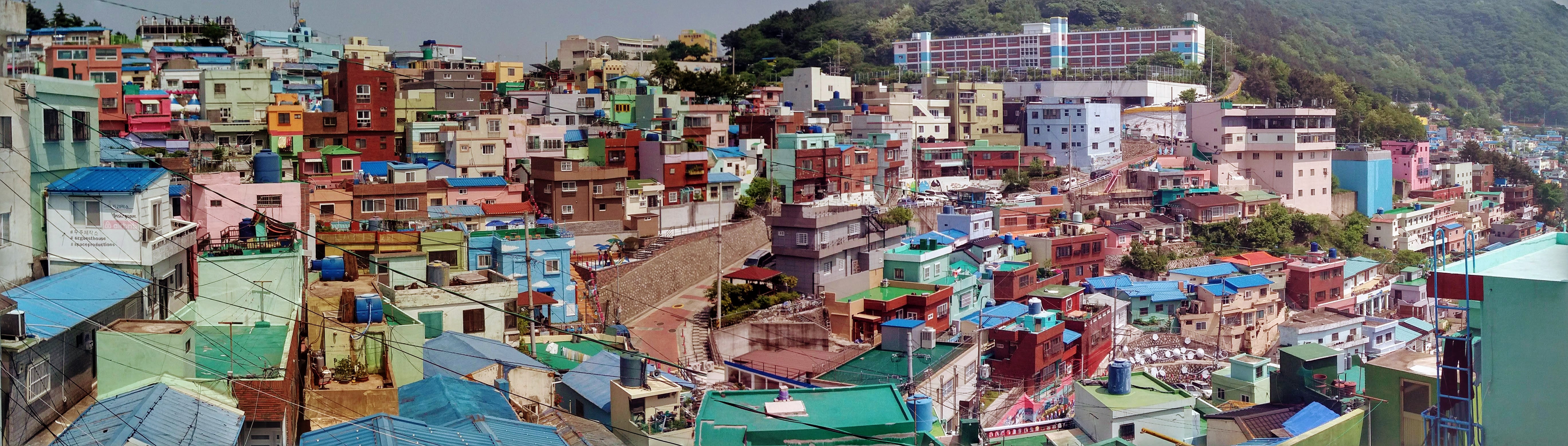
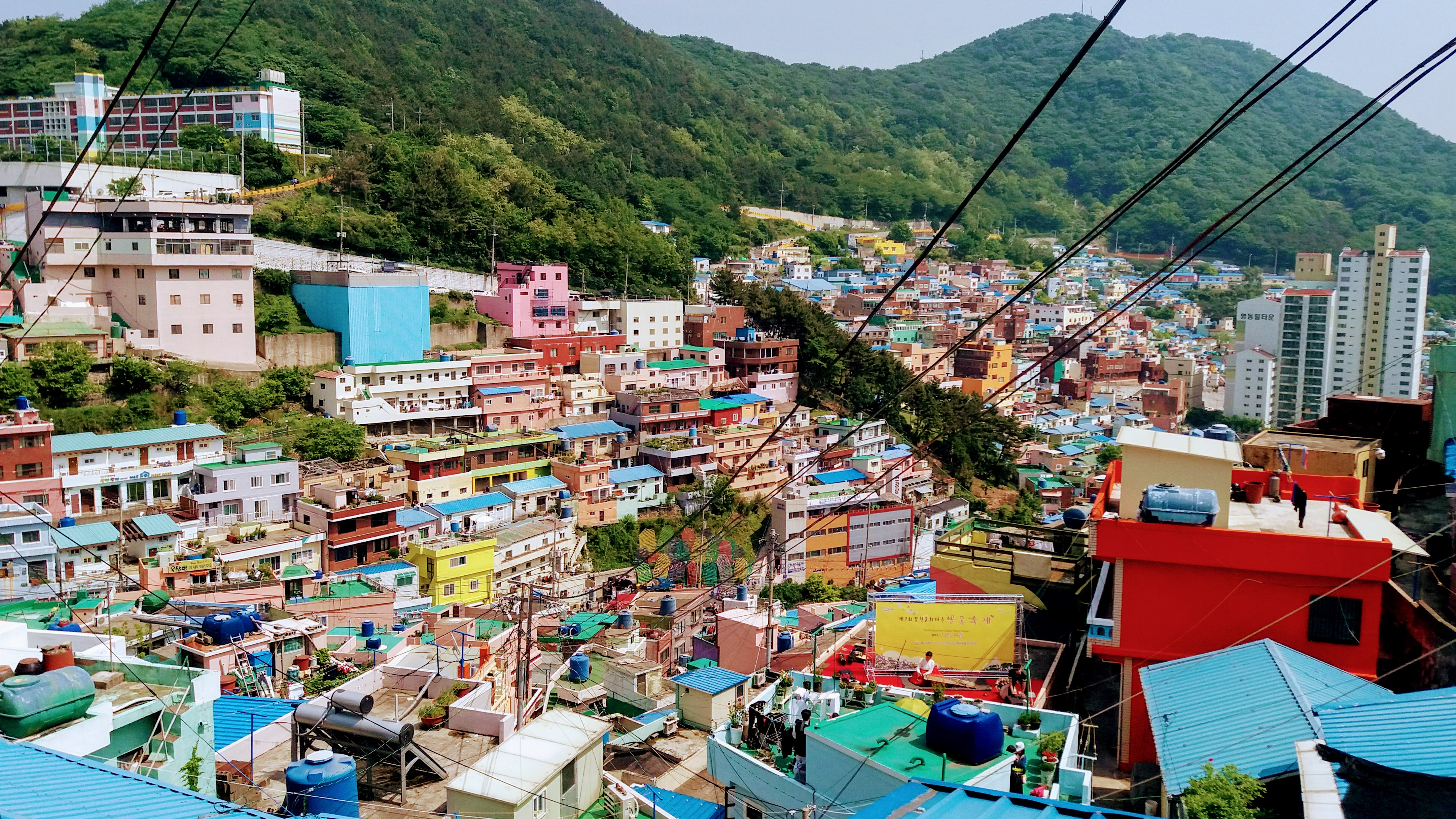 During the war, Busan was the only city in Korea that was not taken over at some point by the invading northern army. While elsewhere all over the peninsula, whole towns were being leveled to the ground, Busan was becoming a haven for refugees as well as US and other foreign aid troops. The population crisis caused the unique housing style of Busan, which involves building houses and apartments right up the side of the mountains that weave in and out of the city.
 The houses are painted a cheerful array of bright colors that make for a stunning view from the ridge above. However, once you descend into the neighborhood, there is no end of quaint surprises in the form of beautiful murals, surprising statues, and wandering flower planters. The neighborhood is not only adorable, it’s become a hot spot for bohemian culture, local artists, musicians and other experimental creations.


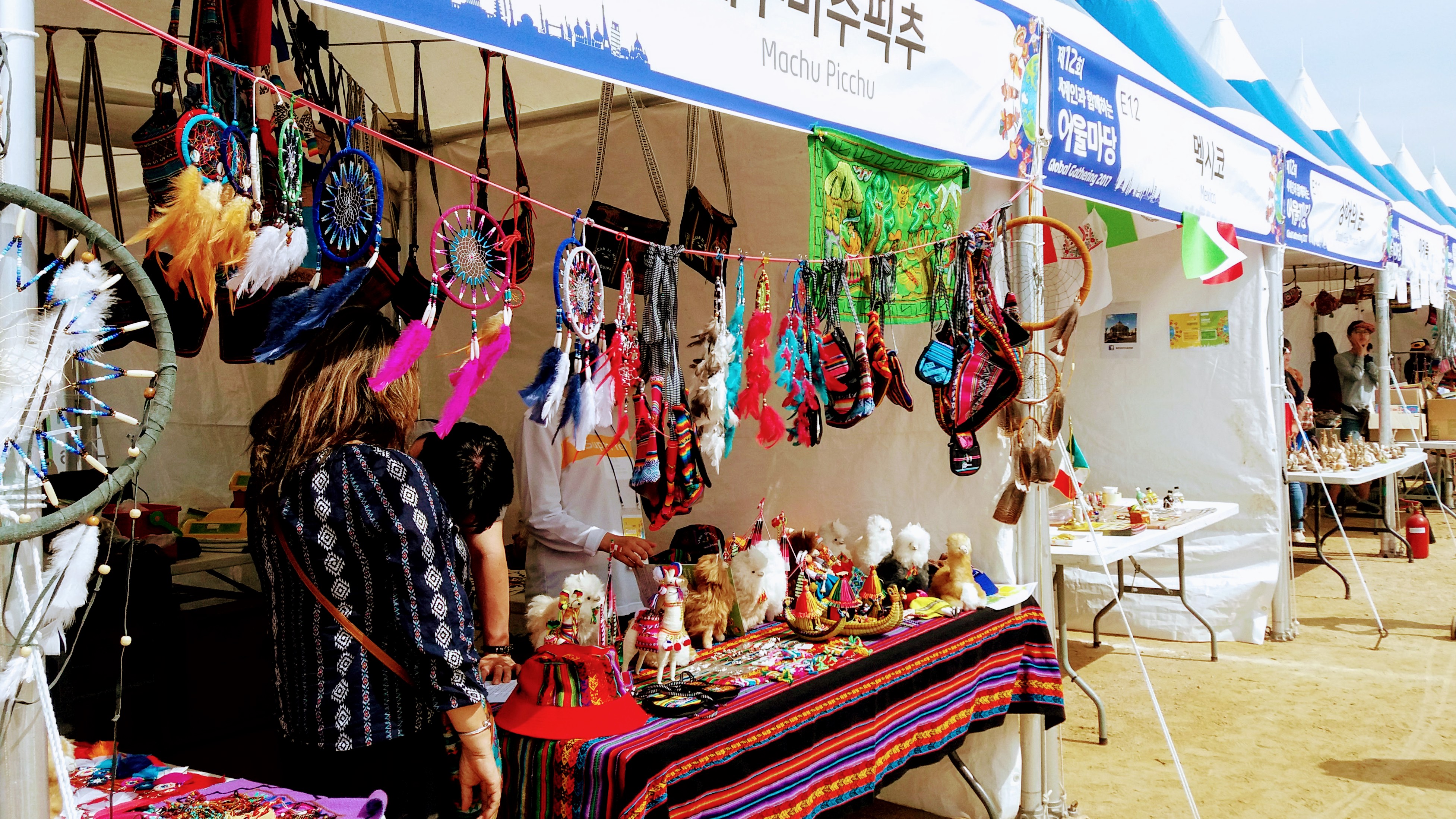
 I went to this festival last year when it was held at the citizen’s park, which a beautiful grassy park with trees, a beach, and a big fountain. I had a great time visiting all the booths from other countries and sampling goodies they brought. There was a large space in the middle of all the tents where we could flop down in the grass when we needed a rest and I ran into lots of fun people (most of whom have since returned to their own countries) and sat on the lawn drinking the German beer and Spanish sangria until the sun went down.


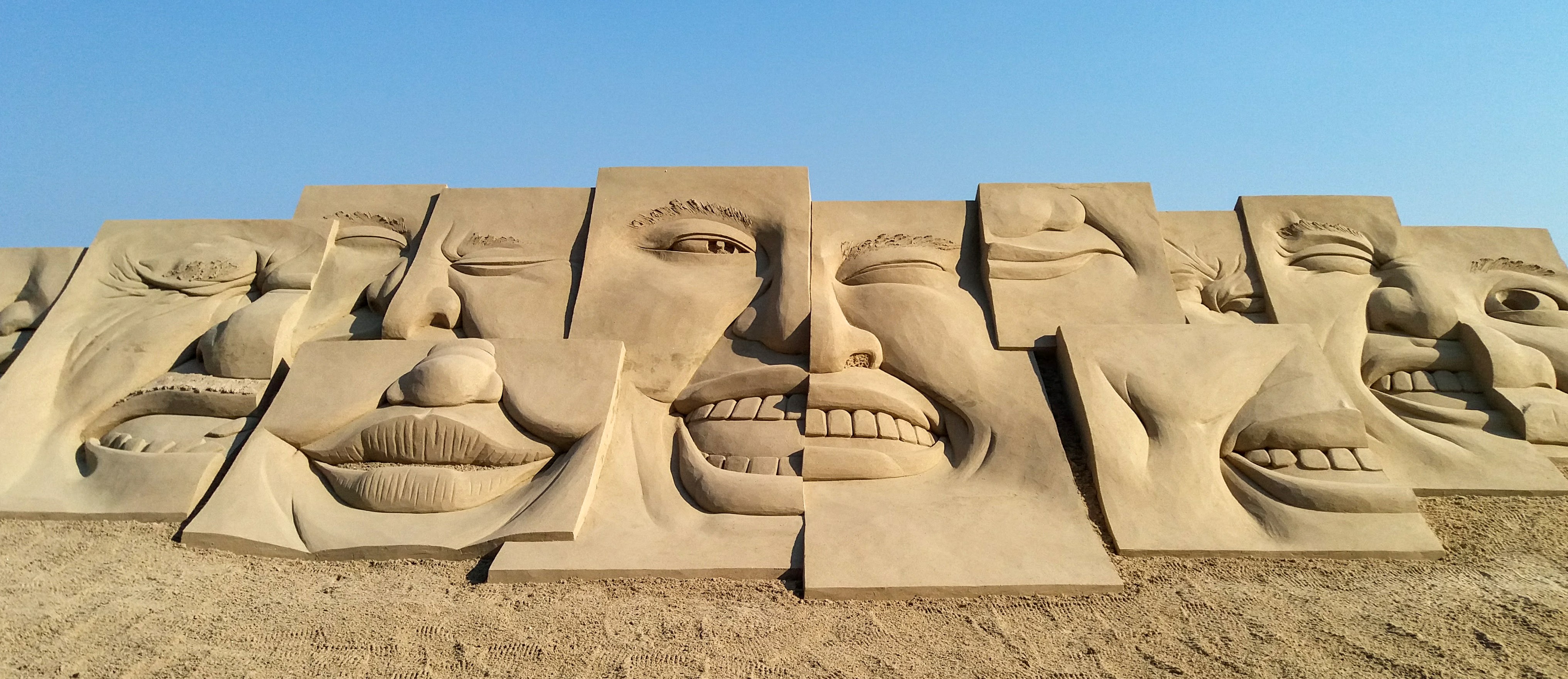

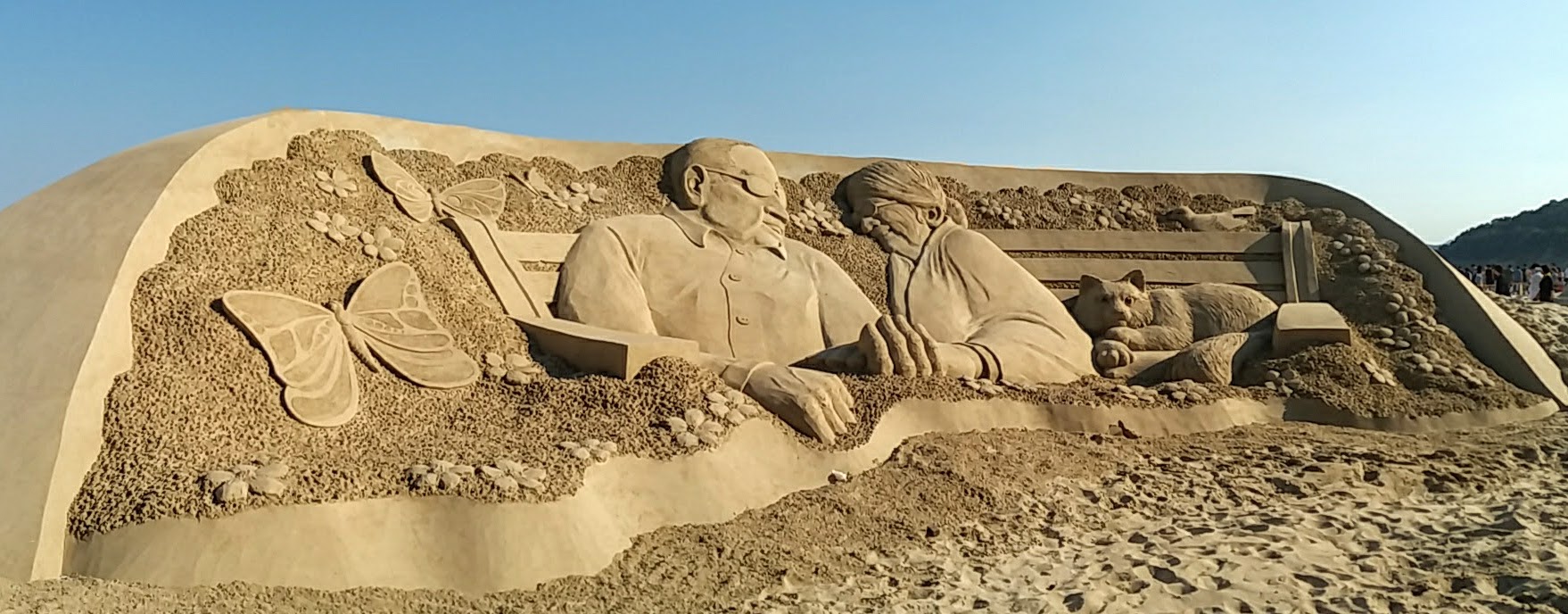
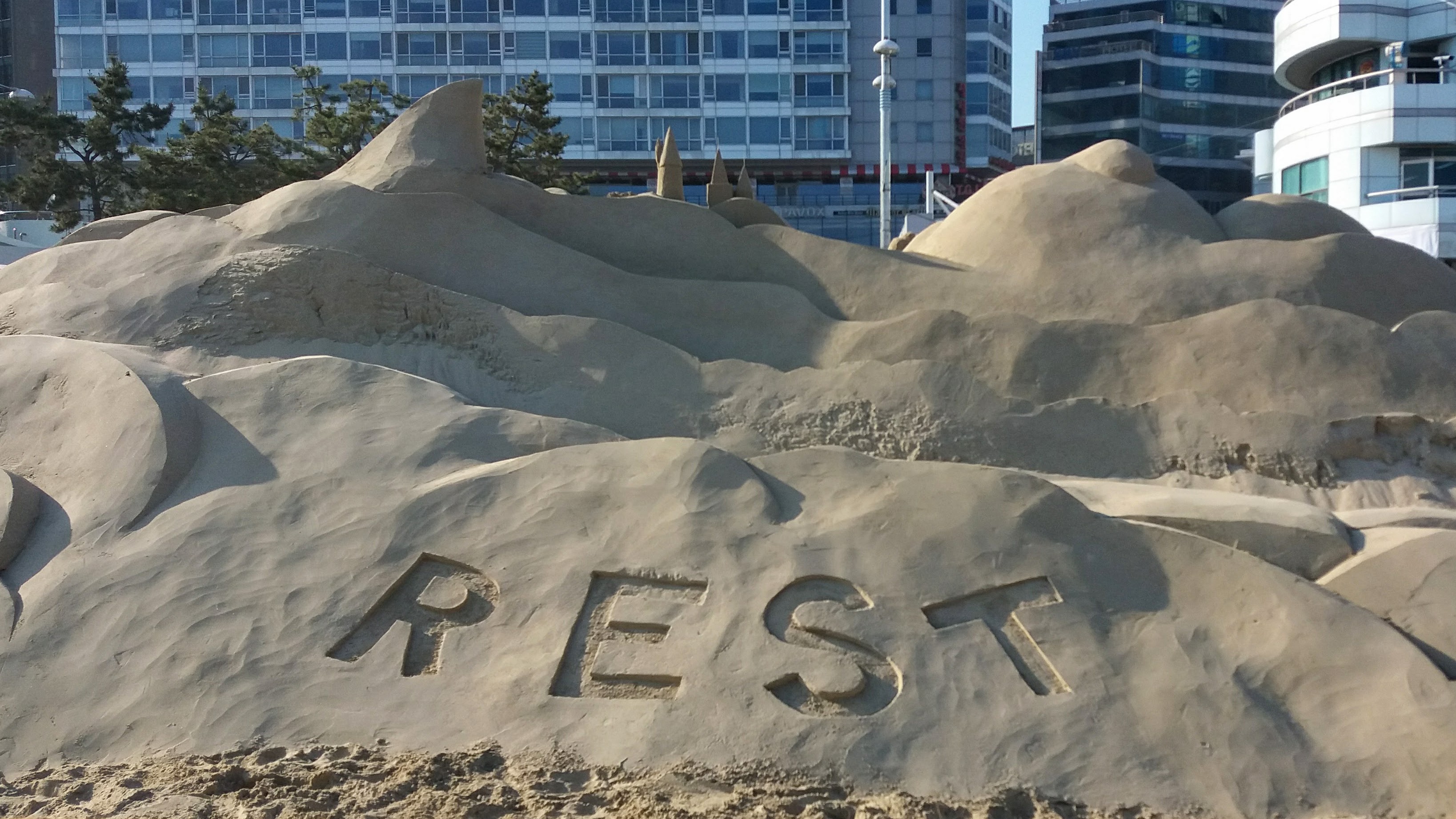 This year… I’m not really sure what the theme was. Each mound only had art on one side, yet despite the fact that there was a temporary walkway between the two rows of mounds (because walking in sand is hard), the art all faced the shorefront buildings, leaving only half facing the walkway and the other half showing their backs. The backs of the mounds remained smooth but for a single word that was presumably the inspiration for the art on the front.



 of the festivals I go to are Korean, I’m still in the minority almost wherever I go. Almost. I don’t know what Haeundae looks like on a regular day because it’s so far from me that I usually go to Gwangan when I need a beach fix. On this day, it was like that scene from Lilo and Stitch where Lilo goes down to the beach to stare at pale tourists. Only most of them were fairly fit being recent college grads or military folks on leave. But so much white people!
 us the wait ahead of time, and we agreed. That should be enough, but part of me was still, “how did they not staff more people on a festival day, the restaurant should be doing something to make up for this inconvenience”… Woah, ‘Murica brain. You didn’t have to come here. They did everything reasonable to make sure you knew what was going on. Check your entitlement! PS. There’s no tipping here, so when waitstaff are nice to you it’s just their job and not because they’re livelihood depends on the whims of customer satisfaction.
 After dinner, we headed over to The Back Room, a secret speakeasy style bar that I visited last year and loved. I had an old favorite (real whiskey sour), and tried a brand new concoction tried an Aviation, which is gin based cocktail with creme de violet, lemon and cherry. Fancy and delicious. We stayed out way too late drinking and chatting, which only served to remind me that every event can be made special with friends.
 This park in the Nampo neighborhood is up on a bit of a mountain, but there’s no need to climb up exhausting stairs because there’s an outdoor escalator installed to let you ride up in comfort! When we got to the top, we were already blown away by the great views of the city below and we hadn’t even gotten to the highest points yet. As we passed by the stage area, it was clear that a performance was about to get underway. There were plenty of people dressed in the standard white garb trimmed with bright colors and fun hats and the parents hadn’t gotten to see any traditional dances, so we pulled up a seat. I have since found out that cultural performances happen here every Saturday at 3pm between March and November.
  The MC for the day was excited to see so many foreigners (not just us) in the audience and brought out a poor young Korean lady who was nervous and not particularly fluent to try and translate for us. Representatives from each visiting country in the audience were invited to come up on the stage and play a traditional Korean game of trying to toss a stick through one of 5 rings attached to a jar. My friend’s mom went up and they let her stand extra close because she was over 60 and she brought us honor by scoring the center ring! We didn’t sit for the whole performance, but it was a kind of musical story. From what I could follow, some performers arrived at a lord’s house and were invited in to party, but there were some rascals around who may have been trying to steal away or marry off the lord’s daughter? The language barrier was a bit of an obstacle to the plot, but it was fun to watch and clap along with.
 We snuck out during a lull and headed to the main attraction of the Park, Busan Tower. The tower stands 118m high, but it’s also on a mountain so, it seems to be rather higher than that when you look down. For 5,000won you can get a ticket to ride up to the top of the tower where you can enjoy a stunning 360 degree view of Busan. There are helpful decals on the windows that identify major landmarks and there;s a little cafe where you can enjoy a snack with your view.

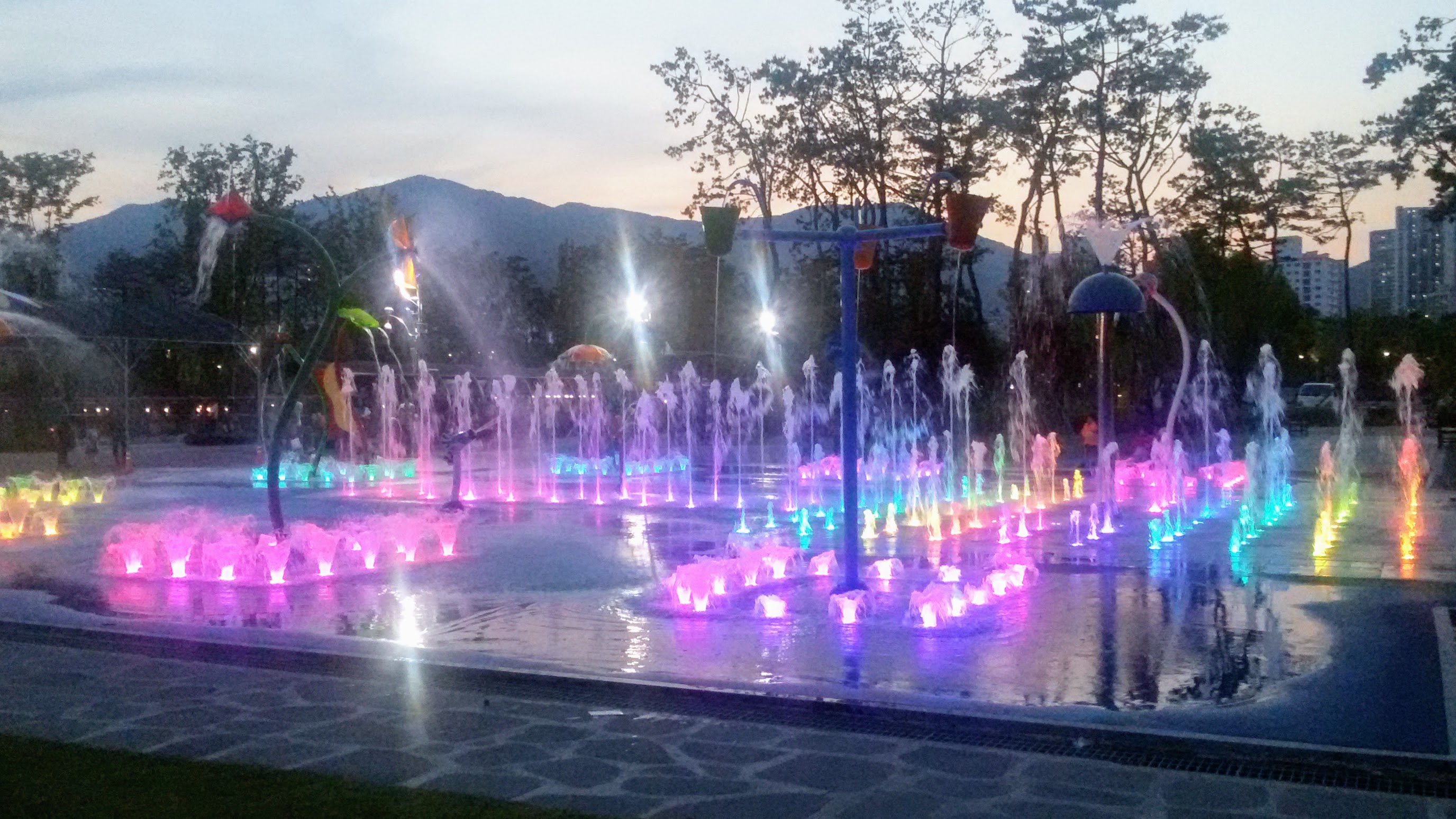
 Sky Tree (left) where the small fountain lights are coordinated with the tower lights high above. These shows are fun, awesome, wonderful, and sparkly, so when my friend told me he wanted to take his parents down to Busan’s own choreographed fountain show, I was all in favor.
 There are some permanent concrete bleacher type seats along one side, but the rest of the area around the fountain had been filled up with plastic chairs to accommodate the higher number of spectators on the warm weekend nights. We arrived early and laid claim to seats in the front row, hoping that we wouldn’t have to worry about the crowd standing in front of us when the show started. Refreshingly, the Korean audience stayed in their seats during the show and we had a first class view. In both China and Dubai, the spectators jostled for the best standing spots and to get my video, I had to start standing in my spot almost 30 minutes before the show started to get an unobstructed view.
  This is 2,519 sq m fountain is listed as the largest fountain in the world by Guinness. I suppose that the show at Dubai is not considered a single fountain and is therefore only the largest fountain
 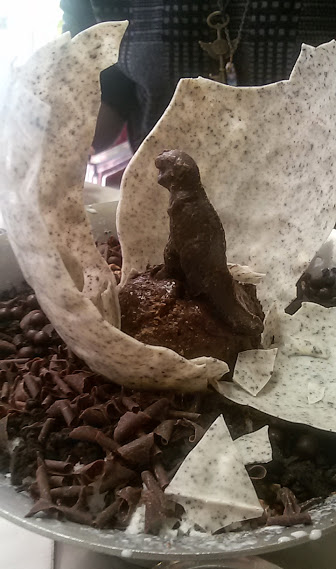 I’m not a food blogger, but sometimes food is just too good not to write about. I’ve done some basic coverage of these things elsewhere, but it doesn’t get old. Dala 100% Chocolate is this tiny hole in the wall chocolate cafe in my neighborhood in Seomyeon. The first time I went there, I had to try their signature dish, the dinosaur egg. This was an amazing concoction of shaved milk ice topped with crushed chocolate cookies and chocolate shavings with a giant egg made of cookies and cream candy. When smashed with the provided hammer, the egg reveals a scoop of truly decadent chocolate ice cream and a tiny chocolate dinosaur. If that’s not enough chocolate, you can pour chocolate sauce over it too. It takes at least two people to eat this dessert. Since that time, we’ve also tried the chocolate pizza (nutella spread, banana slices and toasted marshmallows for toppings, scoop of vanilla ice cream and chocolate sauce again), and for the two separate parental visits this summer, I also managed to try the fruit fondue (kiwi, grape, orange, grapefruit and banana… turns out grapefruit in chocolate is awesome), the “special brownie” (molten chocolate inside!), and the chocolate churros (churros you dip in chocolate). Let us not forget the milkshakes, which come in a variety of chocolate compliment flavors and can be made white, milk or dark. I don’t just love this place for it’s chocolate, but because it’s good chocolate. It’s not too sweet and they do a good balance of flavors in each dish so you don’t get tired (as if that were possible) of a single chocolate flavor. I think we’re about halfway through the menu now, and if the weather keeps cooling off, I’ll get to try their hot drinks soon!
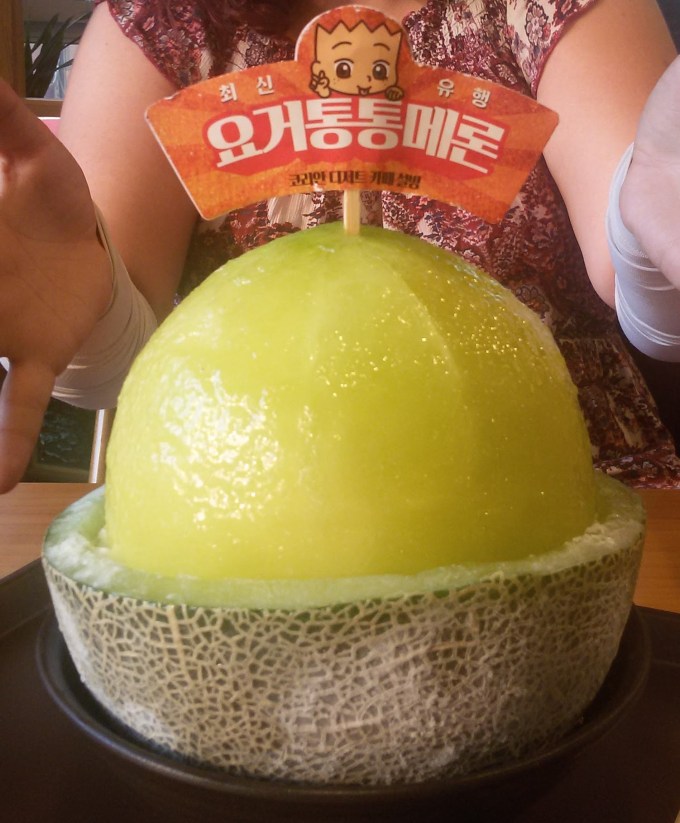 The melon special was not just using frozen milk, but frozen yogurt… and not the kind you’re thinking. Imagine you mix some yogurt with milk or water until it’s all liquidy, then freeze it solid, then shave it off into teeny tiny snowflakes. Ok. Now, take a honeydew melon (the green ones) and cut it in half. Hollow it out and freeze the shell. That frozen melon rind is now our bowl, filled with the snowflake texture frozen yogurt and topped with some cubes of what I can only describe as cheesecake filling.
 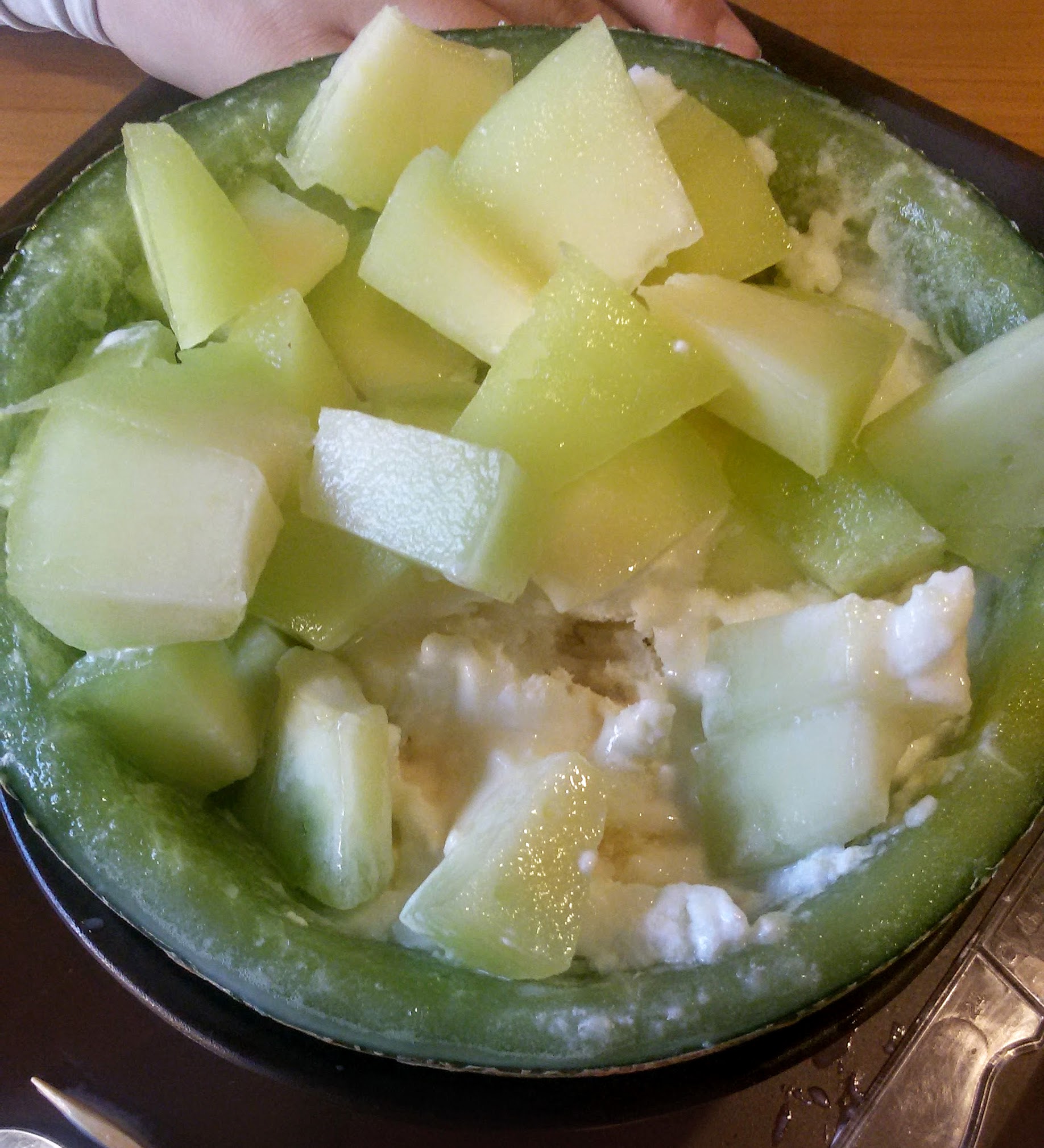 Now, over the whole thing, put the melon you removed from the rind, the hemisphere of melon, all of it. The dish was served with a big plastic knife so we could cut up the melon for ourselves. It was the perfect combination of sweet, tart and creamy to refresh us in the summer heat.
 When we arrived, a very nice older Korean lady offered to explain a little bit about the main gate to us in English and we got to hear a little history of the naming of the temple and the unique four pillar style that makes this era of architecture distinctive. As we ascended the stairs and passed through several gates decorated with bright lanterns and beautiful paintings we moved through a hall of fearsome statues and finally emerged into the main courtyard. The temple was originally built about 1,300 years ago, but was destroyed during a Japanese invasion in 1592 and later rebuilt in 1713, but a few stone remnants and one stone pagoda left from the original still stand in the wide open square. The temple is dedicated to the practice of Seon Buddhism, which is the Korean descendant of Chan Buddhism the same way Zen in Japan is.


 Also called the Jinju Namgang Yudeong Festival, it is held in honor of the fallen during the seiges by Japanese soldiers in the Imjin War in 1592-3 (the same time frame the orginal Beomeosa Temple was destroyed). During the war, lanterns were used as military signals, a means of communicating with reserve forces, and as a way to keep in touch with family members outside of Jinjuseong Fortress. Even after the war, people continued the tradition of floating lanterns down the river to pay tribute to the brave souls that had been lost during battle. Today, the festival is far more than a few lanterns on the river and instead is a whole palisade of life size and larger than life lanterns floating on the river and filling the riverside park where the fortress once stood.
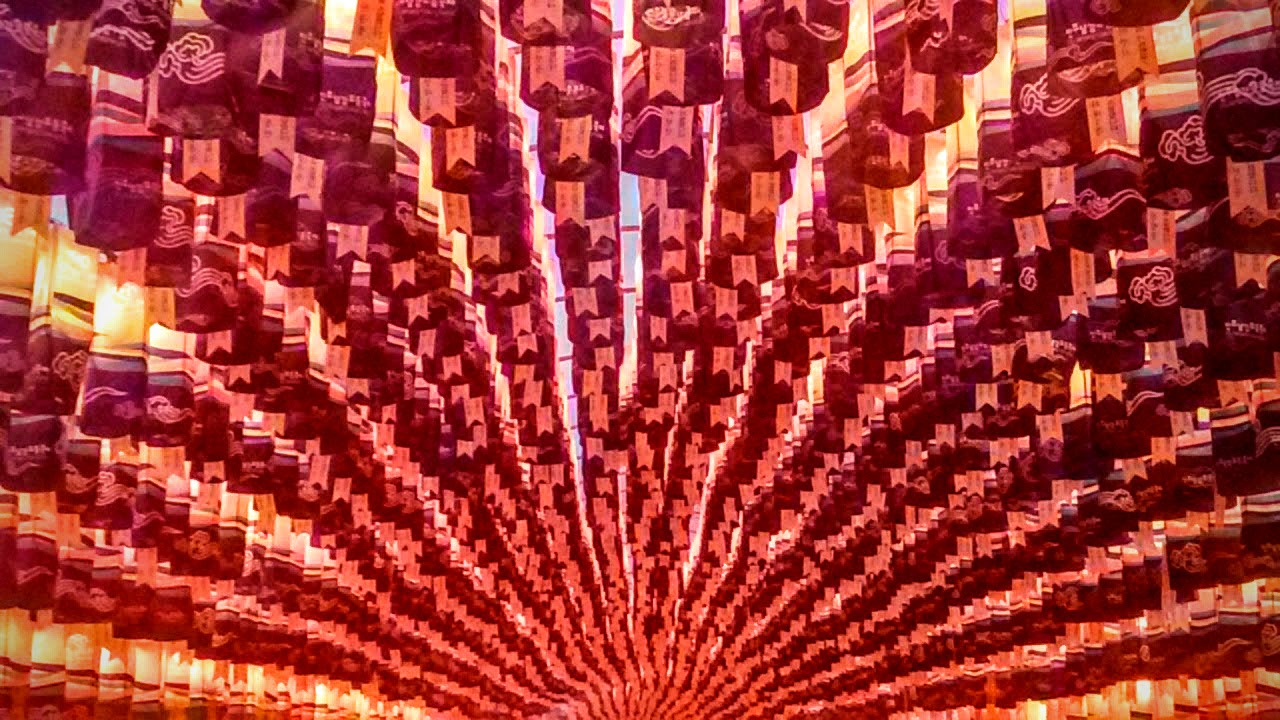 When we entered the display area, we were given arm stamps so we could come and go as many times as we liked, then we began our stroll down the riverside. The water was covered in giant lanterns in shapes of mythical animals and heroes as well as famous landmarks like Stonehenge, the leaning tower of Pisa, and the Statue of Liberty. There were floating restaurants, boat rides, and yet more tents offering delicious snacks.There were giant tunnels of red lanterns where couples walked hand in hand in the twilight.
 Two floating bridges at either end of the display allowed visitors to pass from side to side without returning to the street level. The day had been rainy, but as the rain dried up, the sunset lit the clouds in shades of brilliant gold and scarlet.We crossed the river and ascended into the wooded area to be greeted with the most amazing forest of light. Unlike the


 Gallivantrix