My travel tastes tend to range from the classic bucket list items to the hipster “you went where?” items. On my first trip to Paris, I visited the major must-dos like the Eiffel Tower, Notre Dame Cathedral, the Arc de Triomphe, the Champs-Élysées, the Sacre-Coeur, and the Père Lachaise Cemetery. At that time my “off the beaten track” experience was going to see my friend perform Burlesque at La Féline Bar. Sadly, I never had the chance to write this trip as my life in 2015 became rather hectic shortly afterward. I did upload my photo albums, however, so you can still see those on the Facebook Page by following the links on each location above.

For my second trip to the city of lights, I made it to the Catecombs, a couple art museums, and a bike tour of the hot spots, which I’ll be writing about later. My more obscure find was a tiny museum of Fairground Arts, the Musée de Arts Forains. It’s actually not a public museum, but the private collection of Jean Paul Favand. It includes object d’art from fairgrounds around Europe in the 19th century. The museum has done extensive restoration on the artworks, and patrons are free to ride and play many of the “exhibits” on display. It was enchanting beyond all expectations and lasted just under 2 hours.
No Bag Storage? Starbucks!
Since the collection is private, the museum doesn’t keep regular opening hours, and tours are by appointment only. I was slightly desperate to go, but the only time a tour was available during my 6 days in Paris was the afternoon of my very last day, the day I was planning to catch a bus onward to Brussels. I had no choice but to choose that day, and move my bus to a later time. I’m so glad I did.
 I had to check out of my Airbnb by 10am, and my host did not offer any variety of luggage storage. Neither does the museum offer any sort of cloak room or bag-check room. I checked a few websites for storage options, but it turns out that there are only a few places around town where it’s even possible and they are mightily expensive. I was travelling light (backpack only, yes, that is my actual luggage for the whole 7 week trip), but it was still at least 10-12 kilos, which can become tiresome to carry for many hours.
My tour was at 2pm, and I didn’t want to walk around Paris with all my luggage, so I headed straight to Bercy where both the museum and the bus would be found. I zeroed in on Starbucks for a clean bathroom, an iced latte, and a place to sit while waiting. This long haul travel is giving me some new appreciation for the use of American stand-bys. I’ve become addicted to iced lattes in hot weather, and the French seem to think that ice in coffee is anethema. Even McDonald’s McCafe failed at providing iced coffee options, but Starbucks is the same world wide with a few exceptions for seasonal specials.

I love French coffee, and I could have sat at a cafe the whole time I was waiting. No one kicks you out of a restaurant in Paris. Oddly Starbucks was a cheaper option since a coffee here is a tiny shot of espresso for 2€ or maybe a small cafe creme for 3.5-4€. At Starbucks, I got a Venti iced latte for 4.65€. I don’t want to be the tourist who goes abroad and only visits American chain stores, but sometimes, especially on a long trip, it’s nice to have the choice. Free clean bathrooms, cheaper large (iced) coffee, air-con, and free wifi do make it an ideal place to kill time if you have to.
Getting There
The museum was easy to find, although it looked a little foreboding from the outside. The grounds are covered in fences and the buildings all have shuttered windows. The tour guides only speak French, but they were kind enough to make an English language pamphlet that contained the pertinent information about each area of the museum we would visit. I read through it while waiting for the group to assemble, hoping that it might help me follow along.
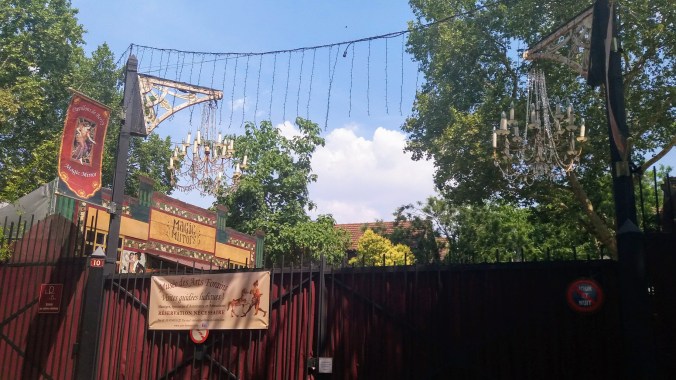
When we finally assembled and began the tour, my feelings were primarily childlike glee. My joy wasn’t the only childlike feeling I had. Standing in the courtyard listening to the guide talk in French I had a sudden flash of understanding of how every kid must feel when tour guides talk and there’s nothing to look at or do. I tried to listen, but he talked so fast I couldn’t catch much. Fortunately, as he pointed out to us, it’s really a visual tour. The courtyard was pretty and I enjoyed the gargoyles and decorations amid the trees and flowers, but I was impatient to get inside.

The Giant of Bercy
This is the story he was telling while we were standing outside. I found the English version later. According to legend, Kind Louis XIV came to Bercy to attend mass at a nearby cathedral. Of course, all of his subjects were expected to kneel before their king during his royal visit, but when the time came for this obeisance, one man remained standing. When the guard were sent to investigate, it turned out the man was kneeling after all, but he was a giant who loomed above the crowd even in genuflection. The giant was a vintner named Martin, who used this unique chance to meet the king to talk about the taxes on wine merchants in Paris.
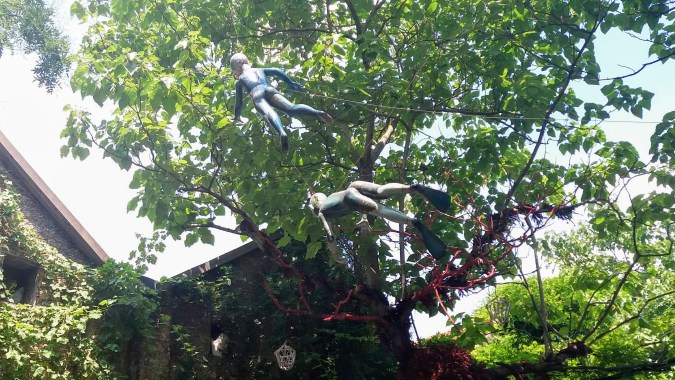
Charmed by the giant and amused by his complaints, the capricious king decided to grant the Pavilions of Bercy a tax exemption. The 106 acre region became closed off behind walls and ware houses with railroad tracks leading to the Seine where wine shipments could be transferred by boat. The buildings that now house the Musée d’Arts Forains were at one point warehouses and market buildings.

It wasn’t all wholesale business, however, and Bercy was also known for it’s wine bars and guiguettes where patrons could sip by the glass or by the bottle in convivial company. Such an atmosphere prompted festivals, fireworks and other fun, giving Bercy it’s reputation as a joyful place.
The Venetian Rooms
As soon as we stepped inside I realized the photos I found online do not come close to representing the atmosphere of this place. Beautiful pieces of art displayed around a centerpiece of a merry go round from a classic Venetian style carnival. There was no roof, as a modern carousel might have, and most of the seats were elaborate gondolas and carriages with a few ornate animals with saddles. Our guide invited us to hop in for a ride and we whirled around to a recording of the original music.

After the ride, we stayed seated but turned to face a wall which was decorated as the Grand Canal. The lights dimmed and we were treated to a beautiful light show that had clearly been made just to fit the size and shape of the room. We went from outer space, to under water, to a cityscape, a gondola ride on the river, a ballroom and a theater as the lights and sounds created this beautiful illusion.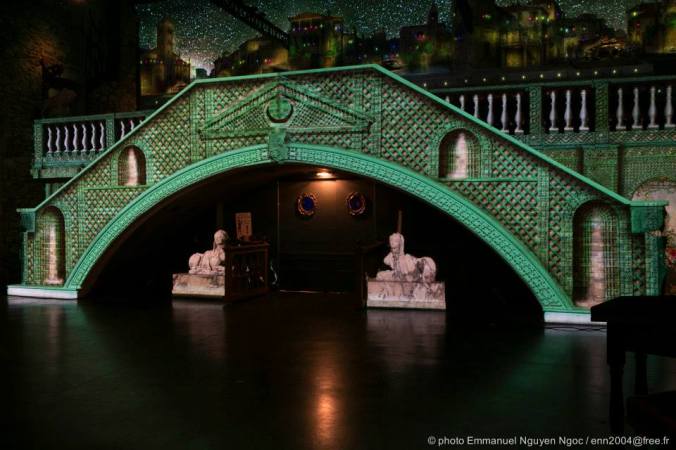
The adjacent room was an animatronic opera with singers mounted around the room on the walls just below the ceiling. The lights and speakers moved as different characters (including Columbine, Harlequin, and Cassanova) sang and the robots moved. It was like Disneyland’s tiki room or hall of presidents.
It was easy for me to wander away from the group or start behind as they moved on and get photos of the rooms with no people. Since I couldn’t really understand, I didn’t feel like I was missing out. Sadly, the rooms were so dark that most of my photos are only any good for jogging my memory of the experience.
The Carousel-Salon

In the 19th century, the Fairground was quite popular, and the Carousel-Salon was a style of fairground that included the pipe organ, the carousel, a ballroom for dancing, and of course, a bar.
Our guide cranked up the pipe organ, which was stunningly loud, and I took the time to get a closer look at some of the statues and carvings around the room. The detail of craftsmanship in these pieces was impressive. It was clear that the fair or carnival was much more than it is today. When I think of the clunky state-fairs of my childhood covered in bare bulb blinking lights and cheaply airbrushed panels on easily disassembled rides and booths, I can see how much we’ve lost in the last century of fairgrounds.

Once the pipe organ ended it’s song, we were invited to ride again. This time, a more familiar carousel with the faux tent roof and a few horses that trotted up and down as the ride goes around. My only complaint is the the tours allow more people than there are seats. The guide ran the ride twice but I didn’t get to ride a moving horse either time. Despite this small disappointment, I had tremendous fun riding the antique carousel inside a room filled with similarly antique carnival rides, games, and decorations.

We rode a pedal powered carousel as well. It was made up of a circle of large brass bicycles. This carousel was all about the thrill of speed. When the device was in use, warnings had to be issued that if a patron should lose their footing, they should not try to catch the pedals. Apparently the speed and force of the pedals resulted in more than one lost foot. The cycle carousel was capable of reaching 40mph (65kph) which in 1861 was dizzyingly fast! Once upon a time it also ran on electricity or steam, but the museum’s ride was purely pedal-powered. Don’t think that makes it less impressive. With every seat filled, the cycles seem more like a roller coaster ride than a carousel.

There were many other oddities, pieces from other rides, and classic fairground games to look at as well. German swing boats, card tables, shooting galleries, and exotic animals lined the walls around us. Electric lights and moving pictures will still a novelty often found only at such public shows. One of the most famous shooting games is the French Waiters. I’ve seen similar racing games in most modern carnivals and fairgrounds. Shooting at your target advances your waiter and the first one to the finish is the winner.


The Theater of Marvels.jpg)
Next we entered a room full of oddities and treasures. It was Jean Favand’s own Cabinet of Curiosities including oddities such as a tree that could grow a leg and a dwarf in a boot. The center piece was made to look like the balloon of Baron Munchausen made by the collector himself. Esmerelda, the patroness of the funfair is depicted dancing. There was a huge papier-mâché elephant with a glamorously dressed rider, and Unicorn Cave is made from petrified wood, preserved plants, and mythical creatures.
.jpg)
.jpg)
Our guide showed us a game called Palio di Sienna that was played by spinning a top through arches to hit a bell,and we all got to participate in a racing game that seemed like a combination of skee-ball and the shooting racer. Instead of hitting a target, you roll a ball into numbered holes for points, and your racehorse advances a little or a lot depending on how many points you got. The group played four times and I sat only one. It was very popular!

We ended the tour with a waltz in a music room. A self playing orchestra like the ones I would later see in Utrecht played a waltz comprised of 12 different musical instruments. Members of the tour group paired off and danced joyously around the dance floor while waxwork oddities looked on. Great historical figures like Victor Hugo and Thomas Edison stared down, dressed in disguise, and an unimaginably queer unicornitaur (like a minotaur, but the head of a unicorn?) stood by a grand piano ready to deliver a song that would never play.
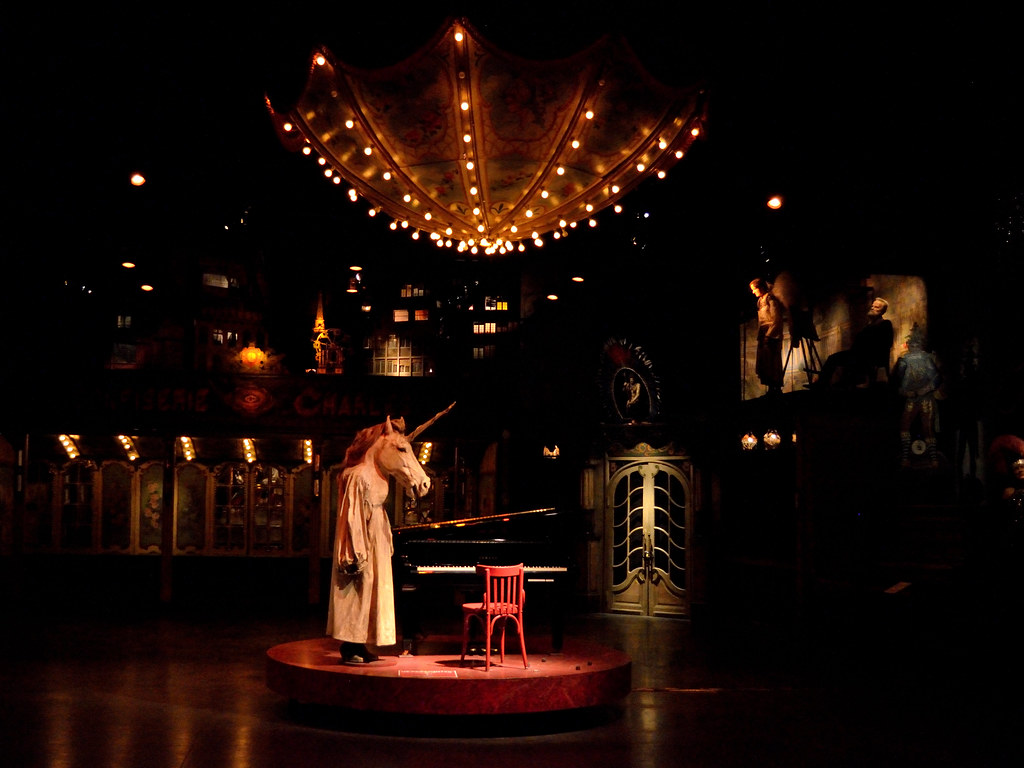
The fall in Korea has been keeping me busy. I volunteered to teach a debate club this semester and I’ve been trying to get out to a few more local social groups, maybe join a book club or two. We’ve also had a lot of school holidays. Last year, the three main fall holidays came together for one glorious 10 day vacation, but this year they’re spread out across three weeks. Counter-intuitively, this has actually made more work for me, and given me less time at my desk to work on this blog. I would also like to shout out to the beautiful photogs who donate to Creative Commons because they saved my bacon from my tragically dark-derpy camera, and provided beautiful royalty free images for me to share. As always, thanks for reading, and I hope you enjoyed this hidden gem of Paris.
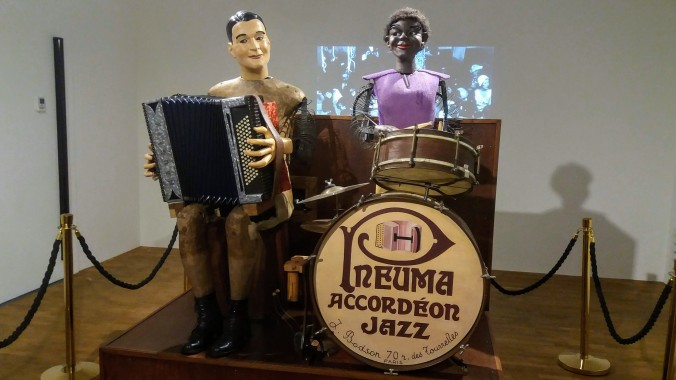
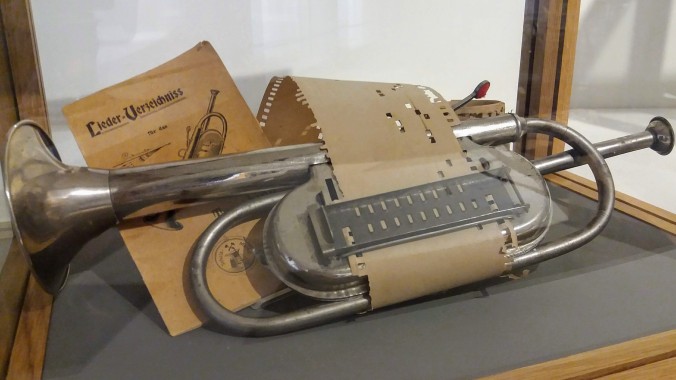
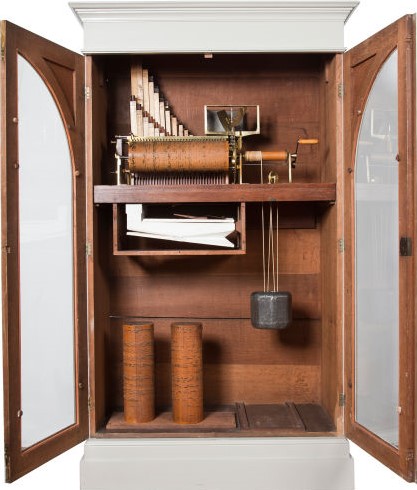
 The guide explained a bit about the history of early self playing music starting with bells and pipes. Bells were the first and “easiest”, if that can be applied to such complex machinery. A metal cylinder like that in a music box was used to orchestrate a series of springs and levers to tap small bells of different tones. There was only one length of note and it resulted in some very un-nuanced music, but the Victorians loved gadgets sooo much that owning such a marvel in one’s home was a real status symbol. They were incredibly expensive and very fine. The only way to change the song was to change the cylinder inside.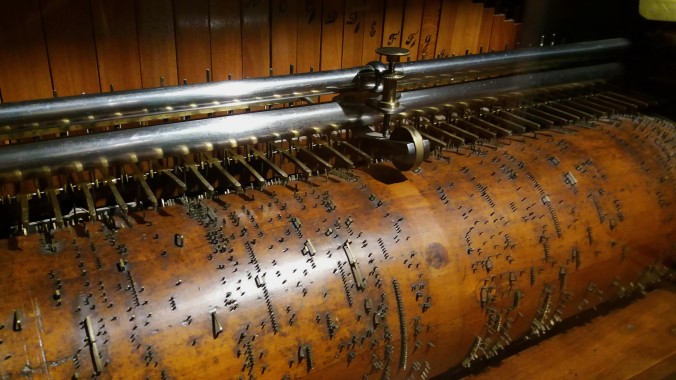
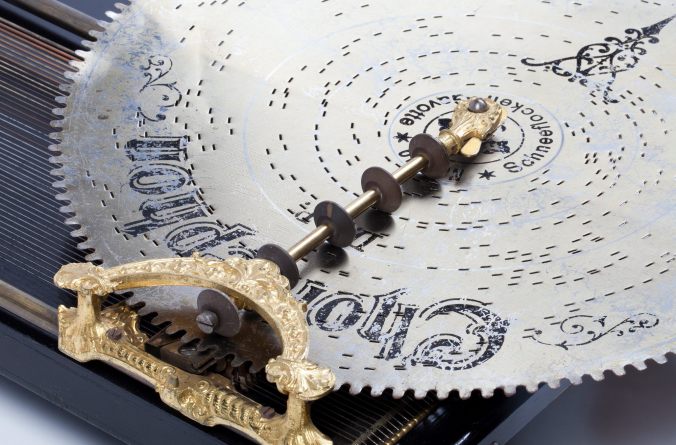

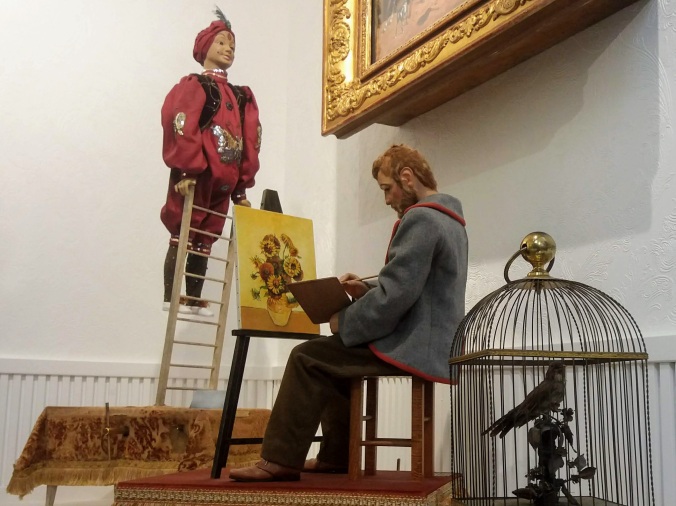


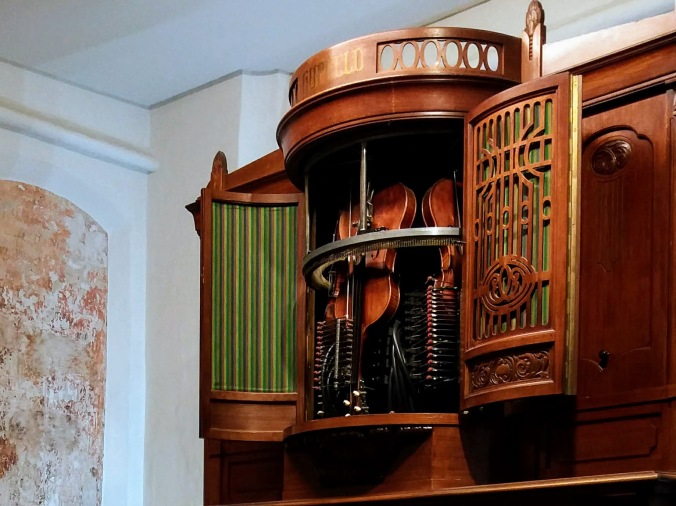 While the musical clock and player piano might find their way into any reasonably affluent household, the larger organs and orchestral players were reserved for the ultra wealthy and of course, the dance halls. During their height (again an incredibly brief time ending abruptly in 1930) these orchestrions were the darling of the day, drawing large crowds to dance halls to cut a rug to the mechanical orchestras and marvel at the wonders of modern technology. Because of the limited amount of musical numbers available to each machine, and because of the stunning but stationary artwork on the outside, audiences became bored with a single orchestrion quite quickly. (no, our attention spans weren’t any better a century ago no matter what your grandmother says) To keep the crowds coming, these huge machines were often built to be easily disassembled and moved to play a new dance hall every week. Early 20th century DJs played the precursor to EDM– MDM: Mechanical Dance Music.
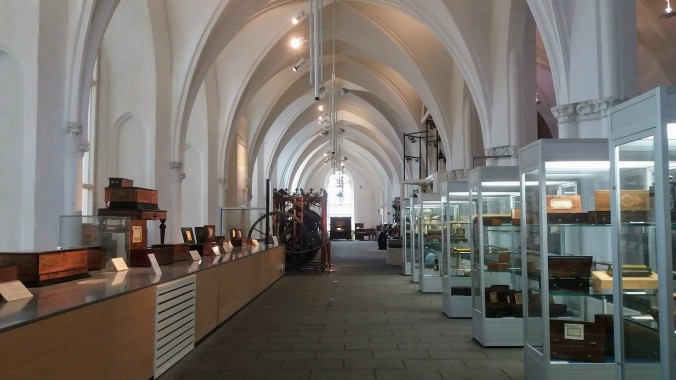
 The walls, columns, arches, and decorative carvings are painted a crisp clean white except a few places where the original church artwork has been preserved and painted around. The whitewashing isn’t a result of secularism, however, but rather the work of the Protestant reformation which took over the church in 1586 and just hated all that ostentatious Catholic art. Buurkirk was actively used as a church until 1975 and it became the Speelklok Museum in 1984. Wandering among the displays and whitewashed arches, my mind was occupied with the impending massive shift in my perception of humans, time, and technology.





 Tickets to the Tokugawa Gardens can be purchased at the same time you buy your Nagoya Castle ticket (combo ticket ftw) which gets you a slight discount if you are planning to do both, but does not include the art museum at the gardens.
 The golden bus drops you off right at the gates to the gardens, and I was able to show my combo ticket to get in with no trouble. The gardens start out with a main square that houses the entrance gate and the museum (which I did not go in that day). There is a large lake to walk around and feed koi fish in. The koi are ginormous. Biggest koi I have ever laid eyes on. I think there are smaller tuna. Some were close to a meter. There were also many colors, mainly the gold color and the calico mix of orange, black and white, but there were also ghostly solid black koi that were invisible even a few cm under the water until they broke the surface. They were like swimming shadows of fish. It was fascinating to watch.


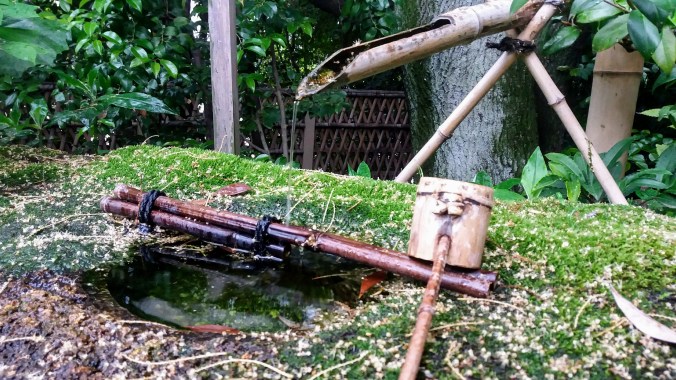


 Finally, because I can’t take a vacation without finding the waterfall, I found the waterfall. I am reasonably sure given the size of the park that the river and falls are man-made, but they don’t look like artificial fountains, they look like natural waterways. It’s a specialty of Japanese gardens to cultivate nature in a pleasing manner while still maintaining the natural beauty.


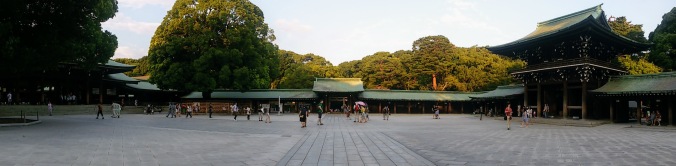
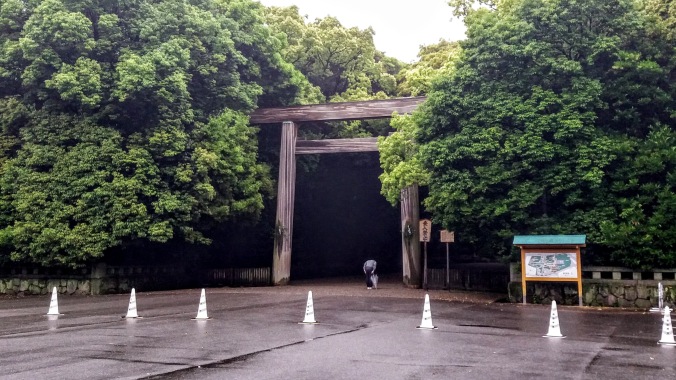
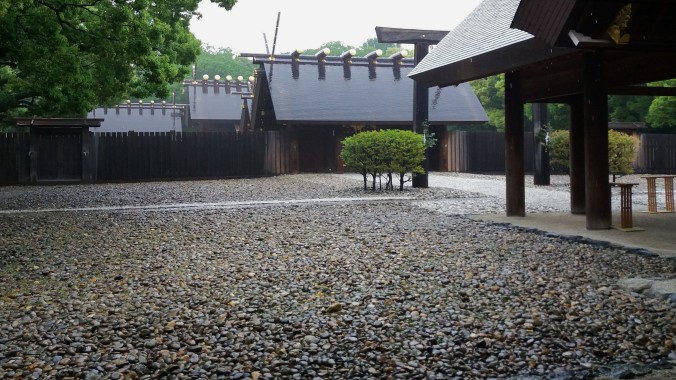
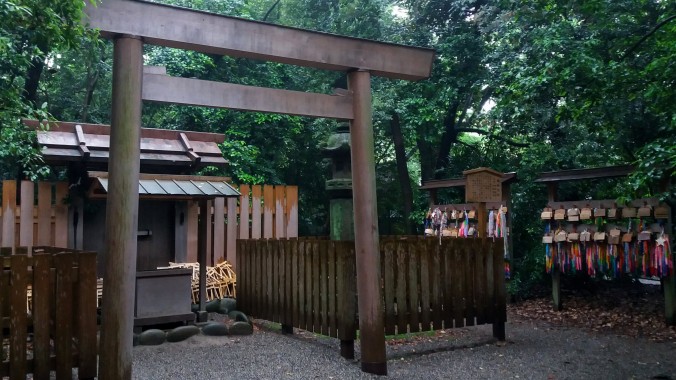
 is Shinto, while a “temple”
  is Buddhist. The map icons help to distinguish, and no, that’s not a Nazi swastika, it’s a traditional Buddhist symbol that is much much older than Hitler. The Shinto tales of kami (kind of like gods and spirits) are every bit as long and sordid as the Greek or Egyptian myths and involve lots of improbable births, sibling marriages, and explanations for how the world got so messed up. I do not know the whole thing as well as I know Greek gods because I wasn’t raised on a steady diet of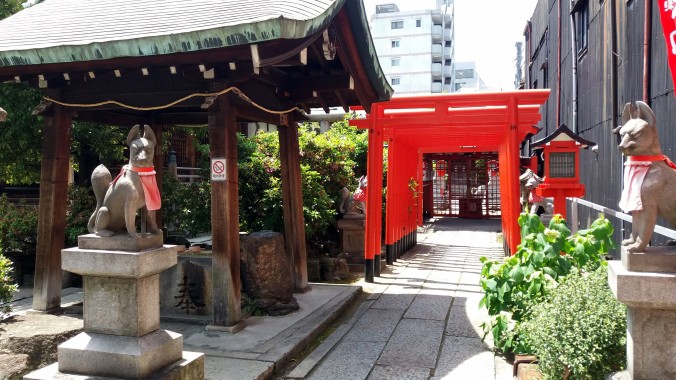






 At first I didn’t know what they were. I only saw the bright colors from a distance and was drawn closer with curiosity. As I examined the strings of color, it became clear that these were chains of paper cranes folded and strung together in a way that most Westerners are familiar with from the story of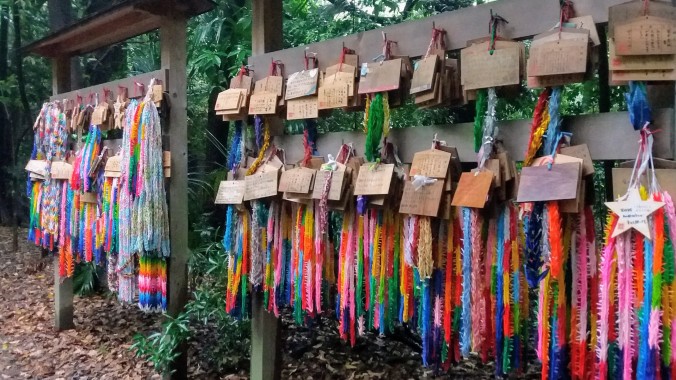


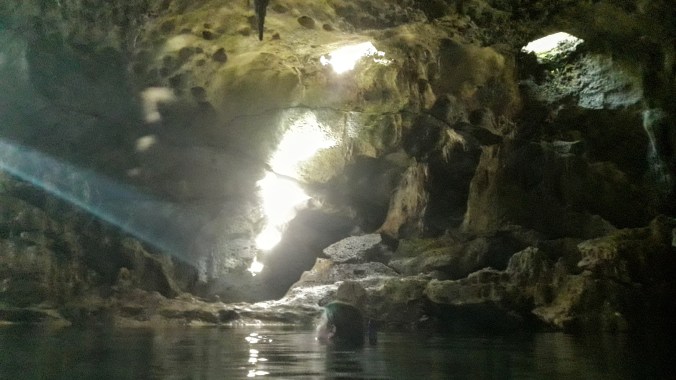
 We signed the guest book and the guides at the top of the entrance offered to keep an eye on our helmets while we went down. The stairwell looks like a black hole into nothingness, and the cave entrance is more like a sinkhole than a cave mouth. The stairs are steep, but sturdy and have a handrail, and it’s a short trip down. Once inside, there’s plenty of room to stand up straight and look around. It’s a small cavern with some lovely, though not stunning formations. The main attractions are the natural skylight that fills the cavern with the warm light of the sun like a spotlight, and the beautiful crystal clear pool. Looking at the water, I couldn’t understand why anyone had complained about it in the reviews. I suppose it’s possible that weather or too many swimmers might have clouded it up during their visit, but for us, just past opening time, the water was still, blue, and so clear that every rock on the bottom was visible even in the dim cavern.

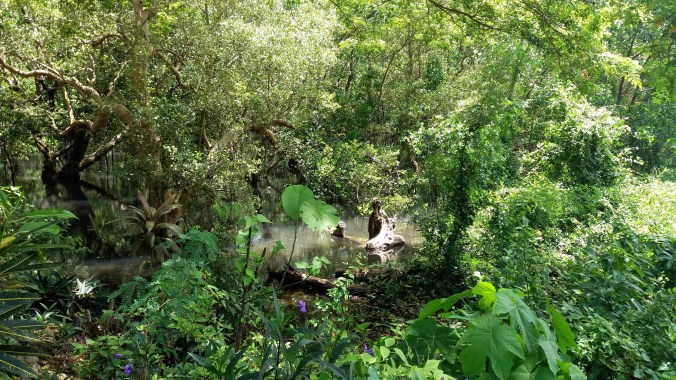 We drove around in hopes of getting a glimpse of the water or perhaps some boating opportunity, but mostly what we found was a kind of upscale neighborhood where the people seemed rather surprised to see us. It seemed not unlike other lakefront neighborhoods, and we still had no view of the water which I presumed was visible from the back windows of these beautiful houses. At last we came up to the bridge that crosses the narrow point where the river meets the lake and we got our viewing spot.
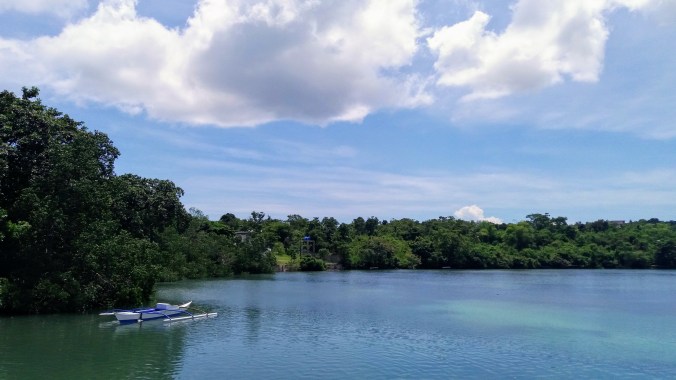 I’m sure everyone thought we were nuts for pulling over and walking out on the bridge to take pictures, but it was very pretty, and we’d driven over there more or less just to find out if there was anything to see at all. At the far end of the bridge I found a staircase that led down to a shaded swimming area in the lake, but it was occupied by a local family and I wasn’t entirely sure of the etiquette so I waved politely and moved on.

 We went back to the Bee Farm for lunch and the “tour”. Arnold, our guide, started us out with a little cooking lesson in the herb garden where we played “name that herb”. I recognized nearly all of them, but the oregano completely stumped me. What? Oregano? How hard is that to spot? Yeah, but this crazy Filipino oregano was completely different with HUGE leaves. The guide asked the names of each plant in English, Tagalog, and Boholano, and when we got to the oregano and everyone saw how surprised we were, we had to explain the differences in the plant’s appearance in Europe and America versus the one growing in the Philippines. Arnold said he’d heard about that but never seen the European varieties. Behind him ranged a huge display of potted herbs with their names displayed, and I recognized most, but had to ask about Pandan.
 Once we were finished in the herb garden, we moved over to the manufacturing areas. Arnold explained that while they do use as many of their own ingredients as possible, the farm has grown too large for them to do tours of the farmland itself anymore. We saw the bakery where they made the wonderful squash bread. We saw the creamery where they were busy making ice cream, sadly it smelled like Durian was the flavor of the moment. And we saw the prepping areas where they made and packaged the teas, honeys, and other goodies used in the restaurant and sold in the gift shop.


 After lunch I went in search of the Nova Shell Museum, because I like seashells and museums. The whole area of Bohol is filled with tiny little roadside tourist attractions that are so cheesy and cost 20-60p to go see. I realize looking back on this experience that there is a high probability I enjoyed these because they reminded me of the random roadside attractions that we would sometimes visit on road trips when I was a kid. The US has (had? I’m not sure how many are still there) a huge number of tiny local sights setup for families to stop and look at while stretching their legs or getting a snack. None are sights that are destinations in and of themselves but they are fun to see if you’re passing by. This is how I felt about the Shell Museum. Would I have driven out of my way for it? Probably not, but it was right there next to one of my go to restaurants (La Familia) and only a few minutes drive from our hotel, so why not?


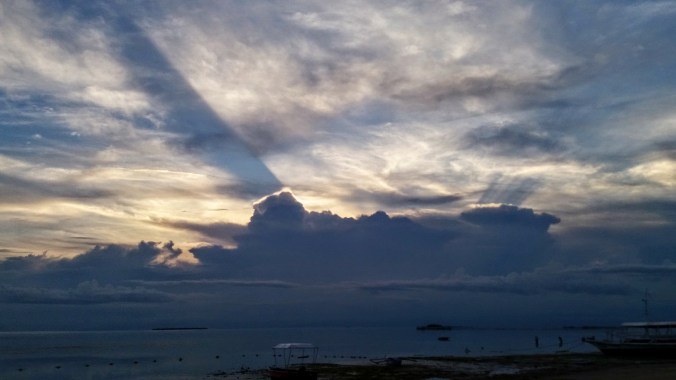 That night we went back to the Pearl at Linaw for a sunset diner on the beach. I spent more or less the entire vacation being in absolute awe of the cloud formations that piled up in fluffy mountains around our island, and this night was no exception. I got up from the table several times to walk the few meters to the water’s edge and get the most unobstructed sunset views possible. However, we got treated to something a little more than your average (stunning) tropical sunset. As the sun worked it’s way downward, I noticed an odd smudge of color at the top of the tower of clouds. I thought that it was that beautiful golden lining effect that so often happens when the sun back-lights dark clouds. I took more photos, admiring the glow and the strong beam-like shadow that was being cast into the sky.










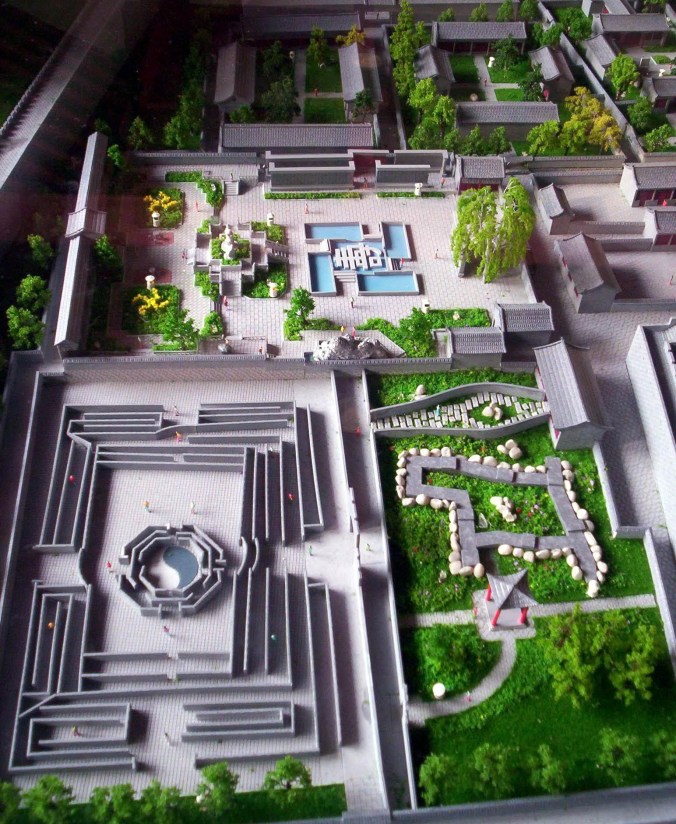 Lastly is the Longevity Garden, which you can see in the second layout model above. It has a nice waterfall, and a reflecting pool in the shape of what may appear to be a swastika, but it really a sacred symbol of Buddhism. And while I’ve seen this figure in a statue before, I’m still not sure who it is, other than it seems to be someone important in Buddhist history.

 They told me that’s the normal price for SPAM, it was just in gift boxes this time of year. This led to a whole side discussion about the cultural dissemination of
  The only real hitch was that we were taking the ferry from Mokpo instead of a plane. This meant a 4+ hour bus ride
 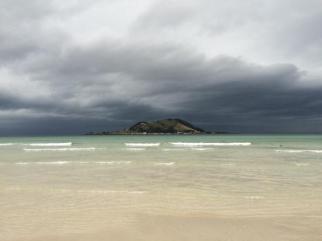 After we ate, we headed down to the water to frolic! The weather was gray, but warm. At first the water seemed chilly, but as I waded in further, I quickly adjusted. This beach was wide and shallow. We walked out for ages from the shore but the water didn’t even come to our hips. There were some Koreans playing in the water as well, but it seemed that only the Westerners wore swimsuits, everyone else went in the water in clothes. I’ve seen this at the beaches in Busan as well, and I’m still not sure what the cultural aversion to swimwear in the ocean is.


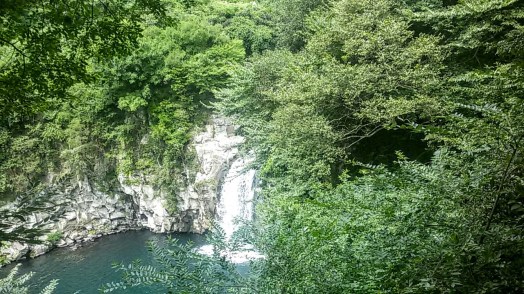 The best view of the falls was obscured by the trees and vines growing around us and was from quite a great distance. I felt cheated. I think it may have been a beautiful waterfall, but the fact that we weren’t able to find out after so many stairs just felt like a bad con. And unlike waterfall 2 which was relatively easy to hop the fence and get closer to, this platform was high above the pool with a very steep and overgrown hillside, making navigation any closer dangerous and difficult.
 We went first to Chocolate Land because, well, chocolate. For some reason there was a giant statue of the Incredible Hulk outside. I don’t know what I was expecting, maybe giant chocolate sculptures or the world’s biggest M&M, possibly a history of chocolate exhibit, or a making of chocolate section. What the ‘museum’ turned out to be was a room (just one) sparsely populated with display cases showing off packaged candy from various countries. Even this could have been cool if they’d said something about it, why is the Arabian chocolate this way and the British chocolate this way… I tried the Kazakhstan chocolate my friend brought me from her visit home after all and was fascinated to learn the pride that the country takes in it’s national brand. But no, these cases just held boxes of chocolates. Some cases made an attempt at silly displays, like a taxidermied chicken with Cadbury eggs or a Nativity Scene made with chocolate coins, but it was incredibly grandma’s yardsale chincy.
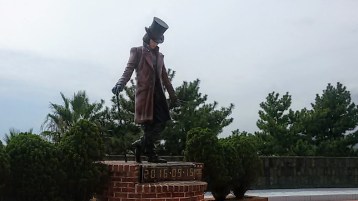 Half the room was filled with what seemed like Christmas themed facades that were, I assume, photo ops as well as a cafe where one could get some coffee, soft drinks, ice cream or candy and relax from the arduous walk through the musem. There was a chocolate making “class”, where for 12,000W you could pour some melted chocolate into molds. Outside there was a statue of Willy Wonka, but the Depp version, not the Wilder one. The final room was divided between more odd displays that seemed to have even less to do with chocolate than the ones before and the gift shop where one could redeem the 3000W entrance ticket toward the price of a sovenier. It turns out Jeju chocolate is quite tasty. They make it in fruit flavors that are unique to the island like Hallabang, Jeju Mandarin and Jeju cactus. The same boxes of chocolates are on sale all over, so it was basically like getting a 3000W discount on some chocolate I would have bought anyway for walking through a weird display room.
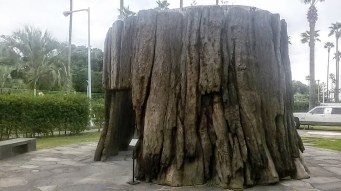 The trunk of a California redwood had been taken apart, transported and reassembled there so that the Koreans could see the stunning size of the redwood trees and experience walking inside the hollow trunk. It struck me that this was as close as most of them would ever get to a redwood and reminded me that museums aren’t just for history, but for the exchange of personal experiences. The most ridiculous thing there was the map of all the places in the world that Ripley had travelled. The map was covered in numbered blue dots with a key below. As we started to try to identify some of the places in the US, we realized that the geography was woefully inaccurate since Siam, Yugoslavia and Burma were all listed as being in the continental 48. Yugo-Slavia [sic] is in Florida.

 On our way past the beach restrooms we reached a point where the floor and walls seemed to move and I realized with horror that the whole path and retaining walls were COVERED in cockroaches. Horror movie levels of roaches. I am not afraid of most bugs. I can be startled by unexpected bug and I have a healthy respect for things that can hurt me, but there is something deeply lizard brain *ACK* about realizing that a good portion of your surrounding landscape is made of bugs. Fortunately, they didn’t want anything to do with us and moved clear of the path as we approached.


 Our guide pointed out with pride that the Egyptian Museum of Antiquities had not been damaged at all during the protests and then showed us a building right next to it that remained a burnt out concrete husk. That building had once been the headquarters of the Mubarak regime that was brought down in 2011. It is a stone’s throw from the museum, the blackened and abandoned remains loom large over the square and the gardens and remain a vivid monument to the struggles and success of the revolution.


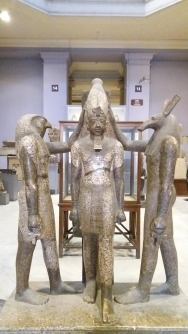 The tour guide said he would explain a few highlights to us and then turn us loose for the remainder of the time. (we were free to wander really at any time, but I liked his explanations and stories so far, so I stuck around) Our first stop was a statue of a king where he explained the traditional imagery of the statues, why one foot was always taking a step forward, why the hands were always down at the sides and holding something, and what the meaning of the beard shapes was. It turns out most of these are design features to make it easier to carve strong, long lasting and above all huge statues. The foot forward makes a more stable base than feet together, and the closed hands are both easier to carve (less detail) and stronger. The left foot became the standard because the heart is on the left side of the body, and some significance was attached to that. Square beards indicated humans and curved ones belonged to gods. Since pharos were born human and ascended to godhood, statues of them in life may have square beards while statues of them after death will have curved ones.
 The next stop was the Rosetta Stone, only it wasn’t because the British Museum won’t give it back to the Egyptian government. So the most important artifact in helping us to understand the civilization of ancient Egypt is a replica in it’s own country. There were beautiful alabaster sarcophagi that weighed several tons each. Alabaster was chosen because it was the only stone that light could pass through. Specially carved lids required equal lifting from four corners to remove, preventing lone grave robbers from desecrating the bodies. Tombs were often found with two such sarcophagi, but it was not the king and his queen, but rather the body and the organs. No more than one person was ever entombed in single pyramid. We saw the only surviving relic from the tomb of Khufu (Cheops) that had been so thoroughly looted before the sites became protected that all that remained to find was a tiny carved figurine only 7cm high.
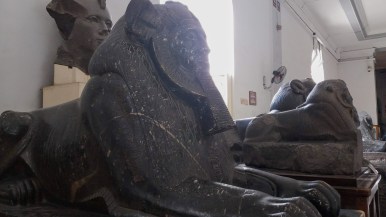 I think I may have glazed out for a few things, because honestly there was a lot to take in. At some point I began to get tired from standing still and trying to pay attention and caught myself leaning against the nearest thing, which happened to be a small (less than 3m) sphinx. We passed into the part of the museum that housed the Tut exhibit. Our guide explained that our perceptions in the West that Tut was very important stemmed from the fact that the find was important, being untouched by looters or grave robbers. Tut himself was a child king and only ruled for 9 years. Yet there is over a ton of gold among his treasures. How much more elaborate then would have been the tombs of kings who ruled for decades and accomplished great deeds?


 The pressure and weight of civilizations past was overwhelming and eventually I couldn’t hold thoughts any longer but simply stared at the treasures around me. I noticed that there were people throughout the museum perched in front of one object or another making detailed sketches in lieu of photographs. (This photo is also not mine, it is a press release photo given by the museum for promotional purposes)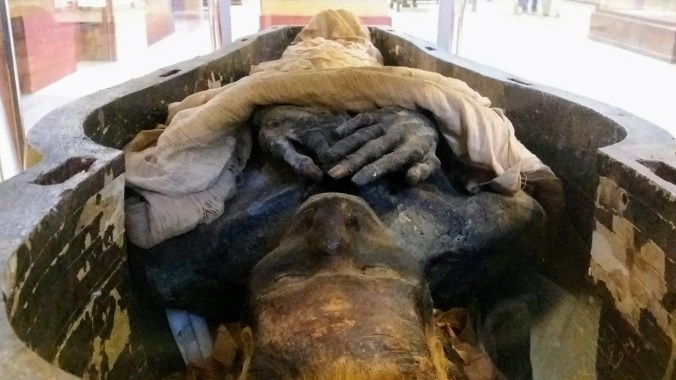
 The museum is one of many buildings set inside a sprawling park. Even with three hours set aside, I only got to see two sections of park and the museum. Its huge.
 And this is a mammoth indigenous to the Arabian Peninsula. The entire prehistoric display was pretty cool. Culminating in the connection to the oil that has made Saudi rich.


 In contrast to the ancient desert feel of the previous sections, this section was almost sci-fi. This long wall tells the story of the Prophet Muhammad (PBUH) in Arabic and English. It really is a good story, it explains many things about the conflicts within Islam as well as the attraction so many find in it. I’m still not converting, but I enjoyed the display.
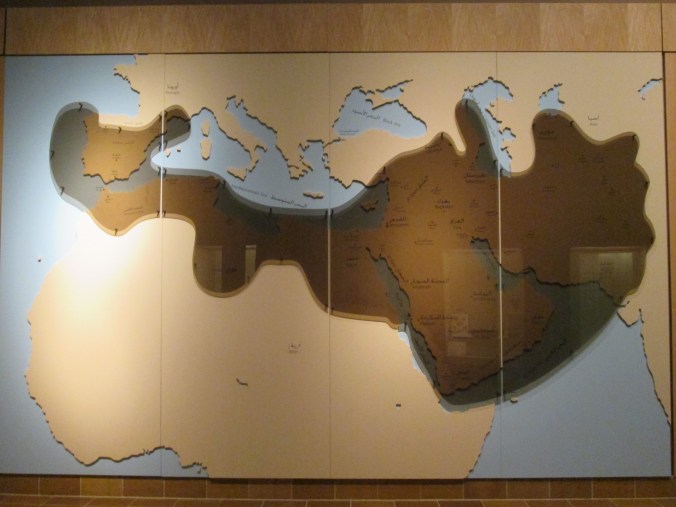 The display tells about the “rightly guided Caliphs” referring to the Sunni side, and focuses exclusively on that version of historical events. (If you’re not up to date on that one, the


 Saud managed to take over a swath of the peninsula by graft and force, and while the museum certainly couches his actions in terms of righteousness and purity, the displays in this section are pretty much all weapons. Gone are the beautiful jewelry, pottery, art and science of former ages of Arabia, replaced by guns, swords and spears.


 Gallivantrix