After a month of a bad news fueled fug, I finally got back out. All due respect to the horrors, the death, the downward spiral of the election cycle, but nobody can stay in that headspace for long without going crazy. We all need a balance. It’s also important to remember why we are going through all the hardship, and why we have to keep fighting for what’s right. So I headed over to Boryeong for the big famous Mud Festival. This post is about 30% a report on the festival and the rest is focused on the great things that happened to me there to help me recharge all my joy batteries.
One of the tour groups here (Enjoy Korea) which had taken me to the Namhae Anchovy Festival decided to offer a trip to this muddy event and after some research I decided that it would be overall better to take their chartered bus and let them deal with the pension than to try to do it myself. I saw amazing pictures like this one  all over their website, Facebook and the internet in general. It’s on the beach as well, which is always a winning proposition. So I got all packed up, bathing suit, all the sunscreen, extra clothes and of course my towel, and set off for an adventure.
It’s becoming stunningly clear to me that Korea has a subtle disconnect between expectation and reality. Historically, reality has shown me that if you read a great description, but show up and it’s not true that you’re in for a disappointing time. In Korea, however, I’ll read a great description, show up to find it isn’t true, expect to be disappointed, then actually have a great time and walk away wondering why they didn’t just describe the real awesomeness in the first place. This trip was no exception.
The Expectation vs The Reality
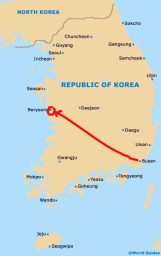 Boryeong is on the opposite side of the country, a little south on the coast of Taean, where we went to see the tulips. It took us about 5 hours to get there, but it was nice because we were on one bus the whole time and didn’t have to think about anything. We got there around 2pm, and quickly went to drop our stuff off in the room and change. We also had to go hunt down booze and waterproof pouches for our phones and wallets. So, it was probably after 3pm by the time we got TO the festival. This may be the only real complaint that I have about the tour trip. The main festival attractions closed down at 6pm, so we didn’t have a lot of time to try all the activities before they were done.

Our group (right) expectations were all pretty much the same. We had been led to believe that there would be a giant mud pit on the beach where people went crazy with mud wrestling and mud chicken, and mud races, and that off to the side there would be some pools and water slides. When we arrived, we kept looking past all the inflatable slides, trying to find the mud pit without success. Finally, I stopped a couple of caucasian dudes who were reasonably muddy and asked where it was. I was informed to my shock and dismay that people were basically getting muddy by going over to one of the large pots of mud and splashing it on each other. … Wut.
 It turns out that the main festival is on Daecheon Beach, which is a beautiful sandy beach, and the mud has to be trucked in for the array of water slides and inflatable games. No wonder it was watered down. Several of the photos I’d seen online were not actually from Daecheon at all, but from the actual mud flats themselves in Namgok-dong, where smaller events, including a 5k mud run, are held. The mud festival lasts about 2 weeks and we were just arriving in town for the last weekend. I didn’t even learn about the mud flats until after we got back, but we wouldn’t have had enough time to visit them that day anyway. Don’t take this map as gospel, because all I could find was the name of the mud flats, so this is just a rough idea of how far the mud beaches are from where the big party is. And while the mud beach looks totally like everything I was promised, the Mud festival itself looks like this.
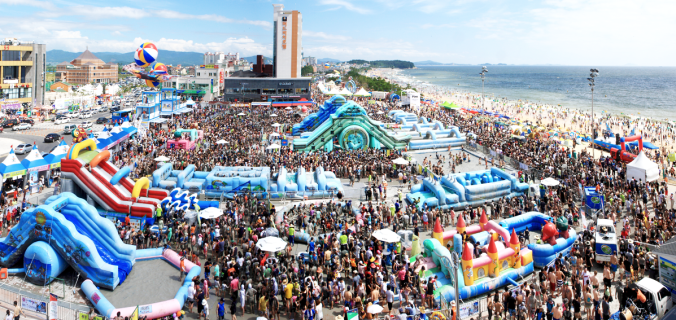
At Daecheon Beach, the only way to access the mud was to go inside the fenced in area, which also meant abandoning our booze and shoes. So we chugged our soju and headed in to see what there was to see. What there was to see were lines (or queues depending on where you’re from). Queues forever. As we selected a line to stand in, we looked around with a great deal of skepticism. The mud wasn’t mud, it was more like pottery slip (grayish brown water with some clay dissolved in it). All the activities were filled with this muddy water and people are mostly clean (if wet) because going into an activity means you wash off any of the thicker “mud” you may have acquired being splashed while in line.
 The line we were in was for the football (soccer) arena. It was an inflated pool with inflated goals on either end. The muddy water was about mid-calf depth and the ball was an inflatable beach ball. It did look fun, but after the first 30 minutes of standing in line, we were seriously questioning our life decisions . We took turns holding the group place in the queue so people could get out and go pee, and finally it was our turn to get in the arena. We lined up against a group of Koreans and began to chase the beach ball around the pool.
So. Much. Fun.
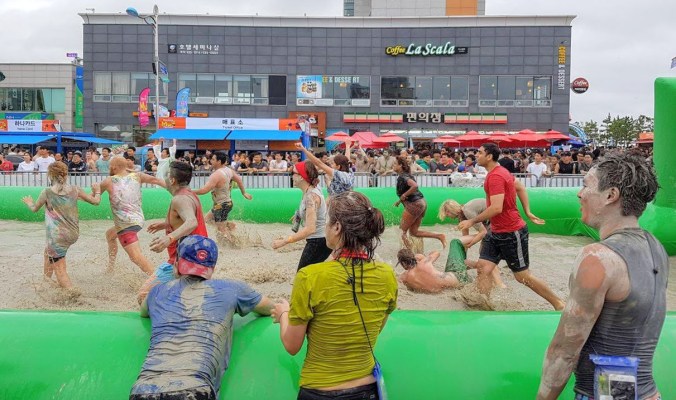
Something magical happened in the moment we began to play. All of my adult cares suddenly drifted away and the whole world was splooshing through the slippery not-quite-mud with a bunch of other grown ups who were all busily engaged in reviving their inner children. I don’t know how many times I fell down, trying to take a kick at the ball and loosing my footing, but I couldn’t stop smiling. I don’t know what the rules were supposed to be, or how many points were scored, but eventually, a referee came by to stop the game and pronounced the Korean team the winner. We lined up across from each other and we bowed to them and promptly got splashed to oblivion by the winning team.
My jaw hurt from laughing and smiling so hard. I felt like the Joker (pre-Heath Ledger), a permanent huge grin stuck in place. All I wanted to do was get in line for every other game available,  but my top goal was the giant slide. My friend described it later as “a dirty inflatable playground for drunk adults. It was all my dreams come true.” And the best part is that there was a dirty inflatable playground for kids in a separate area, so we didn’t have to worry about any rugrats underfoot!
The line for the tall slide wasn’t too bad, but we lost a few people to the short slide and to the bathroom line. Korea has figured out that women need more bathrooms than men, so there’s been a standard 3:1 portapotty ratio at nearly every festival I’ve been to. This has usually been successful, but for some reason, the lines for the men’s bathrooms here were awful.
The weather was also being (at least for me) amazing. I was expecting to spend a day blistering under the sun and worrying about my sunscreen washing off, while using mud like an African elephant to cool my head and shoulders. Instead it was cloudy and barely warm with a lovely breeze. I don’t think it could have been more than 24 C, and I was blissing out on the total absence of heat and humidity, but some people were cold. North Americans formed heat barriers around South Africans while standing in line in an attempt to keep them warm.
 I was surprised to find that the giant slide dumped me outside the fenced in area, especially since my shoes were back on the other side at the entrance where I’d been asked to leave them. I reconnected with some of the group and managed to get back inside right before they closed down. We got in one more line for the floating hamster wheel (which is a serious upper body work out, by the way, especially when it’s slippery!) but alas when we got out, the other attractions were closing down.
This is not to say the festivities were over, just that the inflatable pools and slides were no longer open and we had to rely on the simple pleasures of booze, beach and interesting people. The cool weather was also accompanied by some rough seas, so the “no swimming” signs were up and we were limited to wading in the fierce waves. The sea water was surprisingly warm, however, and we lingered around the surf for quite a while.
Your Moment of (Femini)Zen
The girl I was hanging out with is quite pretty and was approached several times by very flirty guys. One very determined guy came over to us in the waves and started chatting. His body language was very much “hey baby” and she was clearly interested in return. It looked like they were off to a good start, but then it got neggy. For those of you who don’t know, “negging” is the tactic of using subtle insults to break down a woman’s self esteem and raise a man’s own social value by comparison, thus making her feel vulnerable and perceive him as desirable. It is widely advocated by pick up artists.
First, he started talking about his sister. How can this possibly go well? Because “you remind me of my sister” is already not a sexy pickup line and he decided to go with “My sister is hotter than you” instead. She was staring at him like, did you really just say that? But she was also doing the thing we’ve been trained to do as women, and not making a big deal about it. She did point out how weird it was, but in a kind of lighthearted “ha-ha” way. I flat up called him Jamie Lannister, but it didn’t even make a dent. He tried to deny saying it, but never actually retracted it even when we both insisted he had said it more than once.
At this point I was not happy about the situation, but I didn’t want to make her more uncomfortable, so I leaned over and whispered to her that if she wanted help ditching this guy to let me know. She was still into him, I guess because she wasn’t looking for a long term relationship here, she was willing to overlook some drunken weirdness. Then he busts out telling her she looks old! Now, I don’t think old people are necessarily unattractive, but in the patois of courtship, telling a woman she looks old is a crazy insult. I can tell she’s still trying to keep it all fun and funny even though it’s bothering her. Finally, she asked me what I thought about going back to this guy’s room. You don’t really want me to say, I told her. (because I’m going to drop a feminism bomb and generally people at parties don’t groove on that) But she insisted.
So, I let it go in the kindest way possible. I point out that he’s using these destructive techniques of insulting her to break down her self esteem and make her a more vulnerable target for the hook up. I also point out how crazy and unnecessary it was because she was into him before he started doing it. I even tried to give him the benefit of the doubt and told him he probably wasn’t even aware he was doing it, but had just been trained to treat women that way in order to fulfill the equally toxic version of masculinity he’d been taught he had to live up to. (the alternative being to accuse him of actively engaging in pick up chicanery) I told him I didn’t think it was his fault, but that he could start changing by being nice to the girls he wanted to be with instead of breaking them down.
I’m not telling this story to toot my own femism horn. I was really nervous to say these things out loud. I was scared the guy would get hostile. Worse, I was scared the girl I was trying to help would reject me, tell me I was overreacting or reading too much into it, or that it was “just a joke”. I’m telling this story because it was scary and hard. So if you think these things and are scared to say them out loud, know you aren’t alone, but also know this:
I watched her face as I was talking and it was like this gargantuan wave of relief that someone else was saying what she was thinking. She instantly agreed with me and after the guy gave up and wandered off (yay no agro), she thanked me for saying those things. And the nice part is, later in the evening, when she eventually found the guy she wanted to hook up with, I felt confident wishing her well because I believe that she’d been reminded of her own self worth and had found a guy that would make her feel good.
Oppan Gangnam Style
 Returning from the beach to find the eerily abandoned mud park, it didn’t take me long to get to my other favorite travel activity: talking to new people! I ran into someone I’d met briefly in one of the lines who had also ended up separated from his group. We wandered around the waterfront chatting, and ended up having a great conversation about our lives and travels which was totally unmarred by any awkward flirting. Why I love A-spectrum folks: you can dive straight into a deep and meaningful conversation without all that useless weather-sports-job chit chat.
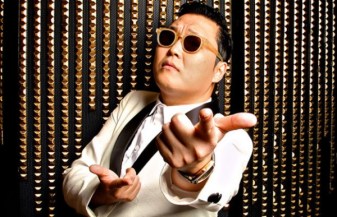 While we were talking, I found out that the K-pop sensation Psy was scheduled to perform on the beach. Which, again, just goes to highlight how bizzaro Korea is about promoting events, because there had been no mention in anything I read about this. In case you’ve been living under a box, Psy is the singer of the international sensation “Gangnam Style”, so he’s not just famous here in Korea, but nearly everywhere. I mean, imagine if you went to a festival and then halfway through someone was like oh yeah, Beyonce is gonna perform, too.
My newfound conversation buddy had a bus out that night, so was anxious about getting to see the show, and of course, whether or not the number one hit would be performed before he had to take off. When the music started, we were up on the street. The whole bluff overlooking the sea was packed with people, most of them holding up phones to see the stage. Maybe they were recording, but generally they were using the phone screen as a kind of remote lens so they could see over the heads of the crowd.
It was impossible to get close to the railing and get a view, but I noticed through the throng that the beach near the water was almost completely empty. The stage was set up on the beach as close to the bluffs as possible, but it’s not a deep beach and the performance area was less than 30 meters from the ocean. We started walking away from the stage to find a place to break through the crowds and get down onto the sand, and by following the shoreline back up, we got very close to the stage indeed.

I don’t get star-struck too much, but I have to say that it was a highly surreal and awesome experience to be standing in the sand with the waves crashing a few meters to my left and Psy performing a few meters to my right. There’s something intoxicating and fulfilling about a huge crowd of happy people, and I will never get tired of looking around and going, “This is really my life! Wow!” And, in case you were wondering, my conversation companion did get to see Gangnam Style and we danced like idiots in the sand.
Serendipity
After the music, I drifted back to the sea to do some more wading. It didn’t occur to me to take my shoes off since they were waterproof sandals. Unfortunately, the tide was dangerously strong, and in addition to taking the sand out from under my feet, one particularly intense wave took the shoe right off of my foot! After a few minutes of feeling around in the sand with my toes to see if it was buried there, I gave up on the shoe and headed inland where I promptly met some more friendly people who chatted with me and shared their beer, while I looked for a cheap pair of beach sandals to replace the ones I’d lost to the sea.
When they set off, i found myself alone once again with zero idea where any of my original group had gotten to, but I was entirely sanguine about it. As I walked up to the bathrooms before beginning a quest for food, I looked over and spotted my Busan Bestie standing in front of the convenience store chatting with a group of blondes. I can’t even tell you how many thousands of people were there that night, but we found each other without the aid of any social media. My bestie and went down to sit in the sand and one more of our starting troupe wandered up to join us. With our core group reassembled, we chatted about our experiences from the day and generally enjoyed ourselves. After a while of holding still on the waterfront, I finally started to feel the chill everyone was talking about and we got up to try to find food.
It’s not that food is absent from Korean festivals, but they don’t have food stalls the way we might see in the West which are full of food that’s meant to be eaten while walking. Korean food is a very social event, so even at festivals, they serve food alongside a place to sit down with big group and eat it. As a consequence, the mud festival did not have much food on offer because there was nowhere to sit and eat it. Most of us hadn’t eaten since before leaving Busan and had a hefty appetite by midnight.
We found a chicken and pizza shop on the main road, but then because there were no tables, we joined a couple more military guys at their booth and they promptly shared their chicken and beer with us. We had ordered the cheese chicken, which is not like chicken Parmesan, and is instead a sort of fried chicken coated in the kind of cheese powder more often associated with cheese flavored popcorn. It’s actually not bad, and when you’re starving from a long day of drinking and playing on the beach it’s practically food of the gods. Of course we shared back with the Army guys, and they left us most of a pitcher of beer when it was time for them to take off.
The chicken was really filling and the pizza took foreeeever. Just as I was starting to think it might be worth taking the loss just to get out of there, they finally brought it to us in a box. I figured I’d eat it for breakfast, but then we became the bearers of serendipity rather than the receivers. On the way back to our pension, I ran into some more revelers who were super eager to find out where we got the pizza. Since it was still hot and untouched, I offered to sell it to them for what I bought it for (no pizza profiteering). I think the Korean girlfriend was going to cry she was so happy, and just couldn’t believe that a pizza fell into their laps. It makes me happy to know that somewhere, someone is telling the story of how they were drunk and starving at the Mud Festival when this white chick came outta nowhere with a hot pizza for them.
Ondol Again, Off Again
Sleeping arrangements were sparse but adequate. At least this time, I knew I was going to be sleeping on the floor, so it wasn’t a shock. To cut down on costs, the tour group had assigned us all roomies, and we stumbled in sometime after 1am, waking ours up with many apologies. The Korean Ondol is the magical heated floor that I was so grateful for in February and March. However, this has led to adoption of a sleeping “mat” that is quickly becoming one of the great cultural mysteries to me. When I lived in China, I was struck by how hard the mattresses were, and one of my Chinese coworkers even complained about how the mattresses in American hotels were too soft for her to sleep on. In Japan, I had a futon on a tatami frame. The futon was thin, maybe 6-7cm, but it was cushy enough to take the edge off, and the tatami underneath was also a little springy. So, both of these Asian cultures certainly liked harder sleeping surfaces than we do in the West. Fair enough. But the Ondol mat is really just a blanket on the floor. Not even a thick blanket. You could almost imagine that being ok with like a squishy fluffy comforter, but no. It’s a thin quilt. In the winter I can understand not putting much between you and the heated floor, but in the summer all it does is protect you from sticking to the hardwood.
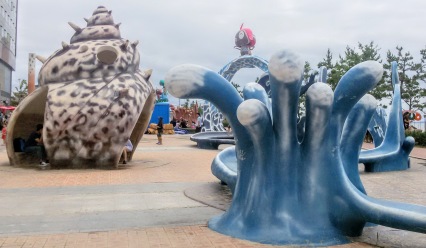 I like the notion of the pension, but the number of nights per year I’m willing to sleep on the floor is shrinking as I age. Just one more reason I really need a TARDIS. Anyway, thanks to alcohol and exhaustion, I did manage to sleep. And woke up the next day with only a mild hangover and several more hours to explore the festival grounds. I hadn’t known that we would still be at the festival for so long, and only had one set of clean clothes. It turned out that the water attractions were closed anyway, so while there were still people getting muddy, it was limited to the mud water jars placed around the plaza.
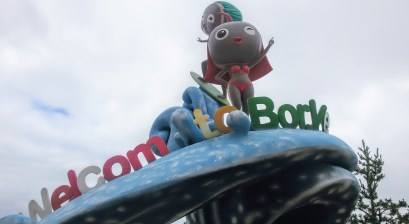 We managed to stay clean and took the time to better explore the area. As it turns out, the Boryeong mud is famous for it’s mineral composition and use in cosmetic products. The festival was once an advertising campaign for the cosmetics and has since become an epic party. There were several things that seemed to be permanent beachfront statues that were all about the mud, but since the mud itself is a major commercial export for the town, it wasn’t so surprising that they had statues devoted to it.
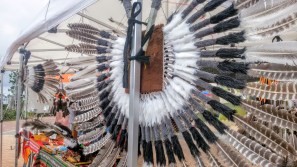 We also found the performing native Americans again. I feel like it’s starting to become some kind of David Lynch-esque running gag for my time in Korea that there are always guys dressed in intense and often highly mixed Native American garb playing flutes and pan pipes and selling dream catchers. One of them had bright neon fringe this time. And I saw more of them playing at a rest stop on our drive home! What is the deal Korea, seriously?
The Verdict?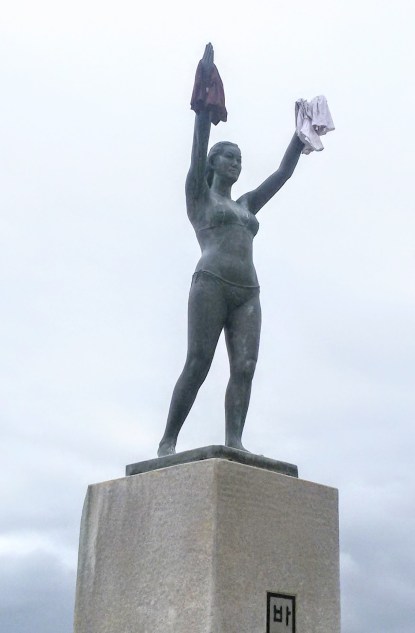
Overall, the Mud Festival was a stunning success for me. I still think it could more accurately be called the muddy waters festival, but once I got over the initial shock of how different it was from my expectations, I had an amazing, endorphin fueled, oxytocin generating, dopamine flooding time. (Which is big brain chemistry talk for “AMAZEBALLZ!”) If I go back next year, I’ll make an effort to arrive Friday night or at very least earlier on Saturday so that I have some more time to play on the mud toys before they close down, and I’ll try to find a group that is hitting up the mud flats proper as well. I might also recommend getting a camel pack for water in addition to the waterproof pack for your phone and money. There were convenience stores everywhere, but most of us didn’t drink enough water, and it took me a couple days to fully re-hydrate. As far as fun things to do in Korea, I wouldn’t make a special trip to the country just for this one, but it was definitely a great reminder of love, friendliness, and joy that I really needed. And since there’s no bad time for love friendliness and joy, I absolutely recommend the festival to anyone who happens to be in Korea in July.

As the first semester draws to a close, I find that I’m still completely enjoying myself in Korea and at this job. I’m looking forward to some more fun adventures this summer including a vacation to New Zealand! I’m being joined soon by a dear friend and fellow globetrotter Jane Meets World, who is finally moving to Asia for the first time, so I get to use her arrival as an excuse to do even more fun things in Busan. And I’m already planning our “Korean Thanksgiving” holiday weekend trip in September. As much as I hope that things in the US make a turnaround for the sane, and as hard as it is to watch my friends and family to live there endure the hatred and vitriol that is being propagated, it’s important for us.. for me to remember that most of the things in life have the potential to be great, and that most of the world (including large parts of the US where the cameras aren’t always pointing) is a beautiful place filled with amazing people who can be your friend for a minute or a lifetime if you just open your eyes and your heart. Love is quieter than gunshots, but there is more of it.
 In India, the Hindu people ring in the spring with a festival known as Holi. It is often called the festival of love or the festival of colors. The main activity is throwing colored powders at each other until we all look like crazy rainbows. There is a huge mythological background involving gods/goddesses and heroes, and it seems like various regions within India each attribute some slightly different details to the history, but you can
  A group of Indian expats organized the event to take place at Haeundae beach. They set up a stage, a DJ, and tents where we could collect our colors, store our bags, and enjoy some delicious samosas. They started setting up at 9am, but since it takes me about an hour to get to the beach from my place, I opted to join a little later on. It was supposed to rain that day, so we had a lot of clouds in the sky, but when I showed up the beach was still dry. To abide by the Indian tradition, we were all asked to wear white to the event, and most people complied. In India, everyone would be wearing all white versions of their traditional styles, but we had to make do with what we could find here. Some girls were wearing white sundresses, and lots of guys (ok and me too) were wearing cheap white men’s undershirts.
 When the announcer reached one, everyone threw handfuls of powder up in the air, creating a sandalwood scented rainbow haze above us that settled down on our hair and shoulders. After a few minutes of ecstatic throwing of colors, people got down to the more serious dancing. It seemed another major part of the ritual involved hand painting people with paint or powder as you wish them a Happy Holi, so my face and shoulders quickly started to acquire more colors. All of the revelers were very respectful of body space, so the most popular targets for strangers were cheeks and arms/shoulders to avoid any uncomfortableness.
 I went through two such countdowns while staying in the core of the dancing area, I didn’t have my powder yet for the first one, so I made sure to be in the middle for the second one. Then I started wandering around the rest beach area to see what else people were up to. Some folks had built a sandcastle and decorated it with colors. Some had decided to take a dip in the ocean, causing their colors to take on the gentle fading effect of watercolor paintings. Lots of people had broken out bottles of beer and soju, and everyone was getting more and more colorful, happy, friendly and generally frenetic.
 I hadn’t actually had anything to drink at all at this point, but the atmosphere of excitement and the music combined to make me feel like I was floating through some kind of happy dream land. I met tons of new people, in addition to running into familiar faces, and I got more and more colorful as the afternoon wore on. Some folks had found the face paint and started making paint splatters and dribbles on one another, while others coated their hands and left hand-prints on their fellow revelers. Even as those hand-prints started drifting away from just shoulders and upper backs, I noticed that consent was always obtained. Lots of people of both genders turned up with hand-prints on butts and breasts, but every time I saw someone touch or get touched it was with respect, consent and Happy Holi. This was even more amazing, since such a party with free flowing booze and an excuse to touch people would have likely ended up with a good deal more unwanted groping in other places. And who knows, maybe someone here did experience that, but I tend to be aware of such things, so at least I can say the overall mood was of respect and not abuse.
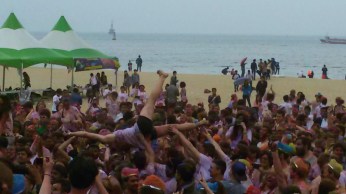 People started conga lines, crowd surfing, or just lifting and tossing each other up in the air. I headed up to the grass line above and behind the stage to try to get some pictures of the crowd and hopefully to see the countdown color throw from outside, now that I’d seen and participated from in on the inside. While up on the sidewalk area, I noticed a fair number of locals out for a Sunday stroll who gave us a wide range of interesting looks from curious to downright horrified. Some stopped to take pictures, and I was even asked to pose a couple times. Plus, although we were several hours into the event, it had not rained even a little bit.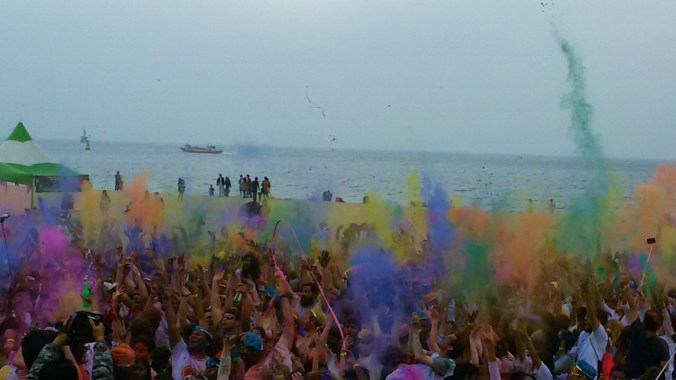
 After the last countdown, we gradually started winding down. The music didn’t stop, but the announcers asked everyone to help clean up the beach, which had become littered with empty plastic bottles and empty color packets. At the risk of sounding like a jaded broken record, pretty much everyone still there at this time did as they were asked and began gathering the rubbish in to large piles where it could be picked up by staff more easily. I’m not sure when I stopped believing that masses of young partying people could be polite and respectful, but I am really glad to have been so pleasantly proven wrong. The event coordinators must have had a ton of food leftover, or they just brought extra because they were also giving away free delicious Indian food at the end of the event as well.
 Some of my new friends and I lingered around the beach for a while, and it eventually did begin to rain and get colder, so we headed back inland to the Wolfhound, an infamous Irish Pub where we proceeded to drink some very large pitchers of ale and dance to some of the best top 40 hits from the 80s and 90s. I headed home only slightly after dark, and despite my best efforts (not drinking any booze while on the beach and going home at a reasonable hour) I still woke up the next day with a magnificent hangover. Inhaling lots of powdered colors, forgetting to drink enough water, and not eating enough did me in and I got a chance to try my very first Korean hangover cure (sold at convenience stores everywhere). And, although I washed everything else, my Holi shirt now hangs on my wall as souvenir art of the wonderful day.
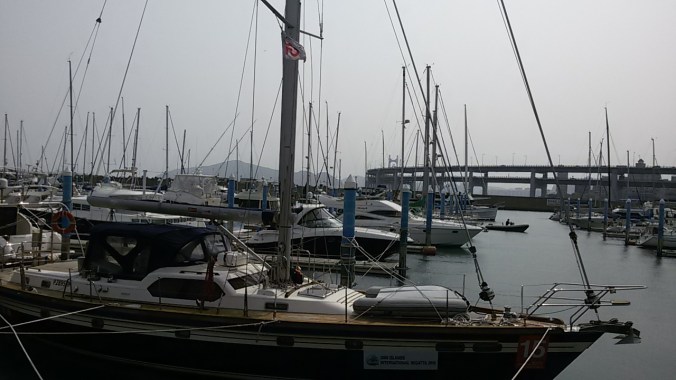
 Armed with Naver, I headed down to the marina at Gwangalli to meet up with the sailing group. It was a good mix of the more experienced sailors (the crew) and first time sailors. Everyone was friendly and happy to be there, and once the whole group arrived, we got a short safety lecture and headed to the slip where our boat awaited. We were in for a great sailing day with clear skies and winds up to 17 knots. There were some issues getting the sails up, so we motored around the bay and under the bridge, getting some fantastic views before we finally got under way.
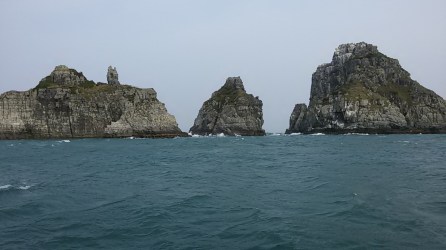 We sailed out past the small islands nearby before tacking for our return trip. Because of the strong winds, it was important for us to sit on the side of the boat that would be in the air, and we all had to change sides before the tack, while avoiding the boom. I let some of the first time sailors go ahead of me, figuring they would have a more difficult time, but this meant I was still on the port side when the boat tacked, and I got half dunked when the boat tipped up the other way before I could clamber up into the middle.The trip out had left most of us soaked, and several people started shivering in the high winds. We brought out some blankets from the hold, but in the end a some had to go below decks to get warm. I was chilly, but wasn’t about to miss a minute of the great weather and views.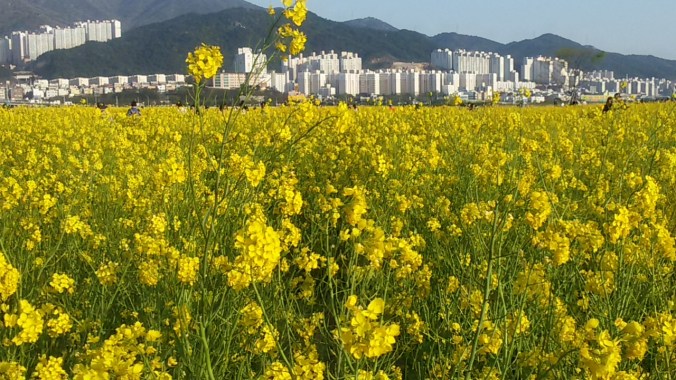
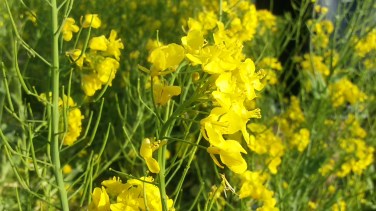 The girl I met on the bus back from Jinhae invited me to come with her to the festival and we decided to meet up Friday after work and head over. It was a long and winding subway ride, but we arrived with plenty of late afternoon sunshine to enjoy the flowers. The plants grow about 1-1.5 meters and there were little trails through the fields where visitors could walk among them, often chest high in yellow. Busan is a beautiful city, surrounded by mountains where it isn’t bordered by water, and as we crested the hill and the fields came into view, my breath was taken away by the expanse of brilliant yellow, bounded by the low mountains and a bright blue sky above.
 uring the weekends, and possibly earlier in the day, the festival has a variety of events and booths, but by the time we got there at 5pm on a Friday, there were only a few food vendors left. I didn’t mind this too much, since my primary goal was to see the flowers anyway. The fair food on offer wasn’t as interesting as what I encountered in Jinhae, but there were still some spiral potatoes and a tremendous amount of kebab vendors, as well as the sculpted candy floss. After a brief survey of the vendors, we headed into the flowers and were soon immersed in a fairy world. It reminded me of a sort of reverse horror scene. You know the movies where people are lost in a field of crops until the monster leaps out at them. But instead of monochrome crops by night, we were amidst the brightly colored blooms in glorious sunshine, and I felt that instead of a monster, we should expect a unicorn to leap out at us.
 Korean apartments are tiny little studios, comfortable for one, cozy for two and not actually terribly well suited for a party. On top of this, our host had set up his racing track which took up nearly the entire floor in the sitting area. We had to carefully step around and between the loops of the track to move across the room and there were only 6 of us. We watched the guys race while we ate, and then we got a crash course in how to use the track. It was a little like Hot Wheels on steroids. The cars were about three times the size of the Hot Wheels, and the track was equally sized up, which is why it took up the whole floor. In addition, it was linked into a video game system that measured our laps as well as our “fuel” so we had to not only drive the mini-cars, but pull into a pit stop when our fuel was running low or risk losing the race by running out and getting stranded.

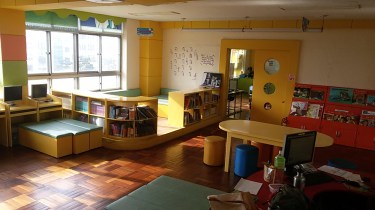
 In the morning, I wake up before 7 am to get ready. My neighborhood is still quiet then, and when I step out onto the cold spring sidewalk, everything except the 24hr stores are closed up tight. Because I live in a pretty ritzy neighborhood, I have a bit of a bus ride to school, but it’s a nice time to wake up and see what’s in the city through the windows.
 Because it’s still so early, the bus isn’t too crowded and I can usually get a seat.
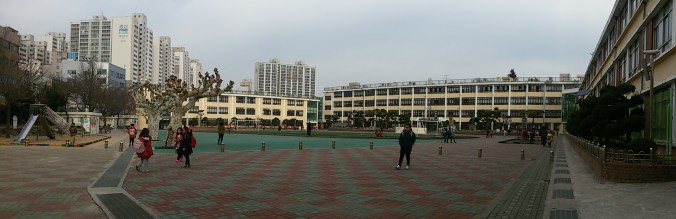 My first week was actually the second week of school because I spent the first week in quarantine, so you can imagine the kids were surprised to see me after their first week with no native English speaker. There were lots of curious glances and furtive shy peeking in the window. Some brave students even came up to ask what day I would be in their class. Monday wasn’t especially a typical day, but I made it through my classes with minimal technical difficulties, and learned that there are three other teachers I’ll be spending most of my time with. The other two English teachers, who I will refer to as co-teacher 1 and co-teacher 2, as well as a music teacher that is in our hallway. They’re all really sweet ladies, and did their best to make me feel included, sitting with me at lunch and chatting with me in the hallways or after class.
 This one was our year start dinner, and we went to a traditional Korean barbecue place. Every 4 people shared a table with it’s own grill and assortment of banchan (반찬 : the side dishes served at every Korean meal). It was the duty of the youngest at the table to cook, which is our music teacher, so she set to grilling the pork belly (
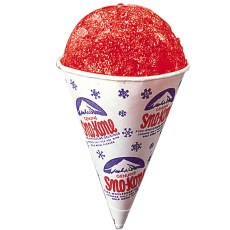
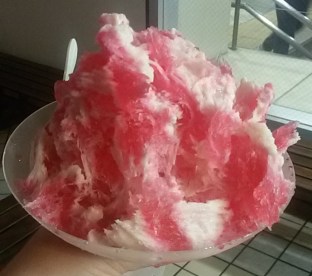
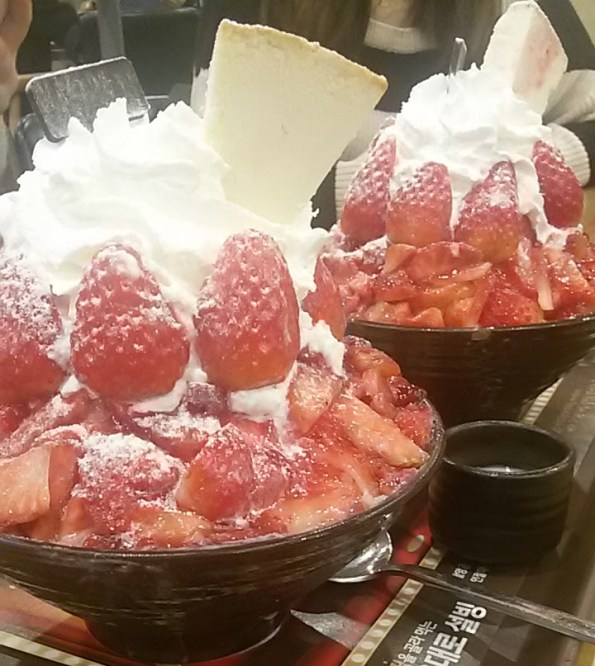

 My pizza was cold by the time I got home, but my apartment has a microwave, so that was ok. It turns out that sweet potato pizza is one of the ones without tomato sauce. The box declared proudly that the crust was made from organic flour (kind of surprised that’s a thing here) and Korean rice. There are small diced vegetables like onions, green peppers and roasted corn, as well as some kind of sausage reminiscent of Italian. Then, placed like a crowning jewel on each slice, is a single chunk of roasted sweet potato (or possibly yam), and the whole thing was covered in mozzarella cheese. The “gold” crust turned out to be a satellite rim of mashed sweet potatoes, topped with cheddar cheese that had toasted in the oven. Not really like anything I’d have described as “pizza”, but quite delicious nonetheless.
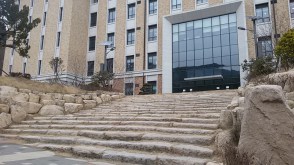 The week long orientation was to be held at BUFS campus, which is beautifully nestled in the mountains of Busan, and a good deal colder than the rest of the city. In order to stave off sleep until bed-time, I decided to take a quick walk around the campus to explore. In February, most of the trees were dormant and brown, but I can imagine how beautiful the campus probably is during the other three seasons. It is entirely surrounded by trees with a little stream running through it and trails running up into the mountainside.
 I admit, I’m not in great shape, but freezing cold air combined with physical exertion is hard for anyone, and especially triggering for asthma. After the first full day, I went out of my way to find the less steep options, but that first set of stairs was pretty insane, and then it turned out the elevators were turned off for the weekend! By the time I got to the lecture hall, I felt like I should be lighting some incense at an altar, because the only other times I’ve climbed that many stairs has been to get to a temple.
 We had to forgo breakfast and rise at the crack of dawn to get our medical exams done. Well, my group did anyway. My roomie was in the second group who got to sleep in. Not the very best organization, since we then ended up sitting in the bleachers for almost 2 hours waiting our turn, but once we got into the ersatz medical check up facility, things went fairly smoothly with each test having its own station around the gym and a huge medical staff processing our vitals and taking notes. Other than a little sleep deprivation, it wasn’t too bad, and I did get a chance to rest in my room before lunch and a full afternoon of welcoming lectures.
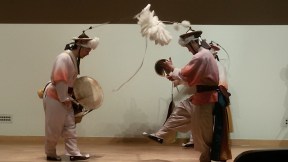 Ok, enough complaining, cool stuff for a minute. The first few days were full of auditorium style lectures and presentations, most of which were actually quite lovely and entertaining. There was a fun dance performance of traditional percussion dancing, a demonstration of filial piety with the new year honoring of parents, and there were several speakers who shared great stories and experiences of their time in Korea and working with EPIK. The best part for me (maybe right after the hat ribbon dance) was that many of these stories involved how they had helped previous EPIK teachers overcome obstacles and misunderstandings. In all my previous ESL experiences, I’ve had little to no support in my job and even less for cultural issues beyond work. It made me feel profoundly supported to hear what these staffers were willing to do for me based on what they had done for others before me.
 This was also mostly a positive experience, although the kindergarten treatment was a tad intense. Our first stop was the famous Haeundae Beach park. There is a reason I hate tour groups and I think this day hit on all of them. We were made to stand in line by bus assignment and follow our leader with a flag. We progressed at a set pace from one gathering point to another, often being rushed past photo ops or up steep hills just to wait around in lines again at another gathering point.
 Despite the nannying, the beach truly was wonderful. I’m looking forward to going back on a day when I can be my own time-minder. As it was, I did get a chance to doff my shoes and socks and play tag with the waves. All the locals must have thought we were insane for playing in the water in February, but it was definitely the highlight of the day for me.
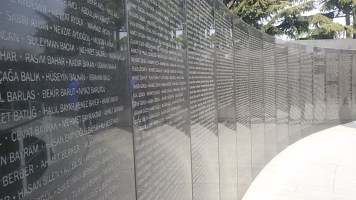 Possibly the most astonishing thing that I saw on this visit, however, was the memorial wall, a near replica of the one in Washington D.C. for the Vietnam War. More than half the wall was covered by American names. Considering most of my interaction with the Korean War was watching M*A*S*H, it was sobering to see the impact of the conflict in terms of numbers fallen per participating country.
 I thanked them muchly and bid them goodnight. I did a little exploring of the kitchen, then headed out to pick up some basic supplies. The neighborhood is a tangled maze, like a hutong but with much taller buildings and a lot of neon. I found a grocery store and a convenience store nearby, then wandered a lot farther looking for some kind of restaurant before settling on some to-go soup from the only place that looked reasonably priced.
 As I began to apply to university positions, it became clear to me that these were really competitive and difficult to obtain unicorn jobs, which I might technically be qualified for but would also be at a massive disadvantage because I wasn’t already in Korea with a visa in hand. Apparently the catch-22 of needing experience to get the job you need to get the experience is not limited to the US. So I decided I needed a solid backup plan. After all the work I was doing for this Korean visa, it would be a real shame if it all went to waste simply because I overreached in my job applications. Don’t get me wrong, I’m was still holding out hope as many schools said they would be conducting interviews in late Nov-early Dec, but I like back up plans.
 This form is 8 pages long (not counting the 5 page lesson plan you are meant to attach to the end). It asks for your complete academic records including the names and dates of your elementary and middle schools. (I’m an Air Force brat, it’s not just one school.) It includes several essays, explicit details about any piercings and tattoos, 5 years of residency history and even more of job history. I once applied for a job with the US government that required the SF-86 background form. This wasn’t quite as detailed, but it was a near thing. I sent this form in as an email attachment prior to my intake interview, and then part of the interview process was reviewing the form in painstaking detail to correct any formatting or informational mistakes I had made in filling it out the first time so that I could redo it before printing the hard copy to mail to Korea with all the other documents.
 This lesson plan was pretty intense too. When I did my TESOL certification classes, we had to write long elaborate lesson plans basically to demonstrate a grasp of the material we were learning, how to organize a lesson, how to manage time, how to actually teach the material, etc. At no point since then have I been asked to write anything so long as 2 pages for a 45-50 minute class. That’s not a lesson plan, it’s a script. The 5 pages of lesson plan that is part of the EPIK application is ostensibly meant to be 2 pages of actual plan and 3 pages of materials. I don’t have any lesson plans that long from actual teaching jobs, so I broke out the one I used for TESOL and revamped it to fit the EPIK format provided in the application file.
 I hate having to ask for these things. It’s always awkward. It takes up the time and energy of the people involved, many of whom do not have experience writing such kinds of letters and end up stalling because they don’t know what to write. In the past, I have written letters and simply asked the people to sign them. I did this because teachers have asked me to do it that way to save them time and to make sure that the letter has what I want in it. I hate even more having to ask for them on a deadline, or in a specific format, because then I feel like I’m asking for a really difficult favor, which I basically am. Thankfully, I am in a situation where two people are willing to print and sign new copies of the letters they just wrote for me should I need more than one original, but what it basically comes down to is that any time someone wants an original letter of recommendation, expect to have to inconvenience someone in a position of authority over you.
 None of my other experience will count towards the 2 years for the level 1 pay grade (my summer jobs can’t count because only whole years count, not cumulative ones) and this means I get bumped to a level 2+ pay grade, which is a difference of 200,000 won per month (170$US) so I’m not super happy about the situation, but it isn’t the end of the world.
 I couldn’t find a SMOE website at all. Now I know why. Only after you’re accepted by EPIK can you fill out the SMOE attachments, addendum and contract to add yourself to the Seoul list of schools possible teaching pool.
 see your picture first. Plus, a lot of government documentation will require “passport style” photos to be attached to official forms. When I was going through the Saudi application process, I spent way too much money getting passport photos from a local drug store at 10$ per 2 photos. A long time ago this made more sense because they had to take your photo against a plain white background and it had to be aligned correctly, then developed and cut to size. Now, you can take your own passport selfie against any white wall and crop it to passport regs in your phone. So why are they still charging me 10$ to take a digital picture?
 o date stock of fun photos (no NSFW photos) so that I can provide some shots of me being a fun loving, outdoorsy, go-getter, but the professional shots really confounded me. Korea specifically seems a little schizophrenic about what they want, because I was told professional attire, but BIG smile.I have a hard time working up a fake smile, so my business pose tends to be a small smile, polite and friendly, but not “hey I’m having a great time in this suit!”. The picture I sent to EPIK the first time wasn’t “smiley” enough. However, it’s still easier to do this yourself or with a friend. You don’t even need Photoshop anymore to touch up your imperfect selfies because Pixlr offers most PS features for free online. I was able to remove my facial piercings (easier to Photoshop them out than to take them out for a photo, I’ll remove them for real before I fly out), change the background to a better shade of white, and brighten up the colors all pretty quickly. It’s also great for removing zits.
 To make things more fun, each country could have a different standard size or ratio for passport style photos.America is 2”x 2” square, but Japan and Korea use a rectangular aspect ratio (and cm). So a standard “passport photo” from your local drugstore is not only expensive, it might be the wrong size. When I realized I needed a million passport photos for Saudi, I decided to make my own sort of contact sheet by putting the photos into an A4/letter sized document and just having them printed off on photo stock paper. It was certainly cheaper, but thanks to the internet there’s an even better way.
 One day after I’d moved across town, I got a text from the former roomie letting me know that the letter from China had arrived. Not being willing to wait another 5-6 days until the next time I had planned to visit their house, I drove up in the middle of the night (after I get off work, plus less traffic) to retrieve the letter. I was so excited to finally have everything together I actually couldn’t get to sleep until I’d gone over the checklist one more time and put everything together for the great mailing. The instruction packet sent to my by EPIK on how to assemble my documents is 15 pages long, by the way. Here’s the final list:
 The next day, once the letter had been scanned and copied dutifully, I checked the checklist and every piece of paper again before sliding it all into a thick manila folder and heading over to FedEx… where I paid nearly 100$ to ship this brick of paper to Korea. I’m really happy to be there, but man I don’t know why we couldn’t just do this electronically for free. I tried to remember how much it cost me to ship my documents to Saudi and eventually realized I never did, I only sent them to a US based visa specialist, so got the far cheaper domestic overland shipping costs.
 Do your own research:I’d like to add to that – research should include phone calls and/or emails with a person who will oversee whatever it is or who has undergone the process before. Cursory internet/website research is often incomplete, outdated or just plain wrong. So are untrained cogs.
 nd laugh at the red tape blooper reel. I still think keeping the story is important, but now I’m looking at it more as a learning opportunity. The paperwork isn’t going away. Re-reading my Bureaucracy stories from Saudi really put some things in perspective for me about my current trials.

 I have come to terms with the fact that I’m going to be a wizard level expert at international red tape by the time I am done with this phase of my life. As rewarding as travelling around the world can be, it seems that it’s always going to be expensive. It just so happens in my case, the expense is time, sanity and maybe gray hair and only a little bit of money. Eh, I guess until I’m independently wealthy, I have to pay the red tape price for pursuing my dreams. So, welcome to Bureaucrazy, the ongoing cycle of dull boring (frantic, insane) paperwork that I must complete in pursuit of my life of wonderment and adventure.
 It’s not really surprising that we need a criminal records check to get a job. I had to get one from City of Seattle for my Saudi gig, after all. But Korea is not satisfied with a mere city, county or state level criminal records check, oh no. They need the Federal Bureau of Investigation to be in on this. MIB, Moulder and Scully, Quantaco. So, I head over to the FBI website to find out what the process for criminal background check actually is.
 I moved habitation in the meantime, so I was hoping to go to a police department closer to the house I was staying in, and then to the local post office to send off this new round of application materials, but as it turns out, you can’t get your fingerprints taken at most police stations without an appointment and proof that you live in their jurisdiction. Since I’m basically couch surfing while I’m back in the States, I don’t have proof of living where I’m staying like a driver’s license, bank statement or utility bill, so there was simply no way for me to get my own fingerprints taken except to go to the large municipal police department in downtown Seattle. Round 2 fingerprinting took a little longer because there were more people in line, but still a pretty positive experience (way to go Seattle PD, well done). I take my new fingerprint cards and my application to the Channeller, and go to the post office to mail them registered style so I never have to fear a lack of package arrival again.

 occasionally gets to see the barest glimpse of the bureaucracy wars (like that time she got up at 4am to help me call airlines and bring this bunny home from China). Also like this time where we were basically stuck between two people in positions of relative authority telling us totally contradictory information. So, sitting in the car and fuming slightly, I decided that the best option was to call the Secretary of State’s office and find out what the heck was going on.
  My American readers will have a good understanding of how far away from Seattle Memphis actually is. When I fly over to visit my mother there, it’s a good solid day of flying, like 7-9 hours. For the non-Americans, think about how far from your home country you can get in 7-9 hours of flying and know that isn’t even all the way across America, only about 2/3. So there is no way for me to do this in person. I couldn’t imagine that there was not a way for people living outside the state to achieve this, so I waited until the next business day and called the office to ask what methods existed for people who no longer resided in Tennessee. I was told to find someone who was willing to run around and get the stamps/signatures for me. Because Tennessee is trapped in the mid 1970s and knows nothing of the information age.
 In addition to the CBC itself and the application form and the money, the US Secretary of State also wants a self-addressed stamped envelope. These aren’t difficult, although they’ve become increasingly rare because most companies want to be able to track their packages and so simply ask clients to include a return shipping fee (or just raise the fee to account for return shipping cost). It’s been a long time since I had to include an SASE. But it’s not just this, the application form wants to know the shipping carrier and tracking number of the SASE that is inside the envelope that the application form is also inside. I think the poor little guy at the post office hates me.

 Some of you will have noticed that this isn’t in the list. This is because it wasn’t something I thought I would need, but rather something I discovered in the process of applying for jobs. Basically every single school I applied for wanted these letters from previous employers simply stating that I had in fact worked there and from what day/month/year to what day/month/year. I have not ever encountered such a thing before. I have always been in a situation where someone either took my word for what was on my resume or simply called the company to verify my employment with HR. As such, it had simply not occurred to me to get these letters on my way out of previous jobs. I had tried to get one leaving Saudi, because my boss suggested it, but the company (not surprisingly if you’ve read anything else about my exit process) did not deliver.

 Gallivantrix