Hello Bohol: Firsts and Lasts

This post is a collection of tales of how I came to spend 9 days in Bohol, and of my first and last impressions of the country. I warned you that this holiday would not be presented in chronological order, and how much more out of order can you get than putting the first evening and last morning together? Read on to find out more about Korean holidays, Philippine toilets, a little about tipping culture, and a little about human kindness.


What Am I Doing Here?

gimhae-airport.jpg

Image Credit: Haps Magazine

What made me think it was a good idea to take a 9 pm flight on a Friday before a major holiday? Considering I bought the plane tickets back in early May, I don’t have a clear recognition of that decision making process, but I’m sure it had to do with some combination of maximizing vacation time and minimizing price/layover time. Regardless of why I made the decision at the time, when the day arrived and I stood outside in the dark waiting on the limousine bus to the airport at a time of the week I’m usually in my PJ’s with a glass of wine recovering from the school week, I asked myself this question.

When I arrived at Gimhae airport to find it more full of humans than I’ve ever seen it before, the line for my check in counter already stretched across the large room, and the flight itself delayed by an hour, I asked myself again. One day, we’ll invent teleporters, or I’ll finally steal a TARDIS, but until then, airports are the necessary evil I face to enjoy the world.

The Big Holiday Gets Bigger

It was Chuseok again in Korea, that wacky lunar fall holiday that moves around more than Easter, but is a bigger deal than Christmas. Last year, you may recall, I took a 5 day weekend in early September down to Jeju, the “Hawaii of Korea” because Chuseok fell on a Wednesday-Saturday, and I also had no idea it was coming until it was almost here, so no real time to plan a getaway (thanks Enjoy Korea for saving me there). This year, Chuseok is in early October, and because of magical lunar calendars, the timing for no work days was awesome. The actual holiday was Tuesday-Friday, but many businesses (including my school) decided not to bother opening on the Monday before. Plus, the Monday after was October 9th, a controversial holiday in the US (I prefer “Indigenous People’s Day” to that other dude), and Canadian Thanksgiving this year also, in Korea, it was Hangeul Day, the day we celebrate the creation of the Korean phonetic writing system that freed them from the complex Chinese writing system and enabled the country to become super-literate. To save you the arithmetic, that’s 10 straight days of not working.

Choose Your Own Adventure

I wanted at first to go back to Koh Lipe, but the island is closed this part of the year due to the weather. *sigh. I pulled up my new favorite flight searching website, as well as several old standbys to see what the cheapest fares to the most interesting places were during my window of opportunity. It turns out that even though I started looking as early as April, most Koreans had been looking since last Chuseok, and the prices were already 2-4x what they normally would be for every destination. It’s also the “rainy season” in all of SE Asia, so trying to pick someplace I wouldn’t simply drown in a monsoon was on my mind. Finally, I settled on going to the Philippines, to the island of Bohol, and the even smaller island of Panglao.

I chose this destination for a combination of 1) ticket price, 2) new country experience, 3) recommended by a friend who lives in Manila, 4) Bohol is surrounded by larger islands, so I hoped they would serve as a weather break to protect me from the worst of any ocean going storms, 5) it’s not a total tourist resort yet. But first, I had to stop over in…

Manila

My flight landed in Manila around 1am. There were huge lines for immigration, and although I had no bags to collect, it still took me a while to navigate the terminal to find customs (no one even looked at me as I breezed through, let alone checked my paperwork or bags), and then to find the only open SIM card vendor at 2am. They gave us vouchers on the flight for a free SIM and I knew that I could try to get one in the morning on my way out of Manila, but when I found a lone agent manning a tiny booth outside the taxi pick up, I joined the short line and paid up for a working data connection. My lifeblood restored, I went off in search of my ride.

I had a 9 hour layover in Manila, which became an 8 hour layover when the flight was delayed, and then 7 because I didn’t get out of the airport until 2am… you see how this is going. But at the time I booked the tickets I did not relish spending 9 hours in a mostly closed airport with unknown facilities (just as well, since the Manila airport is severely lacking in comfort and entertainment even during operating hours, and it was positively barren overnight). While searching for options to rest my feet during the break I found a little hostel right next to the airport that clearly decided to make a business of the long Manila layovers.

Jorvim Apartelle arranged an airport shuttle, a comfortable room (shared bathrooms), working AC, and a fresh breakfast before the return shuttle as part of their package deal. Maybe I could have paid less by doing it all piecemeal, but it was worth it not to have to hunt down a taxi at 2am or worry about feeding myself at 6am. It wasn’t a long nap, but I was horizontal and cool and I awoke much refreshed. Breakfast was a simple egg, fried slice of spam and scoop of rice with Nescafe on the side, but it enough to be getting on with, and the driver made sure we all got to the airport in time to go through all the security.

Oh the security. Manila is going through some weird stuff politically, which I’ll get into later, but I’m assuming that is part of the security set up at the airport. While customs had seemed wholly unconcerned with what I brought into Manila, once I was going on to another port, I had to pass through a gauntlet of x-ray machines. Simply to enter the terminal, one must pass through bag x-rays and metal detectors. I didn’t have to stand in line to check in since I already had my boarding pass, but to get to the gates, I had to pass another screening. I’m not sure what they thought we might put in our bags or pockets between the front door and the boarding gates, but there it was.

For a major international airport, the Manila airport is pokey. At first I thought it was just because I was on a domestic flight, but my wait in the international terminal on the way out was not much better. I went to get an iced coffee, only to discover that this just meant nescafe over ice… and it tasted awful. The first time it was so sweet I felt I was drinking sugar syrup, when I went back and reminded them I’d asked for no sugar, I got something that sort of tasted like a mix of coffee and chalk. It seems that the Starbucks invasion of the Philippines hasn’t reached the airport yet. It did not bode well for my coffee prospects on holiday, but I consoled myself with the idea of beach drinks instead while I discreetly tipped my cup in the bin.

Tagbilaran

When we left Manila, I stared out the plane window at the bustling city, tall buildings and concrete from one coast to the other with little spots of green here and there. When we flew in over Bohol, it seemed the opposite was true. Not a single high rise building or city-like cluster tainted the green below us. I could see the rolling dark green of mountains and the brighter green of farm land.

As we got closer, I could make out palm trees and rice fields, and the Chocolate Hills that are the most famous land feature of the island. The water we passed over was so clear and shallow I could see the outlines of the reefs from the air. I began to seriously wonder about the “city” we were supposed to land in as we passed over more and more jungle broken up with the occasional road or group of houses.

When we finally landed in Tagbilaran, the entire airport was a single building that was smaller than the hostel I’d stayed in in Manila. The runway was short and the tarmac could not have accommodated more than one plane at a time. We disembarked via stairs and walked to the terminal a few yards away while bags were unloaded onto carts. There was a small luggage carousel in the building, but to be honest, I’m not sure why. The flight was so small it seemed like it might have been easier to simply let passengers claim bags as they came off the plane rather than use the tiny moving circle inside.

20170930_103533

A Word About the Bathrooms

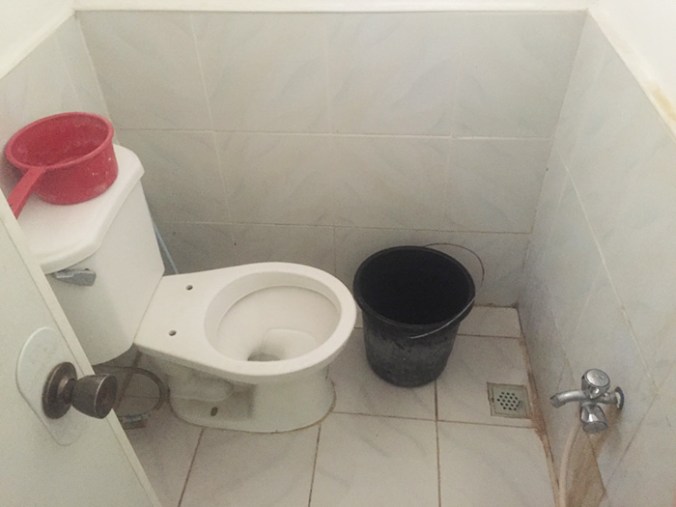
Because my hotel at least 30 minutes away, I stood in line for the restroom in the airport, only to discover that Philippine toilets don’t come with seats… They weren’t Asian style squatters, they just looked like Western toilets without a seat. I thought maybe it was broken, but I saw many more like this any time we were in a very Filipino place, so I’m thinking it’s normal there. Plus, the first non-Muslim country I’ve seen the hose regularly installed. Toilet culture.

I found a decent article later on about the bathroom situation in the Philippines. I think it’s gotten better in the last 9 years since the blogger wrote this, but some of it is still true. Even in Bohol, most of the places “for tourists” had toilet seats. Many had paper (although still best to throw that in the trash and not the bowl). But when I did go to a less touristy area, I was greeted with seatless bowls, flushless toilets (like the ones in Koh Lipe that had to have water poured down them), and either the Arabic style hose or the Philippine traditional tabo (bucket and ladle) for cleaning. I’m reasonably open to doing things like the locals, but I still bring my own paper when I’m touring in case of emergency.
philippines-comfort-room-cr

Image Credit: markblackard.com

Finding Food on Foot

The hotel I’d chosen was only a couple km from the most famous Alona Beach, but far enough away to be much cheaper while still being quite nice. There were animals everywhere. Goats, cows, dogs, chickens… and I could hear the roosters from my room, but they weren’t too loud inside so I didn’t think it would be a problem to sleep through them. Once I got in and had a little look around, I asked my hostess, Becca where to get some food.

Becca is the best, by the way. I seriously recommend everyone who wants to go to Panglao go to Imagine Bohol and stay with her, because she is wonderfully attentive, speaks great English, and will recommend or arrange anything you’re looking for.

20170930_113725There were no food delivery options nor any restaurants in walking distance and although it was my plan to rent a motor bike (scooter) for the week, I was waiting until my travel companion arrived on a her flight 4 hours behind me so we could handle both rentals at once. However, my breakfast had been a long time ago, and I needed something to quiet the growling tummy. As we reviewed our options, she mentioned hesitantly that there was a small convenience store just down the street where I could get some ramen. Done! She said she’d show me where it was and I expected it to be hidden or at least farther, but when we got to the gate of the hotel drive, she pointed at a sign barely down the street, less than 2 minutes walk.

I headed over, meandering my way, taking in the flowers and greenery on the side of the road as well as playing a short game of peekaboo with a shy child hiding behind a tree. A man came out from a house and began to purposfully cut small branches from a tree, but he was collecting them, not discarding them, so I assumed it was not merely pruning. I asked him what the tree was and he replied “mulungway”. “What’s that?” I asked, not yet understanding how strange a question it must have seemed to him. However, his English was not up to the task and he simply said, “for eating”. I didn’t recognize the tree and vowed to look it up when I got back to the room, but sadly I had forgotten it by then and didn’t hear it again for several days.

The convenience store folks were surprised to see me, and were endlessly helpful as I bumbled around the tiny aisles looking for lunch. I ended up with cup noodles, an egg, and an ice cream cone. As I was paying, the ladies wished me farewell, and I said, oh, you’ll probably see me again since I’m staying right down the street. This seemed to make them happy and we chatted some more before I finally left.

I had heard from other travelers how friendly the Filipino people are, but I was starting to understand that it was not actually an exaggeration. I mean, I like talking to locals everywhere I go, and usually I find kind and helpful people and have good experiences, but dang if every single school kid didn’t break into a grin and wave and say hello when I passed by. Leaving tourist spaces can be scary, but I think in Panglao is well worth it.

Leapin’ Lizzards

20171005_182724As the sun set, the lizards came out, and when I went back to the room, I was greeted on the porch by a gecko. It was maybe 6 inches long, not huge, but so unexpected I let out a little yelp, and Becca sent someone to save me. I insisted they did not need to shoo the little lizard away with a broom, but Becca said sometimes they bite. She also pointed out the tiny 1-2 inch lizards elsewhere that were totally safe. I asked if the gecko was poisonous, but it’s not, and it wasn’t even slightly aggressive, but I still kept a distance from the others I saw so as not to add gecko bite to my list of minor travel injuries.

Grateful Farewell

The last morning of vacation, it was time to settle our account with Becca, the hostess with the mostest at our little apartelle. Like most places in Bohol, they only take cash, and she’d been careful to politely remind us the day before in case we needed to get to an ATM. Tipping culture in the Philippines is not yet standard, but I’d read up a bit before coming, and I’d seen many things I’d read confirmed. Fancy restaurants tended to add a 10% tip into the bill, most places didn’t expect a tip but were happy to get one. Tips are still expressions of gratitude there, and so when we felt we were treated especially well, we left a special tip, and if we felt the service was adequate, we left 10% (often included) at fancy places, and not at all in “regular” places. But when it came to the hotel we were both in agreement that Becca and her staff deserved more, and to be honest, it wasn’t a very expensive hotel to begin with, so 20% was still only about 40$. I don’t know if that seems big or small to you. I’ve never stayed in one hotel for 9 days before. I’ve left tips for housekeeping before, but usually only when I made a mess or when they did extra work for me. But Becca was so gracious, always there for us, making sure we had everything we needed, the apartment was cleaned up every day, fresh towels and sheets, she arranged our motorbike rentals (at a much better rate than other places around the island), scheduled our firefly tour, recommended beaches and restaurants and was just generally a fantastic part of the holiday.

I took our rent and her tip bundled together and brought it to her room in the morning, letting her know that the extra money was for her, and not waiting around for her to count it before heading back to finish packing up. A few minutes later she came by our room to see if we’d made a mistake. This is I think the most amazing insane part of this story. We gave her 20%, like I said about 40$US in tip. I can almost imagine someone questioning a mistake if we’d given her hundreds, but in the grand scheme of my life, 40$ (or really 20$ from 2 people) is not that much even to loose accidentally. But she was so honest that she came back to see if we gave her too much money by mistake. No, I told her, you’ve done so much to help us and make us feel welcome and cared for, this is our way to say thank you.

She teared up. Actual tears in her eyes, and she asked if she could give us hugs and told us we had been such wonderful guests. It blew my mind a little bit that such simple things as appreciating her with words and a small gift meant so much. This was obviously not an everyday occurrence in her life at the hotel and it struck me not for the first time how the people here are treated simply because of the reputation of their country as a source of cheap labor and maids.

I hope in some small way that sharing my experiences of Bohol and it’s people can help paint the Filipino people as a caring, friendly, generous and worthwhile group of people who deserve the same respect and courtesy as all of us no matter what their job is. A little kindness goes a long way here, so spread it around.

20170930_113737


The weather in Busan is decidedly cold these days, and the mountain outside my window has turned from green to russet as the trees change for autumn. I’m still pressing though a monumental amount of healthcare. It turns out that suddenly having access to good and affordable care means you actually go. I’m totally fine, I’m just a dental and medical anomaly and require more specialists than the average bear. Despite this drain on my time and energy, I try to stay grateful that I’m doing this here and not in some country with totally inadequate health insurance plans. Hopefully by January I’ll be able to do some kind of adventuring again. Stay tuned for more tales from Bohol as I get my first (and only) motorcycle lesson, and the wonderful freedom and unique experiences that came with this new mode of transportation in our next installment: My Own Two Wheels. Thanks for reading! ❤

North American Summer

What with the total media explosion, I was more than a little apprehensive about my plan to return to American for nearly 3 weeks this summer. I think if it had merely been a trip for my own enjoyment, I would have gone to Iceland or Patagonia or nearly anywhere else in the world. However, there were some practical considerations that dragged me not quite kicking and screaming into Trump’s America in 2017. Mostly, my fears were unmet and I had a lovely time reconnecting with friends and family, but I didn’t feel completely at ease until I passed through Canadian customs and was an international traveler once more.


A Little Bit Political

Back when Obama was president and the country still looked mostly sane (at least from my newsfeed), I had this glorious plan to spend every other year overseas teaching English, and to return to Seattle in between times where I have a standing offer for employment from a lovely French lady, and some decent prospects of joining the thrilling world of project management (no, I don’t know if that’s sarcasm either).

In 2014 when I started this blog, I packed my stuff up for storage thinking it would be nice to have my clothes, dishes, bedding etc. for those years I was in the US and that it was worth the cost of a storage unit to not have to buy them new again every time I came back.

When I left for Korea in February of 2016, early in the primary election process, my friends asked me, “how long are you going to be gone this time?” and I replied, “depends on who wins the election”. Everyone thought I was joking.

To be fair, I can’t lay all this on one man. There is a seriously disturbing trend in the US that I’ve commented on a few times in the last year. I try not to wax political often because this isn’t a political blog, but some things affect me so much I can’t leave it out. I see the election of Trump as a symptom, not a cause, and I see America taking a turn for the I-don’t-want-to-be-near-that-when-it-explodes.

Maybe that’s selfish… well, not maybe, it is. I have a better job, better pay, better vacation, better vacation opportunities, better health care, and an over all better quality of life out here than I have ever had as adult in the US. I haven’t been un-poor long enough to be willing to go back to that life. Add on going to rallies, protest marches, calling congresspeople, and risking my job and freedom to do so? No thanks.

My hat is off to all those who are staying to fight, and even more to those who are returning from life abroad to get involved. You are brave, and I respect that. I wish you luck, and I will be cheering for you. I will also bake you cookies, or offer moral support whenever I can.

So Why Go Back At All?

That storage unit was costing me about $1,200 US annually and I can do much cooler things than store stuff for that much money. I tried to get some friends to go and get things they wanted for free out of it last year, but only one person did (and even then I had to remind her several times). I don’t know what it says about my Seattle people that they can’t make time to go get free stuff they want. Thus it became that I was forced to return to Seattle to empty the darn thing myself.

And then there’s the niblings. I neither have nor want children of my own (I never have and no, I’m not changing my mind, and yes we’ve already established I’m selfish). I don’t hate children. I teach children. I love hanging out with my friends’ children (assuming they don’t drool too much). My sister has two beautiful little ones that are and always will be a precious part of my life. They are as yet too young to join me abroad on their holidays, so I try to get by there about once a year (or two) so they can see my face and form some kind of mental image of their Auntie.

Anxiety

I was so terrified of going back.

I was terrified that the Arabic stamps in my passport would get me flagged at immigration. Even though I’m a citizen, it turns out our constitutional rights to privacy (like cops needing a warrant) don’t apply at the border.

I was terrified that some kind of medical issue would crop up while I was in the US and financially ruin me (travel insurance only covers so much). Or worse, that it would prevent me from returning to Korea. Being trapped in the US has become one of my worst irrational fears.

I was terrified that I would witness some horrific act of racism or xyz-phobia… because if I saw it and didn’t get involved, I would be somehow less for watching passively, but if I saw it and did get involved, I could end up arrested, in the hospital or even dead like that poor guy in Portland. And if it could happen in Portland, it could happen in Seattle.

I was terrified that my growth and self discovery would be disregarded by my friends. It’s not like they’ve been able to see me going through all of this except in sporadic Facebook posts.

I was terrified that toxic people I had cut from my life in the last 3 years would try once more to insert themselves into my attempt to enjoy the company of those I do still cherish, bringing drama and spite to what should be a nice time.

Various versions of these scenarios were the topic of restless nights and nailbiting free-time in the weeks before I went. Perhaps the only bonus to my horrible root canal misadventure was that I was in too much pain and anxiety about my tooth to worry as much about what would happen to me in America.

The Actual Experience

At the border: Customs at LAX was very smooth, all machine operated. I used one of the little kiosks to enter all my data and it printed a sort of receipt I gave to the customs officer who welcomed me with a nice smile.

Healthcare: I did get a little sick, I had a mysteriously swollen lymph node, but it never got hospital worthy and was gone in about 10 days. Mostly, I was just juggling the tooth pain and being totally sleep deprived from trying to do all the things.

Violence: I didn’t see any horrific behavior, although this is more than likely because I spent nearly all my time in someone’s house or being escorted through the nicest parts of town for our errands. I did see a dead body on the highway. It was a suicide. The man had jumped from an overpass and landed on a car below. When I drove past, the EMS had not arrived, but there were more than enough bystanders parked on the shoulder that I decided the best thing I could do was get out of the way. It was a bit strange how blase my American friends were about this story, like oh, yeah, dead body… next.

My Friends: I was able to make a schedule ahead of time so that the people I wanted to see most were already planning something with me, and there were a few “free for all” spots. No one I didn’t want to see showed up, and I got to see everyone important to me. This was a resounding success and resulted in one of the more epic sailing days I’ve ever had, a wild midsummer night’s fairy party in the woods, and my traditional group sing of Bohemian Rhapsody at karaoke (don’t judge me), as well as several days of pleasant company and catching up.

A benefit of selecting only those most important to me for hangouts was that they were all pretty much on board with my growth and happy for my self discovery. It’s a good sign since that’s how friends should be, but I spent too long around people who kept me down or resented my self improvement to take the good folks for granted now.

Bonus: I got the whole storage unit cleared out and managed to only have a half a trash bag to throw away. Everything else I didn’t keep was given to a person who would use it or donated to Value Village.

American Money

This trip was the most expensive I’ve taken by over 1000$, and I didn’t spend a single night in a hotel. Friends and family found me spare rooms the whole way. Yes, the trip was also longer than previous holidays, but I only rented a car for 9 of the days and was not having to pay for every meal of the day, or things like park entrances and tour fees. America is expensive.

Airfare: Getting to America is bad enough what with that giant ocean in the way, but I flew round trip to New Zealand (which is also an ocean away and on another hemisphere) for less than the cheapest round trip to the nearest coast of the USA. And if you want to go anywhere other than the coast, you’re stuck paying inflated airline prices that include no meals or luggage (which basically everywhere else in the world does include). I can fly from Korea to Norway for less than it costs to fly from Seattle to Memphis, and I’ll get fed and my bags will be included.

Hotels: I could not have afforded this trip if I had to rent accommodation in addition to a car. If you want a room in America in a part of town where you are unlikely to hear gunfire, you will pay 80-120$ a night minimum. (booking.com only lists 4 in Seattle for under 100$ and all of those are over 90$) Everywhere else I’ve gone, I can get a bed for between 10-30$ a night in a safe place.

Car Rental: I paid almost 200$ less because I am a legal resident of Korea than US residents would have paid to rent the same car. I tried searching for smaller rental companies, but I couldn’t find one that didn’t have an online reputation as a scam. This in and of itself is crazy, because in other countries I usually rent from small companies because they have better rates. In America, I had to go with one of the big names to avoid being ripped off. When I was reserving the car with Budget online, I discovered that the rate was significantly different depending on what country I listed as my legal residence (not citizenship), and I was instantly outraged about every other time I’ve rented a car while living in America.

Taxes Not Included: I was born and raised in that country and now that I’ve had a glimpse of the promised land of menu clarity I never want to go back. I got the worst case of sticker shock when I went out for dinner with two friends at Azteca. They had treated me the previous 2 meals we’d had during my trip, so I wanted to pick up the tab and thought I had a rough idea of the price… oh no. Because American menus (and coffee shop signs and grocery stores and everything else) don’t list the real price of things. Between tax and tip, it ended up being about 25$ more than I had thought and while I am so grateful I have a job where that’s not bank breaking, I can remember there was a time in my life it would have been.

Tips: I’m all for food service workers being paid well, but I have a hate on for tip culture in the US because it backfires and causes customers to feel entitled to mistreat workers for anything less than 5 star service/food even at Denny’s, and it allows employers in most states to pay them less than minimum wage while taxing them on a presumption of tip earnings. I’d rather just see the price of the food include the tax and whatever markup the restaurant needs to put in there to pay it’s employees well. Then I can decide if it’s in my budget without doing calculus and everyone goes home happy.

The Highlights

Somewhere, one of my bffs* is reading this and going, but wasn’t I a highlight? Yes. Literally everything I got on this trip (except that lymph node thing) was a highlight of my summer, but “I spent all day chatting with my dearest friends in Seattle and then we got Mexican food” does not make a good blog post, so these are the stories I think strangers will find most endearing.

*bff: literally, best friend forever. I employ this as a plural occupancy category.

Fairy Party: My friend throws the most elaborate parties. She’s going to pharmacy school, but really, I think she could make a mint as a custom party planner. My favorite one to talk about was the time she did a Neverland theme for her birthday. Each room in the house and the yard were set up like a different part of Neverland, and each guest was asked to come in costume. I built a tepee for the Indian area (Peter Pan was not great about First Nations representation, I know). There was a kiddie pool for the mermaid lagoon where wet t-shirt contests were held. Tinkerbell’s fairyland was a glowing tree, the basement was Captain Hook’s quarters… it just went on and on.

This year, she did a Midsummernight’s Dream, but instead of using the house, she used the backyard and the entire greenbelt behind the house. Because it’s public land, they can use it whenever without a permit, and she decorated the entire woods in fairy lights and magical bowers with clues and quests and geas hidden everywhere.

In many ways, I felt as though I had walked into a new world, not only because of the extreme decorations, but because of the 120 people who came that night, I only recognized about 10%. Although I’ve only been away 18 months, it seems that my friends have also been making changes in their lives and perhaps replacing the same toxic people I was worried about with new faces.

Sailing Day: I started off this particular Saturday by visiting the home of some excellent friends who accompanied me on the Thor’s Well Adventure years ago. They cooked corned beef hash and I taught them how to poach eggs. From there we headed over to Shilshole Marina, where another dear friend (who let me live in his attic when I was homeless) had finally fulfilled his dream of selling his house and moving on to a boat with his family. Plus my friend who I met in Dubai (even though we lived a couple blocks apart in Seattle!) and her husband and we had a perfect sailing crew.

The wind was mild, the sun was shining and the mountain was out. We puttered aimlessly around the Sound while enjoying a selection of Korean wines I’d brought back for the occasion and one bottle the captain of the day had brought back from Greece years ago I’d found in the storage unit the day before.

These are people I’ve been trying to get in the same room for years. I was convinced they’d enjoy each other’s company and while I’d gotten them to meet one or two at a time in the past (with good results), this was the first time I got them all together. It was absolutely wonderful to see what a good time they all had.

After we examined our crab hunting results and determining that we would not be having crustaceans for dinner, we migrated back to the abode of the morning where we had a simple grocery store meal and got down to some jazz improv.

Karaoke and Beyond: I stopped by some of my past haunts and reconnected with some old friends, but my favorite part of this trip to Seattle was seeing my friends reconnect with each other. People who had barely seen one another since I left came together at one or another of the events I planned and (re)discovered that they enjoyed each other’s company.

This was nowhere more obvious than my resurrection of the Tuesday Night Karaoke Tradition. For as long as I can remember, while I lived in Seattle, we did this. The group changed over the years. Some nights were packed, other times only 2-3 people would show up. One year, the place burned down and we had to find another bar until they rebuilt. It is an institution of my time in Seattle, and I do it if I’m there on a Tuesday.

It turned out that since I left, it had all but completely stopped, yet everyone who came out was happy to walk down memory lane with me, sing their old favorites and catch up on 18 months of missed time with all the other people there they hadn’t seen even though they live in the same city.

Niblings! How can that not be a highlight? Ok, you don’t get a million kiddo pics because my sister doesn’t want her kids faces on the internet, but I got this one of my niece in her Korean hanbok where you can’t see her face, so that’s safe.

The kids were 4 and 6 on this trip, but it’s been 18 months since I’ve seen them. My niece, the 6 year old, remembered my last visit fairly well, and was happy to see me again. My nephew (4) is basically willing to trust anyone his sister trusts, and was also happy to see me (so many kisses), but asked me at one point if this was the first time I visited their house. You can only imagine how much fun it was to try and explain to them that a loooooong time ago (2001-2003ish), it was my house, too.

I really love blowing their minds with weird facts like, yes your mom is my baby sister, yes your grandma is my mom, and yes it’s tomorrow in Korea.

I brought back a spoiling number of gifts including the beautiful hanbok (Korean thriftstore ftw!), spare change from every country I’ve visited since the last time I saw them, and magical Kinder Eggs, which are dangerous contraband in the US for some reason. At least I know one gift that will always be popular next time I go back?

Additionally, my niece made me a picture with invisible ink, which is basically a white piece of paper with some suspiciously greasy smudges on it and her and her brother’s names in one corner. It is a testament to how much little people can fill your heart that this came back in my suitcase to Korea and now adorns my apartment.

Being There for Milestones

One of my besties who I have dragged into the life of globe trotting glory finally got her chance to go to pastry school this year, and it just so happened that I made it to Vancouver in time to attend her graduation. It’s amazing to me how the friends who live abroad keep popping up in my life. My burlesque dancing magical Vixen Valentine is one I met in Seattle but I see once every year or so somewhere. And Jane (formerly JaneMeetsWorld and now PastryJane) has been with me in the US, in Europe, in Korea and this time in Canada.

It was just one more in a line of seeming coincidences that make our world small and cozy that I could join her and her family to celebrate such a milestone and to have a slice of her final exam cake! Moments like this one fill me with gratitude that I have friends as crazy as me, who will travel around the world, use apps to gossip late into the night with me, and while we may never know what city we’ll be in together next, we know we will meet again for sure.

Also, although my sister might kill me if I put her picture in here, I have to mention her. She only grudgingly let me take selfies with her, in and out of uniform, but it just so happened that we got to hang out on the very day of her 10 year mark as a police officer. I know that’s a hot button topic in America right now, but she is and always will be my baby sister, and I couldn’t be more proud of her accomplishments as a person, an officer, and a mother. I am grateful that I could spend that day with her.

Wrap Up

I spent three weeks in North America covering Seattle, Memphis, and Vancouver. I got to reduce my material possessions (and bills). I got to solidify my theory of meaningful friendship in Seattle. I got to make my sister smile, hug my mom, and play with my niblings. I got to see my sister reach her 10 year mark and get vested, and my best international girl graduate from her dream of pastry school. It was good.

If you’re reading my blog from America and you think, “man, how does she have the money to take all these extravagant trips?” I don’t. It doesn’t cost as much as you think, and it costs even less if you start from outside the US. What I also don’t have is the money to come back to the US very often. This was probably my last visit to the ol’ U.S. of A for a couple years minimum (assuming Civil War II doesn’t start by then). In the mean time, I’ll take 2-3 international vacations for the price of one US trip and I’ll consider myself well off.


Back in Korea, I’ve just finished off summer camp and am undergoing as much healthcare as I can tolerate before the school year starts again (yay! root canal, LASIK, biannual health checkup, I love living in a country with affordable health care!). Hopefully the oppressive summer heat and high humidity will ease up soon and I’ll be able to frolik outdoors. Failing that, I am planning a trip to the Philippines for October.

As always, thanks for reading, and I hope you’ll check out the Instagram for some day to day pictures around Korea and my life as a teacher between vacations.

Ten Days in New Zealand: An Overview

Having spent the last few days recovering from the cold I managed to give myself at the end of my trip, I’m now feeling much better and ready to tackle the slightly overwhelming task of writing about these 10 awe inspiring, action packed days and the truly daunting goal of winnowing down the over 2000 photos I took into something that is beautiful and interesting rather than something that resembles the family holiday slide show from hell. As you can imagine, this might take me a bit of time. Furthermore, I’m starting school again this week, and I have an upcoming long weekend trip to Jeju Island. I also don’t want to dump a novel on you all at once. So, be patient. The stories will come, and they will be no less wonderful just because you read them a few weeks or even a few months after they happened.


My Route:

I made a little road map to show you the relatively small section of NZ I managed to explore, and here’s the basic itinerary. (As they get written, I’ll be linking the full story to each counterpart in the short list below).

NZ drive map (1)

Day 0: Auckland (arrival, rental car, sleep)
Day 1: Auckland (Onehunga), Piha (black sand beach), drove to Dargaville (sleep)
Day 2: Waipoua Forest (giant Kauri trees), drove to Piahia (sleep)
Day 3: Piahia (Bay of Islands, dolphins!, Haruru Falls), drove to Whangarei (sleep)
Day 4: Whangarei Falls, Waipu Caves, drove to Hot Water Beach (midnight low tide)
Day 5: Hot Water Beach, Cathedral Cove, drove to Rotorua (sleep)
Day 6: Wai-O-Tapu – hot springs (Kerosene Creek, Hot & Cold, Waterfall Spout Bath)
Day 7: Rotorua (Saturday market, Kuirau Park), Wai-O-Tapu (geothermal park), Maori
Day 8: Wai-O-Tapu (hot springs), Matamata (Hobbiton), drove to Waitomo (stars!)
Day 9: Waitomo (glowworm caves, black water rafting), drove to Auckland
Day 10: Auckland (shopping, Planetarium, Cornwall Park, One Tree Hill), Airport

It was a jam-packed holiday to be sure. I intend to breakdown the stories based on geographical region and/or type of activity, therefore while it will mostly be in order, it’s not a strict blow by blow of the 10 days. In the remainder of this post, I want to share a few interesting things I learned about New Zealand that are useful if you want to travel there and are just generally neat.

Tipping:

This bizarrely internationally inconsistent cultural habit changes drastically from country to country and making a mistake while you’re visiting can be awkward or even offensive. Quick guide to NZ tipping is that you don’t. It’s not a tipping culture except…

1) let taxi driver’s keep the small change. It’s not precisely a “tip” it’s just inconvenient to make them dig out exact change.

2) similarly, tip jars if present in cafes are not looking for anything more than the small change (under 1$).

3) exceptional service – if you feel like a waitperson has just gone above and beyond, leaving a tip is a way of thanking them for that, but it is not expected at most restaurants or meals.

4) fancy restaurants – I didn’t go to one, but I hear a 10% is standard at these. Every place I ate at did not have a tip line on the credit card slip, thus it was actually impossible for me to leave a tip if I wasn’t paying in cash. Maybe big fancy places are different, I can’t say.

While I do cough up the cash where tipping is standard (don’t even get me started on tips as wages), I prefer non-tipping cultures because there is no awkward math or trying to judge my server’s performance. I typically find that I get better service when tips aren’t on the line because my servers aren’t busy calculating which of their tables is going to make them the most money. Plus, having done food service before, I’m convinced tip wages are some kind of anxiety induced torture because staff never know how much money they’ll actually make. So just be polite and courteous to your servers, say please and thank you and don’t worry about dangling a financial reward in front of them for doing their job well.

Driving:

For some reason, despite all the research that I did before going to New Zealand, I did not realize that they drove on the left until the day before I got on the plane. I even read about NZ traffic laws because I planned to rent a car and drive around, but somehow the government sponsored website failed to put that in an obvious place. As a result, when I landed in Auckland and got the shuttle to my rental car company, I was frantically trying to watch the traffic and the driver as closely as possible. On top of that, it was dark by the time I got my car, so I had to navigate my way to my airbnb in this backwards car on the wrong side of the road and in the dark. I do not think I have gripped a steering wheel that hard in years.

It turns out the hardest part of driving on the left isn’t the left lane, it’s the car itself because the driver’s seat is now in the right and everything is backwards. The turn signal and windshield wipers are reversed. I cannot tell you how many times I accidentally turned on my wipers while trying to signal. The gearshift is on the left. Thankfully, I had an automatic and the only times I was shifting were in parking lots, but I often found myself reaching for a steering column mounted shift that simply wasn’t there because my muscle memory found that to be the default when there was no gearshift to my right. Good news, gas and brake were still the same, otherwise I might have had some nasty accidents.

Driving on the left is mostly just a matter of staying in your lane. If you’ve ever driven in a multi lane highway, you’ll have experience with driving on the left as the passing lane (although here the left is the slow lane and the right is passing only). Oncoming traffic was terrifying for the first two days, and I spent about 4-5 days chanting “left, left, left” to myself every time I made a turn to help me land in the correct lane on the other side of the intersection. NZ doesn’t have many of “highways” as we think of them in America or even Europe. Much of the country is made of tiny winding wooded mountainous treks. It was a relief to get out of Auckland and have less traffic, but it was a whole new challenge to drive down roads that twisted with scant visibility and narrow lanes that ended in cliff-sides or sheer drops. I pulled over frequently. Partly because a line of impatient Kiwi drivers behind me wanted to go faster than I felt safe driving, but largely because the scenery in NZ is incredibly breathtaking, and I needed to stop driving so I could look at it properly.

There are a preponderance of roundabouts. All the roundabouts. I usually only saw “intersections” in the more pastoral areas. In anywhere with civilization, the preferred interchange was the roundabout. These were quite intimidating at first because there are no stop indicators, only “give way” or yields. You have to check to your right to see if anyone is already there, then go. Then count exits to find yours and trust that everyone else is going to yield to you once you’re in the roundabout. I made several mistakes, but no crashes.

Lastly: one lane bridges… I don’t know why. Maybe it’s too much infrastructure? Maybe the bridges were built at a time when all the roads were one lane? Maybe kiwis just like driving dangerously? I lost count of how many one lane bridges I crossed. There are helpful signs that tell you which lane has right of way. It’s based on who has better visibility of the bridge. If you can see the bridge, you have to give way.  Only once did I have someone fail to yield to me when they should have, I assume another visitor confused by the rules, but I managed to stop in time.

As crazy as all of these things seemed when I started my journey, by the time I got to the end, I was entirely adjusted. I found myself driving at (or just above) the speed limit on those curvy roads. I barely slowed entering roundabouts with no oncoming cars. I learned how to pass the other slow drivers on the road, and was able to confidently navigate Auckland by the time I returned there on day 10. I met other travelers who were busing it, and a few who had rented campers. It became apparent that the busing travelers were highly limited in schedule and in events. They had to rely on tour groups to go anywhere outside the cities. I think the camper might be the best way to go, being able to park in free parking lots (of which there are many) and cheap campsites wherever you like is liberating, but I got turned off RVs when my dad explained the septic tank process. I think for my short trip the car was ideal. There are hostels near every point of interest that are cheap enough and I still had the freedom to track down some out of the way places at some less popular times. Conclusion? Driving on the left is challenging but worth it for New Zealand.

Insurance:

Ok, insurance isn’t exciting or glamorous, but most of us know it’s an important part of travelling because you never want to find yourself far from home with no way to pay for any liability you may incur due to accident or injury. Turns out NZ is one of the most traveler friendly nations in terms of coverage, so if you’re tired of expensive traveler’s insurance, this might be a good alternative.

Fortunately, I did not have any need to visit the healthcare system in New Zealand, but I did learn while I was preparing my travel plans (including insurance) that all accidental injury (regardless of the Darwinian nature of the cause or who is at fault) is 100% covered for anyone in NZ. ‘Anyone in NZ’ doesn’t just mean residents, but literally if you are injured in NZ, the government will pay for the healthcare you need. Obviously there are some limits, like long term care which you would get in your home country if you’re just visiting, but it was still good to know that if I got into a car accident or slipped and fell in a stream and broke my arm or something similar, that at very least the financial side of my imaginary tragedy would not be a burden.

Canadians reading this are probably going ‘well, duh’, because you guys never worry about healthcare costs it seems, but the Americans will get it. Accidental injury is one of the great banes of our existence where a trip to the ER can wind up costing thousands or tens of thousands of dollars. I often get some kind of traveler’s insurance that will keep me from bankruptcy and get me back to my country of residence for real care, but those policies don’t cover too much and can still leave you with poor care choices and large bills.

It’s never fun to have to limit your adventurous activities for fear of medical bills and thanks to the NZ government, I didn’t have to! Of course, I still didn’t want any broken bones. I was careful, but it was a serious relief to know that I was covered.

Additionally, all rental car companies must provide basic car insurance with every rental. You can’t decline the basic insurance (although you can choose the included basic over the extra cost comprehensive). This matters for a few reasons. One, lots of credit cards offer insurance if you pay for the rental on the card and decline the optional insurance. I spent some time trying to get a manager at Visa to confirm with me that the insurance in NZ isn’t optional and wouldn’t count against my Visa based car insurance (which would then basically cover damage to the car or other property, but not medical bills). Two, because of the accidental medical coverage, car insurance doesn’t need to include medical. Any injury sustained in a car accident will already be covered. Three, if you’re leaving the cities, you will scratch that car. The damage from small scratches from branches on the side of the road or stones thrown up from the car ahead of you are small and easily covered by the basic insurance and because everyone has it, the rental companies don’t stress trying to get a couple hundred extra dollars out of you for a scratch on the paint.

I’m afraid if your stuff gets stolen or broken, NZ doesn’t cover you for that, but I’ve found often renter’s or homeowner’s insurance has an option to cover your belongings while you’re on the road and sometimes the flight insurance will cover belongings for the duration of the holiday.

Water:

Not the drinking water (though that’s fine too), but the ocean, lakes and rivers. The vast majority of water in NZ is considered public. Water doesn’t belong to anyone. This has actually caused some controversy with the Maori population who lay claim to some bodies of water and the rest of the NZ government who say that water cannot be owned. Take a moment to savor the idea that water cannot be owned and then go write a letter to your congressman about Nestle buying up all the clean water in North America so they can sell it back to us in plastic bottles. The issues with Maori are complex and involve things like land use rights, fishing rights, and mineral rights that give them more exclusive access to waterways in some places, but not actual ownership of the water.

In addition, there is a piece of land called the “Queen’s Chain” which exists around most waterways (sometimes it does not due to environmental or safety reasons to restrict public access, and there’s still about 30% of the coastline the government is working to get back in the public domain, again, it’s complicated). The Queen’s Chain is 20m of land on one or both sides of a waterway that are public land, free to access assuming you don’t have to tromp through private property to get there. I’m told sometimes the farmers get stroppy (with shotguns) about backpackers and kayakers who are following a stream or river from a public access point into their land, so it does pay to be aware of where your river goes if that’s your plan.  If you want to read more about the laws, you can do so here.

The upshot of all these laws is that there are almost no privately owned resorts, country clubs or homes that get restricted access to a beach, river, lake or hot spring. How cool is that? I’ve been to many coastal areas with beautiful beaches that have just been developed to death because hotels can charge big bucks for access to their private beach. When I lived in Florida, the small stretch of beach that didn’t cost an arm and a leg to get into was limited and often overcrowded. In tropical paradises in the Caribbean, beaches have become little more than oceanfront bars. In Dubai they are oceanfront dance clubs. In Washington state, when we want to go to a hot spring or waterfall that’s undeveloped, we have to go into a state or national park and hike for several km. In NZ, however, these things are all near roadways with easy public access and safe off road parking. Many of them are even handicapped accessible.
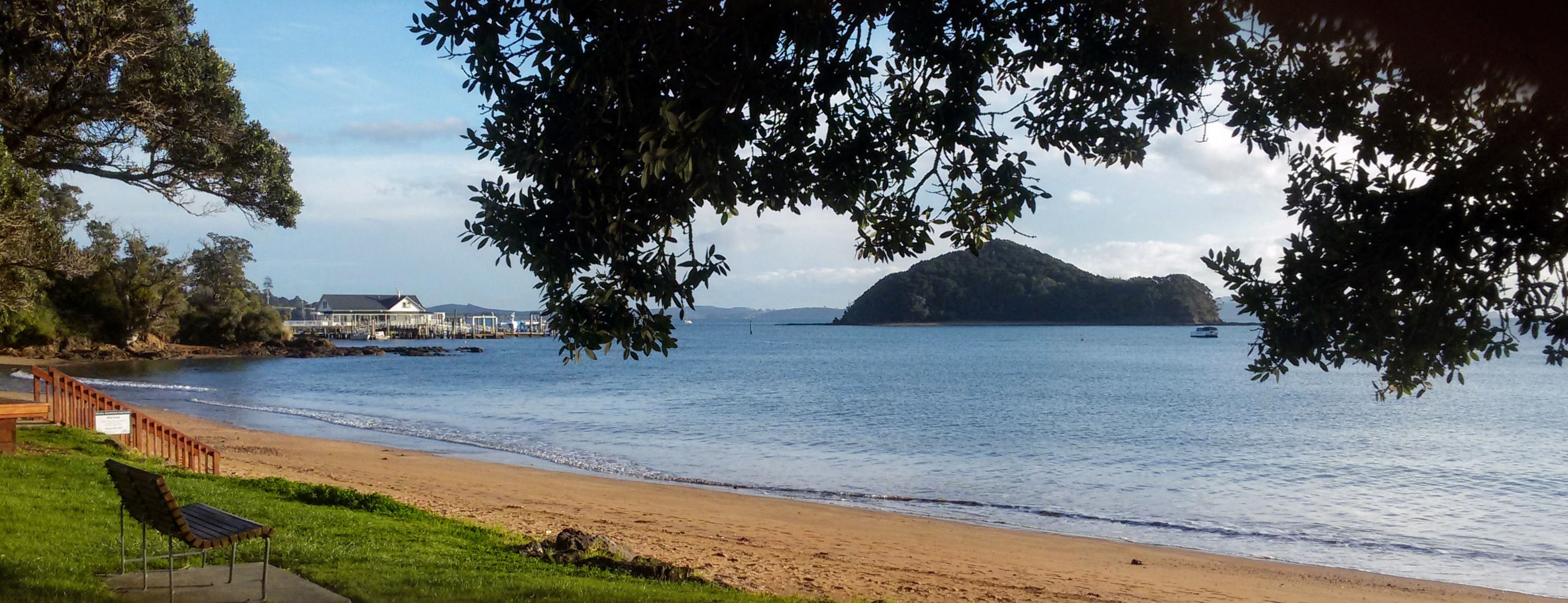

Many of the astonishing places I visited on this holiday were only possible for me to see because of these laws concerning waterways and the land near them. If there were a hot spring on a beach in the US it would be a private resort charging guests hundreds of dollars for the experience, but in NZ it was totally free and natural with no looming 30 story hotels and no one selling margaritas above the high tide line, just a well-heeled campsite on the other side of the highway, a few private homes scattered through the hills, a quaint local cafe, and an art gallery. Similarly, Rotorua has fancy spas that filter the natural mineral water for clean and landscaped soaking experiences, which is fine, but less than 30 minutes out of town I was able to visit 3 natural hot pools in one day and spend a couple hours in each with no rigorous hiking or exorbitant fees.

20160816_080328

I support paying reasonable fees to maintain public land (taxes, anyone?). I happily paid my annual public park fee in Washington when I lived there (about 30$ for all access). What I can’t get behind is the total commercialization of natural beauty.  I’m not saying visiting cities or man-made wonders isn’t worthwhile too (goodness knows, I go to ancient ruins and modern amenities all the time) but it doesn’t replace a natural experience. The earth is our home and it is full of wonders that we cannot create nor replicate. Of course sometimes that means you’ll get dirty, or get a few bug bites, but it’s worth it and you get to come home to a hot shower after all because that’s the balance. Flushing toilets and hot water can coexist in a world with fresh rain-forests and pristine beaches.  New Zealand’s water laws don’t just protect the water, but much of the land around it, preserving the environment and giving us access to nature’s best features. I think a few other countries could take notes.

Lord of the Rings & Hobbits:

20160821_133842-EFFECTS

All 6 films were made in New Zealand (in case you were living under a rock). Many natural features of the land are now famous Middle Earth landmarks. Most of those beautiful panoramic views were real, and not computer generated. It’s quite popular for Tolkien fans to make a pilgrimage from movie site to movie site. Most of the landscape has been carefully returned  to its wild state so you won’t see the Hall of Rohan at Edoras or the Last Homely House at Rivendell. However, walking around the bush in NZ made me feel like an adventurer in Middle Earth more often than not (the rest of the time, I felt like I was in Jurassic Park, more on that later). I also got more excited than I truly care to admit when I realized I could see “Mt. Doom” from the park in Wai-O-Tapu. I didn’t do much LOTR location viewing because most of the sets are actually further south than I ventured on my short trip, but it was fun to go to Hobbiton and see the Shire and I hope that I get to do more of the mountains and forests when I make it back to see the South Island.

Fern Gully:

Yes, that tree-hugging animated feature from the early 1990’s was based on the forests of New Zealand. Both the Maori and the British settlers contributed to a massive deforestation of New Zealand. Estimated to have dropped from 80% to 50% under Maori stewardship and then to as low as 20% under British/Kiwi stewardship, the forests of New Zealand have been under attack for nearly 1000 years. Up until 1985 deforestation was actually encouraged and subsidized by the government. However, the Department of Conservation was finally established and now native forests are protected, making up to about 15% of the land, and a further 15% are replanted forests (some of which are still logged for timber, but at a sustainable growth rate that will continue to increase forestation over time).

As a side note, Batty Coda (the insane bat voiced by Robin Williams) represents the only native land mammal in New Zealand. All other land mammals presently there were imported for fur, meat or milk. The Maori people thought of bats as a type of bird that represented knowledge and wisdom and incorporated it into their tattoos. You can see lots of NZ plant life as well as other unique New Zealand creatures in the movie including the large gecko that tries to eat Zack and the cave full of glow worms that Crystal and Jack go to be romantic in.

Whether Kiwi attitudes toward logging and preservation were impacted by Fern Gully or not, conservation has now become a significant part of life and government in NZ. With care and attention, the beautiful forests and natural landscapes that I was privileged to travel through will exist and grow richer in the decades to come.

20160817_150708


I hope this whets your appetite for more tales from New Zealand. I’ll be working diligently to get the rest of the posts up in the coming weeks. Thanks for reading 🙂