The Body Keeps the Score, Bessel van der Kolk

This remains one of my favorite books for trauma recovery. I read it right after CPTSD: Surviving to Thriving, so close that they seemed like one big book. I finally had a chance to re-read it almost a year later. Those wait times at the public library are intense, but I guess I’m glad so many people are reading this kind of book, especially during COVID. This book currently lives in my top 5 list for therapy books, and I highly recommend reading them together like I did, as they are very complementary. This post is very long because this book is very full of important ideas. I hope you stick with it.

Bessel van der Kolk is a very accomplished and experienced psychiatrist and researcher in the area of trauma. He started working with Vietnam veterans in the 1970s (before PTSD was a known diagnosis) and has been instrumental in hundred of studies and research projects to better understand the impact of both single traumatic events and long term traumatic exposure. His work with war veterans led him to understand how childhood trauma was both similar and different from combat trauma, and he has been vital to the understanding of CPTSD. He is an expert the experts defer to. “The Body” was published in 2014, so it’s fairly up to date as far as technology and research techniques described.

This post is so much longer than other book reviews because the book itself covers so much. It tells the history of understanding and treatment of trauma. It explains the scientific studies used to advance that understanding and treatment. It addresses the social, political, and economic barriers to the study, understanding, and treatment. It shares case studies of individuals suffering from and recovering from trauma. It shares statistics of the staggering number of people who have been traumatized in one way or another in life. It addresses the critical link between “mind, brain, and body” in how trauma affects us and how we heal from it. And it looks into a range of treatment options, explaining how and why they work, or don’t. Yet somehow, Van der Kolk does all of this in a casual and personal narrative style that carries the reader through his life’s work in a compelling and interesting way.

Just My Highlights

There’s no way for me to even try to summarize everything that Van der Kolk talks about here. I won’t do it justice. I stress again how worthwhile a read this is for everyone. Understanding trauma and the historical, social, and political context of cycles of abuse is the only way we will ever make changes. There some standout points that I want to zero in on for my review, and some opinions I’m squeezing in because this might be my last therapy book review post.

The Historical Cycle of Trauma and Suppression

Hysteria and Sexual Abuse

In the mid-late 1800’s some ‘scientists’ named Jean-Martin Charcot and Pierre Janet were studying hysteria. Although a lot of the people diagnosed with hysteria were women, there were also cases of “hysterical blindness”, “hysterical paralysis”, memory loss, and a host of strange behaviors that occurred in people across the gender/age spectrum. At first, Charcot was looking for a physical cause, but when he was unable to find one, he turned to hypnosis, and came to the conclusion that all these problems were being caused by the repressed memory of traumatic events.

Freud came along and got really into finding out what those traumatic events were and got deep into talk therapy, actually listening to his clients (not something doctors had done before). He determined that the young women suffering in this way were all suffering as a result of sexual abuse at the hands of an older male relative. He thought he had a great breakthrough, until he realized that it would mean that a huge number of the well respected men in Vienna would be guilty of raping their daughters and nieces, including his own father. He thought that maybe the promiscuous FRENCH could be doing that, but he just couldn’t countenance that his own Viennese men could be doing the same. He backpedaled and changed his theory, placing the blame on the girls as “seducers” of their fathers and uncles.

World War I & Shell Shock

Then a few short years later, as WW1 came around, and there were British soldiers having weird symptoms after battle. The term “shell shock” was coined and some scant treatment began. However, as the tide of the war shifted against the British, the top brass decided that “shell shock” was just a coward’s excuse. That “real men” don’t break down from a little light war trauma, and they banned the use of the word in any documents. Some soldiers were arrested, imprisoned and even executed because they had trauma that no one in charge wanted to believe in.

There were plenty of doctors pleading to be allowed to study and treat it, but the gag order was politically expedient to win the war. Another generation was blamed for exhibiting symptoms of trauma that those in power had caused. In America, the WW1 vets had it a little better for a brief moment. They were temporarily greeted as heroes and awarded combat bonuses, the money to be given as a delayed payout. When the depression hit, the veterans rallied in DC to ask for their bonuses so they could afford housing and food. The police and army were sent in to scatter them and burn their camps. Congress voted to never give the vets their money, and they were left to fend for themselves as a new crop of young men were lined up for the slaughter of the next big war.

World War II, Vietnam & PTSD

WW2 of course went through just about the same thing. Suddenly “shell shock” was rediscovered to be real. It was even treated for a hot minute before being dismissed again when the reality of the extreme damage being done to a generation of people in the name of war turned out to be too big a price tag for the law-makers at home. Generals and politicians would much rather believe that men and women are faking it, or fragile, or damaged in some way that the leadership cannot be held accountable for. It wasn’t until the Vietnam veterans came back that we finally started to see a break the cycle of discover and repress. PTSD is now a well recognized condition, but the battle isn’t over. It’s currently recognized almost exclusively for combat veterans, with some exceptions for civilians in war, major catastrophes like the 9-11 building collapses, or devastating natural disasters.

Van der Kolk and his associates, however, found that trauma comes far more frequently and affects far more people than this commonly accepted understanding of PTSD can encompass. In addition, the results of ongoing or repeated trauma, of childhood trauma, or of sexual trauma may have many similarities to PTSD as described in the DSM, but it’s not 100% the same and more importantly, the treatments are not equally effective. These discoveries led doctors like Van der Kolk to advocate for a new diagnoses in the DSM:  Disorders of Extreme Stress Not Otherwise Specified (DESNOS) aka Complex-PTSD, or CPTSD for short.

The DSM is BROKEN

What is the DSM? Some of you may know it well, others may be totally confused. DSM stands for Diagnostic and Statistical Manual of Mental Disorders and it’s the big book of Mental Health. Doctors and insurance companies use the DSM for diagnosis and treatment, but in America anyway, more importantly MONEY. Insurance will not cover a diagnosis or treatment that is not listed in the DSM. This gets tangled up very quickly, because when health and money meet in a room, health loses every time. I can’t even scratch the surface of everything that is wrong with the American DSM model, but in regards to PTSD and CPTSD the main problem is that they are NOT the same.

Multiple studies have shown over and over that they are not the same, and that treatments for one do not work for the other (or may work, but less effectively). As a result of this, people who are suffering from prolonged traumatic exposure get diagnosed with: ADD, ADHD, GAD/anxiety, depression, bipolar, BPD/borderline personality, anorexia, bulimia, OCD, alcoholism, drug addiction, and a bunch of other acronyms because the doctor is trying to address their symptoms in a way that fits the DSM. The best case scenario is that they do this because they know the insurance won’t pay for it if it doesn’t match the book. The worst case is that they simply do not believe any diagnosis not in the book is real.

DSM 5 Defines Trauma

I did some extra reading about the DSM, since van der Kolk only mentions the failed attempt to get CPTSD into the DSM 4 in 1994, and we are currently on DSM 5. I wanted to know if any progress was made. The answer is unfortunately, not really… They did expand the diagnostic criteria for PTSD, and added a “children under 6” category, but it’s still not going to cover most people in the CPTSD range.

What is considered “trauma” by the DSM is extremely limited : “The person was exposed to: death, threatened death, actual or threatened serious injury, or actual or threatened sexual violence”. It fails to reflect any of the studies of long term exposure to many other types of trauma, such as the ACE study, nor has any relation coercive control style abuse.

I discovered another diagnostic manual called the ICD-11 (International Classification of Diseases) has added a separate category for CPTSD. The bad news is that it is very limited in scope. It still focuses on exclusively horrific traumatic circumstances where escape is unlikely, like torture, genocide, slavery, etc. “Prolonged domestic violence” is there, but not well defined. There remains no reference to the coercive control or psychological control that prohibits escape, nor of issues like systemic racism or medical trauma. In addition, it requires flashbacks (intrusive memories & images) as a symptom, which are common in PTSD, but according to most experts, not in CPTSD where emotional flashbacks (which lack a visual component) are more common.

Treating a Symptom Instead of a Cause

Without the ability to get a correct diagnosis for the underlying cause, many CPTSD sufferers are limited to receiving treatment only for their symptoms, so while these people may experience relief of symptoms while under treatment, their suffering resumes as soon as that treatment stops. Not only is this a massive healthcare disservice, but it’s contributing to a huge waste of money. Traumatized individuals are unable to function in a healthy way, and often need government resources for chronic health issues, job loss, and criminal behavior. (if you need more proof of this, read the book)

Additionally, some of what are seen as “problems” might really be “solutions” within the context of trauma. An alcoholic is not merely physically addicted to alcohol; their drinking is a self prescribed treatment to forget some pain they are unprepared to deal with or in some cases even acknowledge. The same can be true for any addiction including gambling, drugs, sex or food. In the Realm of Hungry Ghosts by Gabor Maté is an excellent exploration into the traumatic roots of addiction including socially prized addictions like overworking.

Obesity is another great example of why we can’t just treat symptoms. It is a major health epidemic in modern America, but if people are overeating as a trauma response, a defense mechanism, or to self-sooth, then no diet/exercise program will ever be successful until the core wound is healed. Van der Kolk explains that many obese patients also have a history of sexual molestation, assault, or abuse. Others may have been bullied or beaten up when they were small, and may feel strong and powerful by being larger than anyone else in the room. They feel safe from future assault or abuse because of the extra weight.

Of course, most people suffering this are not consciously aware of this in the mind. They do not think “fat will protect me” as they have another scoop of ice cream. They just feel better when they eat, so they eat. When they go to a doctor for help, it should not only be about diet, exercise, or surgery, but should include a look for deeper mental health causes that lie at the root of addiction issues. The problem with that is, as long as the DSM and major health organizations refuse to recognize that systemic social problems and resultant trauma are causing all these health problems, patients will continue to be misdiagnosed, mistreated, and inevitably blamed and shamed when their incorrect treatment fails.

The Cycle Isn’t Broken

My takeaway from all of this, the history and the DSM, and stories in the book of how van der Kolk and his associates were thwarted from doing research or having that research recognized, is that we have not escaped the cycle of notice and repress. We are still as a society unwilling to recognize that parents, caretakers, leaders and other people who are supposed to love and protect us are the deep root cause of untold amounts of pain and suffering. Crime, violence, illness, and death are all linked to childhood and domestic trauma, yet we can’t even properly diagnose or treat it. We’re looking for ways to blame the victims, a faulty gene or just a lack of moral fiber, but heavens forfend we look hard at ourselves and see the damage that our blindness is causing.

So many of the books I’ve read on this journey talk about the fact that trauma is caused by what the brain perceives as a threat, not what is objectively a threat or agreed upon by society to be a threat. Limiting PTSD and CPTSD diagnoses and treatment to people who have experienced “bad enough” trauma by someone else’s standards is part of the denial and suppression cycle. Of COURSE genocide and sexual slavery are undeniably horrible. OF COURSE the people who experience that are traumatized. What Van der Kolk and many others are trying to show us is that trauma is neither rare nor limited to such obvious horrific sources — that in reality, trauma is widespread and pervasive in the world, and that it comes from places we don’t want to see.

Although the scientific and ethical advances of the last 40 years enable us to look back at the hysterical women or the shell shocked soldiers and finally recognize the injustice done to them, we are not immune to selective blindness and denial. Just like Freud could not admit his own father or other “respectable” men of the city were committing atrocities on their own daughters, just like the generals could not accept that the decision to send young men into war was dooming their minds as well as their bodies, modern society struggles to accept that parents, teachers, lovers, doctors, and bosses are responsible for traumatizing millions under their care. Being able to admit the reality should not be about blame or retribution, but rather about truth and reconciliation. Until we are willing to face the facts, millions of people will be barred from true healing, and inevitably pass their pain on by traumatizing others in continued generational cycles.

Mind, Brain, Body

The other main takeaway of this book is the way in which the brain and body interact. Van der Kolk refers to a triad of “mind, brain, and body”, which has some nice literary overtones, the rule of three is a popular way to go. It also, I think, helps people to bridge a previously unbridgeable gap between mind and body. Starting with Aristotle and made ‘accepted fact’ by Descartes, a lot of people for a large part of history have believed that the “mind” is a totally separate thing from the “body”. Despite the fact that Descartes was a philosopher and had no physical or medical evidence to support his theory, it was so pervasive in the minds of the educated men that when modern medicine made the scene, no one really thought to challenge this “accepted fact”. At most, doctors believed that while the mind may be able to exert some control over the body through conscious effort or willpower, that the feed was strictly one way. ‘Mind over matter”, right? Wrong.

Advances in Science Change Our Understanding

As the study of neurology really came into its own in the 1990s, we got to learn all kinds of amazing stuff about how the brain works. The brain is a physical organ that runs on chemical and electrical reactions and controls the body, more or less. But… it is also where the mind resides. We still haven’t found the “seat of consciousness” in the brain, because it turns out that what makes us “us” is a very complex system of electro-chemical reactions, only a very small amount of which we are aware of at any time.

Start by thinking of your “mind” as the part that does the thinking (your “self”, your autobiographical memory, your inner monologue, and such); and your “brain” as the gray stuff inside your skull that releases hormones and neurotransmitters, and handles the auto-pilot for all the organs you can’t be bothered to think about (what does a spleen actually do? Your mind doesn’t know, but your brain does); and then your body is everything else. Then you can start to see where van der Kolk is going with this triad, but it’s not really three separate things, it’s more like three concentric circles. The mind, after all, resides in the brain, and the brain resides in the body. They are connected intimately and they are inseparable, and the flow of information goes in all directions.

We think of our body as being under our mind’s control, yet, that’s barely true. You don’t control most of your organs. You can hold your breath for a bit, and control your toilet needs for a short time, but other than that, you can’t really interfere with the body’s functions. Moving my fingers along the keyboard is a conscious effort of my mind, but if there’s an unexpected loud noise while I’m working, I will flinch and look around well before I’m aware of doing so. My “mind” doesn’t make that decision, my brain and body get on about it without me.

In fact, there is a lot that happens in our bodies that affect our brains, and then in turn change the way we think. For one example, the vagus nerve is a large nerve road that leads up from the gut into the brain, but most of the information that travels along it is not sending instructions down from the brain, but instead is sending information up from the guts/abdomen/lungs/heart to the brain. Van der Kolk examines the way in which mental health issues manifest in the body, and even more cool, how engaging the body in therapeutic techniques can help to heal mental health.

The Body Manifests the Damage of the Mind

In addition to the long list of mental health issues that can result from unrecognized PTSD or CPSTD, there are a lot of body health issues that can crop up as well. We can all think of physical reactions to stress like an upset stomach, or a headache, but that’s just the tip of the iceberg. As the trauma goes untreated and often suppressed or ignored, the body takes up the symptoms. Thus, the name of the book: The Body Keeps the Score. Things like asthma, chronic fatigue, chronic pain, epilepsy, obesity, diabetes, heart disease and cancer are all common body reactions to long standing traumatic suffering. The ACE study (Adverse Childhood Experiences) done with the CDC and Pfizer found that people with an ACE score of 4 or more had a much much higher incidence of all these physical health issues*. That means that the more types of trauma children suffer at home, the more likely they are to be sick as adults.

*NOTE: the ACE study is not a diagnostic tool. It was a study of trends over a population and should not be taken as an indication for any individual. Many contributing factors for trauma and recovery are not accounted for in ACE. Not all children who experience multiple ACEs will have poor outcomes, and not all children who experience no ACEs will avoid poor outcomes—a high ACEs score is simply an indicator of greater risk

I was personally struck by the chronic fatigue and pain issues because I struggled with both while I was still a teenager living in my mother’s house. In the end, I was told I had fibromyalgia: a diagnosis that is based on patient’s reported symptoms and a lack of evidence for any other clinical diagnosis. I had many other health problems while under the control of my parents that diminished as I gained independence and distance, only to return in other stressful times of my life.

It’s All In Your Mind, But Not The Way You’ve Been Told

“Psychosomatic” is a word that is far too often used as a synonym for “imaginary”, and yet, that’s not what it means. Psycho means “of the mind” and somatic “of the body” so, yes, it means that a bodily symptom is caused in the mind rather than from an outside agent like a virus, bacteria, tumor, etc. Chronic illness sufferers frequently have physical symptoms ignored, dismissed, and even been accused of making things up for attention. Far too many medical professionals are stuck in an outdated model of medicine in which the mind and body are separate, and must be treated separately, so that if no evidence of illness exists in the body, then they believe no illness exists. Have you ever told your doctor something hurts only to have them say, “well, it shouldn’t” or worse “no, it doesn’t”?

As I read this book, I began to see the connection between my original trauma, my trauma triggers, and my health issues, and I gained validation for my rejection of the idea that any of my physical issues are “all in my head” in the standard western medicine pejorative use of the phrase. I learned a new way of understanding what “in my head” really means. Van der Kolk and his associates have conducted a number of studies that demonstrate that the physical symptoms generated by traumatic stress are real, and they can be healed by addressing that trauma. It may be “in our mind”, but it’s also in our brain and in our body because those three concepts are not truly separate.

How To Heal Trauma

Professional Help

Most professionals in PTSD/CPTSD agree that it is necessary to access and integrate traumatic memories in order to heal. Up until very recently, the primary way to do this has been talk therapy: a specialist helping to guide a patient to talk about the traumatic experience and then guide them into placing it in the past. Exposure therapy and hypnosis have also been used with alternating success. Hypnosis got a bad rap for supposed “planted memories”, and that turned out to be mostly media hype, but the damage is done. Exposure therapy can work for some things, but a lot of trauma survivors end up being re-traumatized by exposure therapy, not healed. Talk therapy has the best track record, but it’s hard because you have to form a trust-based relationship with a trained therapist which takes a lot of time and money.

There are a few other therapies that need to be done by a professional that use the brain body connection. One of these is EMDR (eye movement desensitization and reprocessing), it uses bicameral stimulation to help patients access traumatic memories and to integrate them into the proper context. EMDR is not hypnosis; it does not require a trusting relationship nor rely on the doctor to uncover or interpret anything, and it has a pretty good success rate with very low recidivism. It works better on PTSD than CPTSD, and better in adult onset trauma than for childhood trauma. No one really knows why the bicameral stimulation works this way. The leading theory is that it simulates a sleep state (REM) when the brain sorts memories out of the “now” bin (hippocampus) and into the “past” bin (neocortex). Memory integration is a normal function of sleep, but traumatic memories are often stuck in the “now” bin, which is why they still feel so urgent. I know the chances of it working for me are not great, but I would still like to try it if I ever get the opportunity.

Another method is neurofeedback. Using an EEG to measure brainwaves, doctors can show patients what various parts of their own brains are doing by translating the brainwaves into audio or video signals. Then the patient can learn to control certain types of brainwave activity through a kind of trial and error while getting easy to understand feedback from the music or video. Being able to hear/see our own brainwaves gives us a concrete goal to focus on and enables us to use the mind to control the brain.

The last one examined in the book is “psychodrama“, which sounds like what you go through with your crazy ex, but it’s actually a kind of theater therapy. Actors and doctors worked together to create a variety of programs to help trauma survivors process their feelings. It can give patients a way to roleplay out experiences in a safe environment, thus getting resolution to previous instances, or plan on how to handle future triggers. It can help patients find words they need to express their feelings, or it can even provide words when the patients cannot find their own. An episode of the medical drama New Amsterdam showed the hospital psychiatrist making vets with PTSD put on a performance of one of Sophocles’ plays about a soldier abandoned by the military after being wounded. It is not a medically accurate TV show, but it was cool to see psychodrama being used in pop media, and that particular play is actually used in psychodrama therapy in real life to help soldiers process feelings of loss and betrayal in therapy for PTSD.

Self-Help

The big message of this book is that our mind, brain, and body are inextricably interconnected. We can’t treat symptoms without treating the cause. In order to heal, we must heal all three together. The mind-body connection flows both ways. The mind can make the body sick, but the body can also heal the mind. If you can’t afford or even find a therapist who is knowledgeable in CPTSD or the techniques listed above, you can do body work on your own.

Body work, or somatic therapy, is a way that trauma survivors can learn to feel safe and present in our own bodies again. Things like massage, yoga, meditation, dance, or tai chi can all help a trauma survivor to re-establish a healthy mind-body connection and learn how to listen to the signals of the body again. It’s not necessary to do those activities with any particular focus on your trauma because the benefit comes from establishing a deep connection between your mind, brain, and body, and these activities on their own have been shown to reduce symptoms of depression, anxiety, invasive thoughts, emotional dysregulation, and executive dysfunction when done regularly over time. 

It’s hard to believe that something so simple (and free) can have such a large impact on our mental and physical health, but if you’re struggling, then it can’t hurt to try. There are tons of free YouTube videos, apps and games for the phone, and even a few gaming systems that take all the guesswork out of what to do, just follow along for 10-20 minutes at a time. A quick Google search will turn up dozens, but here are the ones I use:

Yoga: I enjoy going through this 30 day challenge because it’s a little different every day, and I don’t get bored. It’s ok to skip activities that hurt or are too hard.

Grounding/Mindfulness app: PTSD Coach was designed for veterans and is sponsored by the VA, but you don’t have to be a vet to use it. Even though it’s aimed at combat PTSD, many of the free activities are good for anyone in need of more grounding and mindfulness.

The Tripp app on Oculus Quest: I know not everyone can afford a gaming system, but if you happen to already have one in your home, this is a stunning audio-visual experience that makes daily meditation and breathing exercises a real joy.

If you’re like me, and you want to see the science behind why this works, then there’s no better place to start than this book.
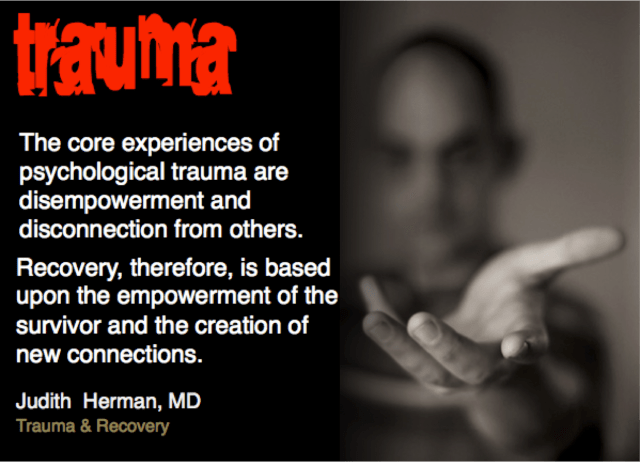
Trauma and Recovery, Judith Lewis Herman

I’m Mad as Hell, and I’m not Gonna Take It Anymore!

This book made me angry. Like, really angry. Not because it’s a bad book, on the contrary, it’s excellent. It just revealed a lot about our culture and society that infuriated me. This may be the OG source of the “C” in CPTSD, so props to Dr. Herman, but her main point is the rise and fall of realizing as a society that we f*ck over women, children, and powerless minorities inducing horrible trauma, and then we (again as a society) balk at horror of the reality of HOW MANY people are traumatized, abused, raped, assaulted, and systematically wrecked by status quo systems of power and authority and we then collectively decide it can’t actually be that bad, or that maybe it was that bad, but it’s better now, and we don’ have to think about it or look at it ever again. And that we have been doing it every few decades for at least 150 years. She somewhat optimistically follows this dire assessment with the cheerful notion that now we’re having a resurgence in awareness and it’s so good, so maybe we’ll learn something this time… only the book was published in 1992. So she was writing about the collective recognize-outrage-token-change-forget cycle in 1990-91 hoping it might be the last time, and I was reading it in 2020, in the wake of the 2017-8 version of #metoo and #blm (those are older than you think, too) going, “are you f@cking kidding me?! how long have we been doing this bullsh!t?”

She talked about how Freud, Mr. All-Girls-Want-To-Fuck-Their-Daddies-And-Rape-Isn’t-A-Thing-Cause-They-Secretly-Want-It-Freud actually wasn’t a total dickhead when he started. Originally, he worked with a bunch of “hysterical” young women (whoo boy howdy and that is a can of worms because the way those ladies were treated *before* him was even worse! seriously, just read the book). He tried the radical approach of (gasp!) actually talking to the women, an approach no doctor ever tried before. Said ladies revealed a lot of details of abuse and incest, which led Freud originally to begin to crack open the lid on trauma as a cause of both mental and physical ailments, but then he basically went, oh, wait, there’s no way that SO many respected, rich, men are doing this to their daughters and nieces, so they must be seducing these men! *gag*. Some sources imply the decision to change his mind came as a result of serious pressure from the gentlemen in his community. Either way, he recanted and we’re still dealing with that consequence nearly 2 centuries later.

She outlines historical occurrences where we (humans) start to realize what’s going on and then back away in fear and horror from Freud to the 1992 version of #metoo, which I vaguely associate with Grrl Power and Lilith Fair, and angrily singing Alanis Morrissette at the top of my lungs, but no real “movement” and certainly no substantive change. She doesn’t focus only on women or sexual abuse, but also men and the trauma of war. Over and over we’ve come close to understanding combat trauma only to turn away and reject it again. (the details of this cycle are more deeply covered by Van der Kolk in The Body Keeps the Score). Whether it’s sexual assault, domestic violence, street gangs, or war – the people who are hurt over and over are the young: children and young adults. She calls it “the adult conspiracy of violence” and it is a concept that fills me with rage.

The Adult Conspiracy of Violence:

Obviously it’s not a conspiracy in the sense that all the adults got together and decided to do this. It’s more like a set of unspoken and unbreakable rules. I suspect that Herman uses the word “conspiracy” to describe this phenomenon because although no organization exists, most adults are more aware of the violence than they are willing to acknowledge, and few are willing to break those unwritten rules. In my own understanding, it is the cycle in which every generation is abused and traumatized then goes on to grow up and fall into one of 4 categories (although fluidly and on a spectrum):
1) suppress what happened and live in denial
2) recognize what happened to them, but think that it a) is very rare b) doesn’t happen anymore
3) are angry about what happened to them and think everyone should suffer like they did
4) are greedy dickheads who don’t care who they have to hurt to get what they want

As a result, the next generation is subjected to just as much horror, abuse, and trauma by 3&4 while receiving zero support from the 1&2 adults around them who simply refuse to see it. I am infuriated because now that I’m “an adult” I can see it, I can see the whole cycle and the whole “conspiracy”, I can see it and I have no idea how to protect the kids from it. I have a niece and a nephew, I have friends with kids, I have students… I want to find a way to blow the lid off this thing, make a blockbuster movie, get a Greta Thunberg to stage a national school walk out in protest of violence against children, to make a giant statue you can see from space and paint it in Pinkest Pink and Vantablack so everyone has to go “why?” and we can explain the adult conspiracy of violence.

Note 2022: I’ve found that Alice Miller discusses this a lot as well in the two books of hers that I’ve read: The Drama of the Gifted Child, and For Your Own Good. Other authors discuss the effects of this cycle of trauma, but few delve deep into it’s roots as Miller and Herman do.

A good solid part of why this book made me angry is because in 1992 I was 14. I was already well down the path of being consumed by the adult conspiracy of violence. When this book was published, and this information was in the public eye, it did not find me. It did not find my friends, my sister. It faded from view and it’s wisdom was of no help to me in understanding or processing any of the things that happened to me as a child, a teen, and a young adult — when at various times I was neglected, abused, raped and my friends and family refused to see what was done to me. When instead they joined the conspiracy of silence and denial and told me it was nothing: you’re making it up, you’re exaggerating, it was your fault anyway, you must have wanted it, buyers remorse, be grateful anyone wants you that way, you weren’t really hurt, you have it so good, that never happened, I don’t remember it that way, look at how bad it could have been, be grateful it wasn’t worse, be happy, be silent.

She tried to reach people at a time it could have made a real difference in the course of my life, but it didn’t reach anyone close enough to reach me. I can’t help but think of all the 14 year-olds out there who need to hear this, who need to know about the Adult Conspiracy of Violence and be shown a way out.

There may be a fifth category that didn’t have a large enough footprint for Herman to write about 30 years ago: the cycle breakers. I see it more and more online in memes and YouTubes and blogs. The more young adults are normalizing therapy and seeking healing for past trauma, the more they want to break the cycle of intergenerational trauma and abuse. Only time will tell if this movement can truly challenge the Adult Conspiracy of Violence or if it is just another peak in the recognize-outrage-token-change-forget cycle.

Post Trauma Fantasies: False Healing

Aside from the above cycle of violence and suppression, the book had a lot of information that was in line with what I’d already read and served mainly as reinforcement. There was one other stand out concept in this book which was the addition of more types of post-trauma fantasies. I was already whammied by the Healing Fantasy that Dr. Gibson introduced me to in Adult Children of Emotionally Immature Parents, so I was intrigued by the idea that there were more. Dr. Herman talks about the Revenge Fantasy, the Forgiveness Fantasy, and the Compensation Fantasy. Being able to further recognize some of my thinking as fantasy was both hard to hear and somewhat reassuring. It was like being given permission to let those thoughts go.

The Healing Fantasy is the idea that you can make it all better if you just do the right thing. If you can heal enough for both of you, or if you stop doing whatever it is that makes them mad or sad or cold, if you can teach them to be more self-aware, if you can help them heal from their own pain so they stop allowing their own trauma responses to result in abusive or toxic behavior, whatever it is, you take on the responsibility of healing THIER trauma in hopes that it will get them to stop hurting you. Gibson says it’s the idea “that more self-sacrifice and emotional work will eventually transform their unsatisfying relationships” and that the “healing fantasy always involves the idea: It’s up to me to fix this”. If I just find the magic feather, then everything will be ok.

The Revenge Fantasy is where the American justice system and every Spawn fan live. The idea is that by taking revenge on the person or people who caused pain, that the scales will be balanced, the perpetrator will be filled with shame and remorse for their wrongdoings, and your pain will go away. That last part is the key fantasy part. Making someone else hurt doesn’t heal your own pain. On an individual basis, this can lead to a lot of anger and rage, since the fantasies themselves are often violent. On a cultural level, it results in people who are happy to imagine prison rape or delight in police brutality for “those that deserve it”. The preference to punish rather than reform, to see people suffer rather than receive help is, I believe, at the core of the rot in America’s criminal justice system, and as far as I can tell, it comes from a widespread indulgence in the Revenge Fantasy.

The Forgiveness Fantasy is the church route (any church/spirituality), if you let go of your anger and forgive the person who hurt you, then your pain will go away. Forgiveness may or may not be a part of your healing journey, but it’s definitely not the only thing. Forgiving a person without making any other changes will simply result in the pain getting shoved further down, where it will continue to harm you. In many of the forgiveness-fantasy cultures, you are expected to forgive a person who doesn’t apologize or change, and are often blamed/shamed for being unable or unwilling to do so. Some people who cling to this fantasy will also use the continued existence of the pain to prove that you haven’t “really forgiven” your abuser, shifting the blame for your own pain onto your “unwillingness” to forgive.

In another type of forgiveness fantasy you dream you can get the other person, your abuser or toxic partner, to understand what they did is actually hurting you, and then when they understand it, they will apologize and want to change! After all, people who love you don’t hurt you on purpose, an will totally stop when you say ouch. Healthy people and people who are trying to get healthy totally will, but Spoiler Alert: toxic people and abusers will never stop, and any apology they offer is just to get you to stay. I had fallen into trap this many many times before learning about it, and I now know the importance of letting this particular fantasy go.

I’ve also seen a large number of memes and tweets about cutting out toxic people that strike me as woefully unnuanced. Not everyone who hurts you is toxic/abusive, so how do you know when to give someone the chop? To me, the difference between a toxic person and a toxic behavior is the way they approach healing. Every traumatized person has toxic behaviors at some point, but only those who are willing to do the deep work of self reflection and healing will be willing to admit it and work to change. It’s important to communicate when we are hurt. Relationships of all kinds are strengthened by good communication and successful conflict resolution, but there also comes a time when the healing process becomes the Healing Fantasy and we have to let go. Dr. Gibson addresses this in her book, and I also found Conflict Is Not Abuse, by Sarah Schulman has a lot of good advice on how to identify and deal with the distinction between being hurt and being abused.

The Compensation Fantasy was the hardest for me. This says that you deserve good things in life for what you have suffered, that if you get those good things it makes up for the bad things. I realized in one terrible epiphany that I had been holding up my joy as the compensation for all terrible things I’d gone though. In 2012-14 I went through a round of therapy research and practice that focused on positive psychology, and centered around the works of Brené Brown and Martin Seligman. I learned how to be happy, like, really happy, not just wine-mommy happy. Then, it was somehow ok that I had suffered so much, because I had so much joy! The sudden removal of everything that brought me joy due to a global pandemic made me crash very hard. The pandemic had not merely deprived me of some fun trips, or a fulfilling career, it had taken away what I was owed for my pain. Obviously, that’s not true, and now I can work experiencing joy for it’s own sake and not as a trade off for pain.

30 years later

This is a great book that didn’t make it into my top 5 but is definitely in my top 10. Despite being 30 years old, it still has a lot of useful and important information, however it’s no longer the only source for such. I recommend this for older readers (who remember the 90s), for younger people who are interested in the history or may be trying to understand a parent (older relative), and for anyone who is doing a deep dive into their own Trauma and Recovery.

North American Summer

What with the total media explosion, I was more than a little apprehensive about my plan to return to American for nearly 3 weeks this summer. I think if it had merely been a trip for my own enjoyment, I would have gone to Iceland or Patagonia or nearly anywhere else in the world. However, there were some practical considerations that dragged me not quite kicking and screaming into Trump’s America in 2017. Mostly, my fears were unmet and I had a lovely time reconnecting with friends and family, but I didn’t feel completely at ease until I passed through Canadian customs and was an international traveler once more.


A Little Bit Political

Back when Obama was president and the country still looked mostly sane (at least from my newsfeed), I had this glorious plan to spend every other year overseas teaching English, and to return to Seattle in between times where I have a standing offer for employment from a lovely French lady, and some decent prospects of joining the thrilling world of project management (no, I don’t know if that’s sarcasm either).

In 2014 when I started this blog, I packed my stuff up for storage thinking it would be nice to have my clothes, dishes, bedding etc. for those years I was in the US and that it was worth the cost of a storage unit to not have to buy them new again every time I came back.

When I left for Korea in February of 2016, early in the primary election process, my friends asked me, “how long are you going to be gone this time?” and I replied, “depends on who wins the election”. Everyone thought I was joking.

To be fair, I can’t lay all this on one man. There is a seriously disturbing trend in the US that I’ve commented on a few times in the last year. I try not to wax political often because this isn’t a political blog, but some things affect me so much I can’t leave it out. I see the election of Trump as a symptom, not a cause, and I see America taking a turn for the I-don’t-want-to-be-near-that-when-it-explodes.

Maybe that’s selfish… well, not maybe, it is. I have a better job, better pay, better vacation, better vacation opportunities, better health care, and an over all better quality of life out here than I have ever had as adult in the US. I haven’t been un-poor long enough to be willing to go back to that life. Add on going to rallies, protest marches, calling congresspeople, and risking my job and freedom to do so? No thanks.

My hat is off to all those who are staying to fight, and even more to those who are returning from life abroad to get involved. You are brave, and I respect that. I wish you luck, and I will be cheering for you. I will also bake you cookies, or offer moral support whenever I can.

So Why Go Back At All?

That storage unit was costing me about $1,200 US annually and I can do much cooler things than store stuff for that much money. I tried to get some friends to go and get things they wanted for free out of it last year, but only one person did (and even then I had to remind her several times). I don’t know what it says about my Seattle people that they can’t make time to go get free stuff they want. Thus it became that I was forced to return to Seattle to empty the darn thing myself.

And then there’s the niblings. I neither have nor want children of my own (I never have and no, I’m not changing my mind, and yes we’ve already established I’m selfish). I don’t hate children. I teach children. I love hanging out with my friends’ children (assuming they don’t drool too much). My sister has two beautiful little ones that are and always will be a precious part of my life. They are as yet too young to join me abroad on their holidays, so I try to get by there about once a year (or two) so they can see my face and form some kind of mental image of their Auntie.

Anxiety

I was so terrified of going back.

I was terrified that the Arabic stamps in my passport would get me flagged at immigration. Even though I’m a citizen, it turns out our constitutional rights to privacy (like cops needing a warrant) don’t apply at the border.

I was terrified that some kind of medical issue would crop up while I was in the US and financially ruin me (travel insurance only covers so much). Or worse, that it would prevent me from returning to Korea. Being trapped in the US has become one of my worst irrational fears.

I was terrified that I would witness some horrific act of racism or xyz-phobia… because if I saw it and didn’t get involved, I would be somehow less for watching passively, but if I saw it and did get involved, I could end up arrested, in the hospital or even dead like that poor guy in Portland. And if it could happen in Portland, it could happen in Seattle.

I was terrified that my growth and self discovery would be disregarded by my friends. It’s not like they’ve been able to see me going through all of this except in sporadic Facebook posts.

I was terrified that toxic people I had cut from my life in the last 3 years would try once more to insert themselves into my attempt to enjoy the company of those I do still cherish, bringing drama and spite to what should be a nice time.

Various versions of these scenarios were the topic of restless nights and nailbiting free-time in the weeks before I went. Perhaps the only bonus to my horrible root canal misadventure was that I was in too much pain and anxiety about my tooth to worry as much about what would happen to me in America.

The Actual Experience

At the border: Customs at LAX was very smooth, all machine operated. I used one of the little kiosks to enter all my data and it printed a sort of receipt I gave to the customs officer who welcomed me with a nice smile.

Healthcare: I did get a little sick, I had a mysteriously swollen lymph node, but it never got hospital worthy and was gone in about 10 days. Mostly, I was just juggling the tooth pain and being totally sleep deprived from trying to do all the things.

Violence: I didn’t see any horrific behavior, although this is more than likely because I spent nearly all my time in someone’s house or being escorted through the nicest parts of town for our errands. I did see a dead body on the highway. It was a suicide. The man had jumped from an overpass and landed on a car below. When I drove past, the EMS had not arrived, but there were more than enough bystanders parked on the shoulder that I decided the best thing I could do was get out of the way. It was a bit strange how blase my American friends were about this story, like oh, yeah, dead body… next.

My Friends: I was able to make a schedule ahead of time so that the people I wanted to see most were already planning something with me, and there were a few “free for all” spots. No one I didn’t want to see showed up, and I got to see everyone important to me. This was a resounding success and resulted in one of the more epic sailing days I’ve ever had, a wild midsummer night’s fairy party in the woods, and my traditional group sing of Bohemian Rhapsody at karaoke (don’t judge me), as well as several days of pleasant company and catching up.

A benefit of selecting only those most important to me for hangouts was that they were all pretty much on board with my growth and happy for my self discovery. It’s a good sign since that’s how friends should be, but I spent too long around people who kept me down or resented my self improvement to take the good folks for granted now.

Bonus: I got the whole storage unit cleared out and managed to only have a half a trash bag to throw away. Everything else I didn’t keep was given to a person who would use it or donated to Value Village.

American Money

This trip was the most expensive I’ve taken by over 1000$, and I didn’t spend a single night in a hotel. Friends and family found me spare rooms the whole way. Yes, the trip was also longer than previous holidays, but I only rented a car for 9 of the days and was not having to pay for every meal of the day, or things like park entrances and tour fees. America is expensive.

Airfare: Getting to America is bad enough what with that giant ocean in the way, but I flew round trip to New Zealand (which is also an ocean away and on another hemisphere) for less than the cheapest round trip to the nearest coast of the USA. And if you want to go anywhere other than the coast, you’re stuck paying inflated airline prices that include no meals or luggage (which basically everywhere else in the world does include). I can fly from Korea to Norway for less than it costs to fly from Seattle to Memphis, and I’ll get fed and my bags will be included.

Hotels: I could not have afforded this trip if I had to rent accommodation in addition to a car. If you want a room in America in a part of town where you are unlikely to hear gunfire, you will pay 80-120$ a night minimum. (booking.com only lists 4 in Seattle for under 100$ and all of those are over 90$) Everywhere else I’ve gone, I can get a bed for between 10-30$ a night in a safe place.

Car Rental: I paid almost 200$ less because I am a legal resident of Korea than US residents would have paid to rent the same car. I tried searching for smaller rental companies, but I couldn’t find one that didn’t have an online reputation as a scam. This in and of itself is crazy, because in other countries I usually rent from small companies because they have better rates. In America, I had to go with one of the big names to avoid being ripped off. When I was reserving the car with Budget online, I discovered that the rate was significantly different depending on what country I listed as my legal residence (not citizenship), and I was instantly outraged about every other time I’ve rented a car while living in America.

Taxes Not Included: I was born and raised in that country and now that I’ve had a glimpse of the promised land of menu clarity I never want to go back. I got the worst case of sticker shock when I went out for dinner with two friends at Azteca. They had treated me the previous 2 meals we’d had during my trip, so I wanted to pick up the tab and thought I had a rough idea of the price… oh no. Because American menus (and coffee shop signs and grocery stores and everything else) don’t list the real price of things. Between tax and tip, it ended up being about 25$ more than I had thought and while I am so grateful I have a job where that’s not bank breaking, I can remember there was a time in my life it would have been.

Tips: I’m all for food service workers being paid well, but I have a hate on for tip culture in the US because it backfires and causes customers to feel entitled to mistreat workers for anything less than 5 star service/food even at Denny’s, and it allows employers in most states to pay them less than minimum wage while taxing them on a presumption of tip earnings. I’d rather just see the price of the food include the tax and whatever markup the restaurant needs to put in there to pay it’s employees well. Then I can decide if it’s in my budget without doing calculus and everyone goes home happy.

The Highlights

Somewhere, one of my bffs* is reading this and going, but wasn’t I a highlight? Yes. Literally everything I got on this trip (except that lymph node thing) was a highlight of my summer, but “I spent all day chatting with my dearest friends in Seattle and then we got Mexican food” does not make a good blog post, so these are the stories I think strangers will find most endearing.

*bff: literally, best friend forever. I employ this as a plural occupancy category.

Fairy Party: My friend throws the most elaborate parties. She’s going to pharmacy school, but really, I think she could make a mint as a custom party planner. My favorite one to talk about was the time she did a Neverland theme for her birthday. Each room in the house and the yard were set up like a different part of Neverland, and each guest was asked to come in costume. I built a tepee for the Indian area (Peter Pan was not great about First Nations representation, I know). There was a kiddie pool for the mermaid lagoon where wet t-shirt contests were held. Tinkerbell’s fairyland was a glowing tree, the basement was Captain Hook’s quarters… it just went on and on.

This year, she did a Midsummernight’s Dream, but instead of using the house, she used the backyard and the entire greenbelt behind the house. Because it’s public land, they can use it whenever without a permit, and she decorated the entire woods in fairy lights and magical bowers with clues and quests and geas hidden everywhere.

In many ways, I felt as though I had walked into a new world, not only because of the extreme decorations, but because of the 120 people who came that night, I only recognized about 10%. Although I’ve only been away 18 months, it seems that my friends have also been making changes in their lives and perhaps replacing the same toxic people I was worried about with new faces.

Sailing Day: I started off this particular Saturday by visiting the home of some excellent friends who accompanied me on the Thor’s Well Adventure years ago. They cooked corned beef hash and I taught them how to poach eggs. From there we headed over to Shilshole Marina, where another dear friend (who let me live in his attic when I was homeless) had finally fulfilled his dream of selling his house and moving on to a boat with his family. Plus my friend who I met in Dubai (even though we lived a couple blocks apart in Seattle!) and her husband and we had a perfect sailing crew.

The wind was mild, the sun was shining and the mountain was out. We puttered aimlessly around the Sound while enjoying a selection of Korean wines I’d brought back for the occasion and one bottle the captain of the day had brought back from Greece years ago I’d found in the storage unit the day before.

These are people I’ve been trying to get in the same room for years. I was convinced they’d enjoy each other’s company and while I’d gotten them to meet one or two at a time in the past (with good results), this was the first time I got them all together. It was absolutely wonderful to see what a good time they all had.

After we examined our crab hunting results and determining that we would not be having crustaceans for dinner, we migrated back to the abode of the morning where we had a simple grocery store meal and got down to some jazz improv.

Karaoke and Beyond: I stopped by some of my past haunts and reconnected with some old friends, but my favorite part of this trip to Seattle was seeing my friends reconnect with each other. People who had barely seen one another since I left came together at one or another of the events I planned and (re)discovered that they enjoyed each other’s company.

This was nowhere more obvious than my resurrection of the Tuesday Night Karaoke Tradition. For as long as I can remember, while I lived in Seattle, we did this. The group changed over the years. Some nights were packed, other times only 2-3 people would show up. One year, the place burned down and we had to find another bar until they rebuilt. It is an institution of my time in Seattle, and I do it if I’m there on a Tuesday.

It turned out that since I left, it had all but completely stopped, yet everyone who came out was happy to walk down memory lane with me, sing their old favorites and catch up on 18 months of missed time with all the other people there they hadn’t seen even though they live in the same city.

Niblings! How can that not be a highlight? Ok, you don’t get a million kiddo pics because my sister doesn’t want her kids faces on the internet, but I got this one of my niece in her Korean hanbok where you can’t see her face, so that’s safe.

The kids were 4 and 6 on this trip, but it’s been 18 months since I’ve seen them. My niece, the 6 year old, remembered my last visit fairly well, and was happy to see me again. My nephew (4) is basically willing to trust anyone his sister trusts, and was also happy to see me (so many kisses), but asked me at one point if this was the first time I visited their house. You can only imagine how much fun it was to try and explain to them that a loooooong time ago (2001-2003ish), it was my house, too.

I really love blowing their minds with weird facts like, yes your mom is my baby sister, yes your grandma is my mom, and yes it’s tomorrow in Korea.

I brought back a spoiling number of gifts including the beautiful hanbok (Korean thriftstore ftw!), spare change from every country I’ve visited since the last time I saw them, and magical Kinder Eggs, which are dangerous contraband in the US for some reason. At least I know one gift that will always be popular next time I go back?

Additionally, my niece made me a picture with invisible ink, which is basically a white piece of paper with some suspiciously greasy smudges on it and her and her brother’s names in one corner. It is a testament to how much little people can fill your heart that this came back in my suitcase to Korea and now adorns my apartment.

Being There for Milestones

One of my besties who I have dragged into the life of globe trotting glory finally got her chance to go to pastry school this year, and it just so happened that I made it to Vancouver in time to attend her graduation. It’s amazing to me how the friends who live abroad keep popping up in my life. My burlesque dancing magical Vixen Valentine is one I met in Seattle but I see once every year or so somewhere. And Jane (formerly JaneMeetsWorld and now PastryJane) has been with me in the US, in Europe, in Korea and this time in Canada.

It was just one more in a line of seeming coincidences that make our world small and cozy that I could join her and her family to celebrate such a milestone and to have a slice of her final exam cake! Moments like this one fill me with gratitude that I have friends as crazy as me, who will travel around the world, use apps to gossip late into the night with me, and while we may never know what city we’ll be in together next, we know we will meet again for sure.

Also, although my sister might kill me if I put her picture in here, I have to mention her. She only grudgingly let me take selfies with her, in and out of uniform, but it just so happened that we got to hang out on the very day of her 10 year mark as a police officer. I know that’s a hot button topic in America right now, but she is and always will be my baby sister, and I couldn’t be more proud of her accomplishments as a person, an officer, and a mother. I am grateful that I could spend that day with her.

Wrap Up

I spent three weeks in North America covering Seattle, Memphis, and Vancouver. I got to reduce my material possessions (and bills). I got to solidify my theory of meaningful friendship in Seattle. I got to make my sister smile, hug my mom, and play with my niblings. I got to see my sister reach her 10 year mark and get vested, and my best international girl graduate from her dream of pastry school. It was good.

If you’re reading my blog from America and you think, “man, how does she have the money to take all these extravagant trips?” I don’t. It doesn’t cost as much as you think, and it costs even less if you start from outside the US. What I also don’t have is the money to come back to the US very often. This was probably my last visit to the ol’ U.S. of A for a couple years minimum (assuming Civil War II doesn’t start by then). In the mean time, I’ll take 2-3 international vacations for the price of one US trip and I’ll consider myself well off.


Back in Korea, I’ve just finished off summer camp and am undergoing as much healthcare as I can tolerate before the school year starts again (yay! root canal, LASIK, biannual health checkup, I love living in a country with affordable health care!). Hopefully the oppressive summer heat and high humidity will ease up soon and I’ll be able to frolik outdoors. Failing that, I am planning a trip to the Philippines for October.

As always, thanks for reading, and I hope you’ll check out the Instagram for some day to day pictures around Korea and my life as a teacher between vacations.

A Year Later, Still Relevant

A year ago, after attending the Seoul Queer Culture Festival (Pride), my elation was destroyed by the Pulse shooting and after some time to process the grief and anger, I wrote this. Now, with the political climate of the US and the world drifting more and more into divisive, unhealthy, and downright dangerous territory, I think it’s important to remember these things, so I’m reposting.


It’s not a traditional rant, but I’m not soft-balling it either. I’m not going to curse and yell and insult people. That doesn’t help. But I’m not pulling punches and guarding every turn of phrase. I’m pretty sure if you’re reading this, you have an open mind (I don’t have a big enough following for trolls yet) so I’m hoping you’ll be open to some different perspectives on the issues this has brought up and won’t nitpick every detail or metaphor to death in an attempt to avoid the message.

Disclaimer: I have employed the word “you” here as a general term for “a person” or “a group of people” because it’s shorter and more convenient than those phrases, and because it sounds less awkward than “one”. If you (actually you) don’t feel like you fall into those thought patterns, please feel free to observe how other humans do. If you (personally) think it applies to you, then please do the awesome thing and admit your past errors and strive for personal improvement.

Connection

The problem of violence in America has no quick fix. It’s not one type of problem. It’s a gun problem, and a mental health problem, and a male problem, and a sexual entitlement problem, and a loneliness problem, and a homophobia problem, and and and….

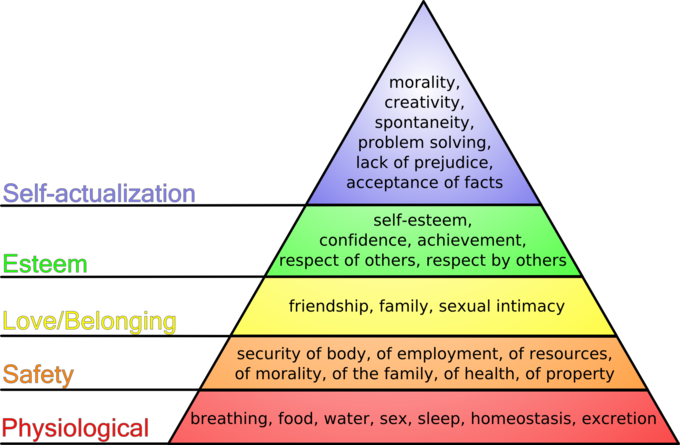
The fact that I can’t remember which shooting this came after is a horrible sign, but someone pointed out that socially well connected humans don’t go off and kill a bunch of fellow humans. I don’t mean socially acceptable people, by the way. Not the kind of person everyone says “he seemed so nice” about. I’m talking about connection. Genuine meaningful social connection is possibly the most important thing we can do for another human being.maslows_hierarchy_of_needs Love and belonging are the third tier of Maslow’s hierarchy, only overshadowed by the need for food and safety and integral to achieving esteem and self-actualization. They are NOT OPTIONAL for humans.

In order to make the connections that provide us with the sense of love and belonging we need so much, we have to feel safe (second tier) and have our physical needs met (first tier). This means things like jobs, minimum wage, enough to eat and no fear the power will be cut off soon are important not just for the person at risk of snapping and being violent, but for all the people around him (yes, him, they’ve all been men) who need to be in a safe place in their lives in order to be available for social connections. It’s not about handouts and food stamps for the lazy or entitled. It’s about creating an environment where people are capable of achieving love and belonging, because only then can they start investing back in that environment in a positive way.

To make social connections we need to be mentally and emotionally healthy too. Mental health care availability and removal of mental health care stigma are a big part of making that happen. Plus, it has the side benefit that people who are really struggling can get some extra help before they feel the need to lash out violently.

We need a social value of peer care. This whole “every man for himself”, “not my circus, not my monkeys” attitude is destructive. A society is dependent on co-operation and co-care for success. It’s supported by science and religion. But I don’t even know how to get this idea off the ground in the US. Rugged individualism (aka “selfishness”) is deeply ingrained in the American identity these days, but it hasn’t always been. Once upon a time, there was a horrible war against some evil men and our country banded together. I don’t know if it takes Nazis to make us help each other, but it does prove that we’re capable.

2017 Add on: I could not have dreamed when I wrote that sentence what was coming, I thought I was speaking in hyperbole about Nazis… 

The “Or” Problem

tumblr_m02txbbmhq1qa1zvjAmerica is fascinated, hypnotized, enslaved to the idea that every issue has two and only two sides which are so opposed to one another that any form of compromise or middle ground is simply unthinkable. I don’t mean uncomfortable to think about, I mean, people’s brains are actually incapable of thinking the thought. Thought rejected. This is known as the “false dichotomy”.

Example: All the guns or none of the guns. If you are for gun rights, you must be in favor of all the guns. If you are for gun control, surely you want to destroy all the guns. Many of you say, no no, we don’t think that way. BUT, when you tell a die-hard NRA conservative you want gun legislation, all they hear is “‘Bama wants to take our guns” and the next thing you know we’re being moved at state owned gunpoint into UN appointed Orwellian style living blocs. Madness! (I’m not making this up, I wish I were.)

lean-right-gun-control

Ugh. I said I didn’t want to have a conversation about guns. Sorry. You can look at many aspects of American life and see that you’ve been sold on an idea that something must be A or B and there simply is no alternative or middle ground. Political parties and candidates are another great example. Republican or Democrat… anyone heard of the Green Party? Many people seem to think that the alternative to hating LGBTQ+ is embracing it wholeheartedly. And, while I wish you would, I also know that it’s totally possible to disagree with a person’s life choices and still not hate them. I do it every day.

twilight-tumblr_ktux7xw1621qatyd2o1_500-breathtakingdottumblrdotcomEven in this way, Americans are dichotomous. You love it or you hate it. Well, you know what? I don’t love or hate pistachio ice cream. I bet there’s a lot of that stuff in your life and you don’t even think about it. But, when it comes to a hot button issue, you must choose a side. Team Tony, Team Cap. Team Edward, Team Jacob. Team Coke, Team Pepsi… really, that’s what you’re reducing complex social issues like religion and sexuality to when you do this.

guncontrol1And while we’re at it, a side note on false equivalencies. , such as this lovely comparison of Obama to Hitler. Both were in favor of a policy, therefore they are the same? No. Obama =/= Hitler.  I could spend the rest of the year finding examples of how this is used in all these polemical arguments, but the ones I want to bring up are: anger =/= hate, and dislike =/= hate.
I’m angry at my sister for staying in a crappy city, but I still love her. I’m angry with my friends when they are stubbornly stupid about writing in a vote that won’t count in their state, but I still love them. I’m angry with my students when they don’t do their homework, but … you get the idea.

I don’t like Donald Trump. I don’t like the creepy homeless guy on the street corner who smells funny. I don’t like Kanye West. But, I still think they all deserve fundamental human rights and that old American goodie: “life, liberty, and the pursuit of happiness”.

But Kaine, that kind of anger/dislike isn’t the same as what I feel toward (insert group here… oh, let’s say Westboro Baptist, but pick your own if it helps). Yeah, it’s smaller maybe. WB makes me want to pull my hair out. Makes me want to scream. Makes me want to go to a junkyard and smash things. BUT, it doesn’t make me want to kill them. It doesn’t make me want to take away their right to free speech. It also kind of makes me want to make them some tea and say, hey do you need a hug cause you’re clearly very upset about something (though in the case of the homeless guy, maybe not a hug until he’s showered).

ojigt5fWe need to stop buying into A or B. We need to ask “why” about everything over and over until we discover the root issues. We need to remember it’s “liberty and justice for all” full stop, not “all white Christians” or “all men” or “all heterosexuals”. And then we need to take a long hard look at “life, liberty, and the pursuit of happiness” as it applies to everyone. We’ve already decided that taking someone else’s life (murder) or property (stealing) is not a liberty anyone is permitted no matter how happy it will make them. We’ve decided that absolute freedom to do whatever you want is not the path to a healthy society. We already curtail certain actions deemed destructive to the well-being of our nation and its people. Of course we must be careful about what we choose to curtail, but we cannot act like it is an anathema to do so.  Ben Franklin said that a person who would surrender freedom in exchange for security deserves neither, but that’s become another “or”: freedom or security. Why? Why can’t it be and?
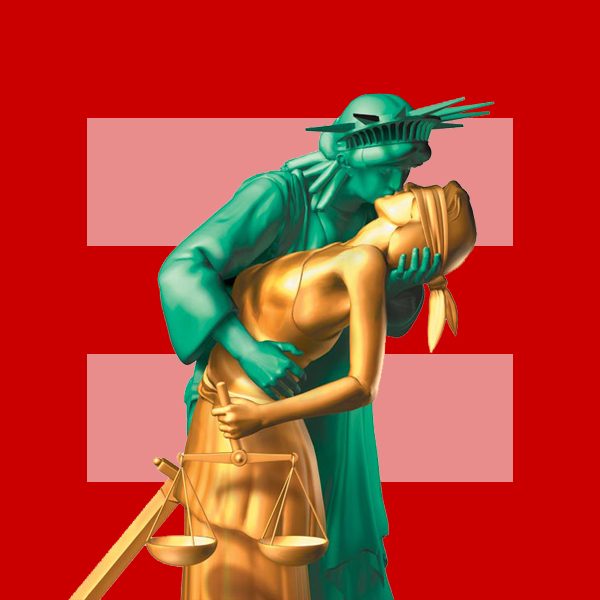
Freedom and security.

Dislike and respect.

Disagreement and compassion.

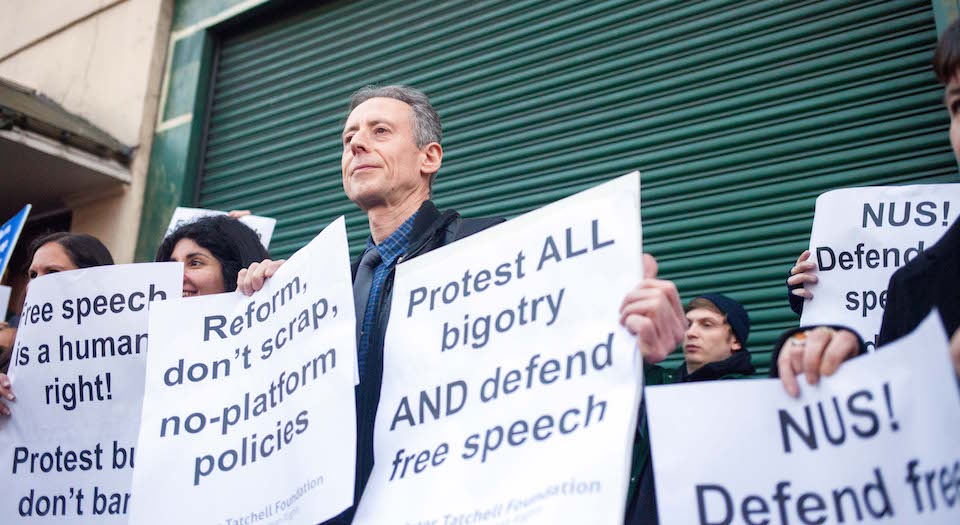
Can v Should: As It Applies to Free Speech

peter_tatchell_

When I was living in the Middle East, I learned some very valuable lessons about free speech. I’ve been working on a separate post about that, but the core of it I think is important to this issue as well. But let me be clear: I am in NO WAY advocating for the government control of speech or expression. I am talking about social and civic responsibility that comes with having that freedom. Abraham Lincoln once said that “we should be too big to take offense and too noble to give it.” There are some people out there who are just easily offended by things that are genuinely not damaging to others. There are things that need to be said that will be hard to hear. I will support the legal right to free speech forever. But, the second part of that quote is damn important.

63159187In America, when someone says something insulting (about your faith, your lifestyle, your weight, appearance, gender, orientation, skin color, etc) the result is all too often “You’re an adult, suck it up”. The expectation is that adults should just be able to deal with being insulted or having their feelings hurt (even though arguably many of these insults are signs of bigotry and oppression and not just about hurt feelings).

In the Middle East, when I had conversations about such insults, I explained that we didn’t want the government to police what we could say about religion or anything else for that matter. This is the core of our free speech amendment, that the government can’t punish you for the insult. People understood that part, but what they couldn’t wrap their heads around was why anyone would want to be so insulting in the first place.

Sometimes I get to explain about how important it is to be able to speak out against powerful institutions that may be corrupt or have a corrupting influence, that may be stealing or hurting people. That’s the reason we have the first amendment, after all, not simply to protect the Westboro Baptist Church screaming insults at a funeral, but to protect people like Edward Snowden who tell us when our government is breaking laws, or in a less controversial light, people like Neil Degrasse Tyson who speaks out about climate change and evolution despite how unpopular those things are in the US.

In other words, the right to free speech is protected so we can punch up at those in power who are ostensibly abusing it. Using your words to hurt, bully, intimidate, threaten, marginalize or oppress other people isn’t exercising your first amendment rights, it’s just being an asshole.

freedom-of-speech-megaphone-300x2361

When you tell the story of someone who is insulted for their race, religion, gender, orientation, etc and the reply is “You’re an adult” the follow up shouldn’t be “suck it up”, the comment isn’t directed at the victim, it’s directed at the attacker. “You’re an adult. You should know better”. Kids insult each other, bully each other, and call each other names because they are learning. As adults we tell them it’s wrong. We ask them to think of how they would feel if someone called them that name. You’re an adult, you should know better than to insult someone that way for no reason other than to prove you can. What are you 6? Like two kids in the backseat of the car, one sibling holding a finger just millimeters away from the other’s skin. “I’m not touching you! There’s no law against it. I have free speech.”

respect-the-freedom-of-others-quotes-freedom-quotes-nelson-mandela-quotes

Just because you can, doesn’t mean you have to.

You’re an adult. You should know better.

2017 Add onFreedom of speech also doesn’t come with a guarantee of platform or audience. No one is obliged to invite someone to speak at an event, and no one is obliged to listen to them. People like Ann and Milo don’t have a right to an auditorium or TV air time and failing to give them a chance isn’t an infringement of their right to speak without persecution or prosecution by the government, which is what the amendment guarantees.

And, because it’s come up more than once over the last year

YES THERE ARE LIMITS TO THE FREE SPEECH GUARANTEE IN THE BILL OF RIGHTS.

The first amendment does not give everyone the right to say whatever they want without legal consequences. Things not protected include: incitement to violence, false statements of fact (slander, libel, perjury, etc), obscenity (with caveats), child pornography (thank goodness), “fighting words” and offensive speech, plagiarism, and a few others. So before you get all defensive of that alt-reich, neo-nazi’s right to free speech, check out if his words really qualify.

The Crab Bucket

When I was learning how to be happy (another one of those things I keep meaning to write about in more detail), I read a lot of studies, and listened to a lot of psychiatrists, therapists, sociologists and neuroscientists. One day, I’ll make a comprehensive list with links and you can all take the shortcut to the searching I did, but until then, it gets doled out piecemeal.

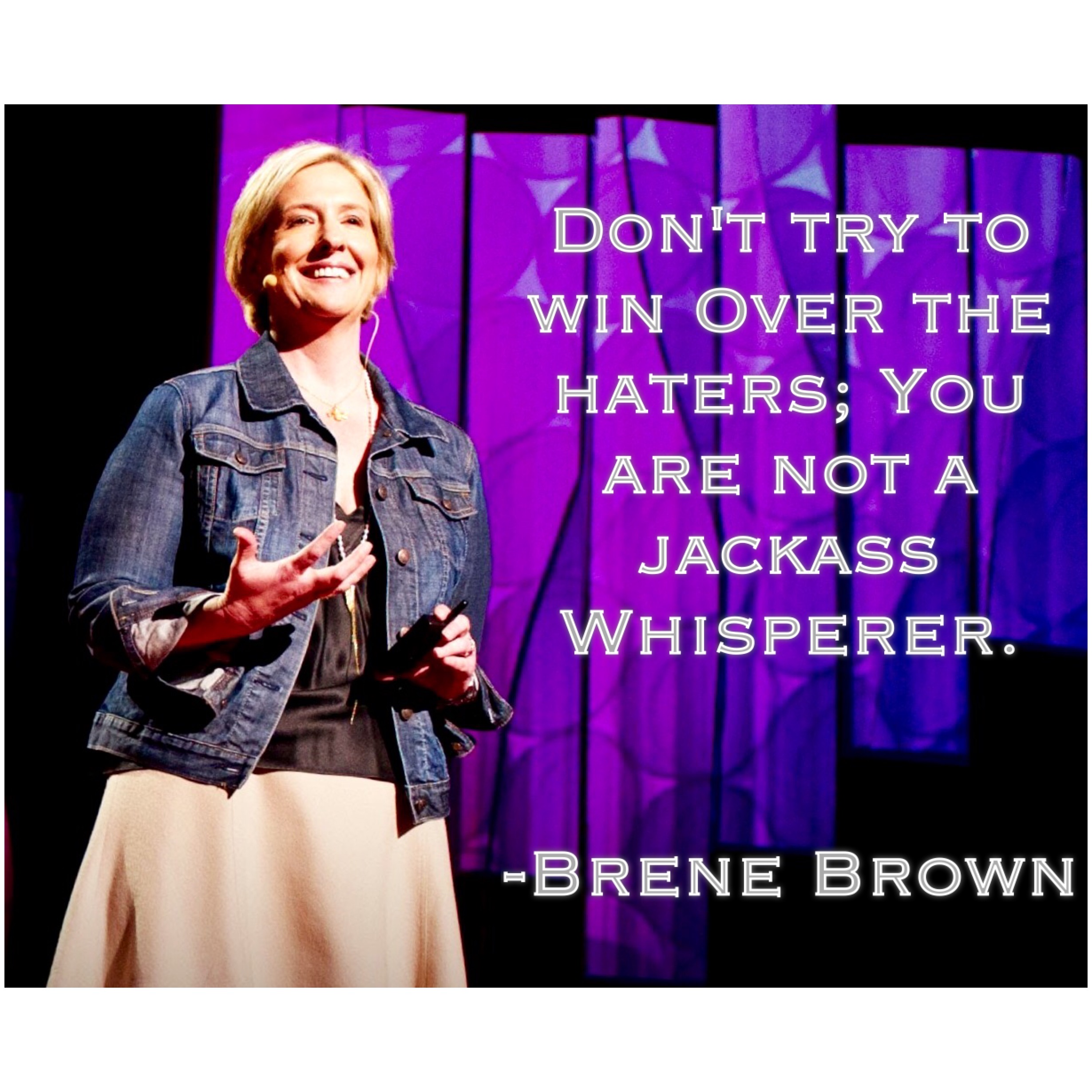
Today’s piece: toxic relationships & crab bucket tribes. I had to learn about vulnerability from Brene Brown. I had been hurt so much that for part of my life it was easier not to feel. But Brene reminded me that is not a sustainable model for happiness, it’s only a barrier to pain and the absence of pain is not the same as the presence of joy.

quote-we-cannot-selectively-numb-emotions-when-we-numb-the-painful-emotions-we-also-numb-the-brene-brown-47-89-66

Being vulnerable is the only way to experience love, and love is key to happiness. Don’t just take my word for it, watch her TED talks, read her research. Being vulnerable means you open up to people and experiences. You let them in. That means people can hurt you. As a result, it’s really important to back away from the people who will hurt you often and badly. They may have the best intentions. They are certainly worthy of love, but that is not your job.

Additionally, I learned that our mental tracks, our personal narratives if you will, are greatly influenced by the people we spend time with. If we hang out with people who have no ambition, who are negative and critical all the time, who always find something to complain about or some reason not to try, then it becomes harder for us to break out of those thought patterns.kb2zocq

Even worse is the “crab bucket”. I learned this word from Sir Terry Pratchett, but I don’t think he made it up. Basically, there is no need to put a lid on a bucket of live crabs because as soon as one tries to climb out, it’s bucket-mates grab on and pull it back down. People do this too. People who are in bad situations for whatever reason, people who have had to learn to accept those situations (bad job, too many kids, crappy apartment, bad relationship, wrong career, etc), people who are unhappy but unwilling (or unable without great effort) to change it. They are comfortable in their discomfort. Seeing someone else get out, “make it”, improve their lives should be a cause for celebration, but too often it simply reminds them that their own lives are less than they want and it breeds resentment. They will attempt to keep those around them in the crab-bucket for all kinds of reasons besides flat up jealousy or resentment. It could be because they like you and want you around, they want to have things in common with you, or because they don’t want to be alone, but it’s still not good for you.

Whether someone is actively toxic in the sense of abuse and chronic negativity or passively crab-bucket in the best meaning friendly way, they are still an obstacle to your happiness and you can’t be vulnerable to them, you can’t invest your time in them without expecting them to have a commensurate impact on your life.

Excising toxic and crab-bucket people from my life was not easy. It was a deeply painful process. I admit, I didn’t confront many people. I let most of them quietly drift away. Moving out of country helped that a bit. Only the ones I truly deeply cared about did I try to talk to. Sometimes it worked and we improved our relationship. Sometimes it didn’t and it blew up in my face.

Now I’m getting better at making non-toxic friends up front, so hopefully I won’t have to do that again. But I’m encountering a new toxic, crab-bucket relationship in my life that I didn’t really see before: my country.

Your country is a lot like your family. You don’t get to choose where you’re born. I’ve often thought I was lucky to be born in the US. So much privilege and wealth. Such a wonderful history of freedom and innovation. Anything was possible… the American dream.

I learned the hard way that’s not real, but I was still hoping America was going to pull through. I admire people who work tirelessly to improve it, who don’t give up. I said before that even toxic people are worthy of love and I meant it. Just because I can’t be the person who gives it to them doesn’t make them unworthy. I guess I feel the same way about America. I’m starting to feel like hanging around crab-bucket-web1America is overly negative. I definitely feel like America is turning (has turned?) into one big crab bucket. People tell me all the time “every place has problems” as a way of minimizing the problems in America or somehow trying to equate them with problems in other places. People tell me all the time, “not everyone can just leave” as a way of reasoning out why they can’t.

Every place does have problems, just like every relationship has problems. You don’t stop talking to all humans because of it. You don’t give up on vulnerability or love. But you don’t stay in an abusive or toxic relationship either. Yes, in case it wasn’t clear, I’m comparing the US to an abusive or toxic friend/partner. I hear people in bad relationships say things like “no one’s perfect” and that’s what I hear when people say “every place has problems” in the wake of the Orlando shooting. Places that have problems like that are the national equivalent of abusive spouses. If you’re comparing yourself to central Africa to find something worse, it’s like saying yeah, he slaps me around sometimes, but at least he doesn’t cut me up or break any bones like Betty and Paul down the street. Neither one is ok!

And yes, it’s probably true that not everyone can leave the way I have. But more people could leave than are doing so. Countries like Germany are struggling with record low population growth and are desperate for immigrants who can contribute to their society as well as their population numbers. Places like Korea are giving away scholarships (transportation and living expenses included) to people who want to come here and commit to a multi-year study of Korean language. Furthermore, the people who are going to stay should be doing so because they want to fight for America, to work and toil and loose sleep and gain gray hairs to rebuild a place worth living in. That’s worth doing, oh gods yes.

Not every bullied LGBTQIA+ leaves the bigoted southern towns they were raised in as soon as they turn 18. Some because they don’t know how, can’t afford it, think they have no place to go. But some because they want to stay to work to improve conditions for the next generation and that’s work worth doing. I met an amazingly bright young lady while I was teaching in China. She could have easily used her intelligence and education to get a job and move to a great city, or even leave China which is the dream of so many there. Instead, she told me her dream was to go back to her tiny village where people don’t even have indoor plumbing and teach at the local elementary school to give the next generation a better chance. Wow.

There are people in my life I thought were worth fighting for. I haven’t abandoned every relationship that was damaging. But I’ve made choices and worked for the ones I wanted in spite of the risk.

I’m looking really hard at America right now, because I don’t think I can passively live in the crab-bucket anymore. Right now, I’m taking a “break”, travelling around the world,  but before I go back for anything longer than a vacation, I have to decide if this is a toxic relationship I have to cut loose, or if it’s a painful relationship I want to work to fix.

2017 Add on: I’m heading back to the US this summer to dispose of my stateside material goods and visit my family again. After this, I don’t think I’ll be back for a while, certainly not until there’s adequate health care and I don’t have to worry about getting stabbed to death for standing up against Islamaphobia. My mom is retiring next year, so I’m hoping she’ll be able to come out and visit me and bring my niblings along so they get to see more of the world.

That said, I’ve met several Americans who are heading home. When I asked them why, they said they felt they needed to stand up and do something about the state of things. Even when we talked about the fact that they were unlikely to ever find as good a job as we have here, let alone as good a healthcare plan, they looked sad, but resolved. I admire these people immensely and I hope that they can make a difference.

Ghandi said we have to be the change we want to see in the world, but only you can decide what that means for you.

imagine__1


I can’t even begin to list all of the horrible things that have happened since I first wrote this post. Increases in white supremacist violence, more restrictive laws to increase the school to prison pipeline, the Trump administration, the Paris accord withdrawal, Syria, Russia… people are scared, some feel under threat by the government’s plans to dismantle health care and other social services, and others are under threat because of the color of their skin, the god they worship, or the person they love. Don’t give up. #Resistwithcompassion.