Although I only stayed overnight in a handful of cities last summer, I often made day trips to nearby smaller, quainter European towns along the way. While travelling in Belgium, everyone says “go to Bruges, go to Bruges” and I thought about it, but that damn heat wave… Instead, I went to a similar quaint, canal-ridden, castle-bearing, sleepy little sidewalk-cafe-having town called Ghent. There I had one of the most stunning photographic opportunities and most memorable experiences of the whole trip.
I prioritized Ghent over Bruges for my small town detour for one main reason: the ruins of the Abbey of Sint Bavo. As I learn more about the history and development of churches and cathedrals in Europe, I’ve come to realize that there are not that many styles. About 7 (I’m not counting Revival and Modern, fite me). And of those 7, I’d say that 3 are the most common and distinct in the places I visited: Romanesque, Gothic, and Baroque. They’re stunning! High arches and flying buttresses, lots of fiddly bits on the architecture and beautiful decorations. However, churches within the same style are not overly unique unless you are an architectural scholar. I have now seen nearly a dozen Gothic style cathedrals, and I would be hard pressed to tell them apart without other landmarks.
Am I jaded? I don’t think so, because I do still think they’re stunning, I just don’t feel the need to prioritize another Gothic or Romanesque cathedral. I’ll go and admire one if I’m going to be in the neighborhood, but I don’t put it on my “to-do” list anymore. I might still go see a few more Baroque ones before I’m tired of that style, and I’m quite looking forward to seeing more Byzantine. What I do love is finding the cathedrals (or other historical landmarks) that are unique in some way, that bear the mark of history, of a life lived.
The Abbey of St. Bavo promised to be just that. Ruins left unrestored yet maintained, and only open to the public a few hours a week to prevent them from being damaged further. I was fascinated and determined to go. I found the opening hours and even emailed the caretakers to be sure I didn’t need a reservation, and then set about making sure I would be in Ghent on a day I could go inside.
This turned out to be a Sunday, which meant Ghent was even sleepier than normal. I’ve been living in Asia so long that I forgot about Sunday as an off day in the West. Although, to be perfectly honest, I think that western Europe closes down even more than America on Sundays. Live and learn.

I looked into transit options (oh how I gnash my teeth at the transit of EU countries, but that’s another post) and found a “hop on hop off” boat! I’ve done hop on hop off buses before, but this would combine my desire to take a canal tour with my need to get around town. For the moment, lets just skip the challenges involved with getting from my Airbnb in Brussels to the main boat jetty in Ghent. Wave your magic wand, and there we are. The last bus of the series let me off directly in front of Gravensteen Castle where my day of “quaint European town” began.
Gravensteen Castle
I studied the boat tour schedule. It only had 6 stops and it was an hour between boats so I wanted to be sure I knew where to go and when to be back to get on for the next leg of my journey. I wanted to start at the castle, hoping to explore it before the boat even started running that morning. For those of you who imagine European castles as these lonely stone fortresses in the middle of rolling green hills and woodland, let me disillusion you. The Lord’s Castle was the center of town. Back in the feudal days, serfs worked the land around a castle, but the markets would be held within the castle’s courtyard. Also during times of war or bad weather, people would move in bringing families and livestock with them to be safe behind the walls while Vikings or whoever attacked.

In some cases, those castles and farms were left empty for long enough that you get the Disney picturesque castle in the middle of nature. For many places, the castle continued to function as the center of town as the town got bigger and bigger around it, eventually turning into a modern city. In Ghent, it’s a giant fuck off castle in the middle of everything. You can’t actually get far enough away for even a proper photo because it’s so surrounded by traffic and other buildings. It dramatically changes the atmosphere of the public square to have a giant castle overseeing the open air restaurants and sidewalk cafes, though.
Canal Boat Bus
I checked into the boat bus and grabbed some coffee. I also topped up my water bottle at a decorative public drinking fountain. I saw these in several places during the summer. They look like a small artistic fountain, similar to what you might put in your back garden at home if you’re feeling fancy, but they dispense potable water (they have signs, don’t drink out of fountains without signs). Additionally, there is usually a little bowl at the bottom so dogs out for a walk can get a drink, too. It’s a wonderful way to provide a public service of free drinking water (not common enough in Europe if you ask me) while still beautifying the park or public street.

The canals in Ghent are truly beautiful and the hop on/off tour goes father through the canal infrastructure than than most of the other boat tours on offer. Our driver was young and friendly and spoke English well. Perhaps because it was Sunday there were not many other tourists, so we chatted about Game of Thrones and Harry Potter as well as the city itself.

I skipped several of the stops because I was still worn out from Paris and the heat wave, but I chose 3 to get off and have a look around. My sightseeing was somewhat hindered by the massive stages being constructed all along the main street and public squares. My guide informed me that the following week would host a huge festival in town. I’m not actually sad I missed it, since I never had enough energy that trip for crowds, so it worked out for the best.
Saints, Dragons and Devils!
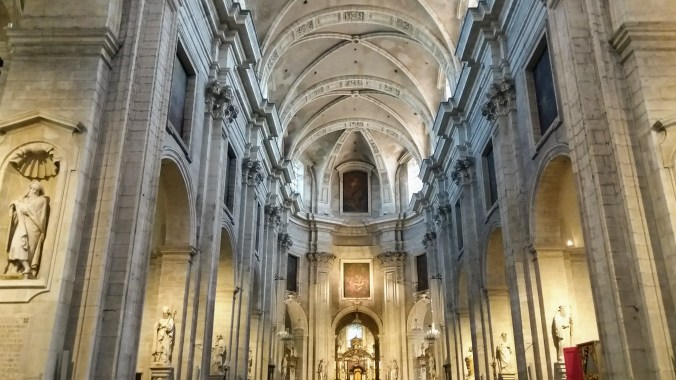
I visited St. Peter’s cathedral, which was very predictable and yet still pretty. There was a woman with two children sitting just inside the door and begging. She was not the first begging immigrant/refugee I saw during my travels by any means. I tried to give when I could, although I still struggle with giving money. I’ve read a number of ethics debates about this topic and still can’t decide, so I gave them the food I had in my bag that I’d been planning to eat for lunch.
Having given away my picnic, I went in search of another snack, but nearly everything in Ghent was closed on Sunday afternoon. I was attracted by a nearby sign advertising waffles, waffles I never found. Instead, I ran into an art installation of dragon skeletons which was far more interesting. While I was taking photos, someone came by and asked me if they were real and almost didn’t believe me when I said “no, they’re dragons”, until he read the small informative sign. They were part of a display for a children’s museum.


Continuing through the inner courtyard, I emerged behind the cathedral at the abbey where I found the orchards and vineyards and a less obscured view of the buildings.

From the boat I got a good view of the castle of Gerald the Devil. I was initially disappointed that I didn’t get to go inside, but it turns out that nowadays the building is not actually interesting on the inside. Gerald himself was nicknamed “the devil” (Duivelsteen in Belgian) because of his dark complexion and hair color. He didn’t do anything remotely devilish to earn the moniker. Additionally, while the building has an interesting history ranging from a meeting place for knights to an insane asylum, it was most recently used to house the national archives. According to Wikipedia, it’s not even good at doing that, and has been on the market since 2010. Cool name, though.

Lunch Stop, the Soda that Yodels
I got off the boat again at the stop nearest St Bavo’s and immediately set about finding lunch. This was a bit extra challenging since I was also suffering from mobile data issues that day (another post is forthcoming). I can usually get Google Maps to work just on GPS, you can’t plan a route, but you can usually see where you are but suddenly I had no map at all! No where in my plan did I account for this. You can say what you like about guidebooks or paper maps, but suddenly having my GPS not work is no different than loosing your map or guide book unexpectedly.
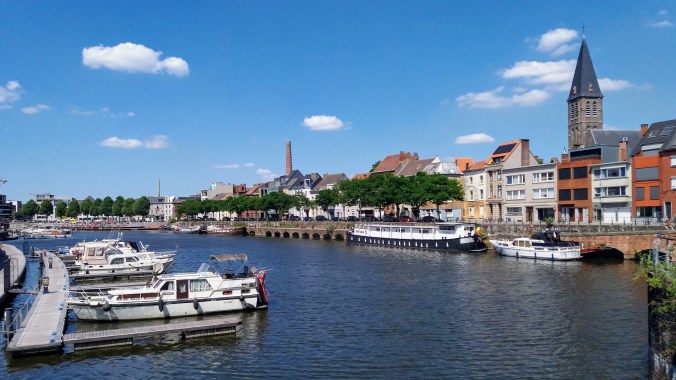
I had given away my picnic lunch already, and I should have just gone into a Carrefour to replace it for a similarly low cost meal, but I was freaking out about my map, since I needed it to find St. Bavo’s, and I really wanted to sit somewhere cool and comfortable after so much walking in the hot sun.
I found a burger place called Jack’s. I splurged on the set and got fries and a drink and tried a drink I’ve never heard of before. It was described as “an herbal drink” and the best way I can describe it is as an herbal infused sparkling lemonade. I have since researched the drink Almdudler and learned that it is the national soft drink of Austria, that it is named after yodeling in the alpine pasture, and that it no more has a description of it’s flavor than Dr. Pepper. Seriously, try and explain what that tastes like to someone who’s never had it. Anyway, I liked it more than Dr. Pepper.
The burger and fries were huge and the cashier gave me some extra sauce because I couldn’t make up my mind about the flavor. I did start learning to love mayo on fries while in Belgium, but I think that’s because their mayo was so much better than Hellman’s. It took me a long time to finish eating, and I wrapped half the fries up for later.


I drastically overspent on lunch, since a good deli sandwich and a drink can be had from any grocery store around for close to 5€. It’s another lesson in planning. I did get to use the WiFi and the restroom, which are otherwise pay-to-use in most public places in Europe. (oh how I missed the free public restrooms in every subway station in Korea)
Sint Bavo’s Abbey
My map came back to life in the restaurant’s WiFi and I was able to plot the route from Jack’s to St. Bavo’s before leaving. When I crossed the last bridge (canal towns have a lot of bridges), I could see what I was pretty sure was the right place but no visible way in. It looked to be completely surrounded by a fence. I walked clear around the perimeter in search of the entrance. Tragically, I went the wrong way and went nearly all the way around before finding it. On the way out later, it was obvious that if I’d headed straight to the square white building, I would have found the gap in the fence right away. You know, in case you end up going some day.

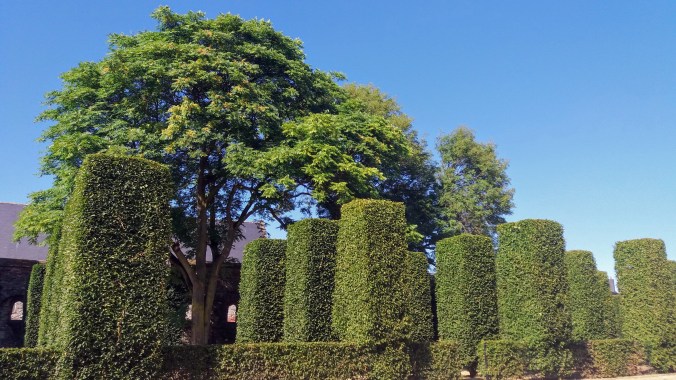
At first I was surrounded by a maze of tall rectangular trees. Completely befuddled I took a few pictures in hope of solving the mystery later (spoilers, I did). In many of my travels, I don’t worry too much if I don’t know what something is at the moment I encounter it. I just try to take enough reference pictures amid my artistic ones to do more research later. Research is how I make the holiday last longer. I visited this abbey in July, and here it is the end of November while I do the last of my research about it.
The ruins themselves were everything I hoped and more. Inside the walls of the Abbey was a rambling network of crumbling walls and once-rooms bring reclaimed by nature. I forgot my physical discomfort almost at once and began to take photo after photo, pausing between sets to admire the details of centuries old carvings and stonework.
I walked through courtyards and down hallways and found spiders and snails and bumble bees in the flowers, and the wild berries. I found where stone carvings had fallen from walls or been pried from floors and were laid side by side on display. There were beautiful corridors with arched ceilings, rooms that had lost their ceilings and now we’re indistinguishable from courtyards.

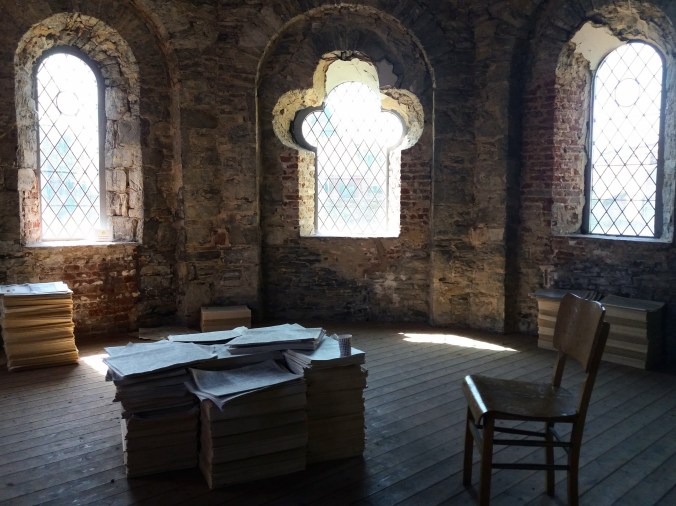
There was a Roman style bath area with a secret winding staircase up the short tower where the remains of an art installation collected dust. Someone had done a project through social media about communication online and all the responses were published in newspaper form. Perhaps once they were there for visitors to take away, but the layers of dust and cobwebs told me it had been a while since anyone had looked at them.
About halfway around the space, I met up with a table of volunteers who had informative booklets in many languages. One helpful lady explained a little about the places I’d seen and then showed on the map where I would go from there. I thanked her very much and took the booklet off to a bench in the shade to look through it and to take pictures of the articles for reference.
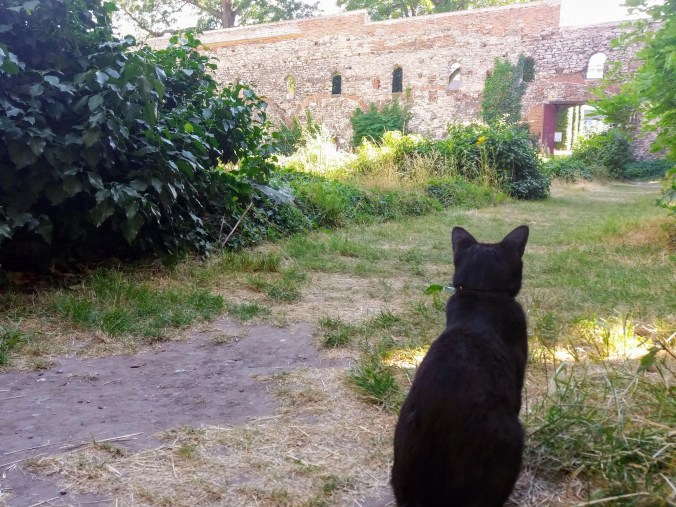
I didn’t read the whole thing at the time but I did discover the purpose of the tree maze out front was to outline walls of the original church, now long gone. While reading the history of the abbey, I was approached by a black cat who very desperately wanted to be friends. Sadly I’m allergic and had to decline the offer for pets, but I took pictures instead.
When I finished skimming and recording the brochure information, I headed up a far less secret stairwell and went inside a space that had retained all its walls and ceiling. I was greeted by a huge and looming partial crucifix. The cross and arms were gone, leaving only the faded wooden head and body of the suffering Jesus gazing down the stairs at those who entered.
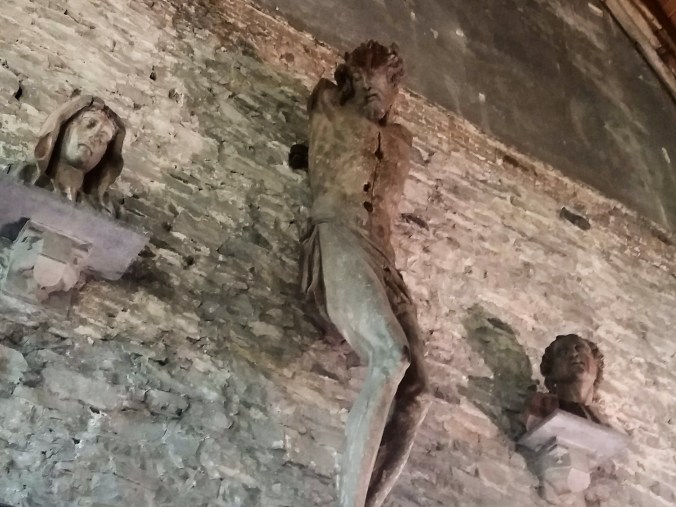
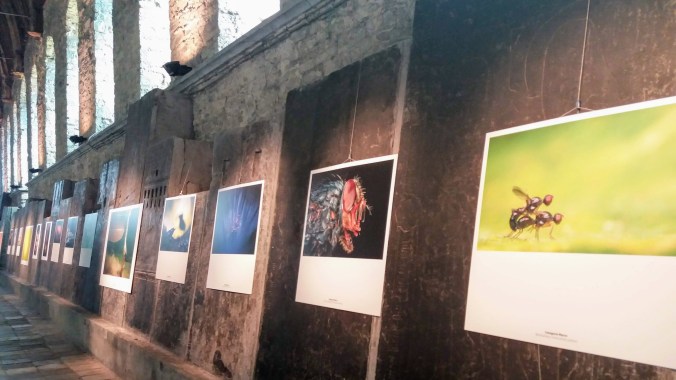
Monastic chanting was piped through a hidden sound system, giving an appropriately medieval and gloomy air to the dark and gutted room. The walls were lined with rescued stone carvings of saints and martyrs, but rather than being the main display, they served as the walls upon which a modern photography exhibit was mounted. It was a strange contrast to see the brightly colored photos against the dark and crumbling remains of the abbey’s old artwork, all topped off with the eerie and Gothic music.
Moving back into the sunlight I continued to be awed by the variety of spaces. Wild grapes growing along one wall, pieces of statues littering the grass or reassembled in part and mounted wherever space allowed. I wandered until my feet couldn’t take it, then I sat until I could walk again. Even with many other visitors it was overwhelmingly peaceful and stunningly beautiful. Only when I felt like I’d explored every possible inch did I out to catch the last boat back to the town center and my train back to Brussels.
I took so many beautiful pictures that afternoon, please enjoy the video slideshow.
A Short History Even Shorter
The binder I was given had a map of the grounds, and 8 typed pages of information. About half of that was a detailed description of the rooms, including architectural style, building materials, and original use. I am not an architect, I couldn’t actually follow most of this part without my eyes glazing over. The second part was more interesting to me, since it encompassed a brief history of the abbey. I am not going to try to replicate the same level of detail here. If you REALLY need to know, comment, and I’ll post the photos of the pages I took, but for everyone else, here’s the very short ‘short history’.
7th century: Missionaries showed up to convert people. They built an abbey with the backing of the Merovingians. A rich nobleman became a monk and went off to live as a hermit, taking the name Bavo. After his death, his remains were transferred to the abbey which subsequently bears his name.
9th century: Vikings! Not yet converted Nordic types were still raiding the land, and loved to raid churches cause people donated like mad, and also decorated with lots of silver, gold and other valuable things. Way to put your money far away from the soldiers, guys. Vikings burned it all down. Twice.
10-12th century: The Roman Empire finds Ghent is on it’s side of the river and offers Imperial protection at last (meanwhile poor St. Peters which I visited earlier that day was left on the French side!) Under the shining eye of Rome, the abbey was not only safe, but experienced a period of growth, getting lots of beautiful Romanesque architecture which makes up the majority of the stone ruins seen today.
16th century: Charles V is rude. He pulled off a bunch of shenanigans to embarrass and shame the locals of Ghent, culminating in the ordered destruction of the abbey, and the use of it’s building materials to create a military citadel. The citadel was completed in 1545, but was destroyed in 1577 by the Calvinists, then rebuilt again in 1584 by the Spanish. It underwent nearly constant de- and re-construction until it was finally abolished in the mid 19th century.
19th-20th century: Conservationists had to fight against industrialists for the space. There’s a whole sordid affair over the meat merchants’ iron grip on Ghent during the 19th century and they managed to claim the abbey land for an abattoir at the height of their power. After much cajoling by conservationists, the abbey ruins were given to the city of Ghent on the condition a museum was established on the site in 1887. In 1936 the ruins were made a historical monument by Royal Decree; however, the abattoir remained in operation until 1989.
Now: The Neighbors of the Abbey formed in 2007 as a volunteer group to upkeep the museum and to organize visits for tour groups and solo travelers like myself.

 I had to check out of my Airbnb by 10am, and my host did not offer any variety of luggage storage. Neither does the museum offer any sort of cloak room or bag-check room. I checked a few websites for storage options, but it turns out that there are only a few places around town where it’s even possible and they are mightily expensive. I was travelling light (backpack only, yes, that is my actual luggage for the whole 7 week trip), but it was still at least 10-12 kilos, which can become tiresome to carry for many hours.





.jpg)
.jpg)
.jpg)


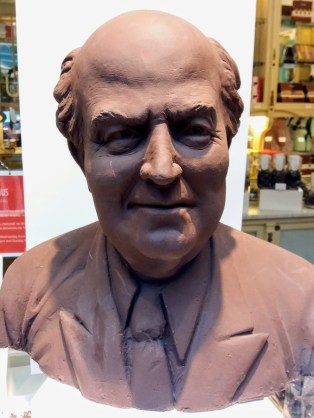
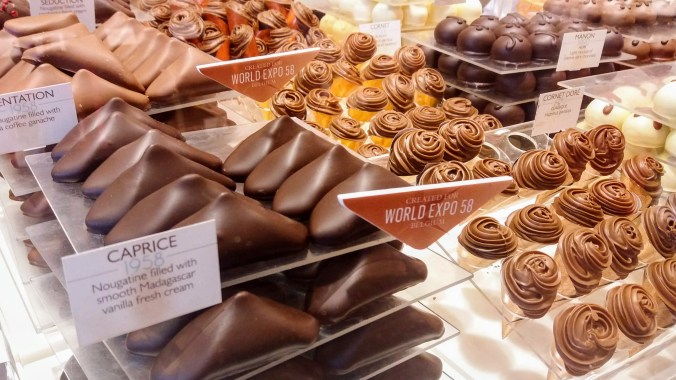


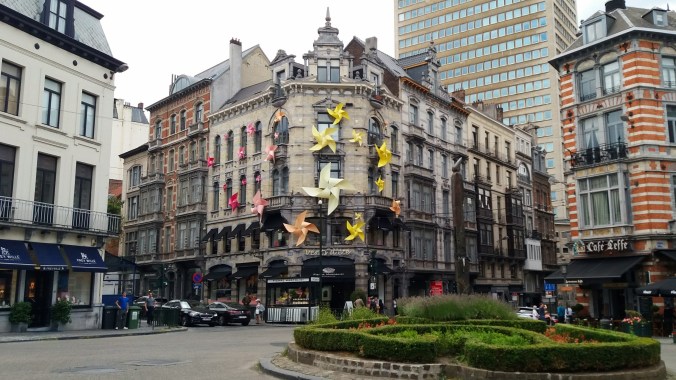 While I was interrogating the staff about their chocolate it became apparent they were only selling boxes (8 piece minimum). When I asked about the possibility of only buying a few pieces, I was sent upstairs to a little dining area. Although their chocolates focus mainly on single origin, bean to bar flavors, they do have a signature dessert line called the “Desir” which comes in a variety of flavors from white to dark chocolate and passing through a range of fruit and nut compliments.
 Desir Noisette: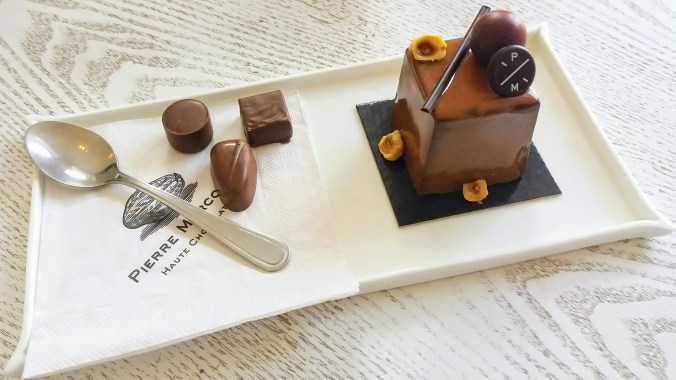
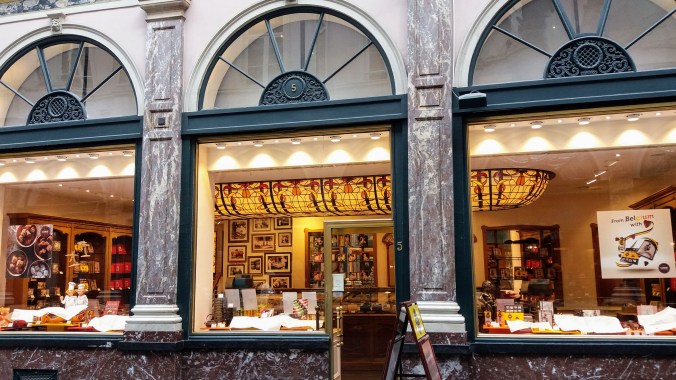
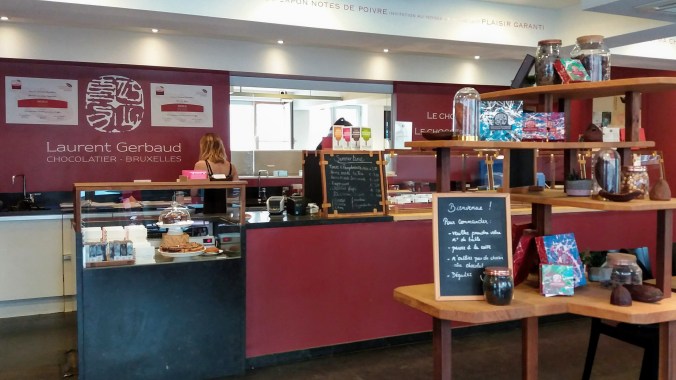 This shop is a little far out of the way but it is 100% worth the detour. It is a beans to bar production which means they actually make the chocolate from scratch. Most places buy chocolate from a bulk supplier and then add their own flavors. A few more places in Belgium are moving away from the couverture and into the beans to bar. My top 3 picks in Belgium are all bean to bar makers. Laurent Gerbaud is one of them.
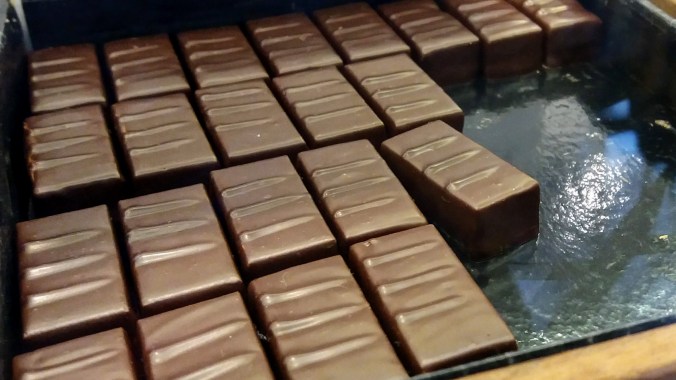 Black Olive Ganache: This award winning flavor was given to me as a sample. I probably wouldn’t have bought it just to find out, but they were excited to show off. It’s not as bad as it sounds. The filling evoked raisin and anise notes as my brain tried to reconcile chocolate and olive. I did have some cognitive dissonance as my palate refused to accept the blend. The second bite was smoother. Since I’m not really a fan of anise or raisin it wasn’t a winner for me, but neither did I feel the need to brush my teeth afterward. It went a long way toward showing me the skill of the makers.
 Pistachio Marzipan: So sweet! Even with the dark exterior. The almond flavor was ok, but the pistachio was not noticeable.
  Manon Sucre Vanilla: This shop is famous for inventing this particular confection, although other shops make and sell it now, too. It is so so so sweet. Nougat creme and nuts in white chocolate. It’s like someone took divinity and added white chocolate and whipped cream. Not… bad? Just so much sugar! I think the filling would have been great as a contrast to a dark, bitter exterior but only vanilla and coffee were on offer.
 Another “historical” stop.
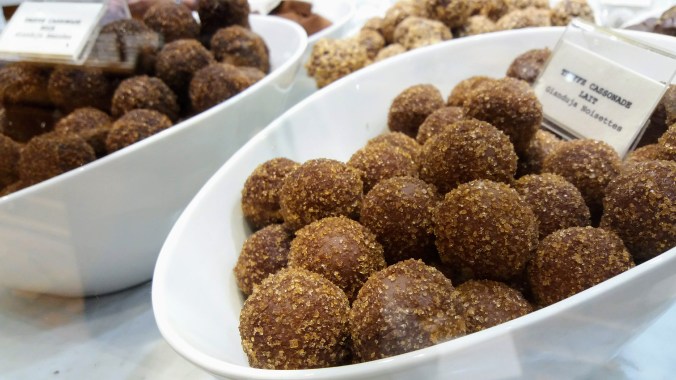
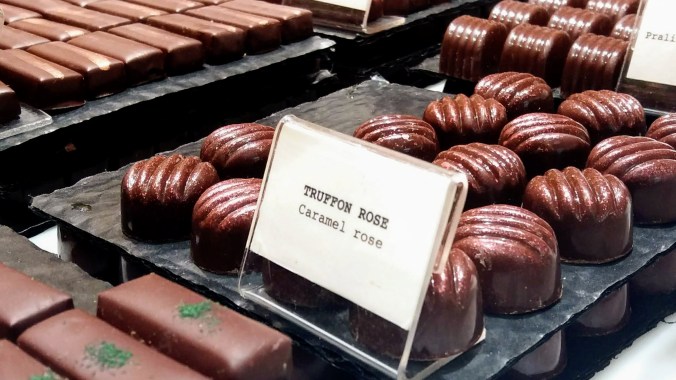


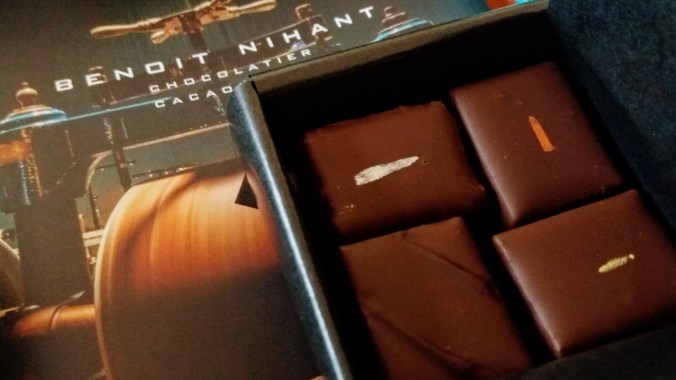


 Chocolate is one of my favorite things on Earth, however it is an industry rife with slavery and abuse. Cocoa only grows in a few places on the planet and those are almost exclusively in 3rd world, developing nations in Central & South America, as well as Africa. Cheap chocolate companies use child labor, forced labor, and under paid labor, putting vulnerable people at risk and taking advantage of the economic disparity between developed and developing nations.


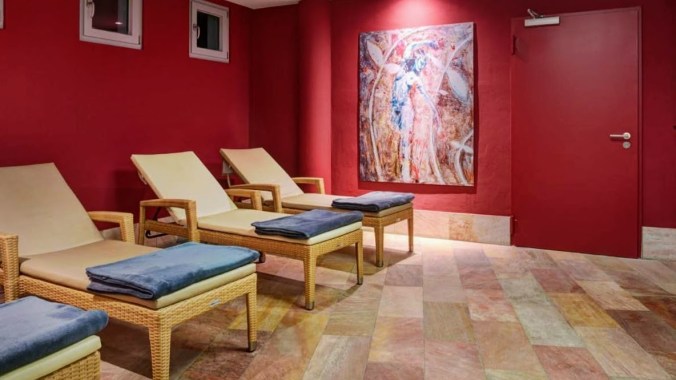


 You know that blast of heat you get when you open the oven to check on something? It was like that. The force of the hot air hitting us dead on as he went around the room. People put their arms up like in a roller coaster.
 It’s a dry sauna meant to be like a red brick oven which is not uncommon in saunas. I’ve seen several in the Jimjilbang in Korea. However at Carolus, there’s actually an oven inside. Although the room is open for use all the time, every couple hours they bake something in the oven while people are there. I read about it before going and it was one of the things I was most looking forward to. I went into the room the same time the dough did and I lay in the semi-dry heat (60°C 40% humidity) dripping sweat and surrounded by the wonderful smell of fresh baking bread. I can’t even properly describe this room other than to say I felt like I was in the oven with the bread…in a really yummy way, not in a gingerbread cottage witch way.


 And there’s the riots, which I am not happy to see. I don’t want violence to be an answer ever. Yeah, I know, the Trump supporters did it first, but now that they’ve won, they’d like it all to stop. People are like “oh you’re overreacting”, “oh you’re whiny cry babies” (nevermind that’s been pointed at us for caring about anything ever for decades, so it’s lost it’s oompf as an insult), but I voted in 2000 when this happened with Gore and I was not scared for my nation’s future (although, it turns out I should have been). I was mad when Kerry lost in 2004, too because that explitive promised to do recounts and bailed. And the Democrats didn’t take to the streets in protests and riots because voters who lost an election were capable of telling the difference between a guy we didn’t like the policies of, and a guy who we honestly believe will enable the ruination, incarceration, and deaths of humans we care for and respect.



 I came back to Seattle just in time to attend the much anticipated wedding of a couple of friends of mine who rank among the geekiest gamers I know. Over time, through accident or design, they have come to talk about their lives in video game terms and so their engagement was announced as “Achievement Unlocked: Engaged”. The groom designed a video game using the wedding party as the characters, and a
  Offering guests wedding favors is an American tradition, often small bags or boxes of candy (butter mints and jordan almonds are very popular), sometimes small bottles of bubble solution, and even on occasion a decorative trinket. This couple had opted to use the candy bar to let guests make their own candy bags, and had some beautiful copper keys (with a secret bottle-opener feature) as wedding favors, each adorned with a brown paper tag bearing a loving quote.

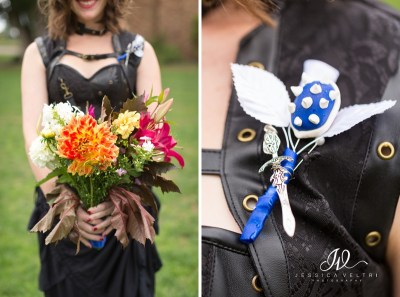 The bridal party were possibly the most in harmony with traditional wedding garb, wearing suits and ties for the men, and simple black dresses for the ladies. The geek shone through in the adorable corsages that included a miniature blue spiky shell (from Mario Kart) and a rune adorned mini-dagger.
 The ceremony began traditionally enough (although the officiant had pink hair and a serious steam-punk vibe), but quickly took on the couple’s own unique flair. They began with a ring warming, trustingly passing their wedding rings around the seated guests to be “warmed” with handling and good wishes. Reading special passages is very common at American weddings, although for many this would include an excerpt from the Bible or classic literature about the nature of love or marriage, this couple took instead from their own favorite fantasy writers: Madeline L’Engle and Patrick Ruthfuss.
 My friends decided to integrate their love of Mexican tequila into these traditions instead. Having solidified their love on annual trips to Mexico which included lots of tequila tours, they each chose their own blanco to pour into an aging cask so that it could mature into añejo by the one year anniversary when they will open the cask and enjoy (much tastier than frozen wedding cake!).
 or take a selfie with the bride), but they had to get someone to witness the achievement and sign off on the checklist. Some quests involved signing the guest book or using the photo booth to help create more memories for the couple, while others involved dancing with strangers or feeding the bride’s mom.
 Guests were encouraged to choose from a range of silly props and costume pieces just outside the photo room. Then with a single press of a big red button, the machine captured 4 silly photos against a Mario background and printed your souvenir card with the wedding comic art and date. Below is Abney Park and some of the bridal party having a good time with the photo booth between sets.
 Although many of the audience felt that the new sword would be a great cake-cutter, it turned out that the couple had installed a dagger as part of their cake topper for that precise purpose. In addition to the dolls matching the comic book character themes there were several layers of geekery including the Portal cube, a dragon with a hoard of gold, a D20, some Mario Bros., a small library of gaming books and a solid foundation of Pac Man. And, for extra humor, the cake was a lie. It turned out that only one layer was cake for the couple to cut and share for the traditional cake-face-smash, er I mean feeding, and all the other layers were cleverly disguised styrofoam with fondant frosting decorations. Guests were served cake from a hidden resource somewhere in the back (which is just as well because fondant is nowhere near as tasty as butter-creme).
 They are also really mellow, fun folks. The venue was pretty small, so the stage was really just a step up from the dance floor and there was no green room or backstage area for them to go so they had to mingle with the guests. Perhaps because most of the guests were also in costume, or perhaps because of the bottles of wine that found their way from the bar to the stage (open bar is music to any musicians ears), they were highly complimentary of our vibe, totally seemed surprised at how happy everyone was, and quickly settled into enjoying themselves too.
 After we filled all the balloons, there were a couple dozen lights leftover, so I decided these should become fashion accessories for as many people as I could get them to. This made for some new fun as we all tried to figure out the best places to add lights to our costumes. Several groomsmen wound up with back-lit ties, and an equal number of bridesmaids had glowing cleavage. I handed several around to the band while they were on break. They seemed to get a kick out of it, and wore the lights in hair, clothes and goggles for the second half of their show.
 s the dancing went on, it became apparent that the bride and bridal party’s lack of sleep and early start to the day were taking a toll. Among the hundred or so regular size balloons were three giant ones that the couple used to lead everyone back upstairs and out the gates into the street. Once each remaining guest was armed with a glowing balloon, we huddled together and counted down to release. It was quite lovely to watch the glowing pearly balloons float off into the cloudy black sky. When the last balloon had drifted from sight, the couple looked around for their car and had a fun surprise. At some point the groomsmen had decorated the couple’s car with cling wrap and shoe polish as well as about a dozen more glowing balloons. However, since gamer geeks are notorious utility knife carriers, the plastic was swiftly dispatched and the couple drove off into the night, exhausted but happy, all quests completed and all achievements unlocked at the Ultimate Co-Op Wedding.
 Special thanks to all the photographers I’m using here. I forgot to point and shoot for most of the event, so I’m relying on other guests phone photo skills to provide the fun imagery. I managed to personally achieve all quests in the Wedding Game before leaving (bragging rights) and had a great time reconnecting with my Seattle family. I love you all to pieces. Megan & Brendan, thank you so much for letting me be a small part of your special day, I know you’ll work hard to take care of each other and be happy and I look forward to more games and stories with you in years to come.
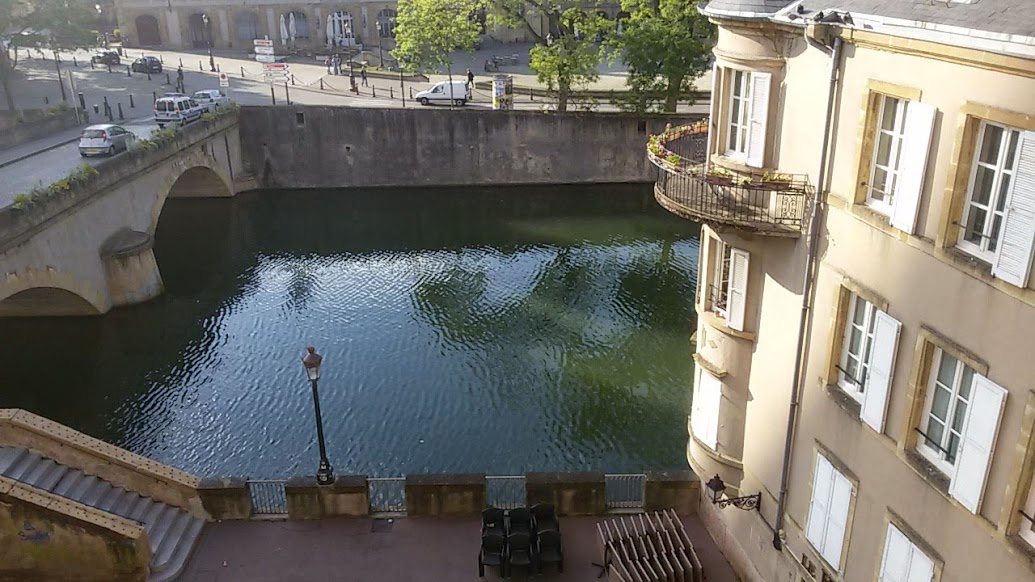 To be honest, I wouldn’t have even noticed this town, let alone spent two days there if I was travelling just to sight see. My friend however had gone to see the river Moselle because it is her family name, and so I found myslf across from the Cathedral of St. Etienne in a tiny little studio apartment overlooking the Moselle river.
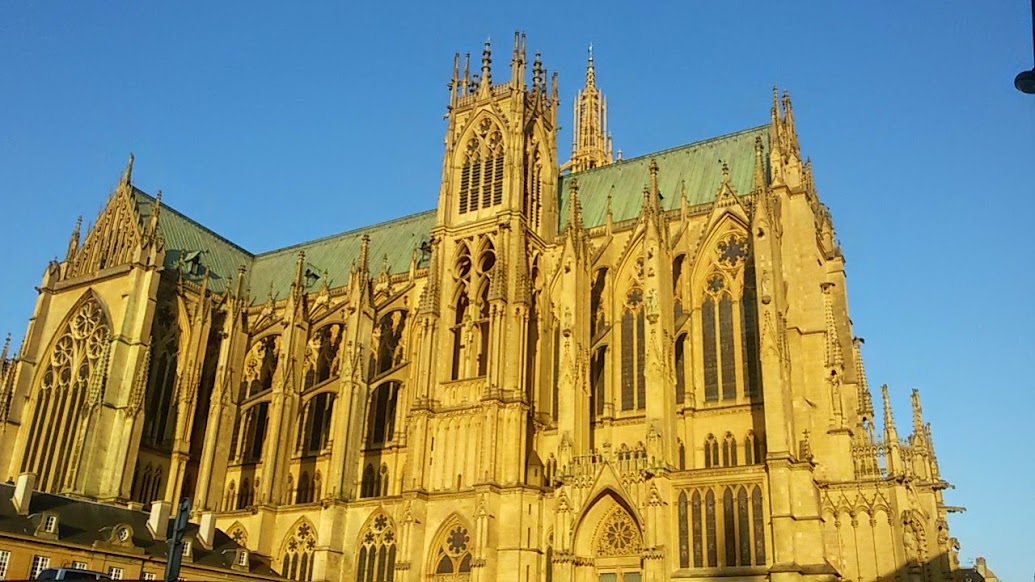 Part of me just wants to tell you how terrible this place is, oh awful, don’t go, just so I can keep this little jewel all to myself. But, really, I think it may have been my favorite place in France and I’m strongly looking at how to get an EU work visa for next year just so I can live close enough to visit Metz more often. After settling in with my “luggage” (a backpack), we set off in search of dinner. Restaurants in France don’t typically open for dinner until 7 or 730, and it was Sunday, so even fewer were open. Eventually we found a little Canadian themed restaurant and decided to eat there.
 The building looked like it might have undergone a fire at some point because the stone walls were blackened in places. The stained glass windows also looked like they might have been replaced at various points in history because there seemed to be medieval, renaissance and post modern styles in the window art. There were very few other people in the massive structure, so it was very easy to feel the scale of the building. We walked all around admiring the art in glass, stone and wood. There was a birdsnest organ as well as the main organ, and for a while I just had to sit down and reflect on the sheer number of centuries that this building had been standing and been used as an active place of worship. Seeing this cathedral made me even more excited at the thought of going to Notre Dame in Paris in a few days.
 We passed by the Rue Taison, which is supposed to be a kind of Taiwan town, but other than the large plaster dragon hanging over the street and a few dragonesque signs around, I wasn’t really sure why. The shops are more French than anything else, and I didn’t see a strong presence of Taiwanese food or goods. It was still nice to walk through the little streets and see all the different architecture. Some buildings as old as the cathedral had been re-purposed into shops or hotels next to “newer” buildings that were a mere 200-300 years old. We stopped at a street vendor selling soft serve ice cream, let me just say that nutella-pistachio swirl is a magical idea.
 By this point in the day it was becoming apparent that I did not merely have some desert to temperate climate adjustment issues going on in my sinuses, but actually a full-blown travel flu. The downside to so many flights in a row is the enormous exposure to other people’s germs. So we headed back to the flat so I could get some rest while Vixen went to view the river of her family. Somewhat sadly, I slept firmly until the following morning and missed out on the river island and what I am sure was another amazing dinner. Travelling while sick is really no fun since it takes a lot of your get up and go right out. I was feeling a bit less insanely flu-like after a good shower, so determined to keep on with my adventures through France.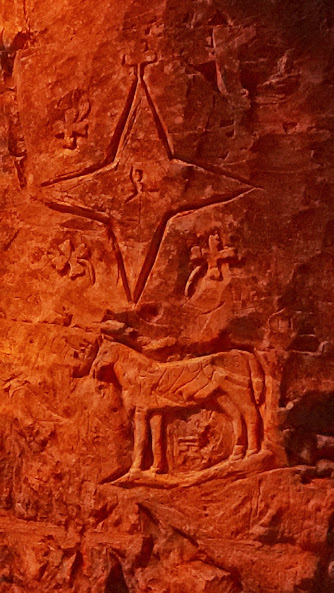
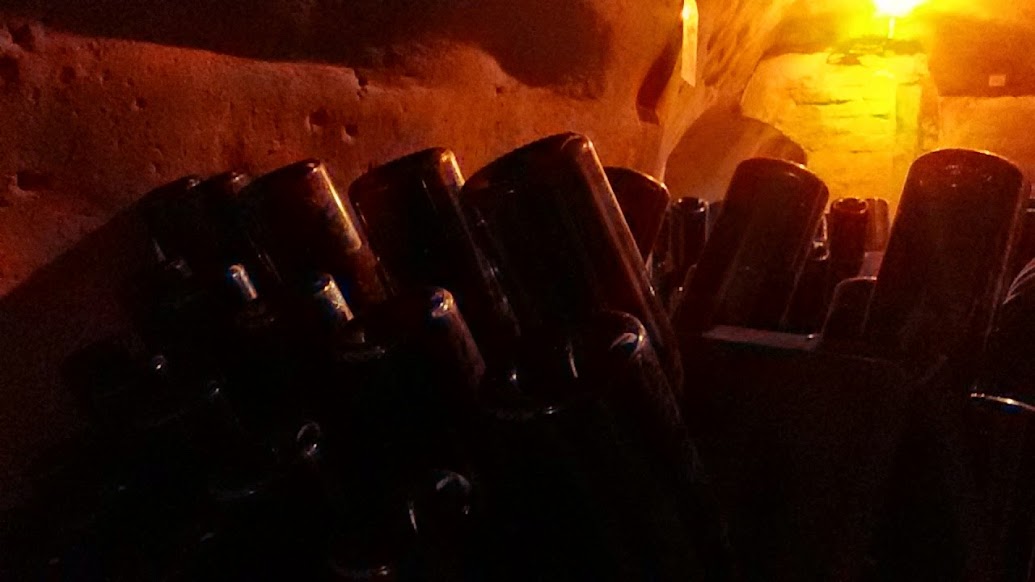 Our guide told us about the champagne process, how they use the natural yeast in the fruit for the first fermentation, but add yeast and sugar later on to create the champagne from the still wine. I learned that most champagnes are actually a mixture of chardonnay, pinot noir and pinot meunier grapes. Since the later two are black grapes, they must be picked gently by hand to make sure that none of the pigment leakes from the skins to change the color of the juice. The process takes a long time and involves several stages of fermentation, resting, turning and rebottling. I think the most fascinating stage to me was the removal of the sediment from the bubbly. The still wine is bottled with extra sugar and yeast, but it is corked to keep the gas that is released during fermentation in the bottle (making it sparkling).
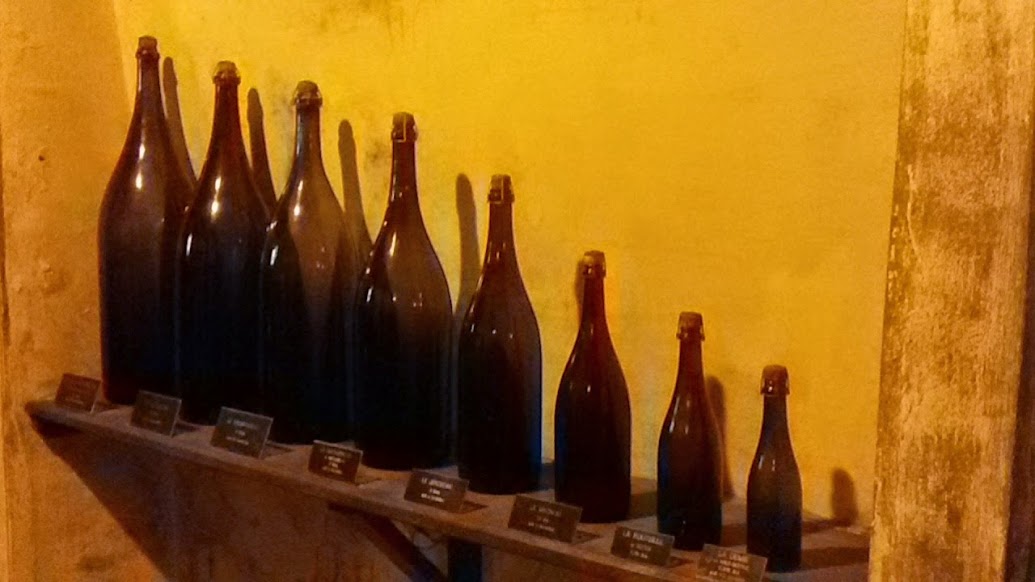 She showed us all the sizes of bottles that they distribute in, including a really giant one for extra special occasions. She talked about the different types of champagnes that Tattinger makes, and how they measured the quality of each year’s grapes, still wines and champagne blends to see if they deserved to be marked as vintage or not. I really just expected the structure and tasting to be the cool parts of this tour, but it turns out the whole process of champagne making is way more interesting than I thought it would be. Definitely a worthwhile stop over.
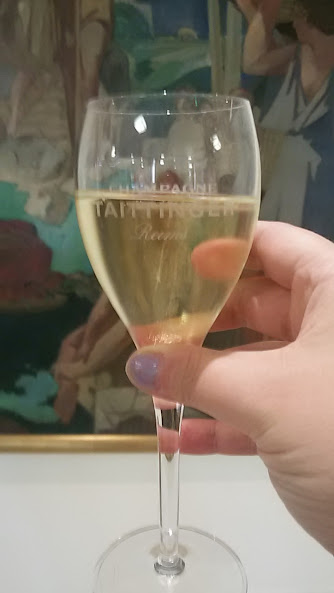 After the tour, we headed up to the tasting room. Vixen and I had bought the three glass tasting. Everyone got to try the Brut Reserve which is their most popular. I was pleasantly surprised at how light it was. I am so used to Brut sparkling wines in the US being very dry and kind of aggressive. This was far from sweet, but it was mellow and bright. Very enjoyable with a sort of amber warmth. The second glass was the Grand Crus, mixed from Chardonay and Pinot Noir in equal measure. It was just as mellow as the Brut, but I felt that it had more notes of fresh green. The third glass was extra special, the Blanc de Blancs which was made entirely from chardonnay grapes (unlike the others which are blended). It isn’t produced every year, but only when the grapes are deemed exceptional at the harvest. It’s only from the first press, and 5% of the wine used to make it are aged in oak barrels before they go into the champagne fermentation. The
 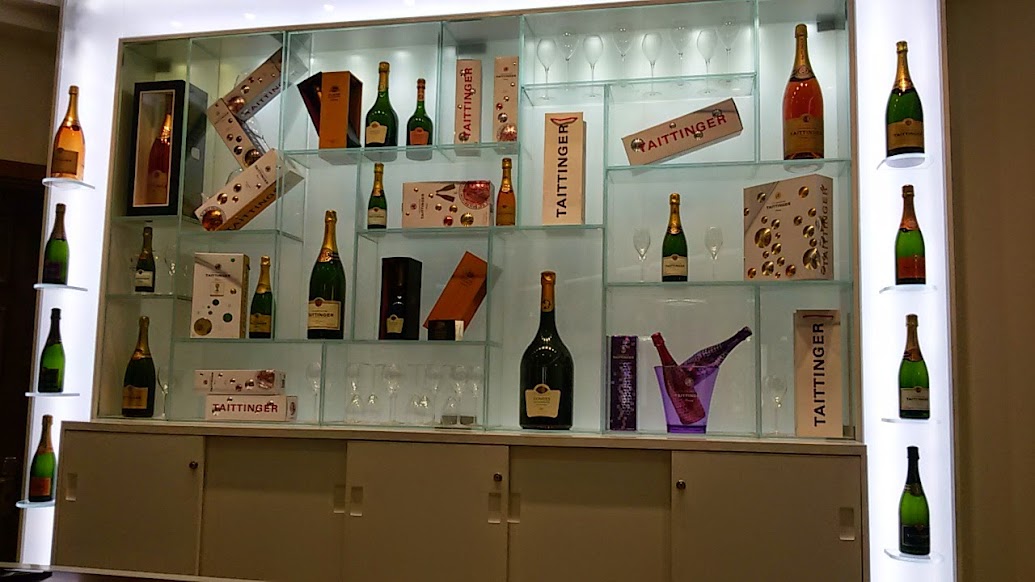 We lingered a long time over our tastings and eventually the very nice folks there had to remind us that they closed up at 5:30. Half of our goal for the day was well and happily completed, so all that remained was to find a nice meal. I gotta say, in many ways Reims was a serious let down from Metz. I mean, I understand it’s a small town, but I would think with so many tourists coming through on wine tours that it might have been a little nicer. The traffic was prodigious, so once we made it back to our room, we didn’t want to move the car again until we left the next day, so we set out to find a restaurant we could walk to. Unlike Metz where walking seemed to be the main form of locomotion, Reims almost seemed designed for cars.


 Gallivantrix