At some point I realized that my EPIK Orientation post is one of the top 5 on this site and I thought, now that I’m leaving, it might be useful to some people to see what I learned about EPIK in the last 2 years. Like everything I write here, it is my experience and my story, not some definitive article, but it is my hope that my perspective can help a few of the hundreds of new EPIK recruits who enter Korea every February. It may seem a bit negative, but this isn’t a rag on EPIK post, it’s a look back: Things I experienced. Things I learned. Things I wish someone had told me. Things there were no way to know until they happened.
I’m not writing every good experience here because I’m trying to focus on things that I learned the hard way, that were not good surprises, or that could have made my life easier if I’d known sooner. And also because I wrote a lot of my good experiences as blog posts or Facebook updates or even Instagram photos while they were happening.
I chose to stay a second year. I think EPIK is a great opportunity. It’s generally agreed that with few exceptions the quality of job here in Korea for ESL teaching is 1) University, 2) EPIK, 3) Hagwon. EPIK offers reasonable working and teaching hours. It offers paid holiday leave on top of the national holidays that is 2-3x what hagwon teachers get (if they get any), and it offers paid sick leave which most hagwons also don’t offer. There’s far more of a support structure for newly arrived teachers as well. 4 stars: would recommend.
Public School in Korea
 Schools are graded: A-D, the A schools are the richest and best performing schools while the D are the poorest and lowest performing. The “good” news is that the Korean government seems to be interested in putting extra money into the lower grade schools, but there’s only so much the money can do.
Teachers don’t work for a school, they work for an office of education: Here in Busan, that’s BMOE. My contract is with them, and they get to decide what school(s) I work at in their district. But even Korean teachers are at the whim of the Office of Education within a structure. Korean teachers go to special teaching universities and pass rigorous exams to become teachers. Once they are placed with a district, they will stay there unless there is some extenuating reason to move and they apply for transfer. Korean teachers stay at a school for 3 years and then move to a new school in the district. Preference is given to teachers on a points system. Years of experience count toward their points, but they also get more points for a class D school than class A, so even younger teachers have a chance at getting a “good school” after they serve 3 years at a “bad school”.
No one bids to go to a class D school, which means working here I’ve been mostly surrounded by teachers who do not want to be here and are just biding their time until their 3 years are up and they can go back to a decent school. This is insanely discouraging for me, and I can only imagine how much more so for the students who have no choice. At best, I have a co-teacher who doesn’t want to be here, but out of a sense of duty will do her best while she is here. At worst, I have a co-teacher who complains about the students every day, who cancels class or ends early at any excuse, and who goes to her doctor to try and get medical leave for “stress” because the students are “just so awful”… spoilers, they’re not actually that bad.
In elementary (I can’t speak for middle and high, sorry) the students spend most of their time in “homeroom” where they learn most subjects from a single teacher. The homeroom teacher is almost exclusively responsible for discipline and is the only point of contact with parents. English teachers are “subject teachers” which means even the Korean English teachers are second class teachers, looked way down on by homeroom teachers, and generally given crap. Somehow, homeroom teachers don’t think subject teachers actually DO anything. Which is by and large a load of hooey, since subject teachers often have to do more lesson planning on a tighter schedule and are often assigned additional administrative tasks for the school.
The Principal Principle
 Not only are the schools massively different depending on if it’s A-D, elementary, middle, or high, all the schools have drastically different policies that come from the principal. Many of them will push to see how much extra work they can get you to do. You could try to force the letter of the contract (although it’s best to do that only as a very last resort because people will resent it), but it’s wiser to find culturally sensitive ways to stand up for yourself at work. Politeness will go a long way to smoothing the trail, but how you’re treated is going to be wildly different from everyone else in your intake because the principals make 70% of the rules, and the CTs make another 10-20%.
Your contract is very vague on school responsibilities. I personally found that I was expected to operate a “morning greeting” program 6 months of the year where I would stand at the school gates with some of the older students and make every student arriving read one English sentence form a signboard before proceeding to their homeroom. Other teachers have to run reading clubs. Some are required to participate in teacher volleyball, while I’ve never even been invited. This is all based on the principal and the CTs.
It depends on how your CT and principal get on with each other too! My first year CT had a great relationship with the principal. I’m fairly sure he thought she could do no wrong. She got away with all KINDS of stuff. But my principal does not like my second year head CT. He yells at her, embarrasses her in front of other staff, belittles her, and generally doesn’t trust her. Because of this, she’s far less willing to ask for things on my behalf (not because she doesn’t care about me, but because she doesn’t want to get yelled at by him), and he’s far more likely to jump down her throat if something isn’t done perfectly.
That first year head CT lost most of my intake paperwork. We still don’t know where my checklist for the apartment move in is. We had to redo several things. She filed my Korean tax exemption a year late… just, NOT good at paperwork. But now that I’m leaving, the principal is mad at the current head CT for not having these things, and is making her chase down the first year head CT to get her to sign new versions of 2 year old paperwork. That’s how much he likes one and hates the other. And it definitely impacts my experience at the school.
By the way, keep copies of everything for yourself, just in case.
Your Role as the Guest English Teacher

For myself and the other EPIK teachers I talk with regularly, the sense I got was “you’re not a real teacher”. Because all the Korean teachers went to a special university and are constantly undergoing training updates to be public school teachers, they are certified in a way you are not. Your basic job is to be an English speaker. A living recording. I felt far more like a department resource similar to a computer lab or library than I felt like a teacher. Eventually, my CTs came to realize I had actual skills and we did more collaborating, but I was lucky and it still took time and effort.
It all depends on your principal and your CT (co-teacher). English subject classes are run by a Korean teacher who may or may not actually speak English. They teach the English class alone when you aren’t there. They might plan all the lessons, or they might only plan lessons they teach without you. They might teach with you, or they might disappear on days you’re in their classroom (even though they legally aren’t allowed to do that for student safety reasons). I’ve personally had one CT who mostly liked to plan her own stuff, but close to half the time when she’d talk with me about it, she was open to changes I suggested. I had a CT who did all the planning and told me exactly what she wanted me to do. I’ve had a CT who wanted to plan and run the “lesson” portion but have me plan and run the “game” portions. And I’ve had a CT who didn’t seem to understand what lesson planning was at all, so I eventually just started telling her what I was going to do and letting her work around me.
I have friends who only speak as a kind of classroom demonstration and never run lessons themselves. I have friends who are expected to plan and run the second half of a lesson without attending the first half. I have friends who are expected to plan and run the entire lesson without the aid of their CT.
They cannot prepare you for this at orientation. They try, but it’s not going to really sink in until you’re doing it.
Remember, you are not their equal. You will never be treated as such. If you are temporarily made to feel like you are, there will come a time when you run into the wall of foreignerness and there will be times when, for better or worse, you know your role in this school system is purely for show.
Speaking of things being for show… a lot of what you, your CT, your students, and your school do are all for show. Most of orientation is for show, so that the schools can say their foreign teachers completed so many hours of training. Any activities you do beyond class are strictly for impressing parents or the school board. You will have “open classes” where parents and the admin staff can attend, but those will be carefully orchestrated performances that bear little resemblance to a daily classroom experience. I had people from the school board come to my class twice during winter camp this year… to… see…. I’m still not sure.
That morning greeting thing I had to do? Solely so that parents would see my very white face smiling at their little ones every morning. We tried our best to make the sentences relevant to something they were doing in class, but I actually had to argue with the Vice-principal because she thought it would be better if I personally said “good morning” to every single student instead, and I couldn’t get her to understand how useless that would be because her focus was on how great it would look to see the foreigner talking with kids where their parents could see them rather than on the learning benefit to the students.
The Chain of Command
 Respect flows in order from job title to age to nationality. You are pretty much at the bottom of this. (you’re lower down than the Koreans who are younger than you… ) You shouldn’t object, or say no, or in any way be direct about any negative feedback. You get a little latitude because most of them know you don’t know the Korean WAY, but it’s easy to step on a cultural landmine or simply be confused as to why things are done this way.
Interruptions are going to be a way of life. In the authority structure of Korean work environments, when the boss says jump, you say how high from the air. They will not ask you to come see them when you finish what you’re doing, they will just expect you to stop whatever it is and attend. They will interrupt your conversations with other teachers, maybe for 20-30 minutes. Trying to talk about your lesson tomorrow? Well, if the Vice-principal calls your co-teacher, she’ll answer and pretend you don’t exist until the VP says goodbye, not even so much as a, “this could be a moment, sorry, I’ll let you know when I’m done.
I managed to have a conversation about this with my CT and while she can’t do much about the people above her, she has at least been willing to work with me so that if she calls me to talk about our next lesson and I’m working on something else, I can ask for a few minutes to get to a stopping point. But before we had this cultural heart to heart, we both felt disrespected. Her because as my supervisor, she expected Korean style obedience. Me because I feel like the only reason to not let an employee get to a natural stopping point while working on something is because they’re in deep trouble.
And yes, I did just say I argued with the Vice-principal. There is often a workaround for the foreign teachers, but I only talked with my CT’s bosses after talking to her and having her ask me to go to the Principal or Vice-principal myself. She did this in part because of the problems I mentioned earlier of her getting yelled at, and in part because she knew I could be more direct and get away with it. But please, don’t go around your CT or behind their back, as that is a recipe for disaster.
Your Co-Teacher and You
 Your CT is the most important person to have a good relationship with at your school, and possibly in Korea. This is the difference between a good work life and a shitty one.
My first year here, I had an amazing head CT (except for paperwork, she was terrible at paperwork). She spoke excellent English, we loved the same books and TV shows, she was energetic and happy most of the time and she liked her classroom to be fun. She also liked to read books or do yoga in the afternoons, and generally did minimal lesson planning so she’d have more free time. She had been teaching English for ages, so that worked for her because she knew what she wanted to do already 80% of the time.
We chatted regularly, shared cookies and coffee in the afternoons, gossiped about K-pop stars or scandals in the news. And I had a lot of free time, too. Which was great. I taught 21 hours a week, and spent about 5 hours doing other class related work at my desk, and the other 14 hours a week in the office, I could work on personal stuff.
That first year, I didn’t always get on with my second CT. She was new, nervous, and very strict. But by the end of the first year we had worked most of that out and were doing ok.
I decided to stay a second year. I knew my primary CT was changing schools, but that secondary CT would become my handler and we already had a good working relationship. I knew the second year wouldn’t be the same, but I had no idea how much it would change.
Cue dramatic music.
Not only did I lose the fun CT, but I gained a second school. We’re office of education employees after all, and we have to go where they send us. In this case, they decided to split me between 2 schools, giving me a horrible schedule, increasing the number of students I spent time with, and decreasing the amount of time I spent with any given student. I need a job where I can have rapport with my students. Jobs where I can’t connect with my students are soul crushing to me… so this was a major disappointment. I’ve done my best to connect with the more than 300 students I see this year, but I don’t know most of their names, and I really only have any idea of the ability of the outliers (best and worst). It makes me feel like I can’t be an effective teacher, and then I remember that’s not really my job at EPIK.
Other than sheer overwhelming schedule nonsense, the second school was fine. The CT was new but she was young and energetic and very glad to have me because she knew I had experience teaching English and she did not.
Meanwhile, at my primary school, the new head CT was losing her shit because suddenly she was “in charge” and our entire co-worker dynamic was changing. Everything I thought we’d worked out and gotten comfortable with was suddenly quicksand because all that happened when she wasn’t my “boss”. I know I just laid out the hierarchy, but to me, she’s still not my boss… technically our CT is above us in rank, but I’m also older than her with more English teaching experience, and while I was happy to do as she was asking in most cases, I wasn’t down with the jumping part of the boss-worker relationship. So we had to go through a whole new series of fairly stressful bouts to find our work dynamic again. Which, by the way, is good now… it just sucked having to do it twice with the same person.
Remember when I said no one wants to work at a class D school? Well, that means all the new teaching staff we got in my second year didn’t want to be here. It was a penance because they were too low on the totem pole to get any of their top 10 choices. On top of that, when it came time for the staff to divvy up the jobs between homeroom and subject teachers, no one wanted to be the new English teacher either! One woman heard that subject teaching was easier than homeroom (remember that dirty rumor?) so she volunteered, and even though she could barely say 3 words of English, they gave her the job.
Also remember how I said all the teachers go to special universities with rigorus testing? Well, it hasn’t always been that way. It turns out that while nowadays teaching universities only accept the very best, back in the day they took the dregs. So depending on the age of your CT, they might have come from an era where academic proficiency was not required to become a teacher.
I went from a year of singing the lego theme song (everything is awesome!) to a year of crying at my desk at least one day a week. Because my CTs changed and I could not make it work. (Although, the nearly year long ordeal of two intractable root canal procedures that required dozens of trips to a variety of dentists and endodontic specialists could not have helped things)


It took me about 9 months to finally get a plan for really dealing with her and it was “don’t deal with her”. Now I just make my materials and tell her what I’m going to do while I’m in her room. She doesn’t get a vote anymore. I’m not suggesting you handle a difficult CT this way. I think my case was extreme. At some point my head CT actually suggested that I simply not do anything for this problem teacher unless I was directly asked. I couldn’t bring myself to do that because I just cared about the kids too much. Because my head CT saw how hard I worked on finding a mutual solution, she eventually backed my decision to do it my way and appealed to the Vice-principal to select a different English teacher next year.
I’ve worked with 6 Korean co-teachers in the past 2 years and 5 of them were great. No it wasn’t all lollipops and rainbows, but the other 5 I could at least communicate with and they cared about the students and classes and me, so we could hash it out when things got rough.
You are stuck with your CTs. They are not going away until the school board sends one of you to another school, which only happens in March. 5/6 we cover for each other when one is sick (I mean, it’s Korea, so we still come to work, but the well one will pick up the slack so the sick one can do less). 5/6 I can ask for help with things outside of school (advice, translating, calling stores or doctors offices that don’t speak English, stuff they don’t have to do). 5/6 have my back with the students and the admin staff.
6 isn’t a lot either. I’ve never had more than 3 at a time, but I have friends who have had as many as 11 co-teachers at once. When I think about how different all my CTs are in teaching style and in what they want from me, I get a little dizzy at the idea of trying to do that across 11 people. But it happens.
Plus, you’re the only native speaker at your job, so you don’t get to have foreigner friends lunchtime like the hagwon teachers do, if you don’t enjoy your CTs company, it gets very lonely.
The experiences of myself and my friends at BMOE is not universal, though. Ask 2 EPIK teachers about their CTs and you’ll get 5 different descriptions.
I found this article written by a teacher in Korea who finds himself constantly abandoned by CTs and left alone in the classroom. I want to point out that is a) illegal because you as a foreigner are not certified to handle safety and discipline issues. I asked my Office of Education about it, and while it’s ok for us to be alone with kids during camp time (and for the occasional few moments a CT might need to step out to deal with pressing issues), the children are required to be overseen by someone with the right certifications and that’s not us. b) the Koreans who are assigned English classes are being paid for the English classes, so if they ditch you, goof off on their phone, etc. they’re basically not working when they should be. It’s up to you if you want to complain or not, but at least now you know the rules.
Last Minute Everything
 The schedule is never what it says it will be. Ever. You will be told about events when they happen, or if you’re lucky, the day before.
I joined the monthly dinner club my first year (teachers pay into a fund and then go to a nice restaurant as a group once a month). Most of the time I found out when that one day was the day before or morning of.
Classes can be moved or cancelled or rearranged with zero notice. I will sometimes walk into an empty classroom only to be told by the CT that class was moved to another time. There’s a school wide phone system, they could call, but they don’t. I was told today that the class I just finished was actually the last time I would see my 3rd graders because she decided not to have class next week after all. Now I don’t even get to say goodbye…
Planning your holidays can be rough. You can easily look up the federal holidays and I recommend you book any trips you want for things like Chuseok as soon as possible because all the Koreans booked that 3 years ago. But your school holidays are dependent on camp, and often the principal won’t decide when camp is going to be until a week or two before the end of the semester. You can ask them to, but there’s no way to force them. And if you buy plane tickets before your time off is set, you could be very disappointed.
Speaking of camp. You won’t know how many or what level students you get until about a week before go time. But you need a lesson plan and materials list way before that.
Desk Warming and Other Kiddie BS
 There is an expectation in Korean culture about your body being at work = you are working. Public schools are actually better than private companies because most of the time the Korean staff can actually show up and leave at designated times instead of trying to beat the boss in and wait until the boss leaves to go. As the foreigner teacher, you have a strict time in and time out and if they ask you to do more they have to agree to OT. Don’t agree to stay late until you get that OT approved, because they WILL try to get you to “volunteer”, and according to your contract, if you volunteer, they don’t have to pay you more.
I have a friend who has been teaching more than her maximum 22 hours for 2 years because when she showed up, the Korean teachers told her “the last foreign teacher did it” and she didn’t stand up for herself. Public schools are infinitely better than hagwons about your hours and time, but it’s still important not to get taken advantage of. But also, don’t be totally stingy about a few extra minutes on occasion when you’re trying to finish some work for the next morning.
However, while you’re busy watching them to make sure you’re not overworked, they’re watching you to make sure you’re body is in that school every second they paid for. I know they mentioned desk warming in orientation, but it still drives us all crazy. It’s not just that I have to sit around when my work is done. Or that I have to come to school when there are no students. It’s that I have to sit around when there’s no heat or a/c AND no students… It’s that I’m not allowed to decide which of my two schools I’d like to be working at so when the internet is down during desk warming, I can’t go to the other place. Or if I have work to do at school A but I’m scheduled to desk warm at school B, I can’t change that to get my work done at school A…. it’s obstructive.
I also had to sign in and out during winter camp this year because my new VP thought I couldn’t be trusted to show up if a Korean teacher wasn’t there to see it… I know there are newbies out there who might try to take advantage and skive off, but after 2 years of being at the same school, it was insulting to be suddenly treated as untrustworthy.
Paid Time Off
 Your holidays and sick leave aren’t exactly what you think they are. EPIK teachers get 11 sick days, and it says in your contract that for more than 3 days you need a doctor’s note. BUT. That actually means any non-consecutive 24 hours.
Unless your CT and principal don’t care… because that CT who was bad at paperwork my first year? Yeah, I only brought a sick note for my 5 day quarantine, and I was never asked for another one the rest of the year.
My second year with the more rules focused CT, I had a million dentist appointments for which I often left school only 1 hour early, but those added up and soon I was having to bring a note for every visit. Which also costs 3,000 won at the doctors office. On the other hand, one day I was actually too sick to get out of bed, I was told I could not use my sick time because I didn’t get a doctors note despite the fact that I had food poisoning and could barely drag myself to the bathroom, forget the hospital.
I explained later to my CT why I wasn’t able to go (no car, no family/friends to drive me, no ability to even call a taxi, and unwilling to call an ambulance for non-emergency illness because while the ER costs are low if they deem it necessary, if they think you’re wasting time, you get a bigger bill). She sympathized with me, and could tell how awful I still felt the day I returned to school, but there was nothing anyone could do, and I had to use a vacation day instead of a sick day.
Those doctor notes are only good for the day they are issued. Unless you have something like a surgery or a highly contagious flu, they can’t issue a multi-day note. So if you want to miss more than one day, be prepare to schlep back to the hospital every single day, or else not get paid time off. More than one teacher has gone to a doctor thinking that note will cover the duration of an illness and returned to work only to find they’re burning vacation days or not getting paid for the missed days.
The holidays are also restricted to use for summer and winter break, so unless your principal feels benevolent, there is no way you can make them give you time off during other studentless days. I originally wanted to use my winter vacation days to end early this February. There are no English classes in the last week of the school year and desk warming at the end of my contract when I had so many things to do to get ready to move my life seemed silly. I asked before winter break if I could be allowed to do this and was told flatly “no” because it wasn’t official holiday time. Even though I also was told I had to use a paid holiday for my sick day… outside of official holiday time. They said I could use the paid leave to have short days, but not full days off. Yet, it turns out, I’m actually taking the last two days of my final week completely off anyway. As circumstances changed, I have an appointment on that Thursday morning, and I think my principals finally decided it was a reasonable request to just have the last two days off rather than to try and juggle half days all week.
School Computers
 The school computers are all awful. Get a VPN. I can only erratically access my Google Drive from school because of the network’s security features. Sometimes, I can’t even copy images off the internet which is bad when you’re trying to make a PowerPoint and need that clip art. Sometimes one program will only work with the VPN and another will only work without it, so I have to keep turning it off and on. One day Drive needs the VPN, but the next day it won’t work with the VPN on. Some days, I have to turn the VPN off and on again every few minutes because the school’s network keeps blocking me… I swear I’m not trying to watch porn, I’m usually just trying to get to a picture of a cat eating a hamburger.
They are also sloooooooowwww. Like dial up modem slow. Like, are you sure there’s not malware on this machine slow. It’s because they have so many redundant security programs running that it eats the processor speed to nothing. And they also never clean them out. The IT person is only at your school for one day a week, so it’s best if you can manage a minimum of your own tech support… change that windows desktop into English for a start. Basically, try not to run anything too demanding and be patient.
Everyone hates the messenger program. That penguin is a thing you will come to hate. You can turn it off, but then you miss messages from your CTs. Most of the time, I leave it on with the sound disabled (god it was hell before I got that fixed). Sometimes when I’m working on a thing where the pop-ups get in my way I turn it all the way off. I’ve also asked my CTs to verbally tell me if they send a message on this thing because I get a notification for every single all-staff message. I’ve gotten 3 while writing this paragraph. I ignore them. All of them are in Korean and most of them do not apply to you. Some teachers say we should try to copy and paste every message into translate because sometimes there is relevant information. That’s… true-ish. Information about school events that might include or affect you are there, and your CT might not think to tell you about them, but I think if you just talk with them and let them know the situation, you can work something out.
Culture Clash
 There will be a lot of cultural misunderstandings. And just because one Korean person explains Korean culture a certain way, doesn’t mean it’s that way for every Korean. I mean, does everyone in your culture represent it the same way? If you feel confused or upset, try to find the specific reason for those feelings, and after you’re calm, ask to talk with your CT about it. Ask about the Korean perspective, and let them know your cultural perspective, not to try to get them to change, but so you can understand each other better and find something that works. One CT does not think a teacher should ever have their hands in their pockets in class. Another CT might have her hands in her pockets regularly. Is that Korean culture? No, but they might tell you it is.
Pick your battles. To me, hands in the pockets was just not that important, but being able to come to a natural stopping point in my work before shifting to another task was.
Remember it’s not about you. This seems obvious, but I have met some people who had a rough time with this idea. Yes, they brought you over from another country to expose their children to native English speaking and a little bit of cultural exchange, but it’s not a “teach your class about your country” kind of experience. Some of the kids I’ve been teaching for 2 years still can’t remember what country I’m from. It’s not personal, I know they love me, but it’s just not a priority for them at this point in their lives. It’s great if you get the chance to share things about your homeland, but it’s not why you’re here.
Not only are you expected to teach things in English that are familiar to your students (not to you), your CTs might not be interested either. Regardless of the innate interest of your students and CTs, the best thing you can do is be curious about Korea. Let them teach you about their language, culture and food. Show appreciation for it. My students love correcting my Korean and it makes them feel better about their English mistakes. They go wild when I use a K-pop star or popular Korean cartoon character in a PowerPoint. And my CTs are far more willing to listen to my cultural concerns if I demonstrate that I respect theirs first.
The Good Stuff
I’ve said a lot of scary stuff, but none of it was a deal breaker for me. In the past I’ve worked at places that were so much worse. Every hagwon teacher I’ve met here has a harder job than me with less vacation time and no sick time. But more than “it could be worse” there are a lot of things to like about working with EPIK.
22 teaching hours: At this point in my career, it’s pretty much my maximum because I believe we should have at least 1 hour of paid working time per hour of paid class time for things like lesson planning, materials prep, and student assessments. More if you’re looking to do career development, too. However, since most private academies ask teachers to do 30-35 teaching hours in a week, I appreciate how great that 22 hour limit really is. Also, it’s not 22 full hours. It’s 22 class hours. I have 4 class hours from 9am to 12:10pm… teacher math.
The good side of desk warming: even though we are forced to sit at these desks for hours of non-productive time, the good news is you’re never given “busy work”. If you’re done with your class prep/homework grading then the time is yours. You can take a nap (some schools have nap rooms for staff), Skype your friends, do yoga, go for a run on the school’s track (it’s generally ok to wander around the school, but best to tell your CT if you’re going somewhere other than the bathroom or your office), shop online, watch Netflix, play video-games, or like me, work on a blog.
Support structure: You are an employee of the Korean government. You are protected by the same workers rights laws as all other government employees here. That is AMAZING. You have at least one (probably more) co-teachers. They can be challenging sometimes, but they are also your best allies. I lost count of how many times I had to ask for fairly simple things, help with finding goods or services, help scheduling repairs for broken technology, help dealing with hospitals and companies that don’t speak English. Advice about Korea. Although the CTs are only required to help us with the things that directly apply to the job, most are willing to do more if you have a good relationship and show your appreciation for their extra effort. I see hagwon people on the Facebook page all the time asking for help because they can’t ask a Korean at their office. We can.
Cultural immersion: Hagwons tend to hire lots of foreigners together, so hagwon teachers see foreigners every day and can hang out between classes or at lunch or after work quite easily. EPIK teachers are the only foreigner at one or more schools. We spend all day entirely surrounded by Koreans. I found that I had to take an interest in Korean things just to have something to talk about at lunch. And yes, sometimes we sit at lunch and they talk rapid Korean and I get lost and tune out, but more than half of the time, I am included in the conversation. Plus, I can just go to my CT and chat. We can talk about classes, and students and lesson plans of course, but we can also talk about our lives and what’s going on in the world around us. It’s a much more involved job opportunity because you really have to work NOT to be exposed to the culture around you.
Paid leave: It’s really good. I mean, university is still better, but EPIK is better than any job in the US. EPIK teachers start with 18 paid holidays and get more if they stay longer than a year. I managed to have a 10 day trip to New Zealand and a 12 day trip to the Malay Peninsula my first year (weekends). Tell me another job you can afford to take two international holidays a year? Plus, there’s a lot of national holidays that give you long weekends when the tour groups run extra trips because they know all the expats are free.
Enforced savings: You pay into the pension plan every month and that’s employer matched. Most countries have an agreement with Korea that allows foreigners to cash in that pension fund when they leave Korea. Plus, severance pay is national law here now, so for every 1 year of work you do, you are entitled to a month’s pay in severance when you leave that company. So even when I do a bad job of saving from my paycheck (no one’s perfect) I’m still getting a little nest egg for every year I’m here. It’s not enough to build a retirement plan on, but it’s nice.
Healthcare: The only people who complain here are Canadians because they are spoiled people who pay nothing to see a doctor. The rest of us are blown away by the high quality and low cost of healthcare. As government employees, we’re on the national plan. But even services that aren’t covered are often far more reasonably priced than in our home countries. I’ve been able to get LASIK and take care of some normally costly dental work here, and I’ve got a list of other minor things I want to take care of next year because I can afford it here but not in the US.
Tiny Koreans: no, it’s not an Asian height joke, I’m talking about the kids. The only thing that can reliably cut through any amount of frustration or culture shock depression any day is the genuine enthusiasm of my students when they see me. I know that I’m extra lucky because I have friends who work at schools and academies that cater to spoiled rich kids and I hear the horror stories. But my kiddos are kind to me. They smile when they see me in the halls or on the streets near the school. They wave. They want hi fives. They are curious and want to share. And their joy is just contagious. I can be having the worst day, but I still smile when I see them smile. They can make me feel like a rock star, and I hope I can do the same for them.
Korea in General
 Most of this is EPIK specific, but that “K” does stand for Korea, so…
Shopping: Get into that online delivery as fast as you can. G-market, yogiyo, iherb. Love them. On the ground, basic needs shops are Home Plus, E-mart, and Daiso. Buy things from people on the street. For the love of god, the produce and (at least here in Busan) fresh seafood is much cheaper from the street vendors than any store. Even my Korean coworkers are amazed by the deals I get on fresh seasonal fruit because I am willing to buy it out of the back of a truck.
Pharmacies are only for direct health needs. Not everything needs a prescription, but you will have to ask the pharmacist for what you need because it’s not out on the shelves. From cold medicine to band-aids to hand sanitizer. It’s at the pharmacy. If you don’t know the Korean, ask your CT, use a translating app, or just show a picture of what you need to the pharmacist on your phone.
You can get most of what you need here. Most common medicines (check your prescriptions, and don’t assume they have your favorite birth control options, I had to go to Thailand for mine), hair and skin care, cosmetics, shaving and styling. Easy to find many options. What’s hard to find?
- There is no toothpaste with fluoride. I don’t know why, the Koreans are obsessed with dental care but don’t use fluoride. You can get it on iherb.
- They also don’t use deodorant. I did read a study that says they don’t as an ethnic group have as smelly sweat as other ethnic groups… this is mostly true, although I do still run into the occasional case of BO in the hot weather. Beauty shops are the places to find the few brands that exist here, but most expats just bring in a case when they go on holiday or buy it from iherb.
- Tampons are… just, hard to find. Mostly at Costco, Home Plus, or E-Mart. Pads are easy and in most neighborhood shops.
- Plus size clothing (both genders, worse for women) and large shoes. I sometimes buy men’s shoes because I’m the largest size ladies shoes are made here. A few places carry larger sizes in store, but online options are easier, and a lot of cities have clothing swaps among the expats to refresh a wardrobe. I have found that bras, underwear, and jeans are the most challenging (read, have never successfully bought in Korea) but everything else is workable.
Socializing: Join the Facebook group for your city. Go to events. Go on tour groups (I like Enjoy Korea best). Go places on your own, the intercity train and bus system is great and cheap. Go to all the festivals. Talk to Koreans. Do not be one of those people who only works and drinks. I mean, if that’s all you want out of life, I can’t stop you, but Korea is amazing and I really feel bad for the people who come here and never experience anything but their school and local expat bar.
Bank/Phone: KEB Hana bank. No really. As my FB admin says, “the least worst option”. Banking here is hard. Make sure your debit card is set for international use (sooooo many people ask every month, “why can’t I use my Korean bank card on my vacation in Bali?”), just ask for the international option when you open the account. You can also get your debit card to act as a bus/subway pass if you ask for it.
You can read more about my experiences with KEB/Hana here.
Make sure your phone can do international SIM cards AND Korean SIM cards… I don’t know if I just had a bad translation, but I think I almost ended up with a phone that would do only one of those things and I had to explain a few times that I live in Korea and vacation abroad,so I need both to work. They got it eventually.
Learn some Korean. Learn to READ at least. You don’t need to be fluent but this will make your life easier. Talk to Me in Korean and Duolingo are my favs that are free.
Google then ask. Foreigners have been moving here in droves every year for a while. It’s an annual migration and they all have the same problems, questions and concerns. Chances are, someone, somewhere has asked before you and had the question answered. As much as experienced expats do like helping the newly arrived, we hate answering the same 5 questions over and over. You will be mocked if you ask a question with an easily Google-able answer. Older expats are not a service you are entitled to, they are helping because they want to, so put in a little effort to show you’re trying and not just lazily hoping someone on Facebook will do it all for you. That said, if you can’t find the answer, DO ASK because someone here knows. I don’t know how it is in other cities, but the Busan expat community is very connected and helpful. You don’t have to reinvent the wheel or figure everything out on your own.
Is It Worth It?
Hell yes.
 I know I wrote some discouraging words, but trust me I’ve written far more about my wonderful experiences here. Korea, like every country on earth, is not perfect, but it’s got a lot going for it, and EPIK public school teaching is a great way to get to experience it all. I hope those of you reading this looking for advice or in anticipation of your upcoming trip to Korea will learn from my experiences, good and bad, and make your own great adventures in the upcoming school years.
If you’re feeling apprehensive about your EPIK experience, just go take a look at all of the wonderful things I’ve shared in the last two years in this remarkable little country.
First Week at EPIK
Jinhae Cherry Blossom Festival 2016 & 2017
Holi Hai, Sailing, first Norebang, Canola Flower Festival
Best desserts & Samgwangsa Lanterns
Taean Tulip Festival
Sand Sculpture Festival 2016 & 2017
PRIDE: Seoul 2016, Seoul 2017, Busan 2017
Boryeong Mud Festival 2016
Busan Tower, Yongdusan Park, UN Memorial, Dadaepo Fountain, Sulbing, Beomeosa Temple, Jinju Lantern Festival
Jeju Island
DMZ & Seoraksan
Boseong Tea Fields (winter), NYE at Yongdusan Park
Daegu Flying Lanterns
Boseong Tea Fields (spring) & Jindo Sea Parting Festival
Gamcheon Culture Village
Gaya Theme Park
Nami Island & Garden of the Morning Calm (winter)
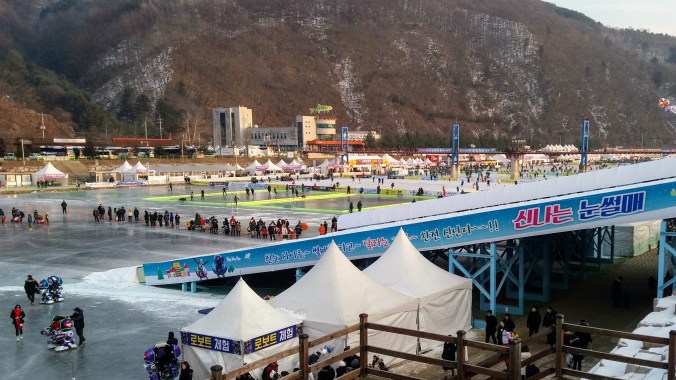
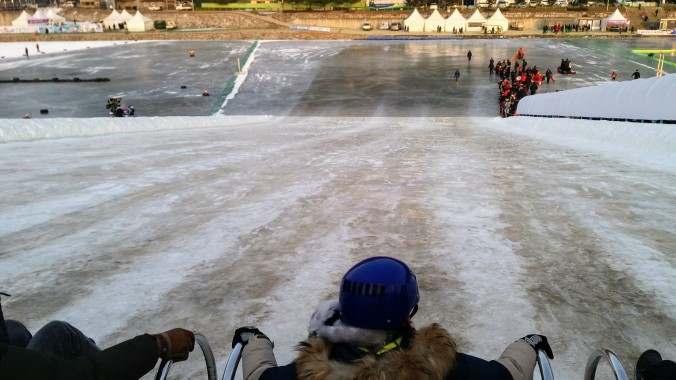
Hwacheon Ice Fishing Festival
I hope this gives some insight into the nitty gritty of being an EPIK teacher. Of all the things I learned while writing this, the biggest one is that no two EPIK teachers have the same experience. I advise you to read as many blogs and watch as many Youtube videos about this as you can if this is something you are planning to do because one perspective, no matter how detailed, is incapable of covering all the possibilities. Above all, when you come to Korea, keep an open heart and an open mind. You will face challenges, but if you persevere, you will have wild and joyful adventures as well.
 Interviews




 Apply like mad, but weigh your investment. There is something to the idea of applying for jobs even if you don’t meet all the requirements, but in the case of jobs abroad make sure you do meet the visa requirements (set by the government) and there can be some flexibility of the school’s requirements (set by the Dean). However, when employing the scattershot application tactic, be sure to draw the line at applying for jobs that will waste time and energy for too little potential return.
 Don’t give up. Cry, eat too much chocolate, put that Will Smith inspirational video about failure on a loop, call your mom in the middle of the night. Do whatever you need to do to push through the horrible feelings of failure. I wrote a 3-page essay on my feelings of failure and posted to Facebook thinking “oh, no one is going to read this” and I got a massive amount of support from people who either do or have felt exactly the same way.

 And finally, because there is no future in K-12 ESL teaching abroad. Unless you open your own school, there’s an age cap (usually 50-55) and no room for advancement or retirement plans. At university, the age cap is generally higher, and there’s the opportunity to get tenure. Sure, I’m not that old, and I won’t be for a while, but there’s no sense in letting the end of the road creep up on me. It’s not like I feel confident in my ability to fall back on Social Security in the US in my old age, so I better start building something long term out here.
 It can take several hours to complete one of these even if all you are doing is entering information from your existing documents. After a few dozen, it starts to feel like one of the labors of Hercules, or possibly one of those epic Greek punishments that people like Sisyphus are receiving. More than once I abandoned a job entirely because the application form was broken or because it simply wouldn’t allow me to enter real information, or because halfway through I discovered it required me to write a 5-page essay or upload a video of myself. I reassure myself by saying I probably wouldn’t have been happy working for an employer this demanding anyway… but it might be sour grapes.





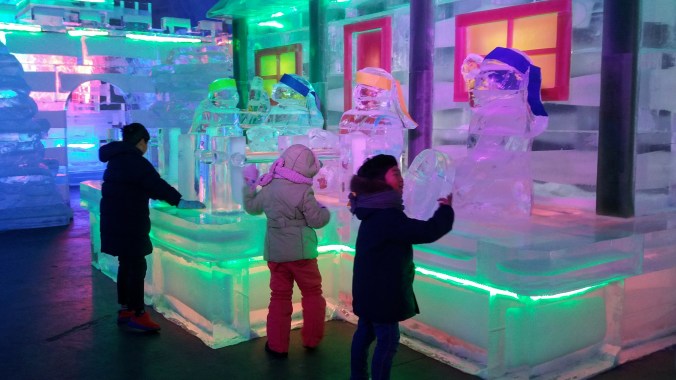










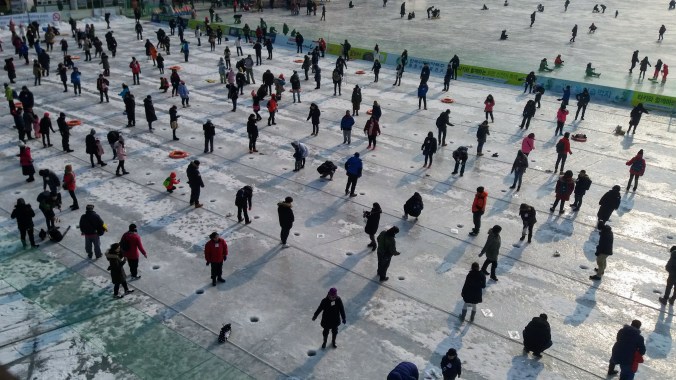


 With only one more wrong turn (I foolishly went into the building labeled Foreigner’s Fishing thinking I might pick up my rental rod there, but nope) I at last had my tiny blue fishing rod and my own hole in the ice. As I stood there working out the fishing technique by watching others, I began to relax and look around. I might have a small clue why people enjoy fishing other than eating fish. I was dubious of how this would work because our hooks had no bait, only a lure. It didn’t take long before the first person near me caught a fish and hauled it flopping out of the freezing water and onto the ice.

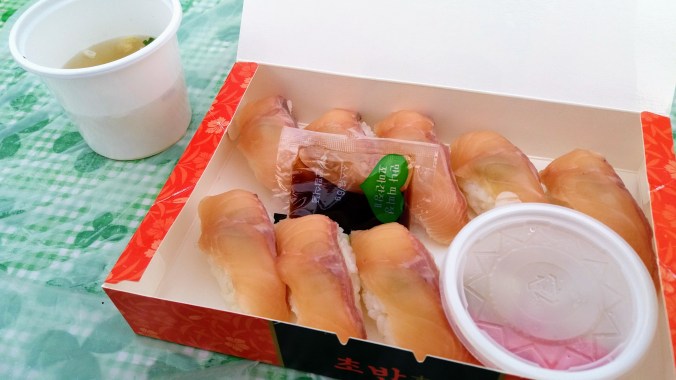


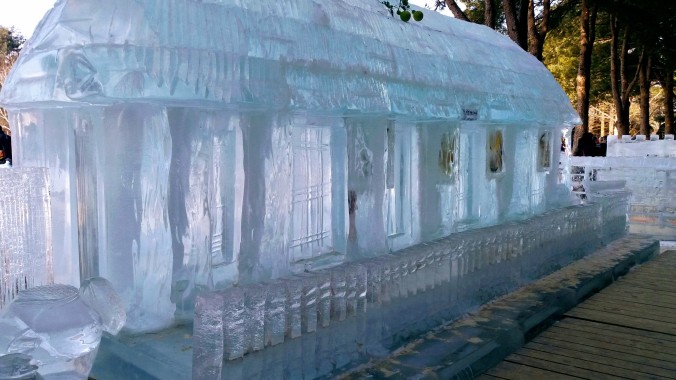


 Next I headed back towards the center of the island to the arts and crafts village where handmade goods can be viewed, created, and purchased. My favorite was a metal tree dripping glass globes that caught the winter afternoon sunlight. There were also plenty of places to grab a hot drink, a snack or a meal.




 I wasn’t sure I was going to make it this year. Some people weren’t sure there was even going to be a Pride this year. Of course, every single year since the first festival/march in Seoul in 2000 the conservative religious zealots have tried to stop the Korean Queen Culture Festival (KQCF aka Pride) from happening. They try to file legal objections. They try to file use of space applications for the same day. They throw temper tantrums and accuse foreigners of bringing homosexuality and AIDS into Korea (because there would of course never be any gay Koreans if we hadn’t infected them!). This year, the issue was with the grass.
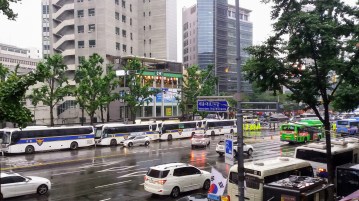 We woke up in our slightly fancy downtown hotel, lounged around, had a leisurely breakfast and finally headed over to the plaza a little after the 11am start time. We passed rows and rows of police buses parked along the side streets. Last year, I came up from the subway and the first sight that greeted me was a veritable army of uniformed officers lining the street and crosswalk. This year, we walked in from another direction and saw a little of the behind the scenes police preparation as well as walking through some of the protesters who were stationed next to the festival exit and a subway station. I knew what to expect going in from last year, but my friend said that walking past all the police and protesters made her feel anxious about the day. The reported police presence was about 6,000 officers.

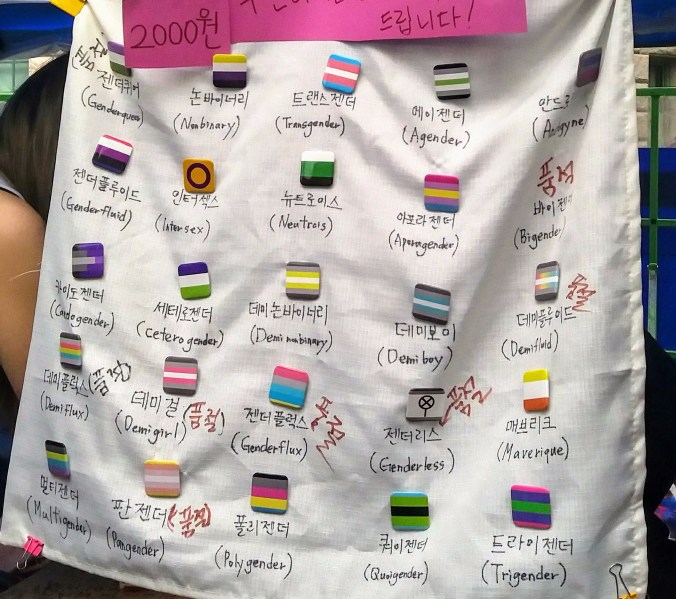



 The protesters outside are entirely Christian, but there are plenty of Korean Christian churches that came inside too, eager to point out their own perspective on the Bible and love (hint: it’s about inclusion, acceptance, and more love!). One group had even made a pamphlet that deconstructed the most common biblical arguments against homosexuality and explained the verses in historical context. But mostly they just wanted to show that the church can be accepting too. There was more than one Jesus costume at the event as well, and while the one making the rounds in the media seems to be a white guy (*sigh), I found this Korean one first. His sign is surprisingly excellent when you look closely at the comparison of Christianity hope.ver and armageddon.ver.


 There was also spiritual representation from the Buddhists! I accepted a pamphlet from one nun, which after some time spent translating seems to give the following basic message: while Buddhism condemns sex in general as being one of the things that ties you to the material world (monks and nuns are supposed to refrain entirely, but lay people are expected to do it in moderation, like alcohol consumption or meat eating) that there is no specific teaching about who you have have sex with or what type of sex you have (they listed 3 choices: vaginal, anal, and oral). The takeaway for me was that Buddhists should not condemn queer sex because of it’s queerness. One should regard all types of sex equally (while still bearing in mind things like adultery and unchecked lust are bad for everyone, too). If you’re going to accept that regular folks get into loving relationships and have sex while straight, you have to accept the same for all other flavors too. This was the first year a representation from any Buddhist temple came to the festival. It was glorious.


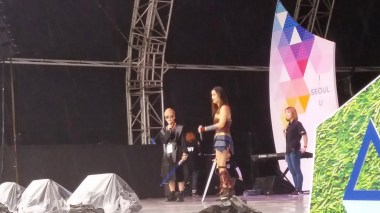 Later on, we spotted Wonder Woman and a jedi (maybe young Aniken?) facing off on the stage, but I only made it close enough for a couple pictures at the end. I’m still not sure what they were doing, because that’s a serious genre clash. Once I was up near the stage, surrounded by people with much nicer cameras than mine, I got lumped in with the more official press (since our press badges weren’t different) and was ushered right up to the edge of a small clearing where I got a front row seat to watch the LGBTQIA traditional Korean drum performance. This is the classic drum and cymbal parade that accompanies every event and festival in Korea and it’s great to see the traditional cultural arts merging into the new cultural milieu.

 Skipping ahead to the first century CE, we get what is known as the Three Kingdoms Period. The three kingdoms were Goguryeo (purple) controlled huge swaths of the north including what is now North Korea and parts of China (it is also where we get the English word “Korea” from, since their word for their own country is hanguk) The south was divided between Baekje (yellow) on the west, and Silla (blue) on the east. Except, there were more than three. The Gaya confederacy wedged it’s way between Baekje and Silla for almost 500 years. And let’s not forget
  Between it’s mythic founding 42 CE and it’s surrender to Silla in 562 CE, the Gaya confederate existed in the south central area of the Korean peninsula, just barely missing Busan (where I live) but keeping it’s capital in the nearby Gimhae (where our airport lives). They did some fishing and agriculture, but were most famous for their ironwork. It was a rough confederation of 6-12 different Gayas. When they Japanese invaded Korea in 1910, they claimed that Gaya had been a Japanese military outpost from 300-710 to justify their “return”, but no scholars take this claim seriously today.
 As we entered the park, the first statue was of a giant golden egg with 5 smaller eggs around it’s base. I was taking pictures of absolutely everything, hoping to figure it out later, so I snapped a shot and kept walking with the group. My co-teacher saw me take the picture and told me that the egg was there because the founding king of Gaya was hatched from an egg that fell from the sky. She also referred to this as “history” although I’m hopeful the last part was just a linguistics flub and that no one here seriously thinks that kings really hatched from sky eggs in the good old days. I could not figure out how to ask this without sounding rude, tho, so I let it go.
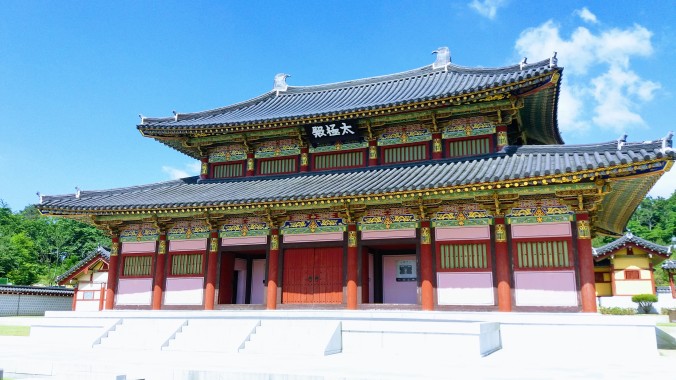 We made our way deeper into the park heading directly for the palace. It’s a replica palace. Very little archaeological evidence of Gaya has been found, although the tomb of Suro (first king of Gaya) is maintained in Gimhae as well. The palace grounds are reminiscent of Chinese palace architecture with familiar canted roofs and wide open courtyards between buildings. The colors and designs are quite unique to Korea, being less the scarlet and gold of China and more earth toned versions of dusty rose, pink, taupe yellow and pea green.


 One room had a huge map along a wall showing the queen’s “romance road of Asia”, paths from India to Korea picked out in red and blue. Another sign seemed to imply that the queen had brought Buddhism into Korea, however that is highly unlikely. I suppose she may have brought hers to Gaya (assuming that she was actually Indian) but the northern Kingdom of Goguryeo got it from their Chinese neighbors. I question her Indian origin story because the myth (written originally in the Samguk Yusa in the 13th century, it’s a kind of history/mythology mashup of the Three Kingdoms period) refers to her as being from Ayuta, a “distant kingdom across the sea”, but the name doesn’t correspond to the name of any country or city from that time period in India or any other country.
 We took our time around the palace complex, letting the kids run off some of their excitement after the long bus ride. There were plenty of historical things of interest, but no teachers tried to make the kids focus on learning, nor was there a guided tour where kids were shuffled from one room to another while someone explained things. They did separate out the grades so that no one building became too full, but on the whole, the kids were on their own to enjoy the space.
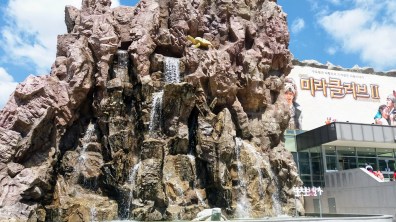 After a while, we headed out of the palace complex and back toward the main entrance to the theater. Turtle imagery was everywhere. A large mountain with an artificial waterfall towered over the theater building. A gray stone turtle lurked in the pond below and another golden one perched precariously on an outcropping halfway up the mountain! I asked about the turtles, but my co-teacher didn’t know (don’t worry, there’s an answer later).
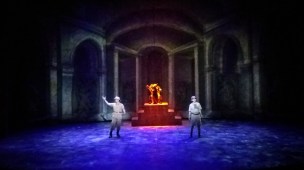 The story began with two archaeologists stumbling onto a large cache of relics from the Gaya period. Their song explained with some lament how little was known of Gaya before this discovery. Then a cave in knocked our archaeologists unconscious and a hazy dream fantasy of the mythstory of King Suro began in earnest. Dancers dressed as the zodiac animals performed intricate dances on stage as some kind of high priest or shaman character sang of the strife, war and drought in the land, praying to the heavens for deliverance which arrived in the form of 6 eggs. (although all 6 eggs hatched out kings, 5 of them were elsewhere being kings of other parts of Gaya, so aren’t in this story)
 The glowing egg hatched to reveal the full grown form of Suro who is proclaimed king on the spot and is expected to wield the power to heal the land. Yay! But it’s not easy being king. The drought continues and his people begin to resent him for not living up to the promise of his celestial birth.
 Meanwhile in Ayuta (India?), the princess Heo has a dream that her destined love is in a land far away, and that she must set sail to reach him and fulfill her destiny (lots of destiny). The dancers costumes were reminiscent of saris and there were certainly hints of Indian Bollywood style music and dance moves that were obviously meant to place the princess and her handmaidens in India.
 But OH! The villain! Satal, a god of war and a gleefully over the top villain dressed in a skull mask and rough furs and accompanied by evil temptresses dressed in black and red gauzy costumes came on to sing his number about how he would defeat Suro and become the king of Gaya, keeping the kingdom forever in a state of greed, hate, and famine. His musical style was that of classic hard rock and the stage was lit by enormous flames as he and his minions sang and danced.
 The princess’s ship is caught in a deadly storm and she is washed ashore in the wreck. It seems the moon itself has saved her just in time to be found by king Suro and they sing a touching love duet in the style of popular Korean ballads. But their happiness cannot last. Satal and his minions kidnap the princess and beat Suro nearly to death in battle. He wants to give up. He didn’t expect this to be so difficult. Where are the heavenly powers he’s supposed to have, after all? But his loyal servant reminds him of the plight of his people and the love of his princess and his resolve is bolstered.
 During a rallying all cast dance number, new armor is forged for the king, turning him from a dandy to a warrior. He is told he can receive the remainder of his heavenly powers upon the mountaintop and so newly armored he ascends to greet the powers of heaven, represented on stage as a white dragon flying around Suro to strengthen him. However Suro fights, Satal holds his own and the soaring duet of hero and villain waxes lyrical about the evils of greed, selfishness and divisiveness being defeated by the power of love. In the end, it is not the armor or the power of heaven that gives Suro the strength to defeat Satal, it is the love of Heo, her voice joining the song to call back to their duet and the fact that their love was made in heaven.
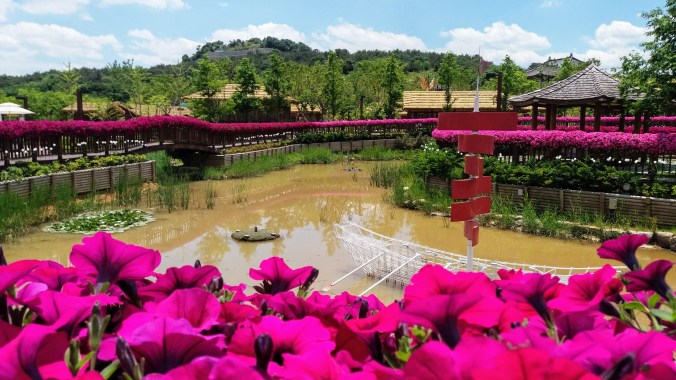 After the musical, we escorted the kids back over to the palace where they unpacked tiny picnic blankets and box lunches under the watchful eye of the staff while we enjoyed the cool, fresh mountain air. When the kids were all done eating, they were turned loose in the playground section of the park while the grownups had a lazy lunch of fried chicken next to the lake surrounded by heaps of purple pansies.
 On our way out of the park, I spotted a turtle garden with empty shells that kids could climb in and around, as well as a happy, smiling gray stone turtle overlooking the scene. The sign near the stone turtle informed us that the mountain where King Suro’s egg landed and hatched looked so much like a laying turtle that it was named Gujibong (gu meaning “turtle” in Korean). Which explained the mystery of why there were so many turtles around the park.


 During the war, Busan was the only city in Korea that was not taken over at some point by the invading northern army. While elsewhere all over the peninsula, whole towns were being leveled to the ground, Busan was becoming a haven for refugees as well as US and other foreign aid troops. The population crisis caused the unique housing style of Busan, which involves building houses and apartments right up the side of the mountains that weave in and out of the city.
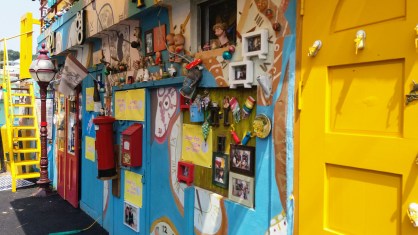 The houses are painted a cheerful array of bright colors that make for a stunning view from the ridge above. However, once you descend into the neighborhood, there is no end of quaint surprises in the form of beautiful murals, surprising statues, and wandering flower planters. The neighborhood is not only adorable, it’s become a hot spot for bohemian culture, local artists, musicians and other experimental creations.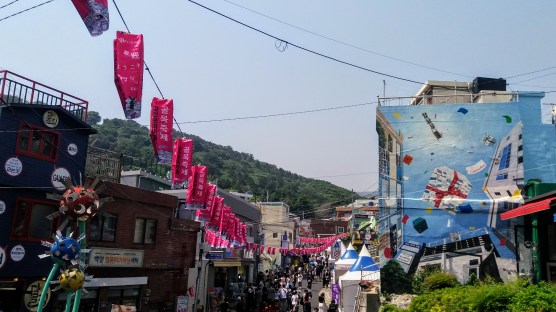


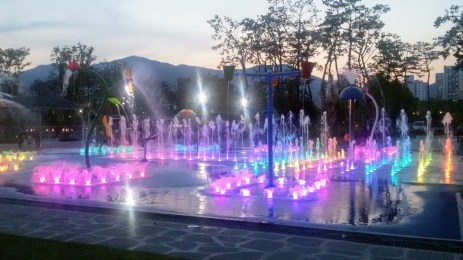 I went to this festival last year when it was held at the citizen’s park, which a beautiful grassy park with trees, a beach, and a big fountain. I had a great time visiting all the booths from other countries and sampling goodies they brought. There was a large space in the middle of all the tents where we could flop down in the grass when we needed a rest and I ran into lots of fun people (most of whom have since returned to their own countries) and sat on the lawn drinking the German beer and Spanish sangria until the sun went down.


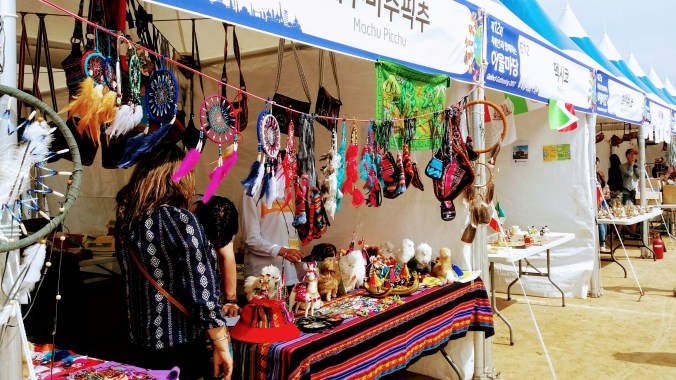


 This year… I’m not really sure what the theme was. Each mound only had art on one side, yet despite the fact that there was a temporary walkway between the two rows of mounds (because walking in sand is hard), the art all faced the shorefront buildings, leaving only half facing the walkway and the other half showing their backs. The backs of the mounds remained smooth but for a single word that was presumably the inspiration for the art on the front.




 of the festivals I go to are Korean, I’m still in the minority almost wherever I go. Almost. I don’t know what Haeundae looks like on a regular day because it’s so far from me that I usually go to Gwangan when I need a beach fix. On this day, it was like that scene from Lilo and Stitch where Lilo goes down to the beach to stare at pale tourists. Only most of them were fairly fit being recent college grads or military folks on leave. But so much white people!
 us the wait ahead of time, and we agreed. That should be enough, but part of me was still, “how did they not staff more people on a festival day, the restaurant should be doing something to make up for this inconvenience”… Woah, ‘Murica brain. You didn’t have to come here. They did everything reasonable to make sure you knew what was going on. Check your entitlement! PS. There’s no tipping here, so when waitstaff are nice to you it’s just their job and not because they’re livelihood depends on the whims of customer satisfaction.
 After dinner, we headed over to The Back Room, a secret speakeasy style bar that I visited last year and loved. I had an old favorite (real whiskey sour), and tried a brand new concoction tried an Aviation, which is gin based cocktail with creme de violet, lemon and cherry. Fancy and delicious. We stayed out way too late drinking and chatting, which only served to remind me that every event can be made special with friends.
 We set off from Busan (blue dot) in the morning to drive all the way across the southern end of the Korean peninsula to Jindo (red dot). Although Korea is small compared to, say, the US, it was still almost 5 hours of driving with the occasional pit stop. (By the way, in case you’re curious, you can see Daegu on this map as well). Fortunately, I went with a tour group (my stand by
  The Jindo festival had at least one feature I’ve never seen before: a traditional Korean wrestling ring. A pile of sand was placed in a large circle where two contestants could wrestle in the traditional style.
  Even more bizarrely, after the color throwing was over, the festival organizers gave each participant a “toga” to wear. The togas were long white robes with red sashes that could have evoked a Roman senate or Jesus. Considering we were about to “part the seas” it was hard not to see it with Judeo-Christian overtones, but the rather drunk person I asked about it just said “toga party!” The entire thing seemed like the festival organizers were trying to find a way to appeal to the expat crowd. I’m glad they had fun, but I would have preferred some more traditional activities, like someone to teach us about collecting clams and seaweed the way the locals were doing as the tide went out. It’s hard to go do local culture festivals when the locals are busy trying to white-wash everything for cash.
 Finally, the real “reason for the season” was upon us and we muddled our way down the road to the rainbow steps beneath the watchful eye of the grandmother and the tiger. We paused at a bench to don our thigh high rubber boots and got some advice from the locals on how to attach the rubber garters through belt loops to hold up the boots, or failing that, to wrap them tight around our thighs and snap them in place. Thus clad in bright orange and yellow wellies, we made our way down the steps and into the shallow tide pools to wait for the tide to recede.
 If you look at the area on Google Maps you will simply see the beach and the islands, but on Korea’s own Naver Maps, there is a thin line connecting the rainbow steps to the island of Modo. Although this path is only usable twice a year (at most), the Korean map makers consider it important enough to draw in.
 The history of tidal prediction starts with Kepler (total nobody) in 1609 to theorize that the moon’s gravity caused the ocean tides. He was followed by other such no-ones as Galileo and Newton. It was in 1776 that the first big complex equations came from a man called Laplace. Harmonic analysis was added in the 1860s and polished off by 1921 in the form that Navies all over the world still use today. Although the math hasn’t changed in almost a hundred years, computers make the math easier and the information more widespread so now instead of just ships in harbor– surfers, beachcombers, and clam hunters can
  On a more mystical note, the local legend of the tigers explains why there’s a statue of a grandmother and a tiger overlooking the sea. Long long ago, the villagers who lived on Jindo were plagued by man-eating tigers. The whole village packed up and sailed over to the neighboring island of Modo to escape the threat, but one woman was left behind. The woman was Grandmother Bbyong, and she prayed to the Dragon King, the god of the sea, to help her. Finally the Dragon King came to her in a dream and told her he would build a rainbow brigde across the sea for her. The next day when Bbyong went down to the sea, the waters parted to let her cross and her family came out from Modo to meet her. This also explains the rainbow stairs that lead down to the landbridge, but not why her family couldn’t have just sailed back for her in the first place.
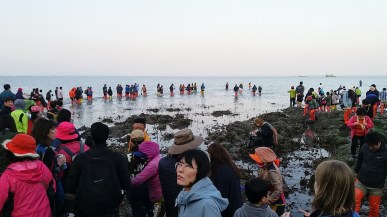 While math can now easily tell us the time of the lowest tides, it does not yet advance to tell us what the actual lowest level of the water will be. Not that it couldn’t, but there are more variables involved, so it’s not a thing now. While we can say with certainty, the lowest tide of the year on this beach will occur at 18:38 on April 29 (or whatever), we can’t say for sure if that will expose the land bridge or simply be lower than every other tide around it.
 We tromped along the path, watching parasailers overhead and rainbow colored lanterns being released in to the air from the beach behind us. It was clear the path was quite narrow because going too far from the group to one side or the other to get a picture resulted in a severe deepening of water level. At the time, my friends and I theorized it might be man-made, or at least man-maintained, however, I have since then found that the build up of rock and sand in this twisty line is a natural result of the currents around the islands.
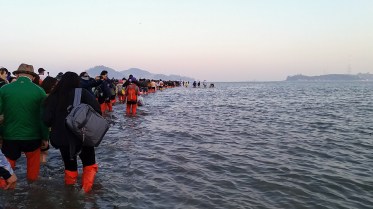 Before long the golden light of the sunset combined with the swish-swishing of hundreds of feet through water to create a trance-like state. I could not judge how far the island was, nor tell which way the path twisted. The rocks below us rose and fell, bringing the waves treacherously close to the top of my boots and then back down to barely splash over my toes. The whole path is nearly 3km long. I suspect a determined person could make it out to the island and back in the hour or so the path is clear to walk, but I wasn’t racing, and soon we were greeted by the sounds of Korean drums and the distant flags waving as the procession from Modo came out to greet us.
 The walk outward had been slow, trepedatious, as though we were nervous the land could drop away at any moment, but the trip back was much more celebratory as well as much more damp. The parade of drum bangers, cymbal crashers, gong ringers and flag bearers danced merrily in their traditional garb, urging us all back to the larger island of Jindo. Our pace quickened and our legs swung to the rhythm causing much larger splashes. Waves came in from both sides of the path making us nervous, but excited. The water finally breached the top of my boots and sent an icy chill down my shins, but I found I did not mind.
 Before heading to the fields, we walked up a long road past the area of the light festival where a few wire frames from reindeer and dragons could still be seen. The road up the hill was painted with fun perspective illustrations of a stream, complete with little camera icons to show the best places to stand to see the visual effect. Optical illusions are fun.
 At the top of the hill, far beyond the little pagoda that had marked the highest point of the lights, we finally came upon the green tea museum where we were treated to a special showing of the Korean green tea ceremony (complete with English translation by our awesome guide). The ceremony involves a process of several containers: a water pot, a cooling bowl, a tea pot, and the drinking cup. The hot water pot is filled with boiling water, which is then poured into the bowl, and from the bowl into the tea pot and finally into the cups. The instruments are warmed up in this way. Then more boiling water is poured into the cooling bowl. Tea leaves are scooped into the warm but empty tea pot and the ideal temperature water is poured from the bowl over the leaves. While the tea steeps, each cup is emptied of it’s hot water into another bowl on the floor and wiped dry on the outside. The tea is then poured into the pre-warmed cups by pouring only a half a portion into each and the other half in reverse order on the way back. The tea is then served, 4 cups to the guest and one to the host.
 The hostess tried to tell us a bit about green tea, red tea and black tea but her translated explainations seemed off to me, since she said it had to do with the age of the leaf when it was picked from the plant. I don’t know if this was her or the translation, but the real story follows: In any country with Chinese roots in it’s culture and language, the three colors of tea are a bit different in meaning that in the West. Red tea is not Rooibos, in fact all three come from the same plant. And it’s not the age of the leaf at picking that determines the difference, but rather the post picking, pre-drying process. (although especially young and tender tea leaves are sometimes referred to as “monkey picked” and do make a delightful tea).
 After we conducted our own tea ceremonies, I drifted lazily back down the hill, examining the spring flowers and the grounds that had been lit up beautifully last December. When I finally got back to the tea fields, I took off on the same route I’d walked before and was happily greeted by many blooming apple trees and a small army of busy bees who were so focused on the brief blossoms that they paid no mind to all the humans fussing around. In fact, I think it was the only time I’ve seen Koreans in the presence of a bee not totally freaking out. I guess the selfie with the tree is worth it.
 In addition to the blooming fruit trees, there were cascades of purple flowers covering the rocks wherever tea was not growing. It made the whole place feel like a still frame of a rushing river in shades of pink, purple and green. Besides the tourists, there were also tea pickers at work. Each ajuma looking lady had her sun guards on, gloves and a mesh basket to place the leaves. They were not picking the bushes bare, but selecting only some growth. It seemed to me to be the newer, brighter green leaves that they were after, but I couldn’t tell for sure. In the age of automation it was strange to see people picking by hand. I know that it’s still the way for many crops in the world, but sometimes it gets driven home that there’s a human on the other end of my tea or strawberries or carrots, and then I’m carried off by sociological musings on how we came to value people who sit at desks manipulating imaginary money so much more than people who make our food.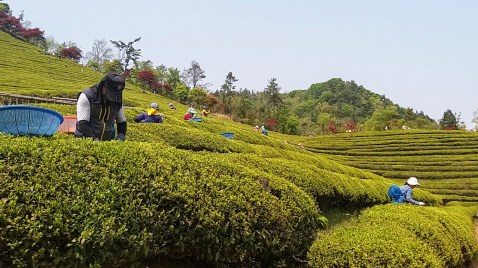

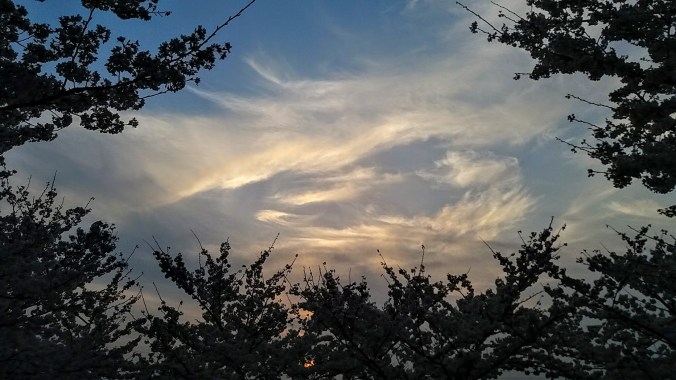
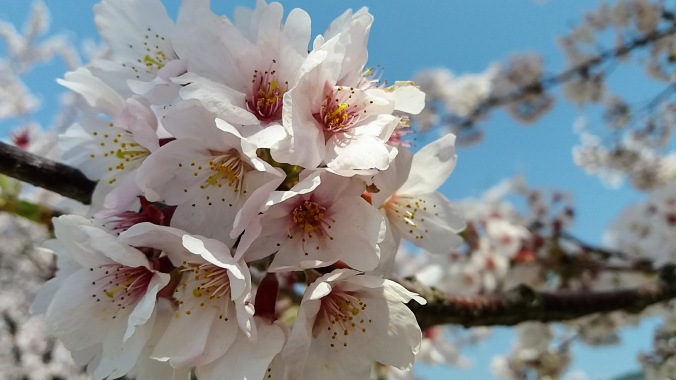
 My school is the first exposure I get to the flowers in spring since I pass by a stately line of a dozen or so trees every morning on my way in. I watched with growing anticipation in late March as the buds swelled on the branches and finally burst onto the scene on the particularly gray and chilly afternoon of March 27th.


 glorious afternoon in the park.
 Food bonus: Last year I got to try the Starbucks Cherry Blossom Frapuccino, but this year I tried the McD’s cherry blossom soda and the Hoegaarden Cherry Blossom beer. I’m still not sure what cherry blossoms are supposed to taste like, but it’s fun to try all the seasonal attempts to capture such an ephemeral experience in flavor.
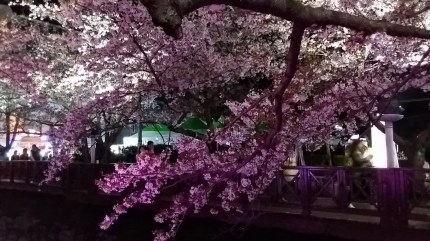 Jinhae is the country’s largest cherry blossom festival. I went
  We left on Friday April 7th. Knowing that the storms might have wrecked the blossoms, we still wanted to go to see the lights, shows, and food. It’s not a long bus ride from Busan and we found
  We were too late to get a seat in the stands, but we watched from the sidelines and enjoyed the music. I had spotted a group of dancers wearing the distinctive hat of my favorite style of Korean traditional dancing. I fell in love with the spinning ribbon hats the first time I watched them
  Next, we headed off for dinner, where I got a repeat of my delicious meal from last year’s festival- whole pig BBQ and dong dong ju (delicious local boozy drink). Once our bellies were full, we moved on to our evening goal of night-time light displays along the river. Along the way, we found more amazing treats: fresh strawberry “latte” (made with homemade strawberry syrup and fresh strawberries in milk, it is what strawberry Nesquick becomes
  when it dies and goes to heaven), and “cherry blossom” fried ice cream. I think it was really vanilla ice cream, but it was shaped like a cherry blossom. When I ordered it, the man took one out of the freezer behind him and dropped it into the hot oil. A minute or so later I had the crispy desert in my hand. The outside was crunchy and a little bit salty, providing a wonderful compliment to the sweet, creamy ice cream inside.
 The most famous part of Jinhae is the narrow “river” that runs through town and is lined with cherry trees the same way the path at Samlak is. Mind you, just about every street in Jinhae is lined with cherry trees, and the mountains around it are dotted with fluffy pink clusters of them, but the river is famous for the density of the trees and the stunning beauty of the blossoms over the water. Plus the decorations. Last year my favorite were the




 The turtle ships were famous for their ability to deflect the arrows and flaming arrows shot by the Japanese that so easily destroyed wooden boats. The shell of the “turtle” is a spiked metal carapace at a gentle sloping angle that was fireproof and arrow shedding. Yi’s
  Guests were invited aboard to explore the ship. Inside it was warm, golden wood. The main deck, which would have been open to the sky on a regular ship, was well lit by a series of cannon ports and arrow slits that allowed the crew to point weapons out while minimizing exposure. There were two small state rooms on the main floor as well, but the captain’s quarters were clearly utilitarian and not anything like the luxury we see in replicas of British ships. The head (toilet) was a series of holes at the aft (back) which opened over the sea for swift disposal.
 Through narrow openings in the deck floor we could see below to the crew quarters and galley. There was a ladder leading up to a small space storage above. Decorative spears and battle drums were dotted around the deck. Cannons pointed outward and oars the length of 2 grown men or more were shipped in racks along the ceiling.
 Gallivantrix